Chindia Alert: You’ll be Living in their World Very Soon
aims to alert you to the threats and opportunities that China and India present. China and India require serious attention; case of ‘hidden dragon and crouching tiger’.
Without this attention, governments, businesses and, indeed, individuals may find themselves at a great disadvantage sooner rather than later.
The POSTs (front webpages) are mainly 'cuttings' from reliable sources, updated continuously.
The PAGEs (see Tabs, above) attempt to make the information more meaningful by putting some structure to the information we have researched and assembled since 2006.
Concerns are rising that China is repeating its mistake of a decade ago by pursuing short-term debt-fuelled economic growth at the cost of long-term sustainability
Local governments are stepping up spending on infrastructure projects in a bid to offset the slowdown caused by the coronavirus outbreak and subsequent lockdowns
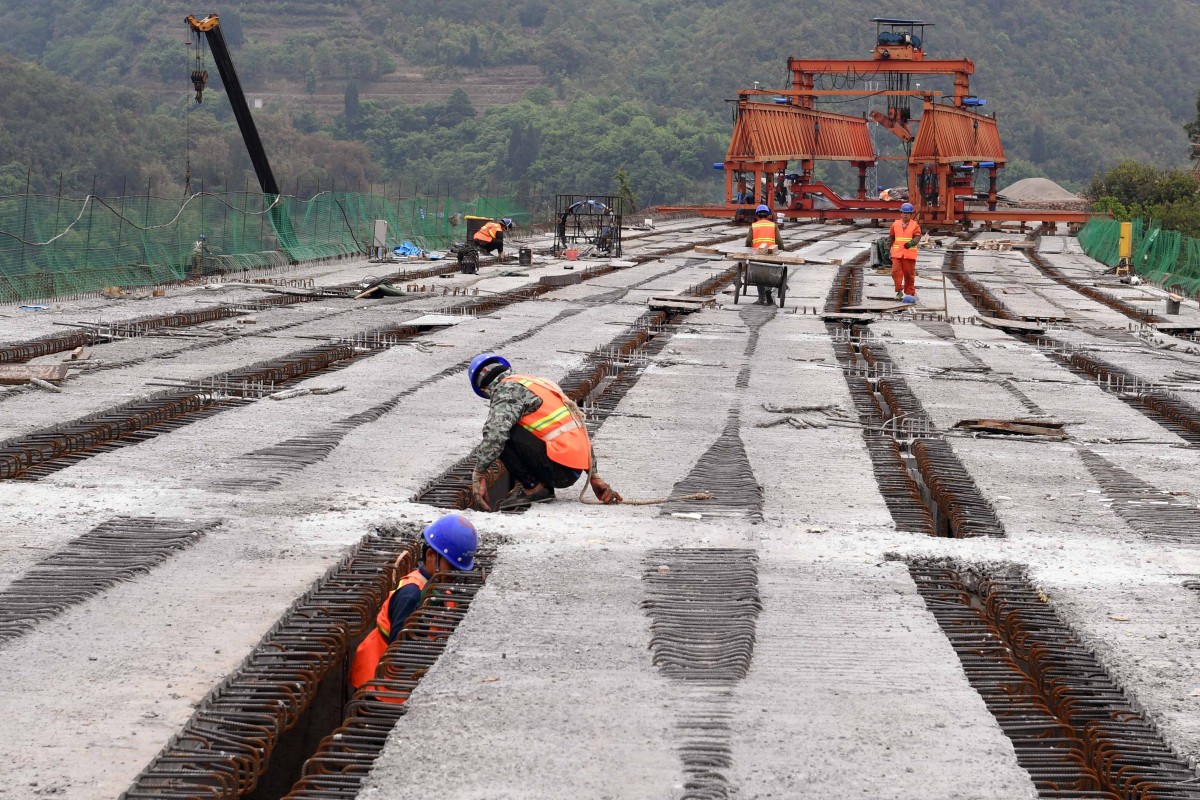
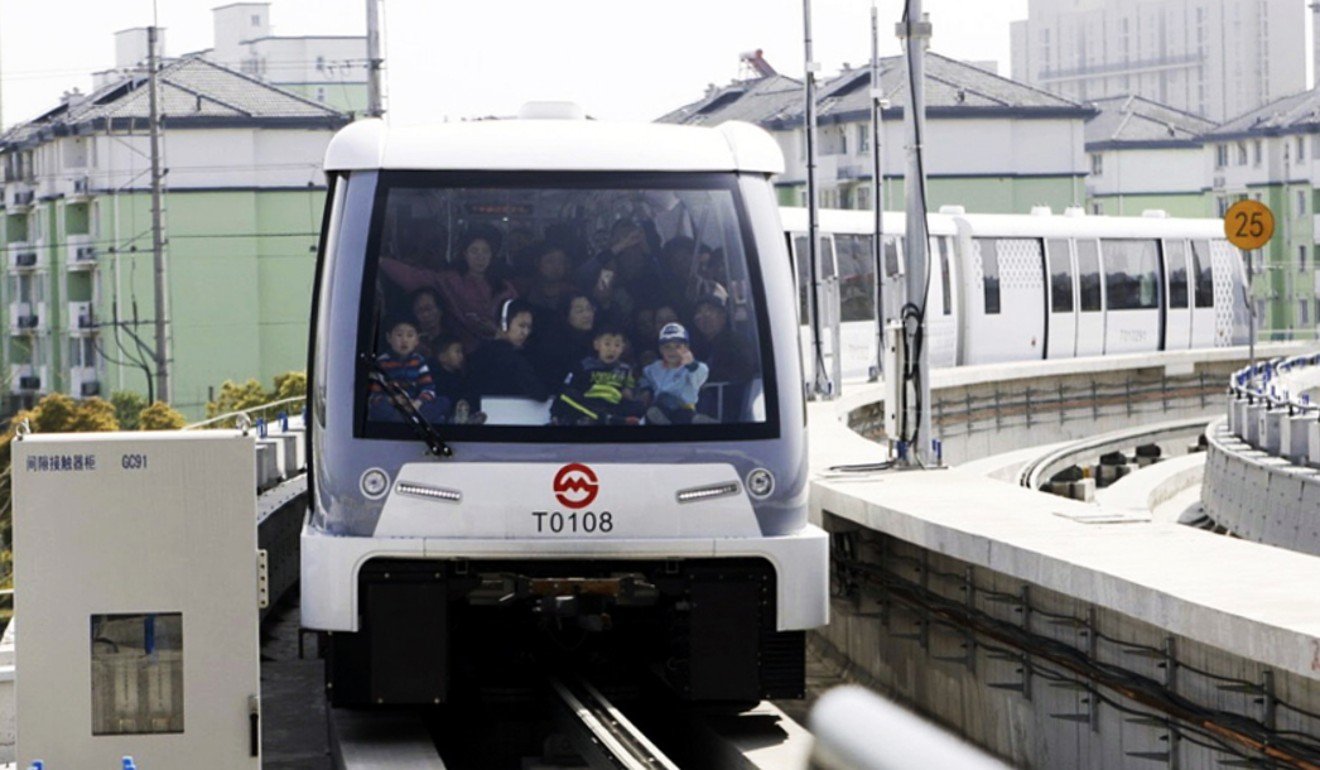
Construction of high-speed railways, motorways and airports is an old tactic that Beijing dusted off after the pandemic led to a 6.8 per cent economic contraction in the first quarter. Photo: Xinhua
China’s huge stockpile of local government debt, one of the biggest “grey rhino” risks threatening the Chinese economy’s future, is set to rise steeply as local authorities rush to increase capital spending to help offset the damage caused by the coronavirus outbreak.
As Beijing discusses increasing the central government budget deficit and monetary policy easing to spur economic growth, many local governments see the situation as a golden opportunity to realise their investment ambitions, fanning concerns that China is repeating its mistake of a decade ago by pursuing short-term debt-fuelled economic growth at the cost of long-term sustainability.
In one of the latest investment drives, the southeastern province of Fujian announced on Sunday that it had signed contracts for 391 new projects with a combined investment value of 783.6 billion yuan (US$110.6 billion). Projects undertaken by central government-owned companies, which received significant lending support in the first quarter, accounted for more than half of the promised investment in Fujian, some 92 projects worth 424.5 billion yuan.
The landlocked eastern province of Anhui is also planning 2,583 new projects this year at a cost of 450 billion yuan, a third of which have been created in the last two weeks.
Construction begins for major sea crossing to link Shenzhen and Zhongshan in Greater Bay Area
In addition to work on existing construction projects, costing around 850 billion yuan, the province has also prepared a list of 3,300 reserve projects with a total investment value of 5.4 trillion yuan (US$762 billion) which could theoretically be started at any point in the future, pending government approval and funding support.
“The most powerful and effective way to offset the economic slowdown is to increase the size of investments,” Wang Qikang, an official with the Anhui economic planning office said on Friday. “[We] must quicken the pace of construction, working day and night to win back the lost time [from the coronavirus lockdowns].”
Construction of high-speed railways, motorways and airports is an old tactic that Beijing dusted off after the pandemic led to a 6.8 per cent economic contraction in the first quarter.
Infrastructure construction has already been hit hard amid the lockdowns, plunging 19.7 per cent in the first three months of the year compared to a year earlier.
Many [local governments] are still striving to achieve a high growth rate without the guidance of a national [gross domestic product] target – Liu Xuezhi
“The investment stimulus mindset has hardly been eradicated at the local level,” said Liu Xuezhi, a senior researcher with the Bank of Communications in Shanghai. “In particular, many [local governments] are still striving to achieve a high growth rate without the guidance of a national [gross domestic product] target.”
Before the start of the coronavirus outbreak, Beijing was thought to be targeting a
of around 6 per cent this year after achieving 6.1 per cent in 2019, although many local governments appear to be setting their own annual targets still using the original expected goal as a guide.
However, that target was never made public because the meeting of the
scheduled for early March, where the growth target would normally have been released, was postponed due to the virus.
The government announced on Wednesday that the NPC will be held from May 22, when a new, likely lower, growth target could be announced.
China’s first-quarter GDP shrinks for the first time since 1976 as coronavirus cripples economy
International rating agency Moody’s warned that greater infrastructure spending would result in higher debt for regional and local governments, increasing their financial risks amid a sharp slowdown in tax revenues.
“Such investments are less likely to be a main support measure [chosen by Beijing] now given the government’s focus on avoiding a rapid increase in leverage and asset price inflation,” Moody’s analysts Michael Taylor and Lilian Li said on Tuesday.
At the end of March, local government debt stood at 22.8 trillion yuan (US$3.2 trillion), according to the Ministry of Finance. But implicit liabilities, which are hidden in local financing vehicles, state firms and public-private partnership projects, are believed to be much larger, with some estimates pointing towards an additional debt of over 30 trillion yuan.
Chinese central bank governor Yi Gang, along with other officials, have already warned against excessive economic stimulus, saying it would add risks to China’s financial system.
A key risk is that local governments are front-loading China’s long-term investment plan, especially in the railway sector, with more than 357 railway projects proposed by local governments.
Shandong province, for example, is preparing to build four new railway lines, including the Shandong portion of a second high-speed railway between Beijing to Shanghai.
“There is still a chance for infrastructure investment growth to hit 10 per cent if the government releases 2 trillion yuan (US$282 billion) in funding through local special purpose bonds and special treasury bonds,” said Haitong Securities’ chief economist Jiang Chao on Monday.
However, a local government debt monitoring report issued on Tuesday by the National Institution of Finance and Development warned that China’s local government fiscal situation is worsening rapidly as expenses surge and revenues drop.
“All levels of local governments in China will face huge debt repayment pressure in five years,” warned Yin Jianfeng, deputy director of the Beijing-based think-tank.
But trade with partner countries might not be as badly affected as with countries elsewhere in the world, observers say
China’s trade with belt and road countries rose by 3.2 per cent in the January-March period, but second-quarter results will depend on how well they manage to contain the pathogen, academic says
China’s investment in foreign infrastructure as part of its Belt and Road Initiative has been curtailed because of the coronavirus pandemic. Photo: Xinhua
The coronavirus pandemic is set to cause a slump in Chinese investment in its signature
and a dip in trade with partner countries that could take a year to overcome, analysts say.
But the impact of the health crisis on China’s economic relations with nations involved in the ambitious infrastructure development programme might not be as great as on those that are not.
China’s total foreign trade in the first quarter of 2020 fell by 6.4 per cent year on year, according to official figures from Beijing.
Trade with the United States, Europe and Japan all dropped in the period, by 18.3, 10.4 and 8.1 per cent, respectively, the commerce ministry said.
By comparison, China’s trade with belt and road countries increased by 3.2 per cent in the first quarter, although the growth figure was lower than the 10.8 per cent reported for the whole of 2019.
China’s trade with 56 belt and road countries – located across Africa, Asia, Europe and South America – accounts for about 30 per cent of its total annual volume, according to the commerce ministry.
Despite the first-quarter growth, Tong Jiadong, a professor of international trade at Nankai University in Tianjin, said he expected China’s trade with belt and road countries to fall by between 2 and 5 per cent this year.
His predictions are less gloomy than the 13 to 32 per cent contraction in global trade forecast for this year by the World Trade Organisation.
“A drop in [China’s total] first-quarter trade was inevitable but it slowly started to recover as it resumed production, especially with Southeast Asian, Eastern European and Arab countries,” Tong said.
“The second quarter will really depend on how the epidemic is contained in belt and road countries.”
Nick Marro, Hong Kong-based head of global trade at the Economist Intelligence Unit, said he expected China’s total overseas direct investment to fall by about 30 per cent this year, which would be bad news for the belt and road plan.
“This will derive from a combination of growing domestic stress in China, enhanced regulatory scrutiny over Chinese investment in major international markets, and weakened global economic prospects that will naturally depress investment demand,” he said.
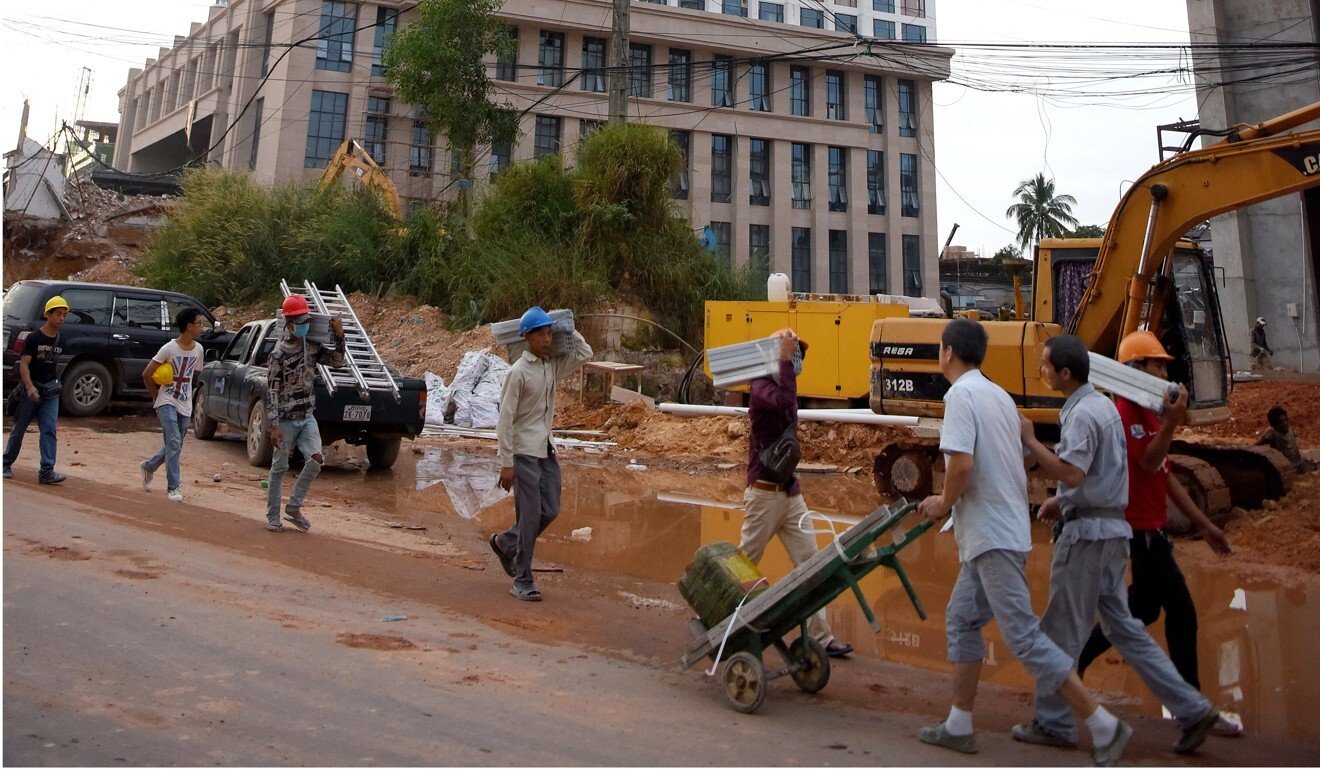
The development of the Chinese built and operated special economic zone in the Cambodian town of Sihanoukville is reported to have slowed, while infrastructure projects in Bangladesh, including the Payra coal-fired power plant, have been put on hold.
The development of the Chinese built and operated special economic zone in the Cambodian town of Sihanoukville is reported to have slowed. Photo: AFP
Marro said the reduction of capital and labour from China might complicate other projects for key belt and road partner, like Pakistan, which is home to infrastructure projects worth tens of billions of US dollars, and funded and built in large part by China.
“Pakistan looks concerning, particularly in terms of how we’ve assessed its sovereign and currency risk,” Marro said.
“Public debt is high compared to other emerging markets, while the coronavirus will push the budget deficit to expand to 10 per cent of GDP [gross domestic product] this year.”
Last week, Pakistan asked China for a 10-year extension to the repayment period on US$30 billion worth of loans used to fund the development of infrastructure projects, according to a report by local newspaper Dawn.
China’s overseas investment has been falling steadily from its peak in 2016, mostly as a result of Beijing’s curbs on capital outflows.
Last year, the direct investment by Chinese companies and organisations other than banks in belt and road countries fell 3.8 per cent from 2018 to US$15 billion, with most of the money going to South and Southeast Asian countries, including Singapore, Vietnam, Indonesia and Pakistan.
Tong said the pandemic had made Chinese investors nervous about putting their money in countries where disease control measures were becoming increasingly stringent, but added that the pause in activity would give all parties time to regroup.
“Investment in the second quarter will decline and allow time for the questions to be answered,” he said.
“Past experience along the belt and road has taught many lessons to both China and its partners, and forced them to think calmly about their own interests. The epidemic provides both parties with a good time for this.”
Dr Frans-Paul van der Putten, a senior research fellow at Clingendael Institute in the Netherlands, said China’s post-pandemic strategy for the belt and road in Europe
might include a shift away from investing in high-profile infrastructure projects like ports and airports.
Investors might instead cooperate with transport and logistics providers rather than invest directly, he said.
“Even though in the coming years the amount of money China loans and invests abroad may be lower than in the peak years around 2015-16, I expect it to maintain the belt and road plan as its overall strategic framework for its foreign economic relations,” he said.
BEIJING, April 20 (Xinhua) — China has resumed construction of major water conservancy projects amid its further containment of the novel coronavirus disease (COVID-19) epidemic.
Construction has resumed so far on 143 of the 172 major water conservancy projects, with the scale of investment under construction reaching over 1 trillion yuan (around 141 billion U.S. dollars), according to the Ministry of Water Resources.
The ministry said 30 conservancy projects have completed construction and produced benefits.
As the situation of epidemic control and prevention continues to improve, China is speeding up construction on major infrastructure projects to mitigate the economic impact of the novel coronavirus epidemic.
Construction has resumed on about 85 percent of the housing and urban infrastructure projects in China as of April 1, with about 158,700 housing and urban infrastructure projects across the country cranking up work, according to the Ministry of Housing and Urban-Rural Development.
BEIJING (Reuters) – China and Malaysia have agreed to set up a joint dialogue mechanism for the disputed South China Sea, the Chinese government’s top diplomat said on Thursday after meeting Malaysia’s foreign minister.
Recent Chinese naval deployments in the strategic waterway, through which more than $3.4 trillion worth of goods are transported annually, have reignited tension with Vietnam and the Philippines. Malaysia, Brunei and Taiwan also have competing claims in the South China Sea.
Malaysia had been critical of China’s South China Sea position, but has not been excessively outspoken recently, especially after China pumped in billions of dollars into infrastructure projects under its Belt and Road Initiative.
Malaysia regularly tracked Chinese naval and coastguard vessels entering Malaysia’s territorial waters, but China respects Malaysia and had “not done anything that caused us trouble, so far”, Defence Minister Mohamad Sabu told Reuters last month.
Chinese State Councillor Wang Yi told a news conference with Malaysian Foreign Minister Saifuddin Abdullah that this year, tensions in the South China Sea had dropped.
Littoral states and China were committed to continue appropriately handling the South China Sea issue and jointly safeguard peace and stability there, said Wang, who is the Chinese government’s top diplomat.
“To this end, our two sides have agreed to set up a bilateral consultation mechanism for maritime issues, a new platform for dialogue and cooperation for both sides,” he said.
Abdullah, who referred to Wang as “my brother”, said the mechanism would be led by the two countries’ foreign ministries.
“Our officers will be discussing the details, but I think this is one important outcome of the meeting today and also the 45 years of our diplomatic relations,” he said.
China is debt-heavy Malaysia’s biggest trade partner and the countries have close cultural ties too.
In July, China and Malaysia resumed construction on a train project in northern Malaysia, which is part of China’s Belt and Road plan, after a year-long suspension and following a rare agreement to cut its cost by nearly a third, to about $11 billion.
Joyce Msuya of the UN Environment Programme is full of praise for Beijing’s success in tackling air pollution but says there is work still to be done
Commitment to environmental protection seen at home must be extended to infrastructure projects developed overseas, she says
Joyce Msuya, acting head of the UN Environment Programme, says bad infrastructure can have a negative environmental impact. Photo: Simon Song
The United Nations’ environment chief has appealed to China to apply the same environmental standards to infrastructure projects it develops overseas under its Belt and Road Initiative as it does to those built on its own soil.
“We know from history, bad infrastructure can lead to negative environmental impact,” said Joyce Msuya, acting executive director of the UN Environment Programme. “Given China’s record on and interest in environmental protection, we hope and expect they will apply the same spirit as they invest in developing countries.”
While acknowledging the value of infrastructure building in developing nations, Msuya said it was equally important to consider the environmental implications of
“We are interested in working with member countries that have been beneficiaries [of Chinese investment] to see what concerns, if any, what risks, if any, they see,” she said in an interview on the sidelines of an event in Hangzhou, capital of east China’s Zhejiang province, to mark World Environment Day, which fell on Wednesday.
Scores of countries are involved in Beijing’s multibillion-dollar belt and road plan in one way or another, but as it has expanded so too have the concerns over its environmental impact.
In late 2017, the WWF issued a report claiming that the development of two motorway projects in Myanmar would have a negative environmental impact on about half of its population.
China ‘facing uphill struggle’ in fight against pollution
On China’s efforts to tackle pollution at home, Msuya said that although the move towards a greener economy might require communities to make sacrifices in the short term, these would be outweighed by the long-term benefits.
China has been fighting a “war on pollution” since 2013 but as
have grown so too have concerns that industry unfriendly environmental efforts might be relegated to the back burner. The nation’s gross domestic product grew by just 6.6 per cent in 2018, its slowest rate since 1990, and for the past year it has been embroiled in a stinging trade war with the United States.
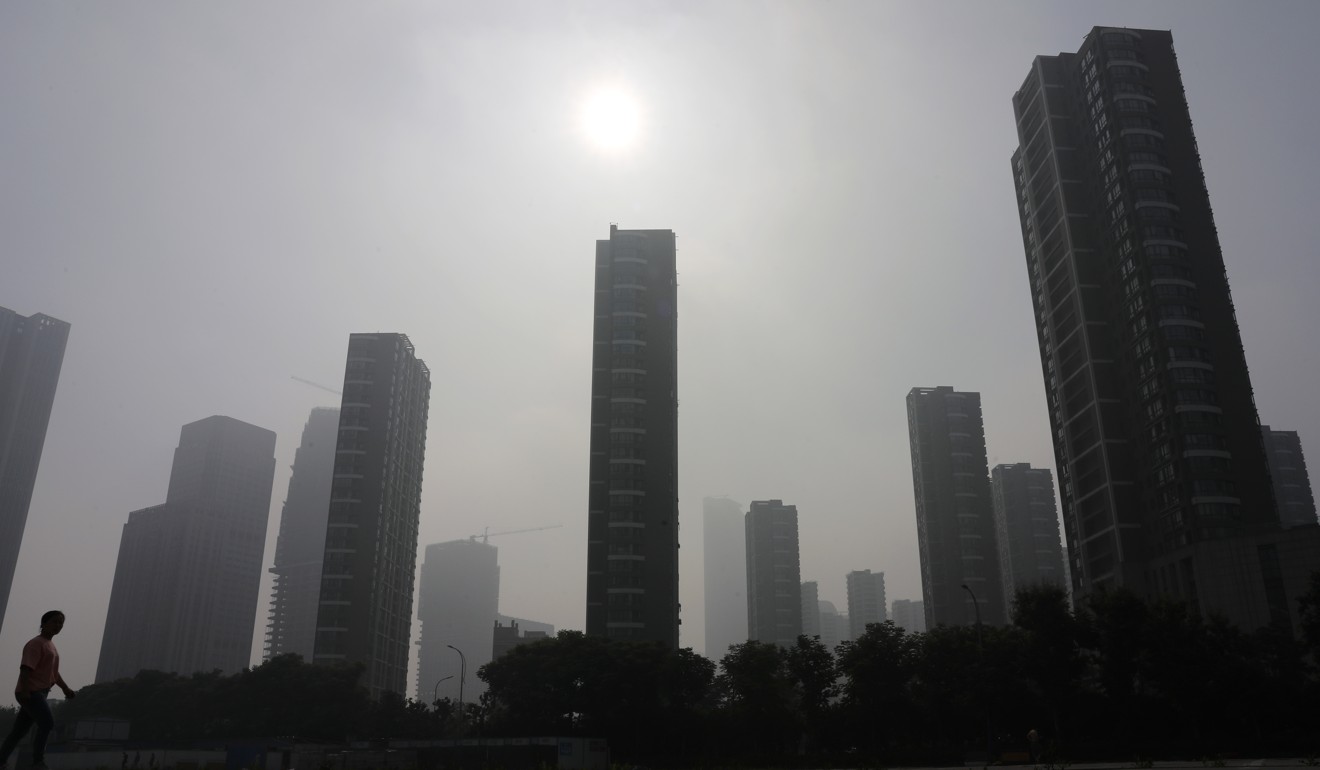
China has been fighting a “war on pollution” since 2013. Photo: Simon Song
Msuya said that while Beijing had done a good job in improving air quality, it still had some way to go on issues like water, soil and noise pollution.
“China is quite diverse, with many provinces … so the scale of the challenge of dealing with pollution is more complex,” she said. “[But] by building on its experience of cleaning the air, I have full confidence in the Chinese government.”
Pollution in northern China up 16 per cent in January as industrial activity spikes
According to a report issued by Beijing on Wednesday, average levels of PM2.5 – the tiny airborne particles that are particularly harmful to health – in more than 70 cities across
China fell by an average of 42 per cent in the five years through 2018.
Smog levels in the Chinese capital fell 43 per cent in the period, but the average reading in the city last year was still more than five times the World Health Organisation’s recommended safe level.
Air quality was the main theme of the Hangzhou event.
Msuya has first-hand experience of Beijing’s air quality having worked in the city as the World Bank Group’s regional coordinator for East Asia and the Pacific between 2011 and 2014.
“When I moved to Beijing in 2011, I honestly didn’t know how bad the air pollution was.
My son was six at the time and I always made sure he wore a mask when he went out to play,” she said.
“Fast forward to now, and China has shown us that the problem of air pollution can be tackled if everyone participates.”
The government has also nudged its 49 percent-owned National Investment and Infrastructure Fund (NIIF)— created to invest in stalled and new infrastructure projects — to buy a stake in Jet, a separate government source said.
BUSINESSUpdated: Mar 19, 2019 15:53 IST
Reuters
New Delhi
Saddled with more than 1 billion dollars of debt, Jet is struggling to stay aloft.(REUTERS)
The government has asked state-run banks to rescue privately held Jet Airways without pushing it into bankruptcy, as Prime Minister Narendra Modi seeks to avert thousands of job losses weeks before a general election, two people within the administration told Reuters.
The finance ministry has in the past year sought regular updates from the banks, led by State Bank of India (SBI), on Jet’s financial health, the people said. In recent months, the banks have provided weekly updates about a revival plan and also sought government advice, the people added.
“Top officials at the finance ministry seek regular updates on the issue,” said an official at one of Jet’s lenders, who did not want to be identified as discussions are private.
Details of the discussion between the finance ministry and bankers on bailing out Jet have not been previously reported.
New Delhi has urged state-run banks to convert debt into equity and take a stake in Jet in a rare move in India to use taxpayer money to save a struggling private-sector company from bankruptcy. The two people plus one more source, however, said this would be “transitory” and lenders could sell the stakes once Jet revives.
The government has also nudged its 49 percent-owned National Investment and Infrastructure Fund (NIIF) – created to invest in stalled and new infrastructure projects – to buy a stake in Jet, a separate government source said.
Saddled with more than 1 billion dollars of debt, Jet is struggling to stay aloft. It has delayed payments to banks, suppliers, employees and aircraft lessors – some of which have begun terminating lease deals.
The world’s biggest democracy is gearing up for an election next month and its booming aviation sector, which employs close to a million people, has been one of the job-creation success stories that Modi can point to as he seeks a second term.
It is crucial for India that Jet revives as the fall of its second-largest airline could have “disastrous consequences for the investment climate” in the sector, a top government official told Reuters.
The official is concerned that if Jet collapses it could drive up airfare in a fast-growing market, wiping out efforts to bring low-cost air travel to India’s hinterland.
A chaotic end could also make it more difficult for the government to sell a stake in Air India, at least in the short run. Last year, it failed to sell part of its stake in the indebted carrier which currently relies on taxpayer money.
If the government’s plan for Jet succeeds, then state-run banks including SBI and Punjab National Bank (PNB) as well as NIIF would together own at least a third of the airline until they find a new buyer.
Currently, Abu Dhabi’s Etihad Airways is Jet’s largest shareholder with a 24 percent stake.
India’s finance ministry, SBI, PNB and Jet Airways did not respond to requests for comment.
KINGFISHER’S COLLAPSE
Most companies in Jet’s financial condition would be placed by creditors into India’s new bankruptcy process, two bankers said. However, memories of the chaos sparked by Kingfisher Airlines’ demise in 2012 have prompted the government to seek a more sober road to rescue, they said.
Kingfisher’s bankruptcy caused job losses, lessors lost millions of dollars and banks took massive writedowns.
Putting what is essentially a services provider like Jet through the bankruptcy process would diminish its value because it owns no major assets, unlike a manufacturing company, as most of its planes are leased, said another government official.
If it is pushed into bankruptcy and lessors start pulling even more planes out of service, there would be nothing left for any potential investors, the official said. Already 41 planes have been grounded by lessors in the past three months, leading to flight cancellations.
While on the surface Jet’s future still hangs in the balance with its main shareholder Etihad at loggerheads over the final terms of any deal, behind-the-scenes support from the government means there is likely to be a bailout.
But there are no easy options, one of the sources said, adding that the lenders do not have the expertise to run an airline so they have to decide what to do once they convert their debt into equity.
New Delhi is also backing a proposal for Jet’s founder and Chairman Naresh Goyal to step down if it means saving the airline, another official said. “Saving Jet is not equivalent to saving Goyal,” the official said.
RISING AIRFARE
Jet, with its fleet of 119 planes, once controlled a sixth of India’s domestic aviation market. The 25-year-old airline is also one of only two full-service carriers that flies to international destinations. The other is Air India.
The government ideally wants four to six major airlines to ensure fares are competitive and passengers have greater choice, according to the top government source.
India plans to build 100 new airports costing about $60 billion which would need a steady stream of flights to sustain them, and that is possible only if there are enough airlines, a separate official said.
“The investment in these airports will solely depend on operators willing to have regular flights at affordable prices and one operator going bankrupt does not help,” he said.
BEIJING, March 6 (Xinhua) — Chinese companies operating in Africa have created huge opportunities for the continent’s development, a senior political advisor said Wednesday at a press conference on the sidelines of the annual sessions of the top legislative and political advisory bodies.
There are more than 10,000 Chinese companies in Africa and over 90 percent of them are private businesses, said Nan Cunhui, a member of the Standing Committee of the Chinese People’s Political Consultative Conference National Committee, citing a recent survey.
These companies have built roads, railways, airports, ports and other infrastructure projects in Africa, addressing the bottleneck in development, said Nan, also a vice chairman of the All-China Federation of Industry and Commerce. They have also invested in green energy development, including photovoltaic power stations, to boost local power supply.
The Chinese companies have also brought advanced technologies, development concepts and management to the continent, Nan said.
Citing the operation of an industrial park in Egypt as an example, Nan said over 95 percent of the employees are locals who develop professional skills and gain managerial know-how through their work.
“Chinese companies in Africa have contributed a lot to the local economic development through infrastructure construction, job creation and tax payment,” Nan said. “I believe China-Africa cooperation will go from strength to strength.”
To counter China’s rapidly slowing economic growth, the Chinese government has returned to the policy playbook that worked well in the past: spending money on large infrastructure projects.
The National Development and Reform Commission (NDRC), China’s top economic planner, has accelerated its review process and approved 27 infrastructure projects with a total expected investment of 1.48 trillion yuan (US$219.43 billion) since the start of 2018, of which 16 worth around 1.1 trillion yuan were approved since the start of November.
Concerns were raised over a return to the debt-fuelled infrastructure investment binge that caused Beijing to halt approval of such projects in 2017, however, the need to stabilise the economy, which Beijing’s highest decision-making body set as the government’s top priority in July, took precedent.
We review the top 10 infrastructure projects by expected investment value that China has approved since the start of 2018, each costing over 50 billion yuan (US$7.41 billion).
The total investment for the 10 projects is projected at 1.158 trillion yuan over the next six years, or about 78 per cent of all newly approved infrastructure investment since the start of 2018.
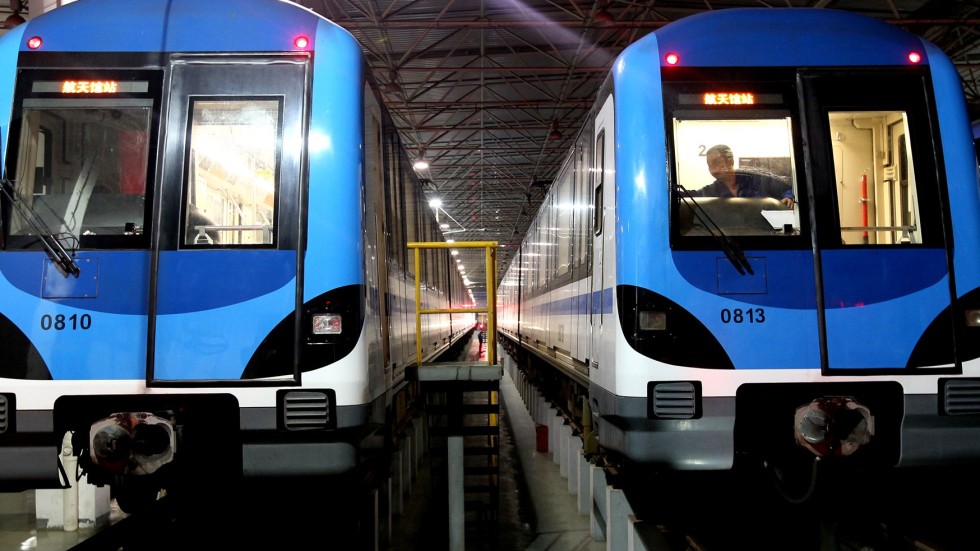
Nine rail projects including six subway lines and three intercity railways will be constructed from 2018 to 2023.
The projects are estimated to total 286km and will cost 298.35 billion yuan. The network is aimed at creating better connections between the financial hub’s two airports and two major railway stations.
2. Intercity Railway along the Yangtze River in Jiangsu province (US$34.35 billion)
Eight regional intercity railways will be built in a metropolitan cluster along the Yangtze River in Jiangsu Province, a move to shorten commuting time from Nanjing, the capital city of Jiangsu province, to other districts and cities within the province.
Some of the lines will also connect Nanjing to municipalities in the neighbouring Anhui Province.
Construction of the intercity lines are estimated to cost about 231.7 billion yuan, with the construction running until 2025.
Four metro lines plus four urban express lines will be constructed in the central Chinese city of Wuhan, with a total investment estimated at 146.9 billion yuan.
The NDRC said that the projects will support Wuhan’s urban layout and ease the city’s traffic congestion.
A circle line with 37 stops starting from Wuchang railway station tops the investment plan, which alone will cost 58.39 billion yuan (US$8.66 billion).
The construction will run from 2019 to 2024.
4. Intercity Rail Network in Eastern Guangdong (US$14.86 billion)
The intercity rail network in eastern Guangdong province, with a total investment of 100.2 billion yuan (US$14.86 billion), will facilitate connections between the cities of Shantou, Shanwei, Chaozhou, and Jieyang.
Construction on three rail lines totalling 320km started construction in 2018, with work on four others totalling 140km will start “at the right time”, according to the NDRC.
No specific completion date was mentioned by the state planner.
5. Suzhou Urban Rail Transit (US$13.84 billion)
Construction on four new urban transit lines in Suzhou was expected to start last year and finish in 2023.
Total investment is estimated at around 93.32 billion yuan (US$13.84 billion).
Among the four new lines, a 41km line will connect the city to Shanghai.
Seven urban rail transit lines, including the extension of three existing lines and four new lines, are due to be constructed in Changchun from 2019 to 2024.
The project is part of the government’s strategy to revitalise China’s northeastern provinces and boost the development of the city’s new districts.
The investment for the new projects is estimated at 71.14 billion yuan.
7. Xi’an-Yan’an High Speed Rail (US$8.18 billion)
A planned high speed rail connecting the Shaanxi provincial cities of Xi’an and Yan’an, the birthplace of Chinese Communist Party’s revolution, will also stop off at Chinese President Xi Jinping’s hometown of Fuping, located in the centre of the province.
The project will cost 55.16 billion yuan and will be completed within four and a half years.
8. Hangzhou Urban Rail Transit (US$8.3 billion)
An additional budget of 56.01 billion yuan has been granted for the already approved Hangzhou urban rail transit project.
Some 41.98 billion yuan (US$6.22 billion) of the new investment is for the new airport express from Wushan West station to Hangzhou International Airport.
According to the NDRC, it aims to better connect Hangzhou’s urban rail lines to the airport and to Hangzhou West railway station, a planned new station that is part of the infrastructure upgrade for the 2022 Asian Games which will be held in the city.
9. Chongqing-Qianjiang High Speed Rail (US$7.93 billion)
China’s first railway tunnel under the Yangtze River – the high speed rail link between Chongqing and Qianjiang – will be completed in the next five and half years at a cost of 53.5 billion yuan.
As a major section of the Xiamen-Chongqing high speed rail line, the Chongqing-Qianjiang section covers 265km and will allow speeds of up to 350km/h.
A total investment of 51.7 billion yuan will be put into two intercity railways in Guangxi province, with one from the capital city Nanning to the southeastern city of Yulin, and the other from Nanning to the southwestern city Chongzuo.
The track network is to be completed by 2023 and will connect regional towns with a total population over 500,000.








 CHINDIA ALERT: You'll be living in their world, very soon


COMMENTS: