Chindia Alert: You’ll be Living in their World Very Soon
aims to alert you to the threats and opportunities that China and India present. China and India require serious attention; case of ‘hidden dragon and crouching tiger’.
Without this attention, governments, businesses and, indeed, individuals may find themselves at a great disadvantage sooner rather than later.
The POSTs (front webpages) are mainly 'cuttings' from reliable sources, updated continuously.
The PAGEs (see Tabs, above) attempt to make the information more meaningful by putting some structure to the information we have researched and assembled since 2006.
Image copyrightGETTY IMAGESImage captionThe blast occurred at a busy bus station in Jammu city
Indian police have arrested an alleged member of the Hizbul Mujahideen militant group after a grenade attack killed at least two people and injured more than 30 others.
The attack took place on Thursday in a bus station in the Indian-administered state of Jammu and Kashmir.
Last month a suicide attack against security forces triggered cross-border air strikes between India and Pakistan.
Hizbul Mujahideen has said it was not behind Thursday’s attack.
But police told BBC Urdu that the accused, Yasir Javed Bhat, had confessed. He is a Kashmiri and reported to be in his 20s.
“He revealed that he was tasked with throwing the grenade by Farooq Ahmed Bhat, a district commander of Hizbul Mujahideen in Kulgam district,” inspector general Manish Kumar Sinha said.
Mr Sinha added that they were gathering more intelligence on Yasir.
Hizbul Mujahideen was formed in 1989 when an armed insurgency against Indian rule first broke out in the valley. It was the largest Kashmiri militant group through the 1990s and is considered to be pro-Pakistani.
India has blamed Pakistan for supporting militancy in the region – a charge Islamabad denies.
Image copyrightREUTERSImage captionPakistan PM Imran Khan said Pakistan was not behind the suicide attack in February
This has long been a source of tension between the nuclear-armed neighbours as groups based in Pakistan have carried out deadly attacks on Indian soil. The suicide attack last month killed more than 40 central reserve policemen in Indian-administered Kashmir.
Tensions between the two sides escalated quickly. India carried out air strikes against what it said was a militant camp based in Pakistan and the latter retaliated with air raids of its own.
An Indian fighter jet was shot down in Pakistan-administered Kashmir and the pilot was captured. Two days later, Pakistan handed over the pilot to Indian officials establishing a fragile truce.
ISLAMABAD (Reuters) – Pakistan intensified its crackdown against Islamist militants on Thursday, with the government announcing it had taken control of 182 religious schools and detained more than 100 people as part of its push against banned groups.
The move represents Pakistan’s biggest move against banned organisations in years and appears to be targeting Islamic welfare organisations that the United States says are a front for militant activities.
Pakistan is facing pressure from global powers to act against groups carrying out attacks in India, including Jaish-e-Mohammed (JeM), which claimed responsibility for the Feb. 14 attack that killed at least 40 Indian paramilitary police.
The escalating tension in the wake of the bombing led to a major confrontation between the nuclear-armed rivals, with both countries carrying out aerial bombing missions and even engaging in a brief dogfight that prompted fears of a war.
Pakistani officials say the crackdown is part of a long-planned drive and not a response to Indian anger over what New Delhi calls Islamabad’s failure to rein in militant groups operating on Pakistani soil.
Previous large-scale crackdowns against anti-India militants have broadly been cosmetic, with the proscribed groups able to survive and continue operations.
The interior ministry said law enforcement agencies had placed 121 people in “preventive detention” as part of the crackdown that began this week.
“Provincial governments have taken in their control management and administration of 182 seminaries (madaris)”, the ministry said in a statement, referring to religious schools.
What to do with madrasas is a thorny issue in Pakistan, a deeply conservative Muslim nation where religious schools are often blamed for radicalisation of youngsters but are the only education available to millions of poor children.
The interior ministry said other institutions from different groups had been taken over, including 34 schools or colleges, 163 dispensaries, 184 ambulances, five hospitals and eight offices of banned organisations.
Many banned groups such as JeM run seminaries, which counter-terrorism officials say are used as recruiting grounds for militant outfits
Jamaat-ud-Dawa (JuD), which operates hospitals and a fleet of ambulances, is estimated to run about 300 madrasas across the country. Pakistan’s government banned the group this week.
JuD calls itself a humanitarian charity but the U.S. State Department has designated it a “foreign terrorist organisation” and calls it a front for Lashkar-e-Taiba (LET), a Pakistan-based group accused of orchestrating attacks in India, including the 2008 Mumbai attack that killed 166 people.
JuD called the crackdown unfair and said it would seek to counter the government action in courts.
“The whole nation is asking that what message the government wants to send by sealing welfare organisations and kicking students out,” said JuD spokesman Yahya Mujahid.
Pakistan has long used Islamist groups to pursue its aims in the region, but it has denied New Delhi’s accusations it actively supports militants fighting Indian forces in India’s part of Muslim-majority Kashmir.
The South Asian neighbours have fought three wars since independence from Britain in 1947, two of them over Kashmir which they both claim in whole but rule in part.
The Chinese foreign ministry on Thursday released a statement in Chinese following the visit of vice-foreign minister Kong Xuanyou to Pakistan, lauding Islamabad’s response.
WORLDUpdated: Mar 07, 2019 16:42 IST
Sutirtho Patranobis
Hindustan Times, Beijing
Kong visited Pakistan as Islamabad faced pressure from global powers to act against groups carrying out attacks in India, including Jaish-e-Mohammed (JeM), which claimed responsibility for the February 14 attack that killed 40 CRPF personnel in Pulwama.(REUTERS File Photo)
China has praised Pakistan for its handling of the tense situation with India, appreciating Islamabad’s “restraint” in the aftermath of the Pulwama terror attack in Jammu and Kashmir in February.
The Chinese foreign ministry on Thursday released a statement in Chinese following the visit of vice-foreign minister Kong Xuanyou to Pakistan, lauding Islamabad’s response.
“China has paid close attention to the present situation between Pakistan and India, and appreciates Pakistan remaining calm and exercising restraint from the beginning, and persisting in pushing to lower the temperature with India via dialogue,” the foreign ministry statement said.
It paraphrased Kong’s discussions with Pakistan’s leadership comprising Prime Minister Imran Khan, army chief General Qamar Javed Bajwa and foreign minister Shah Mehmood Qureshi.
In turn, the statement quoted the Pakistani side thanking China’s “objective and fair position” on the situation and for its efforts to promote the “cooling” of the situation.
Kong visited Pakistan as Islamabad faced pressure from global powers to act against groups carrying out attacks in India, including Jaish-e-Mohammed (JeM), which claimed responsibility for the February 14 attack that killed 40 CRPF personnel in Pulwama.
The Pulwama suicide attack – the worst in Kashmir in decades – led to the most serious conflict in years between the nuclear-armed neighbours with India carrying out a strike on a JeM camp in Balakot and then a dogfight over the skies of Kashmir.
The crisis seems to have eased after Pakistan returned IAF Wing Commander Abhinandan Varthaman last Friday, nearly two days after he was captured.
Kong was quoted as telling the Pakistani leadership that China maintains that the sovereignty and territorial integrity of all countries should be earnestly respected and that Beijing is unwilling to see acts that violate the norms of international relations.
The statement quoted Kong as saying that China calls on Pakistan and India to refrain from taking actions to aggravate the situation, show goodwill and flexibility, launch dialogue as soon as possible, and work together to maintain regional peace and stability.
China is willing to continue to play a constructive role in this regard, Kong is quoted to have said.
According to the statement, the Pakistani leaders appreciated China’s objective and fair position on the situation in Pakistan and India and thanked China for its efforts to promote the cooling of the situation.
It added that the Pakistani side reiterated that it is unwilling to see an escalation of the situation and is willing to resolve the contradictions and differences between the two sides through dialogue and peacefully, and welcomes China and the international community to play an active role in this regard.
MUZAFFARABAD, Pakistan/SRINAGAR, India (Reuters) – A flare up between arch-foes India and Pakistan appeared to be easing on Saturday after Islamabad handed back a captured Indian pilot, but tensions continued to simmer amid efforts by global powers to prevent a war between the nuclear-armed neighbours
Wing Commander Abhinandan Varthaman, who became the face and symbol of the biggest clash between India and Pakistan in many years, walked across the border just before 9 p.m. (1600 GMT) on Friday in a high-profile handover shown on live television.
Shelling across the Line of Control (LoC) that acts as a de facto border in the disputed Kashmir region, a frequent feature in recent weeks, continued on Saturday.
Pakistan’s military said on Saturday its air force and navy “continue to be alert and vigilant”, while two of its soldiers were killed after exchanging fire with Indian troops along the Line of Control. India’s military said on Saturday that Pakistan was firing mortar shells across the LoC.
Pakistan touted Abhinandan’s return as “as a goodwill gesture aimed at de-escalating rising tensions with India” after weeks of unease that threatened to spiral into war after both countries used jets for bombing missions this week.
Global powers, including China and the United States, have urged restraint to prevent another conflict between the neighbours who have fought three wars since independence from Britain in 1947.
Tensions escalated rapidly following a suicide car bombing on Feb. 14 that killed at least 40 Indian paramilitary police in Indian-controlled Kashmir.
India accused Pakistan of harbouring the Jaish-e Mohammad group behind the attack, which Islamabad denied, and Prime Minister Narendra Modi promised a strong response.
Indian warplanes carried out air strikes on Tuesday inside Pakistan on what New Delhi called militant camps. Islamabad denied any such camps existed, as did local villagers in the area, but Pakistan retaliated on Wednesday with its own aerial mission, that led to both sides claiming to have shot down jets.
The stand off came at a critical time for Modi, who faces a general election that must be held by May and who had been expected to benefit from nationalist pride unleashed by the standoff.
Pakistani leaders say the ball is now in India’s court to de-escalate the tensions, though the Pakistani army chief told top military leaders of the United States, Britain and Australia on Friday that his country would “surely respond to any aggression in self-defence”.
“COLLIDE HEAD-ON”
The Indian pilot’s ordeal since being shot down on Wednesday had made him the focal point of the crisis and he returned to his homeland to a hero’s welcome, with crowds thronging the Wagah border crossing and waving Indian flags.
Before his release, Pakistani television stations broadcast video of Abhinandan in which he thanked the Pakistani army for saving him from an angry crowd who chased him after seeing him parachute to safety.
“The Pakistani army is a very professional service,” he said. “I have spent time with the Pakistan army. I am very impressed.”
On Friday, four Indian troops and one civilian were killed in a clash with militants in the Indian-administered Kashmir, where a further three people were killed and one wounded from Pakistani shelling.
Pakistan’s military said two civilians were killed and two wounded since Friday afternoon on Pakistan’s side of Kashmir from a barrage of Indian shelling.
In a sign of the unease, residents say they are afraid another conflagration is likely.
“The way situation is developing along the LoC makes me feel that both sides may collide head-on anytime now,” said Chaudhry Jahangir , a Pakistani resident of the Samahni sector in Kashmir.
IAF strike on Jaish camp in Pakistan updates: IAF pilot who engaged Pakistan jets missing in action, said the government. India verifying Pak claims on his custody. Follow live updates here:
Pakistani aircraft violated Indian air space in the Nowshera sector of Jammu and Kashmir’s Rajouri district on Wednesday morning. The Indian Air Force scrambled jets and pushed them back. News agency ANI has reported that a Pakistan Air Force F-16 was shot down in Indian retaliatory fire in Nowshera’s Lam valley.
The Pakistani jets had entered into Indian air space over Rajouri district this morning, sources said.
The air space violation by Pakistani jets comes a day after Indian Air Force jets flew across the Line of Control to blow up Jaish-e-Mohammed’s biggest terror camp.
Watch| India lost one MiG 21, pilot who engaged Pak jets ‘missing in action’: Govt
Army’s Eastern Command chief visits Panagarh base in West Bengal amid escalating tensions
Amid heightened tensions between India and Pakistan, Army’s Eastern Command chief Lt General Manoj Naravane visited Panagarh base in West Bengal on Wednesday and reviewed operational preparedness, a defence official said.
Lt Gen Naravane, General Officer Commanding-in-Chief, Eastern Command, emphasised the need for remaining alert at all times to meet the emerging security challenges, the official said.
4:50 pm IST
“Whole country is proud of this brave son,” Arvind Kejriwal tweets for IAF pilot’s safe return
“I pray for the safety of Indian Air Force pilot Wing Commander Abhinandan,” tweeted Arvind Kejriwal. “Whole country is proud of this brave son and everyone is hoping for his safe return. We all stand united to keep our country safe and strong,” Arvind Kejriwal said in the tweet.
4:35 pm IST
Pakistan has long denied its role in terror acts in India
In his last televised statement, Imran Khan appeared to ignore the claims made by Jaish. Pakistan has long denied its role in terror acts in India, which has handed it over several dossiers containing evidence of involvement of terror groups working from its soil.
4:33 pm IST
Imran Khan’s fresh call for dialogue comes in the wake of Pulwama terror attack
Imran Khan’s fresh call for dialogue comes in the wake of India’s effort to corner Pakistan among international community in the wake of Pulwama terror attack, in which at least 40 soldiers were killed. Pakistan-based Jaish-e-Mohammed claimed responsibility for the attack.
4:26 pm IST
Imran Khan calls for talks to de-escalate rising tensions with India over Kashmir
Pakistani Prime Minister Imran Khan calls for talks to de-escalate rising tensions with India over Kashmir.
3:57 pm IST
Better sense should prevail: Imran Khan after Pak strike
“We offered that we are ready for any kind of investigation after Pulwama attack in India. We didn’t take action on Tuesday morning because we weren’t aware of the damage caused by air strike by India. We did not want to cause much collateral damage in India when there was not much damage on our side. The only motive of Pakistan’s strike today was to demonstrate that we have the capability to hit back.
All the wars have happened due to miscalculation. With all the weapons that Pakistan and India have, can we afford to miscalculate. If we take to war neither I nor Mr Narendra Modi would be in a position to control its course. This is why I suggest that better sense should prevail,” said Imran Khan.
3:25 pm IST
IAF pilot who engaged Pak jets missing in action: Govt
IAF pilot who engaged Pakistan jets missing in action, said the government. India verifying Pak claims on his custody.
Pakistan used air force to target military installations, attempt foiled successfully, the government added.
3:20 pm IST
Foreign ministry and Air Vice Marshal brief media
Foreign ministry and Air Vice Marshal briefed the media.
3:00 pm IST
Maharashtra on high alert amid border tensions
Maharashtra and its capital Mumbai have been put on high alert’ in the wake of the rising tensions on the country’s north-west border, official sources said in Mumbai on Wednesday.
Heightened security was seen in Mumbai, the commercial capital of the country. Police vigil has been enhanced in Pune, Nagpur, Aurangabad, Nashik and Kolhapur as well. The government is ensuring there is no disturbance to the ongoing HSC (Class XII) examinations in the state, reported news agency IANS.
2:45 pm IST
Pakistan closes its airspace for commercial flights
Pakistan has closed its airspace for commercial flights, the Civil Aviation Authority (CAA) announced on Wednesday amid escalating tensions with India.
The aviation authority made the announcement on Twitter after Major General Asif Ghafoor, Director General of the Pakistan Army’s media wing, Inter-Services Public Relations (ISPR), acknowledged the closure of Pakistan’s airspace due to the security situation, Dawn News reported.
2:35 pm IST
Air India avoiding route of Pakistan air space with immediate effect
Air India avoiding route of Pakistan air space with immediate effect. India use Pakistan airspace for flights to Gulf countries, Europe and USA, said an Air India official
1:25 pm IST
Pakistan says 2 IAF jets shot down, India rejects claim
There are no reports of any IAF jet suffering damage in action by India’s adversaries, defence sources said on Wednesday according to news agency PTI.
Earlier in the day, Pakistan claimed it shot down two Indian military aircraft over Pakistani air space and arrested at least one of the pilots, according to PTI.
1:20 pm IST
Army, BSF troops along IB, LoC on highest degree of alertness: Officials
The Army and BSF have been put on the highest degree of alertness along the border in Jammu after air space violations by the neighbouring country and the night-long heavy firing and shelling by Pakistani troops on forward and civilians areas across the LoC which stopped on Wednesday, reported news agency PTI.
Authorities have ordered temporary closure of educational institutions in a 5-km radius along the Line of Control (LoC) in Rajouri and Poonch districts on Wednesday amid mounting tensions between the two countries, following the Pulwama terror attack on February 14 and an Indian air strike on Jaish-e-Mohammed camp inside Pakistan on Tuesday.
1:14 pm IST
Defence minister Nirmala Sitharaman chairs DAC meeting
The Defence Acquisition Council (DAC) chaired by defence minister Nirmala Sitharaman met here today and accorded approval for acquisition of defence equipment for about Rs 2700 crores.
Approval was granted for procurement of three Cadet Training ships for the Indian Navy, which would be utilised to provide basic sea training for officer cadets including women officer undertrainees. The ships would be capable of undertaking Hospital Ship duties, providing Humanitarian Assistance and Disaster Relief, undertaking Search and Rescue (SAR) missions and Non-Combatant Evacuation Operations.
1:08 am IST
China reiterates call for India and Pakistan to exercise restraint
China’s Foreign Ministry on Wednesday said it reiterated its call for India and Pakistan to exercise restraint.
Ministry spokesman Lu Kang made the comment at a regular news briefing in Beijing.
1:00 pm IST
PM Modi rushes to review security situation: Report
Prime Minister Narendra Modi cut short his address at a function in Vigyan Bhawan on Wednesday and rushed to attend a meeting to review the security situation arising out of Pakistan’s attempt to violate Indian air space, reported news agency ANI.
Modi was replying to the questions from youngsters during the National Youth Festival 2019 when he was handed over a small piece of paper by an official of Prime Minister Office (PMO).
The Prime Minister immediately stopped and walked towards the panelist where Union minister Rajyavardhan Rathore was also present.
12:53 pm IST
Pakistan stops domestic, international flight operations from Lahore, Multan, Faisalabad, Sialkot and Islamabad
Pakistan immediately stops its domestic and international flight operations from Lahore, Multan, Faisalabad, Sialkot and Islamabad airports, reported news agency ANI.
12:30 pm IST
Sensex turns negative; cracks over 200 points
The benchmark BSE Sensex gave up all early gains and fell over 200 points in afternoon trade Wednesday on widespread selling after Pakistani fighter jets violated Indian air space in Jammu and Kashmir.
After dropping 238 points, the Sensex was trading 161.74 points, or 0.46 per cent, down at 35,811.97 after hitting a low of 35,735.33. The gauge rallied nearly 400 points in morning trade.
The 50-share Nifty also fell 62.55 points, or 0.58 per cent, to 10,772.75.
According to brokers, investor sentiment took a beating after Pakistan claimed that it shot down two Indian military aircraft over Pakistani air space and arrested one of the pilots.
The Pakistani fighter jets on Wednesday violated Indian air space in Jammu and Kashmir’s Poonch and Nowshera sectors.
12:08 pm IST
Rajnath reviews security situation
Home Minister Rajnath Singh Wednesday reviewed the security situation in the country, especially along the border with Pakistan, a day after Indian fighter jets bombed the biggest camp of terror group Jaish-e-Mohammad in that country, officials said.
During the meeting, attended by National Security Advisor Ajit Doval among others, a detailed presentation was given about the security situation in the country and steps taken to ensure peace in all sensitive places.
Singh directed the officials to ensure the Border Security Force, which guards the India-Pakistan border continues to remain on highest level of alertness so that any misadventure from across the border could be foiled, a home ministry official said.
12:01 pm IST
‘Don’t want to escalate tensions, but we are prepared’, says Pakistan
“Today, Pakistan Air Force undertook strikes across Line of Control from within Pakistani airspace. This was not a retaliation to continued Indian belligerence. Pakistan has therefore, taken strikes at non military target, avoiding human loss and collateral damage. Sole purpose being to demonstrate our right, will and capability for self defence.
We have no intention of escalation, but are fully prepared to do so if forced into that paradigm. That is why we undertook the action with clear warning and in broad daylight. For the last few years, India has been trying to establish what they call “a new normal” a thinly veiled term for doing acts of aggression at whatever pretext they wish on a given day.
If India is striking at so called terrorist backers without a shred of evidence, we also retain reciprocal rights to retaliate against elements that enjoy Indian patronage while carrying out acts of terror in Pakistan. We do not wish to go to that route and wish that India gives peace a chance and to resolve issues like a mature democratic nation,” read a statement released by Pakistan on Wednesday.
11:50 am IST
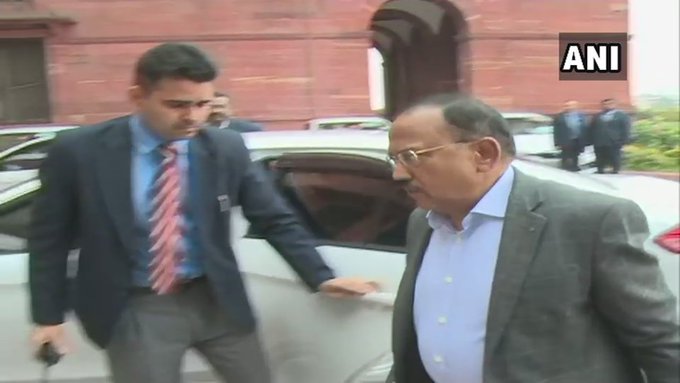
National Security Advisor Ajit Doval arrives at Home Ministry
National Security Advisor Ajit Doval arrived at the Home Ministry in Delhi.
Hope India, Pak conduct dialogue to establish facts through investigation: Wang Yi
“As a mutual friend to both India and Pakistan, we hope that they can conduct dialogue to establish facts through investigation to keep things under control and maintain peace and stability in the region. In this process China is playing a constructive role not the opposite,” said China’s foreign minister Wang Yi.
11:42 am IST
Russia, China and India reaffirmed strong opposition to terrorism: Wang Yi
“Russia, China and India reaffirmed strong opposition to terrorism. At the same time we (China) believe Pakistan has always been opposed to terrorism. China appreciates statements from Indian and Pak friends saying they’ll exercise restraint and avoid escalation of situation,” said China’s foreign minister Wang Yi.
11:37 am IST
Pakistani jets violate Indian air space in Nowshera
Pakistani jets violated Indian air space in Jammu and Kashmir’s Nowshera sector but were successfully confronted.
An official said the jets were immediately pushed back by Indian jets on air patrol.
10:55 am IST
Discussed establishment of UN led global counter-terrorism mechanism: Swaraj
“We need a global strategy, global cooperation. I’m happy to tell you today we discussed the establishment of UN led global counter-terrorism mechanism and finalising CCIT (Comprehensive Convention on International Terrorism) proposed by India to implement it,” said external affairs minister Sushma Swaraj in Wuzhen, China.
“As far as Pulwama is concerned, I had raised this issue in the bilateral meeting with Mr Wang Yi and also at RIC (Russia-India-China) forum,” she added.
10:42 am IST
All countries need to show ‘zero tolerance’ towards terrorism: Sushma Swaraj
Terrorists attacks like Pulwama are a grim reminder for the need of all countries to show ‘zero tolerance’ towards terrorism, external affairs minister Sushma Swaraj said on Wednesday, a day after India conducted pre-emptive air strikes deep inside Pakistan hitting Jaish-e-Mohammad training camps.
The operation was carried out in light of Pakistan’s refusal to acknowledge and act against terror groups operating from its soil and credible information that JeM was planning attacks in India, she said.
10:10 am IST
India’s response to Pulwama attack top agenda of Opposition meet
Left parties will participate in the meeting of the opposition parties, scheduled to be held later today. They had earlier said that they will not participate in the meeting. Pulwama attack and India’s response to it are on the agenda of discussion, reported news agency ANI.
9:55 am IST
Defence minister to meet Army, IAF, Navy chiefs shortly
Defence minister Nirmala Sitharaman, Army Chief General Bipin Rawat, Chief of the Air Staff Air Chief Marshal Birender Singh Dhanoa and Navy Chief Admiral Sunil Lanba will attend DAC (Defence Acquisition Council) meeting shortly today.
9:35 am IST
Mumbai on high alert, govt asks schools to exercise caution
In the wake of air strikes carried out by the Indian Air Force (IAF) on terror camps in Pakistan’s Balakot, the Maharashtra government has called for office bearers of the School & Co. Bus Owner’s Association to ensure the safety of school children keeping the prevailing situation in mind, reported news agency ANI.
Chief Minister Devendra Fadnavis told the state legislature that security has been tightened across the city and appealed to people not to panic.
After intelligence informed Mumbai police to be on high alert, the vigilance and CCTV surveillance has been increased in places like the airport, railway stations, and other key locations.
9:22 am IST
2 Jaish terrorists killed
At least two Jaish terrorists were killed in an encounter that broke out with security forces in Shopian district of Jammu and Kashmir, officials said.
9:20 am IST
Villagers being shifted to safer places
After cross LoC shelling and ceasefire violations , the villagers in some areas of Jammu and Kashmir’s Uri are being shifted to safer places according to officials.
9:05 am IST
Balakot camp blown up by IAF was Jaish’s preferred training spot for 18 yrs
Balakot’s Jaba Top first emerged as a preferred training ground for militants in the time of President Zia-ul-Haq. It was an ideal place for a camp for non-state actors — remote, located near a small town, yet far enough from it, on a wooded hilltop, and on Pakistani territory in the Khyber-Pakhtunkhwa. India crossed into Pakistan’s territory in 1971 (and then again, its aircraft on Tuesday), and so the Pakistanis may have thought it was a good place to host a training camp for militants whom the rest of the world called terrorists.
8:58 am IST
Underscore priority of de-escalating current tensions by avoiding military action: Mike Pompeo to Pak foreign minister
“I spoke to Pakistani foreign minister Shah Mehmood Qureshi to underscore the priority of de-escalating current tensions by avoiding military action and the urgency of Pakistan taking meaningful action against terrorist groups operating on its soil,” said US Secy of State Mike Pompeo, according to news agency ANI.
8:50 am IST
Objective was to act against terrorist infrastructure: Sushma Swaraj in China
“It wasn’t a military op, no military installation targeted. Objective was to act against terrorist infrastructure of JeM to preempt another terror attack in India. India doesn’t wish to see further escalation of situation. It’ll continue to act with responsibility and restraint,” said external affairs minister Sushma Swaraj at the 16th Foreign Ministers meeting of Russia-India-China (RIC) in Wuzhen, China.
8:45 am IST
Target selected to avoid civilian casualties: Sushma Swaraj
“In the light of continuing refusal of Pak to acknowledge and act against terror groups on its territory and based on credible info that JeM was planning other attacks in parts of India, GoI decided to take preemptive action and target was selected in order to avoid civilian casualties,” said external affairs minister Sushma Swaraj at the 16th foreign ministers meeting of Russia-India-China (RIC) in Wuzhen, China, reported news agency ANI.
8:43 am IST
Pakistan outrightly denied any knowledge of Pulwama attack: Sushma Swaraj
“Such dastardly terrorist attacks are a grim reminder for the need of all the countries to show zero tolerance to terrorism and take decisive action against it.
Following the Pulwama terrorist attack instead of taking seriously the calls by international community to act against Jaish-e-Mohammed and other terror groups based in Pakistan, it denied any knowledge of the attack and outrightly dismissed claims by Jaish-e-Mohammed,” said external affairs minister Sushma Swaraj at the 16th foreign ministers meeting of Russia-India-China (RIC) in Wuzhen, China, reported news agency ANI.
8:40 am IST
Did the US know of India’s strike on Balakot? And how much?
Asked about India’s right to self-defence, President Donald Trump told reporters last week, “India is looking at something very strong. And, I mean, India just lost almost 50 people and… with an attack, so I can understand that also.”
And his national security adviser John Bolton had on his own told reporters at a briefing that he had conveyed to his Indian counterpart Ajit Doval in a phone call “that we support India’s right to self-defence”.
8:37 am IST
Only 7 people knew of timing of air strike
On February 18, Prime Minister Narendra Modi had approved the strike. According to intelligence officials, only seven people knew of this decision – Modi, Doval, the three service chiefs, and the heads of RAW and Intelligence Bureau.
Starting February 22, the Air Force started flying night sorties from various frontline bases to confuse the Pakistanis. On February 25, intelligence inputs suggested the presence of a large number of JeM terrorists, around 300-350, at the Balakot camp. The same evening it was decided to go ahead with the strike immediately. Modi knew by late evening that an attack could happen in the next few hours.
8:31 am IST
Exercise ‘maximum restraint’: UN chief to India, Pakistan
UN chief Antonio Guterres is following the situation between India and Pakistan “very closely” and has appealed to the governments of both nations to exercise “maximum restraint” to ensure the situation does not deteriorate further, a top UN official said Tuesday.
The UN Secretary General’s remarks came after Indian Air Force (IAF) carried out a pre-dawn air strike on a terror training camp inside Pakistan.
8:27 am IST
Pak must take ‘action’ against terror groups: US after IAF strikes
Encounter underway between militants, security forces in J-K’s Shopian
An encounter broke out on Wednesday between militants and security forces in Shopian district of Jammu and Kashmir, officials said. Security forces launched a cordon and search operation in Meemendar area of Shopian following information about presence of militants there, the officials said.
They said the search operation turned into an encounter after militants opened firing towards the security forces, who retaliated.
SRINAGAR (Reuters) – Five people were killed in a gun battle between members of a Pakistani militant group and Indian security forces in disputed Kashmir on Sunday as India intensified a security
Indian authorities have killed at least eight JeM militants and detained around 50 militants, sympathizers and their relatives since the bomb attack, which also sparked the roundup of separatists which India says is needed to head off trouble ahead of a general election to be held by May.
Most of those rounded up over the last two days were linked to the Islamist party Jamaat-e-Islami (JeI).
“Since JeI has a wider network across Kashmir and they are mobilising anti-India protests, their arrest could help in curbing such protests ahead of elections,” the senior police officer said.
One well-known separatist leader, Abdul Gani Bhat, was placed under house arrest, according to his political party.
Separatists called a strike to protest against the detentions. Many shops, petrol stations, and businesses closed, with few people and vehicles on streets in sensitive areas, except for troop patrols.
In some areas of the main city of Srinagar, the government limited the movement of people and vehicles.
“The restrictions have been imposed as a precautionary measure to avoid any untoward incident,” the police said.
FUEL SUPPLIES LOW
The government of Jammu and Kashmir said fuel rationing had been introduced in the Kashmir Valley where there was only enough gasoline for one day, diesel for four days and no liquefied petroleum gas (LPG).
The government said it would seek to increase supplies to the region and that shortages are the result of road blockages after the suicide bomb attack.
Indian paramilitary troops in riot gear arrived in strength at first light, said Shakeel Ahmad, a resident of Nowhatta in the Srinagar district.
“At places, they have blocked the main roads with steel barricades and concertina wire,” he said.
State Governor Satya Pal Malik called on residents not to believe “rumours of any extreme nature”. The government said an increase in police numbers was to prevent candidates and voters from being intimidated into not standing or voting in the general election.
Separatist leader Mirwaiz Umar Farooq, who chairs the Hurriyat Conference of separatist groups, said arbitrary arrests and jailing of leaders, activists and young people for their political beliefs had happened across Kashmir for 30 years.
“Intimidating activists and leadership will not deter them from their path, nor will it stop people from demanding the resolution of the Kashmir dispute through self-determination,” he said.
Reuters’ telephone calls to the Indian home ministry to seek comment went unanswered.
TENSIONS RAISED
The suicide bomb attack has raised tensions between India and Pakistan which both claim Kashmir in full but rule it in part. India blames Pakistan for harbouring militant groups operating in Kashmir, which Pakistan denies.
After the attack, India dropped trade privileges for Pakistan and prepared to send as many as 10,000 more troops to the contested area, according to a home ministry letter seen by Reuters.
The Indian army said that early on Sunday evening Pakistan violated the two nations’ ceasefire at the Rajouri area of the border, through shelling from mortars and small arms fire. Defence spokesman Lieutenant Colonel Devender Anand said the Indian army was “retaliating strongly and effectively”.
Ceasefire violations are not unusual along the border.
A Pakistani security official said Pakistani forces had not initiated any action but had responded to Indian firing.
Kashmir is likely to be a key issue in India’s election, distracting from concerns about how Prime Minister Narendra Modi and his Bharatiya Janata Party have managed the economy.
Modi has promised a strong response to the attack, saying in a monthly radio broadcast on Sunday that it had caused anguish to all of India.
Modi added that the army had vowed to destroy the militants and those who helped them.
Islamabad has warned it would respond with “full force” if attacked. On Sunday, Foreign Minister Shah Mehmood Qureshi called on India to show restraint or it would put “the entire region’s peace and security at stake”.
India’s Supreme Court will hear a case this week seeking to drop a constitutional provision that bars non-residents from moving to the state of Jammu and Kashmir that encompasses the Muslim-majority region.
PM Modi said that he told him ‘let us fight against poverty and illiteracy’ and Khan gave his word saying he is a Pathan’s son, ‘but went back on it’.
SNS Web | New Delhi | February 25, 2019 10:53 am
Pakistan Prime Minister Imran Khan on Sunday asked his Indian counterpart Narendra Modi to “give peace a chance” and assured him that he “stands by” his words and will “immediately act” if New Delhi provides Islamabad with “actionable intelligence” on the Pulwama attack.
Khan’s remarks came a day after PM Modi in a rally in Rajasthan, recalled his conversation with the Pakistan PM during a congratulatory call after he became the country’s premier.
PM Modi had told him “let us fight against poverty and illiteracy” and Khan gave his word saying he is a Pathan’s son “but went back on it”.
“There is consensus in the entire world against terrorism. We are moving ahead with strength to punish the perpetrators of terrorism…The scores will be settled this time, settled for good…This is a changed India, this pain will not be tolerated…We know how to crush terrorism,” PM Modi further said.
A statement released by the Pakistan Prime Minister’s Office said, “PM Imran Khan stand by his words that if India gives us actionable intelligence, we will immediately act.”
PM Modi should “give peace a chance”, Khan said in the statement.
In his first statement issued since the February 14 attack, Pakistani Prime Minister Imran Khan had on Tuesday accused India of blaming his country “without evidence” and warned of retaliation against any military action by India.
However, he assured India that he would act against the perpetrators of the deadly Pulwama terror attack, carried out by Pakistan-based Jaish-e-Mohammad (JeM) terror group and said that the issue between the two countries can be solved through dialogue.
India had called Khan’s offer to investigate the attack if provided proof as a “lame excuse”.
The already sour relations between India and Pakistan have worsened over the past few weeks as New Delhi accused Islamabad of the Pulwama attack.
India has accused Islamabad’s spy agency ISI of being involved in the attack and has maintained that the terror group JeM is a “child of the Pakistan Army”.
Following the attack, India immediately withdrew the ‘Most Favoured Nation’ status granted to Pakistan and initiated steps to isolate the neighbouring country from the international community.
Earlier, India had also announced its decision to stop the flow of its share of water from the Beas, Ravi and Sutlej to Pakistan.
Prime Minister Narendra Modi had in many of his public speeches after the attack, said that the security forces have been given full freedom to decide the future course of action regarding the terrorist attack in Pulwama.
India’s neighbours, including Sri Lanka, Maldives, Nepal, Bangladesh, Afghanistan and Bhutan—and other countries like Saudi Arabia, UAE, Iran, Russia, Germany, Canada, UK, Australia and Canada came out in strong support of New Delhi following the terror attack.
Over 44 CRPF personnel were killed and many injured on February 14 in one of the deadliest terror strikes in Jammu-Kashmir when a Jaish-e-Mohammad (JeM) suicide bomber blew up an explosive-laden vehicle near their bus in Pulwama district.
The bus was part of a convoy of 78 vehicles carrying around 2500 CRPF personnel from Jammu to Srinagar.
AMSTERDAM (Reuters) – India asked the World Court on Monday to order the release of an Indian national sentenced to death by Pakistan, saying Islamabad had failed to allow him diplomatic assistance before his conviction, as required by an international treaty.
The hearings at the U.N. court, formally known as the International Court of Justice (ICJ), revolve around the case of Kulbhushan Sudhir Jadhav, a former Indian navy commander who was arrested in Pakistan in March 2016 and convicted of spying.
Hearings in the case, which will run for four days, come at a time of intense tension between the nuclear-armed neighbours, as Indian Prime Minister Narendra Modi has warned of a “strong response” to a suicide attack on a convoy in Kashmir last week that killed 44 Indians.
“It would be in the interest of justice, of making human rights a reality, to direct his (Jadhav’s) release,” said Harish Salve, India’s senior counsel.
Pakistan is due to respond at the ICJ on Tuesday. Officials in Islamabad said ahead of the hearing that India was trying to use the court intended to resolve international disputes as a criminal appeals court. They also said the relief sought by India is disproportionate even if the treaty were violated, and at most Jadhav’s case could be reviewed.
India filed a claim against Pakistan before the ICJ in May 2017 arguing Islamabad had breached the 1963 Vienna Convention by not allowing diplomatic assistance to Jadhav during his secretive trial. India won an injunction that ordered Jadhav’s execution stayed while the court looked into the case.
No date has been set for a ruling, which will likely come months after the close of the hearings.
The ICJ is the U.N.’s highest court, and its decisions are binding — though it has no power to enforce them and they have been ignored in rare instances.
The 1963 treaty has been a frequent source of cases before the ICJ. A 2004 ruling led the United States to review the cases of dozens of Mexican citizens on U.S. death row after they were found not to have been granted consular access.
A Pakistani military court sentenced Kulbhushan Jadhav to death in April 2017 on charges of spying and terrorism after having claimed to have arrested him from its restive province Baluchistan in March 2016.
Former Indian navy officer Kulbhushan Sudhir Jadhav is seen on a screen during a news conference at the Ministry of Foreign Affairs in Islamabad, Pakistan on December 25, 2017. (Reuters)
India on Monday said its national Kulbhushan Jadhav was sentenced to death by a farcical trial by a Pakistan military court without giving him consular access to India in breach of international law and convention.
Senior lawyer Harish Salve, appearing for India at the International Court of Justice that will hear the case for four days, said Pakistan has no substantive defence in the case and hadn’t even divulged fundamental details of the so-called offences for which Kulbhushan Jadhav had been convicted.
The face off comes against the backdrop of the Pulwama terror attack last week. Over 40 CRPF jawans were killed in the suicide bombing in south Kashmir that has led to national outrage and provoked Delhi to scrap the most favoured nation status to Pakistan.
The world court had stayed Jadhav’s execution in a unanimous order in May 2017 after it was approached by New Delhi. India and Pakistan have submitted written pleadings on several occasions last year.
Jadhav, a former Navy officer, had started a business and was reported to be in Iran in this connection when, according to India, he was kidnapped in March 2016. He turned up in Pakistan a few weeks later in custody of the Pakistani military that claimed to have arrested him from Baluchistan and accused him of spying and espionage.
Salve, a former solicitor general, told the UN court that India had sent 13 reminders for consular access to Jadhav on various dates but had received no positive response from Pakistan.
He told the court that Pakistan also didn’t share any details of the investigation and the alleged “confession” was obtained from Jadhav even before registering an FIR.
“Considering the trauma he (Jadhav) has been subjected to over the past three years, it would be in the interest of justice of making human rights a reality, to direct his release,” Salve told the 15-judge court.
“India seeks relief in declaring that the trial by the military court in Pakistan… hopelessly fails to satisfy even minimum standards of due process and should be declared unlawful,” he said, attacking the Pakistani government to use the case as a means of propaganda.
Pakistan will present its arguments at the ICJ on February 19. India will reply to Pakistan’s argument on February 20. Pakistan will make its closing submission on February 21.
The ICJ is expected to deliver its judgment a few months later.
ISLAMABAD (Reuters) – Saudi Arabia’s Crown Prince Mohammed bin Salman is due to arrive in Pakistan on Sunday at the start of his tour of South Asia and China, but the visit risks being overshadowed by escalating tensions between nuclear-armed rivals India and Pakistan.
The trip comes days after a suicide bomber killed 44 Indian paramilitary police in the disputed Kashmir region. New Delhi has accused Pakistan of having a hand in the bombing and vowed to punish Islamabad, which denies involvement.
Prince Mohammed had also planned to visit Indonesia and Malaysia during the Asian tour, but those trips have been postponed, according to Malaysian and Indonesian officials. No reasons for the postponements or alternative tour dates were given.
Cash-strapped and in need of friends, Pakistan is welcoming the crown prince with open arms for a visit during which he is expected to sign investment agreements worth more than $10 billion.
Saudi Arabia has in recent months helped keep Pakistan’s economy afloat by propping up its rapidly dwindling foreign exchange reserves with a $6 billion loan, giving Islamabad breathing room as it negotiates a bailout with the International Monetary Fund.
Analyst say the crown prince’s trip is being treated by Islamabad as the biggest state visit since Chinese President Xi Jinping in 2015, soon after Beijing announced plans to invest tens of billions of dollars on infrastructure in Pakistan as part of China’s global Belt and Road initiative.
The visit marks a deepening in ties between allies whose relationship has in the past centred on oil-rich Saudi Arabia backing Pakistan’s economy during difficult periods, and in return Pakistan’s powerful army lending support to Saudi Arabia and its royal family.
As the guardians of most holy sites in the birthplace of Islam, the Saudi royal family carries vast religious clout in Pakistan, a staunchly conservative and mainly-Muslim nation of 208 million people.
“What is happening in this relationship is a renewal of Pakistan’s commitment to help protect the royal family and the order as it exists in Saudi Arabia,” said Mosharraf Zaidi, Senior Fellow at Tabadlab, a Pakistani think tank focussed on global and local public policy.
“On the flip side, there is reassurance that Saudi Arabia will not only continue to serve as a strategic friend who will help shore up Pakistan’s finances when needed, but it’s also going to become a participant in the wider investment in Pakistan.”
Pakistan is shutting down its airspace and has stepped up security in Islamabad for the crown prince, who is set to become the first guest to stay at the Prime Minister’s House. Pakistan’s new populist premier, Imran Khan, has refused to use the residence in a bid to save taxpayers’ money.
Pakistani hopes for further investment opportunities from Saudi Arabia were dealt a blow on Saturday when the government announced that the Pak-Saudi Business Conference had been “postponed”.
Pakistani officials have already flagged up that Saudi Arabia will announce eight investment agreements, including a $10 billion refinery and petrochemicals complex in the coastal city of Gwadar, where China is building a port.
But the crown prince’s arrival comes amid a vow by India to isolate Pakistan internationally following the deadliest attack in Kashmir in decades.
New Delhi is demanding Islamabad act against the Jaish-e-Mohammad (JeM) militant group, which it says has the backing of the Pakistani state, over the bombing. Islamabad denies playing a role and has called for an investigation.
In Islamabad, the crown prince is expected to meet Khan and Pakistan’s army chief, Qamar Javed Bajwa.
He is also set to meet representatives of the Afghan Taliban militant group to discuss peace negotiations to end the 17-year civil war in Afghanistan, Pakistani government and Taliban sources say.
“We arrived in Islamabad today Sunday and others are on their way,” one senior Afghan Taliban figure told Reuters. “As per the plan we know so far, we are going to meet Mohammed bin Salman and his delegation members today at night and then on Monday.”


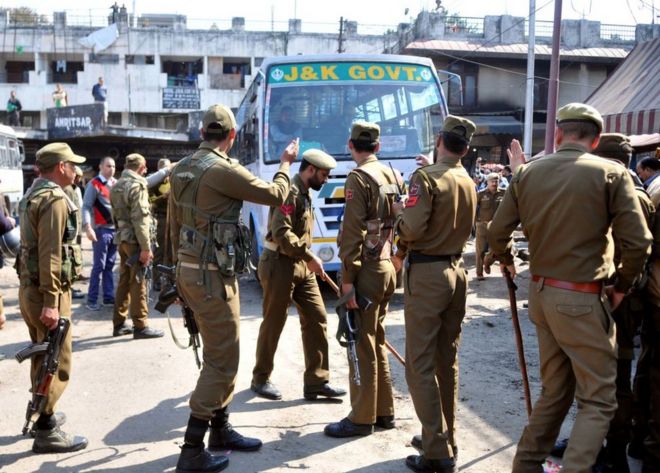 Image copyrightGETTY IMAGES
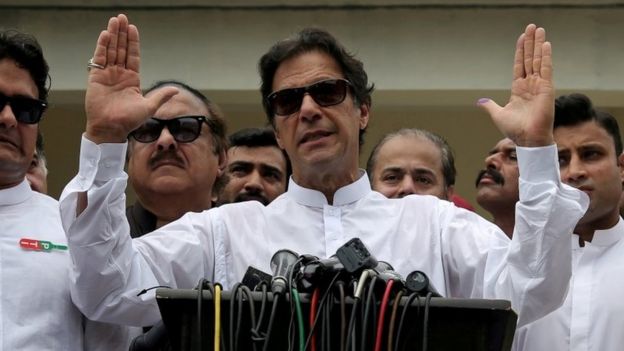 Image copyrightREUTERS




 CHINDIA ALERT: You'll be living in their world, very soon