Archive for ‘Landslide’

20/05/2020

Taiwan president rejects Beijing rule; China says ‘reunification’ inevitable

TAIPEI (Reuters) – Taiwan cannot accept becoming part of China under its “one country, two systems” offer of autonomy , President Tsai Ing-wen said on Wednesday, strongly rejecting China’s sovereignty claims and likely setting the stage for an ever worsening of ties.

China responded that “reunification” was inevitable and that it would never tolerate Taiwan’s independence.

In a speech after being sworn in for her second and final term in office, Tsai said relations between Taiwan and China had reached an historical turning point.

“Both sides have a duty to find a way to coexist over the long term and prevent the intensification of antagonism and differences,” she said.

Tsai and her Democratic Progressive Party won January’s presidential and parliamentary elections by a landslide, vowing to stand up to China, which claims Taiwan as its own and says it would be brought under Beijing’s control by force if needed.

“Here, I want to reiterate the words ‘peace, parity, democracy, and dialogue’. We will not accept the Beijing authorities’ use of ‘one country, two systems’ to downgrade Taiwan and undermine the cross-strait status quo. We stand fast by this principle,” Tsai said.

China uses the “one country, two systems” policy, which is supposed to guarantee a high degree of autonomy, to run the former British colony of Hong Kong, which returned to Chinese rule in 1997. It has offered it to Taiwan, though all major Taiwanese parties have rejected it.

China’s Taiwan Affairs Office, responding to Tsai, said Beijing would stick to “one country, two systems” – a central tenet of Chinese President Xi Jinping’s Taiwan policy – and “not leave any space for Taiwan independence separatist activities”.

“Reunification is a historical inevitability of the great rejuvenation of the Chinese nation,” it said. “We have the firm will, full confidence, and sufficient ability to defend national sovereignty and territorial integrity.”

China views Tsai as a separatist bent on formal independence for Taiwan. Tsai says Taiwan is an independent state called the Republic of China, its official name, and does not want to be part of the People’s Republic of China governed by Beijing.

TAIWAN OPEN TO DIALOGUE

China has stepped up its military drills near Taiwan since Tsai’s re-election, flying fighter jets into the island’s air space and sailing warships around Taiwan.

Tsai said Taiwan has made the greatest effort to maintain peace and stability in the narrow Taiwan Strait that separates the democratic island from its autocratic neighbour China.

“We will continue these efforts, and we are willing to engage in dialogue with China and make more concrete contributions to regional security,” she added, speaking in the garden of the old Japanese governor’s house in Taipei, in front of a socially-distanced audience of officials and diplomats.

Taiwan has become a rising source of friction between China and the United States, with the Trump administration strongly backing Taiwan even in the absence of formal diplomatic ties.

U.S. Secretary of State Mike Pompeo sent his congratulations to Tsai on Tuesday, praising her “courage and vision in leading Taiwan’s vibrant democracy”, in a rare high-level message from Washington direct to Taiwan’s government.

China’s Foreign Ministry condemned Pompeo’s remarks, and said the government would take “necessary countermeasures”, though did not elaborate.

China cut off a formal talks mechanism with Taiwan in 2016 after Tsai first won election.

Yao Chia-wen, a senior adviser to Tsai, told Reuters the chance of talks with China were small given ongoing tensions.

“We are ready to engage with them any time, but China is unlikely to make concessions to Taiwan,” he said. “In the next four years there’s little chance for the cross-strait relationship to improve.”

Source: Reuters
31/03/2020

Rail repair underway after train derails in central China

CHANGSHA, March 30 (Xinhua) — Railway repair is well underway after a train derailed in the city of Chenzhou in central China’s Hunan Province Monday that killed one and injured 127.

The accident happened in Yongxing County at 11:40 a.m. when the train ran into a landslide, leaving five carriages derailed. The power generation car caught on fire.

The fire has been put out and all of the injured have been sent to hospital, with four in serious condition, local authorities said.

There were 691 people on board the train when the derailment occurred, rescuers said. Except for those injured that were sent to hospital, other passengers took shelter in a nearby primary school until buses were sent to deliver them to a high-speed railway station.

“We volunteered to cook noodles and dress the wounds of several hundred passengers in the school until they were picked up,” said Liu Guijiao, a local villager.

He Zhiwen from China Railway Guangzhou Group told Xinhua that about 380 meters of tracks need repair. The engineering department has prepared 450 meters of tracks and 1,600 railroad ties.

Carriages will be removed after the repairs are completed, but the time for the traffic to resume has not been decided yet.

He said over 1,000 workers have been sent along with seven excavators, six railcars, two large tampers and three relief trains.

“We will try our best to resume traffic as soon as possible,” said an engineer on site.

The train, T179, was running from the city of Jinan, east China’s Shandong Province, to Guangzhou in south China’s Guangdong Province.

The group said 88 trains on the southern section of the Beijing-Guangzhou railway have been affected, including 54 suspensions, 22 returns and 12 detours.

Source: Xinhua

19/10/2019

After parliamentary win, India’s BJP set to sweep state elections-poll

NEW DELHI/MUMBAI (Reuters) – India’s ruling Bharatiya Janata Party (BJP) is set to sweep two state polls next week, the first since Prime Minister Narendra Modi’s landslide win in a parliamentary election in May, a leading pollster said.

The BJP is set to comfortably win elections in the western state of Maharashtra and the northern state of Haryana, leaving the main opposition Congress party trailing, according to a survey by polling agency CVoter released on Friday.

CVoter estimates that a BJP-led alliance in Maharashtra will pick up 194 of the 288 seats on offer. In Haryana, the party is predicted to win 83 of the state’s 90 seats, leaving just three for Congress.

Voting in the elections will be held on Monday with the results expected to be announced on Thursday.

Several Congress party officials conceded they had all but given up hope of posing a serious challenge to Modi and the BJP.

In particular, the resignation of Congress chief Rahul Gandhi in July, after weeks of drama following the loss to the BJP in the general election, has sown internal confusion, triggering infighting and exits, two party officials in New Delhi said.

“It’s going to be a rout, and it will deflate morale even further,” one of the officials said, referring to the state elections. “It’s like a slow-moving disaster.”

They requested anonymity because they are not authorised to speak to the media.

Pranav Jha, the secretary in charge of Congress’s communication department, said the party was undergoing a period of “cleansing and churning” and remained committed to taking on the BJP.

“The people of India…can see through the diversionary drama of the ruling party, and realise that jobs, economy and issues of farmers can only be put on track by the Congress party,” Jha told Reuters.

Modi, analysts say, has moved decisively, including withdrawing special rights for Muslim-majority Jammu and Kashmir state, and consolidating the BJP’s hold over India’s Hindu-majority electorate.

INFIGHTING, INDIFFERENCE

In Maharashtra, one of India’s most industrialised states which includes Mumbai, two Congress officials said the top leadership’s relative indifference and infighting had hurt their already weak campaign.

Congress’s state wing had asked for Gandhi, his mother and current party chief Sonia Gandhi, and his charismatic sister Priyanka Gandhi Vadra to join the campaign, one of the two officials said.

But only Rahul Gandhi came and spoke at a handful of rallies.

“Senior leaders from BJP have covered every district. They have been visiting Maharashtra for the last two months to build momentum,” said one Congress official, who is contesting the upcoming poll.

“There wasn’t any concrete effort from Congress leaders in New Delhi to give energy to our cadre,” he said.

The list of recent resignations from the party include Ashok Tanwar, Congress’s former chief in Haryana who quit earlier this month and is now campaigning against his old party.

“The state of affairs in the Congress party is so dire that the decision makers can’t win an election themselves, while the soldiers on ground who stay in touch with the masses are neglected,” Tanwar wrote in his resignation letter.

The situation has even riled Congress allies. Two leaders from the Nationalist Congress Party, which is in alliance with the Congress in Maharashtra, said their partner was slack.

“It looks like Congress is not very serious about the state elections,” one of the leaders said. “Congress is not in the picture. Congress leaders are not attacking the ruling party the way we expected.”

In New Delhi, Congress officials said there was a sense of inertia at the party headquarters, without any understanding of who will become president after Sonia Gandhi, who is only holding charge temporarily.

“Without a clear leadership, nothing is going to change,” one of the officials said, “If it continues like this, the party will fade away.”

Source:Reuters

10/08/2019

Typhoon Lekima: 13 dead and a million evacuated in China

At least 13 people have been killed and more than a million forced from their homes as Typhoon Lekima hit China.

Sixteen people were also missing after a landslide was triggered by the storm, state media reported.

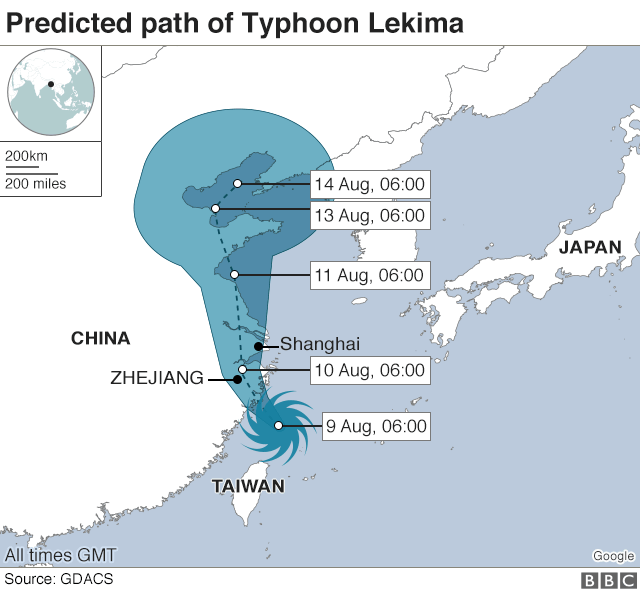
Lekima made landfall in the early hours of Saturday in Wenling, between Taiwan and China’s financial capital Shanghai.

The storm was initially designated a “super typhoon”, but weakened slightly before landfall – when it still had winds of 187km/h (116mph).

The fatal landslide happened when a dam broke in Wenzhou, near where the storm made landfall, state media said.

Lekima is now slowly winding its way north through the Zhejiang province, and is expected to hit Shanghai, which has a population of more than 20 million.

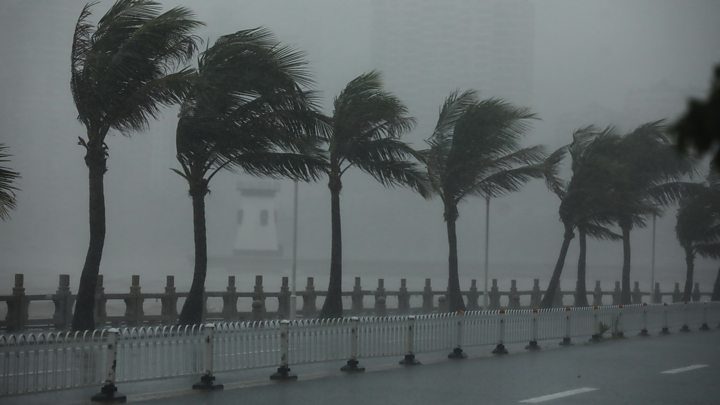
Emergency crews have battled to save stranded motorists from floods. Fallen trees and power cuts are widespread.

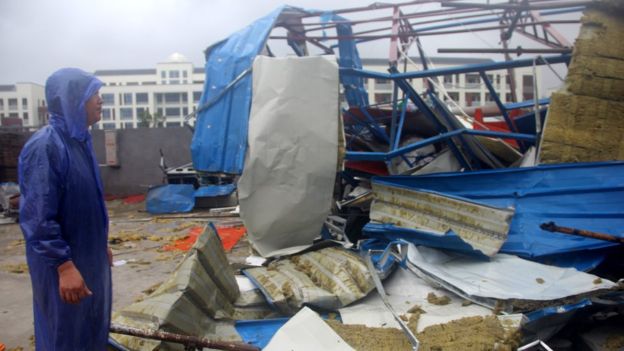
A worker searches for his belongings in a shelter brought down by Typhoon Lekima at a construction site in Wenling, Zhejiang province, China, 10 August 201Image copyright EPA
Image caption A worker looks for his belongings at a construction site shelter collapsed by the storm

Authorities have cancelled more than a thousand flights and cancelled train services as the city prepares for the storm.

It is expected to weaken further by the time it reaches Shanghai, but will still bring a high risk of dangerous flooding.

Predicted path of Typhoon Lekima
The city evacuated some 250,000 residents, with another 800,000 in the Zhejiang province also being taken from their homes.

An estimated 2.7 million homes in the region lost power as power lines toppled in the high winds, Chinese state media said.

It is the ninth typhoon of the year, Xinhua news said – but the strongest storm seen in years. It was initially given China’s highest level of weather warning but was later downgraded to an “orange” level.

Media caption Typhoon Lekima inches towards China

Chinese weather forecasters said the storm was moving north at just 15km/h (9mph).

It earlier passed Taiwan, skirting its northern tip and causing a handful of injuries and some property damage.

Coming just a day after a magnitude six earthquake, experts warned that the combination of earth movement and heavy rain increased the risk of landslides.

Lekima is one of two typhoons in the western Pacific at the moment.

Further east, Typhoon Krosa is spreading heavy rain across the Northern Mariana Islands and Guam. It is moving north-west and could strike Japan some time next week, forecasters said.

Source: The BBC

10/08/2019

Typhoon in eastern China causes landslide, killing 18 people

BEIJING (Reuters) – Eighteen people were killed and 14 were missing in eastern China on Saturday in a landslide triggered by a major typhoon, which caused widespread transport disruptions and the evacuation of more than one million people, state broadcaster CCTV reported.

Typhoon Lekima made landfall early on Saturday in the eastern province of Zhejiang with maximum winds of 187 km (116 miles) per hour, although it had weakened from its earlier designation as a “super” typhoon, the official Xinhua news agency reported.

Thousands of flights were cancelled in eastern China, according to the country’s aviation regulator, with most flights into and out of Shanghai’s two major airports cancelled on Saturday afternoon, their websites showed.

China’s weather bureau on Saturday issued an orange alert, its second highest, after posting a red alert on Friday, when the storm forced flight cancellations in Taiwan and shut markets and businesses on the island.

The deadly landslide occurred about 130 km north of the coastal city of Wenzhou, when a natural dam collapsed in an area deluged with 160 millimetres (6.3 inches) of rain within three hours, CCTV reported.

The storm was moving northward at 15 kph and was gradually weakening, Xinhua reported, citing the weather bureau.

High winds and heavy rains battered the financial hub of Shanghai on Saturday afternoon, and Shanghai Disneyland was shut for the day.

Nearly 200 hundred trains through the city of Jinan in Shandong province had been suspended until Monday, Xinhua reported.

More than 250,000 residents in Shanghai and 800,000 in Zhejiang province had been evacuated due to the typhoon, and 2.72 million households in Zhejiang had power blackouts as strong wind and rain downed electricity transmission lines, state media reported.

Some 200 houses in six cities in Zhejiang had collapsed, and 66,300 hectares (163,830 acres) of farmland had been destroyed, CCTV said.

The storm was predicted to reach Jiangsu province by the early hours of Sunday and veer over the Yellow Sea before continuing north and making landfall again in Shandong province, CCTV said.

Coastal businesses in Zhejiang were shut and the Ministry of Emergency Management warned of potential risk of fire, explosions and toxic gas leaks at chemical parks and oil refineries.

Source: Reuters

07/07/2019

China’s Sichuan earthquake death toll rises to 12, with 134 injured

  • Authorities report roads closed and 10,000 buildings damaged after magnitude 6.0 quake on Monday night
  • More than 100,000 people affected
Residents gather in the open in Changning county on Monday night after a magnitude 6.0 hit the area. Photo: Xinhua
The death toll from a strong earthquake which hit the southern Chinese province of Sichuan late on Monday night has risen to 12, with 134 people injured.
More than 100,000 people were affected – mostly in the epicentre at Changning county in Yibin, while more than 10,000 buildings were damaged, according to a statement by the local government on Tuesday.
Land subsidence and a landslide caused by the magnitude 6.0 quake, blocked a highway, several major roads and numerous village roads, the statement said, while a major bridge in the area was also at risk.
The Yixu highway in Changning had been closed and authorities were assessing the Dongdi Bridge. The Yibin government statement also said workers had been sent to clear the affected village roads.

According to the US Geological Survey, the earthquake was centred at a fairly shallow depth of 10km (6 miles). Shallow earthquakes tend to cause more damage to buildings and infrastructure.

An aftershock measuring magnitude 5.2 later hit the same area, the USGS said.

More than 300 firefighters were sent to the scene overnight, as well as rescue personnel with 5,000 tents, 10,000 folding cots and other emergency supplies, according to state news agency Xinhua.

In 2008, China’s worst earthquake in recent years struck the mountainous western portion of Sichuan province, leaving 87,000 dead, 370,000 injured and 5 million people homeless. That earthquake was about 400km (249 miles) from Monday’s earthquake.

A 1976 earthquake centred in the northeastern city of Tangshan killed at least 250,000 people.

Source: SCMP

Law of Unintended Consequences

continuously updated blog about China & India

ChiaHou's Book Reviews

continuously updated blog about China & India

What's wrong with the world; and its economy

continuously updated blog about China & India