
Photo taken on May 18, 2020 shows an exhibit at the Liaoning Provincial Museum in Shenyang, northeast China’s Liaoning Province. May 18 marks the International Museum Day. (Xinhua/Yao Jianfeng)
Source: Xinhua
continuously updated blog about China & India

You will be living in their world, very soon

Beware the Waking Dragon
Photo taken on May 18, 2020 shows an exhibit at the Liaoning Provincial Museum in Shenyang, northeast China’s Liaoning Province. May 18 marks the International Museum Day. (Xinhua/Yao Jianfeng)
Source: Xinhua
.
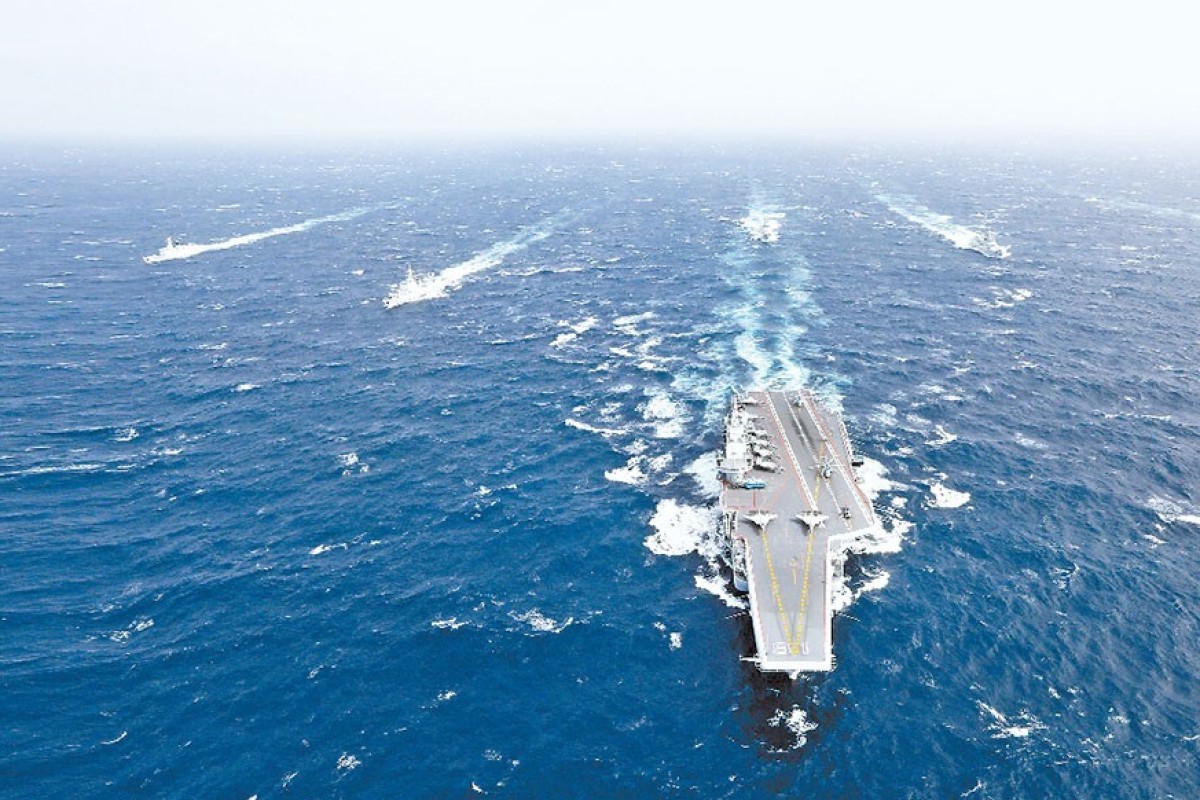
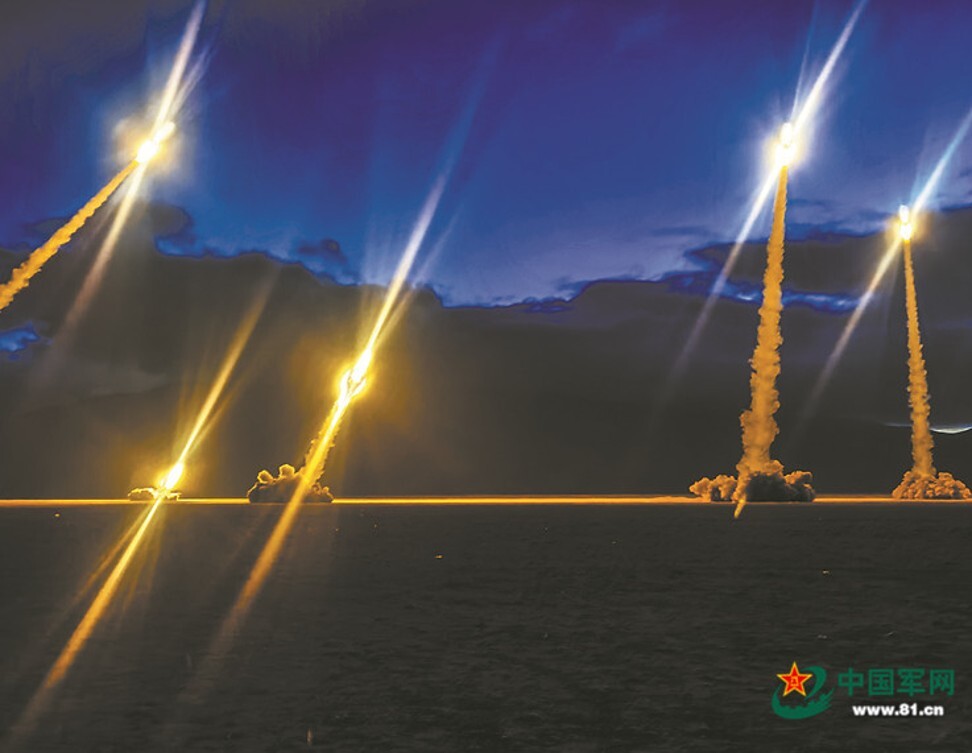
The ground forces, navy and air force of the PLA’s five theatre commands started military drills this month, with some exercises involving joint operations, according to several reports published by the PLA Daily in recent days.
As the epidemic surged in China, the PLA was forced to suspend all large-scale joint drills because of disruptions to transport and allocations of military resources around the country.
, sailed through the Miyako Strait – just 330km (205 miles) due east of the northernmost tip of Taiwan – on its way to the western Pacific.
The reappearance of the Liaoning strike group prompted Taiwan to send warships, while the US sent a P-3C Orion anti-submarine aircraft to follow the Chinese flotilla. Taiwanese media reported that the aircraft was the seventh American warplane sent to the region in a week.
Hong Kong-based military analyst Song Zhongping said the Liaoning’s appearance near Taiwan was not only a demonstration of military deterrence to the independence-leaning ruling party in Taiwan, but also a gesture to show off the PLA’s greater ability to contain the coronavirus pandemic than its American counterpart.
“Compared with the PLA, the United States military is weaker and lacks experience in dealing with non-traditional military operations such as battles against epidemics, because those aspects are mostly carried by the US National Guard in various states,” Song said.
“Since the threat of Covid-19 is decreasing, the PLA needs to return to their regular training to prepare for a war to reunify Taiwan by force when necessary. The possible war is very complicated as it [would] involve dealing with foreign militaries, such as US and Japanese navies.”
Beijing-based military expert Zhou Chenming said that the PLA so far had been able to control the infection sources and channels among soldiers and officers, but that the threat of Covid-19 remained.
In pictures published by the PLA Daily, PLA officers do not wear masks while conducting drills.
“Using force to take Taiwan back is still the last step, not the first priority,” Zhou said. “How to manage and maintain Taiwan’s prosperity is the most important issue of the cross-strait relationship.”
Song said the PLA still believed the US Navy had maintained a degree of combat capability even though hundreds of US sailors were infected by the novel coronavirus.
Source: SCMP
SHANGHAI (Reuters) – China’s authorities plan stronger steps to revive an economy hit by the spread of coronavirus, as the nation on Saturday reported no new locally transmitted infections for the previous day.
The ruling Communist Party’s Politburo said on Friday it would step up macroeconomic policy adjustments and pursue more proactive fiscal policy, state media reported. With the world’s second-biggest economy expected to shrink for the first time in four decades this quarter, China is set to unleash hundreds of billions of dollars in stimulus.
The Politburo called for expanding the budget deficit, issuing more local and national bonds, guiding interest rates lower, delaying loan repayments, reducing supply-chain bottlenecks and boosting consumption.
“We expect government ministries to roll out more tangible measures in the coming weeks as this Politburo meeting gave them no choice but to do more,” Goldman Sachs analysts said in a note.
The Politburo did not elaborate on plans for the central government to issue special treasury bonds, which would be the first such issuance since 2007.
Restrictions on foreigners entering the country went into effect on Saturday, as China reported no new locally transmitted infections and a small drop in so-called imported cases.
Airlines have been ordered to sharply cut international flights from Sunday.
Beijing has in recent days emphasised the risk posed by imported virus cases after widespread lockdowns within China helped to sharply reduce domestic transmissions. The Politburo said it would shift its focus to prevent more imported cases and a rebound in locally transmitted infections.
“We must be extremely vigilant and cautious, and we must prevent the post-epidemic relaxation from coming too soon, leading to the loss of all our achievements,” the Communist Party’s official People’s Daily newspaper said in a front-page editorial.
The authorities also reversed planned reopenings of movie theatres, the state-owned China Securities Journal reported, citing sources.
China’s National Health Commission said on Saturday that 54 new coronavirus cases were reported on the mainland on Friday, all imported cases. There were 55 new cases a day earlier, one of which was transmitted locally.
The number of infections for mainland China stands at 81,394, with the death toll rising by three to 3,295, the commission said.
Hubei province reported no new cases, and three new deaths. The province of 60 million, where the virus was first detected, has recorded 67,801 coronavirus cases and 3,177 deaths.
Shanghai reported the highest number of new cases, with 17. An additional 11 cases were reported in Guangdong, six in Fujian, five in Tianjin, four in Zhejiang, three each in Beijing and Liaoning, two each in Inner Mongolia and Jilin, and one in Shandong.
Chinese President Xi Jinping told U.S. President Donald Trump on Friday that China would support U.S. efforts to fight the coronavirus.
The number of confirmed cases of coronavirus in the United States rose by at least 16,000 on Friday to nearly 102,000, the most of any country.
George Gao, the director-general of the Chinese Center for Disease Control and Prevention, urged people to wear masks to control the virus’s spread overseas.
Gao told the journal Science in an interview published late on Friday that the “big mistake in the United States and Europe has been the failure to wear masks, which “can prevent droplets that carry the virus from escaping and infecting others.”
Source: Reuters
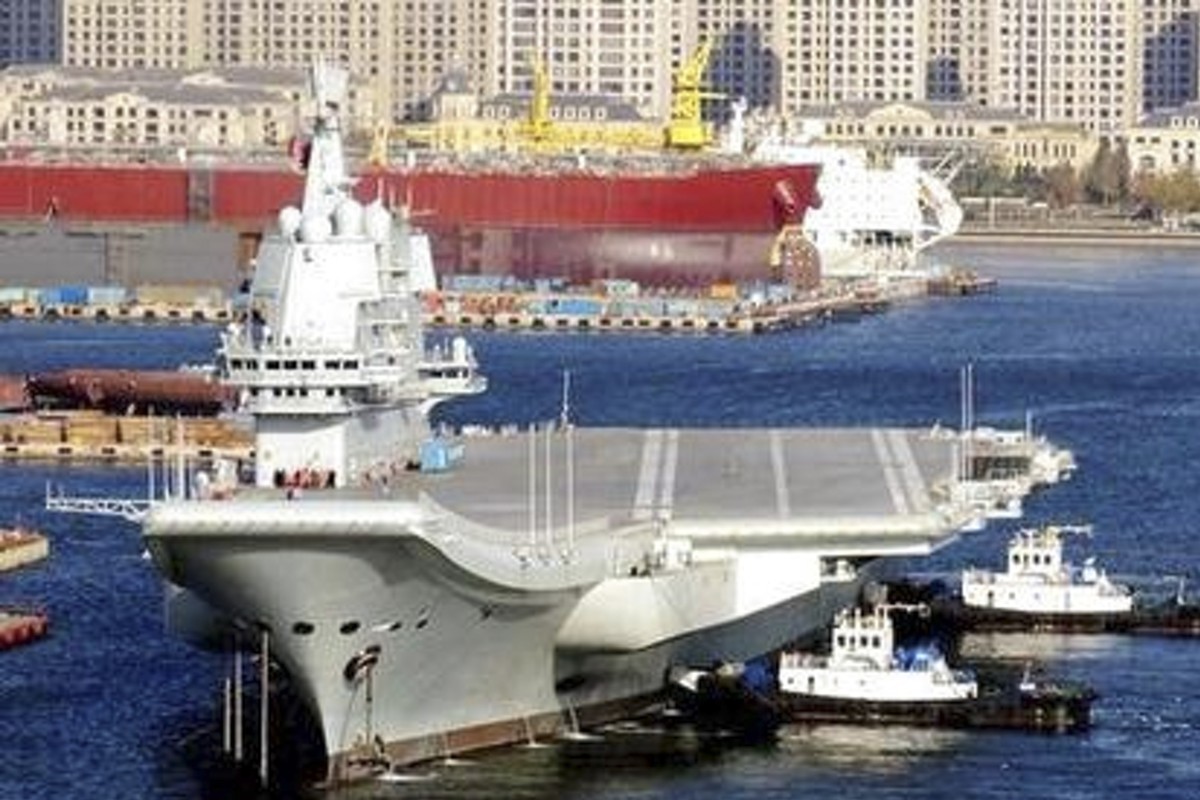
Work on the more modern Type 002 carrier started two years ago and a naval source told the South China Morning Post that construction of a second Type 002 vessel could begin as early as 2021.
But they will need suitable carrier pilots to take command.
“It’s quite an urgent need for the Chinese navy to have carrier group commanders – like its Western counterparts do – who are capable of commanding different warships and aircraft in modern joint-operation combat situations,” Li said.
China to deploy Sharp Sword stealth drone for new Type 001A aircraft carrier
“Aircraft carrier strike groups are supposed to sail on the high seas and into unfamiliar territory, so aside from having a background as naval aviators, all commanding officers should have a broad set of skills and knowledge – from foreign languages and international maritime law to air and sea operations – to help them make good decisions,” he said.
Other navies, such as the United States Navy, require more experience for the role – commanding officers of US aircraft carriers must be former naval aviators as well as former captains of different types of warships.
For example, Captain Pat “Fin” Hannifin, commanding officer of the Nimitz-class aircraft carrier USS Ronald Reagan, has over 2,800 flight hours in 33 different aircraft under his belt. He was also executive officer on another aircraft carrier and commander of an amphibious transport dock.
Rear Admiral Li Xiaoyan, the first captain of China’s only active aircraft carrier, the Liaoning, was a pilot with no experience on carrier-borne aircraft, though he did have experience on a destroyer and frigates. He was replaced by Zhang Zheng just days after the Liaoning formally joined the PLA Navy in 2012, and later by Liu Zhe – neither of whom had naval aviator backgrounds.
Li Xiaoyan was one of the first group of 10 pilots selected for a training programme designed specifically for China’s future aircraft carriers back in 1987. But the whole aircraft carrier plan was suspended in 1998 by premier Zhu Rongji for political and economic reasons, according to China’s Carrier, a book published by China Development Press.
China’s navy begins national search for trainee top-gun pilots
Naval expert Li Jie said the Chinese navy now had to catch up in terms of training pilots, and especially commanding officers, for its aircraft carriers.
“China resumed the aircraft carrier plan and in 2004 started refitting the hull of the Varyag. But after that first group of pilots was trained in 1987, there was no formal training in air and sea operations because there was no aircraft carrier training platform until 2012,” Li said, referring to the unfinished Admiral Kuznetsov-class vessel China bought from Ukraine in 1998, which became the Liaoning.
He said the latest training programme for commanding officers was a continuation of the one that began more than 30 years ago.
Source: SCMP
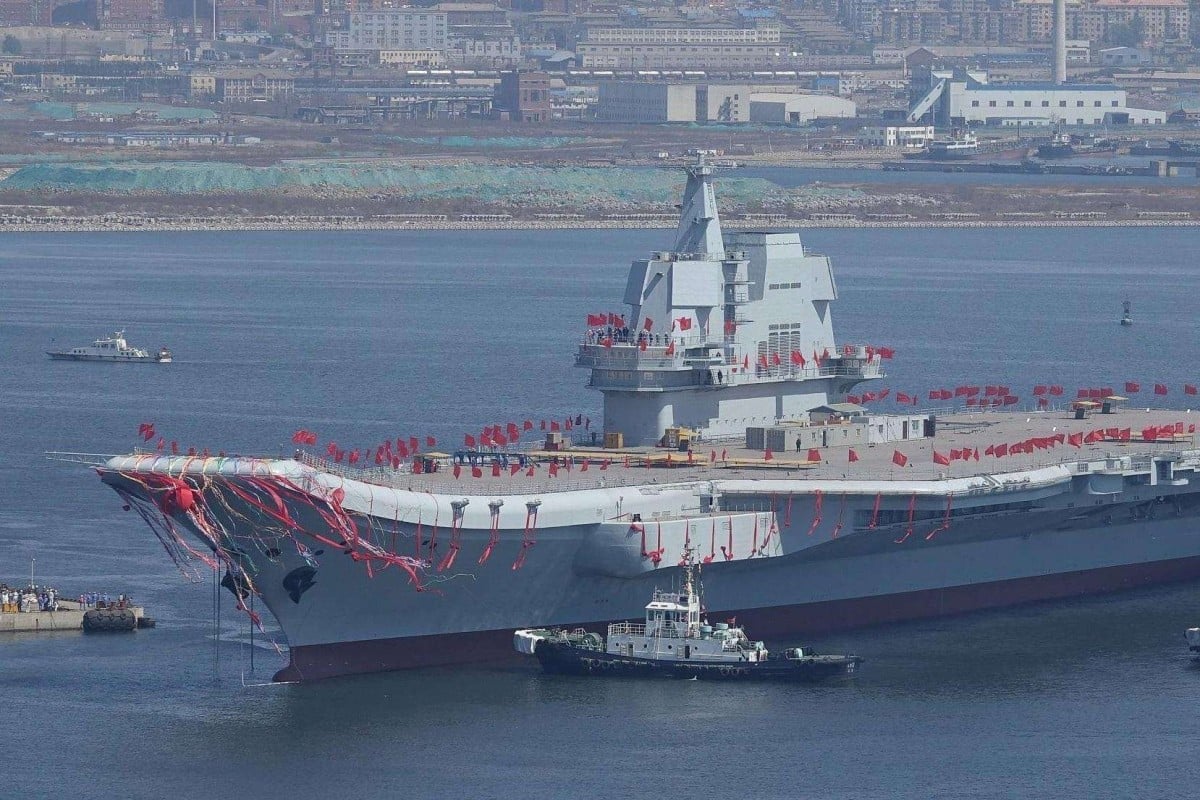
China’s first home-grown aircraft carrier, Type 001A, will be commissioned within months, according to military observers.
The ship appeared to have set off on its eighth sea trial on Tuesday after photographs taken by a plane flying over a restricted area showed a carrier, with a warplane on deck, leaving the Dalian Shipyard, where the carrier is being built.
The timing coincided with a notice issued by China’s Maritime Safety Administration, saying an area of the Bohai Sea, near the yard would be cordoned off for military activities.
While the commissioning would mark an advance in China’s naval capacity, some analysts noted that the trial phase was taking longer than expected.
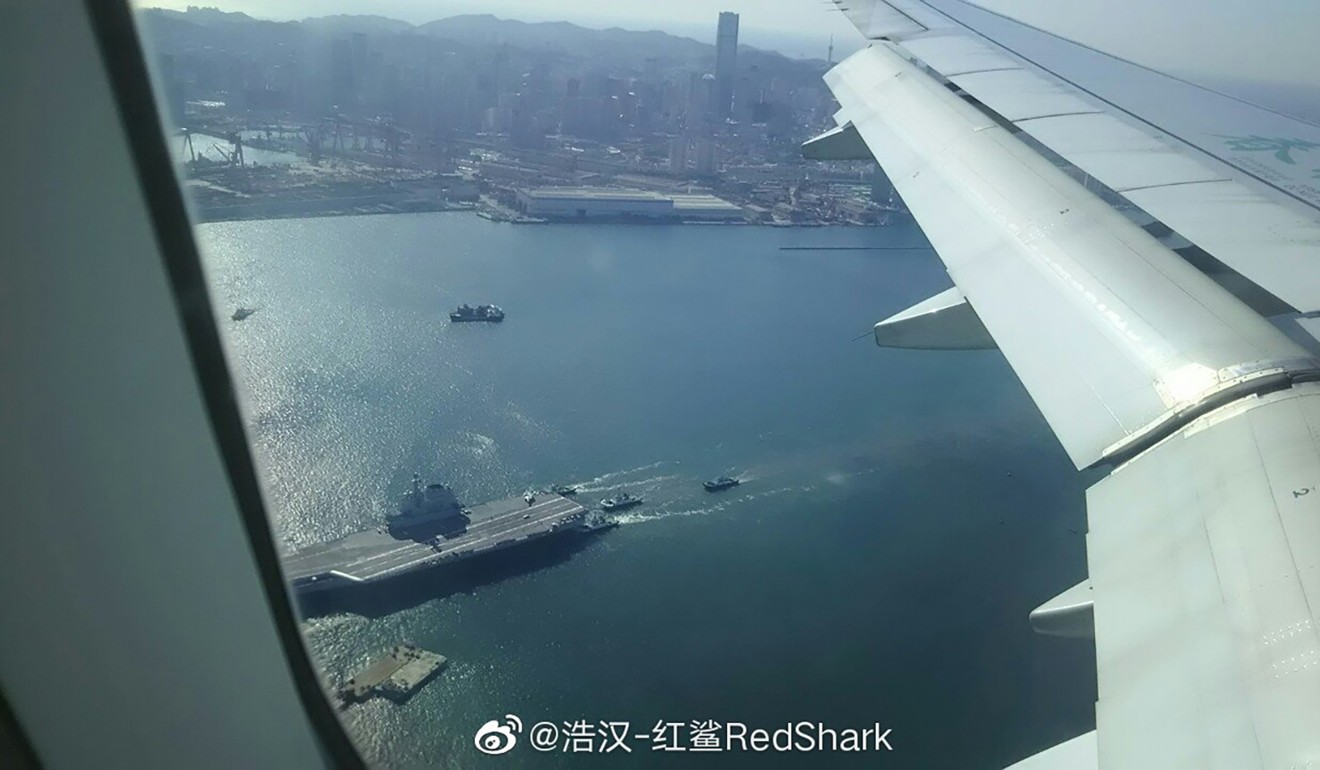
Global Times, a tabloid affiliated to Communist Party mouthpiece People’s Daily, quoted naval observer Li Jie as saying that the Type 001A was likely to be undertaking its eighth sea trial after solving problems discovered in the previous trials.
Zhou Chenming, a Beijing based military expert, said that the Type 001A’s commissioning had already been postponed and the major problem now was a lack of shipborne aircraft and problems with the flight control system.
Zhou said the control system worked with J-15 fighters, which will be the primary jets used on the ship, but “is not yet compatible with other aircraft, which hinders the aircraft carrier’s final commissioning”.
Once commissioned, the ship will join the country’s first carrier, the Liaoning, at sea, boosting the country’s naval capacity.
Collin Koh, a research fellow at the Institute of Defence and Strategic Studies from Singapore’s Nanyang Technological University, said: “With two aircraft carriers, the PLA Navy will have greater chances to hone its carrier capabilities – conducting more missions, training, and all of these contributing to the accumulation of expertise and know-how.
“This means qualitatively improving [its] carrier capability, including human capital.
“For long-term strategic significance, it means an expanding power projection capability of the PLAN that allows it to promote presence in regions where Beijing asserts national interests.”
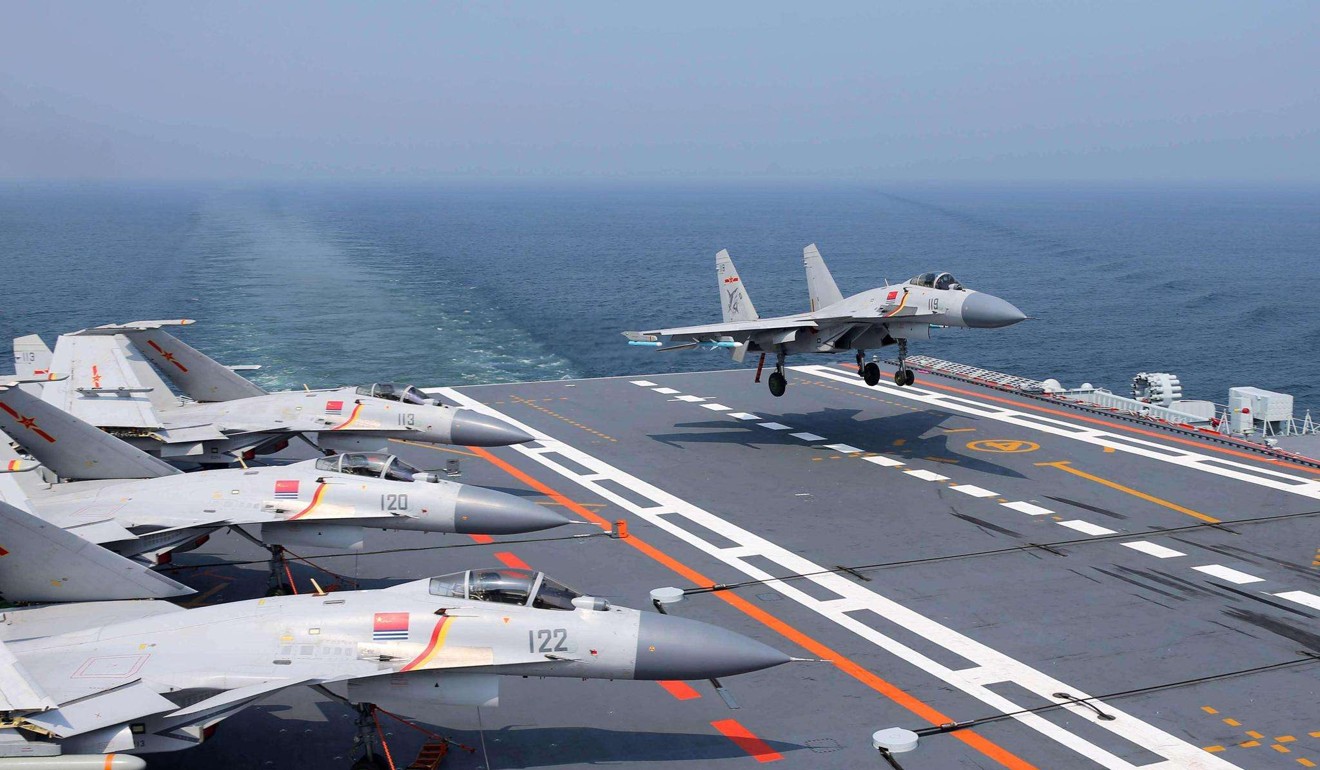
The Type 001A’s trial phase has taken longer than some military observers had expected. The aircraft carrier set out for its first sea trial in May 2018, some 17 months ago.
By comparison, the Liaoning, a former Soviet Kuznetsov-class vessel underwent 10 sea trials over a 13-month period before it was commissioned.
The ship also features a ski-jump deck for take-offs, has a displacement of 70,000 tonnes and will be able to carry a total of 40 aircraft.
Source: SCMP
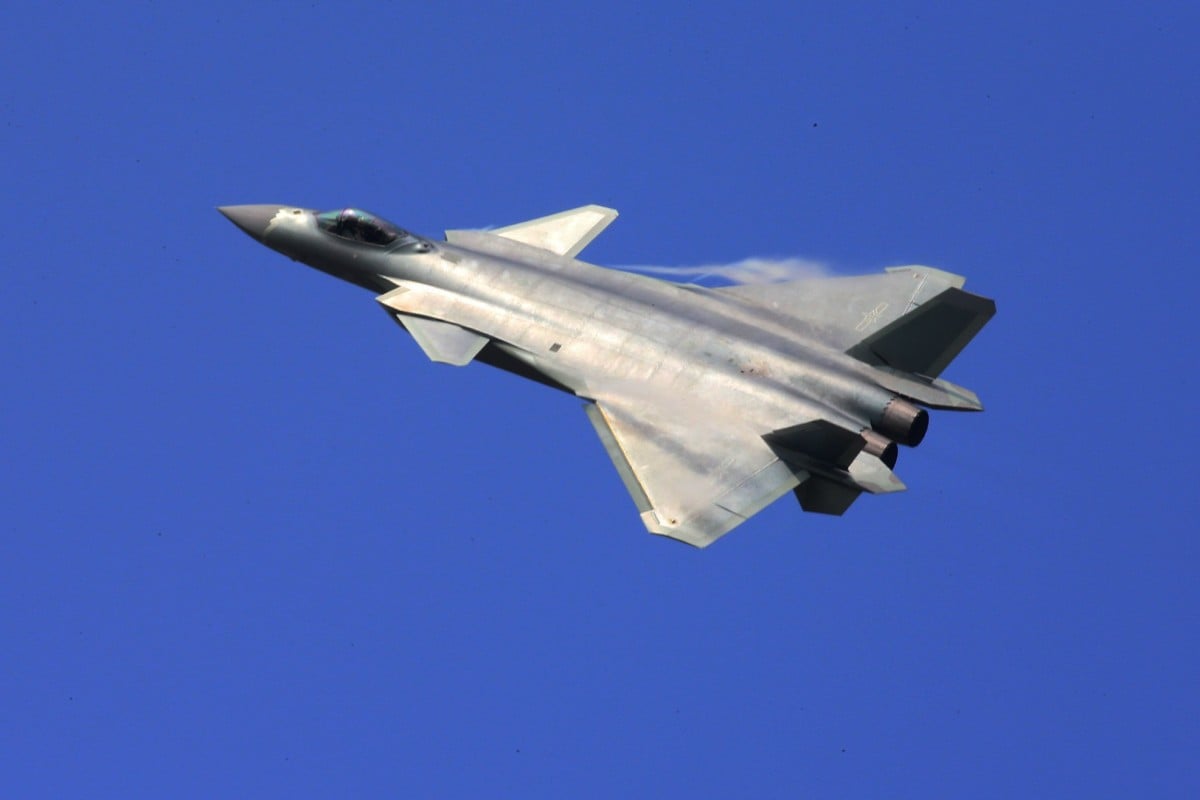
China’s military is likely to pick the country’s first active stealth fighter, the J-20, for its next generation aircraft carriers, according to military sources and a recent report on state media.
The J-20, made by the Chengdu Aerospace Corporation (CAC), appears to have a won a head-to-head contest with the FC-31, a fighter made by another company which is still undergoing testing.
A military insider told the South China Morning Post that the Central Military Commission, the People’s Liberation Army’s top decision-making body, now favoured adapting the J-20 for its new carriers.
“The Chengdu Aerospace Corporation will announce some new products, which will include a new version of their J-20. You can guess what type it will be,” the military insider, who requested anonymity because of the sensitivity of the subject, said.
The FC-31 was independently developed by CAC’s sister company Shenyang Aircraft Corporation (SAC), which also produced the J-15 – the jets currently in use on the country’s only active aircraft carrier, the Liaoning.
Both aerospace firms are subsidiaries of the state-owned giant Aviation Industry Corporation of China, which specialises in designing and developing military aircraft, and were set up to ensure benign competition between manufacturers.
However, the SAC has faced criticism from some military leaders and experts for being too conservative and failing to innovate because of its bureaucratic structure.
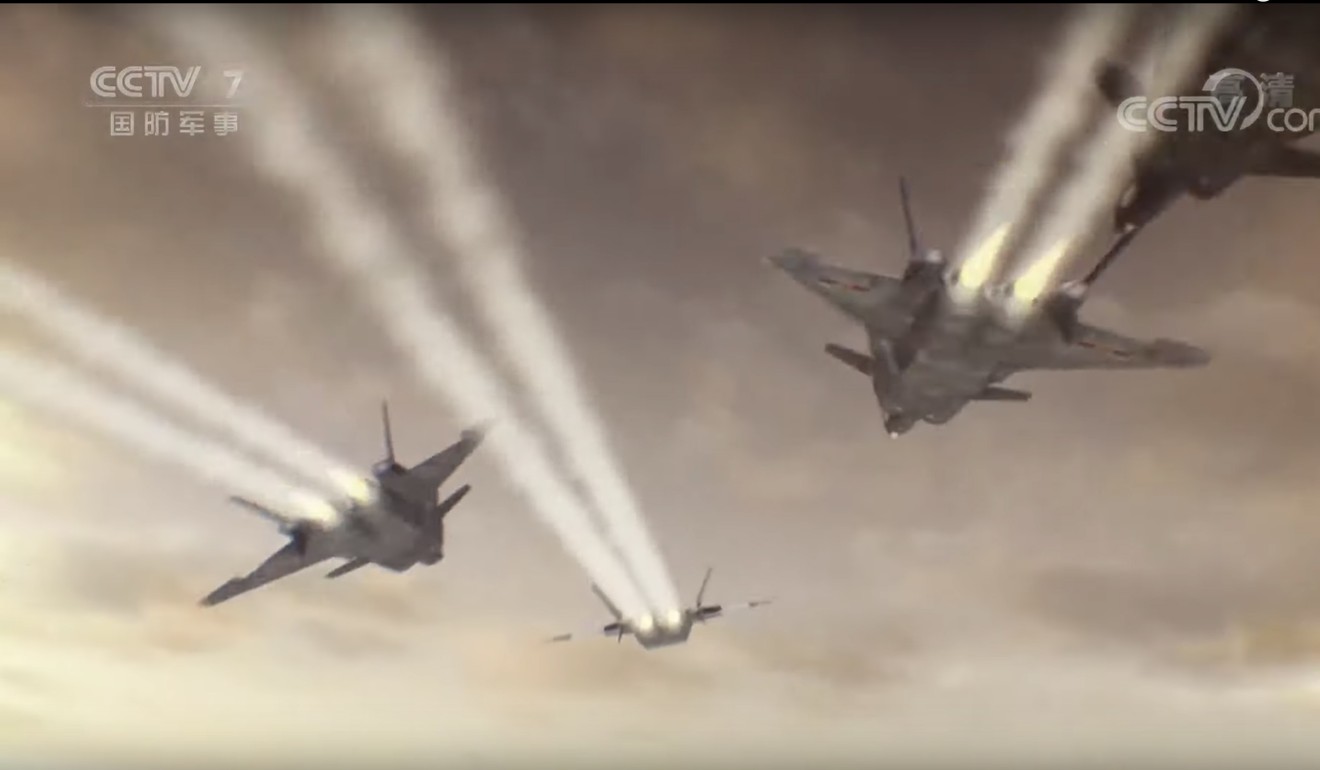
A recent programme aired by the state broadcaster China Central Television also suggests the J-20 will be chosen.
An episode of Military Documentary shown on August 16 reported how the PLA Navy was selecting candidates for pilot training and illustrated the feature with a mock-up of jets that looked like J-20s taking off from a carrier.
Ground-based J-20s – also known as Powerful Dragons – entered service with the PLA Air Force in 2017.
as China stepped up its efforts to counter the deployment of American F-22s and F-35s in the Asia-Pacific region.
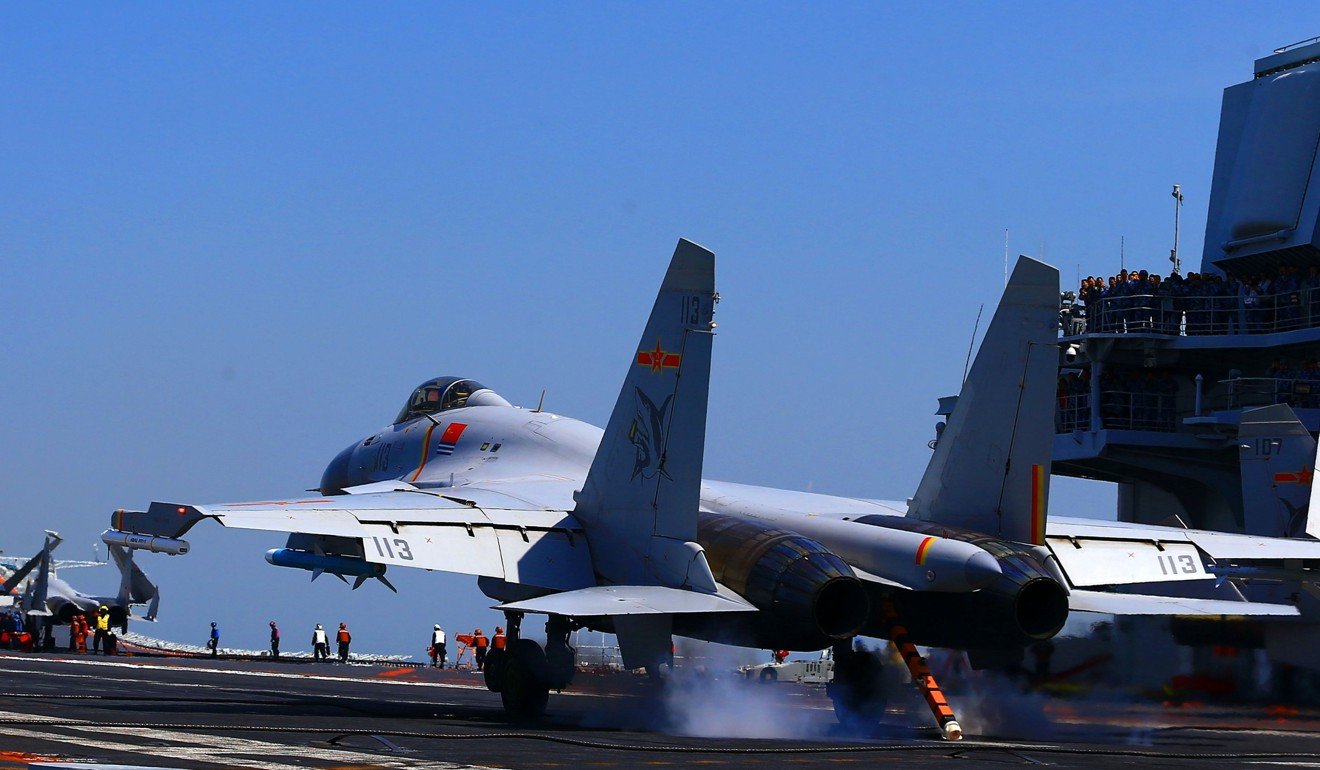
If the selection of the J-20 is confirmed it will mark the end of a lengthy debate between its supporters and advocates of the FC-31 as to which would make a better carrier-based fighter.
Those who favoured the J-20 said it was more advanced and reliable than the FC-31, but its supporters said it was more light and nimble.
“Both the J-20 and FC-31 have their advantages. The size of the J-20 is similar to the J-15 since both are powerful heavy fighters,” Song Zhongping, a military commentator for Hong Kong-based Phoenix Television, said.
Song said the lighter FC-31 could be developed into a medium-sized carrier fighter that would complement the J-20 in future.
But another military source close to the PLA Navy said it would be almost impossible to develop both aircraft over the next few years given the risk of an economic downturn as the trade war with the US continues to escalate.
The source said China’s next generation aircraft carriers would be with equipped electromagnetic catapults similar to those used on the US Navy’s Ford-class supercarriers.
These enable the use of heavier fighters because they are more powerful than the older diesel systems used on older carriers.
“The key problem of the J-20 is not weight, but length. If it wants to be a carrier-based fighter jet, it needs to be made shorter.”
Military insiders have previously said that CAC engineers are working to produce a shorter version of the J-20 that will work with the new launch system.
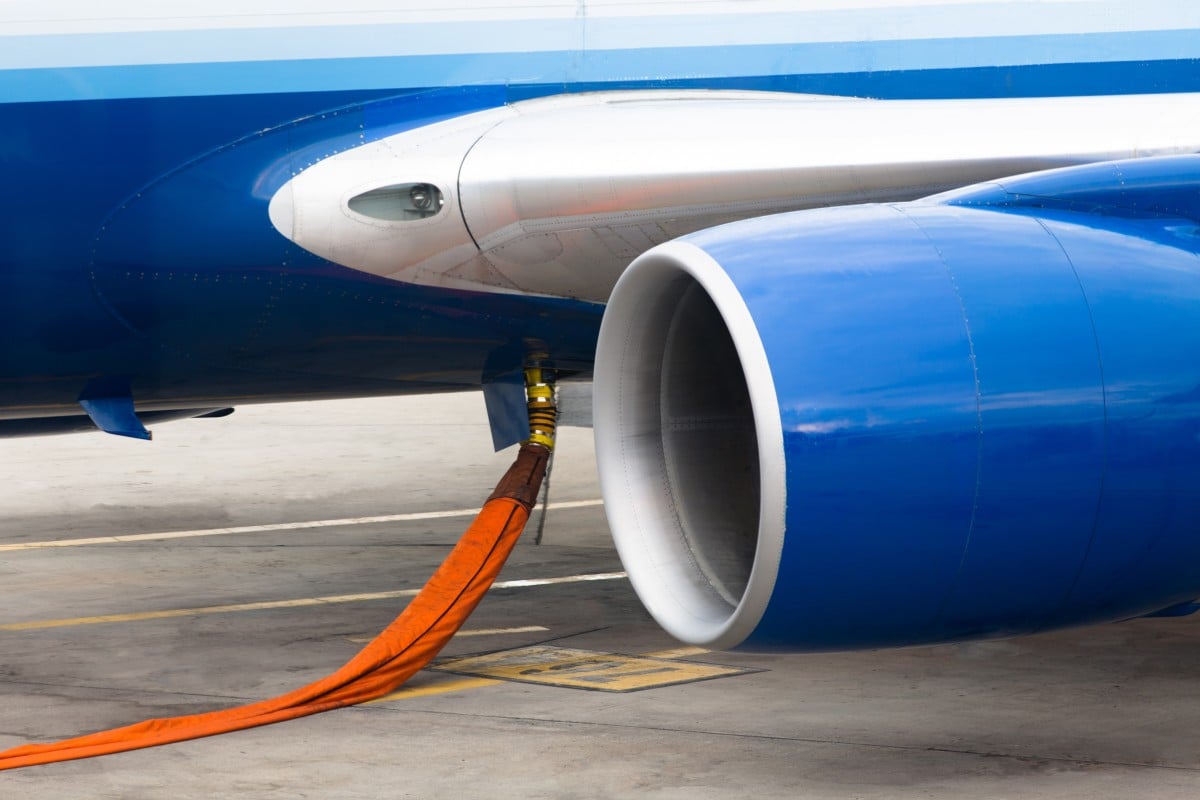
At present, the super-fuel comes from coal tar or naphtha, and the synthesis is extremely costly and unfriendly to the environment.
The bio-JP-10 fuel can be produced by two different methods, one involving six steps of chemical reactions and the other only four, according to the paper.
China’s plan to make jet fuel from restaurant leftovers
Combining these methods with the latest technology in biomass conversion, the researchers said, the super-fuel can be mass-produced at a price equivalent to that of some of the bio-jet fuels already in commercial use, thanks to government subsidies provided for their environmental benefits.
“We believe that the future commercialisation of bio-JP-10 fuel is very promising, especially taking policy support and exemption from CO2 emission tax into consideration,” the authors wrote in the paper.
Liu Huoxing, professor at the school of energy and power engineering at Beijing University of Aeronautics and Astronautics, said civilian applications of hypersonic flight technology faced many challenges that remained to be solved, with the problem of high fuel prices being one of the headaches.
“No airline will buy a plane if the fuel costs too much, however fast it can fly,” he said.
Source: SCMP
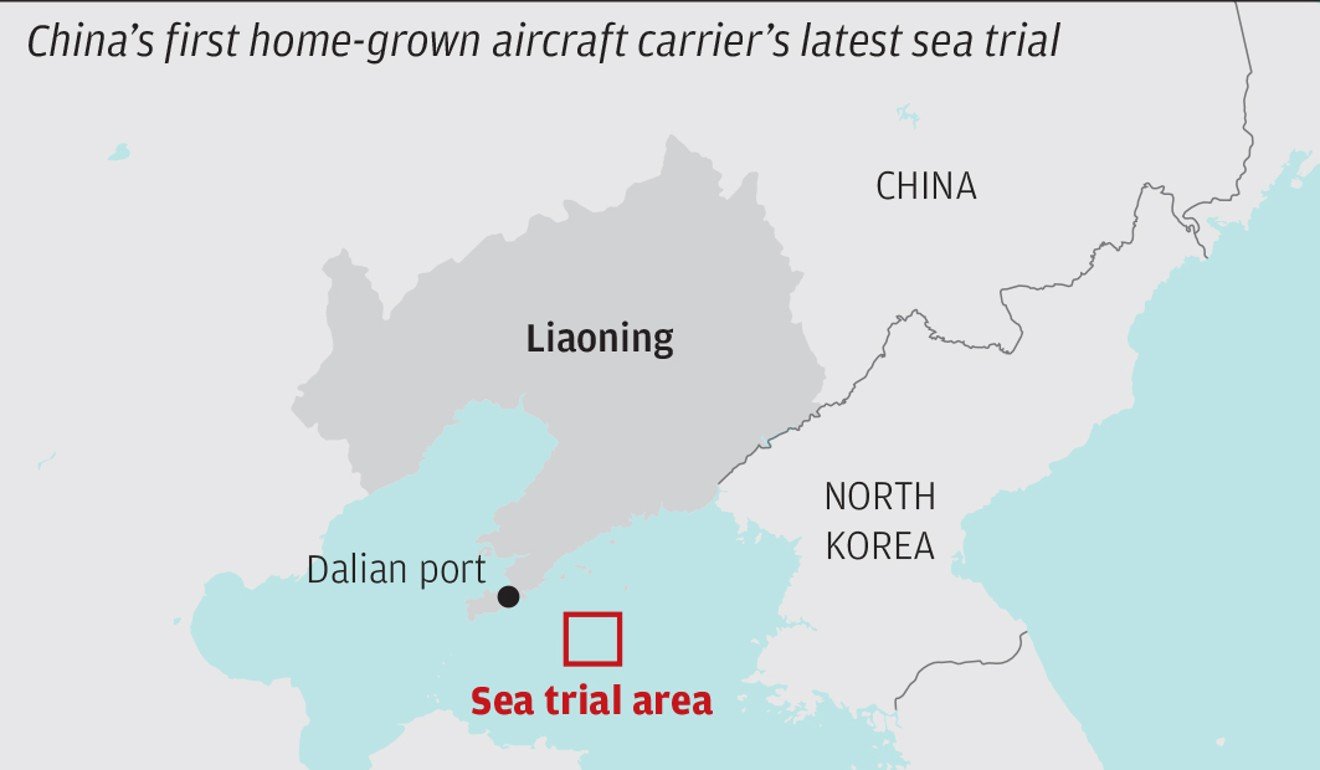
Song Zhongping, a military commentator for Hong Kong-based Phoenix Television, said it would be the seventh such trial for the carrier, adding: “It is likely that the carrier will join the navy for trial runs in the coming months.”
Song said that sea trials for the Type 001A had been faster and more efficient compared with those for its sister ship, the Liaoning, China’s first aircraft carrier.
The Liaoning started life as a Soviet Kuznetsov-class vessel, and was still incomplete when China bought it from Ukraine in 1998. It underwent 10 sea trials before being commissioned in 2012.
“China has accumulated more experience with the Liaoning and that has helped in the construction and operation of Type 001A,” Song said.
“Besides testing the carrier’s propulsion system and electronic communication systems, the sea trial will focus on inspection and acceptance. Both are critical parts of the testing before the ship can be handed over to the navy,” he said.
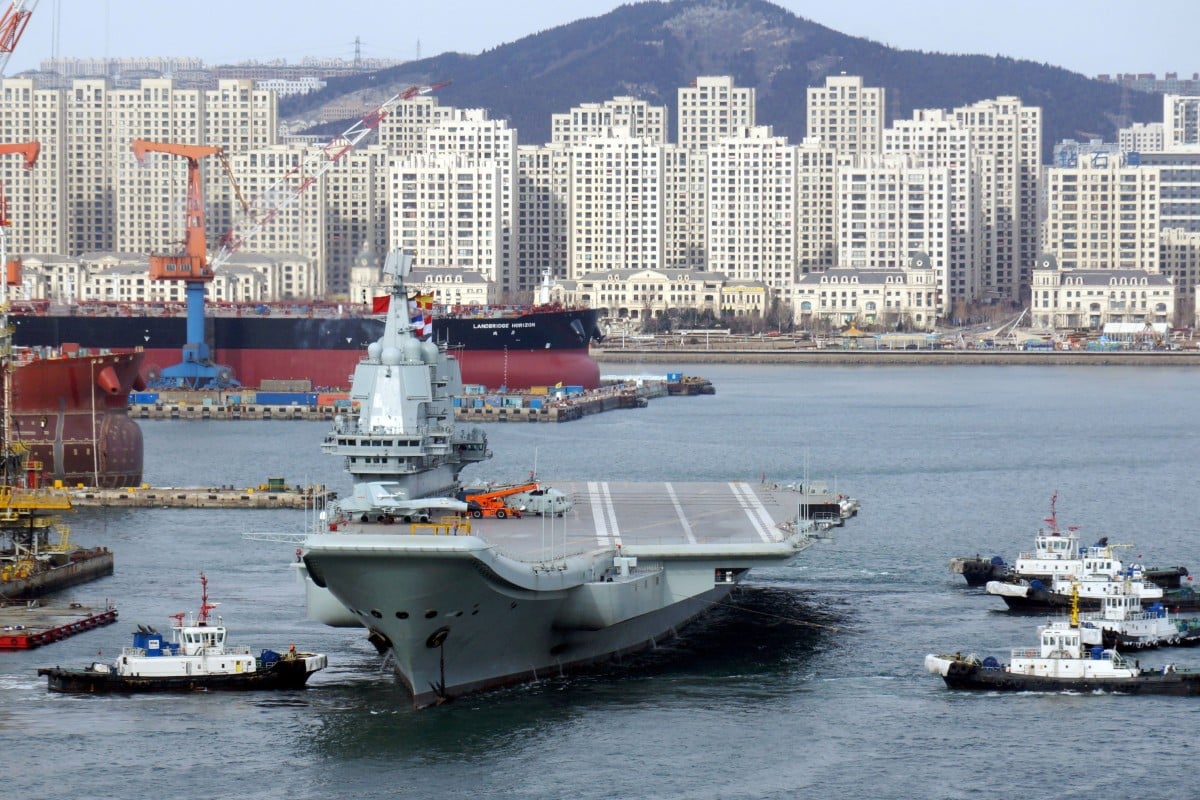
The 65,000-tonne Type 001A was built using the Liaoning as a prototype. It was launched in 2017 and conducted its latest sea trial in May. When it returned to Dalian on May 31 after the test it was seen to have J-15 fighter jets and Z-18 helicopters on its deck.
Li said aircraft take-off and landing exercises would be conducted on the high seas after the Type 001A formally entered service.
Both he and Song said the carrier was likely to be named after Shandong province, in line with the practice of giving warships geographical names.
Some naval enthusiasts and China watchers were disappointed when the Type 001 failed to appear at a grand naval parade held off the coast of Shandong in April to celebrate the 70th anniversary of the PLA Navy.

Chinese navy tests new Z-20 helicopter for use on its warships
Source: SCMP

, the country’s only fully operational carrier, and several other naval vessels were spotted passing through the Miyako Strait that separates the Japanese islands of Miyako and Okinawa en route to the Pacific Ocean, according to Japanese broadcaster NHK.
The Liaoning’s Pacific mission involved at least five other vessels – two guided missile destroyers, two frigates and a supply ship – according to photographs released by Japan’s defence ministry.
The presence of the 45,000-tonne Type 901 Hulun Lake fast combat support ship – the first time such a vessel has taken part in one of the carrier’s missions – suggested the Liaoning was headed for the high seas.
“This is probably going to be a long journey,” naval expert Li Jie said. “We will see how far they go [but] … the whole purpose of an aircraft carrier is that it can operate far out in the ocean.”
Having a supply ship as part of the strike group, which would allow the Liaoning to travel an extra 10,000 nautical miles or conduct thousands of hours of operations, was essential on such missions, he said.
The exercise is the carrier’s first Pacific deployment since undergoing a major maintenance programme earlier in the year.
The 300km (186 mile) wide Miyako Strait is the most convenient route for China’s navy and air force to access the Western Pacific through the so-called first island chain, which sits between the Chinese coast and the vast ocean.
“The Miyako Strait is wide enough and the sea conditions are usually stable,” Li said. “Pacific training missions will become routine and other Chinese carriers will probably also take this route.”
Details of new carrier revealed in sea trial footage
The Liaoning, accompanied by a fleet of eight vessels, first passed through the strait in December 2016 as part of its first Pacific mission. In April last year, the carrier and its escorts conducted an exercise in the ocean after reaching it via the Bashi Strait, which runs between the Philippines and Taiwan.
As well as the Liaoning, China’s first home-grown aircraft carrier – the
– is conducting sea trials and expected to go into full service later this year, while at least one more is under construction.

continuously updated blog about China & India
continuously updated blog about China & India
continuously updated blog about China & India
 CHINDIA ALERT: You'll be living in their world, very soon
China’s Liaoning aircraft carrier returns home from a month of training
China’s first aircraft carrier, the Liaoning, returned to its home port of Qingdao on Thursday after nearly a month of training on the high seas, the People’s Liberation Army said.
According to military analysts, the warship was joined by at least five escort vessels, and the drills showed its crew had not been affected by the coronavirus pandemic and that it remained combat-ready.
The annual cross-region drills included intensive and complicated air and sea operations, the official PLA Daily said in a post on social media on Friday.
“The drills have further improved the real combat training level of the Liaoning carrier strike group, putting its systematic combat capability to the test,” the statement on WeChat said, without giving other details.
Beijing-based naval expert Li Jie said it was important for the carrier to get back to training activities.
“The recent training by the Liaoning carrier strike group is very significant because it’s evidence that none of the 2,000 sailors and commanders on the ship have been hit by Covid-19, and neither have any of the other soldiers and personnel on the other warships and support units,” Li said.
The coronavirus situation has eased in China, where the first cases were reported late last year, but it continues to spread across the globe and has infected more than 3.2 million people worldwide and killed over 233,000.
Sailors on warships like USS Theodore Roosevelt vulnerable as coronavirus spreads
The virus has also hit crew members on at least 40 US Navy warships, and Li said that left China with the only operational aircraft carrier in the region.
“Since the four American aircraft carriers in the Indo-Pacific region have all been struck by the pandemic, China is the only country that can operate an aircraft carrier in the area,” he said.
Japan’s Ministry of Defence said the Liaoning was escorted by two destroyers, two frigates and a supply ship, and they had passed through the Bashi Channel, a waterway to the south of Taiwan, and headed towards waters east of Taiwan.
As tensions continue to simmer between Taipei and Beijing, the PLA has stepped up activities around the island, which the mainland sees as part of its territory awaiting reunification.
Hong Kong-based military commentator Song Zhongping said the latest naval drills were also aimed at heaping more pressure on Taiwan’s pro-independence forces as well as foreign countries seeking to intervene in cross-strait issues.
Coronavirus: US ‘supports Taiwan joining WHO events’ in ministerial phone call
“Taiwan’s pro-independence forces have become more active and are attempting to take advantage amid the pandemic,” said Song, a military commentator with Phoenix Television.
“The Liaoning would play a major role in the PLA’s plan to unify Taiwan by force, so it’s necessary for the aircraft carrier strike group to get back to operations, step up training and send a warning to Taipei,” he added.
Lu Li-Shih, a former instructor at the naval academy in Taiwan, noted that the PLA Navy had regularly held drills in the waters east of Taiwan in recent years to avoid surveillance by US satellites.
Source: SCMP
Posted in air and sea operations, Aircraft, Aircraft carrier, annual, Beijing, by force, China’s, combat-ready, complicated, coronavirus, Coronavirus pandemic, cross-region drills, destroyers, escort vessels, Friday, frigates, from, high seas, home port, intensive, Japan’s Ministry of Defence, Liaoning, military commentator, military’s plan, month, naval academy, People’s Liberation Army, pla navy, pro-independence forces, Qingdao, returns home, sailing through, sailors, scramble, self-ruled island, social media, strait, strike group, supply ship, Surveillance, Taipei, Taiwan, Taiwan Strait, Taiwan’s, Taiwan’s defence ministry, to unify, training, Uncategorized, US Navy, US satellites, USS Theodore Roosevelt, vulnerable, warship, warships, WeChat, western Pacific, WHO | Leave a Comment »