30/09/2019
- Train trips, Xinjiang and chartered flights among the growing holiday trends, travel agents say
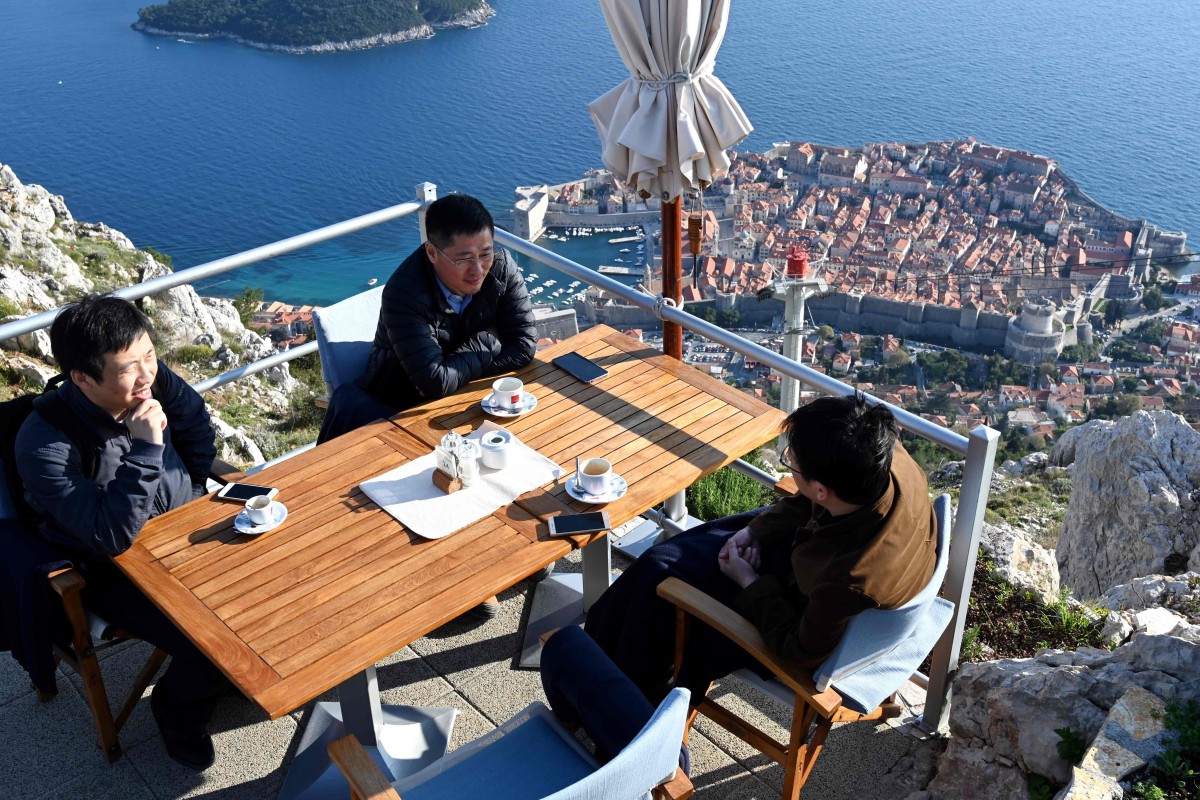
Destinations such as Dubrovnik, Croatia, are becoming more popular among mainland Chinese tourists, according to one of China’ s biggest travel services. Photo: AFP
Chartered flights and niche destinations such as Croatia and Malta are growing in popularity as Hong Kong falls out of favour for mainland Chinese holidaymakers over the National Day “golden week” break.
Japan has overtaken Thailand as the most searched overseas destination on the website of travel agency Ctrip, followed by Malaysia, the United States, Singapore, Australia, Macau, France, Italy and Russia.
Within the mainland places such as Beijing and Shanghai continued to be among the most popular searches but Urumqi, capital of Xinjiang Uygur autonomous region, is a fast-growing term, especially among people in Shanghai and Guangzhou.
“It could be that tourists want to see autumn leaves,” a Ctrip spokesman told the South China Morning Post.
October 1 marks the start of a week-long break on the mainland when millions of Chinese take the chance to travel. This year, an estimated 800 million people are expected to go on trips in China or overseas, about 10 per cent more than last year.
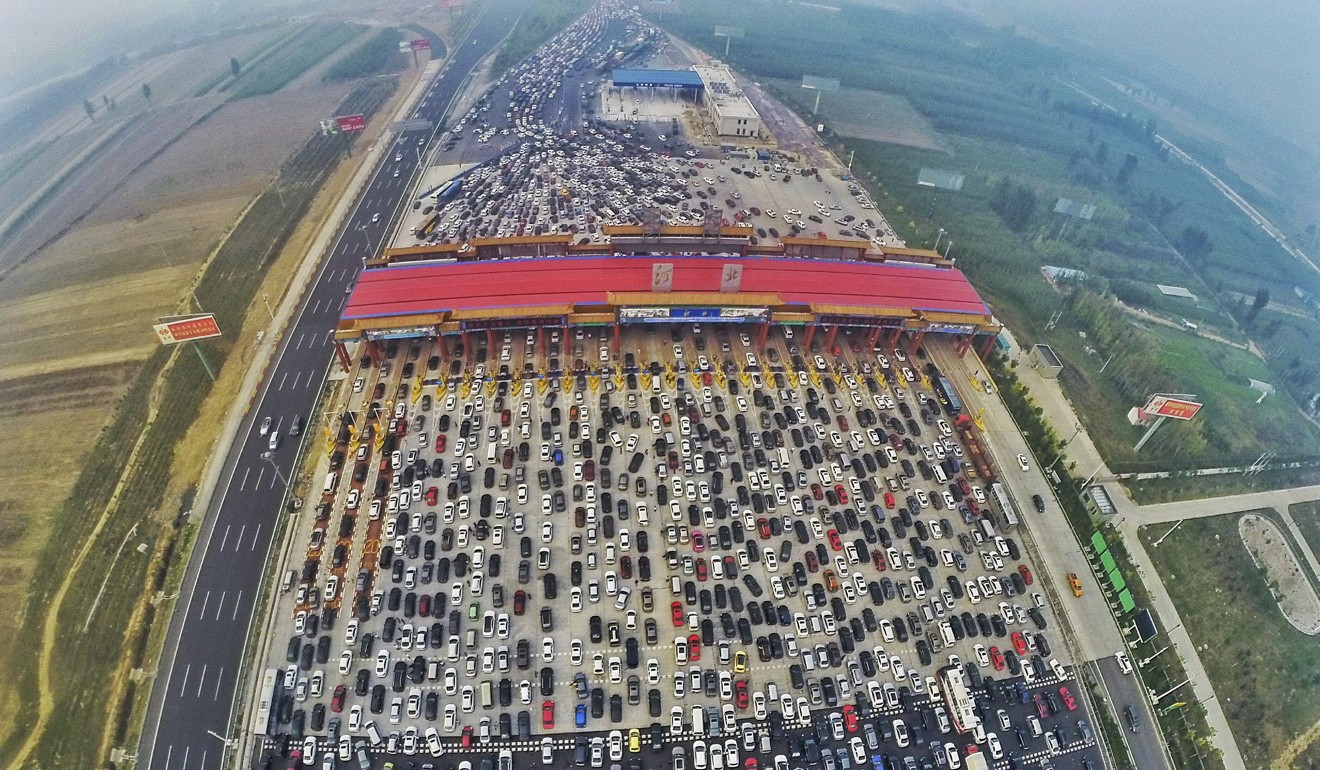
The country’s motorways are expected to be jammed from about 2pm on Monday, reaching a peak at around midnight, and again from 10am Tuesday, according to web mapping service Tencent Map.
China’s highways can expect heavy traffic as travellers head out for the holiday. Photo: Reuters
Ctrip said people heading overseas were increasingly seeking out new destinations, with bookings to places such as the Czech Republic, Austria, Croatia, Malta and Cambodia growing by 45 per cent this year.
“As Chinese people travel outside the country more and their experience of travel grows, many are more willing to go to smaller eastern European countries, such as the Czech Republic,” the spokesman said.
“Popular movies also have a strong influence. Many young people are willing to travel to see where films are shot, such as Croatia, one of the locations for Game of Thrones.”
Other noticeable trends this year include more people travelling with pets, by train and on chartered flights. The site said it sold 60 per cent more European train tickets and 10 times the number of train tickets for Japan for this golden week compared to last year.
The most popular routes in Asia were Tokyo to Kyoto in Japan, and Seoul to Busan in South Korea.
Hong Kong protests leave ‘golden week’ tourist boom in tatters as visitor arrivals during Chinese holiday period are set to be slashed by a third
Thousands of users also chose chartered flights, a service Ctrip introduced in September.
Ji Yu, head of chartered flights for Ctrip said most people thought chartered flights or helicopters were something only millionaires could afford, but in the internet age, they had become cheaper and more accessible.
“In the internet era, consumer needs vary from person to person, especially in terms of travel. There are products on the market to satisfy each customer’s personal needs.”
Among the more popular chartered routes were from Beijing or Shanghai to Tokyo, Bangkok, the Maldives and London.
More people are also going away for longer. Digital travel services giant Qunar said that 80 per cent of the travellers booking flights or hotels through its services were heading off for more than five days. And of those 41 per cent were travelling for more than a week.
Meanwhile, trips to Hong Kong have fallen substantially, with just 15 group tours expected to enter the city each day, down from 110 last year, according to the Travel Industry Council of Hong Kong.
Efforts to promote Hong Kong attractions have also increased in Shenzhen in recent weeks, with advertising videos scenic spots, popular restaurants and malls in Hong Kong playing on cross-border buses. Passengers can also get discounts to some stores and services with their tickets.
Source: SCMP
Posted in Australia, Austria, autumn leaves, Ürümqi, Bangkok, Beijing, booking flights, break, Busan, Cambodia, capital, chartered flights, Chinese travellers, consumer needs, cross-border buses, Ctrip, Czech Republic, destinations, European train tickets, France, Game of Thrones, golden week, growing, Guangzhou, helicopters, holiday trends, Hong Kong, internet age, internet era, Italy, jammed, Japan, Kyoto, London, Macau, Malaysia, Maldives, malls, Malta, millionaires, motorways, National Day, niche, October 1, person to person, Qunar, restaurants, Russia, scenic spots, Seoul, Shanghai, Shenzhen, Singapore, skip, south china morning post, South Korea, Tencent Map, Thailand, Tokyo, tourists, Train, Train trips, travel, Travel agency Ctrip, travel agents, travelling with pets, Uncategorized, United States, vary, Xinjiang, Xinjiang Uygur Autonomous Region |
Leave a Comment »
14/07/2019
- The Indian prime minister refused to back the Chinese leader’s ambitious global infrastructure vision at a summit last week, but the apparent snub is not getting in the way of amicable ties between Asia’s two biggest economies
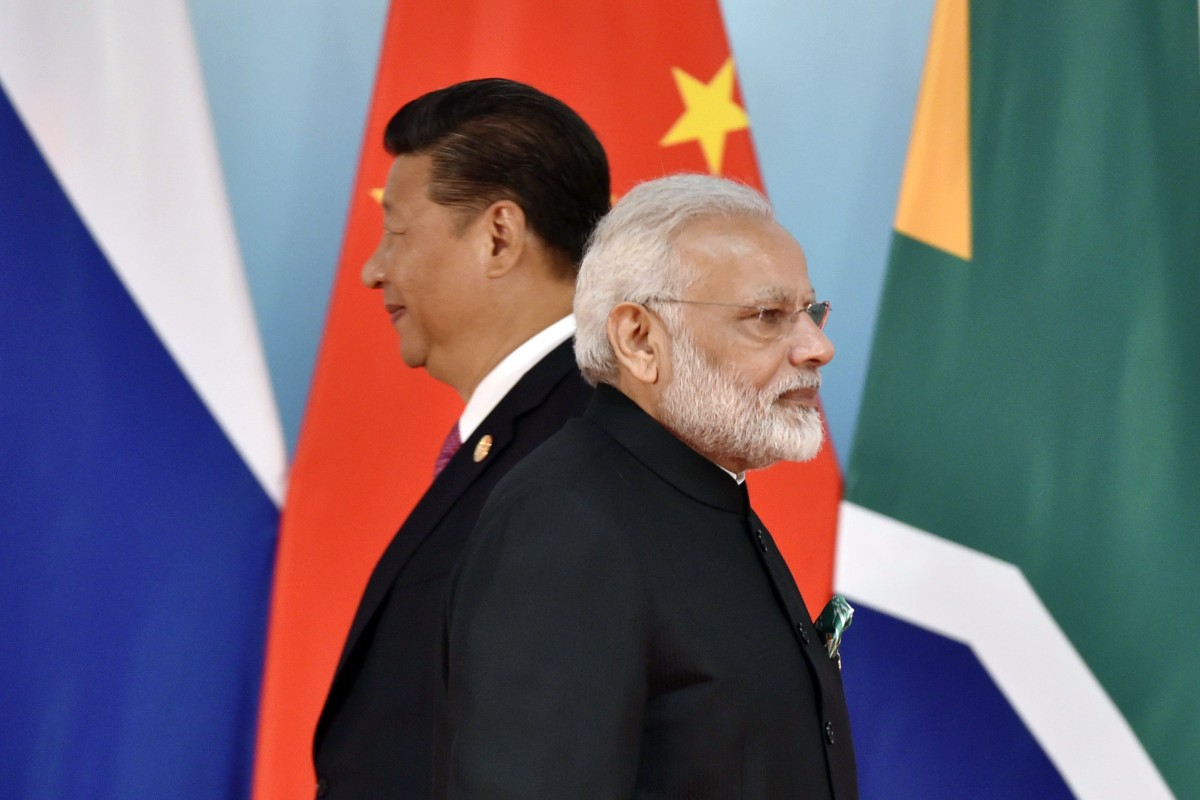
Chinese President Xi Jinping and Indian Prime Minister Narendra Modi at the BRICS Summit at the Xiamen International Conference and Exhibition Center in 2017. Photo: AFP
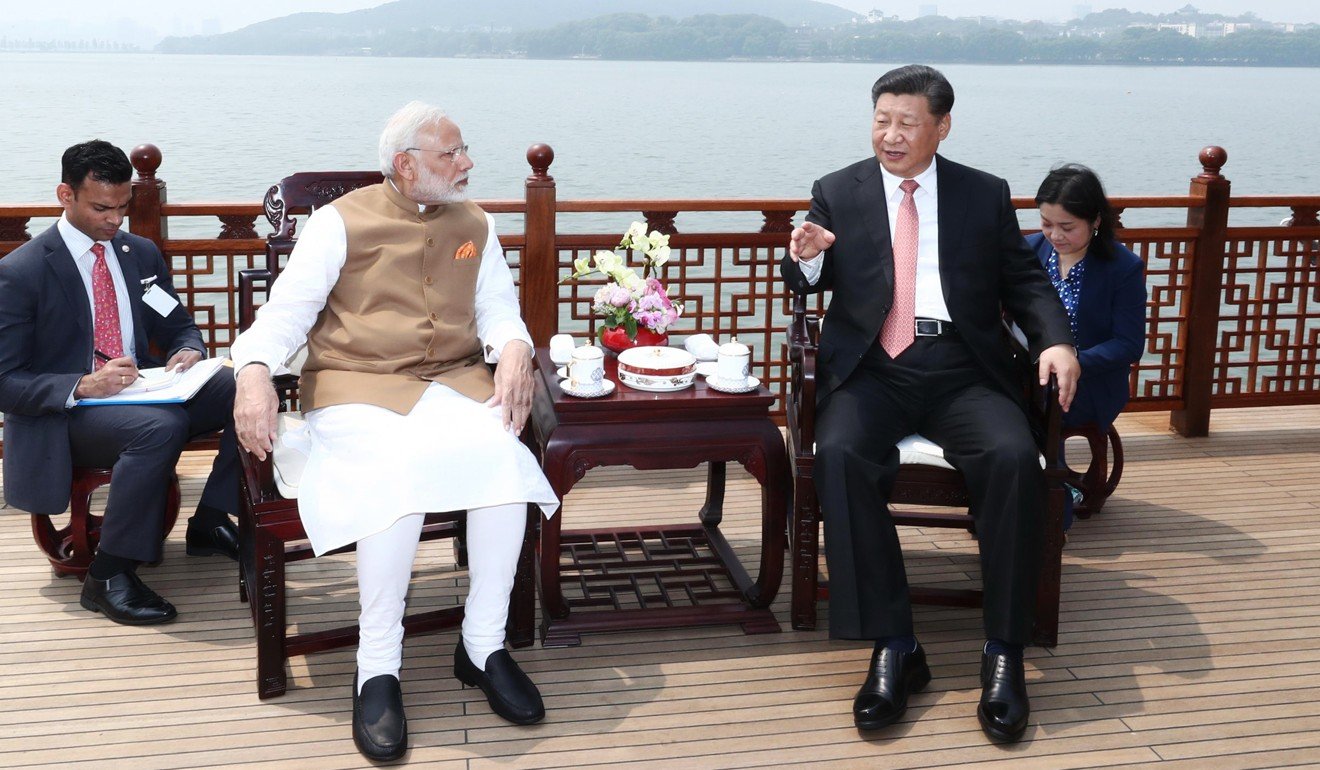
Their informal summit in Wuhan last year created all the right optics; even their chemistry seemed on point. So, when
and
met last week on the sidelines of the Shanghai Cooperation Organisation (SCO), the bonhomie seemed like it was there to stay.
But a day later, cracks appeared to emerge. India, holding on to its long-stated position, delivered a public snub to China by refusing to endorse its ambitious, trillion-dollar
(BRI) in the SCO summit’s Bishkek declaration.
Now, after equal parts public bonhomie and disagreement over the BRI, where do
finally stand? Somewhere in the middle, by all indications.
With just 10 days before Xi and Modi meet again at the Russia-India-China (RIC) trilateral meeting on the sidelines of the
in Osaka, there have been increasing signs that both countries may now be trialling a fresh approach to diplomacy – one that neither sidesteps contentious issues nor does it allow differences to derail ties.
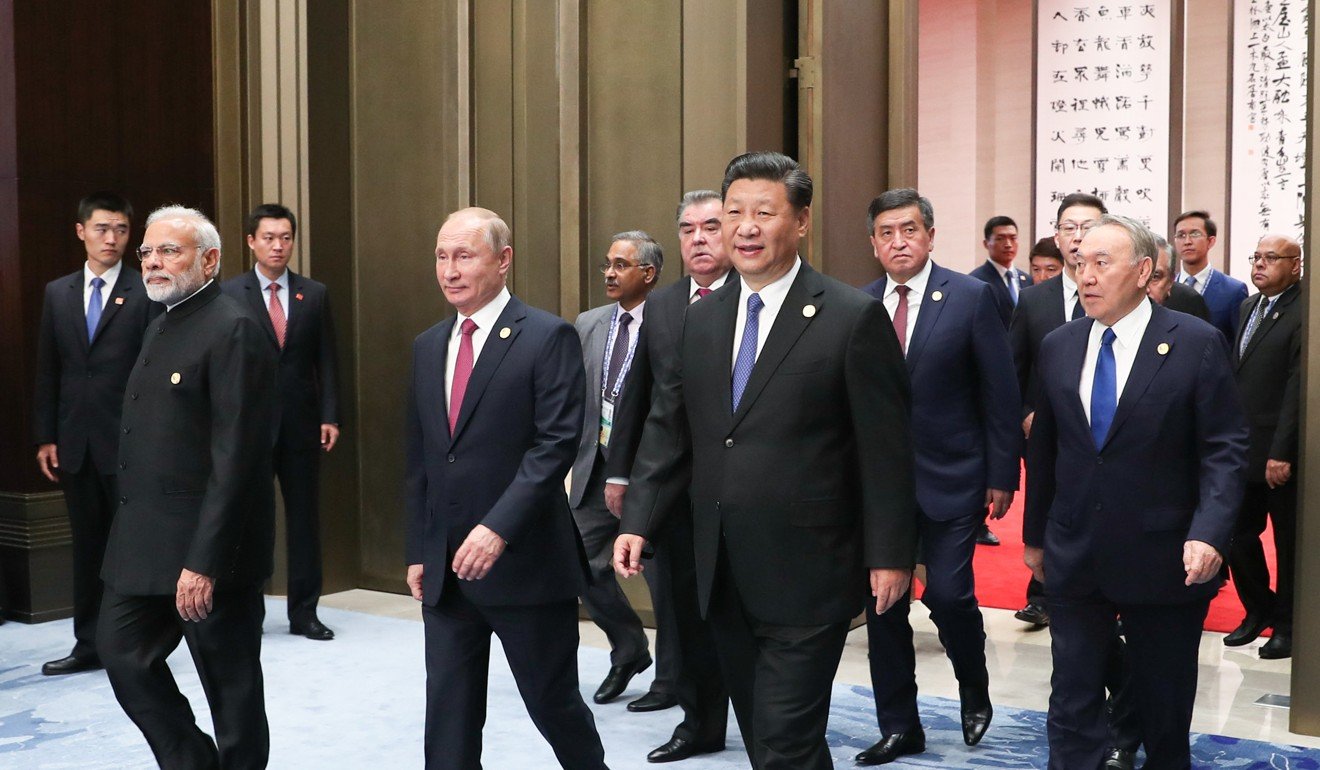
Chinese President Xi Jinping leads other leaders of Shanghai Cooperation Organisation: Russia’s Vladimir Putin and India’s Narendra Modi at the 2018 summit. Photo: Xinhua
Such an approach would delink the thorny issues – like the
and the BRI – from other non-contentious issues of cooperation in other sectors.
But the jury is still out on whether it will pay off, especially given the historical distrust and the baggage that both countries carry.
In the last week alone, there have been at least three flashpoints in the Sino-India relationship.
While the dust was still settling on India’s refusal to sign the Bishkek declaration endorsing the BRI, reports emerged that the
was expected to scrap plans to build jointly with China an ocean observatory overlooking the Indian Ocean. The news came a week after Modi had visited the Maldives capital Male in early June.
For Modi 2.0, India’s US-China balancing act just got trickier
The Maldives’ decision to build the observatory was first mulled in December 2017, raising the Indian establishment’s hackles as it would have given China a presence in the region.
Another irritant between India and China has seemed to be the proposed 16-nation
(RCEP). India has been lukewarm on the free-trade bloc, frustrating the Chinese. Indications have been that China is likely to push for a 13-member bloc at the coming RCEP meeting in Thailand on June 20, excluding India.
BRI and border issues have not managed to overshadow the remaining business between the two countries Narayani Basu
Yet, despite all this, there has been no let down in engagement levels between Modi and Xi. Both leaders are expected to meet at the RIC summit on June 29 to 30, and have at least two more meetings planned this year alone – an informal Xi-Modi summit in India
in October and the BRICS summit on November 13 to 14.
For Narayani Basu, a New Delhi-based author and independent foreign policy analyst with a special focus on China, such sustained engagement between the two countries signals a new level of maturity.
“There has been a fairly successful attempt at delinking historical geopolitical and territorial issues from issues which are economic in nature,” Basu said. “As a result, the BRI and border issues have not managed to overshadow the remaining business between the two countries.”
Indian Prime Minister Narendra Modi speaks with Chinese President Xi Jinping in Wuhan. Photo: Xinhua
STRONG LEADERS, STRONGER AGENDAS
The approach might also have to do with where both leaders currently stand.
Modi and his Bharatiya Janata Party (BJP) have freshly emerged from a landslide
. Through the campaign, Modi portrayed a hardline image of himself and his government, especially on issues of national security. Similarly, Xi has emerged as a stronger leader since his reappointment last year – his approach marked by a higher-than-ever emphasis on economic nationalism and connectivity. Modi made a reference to this in his SCO meeting with Xi.
Basu said Sino-India ties were also being guided by the personalities of both leaders – strong, with harder-than-before agendas.
Did Japan and India just launch a counter to belt and road?
“They both came back on agendas based on consolidation of power, protection of sovereignty and nationalism. These are all issues that will not allow either side to blink easily. “So, even as both leaders are looking to move forward, they also do not want to compromise on their core issues – primary among them being territorial sovereignty,” she said.
The message is loud – India’s opposition to the BRI does not mean India will allow adversarial relations to develop between the two Sana Hashmi
In his SCO summit speech, Modi brought up territorial sovereignty as a thinly veiled reference to China’s BRI, saying India only supported connectivity projects that are based on “respect of sovereignty” and “regional integrity”.
Sana Hashmi, an analyst with Perth-based think tank Future Directions International and author of China’s Approach Towards Territorial Disputes: Lessons and Prospects, agreed that India was not letting historical issues get in the way of its relationship with Beijing.
Hashmi noted that India’s main objections to BRI revolved around one component – the China-
Economic Corridor (CPEC), which runs through the disputed region of Kashmir.
“But to make sure this does not affect the relationship, PM Modi and President Xi are meeting numerous times,” Hashmi said. “The message is loud – India’s opposition to the BRI does not mean India will allow adversarial relations to develop between the two.”
A NEED FOR EACH OTHER
Another factor that has likely prompted the new approach between India and China is their need for each other, particularly as both Asian powers navigate bumpy relationships with US under
China is caught in a protracted
and is reeling from the tariffs imposed on Chinese imports to America. India, too, has seen a similar but smaller version of this trade battle play out – things have escalated especially since the Trump administration withdrew its preferential trade treatment towards India. Responding to this, India imposed tariffs on 28 US products over the weekend.
Move over, ‘Made in China’. It’s ‘Made in Bangladesh’ era now
In such a context, a stronger relationship between the two Asian giants might be in mutual interest.
Basu said the scope for the relationship to deliver on, especially economically, is vast.
“Despite the chemistry, India and China’s promises to each other on the economic front haven’t materialised on the ground. Major projects as well as investments in each country are stuck.”
Source: SCMP
Posted in Beijing, Belt and Road (B&R), bonhomie, BRICS summit, China-India ties, China-Pakistan Economic Corridor (CPEC), China’s Approach Towards Territorial Disputes: Lessons and Prospects, Chinese President Xi Jinping, derail, disagreement, Group of 20 (G20) summit, Indian Prime Minister Narendra Modi, Japan, Made in Bangladesh, Made in China, Maldives, Osaka, Regional Comprehensive Economic Partnership (RCEP), Shanghai Cooperation Organisation (SCO), snub, Uncategorized, US President Donald Trump, Vladimir Putin, Xiamen International Conference and Exhibition Center |
Leave a Comment »
09/06/2019
MALE, Maldives (Reuters) – Indian Prime Minister Narendra Modi has called for a global conference to tackle the threat of terrorism in the region and around the world.
During a speech on his first foreign visit since winning re-election, he told the Maldivian parliament in Male that “terrorism is not just a threat for a country, but to the entire civilisation”.
“The international community has actively arranged for global convention and many conferences on the threat of climate change. Why not on the issue of terrorism?” Modi said.
He called for a global conference “so that there can be meaningful and result-oriented discussions for plugging the loopholes that terrorists and their supporters exploit”.
India is pursuing what it calls a “neighbourhood first” foreign policy centred on its allies in South Asia, although there is little sign of a warming in relations with arch rival Pakistan.
His trip to the Maldives is being viewed as a statement of intent to counter the rise of China, which has been making strategic inroads in the Indian Ocean in recent years and seeking closer military ties, to the alarm of New Delhi.
“In the neighbourhood, Maldives is priority,” Modi said in his speech.
During the visit, Modi has signed a slew of agreements with the island nation encompassing ferry services, port terminals and a new national cricket stadium.
His next stop is Sri Lanka’s capital, Colombo, where security is likely to be high on the agenda.
A wave of bombings on Easter Sunday killed more than 250 people across Sri Lanka despite repeated warnings from Indian intelligence services about a militant plot.
Source: Reuters
Posted in Colombo, global conference, Maldives, Pakistan, PM Modi, South Asia, Sri Lanka, terrorism, Uncategorized |
Leave a Comment »
25/02/2019
PM Modi said that he told him ‘let us fight against poverty and illiteracy’ and Khan gave his word saying he is a Pathan’s son, ‘but went back on it’.
SNS Web | New Delhi | February 25, 2019 10:53 am
Pakistan Prime Minister Imran Khan on Sunday asked his Indian counterpart Narendra Modi to “give peace a chance” and assured him that he “stands by” his words and will “immediately act” if New Delhi provides Islamabad with “actionable intelligence” on the Pulwama attack.
Khan’s remarks came a day after PM Modi in a rally in Rajasthan, recalled his conversation with the Pakistan PM during a congratulatory call after he became the country’s premier.
PM Modi had told him “let us fight against poverty and illiteracy” and Khan gave his word saying he is a Pathan’s son “but went back on it”.
“There is consensus in the entire world against terrorism. We are moving ahead with strength to punish the perpetrators of terrorism…The scores will be settled this time, settled for good…This is a changed India, this pain will not be tolerated…We know how to crush terrorism,” PM Modi further said.
A statement released by the Pakistan Prime Minister’s Office said, “PM Imran Khan stand by his words that if India gives us actionable intelligence, we will immediately act.”
PM Modi should “give peace a chance”, Khan said in the statement.
In his first statement issued since the February 14 attack, Pakistani Prime Minister Imran Khan had on Tuesday accused India of blaming his country “without evidence” and warned of retaliation against any military action by India.
However, he assured India that he would act against the perpetrators of the deadly Pulwama terror attack, carried out by Pakistan-based Jaish-e-Mohammad (JeM) terror group and said that the issue between the two countries can be solved through dialogue.
India had called Khan’s offer to investigate the attack if provided proof as a “lame excuse”.
The already sour relations between India and Pakistan have worsened over the past few weeks as New Delhi accused Islamabad of the Pulwama attack.
India has accused Islamabad’s spy agency ISI of being involved in the attack and has maintained that the terror group JeM is a “child of the Pakistan Army”.
Following the attack, India immediately withdrew the ‘Most Favoured Nation’ status granted to Pakistan and initiated steps to isolate the neighbouring country from the international community.
Earlier, India had also announced its decision to stop the flow of its share of water from the Beas, Ravi and Sutlej to Pakistan.
Prime Minister Narendra Modi had in many of his public speeches after the attack, said that the security forces have been given full freedom to decide the future course of action regarding the terrorist attack in Pulwama.
India’s neighbours, including Sri Lanka, Maldives, Nepal, Bangladesh, Afghanistan and Bhutan—and other countries like Saudi Arabia, UAE, Iran, Russia, Germany, Canada, UK, Australia and Canada came out in strong support of New Delhi following the terror attack.
Over 44 CRPF personnel were killed and many injured on February 14 in one of the deadliest terror strikes in Jammu-Kashmir when a Jaish-e-Mohammad (JeM) suicide bomber blew up an explosive-laden vehicle near their bus in Pulwama district.
The bus was part of a convoy of 78 vehicles carrying around 2500 CRPF personnel from Jammu to Srinagar.
Source: The Statesman
Posted in Afghanistan, Australia, Bangladesh, Beas, Bhutan, Bus, canada, convoy, CRPF, Germany, Imran Khan, India alert, international community, iran, ISI, Islamabad, Jaish-e-Mohammad (JeM), Jammu, Jammu & Kashmir, Maldives, military action, Most Favoured Nation, Nepal, New Delhi, Pakistan, Pakistan Army, Pathan, PM, PM Narendra Modi, poverty and illiteracy, Pulwama, Rajasthan, Ravi, retaliation, Russia, Saudi Arabia, Sri Lanka, Srinagar, suicide bomber, Sutlej, terrorist attack, UAE, UK, Uncategorized |
Leave a Comment »



 CHINDIA ALERT: You'll be living in their world, very soon