Chindia Alert: You’ll be Living in their World Very Soon
aims to alert you to the threats and opportunities that China and India present. China and India require serious attention; case of ‘hidden dragon and crouching tiger’.
Without this attention, governments, businesses and, indeed, individuals may find themselves at a great disadvantage sooner rather than later.
The POSTs (front webpages) are mainly 'cuttings' from reliable sources, updated continuously.
The PAGEs (see Tabs, above) attempt to make the information more meaningful by putting some structure to the information we have researched and assembled since 2006.
Xie Haifeng’s story is one of luck and resilience and he has made it his mission to help others through adversity
Professional dancer owes part of his success to the city of Hong Kong and one of its doctors who helped survivors through recovery
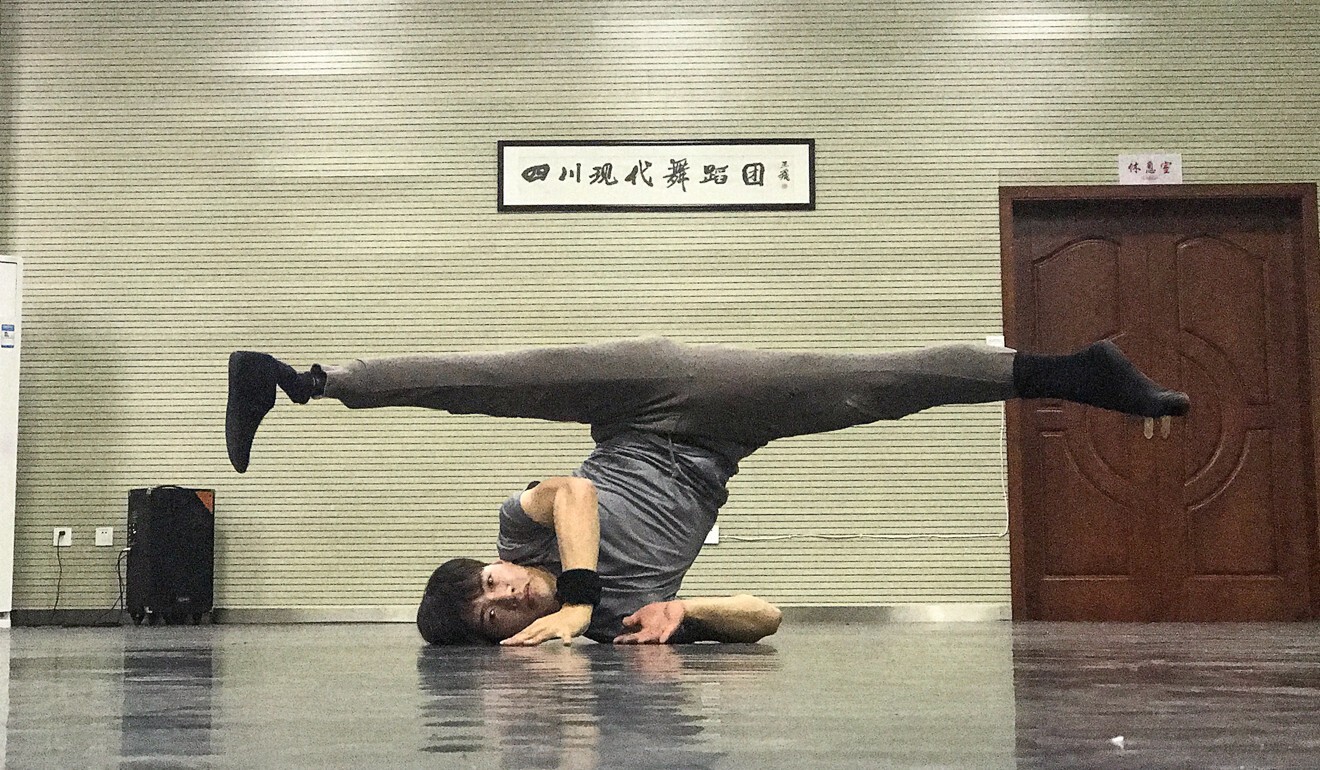
Xie Haifeng was 15 when he lost his leg in one of modern China’s most devastating disasters. Photo: Handout
When the rumbling began, Xie Haifeng thought someone was shaking his bed. Perhaps one of the other 800 children in the school dormitory was being naughty. Or maybe it was a small quake. Then came the unmistakable sound of screams.
Xie, then a 15-year-old pupil at Muyi Town Middle School in the southwestern Chinese province of Sichuan, started running. He fell as the dorm building collapsed around him. When he tried to stand up, he realised something was missing. His left leg was gone.
What Xie thought was a small quake turned out to be one of the most devastating disasters in modern Chinese history.
The Sichuan earthquake of May 2008 left at least 87,000 people dead and shook the country to its core. It was less than three month before Beijing would host its first Olympic Games, an opportunity to show the world its strength and ambition.
Instead, 7,444 schools had crumbled like tofu in an area known to be seismically active. Their rubble was a stark demonstration of the weak foundation of China’s progress and its tragic consequences. At Xie’s school, the shoddily built walls and ceilings crushed 600 children. Only 300 survived.
It still frightens me to recall the earthquake.Xie Haifeng, dancer
Xie considers himself lucky. “If I had run just one second more slowly, I would have been dead. If I had run one second faster, I would have been completely fine. But anyway, I am lucky to be alive,” he said. A dozen years later, his story is also one of resilience. Defying all the odds, Xie is now a professional dancer for a troupe in Sichuan and has made it his mission to help others through adversity.
The journey from his hospital bed to the stage was long and difficult and even though many years have passed, “it still frightens me to recall the earthquake”. But, he said: “I have forgiven fate and accepted the reality that I have only one leg.”
Xie’s trauma was a particularly difficult blow to his family. His older sister was already handicapped, after injuring her arm in an accident. When his mother, a migrant worker in the northwestern province of Gansu, arrived at the hospital a few days after the earthquake, she had no idea of the extent of Xie’s condition.
“When I woke up in the evening, I saw my mother weeping beside my bed. I told myself I should be strong,” Xie said, adding that his mother initially thought he had suffered only bruises. He was sent for treatment to a hospital in the prosperous southern city of Shenzhen, along with other survivors who had been left with disabilities by the earthquake.
Defying all the odds, Xie Haifeng is now a professional dancer. Photo: Handout
It was there that Xie was inspired to make the most of his life. A team of athletes visited the hospital and he was shocked to see one of them, a volleyball player, walking on a prosthetic leg.
Xie began to wear a prosthesis and after rehabilitation training returned to his hometown in 2009 where he was admitted to Qingchuan High School. At first, he was self-conscious and felt inferior to his peers. He did not dare to wear shorts in summer and said he seldom talked to the other students.
The following year he was introduced to members of the Chengdu Disabled People’s Art Troupe, where he found a new and welcoming home. Xie quit school and joined the troupe, despite his parents’ opposition. They were convinced study was the only way for rural students like their son to get out of poverty.
Xie learned Sichuan opera and was soon performing its art of bian lian, or
– a skill that requires rapid mask changes in a dazzling sleight of hand – on stage until the troupe was disbanded in 2011, leaving him unemployed for six months.
China marks 10-year anniversary of Sichuan earthquake
But the misfortune led to an improbable opportunity when he was hired by the Sichuan Provincial Disabled People’s Art Troupe and trained to dance. At 19, and with no experience, Xie found the training far more difficult than those who had started at the more usual age of five or six.
His body was too stiff, he said, and in the first months he spent 10 hours each day just stretching and building flexibility. It was just the beginning of a long and often arduous process.
“That agony is too much to be described,” Xie said about the pain of dancing on a prosthetic leg. “During the first six months’ training, I broke three artificial legs.”
More than once, he wondered whether he had chosen the right path. But, ultimately, his gruelling effort paid off and Xie has performed in Singapore, Hong Kong and Macau. In 2013, he won a gold medal at a national dancing competition for people with disabilities.
“My dances won me applause and recognition from the audience. I feel relieved and I think my heart belongs to the stage,” he said.
Xie broke three artificial legs during his first six months of dance training. Photo: Handout
Xie said he owed part of his success to Hong Kong which in 2008 donated HK$20 billion (US$2.5 billion) in aid to Sichuan and sent doctors to treat the injured. Among the volunteers was Poon Tak-lun, a Hong Kong orthopaedist who flew to Sichuan every two weeks from 2008 to 2013 to treat patients.
At a gala show in 2013 to express gratitude from the people of Sichuan to Hong Kong, Xie met Poon and the two became good friends, thanks to their common interest in the arts.
“Dr Poon promised to pay for all the costs of installing and repairing my artificial leg in the future. He told me to focus on dancing without worrying about the leg’s costs,” Xie said.
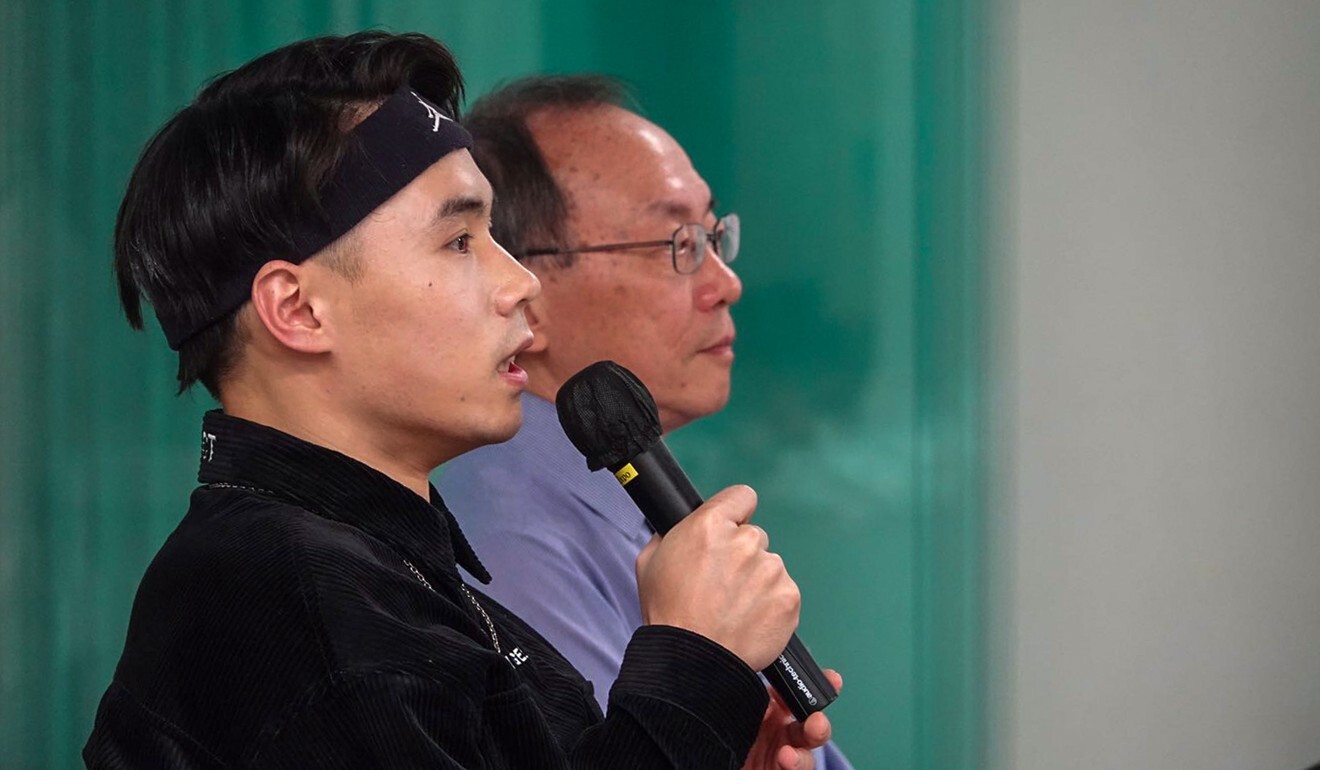
Xie Haifeng (pictured left with friend Poon Tak-lun) gives a speech to students in Hong Kong. Photo: Handout
Grateful for the help he received from Poon and Hong Kong, Xie has sought to return the favour by doing what he does best.
“I have no other skills except dancing and performing. So I thought of sharing my experience to encourage young students in Hong Kong,” he said.
Xie travels to Hong Kong about twice a year to perform and visit schools. In 2019, he visited the city four times, performing dances and Sichuan opera, and giving speeches at more than 10 primary and secondary schools.
“I encourage them to study hard. I said there are many people in this world who have more difficulties than them but still insist on pursuing their dreams, so they should not give up their dreams,” Xie said.
When he is not dancing and giving inspirational speeches, Xie said he lived a life like everyone else – climbing mountains, swimming and proudly walking on the leg he gained after almost losing everything in Sichuan’s deadly earthquake.
People work at a construction site of a utility tunnel in Wuhan, central China’s Hubei Province, April 30, 2020. (Xinhua/Xiao Yijiu)
BEIJING, May 1 (Xinhua) — China is getting the world’s largest workforce back to work as the nationwide battle against COVID-19 has secured major strategic achievements.
The unprecedented fight has nurtured new trends in the workplace. For example, more attention is being paid to public health and e-commerce to boost consumption and emerging sectors brought by new applications based on the country’s rapid new infrastructure development of 5G networks and data centers.
In this aerial photo taken on April 29, 2020, representatives of frontline health workers fighting COVID-19 attend a bell-ringing ceremony at the Yellow Crane Tower, or Huanghelou, a landmark in Wuhan, central China’s Hubei Province. (Xinhua/Xiao Yijiu)
ANGELS OF PUBLIC HEALTH
Ye Man, head nurse of gastrointestinal department of Hubei General Hospital East District, one of the five remaining COVID-19 designated hospitals in Wuhan, is taking her first weeklong vacation since January.
The 34-year-old mother of two started to take a week off on Monday, one day after her hospital cleared all remaining confirmed COVID-19 patients. The nine ICU wards in her hospital had been kept occupied over the past several months.
Friday marked International Workers’ Day, and the start of China’s five-day public holiday. Ye said she planned to visit urban parks with her family during the holiday.
At her busiest point, she and her colleagues took care of a ward filled with 40 COVID-19 patients.
“It was a really tough time,” she recalled. She had to wear a protective gown and a mask for nine hours a day and be separated from her family to avoid possible cross-infections.
Wuhan, capital of central China’s Hubei Province and once hard hit by COVID-19, cleared all confirmed cases in hospitals on April 26. Over 42,000 medical workers mobilized nationwide to aid Hubei have contributed to achieving a decisive outcome in the fight to defend Hubei and Wuhan.
In an inspection tour to Wuhan on March 10, President Xi Jinping, also general secretary of the Communist Party of China Central Committee and chairman of the Central Military Commission, lauded medical workers as “the most beautiful angels” and “messengers of light and hope.”
To reward brave and dedicated medics, major tourist sites in Hubei are offering free entry to medical staff over the following two years.
Chinese President Xi Jinping, also general secretary of the Communist Party of China Central Committee and chairman of the Central Military Commission, learns about development of the black fungus industry in Jinmi Village of Xiaoling Township in Zhashui County, Shangluo City, northwest China’s Shaanxi Province, April 20, 2020. (Xinhua/Xie Huanchi)
LIVESTREAMING ANCHORS
“We have a new batch of supplies today. Those who did not get the goods should hurry to buy now,” said Li Xuying, a livestreaming anchorwoman selling agaric mushrooms in Zhashui, a small county deep in the Qinling Mountains in northwest China’s Shaanxi Province.
Li has been prepared for a boom of online shopping in the holiday, because online buyers rushed to her livestreaming website to place orders, after Xi inspected the county and chatted with her in the village of Jinmi during a recent tour to Shaanxi.
“I used to sell goods worth about 50,000 yuan (7,070 U.S. dollars) on average after a six-hour livestreaming session. Now the sales are 10 times that,” she said.
Li was one of the 10 sales staff sent by the local agricultural e-commerce firm to Chinese e-commerce platform Taobao’s headquarters for livestreaming training. She said livestreaming is effective in bridging buyers and farmers, through which viewers can watch planting and harvesting online.
With the number of netizens in China reaching 904 million in March, e-commerce has been one of the popular means of promoting the sale of farm produce and helping farmers shake off poverty. Despite the impact of COVID-19, the country is determined to eradicate absolute poverty by the end of this year.
Workers work at the construction site of a 5G base station at Chongqing Hi-tech Zone in Chongqing, southwest China, April 15, 2020. (Xinhua/Wang Quanchao)
HI-TECH WORKERS IN “NEW INFRASTRUCTURE” BUILDING
As an elasticity calculation engineer of Alibaba Cloud, Zhao Kun and his colleagues always stay on alert for high data flow, for example, brought by the anticipated online shopping spike during the holiday.
“The profession, which may sound obscure, is actually closely connected to everyone’s life, as cloud computing is the infrastructure supporting high-tech applications of artificial intelligence and blockchain,” said Zhao.
The Chinese leadership has underscored expediting “new infrastructure” development to boost industrial and consumption upgrading and catalyze new growth drivers.
Seizing the opportunities of industrial digitization and digital industrialization, China needs to expedite the construction of “new infrastructure” projects such as 5G networks and data centers, and deploy strategic emerging sectors and industries of the future including the digital economy, life health services and new materials, President Xi has said.
During the epidemic, Zhao and his colleagues expanded more than 100,000 cloud servers to ensure the stable operation of “cloud classrooms” and “cloud offices” for millions of people working and studying from home.
In the “new infrastructure” building, people like Zhao contribute to constructing the virtual infrastructure of an ecosystem, which enables e-commerce, e-payment, online teaching and the digital transformation of manufacturing and supply chain management.
In early April, China released a plan on promoting the transformation of enterprises toward digitalization and intelligence by further expanding the application of cloud and data technologies, to nurture new business models of the digital economy.
With India under lockdown and social distancing being advised to deal with the threat of the coronavirus, an online collective of “Caremongers” is reaching out to help the elderly and other vulnerable groups.
It started last week when Mahita Nagaraj, a digital marketing professional and single mum, received a call from a close friend in the UK requesting her to help arrange some medicines for her “very elderly parents”.
Within hours, she heard from another friend living in the US with a similar question: can you ensure that my parents have provisions for the month?
Ms Nagaraj, who lives in the southern city of Bengaluru (formerly Bangalore), says that set her thinking about other friends whose elderly parents didn’t have anyone to call upon.
So, she posted a message on Facebook asking people to get in touch if they needed help.
The response she got was “overwhelming”. People reached out to her from all over India and, surprisingly, most who got in touch said they wanted to help out too.
And thus was born Caremongers India – a Facebook group, asking people to “stop scaremongering and start caremongering” – on 17 March.
“There is so much scaremongering in the current scenario,” says Ms Nagaraj. “We are trying to address the feeling of helplessness in the people. We are telling people to stop spreading fear and panic, and instead spread love.”
Image copyright CAREMONGERS INDIAImage caption Mahita Nagaraj set up Caremongers India after her friends called her to seek help
Ms Nagaraj says she learnt about caremongering from a BBC article from Canada. The concept actually started in Toronto to help vulnerable people, but within days it spread to cover almost all of Canada with tens of thousands signing up.
Reports of altruism have come in from other parts of the world too. Britons are delivering soup to the elderly, in the US neighbours are helping those quarantined with buying groceries and one Long Island mother, infected with the virus, wrote about a neighbour who cooked a lasagne and left it outside her door.
Along with all the fear and panic caused by the coronavirus, the pandemic has also seen kindness go viral across the globe, with neighbours and complete strangers pitching in to help.
In India too, caremongering took off from the word go – in the first 24 hours, the Facebook group had 200 members. A week later, it has become a pan-India network with more than 6,500 volunteers.
Ms Nagaraj says she realised that on Facebook, most people were getting in touch to offer help, but only a few were asking for help. So, on Friday night, she launched a helpline number and since then, “it’s gone crazy”.
Caremongers India offers help to those who are most at risk of health complications due to the virus like the elderly, the disabled, those with pre-existing health conditions and anyone with an infant under a year.
In less than a week, Ms Nagaraj says, she has received thousands of calls and messages and although a large number of them have been to verify whether the number is genuine, she has also taken hundreds of requests for assistance.
Listed on the Caremongers India page are countless examples of assistance sought and provided; and testimonials and messages of gratitude.
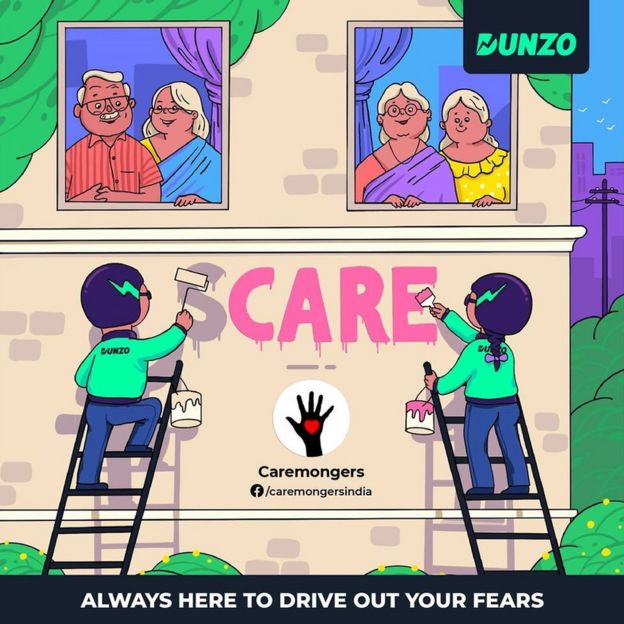
Image copyright IMAGE COURTESY: DUNZOBesides those calling in from within India, Ms Nagaraj has been fielding dozens of calls from people across the globe seeking help for their elderly parents and grandparents.
“When people give their requirement and address, we match the requester with the closest volunteer,” she explains.
So last Saturday, when Amit Joshi, a resident of an upscale apartment block in the Delhi suburb of Noida, called the helpline, he was connected to Caremonger Madhavi Juneja, who also lives in Noida.
“We woke up to the news that our apartment complex was under lockdown,” Mr Joshi told me.
A resident had tested positive for the coronavirus and Mr Joshi was informed that they would not be allowed to leave home for a week.
“Police had put up barricades outside on the road and our complex was swamped with disaster management teams and health officials. Everything around us was shuttered. There was complete panic,” he says.
Mr Joshi, who lives with his wife and elderly parents, says his biggest worry was how to get essentials like bread and milk.
And when he received a random WhatsApp forward from a colleague about Caremongers India, he decided to call them.
A few hours later, Ms Juneja, a psychotherapist and life coach, turned up at the gate of Mr Joshi’s housing society and handed over the supplies to him.
“I wore a mask and took my bottle of hand sanitiser and drove to his complex to carry out the delivery,” she said.
“Because the street was barricaded, I parked my car and then walked. If I had left it outside, someone else could have taken it. After I handed over the package to him, I sanitised my hands and got back into my car.”
Media caption People panicked after Narendra Modi said nobody should leave their homes, and did not mention the status of essential supplies
Mr Joshi says, “In trying times like these, to have people selflessly reaching out to those in need has strengthened my belief in humanity.”
Ms Nagaraj says it’s “so heartening” to see that so many people want to help.
“Every request we receive is very special when we fulfil it. When a daughter calls to say her dad who lives alone requires provisions, we work hard to ensure he gets it.”
Ms Nagaraj says caremongering has taken over life and even her home.
“It’s not easy to answer 450 calls a day,” she says, “but when you help others, you go to bed thinking you haven’t wasted your day and that’s good enough for me.”
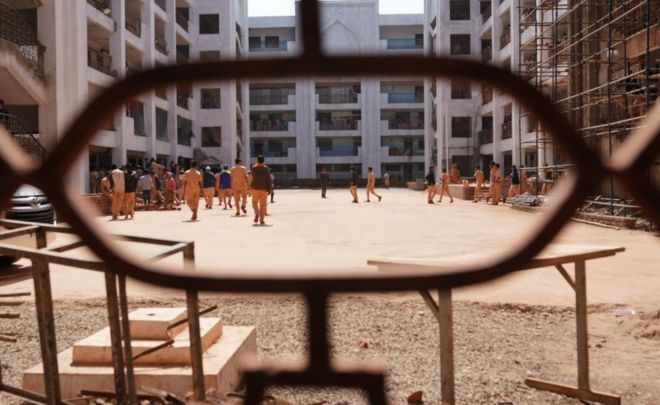
Image caption A play staged at Shaheen School has led to the arrest of a parent and a teacher
An Indian school play involving nine to 12-year-olds became the subject of national attention after it landed a young mother and a teacher in jail. BBC Telugu’s Deepthi Bathini reports.
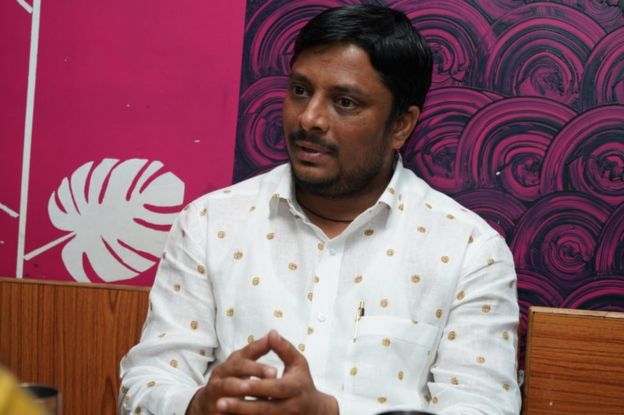
“I’m not sure how I ended up here,” says 26-year-old Nazbunnisa, a single mother who did not give her last name and who works as a domestic help.
She was arrested on 30 January, along with Farida Begum, a teacher at her daughter’s school. The charge against them: sedition, which the women, both Muslim, deny.
They spoke to the BBC in a prison official’s office at Bidar district jail in the southern state of Karnataka. Both were on the verge of tears – they said they are trying to be “strong”, but their lives have suddenly turned “upside down”.
Their bail hearing is scheduled for Tuesday. Their lawyer says the charge of sedition is being misused.
Image copyright GETTY IMAGESImage caption The citizenship law has sparked huge protests
The two women are accused of spreading “false information” and of “spreading fear among [the] Muslim community” and of using children to insult India’s Prime Minister, Narendra Modi.
Their ordeal began with a play put on by the students and staff at Shaheen School in Bidar, where Ms Nazbunnisa’s daughter studies and Farida Begum, 52, teaches.
The play was about a controversial new citizenship law, which has polarised India since it was passed in December by the governing Hindu nationalist Bharatiya Janata Party (BJP).
The Citizenship Amendment Act (CAA), offers amnesty to non-Muslim immigrants from Pakistan, Bangladesh and Afghanistan. It sparked fear among India’s 200 million-plus Muslims as it came in the wake of the government’s plans to introduce a National Register of Citizens (or NRC) based on those who can prove their ancestors were Indian citizens.
Authorities are yet to clarify what documents would be needed to prove citizenship, but taken together, the measures have spurred massive protests – critics say the government is marginalising Muslims while offering a path to citizenship for people of other religious communities who fail to make it on to the NRC.
The governing BJP denies these charges, and insists India’s Muslims have nothing to worry about.
So, given the contentious subject, after one of the parents streamed the school play live on Facebook, the recording quickly went viral. Local resident Neelesh Rakshal was among those who watched it.
Mr Rakshal, who describes himself as a social activist, says he became furious over a scene where a man approaches an elderly woman and tells her that Narendra Modi wants Muslims to produce documents proving their Indian citizenship and that of their ancestors, and if they fail to do so, they will be asked to leave the country.
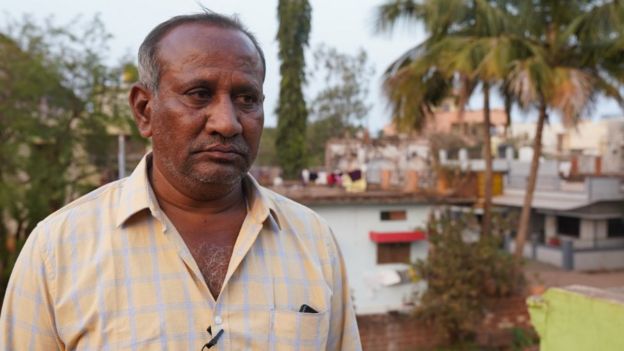
Image caption Mr Rakshal says the play “spreads hatred”
The woman responds that she has been in India for generations and would have to dig up the graves of her ancestors to look for documents. She then says a “boy who was selling tea”, a reference to Mr Modi who has said he used to sell tea as a teenager, is now demanding that she show him her documents.
“I will ask him for his documents and if he doesn’t show them to me, I will hit him with slippers,” she adds.
Mr Rakshal says he immediately registered a police complaint against the school for “using children in a school play to abuse the prime minister and also for spreading hatred”.
The complaint named the school management and the parent who streamed the play. While several members of the school management and the president of the school have also been charged with sedition, police told the court they are still looking for them.
“We do not know for what reason sedition charges have been invoked against the school. It is beyond the imagination of any reasonable person. We will fight it in court,” the school’s CEO, Thouseef Madikeri, says.
Image copyright GETTY IMAGESImage caption School officials allege that they are being targeted because most of the students are Muslim
Police also questioned students – videos and screen grabs of CCTV footage showing them speaking to students were shared widely on social media, prompting criticism.
Mr Madikeri alleges that on one occasion, police in uniform questioned students, with no child welfare officials present – an accusation denied by police superintendent DL Nagesh.
“The students were questioned five times. It’s mental harassment to students and this may have an impact on them in [the] long run,” Mr Madikeri says.
The Karnataka State Commission for Protection of Child Rights has asked police to explain why they questioned students so many times. Police say it was because not all the students were available at the same time.
Mr Madikeri told the BBC it was the questioning of students that led to the arrest of Farida Begum and Ms Nazbunnisa.
One parent whose child was questioned says she is now scared of going to school.
“My daughter told me police repeatedly asked her to identify the teachers and others who might have taught them the [play’s] dialogues,” he said.
“I do not understand what was wrong in the play. Children have been seeing what has been happening around the country. They picked up the dialogues from social media.”
Image caption Farida Begum’s husband is worried about what will happen
Ms Nazbunnisa is also perplexed as to why she was arrested.
“My daughter was rehearsing for the play at home,” she says. “But I did not know what it was about, or what this controversy about CAA or NRC is about. I did not even go to see her play.”
Ms Nazbunnisa has met her daughter only once since she was jailed: “It was just for a few minutes, and even then only through a window. I held back my tears. I did not want to scare her further.”
The girl is staying with a friends of the family – they told the BBC she is having nightmares and often wakes up crying for her mother.
“She has been pleading that her mother not be punished for her mistake. She is sorry for what has happened,” one of them says.
Farida Begum, who suffers from high blood pressure, says she is “scared of what the future holds”. Her husband, Mirza Baig, says he fears that his wife being in jail will affect his daughter’s marriage prospects.
Image copyright FENG VIDEOImage caption Wu Huayan ate only rice and chillies in order to save money to help her ill brother
Well-wishers have donated almost a million yuan to a Chinese student who was hospitalised after living on 2 yuan ($0.30, £0.20) a day for five years.
The case of Wu Huayan shocked Chinese people after it hit the headlines earlier this week.
The 24-year old woman became seriously malnourished while struggling to study and support her sick brother.
Ms Wu’s story also sparked anger at authorities for failing to recognise her plight and help her much earlier.
After the story was reported, donations began pouring in for the college student in the city of Guiyang – reportedly totalling some 800,000 yuan ($114,000, £88,000).
What is Wu Huayan’s story?
Earlier, this month, the young woman went into hospital after having difficulty breathing, according to Chinese media.
She was only 135cm (4ft 5ins) tall, weighing barely more than 20kg (43 pounds; three stones).
The doctors found she was suffering from heart and kidney problems due to five years spent eating minimal amounts of food. She said she needed to save money to support her sick brother.
Wu Huayan lost her mother when she was four and her father died when she was in school.
She and her brother were then supported by their grandmother, and later by an uncle and aunt who could only support them with 300 yuan ($42, £32) each month.
Most of that money went on the medical bills of her younger brother, who had mental health problems.
This meant Ms Wu spent only 2 yuan a day on herself, surviving largely off chillies and rice.
The siblings are from Guizhou, one of the poorest provinces in China.
Media caption China’s uphill struggle fighting extreme poverty
What has the reaction been?
The case sparked an outpouring of concern – and anger at authorities.
Many people on social media said they wanted to help with donations, and many voiced concern about her college not helping her.
One user called her situation “worse than that of refugees in Afghanistan”, while another pointed to the extravagant cost of China’s 70th anniversary celebrations, saying the money could have been better spent.
Others expressed their admiration at her efforts to help her brother, while also persevering with her studies in college.
Aside from the donations on crowd funding platforms, her teachers and classmates donated 40,000 yuan ($5,700; £4,400), while local villagers collected 30,000 yuan to help her.
Officials released a statement saying Ms Wu had been receiving the minimum government subsidy – thought to be between 300 and 700 yuan a month – and was now getting an emergency relief fund of 20,000 yuan.
“We will keep following the case of this strong-minded and kind girl,” the Tongren City Civil Affairs Bureau said.
“We will actively co-operate with other relevant departments to solve the problem according to the minimum living standard and temporary assistance responsibility that the civil affairs department bears.”
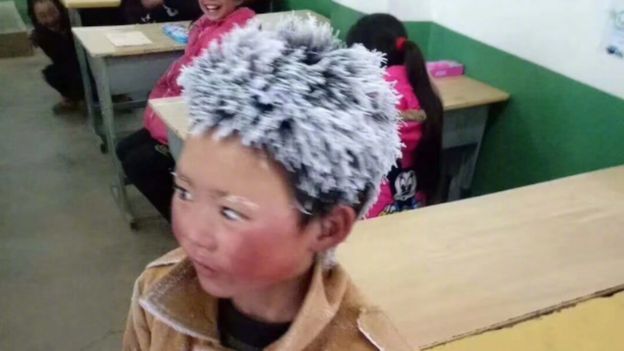
Dubbed “Little Wang”, his story also went viral, leading to international donations from people impressed by his resilience, and shocked at his poverty.
Image copyright PEOPLE’S DAILY
While China’s economy has skyrocketed over the past decades, poverty has not disappeared, and inequality has grown.
One major reason cited is the huge divide between rural and urban areas.
As a point of comparison, in rural region of Guizhou where Ms Wu lives, that figure is around 16,703 yuan.
China has moved from being “moderately unequal in 1990 to being one of the world’s most unequal countries,” according to a 2018 report by the International Monetary Fund.
According to the National Bureau of Statistics in 2017, 30.46 million rural people were still living below the national poverty line of $1.90 a day.
China has previously pledged to “eliminate” poverty by 2020.
Germany welcomes first panda cubs born in the country
Zoo reports mother and babies doing well and in good health
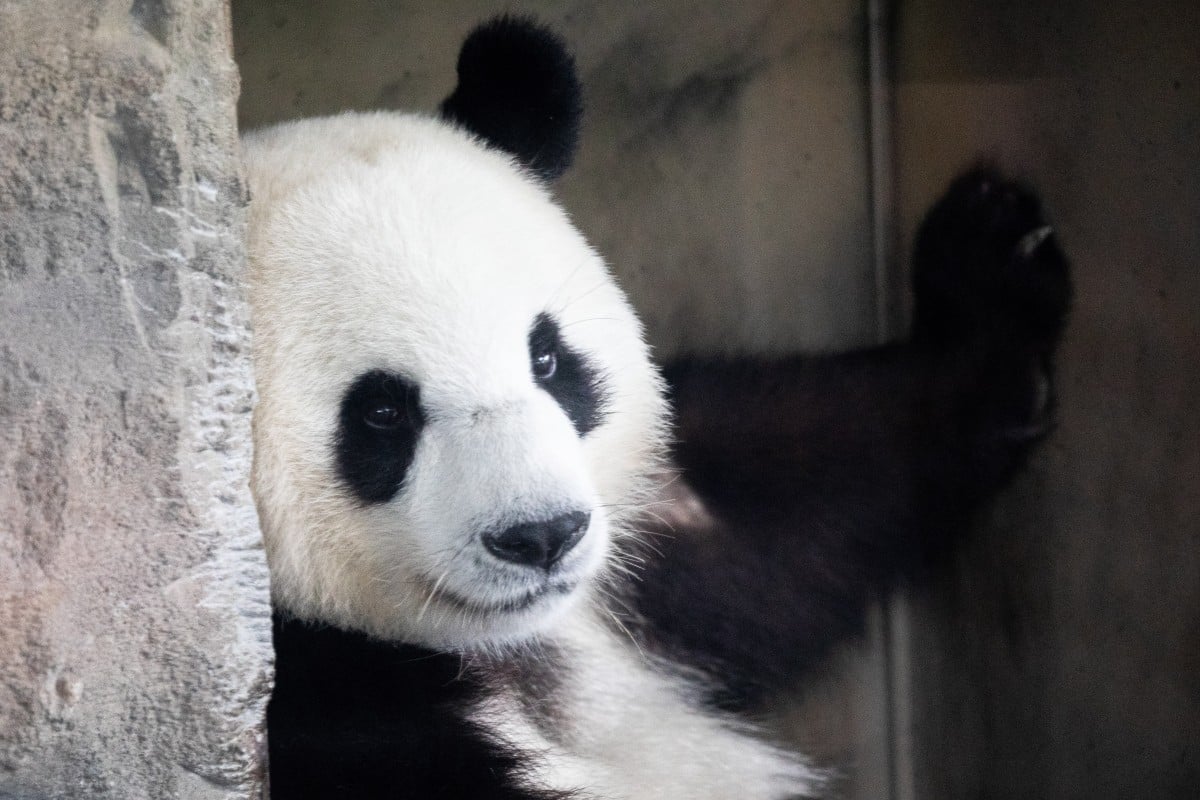
Chinese giant panda Meng Meng has given birth to twins at Berlin zoo, the first pandas to be born in Germany. Photo: EPA-EFE
Berlin zoo is celebrating the safe arrival of panda twins, in the first time that the rare animals have been born in Germany.
Resident panda Meng Meng delivered her first cub on Saturday evening, with the second baby arriving about an hour later.
The zoo posted a video on Twitter of the new mother guiding one of her pink babies to feed, with the announcement: “Meng Meng became a mom – twice! We are so happy, we are speechless.”
The cubs weighed in at 136 and 186 grams but their genders had not been determined, the zoo said.
Meng Meng guides one of her newborn panda twins to feed. Photo: EPA-EFE
“Meng Meng and her two cubs coped well with the birth and are all in good health,” zoo director Andreas Knieriem said.
At birth, the pink cubs, with their fine white down and disproportionately long tails, bear little resemblance to the adult black and white bears.
The births are particularly rare as it is notoriously hard to breed pandas.
Famed for its “panda diplomacy”, China has sent its national treasure to only about a dozen countries as a symbol of close relations.
The zoo pays US$15 million for a 15-year contract to host them, with most of the money going toward a conservation and breeding research programme in China.
While the cubs are born in Berlin, they remain Chinese and must be returned to China within four years after they have been weaned.
China has previously given three pandas to Germany but the last one, 34-year-old Bao Bao, died in Berlin in 2012, having become the oldest male panda in the world.
About 1,864 pandas remain in the wild in China, up from around 1,000 in the late 1970s, according to the environmental group WWF.
Just over 400 pandas live in zoos around the world, in conservation projects set up with Beijing.
















 CHINDIA ALERT: You'll be living in their world, very soon