Chindia Alert: You’ll be Living in their World Very Soon
aims to alert you to the threats and opportunities that China and India present. China and India require serious attention; case of ‘hidden dragon and crouching tiger’.
Without this attention, governments, businesses and, indeed, individuals may find themselves at a great disadvantage sooner rather than later.
The POSTs (front webpages) are mainly 'cuttings' from reliable sources, updated continuously.
The PAGEs (see Tabs, above) attempt to make the information more meaningful by putting some structure to the information we have researched and assembled since 2006.
Concerns are rising that China is repeating its mistake of a decade ago by pursuing short-term debt-fuelled economic growth at the cost of long-term sustainability
Local governments are stepping up spending on infrastructure projects in a bid to offset the slowdown caused by the coronavirus outbreak and subsequent lockdowns
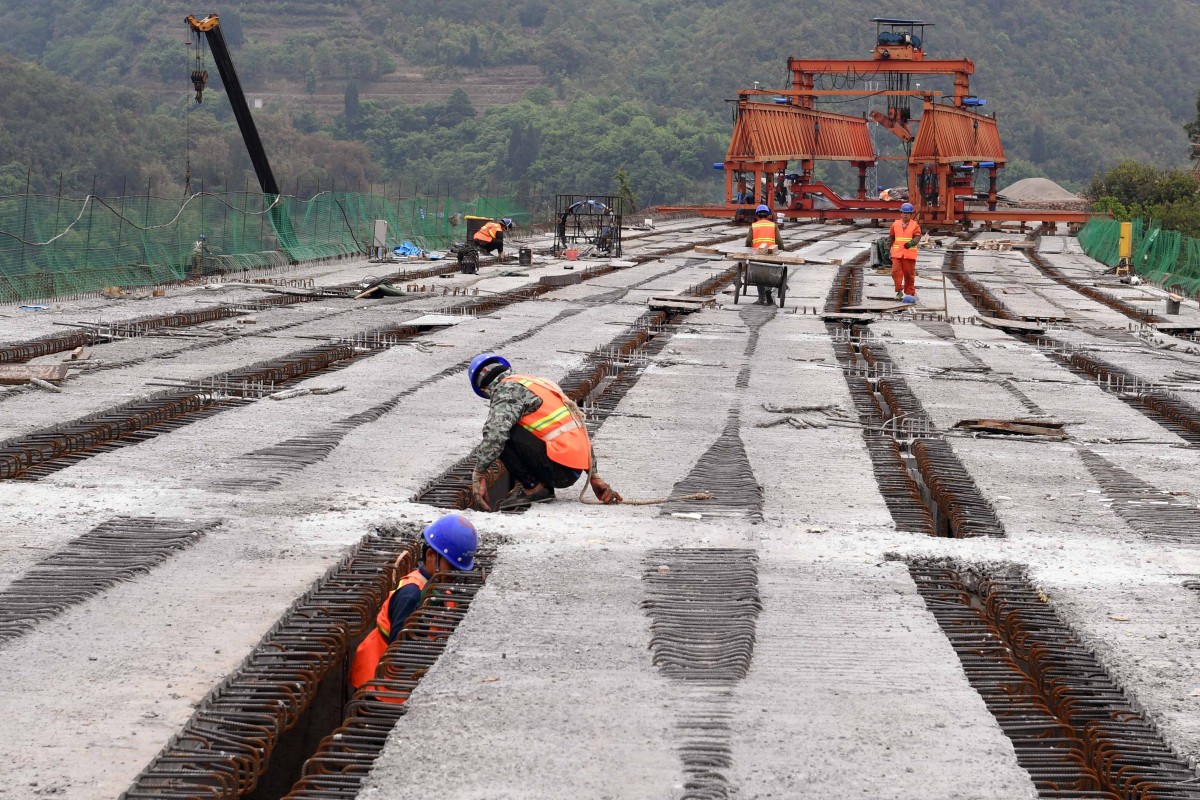
Construction of high-speed railways, motorways and airports is an old tactic that Beijing dusted off after the pandemic led to a 6.8 per cent economic contraction in the first quarter. Photo: Xinhua
China’s huge stockpile of local government debt, one of the biggest “grey rhino” risks threatening the Chinese economy’s future, is set to rise steeply as local authorities rush to increase capital spending to help offset the damage caused by the coronavirus outbreak.
As Beijing discusses increasing the central government budget deficit and monetary policy easing to spur economic growth, many local governments see the situation as a golden opportunity to realise their investment ambitions, fanning concerns that China is repeating its mistake of a decade ago by pursuing short-term debt-fuelled economic growth at the cost of long-term sustainability.
In one of the latest investment drives, the southeastern province of Fujian announced on Sunday that it had signed contracts for 391 new projects with a combined investment value of 783.6 billion yuan (US$110.6 billion). Projects undertaken by central government-owned companies, which received significant lending support in the first quarter, accounted for more than half of the promised investment in Fujian, some 92 projects worth 424.5 billion yuan.
The landlocked eastern province of Anhui is also planning 2,583 new projects this year at a cost of 450 billion yuan, a third of which have been created in the last two weeks.
Construction begins for major sea crossing to link Shenzhen and Zhongshan in Greater Bay Area
In addition to work on existing construction projects, costing around 850 billion yuan, the province has also prepared a list of 3,300 reserve projects with a total investment value of 5.4 trillion yuan (US$762 billion) which could theoretically be started at any point in the future, pending government approval and funding support.
“The most powerful and effective way to offset the economic slowdown is to increase the size of investments,” Wang Qikang, an official with the Anhui economic planning office said on Friday. “[We] must quicken the pace of construction, working day and night to win back the lost time [from the coronavirus lockdowns].”
Construction of high-speed railways, motorways and airports is an old tactic that Beijing dusted off after the pandemic led to a 6.8 per cent economic contraction in the first quarter.
Infrastructure construction has already been hit hard amid the lockdowns, plunging 19.7 per cent in the first three months of the year compared to a year earlier.
Many [local governments] are still striving to achieve a high growth rate without the guidance of a national [gross domestic product] target – Liu Xuezhi
“The investment stimulus mindset has hardly been eradicated at the local level,” said Liu Xuezhi, a senior researcher with the Bank of Communications in Shanghai. “In particular, many [local governments] are still striving to achieve a high growth rate without the guidance of a national [gross domestic product] target.”
Before the start of the coronavirus outbreak, Beijing was thought to be targeting a
of around 6 per cent this year after achieving 6.1 per cent in 2019, although many local governments appear to be setting their own annual targets still using the original expected goal as a guide.
However, that target was never made public because the meeting of the
scheduled for early March, where the growth target would normally have been released, was postponed due to the virus.
The government announced on Wednesday that the NPC will be held from May 22, when a new, likely lower, growth target could be announced.
China’s first-quarter GDP shrinks for the first time since 1976 as coronavirus cripples economy
International rating agency Moody’s warned that greater infrastructure spending would result in higher debt for regional and local governments, increasing their financial risks amid a sharp slowdown in tax revenues.
“Such investments are less likely to be a main support measure [chosen by Beijing] now given the government’s focus on avoiding a rapid increase in leverage and asset price inflation,” Moody’s analysts Michael Taylor and Lilian Li said on Tuesday.
At the end of March, local government debt stood at 22.8 trillion yuan (US$3.2 trillion), according to the Ministry of Finance. But implicit liabilities, which are hidden in local financing vehicles, state firms and public-private partnership projects, are believed to be much larger, with some estimates pointing towards an additional debt of over 30 trillion yuan.
Chinese central bank governor Yi Gang, along with other officials, have already warned against excessive economic stimulus, saying it would add risks to China’s financial system.
A key risk is that local governments are front-loading China’s long-term investment plan, especially in the railway sector, with more than 357 railway projects proposed by local governments.
Shandong province, for example, is preparing to build four new railway lines, including the Shandong portion of a second high-speed railway between Beijing to Shanghai.
“There is still a chance for infrastructure investment growth to hit 10 per cent if the government releases 2 trillion yuan (US$282 billion) in funding through local special purpose bonds and special treasury bonds,” said Haitong Securities’ chief economist Jiang Chao on Monday.
However, a local government debt monitoring report issued on Tuesday by the National Institution of Finance and Development warned that China’s local government fiscal situation is worsening rapidly as expenses surge and revenues drop.
“All levels of local governments in China will face huge debt repayment pressure in five years,” warned Yin Jianfeng, deputy director of the Beijing-based think-tank.
Train trips, Xinjiang and chartered flights among the growing holiday trends, travel agents say
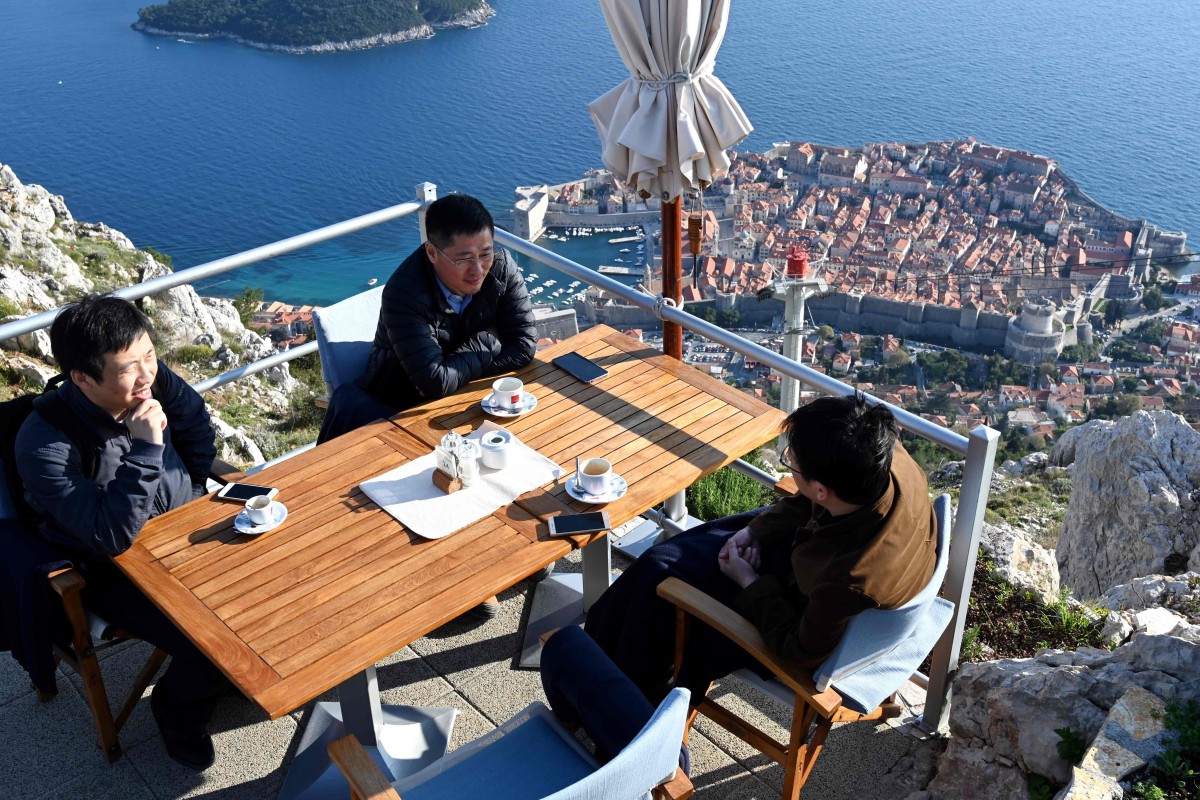
Destinations such as Dubrovnik, Croatia, are becoming more popular among mainland Chinese tourists, according to one of China’ s biggest travel services. Photo: AFP
Chartered flights and niche destinations such as Croatia and Malta are growing in popularity as Hong Kong falls out of favour for mainland Chinese holidaymakers over the National Day “golden week” break.
Japan has overtaken Thailand as the most searched overseas destination on the website of travel agency Ctrip, followed by Malaysia, the United States, Singapore, Australia, Macau, France, Italy and Russia.
Within the mainland places such as Beijing and Shanghai continued to be among the most popular searches but Urumqi, capital of Xinjiang Uygur autonomous region, is a fast-growing term, especially among people in Shanghai and Guangzhou.
“It could be that tourists want to see autumn leaves,” a Ctrip spokesman told the South China Morning Post.
October 1 marks the start of a week-long break on the mainland when millions of Chinese take the chance to travel. This year, an estimated 800 million people are expected to go on trips in China or overseas, about 10 per cent more than last year.
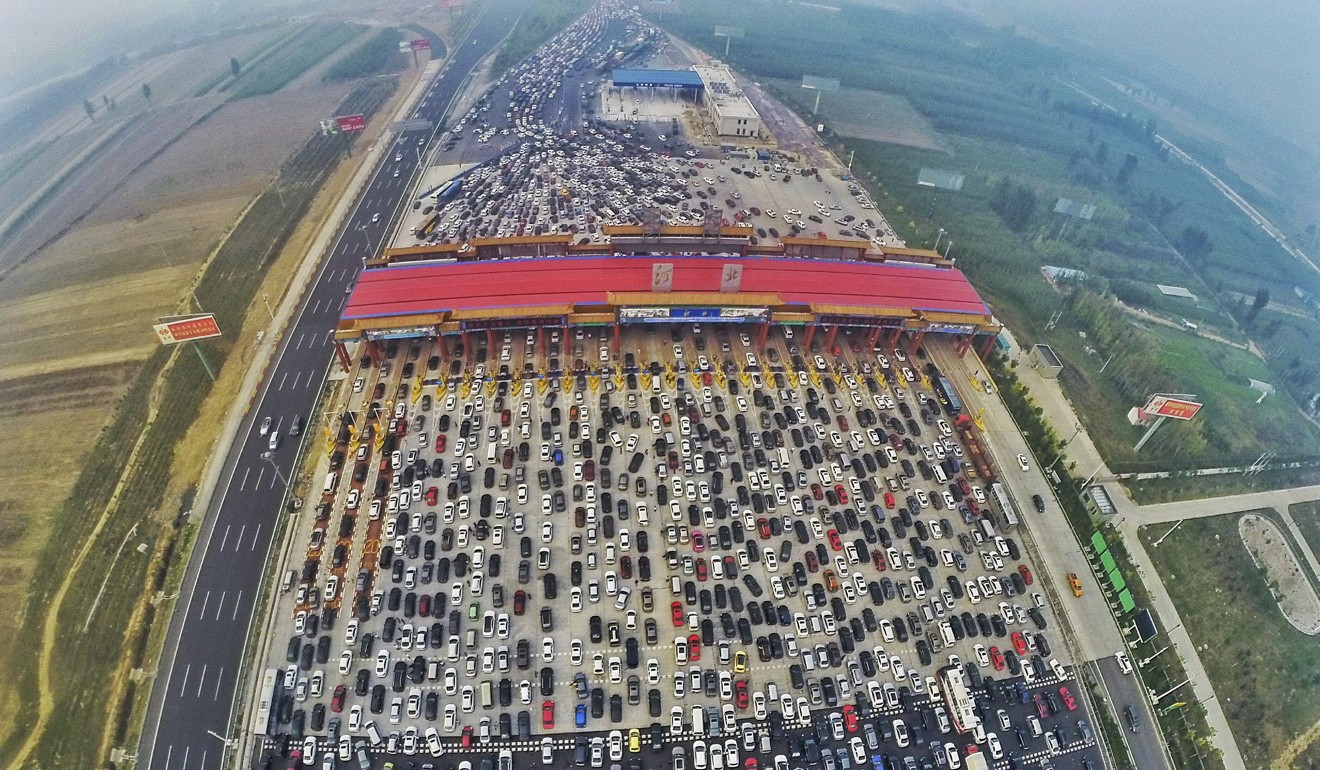
The country’s motorways are expected to be jammed from about 2pm on Monday, reaching a peak at around midnight, and again from 10am Tuesday, according to web mapping service Tencent Map.
China’s highways can expect heavy traffic as travellers head out for the holiday. Photo: Reuters
Ctrip said people heading overseas were increasingly seeking out new destinations, with bookings to places such as the Czech Republic, Austria, Croatia, Malta and Cambodia growing by 45 per cent this year.
“As Chinese people travel outside the country more and their experience of travel grows, many are more willing to go to smaller eastern European countries, such as the Czech Republic,” the spokesman said.
“Popular movies also have a strong influence. Many young people are willing to travel to see where films are shot, such as Croatia, one of the locations for Game of Thrones.”
Other noticeable trends this year include more people travelling with pets, by train and on chartered flights. The site said it sold 60 per cent more European train tickets and 10 times the number of train tickets for Japan for this golden week compared to last year.
The most popular routes in Asia were Tokyo to Kyoto in Japan, and Seoul to Busan in South Korea.
Hong Kong protests leave ‘golden week’ tourist boom in tatters as visitor arrivals during Chinese holiday period are set to be slashed by a third
Thousands of users also chose chartered flights, a service Ctrip introduced in September.
Ji Yu, head of chartered flights for Ctrip said most people thought chartered flights or helicopters were something only millionaires could afford, but in the internet age, they had become cheaper and more accessible.
“In the internet era, consumer needs vary from person to person, especially in terms of travel. There are products on the market to satisfy each customer’s personal needs.”
Among the more popular chartered routes were from Beijing or Shanghai to Tokyo, Bangkok, the Maldives and London.
More people are also going away for longer. Digital travel services giant Qunar said that 80 per cent of the travellers booking flights or hotels through its services were heading off for more than five days. And of those 41 per cent were travelling for more than a week.
Meanwhile, trips to Hong Kong have fallen substantially, with just 15 group tours expected to enter the city each day, down from 110 last year, according to the Travel Industry Council of Hong Kong.
Efforts to promote Hong Kong attractions have also increased in Shenzhen in recent weeks, with advertising videos scenic spots, popular restaurants and malls in Hong Kong playing on cross-border buses. Passengers can also get discounts to some stores and services with their tickets.
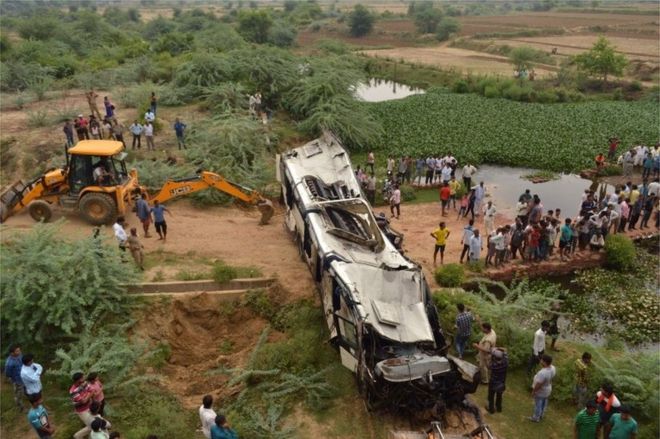
One Sleeper Coach passenger bus travelling from Lucknow to Delhi met with an accident on Yamuna Expressway. It fell into the side fall about 15 feet deep.
20 passengers rescued so far. Efforts are on for the rest.
About 900 people have been killed on the road since it opened in 2012, according to authorities.
Road accidents in India are usually blamed on badly maintained vehicles, poor driving and the state of the roads.
Correspondents say buses in rural India are often old and rickety. Many also do not follow or enforce basic safety measures – it’s not uncommon to see people crowding into buses or even travelling on the roof if they cannot find a seat inside.
Development minister leads high-level investment forum in Beijing
Points to free trade agreements and preferential duty deals to offset trade war pressures for Chinese factories
Sri Lankan Minister for Development Strategies and International Trade Malik Samarawickrama at the Sri Lanka Investment Forum in Beijing on Wednesday. Photo: Simon Song
Sri Lanka is wooing Chinese manufacturers, urging them to make use of its preferential duty-free treatment by the US and Europe as a way to offset the growing tariff pressure of the trade war.
The country’s development minister, Malik Samarawickrama, was in Beijing on Wednesday as part of an investment forum at the Sri Lankan embassy attended by dozens of Chinese businesspeople.
“China has invested heavily in infrastructure and they are assisting us to invest in ports, roads, railways, water supplies and so on. Now we would like China to get involved in setting up their manufacturing plants in Sri Lanka, primarily for the purpose of exports,” he said.
“They can make use of the preferential market access we have – we have duty free access to the European Union countries and we have free trade agreements with Pakistan, Singapore and India. And, since the cost of manufacturing in China is going up, we would like the Chinese to look at Sri Lanka for their manufacturing and we want it to be exported back to China.”
Sri Lanka, bruised from Easter bombings, seeks US$1 billion loan from China
Along with trade officials and diplomats, Samarawickrama, one of Sri Lanka’s most senior government ministers, was also keen to boost investor confidence following the deadly Easter Sunday bombings in Colombo which killed 253 people.
“Let me assure you, absolutely, Sri Lanka is safe for investment,” he told the dozens of representatives from Chinese state-owned and private companies who attended the forum.
“We must bring to your notice that none of the industries have been affected as a result of the bombings and none of the export orders were cancelled or delayed. This is a testament to the resilience of the economy.”
China is one of Sri Lanka’s largest trading partners and – sometimes controversially – the largest financier of its booming new infrastructure. Other big lenders to the island nation are the Asian Development Bank and Japan.
Earlier this year the Sri Lankan government signed a US$989.5 million loan agreement with China’s Export-Import Bank for a major new motorway project. And last month Sri Lanka’s finance ministry confirmed it was in talks with the China-led Asian Infrastructure Investment Bank (AIIB) for a further loan of nearly US$1 billion for energy and motorways.
Did Japan and India just launch a counter to China’s Belt and Road?
The surge of Chinese investment has raised concerns that Sri Lanka could become caught up in the rivalry between China and India as Beijing seeks to expand its influence in South Asia and the Indian Ocean.
Last month, Sri Lanka signed an agreement with India and Japan to jointly develop the East Container Terminal at the Port of Colombo, which some observers said could become a competitor to the China-funded Hambantota Port, and was perhaps a sign that the island nation was seeking to neutralise the growing influence of China.
Samarawickrama denied claims the involvement of Japan and India in Sri Lanka’s biggest port project was to counter China’s influence.
Under the agreement, he said, the terminal was owned by Sri Lanka Port Authority, with a 51 per cent stake, while Japan and India would develop the remaining 49 per cent.
“We need the expertise from Japan,” Samarawickrama said. “We need the Indians to get involved in the operation because 75 per cent of the transshipment cargoes in the Colombo port come from India and India is extremely important to us.
“They are the operators of the terminal and they are not building any ports.”




 CHINDIA ALERT: You'll be living in their world, very soon