Chindia Alert: You’ll be Living in their World Very Soon
aims to alert you to the threats and opportunities that China and India present. China and India require serious attention; case of ‘hidden dragon and crouching tiger’.
Without this attention, governments, businesses and, indeed, individuals may find themselves at a great disadvantage sooner rather than later.
The POSTs (front webpages) are mainly 'cuttings' from reliable sources, updated continuously.
The PAGEs (see Tabs, above) attempt to make the information more meaningful by putting some structure to the information we have researched and assembled since 2006.
Image copyright AFP / GETTYImage caption Shoppers walking past a broadcast of Chinese Premier Li Keqiang delivering his speech at the opening of the NPC on Thursday
China’s ruling Communist Party has set in motion a controversial national security law for Hong Kong, a move seen as a major blow to the city’s freedoms.
The law to ban “treason, secession, sedition and subversion” could bypass Hong Kong’s lawmakers.
Critics say China is breaking its promise to allow Hong Kong freedoms not seen elsewhere in China.
It is likely to fuel public anger and may even trigger fresh protests and demands for democratic reform.
The plan was submitted at the annual National People’s Congress (NPC), which largely rubber-stamps decisions already taken by the Communist leadership, but is still the most important political event of the year.
Hong Kong, a semi-autonomous region and an economic powerhouse, was always meant to have introduced such laws after the handover from British control to Chinese rule in 1997.
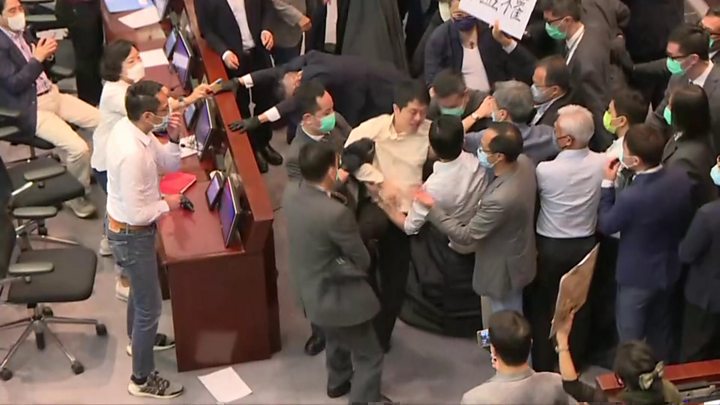
After last year’s wave of sustained and violent protest, Beijing is now attempting to push them through, arguing “law-based and forceful measures” must be taken to “prevent, stop and punish” such protests in the future.
On Friday, Hong Kong’s government said it would co-operate with Beijing to enact the law, adding it would not affect the city’s freedoms.
That article says Hong Kong “must improve” national security, before adding: “When needed, relevant national security organs of the Central People’s Government will set up agencies in Hong Kong to fulfil relevant duties to safeguard national security in accordance with the law.”
China could essentially place this law into Annex III of the Basic Law, which covers national laws that must be implemented in Hong Kong – either by legislation, or decree.
Addressing the congress, Premier Li Keqiang spoke of the economic impact of the coronavirus and on Hong Kong and Macau said: “We’ll establish sound legal systems and enforcement mechanisms for safeguarding national security in the two Special Administrative Regions.”
What do opponents say the dangers are?
Hong Kong is what is known as a “special administrative region” of China.
It has observed a “one country, two systems” policy since Britain returned sovereignty in 1997, which has allowed it certain freedoms the rest of China does not have.
Pro-democracy activists fear that China pushing through the law could mean “the end of Hong Kong” – that is, the effective end of its autonomy and these freedoms.
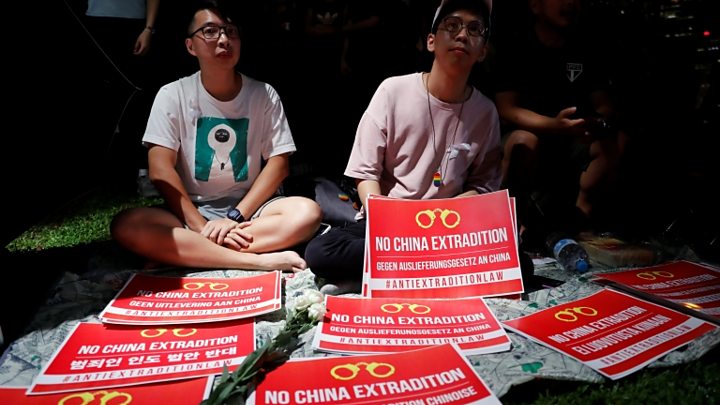
Last year’s mass protests in Hong Kong were sparked by a bill that would have allowed extraditions to mainland China.
Media caption Former Hong Kong governor Chris Patten: “UK should tell China this is outrageous”
The bill was paused, then withdrawn – but the protests continued until the virus outbreak at the end of the year.
The US has also weighed in, with President Trump saying the US would react strongly if it went through – without giving details.
It is currently considering whether to extend Hong Kong’s preferential trading and investment privileges.
Why is China doing this?
Mr Wang said the security risks had become “increasingly notable” – a reference to last year’s protests.
“Considering Hong Kong’s situation at present, efforts must be made at the state-level to establish and improve the legal system and enforcement mechanisms,” he is quoted as saying in state media.
Media caption The BBC’s Helier Cheung on Hong Kong’s 2019 protests
Beijing may also fear September’s elections to Hong Kong’s legislature.
If last year’s success for pro-democracy parties in district elections is repeated, government bills could potentially be blocked.
What is Hong Kong’s legal situation?
Hong Kong was under British control for more than 150 years up to 1997.
The British and Chinese governments signed a treaty – the Sino-British Joint Declaration – that agreed Hong Kong would have “a high degree of autonomy, except in foreign and defence affairs”, for 50 years.
This was enshrined in the Basic Law, which runs out in 2047.
TAIPEI (Reuters) – Only Taiwan’s democratically-elected government can represent its people on the world stage, not China, its foreign ministry said on Tuesday, calling on the World Health Organization (WHO) to “cast off” China’s control during the coronavirus pandemic.
Taiwan’s exclusion from WHO, due to China’s objections which considers the island one of its provinces, has infuriated Taipei, which says this has created a dangerous gap in the global fight against the coronavirus.
Taiwan has been lobbying to attend, as an observer, this month’s meeting of the WHO’s decision-making body, the World Health Assembly (WHA), although government and diplomatic sources say China will block the move.
Steven Solomon, the WHO’s principal legal officer, said on Monday that the WHO recognised the People’s Republic of China as the “one legitimate representative of China”, in keeping with U.N. policy since 1971, and that the question of Taiwan’s attendance was one for the WHO’s 194 member states.
Speaking in Taipei, Taiwan Foreign Ministry spokeswoman Joanne Ou said the 1971 decision, under which Beijing assumed the U.N. China seat from Taipei, only resolved the issue of who represented China, not the issue of Taiwan, and did not grant China the power to represent Taiwan internationally.
“Only the democratically-elected Taiwanese government can represent Taiwan’s 23 million people in the international community,” she told reporters.
The WHO should “cast off the Chinese government’s control”, and let Taiwan fully participate in fighting the virus, Ou said.
“Do not let China’s improper political interference become an obstacle to impeding the world’s united fight against the virus.”
Taiwan attended the World Health Assembly as an observer from 2009-2016 when Taipei-Beijing relations warmed.
But China blocked further participation after the election of Taiwan President Tsai Ing-wen, who China views as a separatist, charges she rejects.
The United States has strongly supported Taiwan’s participation at the WHA as an observer, another fault line in Washington-Beijing ties that have been already overshadowed by the Trump administration’s criticism of how China and the WHO have handled the outbreak.
China says Taiwan is adequately represented by Beijing and that Taiwan can only take part in the WHO under Beijing’s “one China” policy, in which Taiwan would have to accept that it is part of China, something Tsai’s government will not do.
Taiwan has reported far fewer cases of the new coronavirus than many of its neighbours, due to early and effective detection and prevention work.
SEOUL/BEIJING (Reuters) – China has allowed 200 employees from South Korea’s Samsung Electronics Co Ltd (005930.KS) to enter the country to work on an expansion of the firm’s NAND memory chip factory, the company said on Wednesday.
The move came after China said on Tuesday that it was in talks with some countries to establish fast-track procedures to allow travel by business and technical personnel to ensure the smooth operation of global supply chains.
China said it has reached a consensus on such an arrangement with South Korea, without elaborating on the terms, including whether individuals entering China will be subject to quarantine.
China, where the virus first emerged late last year, blocked entry last month for nearly all foreigners in an effort to curb risks of coronavirus infections posed by travellers from overseas. After bringing the local spread under control with tough containment measures, it is trying to restart its economic engines after weeks of near paralysis.
A chartered China Air Ltd (601111.SS) plane flew in the Samsung Electronics employees on Wednesday, a company spokeswoman said.
Samsung said its employees will follow the local government’s policy upon arrival, without elaborating.
Shaanxi province, where Samsung’s NAND memory chip plant is located, requires people travelling from overseas to undergo a 14-day quarantine, according to South Korea’s foreign ministry.
“Samsung employees will not be exempted from the 14-day quarantine rule imposed by the Shaanxi province. They will get coronavirus tests at the airport upon arrival and will be transported to a local hotel designated by Chinese authorities,” an official at the Consulate General of South Korea in Xi’an told Reuters.
Samsung Electronics in December increased investment at its chip factory in China by $8 billion to boost production of NAND flash memory chips.
South Africa, Kenya latest to halt arrivals from ‘high-risk’ countries as cases across the continent double over the weekend
Concerns are growing over whether health care systems in some African nations will be able to cope
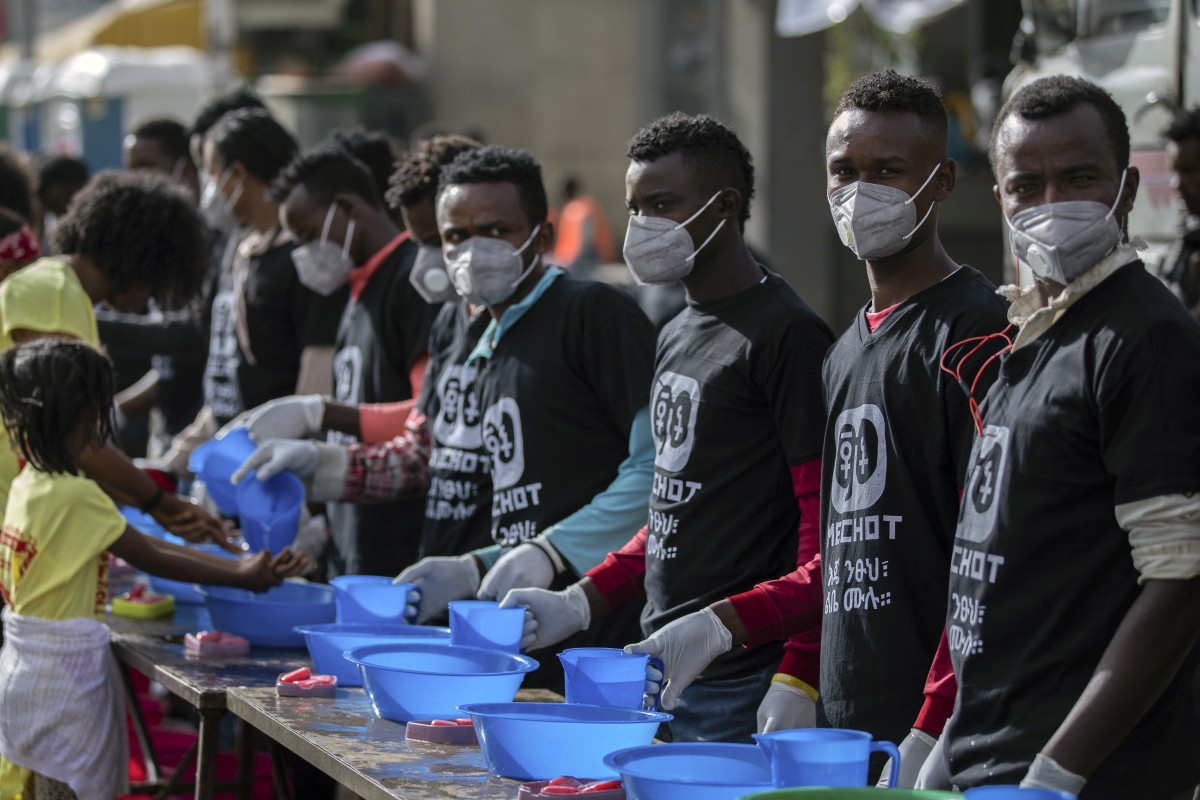
Masked volunteers provide soap and water for participants to wash their hands against the new coronavirus at a women’s 5km fun run in Addis Ababa, Ethiopia on Sunday. Photo: AP
Travel bans and school closures were announced in South Africa and Kenya on Sunday, as concerns grew over the capacity of the continent’s fragile health systems to cope with the spread of the deadly new coronavirus, with more than a dozen countries reporting their first cases.
South African President Cyril Ramaphosa declared a national state of disaster, banning arrivals by foreign nationals from high-risk countries including Italy, Iran, South Korea, Spain, Germany, the United States, Britain and China, effective Wednesday.
“We have cancelled visas to visitors from those countries from today and previously granted visas are hereby revoked,” Ramaphosa said in a televised address on Sunday evening, adding that any foreign national who had visited high-risk countries in the past 20 days would be denied a visa.
South African schools will also be closed from Wednesday until after the Easter weekend. Gatherings of more than 100 people have been banned and mass celebrations for Human Rights Day and other events cancelled. “Never before in the history of our democracy has our country been confronted with such a severe situation,” Ramaphosa said.
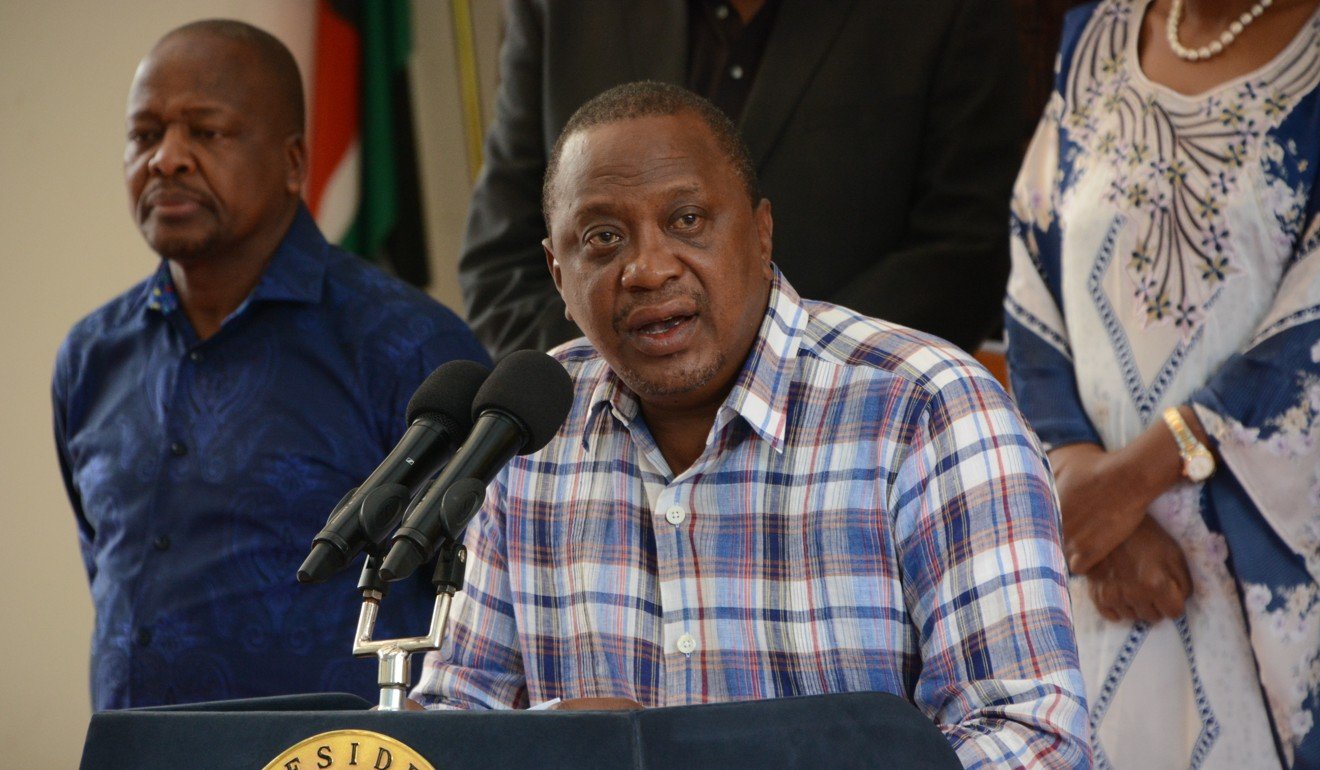
In Kenya, where three cases of Covid-19 – the disease caused by the new coronavirus – have now been confirmed, President Uhuru Kenyatta suspended travel from any country with reported infections. Only Kenyan citizens and foreigners with valid residency permits would be allowed entry, provided they proceeded to self-quarantine or a government-designated quarantine facility, he said.
Kenyan President Uhuru Kenyatta reports two more cases of coronavirus in the country, bringing its total number of cases to three. Photo: DPA
Kenyatta also suspended learning in all educational institutions with immediate effect. “Some of the measures may cause inconvenience, but I want to assure you they are designed to ensure that we effectively contain the spread of the virus,” he said.
Kenya and South Africa join Ghana, Rwanda and Morocco in implementing travel restrictions or outright bans, while others are closing churches, museums, sporting activities, nightclubs and tourist attractions in a bid to curb the spread of the disease.
The continent was largely spared in the early days of the outbreak but has now recorded more than 300 cases and six deaths. Algeria, Morocco, Senegal and Tunisia all reported more new cases over the weekend, which saw numbers of new infections across Africa more than double in just two days.
As numbers rise, the Africa Centres for Disease Control and Prevention (CDC) has said there are around a dozen countries on the continent without the capacity to do their own testing.
They will have to send samples to countries like South Africa, which itself is struggling to contain the virus, with confirmed cases doubling to 61 on Sunday, a day after 114 of its citizens were repatriated from the central Chinese city of Wuhan, the original epicentre of the outbreak and the first to be placed in lockdown.
John Nkengasong, director of the Africa CDC, warned that the risk of other African countries detecting new cases of Covid-19 remained high. “Our strategy is clear: we want to capacitate the member states, so they can quickly detect and mitigate the effects of the disease in Africa, and, if widespread transmission occurs, prevent severe illness and death,” he said.
The World Health Organisation has already warned that critical gaps remain in the capacity of many African nations to trace, detect and treat the disease. On Friday, the WHO Africa office said it was “striving to help member states fill these gaps” but warned of global shortages in personal protective equipment (PPE) including gloves, masks and hand sanitiser.
Major coronavirus outbreak in Africa ‘just a matter of time’
13 Mar 2020
WHO said its first blanket distribution of PPEs, to 24 African countries, had been completed and another wave of distributions was planned.
“With Covid-19 officially declared a pandemic, all countries in Africa must act,” said Dr Matshidiso Moeti, WHO regional director for Africa. “Every country can still change the course of this pandemic by scaling up their emergency preparedness or response.
“Cases may still be low in Africa and we can keep it that way with robust all-of-government actions to fight the new coronavirus.”
The 55 member states of the African Union have suspended meetings until May, while the six countries that make up the East African Community have suspended all planned meetings until further notice.
In Algeria – one of the worst-hit North African countries, with 48 cases and four deaths, as of Monday morning – all schools and universities have been closed, while Senegal, with 24 cases to date, has closed schools and cancelled its Independence Day festivities on April 4, which this year marks 60 years since its independence from France. Cruise ships have also been banned from docking in Senegal.
On Sunday, Rwanda closed all its places of worship and suspended large gatherings such as weddings and sporting activities. Schools and universities in the central African country are also closed. National airline RwandAir has also suspended flights between the capital Kigali and Mumbai until April 30.
This is in addition to earlier suspensions of its routes with Tel Aviv and the southern Chinese city of Guangzhou, which remain in place until further notice.
While most African airlines have suspended flights to cities in mainland China, Ethiopian Airlines has continued flying to most of its destinations, describing its China routes as among its most profitable. Nevertheless, chief executive Tewolde GebreMariam last week said coronavirus fears had cut demand by a fifth on most of its routes.
Some companies polled by Shanghai’s American Chamber of Commerce said they were speeding up plans to move operations out of mainland
Transport bans and strict public health measures have disrupted economic activity
China’s economic growth may drop to 5 per cent or lower because of the outbreak, according to a government economist. Photo: Bloomberg
The majority of US firms with operations in China expect a virus outbreak
to cut revenue this year, and some are accelerating plans to shift their supply chains out of the country, according to a poll by Shanghai’s American Chamber of Commerce.
Nearly a quarter of the firms forecast revenue would fall by at least 16 per cent this year due to the outbreak, while over a fifth said it would decline by 11-15 per cent. Only 13 per cent of respondents said revenue would see very little or no impact from the virus.
The survey covered 127 companies, including 20 with China-sourced revenues of over US$500 million and 27 with China revenues of US$100 million to US$500 million.
Sixteen per cent of respondents expected China’s gross domestic product to fall by more than 2 per cent due to the outbreak.
China tries to get back to work amid coronavirus outbreak
The death toll from the virus in China has topped 600, with more than 31,000 people infected. Widespread transport bans and strict public health measures have disrupted economic activity in much of the country, and factory closures are starting to ripple through global supply chains.
China faces dilemma as it tries to get back to work amid coronavirus outbreak fears
7 Feb 2020
A government economist said last week that China’s economic growth may drop to 5 per cent or even lower due to the outbreak, possibly pushing policymakers into introducing more stimulus measures.
Sources said Chinese policymakers were preparing measures, including more fiscal spending and interest rate cuts, amid expectations the outbreak would have a devastating impact on first-quarter growth.
In response to the virus, some survey respondents said they were shifting operations out of China and moving more production to other areas, including India.
“Not innovative, but our suppliers are moving operations to Taiwan. This has been considered before, options and planning were being made, but they are pulling the trigger now,” according to one respondent in the survey.
“Our company will directly source from Taiwan and eliminate the mainland China supply chain for more and more products.”
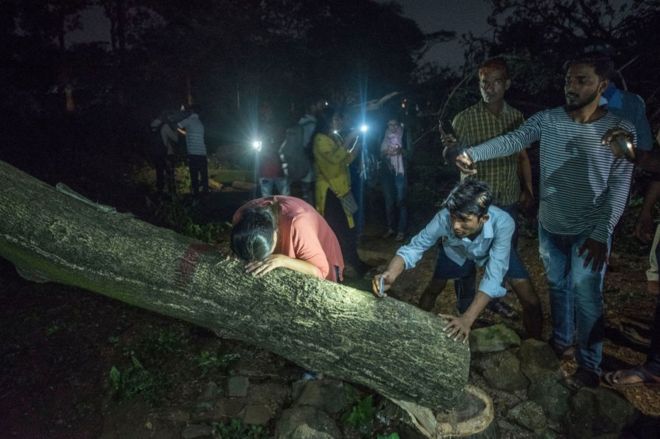
Image copyright GETTY IMAGESImage caption Protesters cry over felled trees in Aarey colony
India’s top court has asked officials to stop cutting trees in a forested area in Mumbai city after protesters clashed with police over the weekend.
The trees, part of a green strip known as Aarey colony, were being cut to make way for a new metro rail project.
Locals have long opposed the move, and filed petitions seeking Aarey to be declared a protected area.
But a high court dismissed the petitions on Friday, sparking protests as officials began felling the trees.
They planned to cut 2,185 trees, and admitted in the Supreme Court that more than 1,500 had already been cut. But petitioners claim that officials have cut around 2,500 trees.
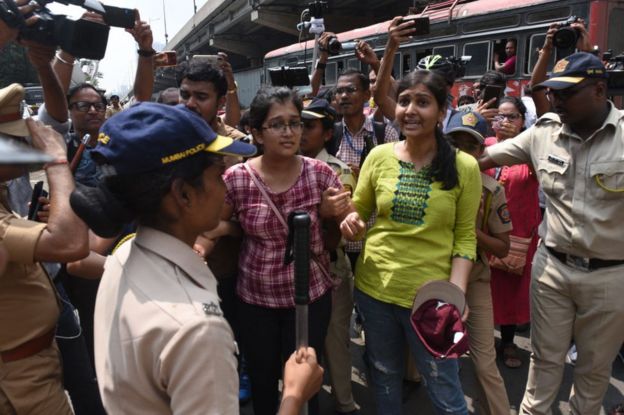
Local residents, students and environmental activists clashed with police on Friday as they took to the streets to stop authorities, and even broke through barricades to enter Aarey colony. More than 50 people were arrested and police imposed restrictions on public gatherings.
The protests grabbed the national spotlight over the weekend, and the Supreme Court took suo moto (without a formal complaint from any party) notice.
What did the Supreme Court say?
A special two-judge bench heard the matter on Monday after students wrote to the chief justice, asking the court to intervene and save the trees.
The court asked the state government of Maharashtra, where Mumbai is located, to not cut any more trees.
Image copyright GETTY IMAGESImage caption Police arrested more than 50 protesters
The court also asked the government to maintain “status quo” – which means that no construction can take place – until 21 October when it will hear the matter again.
The court also ordered the release of all activists who were arrested or detained on bail.
What is Aarey colony?
Spread over 1,300 hectares (3,212 acres), Aarey is a densely forested area dotted with lakes and has the Mithi river flowing through it. It lies at the heart of Mumbai and is often referred to as its last green lung.
It’s locally known as the Aarey “milk colony” because most of the land was given to the department of dairy development in 1951. But they are allowed to grow cattle fodder only on a fraction of the land.
Image copyright GETTY IMAGESImage caption Protesters broke through barricades and clashed with police on Friday
Earlier this year, officials cleared some 40 hectares of the forested area to build a zoo, complete with a night safari. And now, locals complain, another slice of it is in danger from the metro construction.
They also fear that the government will eventually clear the way for private builders to encroach on the Sanjay Gandhi National Park, which lies to the north of Aarey colony.
Officials, however, dismiss these fears as unfounded and point out that the construction for the metro only requires 30 hectares.
How crucial is the metro rail for Mumbai?
The city badly needs a “mass rapid transport system,” Ashwini Bhide, managing director of the Mumbai metro rail corporation, had told the BBC earlier.
The land in Aarey colony, she said, was “the most suitable land due to its size, shape and location”.
She has also been defending the decision to cut the trees on Twitter.
India’s financial hub is congested and infamous for its crawling traffic jams.
Its colonial-era local train system ferries some 7.5 million people between the city’s suburbs and its centre on a daily basis.
Officials say that the metro will eventually carry around 1.7 million passengers every day and bring down the number of vehicles on the road by up to 650,000.


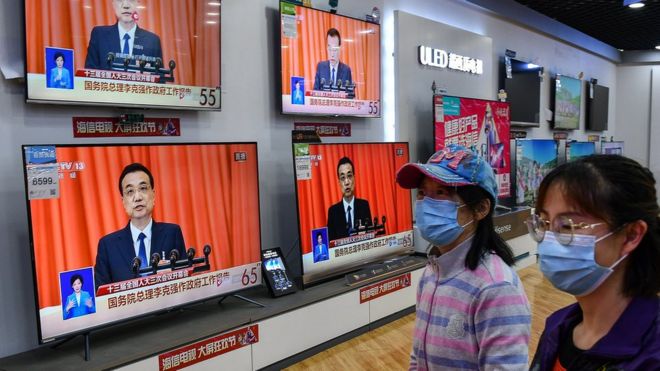 Image copyright AFP / GETTY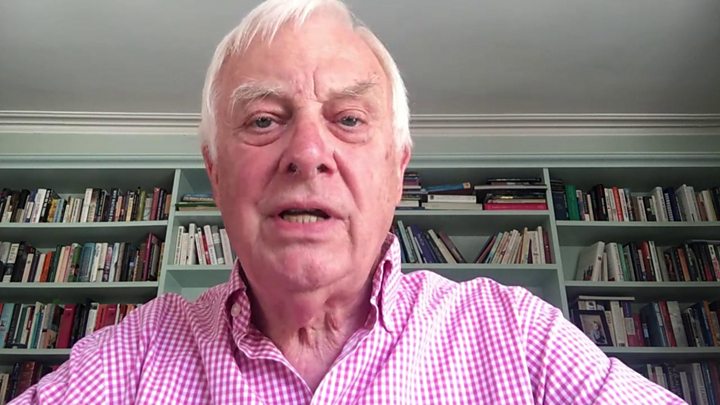



 CHINDIA ALERT: You'll be living in their world, very soon