Archive for ‘overseas’

27/03/2020

Coronavirus travel: China bars foreign visitors as imported cases rise

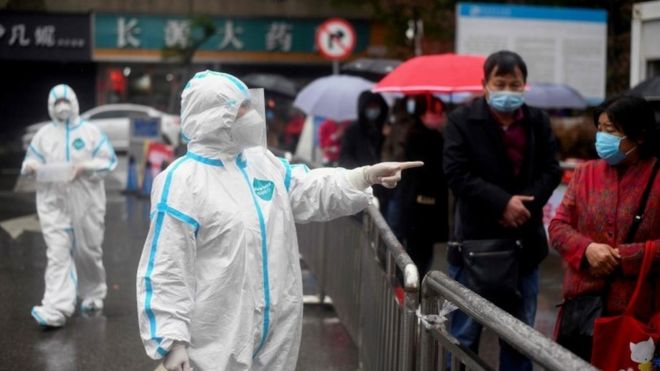
A queue at a fever clinic in Hubei province on FridayImage copyright AFP / GETTY
Image caption A queue at a fever clinic in Hubei province on Friday

China has announced a temporary ban on all foreign visitors, even if they have visas or residence permits.

The country is also limiting Chinese and foreign airlines to one flight per week, and flights must not be more than 75% full.

Although China reported its first locally-transmitted coronavirus case for three days on Friday, almost all its new cases now come from abroad.

There were 55 new cases across China on Thursday – 54 of them from overseas.

What are the new rules?

The Chinese Foreign Ministry said it was “suspending the entry of foreign nationals” because of the “rapid spread of Covid-19 across the world”.

The suspension applies to people with visas and residence passes, but not to diplomats or those with C visas (usually aircraft crew).

People with “emergency humanitarian needs” or those working in certain fields can apply for exceptions.

Although the rules seem dramatic, many foreign airlines had already stopped flying to China – and a number of cities already had restrictions for arrivals.

Last month, for example, Beijing ordered everyone returning to the city into a 14-day quarantine.

What is the coronavirus situation in China?

Although the virus emerged in China, it now has fewer cases than the US and fewer deaths than Italy and Spain.

There have been 81,340 confirmed cases in China and 3,292 deaths, the National Health Commission said on Friday.

In total, 565 of those confirmed cases were classed as “imported” – either foreigners coming into China, or returning Chinese nationals.

In Hubei – the province where the outbreak began – there were no new confirmed or suspected cases on Thursday.

The lockdown in provincial capital Wuhan, which began in January, will be eased on 8 April.

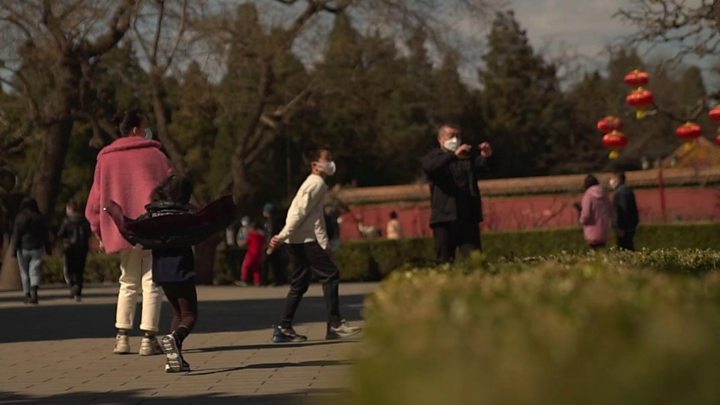
Media caption Stephen McDonell met people in Beijing heading out after the lockdown

Source: The BBC

17/12/2019

Beijing’s hopes for AI dominance may rest on how many US-educated Chinese want to return home

  • This is the third instalment in a four-part series examining the brewing US-China tech war over the development and deployment of artificial intelligence tech
  • The US is home to five of the world’s top 10 universities in the AI field, which includes computer vision and machine learning, while China has three
For those Chinese with long-term plans to stay in the US, a major obstacle lies in getting work visas, especially in the current trade war environment. Illustration: Perry Tse

After working in the United States for more than a decade, Zheng Yefeng felt he had hit a glass ceiling. He also saw that the gap in artificial intelligence between China and the US was narrowing.

Last year Zheng, who worked as a researcher at Siemens Healthcare in New Jersey, made a decision that addressed both problems. He accepted an offer to head up the medical research and development team at Tencent’s YouTu artificial intelligence lab in Shenzhen, known as China’s Silicon Valley.

“There was almost no room for promotion if I stayed in the US,” he said, expressing a common dilemma faced by experienced Chinese tech workers in America.

With the US-China trade war leading to tighter scrutiny of Chinese nationals working in the US tech industry, people like Zheng are moving back to China to work in the burgeoning AI sector, especially after Beijing designated AI a national priority. The technology’s varied applications have attracted billions of dollars of venture capital investment, created highly valued start-ups like SenseTime and ByteDance, and sparked a talent war among companies.

That has created an odd symbiotic relationship between the two countries vying for AI supremacy. The US, with its superior higher education system, is the training ground for Chinese AI scientists like Zheng, who obtained a PhD from the University of Maryland after earning bachelor’s and master’s degrees at China’s premier Tsinghua University.

“Many professors in China have great academic ability, but in terms of the number [of top professors], the US is ahead,” said Luo Guojie, who himself accepted an offer from Peking University to become an assistant professor after studying computer science in the US.

Among international students majoring in computer science and maths in US universities, Chinese nationals were the third largest group behind Indians and Nepalese in the 2018-2019 academic year, representing 19.9 per cent, according to the Institute of International Education.

[To build] the best universities is not easy. The university is a free speech space, whereas in China, this is not the case Gunther Marten, a senior official with the European Union delegation to China

The South China Morning Post spoke with several Chinese AI engineers who decided to stay and work in the US after their studies. They only agreed to give their surnames because of the sensitivity of the issues being discussed.

A 25-year-old Beijinger surnamed Lin graduated from one of China’s best engineering schools in the capital before heading to a US university for a master’s degree in computer science in 2017. Like some of his peers, he found the teaching methods in China to be outdated.

“It’s hard to imagine that a final exam of a coding course still asked you to hand write code, instead of running and testing it on a computer,” said Lin, who now works as a software engineer for Google in Silicon Valley.

“Although we still had to take writing tests [in the US], we had many practical opportunities in the lab and could do our own projects,” he added.

A Facebook software engineer surnamed Zhuang had a similar experience at his university in Shanghai.

“Many engineering students [in China] still get old-school textbooks and insufficient laboratory training,” he said. “Engineering practices for AI have been through a fast iteration over the past few decades, which means many Chinese students are not exposed to the most updated knowledge in the field, at least not in the classroom.”

Zhuang also noted out that many classes in China are taught in Chinese, meaning engineering graduates are not fluent in English, the preferred language of the global AI research community.

The US is home to five of the world’s top 10 universities in the AI field, which includes computer vision and machine learning, while China has three. Carnegie Mellon University (CMU) in Pennsylvania ranks No 1 while China’s Tsinghua University is No 2, according to CSrankings, which bases the list on papers published since 2009.

US tech chief: China is threatening US’ lead in global AI race
With its top institutions and an open culture that encourages freedom of speech, including unfettered internet access, the US has become a magnet for the brightest AI students the world over.
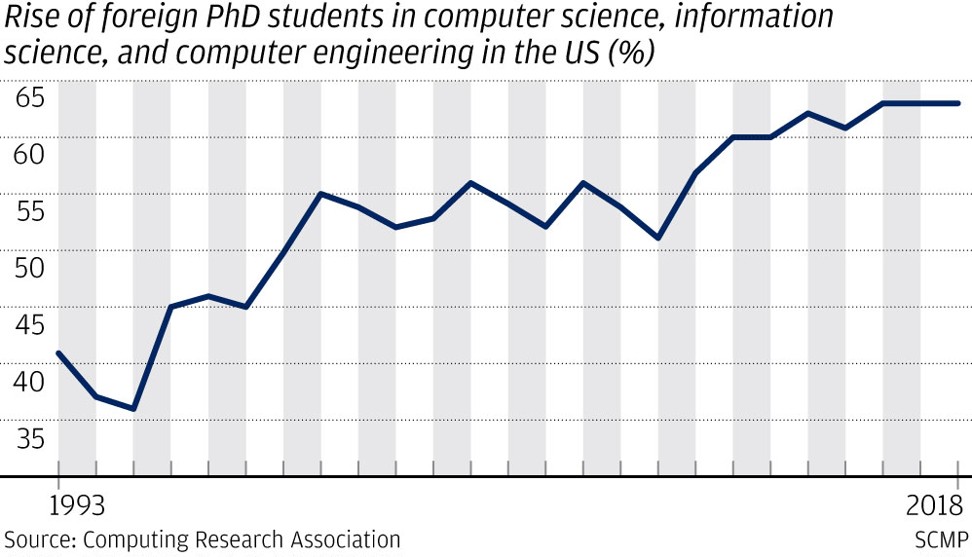
In 2018, 62.8 per cent of PhD degrees and 65.4 per cent of master’s degrees in computer science, information science and computer engineering programmes in the US were granted to “non-resident aliens”, according to a survey by the Computing Research Association.
“[To build] the best universities is not easy,” Gunther Marten, a senior official with the European Union delegation to China, said on the sidelines of the World Internet Conference in Wuzhen in October. “The university is a free speech space, whereas in China, this is not the case.”

When these US-educated AI scientists finish studying, most take advantage of a rule allowing them to stay in the country for three years to gain work experience.

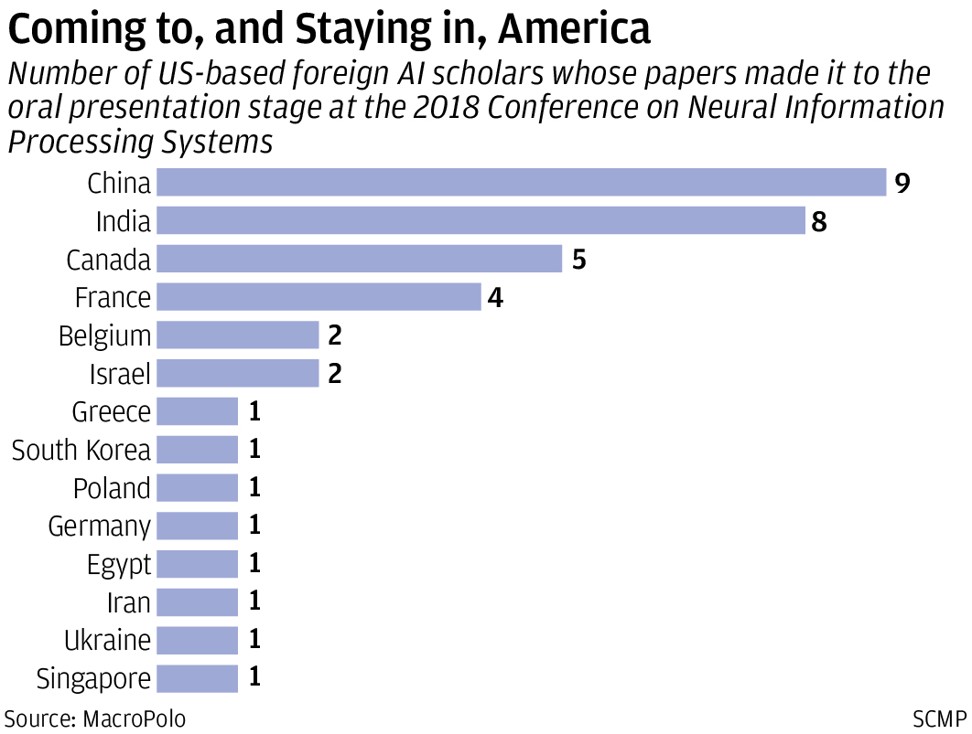
Of the foreign nationals taking part in last year’s Conference on Neural Information Processing Systems (NIPS), a major machine learning event for AI professionals, 87 per cent of those whose papers made it to the oral presentation stage went to work for American universities or research institutes after earning their PhD, according to MacroPolo, a think tank under the Paulson Institute.

“China has many great universities and companies, especially in certain subfields of AI such as computer vision, but many people remain hesitant to move to China due to the political environment, quality of life concerns and workplace issues,” said Remco Zwetsloot, a research fellow at Georgetown University’s Center for Security and Emerging Technology (CSET).

China’s PhD students miserable, yet hopeful: survey

Some of the US-trained Chinese AI engineers told the Post they were scared off by China’s “996” working culture: 9am to 9pm, six days a week. Tech firms in China typically expect their employees to work long hours to prove their dedication.

Lin, the Beijinger who now works for Google, used to be an intern at one of China’s largest internet giants. “I worked from the time I woke up until going to bed,” he said, “At Google, I’ve been confused because many people here only work till 5pm but Google is still a global leader.” Lin said he would be happy to return to China if the 996 work culture eases.
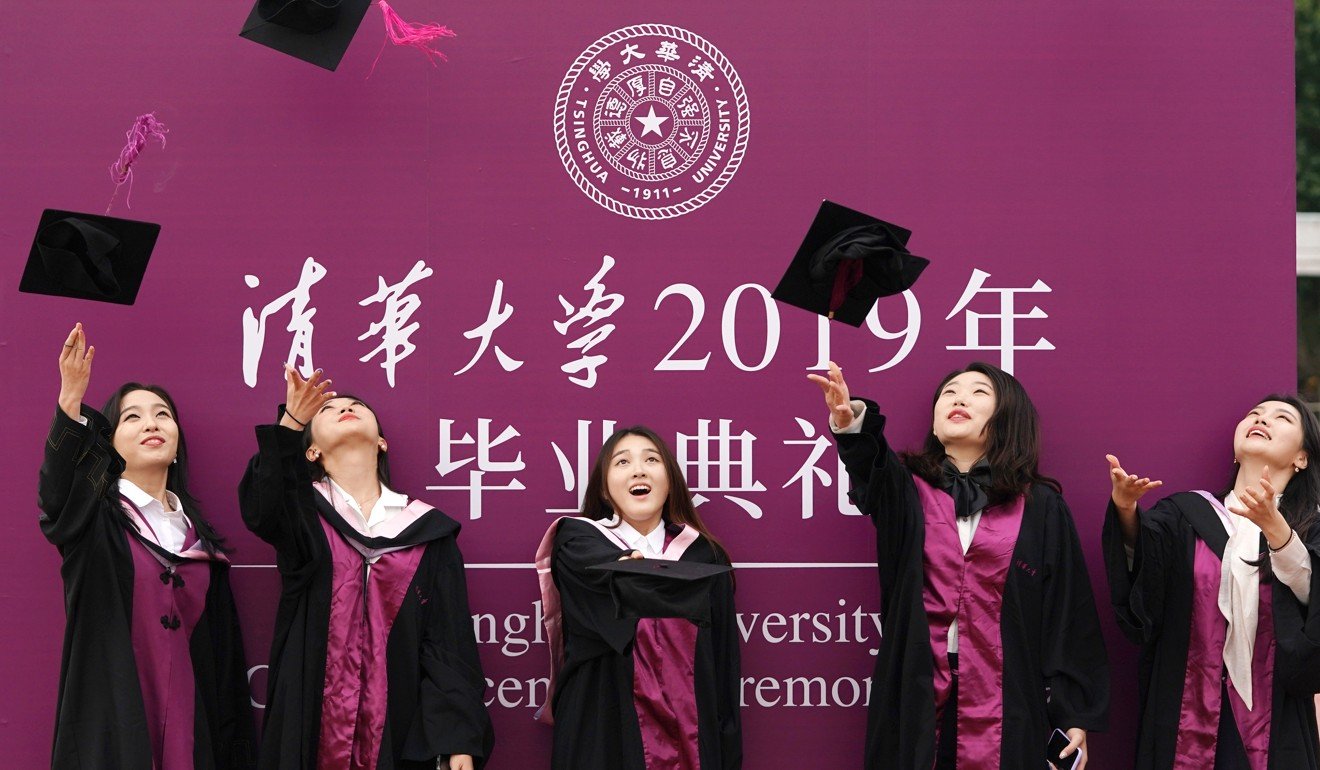
Graduates throw their caps in the air as they pose for a group photo during the 2019 commencement ceremony of Tsinghua University in Beijing. Tsinghua ranks as China’s top university for AI. Photo: Xinhua
Chen, a female postgraduate student at Carnegie Mellon, who recently accepted a job offer from Google, once interned at Beijing-based AI unicorn SenseTime, where she worked from 10am to between 8pm and 10pm most days.
A SenseTime spokesperson said the company has adopted flexible working hours for its employees.
Besides a better work-life balance, Chinese graduates look for jobs in Silicon Valley because of the higher pay.
“If you include pre-tax income, many of us get offers that pay more than 1 million yuan (US$142,000) a year but in China the salaries offered to the best batch of fresh undergraduates are about 200,000 to 300,000 yuan (US$28,000 to US$43,000),” Chen said.
Still, for those Chinese with long-term plans to stay in the US, a major obstacle lies in getting work visas, especially in the current trade war environment. Most AI-related workers are on H-1B visas that allow US companies to employ non-US nationals with expertise in specialised fields such as IT, finance and engineering.
However, the number of non-immigrant H-1B visas granted has started to fall since 2016, when it peaked at 180,000, according to the US Department of State, and US tech companies have complained that a policy shift by the Trump administration has made the approval process longer and more complicated.
In 2017, President Donald Trump requested an overhaul of the H-1B visa programme, saying he did not want it to enable US tech companies to hire cheaper foreign workers at the expense of American jobs. He also wants to give priority to highly skilled people and restrict those wanting to move to the US because of family connections.

Science graduates from overseas countries can stay in the US with their student visas for up to three years while competing for the hard to get work visas, which are granted based on undisclosed mechanisms. Overseas students already working in the US can apply for so-called green cards, which offer permanent residency.

After working for a major US tech company for almost three years on a student visa, one Chinese software engineer, who spoke to the Post on condition of anonymity, said she was relocated to the US firm’s Beijing office last year after failing to obtain a H-1B work visa.

“While there might be individual cases, it seems like the current tensions have not – at least as of a few months ago – led to noticeable changes in the overall number of Chinese students staying in the US after graduating,” said CSET’s Zwetsloot.

Some Chinese AI scientists use Twitter to announce their decision to stay. Chen Tianqi, who just obtained a PhD at the University of Washington in Seattle, and Jun-Yan Zhu, a CMU and UC Berkeley alumnus currently working at Adobe, each tweeted that they would join Carnegie Mellon as assistant professors next year.

To achieve the goal of turning China into “the world’s primary AI innovation centre” by 2030, according to a 2017 blueprint issued the State Council, the central government has stepped up efforts to attract US-educated talent.
The Thousand Talents Plan has seen more than 6,000 overseas Chinese students and academics return since its was established in 2008, but because of escalating tensions with the US, Beijing has played down the initiative.

Longer term, Beijing’s willingness to invest significant sums into the AI sector could see more Chinese return for the better employment opportunities. Between 2013 and the first quarter of 2018, China attracted 60 per cent of global investment in AI, according to a Tsinghua University report.

China’s spending on AI may be far lower than people think

Chinese authorities are investing heavily in the sector, with the city of Shanghai setting up a 10 billion yuan (US$142 million) AI fund in August and Beijing city government announcing in April it would provide a 340 million yuan (US$48 million) grant to the Beijing Academy of Artificial Intelligence.

“More and more senior people like me have come back, and some start their own businesses,” said Zheng, the Siemens Healthcare researcher who joined Tencent. “It’s easier for Chinese to seek venture capital in China than in other countries.”

Source: SCMP

03/10/2019

China’s scenic sites limit ‘golden week’ visitor numbers to cut crowds

  • Managers of the Leshan Giant Buddha and Jiuzhaigou National Park restrict ticket sales as millions head off for the holiday break
Park authorities in charge of the Leshan Giant Buddha in Sichuan have restricted visitor numbers in golden week. Photo: Xinhua
Several major tourist attractions in China have capped visitor numbers during this year’s National Day “golden week” holiday as millions take the chance to travel.
October 1 marked the start of a week-long break on the mainland, with an estimated 800 million people expected to go on trips in China or overseas, about 10 per cent more than last year, according to the China Tourism Academy.
The academy estimated that 726 million people would take domestic trips in this peak holiday period – a 9.4 per cent increase from last year, but that is the lowest level of growth since 2007 as pressure from China’s slowing economy and the trade war with the United States take their toll.
Managers at the scenic area surrounding the Leshan Giant Buddha – a 71-metre (233 feet) tall ancient statue carved into a cliff in southwestern Sichuan province – said last week that daily tickets would be capped at 22,400 during the holiday, which runs until Monday.
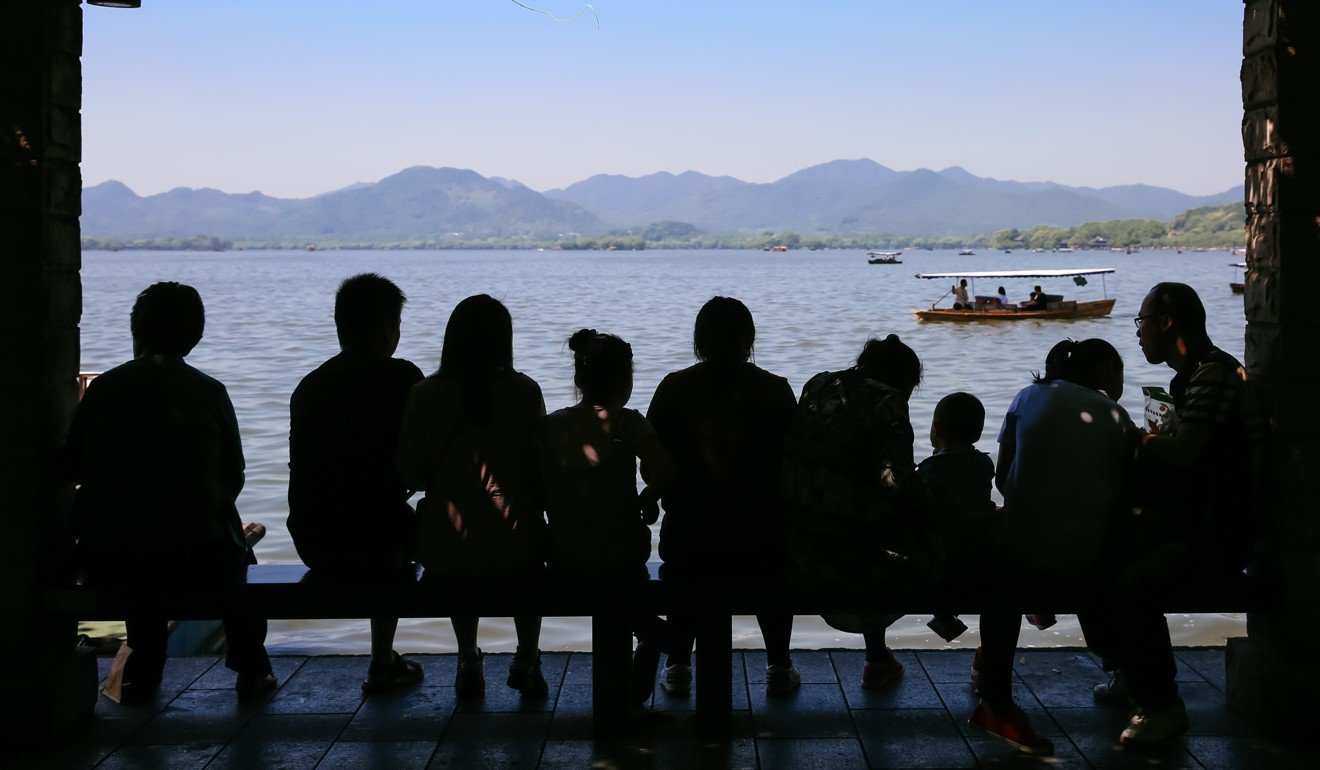
West Lake in Hangzhou, Zhejiang province, drew 300,400 visitors as golden week started. Photo: Xinhua

The park said it would update visitors on daily ticket sales through social media.

“Today’s tickets for the Giant Buddha have reached the limit and sales have stopped,” the park management committee said on its Weibo account on Tuesday. “To all tourists, please rearrange your itinerary. You can visit the areas surrounding the Giant Buddha scenic spot,” it said, adding that tickets could be booked online for any day for the rest of golden week.

“I expected it to be chock-full of people, but actually today it’s still relatively calm. I had lots of fun,” a visitor to the Giant Buddha told Pear Video on Tuesday.

Hong Kong protests leave ‘golden week’ tourist boom in tatters
Jiuzhaigou National Park in Sichuan said last week that it would be limiting visitors to 5,000 per day during golden week and said on Monday that tickets had sold out.

The network of valleys known for its natural scenery was devastated by an earthquake in August 2017, and reopened with limited access in March 2018.

However, there were no restrictions at other attractions. In eastern Zhejiang province, 340,400 visitors went through the gates at Hangzhou’s West Lake on Tuesday, the Global Times’ Chinese edition reported.

“There’s too many people. I have never seen so many of them in my life,” one tourist was quoted as saying.

A guide also said that instances of “uncivilised behaviour”, such as trampling on the gardens, were down compared to last year.

Next stop: Croatia. Chinese travellers skip Hong Kong for niche destinations over National Day break
“During the major holidays, many tourist attractions are so crowded that tourists can barely move an inch,” Hangzhou Daily said in an editorial on Monday.
“Not only is the tourist experience bad, but there are also safety hazards such as being trampled on, and this puts a lot of pressure on nearby public transport and food establishments.”
Travel booking platform Ctrip said that tourists heading overseas were increasingly seeking out new destinations, with bookings to places such as the Czech Republic, Austria, Croatia, Malta and Cambodia up by 45 per cent this year.
However, bookings for Hong Kong had fallen substantially after nearly four months of anti-government protests, Ctrip said.
Source: SCMP
20/09/2019

Chinese city offers 400 teachers US$39,500 a year in bid to attract best graduates

  • As well as earning three times the industry average, successful candidates are promised 165 days’ leave
  • Social media posts linked to story attract more than 60 million views
Authorities in Shenzhen are offering three times the national average salary to attract more teachers. Photo: Weibo

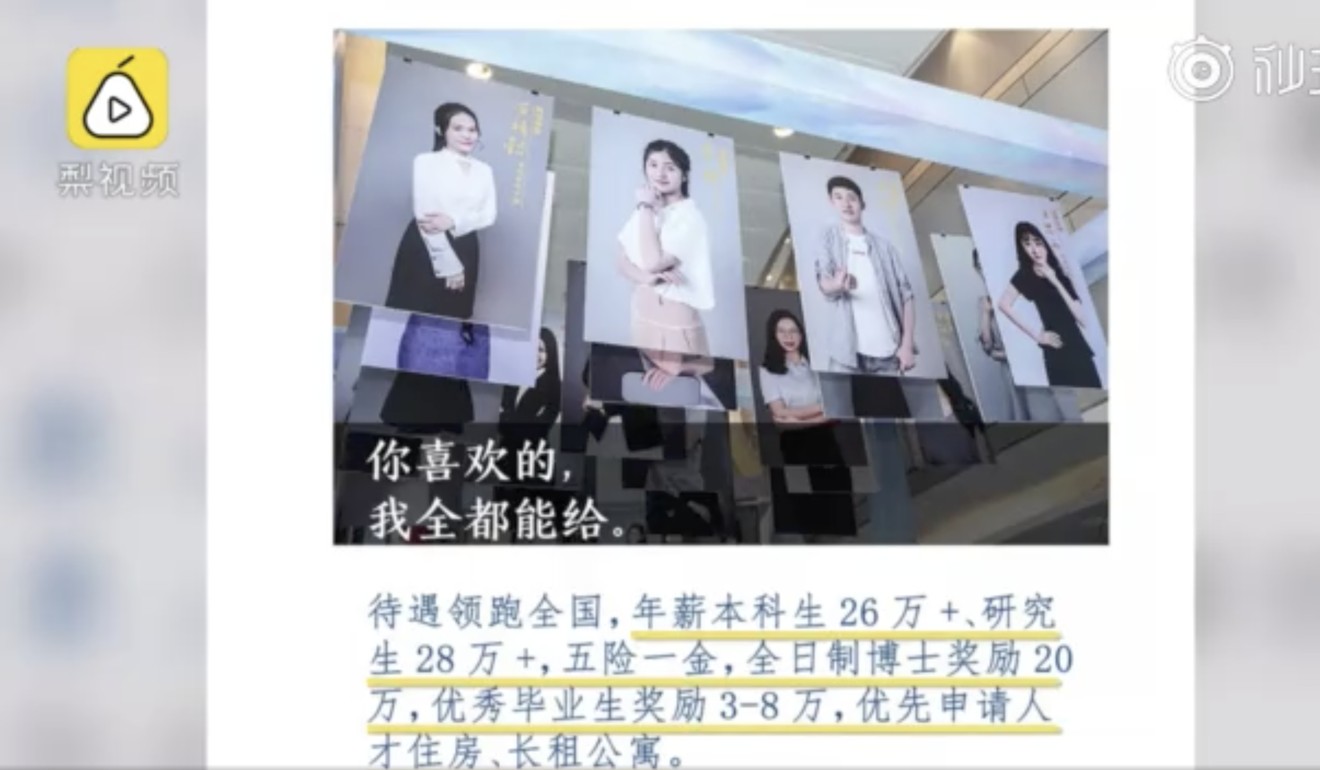
A recruitment advertisement offering schoolteachers in southern China the chance to earn up to 280,000 yuan (US$39,500) a year – more than three times the industry average – has sparked a massive response on social media.

Published by the Longhua district education bureau in Shenzhen, Guangdong province, the advert said it was looking for 400 high, middle and primary schoolteachers. As well as an annual salary of between 260,000 yuan and 280,000 yuan, depending on qualifications, the very best candidates would receive a bonus of between 30,000 and 80,000 yuan, it said.

New recruits would also be entitled to 165 days’ leave per year, though the advert – published on Tuesday on WeChat, China’s most popular messaging platform – did not make clear if that included weekends.

The Longhua district education bureau says it is looking for 400 new teachers. Photo: Weibo
The hashtag “Shenzhen middle schoolteachers are being recruited for almost 300,000 yuan a year” racked up almost 60 million views on Weibo, China’s Twitter-like platform.
While some people praised the authority for trying to attract the best possible candidates – it said itself that hundreds of teachers currently working in the district were graduates of China’s top universities, including Peking and Beijing Normal – others said that even with a sky-high salary most young professionals would find it hard to get by in Shenzhen.

“Do you know how expensive houses are in Shenzhen?” one person wrote on Weibo. “You need to wait several years after graduation before buying a house, unless you already have money.”

“Even if your starting salary is 200,000 yuan or 300,000 yuan, you’ll still need to wait 10 years before you’ve saved up enough to buy a house,” said another.

The advert said the new teachers will be get 165 days’ leave per year. Photo: Xinhua

The education bureau has not released any additional information about the recruitment campaign and calls to its offices on Friday went unanswered.

However, it said in a recent Q&A on its website that teachers’ salaries were in line with those of civil servants in the district, and had been steadily rising under a reform of the pay system.

Longhua is not the first district in Shenzhen to offer attractive salary packages, however. In May, 21st Century Business Herald reported that authorities in Yantian district had recruited 20 teachers from Beijing with the offer of between 290,000 yuan and 330,000 yuan a year.

According to central government figures released in May, teachers in China’s public schools earned an average of 92,383 yuan last year.

While Shenzhen has grown from a once sleepy fishing village to a vast metropolis, and is now slated to become a model city for China, its education facilities have failed to keep pace with other areas of development. It also faces competition from more established centres, like Beijing and Shanghai.
Despite having a population of about 15 million, the city has just 344 primary schools. By comparison, the provincial capital Guangzhou, which has a similar population, has 961 primary schools and about 17,000 more primary schoolteachers.
According to official figures, of the nearly 80,000 students who applied for places at public secondary schools in Shenzhen last year, just 35,000 were accepted. That left the parents of the remainder having no option but to pay for places at private schools in the city or, in some cases, send their children overseas to study.
The problem is set to get worse as Shenzhen’s preschool system is already straining under the pressure of the city’s high birth rate.
Source: SCMP
Law of Unintended Consequences

continuously updated blog about China & India

ChiaHou's Book Reviews

continuously updated blog about China & India

What's wrong with the world; and its economy

continuously updated blog about China & India