23/06/2019
- Leader will arrive on Thursday, ahead of G20 summit in Osaka, foreign ministry says
- He is expected to hold talks with Donald Trump on sidelines of meeting
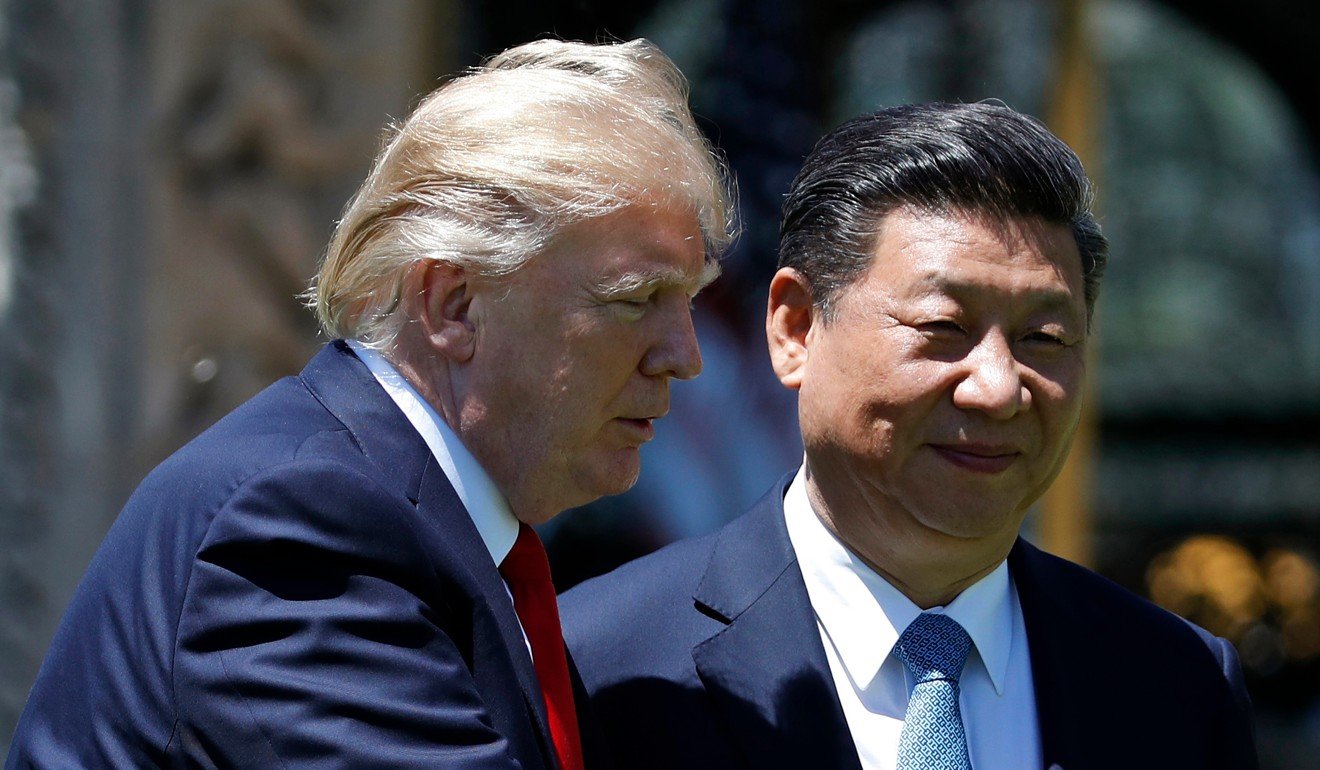
China has confirmed that President Xi Jinping will travel to japan this week. Photo: AFP
China on Sunday confirmed that President Xi Jinping will attend the G20 summit in Osaka this week.
Xi will spend three days in Japan – his first visit to the country since coming to power in 2013 – the foreign ministry said.
He will travel to Japan on Thursday and is expected to meet his US counterpart Donald Trump on the sidelines of the meeting of leading and emerging economies, which runs from Friday to Saturday, it said.
It is possible the pair will hold formal negotiations over dinner, as they did in Argentina in December at the last G20 summit.
Presidents Xi and Trump are expected to hold talks over dinner, as they did in Argentina in December. Photo: Kyodo
On Saturday, People’s Daily, the mouthpiece of China’s Communist Party said in a commentary that the trade war between China and the US could be resolved only through “equal conversation”.
“For the talks to resume … the key is to address the primary concern of the other side. The tariffs already in place must be revoked,” it said.
Trade deal ‘within reach if Xi and Trump show courage’
Meanwhile, state broadcaster CCTV on Friday criticised Washington’s decision to add five Chinese companies to its list of entities considered a threat to national security.
“The US made this move to put more pressure China ahead of the trade talks,” it said, adding that it might produce a result opposite to the one desired by Washington.
The report came after the US commerce department said it had added five Chinese firms that manufacture supercomputers and their components to the entity list, restricting their ability to do business with the US.
The blacklist effectively bars American firms from selling technology to the Chinese organisations without government approval. Last month, the commerce ministry added telecoms giant
to the list, heightening tensions with Beijing.
Xi told Trump on Tuesday he was willing to meet in Japan. Photo: AP
In a telephone conversation on Tuesday, Xi told Trump he was willing to meet in Japan and said he “agreed that the two countries’ trade delegations should keep communications going to solve their differences”, CCTV reported.
Kong Xuanyou, China’s new envoy to Japan, said on Friday that he hoped Xi would make an official visit to the country soon, ideally during the cherry blossom season next spring. The foreign ministry statement made no mention of such a visit.
Source: SCMP
Posted in CCTV, China confirms, China’s new envoy to Japan, Commerce Ministry, equal conversation, Foreign Ministry, G20 summit, Huawei, Japan, mouthpiece of China’s Communist Party, Osaka, People’s Daily, President Donald Trump, President Xi Jinping, revoked, tariffs, three-day trip, Uncategorized, Washington |
Leave a Comment »
29/04/2019
-
- Fusion reactor built by Chinese scientists in eastern Anhui province has notched up a series of research firsts
- There are plans to build a separate facility that could start generating commercially viable fusion power by 2050, official says
The Experimental Advanced Superconducting Tokamak (EAST) device – or “artificial sun” – in Hefei, Anhui province. Photo: AFP/Chinese Academy of Sciences
A groundbreaking fusion reactor built by Chinese scientists is underscoring Beijing’s determination to be at the core of clean energy technology, as it eyes a fully functioning plant by 2050.
Sometimes called an “artificial sun” for the sheer heat and power it produces, the doughnut-shaped Experimental Advanced Superconducting Tokamak (EAST) that juts out on a spit of land into a lake in eastern Anhui province, has notched up a succession of research firsts.
In 2017 it became the world’s first such facility to sustain certain conditions necessary for nuclear fusion for
, and last November hit a
of 100 million degrees Celsius (212 million Fahrenheit) – six times as hot as the sun’s core.
Such mind-boggling temperatures are crucial to achieving fusion reactions, which promise an inexhaustible energy source.
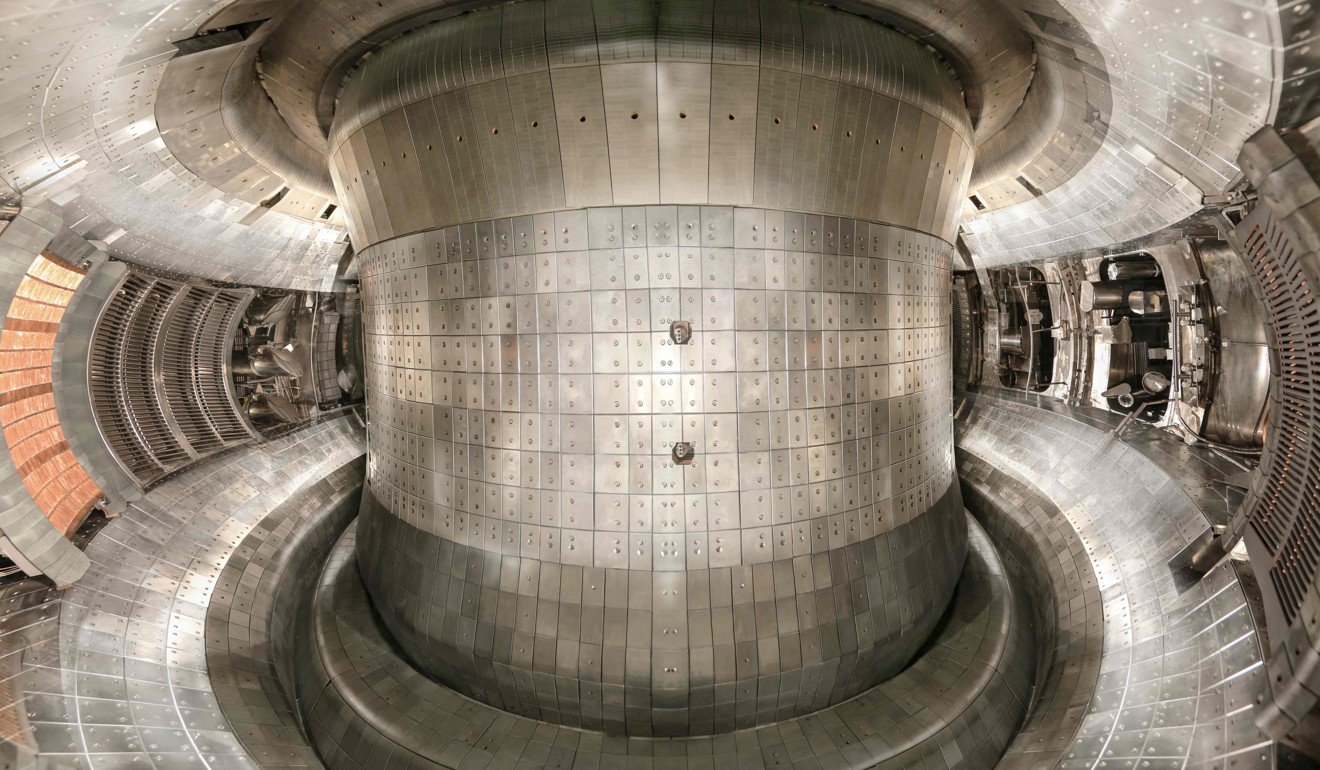
EAST’s main reactor stands within a concrete structure, with pipes and cables spread outward like spokes connecting to a jumble of censors and other equipment encircling the core. A red Chinese flag stands on top of the reactor.
A vacuum vessel inside the fusion reactor, which has achieved a temperature of 100 million degrees Celsius – six times as hot as the sun’s core. Photo: AFP/Chinese Academy of Sciences
“We are hoping to expand international cooperation through this device [EAST] and make Chinese contributions to mankind’s future use of nuclear fusion,” said Song Yuntao, a top official involved in the project, on a recent tour of the facility.
China is also aiming to build a separate fusion reactor that could begin generating commercially viable fusion power by mid-century, he added.
Some 6 billion yuan (US$891.5 million) has been promised for the ambitious project.
EAST is part of the International Thermonuclear Experimental Reactor (ITER) project, which seeks to prove the feasibility of fusion power.
Funded and run by the European Union, India, Japan, China, Russia, South Korea and the United States, the multibillion-dollar project’s centrepiece will be a giant cylindrical fusion device, called a tokamak.
Now under construction in Provence in southern France, it will incorporate parts developed at the EAST and other sites, and draw on their research findings.
China is “hoping to expand international cooperation” through EAST. Photo: Reuters
Fusion is considered the Holy Grail of energy and is what powers our sun.
It merges atomic nuclei to create massive amounts of energy – the opposite of the fission process used in atomic weapons and nuclear power plants, which splits them into fragments.
Unlike fission, fusion emits no greenhouse gases and carries less risk of accidents or the theft of atomic material.
But achieving fusion is both extremely difficult and prohibitively expensive – the total cost of ITER is estimated at €20 billion (US$22.3 billion).
Wu Songtao, a top Chinese engineer with ITER, conceded that China’s technical capabilities on fusion still lag behind more developed countries, and that US and
Japanese tokamaks have achieved more valuable overall results.
But the Anhui test reactor underlines China’s fast-improving scientific advancement and its commitment to achieve yet more.
China’s capabilities “have developed rapidly in the past 20 years, especially after catching the ITER express train”, Wu said.
In an interview with state-run Xinhua news agency in 2017, ITER’s director general Bernard Bigot lauded China’s government as “highly motivated” on fusion.
“Fusion is not something that one country can accomplish alone,” Song said.
“As with ITER, people all over the world need to work together on this.”
Posted in 32 jailed, 39 million pieces, Anhui province, atomic material, “artificial sun”, Bernard Bigot, China alert, Chongqing, computer hackers, criminal gang, doughnut-shaped, European Union, Experimental Advanced Superconducting Tokamak (EAST) device, Facial recognition system, giant cylindrical fusion device, greenhouse gases, Guizhou Province, Hefei, Holy Grail of energy, ID card and mobile phone numbers, India alert, International Thermonuclear Experimental Reactor (ITER), ITER’s director general, Japan, Ministry of Public Security, names, addresses and dates of birth, nuclear fusion, painting and decorating company, People’s Daily, private data, Russia, Shanghai, Shanghai Real Estate Trading Centre, South Korea, stealing, tokamak, top Chinese engineer, Uncategorized, United States, vacuum vessel, Wang, Wu Songtao, zhejiang province, Zhongxian public security bureau |
Leave a Comment »
28/04/2019
- Police investigation finds nearly 40 people received the shots since January last year – before the drug was approved by the Chinese regulator
- Hainan hospital had rented out its medical cosmetics department to a beauty parlour, which authorities suspect administered the vaccinations
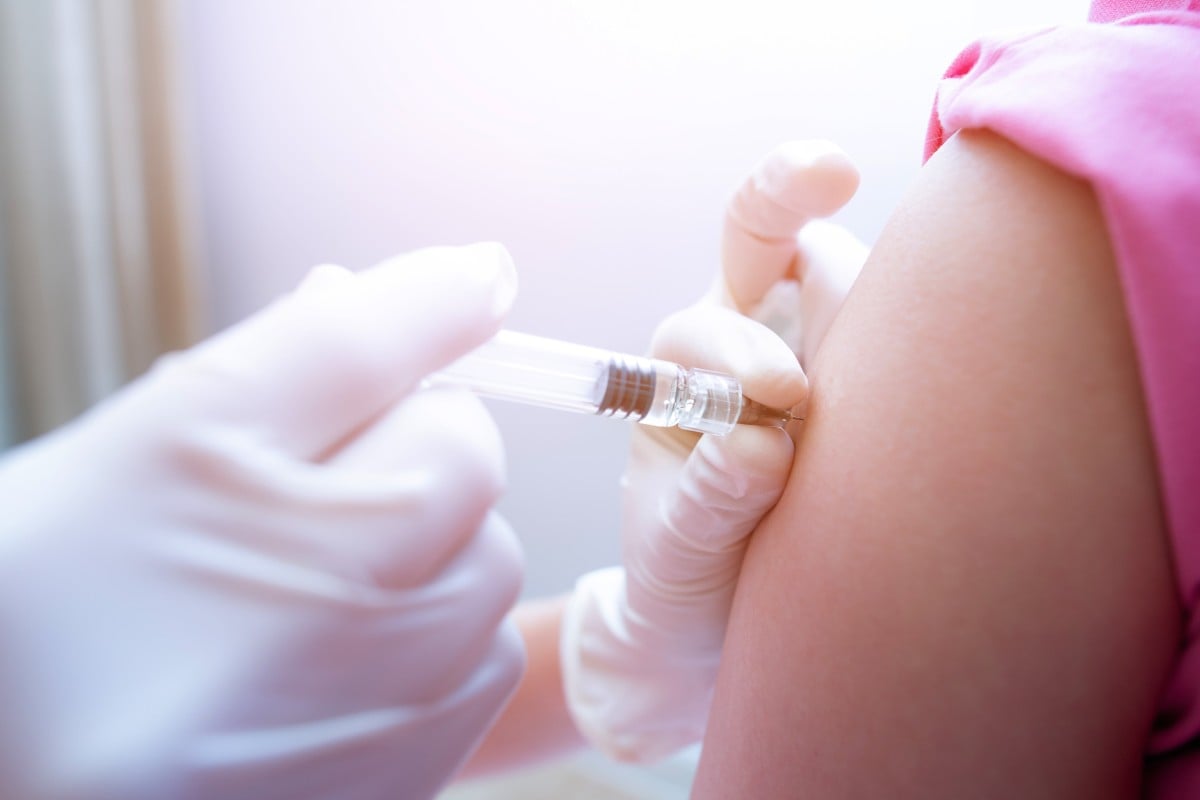
The Gardasil HPV vaccine has been in short supply in China since it was approved by the regulator last year. Photo: Shutterstock
A private hospital on Hainan Island has been closed down after it gave fake HPV vaccines to dozens of patients, including at least one who was pregnant, the local health authority said.
Police found 38 people had been given the fake shots at Boao Yinfeng Healthcare International Hospital, in the city of Boao, since January last year, the Health Commission of Hainan said in a statement on Sunday.
Some of the vaccines were found to have been smuggled in from overseas before the drug was approved in China, while others were illegally made in Jilin province.
The case is the latest in a series of scandals in recent years – including drug makers
and people including children being given fake, faulty or expired vaccines – that have rocked public confidence in the industry.
The hospital began administering the fake HPV shots three months before Merck’s Gardasil vaccine against human papillomavirus, which causes cervical cancer, was approved by the Chinese regulator in April last year. There has been a constant shortage of the vaccine since it was approved and a ballot system is used at some hospitals due to the huge demand and limited supply.
All of the Boao patients given fake shots had paid 9,000 yuan (US$1,300) to be immunised except for a hospital employee, who was vaccinated for free, the statement said.
The health commission said the hospital did not have approval to administer HPV vaccines and some of the shots were given before it officially opened in March last year.
Are Philippine children’s deaths linked to dengue vaccine?
It was also in breach of the hospital management regulation because it had rented out its medical cosmetics department to a beauty parlour from Qingdao, which authorities suspect administered the fake vaccinations.
Its medical institution business licence was revoked and the hospital was fined 8,000 yuan, while authorities have confiscated the illegal proceeds of the fake vaccinations. It was not known whether any arrests had been made in the case, and the investigation was continuing.
The scandal came to light in March when a man posted on the People’s Daily website his complaint to the health authority about his pregnant wife being told by police she was given a fake HPV shot.
Another patient, who identified herself as Wang Xi, wrote on microblog site Weibo last week that she was told the hospital could receive the vaccine before it was officially approved because it was located in a medical tourism pilot zone, giving it preferential access to treatments.
“As a victim, I’m constantly worried – what have they injected into my body?” Wang wrote.
Source: SCMP
Posted in ballot system, beauty parlour,, Boao, Boao Yinfeng Healthcare International Hospital, China alert, China-Pakistan Economic Corridor (CPEC), China-Pakistan relations, closed down, confiscated, dengue vaccine, dozens of patients, fake HPV vaccines, Gardasil HPV vaccine, Hainan hospital, human papillomavirus, illegal proceeds, investigation, medical cosmetics department, medical institution business licence, medical tourism pilot zone, Merck’s Gardasil vaccine, microblog site, People’s Daily, Philippine, pregnant woman, Private hospital, Qingdao, revoked, Uncategorized, Wang Xi, Weibo |
Leave a Comment »
22/04/2019
- Embassy officials have contacted families of two Chinese nationals who were killed in the blasts on Easter Sunday, and visited five who were injured
- Four of the missing were travelling to the Indian Ocean on a study trip
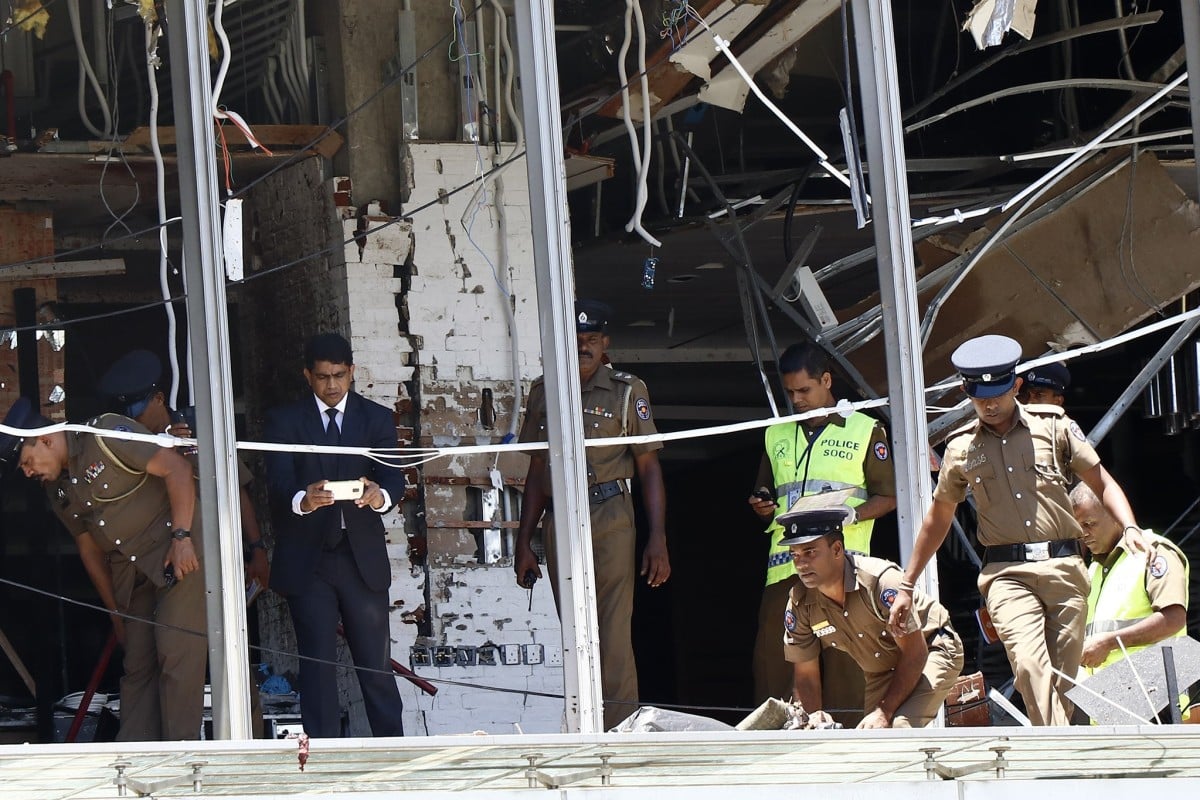
Police and investigators work at the Shangri-La Hotel blast scene in Colombo on Sunday, where the two Chinese were killed. Photo: Xinhua
Five Chinese nationals remain missing following a series of suicide bombings in hotels and churches in Sri Lanka on Easter Sunday that claimed the lives of
At least 290 people were killed and more than 500 others injured in the blasts, according to a Sri Lankan government official on Monday, who said a local militant group was behind the attacks.
The Chinese embassy in Colombo had contacted the families of the two deceased Chinese and was awaiting police confirmation on the fate of the five still missing, state-run People’s Daily reported.
Two Chinese nationals sustained serious injuries in the blasts and three others minor ones. Embassy officials had visited them several times in hospital, the report said.
“The embassy will closely monitor the situation, urge Sri Lankan police to confirm the whereabouts of the missing persons and assist Chinese citizens and families to properly handle the aftermath,” the embassy was quoted as saying.
The two Chinese who died, cousins surnamed Tan, were caught in a blast at the Shangri-La Hotel in Colombo, Red Star News quoted a Chinese businesswoman in the Sri Lankan capital as saying.
“Their families identified them at the scene,” she said.
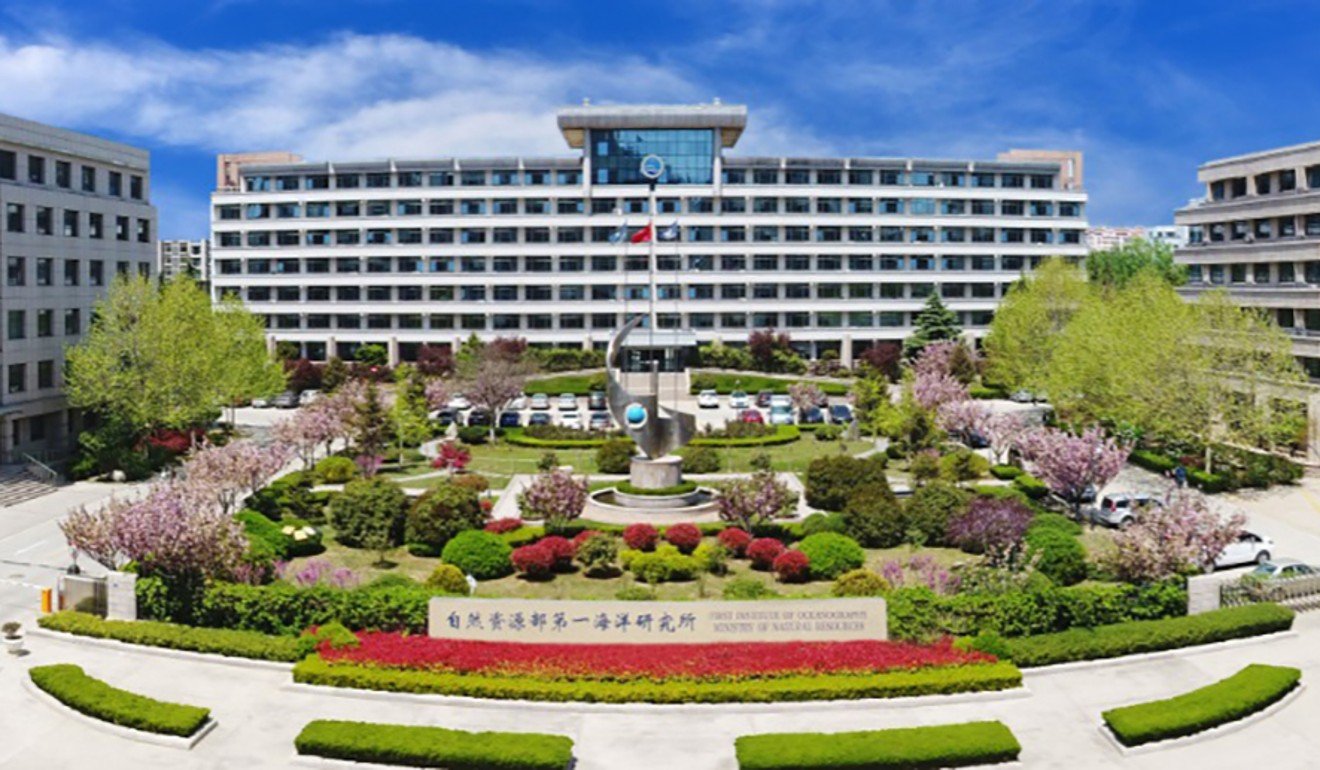
Four of the missing Chinese are students from the First Institute of Oceanography at the Ministry of Natural Resources. Photo: FIO
Four of the missing Chinese – Li Dawei, Li Jian, Pan Wenliang and Wang Liwei – are students from the Ministry of Natural Resources’ First Institute of Oceanography who were going to take part in a study in the Indian Ocean, an institute staff member told Red Star News.
The institute has sent staff to
Four of the five injured are students from the Chinese Academy of Sciences’ South China Sea Institute of Oceanology, who were en route to a study trip in the eastern Indian Ocean.
“It is an annual scientific expedition programme and they were on the way to replace the 10 others who had completed their rotation,” a staff member told The Beijing News. “Some sustained bruising on their legs and one could hardly hear after the blast.”
Tourists who returned to Shanghai and Chengdu, Sichuan province, told the newspaper that their trip had to be cut short as shops were closed and a curfew imposed amid tight security.
“All the private cars, coaches, vans and buses had to open their doors for inspection. There were checkpoints every 10 metres,” said one tour guide from Chengdu.
A traveller from the same city said airport security had also been stepped up. “There was a bombing 20 minutes after we left a restaurant and another one outside the airport when we were waiting there. We had to pass through three or four very strict security checks at the airport,” she said.
Back in Shanghai, another woman said: “We were not scared there but we are very glad to be back home.”
Source: SCMP
Posted in Chengdu, China alert, Chinese Academy of Sciences, Colombo, embassy, First Institute of Oceanography, Five Chinese, Indian Ocean, Li Dawei, Li Jian, Ministry of Natural Resources, missing, Pan Wenliang, People’s Daily, Red Star News, return home, Shanghai, Shangri-La Hotel, sichuan province, South China Sea Institute of Oceanology,, Sri Lanka bombings, Sri Lankan police, suicide bombings, The Beijing News, tourists, Uncategorized, Wang Liwei |
Leave a Comment »
09/03/2019
- Researchers say they spend so much time on grant applications that they get no time to do science
- Funding applications are said to be too onerous and inflexible
Chinese scientists say funding applications are too onerous and restrictive. Photo: Xinhua
Chinese scientists are appealing for a bigger say over research funding as they buckle under a rigid and bureaucratic application system.
The appeal from delegates to the country’s peak advisory body, the Chinese People’s Political Consultative Conference, comes as the central government prepares to launch a pilot project that will give research teams greater flexibility in the way funds are used.
Despite slowing economic growth, the central government also plans to increase the budget for science and technology by 13.4 per cent this year to 354.31 billion yuan (US$52.7 billion) as Beijing tries to challenge the United States in the race for high technology.
But researchers have been hampered by a funding structure that demands they clearly state the use of their research and submit a detailed plan with a deadline for delivery of results.
Application rules have become stricter in the last few years, partly a result of a crackdown on corruption, which has led to a dozen university presidents and top scientists being arrested for embezzling research and infrastructure funding.
Chinese science minister warns scientists not to overstep ethical bounds after He Jiankui’s gene-edited babies scandal
CPPCC delegate Yuan Zhiming, an agricultural scientist from the Chinese Academy of Sciences in Wuhan, said he spent so much time filling out funding applications that he did not have time to do any research.
“It’s not easy to complete the budget with detailed outcomes, because I don’t already know my research results,” Yuan said in an open panel discussion on the sidelines of the CPPCC.
Wang Liming, a CPPCC delegate from China National Nuclear Corporation, agreed, saying funding applications were too onerous and inflexible. “Money earmarked for buying soy sauce cannot be used to buy vinegar,” he joked.
People’s Daily, the Communist Party’s mouthpiece, reported in December 2016 that it took a scientist a month to finish an annual report for a regular research project and much longer for a major one.
The fears about more bureaucracy in research intensified last year when the National Natural Science Foundation – which manages science funding and promotes research – was downgraded and put under the Ministry of Science and Technology.
The authorities said the change was aimed at strengthening the government’s “research-driven development strategy” and “optimising the distribution of funding on science and technology”, while scientists said it meant funding approval would be more stringent.
China’s science and tech minister calls on private enterprises to develop ‘core technologies’
But senior Chinese officials said they understood the need to speed up research for China to transform itself into an innovation powerhouse.
Science and Technology Minister Wang Zhigang said on Friday that China would overhaul the way funding was managed to give researchers more incentives.
“The ministry [of science and technology] has done a series of things to ease the burden on researchers, so that they will not be bothered by forms, reimbursements, titles and prizes and have more time to do real research,” Wang said.
“The upcoming reforms will be centred on how to ignite researchers’ enthusiasm, initiative and creativity.”
Source: SCMP
Posted in agricultural scientist, Beijing, buying soy sauce cannot be used to buy vinegar, China alert, China National Nuclear Corporation, Chinese Academy of Sciences, Chinese People's Political Consultative Conference, Chinese scientists, Communist Party’s mouthpiece, CPPCC delegate, He Jiankui, Ministry of Science and Technology, National Natural Science Foundatio, People’s Daily, Red tape, research funding, rigid and bureaucratic application system, science and tech minister, Science and Technology Minister, Uncategorized, United States, Wang Liming, Wang Zhigang, Wuhan, Yuan Zhiming |
Leave a Comment »




 CHINDIA ALERT: You'll be living in their world, very soon