20/05/2020
TAIPEI (Reuters) – Taiwan cannot accept becoming part of China under its “one country, two systems” offer of autonomy , President Tsai Ing-wen said on Wednesday, strongly rejecting China’s sovereignty claims and likely setting the stage for an ever worsening of ties.
China responded that “reunification” was inevitable and that it would never tolerate Taiwan’s independence.
In a speech after being sworn in for her second and final term in office, Tsai said relations between Taiwan and China had reached an historical turning point.
“Both sides have a duty to find a way to coexist over the long term and prevent the intensification of antagonism and differences,” she said.
Tsai and her Democratic Progressive Party won January’s presidential and parliamentary elections by a landslide, vowing to stand up to China, which claims Taiwan as its own and says it would be brought under Beijing’s control by force if needed.
“Here, I want to reiterate the words ‘peace, parity, democracy, and dialogue’. We will not accept the Beijing authorities’ use of ‘one country, two systems’ to downgrade Taiwan and undermine the cross-strait status quo. We stand fast by this principle,” Tsai said.
China uses the “one country, two systems” policy, which is supposed to guarantee a high degree of autonomy, to run the former British colony of Hong Kong, which returned to Chinese rule in 1997. It has offered it to Taiwan, though all major Taiwanese parties have rejected it.
China’s Taiwan Affairs Office, responding to Tsai, said Beijing would stick to “one country, two systems” – a central tenet of Chinese President Xi Jinping’s Taiwan policy – and “not leave any space for Taiwan independence separatist activities”.
“Reunification is a historical inevitability of the great rejuvenation of the Chinese nation,” it said. “We have the firm will, full confidence, and sufficient ability to defend national sovereignty and territorial integrity.”
China views Tsai as a separatist bent on formal independence for Taiwan. Tsai says Taiwan is an independent state called the Republic of China, its official name, and does not want to be part of the People’s Republic of China governed by Beijing.
TAIWAN OPEN TO DIALOGUE
China has stepped up its military drills near Taiwan since Tsai’s re-election, flying fighter jets into the island’s air space and sailing warships around Taiwan.
Tsai said Taiwan has made the greatest effort to maintain peace and stability in the narrow Taiwan Strait that separates the democratic island from its autocratic neighbour China.
“We will continue these efforts, and we are willing to engage in dialogue with China and make more concrete contributions to regional security,” she added, speaking in the garden of the old Japanese governor’s house in Taipei, in front of a socially-distanced audience of officials and diplomats.
Taiwan has become a rising source of friction between China and the United States, with the Trump administration strongly backing Taiwan even in the absence of formal diplomatic ties.
U.S. Secretary of State Mike Pompeo sent his congratulations to Tsai on Tuesday, praising her “courage and vision in leading Taiwan’s vibrant democracy”, in a rare high-level message from Washington direct to Taiwan’s government.
China’s Foreign Ministry condemned Pompeo’s remarks, and said the government would take “necessary countermeasures”, though did not elaborate.
China cut off a formal talks mechanism with Taiwan in 2016 after Tsai first won election.
Yao Chia-wen, a senior adviser to Tsai, told Reuters the chance of talks with China were small given ongoing tensions.
“We are ready to engage with them any time, but China is unlikely to make concessions to Taiwan,” he said. “In the next four years there’s little chance for the cross-strait relationship to improve.”
Source: Reuters
Posted in antagonism, authorities, autocratic, autonomy, ‘peace, parity, democracy, and dialogue’, “necessary countermeasures”, Beijing, by force, central tenet, China, China’s Foreign Ministry, China’s sovereignty, Chinese President Xi Jinping’s, claims, coexist, condemned, congratulations, cross-strait, democratic island, Democratic Progressive Party, differences, downgrade, elaborate, Elections, former, former British colony, Government, guarantee, historical, Hong Kong, independence, inevitable, intensification, Japanese governor’s house, Landslide, Mike Pompeo, military drills, neighbour, parliamentary, People’s Republic of China, President, President Tsai Ing-wen, presidential, principle, rejects, rejuvenation, remarks, Republic of China, reunification, rule, status quo, Taipei, Taiwan, Taiwan Affairs Office, Taiwan Strait, Trump administration, turning point, U.S. Secretary of State, Uncategorized, undermine, United States, Washington |
Leave a Comment »
05/05/2020
TAIPEI (Reuters) – Only Taiwan’s democratically-elected government can represent its people on the world stage, not China, its foreign ministry said on Tuesday, calling on the World Health Organization (WHO) to “cast off” China’s control during the coronavirus pandemic.
Taiwan’s exclusion from WHO, due to China’s objections which considers the island one of its provinces, has infuriated Taipei, which says this has created a dangerous gap in the global fight against the coronavirus.
Taiwan has been lobbying to attend, as an observer, this month’s meeting of the WHO’s decision-making body, the World Health Assembly (WHA), although government and diplomatic sources say China will block the move.
Steven Solomon, the WHO’s principal legal officer, said on Monday that the WHO recognised the People’s Republic of China as the “one legitimate representative of China”, in keeping with U.N. policy since 1971, and that the question of Taiwan’s attendance was one for the WHO’s 194 member states.
Speaking in Taipei, Taiwan Foreign Ministry spokeswoman Joanne Ou said the 1971 decision, under which Beijing assumed the U.N. China seat from Taipei, only resolved the issue of who represented China, not the issue of Taiwan, and did not grant China the power to represent Taiwan internationally.
“Only the democratically-elected Taiwanese government can represent Taiwan’s 23 million people in the international community,” she told reporters.
The WHO should “cast off the Chinese government’s control”, and let Taiwan fully participate in fighting the virus, Ou said.
“Do not let China’s improper political interference become an obstacle to impeding the world’s united fight against the virus.”
Taiwan attended the World Health Assembly as an observer from 2009-2016 when Taipei-Beijing relations warmed.
But China blocked further participation after the election of Taiwan President Tsai Ing-wen, who China views as a separatist, charges she rejects.
The United States has strongly supported Taiwan’s participation at the WHA as an observer, another fault line in Washington-Beijing ties that have been already overshadowed by the Trump administration’s criticism of how China and the WHO have handled the outbreak.
China says Taiwan is adequately represented by Beijing and that Taiwan can only take part in the WHO under Beijing’s “one China” policy, in which Taiwan would have to accept that it is part of China, something Tsai’s government will not do.
Taiwan has reported far fewer cases of the new coronavirus than many of its neighbours, due to early and effective detection and prevention work.
Source: Reuters
Posted in although, “one China”, “one legitimate representative of China”, Beijing, block, body, cast off, China, China’s objections, considers, control, coronavirus, Coronavirus pandemic, dangerous gap, decision-making, democratically-elected government, diplomatic, exclusion, Foreign Ministry, global fight, Government, infuriated, island, lobbying, meeting, month’s, move, no right, observer, People, People’s Republic of China, provinces, rebuffs, represent, sources, Taipei, Taiwan, Taiwan Foreign Ministry, Taiwan’s, to attend, Tuesday, U.N.policy, Uncategorized, WHO, World Health Assembly (WHA), World Health Organization (WHO), world stage |
Leave a Comment »
06/04/2020
(Reuters) – The Utah-based Church of Jesus Christ of Latter-day Saints, also known as the Mormon church, plans to open its first temple in mainland China at a time when Beijing has been clamping down steadily on religious freedoms.
The temple in the eastern Chinese city of Shanghai will help fill a gap left by renovation work since last July at the church’s temple in Hong Kong, Russell M. Nelson, president of the church, announced on Sunday.
He also said seven other temples would open, including one in Dubai, its first in the Middle East.
“In Shanghai, a modest, multipurpose meeting place will provide a way for Chinese members to continue to participate in ordinances of the temple,” Nelson said.
“Because we respect the laws and regulations of the People’s Republic of China, the Church does not send proselytizing missionaries there; nor will we do so now,” he said.
A former cardiac surgeon, Nelson has spent time in China, studied Mandarin and was granted an honorary professorship by China’s Shandong University School of Medicine.
In January, the church sent two planeloads of protective medical equipment to the Children’s Medical Center in Shanghai to help manage the coronavirus outbreak.
No official figure is available for the number of Mormons in China.
China’s constitution guarantees religious freedom but under President Xi Jinping Beijing has tightened restrictions on religions seen as a challenge to the authority of the ruling Communist Party.
The government has cracked down on underground churches, both Protestant and Catholic, and has rolled out legislation to increase oversight of religious education and practices.
Chinese law requires that places of worship register and submit to government oversight, but some have declined to register and are known as “house” or “underground” churches.
The Chinese government formally recognizes five religions: Buddhism, Taoism, Islam, Catholicism and Protestantism.
“Expatriate and Chinese congregations will continue to meet separately. The Church’s legal status there remains unchanged,” Nelson said.
“In an initial phase of facility use, entry will be by appointment only. The Shanghai Temple will not be a temple for tourists from other countries,” he said.
In 2018, the Vatican and China signed an agreement on the appointment of Roman Catholic bishops, a breakthrough on an issue that for decades fuelled tensions between the Holy See and Beijing and thwarted efforts toward diplomatic relations.
Source: Reuters
Posted in Beijing, Catholic, Catholicism, Children’s Medical Center, Church of Jesus Christ of Latter-day Saints, diplomatic relations, Dubai, first templ, first temple, Mainland China, Mandarin, Middle East, Mormon church, Mormons, open, People’s Republic of China, President Xi Jinping, Protestant, Protestantism, Roman Catholic bishops, Shandong University School of Medicine, Shanghai, Taoism, Uncategorized, Utah, Vatican |
Leave a Comment »
12/02/2020
- Excluded from the World Health Organisation on mainland China’s objections, Taipei said it dealt directly with organisation on outbreak
- Beijing and the WHO say they ensured Taiwan was kept up to date with virus developments
Taiwan says it dealt directly with the WHO over the virus outbreak and did not need mainland China’s permission to do so. Photo: Getty Images
Taiwan’s presence at a World Health Organisation (WHO) meeting this week on the coronavirus outbreak that started in mainland China was the result of direct talks between the island and the body, and did not require Beijing’s permission,
Taipei
said on Wednesday.
Its exclusion from WHO membership because of Chinese objections has been an increasingly sore point for Taiwan during the outbreak. It complained that it was unable to get timely information from the WHO and accused Beijing of passing incorrect information about Taiwan’s total virus case numbers, which stand at 18.
But in a small diplomatic breakthrough for the island – which mainland China regards as a wayward province – its health experts were this week allowed to attend an online technical meeting on the virus.
The Chinese foreign ministry said that was because Beijing gave approval for Taiwan’s participation. Taiwan foreign ministry spokeswoman Joanne Ou said China was trying to take credit for something it did not deserve.
Coronavirus: Taiwan restricts travellers from Hong Kong and Macau amid outbreak crisis
“The participation of our experts at this WHO forum was an arrangement made by our government and the WHO directly. It did not need China’s approval,” Ou said.
Taiwan’s experts took part in a personal capacity to avoid political disputes, and did not give their nationality when joining the online forum, she said.
Coronavirus: Everything you need to know in a visual explainer
Taiwan’s WHO exclusion became another point of contention between China and the United States last week, after the US ambassador to the UN in Geneva told the WHO’s executive board that the agency should deal directly with Taipei.
Mainland China, which said Beijing adequately represents Taiwan at the WHO, accused the US of a political “hype-up” about the issue.
Beijing and the WHO said they had ensured Taiwan was kept up to date with virus developments and that communication with the island was smooth.
Beijing insists that Taiwan cannot be part of the World Health Organisation as the island is part of “one China”. Photo: AFP
Taipei said that it alone had the right to represent the island’s 23 million people, that it has never been a part of the People’s Republic of China, and that it has no need to be represented by it.
Source: SCMP
Posted in “one China”, Beijing, Beijing’s, China’s objections, Chinese foreign ministry, coronavirus, developments, ensured, Excluded, Geneva, health experts, Hong Kong, island, Macau, Mainland China, meeting, online, organisation, outbreak, People’s Republic of China, permission, Taipei, Taiwan, take part, technical, Uncategorized, United States, US ambassador to the UN, WHO, WHO’s, World Health Organisation |
Leave a Comment »
01/11/2019
- Kremlin says project highlights the growing closeness between the two countries
- Military observers argue cooperation between the two sides helps provide counterbalance to American military might
Vladimir Putin disclosed the project at a forum in Sochi. Photo: Sputnik/AFP
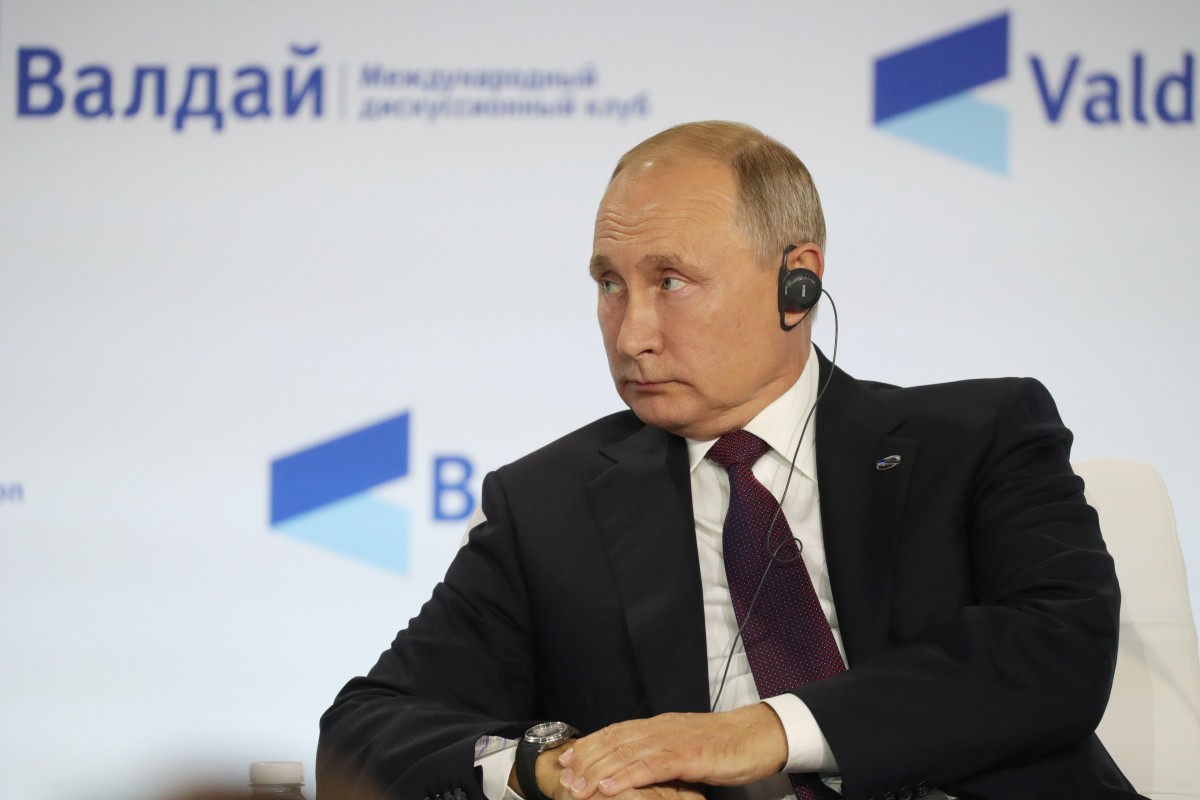
Russia is helping China to build an early warning system to counter missile attacks, Vladimir Putin said on Thursday.
Speaking at an international affairs conference in the resort town of Sochi, he said Moscow was helping China increase its missile defence capability, Russian state-owned news agency Sputnik reported.
“This is a very serious endeavour that will fundamentally and radically increase the defence capability of the People’s Republic of China because only the United States and Russia have such a system at present,” the Russian leader said.
Kremlin spokesman Dmitry Peskov declined to say when the system would be operational, but told reporters on a conference call that the move highlighted Russia’s close ties with China.
“Russia has special relations with China of advanced partnership … including the most sensitive [areas] linked to military-technical cooperation and security and defence capabilities,” Peskov said.
Macau-based military observer Antony Wong Dong said Putin’s remarks indicated that military cooperation between Beijing and Moscow may have evolved from the previous “model alliance” to a “real alliance” with the US as their common target.
“Such changes will likely further fuel the strategic arms race, which is already evident from the missile tests [that we have witnessed] and the recent military parade,” said Wong in a reference to the grand parade held in Beijing on Tuesday when China celebrated the 70th anniversary of the founding of the People’s Republic.
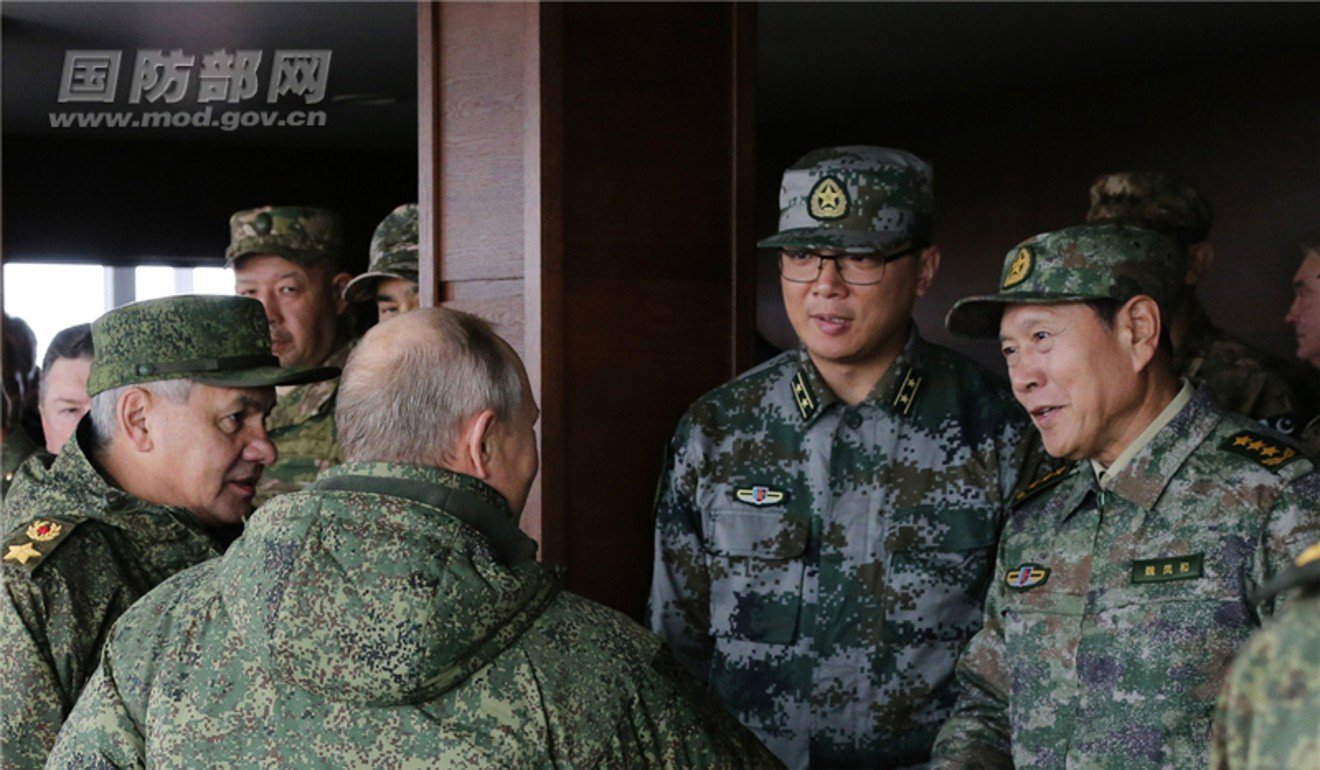
Russian President Vladimir Putin welcomes China’s defence minister Wei Fenghe (right) to a base in Orenburg at the start of a joint exercise. Photo: Handout
Hong Kong-based military analyst Song Zhongping said the system would help Beijing and Moscow set up a joint early ballistic missile network to counter “American global hegemony”.
“If the US wants to attack China [with its ICBMs], their missiles are likely to be launched from the Arctic, and that will be covered by Russia’s early warning system, and that means Moscow will have the capability to alert Beijing,” said Song who added that the Chinese military could provide reciprocal help to Russia.
Beijing-based military expert Zhou Chenming said Putin’s remarks served as a veiled warning to US President Donald Trump who has taken the unilateral step of withdrawing from the Intermediate Range Nuclear Forces Treaty, a cold war-era pact signed between the US and Russia in 1987.
“Joint cooperation will help both Russia and China to save costs because early warning ballistic missile systems are very expensive,” Zhou said,
However, he said Moscow was unlikely to share its most advanced technologies with China.
“For example, Russia’s missile defence system just covers Moscow and St Petersburg, so China’s network will properly just cover Beijing, Tianjin, Hebei province, the Yangtze River Delta area, the Greater Bay Area in South China, as well as a number of key cities in the centre.”
Putin also told the forum that the two countries would continue to work together on space exploration.
Last month, the Ministry of Defence of the Russian Federation announced that Moscow and Beijing have developed a plan for cooperation between military departments for next year and 2021.
Last month 1,600 members of the Chinese military arrived at a Russian training base in the Orenburg oblast for a large-scale joint training exercise.
Source: SCMP
Posted in 70th anniversary of the founding of the People's Republic of China (PRC), Arctic, Beijing, build, China alert, China’s defence minister, cold war-era pact, early warning system, General Wei Fenghe, Greater Bay Area, Hebei province, helping, ICBMs, Intermediate-Range Nuclear Forces Treaty, Kremlin, Ministry of Defence of the Russian Federation, Missile, Moscow, Orenburg, People’s Republic of China, Russia, Sochi, Sputnik, St Petersburg, Tianjin, Uncategorized, United States, US, US President Donald Trump, Vladimir Putin, Yangtze River Delta |
Leave a Comment »
13/10/2019
- The likes of Saudi Arabia also saw an upswing in travellers from the mainland after the release of its new visa programme
- But fewer Chinese tourists went abroad this year, with a 15 per cent drop from 2018 attributed to more opting to visit local historical sites
Chinese tourists take photos in front of the Imperial Palace in Tokyo, Japan. Photo: Reuters
Fewer Chinese travellers went overseas during
“golden week” this year – but for those who did, Japan, Thailand and Singapore were the top-ranked destinations as tourists from the mainland gave Hong Kong a miss, according to China’s largest travel company Ctrip.
Chinese government data showed only 6.07 million people travelled during the national holiday between October 1-6, a 15.1 per cent drop from the corresponding period last year. Analysts attributed this to Chinese tourists opting for a “staycation”, as 782 million people – a 7 per cent increase from last year – chose to celebrate the 70th anniversary of the People’s Republic of China by visiting local historical sites.
How a new wave of Indian travellers are transforming tourism in Southeast Asia
For those who did venture abroad, Japan, Thailand and Singapore ranked as the top three most-booked countries in Asia during the week, according to Chinese travel firm Ctrip, as tourists from the mainland skipped protest-hit Hong Kong for other destinations.
The city, now in its 19th week of anti-government protests, over the week saw a 50 per cent overall drop in tourism from last year, as well as a 47.8 per cent reduction in border crossings at the Luohu border checkpoint, according to government figures.
Japan remained the most popular destination for Chinese tourists. In the first half of 2019, the nation saw 4.5 million visitors from China, up 11.7 per cent from the same period in 2018. In order of popularity, the top-visited cities were Osaka, Tokyo, Kyoto, Sapporo and Nagoya, according to Japanese media.
Over the same week, Japan increased its sales tax from 8 to 10 per cent, but Chinese shoppers – who accounted for 37 per cent, or US$15.4 billion, of the spending by international visitors to the nation last year – were undeterred.
Japan saw the highest volume of overseas transactions over the week, according Alipay Mobile, the world’s largest mobile payment platform. The firm declined to share the exact amount Chinese tourists had spent in Japan, but reported average spending per international traveller during golden week had increased by 15 per cent to 2,500 yuan (US$350).
From Nissan sales to Tsushima tourism, trade spat with Korea hits Japan in the pocket
Alipay is operated by Ant Financial, an affiliate of Alibaba Group Holding, which owns the Post.
Japanese department stores such as Sogo and Seibu celebrated the Chinese national holiday by holding golden week events and sales at 15 different branches across the nation, with food and arts promotions targeting Chinese shoppers.
Chinese travellers to Japan want cultural experiences involving local customs such as temple tours, heritage sites and cultural events, according to Emily Guo, a researcher at Hong Kong-based marketing research firm Cherry Blossoms.
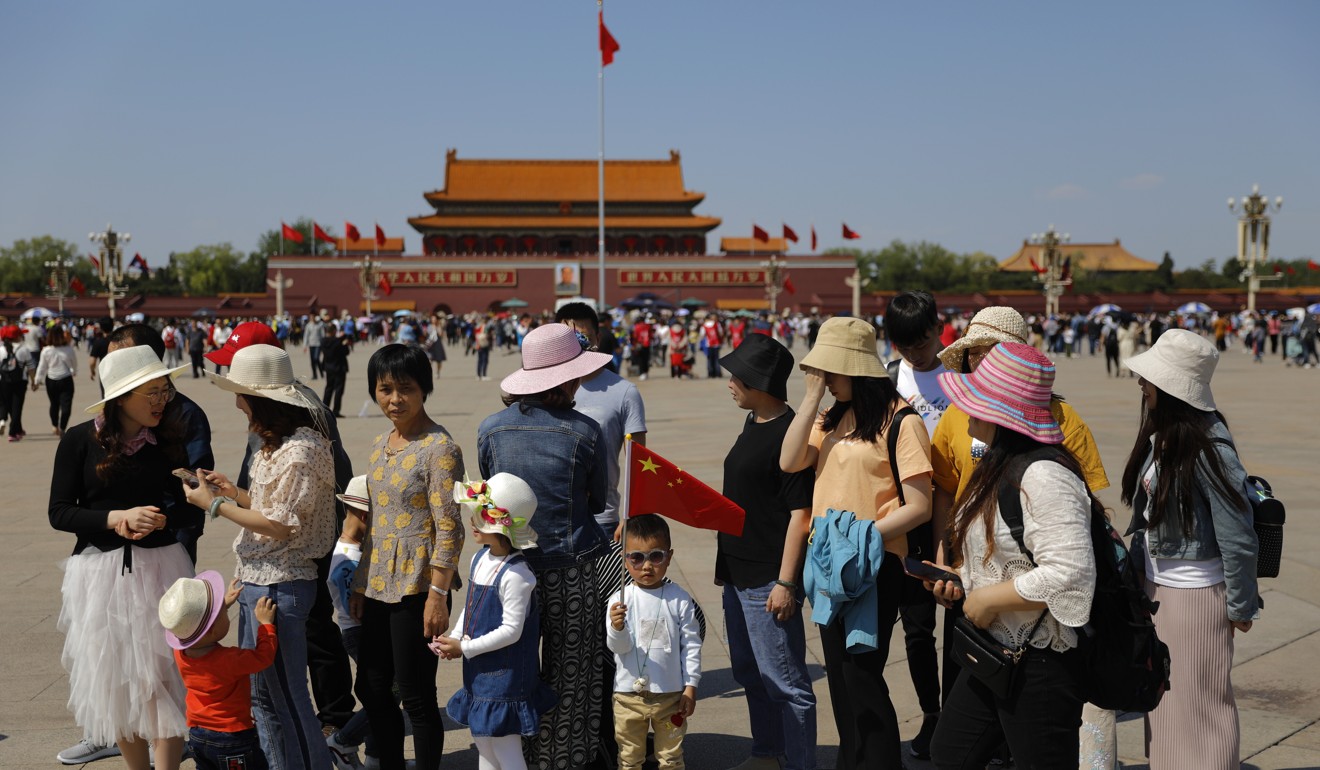
Chinese tourists visit Tiananmen Square in Beijing. Analysts say 782 million people opted for “staycations” at local historical sites over golden week this year. Photo: EPA
Experts say Thailand – the second-most booked country during golden week, according to Ctrip – saw many repeat travellers return to the country. The nation saw 1.03 million arrivals from China in August, up 19 per cent from 2018.
Guo said these travellers were more budget-conscious than those who travelled to Japan, and enjoyed the good value and picturesque scenery for sharing on social media.
“They have already travelled to Southeast Asia before, and are therefore looking for personalised and local experiences like interacting with Thai residents, jungle treks and food tours,” she said, adding that many are willing to spend extra on immersive experiences such as a hotel in the countryside, or on a room with a forest view.
Thailand’s tourism industry gets jitters after currency surges, visitor numbers from China fall
According to Alipay Mobile, the sale of “durian experience” packages for Chinese tourists looking to taste the spiky, pungent fruit at local farms increased by 60 per cent in Thailand and Malaysia from last year.
Shopping remained on the agenda, too. Thailand ranked second for the highest volume of overseas transactions during the week, according to data from Alipay Mobile. Most Chinese shoppers frequented duty-free shops, convenience stores and local malls, according to local press.
Singapore remained a destination of choice for tourists from the mainland. The city was among the most popular “traditional destinations” for them, according to China’s culture and tourism ministry, with others including Malaysia, Thailand, Japan, Australia, France, Italy, and Russia.
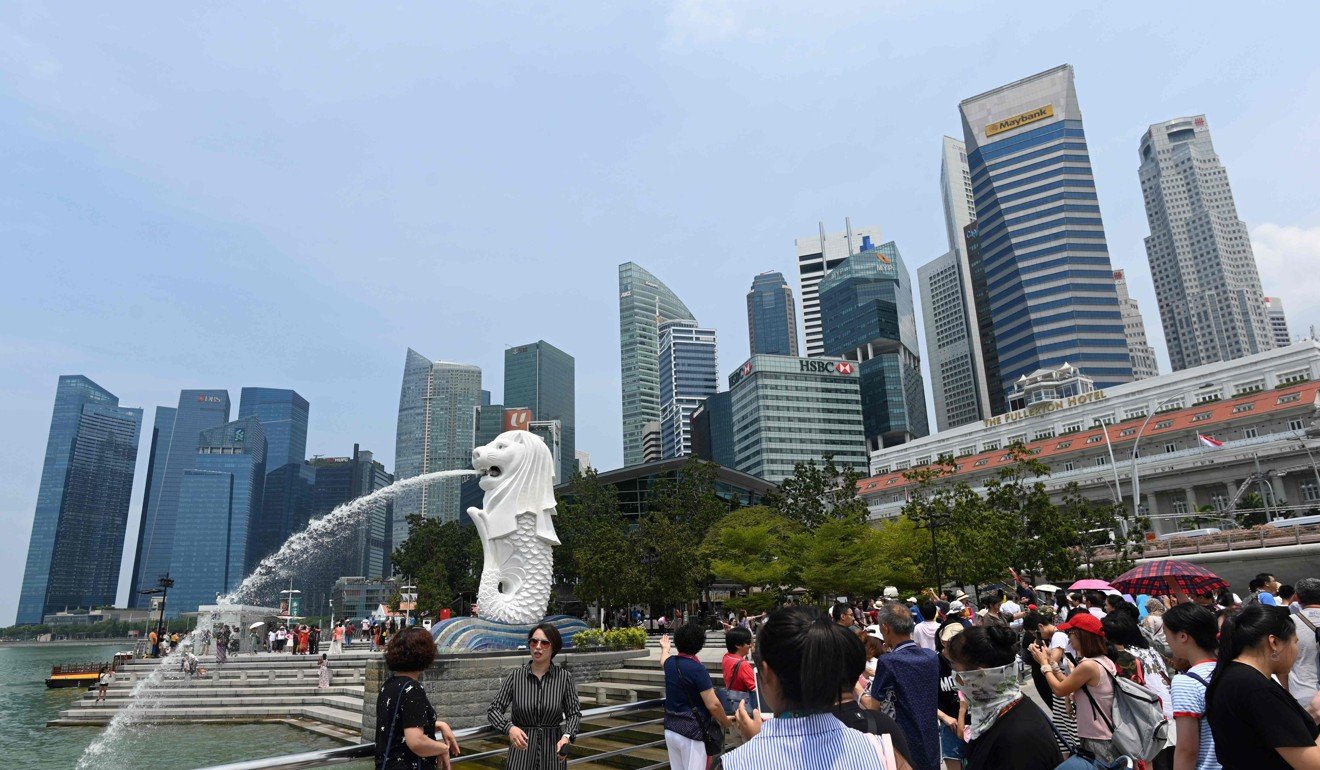
Chinese tourists visiting Singapore over golden week also seized the opportunity to check out property in the Lion City. Photo: AFP
July saw the Lion City break its record for the number of Chinese arrivals, at close to 390,000, an unprecedented 46 per cent jump from the previous month.
Analysts have attributed this to a diversion of tourists from Hong Kong, but property agents such as Clarence Foo, associate deputy group director at OrangeTee & Tie, said some of these Chinese tourists were using the golden week as a chance to eye Singaporean real estate.
“Compared to a normal week, there were probably 15 to 20 per cent more Chinese visitors who viewed property,” said Foo, who counts Singaporean and international buyers among his clients.” They are certainly more keen on Singapore [property] now as there isn’t another comparable investment destination in Asia.”
Meanwhile, the Middle East is emerging as a popular shopping destination for Chinese tourists. According to Ctrip, Dubai saw 501,000 travellers from the mainland in the first half of 2019, an 11 per cent increase from last year.
Saudi Arabia has also experienced a surge in Chinese tourists, with 7,931 heading to the country since it launched its new instant tourist visa programme on September 27. With the new visa, which can be obtained online or upon arrival, tourists can stay in the country for up to 90 days, and unwed foreign men and women can for the first time share hotel rooms.
“Saudi Arabia has the potential to become very popular with Chinese tourists,” said Guo from Cherry Blossoms, adding that travellers from the mainland are increasingly looking for exciting new adventures. “It’s a status symbol for them to visit a country others haven’t visited before.”
Source: SCMP
Posted in 70th anniversary, Alibaba Group Holding, Alipay Mobile, Australia, ‘golden week’, “staycation”, “staycations”, Beijing, benefit, celebrated, Chinese national holiday, chinese tourists, Ctrip, cultural events, cultural experiences, Dubai, durian experience, France, golden week, heritage sites, Hong Kong, Imperial Palace, Italy, Japan, Korea, Kyoto, Lion City, Luohu border checkpoint, mainland, Malaysia, Middle East, Nagoya, nation, Nissan, People’s Republic of China, Post, Russia, Sapporo, Saudi Arabia, Seibu, Singapore, Singaporean real estate, skip, Sogo, Southeast Asia, spiky, pungent fruit, temple tours, Thailand, Tiananmen Square, Tokyo, traditional destinations, travellers, Tsushima tourism, Uncategorized |
Leave a Comment »
06/10/2019
- Leaders exchange congratulatory messages on 70th anniversary of diplomatic relations amid speculation that Kim Jong-un will visit China soon
- It comes after Pyongyang’s denuclearisation negotiations with Washington broke off in Stockholm without any breakthroughs
North Korean leader Kim Jong-un (left) may soon visit China again. He last met Xi Jinping during the Chinese leader’s trip to Pyongyang in June. Photo: AFP
China and
North Korea on Sunday vowed to continue strengthening their ties that have “stood the test of time”, hours after another squabble broke out between Pyongyang and Washington over the breakdown of their first nuclear talks in eight months.
Chinese President Xi Jinping exchanged congratulatory messages with North Korean leader Kim Jong-un on the 70th anniversary of diplomatic ties, according to state media in both countries, amid speculation that Kim will soon pay another visit to China.
Observers said the communist neighbours’ warm exchanges and Kim’s possible visit showed Beijing and Pyongyang shared mutual interests and needed each other in their respective geopolitical plans to counter Washington – especially as they both come under pressure from US President Donald Trump.
The two countries are said to be
preparing for Kim to visit China as early as Sunday, which would be his fifth China trip since March last year and the first since Xi’s state visit to Pyongyang in June.
But given Pyongyang’s denuclearisation negotiations with Washington on Saturday – which broke off in Stockholm without any breakthroughs – China and North Korea may need to reconsider or delay Kim’s visit to avoid criticism of Beijing’s role in the nuclear talks, one expert suggested.
“The triangular ties between China, the United States and North Korea are of immense importance in finding a solution to the nuclear issue on the Korean peninsula and Beijing’s role in the talks has always been sensitive, especially in the eyes of the US and its allies,” said Wang Sheng, a North Korea specialist at Jilin University.
“While China will almost certainly reiterate its stance to support continued dialogue and talks between Pyongyang and Washington, it may not be a good time for Kim’s high-profile visit just a day after their talks broke down, which would inevitably make it more difficult for China to play a mediating role,” he said.
On Sunday, Xi said the traditional friendship between the two countries had “stood the test of time and changes in the international landscape, growing stronger with the passage of time” and “made important and positive contributions to regional peace and stability”, according to Chinese state news agency Xinhua.
Citing his five recent meetings with Kim, Xi said bilateral ties had entered a new era and China would promote “long-term, healthy and stable” relations with North Korea.
Kim also hailed the special relationship between the two countries, which he said had been forged “at the cost of blood” and “weathered all tempests while sharing weal and woe with each other”, the Korean Central News Agency reported.
North Korean mouthpiece Rodong Sinmun meanwhile said in a commentary that bilateral ties with Beijing were “fully in accordance” with the interests of the two sides and would develop “regardless of the international situation”, according to South Korea’s Yonhap news agency.
The lavish praise for Sino-North Korean relations comes as a group of working-level officials from North Korea are working with the Chinese side for a possible visit by Kim in the next few days, according to South Korea’s Dong-A Ilbo.
China and North Korea have set aside their differences as both countries come under pressure from US President Donald Trump. Photo: AFP
North Korea was among the first countries to recognise the
People’s Republic of China
70 years ago and Xi has exchanged three messages with Kim in the past month, repeatedly pledging to move closer despite lingering grievances over Pyongyang’s nuclear brinkmanship.
In the face of Trump’s increasingly antagonistic approach, the former communist allies – whose relationship deteriorated over Beijing’s support for the UN sanctions against the North, led by Washington – have set aside their differences to patch up ties in recent months.
Meanwhile, Pyongyang’s first nuclear talks with Washington in eight months ended on Saturday with the two sides offering conflicting assessments of their first formal discussion since the failed Trump-Kim summit in Vietnam in February.
North Korea’s top negotiator Kim Myong-gil expressed his “great displeasure” with the discussions, blaming Washington and urging the Trump administration to correct its course and keep the talks alive or “forever close the door to dialogue”, according to Yonhap.
North Korean negotiator Kim Myong-gil expressed his “great displeasure” with the discussions on Saturday. Photo: AP
But the US State Department issued a rebuke hours later, claiming the negotiators had a “good discussion”. State Department spokeswoman Morgan Ortagus said in a statement that the US had put forward “creative ideas” and “a number of new initiatives that would allow us to make progress in each of the four pillars of the Singapore joint statement”.
The two countries were not expected to “overcome a legacy of 70 years of war and hostility on the Korean peninsula through the course of a single Saturday”, she said, adding that Washington would return for more discussions with Pyongyang in two weeks at Sweden’s invitation.
As Trump administration enters survival mode, foreign policy moves are anyone’s guess
Wang from Jilin University said the breakdown of another round of talks had again laid bare the huge gap between the two sides over a long list of issues, from the definition of denuclearisation to their vastly different, often conflicting, demands and interests.
“It’s very likely that Washington has again rejected some of Pyongyang’s key demands in the recent talks, such as providing a security guarantee for Kim’s regime and a range of economic sanctions relief,” he said.
And with North Korea a polarising issue in the looming US presidential poll for Trump as he seeks to score diplomatic points for his re-election bid, it might become even more challenging for the two sides to narrow their differences.
“The breakdown of the talks should not be seen as a failure,” Wang said. “It simply underscores the difficulty of reaching any consensus in the nuclear talks, which still have a long way to go.”
Source: SCMP
Posted in 70th anniversary, Beijing, breakthroughs, broke off, China alert, collapse, denuclearisation negotiations, diplomatic relations, Dong-A Ilbo, geopolitical plans, invitation, Jilin University, Kim Jong-un, Korean Central News Agency, Korean peninsula, North Korea, nuclear brinkmanship, nuclear talks, People’s Republic of China, President Donald Trump, Pyongyang, Sino-North Korean relations, South Korea, speculation, Stockholm, strengthen ties, Sweden, Trump-Kim summit, U.S. State Department, UN sanctions, Uncategorized, United States, US nuclear talks, Vietnam, visit, vow, Washington, without, Xi JinPing, Xinhua News Agency, Yonhap news agency |
Leave a Comment »
30/09/2019
- Three films that opened on Monday morning rake in US$76.6 million by midday
- Palme d’Or winner Chen Kaige heads bill with ensemble that has movie-goers in tears
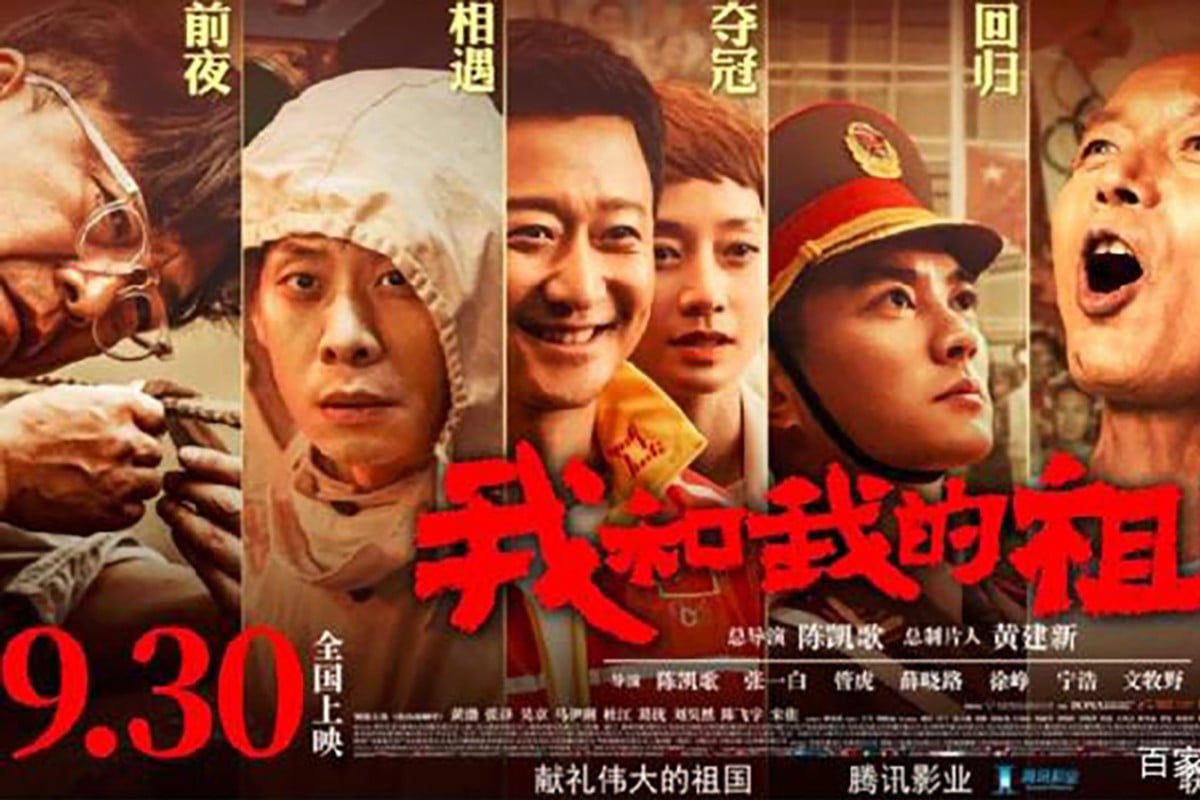
My People, My Country looks at seven events in the past 70 years through the eyes of seven Chinese directors. Photo: Baidu
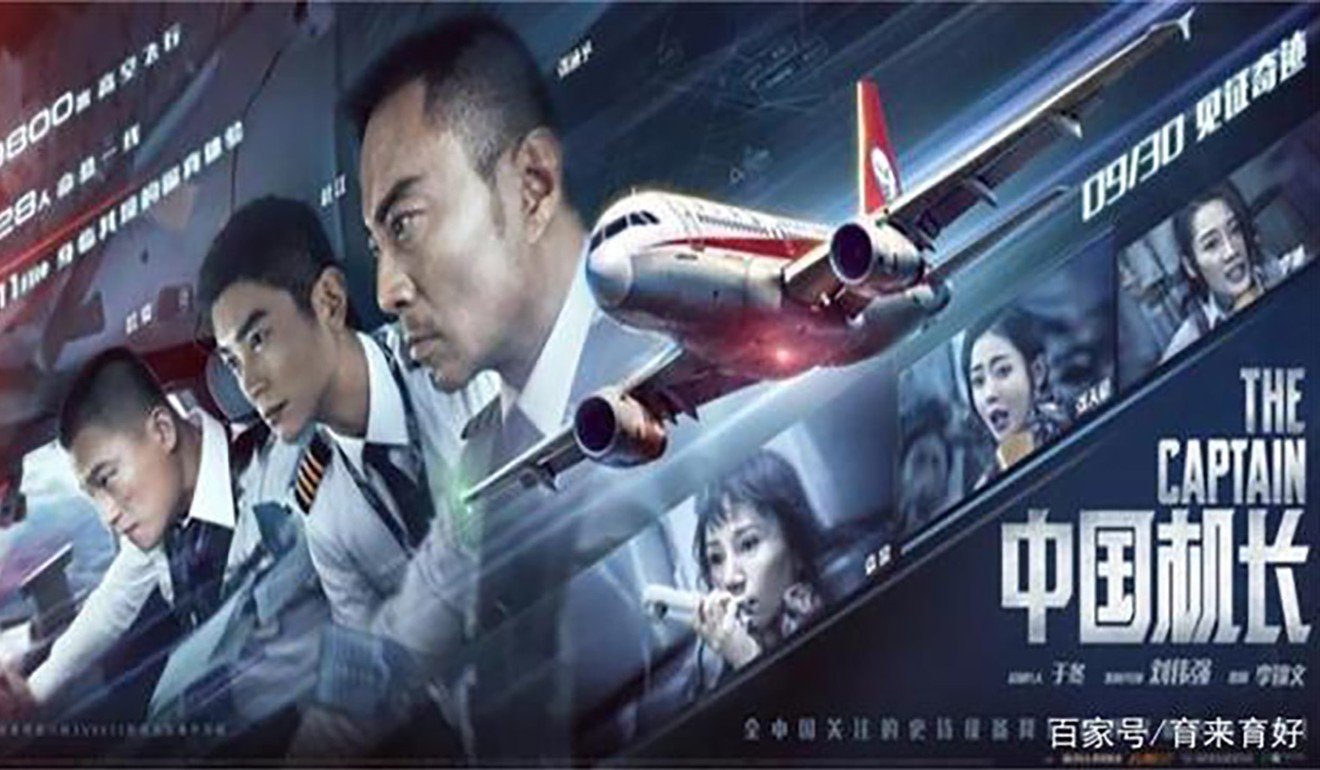
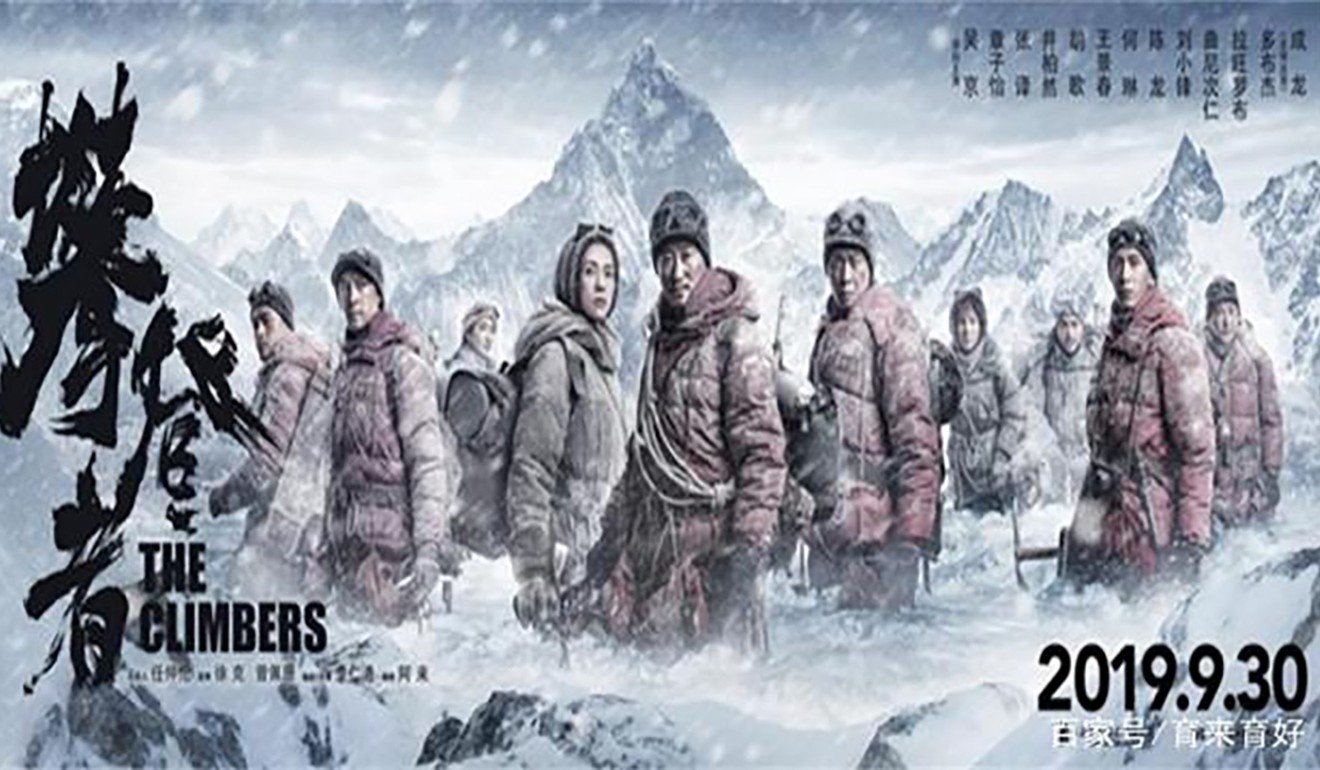
Three films that paid tribute to the People’s Republic of China on the eve of its 70th anniversary grossed a total of 546 million yuan (US$76.6 million) at the box offices hours after opening on Monday, Maoyan Entertainment, China’s largest movie ticketing app, said.
My People, My Country, consisting of seven short stories by seven directors led by Cannes Palme d’Or winner Chen Kaige, recounted major events since 1949. It took in 225 million yuan.
Milestones including the detonation of China’s atomic bomb in 1964; the handover of Hong Kong from the UK to China in 1997, and the staging of the Summer Olympics in Beijing in 2008, brought back many memories and stirred feelings of national pride, film-goers said.
“I went to see the movie today and saw many primary school students with their parents. Tears welled in my eyes, and I felt touched and proud at the same time. Go China!” one Weibo user wrote.
True-life drama The Captain has proved to a big screen hit with mainland cinema-goers. Photo: Baidu
“This movie used directors of commercial movies, and most of those born in the 1960s and 1970s lived through these moments. I think young people will bring their parents to see the film,” another Weibo user wrote.
True-life drama The Captain, directed by Hong Kong director Andrew Lau Wai-Keung, ran in second with a box office take of 175 million yuan by noon on Monday. The film was based on events in May 2018, when the cockpit window of a Sichuan Airlines flight was shattered at 30,000 feet over the Tibetan Plateau in western China. The decompression pulled the co-pilot halfway out of the cabin as the pilot fought to land the flight safely.
Big-budget film The Climbers, directed by Hong Kong’s Daniel Lee Yan-Kong and featuring stars such as Wu Jing and Zhang Ziyi, retraced the steps of two generations of Chinese mountaineers who scaled Mount Everest by the perilous North Ridge in 1960 and 1975. The film posted earnings of 146 million yuan.
Tencent’s homage to modern China tops gaming charts on eve of 70th anniversary celebrations
Patriotic feelings have been running high this week as the celebration of the 70th anniversary draws near.
My People, My Country’s theme song, Me and My Mother Country, an oldie recorded by Hong Kong’s Faye Wang, has been heard in shops, restaurants and workplaces all across the mainland.
The Climbers was directed by Hong Kong’s Daniel Lee Yan-Kong. Photo: Baidu
Last week, 200 million WeChat users responded to a campaign by internet company Tencent to add a national flag or Happy National Day sticker to their social media profile picture, The Beijing News reported. Demand was so heavy Tencent’s servers were overwhelmed for a short time.
Source: SCMP
Posted in 70th anniversary, atomic bomb, Beijing, Big screen, box office hits, cabin, Cannes Palme d’Or, celebrations, Chen Kaige, Chinese mountaineers, co-pilot, Daniel Lee Yan-Kong, decompression, demand, detonation, flight, fought, gaming charts, halfway, handover of Hong Kong, Happy National Day, heavy, homage, land, mainland, mainland cinema-goers, Maoyan Entertainment, Me and My Mother Country, Milestones, modern China, Mount Everest, My People, My Country, national flag, national pride, North Ridge, overwhelmed, paid tribute, patriotism, People’s Republic of China, perilous, pilot, reported, restaurants, safely, scaled, servers, shops, Sichuan Airlines flight, sticker, Summer Olympics, take off, TENCENT, The Beijing News, The Captain, The Climbers, Tibetan Plateau, turns, Uncategorized, Weibo, Western China, winner], workplaces, Wu Jing, Zhang Ziyi |
Leave a Comment »
28/09/2019
NEW YORK (Reuters) – China and the Pacific island state of Kiribati restored diplomatic ties on Friday after the former diplomatic ally of Taiwan abandoned Taipei.
A poor but strategic country which is home to a mothballed Chinese space tracking station, Kiribati announced last week that it was cutting relations with self-ruled Taiwan in favour of China, which claims Taiwan as a wayward province with no right to state-to-state ties.
China and Kiribati had ties until 2003, when Tarawa established relations with Taipei, causing China to break off diplomatic relations.
Up until that time, China had operated a space tracking station in Kiribati, which played a role in tracking China’s first manned space flight.
The Chinese government’s top diplomat State Councillor Wang Yi and Kiribati’s President Taneti Maamau signed a communique on restoring diplomatic relations at the Chinese mission to the United Nations in New York.
“We highly prize this important and the correct decision,” Wang told a news conference. “Let’s hope for our friendship to last forever. We will work together to grow together towards a bright and prosperous future.”
Speaking alongside Wang, Maamau said there was much to learn from China.
“I do believe that there is much to learn and gain from the People’s Republic of China and the re-establishment of our diplomatic relations is just the beginning,” he said.
There was no mention of the space tracking station at the news conference, nor in the joint communique between the two countries released by China’s Foreign Ministry.
China’s space programme is overseen by the military.
China’s Defence Ministry this week declined comment on the Kiribati facility.
Last week was difficult for Taiwan, as the Solomon Islands also ditched it for Beijing. The Solomon Islands foreign minister signed a deal on diplomatic ties in China last Saturday.
Both the Solomon Islands and Kiribati are small developing nations but lie in strategic waters that have been dominated by the United States and its allies since World War Two. China’s moves to expand its influence in the Pacific have angered Washington.
A former Taiwanese ambassador to Kiribati, Abraham Chu, told Taiwan’s Central News Agency last weekend that China had never fully removed the tracking station in Kiribati and that it “could come back at any time”.
Taiwan now has formal relations with just 15 countries, mostly small and poor nations in Latin America and the Pacific, including Nauru, Tuvalu and Palau. China has signalled it is coming for the rest of Taiwan’s allies.
Source: Reuters
Posted in abandoned, allies, angered, Beijing, China alert, China’s Foreign Ministry, defence ministry, diplomatic ally, diplomatic ties, foreign minister, influence, Kiribati, Latin America, Military, Nauru, New York, Pacific, Pacific island state, Palau, People’s Republic of China, President Taneti Maamau, restores, site, Solomon Islands, space programme, space tracking station, State Councillor Wang Yi, state-to-state ties, Taipei, Taiwan, Tarawa, ties, Tuvalu, Uncategorized, United Nations, United States, Washington, World War Two |
Leave a Comment »
13/09/2019
- Top law enforcement body starts campaign to rally mainland support for officers amid anti-government protests
- Maxim’s described as ‘company that loves the country and loves Hong Kong’ after condemnation of unrest by daughter of founder
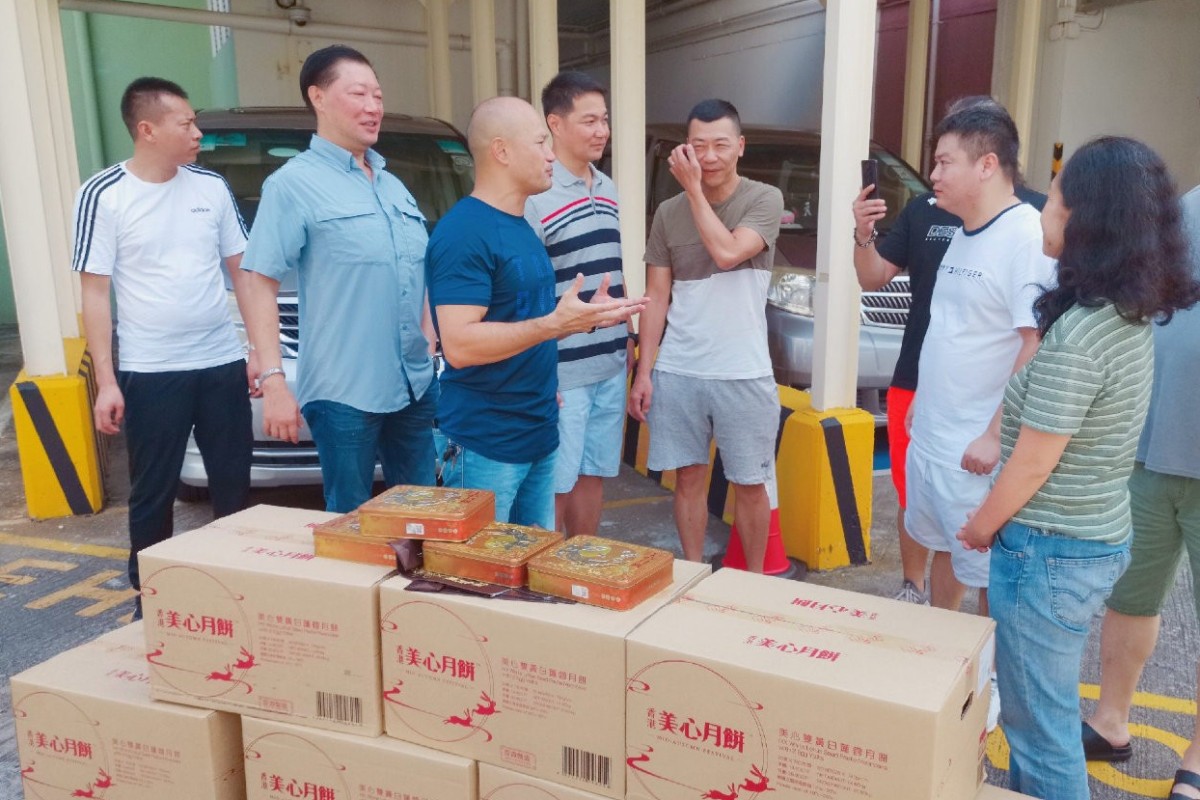
Officer Lau (third from left) and police colleagues receive a delivery of mooncakes. Photo: Weibo
China’s top law enforcement agency has shown its support for Hong Kong’s embattled police by delivering 650 boxes of mooncakes to the force’s dormitories and stations ahead of Friday’s
Mid-Autumn Festival.
The festive gifts were sent after an online campaign titled “I want to send hometown delicacies to Hong Kong Police”, launched last Friday by Chang An Jian, an official social media account of the Central Political and Legal Affairs Commission, Beijing’s top political body responsible for law and order.
The commission – a Communist Party organ, rather than a government body that police report to – said in a blog post that seven people had donated about 150,000 yuan (US$21,000) between them.
The campaign represents the latest display of mainland support for the force, with no end in sight to mass protests in Hong Kong triggered in June by opposition to an
that would have allowed the transfer of criminal suspects to mainland China. Hong Kong police have faced numerous accusations of excessive use of force during the unrest.
But the mooncake delivery was complicated by customs regulations, with most major Chinese courier services unwilling to take deliveries containing processed meat and egg yolk across the border with Hong Kong.
“[We] were panicking because a lot of enthusiastic netizens had their salted duck and mooncake deliveries to Hong Kong rejected by couriers!” a Chang An Jian blog post said on Wednesday night.
In the end, 650 boxes of mooncakes that were bought from Hong Kong were sent to police dormitories and stations on Wednesday evening.
Mid-Autumn Festival is the second most important traditional Chinese holiday after Lunar New Year.
“[The mooncakes] were from Maxim’s, a company that loves the country and loves Hong Kong!” the blog post also said.
Annie Wu Suk-ching, whose father co-founded the Maxim’s chain, last week
the anti-government protests in Hong Kong.
She was lauded by Communist Party mouthpiece People’s Daily for “clearly adhering to the one country principle” – referring to “one country, two systems”, the principle under which Hong Kong was guaranteed a high degree of autonomy after it was handed over from British to Chinese rule in 1997.
One of Maxim’s biggest rival mooncake manufacturers in Hong Kong, Taipan Bread and Cake, had its products
removed from shops across the Chinese mainland and from its biggest e-commerce sites, Tmall.com and JD.com, after the son of its founder was vilified by
People’s Daily for a Facebook post that the newspaper said showed he backed the protests.
Recipients of the mooncakes included a police officer who in July was hailed as a hero by Chinese state media and nicknamed “bald sergeant Lau Sir” after pointing a shotgun at protesters who had besieged a police station. Lau has since been invited by Beijing to attend a grand celebration on October 1 for the 70th anniversary of the founding of the People’s Republic of China.
Mooncake importer says stock will be destroyed after mainland backlash
Beijing has focused attention on the violent elements of the Hong Kong protests in its social media posts and media coverage, while businesses have been carefully monitored and expected to toe Beijing’s line on condemning violence and supporting one country, two systems.
“Hong Kong Police have been having a very difficult time,” said one mainlander, surnamed Lu, in a video posted by Chang An Jian. “We want to cheer them up.”
Posted in "one country, two systems", 70th anniversary, Beijing, boxes, campaign, Central Political and Legal Affairs Commission, criminal suspects, Facebook, founding, Hong Kong police, lunar new year, mainland, Mainland China, Maxim’s mooncakes, mooncakes, October 1, officers, People’s Daily, People’s Republic of China, Police officer, Police station, protests, rally, sends, show, support, Top law enforcement body, Uncategorized |
Leave a Comment »






 CHINDIA ALERT: You'll be living in their world, very soon