Chindia Alert: You’ll be Living in their World Very Soon
aims to alert you to the threats and opportunities that China and India present. China and India require serious attention; case of ‘hidden dragon and crouching tiger’.
Without this attention, governments, businesses and, indeed, individuals may find themselves at a great disadvantage sooner rather than later.
The POSTs (front webpages) are mainly 'cuttings' from reliable sources, updated continuously.
The PAGEs (see Tabs, above) attempt to make the information more meaningful by putting some structure to the information we have researched and assembled since 2006.
Beijing ‘carefully considering’ unveiling the plane at the Zhuhai Airshow in November at a time of heightened regional tension
H-20 will give China the nuclear triad of submarines, ballistic missiles and bombers
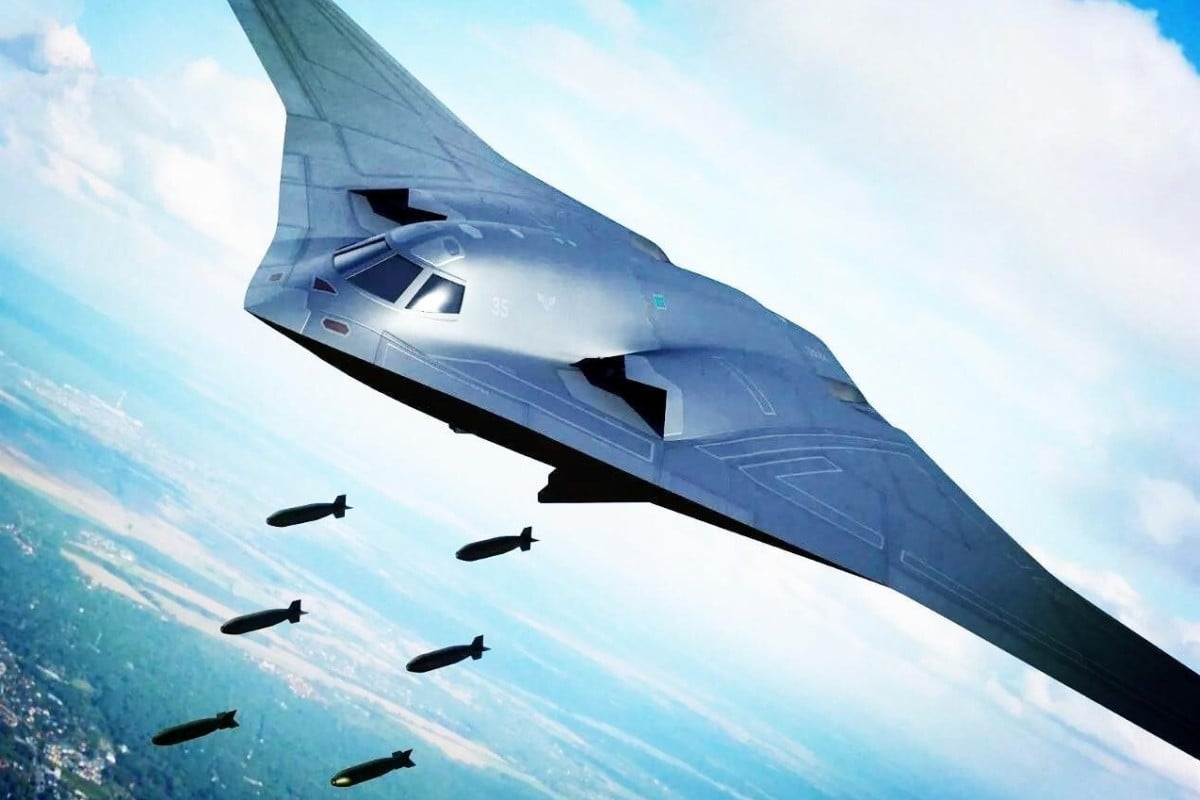
An artist’s impression of what the H-20 may look like. Photo: Weibo
China’s new generation strategic bomber is likely to be ready for delivery this year, but Beijing is said to be weighing the impact of its unveiling at a complex time in regional relations due to the coronavirus pandemic.
Military sources said the Xian H-20 supersonic stealth bomber – expected to double the country’s strike range – could make its first public appearance at this year’s Zhuhai Airshow in November, if the pandemic was sufficiently under control.
“The Zhuhai Airshow is expected to become a platform to promote China’s image and its success in pandemic control – telling the outside world that the contagion did not have any big impacts on Chinese defence industry enterprises,” a source said.
But the appearance of the bomber at this year’s air show could heighten tensions by directly threatening countries within its strike range, especially Australia, Japan and the Korean peninsula.
Thrilling aerobatics fill the skies to open air show in central China
“The Beijing leadership is still carefully considering whether its commission will affect regional balance, especially as regional tensions have been escalating over the Covid-19 pandemic,” another source said.
“Like intercontinental ballistic missiles, all strategic bombers can be used for delivering nuclear weapons … if China claimed it had pursued a national defence policy which is purely defensive in nature, why would it need such an offensive weapon?”
Tensions in the region have worsened in the past month with a war of words between Beijing and Washington over the pandemic, and both sides increasing naval patrols.
The US defence department has estimated a cruising distance of more than 8,500km (5,300 miles) for the H-20, the last in China’s 20 series of new generation warplanes, which includes the J-20 stealth fighter jet, the Y-20 giant transporter and the Z-20 medium-lift utility helicopter.
The arrival of the H-20 would mark the completion of China’s “nuclear triad” of ground-based intercontinental ballistic missiles, submarine-launched missiles and air-launched weapons.
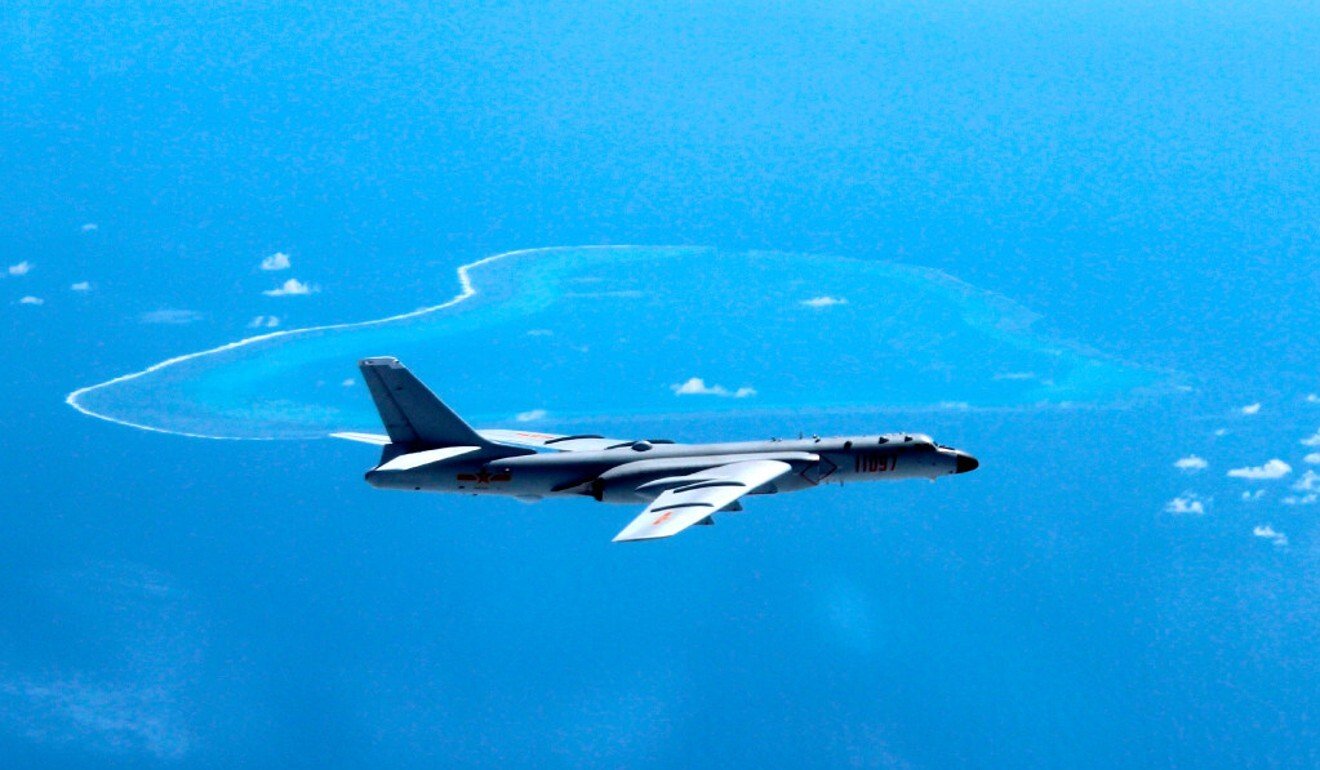
An H-6K bomber, or China’s B-52, flies over the South China Sea. Photo: AP
Chinese state television has said the H-20 could alter the strategic calculus between the US and China by doubling the strike range of its current H-6K, dubbed the country’s B-52.
The H-20 has reportedly been designed to strike targets beyond the second island ring – which includes US bases in Japan, Guam, the Philippines and other countries – from bases in mainland China. The third island chain extends to Hawaii and coastal Australia.
It will be equipped with nuclear and conventional missiles with a maximum take-off weight of at least 200 tonnes and a payload of up to 45 tonnes. The bomber is expected to fly at subsonic speeds and could potentially unleash four powerful hypersonic stealth cruise missiles.
However, like China’s first active stealth fighter jet, the J-20, engine development of the H-20 bomber has fallen behind schedule, according to sources.
For the J-20, engineers were developing high-thrust turbofan WS-15 engines, but the jet is understood to be using either Chinese WS-10B or Russian-built AL-31FM2/3 engines, which compromise its manoeuvrability and stealth capabilities at subsonic speeds.
Military enthusiasts have speculated the H-20 might use the NK-321 Russian engine but two independent military sources said it would be equipped with an upgraded WS-10 engine.
“The WS-10 is still a transitional engine for the H-20 because it is not powerful enough. The eligible replacement may take two to three years for development,” one of the sources said.
China must meet air force demand for J-20 stealth jets, say analysts
17 Feb 2020
The second said the speed of the H-20 would be slower than its original design, with some of its original combat capability being reduced.
“That’s why the American air force doesn’t care about the H-20, because it is not strong and powerful enough to cause any challenge to their B-2 and B-21 bombers.”
If the US decided to deploy more F-35 supersonic fighter jets – it has already sold about 200 to Japan and South Korea – it could push China to bring forward the unveiling of the new bomber, the second source said.
“For example, if some US decision makers decided to deploy up to 500 F-35s to Japan, South Korea, and even Singapore, India and Taiwan – making almost all of China’s neighbours in the Indo-Pacific region use F-35s to contain China – that would pushBeijing to launch the H-20 as soon as possible.”
The H-20 is believed to have been in development since the early 2000s. The project to develop a strategic bomber was first announced by the People’s Liberation Army in 2016.
The team is expected to provide technical advice on epidemic prevention and control as well as treatment protocols
The Southeast Asian nation on Tuesday recorded its largest daily increase in coronavirus deaths and infections
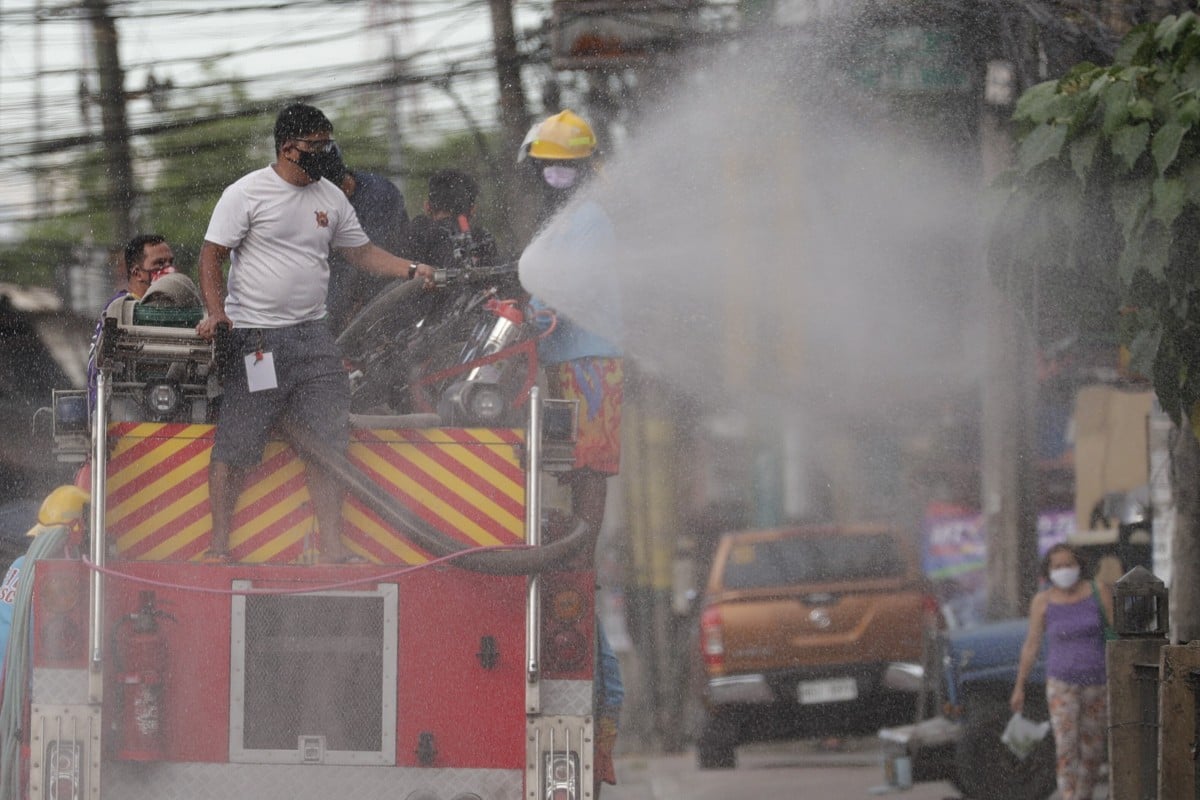
A fireman sprays disinfectant from the back of a fire truck to help curb the spread of the coronavirus during a localised quarantine in Manila. Photo: AP
on Tuesday recorded its largest daily increase in coronavirus deaths and infections, as it awaited the arrival of a Chinese medical team to support its embattled frontline health care workers.
Ten more people died from the Covid-19 disease, bringing the total to 88, while 538 new infections were reported for a total of 2,084.
Among those included in the latest count of positives is former senator Ferdinand “Bongbong” Marcos, whose condition, according to his spokesman Victor Rodriguez, is now “stable” and “improving”.
Health undersecretary Maria Rosario Vergeire said the ministry had opened new labs and run more than 15,000 tests, a five-fold jump from about 3,000 last week. She added that more hospitals were seeking government approval to function as testing centres.
Medical evacuation plane crashes at Manila airport in Philippines, killing eight on board
29 Mar 2020
“We have six more laboratories to conduct tests,” Vergeire said. “We are also conducting contact tracing to find possibly infected persons.”
Philippine hospitals are struggling with a shortage of protective gear, manpower and testing capacity, as are medical facilities around the world. At least 13 doctors have died as of Tuesday and the Philippine Medical Association estimates that over 5 per cent of health workers are currently under quarantine due to Covid-19.
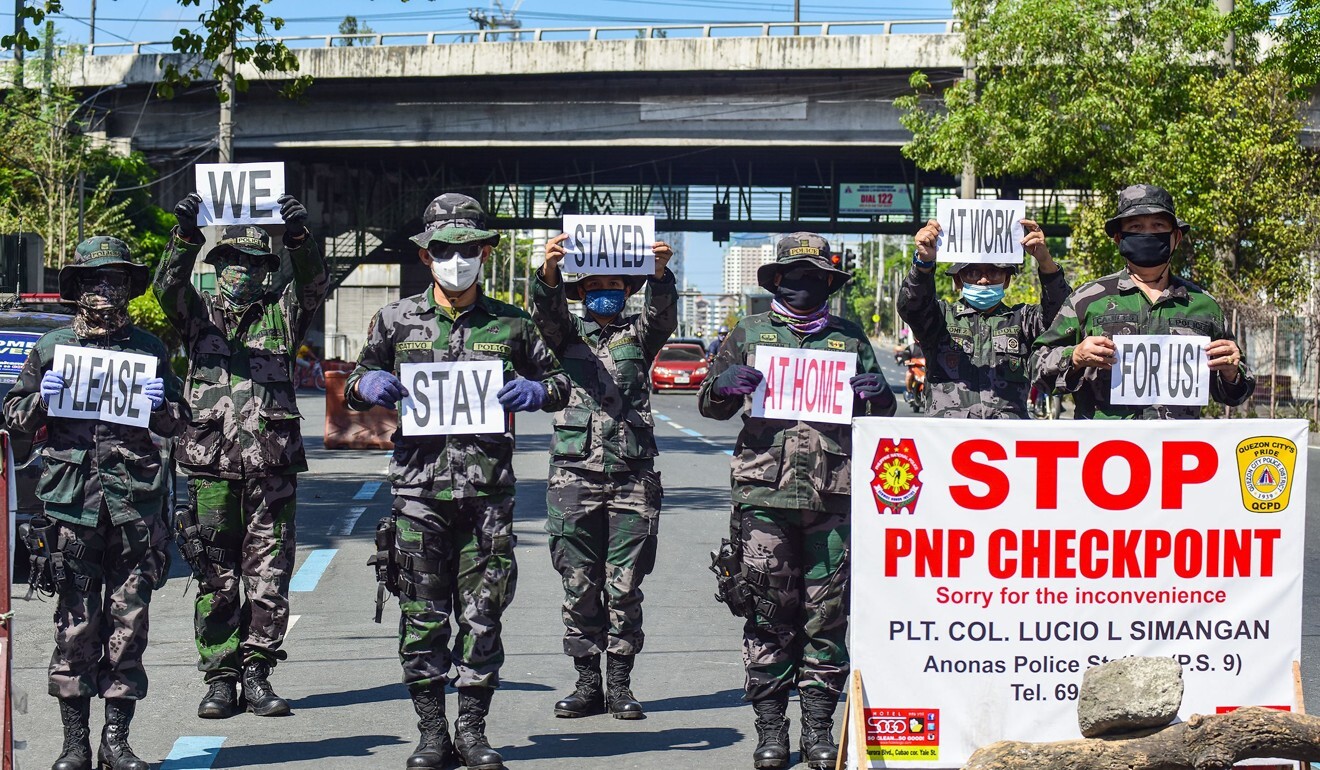
Police personnel in Manila hold up placards reminding people to stay at home. Photo: AFP
The country’s ambassador to China, Chito Sta Romana, confirmed a statement by the Chinese embassy in Manila that Beijing would send an expert team to the Philippines to provide technical advice on epidemic prevention and control as well as treatment protocols.
Sta Romana said the team was made of up of “experienced doctors and public health officials who specialise in infectious diseases”, but could not say when they would arrive.
An infectious disease doctor who spoke on condition of anonymity said the Chinese medical team would only give advice.
Coronavirus: in Philippines, leak shows politicians and relatives received ‘VIP’ testing
25 Mar 2020
“There was an offer to see patients but it was rebuffed because of local laws on practice,” he said, referring to a law that bans foreign doctors from practising medicine in the Southeast Asian nation.
Philippine foreign secretary Teodoro Locsin Jnr on Saturday tweeted that the Department of Health was “blocking their arrival”. His tweet, now deleted, had said “Don’t piss me off. Let them in.”
Health secretary Francisco Duque told local media that Locsin took down his tweet after hearing that the department was preparing hotel accommodation and translators for the expert team.
According to an ethnic Chinese businessman who is a member of a foundation involved in the visit, the team was supposed to have arrived on March 27. It will comprise doctors, nurses and researchers from hospitals and disease prevention agencies in Fujian province who specialise in areas such as infectious diseases, emergency medicine and integrated traditional Chinese and Western medicine.
An estimated 1.2 million ethnic Chinese call the Philippines – which has a population of 107 million people – home, with many tracing their ancestry to Fujian province.
The businessman, who declined to be named, showed This Week in Asia a screenshot of the team’s name list, which included an official from Fujian province’s United Work Front Department, the controversial Communist Party department responsible for promoting its influence around the world.
Beijing has dispatched teams of medical experts to countries struggling with a surge in Covid-19 cases, including Iran and Italy, and has also donated testing kits and other medical supplies.
The Philippine health department apologised over the weekend for comments made by undersecretary Vergeire that some of the kits donated by China had yielded only “40 per cent accuracy” and could not be used.
The Chinese embassy in Manila had rejected the suggestions, and shared a mobile text message supposedly from Duque to Ambassador Huang Xilian that thanked the Chinese government for the test kits.
Philippine President Rodrigo Duterte addresses the nation during a live broadcast on March 30. Photo: AP
Vergeire also issued a correction to her earlier statement, and said she was referring to “another brand” of test kits from China that a private foundation was going to donate.
Political risk analyst Ramon Casiple, who chairs the Institute for Political and Electoral Reforms, said at this point in the Philippines’ coronavirus fight “any help is welcome”.
He said he did not expect any negative political backlash towards the Chinese experts, even though on social media Filipinos have continued to blame China for failing to contain the outbreak in Hubei province, where cases first emerged.
Coronavirus: Philippines’ Luzon lockdown hits domestic helper agencies in Singapore
20 Mar 2020
The Philippines has locked down its main island of Luzon – where about a third of the population lives, and where 70 per cent of economic activity takes place – for the past two weeks, resulting in supply chain disruptions and millions of poor families losing any source of income.
’s critics have questioned what he has done with emergency powers granted to him that came bundled with a 275 billion peso (US$5.4 billion) emergency fund. A report showed that Duterte, through the Department of Social Welfare and Development, had managed to deliver emergency food aid to only 4,753 of the 18 million targeted families.
On Tuesday, finance secretary Carlos Dominguez said the government was planning a stimulus package to help companies and the poorest households.
“This planned stimulus package is already being crafted and will be responsive to the uncertainties of the situation,” Dominguez said in a statement, without elaborating. “At this point, nobody knows how bad this pandemic will get or how long it will last.”
Senate defence committee chair Panfilo Lacson warned that some people “are eating corn fungus to stave off hunger” and “if the executive does not act with dispatch, we may have a serious social problem to face”.
Communist Party of the Philippines founding chairman Jose Maria Sison agreed with Lacson but added, “it is therefore just for the broad masses of the people to be outraged and demand collective action against Duterte, his servant generals and the Department of Health because of their incompetence, corruption and stupidity.”
However, Senate President Vicente Sotto urged the public to “cut [Duterte] some slack”.
Dutch inquiry follows recall of 600,000 face masks
Ambassador rejects concerns China has a political agenda alongside medical support
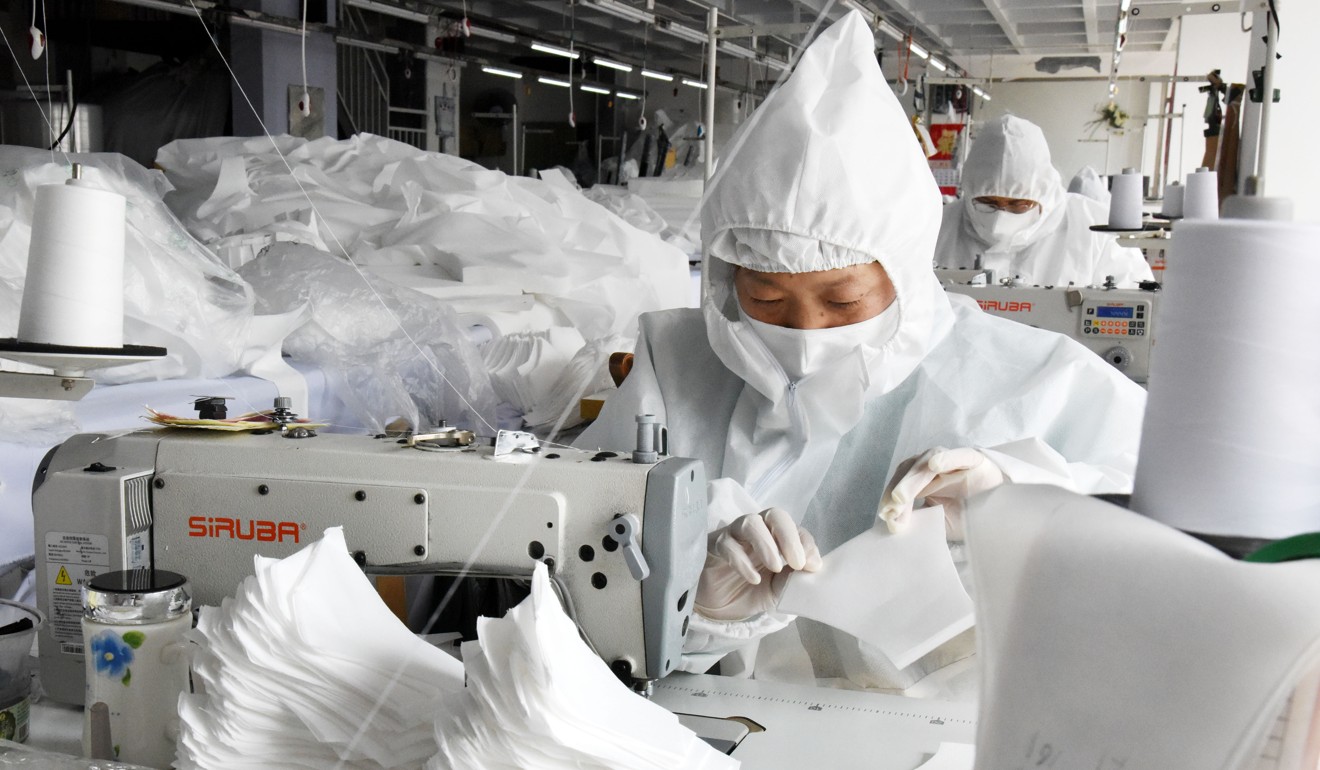
In early March, China’s daily output of face masks reached 116 million units. Photo: Xinhua
China’s embassy in the Netherlands said on Monday that it was closely following a Dutch investigation into reportedly defective masks imported from China and called for the issue not to be politicised.
Xu Hong, China’s ambassador to the Netherlands, made the comment after Dutch officials recalled more than 600,000 face masks which were found to be unsuitable for intensive care medical staff.
“The embassy paid high attention to the March 28 news about the ‘defective’ masks that Dutch government purchased from China, and contacted the Dutch Ministry of Foreign Affairs and the Ministry of Health in the first time to verify the information,” Xu said, according to a statement published on the embassy’s website.
Xu said he had spoken by telephone with the Dutch Minister for Medical Care and Sport Martin van Rijn, on Sunday about the issues and said “if necessary” China would help the Dutch investigation into the quality of the masks.
Netherlands recalls 600,000 face masks from China due to low quality
29 Mar 2020
According to the Dutch Ministry of Health, Welfare and Sport, the masks did not fit well and the filters did not function properly. It was not immediately clear whether the batch in question was given to the Netherlands as a donation or had arrived through a commercial transaction.
“The Netherlands is still looking into the situation, and if there is any further information, it will inform the Chinese side in the first time,” Xu said.
China has ramped up medical assistance abroad where the novel coronavirus pandemic has shown no signs of easing, but China’s efforts have run into rising concerns about the poor quality protective gear and test equipment it offered.
In early March, China’s daily output of face masks reached 116 million units. Picture: Xinhua
Xu also rejected concerns that China had a political agenda accompanying its medical support. He called for its assistance in not to be politicised.
“The reason why China supports the Netherlands and other countries to fight the pandemic is very simple: we are trying to save lives,” Xu said.
“There is no ‘geopolitical consideration’ as a few claimed. It is normal if some problems arise during the cooperation. These problems can be solved in an objective manner, but should not be politicised.”
It is not the first time European countries have had problems with coronavirus-related medical equipment manufactured in China.
Why China’s ‘mask diplomacy’ is raising concern in the West
The company said it would replace the test kits sent to Spain.
On Thursday, the Chinese embassy in Spain said on Twitter that the Bioeasy test kits had not been approved by China’s National Medical Products Administration and were not included in the medical supplies sent by the Chinese government to Spain.
Separately, the Philippines’ health department on Sunday apologised for comments it had made a day earlier that two batches of coronavirus test kits provided by China were substandard, and acknowledged that the quality of the test kits did meet global standards.
Throughout the world, overworked health care professionals are being infected with Covid-19, yet the Lion City has kept numbers low
Preparation, planning, patient ratios and protective equipment have all played a part. Still, even the best gear cannot guard against discrimination
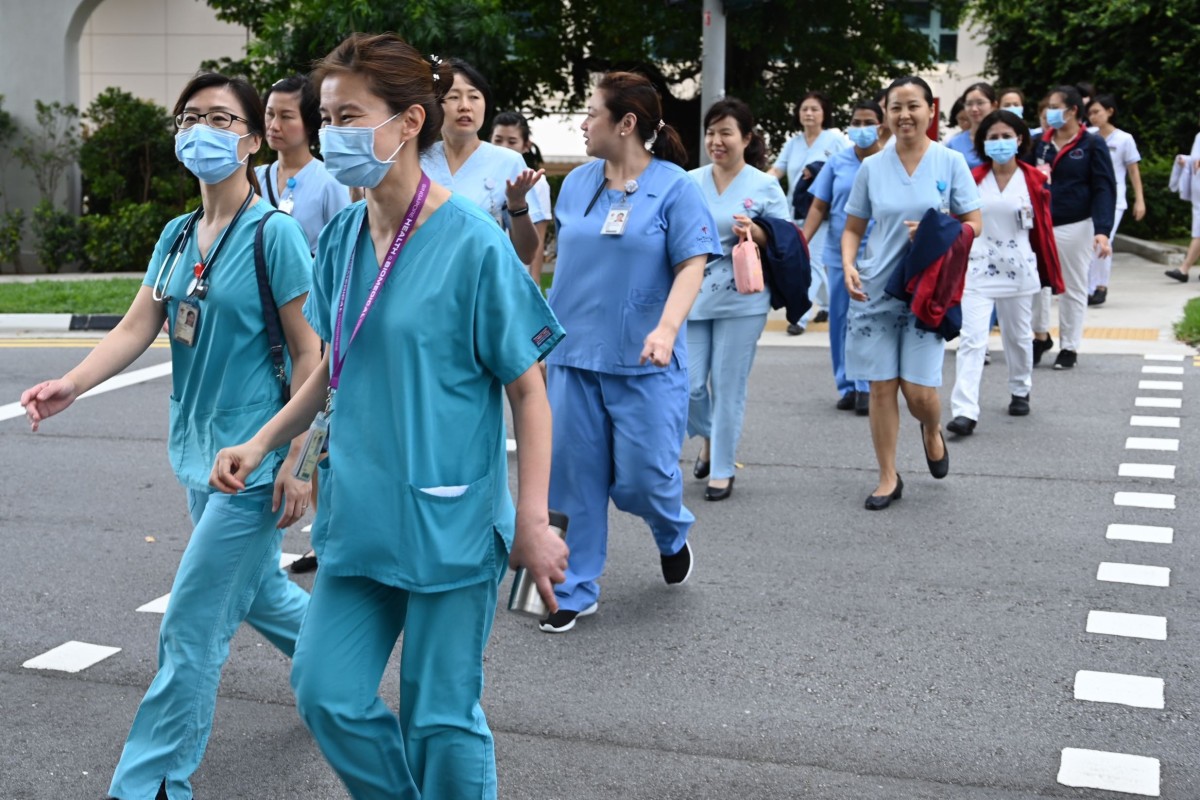
Medical staff walk to the National Centre for Infectious Diseases building at Tan Tock Seng Hospital in Singapore. Photo: AFP
Uncooperative patients, long hours and a lack of protective equipment are hampering health care workers across the world as they take the fight to the coronavirus, leading many to fall sick themselves.
In Malaysia, a pregnant woman who did not disclose that her father was infected tested positive after giving birth, leading to the shutdown of the entire hospital for cleaning. In the Philippines, nine doctors have died, two of whom had dealt with a patient who lied about her travel history.
In Spain, where more than 5,400 health care workers have been infected, accounting for about 14 per cent of the country’s patients, there are no longer enough workers to care for patients.
In Italy, which has more than 69,000 patients, the virus killed a doctor who had no choice but to work without gloves.
In the United States, which has surpassed China to become the world’s most infected nation with more than 83,000 people testing positive for Covid-19, hospitals are being overrun with patients.
Health care staff in the country say patients are packed into emergency wards and intensive care units (ICUs), further raising the risk of infections. They also report shortages of ventilators, face masks, gowns and shields.
The US Centres for Disease Control and Prevention on March 7 released interim guidelines saying health care workers exposed to the coronavirus could be asked to return to work as long as they wore face masks and were not showing symptoms, if their employers had no other manpower available.
Malaysian health workers at Kuala Lumpur International Airport. Photo: AFP
A REASON FOR OPTIMISM
However, amid all the gloom, Singapore’s experienceis being held up as a reason for optimism. The city state has reported more than 630 cases of infection, all of which are being treated in hospital, yet only a handful of its health care professionals have been infected. What’s more, even these cases, according to Vernon Lee, director of communicable diseases at the Ministry of Health, are thought to have been infected outside the health care setting.
Experts suggest this has been more than just luck, pointing to a case in which 41 health workers were exposed to the coronavirus in a Singapore hospital yet evaded infection.
The workers had all come within two metres of a middle-aged man with Covid-19 who was being intubated, a procedure which involves a tube being inserted into the patient’s trachea. The procedure is seen as being particularly hazardous for health workers as it is “aerosol generating” – patients are likely to cough.
The workers had not known at the time that the man had the virus and all were quarantined after he tested positive. However, on their release two weeks later, none of them had the virus.
Coronavirus: as Malaysia braces for third wave, doctors make their own face masks
27 Mar 2020
The case has come to widespread attention partly because the workers were wearing a mix of standard surgical masks and the N95 mask, which doctors see as the gold standard as it filters out 95 per cent of airborne particles.
The conclusion, published in The Annals of Internal Medicine this month, was this: “That none of the health care workers in this situation acquired infection suggests that surgical masks, hand hygiene, and other standard procedures protected them from being infected.”
Surgeon and writer Atul Gawande mentioned the case in an article for The New Yorker on how health care workers could continue seeing patients without becoming patients. He said there were things to learn from Asia and that some of the lessons came out of the “standard public health playbook”. In other words, there is much to be said for social distancing, basic hand hygiene and cleaning regimens.
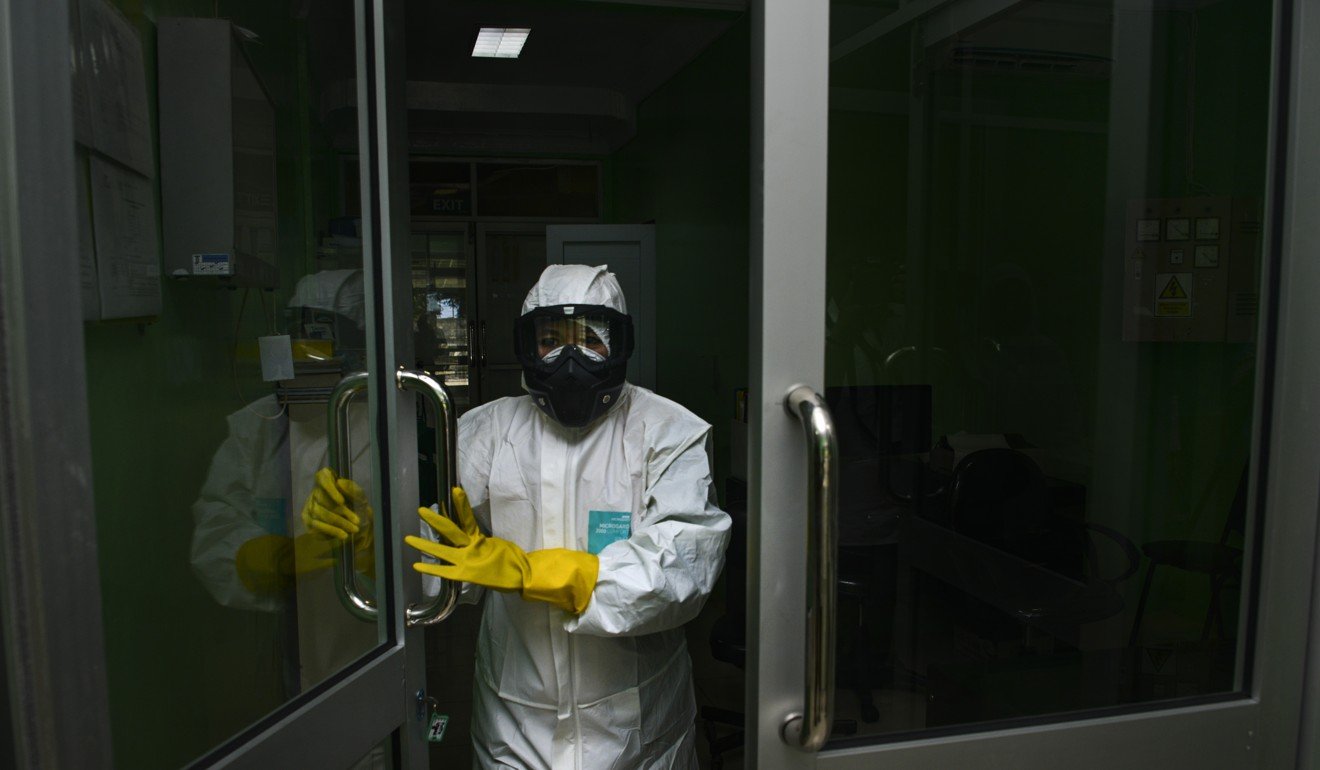
A health worker in protective gear walks into a quarantine room at a hospital in Banda Aceh, Indonesia. Photo: AFP
COMING TOGETHER
With critical supplies running short in many countries, experts say it is increasingly vital that countries share both knowledge and resources.
To this end, China has been donating personal protective equipment to places including the Philippines, Pakistan and Europe. China’s richest man Jack Ma is donating 1.8 million masks, 210,000 Covid-19 test kits and 36,000 pieces of protective clothing to 10 countries in Asia.
At the same time, doctors are encouraging the Western world to learn from Asia.
Infectious diseases expert Leong Hoe Nam said that being “bitten by Sars” (severe acute respiratory syndrome) in 2003 had prepared Asia for Covid-19, while Western countries were not similarly prepared and hence lacked sufficient protective equipment.
He pointed to how about 2,000 health care workers had fallen sick in China early in the outbreak because workers did not initially have protective gear. The trend reversed as equipment became available.
“Once the defences were up, there were very few health care workers who fell sick at work. Rather, they fell sick from contact with sick individuals outside the workplace,” he said.
Malaysia is a case in point. While it has reported 80 health care workers falling ill, most are thought to be community infections.
Coronavirus: Doctor explains the proper way to wash your hands and put on a face mask
In a webinar organised by Caixin Global on Thursday night, Peng Zhiyong, an intensive care specialist at Zhongnan Hospital of Wuhan University, shared how they managed a shortage of personal protective equipment early on in the outbreak by rationing workers to two sets of gear per shift.
Meanwhile, in the Philippines, doctors from Manila’s Chinese General Hospital held a video conference call with doctors in Zhejiang to learn from China’s experience of treating Covid-19 patients.
Crowdsourcing platforms have also been created to share advice. The Brigham and Women’s Hospital in Boston has released guidelines for treating critically ill patients and its website includes information from Chinese doctors.
Why Singapore’s coronavirus response worked – and what we can all learn
27 Mar 2020
The Jack Ma Foundation has also launched an online platform for doctors and nurses around the world to share knowledge on fighting the virus. “One world, one fight,” it said in a tweet.
Associate Professor Jeremy Lim from the global health programme at the Saw Swee Hock School of Public Health said it was crucial for countries to work together.
“Viruses don’t respect borders. Countries have to share information and help each other as we are only as strong as the weakest link. Any country can become a reservoir of disease and the world may then be forced to endure a ping-pong of outbreaks over and over again.”
And the advice of Lee, at Singapore’s Ministry of Health? “Practise good hygiene and wash hands regularly.”
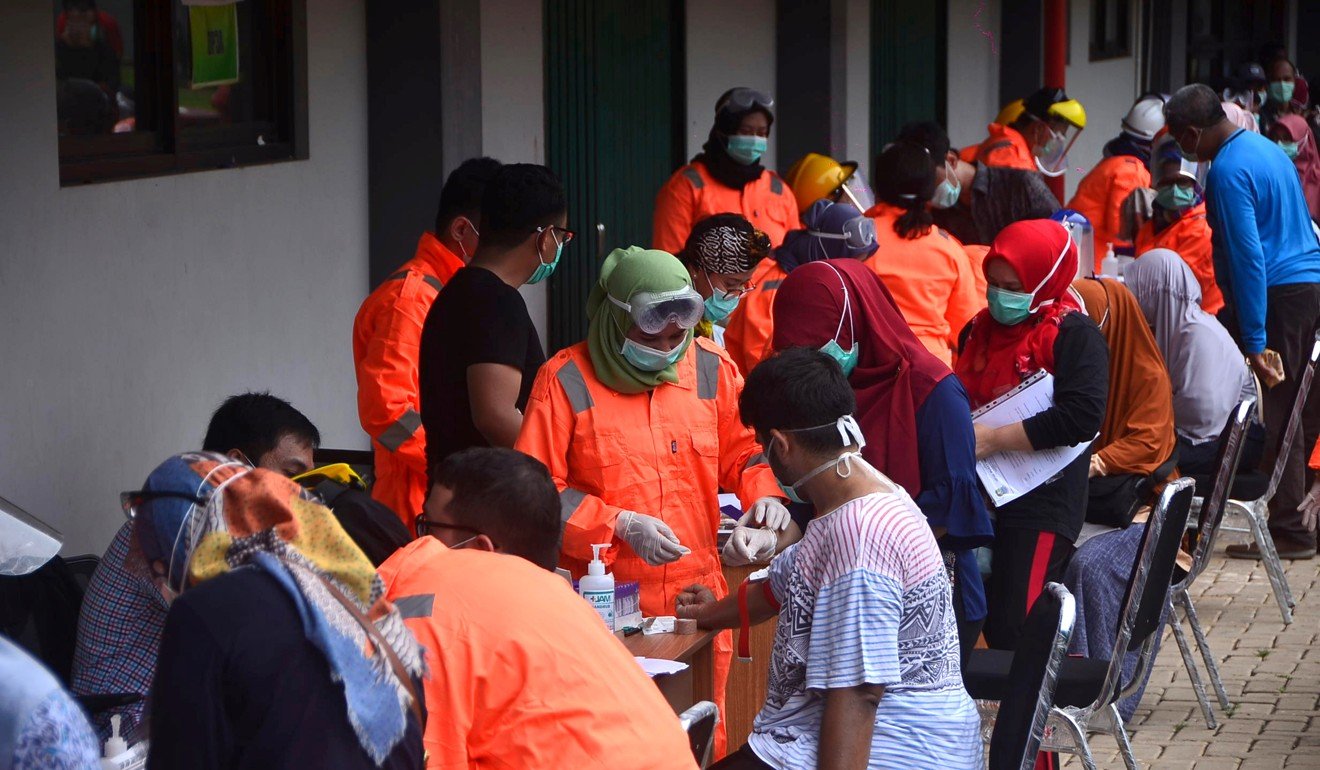
Indonesian medical staff administer mass testing for Covid-19 in Bekasi, West Java. Photo: AFP
SINGAPORE, A CASE STUDY
Amid this sharing of advice, it is often Singapore that is held up as an example to replicate. Despite the country grappling with a rising load of Covid-19 patients, most of whom have recently returned to the city state from abroad, its health care system has continued to run smoothly. Doctors say this is because it has been preparing for a pandemic ever since Sars caught it by surprise. During the Sars outbreak, health care workers accounted for 41 per cent of Singapore’s 238 infections.
Consequently its hospitals swung into contingency planning mode early on in the coronavirus outbreak, telling staff to defer leave and travel plans after its first cases emerged.
Meanwhile, its hospitals swiftly split their workforces into teams to ensure there were enough workers if the outbreak worsened, and to ensure workers got enough rest.
Singapore has 13,766 doctors, or 2.4 doctors for every 1,000 people. That compares to 2.59 in the US, 1.78 in China and 4.2 in Germany. Places like Myanmar and Thailand have fewer than one doctor for every 1,000 people.
Coronavirus: Covid-19 could live on in Indonesia long after world recovers
22 Mar 2020
“The objective is that you can run essential services with the greatest amount of security. Make sure functional units have redundancy built in, and are separate from each other. It depends on what you feel is sufficient to carry on services if one team is affected, factoring in rest periods and some system of rotation,” said Chia Shi-Lu, an orthopaedic surgeon.
The key is to ensure a good doctor-to-patient ratio and ensure there are enough specialists for the critical work, such as doctors and nurses who can provide intensive care, and know how to operate mechanical ventilators or machines to pump and oxygenate a patient’s blood outside the body.
At the emergency department where paediatrics emergency specialist Jade Kua treats Covid-19 cases in addition to regular emergencies, doctors are split into four teams of 21. Each team takes alternate 12-hour shifts and does not interact with other teams.
“We are in modular teams so the teams move together. So you and I would both do morning, off, night, off, morning off. Together. And then the other teams would do the same and we don’t intermingle,” said Kua.
US now has world’s most coronavirus cases, surpassing China
Chia, who works at the Singapore General Hospital, said doctors had been split up according to their functions.
“We try not to meet at all with the other teams as much as possible. We’ll just say hi from across the corridor. Meals are the same. All our cafeterias and everything have got social distancing spaced in already,” said Chia, who is also a member of parliament and chairs a shadow committee on health.
Chia said the health care system could also tap on doctors in the private sector.
Not every country has a plan like this. Last year’s Global Health Security Index by the Economist Intelligence Unit found that 70 per cent of 195 countries scored poorly when it came to having a national plan for dealing with epidemics or pandemics. Almost three in 10 had failed to identify which areas were insufficiently staffed. In India, with a population of 1.3 billion, only about 20,000 doctors are trained in key areas such as critical care, emergency medicine and pulmonology.
Singapore, Hong Kong, Taiwan: the real coronavirus world leaders
19 Mar 2020
In contrast, Singapore published its first Influenza Pandemic Preparedness and Response Plan in June 2005 and has since honed it to a tee. Hospitals regularly war-game scenarios such as pandemics or terrorist attacks and the simulations are sometimes observed by the Ministry of Health, which grades the performance and recommends areas for improvement.
The plan also covers the need to stockpile equipment to avoid the sort of shortages many countries are now facing, another lesson inspired by Sars when masks, gloves and gowns were in short supply.
In a pandemic preparation paper published in 2008, Singapore public health specialist Jeffery Cutter wrote that Singapore’s stockpile was sufficient to cover at least 5 to 6 months’ use by all front-line health care workers.
During the Covid-19 outbreak, it has also told citizens to not wear masks so it can conserve supply for medical staff.
Having enough protective gear has reassured Singapore’s health care workers such as Kua, a mother of six who blogged about her experience fighting Covid-19. Kua said: “I’m safe and my family is safe.”
India’s poor hit hard by 21-day nationwide lockdown amid the coronavirus pandemic
SOMETHING YOU CAN’T GUARD AGAINST
Despite the many positives to emerge from the Lion City, its health care workers are struggling with another problem: discrimination.
While in France, Italy and Britain, residents cheer health care workers from their windows, in Singapore health care workers are seen by some people as disease carriers.
“I try not to wear my uniform home because you never know what kind of incidents you may encounter,” said one Singapore nurse. “The public is scared and wearing our uniforms actually causes quite a bit of inconvenience. One of my staff tried to book a private-hire car to the hospital for an emergency and she was rejected by five drivers.”
There is a similar stigma in India, where the All India Institute of Medical Sciences has appealed to the government for help after health workers were forced out of their homes by panicked landlords and housing societies.
“Many doctors are stranded on the roads with all their luggage, nowhere to go, across the country,” the institute said in a letter.
Lim, from the Saw Swee Hock School of Public Health, said the worst human impulses and “every man for himself” attitudes could emerge in crises and “that is exactly why governments have to step in”.
Discrimination could affect both the performance and motivation of health care workers, Lim warned.
Meanwhile, when health care workers are infected, it creates a “triple whammy” threat.
“It means one fewer professional in an already-strained system, another patient to care for and, potentially, a team of colleagues who need to be quarantined,” said Lim.
“We must do everything possible to keep our health care workforce safe and free from Covid-19.” ■
Move will help air force with patrols and combat-readiness near Taiwan and in the East and South China seas, according to observers
Markings including national flag and service insignia will also be standardised under new guidelines
Chinese military aircraft will get “low observable” coatings and standardised markings. Photo: Xinhua
Chinese military aircraft are to be painted with “low observable” coatings and standardised markings under new guidelines, a move observers say will assist with operations near Taiwan and in the East and South China seas.
The guidelines require markings including the national flag and service insignia to be gradually standardised on both active and future warplanes, the official PLA Daily newspaper said earlier this month.
The move comes two years after the Chinese navy started experimenting with its J-16 strike fighter, using a dark grey low-visibility coating instead of blue-grey, and replacing its service insignia with a new design, according to military magazine Ordnance Industry Science Technology.
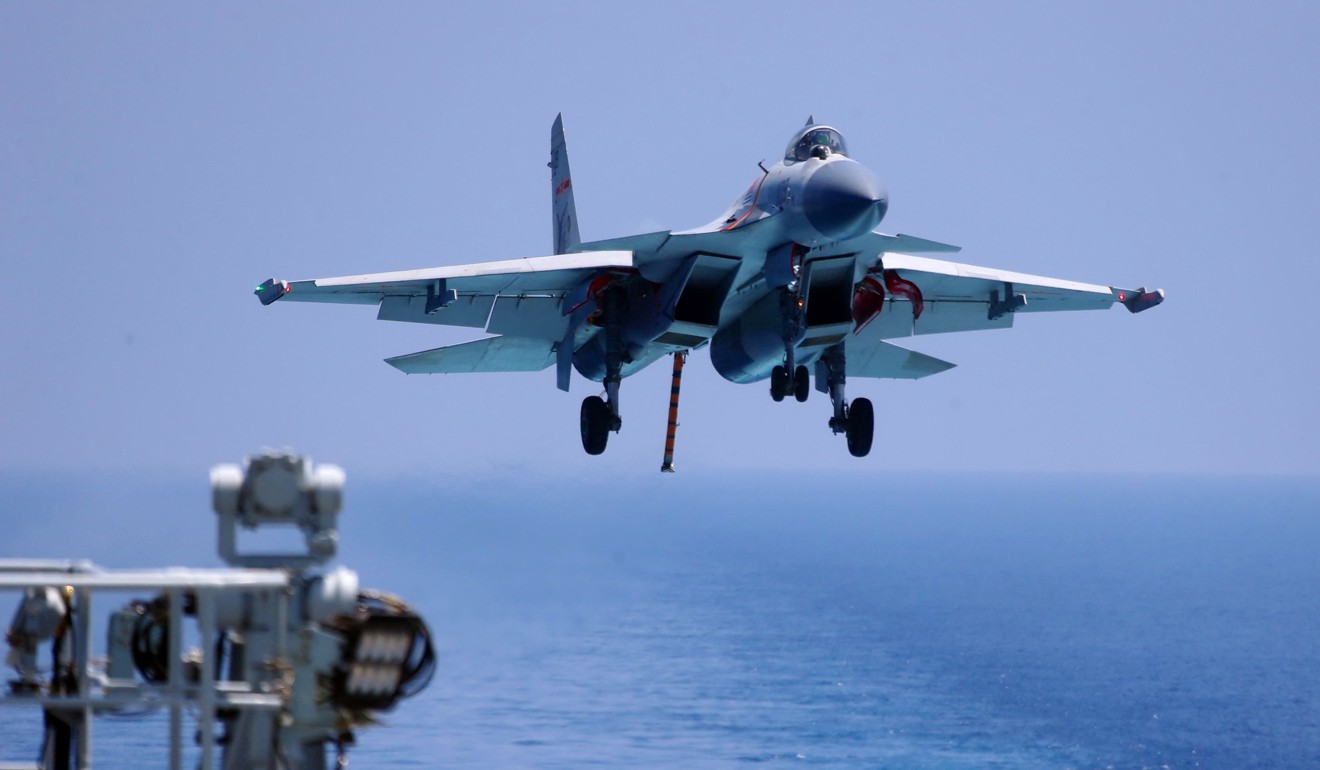
Some of the navy’s only active aircraft carrier-based fighter jets, the J-15s, have also been given new coatings and markings, according to the People’s Liberation Army’s official website.
PLA Daily said the move aimed to give Chinese warplanes a combat advantage as they “will be less likely to be detected by both the naked eye and military radar”. It said the new guidelines would be gradually implemented this year.
Some of the aircraft carrier-based J-15 fighter jets already have the new coatings. Photo: AFP
Macau-based military observer Antony Wong Dong said the move would help the air force improve patrols and combat-readiness as it carried out more drills near the Taiwan Strait and in the East and South China seas.
China’s air force and navy have sent warplanes including Su-35 fighter jets, H-6K strategic bombers and advanced KJ-2000 airborne early warning aircraft to conduct “encirclement” drills around Taiwan since 2018, as Beijing applies pressure on the self-ruled island that it sees as part of its territory. But none of the aircraft seen in photographs of the exercises had low-visibility coatings or standardised markings, as used on the navy’s J-16s and J-15s.
US spy plane pilots use China’s satellite navigation system as backup
9 Mar 2020
“Aircraft used by the PLA Air Force have different coatings and markings because they are still in a transitional period,” Wong said. “Its counterparts like Taiwan have learned from Western countries like the United States to standardise coatings and markings and designs [since the 1990s].”
Beijing insists that Taiwan, which split from the mainland in 1949, remains part of China and they will eventually be reunited – by force if necessary.
The PLA also regularly sends aircraft to monitor freedom of navigation operations by the US Navy in the South China Sea. Beijing has territorial disputes in the resource-rich waterway with countries including Vietnam, the Philippines, Malaysia and Brunei.
A military insider in Beijing said the US move to send hundreds of its new-generation F-35 stealth fighter jets to South Korea and Japan had also pushed the PLA to upgrade the coatings on its aircraft.
“These coatings are a highly technical area, and China puts a tremendous amount of resources into research on this every year,” said the insider, who requested anonymity due to the sensitivity of the issue. “The coating that’s used on China’s first stealth fighter jet, the J-20, is more advanced than they used on the Lockheed Martin F-22s, but it’s not yet at the level of the F-35s.”
Hong Kong-based military expert Song Zhongping said military aircraft used to have a bright red national flag and service insignia that made them more detectable on radar systems, or even with the naked eye.
“The red they used is striking, but it’s not in line with the ‘low observable’ requirement for all fighter jets,” said Song, who is a military commentator for Phoenix Television.
“All fighter jets must have stealth and low-visibility capabilities, and the coatings and markings on them are part of how they can do this and meet requirements for combat.”
Seoul’s handling of the outbreak emphasises transparency and relies heavily on public cooperation in place of hardline measures such as lockdowns
While uncertainties remain, it is increasingly viewed by public health experts as a model to emulate for authorities desperate to keep Covid-19 in check
A woman wearing a face mask walks along the Han river at a park in Seoul, South Korea. Photo: AP
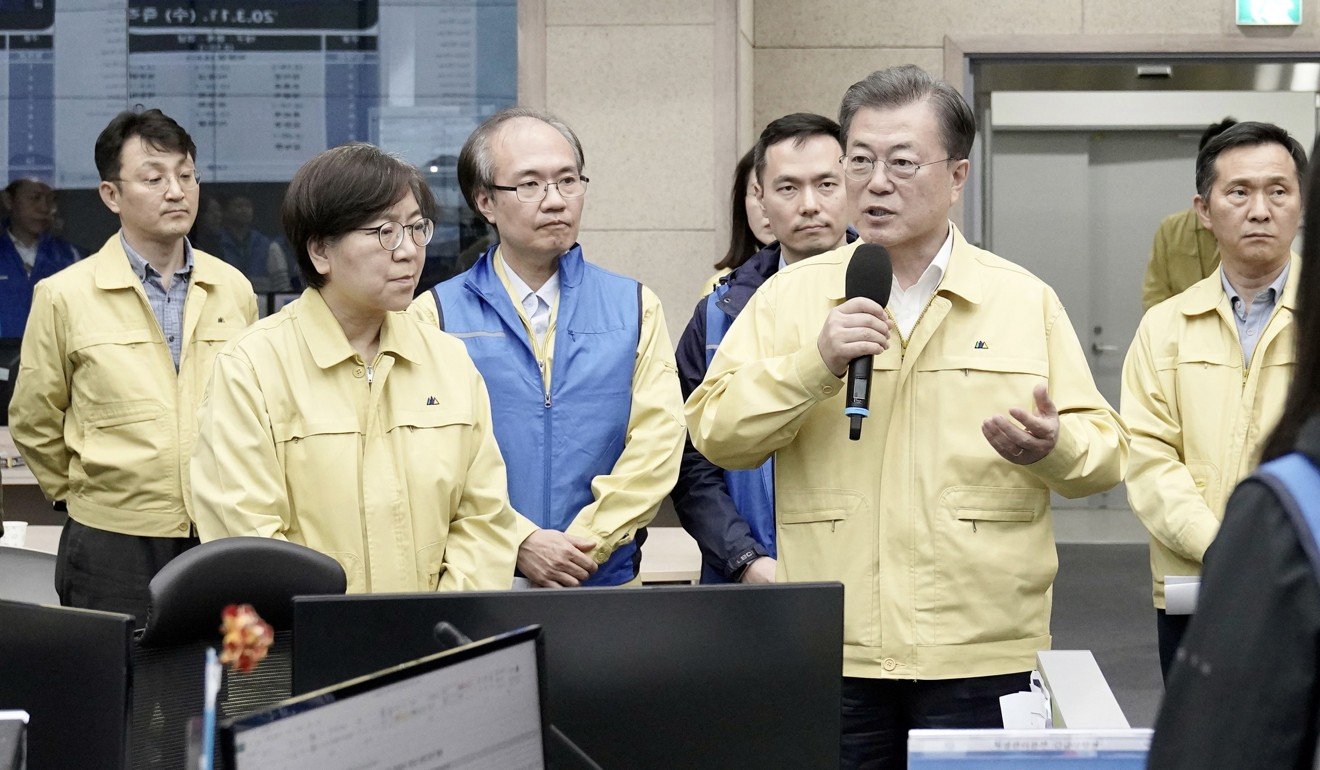
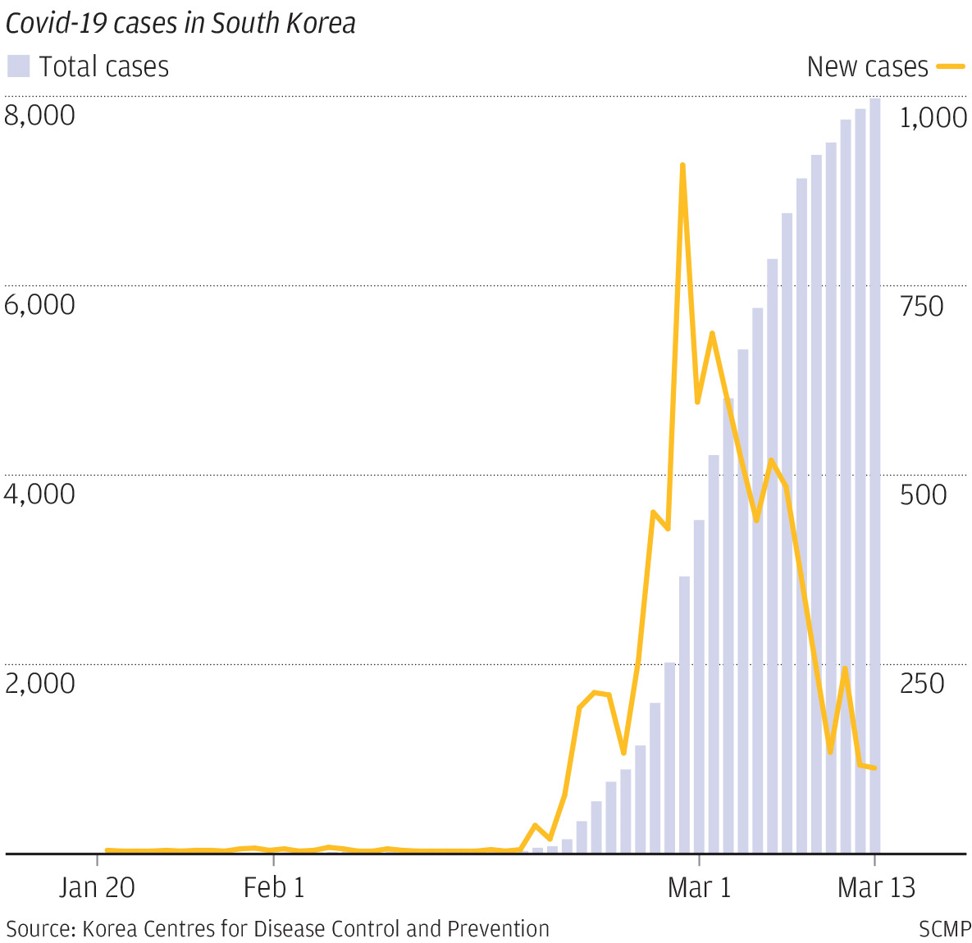
After announcing 600 new cases for March 3, the authorities reported 131 new infections a week later. On Friday, officials reported just 110, the lowest daily toll since February 21. The same day, the number of recovered patients, 177, exceeded new infections for the first time.President Moon Jae-in, while cautioning against premature optimism, has expressed hope that South Korea could soon enter a “phase of stability” if the trend holds firm.
With about 8,000 confirmed cases and more than 65 deaths, it was until recently the country with the most confirmed cases outside China – but South Korea has since emerged as a source of inspiration and hope for authorities around the world as they scramble to fight the pandemic.
South Korea’s infection rate falls without citywide lockdowns like China, Italy
11 Mar 2020
As countries ranging from the United States to Italy and Iran struggle to manage the virus, Seoul’s handling of the outbreak – involving a highly coordinated government response that has emphasised transparency and relied heavily on public cooperation in place of hardline measures such as lockdowns – is increasingly viewed by public health experts as a model to emulate for authorities desperate to keep the virus under control.
Whereas China, where the virus originated, and more recently Italy have placed millions of their citizens on lockdown, South Korea has not restricted people’s movements – not even in Daegu, the southeastern city at the centre of the country’s outbreak.
Instead, authorities have focused mandatory quarantine on infected patients and those with whom they have come into close contact, while advising the public to stay indoors, avoid public events, wear masks and practise good hygiene.
South Korean President Moon Jae-in visits the Korea Centres for Disease Control and Prevention on March 11. Photo: EPA
And while numerous countries have imposed sweeping travel bans – including the US, which has introduced dramatic restrictions on travel from Europe – Seoul has instead introduced “special immigration procedures” for heavily affected countries such as China, requiring travellers to undergo temperature checks, provide verified contact information and fill out health questionnaires.
[South Korea’s] approach seems less dramatic and more usable by other countries, compared with that used in mainland China – Ian MacKay, virologist at the University of Queensland
“More than a week of downward-trending case counts shows that the approach in South Korea has turned around an epidemic,” said Ian Mackay, a virologist at the University of Queensland, Australia. “This approach seems less dramatic and more usable by other countries, compared with that used in mainland China. If these trends continue, they will have managed to stop the growth of their epidemic.”
‘A SPECTACULAR FEAT’
The linchpin of South Korea’s response has been a testing programme that has screened more people per capita for the virus than any other country by far. By carrying out up to 15,000 tests per day, health officials have been able to screen some 250,000 people – about one in every 200 South Koreans – since January.
To encourage participation, testing is free for anyone referred by a doctor or displaying symptoms after recent contact with a confirmed case or travel to China. For anyone simply concerned about the risk of infection, the cost is a relatively affordable 160,000 won (US$135). Testing is available at hundreds of clinics, as well as some 50 drive-through testing stations that took their inspiration from past counterterrorism drills and can screen suspected patients in minutes.
“This country has a universal health-coverage system for the whole population and the economic burden for testing is very low,” said Kim Dong-hyun, president of the Korean Society of Epidemiology. “Tests are conducted for free if you have proper symptoms.”
The massive volume of data collected has enabled the authorities to pinpoint clusters of infection to better target their quarantine and disinfection efforts, and send members of the public text-message alerts to inform them of the past movements of infected patients in their area – even down to the names of shops and restaurants they visited.
This country has a universal health coverage system for the whole population and the economic burden for testing is very low – Kim Dong-hyun, president of the Korean Society of Epidemiology
“South Korea’s capability to test for early detection of viruses has developed greatly as it went through the 2009 new influenza outbreak and 2015 Mers [Middle East respiratory syndrome] outbreak,” said Kim Woo-joo, a professor of medicine at Korea University’s College of Medicine. “It ranks among the world’s top countries in this field.”
South Korea’s ‘drive-through’ coronavirus testing stations
Collecting this amount of data has also allowed the South Korean authorities to glean a clearer indication of the potential lethality of the virus, the fatality rate of which has diverged significantly from about 5 per cent in Italy to about 0.8 per cent in South Korea. Although factors including quality of health care, patient age and public awareness can affect the fatality rate of a virus, the scale of testing is among the most influential.
By comparison, in neighbouring Japan – which has confirmed more than 600 cases, not including the virus-stricken Diamond Princess cruise ship – the authorities had as of Friday tested over 10,000 people.
In the United States, where the authorities are unable to confirm the number of tests since they are being carried out by a patchwork of federal, state and private laboratories, the total was estimated to be fewer than 5,000 in a survey of available data by The Atlantic.
William Schaffner, a professor of preventive medicine and infectious diseases at Vanderbilt University School of Medicine in the US, said South Korea had pulled off a “spectacular” feat that was allowing health officials to track the virus and assess its intensity.
“We are unsure where our infection is and how intensely it is being transmitted in the US and we are only now starting to test,” he said.
Coronavirus is now classified as a pandemic
13 Mar 2020
South Korea is not unique in claiming some success in its fight against the virus. Singapore, Taiwan and Hong Kong, informed by past outbreaks such as severe acute respiratory syndrome (Sars) and Mers, have managed to keep confirmed cases low while eschewing the sort of draconian measures implemented in mainland China.
Early on, Hong Kong took some of the most comprehensive steps to implement “social distancing” – in which events are cancelled and venues closed to minimise contact between people – by shutting schools in late January, while the authorities produced a digital map of confirmed cases to allow people to avoid potentially infected areas.
In Taiwan, officials have pooled information from immigration and health insurance databases to track people’s travel histories and symptoms, and used phone tracking to ensure compliance with quarantine. Singapore has similarly tracked infected patients and traced their contacts, with stiff penalties for those who disobey quarantine or mislead the authorities about where they have travelled.
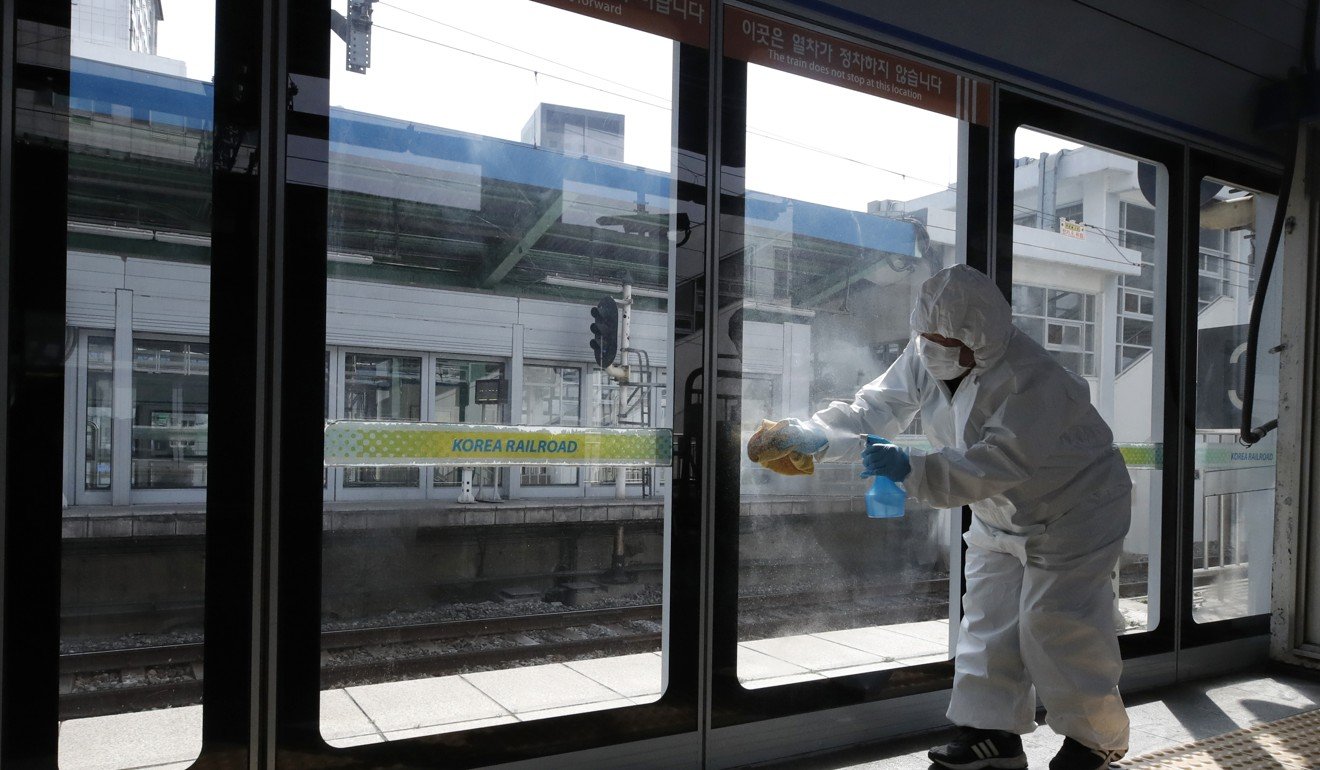
A worker disinfects a Seoul subway station as a precaution against the new coronavirus. Photo: AP
OPENNESS AND TRANSPARENCY
But where South Korea has stood apart is seemingly turning the tide against a major outbreak while maintaining openness and transparency. The largest cluster of cases in the country is linked to a secretive religious sect, Shincheonji, members of which have been accused of negligently spreading the virus as well as evading medical follow-ups and testing.
In addressing the Covid-19 outbreak, sound decision-making should not be about making a choice between maximised protection or minimal disruption – Yanzhong Huang, Council on Foreign Relations
“South Korea’s experience suggests that a country can contain the spread of the virus in a relatively short period of time without relying on draconian, at-all-costs containment measures,” said Yanzhong Huang, a senior fellow for global health at the Council on Foreign Relations in New York.
“For countries like the US, the Korean experience offers an acceptable, likely more viable, alternative to addressing the outbreak. In addressing the Covid-19 outbreak, sound decision-making should not be about making a choice between maximised protection and minimal disruption.”
China effectively barred 60 million people in Wuhan – ground zero of the outbreak – and the rest of the province of Hubei from leaving their homes, while restricting the movements of hundreds of millions of others across the country by shutting down public transport, banning private cars and setting up roadblocks.
‘I was stupidly overconfident’: a Korean coronavirus survivor’s tale
15 Mar 2020
The country claims to have effectively halted the spread of the virus after recording more than 80,000 cases and 3,100 deaths, and its daily updates have in recent weeks fallen from thousands of new cases to dozens. However, scepticism lingers over official figures after local and provincial officials in Hubei initially tried to hide the extent of the outbreak.
In a move widely seen to be aimed at touting the success of Beijing’s hardline measures, Chinese President Xi Jinping on Tuesday made his first visit to Wuhan, during which he called for businesses and factories to return to work as normal and for the country to refocus on economic growth.
“While China has been able to control Covid-19, I don’t think its draconian methods are worth copying in liberal democracies,” said Lawrence Gostin, director of the O’Neill Institute for National and Global Health Law at Georgetown University Law Centre in Washington. “Most democracies value human rights and freedoms … [not] the degree of social control we’ve seen in China. South Korea offers a better model.”
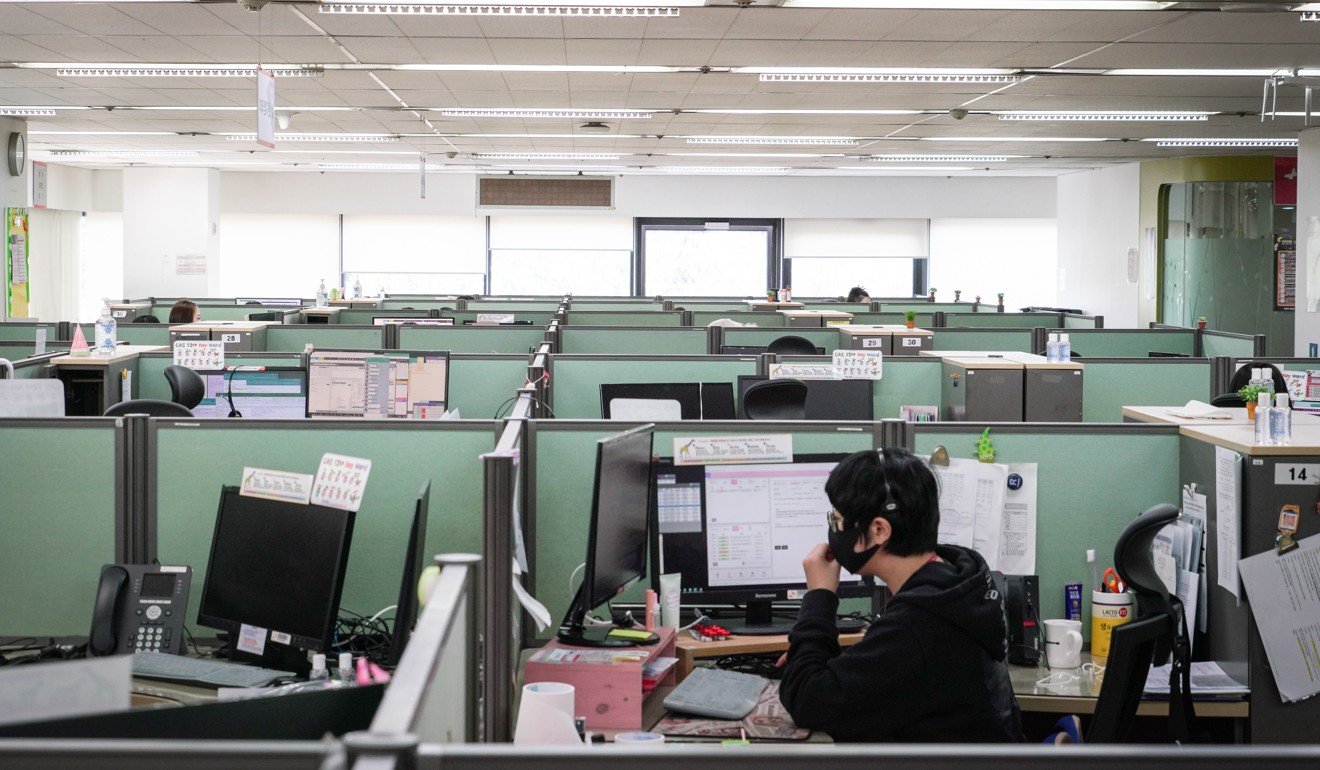
A nearly empty customer call centre in the Gocheok-dong neighbourhood of Seoul as workers isolate or work from home. Photo: EPA
But in a striking indication that Beijing’s harsh tactics could inform even liberal democratic societies, Italy on Monday announced a nationwide quarantine after a massive spike in cases caught the authorities off guard. Shops, restaurants and bars have been closed, while public gatherings and most travel have been banned in the European country, which has confirmed more than 15,000 cases and 1,000 deaths as of Friday – making it the site of the biggest outbreak outside China.
In the Philippines, President Rodrigo Duterte on Thursday announced a lockdown of the entire Metro Manila region and its 12.8 million people.
David Hui Shu-cheong, an expert in respiratory medicine at the Chinese University of Hong Kong, said Italy had responded “very slowly” to the outbreak, in contrast to South Korea.
Southeast Asia at risk of missing coronavirus cases amid dengue outbreak: experts
11 Mar 2020
Even as Beijing touted its success at fighting the virus, with state media recently insisting the “world owes China a ‘thank you’”, South Korea – which democratised in the late 1980s following decades of military dictatorship – has made no secret of its desire to promote a more liberal alternative.
At a press conference with foreign media this week, vice-health minister Kim Gang-lip said that while drastic measures such as locking down affected areas had demonstrated “modest effectiveness”, they suffered from being “coercive and inflexible”.
“Korea, as a democratic country, values globalisation and a pluralistic society,” he said.
“Therefore we believe we must transcend the limitations of the conventional approach to fighting infectious disease.”
Kim stressed that public trust was crucial to the government’s strategy. “The more transparently and quickly accurate information is provided, the more the people will trust the government,” he said. “They will act rationally for the good of the community at large.”
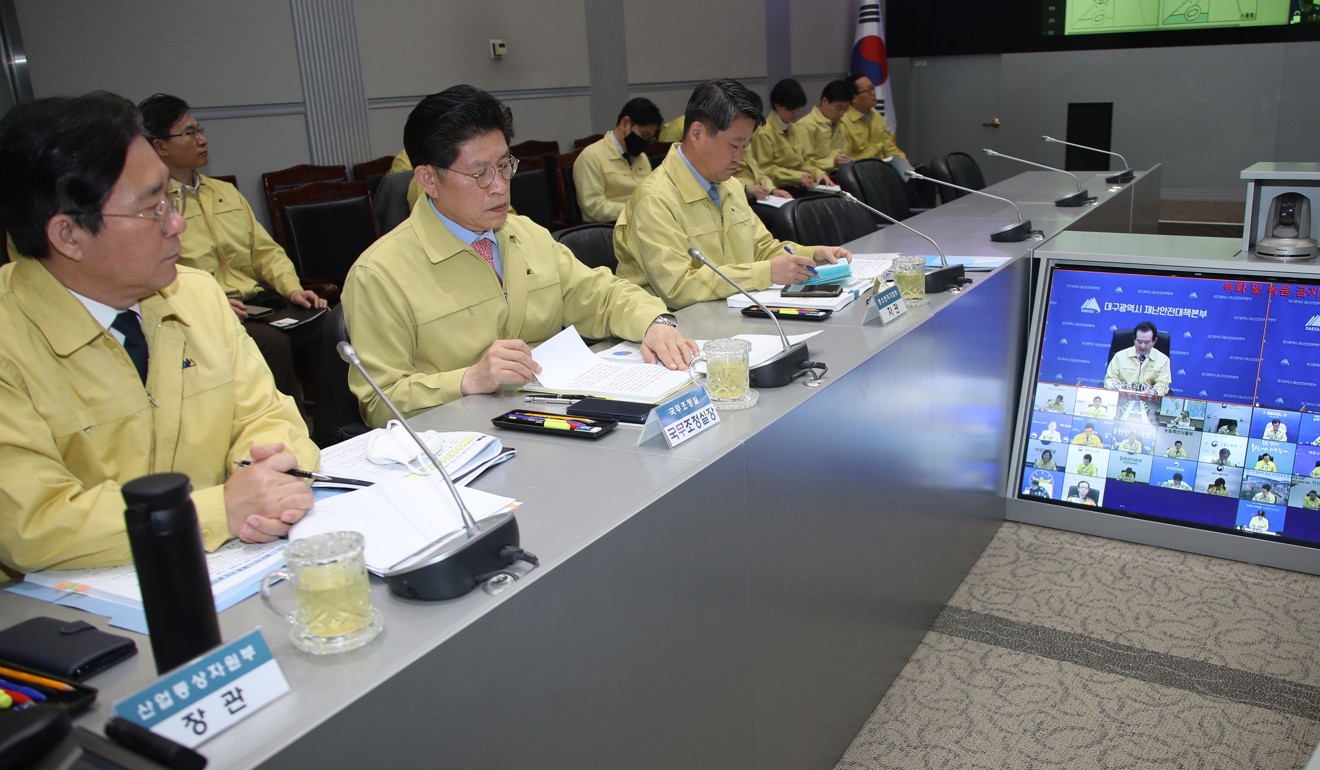
South Korean ministers listen to Prime Minister Chung Sye-kyun (on screen) during a meeting to discuss measures to deal with the spread of the new coronavirus. Photo: EPA
UNKNOWN FACTORS
Although the authorities have shut down schools nationwide, South Koreans have largely embraced self-isolation and social distancing of their own accord.
In the past fortnight, more than 12,000 businesses have applied for subsidies to pay the wages of employees while they temporarily close their doors due to the outbreak, according to the country’s labour ministry. Many shops in Daegu, the site of more than three-quarters of the country’s cases, have shut their doors, while shopping malls and cinemas across the country have become largely deserted as people stay at home. Catholic churches and Buddhist temples nationwide have suspended mass and prayer services.
“To an outsider, South Korea has handled an enormous surge in cases very well and seemed to mitigate further spread through forms of … passive social isolation,” said Howard P. Forman, a professor of public health policy at Yale School of Management.
Indonesian firms doing business with China face tough times with coronavirus outbreak
12 Mar 2020
Some experts suggest South Korean society’s emphasis on discipline and community may have given it room to avoid implementing more draconian measures.
“This measure appears to have been very successful but is reliant on the local population working with the response,” said Jeremy Rossman, an honorary senior lecturer in virology at the University of Kent. “It is not clear how effective this approach would be in other cultures and it does require effective communication with the local population.”
How a secretive church in South Korea became a coronavirus ‘super spreader’
However, South Korea’s response has not been without missteps or critics.
In mid-February, before it emerged that the virus had spread rapidly among Shincheonji followers, Moon made the ill-fated prediction that the outbreak would “disappear before long”.
The Korean Medical Association – the country’s largest association of doctors – and conservative media have criticised the president for not outright banning travel from China.
Nearly 1.5 million South Koreans have signed an online petition calling for Moon’s impeachment over his handling of the outbreak, and his approval rating this week dropped to just under 45 per cent – although, in a sign of reviving fortunes, an opinion poll released on Friday saw the president’s response rated favourably.
Medical workers attend to a woman who was feeling unwell upon her arrival at the Keimyung University hospital in Daegu. Photo: AFP
It is still too early to say whether the response is working – Kim Dong-hyun, president of the Korean Society of Epidemiology
Some experts caution that it is too early to tell if South Korea truly has the virus under control. The discovery of a new cluster of about 100 infections at a call centre in densely populated Seoul prompted a sudden uptick in cases on Wednesday, raising fears the virus could be on the verge of spreading uncontrollably nationwide.
“It is still too early to say whether the response is working,” said Kim, the president of the Korean Society of Epidemiology. “There is an optical illusion involved in the figures. The daily numbers of new cases appear to be decreasing as the screening of Shincheonji followers is coming to an end, but it must be noted that there are new clusters emerging in Seoul and other areas. We can’t lower vigilance.”
Like elsewhere, the country is facing unknown factors such as warming temperatures in the coming weeks and the arrival of travellers from new and emerging infection hotspots overseas. “We are seeing that in South Korea, large epidemics can be slowed,” said Mackay from the University of Queensland. “Can they be prevented? That will be the challenge for countries who have yet to see widespread community transmission.”
In the face of uncertainty, South Korea appears determined to hold firm to its strategy. During a visit to the Korea Centres for Disease Control and Prevention on Wednesday, Moon said the country’s response had received international recognition and allowed it to avoid the “extreme choice” of sweeping travel bans.
The next day, responding to the World Health Organisation’s decision to declare the virus a global pandemic, the president called on South Koreans to maintain hope that the virus would be overcome.
“It might take more time than we thought,” Moon said. “Everyone, please don’t become fatigued.”
A government task force has estimated a US$5 billion loss if Chinese students – angered and frustrated by the ban – cannot enrol for university
The tourism sector is also likely to be hit by restrictions on travel from the mainland as Chinese visitors spend about U$8 billion in Australia each year
Some 150,000 Chinese nationals are enrolled at Australian universities, making up around 11 per cent of the student population. Photo: Shutterstock
Abbey Shi knows first hand the anger and frustration felt by Chinese students left stranded by the Australian government’s decision to ban travel from the mainland in response to the coronavirus outbreak.
Shi, general secretary of the Students’ Representative Council at the University of Sydney, is in contact with more than 2,000 Chinese students who went home for the Lunar New Year holiday and now cannot return to Australia with just weeks to go until the start of the new academic year.
“There is a lot of confusion about the ban and anger towards the government,” said Shi, an international student from Shanghai. Currently in Australia, she is sharing information with the stranded students via WeChat.
How to beat the coronavirus? Re-creating it in Singapore, Australia is vital first step
3 Feb 2020
“The education sector in Australia is being commercialised and students are being treated like cash cows,” she said. “Universities don’t care about our affected career path, life, tenancy issues, our pets at home.”
Prime Minister Scott Morrison on Saturday announced that non-citizens – excluding permanent residents and their immediate family members – who arrived from or passed through mainland China within the previous 14 days would be denied entry to Australia as part of efforts to halt the spread of the coronavirus, which was first detected in December in the Chinese city of Wuhan.
Other countries including the United States, Singapore and the Philippines have introduced similar travel restrictions in response to the outbreak, which has sickened more than 19,000 people in at least 26 countries and territories outside mainland China and claimed 425 lives.
The travel ban, which is due to be reviewed on February 15, has upended the plans of numerous Chinese students who were due to begin or return to their studies from late February following the summer break.
Tony Yan, a mathematics undergraduate at Australian National University (ANU), said he had been left out of pocket for several weeks’ rent after being stranded in his home province of Jiangsu, but hoped he could return before classes started on February 24.
“I think the Australian government should have given a few days earlier notice,” Yan said. “I haven’t paid the tuition yet, many others haven’t as well.”
About 150,000 Chinese nationals are enrolled at Australian universities, making up around 11 per cent of the student population – a far greater proportion than in Britain and the United States, which came in at 6 per cent and 2 per cent respectively, in a 2017 report from an Australian think tank.
Coronavirus: Australia evacuates 243 people from China as deaths mount
3 Feb 2020
ANU Vice-Chancellor Brian Schmidt on Saturday described the travel ban as “disappointing”, pledging that the university would be “generous and flexible in supporting our students” through the coming weeks.
Monash University in Melbourne has delayed the start of its academic year, while other universities are exploring options such as online tuition and intensive summer courses.
Australian universities, some of which rely on Chinese students for nearly one-quarter of their revenue, are bracing to take a major financial hit due to the ban.
Phil Honeywood, the head of a government task force initially set up to manage the reputation of Australia’s international education sector in the wake of the country’s bush fires crisis, on Sunday warned the ban could cost universities A$8 billion (US$5.34 billion) if Chinese students could not enrol for the first semester of the year.
Coronavirus: what we know so far about the outbreak spreading in China and abroad
Education minister Dan Tehan on Monday met with peak body Universities Australia to discuss ways to minimise fallout for the sector.
“Australia will remain an attractive study destination for Chinese students, but it may take several years for Chinese student numbers to recover,” said Salvatore Babones, associate professor at the University of Sydney and adjunct scholar at the Centre for Independent Studies. “Students who are already in the middle of a degree are likely to return at the first possible opportunity, even at the cost of missing one semester, but students who have not yet started may make other plans.”
But ANU tertiary education expert Andrew Norton said there remained too many unknowns, including the number of Chinese students stranded abroad, to gauge the impact of the ban.
How the coronavirus spread anti-Chinese racism like a disease through Asia
17 Feb 2020
“This travel ban is a short-term policy to minimise the risk of disease spreading, which would be a more serious problem than a disruption to university timetables,” he said. “One of Australia’s major [education] competitors – the US – has a similar policy, and due to travel restrictions within China and the cancelling of commercial flights to and from China Australia’s competitors are unlikely to be able to take advantage.”
Norton noted that the sector had weathered previous outbreaks such as the 2003 outbreak of severe acute respiratory syndrome (Sars), and “although there were sometimes short-term dips in numbers, none of them have changed the long-term trend towards growth”.
The ban has also sent jitters throughout the tourism industry, which relies on Chinese visitors for a quarter of international spending. Nearly 1.5 million
visited Australia in 2018-19, Australian Bureau of Statistics records show, accounting for about one in eight arrivals.
Nearly 1.5 million Chinese nationals visited Australia in 2018-19, according to Australian Bureau of Statistics records. Photo: SCMP / Alkira Reinfrank
With Chinese tourists spending about A$12 billion (US$8 billion) in Australia each year, according to Tourism Research Australia, every month the travel ban remains in place could amount to billion-dollar losses for the sector.
Tourism Tropical North Queensland on Monday said the outbreak had already cost operators for Cairns and the Great Barrier Reef 25,000 direct bookings worth A$10 million. Chief executive Mark Olsen said the situation constituted a crisis for the industry that called for “unprecedented action” by the government.
David Beirman, senior lecturer in tourism at the University of Technology Sydney, said the ban was especially damaging for the industry as it came on the heels of devastating bush fires that had kept visitors away.
Coronavirus: how Facebook clickbait fuels a perfect storm of fake news
15 Feb 2020
“There is no doubt that the coronavirus outbreak following on so closely to the bush fires will combine to hit international tourism to Australia very hard,” Beirman said. “Later this month the Australian Bureau of Statistics will reveal the December 2019 tourism figures, which are expected to show at best a 25 per cent downturn in international visitor arrivals compared to December 2018. January 2020 is likely to be far worse as the impact of coronavirus will certainly be a factor.”
Others have raised concerns about the impact of the travel restrictions on public attitudes toward Chinese and Chinese-Australians, warning they could stoke latent prejudices.
“This is an overreaction from the Australian government, and in many ways it feels like it is a form of racial targeting,” said Erin Chew, national convenor of the Asian Australian Alliance. “When previous viruses happened such as mad cow disease or the swine flu, Australia didn’t ban non-citizens from Britain and the US. Nor was the blame placed on the people in [those countries].
“Since the coronavirus outbreak it has been coined that this virus is the fault of Chinese people, not just in mainland China, but really all over the world.”
Media caption Americans are taken from the docked ship to Haneda airport in Tokyo
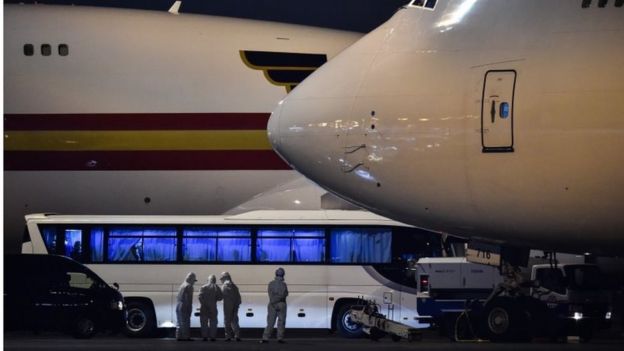
Two planes carrying hundreds of US citizens from a coronavirus-hit cruise ship have left Japan, officials say.
One plane has landed at a US Air Force air base in California, and its passengers will be isolated at military facilities for 14 days.
There were some 400 Americans on board the Diamond Princess. The ship with some 3,700 passengers and crew has been in quarantine since 3 February.
Meanwhile, China reported a total of 2,048 new cases on Monday.
Of those new cases, 1,933 were from Hubei province, the epicentre of the outbreak.
More than 70,500 people across China have been infected by the virus. In Hubei alone, the official number of cases stands at 58,182, with 1,692 deaths. Most new cases and deaths have been reported in Wuhan, Hubei’s largest city.
In other developments:
In Japan, a public gathering to celebrate the birthday of new Emperor Naruhito later this week has been cancelled, due to concerns over the spread of the virus while organisers of the Tokyo marathon due to take place on 1 March are considering whether to cancel the amateur part of the race, reports say
In China, the National People’s Congress standing committee said it would meet next week to discuss a delay of this year’s Congress – the Communist Party’s most important annual gathering – because of the outbreak
At the weekend, an American woman tested positive for the virus in Malaysia after leaving a cruise liner docked off the coast of Cambodia
A Russian court has ordered a woman who escaped from a quarantine facility to go back and stay there until she is confirmed to be disease-free, Fontanka news agency reports. Alla Ilyina has until Wednesday to return
What’s happening on the Diamond Princess?
The cruise ship was put in quarantine in Japan’s port of Yokohama after a man who disembarked in Hong Kong was found to have the virus.
On Monday, Japanese officials said there were 99 new cases of infections on board the ship, bringing the total to 454 confirmed cases. It is the largest cluster of cases outside China.
A Russian woman who was on board and tested positive is thought to be the first Russian national to contract the virus after the two previous cases found in Russia were Chinese nationals, Reuters news agency reports.
She will be taken to a hospital for treatment, the Russian embassy in Japan said.
At least 40 US citizens who were on board are infected and will be treated in Japan, Dr Anthony Fauci, Director of the National Institute of Allergy and Infectious Diseases told US broadcaster CBS.
Image copyright AFPImage caption Those bound for the US left from Tokyo’s Haneda Airport
The two aircraft chartered by the US government left Tokyo’s Haneda Airport in the early hours of Monday. The second flight was due to land at another base in Texas.
More than 300 passengers are being repatriated voluntarily, the US state department said. Fourteen of them were reported during transit to have tested positive for the virus and were being kept separate from the other passengers, it said.
we would like to just finish the quarantine on the ship as planned, decompress in a non-quarantine environment in Japan for a few days, then fly back to the U.S. pursuant to our own arrangements. What’s wrong with that?
The smartphones were distributed so people could use an app, created by Japan’s health ministry, which links users with doctors, pharmacists and mental health counsellors. Phones registered outside of Japan are unable to access the app.
Other evacuation flights have been arranged to repatriate residents of Israel, Hong Kong and Canada. On Monday, Australia announced that it would evacuate 200 of its citizens too.
What is happening in China?
According to official figures for 16 February, 100 people died from the virus in Hubei, down from 139 on Saturday.
The Chinese authorities are tightening curbs on movement to combat the outbreak. People in Hubei province, which has 60 million people, have been ordered to stay at home, though they will be allowed to leave in an emergency.
In addition, a single person from each household will be allowed to leave the building or compound they live in every three days to buy food and essential items.
On housing estates, one entrance will be kept open. It will be guarded to ensure that only residents can enter or leave.
All businesses will stay closed, except chemists, hotels, food shops and medical services.
“The effects of epidemic prevention and control in various parts of the country can already be seen.”
The proportion of infected patients considered to be in a “serious condition” has dropped nationwide from more than 15% to just over 7%, according to China’s State Council.
Taiwan has reported a death from the illness – a taxi driver, 61, who had not travelled abroad recently but had diabetes and hepatitis B, Health Minister Chen Shih-chung said.
The minister said many of his passengers had come from China.
Outside China, there have been more than 500 cases in nearly 30 countries. Four others have died outside mainland China – in France, Hong Kong, the Philippines and Japan.
Meanwhile, a plane carrying 175 evacuated Nepalis, mostly students, has arrived in Kathmandu from Wuhan.
BEIJING/SINGAPORE (Reuters) – China reported on Wednesday its smallest number of coronavirus cases since January, lending weight to a prediction by its top medical adviser for the outbreak to end by April, but a global infectious diseases expert warned of the spread elsewhere.
Financial markets took heart from the outlook of the Chinese official, epidemiologist Zhong Nanshan, who said on Tuesday the number of new cases was falling in some provinces, and forecast the epidemic would peak this month, even as the death toll in China rose to more than 1,100 people.
World stocks, which had seen rounds of sell-offs over the virus, surged to record highs on hopes of a peak in cases. The Dow industrials, S&P 500 and Nasdaq all hit new highs, and Asian shares nudged higher on Wednesday.
But the World Health Organization (WHO) has warned that the epidemic poses a global threat akin to terrorism and one expert coordinating its response said while the outbreak may be peaking at its epicentre in China, it was likely to spread elsewhere in the world, where it had just begun.
RELATED COVERAGE
Chess, squabbles aboard cruise ship cast away by coronavirus fears
Singapore’s DBS evacuates 300 staff after employee contracts coronavirus
See more stories
“It has spread to other places where it’s the beginning of the outbreak,” the official, Dale Fisher, head of the Global Outbreak Alert and Response Network coordinated by the WHO, said in an interview in Singapore.
“In Singapore, we are at the beginning of the outbreak.”
Singapore has reported 47 cases and worry about the spread is growing. Its biggest bank, DBS (DBSM.SI), evacuated 300 staff from its head office on Wednesday after a confirmed coronavirus case in the building.
Hundreds of cases have been reported in dozens of other countries and territories around the world, but only two people have died outside mainland China – one in Hong Kong and another in the Philippines.
WHO chief Tedros Adhanom Ghebreyesus said on Tuesday the world had to “wake up and consider this enemy virus as public enemy number one” and the first vaccine was 18 months away.
In China, total infections have hit 44,653, health officials said, including 2,015 new confirmed cases on Tuesday. That was the lowest daily rise in new cases since Jan. 30.
The number of deaths on the mainland rose by 97 to 1,113 by the end of Tuesday.
But doubts have been aired on social media about how reliable the figures are, after the government last week amended guidelines on the classification of cases.
‘STAY HOPEFUL’
The biggest cluster of cases outside China is aboard the Diamond Princess cruise ship quarantined off Japan’s port of Yokohama, with about 3,700 people on board. Japanese officials on Wednesday said 39 more people had tested positive for the virus, taking the total to 175.
One of the new cases was a quarantine officer.
Thailand said it was barring passengers from another cruise ship, MS Westerdam, from disembarking, the latest country to turn it away amid fears of the coronavirus, despite no confirmed infections on board.
“We try to stay hopeful,” American passenger Angela Jones told Reuters in a video recording. “But each day, that becomes a little bit more difficult, when country after country rejects us.”
Echoing the comparison with the fight against terrorism, China’s state news agency Xinhua said late on Tuesday the epidemic was a “battle that has no gunpowder smoke but must be won”.
The epidemic was a big test of China’s governance and capabilities and some officials were still “dropping the ball” in places where it was most severe, it said, adding: “This is a wake-up call.”
The government of Hubei, the central province at the outbreak’s epicentre, dismissed the provincial health commission’s Communist Party boss, state media said on Tuesday, amid mounting public anger over the crisis.
China’s censors had allowed criticism of local officials but have begun cracking down on reporting of the outbreak, issuing reprimands to tech firms that gave free rein to online speech, Chinese journalists said.
The pathogen has been named COVID-19 – CO for corona, VI for virus, D for disease and 19 for the year it emerged. It is suspected to have come from a market that illegally traded wildlife in Hubei’s capital of Wuhan in December.
The city of 11 million people remains under virtual lockdown as part of China’s unprecedented measures to seal infected regions and limit transmission routes.
Travel restrictions that have paralysed the world’s second-biggest economy have left Wuhan and other Chinese cities resembling ghost towns.
Even if the epidemic ends soon, it has taken a toll of China’s economy, with companies laying off workers and needing loans running into billions of dollars to stay afloat. Supply chains for makers of items from cars to smartphones have broken down.
ANZ Bank said China’s first-quarter growth would probably slow to 3.2% to 4.0%, down from a projection of 5.0%.
The likely slowdown in China could shave 0.1 to 0.2 percentage points off both euro zone and British growth this year, credit rating agency S&P Global estimated.
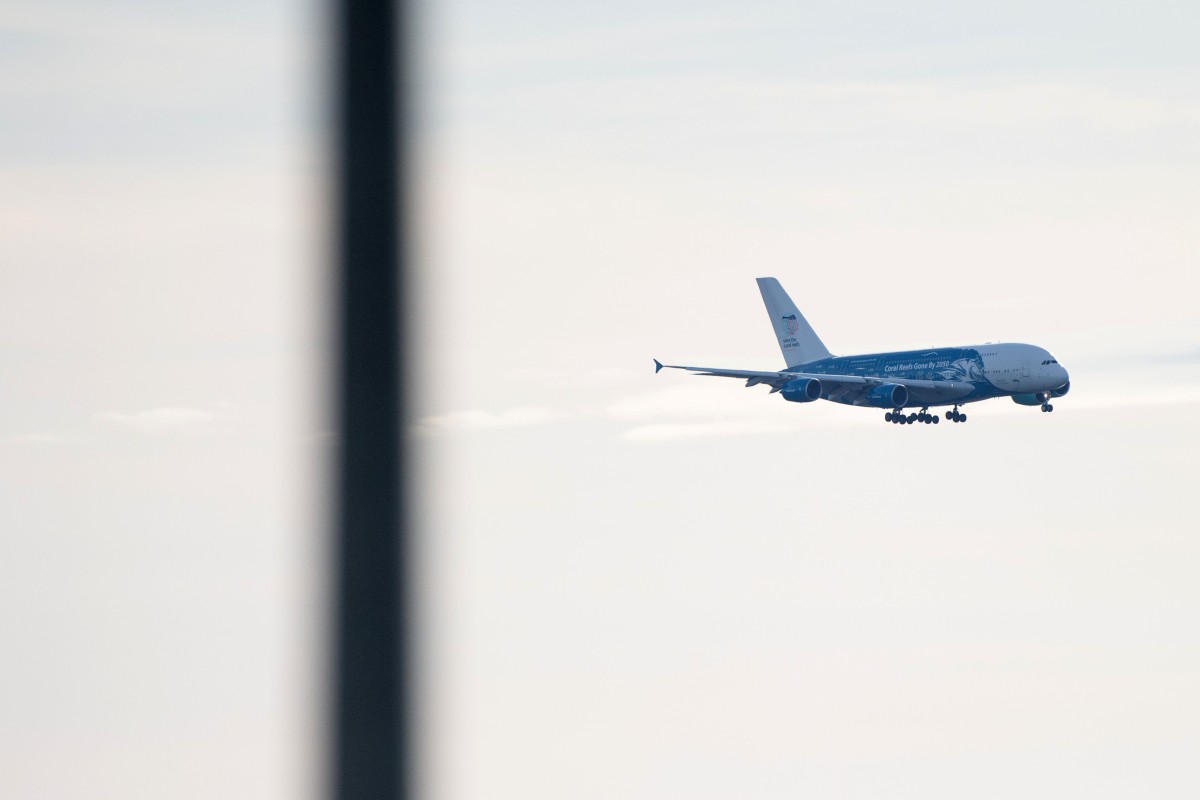
An Airbus A380 landed at the military base of Istres in the southern French region of Bouches-du-Rhone on Sunday
Of the 180 French people who were flown back from Wuhan on Friday, one showed symptoms of being infected with the virus
An Airbus A380-84, believed to be carrying European citizens flown out from the coronavirus zone in Wuhan, approaches the Istres-Le Tube Air Base near Istres. Photo: AFP
A second French-chartered plane carrying 300 evacuees from China flew to France on Sunday as more foreigners fled China’s rapidly developing virus.
The Airbus A380 landed at the military base of Istres in the southern French region of Bouches-du-Rhone. A first French plane landed Friday.
Officials said that when this latest flight left the central Chinese city of Wuhan, none of the passengers had symptoms of coronavirus. They include French, Belgians, Dutch, Danes, Czechs, Slovaks and some citizens of African countries.
Authorities said the plane would drop off most of its passengers at Istres before leaving for Belgium with several dozen people from northern Europe. Authorities haven’t said if the travellers arriving at Istres will be put into quarantine.
Of the 180 French people who were flown back from Wuhan on Friday, one showed symptoms of being infected with the virus and was sent to a Marseille hospital for testing, French Health Minister Agnes Buzyn said.
The other passengers were being quarantined for 14 days at a large, isolated Mediterranean resort not far from Marseille near Carry-le-Rouet.
German Health Minister Jens Spahn said that two people who were flown back to Germany on Saturday were found to be infected with the virus. That brought the total of cases in Germany to 10. Spahn said the two had been symptom-free when they left Wuhan and when they arrived in Frankfurt, and that they were “doing well at the moment” in quarantine at a Frankfurt hospital.
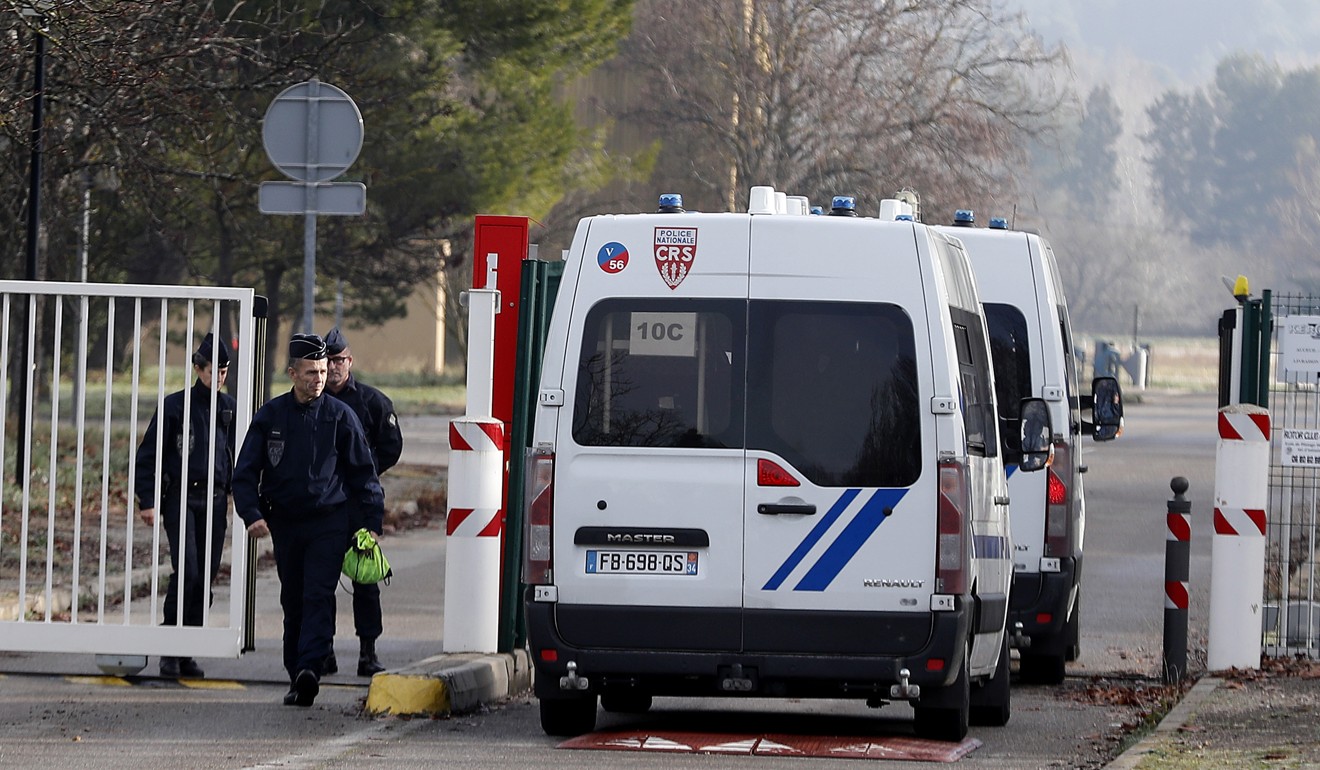
French police officers gather at the entrance gate of the ENSOSP (French National Fire Officers Academy) where French citizens will be quarantined after their repatriation from Wuhan. Photo: EPA-EFE
Europe has 25 reported cases of people who have been infected with the virus that emerged from Wuhan: Germany has 10; France has six; Russia, Italy and the U.K have two each and Finland, Sweden and Spain each have one.
The Italian foreign ministry said permission had been given for cargo flights to fly between Italy and China.
Separately, the special commissioner in charge of coordinating Italy’s efforts during the viral outbreak said consideration was being given to letting a handful of Chinese commercial airliners fly to Italy to pick up Chinese tourists and other Chinese citizens stranded in Italy by the suspension of commercial flights.
The commissioner, Angelo Borrelli, was quoted by Italian media as saying that Italy would like those flights, if approved, not to fly to Italy empty, but instead to bring back Italians from China. There are an estimated 500 other Italians in China who have apparently expressed an interest in returning home during the outbreak, but nothing firm had been decided on those flight possibilities.
Meanwhile, an estimated 3,000 tourists and others from China are stranded in Italy and want to return to home, according to Italian media.
Coronavirus: Indonesia evacuates citizens, stops flights from China
2 Feb 2020
The death toll in China climbed Sunday to 304 and the number of infections rose to 14,380. In addition, the Philippines on Sunday reported the first death from the virus outside China.
On Saturday night, a Turkish military transport plane carrying 42 people arrived in Ankara from Wutan. The 32 Turkish, six Azerbaijani, three Georgian and one Albanian nationals will remain under observation in a hospital for 14 days, Health Minister Fahrettin Koca said.
Twenty Turkish personnel who took part in the evacuation will also be kept in quarantine.
The Egyptian government said 306 of its nationals would return home from Wuhan on a chartered plane later Sunday and will be subject to a 14-day quarantine. The online news outlet Masrawy reported that authorities prepared a hotel in the northwestern city of Marsa Matruh where the returnees would be quarantined.
















 CHINDIA ALERT: You'll be living in their world, very soon