Chindia Alert: You’ll be Living in their World Very Soon
aims to alert you to the threats and opportunities that China and India present. China and India require serious attention; case of ‘hidden dragon and crouching tiger’.
Without this attention, governments, businesses and, indeed, individuals may find themselves at a great disadvantage sooner rather than later.
The POSTs (front webpages) are mainly 'cuttings' from reliable sources, updated continuously.
The PAGEs (see Tabs, above) attempt to make the information more meaningful by putting some structure to the information we have researched and assembled since 2006.
WASHINGTON (Reuters) – U.S. Ambassador to China Terry Branstad was due to begin visiting Tibet on Sunday for official meetings and visits to religious and cultural sites, according to a news report on Sunday.
Branstad was scheduled to visit the Tibet Autonomous Region and Qinghai Province, a historic region of Tibet known to Tibetans as Amdo, from Sunday to Saturday, Radio Free Asia said in a report.
RELATED COVERAGE
U.S. Ambassador to China visiting Tibet this week
The State Department did not immediately comment on the story.
Radio Free Asia said it would be the first visit to Tibet by a U.S. official since the U.S. Congress approved a law in December that requires the United States to deny visas to Chinese officials in charge of implementing policies that restrict access to Tibet for foreigners. The U.S. government is required to begin denying visas by the end of this year.
In December, China denounced the United States for passing the law, saying it was “resolutely opposed” to the U.S. legislation on what China considers an internal affair, and it risked causing “serious harm” to their relations.
Since then, tensions have been running high between the two countries over trade. China struck a more aggressive tone in its trade war with the United States on Friday, suggesting a resumption of talks between the world’s two largest economies would be meaningless unless Washington changed course.
On Saturday, China’s senior diplomat Wang Yi told U.S. Secretary of State Mike Pompeo that recent U.S. words and actions had harmed the interests of China and its enterprises, and that Washington should show restraint.
While the Trump administration has taken a tough stance towards China on trade and highlighted security rivalry with Beijing, the administration has so far not acted on congressional calls for it to impose sanctions on China’s former Communist Party chief in Tibet, Chen Quanguo, for the treatment of minority Muslims in Xinjiang province, where he is currently party chief.
A State Department report in March said Chen had replicated in Xinjiang, policies similar to those credited with reducing opposition to Chinese rule in Tibet.
Beijing sent troops into remote, mountainous Tibet in 1950 in what it officially terms a peaceful liberation and has ruled there with an iron fist ever since.
Li Zhanshu, chairman of the Standing Committee of the National People’s Congress (NPC), meets with Norwegian King Harald V in Oslo, Norway, May 16, 2019. China’s top legislator Li Zhanshu paid an official friendly visit to Norway from May 15 to 18, expecting to promote the development of Sino-Norwegian ties to score more progress. (Xinhua/Huang Jingwen)
OSLO, May 18 (Xinhua) — China’s top legislator Li Zhanshu paid an official friendly visit to Norway from May 15 to 18, expecting to promote the development of Sino-Norwegian ties to score more progress.
During the stay in Norway, Li, chairman of the Standing Committee of the National People’s Congress (NPC), met with Norwegian King Harald V, Norwegian Prime Minister Erna Solberg and President of the Norwegian parliament Storting Tone Wilhelmsen Troen.
When meeting with Norwegian King Harald V, Li conveyed the greetings of Chinese President Xi Jinping to the King, and expressed congratulations on the Norwegian National Day, which falls on May 17.
Li said during the King’s successful visit to China last year, the two heads of state made strategic plans for the development of bilateral relations in the new era. As this year marks the 65th anniversary of the establishment of diplomatic relations between China and Norway, the two sides are expected to seize the opportunity to cement friendship and expand cooperation on the basis of mutual respect and treating each other equally, so as to realize better development of bilateral relations.
Harald V expressed gratitude to China’s friendliness to the Norwegian side, saying Norway admires China’s tremendous development achievements. He said Norway is ready to strengthen cooperation with China in such fields as winter sports, and will make efforts to help China successfully host the 2022 Beijing Winter Olympics.
When meeting with Solberg, Li said although Sino-Norwegian relations have experienced ups and downs, friendship and cooperation has always been the main theme of the ties. As both countries share common interests on safeguarding current global mechanism, building an open world economy, the two sides should jointly support multilateralism and free trade. Moreover, the two countries have similar development concepts and share strong economic complementarities, so the outlook of bilateral cooperation is very broad.
Norway is welcome to actively participate in the construction of the Belt and Road Initiative. And bilateral cooperation on economy, trade, environmental protection, science and technology, people-to-people exchanges and tourism is expected to be forged ahead, said China’s top legislator.
“China hopes the Norwegian side provides a fair, just and non-discriminatory business environment for Chinese enterprises’ investment and operation in Norway,” said Li.
Solberg said bilateral cooperation has maintained sound momentum since the normalization of bilateral ties, expecting the two sides to push forward talks on inking a free trade deal and deepen cooperation in such areas as maritime affairs, shipping, fishery and environmental protection. She also voiced the will to advance communication and collaboration with China on issues concerning the United Nations, coping with the climate change and Arctic affairs.
When respectively meeting with Troen and members of the parliament’s standing committee on foreign affairs and defense, Li introduced China’s development path and political system.
“The reasons why China continues to make new development achievements are that we have embarked on a development path that suits our national conditions. This is the path of socialism with Chinese characteristics,” said Li, stressing that the Chinese people will unswervingly follow this path.
He said that the NPC of China is willing to work with the Norwegian parliament to implement the important consensus reached by the leaders of the two countries, strengthen friendly exchanges at all levels, enhance understanding and trust through frank dialogues, and create a favorable environment for pragmatic cooperation.
Troen said that this visit is of great significance as Li’s tour marks the first visit of a Chinese leader since the normalization of bilateral relations in 2016. The Norwegian parliament is willing to carry out all-round exchanges and cooperation with the NPC of China, and make positive contributions to the development of state-to-state ties.
The two legislators also exchanged views on jointly safeguarding multilateral trade system, sustainable development and other issues of common concerns.
On May 16, Li attended the economic and trade conference in commemoration of the 65th anniversary of Norway-China diplomatic relations. He said in a speech that President Xi’s proposal of the high-quality development of jointly building the Belt and Road and the policy of China’s further expansion of opening up have provided new opportunities for the common development of all countries. The two countries’ enterprises are expected to seize the opportunity, tap cooperation potentials, so as to translate the desire for strong cooperation into more practical results.
During the tour, Li visited the Chinese skiers who were training in Norway and encouraged them to train hard and carry out bilateral friendship.
He also visited a local ecological agriculture project, an oil gas processing plant, and met with local officials in Norway’s southwestern county of Rogaland and its southern city of Stavanger.
Norway is the first lag of Li’s ten-day tour in Europe, which will also take him to Austria and Hungary.
WASHINGTON/NEW YORK (Reuters) – The Trump administration on Wednesday took aim at China’s Huawei Technologies Co Ltd, banning the firm from buying vital U.S. technology without special approval and effectively barring its equipment from U.S. telecom networks on national security grounds.
Taken together, the two moves threaten Huawei’s ability to continue to sell many products because of its reliance on American suppliers, and represents a significant escalation in the U.S. government’s worldwide campaign against the company.
The steps also come at a delicate time in relations between China and the United States as the world’s two largest economies ratchet up tariffs in a battle over what U.S. officials call China’s unfair trade practices.
Washington believes the handsets and network equipment for telecommunications companies made by Huawei could be used by the Chinese state to spy on Americans.
Huawei, which has repeatedly denied the allegations, said in a statement that “restricting Huawei from doing business in the U.S. will not make the U.S. more secure or stronger; instead, this will only serve to limit the U.S. to inferior yet more expensive alternatives, leaving the U.S. lagging behind in 5G deployment.”
“In addition, unreasonable restrictions will infringe upon Huawei’s rights and raise other serious legal issues.”
The ban on U.S. suppliers, which appears similar to one on Huawei rival ZTE Corp. last year, could hit the shares of Huawei’s biggest U.S. suppliers, including chipmakers Qualcomm Inc and Broadcom Inc (AVGO.O).
In the first action taken on Wednesday, President Donald Trump signed a long-awaited executive order declaring a national emergency and barring U.S. companies from using telecommunications equipment made by firms posing a national security risk.
The order invoked the International Emergency Economic Powers Act, which gives the president the authority to regulate commerce in response to a national emergency that threatens the United States. It directs the Commerce Department, working with other government agencies, to draw up an enforcement plan by October.
Members of Congress said Trump’s order was squarely aimed at Chinese companies like Huawei, which generated $93 billion in revenue last year and is seen as a national champion in China.
“China’s main export is espionage, and the distinction between the Chinese Communist Party and Chinese ‘private-sector’ businesses like Huawei is imaginary,” Republican Senator Ben Sasse said.
ENTITY LIST
Soon after the White House announced the order had been signed, the Commerce Department said it had added Huawei and 70 affiliates to its so-called Entity List – a move that bans the telecom giant from buying parts and components from U.S. companies without U.S. government approval.
U.S. officials told Reuters the decision would make it difficult, if not impossible, for Huawei, the largest telecommunications equipment producer in the world, to sell some products because of its reliance on U.S. suppliers. It will take effect in the coming days.
Commerce Secretary Wilbur Ross said in a statement Trump backed the decision that will “prevent American technology from being used by foreign owned entities in ways that potentially undermine U.S. national security or foreign policy interests.”
With Huawei on the Entity List, U.S. suppliers will need to apply for licenses to provide the Chinese company with anything subject to U.S. export control regulations. Obtaining such licenses will be difficult because they will have to show the transfer of items will not harm U.S. national security, said John Larkin, a former export control officer in Beijing for the Commerce Department.
The United States in January unsealed a 13-count indictment against Huawei accusing the company and its chief financial officer of conspiring to defraud global financial institutions by misrepresenting Huawei’s relationship with a suspected front company that operated in Iran.
The indictment was unsealed a month after CFO Meng Wanzhou was arrested in Canada on a U.S. warrant for her role in the alleged fraud. Meng, who maintains her innocence, is fighting extradition.
5G NETWORKS
Reuters reported on Tuesday that Trump was expected to sign his long-awaited executive order this week. The order does not specifically name any country or company, but U.S. officials have previously labeled Huawei a “threat”.
The United States has been actively pushing other countries not to use the Chinese company’s equipment in next-generation 5G networks that it calls “untrustworthy.” In August, Trump signed a bill that barred the U.S. government from using equipment from Huawei and another Chinese provider, ZTE Corp.
ZTE was added to the Commerce Department’s Entity List in March 2016 over allegations it organised an elaborate scheme to hide its re-export of U.S. items to sanctioned countries in violation of U.S. law.
The restrictions prevented suppliers from providing ZTE with U.S. equipment, potentially freezing the company’s supply chain, but the restrictions were suspended in a series of temporary reprieves, allowing the company to maintain ties to U.S. suppliers until it agreed to a plea deal a year later.
The status of Huawei and ZTE has taken on new urgency as U.S. wireless carriers rollout 5G networks.
While the big wireless companies have already cut ties with Huawei, small rural carriers continue to rely on both Huawei and ZTE switches and other equipment because they tend to be cheaper. Trump’s order applies to future purchases and does not address existing hardware, officials said Wednesday.
People make satellite models in ecological and meteorological house during the “World Meteorological Organization Honorary Day” theme event held as part of the Beijing International Horticultural Exhibition in Yanqing District in Beijing, capital of China, May 11, 2019. (Xinhua/Ju Huanzong)
BEIJING, May 11 (Xinhua) — World Meteorological Organization (WMO) “honor day” kicked off at the ongoing International Horticultural Exhibition in Beijing Saturday.
Zhang Wenjian, assistant secretary-general of the WMO, said a majority of the natural disasters in 2018 related to extreme weather and environmental degradation, which affected nearly 62 million people.
As global warming and climate change have increasing influence on the society and economy, WMO is devoted to providing operational, accessible and authoritative information and service on the changing earth system, Zhang told a press conference on the “honor day” event.
The ecological and meteorological exhibition area at the expo was supported jointly by the WMO, China Meteorological Administration and Beijing Meteorological Service, focusing on the relationship between meteorology, horticulture and life.
The exhibition area not only interpreted how climate change closely related to human civilization but also established the eco-meteorological observing station which was capable of providing real-time observation data on meteorology.
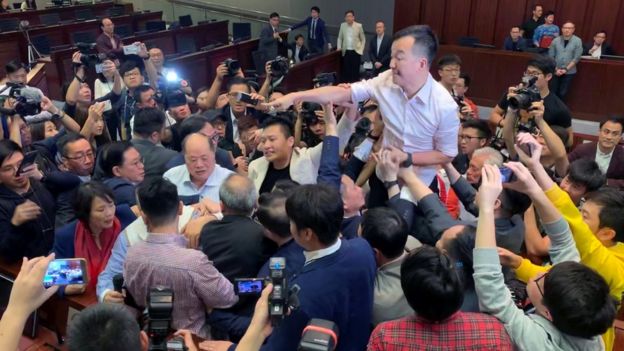
Pro-democracy lawmaker James To originally led the session on the controversial extradition bill but earlier this week those supportive of the new law replaced him as chairman.
Tensions boiled over on Saturday, with politicians swearing and jumping over tables amid a crowd of reporters as they fought to control the microphone.
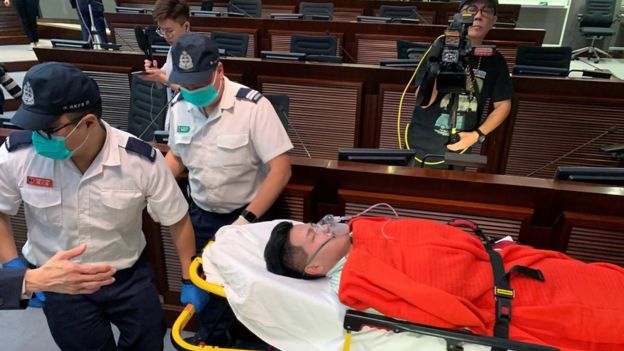
Image copyright REUTERSImage caption Opponents and supporters of the bill clashed in the legislatureImage copyright REUTERSImage caption Pro-democracy lawmaker Gary Fan was taken out on a stretcher
Pro-democracy legislator Gary Fan collapsed and was carried out on a stretcher, while one pro-Beijing legislator was later seen with his arm in a sling.
Why change the extradition laws?
Under a policy known as “One Country, Two Systems”, Hong Kong has a separate legal system to mainland China.
Beijing regained control over the former British colony in 1997 on the condition it would allow the territory “a high degree of autonomy, except in foreign and defence affairs” for 50 years.
But Hong Kong’s pro-Beijing leader Carrie Lam earlier this year announced plans to change the law so suspects could be extradited to Taiwan, Macau or mainland China on a case-by-case basis.
Image copyright REUTERSImage caption Some critics say Carrie Lam has “betrayed” Hong Kong over the law change
Ms Lam has cited the case of a 19-year-old Hong Kong man who allegedly murdered his pregnant girlfriend while on holiday in Taiwan before fleeing home.
While Taiwan has sought his extradition, Hong Kong officials say they cannot help as they do not have an extradition agreement with Taiwan.
Even the normally conservative business community has objected. The International Chamber of Commerce in Hong Kong said the bill has “gross inadequacies” which could mean people risk “losing freedom, property and even their life”.
And Chris Patten, the last British governor of Hong Kong, told the government-funded broadcaster RTHK last month the proposal was “an assault on Hong Kong’s values, stability and security”.
BEIJING, May 5 (Xinhua) — The Chinese mainland’s Taiwan affairs chief on Sunday called on youths on both sides of the Taiwan Strait to jointly shoulder the historic mission of national rejuvenation and contribute to cross-Strait integrated development.
Liu Jieyi, head of the Taiwan Work Office of the Communist Party of China Central Committee and the Taiwan Affairs Office of the State Council, made the remarks at the opening ceremony of a summit on cross-Strait exchange and cooperation among the youths.
Young people on the two sides of the Strait should value this great time, be responsible and do their share in safeguarding and building the common home of compatriots on the two sides of the Strait, Liu said.
“Attempts by the ‘Taiwan independence’ forces to undermine cross-Strait peace and obstruct national development will never be allowed,” he said.
He also pledged to provide better conditions for youths from Taiwan to carry out exchanges, study, work and start businesses on the mainland.
As Saturday marks the centenary of the May Fourth Movement, Liu called on the youths on both sides of the Strait to pass on the May Fourth spirit, which refers to patriotism, progress, democracy and science, with patriotism at the core.
Military exercises this week meant to foster image that Beijing can win a war over the island, analyst says
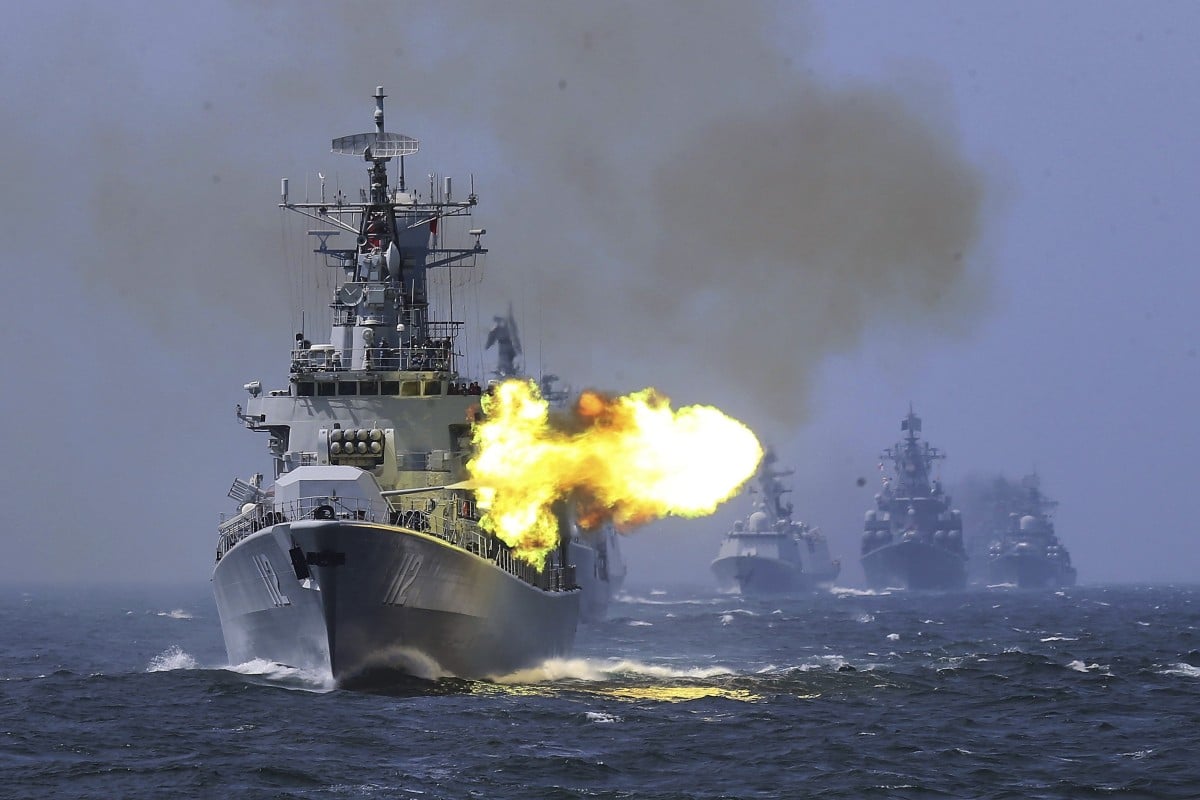
The PLA is staging live-fire drills at the northern end of the Taiwan Strait this week. Photo: AP
Beijing is conducting live-fire military drills at the northern end of the Taiwan Strait as it signals its resolve to thwart “pro-independence forces” in Taiwan.
Authorities in the small city of Yuhuan, Zhejiang province, notified the public on Sunday that a “no-sail zone” and “no-fishing zone” would be in effect in the area until Friday night.
It said the drills were part of the People’s Liberation Army’s “annual regular exercise plans” and would involve “actual use of weapons”.
“According to the annual [PLA’s] regular training plan … live-fire exercises involving the use of real weapons will be organised … in the designated areas from 6am on May 5 to 6pm on May 10,” the authorities said.
Collin Koh, a military analyst from the S. Rajaratnam School of International Studies at Singapore’s Nanyang Technological University, said the stress on the live-fire manoeuvres suggested the six-day exercise would simulate real combat conditions.
The drills come hard on the heels of an annual report by the Pentagon warning that China was preparing options to unify Taiwan by force, and there was a need to deter, delay or deny any third-party intervention on Taiwan’s behalf.
Under the Taiwan Relations Act, the United States is bound by law to help defend the self-ruled island. Washington is Taipei’s main source of arms, selling the island more than US$15 billion in weaponry since 2010, according to the Pentagon.
Beijing ‘loses all hope for Taiwan’s Tsai Ing-wen’ as she rallies Washington
Taiwan is one of a growing number of flashpoints in the China-US relationship – along with a trade war, Beijing’s growing influence in emerging economies, and its stronger military posture in the South China Sea. On Monday, two guided-missile destroyers, USS Preble and USS Chung-Hoon passed within 12 nautical miles of Gaven and Johnson reefs in the Spratly Islands, drawing immediate criticism from Beijing.
In addition, Taiwan will hold its annual Han Kuang live-fire drills from May 27 to 31 and held a computer-aided one just last month.
A Taiwan affairs analyst from the Chinese Academy of Social Sciences said the drills off Zhejiang were meant to show Beijing’s determination to defend its position on Taiwan.
“Beijing is trying to build up an image that China can win a war over Taiwan and Beijing’s key goal is to contain pro-independence forces, which are the biggest threat now to the peaceful unification process,” the analyst said.
Koh agreed, saying the drill sent a signal to external and domestic parties after the recent high-profile transits of US warships through the Taiwan Strait.
“The messaging to domestic audience is necessary because Beijing can’t be seen as weak following those reported transits by foreign warships – especially the Americans who are seen as supporting Taipei,” Koh said.
“And regarding external audience, the messaging is quite obviously to demonstrate that Beijing is ready to respond more resolutely to future such transits, following the tough verbal responses from Beijing, including its statement that it considers the strait under its jurisdiction and comprise its internal waters.”
Beijing ‘tones down’ response after US warships sail through Taiwan Strait
Relations between Beijing and Taipei have plunged since Tsai Ing-wen from the independence-leaning Democratic Progressive Party won the presidential election in 2016 and repeatedly refused to accept the “1992 consensus”, which Beijing says is the foundation for cross-strait dialogue.
In response, Beijing ramped up pressure against the island, including conducting more military exercises and establishing diplomatic ties with Taipei’s allies.
LHASA, May 1 (Xinhua) — China’s Tibet Autonomous Region Tuesday launched its first innovation and entrepreneurship base for small and micro venture companies wanting to take a share of the booming cultural industry.
The base, established by the regional department of culture, prioritizes incubating locally-established cultural startups by providing innovation-oriented training as well as displaying featured cultural products.
Sambo, deputy head of the department, said the base aims to promote Tibetan culture through innovative companies and their featured cultural products.
Official data shows the number of cultural companies in Tibet exceeded 6,000 with more than 50,000 employees by the end of 2018. Their total annual output value surpassed 4.6 billion yuan (about 683 million U.S. dollars), with average yearly growth being maintained at over 15 percent.
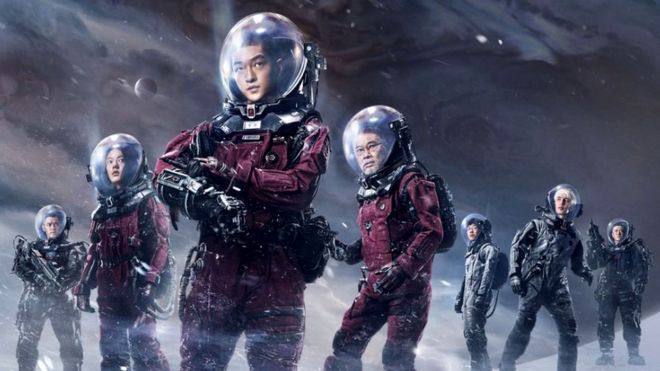
Image copyrightNETFLIXImage caption The Wandering Earth debuts on Netflix on 30 April
The Wandering Earth has been billed as a breakthrough for Chinese sci-fi.
The film tells the story of our planet, doomed by the expanding Sun, being moved across space to a safer place. The Chinese heroes have to save the mission – and humanity – when Earth gets caught in Jupiter’s gravitational pull.
Based on Hugo Award winner Liu Cixin’s short story of the same name, Wandering Earth has already grossed $600m (£464m) at the Chinese box office and was called China’s “giant leap into science fiction” by the Financial Times. It’s been bought by Netflix and will debut there on 30 April.
But while this may be the first time many in the West have heard of “kehuan” – Chinese science fiction – Chinese cinema has a long sci-fi history, which has given support to scientific endeavour, offered escapism from harsh times and inspired generations of film-goers.
So for Western audiences eager to plot the rise of the Chinese sci-fi movie, here are five films I think are worth renewed attention.
Dislocation
Huang Jianxin, 1986
For most in the Western world, their first encounter with Chinese cinema came from directors like Wu Tianming (The Old Well, The King of Masks) and Zhang Yimou (House of Flying Daggers, Raise the Red Lantern).
Image copyrightNANHAI FILMSImage caption Dislocation explores themes of work and artificial intelligence in a surreal dreamscape
They were largely preoccupied with themes like the loss of youth, tradition versus change, and creating the rural aesthetic most people associated with Chinese film.
But China in the 1980s was a scene of rapid modernisation, urbanisation and Westernisation, and films started responding to the impact of this massive change.
In Dislocation, a scientist creates an android version of himself to attend the endless meetings that rob him of his time, in a black comedy of mechanisation and bureaucracy.
Huang’s take on the debate on artificial intelligence is superbly delivered against a surreal Kafka-esque dreamscape, with stark lighting and suspenseful music, making this film a delight to watch.
Hopefully the new interest in kehuan will see it gain an official release in the West.
Warrior Revived
Li Guomin, 1995
A grown-up style of kehuan emerged in the 1990s, reflecting the themes of identity versus technological advancement which were also occupying Western sci-fi at the time.
Image copyrightSHANGHAI FILM STUDIOSImage caption The low budget appearance of Warrior Revived never gets in the way of its creative energy
In Warrior Revived, police officer Song Da Wei dies a gruesome death on duty and ends up in a decade-long coma. He’s brought back to life by a “miracle cure” from a biologist who has found a way to repair defective DNA.
The genetically enhanced Song finds himself uncomfortable with the cyberised world around him, and excluded by his old comrades. Meanwhile, the heavily maimed villain he gave his life to destroy is plotting to steal the gene formula and wreak his revenge.
Like a lot of great cyberpunk movies before the age of CGI, this early mainland kehuan impresses with its high kitsch, low-budget, imaginative approach.
The villain’s lair is filled with neon tubes, hand-crafted lab controls and walls covered with plastic bowls in the best traditions of the Tardis.
What it lacks in sleekness it more than makes up with innovative costume designs and soundtrack, diligent camera work and the sheer energy from the cast.
Wonder Boy
Song Chong, 1988
The 1980s brought a slew of Hollywood sci-fi films made for children, but which appealed equally to adults – like Explorers, Flight of The Navigator, and D.A.R.Y.L. – and filmmakers in China were taking a similar route.
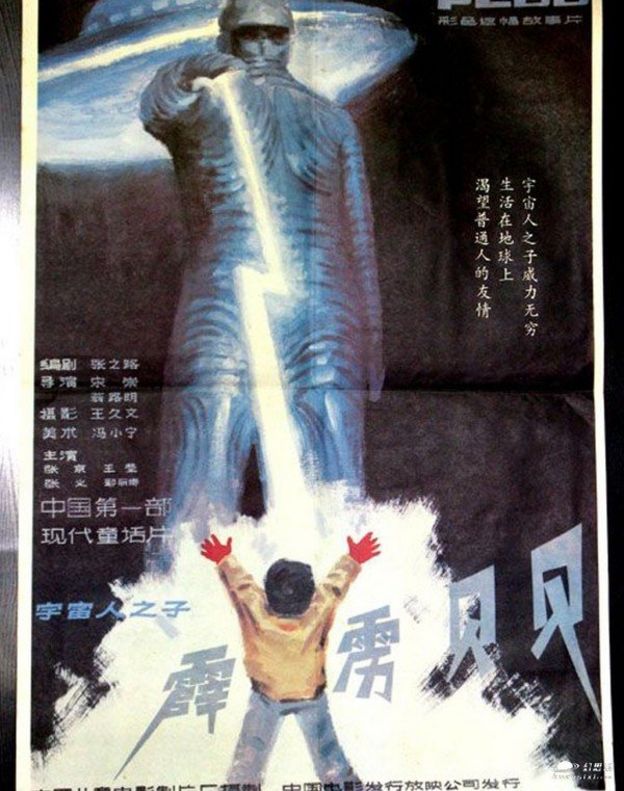
Image copyrightCHILDREN’S FILM STUDIOImage caption Wonder Boy remains popular and is still occasionally played out on national TV
Produced by the Children’s Film Studios and hailed as the nation’s first children’s fantasy film, Wonder Boy tells the story of a child born with the ability to generate electricity.
Bei Bei is bullied by neighbours and kept in isolation by parents who want to protect him, but is still a caring and mischievous little boy, who uses his powers to help others and have fun in equal measure.
When Bei Bei is taken away to be experimented on – by a non-governmental, possibly foreign group – a handful of the close friends he has made come to his rescue.
Well-loved for its humour and accessibility, Wonder Boy is remembered in China as a great classic, and still enjoyed by children today when it is repeated on both national television and streaming services.
Reset
Hong-Seung Yoon, 2017
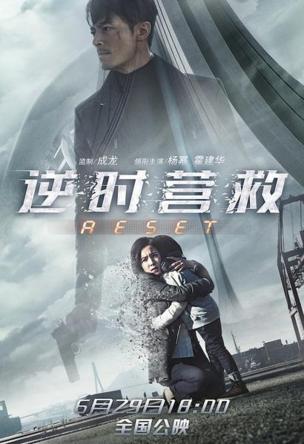
Produced by Jackie Chan and winner of the 2017 Grand Remi for Best Feature and Best Actress, Reset is a time travel thriller, which addresses a Chinese preoccupation with personal roles in a culture that so totally promotes the good of society.
Xia Tian (Yang Mi) is a senior researcher of wormhole technology and a single mother. When her young son is kidnapped, she is forced to hand over her research, but when the villain murders her child anyway she is forced to test her own discoveries into time travel in order to save his life, and maybe undo her own betrayal of the programme.
Image copyrightBEIJING YAOYING MOVIE DISTRIBUTION CO LTDImage caption Reset explores the identity struggle facing many modern Chinese womenThe film is an exploration of the plight of a New Chinese Woman, who walks the line between the roles of highly skilled professional and loving mother. The psychological exploration is fantastic. With several versions of Xia being generated by her repeated time travel, the face-off between our heroine and these alternate selves, including a darker, damaged one, creates an amazing tension which is missing from so many Western takes on this classic trope.
A female-led space kehuan story that also deals with single parenthood couldn’t be more relevant in a society that is simultaneously beginning a golden space age, and struggling with attitudes to women’s emancipation.
Super Mechs
Cui Junjie, 2018
Wuxia, or kung fu fantasy, is so intrinsic to Chinese pop culture it was almost inevitable that its tropes would be incorporated into Chinese sci-fi.
Image copyrightSEVEN ENTERTAINMENT PICTURES
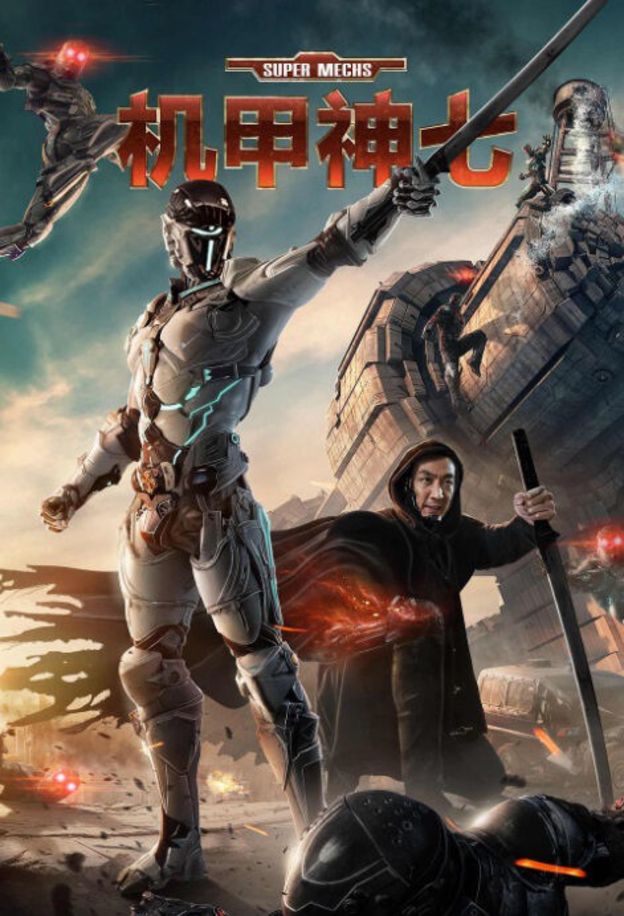
Produced exclusively for IQiyi, China’s version of Netflix, Super Mechs is set in 2066 in a world where humanity has begun to experience genetic mutations which leave some people with X-Men style super powers.
Global criminal organisations are threatening the order of society and private entities are stepping up to uphold it by developing highly advanced mechanised power suits.
Hero Xiao Qi is an ordinary office clerk enlisted by the Dragon Clan, who reveal to him his latent mutant ice powers, before arming him with a robotic power suit and sending him on a mission. Little does Xiao Qi know that he will be greeted by another mech-suited warrior with fire-based powers who will fight him to a standstill.
The “warriors with opposite powers” trope is a staple of the wuxia genre, but the film falls deeper down the rabbit hole when this deadly opponent is revealed to be Xiao Qi’s long-lost brother.
Add in ancient warring clans, fast-paced action between the sleek computer-generated mechanical fighters and a cheeky sense of humour from our protagonist, and the high budget Huayi Brothers production appeals to fans of superhero, kung fu and toku/tecuo films alike.
The works of stalwart wuxia authors like Jin Yong are steadily being translated into English, so we will certainly see more from this sub-genre reach our screens.
Acknowledging the rich and varied Chinese science fiction tradition does not at all detract from the pride in the success of Wandering Earth.
With China’s growing middle class and increased youth spending power, Chinese filmmakers are increasingly catering for a booming domestic demand for entertainment, and no longer worry as much about making their films palatable for export.
But with more East-West co-productions in the pipeline, like the animated Next Gen which originated from a Chinese web comic, it is certainly a sensible decision for companies like Netflix to bring films from platforms like IQiyi, to an English speaking audience, and that is going to include kehuan.
Western audiences may not immediately “get” some of these films, or may feel that some elements do not flow to their expectations.
But Wandering Earth and the titles above are the product of China’s culture and worldview. And to some extent, it’s what makes them different that will pique interest, fascinate and entertain.
Chinese President Xi Jinping (R) meets with Italian Prime Minister Giuseppe Conte at the Great Hall of the People in Beijing, capital of China, April 27, 2019. (Xinhua/Huang Jingwen)
BEIJING, April 27 (Xinhua) — Chinese President Xi Jinping on Saturday met with Italian Prime Minister Giuseppe Conte, who attended the Second Belt and Road Forum for International Cooperation in Beijing.
China highly commends Italy’s signing of a memorandum of understanding with China on jointly building the Belt and Road, taking the lead among major Western countries, according to Xi.
The country is ready to work with Italy in advancing the Belt and Road Initiative (BRI), and make the bilateral relations a model of Belt and Road cooperation between China and European countries, Xi said.
Xi called on both sides to firmly grasp the strategic significance of the bilateral ties, step up coordination and collaboration in improving global governance system and safeguarding free trade and multilateralism, and forge a new form of international relations featuring mutual respect, fairness, justice and win-win cooperation.
Conte said the speeches delivered by Xi at the forum helped the international community understand the significant benefits of the BRI for the world.
Italy is firmly committed to participating in the BRI, he said, adding that the initiative is a good opportunity for the world and more countries will join.
Italy welcomes Chinese companies to invest in the country, and will not adopt discriminatory policies against them, Conte said, calling on the two countries to reinforce solidarity and cooperation, and safeguard multilateralism.









 CHINDIA ALERT: You'll be living in their world, very soon