Chindia Alert: You’ll be Living in their World Very Soon
aims to alert you to the threats and opportunities that China and India present. China and India require serious attention; case of ‘hidden dragon and crouching tiger’.
Without this attention, governments, businesses and, indeed, individuals may find themselves at a great disadvantage sooner rather than later.
The POSTs (front webpages) are mainly 'cuttings' from reliable sources, updated continuously.
The PAGEs (see Tabs, above) attempt to make the information more meaningful by putting some structure to the information we have researched and assembled since 2006.
BEIJING, Feb. 19 (Xinhua) — Chinese State Councilor and Minister of National Defense Wei Fenghe on Tuesday met with Vietnam’s Deputy Minister of National Defense Nguyen Chi Vinh in Beijing.
“With shared ideals and convictions, the friendship between China and Vietnam is deeply rooted and of special importance,” Wei said. “The two countries are a community of shared future with strategic significance.”
He said the Chinese military is willing to work with the Vietnamese military to implement the important consensus reached at the high level between the two parties and the two countries, strengthen strategic communication and coordination, and deepen exchanges and cooperation in various fields.
The Chinese military also stands ready to properly handle differences, push military-to-military relations to a new level and contribute to safeguarding the fundamental interests of the two countries and regional security and stability, he said.
Vinh said that the Central Committee of the Communist Party of Vietnam and the Central Military Commission cherish the traditional friendship between the two countries and are willing and have confidence to push relations between the two countries and two militaries to a higher level and bring more benefits to the two peoples.
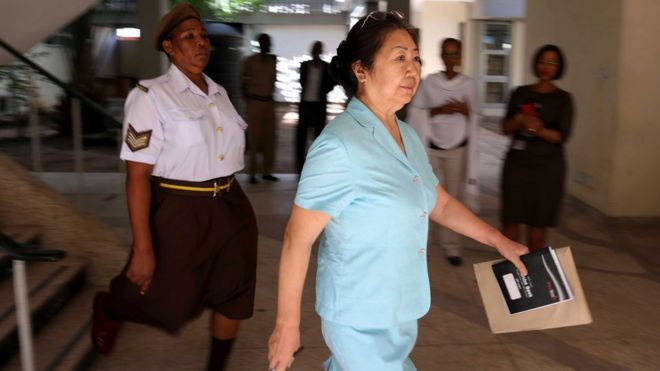
Image copyrightAFPImage captionYang Fenglan was a leading figure in business circles at the time of her arrest
Tanzania has sentenced Yang Fenglan, a Chinese businesswoman nicknamed the “Ivory Queen”, to 15 years in jail for smuggling hundreds of elephant tusks.
Yang was accused of operating one of Africa’s biggest ivory-smuggling rings, responsible for smuggling $2.5m (£1.9m) worth of tusks from some 400 elephants.
Two Tanzanian men were also found guilty of involvement in the ring.
Ivory poaching is said to have caused a 20% decline in the population of African elephants in the last decade.
The International Union for Conservation of Nature (IUCN), a global environmental body, says the population of African elephants has fallen to 415,000 – a drop of 110,000 over the last 10 years – as a result of poaching.
The illicit trade is fuelled by demand from China and east Asia, where ivory is used to make jewellery and ornaments.
Yang was convicted on charges relating to the smuggling of around 800 pieces of ivory between 2000 and 2014 from Tanzania to the Far East.
The Tanzanian men were also jailed for 15 years on similar charges.
The court in Dar es Salaam, Tanzania’s main city, has ordered Yang’s property to be repossessed.
She had been under investigation for more than a year when she was arrested in 2015, following a high-speed car chase.
At the time of her arrest, Yang was a prominent businesswoman, operating a Chinese restaurant as well as an investment company in Dar es Salaam.
Fluent in Swahili, she had lived and worked in Tanzania since the 1970s, and had served as vice-president of the China-Africa Business Council of Tanzania.
Environmental campaigners welcomed the arrest because she was seen as playing a pivotal role in the illegal ivory trade. Most arrests tend to involve minor players.
MoUs on tourism, cooperation in the field of housing, International Solar Alliance among others were exchanged between the two countries.
SNS Web | New Delhi | February 20, 2019 2:52 pm
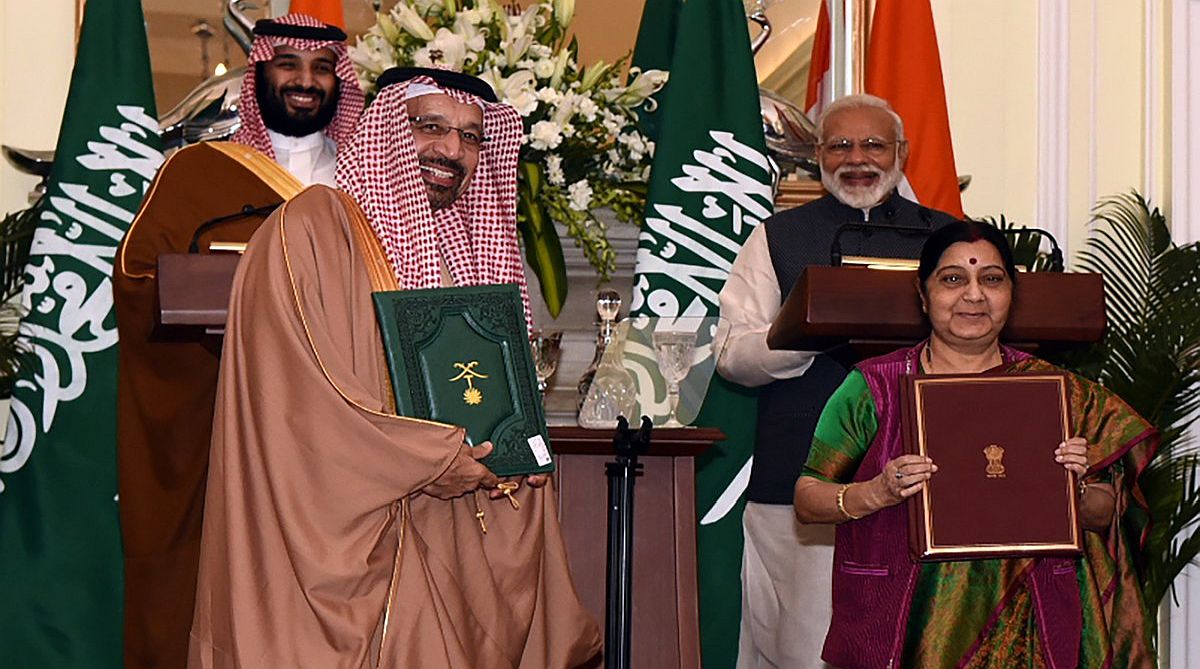
Prime Minister Narendra Modi and Saudi Arabia Crown Prince Mohammed bin Salman witnessing the Exchange of Agreements between India and Saudi Arabia at Hyderabad House, New Delhi. (Photo: Twitter | PIB India)
MoUs on tourism, cooperation in the field of housing, International Solar Alliance among others were exchanged between the two countries.
On his first state visit to the country, Prime Minister Narendra Modi welcomed the Saudi Crown Prince saying that Saudi Arabia was India’s “close friend”.
India and Saudi Arabia have a longstanding relationship, PM Modi said adding that in the 21st century, Saudi Arabia was among India’s most important strategic partners.
The Prime Minister, in a joint press conference with Crown Prince Mohammed bin Salman, also welcomed Saudi investment in Indian infrastructure.
In a major development, Saudi Arabia also joined the International Solar Alliance, informed PM Modi adding that the two leaders also discussed how to further strengthen the defence cooperation between the two nations.
“We have agreed to strengthen their cooperation in the areas of renewable energy. We welcome Saudi Arabia to the International Solar Alliance. The peaceful use of nuclear energy, especially water desalination and health, will be another dimension of our cooperation,” PM Modi said.
Speaking on the Pulwama terror attack that killed at least 44 CRPF personnel, the Prime Minister said the two leaders agreed on the need to destroy the infrastructure of terror and clamp down on countries supporting terror.
“We have also vowed to increase pressure on any country that promotes terror activities,” the Prime Minister said.
This comes after Salman’s high-profile tour of Pakistan on January 17 where he said dialogue was the only way to resolve “outstanding issues” between India and Pakistan.
Addressing the joint press conference, Saudi Arabia Crown Prince Mohammed bin Salman said his country shares India’s concerns over terror.
“Terrorism is a common concern. We will cooperate with India in every way, like intelligence sharing. India has played a positive role,” he said.
He also thanked the people of India and the Government for the warm welcome.
“The relationship between India and Saudi Arabia is over thousands of years old. It is even older than history, and this relationship has grown stronger in the last 50 years. Our objectives are similar be it in energy, agriculture or technology,” he added.
Salman also called for common planning between the two nations to tackle various issues and said that “Saudi Arabia has invested $44 billion in India”.
Earlier in the day, PM Modi and Salman held delegation-level talks on key areas of mutual interest such as trade and investment, energy, defence and security, nuclear and space, civil aviation, renewables, counter-terrorism, community welfare and regional challenges.
External Affairs Minister Sushma Swaraj also met Salman and discussed ways to add further momentum to the strategic ties between the two nations besides deepening engagement in areas of trade and investment.
Earlier on Wednesday, the Saudi Crown Prince was accorded a ceremonial reception at the Rashtrapati Bhawan by President Ram Nath Kovind.
After meeting President Ram Nath Kovind, the Saudi Arabia Crown Prince said, “Today we want to be sure that this relation is maintained and improved for the sake of both countries. With the leadership of the President and the Prime Minister, I am sure we can create good things for Saudi Arabia and India”.
Earlier on Tuesday, in a special gesture, Prime Minister Narendra Modi broke the protocol to personally receive the Saudi prince and welcomed him with a warm hug at the Palam airport.
External Affairs Ministry spokesperson Raveesh Kumar had said that the first state visit of the Saudi Crown Prince marks a “new chapter in bilateral relations between the two countries”.
Salman’s visit comes in the backdrop of the escalating tension between India and Pakistan following the Pulwama terror attack carried out by Pakistan-based Jaish-e-Mohammad (JeM) terror group in which at least 44 CRPF personnel were killed.
Saudi Arabia had on Friday said it stood with India’s fight against terrorism and extremism and denounced as “cowardly” the attack.
India’s bilateral trade with Saudi Arabia was USD 27.48 billion in 2017-18, making Saudi Arabia its fourth largest trading partner.
Saudi Arabia is also a key pillar of India’s energy security, being a source of 17 per cent or more of crude oil and 32 per cent of LPG requirements of India.
The Crown Prince is expected to travel to China from India.
BEIJING, Feb. 18 (Xinhua) — The widely used new media has become an efficient tool for China’s anti-graft body to promote information transparency.
Commentary in a newspaper administrated by the Communist Party of China Central Commission for Discipline Inspection and the National Supervisory Commission said Monday netizens can find the latest information released by the top anti-graft watchdog on its website and post suggestions there.
People can report corrupt practices and other violations of disciplines and laws online, such as posting on the micro-blogging site Weibo, sending a message to anti-graft authorities’ accounts on the instant messaging tool WeChat or reporting through an app run by the top anti-graft authority.
Varied reporting channels have helped expose more officials violating disciplines and laws that were hard to be found out by anti-graft authorities in the past, the commentary said.
Improved information transparency has also helped ensure more objective and fair investigations, it added.
Anti-graft authorities can post online information of corrupt officials, including those fleeing overseas, meaning there will be more chances to capture them, said the commentary.
It also said as anti-graft authorities’ articles and video clips are reaching more people online through Weibo, Wechat and their apps, people are now able to learn about the ongoing crackdown on corruption, which also benefits the anti-graft work.
(Reuters) – British security officials do not support a full ban of Huawei from national telecoms networks despite U.S. allegations the Chinese firm and its products could be used by Beijing for spying, people with knowledge of the matter said.
Huawei, the world’s biggest producer of telecoms equipment, faces intense scrutiny in the West over its relationship with the Chinese government and allegations of enabling state espionage, with the United States calling for its allies not to use its technology.
Although no evidence has been produced publicly and Huawei has denied the claims, the allegations have led several Western countries to restrict its access to their markets.
“We don’t favour a complete ban. It’s not that simple,” one of the sources told Reuters on Monday after a Financial Times report on Sunday said that Britain had decided it could mitigate the risks of using Huawei equipment in 5G networks.
The FT cited two sources familiar with what it said was a conclusion by the government’s National Cyber Security Council (NCSC), which last year said technical and supply-chain issues with Huawei’s equipment had exposed national telecom networks to new security risks. Huawei had no immediate comment.
Any decision to allow Huawei to participate in building next-generation 5G networks would be closely watched by other nations, because of Britain’s membership of the Five Eyes intelligence-sharing group with the United States.
Britain is an important market for Huawei and last month Vodafone, the world’s second-largest mobile operator, said it was “pausing” the deployment of its equipment in core networks until Western governments give the Chinese firm full security clearance.
Other operators in Europe, including Britain’s BT and France’s Orange have already removed Huawei’s equipment or taken steps to limit its future use.
Two sources said the NCSC did not think it was necessary to completely bar Huawei from British networks, believing it could continue to manage any risks by testing the products at a special laboratory overseen by intelligence officials.
Both sources, who spoke on condition of anonymity because of the sensitivity of the matter, said the position was consistent with public statements made by the NCSC and British officials.
“As was made clear in July’s HCSEC oversight board, the NCSC has concerns around Huawei’s engineering and security capabilities. We have set out the improvements we expect the company to make, an NCSC spokeswoman said on Monday.
CONFIDENCE MEASURES
People with knowledge of the matter said the next NCSC report on Huawei’s position in Britain will criticise its slow response to issues raised in last year’s report and detail tense relations with British officials.
The report, which is expected to be released in coming weeks, does not itself set government policy.
The results of a government review of British telecoms infrastructure is expected later in the year and will include recommendations on managing security risks, including in future 5G networks.
Fellow Five Eyes member Australia has banned Huawei from supplying 5G equipment, while New Zealand said on Monday it would make its own independent assessment of the risk of using Huawei equipment in 5G networks.
Huawei has set up security labs in Britain and Germany aimed at building confidence that its equipment does not contain “back doors” for Chinese intelligence services.
It has also offered to build a cyber-security centre in Poland, where authorities have arrested a Chinese Huawei employee along with an ex-Polish security official.
Addressing a rally in Assam’s North Lakhimpur, Amit Shah said that the NRC had been brought in to identify infiltrators and that the BJP would identifiy and deport all such infiltrators.
Saying that the NRC had been brought in to identify infiltrators, Amit Shah said, the BJP will rid Assam of all such aliens by deporting them.(HT Photo)
BJP chief Amit Shah on Sunday said that Modi-led government at the Centre will not allow Assam to become another Kashmir and that is why it has brought about the National Register of Citizens (NRC).
Saying that the NRC had been brought in to identify infiltrators, he said, the BJP will rid Assam of all such aliens by deporting them.
“We won’t let Assam become another Kashmir, this is our commitment. We’ll repeat the NRC exercise as many times as required to, but we’ll identify and deport each infiltrator from Assam,” Shah said while addressing a public rally at North Lakhimpur in Assam.
Shah criticised the Congress and its former ally Asom Gana Parishad (AGP), and said both the parties had done nothing to implement the Assam Accord despite ruling most of the period since the pact was signed in 1985.
Referring to the contentious Citizenship (Amendment) Bill, which the Centre couldn’t present in Rajya Sabha, he said misinformation was being spread as if it was only for Assam and other parts of the Northeast.
“It was not for Northeast alone, but for all refugees across the country. The way demography is changing in Assam, without the Citizenship Bill, the people of the state will be in danger,” he added.
He also spoke about the Pulwama attack in which 40 CRPF jawans were killed in a suicide bombing on Thursday.
“This cowardly act was done by Pakistani terrorists. Their (jawans’) sacrifices will not go in vain, because there is no Congress government at the Centre. It is BJP government and the Narendra Modi government will not compromise on any security issue,” he added.
Saying that the government at the Centre was not that of the Congress, Shah said that the current government was that of the BJP and was led by Modi, who he said was determined to uproot terrorism from the country.
Congress leader Ghulam Nabi Azad stated that the Opposition parties have informed the home minister that they would stand with the government to end terror in the country.
SNS Web | New Delhi | February 16, 2019 2:41 pm
A resolution adopted by the all-party meeting chaired by Union Home Minister Rajnath Singh on Saturday condemned the cowardly terrorist attack on the CRPF convoy in Pulwama that left at least 44 jawans dead and over 45 seriously wounded.
The meeting was attended by leaders of the BJP government as well as opposition parties who unitedly expressed grief with the families of the bereaved.
The resolution also condemned terrorism in all forms as well as the support it was getting from across the border.
It further went on to say that “India has during the past three decades faced the menace of cross-border terrorism.”
In a direct attack at Pakistan, the resolution said, “terrorism in India has been actively encouraged by the forces across the border adding that India has displayed both firmness and resilience in dealing with these challenges”.
It said the entire nation speaks in one voice to express its determination to fight against terrorism.
“Today, we stand united in solidarity with our security forces in fighting terrorism and in defending the unity and integrity of India,” the resolution added.
The all-party meeting was held to brief top leaders of different parties on steps being taken by it to meet the challenge.
The meeting comes a day after Home Minister Rajnath Singh went to Kashmir to take stock of the situation.
The meeting was attended by Ghulam Nabi Azad, Anand Sharma and Jyotiraditya Scindia of the Congress, Sudip Bandyopadhyay and Derek O’Brien of the TMC, Sanjay Raut of the Shiv Sena, Jithendra Reddy of the TRS, D Raja of the CPI, Farooq Abdullah of the National Conference, Ram Vilas Paswan of the LJP among others.
Naresh Gujral of the Akali Dal, Upendra Kushwaha of the RLSP and Jai Prakash Narayan Yadav are among others who are attending the meeting.
Addressing the media after the meet, senior Congress leader Ghulam Nabi Azad stated that the Opposition parties have informed the home minister that they would stand with the government to end terror in the country.
“We stand with the government for unity and security of the nation and security forces. Be it Kashmir or any other part of the nation, Congress party gives its full support to the government in the fight against terrorism,” he said.
The opposition parties also requested the Home Minister to request the PM to meet the presidents of all national and regional parties, Azad said.
This was supported by other parties too, he added.
“We have also decided that there are many disagreements with the government, but for the sake of our country, security of all, we will stand with the government to end terror. The government has our support,” Azad said.
The Pakistan-based Jaish-e-Mohammad (JeM) had claimed responsibility for the suicide attack.
A suicide bomber had rammed an SUV carrying 350 kg of explosives into a bus carrying the CRPF troopers in the deadliest attack in decades on security forces in Jammu and Kashmir.
India had earlier rejected Pakistan Foreign Secretary Tehmina Janjua’s claims denying her country’s links to the Pulwama terror attack, saying that JeM, which claimed responsibility for the attack on Thursday, is based in Pakistan, and the “links are clear and evident and for all to see”.
The External Affairs Ministry spokesperson on Friday termed as “preposterous” the demand for an investigation, saying there is a video of the suicide bomber declaring himself a member of the terror group Jaish-e-Mohammed (JeM).
The spokesperson said India has not seen any constructive approach from Pakistan on bilateral relations and it has been sheltering terrorists and terror organisations such as JeM. He said Islamabad has not taken any action against such groups despite international demands.
India also demanded that Pakistan take immediate and verifiable action against terrorists and terror groups operating from territories under its control to create a conducive atmosphere in the region free of terror.
Political parties have closed ranks following the attack and have offered their support to the NDA government on its response on the matter.
Expressing solidarity with the Government of India and the security forces, Congress president Rahul Gandhi on Friday condemned the dastardly attack.
Addressing a press conference, Rahul Gandhi said the type of violence unleashed against the soldiers was “disgusting”.
Refusing to comment on any other issue, Rahul Gandhi said this was a time of mourning, sadness and respect adding that the Congress is fully supporting the Government and the security forces.
Image copyrightGETTY IMAGESImage captionMore and more people want to see the world’s tallest peak
China has closed the base camp on its side of Mount Everest to visitors who don’t have climbing permits.
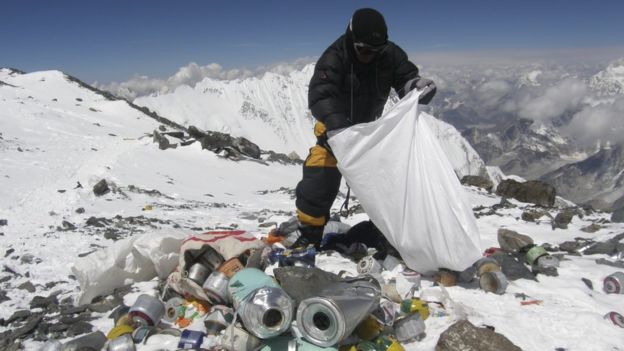
Authorities have resorted to the unusual move to deal with the mounting waste problem at the site.
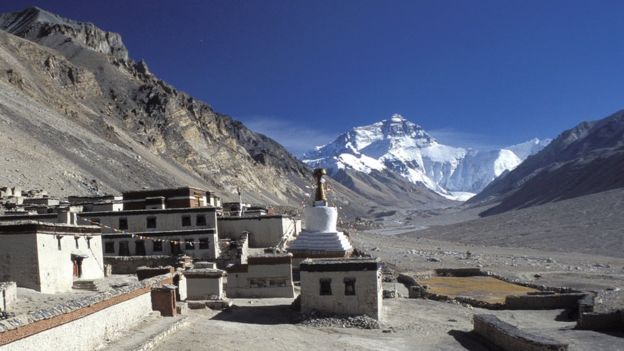
The ban means tourists can only go as far as a monastery slightly below the 5,200m (17,060ft) base camp level.
More people visit the mountain from the southern side in Nepal, but over the past years numbers have been rising steadily on the Chinese side as well.
The Chinese base camp, located in Tibet, is popular as it is accessible by car – whereas the Nepalese camp can only be reached by a hike of almost two weeks.
The world’s highest peak has been struggling with escalating levels of rubbish for years, as the number of visitors rises.
The Chinese Mountaineering Association says 40,000 visited its base camp in 2015, the most recent year with figures. A record 45,000 visited Nepal’s base camp in 2016-7 according to Nepal’s Ministry of Forests and Soil Conservation.
Image copyrightGETTY IMAGESImage captionTourists are still allowed to go as far as the Rongbuk monastery
Ordinary tourists will only be banned from areas above Rongbuk monastery, which is around 5,000m above sea level, according to China’s state news agency Xinhua.
Mountaineers who have a permit to climb the 8,848m peak will still be allowed to use the higher camp.
In January, authorities announced that they would limit the number of climbing permits each year to 300.
On Chinese social media, claims have spread in recent days that its base camp will be permanently closed to tourists – but Xinhua cited officials denying that.
Image copyrightGETTY IMAGESImage captionThe temperature and high altitude make clean-up efforts on Everest a tough task
The official announcement about the closure was made in December, on the website of the Tibetan authorities.
It stated that three clean-up operations last spring had collected eight tonnes of waste, including human faeces and mountaineering equipment climbers had left behind.
This year’s clean-up efforts will also try to remove the bodies of mountaineers who have died in the so-called death zone above 8,000m, where the air is too thin to sustain life for long.
Due to the cold and high altitude, these bodies often remain on the mountain for years or even decades.
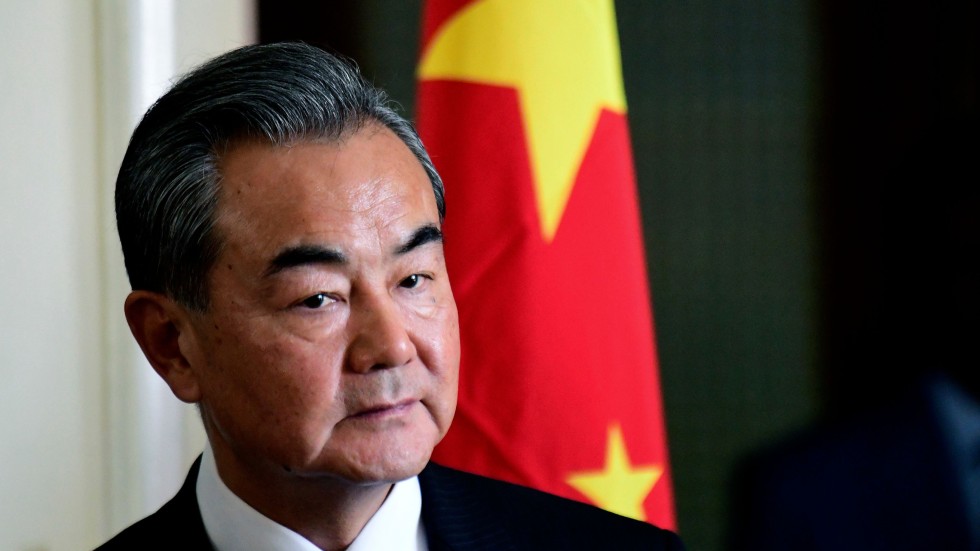
Chinese Foreign Minister Wang Yi arrived in Thailand on Friday for high-level talks likely aimed at reassuring Beijing about its investments in the Southeast Asian country ahead of a long-delayed general election, analysts said.
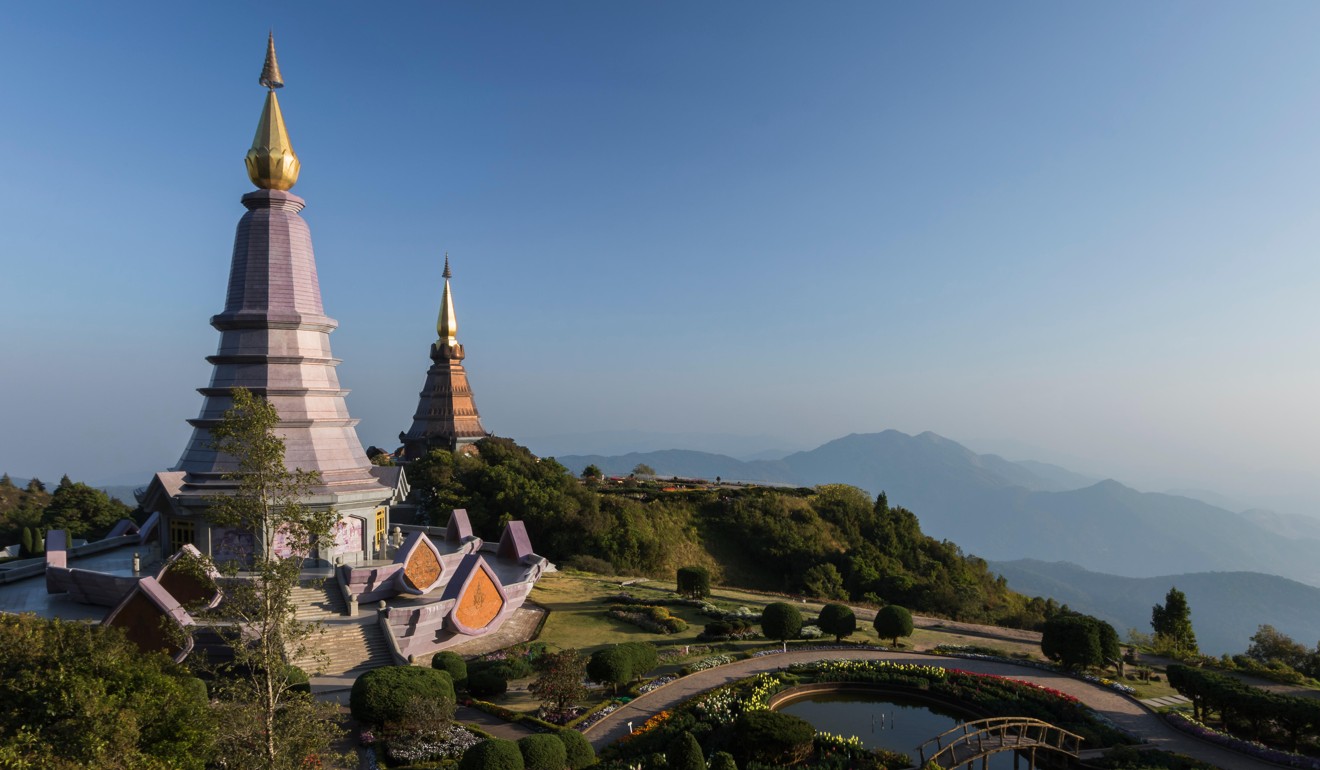
During his two-day trip to the northern city of Chiang Mai, Wang will meet his counterpart Don Pramudwinai, Thailand’s ministry of foreign affairs said on its website.
Zhang Mingliang, a Southeast Asian affairs specialist at Jinan University, said China was concerned the upcoming poll might have an impact on its interests.
“The recent events regarding the sudden changes to Thailand’s prime ministerial candidate could affect the country’s political stability and affect its relationship with China,” he said.
He was referring to the fact that on Wednesday, Thailand’s Election Commission asked the constitutional court to dissolve the Thai Raksa Chart, a political party allied with the powerful Shinawatra clan, for putting forward Princess Ubolratan as candidate for prime minister.
The move came just days after Thai King Maha Vajiralongkorn, Ubolratan’s younger brother, issued a royal decree denying her bid to become prime minister hours after her name was submitted.
Zhang said that only by ensuring the political stability of Thailand could China’s interests in the country and Southeast Asia as a whole be protected.
“In the past, political instability meant Thailand’s leaders were unable to attend foreign events such as meetings with Asean and China,” he said.
“If there is political stability in Thailand … that can aid its contribution to Asean and its ties with China.
“China’s relationship with Thailand is the best among the Asean nations, with the least conflict of interests,” he said.
Concerns over China’s overseas investments are growing and there have been accusations that Beijing is using them to gain political leverage.
China and Thailand reached an agreement in 2017 for the construction of Thailand’s first high-speed rail line. Once completed it will run from Bangkok to Nong Khai on the Thai border with Laos.
The line is seen as a key project under the “Belt and Road Initiative”, Beijing’s plan to connect China with countries across Asia, the Middle East and Africa.
Elections in Southeast Asia have proved troublesome for the initiative, however. Soon after being re-elected as prime minister of Malaysia last year, Mahathir Mohamad’s government cancelled the China-funded US$20 billion East Coast Rail Link. Officials later backtracked on the decision, leaving its future in the air.
Xu Liping, a specialist in Southeast Asian studies at the Chinese Academy of Social Sciences, said that Thailand, as this year’s chair of Association of Southeast Asian Nations, has a crucial role to play in promoting China’s relationship with other members of the group.
“Ensuring the continuity of China-Thailand ties after the elections in March will also be on the agenda in Wang’s meeting,” he said.
Meanwhile, China’s top diplomat Yang Jiechi, a member of the Communist Party Politburo, travelled to Germany on Friday to attend the Munich Security Conference, which runs until Sunday.
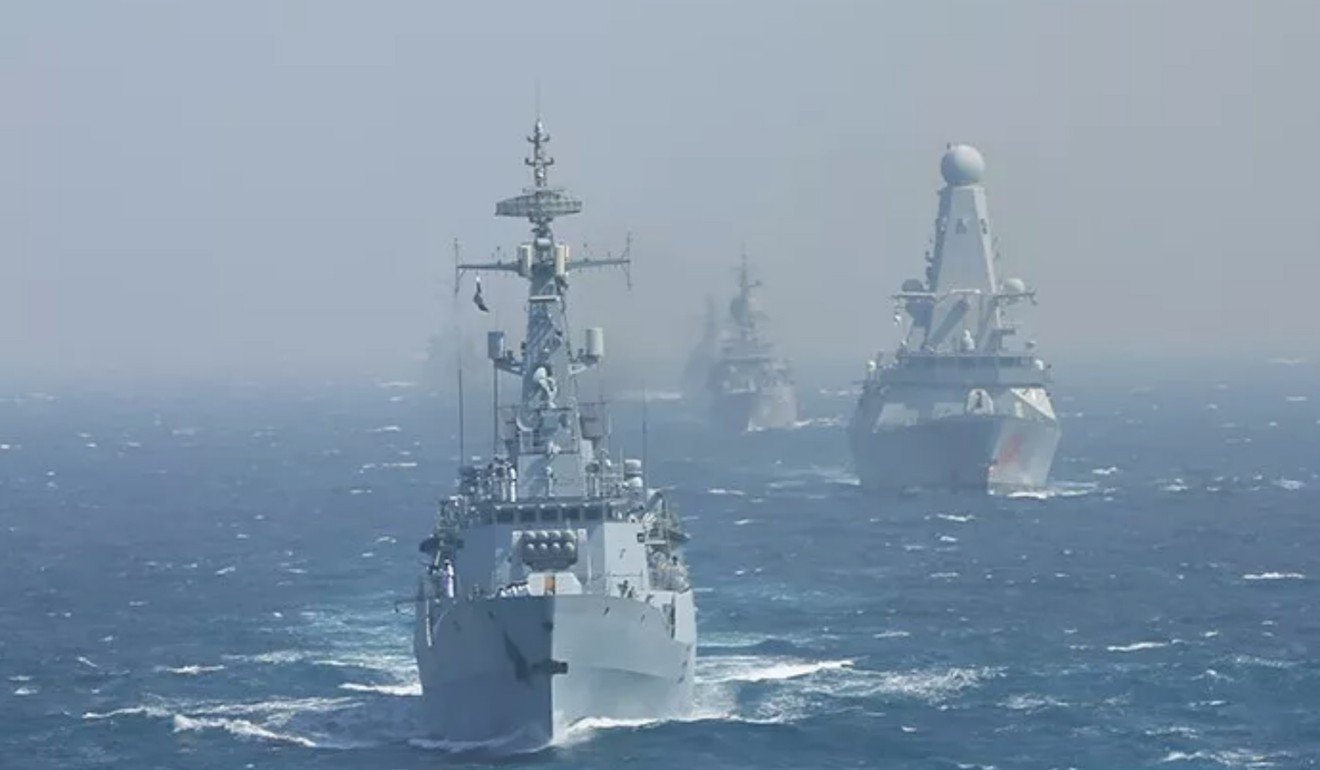
Pakistan’s multinational naval drill involving 46 nations has wrapped up in the Indian Ocean and, once again, India was not invited.
The Pakistan Navy has hosted the Aman – which means “peace” – exercises every two years since 2007 to promote regional cooperation and stability. India has never been invited, in a sign of the long history of strained ties between the neighbours.
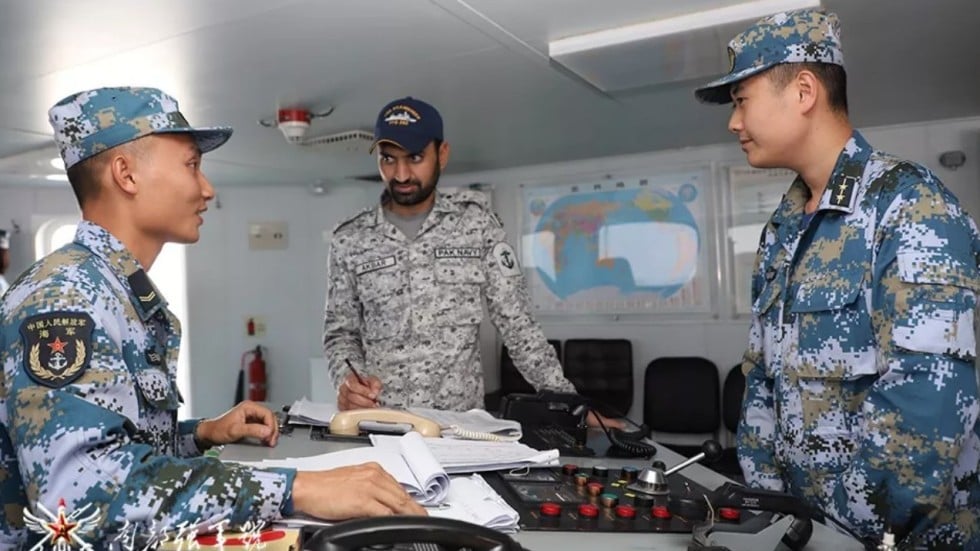
China, Japan and the United States were among the countries taking part in Aman-19, from February 8 to 12, which included maritime conferences, seminars and cross-ship visits, as well as 23 sea operations with main-gun firing, formation movement and replenishment-at-sea.
Shao Shuguang, commander of the People’s Liberation Army Navy’s 998 Fleet, was quoted on a Chinese military social media account as saying the exercise had strengthened mutual understanding and trust between the participating navies.
China sent one of its biggest warships, the Kunlun Shan amphibious landing vessel, to the exercise, signalling its close relationship with Pakistan and the key role both nations hold in the Indian Ocean, according to analysts.
“The Pakistan-China relationship is very strong, and this is one more illustration of the strength of the Pakistan-China relationship,” said Madhav Das Nalapat, honorary director of the department of geopolitics and international relations at Manipal University in India.
“China is also now becoming an important maritime power, especially in the Indo-Pacific. By aligning with China, Pakistan hopes to get the synergy of that.
“India by itself cannot have any primacy in the Indian Ocean. But along with the United States, the two countries together can have primacy in the Indian Ocean. India is positioning itself to be allied with the US, but has not yet reached there.”
Tridivesh Singh Maini, assistant professor with the Jindal School of International Affairs in India, said the exercises should be a cause for alarm for India. “They will keep an eye on what’s going on, but they don’t need to be too concerned,” he said.
The military exercise also centred on maritime security to protect strategic economic projects such as the China-Pakistan Economic Corridor, as well as sea lanes from the Persian Gulf.
The US$62 billion China-Pakistan Economic Corridor (CPEC) is designed to connect China’s far west region of Xinjiang with Gwadar Port in Pakistan via a network of motorways, railways, oil pipelines and trading hubs.
The project is expected to be finished by 2030, and will provide China with an important trading route to the Middle East and Africa.
“India has very strenuously objected to the name CPEC being given to the part that goes through Pakistan-occupied Kashmir, but so far nothing has been done,” Nalapat said.
Kashmir has long been a hotbed for competing territorial claims between India and Pakistan. The two countries have fought three wars against each other since their independence from Britain in 1947, and two of those conflicts have centred on the Kashmir territorial dispute.






 CHINDIA ALERT: You'll be living in their world, very soon
COMMENTS: