Chindia Alert: You’ll be Living in their World Very Soon
aims to alert you to the threats and opportunities that China and India present. China and India require serious attention; case of ‘hidden dragon and crouching tiger’.
Without this attention, governments, businesses and, indeed, individuals may find themselves at a great disadvantage sooner rather than later.
The POSTs (front webpages) are mainly 'cuttings' from reliable sources, updated continuously.
The PAGEs (see Tabs, above) attempt to make the information more meaningful by putting some structure to the information we have researched and assembled since 2006.
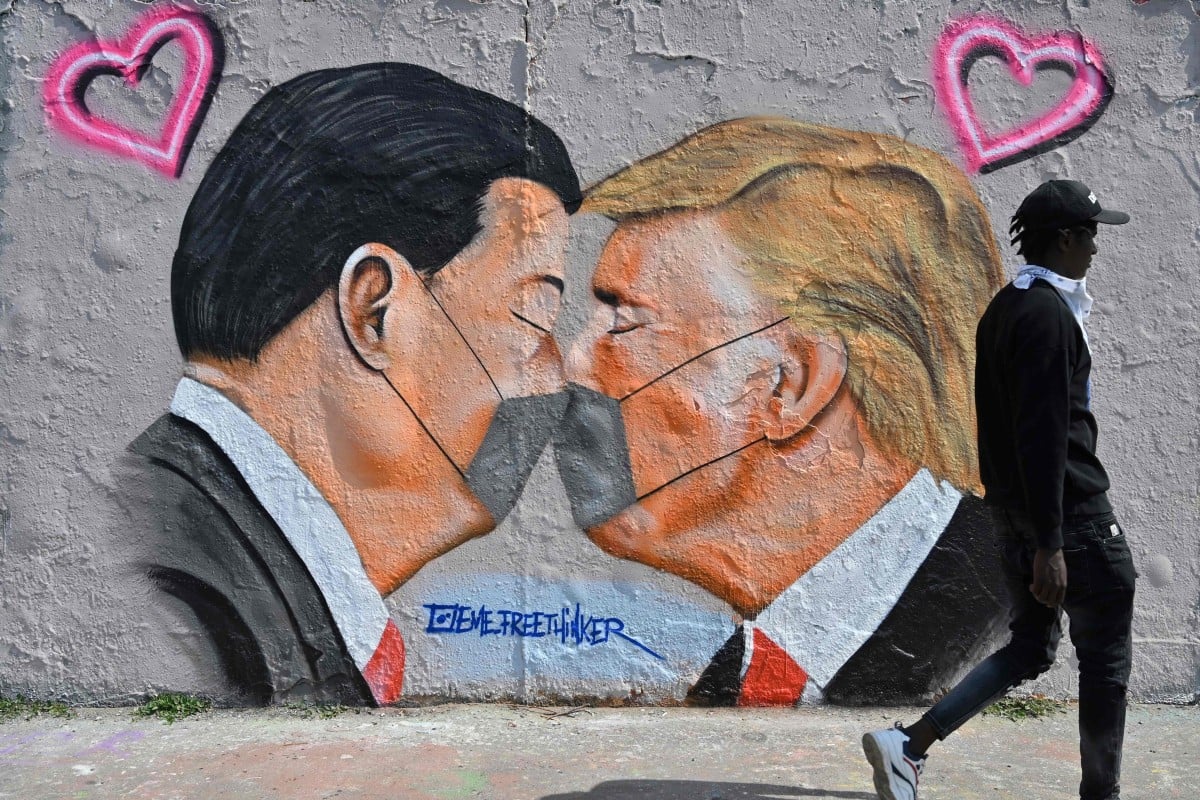
WASHINGTON (Reuters) – U.S. President Donald Trump has little choice but to stick with his Phase 1 China trade deal despite his anger at Beijing over the coronavirus pandemic, new Hong Kong security rules, and dwindling hopes China can meet U.S. goods purchase targets, people familiar with his administration’s deliberations say.
The U.S.-China trade negotiations took more than two years, heaped tariffs on $370 billion of Chinese products, whipsawed financial markets and dimmed global growth prospects well before the coronavirus outbreak crushed them.
In recent weeks, suggestions that Trump may cancel the deal have emanated from the White House almost daily, and businesses, investors, and China trade watchers are hanging on to every word and tweet.
But on Friday, when Trump said the United States would start dismantling trade and travel privileges for Hong Kong, he did not mention the deal. Stock markets heaved a sigh of relief, with the S&P 500 .SPX reversing losses.
Talking tough on China and criticizing the Obama administration’s more measured approach is a key part of Trump’s re-election strategy. Sticking with the pact may mean accepting that China is likely to fall short of purchase commitments for U.S. agricultural goods, manufactured products, energy and services – goals that many said were unrealistic here even before the pandemic.
Canceling the deal, though, would reignite the nearly two-year U.S.-China trade war at a time U.S. unemployment is at its worst since the 1930s Great Depression.
The next U.S. step would likely be reviving previously planned but canceled tariffs on some $165 billion worth of Chinese consumer goods, including Apple (AAPL.O) cellphones and computers, toys and clothing – all ultimately paid by U.S. companies and passed on to consumers. Beijing would retaliate with tariffs on U.S. goods, fueling more market turmoil and delaying recovery.
“He’s stuck with a lemon. He gets an empty agreement if he sticks with it, and he gets more actions that create an economic drag and more volatility if he abandons it,” said one person briefed on the administration’s trade deliberations.
U.S. goods exports here to China in the first quarter were down $4 billion from the trade war-damaged levels a year earlier, according to U.S. Census Bureau data.
The Peterson Institute of International Economics estimates here that during the first quarter, China made only about 40% of the purchases it needed to stay on target for a first-year increase of $77 billion over 2017 levels, implying an extremely steep climb in the second half.
Leaving the deal now would not buy a lasting political bounce for Trump in manufacturing-heavy swing states with five months to go before the presidential election, analysts say.
COMPLEX RELATIONSHIP
Trump blames China for failing to contain the coronavirus and has repeatedly said the deal, including its pledges to boost U.S. exports to China by $200 billion over two years, no longer means as much to him with U.S. coronavirus deaths now over 100,000 and job losses piling up.
Trump said on Friday that China was “absolutely smothering Hong Kong’s freedom,” but refrained from harsh sanctions that could put the trade deal in jeopardy, taking milder steps to revoke the territory’s separate travel and customs benefits from China.
Claire Reade, a former U.S. trade negotiator, said Trump’s “peripheral steps” would not deter Beijing from proceeding with the security law, as it regards Hong Kong as a core national security issue.
“Probably the most significant thing from the trade perspective is that the Phase 1 trade deal is – for now anyway – unaffected,” said Reade, senior counsel with Arnold and Porter law firm in Washington.
White House Economic Adviser Larry Kudlow criticized Beijing last week, but on trade told CNBC: “It’s a complex relationship. The China Phase 1 trade deal does continue to go on for the moment and we may be making progress there.”
U.S. Trade Representative Robert Lighthizer has recently cited here “continuing progress” in the deal, after China welcomed U.S. blueberries, barley, beef and dairy products. He has touted the deal’s dispute settlement mechanism, which provides for regular consultations on compliance with Beijing’s commitments on intellectual property protections, financial services, agriculture standards and purchases.
U.S.-China flashpoints on Hong Kong, Taiwan and other issues did not derail negotiations that resulted in new concessions from China, said Jamieson Greer, who served as Lighthizer’s chief of staff until April.
“Some of these security and human rights challenges have certainly complicated the atmosphere, but the trade agreement can still provide a set of rules governing important aspects of the trade relationship,” said Greer, now an international trade partner at the King and Spalding law firm.
Another person familiar with USTR thinking said the agency “needs to make Phase 1 look good. They want to show that progress is being made. The president looks at the China relationship much more broadly.”
Chinese groups calling for more ‘fighting spirit’ are getting the upper hand on those who favour calm and cooperation, government adviser says
From Hong Kong to Covid-19, trade to the South China Sea, Beijing and Washington are clashing on a growing number of fronts and in an increasingly aggressive way
Efforts to promote dialogue and cooperation between the US and China are failing, observers say. Photo: AFP
Moderates who favour dialogue and cooperation as a way to resolve China’s disputes with the United States are losing ground to hardline groups bent on taking the fight to Washington, according to political insiders and observers.
“There are two camps in China,” said a former state official who now serves as a government adviser and asked not to be named.
“One is stressing the combat spirit, the other is trying to relieve tensions. And the former has the upper hand.”
Relations between China and the US are under intense pressure. After Beijing moved to introduce a national security law for Hong Kong, US President Donald Trump said on Friday that Washington would begin eliminating the special policy exemptions it grants the city, as it no longer considers it autonomous from mainland China.
Beijing’s decision to enact a national security law for Hong Kong was met with anger from the US and other Western countries. Photo: Sam Tsang
The two nations have also clashed over trade, Xinjiang, Taiwan and the South China Sea, with the US passing several acts denouncing Beijing and sanctioning Chinese officials.
China has also experienced turbulence in its relations with other countries, including Australia and members of the European Union, mostly related to the Covid-19 pandemic
and Beijing’s efforts to position itself as a leader in the fight against the disease with its policy of “mask diplomacy”.
After Canberra appealed for an independent investigation to be carried out to determine the origins of the coronavirus, Beijing responded by imposing tariffs on imports of Australian barley, showing it is prepared to do more than just trade insults and accusations with its adversaries.
Pang Zhongying, a professor of international relations at Ocean University of China in Qingdao, said there was a worrying trend in China’s relations with other nations.
“We need political and diplomatic means to resolve the challenges we are facing, but … diplomatic methods have become undiplomatic,” he said.
“There are some who believe that problems can be solved through tough gestures, but this will never work. Without diplomacy, problems become confrontations.”
said during his annual press conference on the sidelines of the National People’s Congress last weekend that China and the United States must work together to prevent a new Cold War.
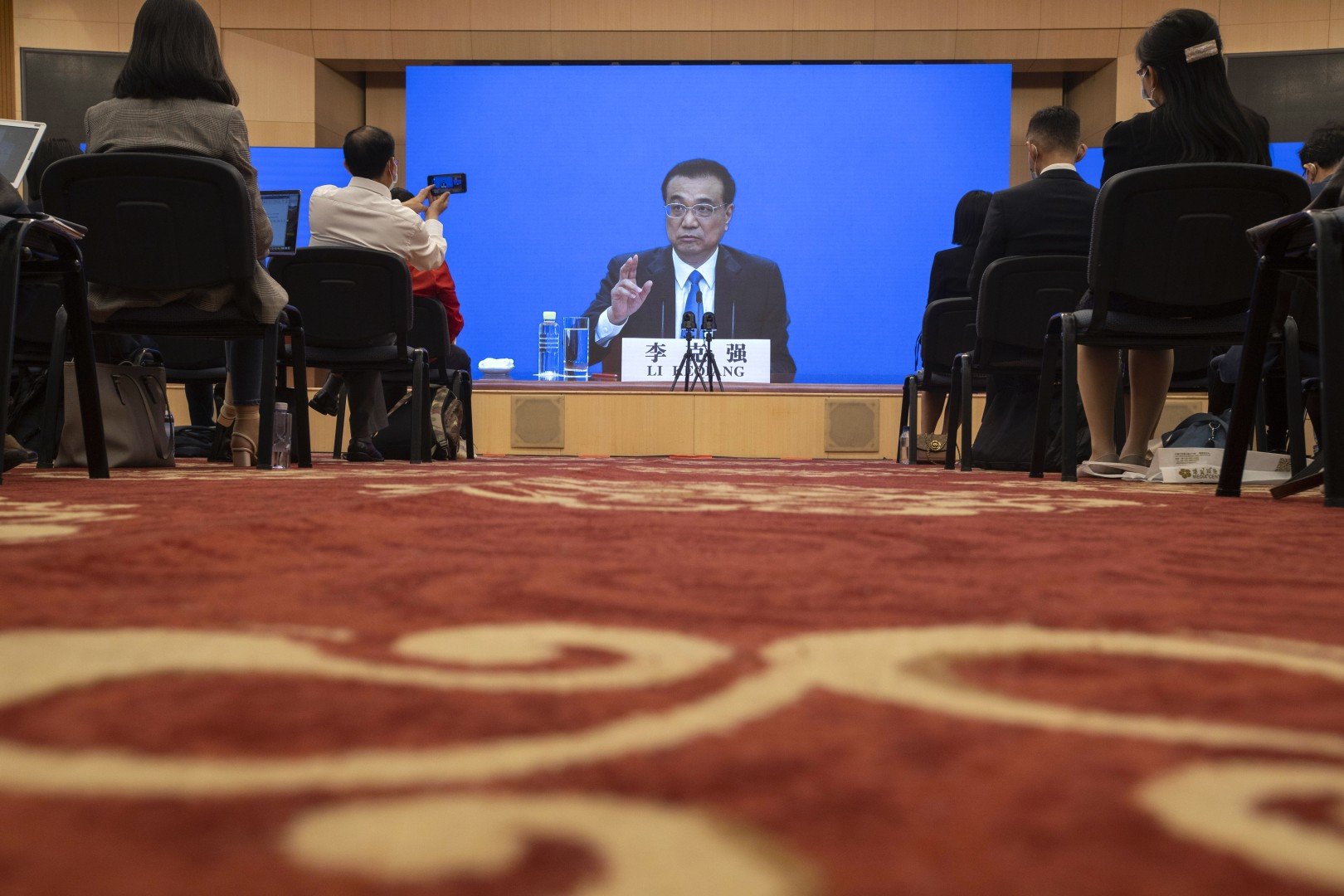
His words were echoed by Chinese Premier Li Keqiang, who said during a press conference after the closure of the legislative session on Thursday that the many challenges facing the China-US relations could only be resolved through cooperation.
However, the government adviser said there was often quite a chasm between what China’s leaders said and what happened in reality.
“Even though we say we do not want a Cold War, what is happening at the working level seems to be different.” he said. “The implementation of policies is not properly coordinated and often chaotic.”
Tensions between China and the US have been in a poor state since the start of a trade war almost two years ago. After multiple rounds of negotiations, the sides in January signed a phase one deal, but the positivity that created was short-lived.
In February, Beijing expelled three reporters from The Wall Street Journal over an article it deemed racist, while Washington has ramped up its military activity in the South China Sea and Taiwan Strait, and threatened to revoke the visas of Chinese students studying science and technology in the US over concerns they might be engaged in espionage.
Beijing has also used its state media and army of “Wolf Warrior” diplomats to promote its narrative, though many Chinese scholars and foreign policy advisers have said the latter’s nationalistic fervour has done more harm than good and appealed to Beijing to adopt a more conciliatory tone.
However, Hu Xijin, editor-in-chief of Chinese tabloid Global Times, said China had no option but to stare down the US, which regarded the world’s most populous nation as its main rival.
“Being contained by the US is too high a price for China to pay,” he said. “I think the best thing people can do is forget the old days of China-US ties”.
Jin Canrong, a professor of international relations at Renmin University in Beijing, wrote in a recent newspaper article that Beijing’s actions – notably enacting a national security law for Hong Kong – showed it was uncompromising and ready to stand its ground against the US.
Wu Xinbo, dean of international studies at Fudan University in Shanghai, agreed, saying relations between the two countries were likely to worsen in the run-up to the US presidential election in November and that Beijing should be prepared for a fight.
But Adam Ni, director of China Policy Centre, a think tank in Canberra, said the issue was not that the moderate camp had been sidelined, but rather Beijing’s perception of the US had changed.
“Beijing has woken up to the idea that America’s tough policy on China will continue and it is expecting an escalation of the tensions,” he said.
“The centre of gravity in terms of Beijing’s perception of the US has shifted, in the same way the US perception of China has shifted towards a more negative image”.
Beijing was simply responding in kind to the hardline, assertive manner of the US, he said.
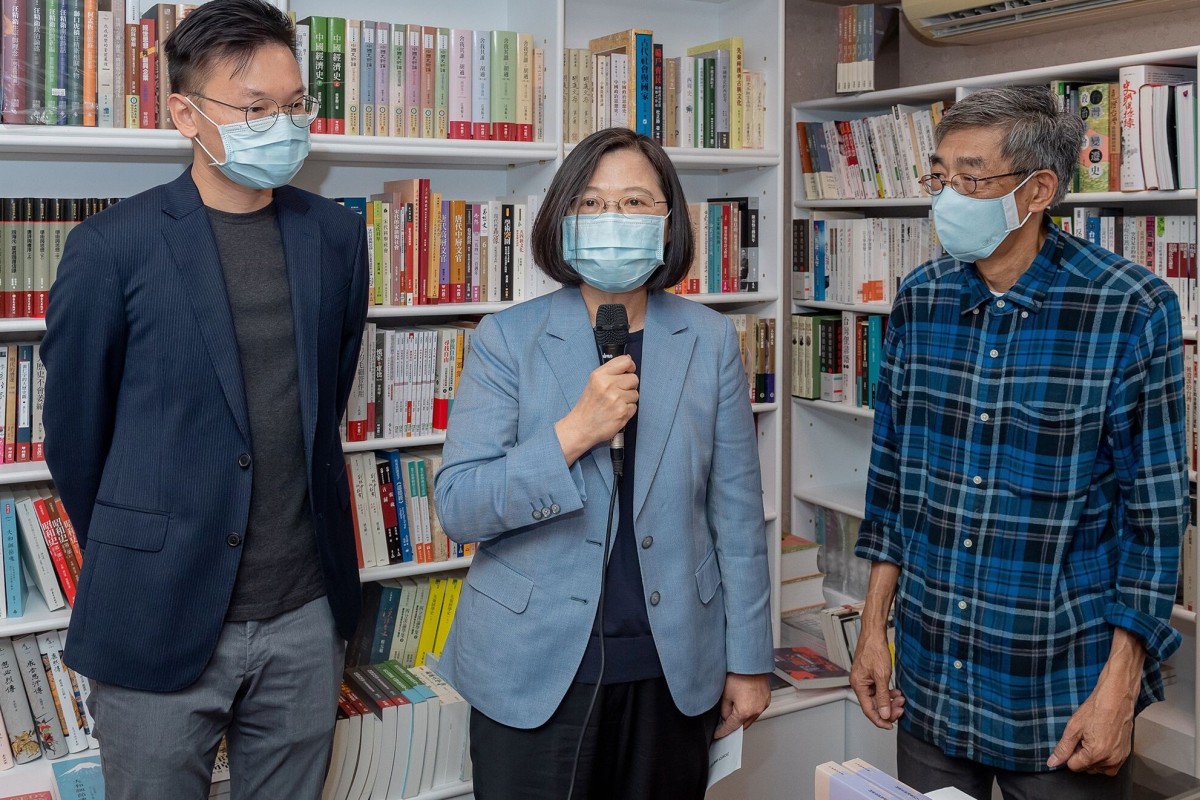
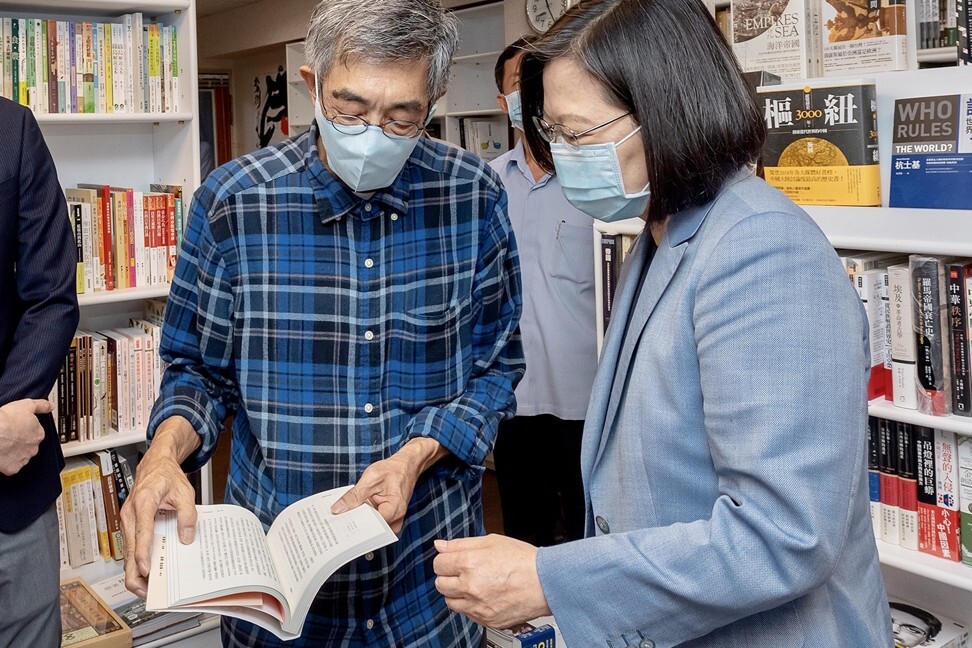
Tsai Ing-wen visited exiled Hong Kong bookseller a day after NPC voted in favour of legislation
Lam Wing-kee said fleeing Hongkongers saw Taiwan as a step towards applying for asylum in the West
President Tsai Ing-wen (centre) shows her support for Hong Kong bookseller Lam Wing-kee (right) with Lin Fei-fan, deputy secretary general of the ruling Democratic Progressive Party. Photo: Taiwan presidential office/AFP
Her visit came a day after China’s legislature, the National People’s Congress, voted in favour of a resolution to initiate the legal process for a national security law to be imposed on Hong Kong, despite concerns from the United States, the European Union and elsewhere that the move would erode human rights, freedom and autonomy in the city.
Tsai said on behalf of all Taiwanese people, she welcomed Lam to stay in Taiwan where he could bolster the island’s efforts to further freedom and democracy.
Hongkongers who want to flee to Taiwan ‘will go through strict screening’
28 May 2020
Lam, one of the five shareholders and staff at Hong Kong’s Causeway Bay Books, fled to Taiwan in April last year after he was detained by Chinese agents for eight months in 2015 for selling books critical of the Chinese leadership.
between October and December that year and it emerged they had been detained on the Chinese mainland.
President Tsai Ing-wen looks at a book while visiting Lam Wing-kee on Friday. Photo: Taiwan presidential office/AFP
Lam later said he had been detained and blindfolded by police after crossing the border into mainland China from Hong Kong in October 2015.
The case triggered a huge controversy and raised fears of growing Chinese control in the city.
Seeing Lam as a representative of Hongkongers fleeing to Taiwan to avoid political persecution, Tsai said she wanted to understand what challenges these exiles faced and what help they needed during their stay on the self-ruled island.
“I want to tell Boss Lam [Wing-kee] and our Hong Kong friends that the government here has set up an ad hoc committee to offer help to them very soon,” she said.
On Wednesday, Tsai called for the government to set up an ad hoc committee to work out a “humanitarian help action plan” for Hong Kong people seeking to live in Taiwan or immigrate to the island. It was borne out of concern they would be arrested or prosecuted for taking part in months of anti-government protests triggered last year by the now-shelved extradition bill.
Chen Ming-tong, head of the Mainland Affairs Council, the island’s top mainland policy planner, said on Thursday his council would draft the measures for cabinet’s approval in a week.
Under the plan, the Mainland Affairs Council would issue special measures and coordinate with the island’s authorities on how to help Hongkongers relocate to Taiwan and take care of them.
Bookseller Lam told Tsai what Hongkongers needed most was to have their stay in Taiwan extended.
Lam said that currently, because of the absence of a political asylum law, Hongkongers could only apply to live in Taiwan through study, work, investment, their professional skills or close relatives.
He said fleeing Hongkongers usually came to Taiwan on tourist permits, which at most allowed them to stay for up to six months, giving them not enough time to apply for long-term residence in Taiwan.
“It would be better if they can stay for nine months and preferably one year,” he said.
Lam said some fleeing Hongkongers saw Taiwan as an intermediary base as they hoped to apply for asylum in the West, but it took a long time for Western countries to screen and approve their asylum requests.
Meanwhile, Premier Su Tseng-chang said Article 18 of the Laws and Regulations Regarding Hong Kong and Macau Affairs was good enough to deal with the current crisis in the absence of a political asylum law in Taiwan.
That article states that “necessary help shall be provided to Hong Kong or Macau residents whose safety and liberty are immediately threatened for political reasons”.
Li held a press conference to mark the end of the parliamentary session. This is the South China Morning Post’s live coverage.
Reporting by Wendy Wu, Gary Cheung, Frank Tang, Mai Jun, Sarah Zheng, Kinling Lo, Linda Lew, Coco Feng, Liu Zhen, Laura Zhou, Echo Xie, Keegan Elmer, Catherine Wong, Zhuang Pinghui, Tony Cheung
6:05PM
The End
Li’s key points
The main points from Li’s press conference:
The central government will stick to the principle of “one country, two systems”, and “Hong Kong people governing Hong Kong” with a high degree of autonomy. The NPC’s resolution for a
. But he said at the press conference that “peaceful reunification” was still Beijing’s policy and the mainland was open to further exchanges with Taiwan.
Even though the central government did not set a GDP growth target, China will implement
On the difficult and unpredictable external factors faced by China, Li said the pandemic had hit the world severely, greatly reducing exchanges between countries.
If conditions persisted, there would be more dangers to the global economy, which could undermine efforts to contain the coronavirus.
Combating the virus required an open economy to ensure the supply of goods for public health, he said.
He said China would to continue to open up and maintain the stability of the supply chain.
5:46PM
Rise in pensions
Li said that given the tough economic times, Beijing would expand coverage of subsistence allowances and unemployment benefits as well as increase pensions for the elderly.
“There can be no loopholes – if there are any gaps, then this will make people feel there is no hope for the future,” he said. “As the saying goes, the people are the foundation of a state and when the foundation is solid, the state enjoys tranquility.”
5:41PM
Ending poverty
Li said that even with the fallout from the coronavirus pandemic, the country was still determined to reach its goal of eliminating poverty by 2020.
He said there were some 5 million people living below the poverty line before the outbreak, and more may have fallen below it since then, making eliminating poverty a “daunting task”.
5:36PM
Questions
So far Li has taken nine questions, of which four were from foreign media, one was from Hong Kong and one from Taiwan.
Li said the central government must work hard to help business flourish, aiming at having 10,000 new enterprises registered each day.
The government must get rid of all unnecessary restrictions on the market, foster fair competition and create tangible wealth, he said.
He said there had been a surge in new kinds of businesses, such as online platforms, during the pandemic, and some of these businesses had seen their revenue grow by two-thirds.
5:20PM
China-US tensions
On escalations in China-US tensions and speculation about a new Cold War, Li acknowledged new challenges between the two countries, but said there was room for bilateral cooperation, including on the economy and technology.
Their relationship could be either mutually beneficial or mutually harmful, he said.
was not good for either country or the world, Li said.
Referring to a phase one trade deal reached in January, Li said the two countries should continue to follow through on the consensus reached by the leaders of both countries.
He said trade and economic cooperation should be based on market forces. There were differences in each other’s systems, and conflicts were inevitable, but the key was how to handle the problems.
We need to mutually respect each other’s core interests and search for areas for cooperation, Li said.
The US had in recent days issued a strategic policy that appeared to signal that Washington had abandoned its engagement policy towards Beijing.
He also spoke of new investment by a hi-tech US company in the central Chinese city of Wuhan, an example he said reflected the importance of business ties and cooperation between the countries.
Li had earlier sent a congratulatory letter to the company, the US conglomerate Honeywell.
5:11PM
Hong Kong and the national security law
Asked whether the NPC’s resolution for a national security law for Hong Kong
meant that Beijing had abandoned the “one country, two systems” model for Hong Kong, Li said the law was to secure the long-term stability of “one country, two systems”.
He said that “one country, two systems” and a high degree of autonomy were long an important part of Beijing’s basic state policy, and had been implemented from the start.
He said the national security law resolution was designed “for the steady implementation of one country, two systems and Hong Kong’s long-term stability and prosperity”.
5:04PM
Growth for jobs
Li said growth would be needed to support job creation, one issue of greatest public concern.
About one-third of recent comments left on the State Council’s website were on employment.
China was committed to helping businesses survive and retain jobs, he said.
University students are expected to graduate and enter the workforce in record numbers this year.
4:59PM
‘No change’ on Taiwan
Li said that Beijing’s cross-strait policy would not change, and that the mainland Chinese government was open to further exchanges with Taiwan to move forward on “peaceful reunification” with the self-ruled island.
He rejected all “Taiwanese independence forces” and external interference in Taiwan.
He said Beijing remained committed to the 1992 consensus – the political understanding that there is only “one China” but that each side has its own understanding of what this means.
Last week, Taiwanese President Tsai Ing-wen officially started her second term, after a landslide election win in January that many saw as an endorsement of her harder stand against Beijing.
Li said Beijing would continue to pay high attention to the island, adding that no Taiwanese died from the coronavirus in mainland China.
4:50PM
Jobs – not infrastructure
Li said the government’s measures to counter the coronavirus would focus on
About 70 per cent of the funds would support people’s income and boost consumption.
Smaller firms would also be targeted for support.
“The central government will live on a tight budget,” Li said.
4:44PM
‘No cover-up allowed’
Li said China had successfully controlled the coronavirus within its borders and Beijing had acted in a transparent and timely manner throughout the pandemic.
“No cover-up will ever be allowed,” he said.
Li said there were two main challenges in the pandemic: controlling the virus outbreak and reopening the economy. International cooperation was important for both.
“We may have to live with Covid-19 for some time to come,” he said.
4:36PM
Coronavirus inquiry
In response to a question about the origins of the coronavirus and calls for an
Li said that getting a clear, scientific understanding of the source of the virus could contribute to global public health.
He also referred to the World Health Assembly’s endorsement of an independent review into the World Health Organisation’s handling of the pandemic and its animal origins.
Li said the virus had no borders and much was still not known about it, adding that the international community needed to work together to keep the virus in check and create a vaccine.
Beijing and Washington have sparred over the origin of the virus, and earlier the Chinese foreign ministry condemned the US and Australia for their calls of an independent investigation into Beijing’s response to the pandemic.
The US has accused Beijing of cover-ups and a lack of transparency, while a Chinese foreign ministry spokesman suggested earlier that the US could be the origin of the virus.
Li said Beijing was open to international cooperation on research and development for a vaccine. Washington has accused China of seeking to steal its vaccine research, a charge that Beijing has strongly rejected.
Economic stability
The cabinet is determined to stabilise the economy, according to Li.
“If there are big changes, we still have policy room, including on the fiscal, financial and social security fronts,” he said.
“We are confident that under the strong leadership of [President] Xi Jinping and with joint efforts across the nation, we will be able to prevail in the difficulties and achieve the goal of building a moderately prosperous society.”
Chinese businesses still face grim economic reality despite Covid-19 restrictions being lifted
Coronavirus and the economy
Li said the Chinese economy was deeply integrated into the global economy, so China would not be immune from the impact of the coronavirus.
Economic development remained key to solving China’s problems today, Li said.
Li starts his annual press conference by saying that the restrictions imposed for Covid-19 will not affect his communication with the media.
Earlier, Li Zhanshu, chairman of the Standing Committee of the National People’s Congress, presided over a near-unanimous vote to pass a resolution on a national security law for Hong Kong that would ban separatism, subversion, foreign interference, and terrorism in the city.
The votes were 2,878 in favour, one against, six abstentions, and one who did not press the button to vote.
Critics say the move to enact a national security law will end the “one country, two systems” model in Hong Kong. The United States said on Thursday that Hong Kong was no longer autonomous from China, a decision that could end the city’s special trading status with the US.
This year all journalists are restricted to the press centre, the first time that the media have not been in the same room as the premier at his annual press conference.
Journalists waiting for the presser can watch a live broadcast of the NPC’s closing ceremony at the press centre’s lounge. But vote count is not shown at the broadcast. Photos: Jun Mai
All journalists attending the conference were tested for the coronavirus at 6am today and had to wait for the results at the Diaoyutai Hotel.
President may suspend act that gives preferential treatment to people from the city, if Beijing passes national security law
Policymaking body clarifies that Tsai’s remarks were aimed at letting Beijing know there would be ‘serious consequences’ over the legislation
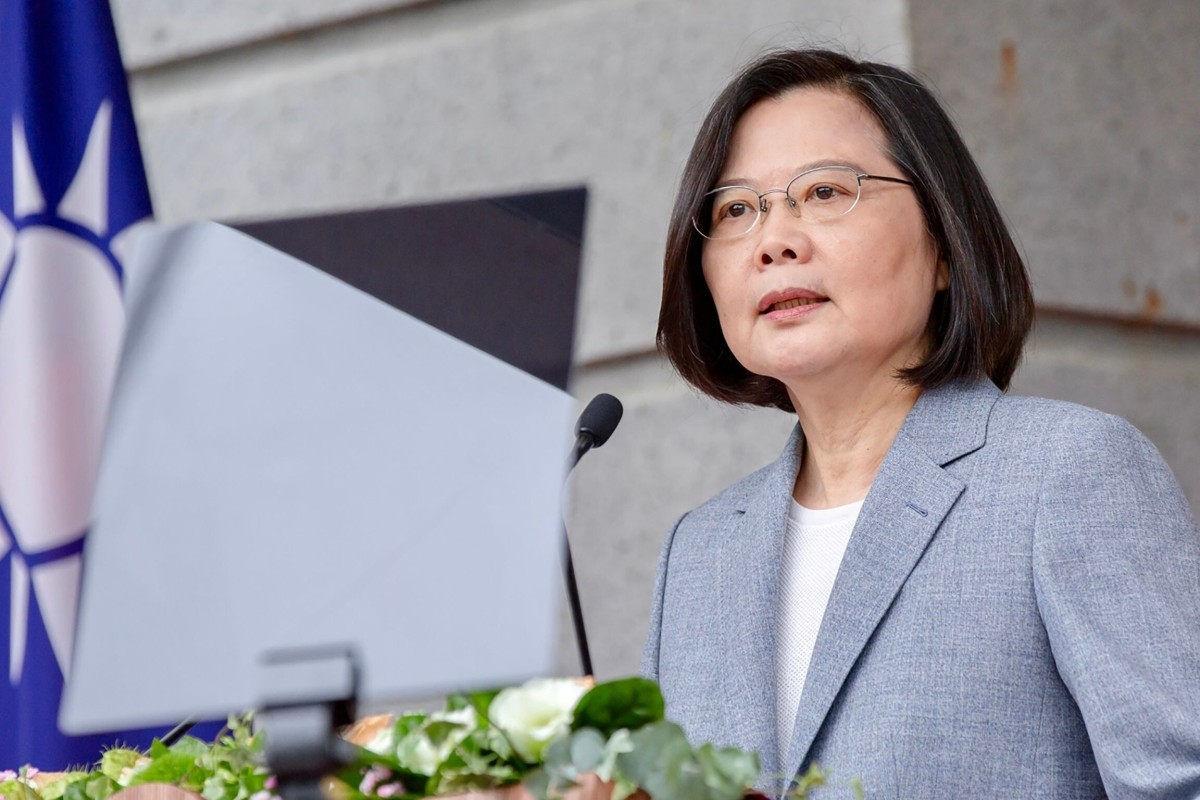
President Tsai Ing-wen said if Beijing’s national security law was implemented in Hong Kong it would seriously erode the city’s freedoms and judicial independence. Photo: AFP
Taiwan’s mainland policymaker on Monday clarified that the self-ruled island would continue to support Hong Kong, after President Tsai Ing-wen said its special status could be revoked if Beijing passed a controversial national security law for the city.
Tsai said in a Facebook post on Sunday that she might consider invoking Article 60 of the Laws and Regulations Regarding Hong Kong and Macau Affairs by suspending the “application of all or part of the provisions of the act” if the National People’s Congress bypassed Hong Kong’s Legislative Council to approve the security law.
That would mean an end to the preferential treatment given to people from Hong Kong and Macau, including to visit and invest in the self-ruled island.
Tsai said Beijing’s move would break its promise for Hong Kong to remain unchanged for 50 years after it was handed over to China, and for the city to be run with a high degree of autonomy.
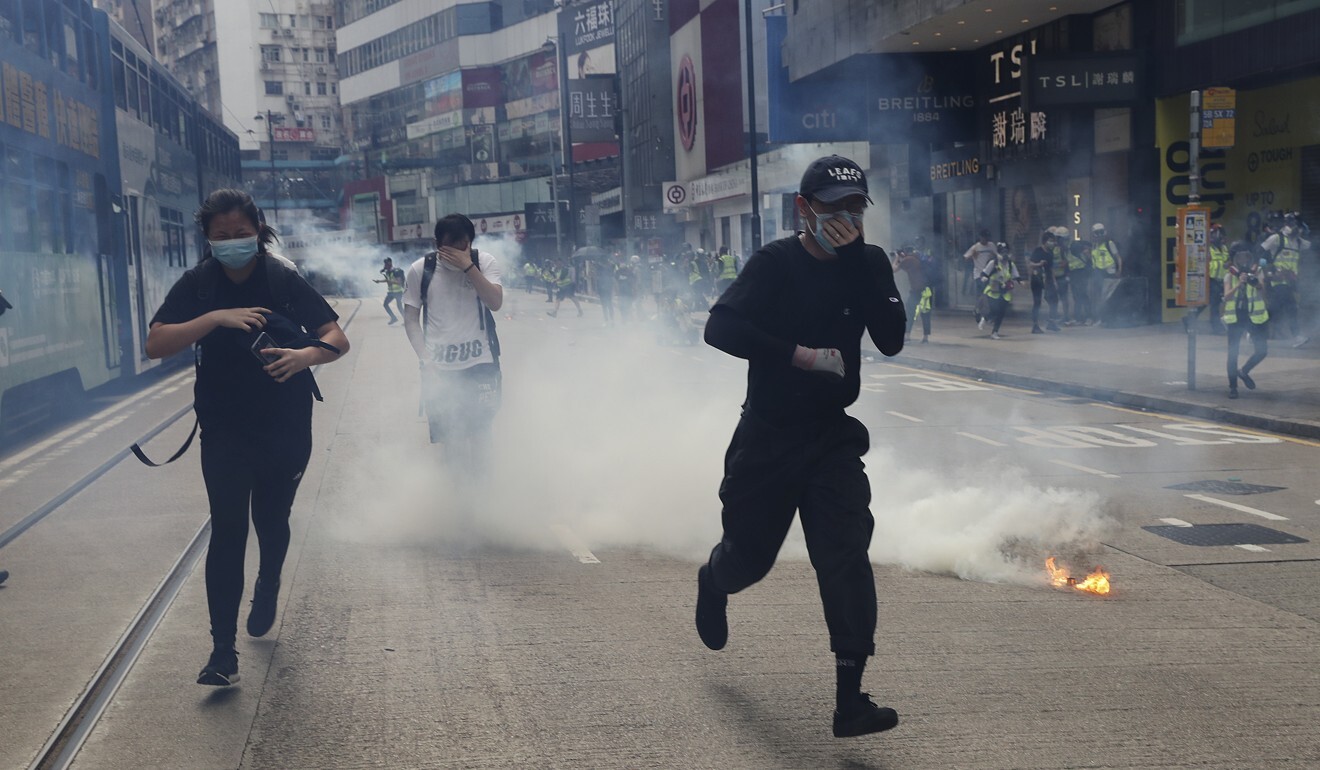
Tear gas fired as thousands protest Beijing’s planned national security law for Hong Kong
In a statement on Monday, Taiwan’s Mainland Affairs Council responded to criticism from opposition lawmakers that Tsai planned to “dump” Hong Kong people after using them to win January’s presidential election.
“What the president said in her Facebook post did not mean ‘giving up on Hong Kong’, rather she meant to let Beijing know there would be serious consequences if the Chinese Communist Party National People’s Congress passes a Hong Kong version of the [mainland] national security law,” the statement said.
It said that the island’s authorities would continue to offer necessary assistance for Hong Kong people in view of the latest developments in the city.
Tsai’s strong support for the mass protests in Hong Kong last year – triggered by a now-shelved extradition bill – helped win the backing of many young voters in the Taiwan election in early January. The youth vote was seen as an essential part of her turnaround in the campaign – she had been expected to lose the race to mainland-friendly Kuomintang candidate Han Kuo-yu but ended up being re-elected for a second term in a landslide.
In her Facebook post, Tsai, from the Democratic Progressive Party, said if the national security law was implemented, it would seriously erode Hong Kong’s freedoms and judicial independence.
Taiwan to fire up missile programme as Tsai puts focus on asymmetric warfare against mainland China
23 May 2020
Opposition lawmakers said what Tsai was suggesting – suspending the city’s special status – was unthinkable as it would essentially mean shutting the door to Hong Kong people doing business, studying or fleeing to Taiwan to avoid penalties for their protest actions in the city.
KMT legislator Charles Chen I-hsin said he and others on Monday proposed that the legislature revise the act to allow Hong Kong people to seek refuge in Taiwan in the absence of a formal political asylum law.
In response, the Mainland Affairs Council said Tsai had made clear that the government would continue to help Hong Kong people in need, and that would continue in the future.
The rhetoric towards the self-ruled island has hardened in Premier Li Keqiang’s annual work report
Beijing regards Taiwan as one of its core national interests and says it ‘resolutely opposes’ any separatist activity
Beijing regards reunification with Taiwan as one of its core interests. Photo: EPA-EFE
Beijing has hardened its rhetoric towards Taiwan, removing references to “peaceful reunification”, in the government’s annual work report.
Observers said the change reflected the stronger stance Beijing would adopt in tackling the Taiwan issue, which it regards as one of its key national interests.
The past six work reports since President Xi Jinping took power in 2013 stressed peaceful reunification and the 1992 consensus – under which both sides tacitly agree there is only one China, but have different interpretations on what this means.
But the latest report from Premier Li Keqiang took a different tone, saying: “We will adhere to the major principles and policies on work related to Taiwan and resolutely oppose and deter any separatist activities seeking ‘Taiwan independence’.”
US to sell US$180 million worth of submarine-launched torpedoes to Taiwan
21 May 2020
“We will improve institutional arrangements, policies, and measures to encourage exchanges and cooperation between the two sides of the Taiwan Strait, further cross-strait integrated development, and protect the well-being of our compatriots in Taiwan,” the report said.
“We will encourage them to join us in opposing ‘Taiwan independence’ and promoting China’s reunification.
“With these efforts, we can surely create a beautiful future for the rejuvenation of the Chinese nation,” it said, dropping a clause that described the process as “peaceful”.
The 1992 consensus allows leeway for both parties to negotiate an agreement, but President Tsai Ing-wen has said the island would never accept it as the basis for cross-strait relations.
Taiwan’s Mainland Affairs Council said on Friday that the “one country, two systems” framework, touted by Beijing as a political basis for unification, had harmed cross-strait relations. It called for the two sides to work together to resolve their differences.
Tang Shao-cheng, an international relations specialist at Taiwan’s National Chengchi University, said the change in wording and tone of the Taiwan section of the work report could be seen as a warning to Tsai’s independence-leaning Democratic Progressive Party (DPP).
“Not mentioning ‘peace’ suggests Beijing is considering unification both by peaceful means and by force,” Tang said.
President Xi Jinping and Premier Li Keqiang at the National People’s Congress opening session on Friday. Photo: Kyodo
Derek Grossman, an analyst from US-based think tank Rand Corporation, said Beijing would continue to put pressure on the island using diplomatic, military, economic and psychological means.
“Beijing will continue to send military aircraft near the island … [it] could decide to end the Economic Cooperation Framework Agreement which has remained active in spite of Tsai’s election in 2016; Beijing could steal one or more diplomatic partners from Taipei. I would expect these types of actions to be on the table,” Grossman said.
How would mainland China attack Taiwan? A video outlines one scenario
22 May 2020
Sun Yun, director of the China programme at the Stimson Centre think tank in the US, said Beijing faced a dilemma on whether to continue economic integration with Taiwan because that had not had the political effect it wanted.
“The obstacles to unification are not economic, but political. Taiwan is unwilling to pursue unification with an authoritarian mainland. To solve that issue, presumably the mainland could pursue political reform. But in reality, the Chinese Communist Party is unwilling,” she said.
“If the economic and political approach doesn’t work, what’s left is the military approach. But with US intervention, the mainland will not prevail.”
Beijing recently warned Washington it would respond after US Secretary of State
, and demanded that the US stop selling arms to the island.
Joshua Eisenman, a professor from the University of Notre Dame in Indiana, said Beijing was running out of countermeasures, since its actions had only hardened attitudes on the island and enhanced the sense of Taiwanese identity.
“As I see it, all that remains is for the [Chinese Communist Party[ to sit down and talk to the DPP without preconditions and establish a modus vivendi for cross-strait relations,” he said.
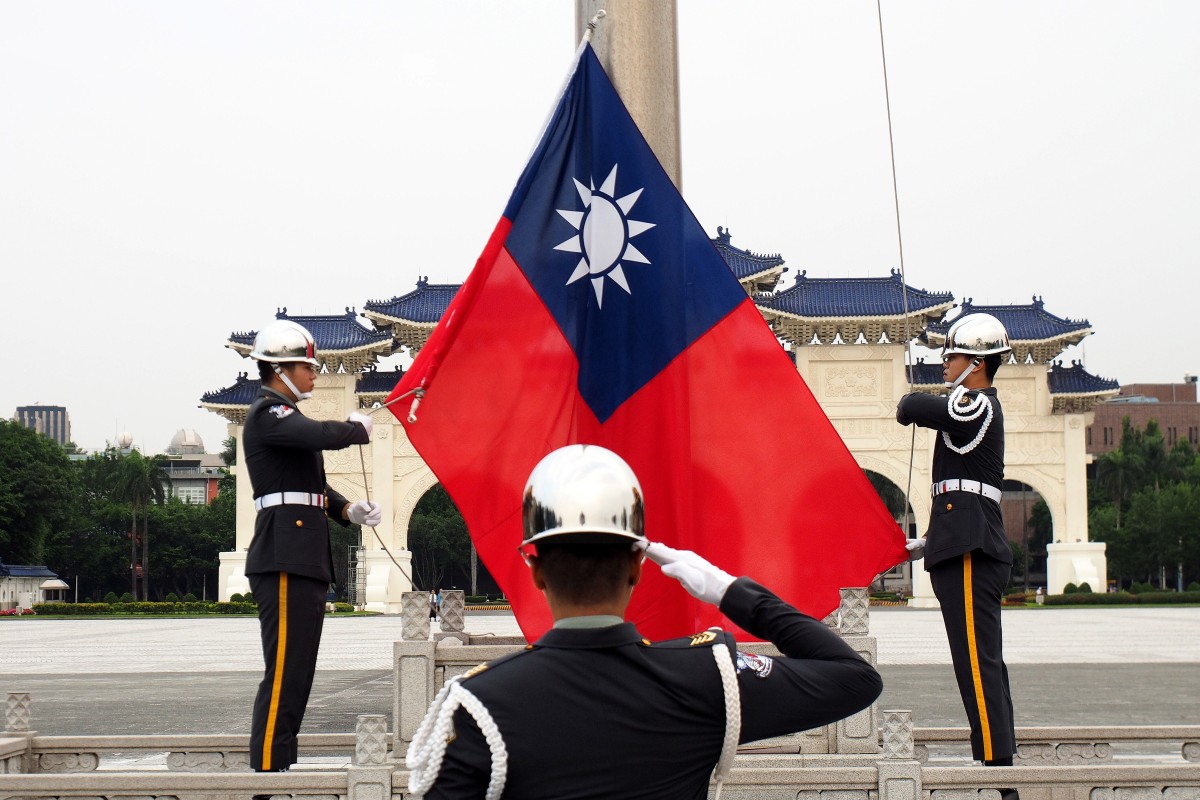
TAIPEI (Reuters) – Taiwan cannot accept becoming part of China under its “one country, two systems” offer of autonomy , President Tsai Ing-wen said on Wednesday, strongly rejecting China’s sovereignty claims and likely setting the stage for an ever worsening of ties.
China responded that “reunification” was inevitable and that it would never tolerate Taiwan’s independence.
In a speech after being sworn in for her second and final term in office, Tsai said relations between Taiwan and China had reached an historical turning point.
“Both sides have a duty to find a way to coexist over the long term and prevent the intensification of antagonism and differences,” she said.
Tsai and her Democratic Progressive Party won January’s presidential and parliamentary elections by a landslide, vowing to stand up to China, which claims Taiwan as its own and says it would be brought under Beijing’s control by force if needed.
“Here, I want to reiterate the words ‘peace, parity, democracy, and dialogue’. We will not accept the Beijing authorities’ use of ‘one country, two systems’ to downgrade Taiwan and undermine the cross-strait status quo. We stand fast by this principle,” Tsai said.
China uses the “one country, two systems” policy, which is supposed to guarantee a high degree of autonomy, to run the former British colony of Hong Kong, which returned to Chinese rule in 1997. It has offered it to Taiwan, though all major Taiwanese parties have rejected it.
China’s Taiwan Affairs Office, responding to Tsai, said Beijing would stick to “one country, two systems” – a central tenet of Chinese President Xi Jinping’s Taiwan policy – and “not leave any space for Taiwan independence separatist activities”.
“Reunification is a historical inevitability of the great rejuvenation of the Chinese nation,” it said. “We have the firm will, full confidence, and sufficient ability to defend national sovereignty and territorial integrity.”
China views Tsai as a separatist bent on formal independence for Taiwan. Tsai says Taiwan is an independent state called the Republic of China, its official name, and does not want to be part of the People’s Republic of China governed by Beijing.
TAIWAN OPEN TO DIALOGUE
China has stepped up its military drills near Taiwan since Tsai’s re-election, flying fighter jets into the island’s air space and sailing warships around Taiwan.
Tsai said Taiwan has made the greatest effort to maintain peace and stability in the narrow Taiwan Strait that separates the democratic island from its autocratic neighbour China.
“We will continue these efforts, and we are willing to engage in dialogue with China and make more concrete contributions to regional security,” she added, speaking in the garden of the old Japanese governor’s house in Taipei, in front of a socially-distanced audience of officials and diplomats.
Taiwan has become a rising source of friction between China and the United States, with the Trump administration strongly backing Taiwan even in the absence of formal diplomatic ties.
U.S. Secretary of State Mike Pompeo sent his congratulations to Tsai on Tuesday, praising her “courage and vision in leading Taiwan’s vibrant democracy”, in a rare high-level message from Washington direct to Taiwan’s government.
China’s Foreign Ministry condemned Pompeo’s remarks, and said the government would take “necessary countermeasures”, though did not elaborate.
China cut off a formal talks mechanism with Taiwan in 2016 after Tsai first won election.
Yao Chia-wen, a senior adviser to Tsai, told Reuters the chance of talks with China were small given ongoing tensions.
“We are ready to engage with them any time, but China is unlikely to make concessions to Taiwan,” he said. “In the next four years there’s little chance for the cross-strait relationship to improve.”
American destroyer’s mission comes a week before Taiwanese president officially starts second term in office
Increased military activity in the region could have unintended consequences but unlikely to lead to direct conflict, observer says
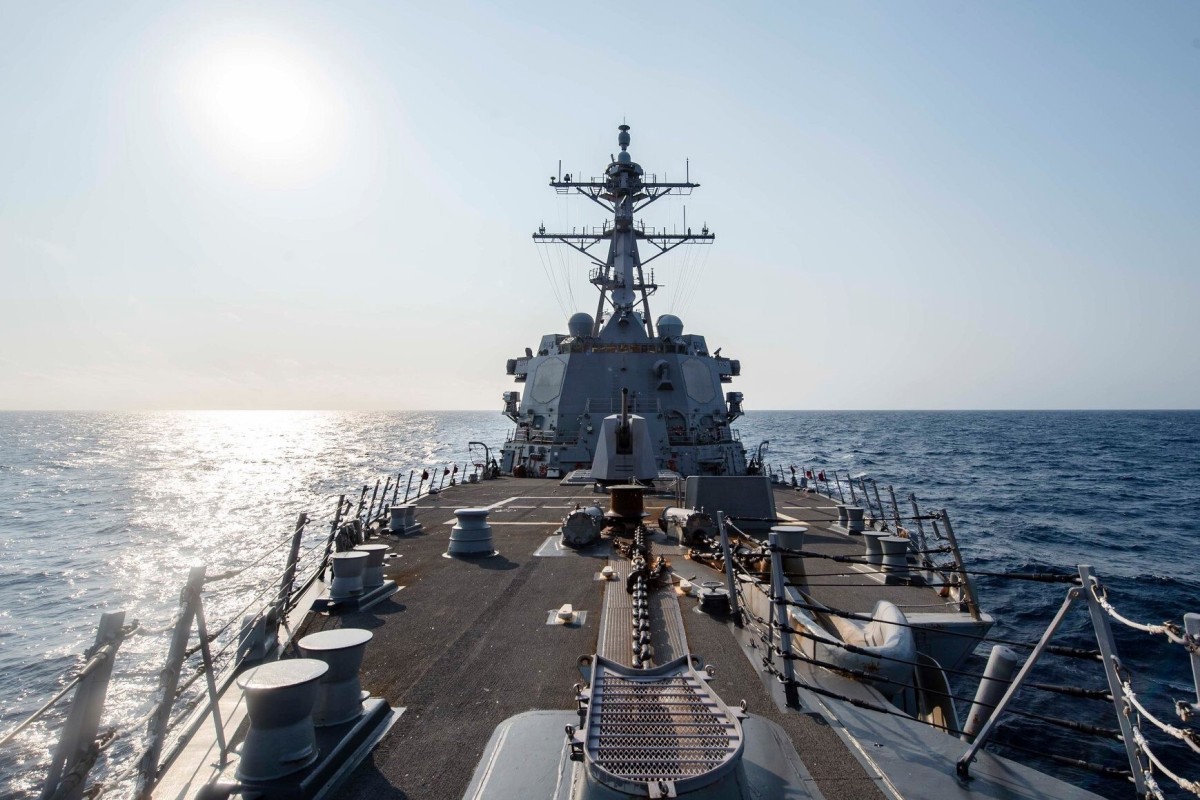
The guided-missile destroyer USS McCampbell made a transit through the Taiwan Strait on Thursday. Photo: US Navy
The United States sent a warship through the Taiwan Strait on Thursday as the Chinese military embarked on more than two months of live-fire naval drills off the mainland’s northern coast.
According to Taiwan’s defence ministry, the Arleigh Burke-class guided-missile destroyer transited the narrow body of water separating Taiwan from mainland China from north to south “in a routine mission”.
“It is continuing its southward voyage and the military is monitoring its movement through the intelligence it has gathered,” the ministry said.
In a statement on its Facebook page, the US Pacific Fleet said the McCampbell transited the Taiwan Strait as part of ongoing operations in the Indo-Pacific.
Analysts said the passage was a response to the People’s Liberation Army’s increasing military activity near Taiwan and in the wider region.
“This will become a new routine as a kind of US security commitment to maintain stability in the Indo-Pacific region,” said Soong Hseik-wen, professor of strategic studies and international relations at National Chung Cheng University in Taiwan.
Beijing urges France to cancel contract to sell arms to Taiwan
13 May 2020
The PLA has staged a series of war games, including fly-bys and warship transits through the strait, in recent months in response to what Beijing sees as growing pro-independence moves by the Tsai government and her party. China has also warned the US against supplying weapons to the island, which Beijing considers to be a wayward province that must return to the mainland fold, by force if necessary.
Mainland China has suspended official exchanges with Taiwan since Tsai was first elected president in 2016 and refused to accept the one-China policy, which Beijing says must be the foundation for any talks.
The PLA has embarked on 11 weeks of naval exercises off the coast of Tangshan in northern China, barring all other vessels from a 25km (15 mile) radius of the drill area, according to the China Maritime Safety Administration.
Taiwanese support closer ties with US over China, few identify as solely Chinese, Pew Research survey finds
13 May 2020
Both Beijing and Washington have ramped up military activities near Taiwan in recent months during the coronavirus pandemic, moves that some observers say run the risk of miscommunication.
Alexander Huang Chieh-cheng, professor of strategic studies and international relations at Tamkang University in Taipei, said no one could exclude the possibility of unintended incidents when both the US and the mainland were stepping up their presence in the region.
“Rational analysts would however argue that the two nuclear powers are not likely to engage in or escalate to direct military conflict,” he said.
Huang said he believed cross-strait relations would worsen during Tsai’s second term in office, which begins on May 20.
“The already damaged relationship between Taiwan and mainland China has worsened since the pandemic mainly due to travel bans and Taiwan’s increased international visibility,” he said.
On Tuesday, Japan’s Kyodo News reported that the PLA was planning a large-scale beach landing exercise near Hainan province in August, simulating a takeover of the Pratas Islands, which are controlled by Taiwan and also known as the Dongsha Islands.
In Taipei, Major General Lin Wen-huang said Taiwan was monitoring the PLA movements and “has contingency plans in place for the South China Sea to strengthen combat readiness and defence preparedness on both the Spratly and Pratas islands”.
Taiwan’s coastguard also announced on Wednesday that its Pratas Islands Garrison was scheduled to conduct an annual live-fire exercise in June to ensure the “effectiveness of various mortar and machine-gun positions”.
Taiwan shows off its military power after presidential election
Shanghai-based military commentator Ni Lexiong said that both the US Navy and PLA were increasing activities during the pandemic because neither side could afford to show weaknesses that the other might take advantage of.
The destroyer’s passage and the PLA’s drills were all part of such efforts, Li said.
But he agreed that both countries were unwilling, unable, and unlikely to have a real conflict.
“They are both bluffing. It’s a fake crisis,” he said. “A pandemic always ends or prevents a war if you look at history.
“I also don’t believe the PLA would want to take over the Dongsha or Taiping islands [in the South China Sea], because these islets alone are not worth a military campaign and all the consequences of that. The only target valuable enough for the PLA is Taiwan.”
A customer buys products at a time-honoredfood store in east China’s Shanghai Municipality, April 26, 2020. (Xinhua/Wang Xiang)
Twelve cases were domestically transmitted, with 11 reported in Jilin Province and the other one in Hubei Province.
BEIJING, May 10 (Xinhua) — Chinese health authority said Sunday that it received report of 14 new confirmed COVID-19 cases on the Chinese mainland Saturday, of which two were imported cases reported in Shanghai.
Twelve cases were domestically transmitted, with 11 reported in Jilin Province and the other one in Hubei Province, the National Health Commission said in a daily report.
One new suspected case imported from abroad was reported in the Inner Mongolia Autonomous Region.
No deaths were reported Saturday on the mainland, according to the commission.
On Saturday, 74 people were discharged from hospitals after recovery, while the number of severe cases decreased by two to 13.
As of Saturday, the overall confirmed cases on the mainland had reached 82,901, including 148 patients who were still being treated, and 78,120 people who had been discharged after recovery.
Altogether 4,633 people had died of the disease, the commission said.
By Saturday, the mainland had reported a total of 1,683 imported cases. Of the cases, 1,568 had been discharged from hospitals after recovery, and 115 remained hospitalized with three in severe conditions. No deaths from the imported cases had been reported.
The commission said four people, all from overseas, were still suspected of being infected with the virus.
According to the commission, 5,840 close contacts were still under medical observation after 427 people were discharged from medical observation Saturday.
Also on Saturday, 20 new asymptomatic cases were reported on the mainland. One case was re-categorized as a confirmed case, and 61 asymptomatic cases, including 16 from overseas, were discharged from medical observation, according to the commission.
The commission said 794 asymptomatic cases, including 48 from overseas, were still under medical observation.
By Saturday, 1,044 confirmed cases including four deaths had been reported in the Hong Kong Special Administrative Region (SAR), 45 confirmed cases in the Macao SAR, and 440 in Taiwan including six deaths.
A total of 967 patients in Hong Kong, 40 in Macao, and 361 in Taiwan had been discharged from hospitals after recovery.
Pou Chen makes footwear for the likes of Nike and Adidas, but says it has suffered from a lack of orders as global value chains strain under the impact from the virus
Chinese workers moved to Vietnam to help set-up new factories as the company expand its production, but have now become expendable
With the likes of Nike and Adidas closing retail stores around the world to comply with social distancing requirements, analysts also said orders plummeted 50 per cent in the second quarter, although the company declined to comment on the media reports. Photo: Bloomberg
A group of 150 Chinese workers believe the world’s largest maker of trainers used the coronavirus as an excuse to fire them, having helped Taiwanese firm Pou Chen successfully expand its production into Vietnam for more than a decade.
Pou Chen, which makes footwear for the likes of Nike and Adidas, informed the group in late April that they would no longer be needed as they were unable to return to
from their hometowns in China due to the coronavirus lockdowns.
“We believe we contributed greatly to the firm’s relocation process, copying the production line management experience and successful model of China’s factories to Vietnamese factories,” said Dave Zhang, who started working for Pou Chen in Vietnam in 2003.
“Now, when the factories over there have matured, and there is a higher automation level in production, our value has faded in the management’s eyes and we got laid off, in the name of the automation level.”
Rush hour chaos returns to Vietnam’s streets as coronavirus lockdown lifted
The group claims the firm began to fire Chinese employees several years ago, with the total number dropping from over 1,000 at its peak to around 400 last year.
“We 150 employees were the first batch of Chinese employees to be laid off this year. We are all pessimistic and expect more will be cut,” added Zhang.
In its email on April 27, Pou Chen said it was forced to terminate the contracts of the Chinese employees across five of its factories due to an unprecedented decline in orders and financial losses.
The Chinese employees, many of whom have been working for the shoemaker for decades, said the compensation offered was unfair and below the levels required by labour law in both Vietnam and China.
In a further statement to the South China Morning Post, Pou Chen stood by the move as the coronavirus pandemic had reduced demand for footwear products and so required an “adjustment of manpower.”
“[The dismissals were] in accordance with the relevant labour laws of the country of employment … and employee labour contracts,” added the statement from Pou Chen, which employs around 350,000 people worldwide.
Company data showed Pou Chen’s first quarter revenues tumbled 22.4 per cent year-on-year to NT$59.46 billion (US$1.99 billion), the weakest in six years.
With the likes of Nike and Adidas closing retail stores around the world to comply with social distancing requirements, analysts also said orders plummeted 50 per cent in the second quarter, although the company declined to comment on the media reports.
Last month, the company was also mulling pay cuts and furloughs that would affect 3,000 employees in Taiwan and officials based in its overseas factories, according to the Taipei Times.
Andy Zeng, who had worked for the firm since 1995, said the group were “very upset” when they received the news last month as the impact of the coronavirus pandemic began to reverberate around the world, disrupting global value chains.
“Most of us joined Pou Chen in the 1990s when we were in our late teens or early 20s, when the Taiwan-invested company started investing and setting up factories in mainland China. Now more than two decades have passed,” he said.
Zeng was among the first generation of skilled workers in China as Pou Chen developed rapidly, enjoying the benefits of cheap labour, although the workers themselves were rewarded with regular pay rises.
The company needed a group of skilled Chinese workers to go to its new factories in Vietnam. I said yes because I thought it was a good opportunity to see the outside world – Andy Zeng
“I worked at the Dongguan branch of Pou Chen for 11 years from 1995.” Zeng added “In the 1990s and early 2000s, the company expanded rapidly in Dongguan with a growing number of large orders, and every worker had to work hard around the clock. I remember I earned 300 yuan (US$42) a month in 1995, and my monthly salary rose to 1,000 yuan (US$141) in 1998.”
Zeng’s salary eventually rose to over 3,000 yuan in 2005 as China’s economy boomed, leading Pou Chen to seek alternative production sites in Vietnam and Indonesia where labour and land were even cheaper. However, in the early 2000s, the new locations lacked skilled shoe manufacturing workers like Zeng.
“The company needed a group of skilled Chinese workers to go to its new factories in Vietnam. I said yes because I thought it was a good opportunity to see the outside world and the offer of US$700 per month was not bad.” Zeng said.
“We actively cooperated with their plans. Over the past decade, we have been away from our families and hometowns, and followed the company’s strategy to work hard in Vietnam.
With no deaths and cases limited to the hundreds, Vietnam’s Covid-19 response appears to be working
“In 2005, the company sent me to its newly-built factory in Vietnam. This year was my 14th year in Dong Nai in Vietnam. I have witnessed the company’s production capacity in Vietnam become larger and larger. When I arrived, there were only a few production lines, and now there are at least dozens of them, employing more than 10,000 workers in each factory.”
According to a report in the Taipei Times on April 14, citing both Reuters and Bloomberg, Pou Chen was ordered to temporarily shut down one of its units in Vietnam over coronavirus concerns, according to Vietnamese state media.
The company was forced to suspend production for two days after failing to meet local rules on social distancing, Tuoi Tre newspaper reported.
“We Chinese employees actually were pathfinders for the company’s relocation from China to Vietnam,” said Zhang, who was in charge of a 1,700-worker factory producing 1.7 million shoe soles per month.
What our Chinese employees have done in Vietnam for more than a decade can be said to be very simple but very difficult – Dave Zhang
“We were sent to resolve any ‘bottlenecks’ in the production lines that were slowing down the rest of the plant, because during the launch of every new production line, Vietnamese workers would strike and get into disputes. As far as I know, there were over a thousand Chinese employees managing various aspects of the production lines in the company’s Vietnamese factories.
“In fact, what our Chinese employees have done in Vietnam for more than a decade can be said to be very simple but very difficult. That is to teach Vietnamese workers our experience of working on a production line, improve the productivity of the Vietnamese workers, and help the factories become localised.”
Overall, Pou Chen says it produces more than 300 million pairs of shoes per year, accounting for around 20 per cent of the combined wholesale value of the global branded athletic and casual footwear market.
“Because of cultural shock and great pressure to expedite orders, Vietnamese workers were not used to the management style of Taiwan factories,” Zhang added.
“Many of our Chinese employees were beaten by Vietnamese workers [due to cultural differences about work]. During anti-China protests in Vietnam, we were still under great pressure to keep the local production lines operating.”








 CHINDIA ALERT: You'll be living in their world, very soon
Coronavirus: Chinese workers in Vietnam cry foul after being fired by Taiwanese firm making shoes for Nike, Adidas
A group of 150 Chinese workers believe the world’s largest maker of trainers used the coronavirus as an excuse to fire them, having helped Taiwanese firm Pou Chen successfully expand its production into Vietnam for more than a decade.
Pou Chen, which makes footwear for the likes of Nike and Adidas, informed the group in late April that they would no longer be needed as they were unable to return to
from their hometowns in China due to the coronavirus lockdowns.
“We 150 employees were the first batch of Chinese employees to be laid off this year. We are all pessimistic and expect more will be cut,” added Zhang.
In its email on April 27, Pou Chen said it was forced to terminate the contracts of the Chinese employees across five of its factories due to an unprecedented decline in orders and financial losses.
The Chinese employees, many of whom have been working for the shoemaker for decades, said the compensation offered was unfair and below the levels required by labour law in both Vietnam and China.
“[The dismissals were] in accordance with the relevant labour laws of the country of employment … and employee labour contracts,” added the statement from Pou Chen, which employs around 350,000 people worldwide.
Company data showed Pou Chen’s first quarter revenues tumbled 22.4 per cent year-on-year to NT$59.46 billion (US$1.99 billion), the weakest in six years.
With the likes of Nike and Adidas closing retail stores around the world to comply with social distancing requirements, analysts also said orders plummeted 50 per cent in the second quarter, although the company declined to comment on the media reports.
Andy Zeng, who had worked for the firm since 1995, said the group were “very upset” when they received the news last month as the impact of the coronavirus pandemic began to reverberate around the world, disrupting global value chains.
“Most of us joined Pou Chen in the 1990s when we were in our late teens or early 20s, when the Taiwan-invested company started investing and setting up factories in mainland China. Now more than two decades have passed,” he said.
Zeng was among the first generation of skilled workers in China as Pou Chen developed rapidly, enjoying the benefits of cheap labour, although the workers themselves were rewarded with regular pay rises.
The company needed a group of skilled Chinese workers to go to its new factories in Vietnam. I said yes because I thought it was a good opportunity to see the outside world – Andy Zeng
What our Chinese employees have done in Vietnam for more than a decade can be said to be very simple but very difficult – Dave Zhang
Posted in 50 per cent, accordance, Adidas, adjustment of manpower, around the world, automation level, below the levels, Bloomberg, boomed, bottlenecks, Chaos, cheaper, China, China’s economy, Chinese employees, Chinese workers, closing, comment, Company, compensation, comply, contributed, cooperated, coronavirus, coronavirus lockdowns, Covid-19 response, cry foul, cultural shock, deaths, decade, decline, declined, dismissals, disputes, Dong Nai, Dongguan, employee labour contracts,, expand, expendable, factories, families, financial losses, fired, footwear, furloughs, higher, hometowns, impact, Indonesia, Labour law, lack of orders, land, Mainland China, making, management experience, management style, media reports, Nike, opportunity, orders, pay cuts, pessimistic, plans, plummeted, Pou Chen, production, production line, relocation process, requirements, retail stores, returns, Reuters, Rush hour, second quarter, set up, shoe manufacturing, shoes, skilled, Social distancing, south china morning post, strain under, streets, strike, Taipei Times, Taiwan, Taiwan-invested, Taiwanese firm, Uncategorized, unfair, unprecedented, Vietnam, Vietnamese, Virus, workers, world’s largest maker of trainers | Leave a Comment »