Chindia Alert: You’ll be Living in their World Very Soon
aims to alert you to the threats and opportunities that China and India present. China and India require serious attention; case of ‘hidden dragon and crouching tiger’.
Without this attention, governments, businesses and, indeed, individuals may find themselves at a great disadvantage sooner rather than later.
The POSTs (front webpages) are mainly 'cuttings' from reliable sources, updated continuously.
The PAGEs (see Tabs, above) attempt to make the information more meaningful by putting some structure to the information we have researched and assembled since 2006.
Image copyrightGETTY IMAGESImage captionTuvalu is battling rising sea levels
The tiny South Pacific nation of Tuvalu has rejected offers from Chinese firms to build artificial islands that would help it deal with rising sea levels, its foreign minister says.
Simon Kofe told Reuters he saw the offers as an attempt to reduce Taiwan’s influence in the region.
But he instead reaffirmed his country’s support for Taiwan.
China has increased efforts to expand its influence in the Pacific, alarming the United States and its allies.
Only 15 countries recognise Taiwan as a sovereign nation and have full diplomatic relations. A number of countries have switched their allegiance from Taiwan to China in recent years.
China refuses to have diplomatic relations with any country that recognises Taiwan.
In recent months Taiwan lost two allies in the region, when Kiribati and the Solomon Islands switched diplomatic recognition to China. Beijing has been accused of luring them in with the promise of financial aid and airplanes.
Media caption Tuvalu’s foreign minister discusses increasing pressure from China
Mr Kofe expressed his backing for Taiwan and said his nation was setting up a group to unite Taiwan’s four remaining Pacific allies – the Marshall Islands, Palau, Nauru and Tuvalu.
“We believe in the power of grouping together and collaborating,” he told Reuters news agency.
“Together with our partners, we will be able to counter the influence from mainland China.”
Mr Kofe said Chinese companies had approached local communities offering to help with a $400m (£310m) government plan to build artificial islands. He believes the companies were backed by the Chinese government.
“We are hearing a lot of information about debt,” he said. “China buying our islands and looking at setting up military bases in our part of the world. Those are things that are concerning to us.”
Beijing has proposed Taiwan operate under a “one country, two systems” structure, similar to Hong Kong.
Since Taiwan President Tsai Ing-wen took office in 2016, seven countries have dropped Taiwan as a diplomatic ally. The support from Tuvalu could help her as she seeks re-election in January.
Chan is accused of supporting Beijing’s so-called nine-dash line, which is its historical justification for its territorial claims in the resource-rich sea
Vietnam, Malaysia, the Philippines, Taiwan and Brunei all have competing claims in the waterway that overlap with China’s
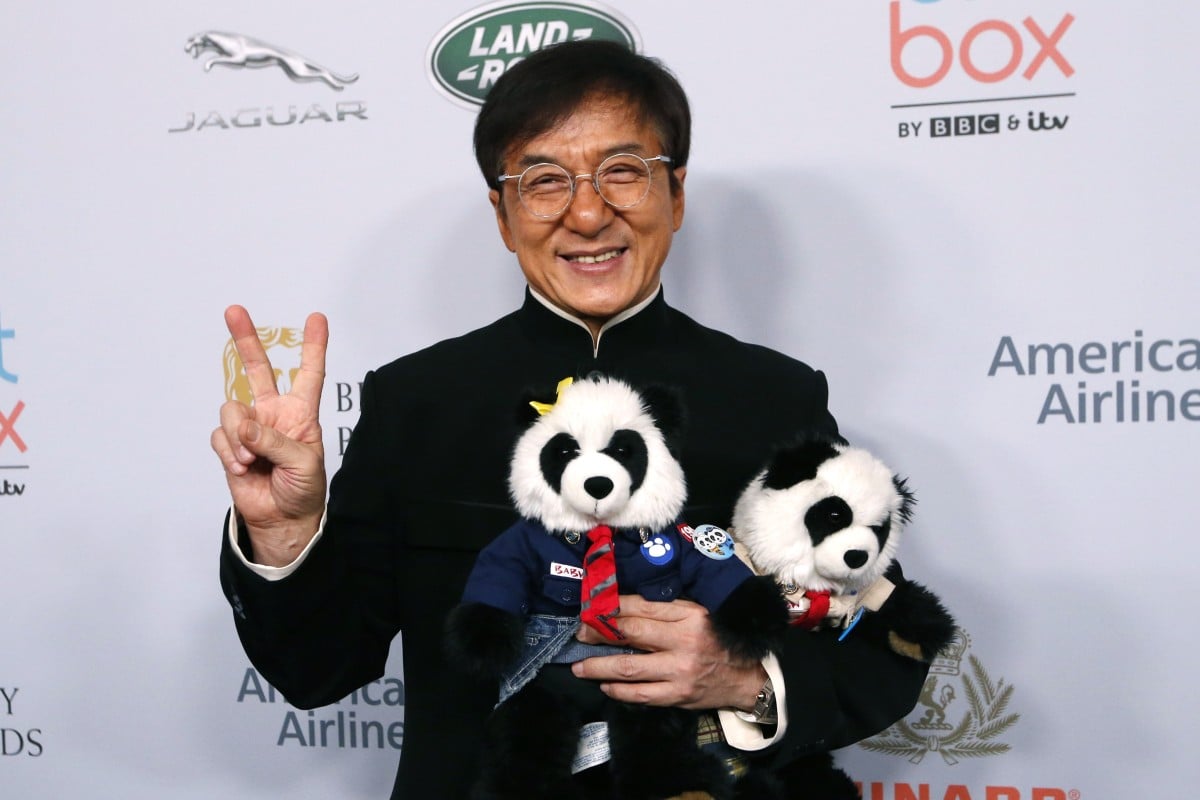
Film star Jackie Chan. Photo: Reuters
Martial arts film star Jackie Chan’s planned visit to Vietnam for a charity has been cancelled following an online backlash related to Beijing’s expansive claims in the disputed South China Sea.
The Hong Kong-born actor was set to visit Hanoi on November 10 to support Operation Smile, a charity that gives free surgery to children with facial disfigurements.
Jackie Chan says he wants to make films in Saudi Arabia
But the plans were scrapped after thousands of angry Facebook users flooded the charity’s official page when his visit was announced last week.
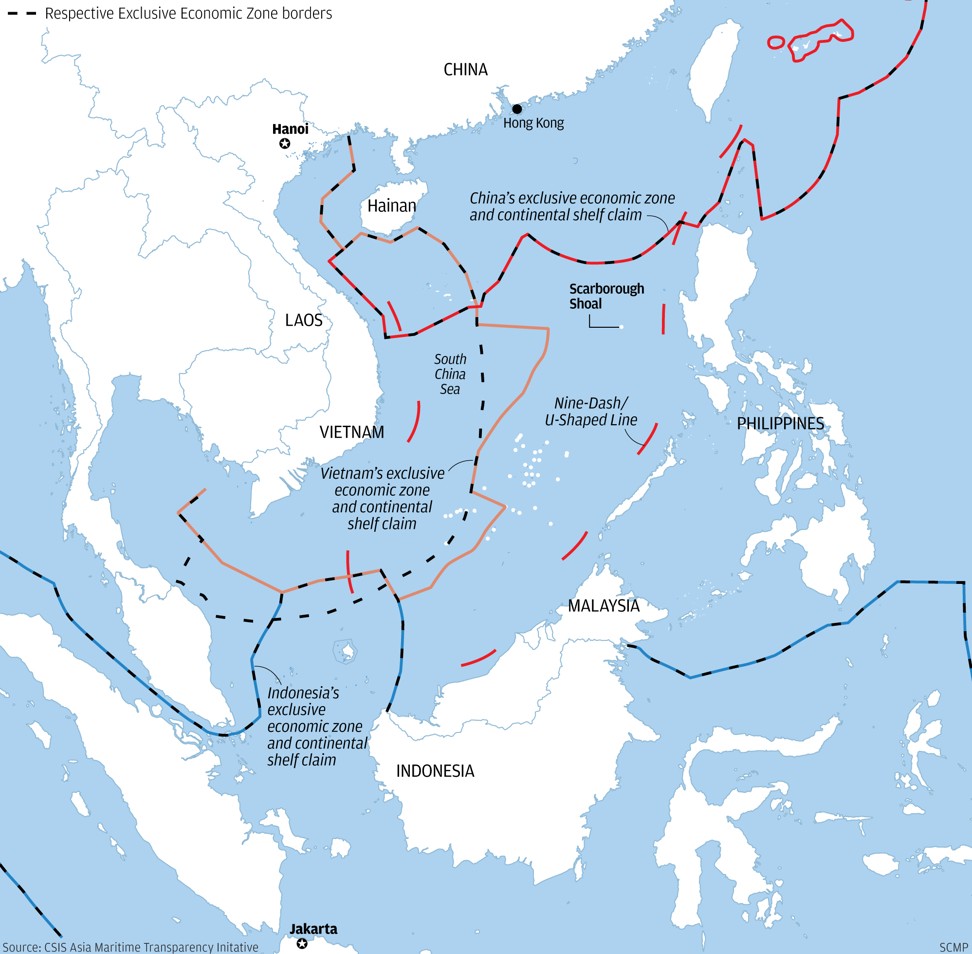
Some of their comments claimed Chan had spoken in support of China’s so-called nine-dash line – its historical justification for its territorial claims in the resource-rich sea.
A map showing claimant countries’ exclusive economic zones in the South China Sea.
However, Chan has not explicitly expressed public support for the controversial maritime assertion.
Vietnam, Malaysia, the Philippines, Taiwan and Brunei all have competing claims in the waterway that overlap with China’s – long a source of tension in the region.
Issuing a mea culpa on Friday for failing “to predict the reaction” of the Vietnamese public, the charity asserted that their work is “non-political”.
“We are very sorry … Operation Smile will not organise any activities with [Chan’s] involvement” in Vietnam, they said.
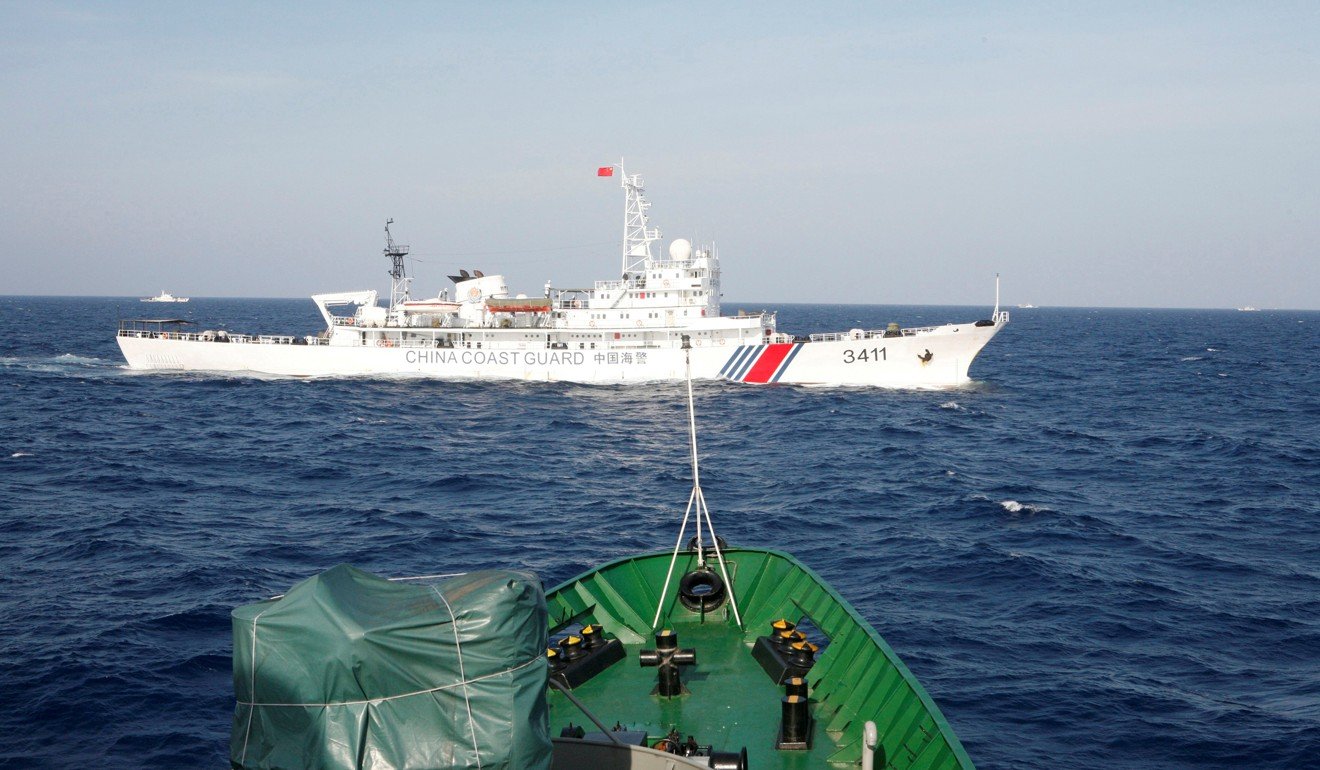
A Chinese coastguard ship sails by a Vietnamese vessel off the coast of Vietnam in 2014. Photo: Reuters
Vietnam is one of Beijing’s most vocal critics over the flashpoint South China Sea issue.
The foreign ministry on Thursday repeated its usual proclamation on the sea, citing the country’s “full legal basis and true evidence to affirm Vietnam’s sovereignty”, deputy spokesperson Ngo Toan Thang said.
Chan has in the past been accused of siding with China over Hong Kong’s democracy protests after calling the unrest in his hometown “sad and depressing”.
The comment sparked ire in Hong Kong but was warmly received by many in China where he has a massive fan base.
Abominable has been criticised for a scene showing the nine-dash line. Photo: DreamWorks
Beijing claims most the South China Sea through the vague delineation, which is based on maps from the 1940s as the then-Republic of China snapped up islands from Japanese control.
Chinese Vice President Wang Qishan (L) attends a banquet held by Japanese Emperor Naruhito and Empress Masako in Tokyo, Japan, Oct. 22, 2019. Chinese Vice President Wang Qishan on Friday rounded off a fruitful friendly visit to Japan. During the five-day visit as Chinese President Xi Jinping’s special envoy, Wang attended the enthronement ceremony of Japanese Emperor Naruhito. (Xinhua)
SAPPORO, Japan, Oct. 25 (Xinhua) — Chinese Vice President Wang Qishan on Friday rounded off a fruitful friendly visit to Japan, with the two neighbors pledging continued efforts to foster a relationship that fits the needs of the new era.
During the five-day visit as Chinese President Xi Jinping’s special envoy, Wang attended the enthronement ceremony of Emperor Naruhito, and met separately with Prime Minister Shinzo Abe and Deputy Prime Minister and Finance Minister Taro Aso.
On Tuesday, when Emperor Naruhito officially proclaimed his enthronement, Wang conveyed to him and Empress Masako the sincere congratulations of Xi and his wife, Peng Liyuan, and asked the emperor and empress to pass on Xi and Peng’s cordial greetings to Emperor Emeritus Akihito and Empress Emerita Michiko.
Emperor Naruhito, for his part, asked Wang to communicate to the Chinese president and his wife the genuine gratitude and best wishes of the imperial couple as well as of the emperor emeritus and empress emerita.
In his meeting with Abe, Wang conveyed to him the cordial greetings of Xi and Chinese Premier Li Keqiang, and expressed sympathies over the serious casualties and losses caused by Typhoon Hagibis, an unusually monstrous tropical cyclone that recently wreaked havoc in Japan.
The vice president recalled that Xi and Abe met in the Japanese city of Osaka in June and reached a series of important consensus on pushing for a China-Japan relationship that fits the needs of the new era, creating new opportunities for the development of bilateral ties.
The two sides, he added, should abide by the principles set forth in the four political documents between China and Japan, properly address such issues as history and Taiwan, and ensure that their relations will move forward along the right track of peace, friendship and cooperation.
China stands ready to work with Japan to continuously cement political mutual trust, deepen practical cooperation, expand people-to-people exchanges and build a constructive security relationship, said Wang.
He also called on the two countries to join hands to act as defenders of multilateralism, promoters of open cooperation, and practitioners of cross-civilization dialogue, and make positive contributions to advancing global and regional peace, stability and development.
Noting that Xi has accepted in principle Abe’s invitation for a state visit to Japan next spring, Wang said he hopes that the two sides will maintain close contact and coordination, so as to create a favorable environment and a conducive atmosphere and ensure that the visit will materialize smoothly and achieve complete success.
The Japanese prime minister once again extended congratulations on the 70th anniversary of the founding of the People’s Republic of China (PRC), and thanked Xi for sending Wang as his special envoy to attend Emperor Naruhito’s enthronement ceremony and pay a friendly visit to Japan.
Japan and China have a long history of exchanges and boast a solid traditional friendship, Abe said, adding that today the two countries enjoy steadily deepening cooperation on economy and trade, deal with international affairs side by side, and shoulder great responsibility for peace and prosperity in Asia as well as the whole world.
As both countries are entering a new era, and the Osaka meeting has facilitated a full return of Japan-China relations to normal development, the two sides have huge potential in future cooperation, added the Japanese prime minister.
The Japanese side, he said, earnestly looks forward to Xi’s state visit to Japan in the coming spring, and is willing to properly handle the Taiwan question and other sensitive issues.
He added that his country stands ready to make concerted efforts with China to enhance top-level planning for bilateral relations, maintain the momentum of high-level exchanges, and build a Japan-China relationship that is beautiful, harmonious, future-oriented and vigorous.
In his meeting with Aso, Wang said China and Japan, as important countries in Asia and major economies in the world, should more consciously perceive and handle their relationship against the backdrop of the world and the times, and manage and plan it from long-term, strategic perspectives.
In the new era, the two countries have broader common interests and more common concerns, and the strategic value of their relationship is growing ever more prominent, noted the Chinese vice president.
China, he said, stands ready to work with Japan to effectively seize the opportunities and, with their eyes set on the future and the big picture, comprehensively strengthen coordination and communication in various areas including financial cooperation, so as to lift bilateral ties to a higher level.
Aso said that boosting candid, open and constructive exchanges between the two countries is conducive to bilateral relations, and that Japan supports open market and free trade, and is willing to step up communication and cooperation with China in the financial realm.
The Japanese side, added the deputy prime minister, is actively making preparations in order to foster a conducive atmosphere for Xi’s planned visit next year.
Also during his stay in Japan, Wang held separate meetings with Chief Cabinet Secretary Yoshihide Suga, former Prime Minister Yasuo Fukuda, Secretary General Toshihiro Nikai of the ruling Liberal Democratic Party, and Governor Naomichi Suzuki of the Hokkaido prefecture.
In addition, he met with Pakistani President Arif Alvi in Tokyo.
Soldiers from 140 countries are expected to take part in 10-day sporting event in Wuhan, Hubei province
It coincides with the Xiangshan Forum, where Beijing may seek to reinforce its position on issues like the South China Sea and US arms sales to Taiwan
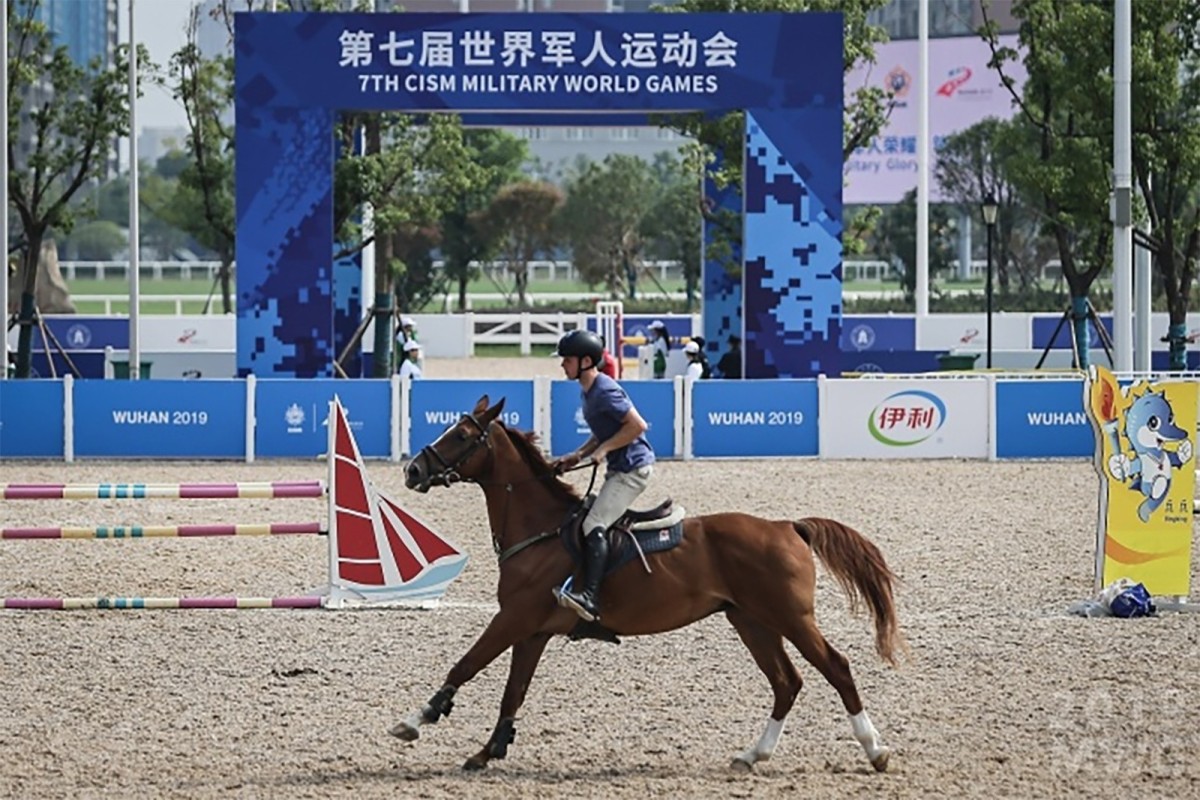
More than 100 horses have arrived in Wuhan for the equestrian and modern pentathlon events of the Military World Games, which begin on Friday. Photo: Handout
President Xi Jinping is expected to open the Military World Games in central China on Friday, setting the stage for a People’s Liberation Army charm offensive as it seeks to strengthen ties with foreign forces and exert its influence.
China is hosting the 10-day sporting event in Wuhan, Hubei province, and soldiers from 140 countries are expected to take part. It will coincide with the three-day Xiangshan Forum – China’s equivalent of the Shangri-La Dialogue in Singapore – to be held on the outskirts of Beijing from Sunday.
It comes after China staged a lavish military parade in Beijing to celebrate the 70th anniversary of the People’s Republic on October 1, showcasing some of the PLA’s most advanced weapon systems and strategic weaponry.
A Chinese military insider on Tuesday said Xi was expected to kick off the games in Wuhan – a symbolic move by the president as he seeks to boost the PLA’s international profile.
China has built a new athletes’ village in Wuhan that can accommodate 10,000 people. Photo: Handout
“[China sees] the Military World Games as a platform to promote international military diplomacy and an opportunity for the PLA to build its international image through sporting events,” the insider said.
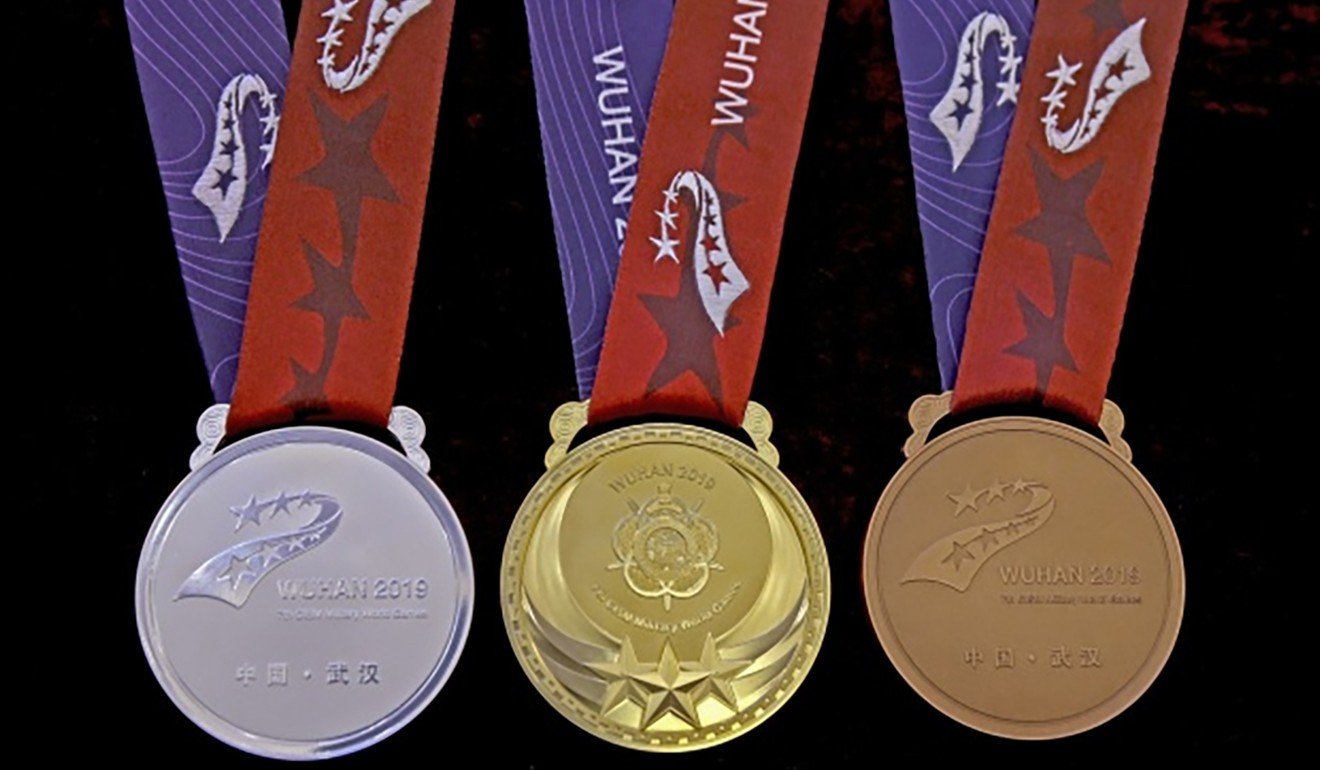
It will be the first time China hosts the Military World Games, which is the second-biggest multi-sport event after the Olympics and is also held every four years.
To host the mega event, China has built a new athletes’ village in Wuhan that can accommodate the 10,000 military athletes who will compete. This year’s games will have the largest number of events ever, with badminton, table tennis, tennis and men’s gymnastics included for the first time.
The US Armed Forces will send about 300 athletes to Wuhan, according to state-run Xinhua. One of them is Mark Juliano, an archer and taekwondo player, who told the news agency: “You developed world-class venues and I can’t wait to experience the games.”
The Chinese president has high hopes for the PLA athletes at this year’s Military World Games, according to an insider. Photo: Handout
The military insider said Xi had high hopes that the PLA would win gold in some of the events.
“The Russians are known to be very good at some sports but the PLA has yet to earn a reputation in any particular sport,” the insider said. “Xi hopes that the home ground advantage will give the PLA the edge this time.”
Another Beijing-based military source said the top brass had put great emphasis on the success of three events this year – the National Day parade, Military World Games and the Xiangshan Dialogue.
The source said it would be the biggest Xiangshan Forum since China began holding the event more than a decade ago, and dozens of senior foreign defence officials and military leaders invited to the games in Wuhan would also take part in the forum.
How robots are revolutionising China’s firework factories
Set up in 2006, China uses the forum to play host to foreign military experts and leaders and discuss security and defence issues in the Asia-Pacific region. It is widely seen as an effort by Beijing to compete with the Asia Security Forum in Singapore, also known as the Shangri-La Dialogue after the hotel where it is staged.
The theme of this year’s Xiangshan Forum is “Maintaining international order and promoting peace in the Asia-Pacific”. Military observers said Beijing was likely to use it as an opportunity to reinforce its position on issues like the South China Sea and US arms sales to Taiwan.
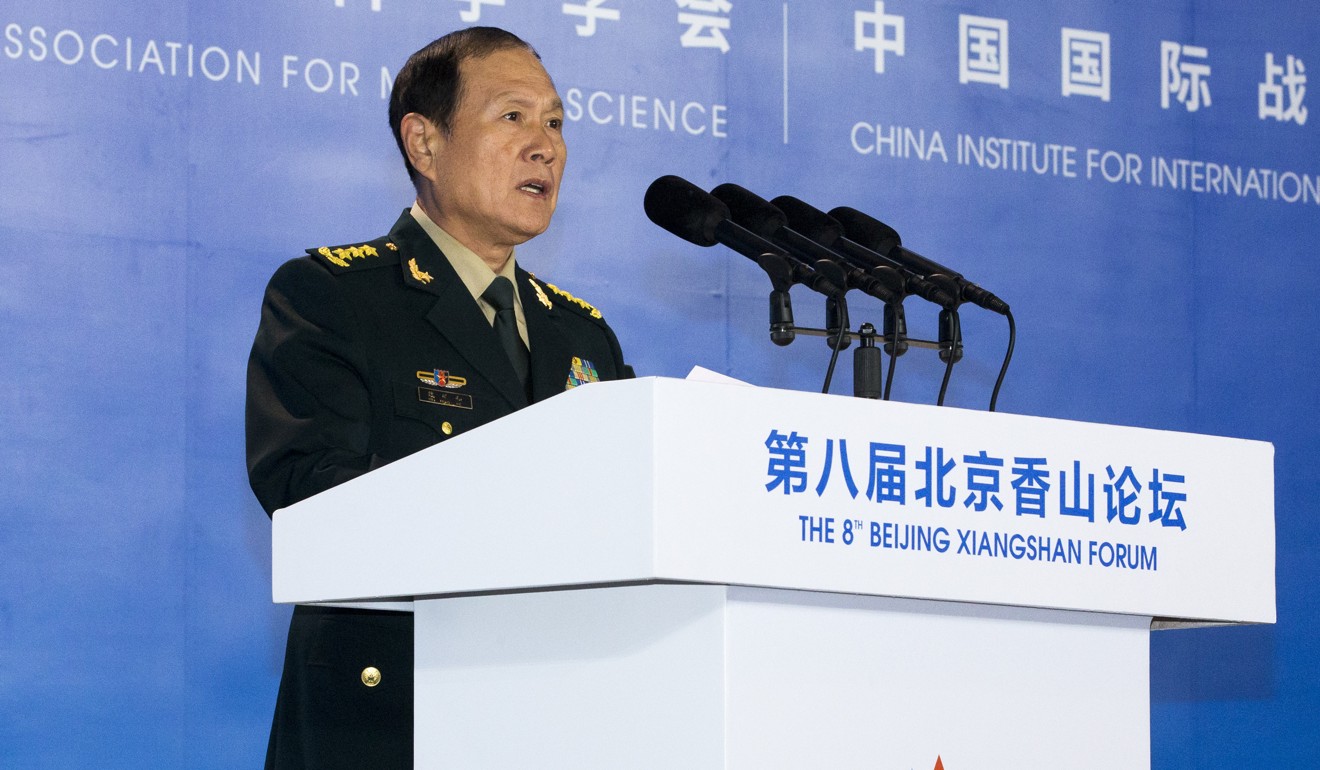
Defence Minister Wei Fenghe criticised the US for damaging ties with China at last year’s Xiangshan Forum. Photo: Xinhua
Yao Yunzhu, a retired PLA major general and a delegate at the forum, said this year’s event would give the PLA an opportunity to explain its strategy to foreign militaries, including the US.
“The relationship between the PLA and its American counterpart has been stable over the past year despite tensions between Beijing and Washington over issues such as trade,” Yao said.
“But that military relationship has been stable thanks to the efforts of the two militaries to keep their communication open, as well as improving their crisis management mechanism,” she added.
Another forum delegate, Zhu Feng, dean of the international relations school at Nanjing University, said smaller countries in the region would use the forum to raise their concerns over the impact of tensions between China and the US on the region’s long-term stability.
HANOI (Reuters) – Vietnamese President and Communist Party chief Nguyen Phu Trong has called for restraint in the disputed South China Sea amid a tense months-long standoff between Chinese and Vietnamese ships, state media reported on Tuesday.
China claims almost all the energy-rich waters but neighbours Brunei, Malaysia, the Philippines, Taiwan and Vietnam also have claims.
Tension escalated when Beijing dispatched a research ship to conduct an energy survey in waters controlled by Vietnam in July.
“On the subject of foreign policy, including the East Sea issue, the General Secretary stressed the importance of maintaining a peaceful and stable environment, and resolutely fighting to protect Vietnam’s independence, sovereignty and territorial integrity,” the state-run Voice of Vietnam (VOV) said on its website.
The South China Sea is known as the East Sea in Vietnam.
Vietnam has good relations with China but should “never compromise” on its sovereignty and territorial integrity, VOV quoted Trong as saying.
The Chinese vessel, the Haiyang Dizhi 8, was continuing its survey in Vietnam’s exclusive economic zone late on Tuesday, under escort from at least three Chinese ships, according to data from Marine Traffic, a website that tracks vessel movements.
Vietnam’s foreign ministry has repeatedly accused the vessel and its escorts of violating its sovereignty and has demanded that China remove its ships from the area.
On Sunday, Vietnam pulled DreamWorks’ animated film “Abominable” from cinemas over a scene featuring a map which shows China’s unilaterally declared “nine-dash line” in the South China Sea.
The U-shaped line is used on Chinese maps to illustrate its claims, including large swathes of Vietnam’s continental shelf, where it has awarded oil concessions.
In August, police broke up a brief protest outside the Chinese embassy in Hanoi over the survey vessel.
Trong has made more public appearances in recent weeks after suffering from an unspecified illness..
The 75-year-old has presided over a widespread crackdown on corruption in the Southeast Asian country that has seen several high-ranking ministers and politicians, including one Politburo member, sent to prison on charges ranging from embezzlement to economic mismanagement.
President Tsai Ing-wen also vowed in a National Day speech to defend Taiwan’s sovereignty, saying her government would safeguard freedom and democracy as Beijing ramps up pressure on the self-ruled island it considers a wayward province.
Tsai, who is seeking re-election in January amid criticism of her policy towards China, referred to the arrangement for the return of the former British colony of Hong Kong to Chinese rule in 1997 as a failure.
Hong Kong has been hit by months of anti-government protests triggered by widespread resentment of what many city residents see as relentless efforts by Beijing to exert control of their city despite the promises of autonomy.
China has proposed that Taiwan be brought under Chinese rule under a similar arrangement, but Tsai said Beijing’s policies towards the island were a danger to regional stability.
“China is still threatening to impose its ‘one country, two systems’ model for Taiwan. Their diplomatic offensives and military coercion pose a serious challenge to regional stability and peace,” Tsai said.
“When freedom and democracy are challenged, and when the Republic of China’s existence and development are threatened, we must stand up and defend ourselves,” Tsai said, referring to Taiwan by its official name.
“The overwhelming consensus among Taiwan’s 23 million people is our rejection of ‘one country, two systems,’ regardless of party affiliation or political position.”
Taiwan’s National Day, marking the anniversary of the start of a 1911 uprising that led to the end of dynastic rule in China and the founding of a republic, was celebrated in Taipei with singing, dancing and parades.
Cold War hostility between the island and the mainland had eased over the past decade or so as both sides focused more on expanding business ties, but relations have cooled considerably since Tsai took office in 2016.
China suspects Tsai and her independence-leaning Democratic Progressive Party of pushing for the island’s formal independence, and this year threatened it with war if there was any such move.
Tsai denies seeking independence and reiterated that she would not unilaterally change the status quo with China.
FLASHPOINT
Despite her assurances, Beijing has stepped up pressure on the island to seek “reunification” and backed up its warnings by flying regular bomber patrols around it.
Beijing also says Taiwan does not have the right to state-to-state relations and is keen to isolate it diplomatically.
Seven countries have severed diplomatic ties with the Taiwan and switched allegiance to Beijing since Tsai coming to power. It now has formal diplomatic ties with just 15 nations.
But Tsai said Taiwan was undaunted.
“The determination of the Taiwanese people to embrace the world has never wavered,” she said, adding that Taiwan must work with “like-minded countries” to ensure peace and stability across the Taiwan Strait.
Tsai said under her watch Taiwan has boosted its combat capabilities with the purchase of advanced weapons and development of home-made aircraft.
Taiwan unveiled its largest defence spending increase in more than a decade in August, aiming to purchase more advanced weapons from overseas.
The island has long been a flashpoint in the U.S.-China relationship.
In July, the United States approved the sale of an $2.2 billion worth of weapons to Taiwan, angering Beijing.
The United States has no formal ties with Taiwan but is bound by law to help provide it with the means to defend itself.
70th anniversary of the founding of the People’s Republic of China marked by its biggest ever military parade and huge civilian parade
Xi says no force can stop China ‘marching forward’ and vows to protect the long-term stability of Hong Kong
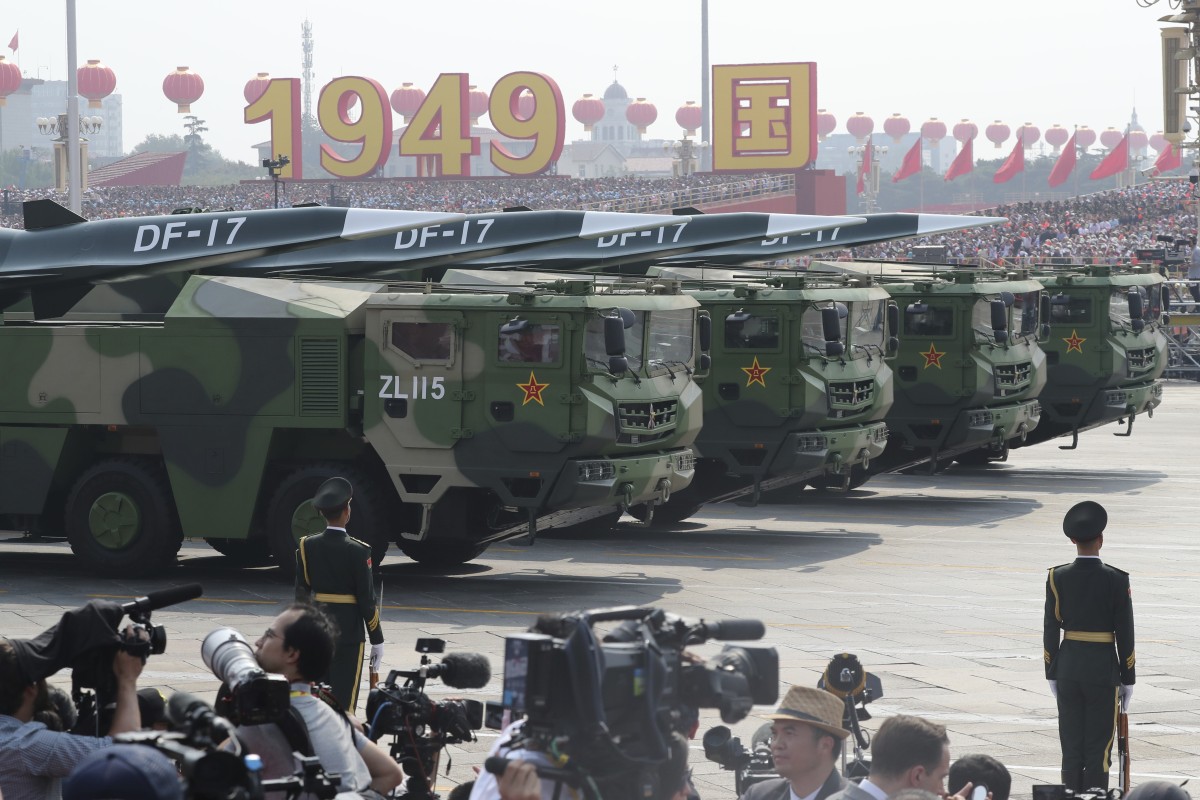
Military vehicles carry DF-17 missiles capable of reaching the US mainland during the parade to mark 70 years of the People’s Republic. Photo: AP
China staged a massive military parade in Beijing on Tuesday to mark the 70th anniversary of the founding of the People’s Republic, with much of the smog-shrouded capital city under a security lockdown.
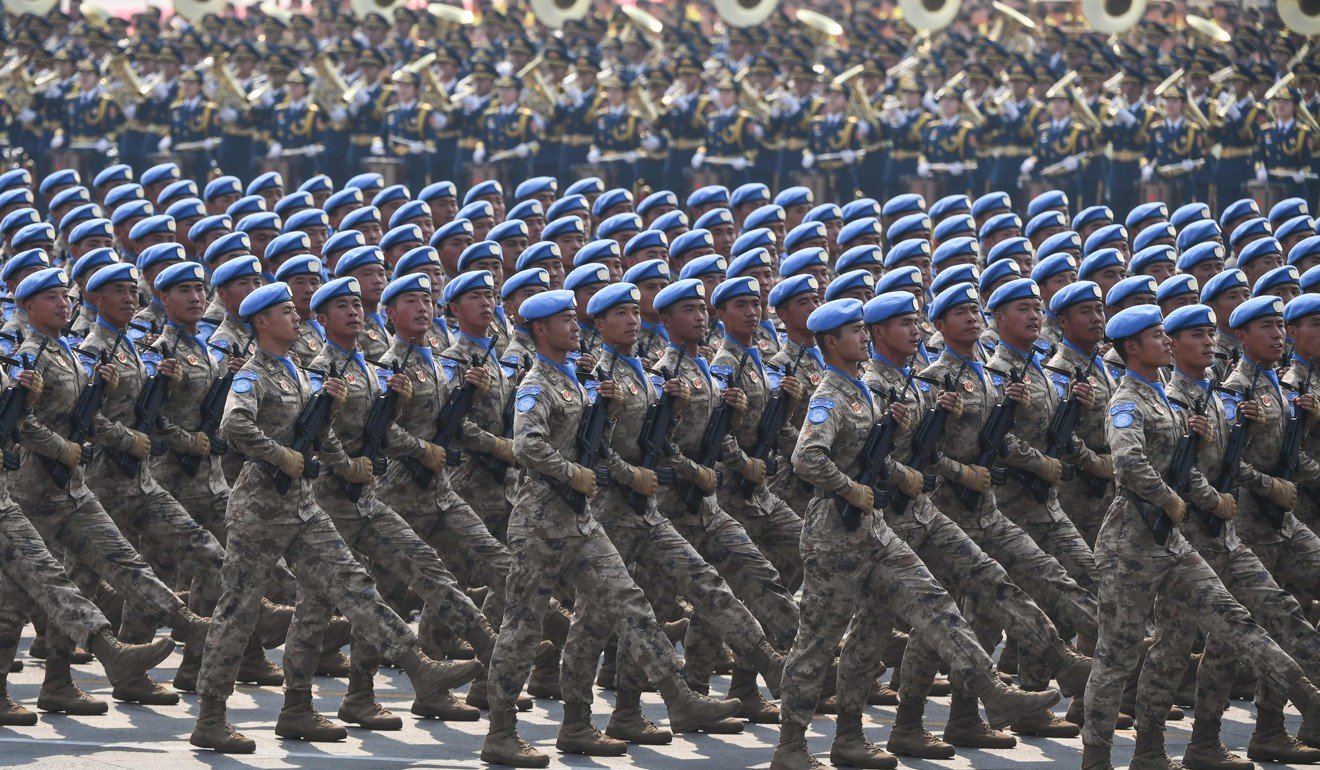
President Xi Jinping inspected over 15,000 troops, more than 160 aircraft and 580 weapon systems in a show of the country’s growing military might and his drive to modernise the People’s Liberation Army.
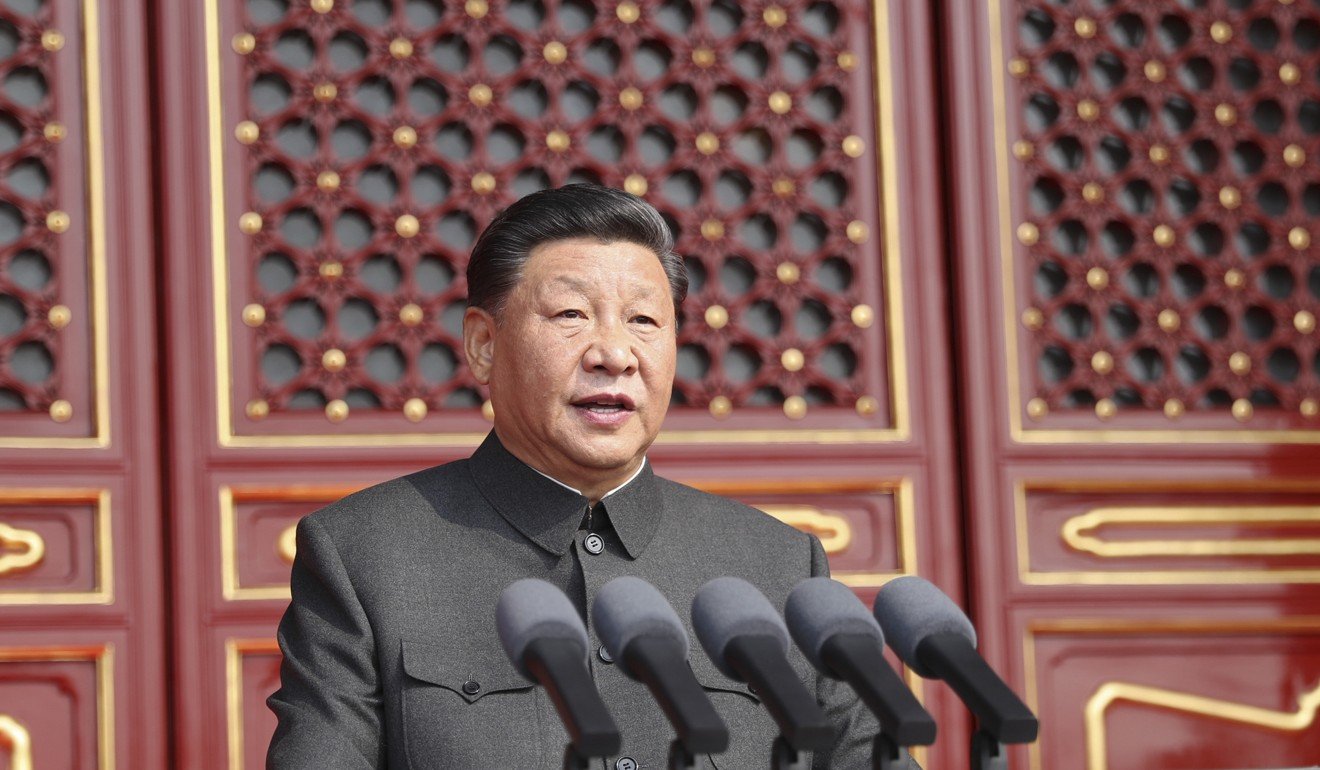
He also delivered a bullish eight-minute speech hailing the accomplishments of seven decades of Communist rule and pledging to achieve his vision of a “Chinese dream” of national rejuvenation and global prominence.
Here are some of the key takeaways from a day of celebration in Beijing:
A show of unity
Xi presided over the ceremony in Tiananmen Square flanked by his predecessors Jiang Zemin and Hu Jintao, along with other retired and present party elders.
The rare appearance of Jiang and Hu – on the rostrum of the Gate of Heavenly Peace, where the country’s founding father Mao Zedong declared Communist rule on October 1, 1949 – was clearly aimed at projecting unity and solidarity in the face of daunting domestic and international challenges.
China’s National Day parade, as it happened
Hu had been absent from the funeral of former premier Li Peng in late July, although the ailing Jiang attended.
Former vice-president Zeng Qinghong and Song Ping, the oldest party elder in attendance, also appeared on the rostrum.
President Xi Jinping speaks in Tiananmen Square during Tuesday’s celebrations. Photo: Xinhua
But notably, while former premier Wen Jiabao was present, his predecessor Zhu Rongji was not.
‘No force can shake China’
Dressed in a Mao suit, Xi’s nationally televised speech invoked China’s “century of humiliation” and praised the achievements of its people, saying there was no force that could stop it forging ahead.
“No force can shake the status of our great motherland, and no force can stop the Chinese people and the Chinese nation from marching forward,” he said.
Chinese troops take part in the Republic’s largest ever military parade. Photo: AFP
“The People’s Liberation Army [PLA] will serve its purpose in safeguarding the sovereignty, security and development interests of the country, and world peace,” he said, at a time when Beijing has expanded its military footprint globally, including with its first overseas military base in Djibouti.
Xi called on the Communist Party and the country to unite and continue to fight for the realisation of what he called the “Chinese dream” – the nation’s rejuvenation.
One country, two systems
Amid escalating unrest in Hong Kong, which has plunged the city into a deepening crisis and threatened to overshadow the National Day celebrations, Xi vowed that the central government would uphold “one country, two systems”.
He said the central government would protect the long-term stability of Hong Kong and Macau, and stressed the goal of “peaceful reunification” with the self-ruling Taiwan, repeating a message frequently used by his predecessors, including Deng Xiaoping, Jiang and Hu.
The theme of one country, two systems later appeared in a National Day parade for the first time, with placards forming the words: “Hong Kong’s tomorrow will be better.”
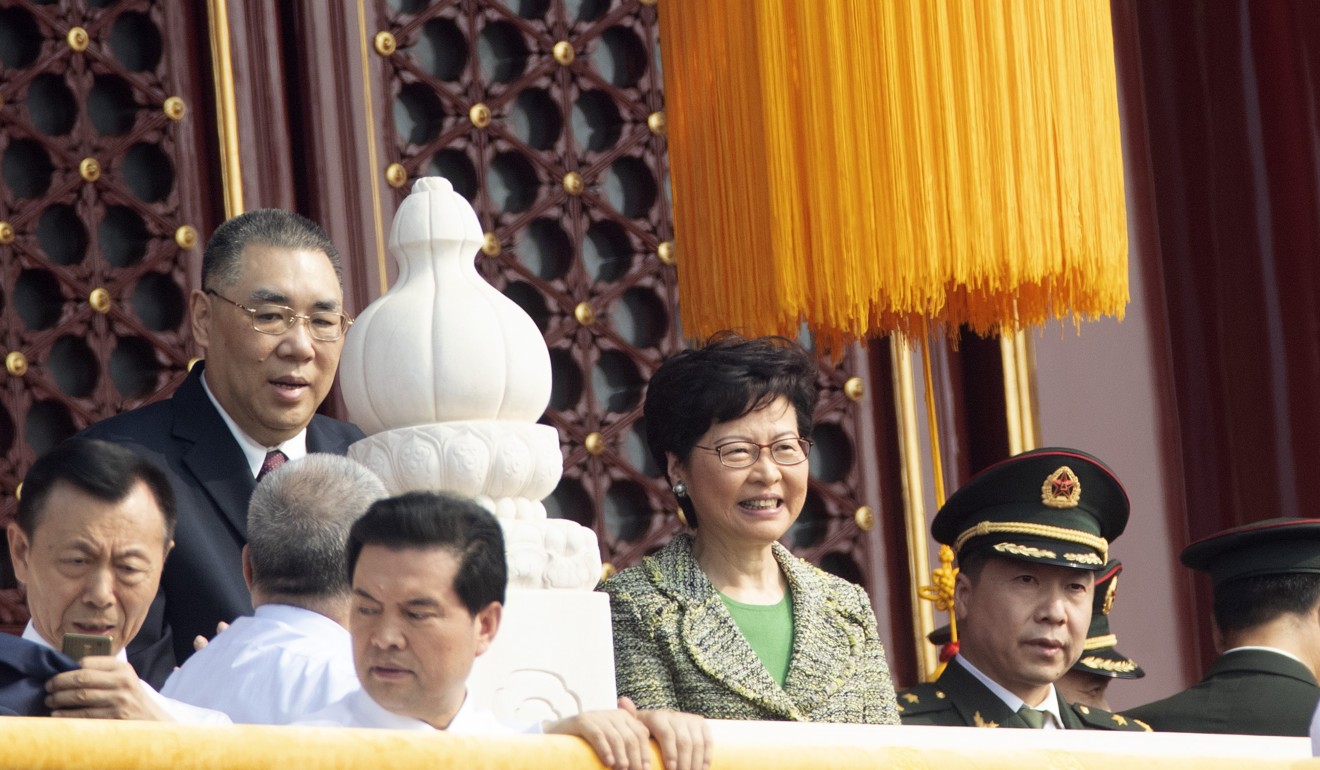
Hong Kong Chief Executive Cheng Yuet-ngor attended the ceremony, as did 10 Hong Kong police officers involved in suppressing anti-government protests in the city.
Showing off new weapons
China’s advancement in military weaponry was on full display, with almost half of the items featured being shown to the public for the first time.
Hong Kong leader Carrie Lam was among the guests in Beijing on Tuesday. Photo: AP
The morning’s celebrations included an 80-minute military parade – the biggest since the founding of the People’s Republic – in an apparent effort to showcase the prowess of the PLA, the world’s biggest military with 2 million personnel.
Among the weapons shown were DF series missiles, including the DF-17, a nuclear-capable glider that has the capacity to strike the US mainland, and the DF-41, which has a range of up to 15,000km, making it the world’s longest-range military missile.
Signalling Xi’s status
A 100,000-strong civilian parade featuring huge portraits of Xi and predecessors including Mao, Deng, Jiang and Hu wrapped up the morning celebration.
The procession was divided into three parts, representing three eras of the People’s Republic: the Mao era, Deng’s reform and opening up, and Xi’s era, which seeks global prominence on a par with that of the United States.
Xi appeared keen to project his supreme status in the party, reinforced since he abolished the constitutional term limit a year ago, allowing him potentially to remain leader for life.
He waved at his own portrait, unveiled alongside a sign reading “Carry out Xi Jinping Thought on Socialism with Chinese Characteristics for a New Era”.
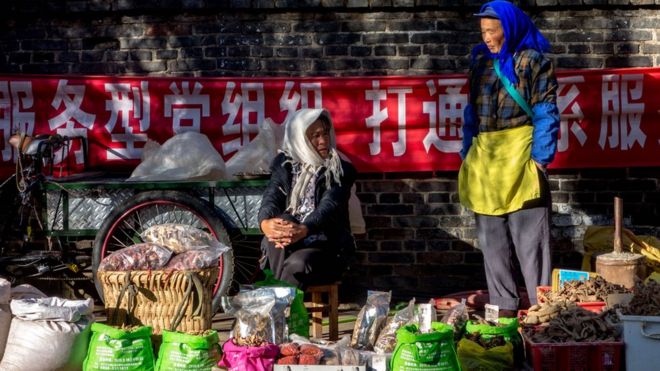
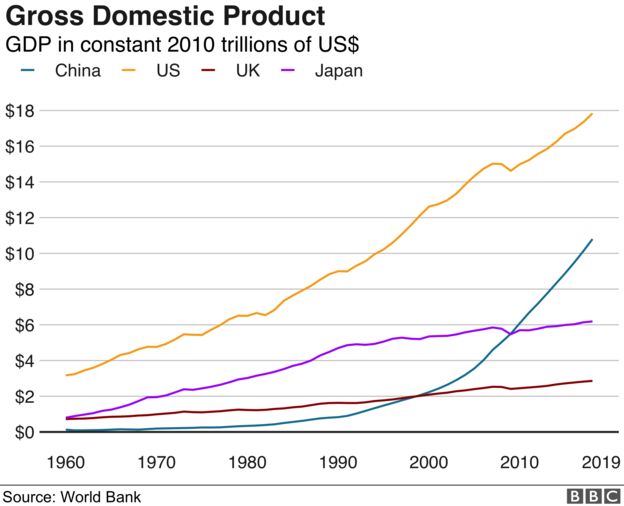
It took China less than 70 years to emerge from isolation and become one of the world’s greatest economic powers.
As the country celebrates the anniversary of the founding of the People’s Republic of China, we look back on how its transformation spread unprecedented wealth – and deepened inequality – across the Asian giant.
“When the Communist Party came into control of China it was very, very poor,” says DBS chief China economist Chris Leung.
“There were no trading partners, no diplomatic relationships, they were relying on self-sufficiency.”
Over the past 40 years, China has introduced a series of landmark market reforms to open up trade routes and investment flows, ultimately pulling hundreds of millions of people out of poverty.
The 1950s had seen one of the biggest human disasters of the 20th Century. The Great Leap Forward was Mao Zedong’s attempt to rapidly industrialise China’s peasant economy, but it failed and 10-40 million people died between 1959-1961 – the most costly famine in human history.
This was followed by the economic disruption of the Cultural Revolution in the 1960s, a campaign which Mao launched to rid the Communist party of his rivals, but which ended up destroying much of the country’s social fabric.
‘Workshop of the world’
Yet after Mao’s death in 1976, reforms spearheaded by Deng Xiaoping began to reshape the economy. Peasants were granted rights to farm their own plots, improving living standards and easing food shortages.
The door was opened to foreign investment as the US and China re-established diplomatic ties in 1979. Eager to take advantage of cheap labour and low rent costs, money poured in.
“From the end of the 1970s onwards we’ve seen what is easily the most impressive economic miracle of any economy in history,” says David Mann, global chief economist at Standard Chartered Bank.
Through the 1990s, China began to clock rapid growth rates and joining the World Trade Organization in 2001 gave it another jolt. Trade barriers and tariffs with other countries were lowered and soon Chinese goods were everywhere.
“It became the workshop of the world,” Mr Mann says.
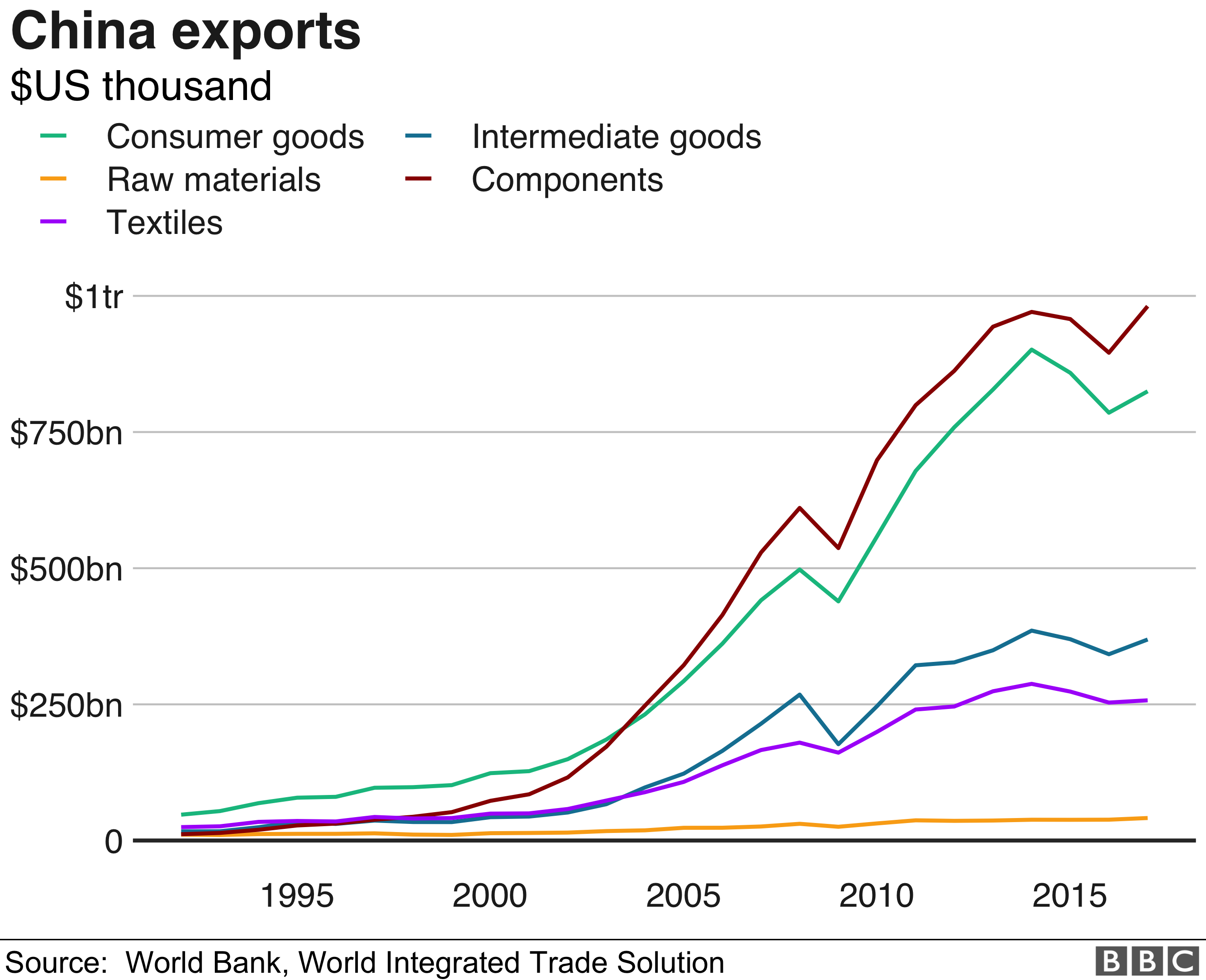
Take these figures from the London School of Economics: in 1978, exports were $10bn (£8.1bn), less than 1% of world trade.
By 1985, they hit $25bn and a little under two decades later exports valued $4.3trn, making China the world’s largest trading nation in goods.
Poverty rates tumble
The economic reforms improved the fortunes of hundreds of millions of Chinese people.
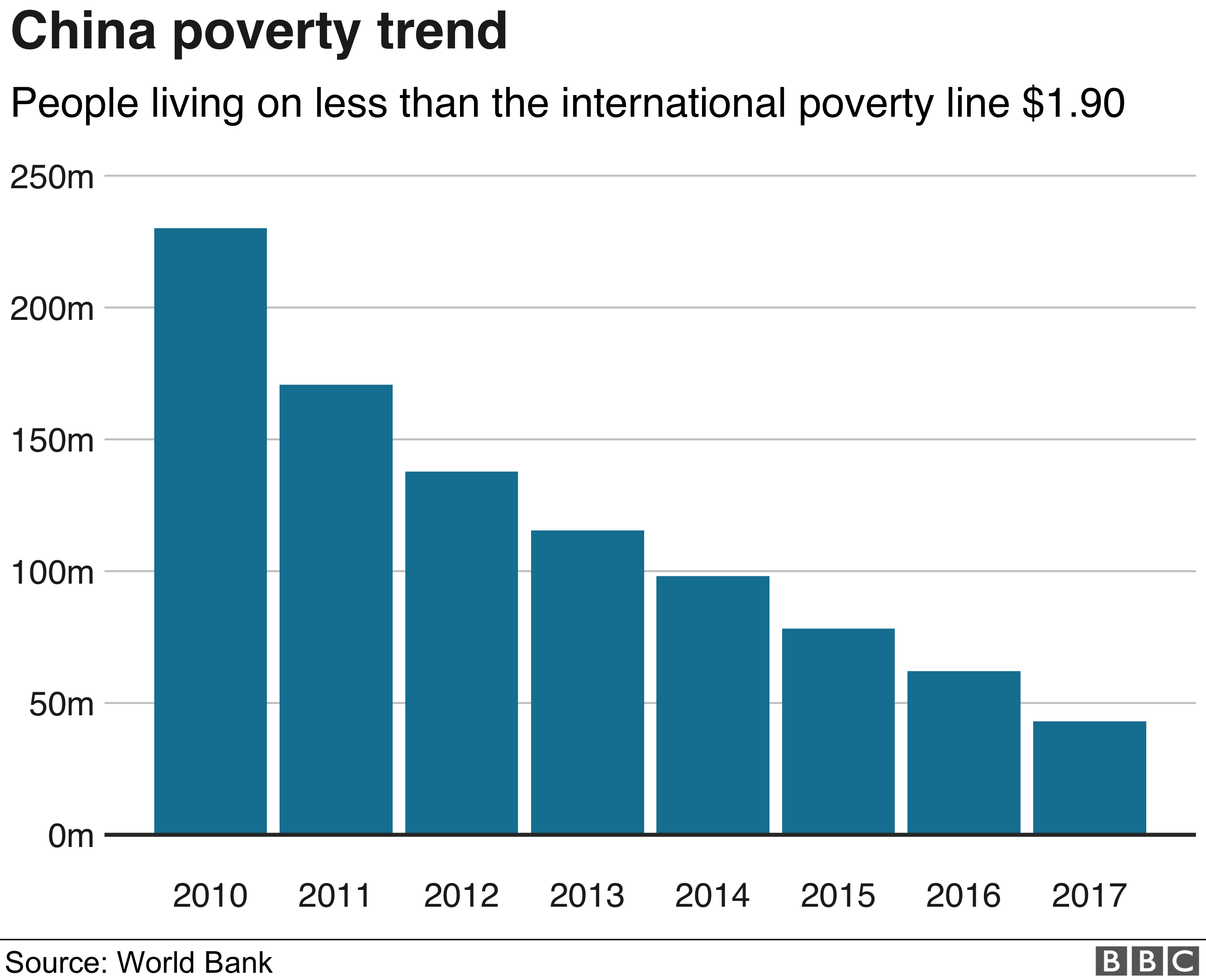
The World Bank says more than 850 million people been lifted out of poverty, and the country is on track to eliminate absolute poverty by 2020.
At the same time, education rates have surged. Standard Chartered projects that by 2030, around 27% of China’s workforce will have a university education – that’s about the same as Germany today.
Rising inequality
Still, the fruits of economic success haven’t spread evenly across China’s population of 1.3 billion people.
Examples of extreme wealth and a rising middle class exist alongside poor rural communities, and a low skilled, ageing workforce. Inequality has deepened, largely along rural and urban divides.
“The entire economy is not advanced, there’s huge divergences between the different parts,” Mr Mann says.
The World Bank says China’s income per person is still that of a developing country, and less than one quarter of the average of advanced economies.
China’s average annual income is nearly $10,000, according to DBS, compared to around $62,000 in the US.
Slower growth
Now, China is shifting to an era of slower growth.
For years it has pushed to wean its dependence off exports and toward consumption-led growth. New challenges have emerged including softer global demand for its goods and a long-running trade war with the US. The pressures of demographic shifts and an ageing population also cloud the country’s economic outlook.
Still, even if the rate of growth in China eases to between 5% and 6%, the country will still be the most powerful engine of world economic growth.
“At that pace China will still be 35% of global growth, which is the biggest single contributor of any country, three times more important to global growth than the US,” Mr Mann says.
The next economic frontier
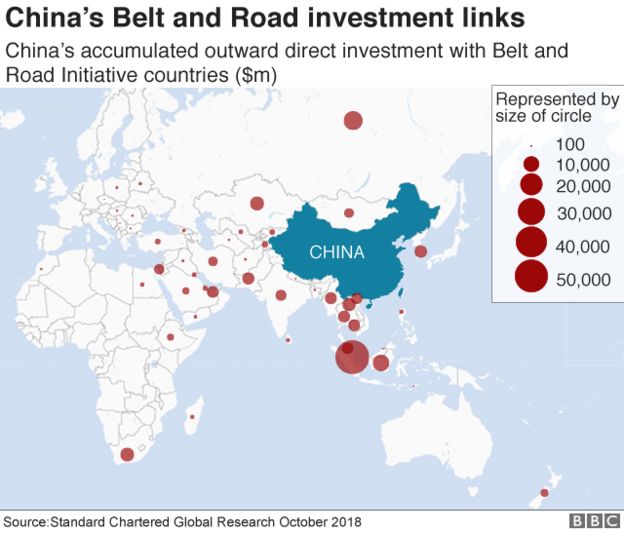
China is also carving out a new front in global economic development. The country’s next chapter in nation-building is unfolding through a wave of funding in the massive global infrastructure project, the Belt and Road Initiative.
The so-called new Silk Road aims to connect almost half the world’s populations and one-fifth of global GDP, setting up trade and investment links that stretch across the world.
BEIJING, Sept. 28 (Xinhua) — The resumption of diplomatic ties between the governments of China and Kiribati fully demonstrates that the one-China principle meets the shared aspiration of the people and constitutes an irresistible trend of the times, Foreign Ministry Spokesperson Geng Shuang said Saturday.
Chinese State Councilor and Foreign Minister Wang Yi and Kiribati’s President and Foreign Minister Taneti Mamau on Friday signed a communique on resuming diplomatic relations at the ambassadorial level between the two countries at the Chinese Permanent Mission to the United Nations in New York.
Geng stressed that there is but one China in the world, that the government of the People’s Republic of China is the sole legitimate government that represents the whole of China and that Taiwan is an inalienable part of China’s territory.
“This is an objective fact, a universally recognized norm of international relations and a general consensus of the international community,” Geng said.
The government of the Republic of Kiribati recognizes and undertakes to stay committed to the one-China principle, sever the so-called “diplomatic relations” with Taiwan authorities and resume diplomatic relations with China. “We support this important decision which Kiribati government has made on its own as an independent sovereign state,” Geng said.
“This again fully demonstrates that the one-China principle meets the shared aspiration of the people and constitutes an irresistible trend of the times,” Geng added.
Relations between China and Pacific island nations are maintaining rapid growth. People of the two countries hold amicable feelings toward each other, he said. “It is the common expectation of all sectors of Kiribati to resume diplomatic relations and strengthen cooperation with China. It is in the fundamental and long-term interests of the two countries and peoples.”
China stands ready to strengthen pragmatic cooperation and friendly exchanges with Kiribati in various fields on the basis of the one-china principle and the Five Principles of Peaceful Coexistence to benefit the two countries and peoples, said the spokesperson.
New system to enable businesses and government agencies to verify mainland-issued travel permits
The new system is expected to expand access to the public transport system on the mainland. Photo: Roy Issa
Hong Kong and Macau residents and “overseas Chinese” may soon be able to have full access to public services on the mainland using their China-issued travel documents, state news agency Xinhua reported.
Xinhua reported on Wednesday that the National Immigration Administration was putting a platform in place to enable government agencies and businesses to verify mainland-issued travel permits for Hong Kong and Macau residents.
“As soon as the platform becomes operational, these overseas travellers can, from October, have access to 35 public services, ranging from transport, to finance, education, communications, medical care and accommodation,” the report said.
According to the report, “overseas travellers” cover Hong Kong and Macau residents and ethnic Chinese living overseas.
But it did not say why the new measures did not apply to people from Taiwan.
The administration did not respond to requests for comment on Thursday.
Will Hong Kong anti-government protests ruin city’s role in Beijing’s Greater Bay Area plan? Depends on whom you ask
The new measure appears to be part of a long-term strategy by Beijing to foster closer ties between the mainland and Hong Kong and Macau.
In the last few years, the central government has launched a host of incentives for Hong Kong and Macau residents and businesses, including opportunities in the Greater Bay Area development plan in southern China.
Ivan Zhai, executive director of the Hong Kong Chamber of Commerce in China-Guangdong, welcomed the new measure.
“If such an arrangement can be fully implemented, Hong Kong businesspeople who operate on the mainland will be thrilled,” Zhai said.
The Hong Kong business community has long lobbied for relaxation over areas such as train ticketing and hotel registration.
Zhai said that although Hong Kong and Macau residents could now book high-speed train tickets with their mainland-issued travel permits, there were few ticket machines that could automatically read the permits, complicating the process.
“There are also hotels on the mainland that can only entertain guests with Chinese identity cards and currently Hong Kong travellers can only go to hotels that are authorised to accept the mainland-issued travel permits,” he said.
China’s regulator relaxes currency conversion rules throughout Shenzhen, sharpening city’s edge in Greater Bay Area
According to the report, there will be stiff penalties for departments or businesses misusing information collected through the platform.
Zhai said Hong Kong businesspeople who travelled to the mainland often were more likely to be concerned about convenience than the risk of invasion of privacy.
“If you are a frequent traveller in China, you would have expected that the relevant departments of the Chinese government already have information about you anyway,” he said.


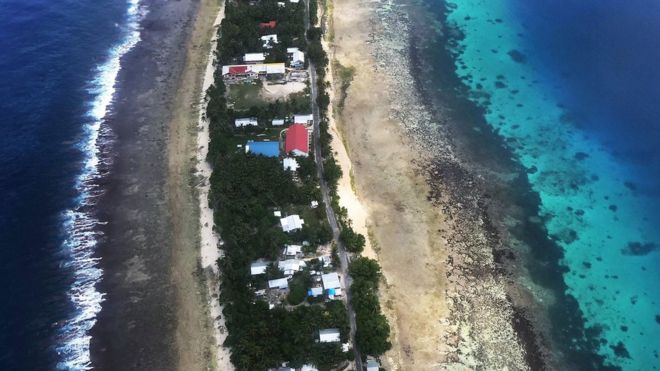 Image copyrightGETTY IMAGES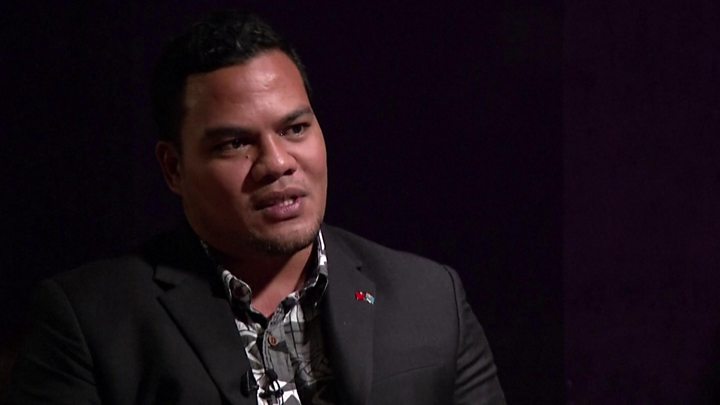





 CHINDIA ALERT: You'll be living in their world, very soon