Chindia Alert: You’ll be Living in their World Very Soon
aims to alert you to the threats and opportunities that China and India present. China and India require serious attention; case of ‘hidden dragon and crouching tiger’.
Without this attention, governments, businesses and, indeed, individuals may find themselves at a great disadvantage sooner rather than later.
The POSTs (front webpages) are mainly 'cuttings' from reliable sources, updated continuously.
The PAGEs (see Tabs, above) attempt to make the information more meaningful by putting some structure to the information we have researched and assembled since 2006.
BEIJING (Reuters) – China announced on Wednesday that its parliament will open a key annual session on May 22, signalling that Beijing sees the country returning to normal after being reduced to a near-standstill for months by the COVID-19 epidemic.
During the gathering of the National People’s Congress in the capital, delegates will ratify major legislation, and the government will unveil economic targets, set defence spending projections and make personnel changes. The ruling Communist Party also typically announces signature policy initiatives.
The session was initially scheduled to start on March 5 but was postponed due to COVID-19, which has infected nearly 83,000 people and killed more than 4,600 on the mainland after emerging late last year in the central city of Wuhan.
As the epidemic has subsided, economic and social life gradually returned to normal, making it possible for the congress to convene, the official Xinhua news agency quoted the standing committee of the NPC, the legislature’s top decision-making body, as saying.
The committee also appointed Huang Runqiu as the new minister for ecology and environment, a post vacated when predecessor Li Ganjie became deputy Communist Party chief for Shandong province earlier this month, Xinhua reported.
Tang Yijun was also named as the new justice minister to replace Fu Zhenghua, who has reached the retirement age of 65 for ministers.
The Chinese People’s Political Consultative Conference (CPPCC), an advisory body to parliament, has proposed starting its annual session a day before the parliamentary session opens.
Analysts expect China to roll out additional fiscal stimulus in order to cushion the blow from COVID-19, which has developed in to a worldwide pandemic that some fear will trigger a severe global recession.
China’s economy contracted for the first time on record during the January-March period, when the government imposed severe travel and transport restriction to curb the spread of the epidemic.
Parliament is also expected to discuss the anti-government protests in Hong Kong, amid growing speculation that Beijing take steps to strengthen its grip on the city.
It is unclear how long parliament and its advisory body will meet for this time, and people familiar with the matter have told Reuters that this year’s annual sessions could be the shortest in decades due to COVID-19 concerns. Usually more than 5,000 delegates descend on Beijing from all over China for at least 10 days.
Beijing city plans to ease quarantine rules as early as Thursday, two sources familiar with the situation told Reuters, ahead of the key political meetings.
People arriving in the capital from other parts of China will no long have to be quarantined for two weeks unless they come from high-risk areas such as Heilongjiang in the north and some parts of Guangdong in the southeast, the sources said.
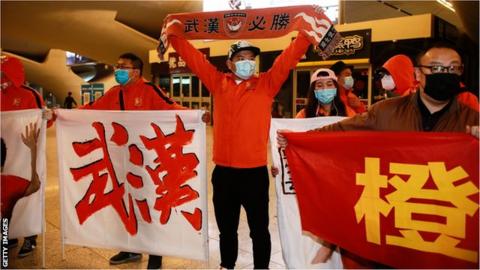
Fans greeted the team as they arrived in Wuhan via train
Chinese Super League team Wuhan Zall made an emotional homecoming after being unable to return for three months because of the coronavirus pandemic.
Players had initially stayed at their winter training camp in Spain when the virus peaked in Wuhan in January.
After a prolonged transit in Germany, they landed in Shenzhen on 16 March and underwent three weeks’ quarantine.
They were greeted by fans when they arrived in Wuhan by train on Saturday evening.
“After more than three months of wandering, the homesick Wuhan Zall team members finally set foot in their hometown,” the team said on the Twitter-like Weibo.
Fans, dressed in the team’s orange colours, sang and gave the players flowers as they arrived home for the first time in 104 days.
Players will now spend time with their families before training resumes.
The team had first left Wuhan in early January to start preparing for the Super League season.
By the time they arrived in Malaga, residents in Wuhan were living under strict lockdown measures, and there were no planes or trains in or out of the capital.
Coach Jose Gonzalez told Spanish media at the time that the players “are not walking viruses, they are athletes” and asked for them not to be demonised.
The Chinese Super League was set to begin on 22 February but it has been postponed.
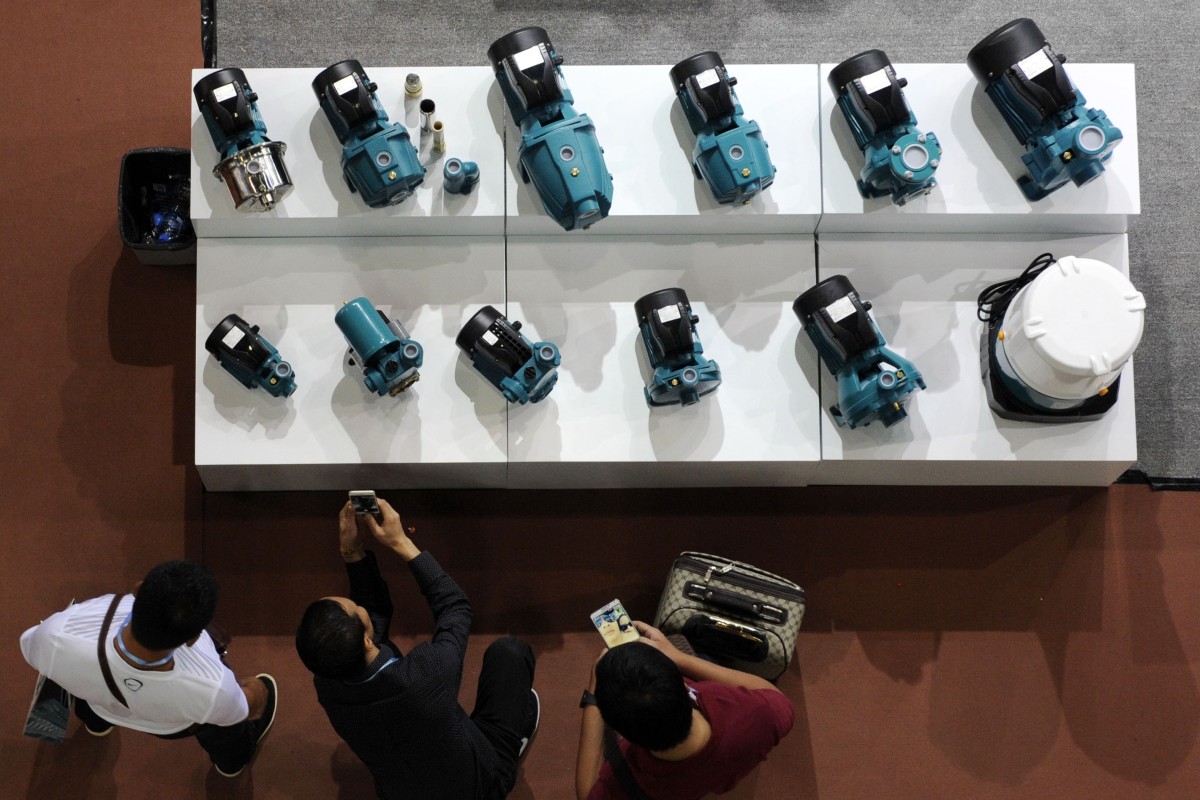
The spring session of China’s Canton Fair has been postponed due to fears about the spread of the coronavirus pandemic, authorities in Guangdong province say
Premier Li Keqiang had insisted early this month that the fair’s spring session would go ahead as it was crucial for efforts to ‘stabilise’ the global economy
The spring session of China’s Canton Fair has been postponed due to the coronavirus outbreak. Photo: Xinhua
The spring session of China’s largest trade expo, the Canton Fair, has been suspended over concerns about the spread of the coronavirus, Chinese authorities said on Monday.
The announcement comes amid reports that regular foreign buyers were scrapping plans to attend the event, which was due to open on April 15. The fair has held its spring session in Guangzhou, the capital of Guangdong province, between mid-April and early May since 1957.
The decision was made after considering the current development of the pandemic, especially the high risk of imported infections, Ma Hua, deputy director of Guangdong’s department of commerce, was quoted as saying on Monday by the official Nanfang Daily.
Guangdong will assess the epidemic situation and make suggestions to the relevant departments of the central government, Ma said at a press conference.
No new date for the fair was announced, but veteran traders who regularly attend the event said the Guangdong government is talking with Beijing about a new time, possibly in May.
Premier Li Keqiang had insisted early this month that the fair’s spring session would go ahead despite the virus outbreak, as it was an important part of Beijing’s efforts to
Authorities of Guangdong, China’s main export and manufacturing hub, joined other large cities, including Beijing and Shanghai, in introducing new restrictions on Saturday that require all foreign visitors be isolated for 14 days at their own expense.
The containment measures, which come as China braces for a second wave
of imported coronavirus cases, would have applied to tens of thousands of foreign merchants attending the fair.
Coronavirus: Chinese companies cut salaries and staff in industries hit hardest by Covid-19
The Canton Fair occurs twice a year and is China’s oldest and largest exhibition. The spring session last year attracted 195,454 foreign buyers from 213 countries and regions across the world. The top five sources of buyers were from Hong Kong, India, the United States, South Korea and Thailand.
But a growing number of regular attendees have recently cancelled plans to take part in this year’s spring session, Chinese exporters said, as concerns mount about possible infection and extra expenses due to a mandatory two week quarantine after arrival.
“About 80 per cent of our firm’s veteran clients told us last month they won’t come this time,” said Jason Liang, a sales manager at a Guangzhou-based exporter of electronic products, who did not want his company identified. “Plus with this new [quarantine], I think at least 90 per cent or almost all of them would drop the trip.
“The costs – time, security and expense – are totally uncontrollable for international travel currently. We also have no plans to attend any exhibition before the summer.”
About 80 per cent of our firm’s veteran clients told us last month they won’t come this time … The costs – time, security and expense – are totally uncontrollable for international travel currently. Jason Liang
Felly Mwamba, a leader of the Congolese community in Guangzhou who has been in the city since 2003, said China’s quarantine measures made it hard for people to visit Guangzhou.
Xie Jun, a furniture and fabric exporter from Zhejiang, said buyers from developing countries that were part of the Belt and Road Initiative would be hard hit if they were forced to pay for quarantine and treatment.
“In February before the pandemic occurred, to cushion the impact some local governments in China’s exporting trade hubs, such as Yiwu and Jinhua, introduced subsidies to attract foreign merchants,” he said. “But now all the subsidies policies are cancelled from what I know.”
Coronavirus and the ‘war economy’: the US and China bicker as the shop goes down
Chinese exporters, traders, and even local residents in Guangdong, have previously voiced concern about authorities’ decision to press on with the even due to the growing number of imported cases to China.
“We strongly call on the government to cancel the spring session of the Canton Fair,” said Zhu Yinghua, a retired teacher in Guangzhou, said before the announcement.
“It’s too dangerous for us local residents if dozens of thousands of foreigners to flock into Guangzhou.”
Image copyright GETTY IMAGESImage caption Authorities are also asking overseas Chinese to reconsider travel plans
Travellers from countries with severe coronavirus outbreaks who arrive in some parts of China will have to undergo a 14-day quarantine, state media say.
Travellers from the virus hotspots of South Korea, Japan, Iran and Italy arriving in the capital will have to be isolated, a Beijing official has said.
Shanghai and Guangdong announced similar restrictions earlier.
Authorities are worried the virus might be imported back into the country.
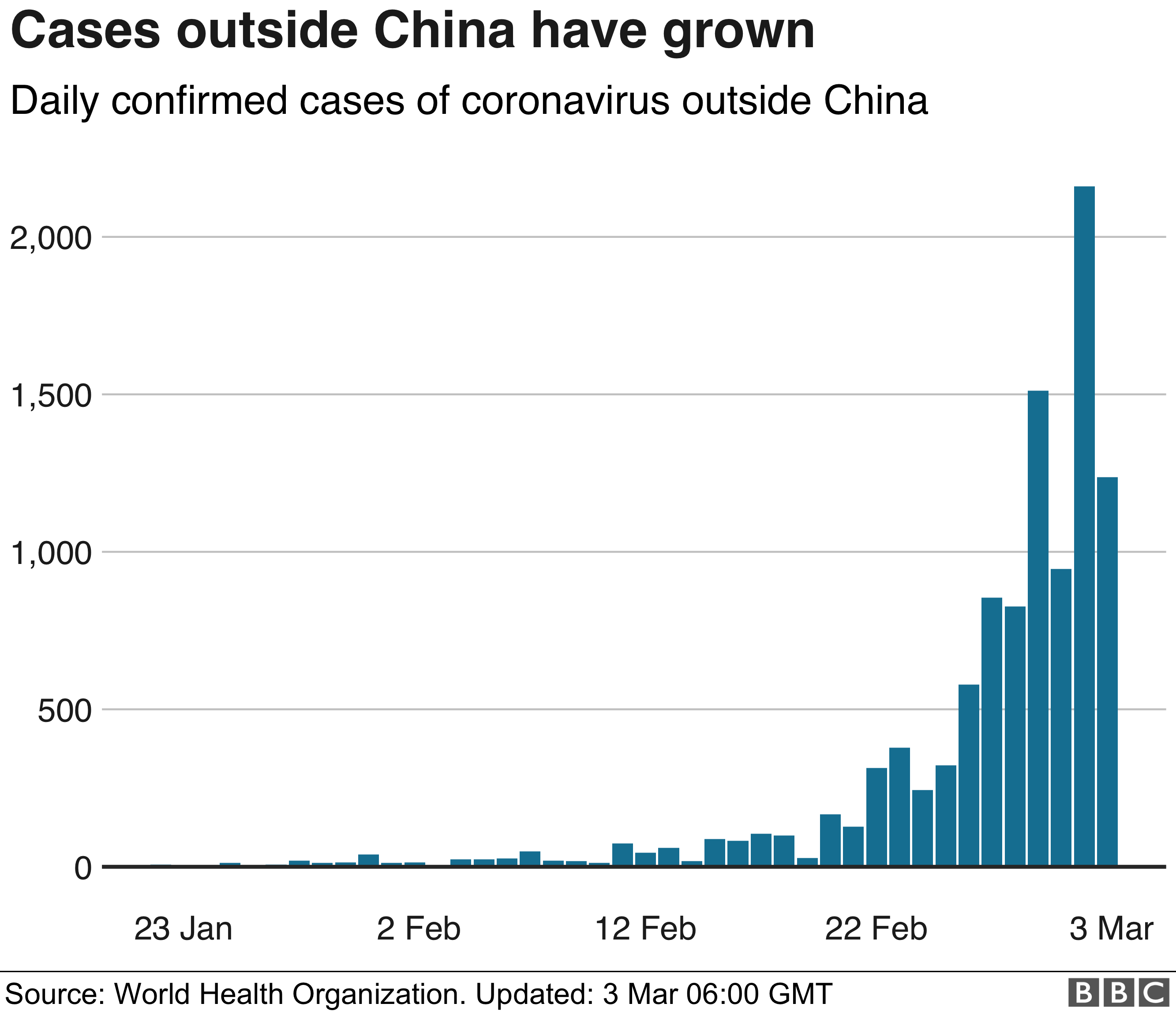
Although most virus deaths have been in China, Monday saw nine times more new infections outside China than in.
Shanghai said it would require new arrivals from countries with “relatively serious virus conditions” to be isolated, without naming the countries.
Authorities are also asking overseas Chinese to reconsider travel plans.
“For the sake of your family’s health and safety, please strengthen your precautions, carefully decide on your travel plans and minimise mobility,” officials in one southern Chinese province said.
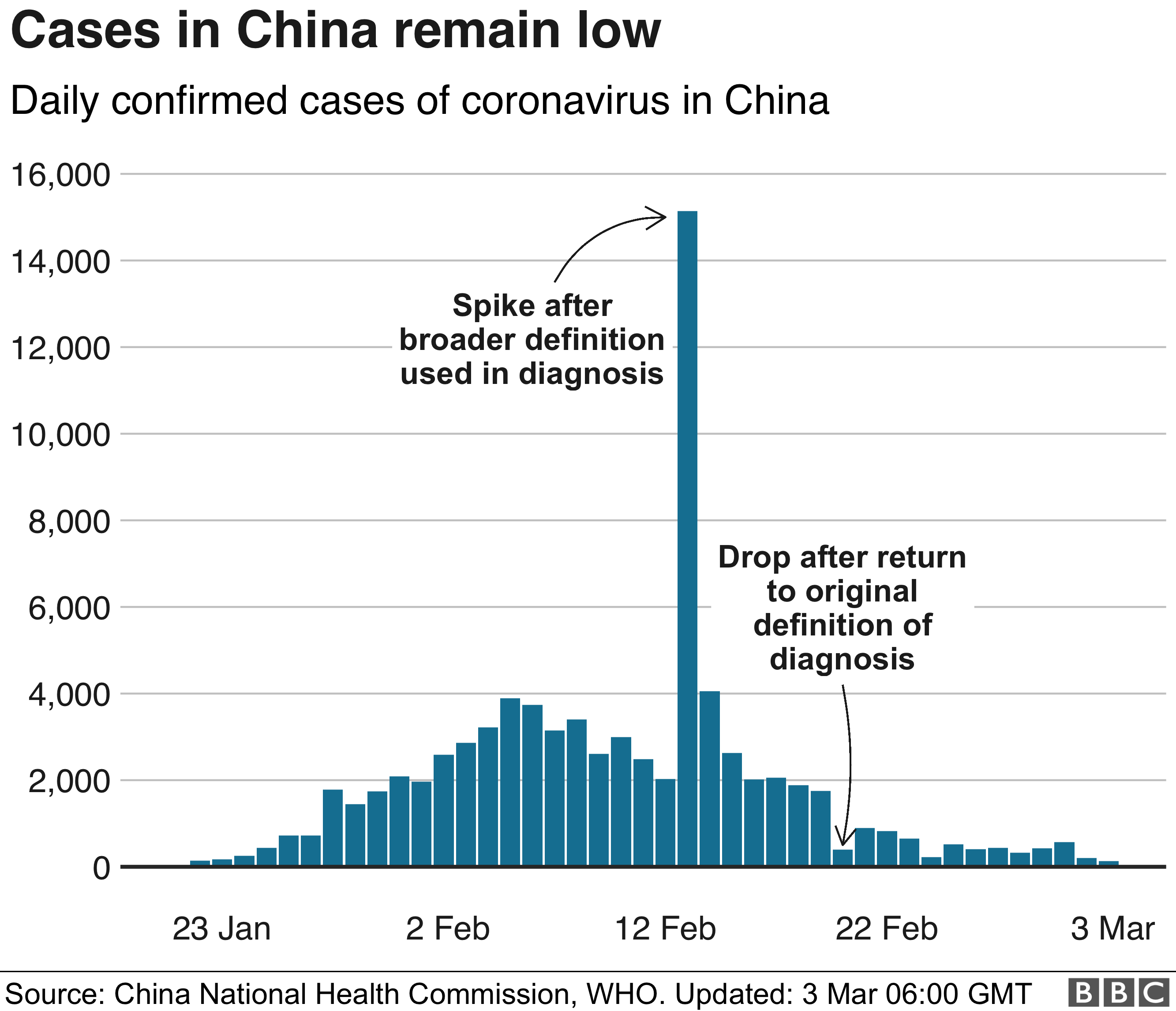
China reported 125 new virus cases on Tuesday – the lowest number of new daily infections in six weeks. There were also 31 more deaths – all in Hubei province, where the virus emerged.
In other developments:
Finance ministers from the G7 countries have said they are “ready to take action”, including fiscal measures to aid the response to the virus and support the global economy
The Pope, who had cancelled a Lent retreat for the first time in his papacy because he was suffering from a cold, has tested negative for the virus, Italian media report
South Korean President Moon Jae-in has put the country into a “state of war” and ordered all government departments to shift to a 24-hour emergency system
Jailed British-Iranian woman Nazanin Zaghari-Ratcliffe is in good health, Iran’s judiciary has said. She was assessed after her husband said she was showing symptoms of Covid-19
Media caption Julie, who lives in Singapore, was diagnosed with coronavirus and then put into isolation
How are different countries affected?
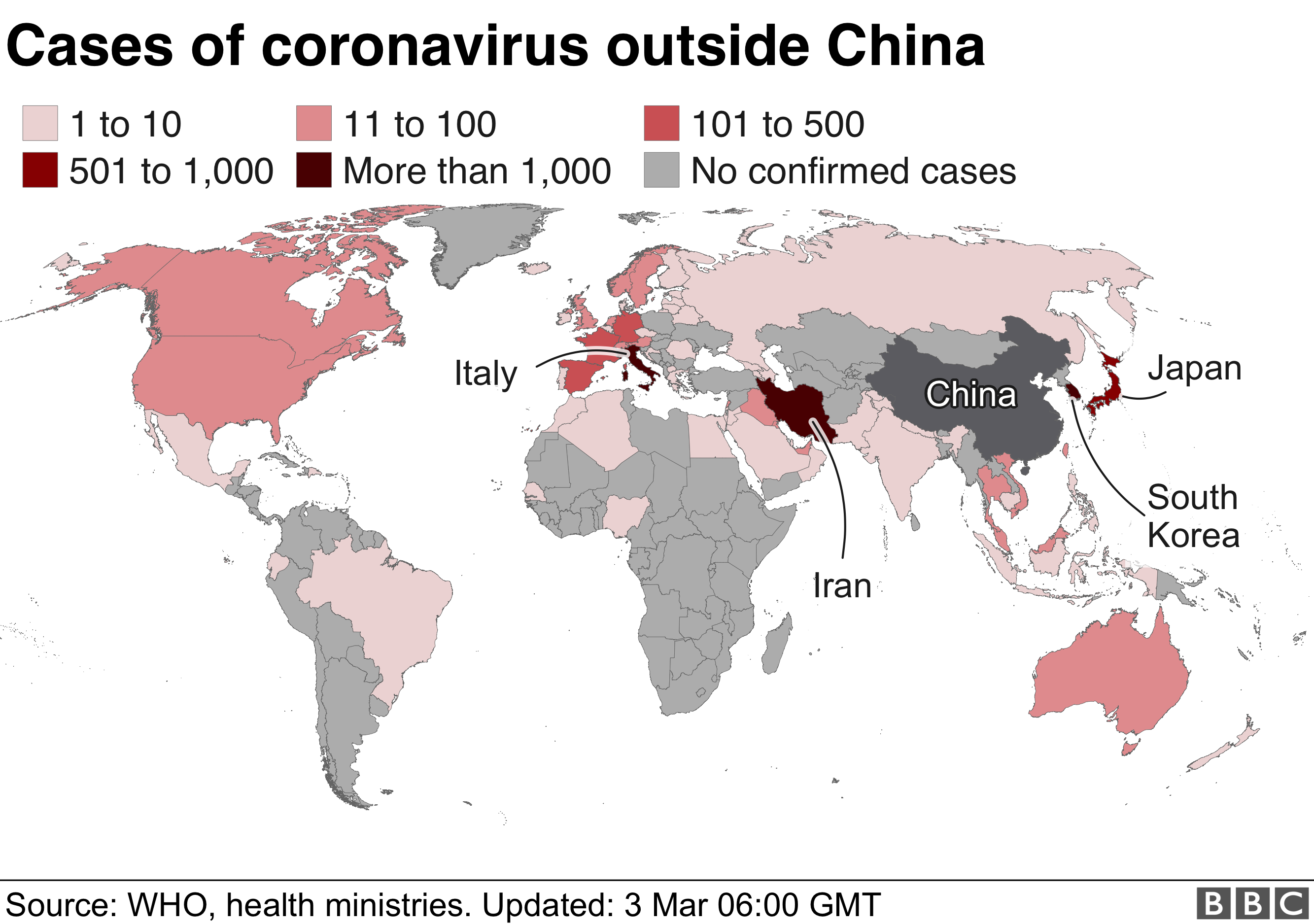
There are now almost 90,000 cases worldwide in about 70 countries, although the vast majority – just under 90% – remain in China, and most of those are in Hubei province where the virus originated late last year.
Of the nearly 8,800 cases outside China, 81% are in four countries – Iran, South Korea, Italy and Japan.
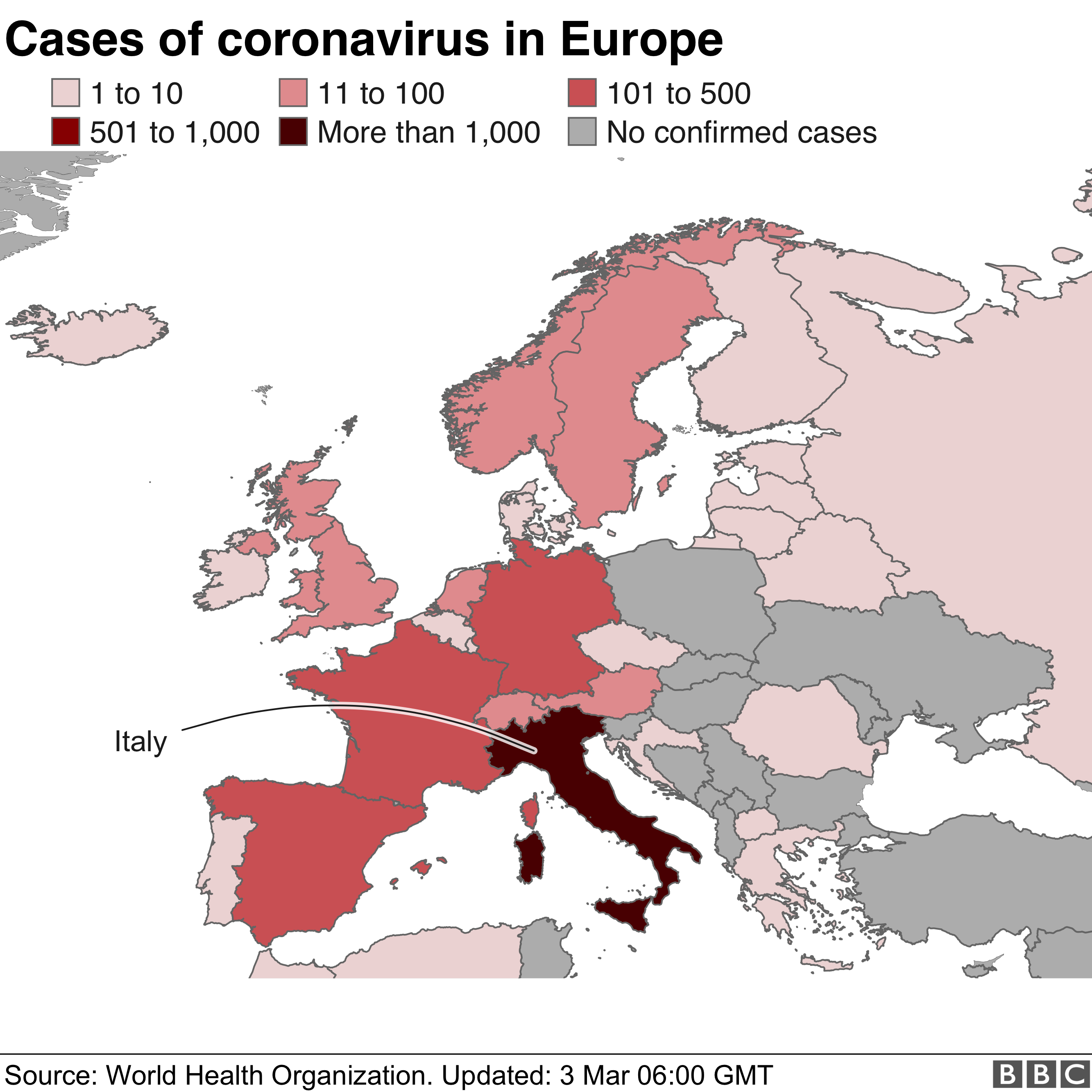
One of the countries worst affected outside China – Italy – said on Monday that the death toll there had risen by 18 to 52. There are 1,835 confirmed cases, most of them in the Lombardy and Veneto areas of the north. Nearly 150 people are said to have recovered.
However, the country is seeing a slowdown in new cases. On Monday, the authorities said there were 258 new cases of the virus – a 16% increase on the previous day – after new cases spiked by 50% on Sunday.
On Tuesday, Iran said the latest death toll from the virus was 77 – although the real figure is believed to be much higher. More than 2,300 people are said to be infected, including senior political figures. The head of Iran’s emergency medical services, Pirhossein Kolivand, was one of them, the Ilna news agency reported on Tuesday.
Some 23 MPs are also reported to have tested positive for the virus, and an official close to the Supreme Leader, Ayatollah Ali Khamenei, was reported on Monday to have died of the disease.
Health officials in the US state of Washington said on Monday that four more people had died, bringing the total there to six. They are the only deaths in the US so far. Local officials say they are buying a hotel to convert it into an isolation hospital.
On Tuesday, Ukraine confirmed its first case of coronavirus, while Portugal, Iceland, Jordan, Tunisia, Armenia, Latvia, Senegal, Morocco and Andorra confirmed their first cases on Monday.
How deadly is Covid-19?
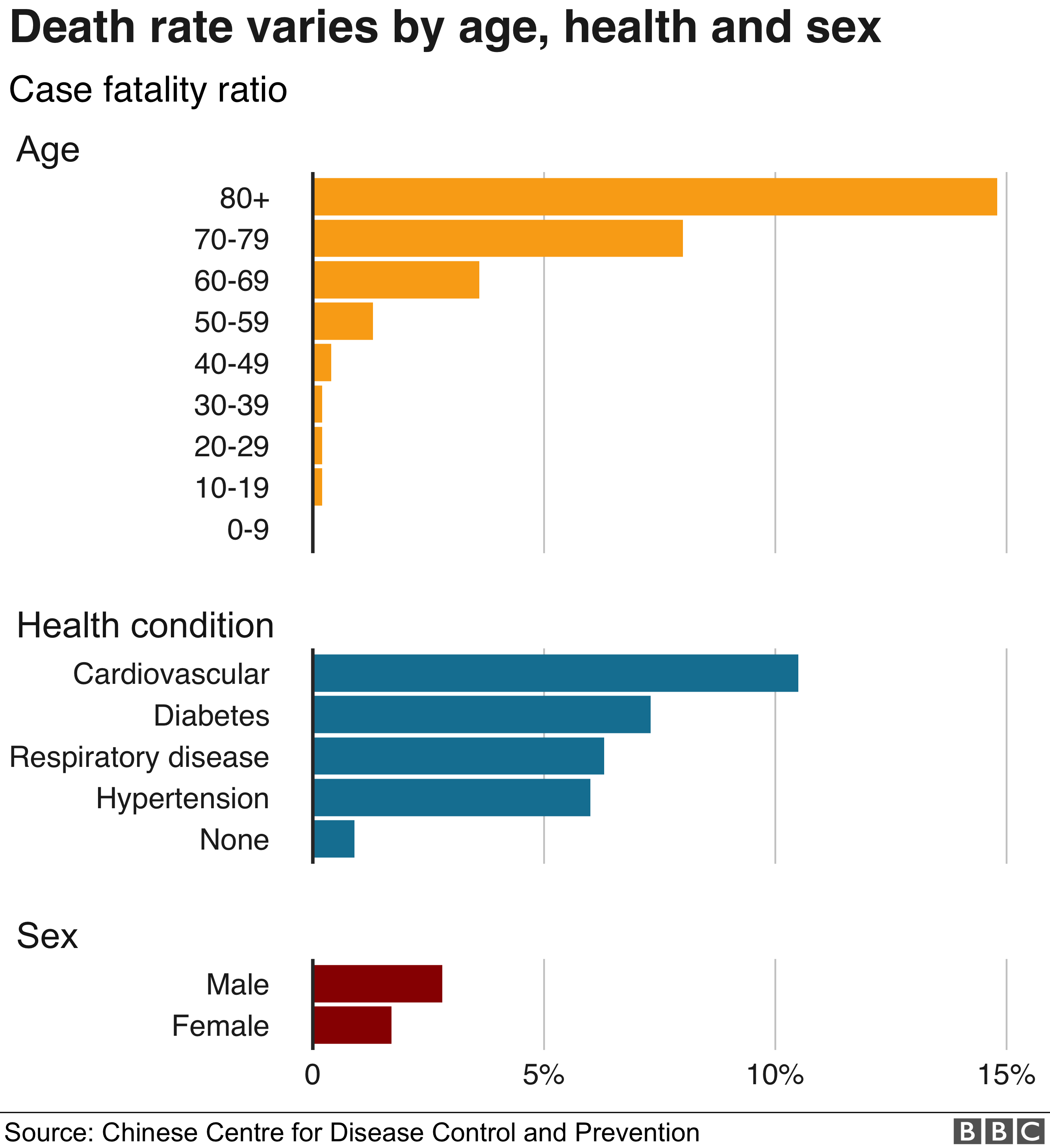
The WHO says the virus appears to particularly affect those over 60, and people already ill.
In the first large analysis of more than 44,000 cases from China, the death rate was 10 times higher in the very elderly compared to the middle-aged.
Most patients have only mild symptoms and the death rate appears to be between 2% and 5%, the WHO said.
By comparison, seasonal flu has an average mortality rate of about 0.1%, but is highly infectious – with up to 400,000 people dying from it each year.
Other strains of coronavirus, such as Severe Acute Respiratory Syndrome (Sars) and Middle East Respiratory Syndrome (Mers), have much higher death rates than Covid-19.
SEOUL/SHANGHAI (Reuters) – South Korea raised its disease alert to the highest level on Sunday after a surge in coronavirus infections and two more deaths, while China state media warned the outbreak there had yet to reach a turning point despite some signs of easing.
South Korea’s president said he was putting the country on “red alert” due to the rapid rise in new cases, which are largely being traced back to church services. Health officials reported 169 new infections, bringing the total to 602, having doubled from Friday to Saturday.
The escalation in the alert level allows the government to send extra resources to Daegu city and Cheongdo county, which were designated “special care zones” on Friday.
South Korea’s Yonhap News Agency said it also enables the government to forcibly prevent public activities and order the temporary closure of schools, though the government gave no immediate details on what steps could be taken.
In China, the health commission confirmed 648 new infections – higher than a day earlier – but only 18 were outside of Hubei province, the lowest number outside of the epicenter since authorities started publishing data a month ago and locked down large parts of the country.
RELATED COVERAGE
Italy coronavirus cases rise to more than 100: regional chief
South Korea raises disease alert to highest level as virus cases soar
But the number of cases continued to climb elsewhere.
Japanese Prime Minister Shinzo Abe instructed government agencies on Sunday to urgently prepare medical provisions and draft a comprehensive plan to curb the spread of the virus, after it reported 27 more cases a day earlier.
The U.S. State Department raised its travel advisory level one notch for South Korea and Japan to Level 2 on a scale of 1 to 4.
Concern about the reach and rapid spread of coronavirus also grew in Europe and the Middle East.
Cases in Italy, Europe’s worst hit country, more than quadrupled to 79 on Saturday, with two deaths.
Iran reported a total of 43 infections, with eight deaths – all since Tuesday – forcing some of its neighbors to announce travel and immigration curbs.
The World Health Organization on Saturday stressed that the number of cases outside of China was still relatively few, but it was worried by the detection of infections without a clear link to China.
The disease has spread to some 26 countries and territories outside China, killing more than a dozen people, according to a Reuters tally. It has been fatal in 2% of reported cases, with the elderly and ill the most vulnerable, according to the WHO.
The potential economic impact of coronavirus was prominent at a meeting of G20 finance ministers in Riyadh, at which the International Monetary Fund chief said China’s 2020 growth would likely be lower at 5.6%, down 0.4 percentage points from its January outlook, with 0.1 percentage points shaved from global growth.
The last time South Korea raised the alert to the highest was 11 years ago during the Influenza A or H1N1 outbreak.
Many of South Korea’s new cases were linked to the Shincheonji Church of Jesus congregation in Daegu after a 61-year-old woman known as “Patient 31” tested positive for the virus last week. The woman had no recent record of overseas travel.
Catholic churches in Daegu and Gwangju have suspended mass and other gatherings, while churches elsewhere saw declines in attendance on Sunday, especially among the elderly.
“If the situation gets worse, I think we’ll need to take more measures. Currently, we’re limiting personal gatherings within the church except for Mass,” said Song Gi-young, 53, wearing a face mask at church.
Heo Young-moo, 88, expressed frustration.
“Devotees shouldn’t go to any risky places … Hasn’t it become so widespread because those people didn’t get checked?”,” he said.
Outside of the church was a sign that said: “All Shincheonji followers are strictly prohibited from entering”.
The foreign ministry said South Koreans aboard a plane to Israel had been denied entry there on Saturday due to concerns about the virus spread.
China said the number of new deaths on Saturday from COVID-19, as the disease caused by the virus is known, was 97, all but one of which were in Hubei.
Eighty-two of those were in the provincial capital Wuhan, where Xinhua news agency said nucleic tests were being carried out on the backlog of cases to try to contain the spread.
In total, China has reported 76,936 cases, and 2,442 deaths. The WHO says the virus is severe or critical in only a fifth of infected patients, and mild in the rest.
Graphic: Reuters graphics on the new coronavirus here
NOT OVER YET
Beijing, Zhejiang, Sichuan had no new infections on Feb. 22 for the first time since the outbreak was detected. There were signs of street life in Shanghai, with some cafes serving take-out food and families wearing masks walking their dogs.
State run television on Sunday urged people to avoid complacency, drawing attention to people gathering in public areas and tourist spots without wearing masks.
Analysts have been closely watching out for any signs of a secondary wave of infections as transport restrictions are eased and many migrant workers return to factories and offices. Business activity in the world’s second-biggest economy is only gradually returning to normal after widespread disruptions.
Japan’s health minister apologized on Saturday after a woman who was allowed to leave the coronavirus-struck Diamond Princess cruise ship tested positive despite having underwent quarantine.
At least 623 cases have been reported on the vessel, the biggest outbreak outside China, involving more than a dozen nationalities.
In Italy, schools and universities were closed and some soccer matches postponed in Lombardy and Veneto, the country’s industrial heartland.
Saudi Arabia, Kuwait, Iraq have travel and immigration curbs on Iran, while Oman on Sunday urged its citizens to steer clear of countries with high infection rates and said arrivals from those nations would be quarantined.
Image copyright WEIBOImage caption She posted pictures of her meal on social media platform WeChat
The Chinese embassy in Paris has tracked down a woman from Wuhan who said she took tablets to pass airport health checks.
The woman boasted on social media that she had been suffering from a fever, but managed to reduce her symptoms with medicine.
She later posted pictures showing herself dining at what she claimed was a Michelin-starred restaurant in Lyon.
The embassy has now confirmed that her symptoms are under control.
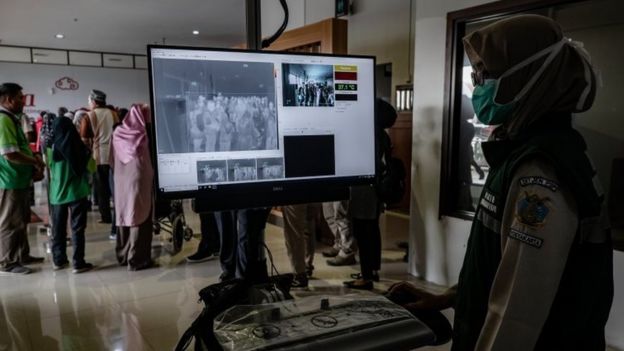
The woman left Wuhan – where the new coronavirus emerged late last year – before flights were suspended, but when thermal scanning was in place.
Since yesterday, public transport has been shut down, with residents told not to leave the city.
At least 25 people with the virus have died. It was first reported to the World Health Organization 31 December.
The virus has spread to countries as far as South Korea, Japan and the US.
Image copyright GETTY IMAGESImage caption People have been thermally scanned when leaving Wuhan, and arriving at their destination. This picture was taken in Indonesia on Thursday
The woman detailed her journey to Lyon on social media site WeChat.
“Finally I can have a good meal, I feel like I’ve been starving for two days. When you are in a gourmet city of course you have to eat Michelin [food],” she wrote.
“Just before I left, I had a low fever and cough. I was scared to death and rushed to eat [fever-reducing] medicine. I kept on checking my temperature. Luckily I managed to get it down and my exit was smooth.”
She also posted pictures of the meal she enjoyed. It is not clear exactly when she arrived.
Her post quickly went viral and she was widely criticised by other social media users.
The Chinese embassy in Paris said it had received calls and emails about the woman. It said she had taken antipyretics, and that it attached “great importance” to the case.
The embassy said it contacted her on Wednesday evening and asked her to refer herself to medical services.
On Thursday, in a new statement, the embassy said the woman’s temperature was under control, and that she had no more fever or cough symptoms.
It added that she did not require “further examinations” at this point.
Media caption Fears over coronavirus in China trigger face mask shortage
China has effectively quarantined nearly 20 million people in Hubei province. Other major cities in China like Beijing and Shanghai are also affected.
Authorities have cancelled all large-scale celebrations in Beijing. Temple fairs are banned, film releases postponed and the Forbidden City will be closed to the public.
All this comes as millions of Chinese people are travelling across the country for Lunar New Year.
Currently known as 2019-nCoV, the virus is understood to be a new strain of coronavirus not previously identified in humans.







 CHINDIA ALERT: You'll be living in their world, very soon