Chindia Alert: You’ll be Living in their World Very Soon
aims to alert you to the threats and opportunities that China and India present. China and India require serious attention; case of ‘hidden dragon and crouching tiger’.
Without this attention, governments, businesses and, indeed, individuals may find themselves at a great disadvantage sooner rather than later.
The POSTs (front webpages) are mainly 'cuttings' from reliable sources, updated continuously.
The PAGEs (see Tabs, above) attempt to make the information more meaningful by putting some structure to the information we have researched and assembled since 2006.
Image copyright AFPImage caption Embankments have been washed away in Bangladesh
Millions of people across Bangladesh and eastern India are taking stock of the devastation left by Cyclone Amphan.
A massive clean-up operation has begun after the storm left 84 dead and flattened homes, uprooted trees and left cities without power.
India’s Prime Minister Narendra Modi has arrived in West Bengal state to conduct an aerial survey.
Authorities in both countries had evacuated millions of people before the storm struck.
Covid-19 and social-distancing measures made mass evacuations more difficult, with shelters unable to be used to full capacity.
Officials also said people were afraid and reluctant to move to shelters for fear of contracting the virus.
The cyclone arrived with winds gusting up to 185km/h (115mph) and waves as high as 15ft.
Image copyright REUTERSImage caption Roads have been blocked by falling trees in BangladeshImage copyright AFPImage caption Many people have been injured in wall collapses in Bengal
It is the first super cyclone to form in the Bay of Bengal since 1999. Though its winds had weakened by the time it struck, it was still classified as a very severe cyclone.
Three districts in India’s West Bengal – South and North 24 Parganas and East Midnapore – were very badly hit.
In Bangladesh, there are reports of tens of thousands of homes damaged or destroyed and many villages submerged by storm surges in low-lying coastal areas like Khulna and Satkhira.
The affected areas include the Sunderbans, mangroves spread over an area of more than 10,000 square kilometres that spans both India and Bangladesh – the swampy islands are home to more than four million of the world’s poorest people.
Image copyright MUKTIImage caption Many homes, built of brick and mud, have been washed away
Those in the Sunderbans say it is too early to estimate casualties in the area, which is now cut-off from the mainland by the storm.
“There are houses which have collapsed and people could be trapped in them but we don’t know yet,” Debabrat Halder, who runs an NGO in one of the villages, told the BBC.
He recalls cyclone Bulbul in November 2019, which was followed by a huge incidence of fever, diarrhoea and flu, and is afraid that that the same may happen again.
And worse, he adds, is that the flooding from contaminated sea water, has likely destroyed the soil.
“Nothing will grow in this soil,” he says, adding that it will likely take years to convert it into fertile land again.
Image copyright MUKTIImage caption The Sunderbans delta is frequently hit by severe stormsImage copyright MUKTIImage caption Crops have all been destroyed by the flooding
Kolkata, the capital of West Bengal, and one of India’s biggest cities has been devastated. Its roads are flooded and the city was without power for more than 14 hours.
The state’s chief minister, Mamata Banerjee, said the devastation in Kolkata was “a bigger disaster than Covid-19”.
But assessment of the damage is being hampered by blocked roads and flooding in all these areas.
As China prepares its 14th five-year plan, researchers at one state-affiliated think tank predicted a more hostile global situation
Beijing urged to strengthen home-grown innovation and use vast domestic market to power economy post-coronavirus
A think tank linked to China’s State Council has encouraged Beijing to focus on home-grown technology and its vast consumer market over the next five years. Photo: Xinhua
China’s will face an increasingly hostile world over the next five years, meaning its policy plan should be focused on its vast domestic market, home-grown technological innovation and improving its citizen’s welfare, according to recommendations in a new paper.
The report by the Chinese Academy of Social Sciences (CASS), a think tank affiliated with the State Council, foresees the next five years presenting “major changes unseen in a century” for China, as “the strategic game between superpowers has intensified, while international systems and orders are reshuffled”.
While the report does not mention the coronavirus specifically, its recommendations suggest that China should become more self-reliant in response to the pandemic. This view represents one side of a lively debate among policymakers and scholars in China, ahead of the next five-year plan, which will come into place next year.
Between 2021 and 2025, the globalised economy which helped China grow into an economic power will be radically different, the report said, meaning it must adapt if it is to continue to thrive.
“The disadvantages of economic globalisation have increasingly stood out. Populism has risen as the global economy weakens, while countries are divided as imbalances expand. The old multilateral [trading] system is under pressure,” read the paper, part of a wave of preliminary studies offering advice ahead of China’s 14th five-year plan, a blueprint for economic and social development.
China is the only major economy that publishes a five-year policy plan and has been doing so since 1953, in a tradition borrowed from the Soviet Union. China’s own plans are broad strategic guidelines, rather than Moscow’s previously detailed command economy production worksheets.
China is currently in the final year of its 13th five-year plan, the stage during which the Soviet Union collapsed. The 14th plan is expected to be published in early-2021, but brainstorming about challenges and policy options is well under way among academics and state planning officials.
That debate is expected to feature prominently in the coming meetings of the “Two Sessions,” the Chinese People’s Political Consultative Congress, which is due to meet in Beijing on May 21, and the National People’s Congress, which will begin to meet a day later.
A common point in the debate is that the lessons of the past few years have shown the need to be more self-reliant. Even before the coronavirus outbreak, the US-China trade war and the growing superpower rivalry have made many think that Beijing can no longer rely on the goodwill of trading partners to continue the expansion it has enjoyed since the late-1970s.
Coronavirus pandemic creates ‘new Cold War’ as US-China relations sink to lowest point in decades
In December 2017, US President Donald Trump declared China a “strategic competitor” in anticipation of the Chinese economy reaching two-thirds the size of America’s, which happened in 2018. Since then, the two have engaged in a tit-for-tat tariff battle, while the coronavirus has served to sharpen tensions and fuel arguments for further decoupling.
“Uncertainties and instabilities are clearly increasing,” read the analysis published in the academic journal Economic Perspectives this week.
Without citing coronavirus directly, the CASS researchers suggested that China should “stick to its developmental direction and concentrate on doing its own things well”.
China now has a middle income group of between 500 and 700 million people and that alone can be a source empowering China’s economic growth for the next five years, the report said.
However, China must also attempt to smooth out a major weakness, namely unbalanced growth, including the yawning wealth gap between urban and rural groups.
In terms of innovation, the researchers led by Huang Qunhui said China should rely less on foreign technologies. “China’s innovation capacity is still lagging behind developed countries. Breakthroughs in core technologies are in urgent need,” read the report.
The Made in China 2025 plan, published in 2015, stated Beijing’s ambitions to dominate future technologies such as robotics and artificial intelligence. However, after loud complaints from the US and European Union, China has been forced to play down such bold innovative goals.
BEIJING (Reuters) – China will cut its subsidies on new energy vehicles (NEV) by 10% this year, and will expand government purchases of NEVs, the finance ministry said on Thursday.
China will in principle cut such subsidies by 20% in 2021 and 30% in 2022, the finance ministry said in a statement. However, it will not cut subsidies on qualified new energy commercial vehicles earmarked for public purposes this year.
Under the plan, China would extend subsidies for NEV purchases to 2022, rather than ending them this year, and extend their purchase tax exemption for two years.
China will slightly lift the requirements for the driving range and power efficiency of cars qualified for the subsidies, the statement said, adding authorities will support the sales of cars with swappable batteries, a technology that has been pursued by Chinese electric vehicle makers Nio Inc (NIO.N) and BAIC BluePark (600733.SS).
Only passenger cars cheaper than 300,000 yuan (34,330.23 pounds) will be offered subsidies, it said. The price is higher than starting price of Tesla Inc’s (TSLA.O) China-made Model 3 sedans.
China also said authorities will give priority to purchase new energy vehicles for government use but did not give further details.
The new policy is effective from April 23. NEVs include battery-powered electric, plug-in hybrid and hydrogen fuel-cell vehicles.
China has set an aggressive goal for NEVs to account for a fifth of auto sales by 2025 compared with the current 5%, as it seeks to reduce pollution and cultivate homegrown champions.
Sales of NEVs, however, contracted for a ninth month in a row in March and were down over 50% from a year earlier, according to data from the China Association of Automobile Manufacturers (CAAM).
TAIPEI (Reuters) – Taiwan waded into the hotly contested politics of the Pacific on Wednesday, donating face masks and thermal cameras to its four diplomatic allies there to combat the coronavirus in a region where China is challenging traditional power of the United States.
The small developing nations lie in the highly strategic waters of the Pacific, dominated since World War Two by the United States and its friends, who have been concerned over China’s moves to expand its footprint there.
Democratic Taiwan has faced intense pressure from China, which claims the island as its territory with no right to state-to-state ties, and is bent on wooing away its few allies.
Taiwan has only 15 formal allies left worldwide after losing two Pacific nations, the Solomon Islands and Kiribati, to China in September.
Beijing has ramped up its diplomatic push into the Pacific, pledging virus aid and medical advice.
In its own aid programme, Taiwan has donated 16 million masks to countries around the world.
“We are a very small country, so it’s easier for us to work with Taiwan than mainland China,” Neijon Edwards, the Marshall Islands ambassador to Taiwan, told Reuters at the donation ceremony in Taipei.
China has been too overbearing, she added.
“It’s pressing too much, and it’s been trying to come to the Marshall Islands, several times, but up to this time we haven’t even opened the door yet.”
While the masks presented at the ceremony are going to Taiwan’s Pacific allies, all its 15 global allies are sharing the thermal cameras.
“Today’s ceremony once again shows that Taiwan is taking concrete actions not only to safeguard the health of Taiwanese people but also to contribute to global efforts to contain COVID-19,” said Foreign Minister Joseph Wu.
Though Pacific Island states offer little economically to either China and Taiwan, their support is valued in global forums such as the United Nations and as China seeks to isolate Taiwan.
China has offered to help developing countries including those of the Pacific, and many see Chinese lending as the best bet to develop their economies.
But critics say Chinese loans can lead countries into a “debt trap”, charges China has angrily rejected.
The debt issue was a serious problem and would only lead to the spread of Chinese influence regionwide, said Jarden Kephas, the ambassador of Nauru.
“They will end up dominating or having a lot of say in those countries because of the amount of debt,” he told Reuters, wondering how the money could ever be repaid. “We are not rich countries.”
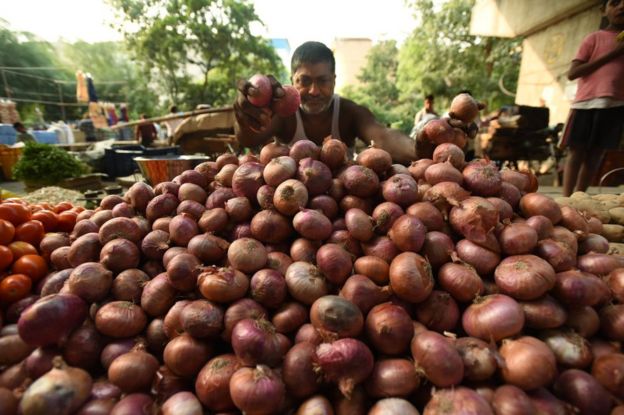
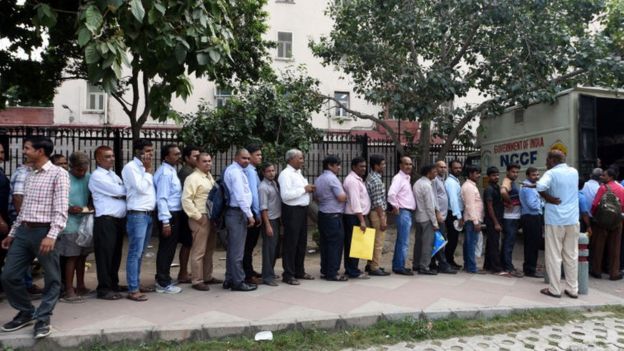
Image copyright GETTY IMAGESImage caption The onion is India’s most “political” vegetable
Onion prices have yet again dominated the headlines in India over the past week. BBC Marathi’s Janhavee Moole explains what makes this sweet and pungent vegetable so political.
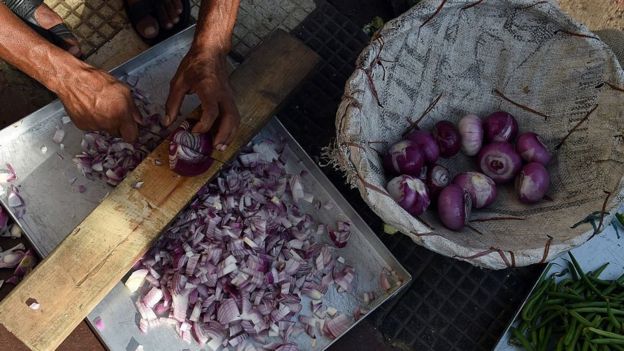
The onion – ubiquitous in Indian cooking – is widely seen as the poor man’s vegetable.
But it also has the power to tempt thieves, destroy livelihoods and – with its fluctuating price a measure of inflation – end the careers of some of India’s most powerful politicians.
With that in mind, it’s perhaps unsurprising those politicians might be feeling a little concerned this week.
So, what exactly is happening with India’s onions?
In short: its price has skyrocketed.
Onion prices had been on the rise in India since August, when 25 rupees ($0.35; £0.29) would have got you a kilo. At the start of October, that price was 80 rupees ($1.13; £0.91).
Fearing a backlash, the Bharatiya Janata Party (BJP)-led government banned onion exports, hoping it would bring down the domestic price. And it did.
Image copyright GETTY IMAGESImage caption Onion prices peaked by the end of September
A kilo was selling for less than 30 rupees on Thursday at Lasalgaon, Asia’s largest onion wholesale market, located in the western state of Maharashtra.
However, not everyone is happy.
While high prices had angered consumers in a sluggish Indian economy, the fall in prices sparked protests by exporters and farmers in Maharashtra, where state elections are due in weeks.
And it is not just at home where hackles have been raised: the export ban has also strained trade relations between India and its neighbour, Bangladesh, which is among the top importers of the vegetable.
But why does the onion matter so much?
The onion is a staple vegetable for the poor, indispensable to many Indian cuisines and recipes, from spicy curries to tangy relishes.
“In Maharashtra, if there are no vegetables or you can’t afford to buy vegetables, people eat ‘kanda bhakari’ [onion with bread],” explains food historian Dr Mohseena Mukadam.
True, onions are not widely used in certain parts of the country, such as the south and the east – and some religious communities don’t eat them at all.
But they are especially popular in the more populous northern states which – notably – send a higher number of MPs to India’s parliament.
“Consumers in northern India wield more power over the federal government. So although consumers in other parts of India don’t complain as much about higher prices, if those in northern India do, the government feels the pressure,” says Milind Murugkar, a policy researcher.
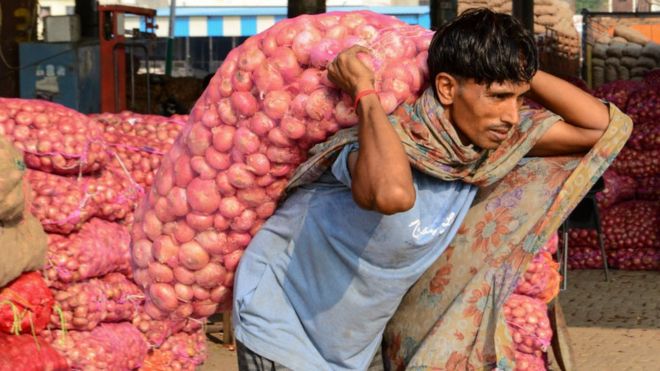
Image copyright GETTY IMAGESImage caption Onions are so ubiquitous that the government has been selling them at subsided rates
A drop in prices also affects the income of onion farmers, mainly in Maharashtra, Karnataka in the south and Gujarat in the west.
“Farmers see the onion as a cash crop that grows in the short term, and grows well in dry areas with less water,” says Dipti Raut, a journalist, who has been on the “onion beat” for years.
“It’s like an ATM machine that guarantees income to farmers and sometimes, their household budget depends on the onion produce,” she said.
Onions have even attracted robbers: when prices skyrocketed in 2013, thieves tried to steal a truck loaded with onions, but were caught by the police.
Why do politicians care about the onion?
Put simply, because the price moving too far one way or another is likely to anger a large block of voters, be they everyday households, or the country’s farmers.
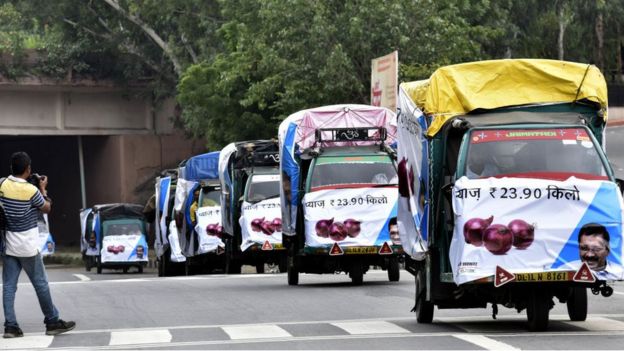
Image copyright GETTY IMAGESImage caption The Delhi government transported 70 vans full of subsidised onions
Onions are so crucial they have even featured in election campaigns. The Delhi state government bought and sold them at subsidised rates in September when prices were at their peak: chief minister Arvind Kejriwal, it should be noted, is up for re-election next year.
Meanwhile, Indira Gandhi swept to power in 1980 on slogans that used soaring onion prices as a metaphor for the economic failures of the previous government.
But why did onion prices rise this year?
A drop in supply, due to heavy rains and flooding destroying the crop in large parts of India, and damaging some 35% of the onions stocks in storage, according to Nanasaheb Patil, director of the National Agricultural Co-operative Marketing Federation.
He said the flooding had also delayed the next round of produce, which was due in September.
Image copyright GETTY IMAGES
“This has become a fairly regular phenomenon in recent decades,” Mr Murugkar said. “Onion prices swing heavily with a small drop or increase in production.”
In fact, the shortage – and subsequent rise in prices – happens almost every year around this time, according to Ms Raut.
“It’s a vicious cycle and the trader lobby and middlemen benefit from even the slightest price fluctuations,” she added.
What’s the solution?
Ms Raut says more grass-root planning and better storage facilities and food processing services will ease the problem – and making a variety of cash crops and vegetables available across the country would also ease the pressure on onions.
“The government is quick to act when onion prices rise. Why don’t they act as swiftly when prices fall?” asked Vikas Darekar, an onion farmer in Maharashtra. He said the government should buy onions from farmers at a “fair price”.
Mr Murugkar, however, feels that the government should never interfere in “onion matters”.
“If you are interested in raising purchasing power of the people, they should not curtail exports. Do we have such a ban on software exports? It’s really absurd. A government which has won such a huge majority should be able to withstand the pressures from a few consumers.”
Chinese and US researchers take inspiration from the hardy insect to design a robot that moves fast and is hard to squash
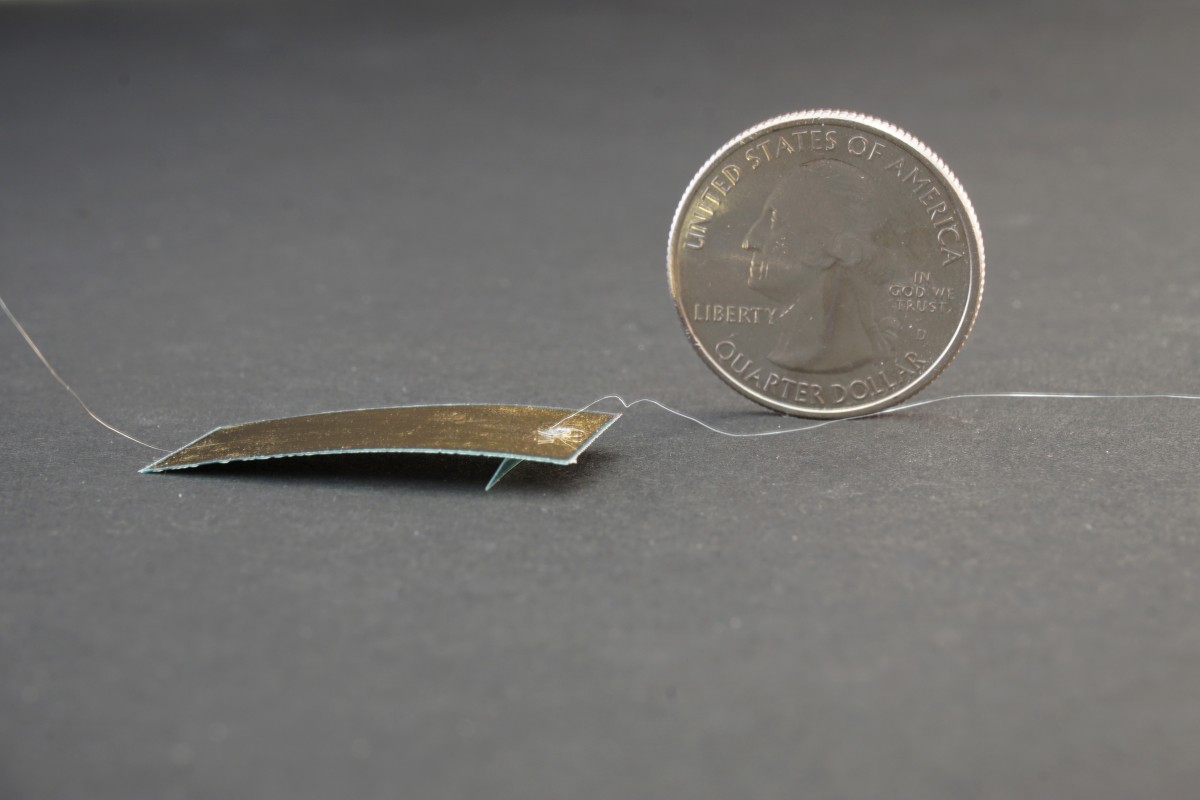
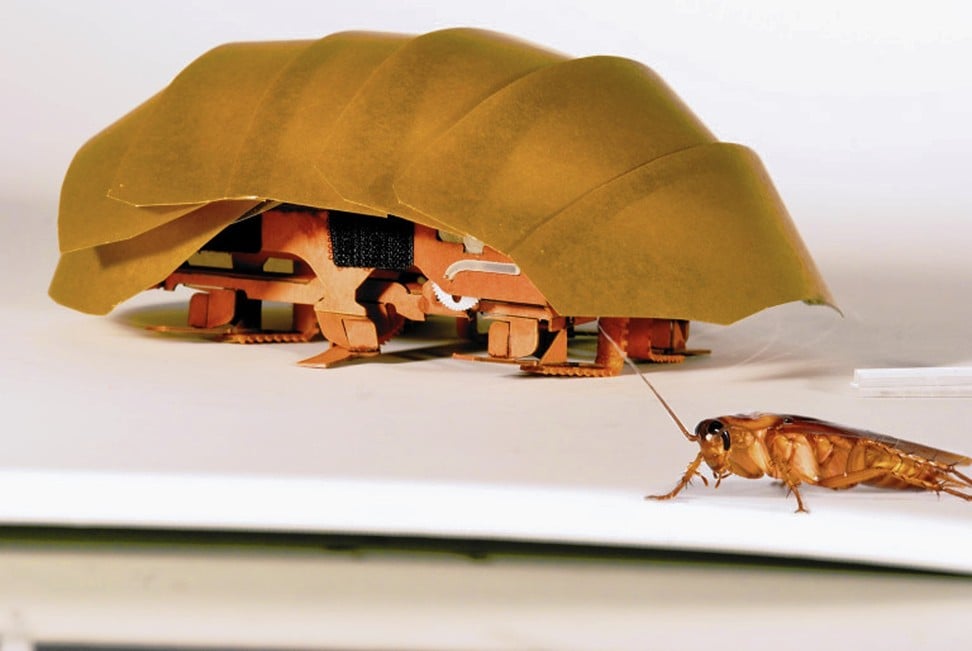
A prototype soft robot, which is about the size of a postage stamp, was developed by a group of researchers from China and the US. Its design was inspired by the capabilities of the hardy cockroach. Photo: Handout
Cockroaches are near-indestructible little creatures. These hardy insects have existed since at least 320 million years ago, outliving dinosaurs. A cockroach can also carry loads of up to 900 times its body weight, shrink to a quarter of its height to fit into small crevices and live for a week without its head.
Inspired by the qualities of this humble bug, a group of researchers from China and the United States have created a prototype of a fast-moving and near-indestructible miniature robot, which could potentially replace sniffer dogs in detecting people trapped in a rubble after a major earthquake or similar disastrous event.
Researchers from China’s Tsinghua University and the University of California, Berkeley, published their study on so-called soft robots in the academic journal Science Robotics last week.
“Although the cockroach is an annoying pest, it has certain interesting features, including the ability to move fast in a narrow space and being hard to squash,” said Zhang Min, an assistant professor at Tsinghua University’s Graduate School in Shenzhen and one of the study’s authors, in an email interview. “These features inspired us to develop a fast-moving and robust soft robot.”
Their work on soft robots was conducted under the Tsinghua-Berkeley Shenzhen Institute partnership, an initiative to collaborate with global researchers on fields such as environmental science and new energy technology.
Scientists have long taken inspiration from insects, including cockroaches, for engineering robots. Researchers from UC Berkeley previously developed a palm-sized, roach-like robot – about 20 times the size of the bug – for rescue use in 2017.
By comparison, the new prototype achieved breakthroughs in terms of size and more importantly, the speed and robustness.
The latest robot, which is about the size of a postage stamp and weighs less than one-tenth of a gram, is composed of a flexible piezoelectric thin film and a polymer skeleton with two legs.
This screenshot from a video provides a closer look at the prototype soft robot developed by a group of researchers from China and the US. Its features were inspired by the sturdy qualities of the humble cockroach. Photo: YouTube
Despite its petite frame, this prototype showed the fastest speed among insect-scale robots in a similar weight range, as well as “ultra-robustness”, according to Lin Liwei, a professor of mechanical engineering at UC Berkeley who directed the research, in a separate email interview.
It can move as fast as a cockroach with speeds of up to 20 body lengths per second. It also continued to move after it was stepped on by an adult human weighting 60 kilograms, which is about 1 million times heavier than the robot, according to the study.
In 2017, researchers of the PolyPEDAL Lab at the University of California, Berkeley, designed a compressible robot, CRAM, that was about 20 times the size of a real cockroach. Photo: Handout
Those features sets up the robot for potential application in disaster relief, a field in which its size, agility and resilience would be invaluable to help detect survivors trapped beneath the rubble in catastrophes, such as major earthquakes.
Earthquakes have caused much devastation in China, a seismically active country with the world’s biggest population. For example, about 87,000 people died and more than 370,000 were injured when a magnitude-8 earthquake struck Wenchuan, a county in southwestern China’s Sichuan province, in 2008.
“The key innovation is the soft materials and structures used in the robot,” Lin said. “If the robot is too soft, it won’t be able to move fast. If the robot is too stiff, it can’t withstand the force of human weight.” The study detailed how the right combination of soft materials and structure enabled the robot to operate efficiently.
While the robot is currently attached to thin cables for power, the researchers are working to integrate a battery and control circuit to get rid of the existing wire in its design, helping expand its use in other applications.
“We want to make the robot carry small sensors, like a gas sensor, to provide it with more functions,” said Zhong Junwen, a researcher at UC Berkeley and one of the authors of the study, in a separate email interview. “With such a sensor, the robot can detect harmful gas leakage.”
NEW DELHI (Reuters) – India’s ruling Bharatiya Janata Party (BJP) is preparing to meet coalition partners to discuss a new government, two BJP sources said on Monday, after exit polls predicted a better-than-expected result for it in a general election.
The talks would most likely be held on Tuesday afternoon, the two sources in the BJP said. They declined to be identified as they are not authorised to speak about the meeting.
Nalin Kohli, a spokesman for the BJP, declined to comment.
India’s seven-phase general election, billed as the world’s biggest democratic exercise, began on April 11 and ended on Sunday. Votes will be counted on Thursday and results are likely the same day.
Prime Minister Narendra Modi’s BJP-led National Democratic Alliance is projected to win anything between 339-365 seats in the 545-member lower house of parliament with the Congress-led opposition alliance getting only 77 to 108, an exit poll from India Today Axis showed on Sunday.
A party needs 272 seats to command a majority.
Indian stock markets and the rupee were sharply higher on expectation the business-friendly Modi would stay on at the helm.
The benchmark NSE share index was up 2.8%, its best single day since March 2016.
“I expect another 2-3% rally in the market in the next three to four days based on the cue,” said Samrat Dasgupta, a fund manager at Esquire Capital Investment Advisors.
Congress spokesman Sanjay Jha cast doubt on the exit polls, saying on Twitter he believed they were wrong.
“If the exit poll figures are true then my dog is a nuclear scientist,” Jha said, adding he expected the next prime minister would come from outside the BJP alliance.
Modi and his BJP faced criticism in the run-up to the election over unemployment, in particular for failing to provide opportunities to young people coming onto the job market, and for weak farm prices.
But Modi rallied his Hindu nationalist base and made national security a central theme of the campaign after a surge in tension with Pakistan in February following a suicide bomb attack in Indian-controlled Kashmir by Pakistan based militants.
Modi ordered air strikes on a suspected militant camp in Pakistan, which led to a surge in tension between the nuclear-armed neighbours.
But many Indians applauded Modi’s tough stand and he was able to attack the opposition for being soft on security.
Ram Madhav, a senior leader in the BJP, told Reuters partner ANI the results would be even better for the party than the exit polls were suggesting, particularly in West Bengal state.
West Bengal has the third largest number of members of parliament and has been hotly contested between the BJP and the Trinamool Congress, one of the most powerful parties in the coalition trying to unseat Modi.
“Bengal will surprise all the pollsters, we are hoping to do extremely well there,” Madhav said. “Everyone has seen the tremendous support for PM Modi and the BJP in Bengal.”
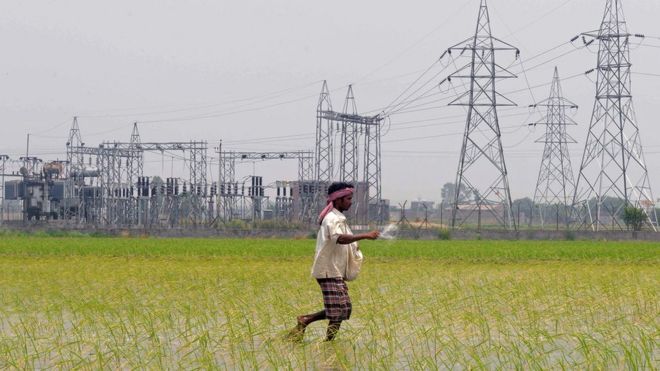
The Indian Prime Minister, Narendra Modi, said last year that his government had reached its target of providing every village in India with electricity.
“Yesterday, we fulfilled a commitment due to which the lives of several Indians will be changed forever,” Mr Modi tweeted in April 2018.
In the run-up to the Indian election, which gets under way on 11 April, BBC Reality Check examines claims and pledges made by the main political parties.
So does this claim stand up to scrutiny?
Let’s start by looking at villages.
There are almost 600,000 villages in India, according to the 2011 census.
The government defines a village as fully electrified if 10% of its households, as well as public places such as schools and health centres, are connected to the grid.
By this definition, all villages have now been electrified, according to official data.
However, much of the work had been done under the previous governments.
When Mr Modi took office, 96% of all the villages in India were already electrified. That left about 18,000 villages to go.
Before the BJP came to power, India had the world’s largest electricity access deficit – 270 million people.
That accounted for just under a third of the overall global deficit, according to the World Bank’s 2017 State of Electricity Access report.
The World Bank estimates that nearly 85% of the entire population now has access to power supply – that’s slightly higher than the government estimate of 82%.
What about households?
The project Mr Modi launched in September 2017 aimed to provide electricity to all Indian households by December 2018, covering 40 million families, primarily targeting rural India.
Virtually all Indian households have now been electrified, according to the government’s data. As of March, just 19,753 households are left.
Image copyrightGETTY IMAGESImage captionThe quality of the electricity supply is weaker in the northern and eastern states.
The current government has suggested it has been electrifying villages at a faster rate than the previous one.
However, using central electricity authority data, we found that under the previous Congress-led government, an average of more than 9,000 villages a year were being electrified compared with the Modi government’s average of more than 4,000 villages a year.
Problems with supply
Although substantial progress has been made to electrify Indian villages – both by the current and previous administrations – the quality of the supply remains a problem, especially in rural areas.
Only six out of 29 states receive a 24-hour power supply, according to a government response to a question in India’s parliament.
Just under half of villages have more than 12 hours of domestic electricity a day and a third receive between eight and 12 hours, according to government data.
States with the highest percentage of villages that receive between just one and four hours of electricity a day include Jharkhand, Mizoram and Arunachal Pradesh.
BEIJING, March 9 (Xinhua) — China will expand the mixed ownership reform to more than 100 state-owned enterprises (SOEs), an official with the country’s state-asset regulator said Saturday.
“There will be more than 100 SOEs in the fourth batch of mixed ownership reform, which will be pushed ahead in key areas,” Xiao Yaqing, head of the State-owned Assets Supervision and Administration Commission of the State Council, said at a press conference on the sidelines of the annual legislative session.
Since 2016, China has selected 50 SOEs in three batches to conduct the pilot reform in fields including power, energy, civil aviation, telecommunications, and defence.
The first three batches have done a good job in exploring and experimenting with the means, equity ratio and governance structure of mixed ownership, Xiao said.
Next, China will create a sound environment for the reform so that enterprises of all kinds of ownership can realize integrated and common development, he added.


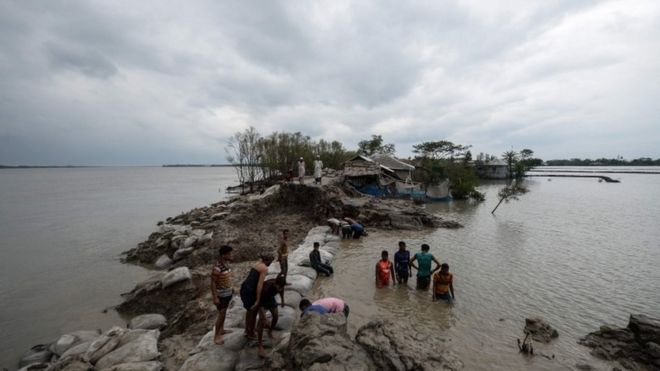 Image copyright AFP
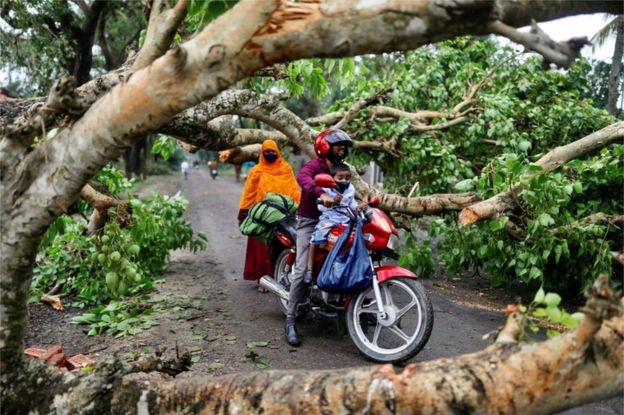 Image copyright REUTERS
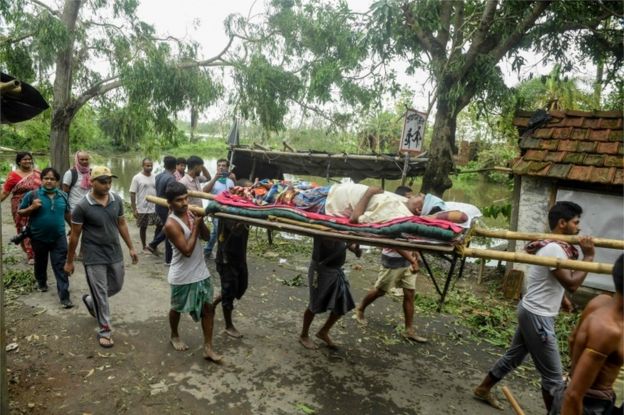 Image copyright AFP
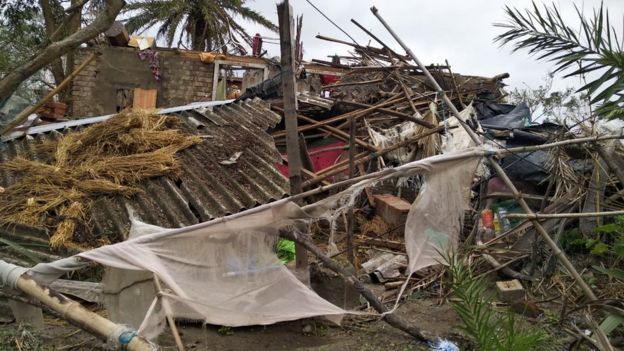 Image copyright MUKTI
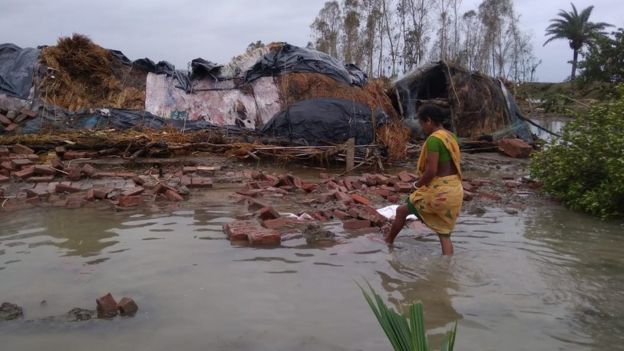 Image copyright MUKTI
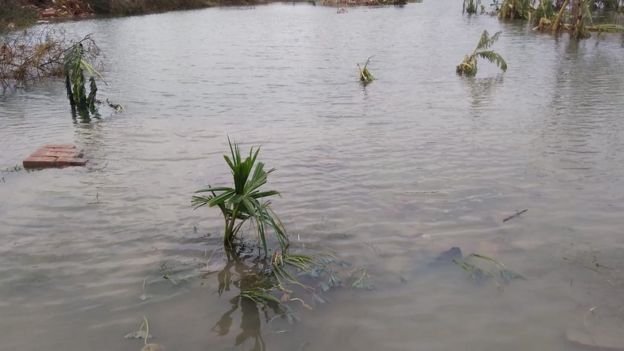 Image copyright MUKTI


 CHINDIA ALERT: You'll be living in their world, very soon