Chindia Alert: You’ll be Living in their World Very Soon
aims to alert you to the threats and opportunities that China and India present. China and India require serious attention; case of ‘hidden dragon and crouching tiger’.
Without this attention, governments, businesses and, indeed, individuals may find themselves at a great disadvantage sooner rather than later.
The POSTs (front webpages) are mainly 'cuttings' from reliable sources, updated continuously.
The PAGEs (see Tabs, above) attempt to make the information more meaningful by putting some structure to the information we have researched and assembled since 2006.
Indian security forces have killed a prominent militant leader in disputed Kashmir, officials say.
Riyaz Naikoo had taken over command of the banned Hizbul Mujahideen group, succeeding Burhan Wani who was killed by security forces in 2016.
Wani’s death triggered massive protests in the region, which is claimed in its entirety by both India and Pakistan.
The region has seen an armed insurgency against Indian rule since 1989, which has flared following Wani’s killing.
Naikoo was shot dead in his home village of Beigh Pora in Pulwama district after militants killed eight security personnel in two separate attacks, part of a recent surge of violence in Indian-administered Kashmir.
Locals said the militant leader had been trapped in a joint siege laid by army, paramilitary and police forces. He had been on the run for eight years.
“At least 76 militants including Naikoo have been killed since January this year. But we also lost 20 soldiers including senior army and police officers,” a security official told BBC Urdu on condition of anonymity.
Under a new policy, militants who are killed are not identified and their bodies are not handed over to their families.
Officials had accused Riyaz Naikoo of plotting attacks against the security establishment in the valley.
Disputed Kashmir has been a flashpoint for more than 60 years, sparking two wars between India and Pakistan.
In August 2019, the Indian government stripped the region of its semi-autonomous status and split it into two federally-run territories.
Thousands of people were detained and the region remains under severe security restrictions.
MUMBAI (Reuters) – India’s tourism industry has been hit by a wave of violent anti-government protests against a new citizenship law that have rocked several cities this month, with at least seven countries issuing travel warnings.
At least 25 people have been killed in clashes between police and protesters, and demonstrations against the law continue.
Officials estimate about 200,000 domestic and international tourists cancelled or postponed their trip to the Taj Mahal in the past two weeks, one of the world’s most popular tourist attractions.
“There has been a 60% decline in visitor footfalls in December this year,” said Dinesh Kumar, a police inspector overseeing a special tourist police station near the Taj Mahal who has access to visitor data. He said the decline was compared to December last year.
“Indian and foreign tourists have been calling our control rooms to check security. We assure them protection, but many still decide to stay away,” said Kumar.
The 17th century marble monument is in Uttar Pradesh, the northern state that has witnessed the highest number of deaths and intense bursts of violence in two weeks of unrest.
A group of European tourists travelling in a group across India said they now planned to cut short their 20 day trip.
“We are all retired folks, for us travel has to be slow and relaxing. The newspaper headlines have led to a sense of concern and we will leave sooner than we had planned,” said Dave Millikin, a retired banker living on the outskirts of London, who spoke to Reuters from the capital New Delhi.
The Taj Mahal, situated in the town of Agra, attracts over 6.5 million tourists every year, generating nearly $14 million annually from entrance fees. A foreign tourist pays 1,100 rupees (about $15) to enter the grounds, although nationals from neighbouring countries get a discount.
Managers in luxury hotels and guest houses around the Taj Mahal said last minute cancellations during the festive season have further dampened business sentiment at a time when the country’s economic growth has slowed to 4.5%, its slowest pace in more than six years.
In a bid to clamp down on violence and unrest, authorities have suspended mobile internet services in Agra.
“Blocking the internet has affected travel and tourism in Agra by about 50-60%,” said Sandeep Arora, president of the Agra Tourism Development Foundation that groups over 250 tour operators, hotels and guides.
The United States, Britain, Russia, Israel, Singapore, Canada and Taiwan have issued travel advisories asking their citizens to either refrain from visiting or to exercise caution when visiting regions embroiled in India’s protests.
Jayanta Malla Baruah, the head of the Assam Tourism Development Corp., said the state, home to the world’s largest concentration of one-horned rhinoceroses, is visited on average by 500,000 tourists during December.
“But this time, due to the ongoing protests and travel advisories by various countries, the number is down by 90% if not more.”
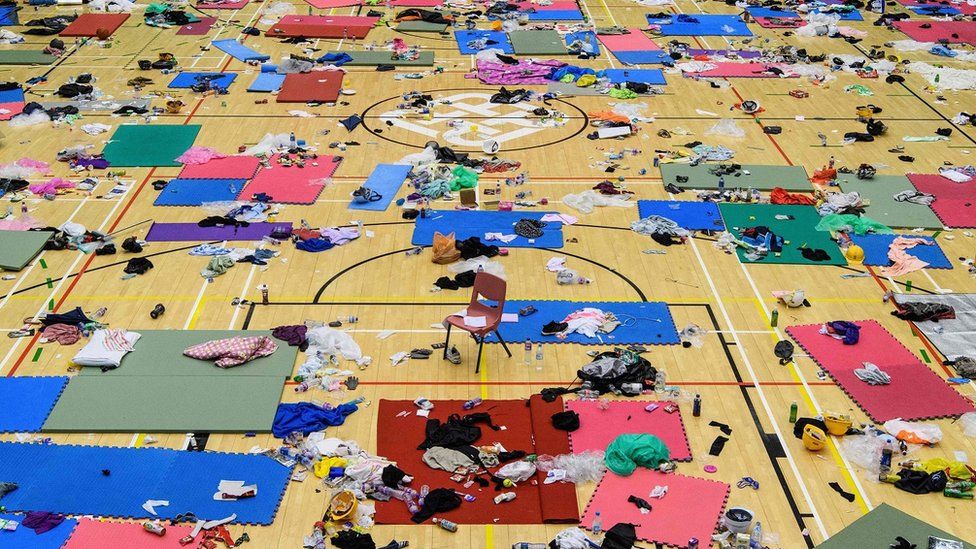
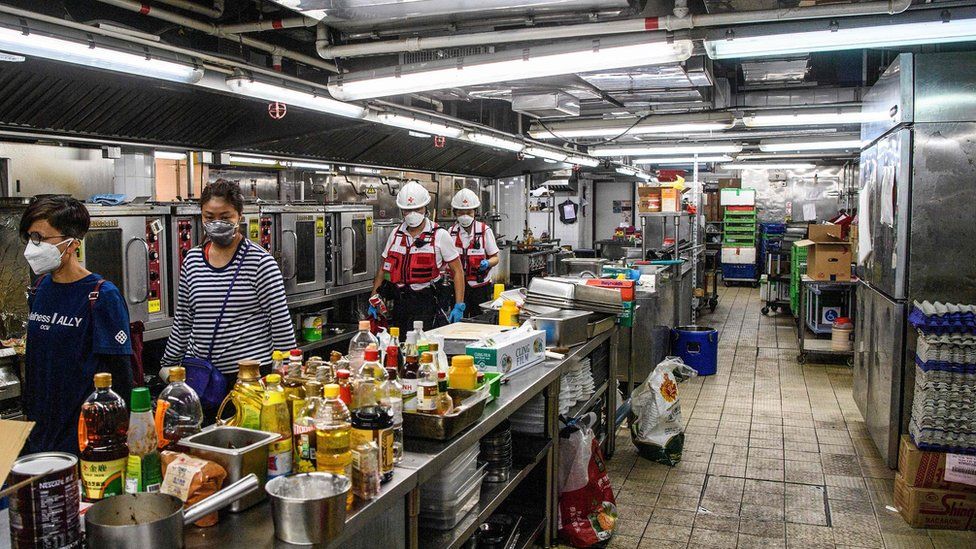
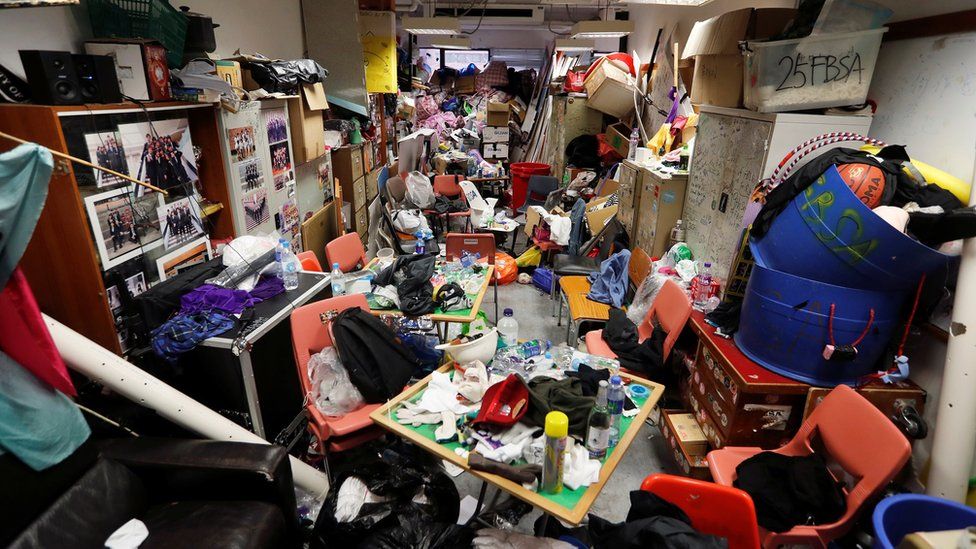
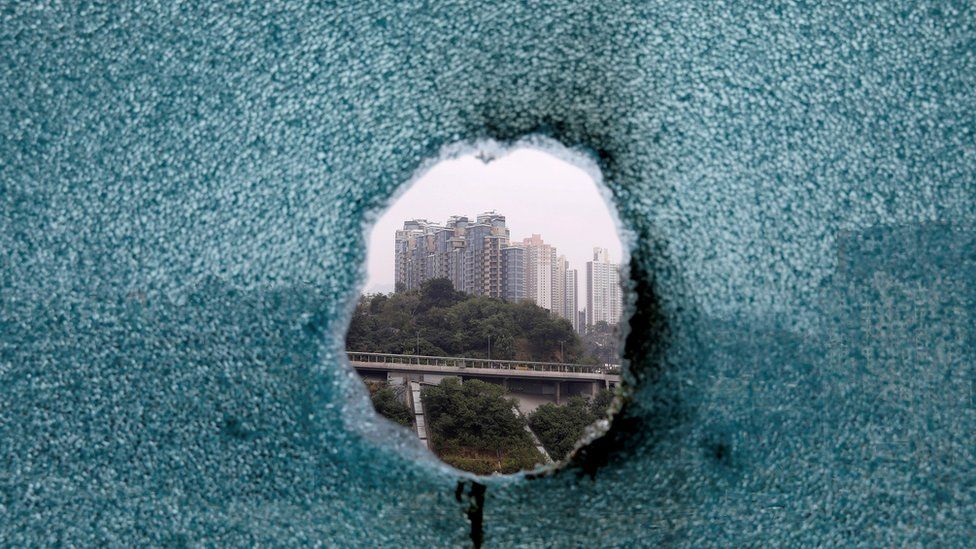
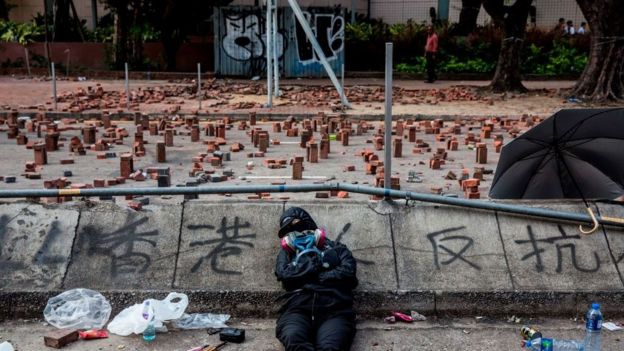
Images from inside Hong Kong’s Polytechnic University show the aftermath of a week-long standoff between protesters and police.
On Tuesday, university officials spent hours searching for anyone left. The fight for control of the Polytechnic University has been one of the defining moments of nearly six months of anti-government protests in the territory.
Protesters barricaded themselves inside the campus almost two weeks ago. The authorities responded by sealing off the campus, trapping more than 1,000 inside. Over the past week, most protesters have either surrendered or escaped.
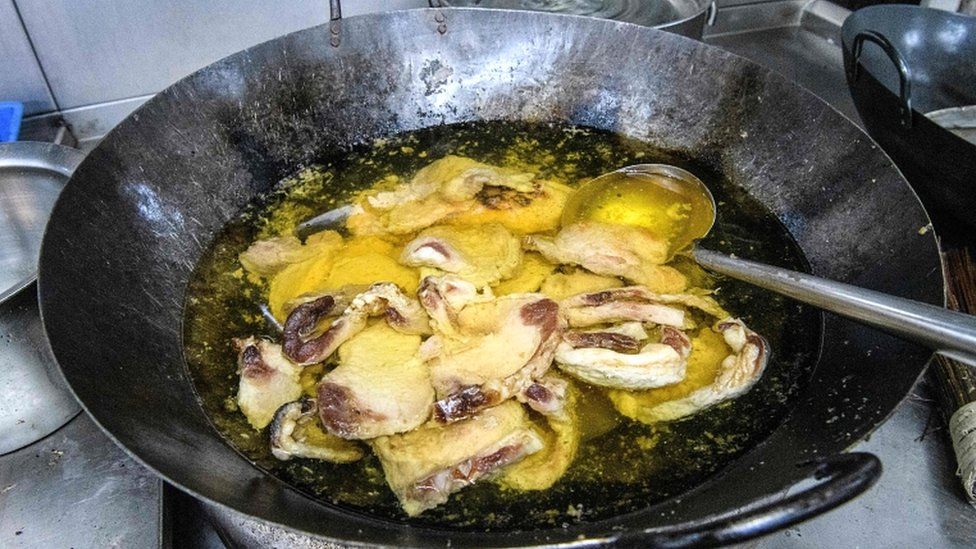
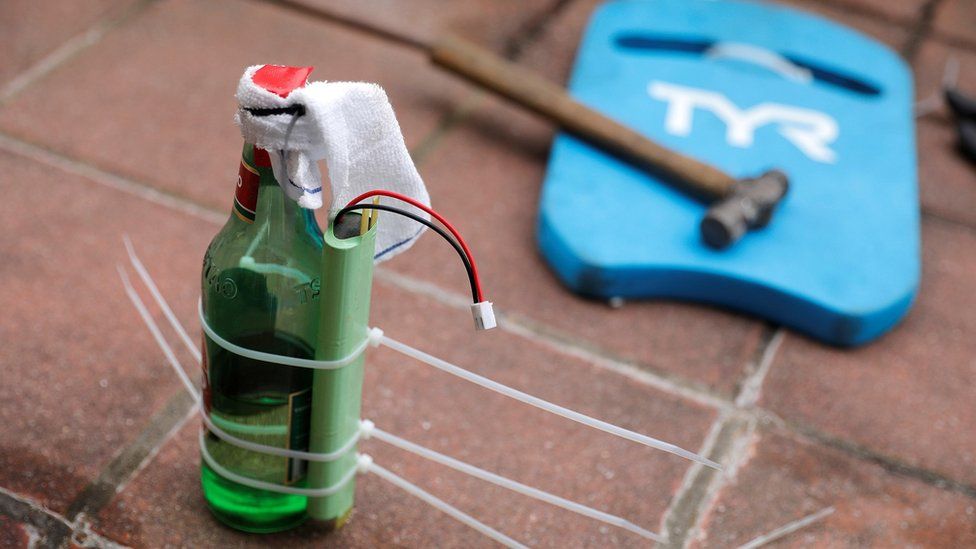
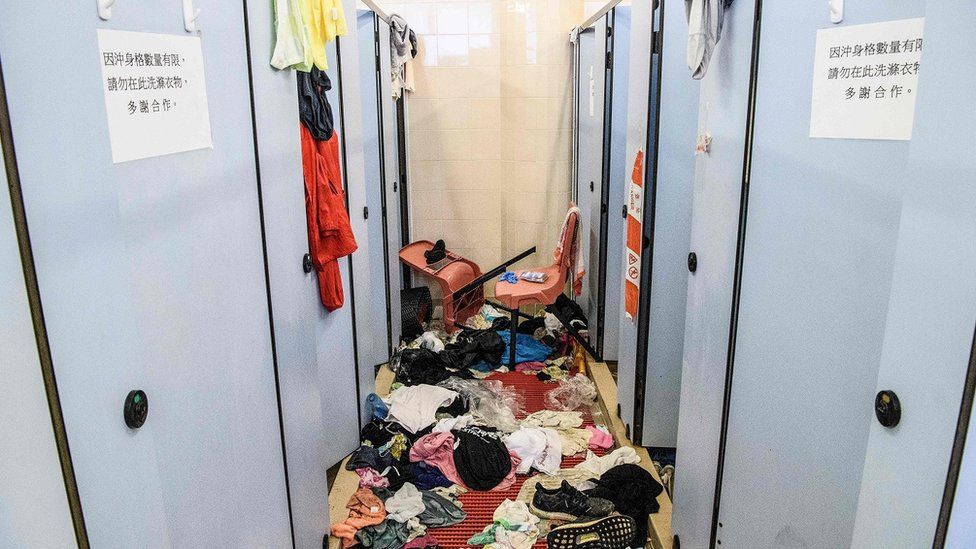
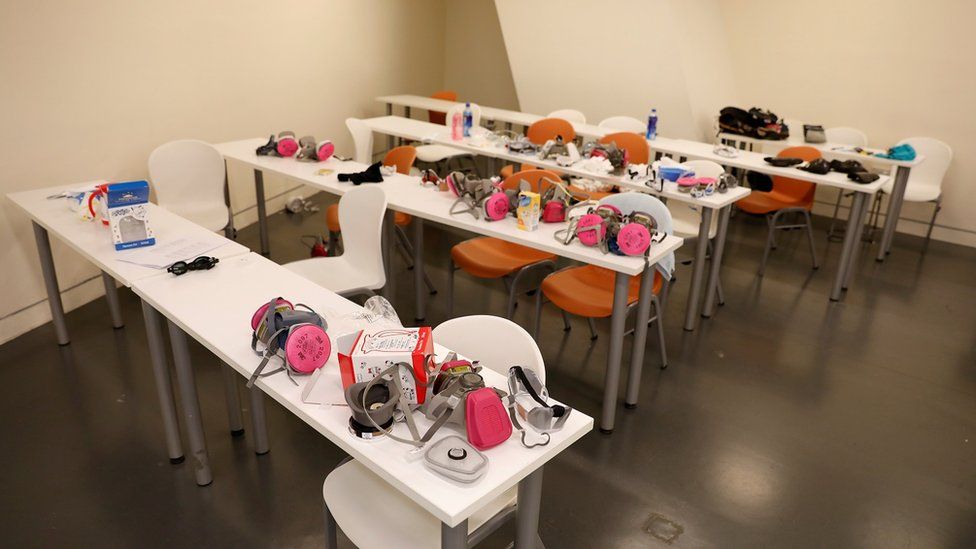
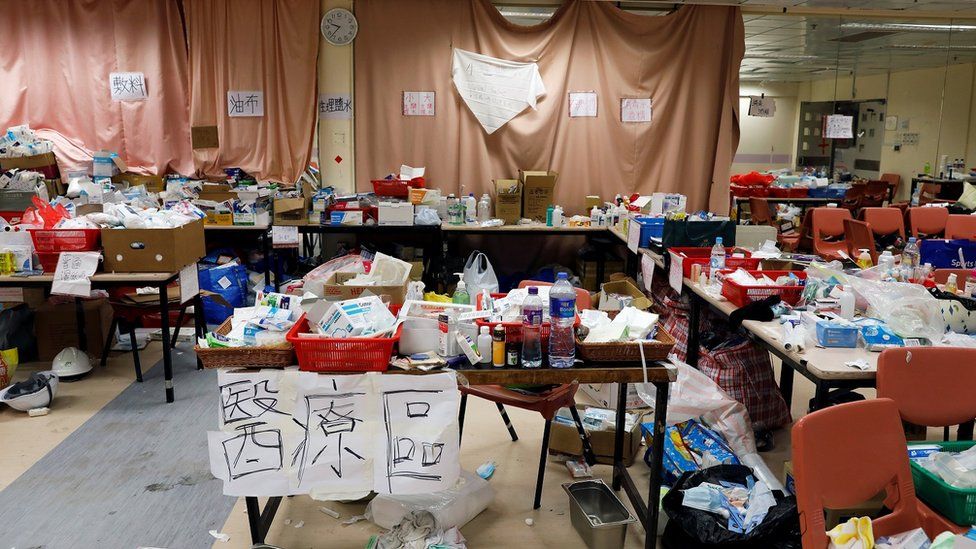
Image copyright AFPA team including university management, security guards, councillors and the Hong Kong Red Cross walk through a canteen in search of any remaining protesters who may be hiding.Image copyright AFPFood was left cooking on a hob in the canteen kitchen.Image copyrigh tAFPActivists – some armed with bows and arrows – engaged in intense battles with the police during the siege. Other items found during the search included, below, a Molotov cocktail and a hammer left on the roof of a university building.Image copyright REUTERSA disparate collection of items were found discarded inside buildings on the campus. Here, clothes could be seen strewn all over a bathroom floor.Image copyright AFPOther items left behind by protesters included face masks…Image copyright REUTERS…helmets and food left in one room…Image copyright REUTERs…and other belongings left in a dorm.Image copyright REUTERSOfficials found only one woman lying exhausted on a couch, who refused to leave. Others might be in hiding, but it is thought unlikely that anyone else remains.Image copyrightREUTERS
Image copyright REUTERSImage caption Anti-government protests in Hong Kong started five months ago
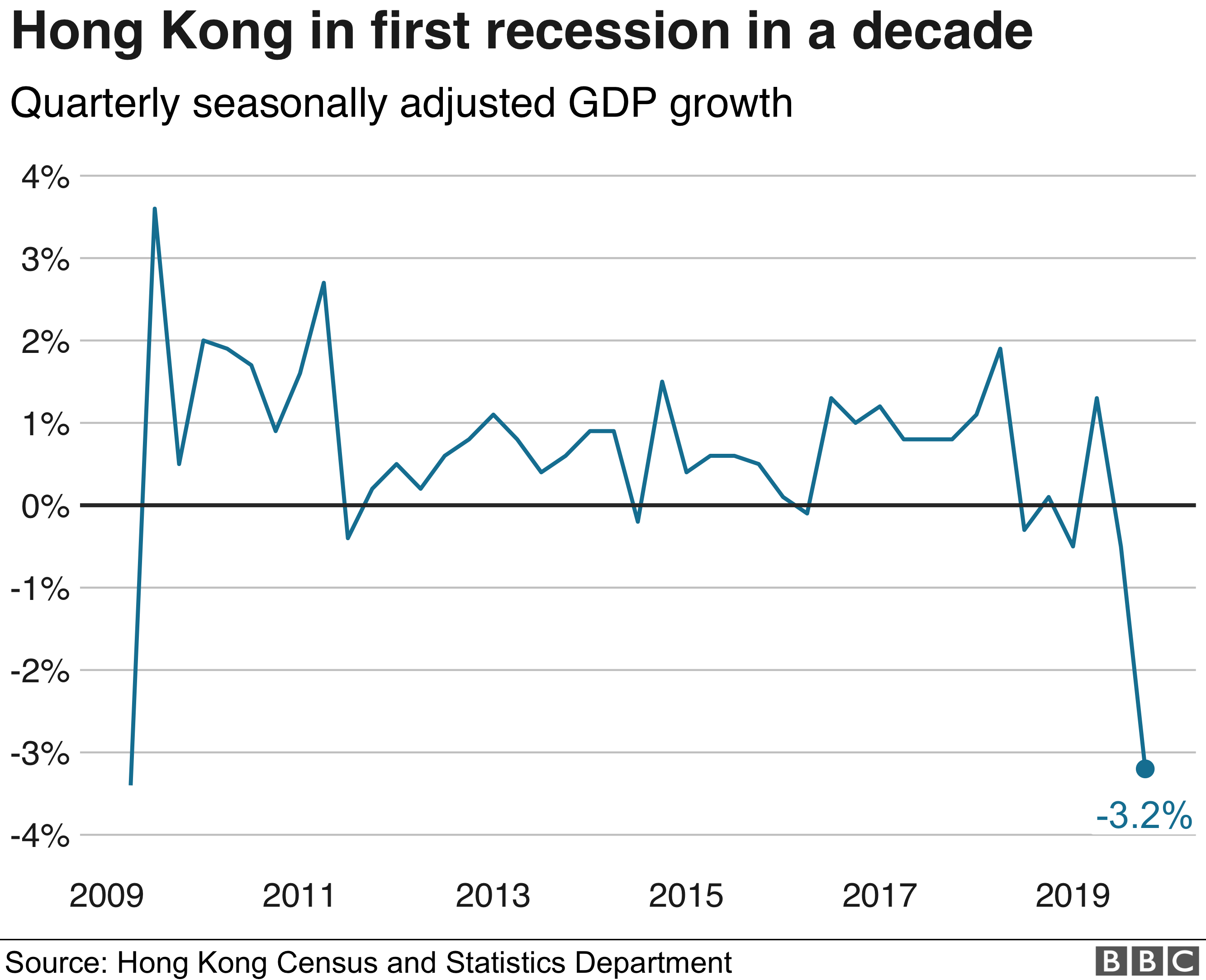
Hong Kong has confirmed it has entered its first recession for a decade as it continues to be gripped by protests.
Its economy shrank 3.2% in the July-to-September period compared with the prior quarter, figures showed, confirming earlier preliminary data.
It means the economy has contracted for two quarters in a row, which is the usual definition of a recession.
Tourists are staying away and shops are suffering amid battles between anti-government protesters and police.
“Domestic demand worsened significantly in the third quarter, as the local social incidents took a heavy toll on consumption-related activities and subdued economic prospects weighed on consumption and investment sentiment,” the government said in a statement.
It now expects the economy to shrink 1.3% for the full year.
“Ending violence and restoring calm are pivotal to the recovery of the economy. The government will continue to closely monitor the situation and introduce measures as necessary to support enterprises and safeguard,” the government added.
Hong Kong – a British colony until 1997 – is part of China under a model known as “one country, two systems”.
Under this model, Hong Kong has a high degree of autonomy and people have freedoms unseen in mainland China.
The protests started in June after the government planned to pass a bill that would allow suspects to be extradited to mainland China.
Many feared this bill would undermine the city’s freedoms and judicial independence.
Image copyrightGETTY IMAGES
The bill was eventually withdrawn but the protests continued, having evolved into a broader revolt against the police, and the way Hong Kong is administered by Beijing.
Protests have taken place every weekend over the past few months, causing widespread disruption and a number of deaths.
On Thursday, a 70-year-old cleaner died after he was hit in the head during a protest in the Hong Kong border town of Sheung Shui.
Video purported to be of the incident shows two groups throwing bricks at each other before the man falls to the ground after being struck on the head.
Image copyright GETTY IMAGESImage caption Burberry says it has seen a “double digit” percentage decline in sales in Hong Kong
Dramatic scenes such as these have kept tourists away. In August, arrivals to the city – a popular travel destination and transit hub – hit their worst level since the SARS crisis of 2003.
Some hotels have slashed prices as they struggle to fill their rooms.
On Thursday, two companies with major operations in Hong Kong revealed the financial impact of the protests.
Luxury fashion house Burberry said its sales in Hong Kong had fallen by more than 10% and would “remain under pressure”.
Airline Cathay Pacific cut its profit guidance and said the civil unrest had “been exceptionally challenging, severely impacting demand and operations of the business”.
Why the spike in anger?
This week has seen a marked escalation in violence with intense street battles, violent clashes at universities and lunchtime protests in the financial heart of Hong Kong.
It is the first time in weeks that protests have taken place during weekdays.
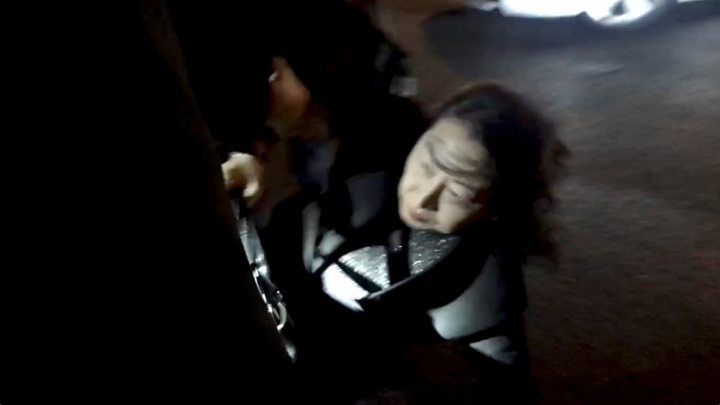
Media caption Hong Kong Justice Secretary Teresa Cheng is jostled by protesters in London
Monday’s protests followed a weekend of vigils and demonstrations after a 22-year-old student protester died last week.
Alex Chow had been in hospital since he fell from the ledge of a car park during a police operation a week ago.
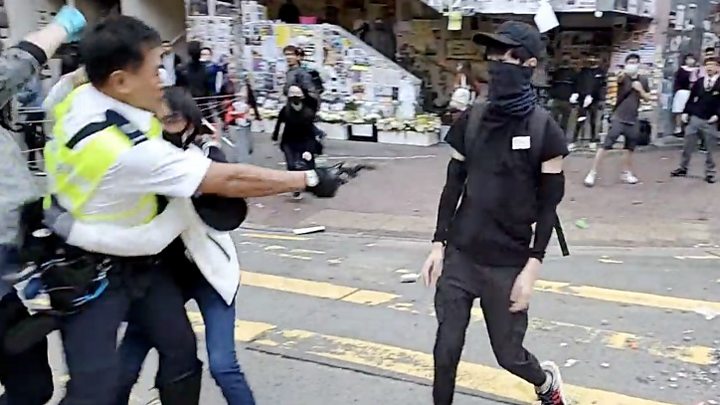
Later on Monday, violence escalated further when a police officer shot an activist in the torso with a live bullet and a pro-government supporter was set on fire by protesters.
In London, Hong Kong’s Justice Secretary Teresa Cheng was hurt after being jostled by anti-government protesters, the Chinese embassy said.
Ms Cheng is seen as having played a key role in promoting the unpopular extradition bill that triggered the protests. China strongly condemned the incident and called for a thorough investigation.
Hong Kong’s rule of law has been pushed to the “brink of total collapse” after more than five months of protests, police have warned.
The warning came as protesters clashed with police across the city on Tuesday.
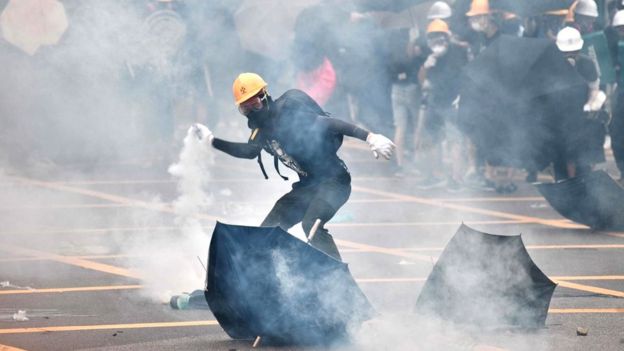
At the Chinese University of Hong Kong, police fired tear gas and rubber bullets at protesters who built barricades on the campus.
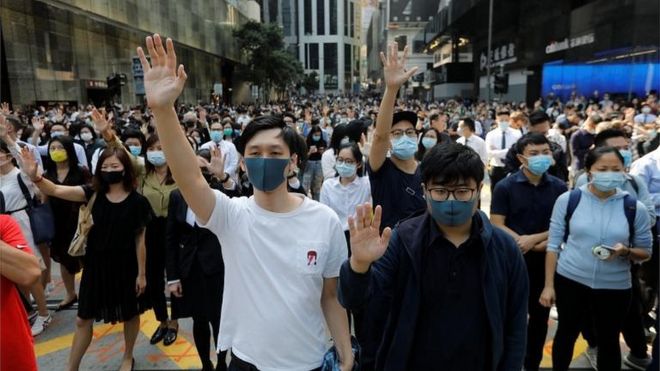
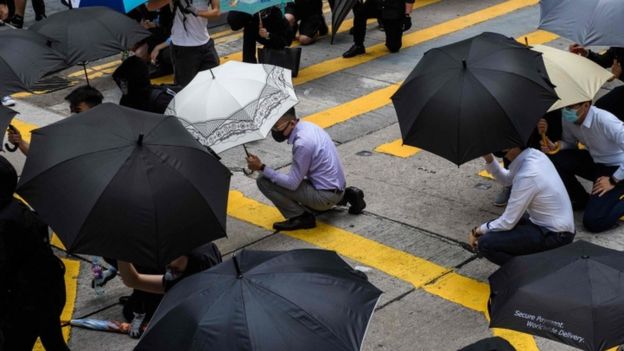
Earlier in the day, around 1,000 protesters rallied in central Hong Kong during the lunch hour blocking roads
Protesters, wearing office clothes, were seen chanting: “Fight for freedom, stand with Hong Kong!”
The demonstrations come just a day after the territory saw a marked escalation in violence, with police shooting one activist in the torso. A pro-Beijing supporter was set on fire by anti-government protesters.
The protests started in June against a now-withdrawn plan to allow extradition to mainland China, but have since morphed into wider demonstrations, with activists demanding greater democracy and police accountability in Hong Kong.
On Tuesday afternoon, police spokesman Kong Wing-cheung hit out at the protesters, saying they had “countless examples of rioters using random and indiscriminate violence against innocent” people.
“Hong Kong’s rule of law has been pushed to the brink of total collapse as masked rioters recklessly escalate their violence under the hope that they can get away with it,” he told reporters, adding that Monday’s attack on the pro-Beijing supporter was being investigated as attempted murder.
Image copyright AFPImage caption Protesters and office workers were seen blocking roads in Hong Kong’s financial district
Speaking at the same conference, Supt Li Kwai-wah defended the officer’s decision to shoot the protester on Monday.
“We found out that our colleague did not only face threat from one person, instead it was a group of people with an organised plan attempting to steal the gun,” he said.
“In a situation like this, we believe our police are reacting according to the guideline, to protect themselves as well as the people around them.”
Both the protester and the pro-Beijing supporter remain in hospital, with the latter in a critical condition.
What happened on Tuesday?
Clashes erupted at the Chinese University of Hong Kong, with police firing tear gas to disperse students, while at City University there was a standoff between students and riot police which continued into the evening.
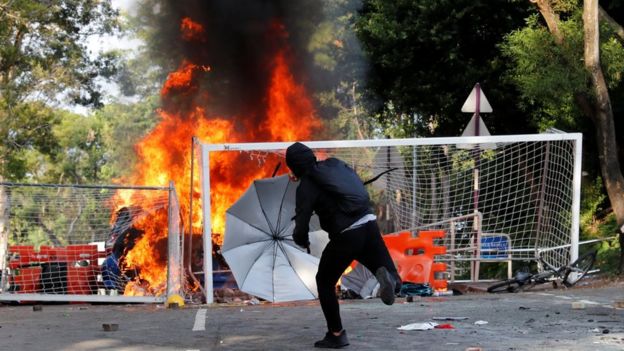
Police continued to use tear gas to try to disperse the protesters who responded with bricks and petrol bombs. Hundreds of protesters remain at the Chinese University of Hong Kong.
Image copyright REUTERSImage caption Students at Hong Kong’s Chinese University fought with police throughout the day
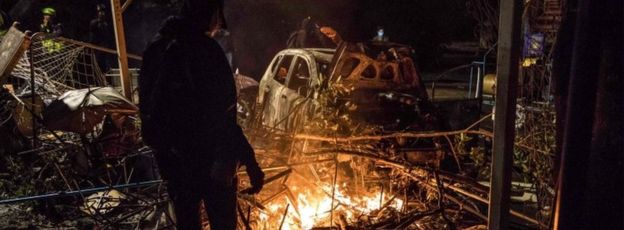
Students built roadblocks on streets in and around City University campus to stop police from entering. At one stage, a van used as part of a street barricade was set on fire.
Students at Hong Kong Polytechnic also tried to disrupt traffic near their campus.
In the morning, suspended railway services and road closures had already led to long traffic jams in the early rush hour. At noon, protesters moved into the city’s central business district for a flash mob protest.
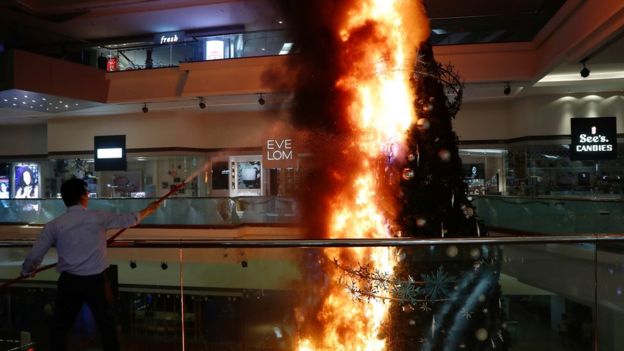
Image copyright REUTERSImage caption At Festival Walk shopping mall, a Christmas tree was set on fire
Protests continued to intensify throughout the day. A Christmas tree inside Festival Walk shopping mall was set on fire by protesters while others were seen smashing a glass railing with hammers.
Train stations were closed across the city.
Media caption This Hong Kong protester’s shooting was livestreamed on Facebook
Eight universities have announced they will suspend classes on Wednesday.
Monday’s protests saw 260 people arrested bringing the number to more than 3,000 since the protests began in June.
Students swear they will not surrender
Grace Tsoi, BBC World Service, at the Chinese University of Hong Kong
Image copyright AFPImage caption Hundreds of protesters remain at the university
The ground was strewn with bricks. The air was filled with the smell of tear gas. Fire was raging on campus. Hundreds of protesters, most of them clad in black, formed human chains to pass bricks and petrol bombs to the front line.
One of the best universities in Hong Kong has turned into a battlefield after another day of intense clashes between students, who have been at the forefront of anti-government protests, and police.
The Chinese University students have been putting up resistance since the morning. On Monday, police seemed to change strategy by deploying forces to campuses. Students told me they should not be allowed there.
The university’s management has tried to deescalate the situation. Vice-chancellor Rocky Tuan was also tear gassed as he was negotiating with police.
Dozens of students have been injured, including at least one hit in the eye by a projectile. The night is young and students swear they will not surrender.
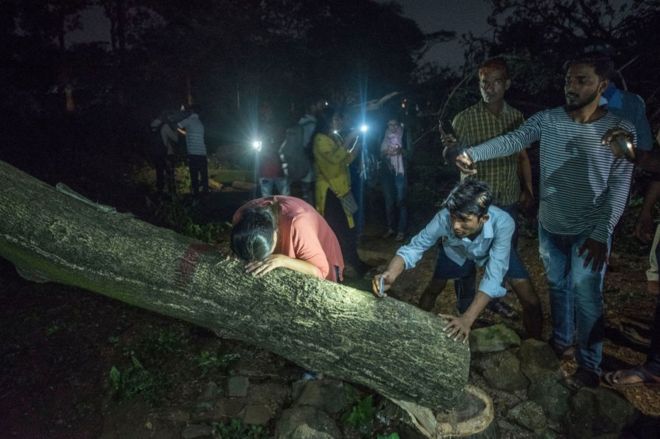
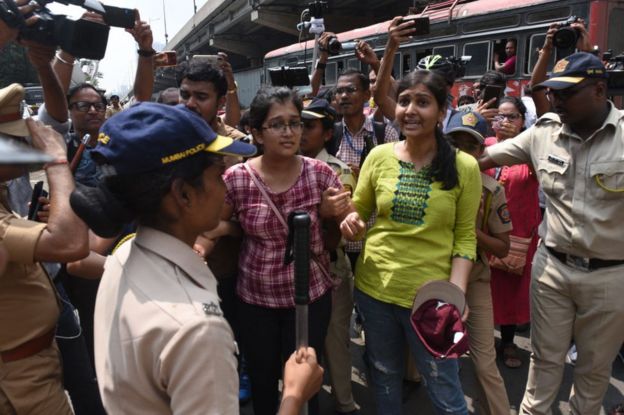
Image copyright GETTY IMAGESImage caption Protesters cry over felled trees in Aarey colony
India’s top court has asked officials to stop cutting trees in a forested area in Mumbai city after protesters clashed with police over the weekend.
The trees, part of a green strip known as Aarey colony, were being cut to make way for a new metro rail project.
Locals have long opposed the move, and filed petitions seeking Aarey to be declared a protected area.
But a high court dismissed the petitions on Friday, sparking protests as officials began felling the trees.
They planned to cut 2,185 trees, and admitted in the Supreme Court that more than 1,500 had already been cut. But petitioners claim that officials have cut around 2,500 trees.
Local residents, students and environmental activists clashed with police on Friday as they took to the streets to stop authorities, and even broke through barricades to enter Aarey colony. More than 50 people were arrested and police imposed restrictions on public gatherings.
The protests grabbed the national spotlight over the weekend, and the Supreme Court took suo moto (without a formal complaint from any party) notice.
What did the Supreme Court say?
A special two-judge bench heard the matter on Monday after students wrote to the chief justice, asking the court to intervene and save the trees.
The court asked the state government of Maharashtra, where Mumbai is located, to not cut any more trees.
Image copyright GETTY IMAGESImage caption Police arrested more than 50 protesters
The court also asked the government to maintain “status quo” – which means that no construction can take place – until 21 October when it will hear the matter again.
The court also ordered the release of all activists who were arrested or detained on bail.
What is Aarey colony?
Spread over 1,300 hectares (3,212 acres), Aarey is a densely forested area dotted with lakes and has the Mithi river flowing through it. It lies at the heart of Mumbai and is often referred to as its last green lung.
It’s locally known as the Aarey “milk colony” because most of the land was given to the department of dairy development in 1951. But they are allowed to grow cattle fodder only on a fraction of the land.
Image copyright GETTY IMAGESImage caption Protesters broke through barricades and clashed with police on Friday
Earlier this year, officials cleared some 40 hectares of the forested area to build a zoo, complete with a night safari. And now, locals complain, another slice of it is in danger from the metro construction.
They also fear that the government will eventually clear the way for private builders to encroach on the Sanjay Gandhi National Park, which lies to the north of Aarey colony.
Officials, however, dismiss these fears as unfounded and point out that the construction for the metro only requires 30 hectares.
How crucial is the metro rail for Mumbai?
The city badly needs a “mass rapid transport system,” Ashwini Bhide, managing director of the Mumbai metro rail corporation, had told the BBC earlier.
The land in Aarey colony, she said, was “the most suitable land due to its size, shape and location”.
She has also been defending the decision to cut the trees on Twitter.
India’s financial hub is congested and infamous for its crawling traffic jams.
Its colonial-era local train system ferries some 7.5 million people between the city’s suburbs and its centre on a daily basis.
Officials say that the metro will eventually carry around 1.7 million passengers every day and bring down the number of vehicles on the road by up to 650,000.
HONG KONG (Reuters) – Staff at Cathay Pacific Airways, Hong Kong’s flagship airline, are on edge.
A Cathay Pacific Boeing 777-300ER plane lands at Hong Kong airport after it reopened following clashes between police and protesters, in Hong Kong, China August 14, 2019. REUTERS/Thomas Peter
Their city has been gripped by months of anti-government protests, and their company is feeling the wrath of China’s aviation regulator after some staff members took part or expressed support.
Since an Aug.9 directive by the Civil Aviation Authority of China (CAAC) that called for the suspension of staff who supported or participated in the demonstrations, the regulator has rejected some entire crew lists without explanation, two sources with knowledge of the matter told Reuters.
The rejections have forced Cathay to scramble, pulling pilots and flight attendants off standby while it investigates social media accounts in an effort to determine which crew member has been deemed a security threat, one of the sources said.
Other disruptions have come in the form of a huge jump in the number of plane inspections upon landing, four pilots said.
The flexing of regulatory muscle has contributed to a climate of fear within the airline, with employees telling Reuters they felt Cathay’s longer-term future as an independent company was highly uncertain and subject to Beijing’s whims.
The CAAC’s labelling of employees who support the protest as a security risk and its demand that they be suspended from flying over mainland airspace has been a de facto career killer.
Around three quarters of Cathay flights use mainland airspace and due to the directive, 30 rank-and-file staff, including eight pilots and 18 flight attendants, have been fired or resigned under pressure, according to the Hong Kong Cabin Crew Federation.
Cathay CEO Rupert Hogg and his top deputy also resigned in August amid the mounting regulatory scrutiny on the 73-year-old airline, one of the region’s most high-profile brands that draws on Hong Kong’s British heritage.
“Things changed very quickly,” said Jeremy Tam, a pro-democracy lawmaker and pilot who resigned from the airline after the CAAC directive, likening the atmosphere to a political trial. “The threat is huge and it’s almost like zero to 100 in two seconds.”
Reuters talked to 14 current and former employees for this article. Nearly all declined to be identified for fear of being fired or due to the sensitivity of the matter.
The CAAC did not respond Reuters requests for comment on the rejections of crew lists or the increase in plane checks.Cathay said in a statement it must comply with all regulatory requirements. “Quite simply, this is our licence to operate; there is no ground for compromise,” it said.
The airline declined to comment on the number of employee departures, but said any terminations took into account factors such as a person’s ability to perform their role.
DEMERIT SYSTEM
Aviation regulators around the world conduct occasional plane inspections at airports to ensure an airline is in compliance with safety regulations.
But after the CAAC’s Aug. 9 directive, the once-infrequent inspections occurred almost daily and included the new and unusual step of checking phones owned by crew for anti-China photos and messages, the pilots said, adding that this had led to flight delays.
The step-up in checks has increased the likelihood of regulators finding minor issues to write up, which pilots said had included dirt on the plane’s exterior and scratches on a fire extinguisher.
Infractions can have outsized consequences under the CAAC’s strict demerit points system, they said, noting the regulator could force Cathay to reduce its number of flights, cut destinations or in a worst-case scenario, revoke the airline’s right to fly to mainland China.
Management has urged staff to do their utmost to avoid infractions.
“It is nothing less than the survival of the airline at stake,” said a senior employee. “Management have made that abundantly clear at meetings.”
Executives are particularly sensitive after seven incidents outside mainland China in the past two months in which pre-flight checks found emergency oxygen bottles for crew were depleted.
The CAAC is more public than many regulatory peers about disclosing safety violations, warnings and punishments.
In 2017, Emirates was banned from expanding its operations for six months following two safety incidents, while flag carrier Air China Ltd was ordered last year to cut Boeing Co 737 flights by 10% after an emergency descent linked to a pilot smoking an e-cigarette in the cockpit.
Cathay declined to provide information on its points under the CAAC system but said it wanted to emphasise that there had been no impact on its flight services into mainland China.
The pilots said the high frequency of airplane checks, which one described as “very intimidatory”, was starting to recede.
A THOUSAND CUTS
Employees are also feeling pressure from other regulatory bodies.
Last week, ahead of China’s National Day on Oct.1, immigration officers at some mainland airports requested photos of crew with the Chinese flag, said a pilot at regional arm Cathay Dragon who flies to the mainland regularly.
He said to his knowledge, most pilots – many of whom are expats from Western countries – had refused but Hong Kong cabin crew were “too nervous to say no” given the scrutiny on their actions by the company and the Chinese government.
“Everyone is walking on eggshells in China,” the pilot said.
Cathay did not respond to a request for comment, while China’s Ministry of Public Security, which oversees immigration, did not respond to a request for comment during a week of public holidays.
There has been no let-up in the widespread, sometimes violent, unrest that has beset Hong Kong. Triggered by a now-withdrawn extradition bill, it has morphed into an outpouring of opposition to the former British colony’s Beijing-backed government.
The crisis has also meant a sharp drop in travel demand to Hong Kong, putting more pressure on Cathay.
Cathay’s overall passenger numbers were down 11.3% in August. Flights at Cathay Dragon, which does most of Cathay’s mainland flying, were on average 60-65% full in September, down from the usual 80%, according to estimates from two pilots.
The pilots said while the sharp drop in demand was in some ways similar in scale to that weathered by Cathay during the SARS epidemic and the global financial crisis, there were key differences that felt more threatening to the company’s future.
Some state-controlled firms such as China CITIC Bank International and Huarong International have told employees to avoid flying with Cathay, and it has been attacked by Chinese state news organisations as well as by many mainland consumers on social media.
CAAC’s Aug.9 statement which called staff who supported the protests a security risk has also put Cathay’s reputation as one of the world’s safest airlines under a cloud it does not deserve, employees said.
Many acknowledged the new management team, which oversees around 33,000 employees, has few palatable options in dealing with the situation given the sway Beijing holds over the airline’s operations.
But they lamented the loss of freedom of speech and sense of job security, saying employees are afraid to speak about anything even vaguely political or voice support for protests on social media for fear of being reported by colleagues under a whistleblower policy.
“It has become a Hong Kong company with mainland employment terms,” a pilot at Cathay Dragon said. “The risk is death by a thousand cuts.”
Image copyright EPAImage caption China is getting dressed up for its big birthday party
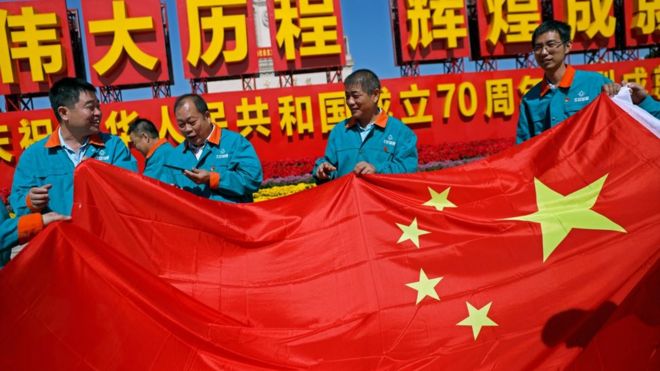
One week from now, the People’s Republic of China will mark its 70th anniversary with celebrations on a scale not seen in China in decades.
Beijing is pulling out all stops and 1 October will be flush with fireworks, fanfare and a huge military parade.
To ensure it goes smoothly, authorities have been ramping up security in the capital – and online – for weeks.
But with yet more protests expected in Hong Kong, the territory might just rain on China’s parade.
What is it all about?
The birth of modern China was declared on 1 October 1949, after the communists under Mao Zedong won the civil war that followed World War Two.
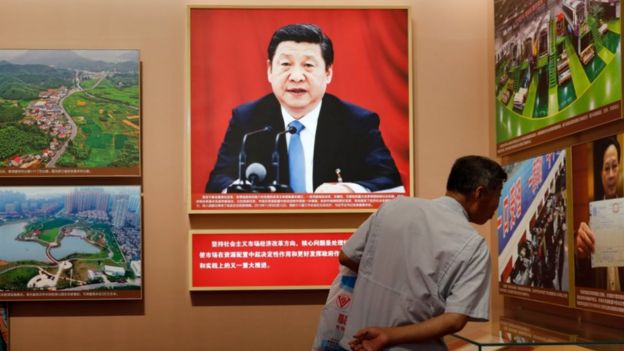
Image copyright EPAImage caption Exhibitions are highlighting the achievements of the Communist Party
The date is marked every year, but celebrations for this 70th anniversary are expected to eclipse previous events.
It’s the first big anniversary since China has emerged as a global power. While 10 years ago China was a superpower in the making, it is now the world’s second largest economy, almost eye-to-eye with the United States.
What to expect?
The main celebrations will take place in the capital, Beijing, where there will be a grand military parade with “advanced weapons” on display, followed by a “mass pageant”.
President Xi Jinping – considered the most powerful Chinese leader since Mao – will address the Chinese people. His speech is expected to celebrate China’s rapid growth and which will be closely watched for any indication of the country’s direction in the coming years.
The president will also hand out honours for contributions to the country and in the evening there will be a grand gala and fireworks show.
All official Chinese celebrations are carefully choreographed and the success of this one is particularly important to the government.
The Dos and Don’ts
The parade – open to invited guests only – will take place around Tiananmen Square in central Beijing. The surrounding area will be practically under lockdown, and in fact has been so several times already.
During rehearsals leading up to the big day, hotels near Tiananmen Square told guests that for several hours each day, no-one would be able to leave the hotel or return to it should they be out, leading to much travel chaos and rebookings.
Many shops and restaurants in the centre are also closed or have shortened hours and some subway stations are temporarily shut.
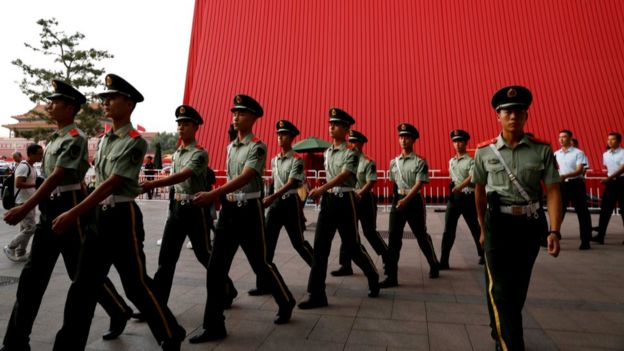
Image copyright EPAImage caption Security is tight ensure the party goes to plan
Trains to Beijing are running numerous safety checks on their passengers and vehicles going into the city are also being tightly watched.
On the big day itself, areas around Tiananmen Square will be blocked and guarded. Local residents will need to identify themselves if they want to pass.
To ensure the sun will shine brightly on the celebration in notoriously polluted Beijing, several coal plants and construction sites in and around the city have been ordered to stop work for the duration.
There’s also a ban on any low-flying aerial vehicles in place. That means anything from light aircraft to drones, balloons and even racing pigeons.
Censorship galore
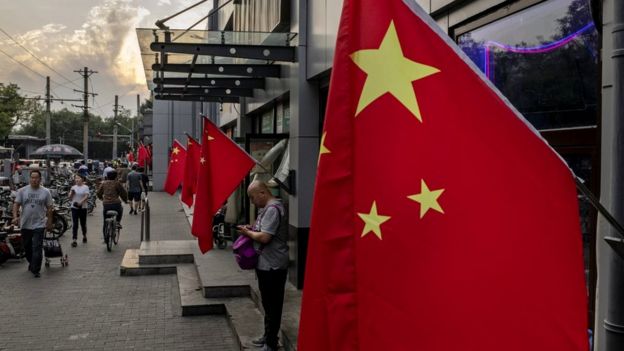
Across much of the city centre, there are national flags set up at every door. Voluntary inspectors are monitoring the streets and locals have told the BBC they’re being questioned after having even brief conversations with foreigners
One person said she was asked by an inspector: “Who were those foreigners? Why were they here?”
The tight control naturally extends online as well. Popular social media platform Weibo said it was deleting content that “distorts” or “insults” the country’s history ahead of the anniversary.
Image copyright GETTY IMAGESImage caption Every house and every shop is sporting a national flag
Chinese journalists are always expected to toe the party line anyway, but starting in October they will have to pass an extra test to prove they are versed particularly in Xi Jinping’s teachings, officially called Xi Jinping Thought on Socialism with Chinese Characteristics, which has been written into the constitution.
Whether or not they pass the exam will then determine whether they’ll be accredited as journalists.
“The fundamental point with this ‘training’ and indoctrination process isn’t so much about the content,” David Bandurski of China Media Watch told the BBC.
“It is about reinforcing the message and understanding among journalists that they work, first and foremost, for the Chinese Communist Party, and serve its agenda.”
So not only will the events be choreographed – the domestic coverage of them will also be tightly guarded.
What about Hong Kong?
Despite Beijing’s determination to let its achievements shine on 1 October, there’s a good chance Hong Kong will pull focus.
Anti-Beijing protests always take place in Hong Kong on China’s National Day, but this time, the activists know that the world is watching.
Anti-government protests have rocked the city for months and the situation shows no sign of dying down.
Clashes between police and activists have been becoming increasingly violent, with police using tear gas and activists storming parliament.
Image copyright AFPImage caption The protests have often escalated into violent clashes
That means two things for 1 October: official celebrations in the territory are being toned down to avoid clashes – the annual fireworks display has been cancelled – while at the same time, activists are planning to step up their protests.
On Sunday 29 September, a “Global Anti Totalitarianism March” is scheduled to take place at various locations around the world in support of Hong Kong.
On 1 October itself, a march in central Hong Kong is planned with everyone asked to wear black.
If the past weeks’ demonstrations are anything to go by, the smiles and celebrations in Beijing will be competing for media space with pictures of tear gas and angry young protesters in Hong Kong.
ALMATY/NUR-SULTAN (Reuters) – Police detained dozens in Kazakhstan’s two largest cities on Saturday as they took part in the latest protest against China’s influence in the Central Asian republic.
Neighbouring China is already one of Kazakhstan’s largest investors and trade partners and a plan to relocate a number of Chinese plants and factories to the former Soviet republic has faced public opposition.
The latest round of protests on Saturday was organised by supporters of Mukhtar Ablyazov, a fugitive banker living in France who has been the fiercest critic of Kazakhstan’s first president, Nursultan Nazarbayev.
Nazarbayev resigned last March after running the oil-rich nation for almost thirty years, but retains sweeping powers as the head of the security council and the ruling Nur Otan party.
Kazakh authorities consider Ablyazov’s political movement extremist and involvement in its activities a crime. Authorities have detained 57 people and may be charged, the interior ministry said.
“You know that as of today’s date at 2 p.m. the banned DCK in Kazakhsan was called upon to gather… we (the police) asked people to disperse, and those who didn’t, were taken to the district offices for questioning,” Bakytzhan Malybayev, first deputy chief of Nur-Sultan police, told reporters. “We will carry out questioning and then the people will be released.”
Reuters reporters witnessed several arrests in Nur-Sultan and Almaty. In Kazakhstan’s capital Nur-Sultan, police detained a man with a banner reading: “Let’s not give way to Chinese expansion” and “The old man is the enemy”, an anti-Nazarbayev slogan. Several people chanted:”Freedom to political prisoners”.
Some protesters tried to escape as police moved in and smashed the windows of a police bus.
In Almaty, protesters were quickly taken away to police buses as they began chanting slogans against Chinese expansion and “Old man, go away!”
China is a major investor in Kazakhstan’s energy sector and buys oil and gas from the mostly Muslim nation of 18 million, but critics accuse some Chinese companies – as well as Western ones – of hiring too few local staff and paying them less than foreign workers.
Top law enforcement body starts campaign to rally mainland support for officers amid anti-government protests
Maxim’s described as ‘company that loves the country and loves Hong Kong’ after condemnation of unrest by daughter of founder
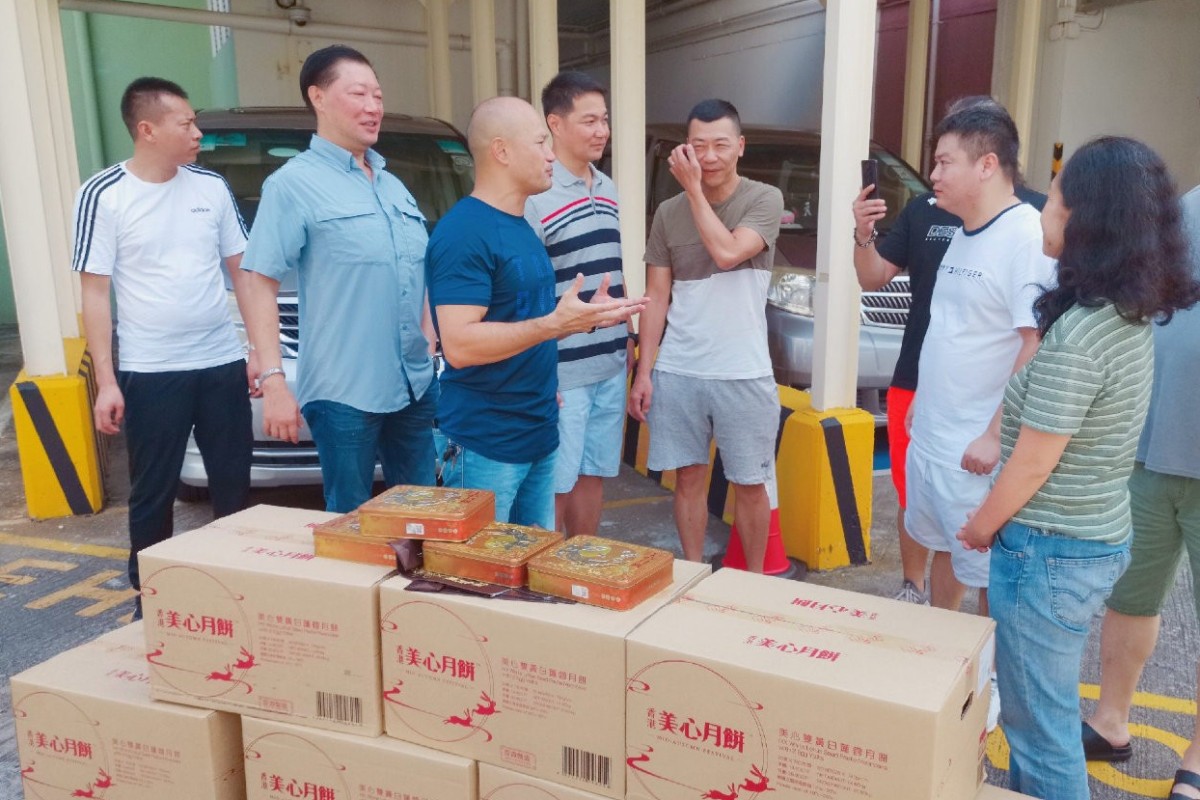
Officer Lau (third from left) and police colleagues receive a delivery of mooncakes. Photo: Weibo
China’s top law enforcement agency has shown its support for Hong Kong’s embattled police by delivering 650 boxes of mooncakes to the force’s dormitories and stations ahead of Friday’s Mid-Autumn Festival.
The festive gifts were sent after an online campaign titled “I want to send hometown delicacies to Hong Kong Police”, launched last Friday by Chang An Jian, an official social media account of the Central Political and Legal Affairs Commission, Beijing’s top political body responsible for law and order.
The commission – a Communist Party organ, rather than a government body that police report to – said in a blog post that seven people had donated about 150,000 yuan (US$21,000) between them.
The campaign represents the latest display of mainland support for the force, with no end in sight to mass protests in Hong Kong triggered in June by opposition to an
that would have allowed the transfer of criminal suspects to mainland China. Hong Kong police have faced numerous accusations of excessive use of force during the unrest.
But the mooncake delivery was complicated by customs regulations, with most major Chinese courier services unwilling to take deliveries containing processed meat and egg yolk across the border with Hong Kong.
“[We] were panicking because a lot of enthusiastic netizens had their salted duck and mooncake deliveries to Hong Kong rejected by couriers!” a Chang An Jian blog post said on Wednesday night.
In the end, 650 boxes of mooncakes that were bought from Hong Kong were sent to police dormitories and stations on Wednesday evening.
Mid-Autumn Festival is the second most important traditional Chinese holiday after Lunar New Year.
“[The mooncakes] were from Maxim’s, a company that loves the country and loves Hong Kong!” the blog post also said.
Annie Wu Suk-ching, whose father co-founded the Maxim’s chain, last week
She was lauded by Communist Party mouthpiece People’s Daily for “clearly adhering to the one country principle” – referring to “one country, two systems”, the principle under which Hong Kong was guaranteed a high degree of autonomy after it was handed over from British to Chinese rule in 1997.
One of Maxim’s biggest rival mooncake manufacturers in Hong Kong, Taipan Bread and Cake, had its products removed from shops across the Chinese mainland and from its biggest e-commerce sites, Tmall.com and JD.com, after the son of its founder was vilified by People’s Daily for a Facebook post that the newspaper said showed he backed the protests.
Recipients of the mooncakes included a police officer who in July was hailed as a hero by Chinese state media and nicknamed “bald sergeant Lau Sir” after pointing a shotgun at protesters who had besieged a police station. Lau has since been invited by Beijing to attend a grand celebration on October 1 for the 70th anniversary of the founding of the People’s Republic of China.
Mooncake importer says stock will be destroyed after mainland backlash
Beijing has focused attention on the violent elements of the Hong Kong protests in its social media posts and media coverage, while businesses have been carefully monitored and expected to toe Beijing’s line on condemning violence and supporting one country, two systems.
“Hong Kong Police have been having a very difficult time,” said one mainlander, surnamed Lu, in a video posted by Chang An Jian. “We want to cheer them up.”


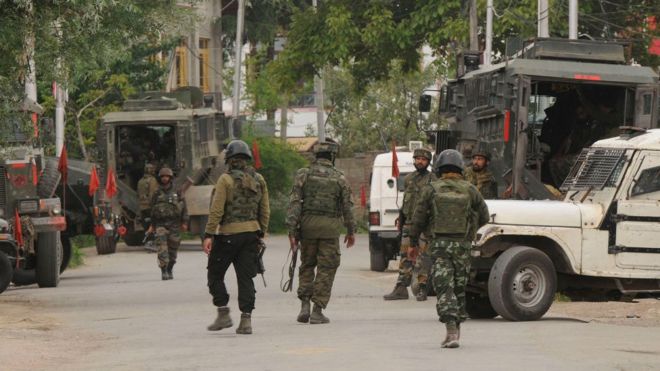 Image copyright GETTY IMAGES




 CHINDIA ALERT: You'll be living in their world, very soon