12/12/2019
- Wang Fuman became an internet sensation after he was pictured with his head encrusted in ice after freezing trek to school
- Life has improved since then, but his dad says they are still struggling to make ends meet
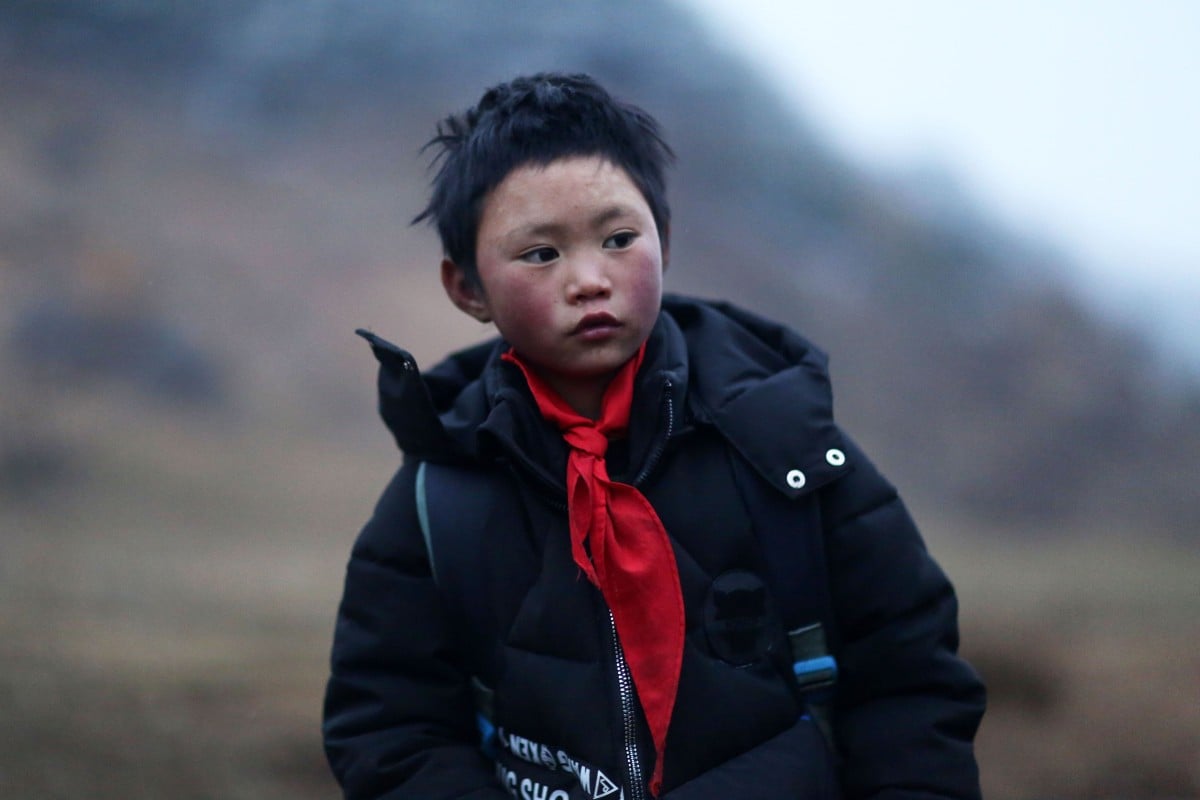
Nine-year-old Wang Fuman’s family has now moved from their mud hut to a two-storey home. Photo: AFP
The father of the “Ice Boy” – who became an internet sensation after he was pictured with his head covered in icicles following a freezing trek to school in southwest China – has spoken out about being rejected for a poverty alleviation scheme.
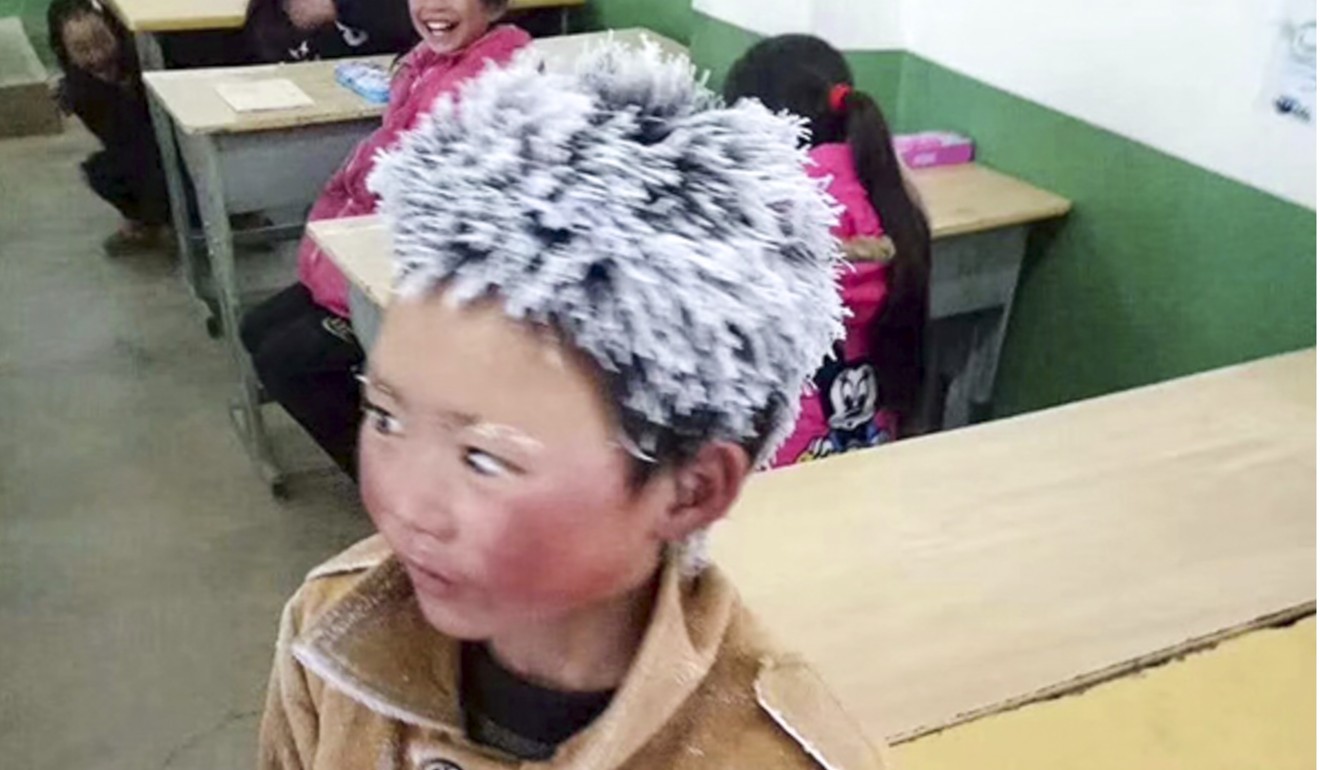
Wang Gangkui’s son, Wang Fuman, was eight when a photo of him taken by a teacher went viral on social media in January last year. It showed the little boy with his hair and eyebrows covered in ice and his cheeks ruddy from the cold after he had walked for over an hour from his home in thin clothing and no hat along treacherous mountain paths.
The plight of the impoverished primary school pupil from Ludian county, a poor area in Zhaotong, Yunnan province, touched hearts across China, with many people expressing sympathy online for the hardships the boy, and other children like him, endured to get to school. Donations of money, warm clothes and heating flooded in.
The photo of Wang Fuman arriving at school with his hair and eyebrows covered in ice went viral last year. Photo: news.163.com
But according to his 30-year-old father, the family is still struggling to make ends meet. He said his application for the assistance scheme had been turned down for the past five years without a satisfactory explanation.
“It’s unfair and unjust that my application wasn’t approved,” Wang Gangkui said on Thursday. “There are allegations in media reports that I have various assets, and they’re just not true. And neither am I trying to take advantage of my son’s fame,” he said.
Families approved for the means-tested scheme, a nationwide programme that is administered at the local level, are given benefits ranging from subsidies to vocational training and job opportunities.
Geng Tao, the party secretary of Zhuanshanbao village, told China News Service on Monday that the Wang family did not meet the eligibility criteria for the programme, citing their two-storey house with a total area of 160 sq metres.
Wang was responding to criticism from internet users after he posted his complaint on social media app Jinri Toutiao on Sunday, a post he later deleted. Some accused him of taking advantage of his son’s fame to get access to government aid, claiming the family was being “greedy” as they were already doing better than others in the region because of the donations they received last year.
State media also weighed in, with Beijing News saying in an editorial on Tuesday that “the authorities should not be influenced by public sentiment towards the Ice Boy and should look at the family’s real situation when assessing if they are in need or not”.
Wang acknowledged that the media attention and subsequent donations from the public had eased the family’s situation, but said they only received a small share.
“There were a lot of donations, but most of them went to the school and were shared among all the pupils and their families here,” he said. “Our family only received a small amount of money.”
After Fuman’s photo went viral, the Ludian county education authorities said there were many “Ice Boys” in the area, and all donations received had been distributed to local families in need, according to China News Service.
A local charity organisation received more than 300,000 yuan (US$42,500) in donations from the public, and said the money was shared among pupils at the Zhuanshanbao primary school, with Fuman receiving just 500 yuan.
Life has improved for Fuman and his family since the photo was taken. He was a
– a term used to describe youngsters from poor families whose parents work in cities away from home, leaving them in the care of relatives. His parents have now returned to their hometown and his father works nearby at a construction site in Zhaotong, earning 3,000 yuan a month – a relatively high salary for the area. But he is the breadwinner for the family of five – his wife, Lu Dafeng, and their two children, Fuman and their 11-year-old daughter Wang Fumei, as well as his mother.
They moved out of their mud hut into the two-storey home, and with the donated funds, Fuman’s primary school was renovated and now has a dormitory equipped with heating. Fuman stays at the school during the week and returns to his home – a 20-minute walk away – on the weekend.
Wang Gangkui said his wife and mother could not apply for jobs designated as “public welfare” positions – such as a street cleaner post offering 500 yuan a month – because they were not recognised as a family in need under the scheme.
He also dismissed media reports that he had two cars, saying he had a second-hand van worth no more than 3,000 yuan. He said reports that his family also had cattle were not true.
Instead, he said he was paying off a loan of tens of thousands of yuan that he took out to build the family’s new house.
There were an estimated 16.6 million people living in poverty in rural China at the end of 2018, about 14 million fewer than a year earlier, according to official data. The ruling Communist Party set the ambitious target of eliminating extreme poverty in China by the end of 2020, and claims that more than 700 million people have already been lifted out of poverty over the past four decades.
Posted in ‘Ice Boy’, China News Service, China’s, Critics, donations, encrusted in ice, Family, father, flooded, freezing tre, head, heating, money, mud hut, poverty assistance scheme, responds, school, The Beijing News, two-storey home, Uncategorized, warm clothes, Yunnan Province |
Leave a Comment »
30/07/2019
- Armed F-16 fighter jets simulate attack followed by medium and long-range missile launches into eastern waters
- People’s Liberation Army launched two large-scale drills close to Taiwan Strait on Sunday
9
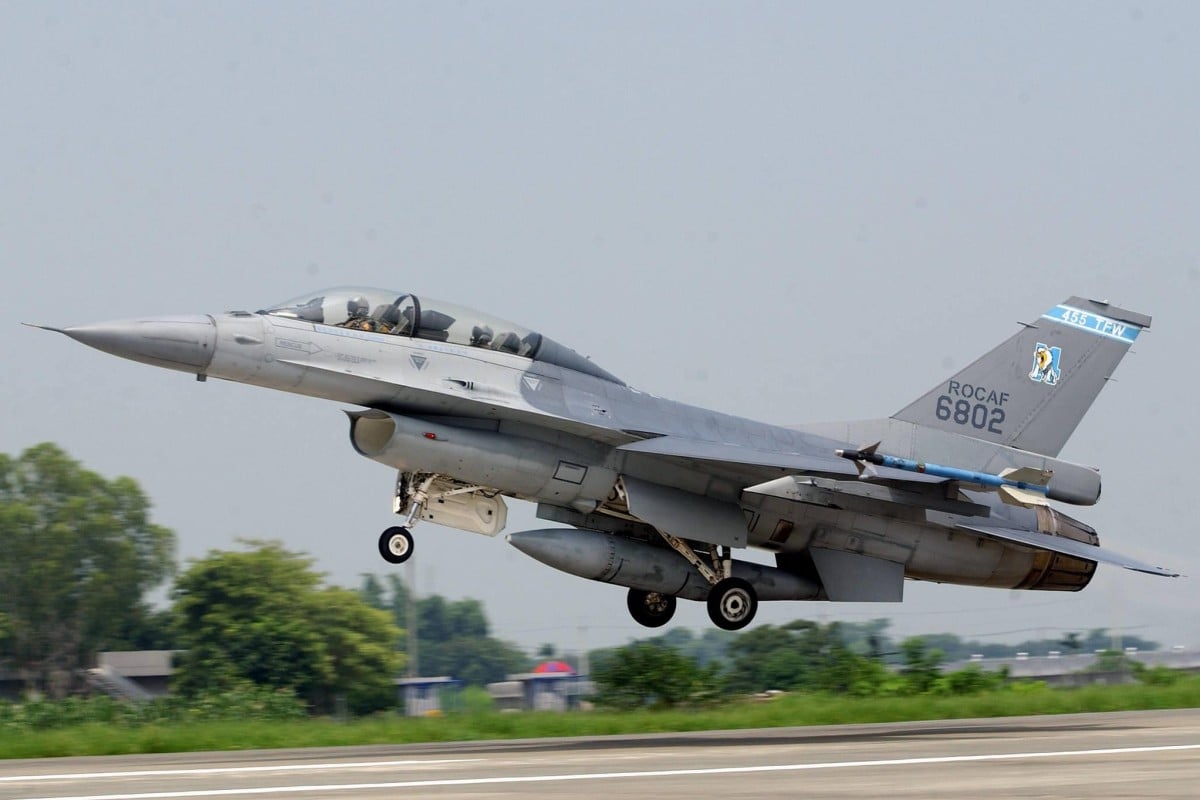
Taiwan has launched a military exercise including F-16 fighter jets in response to Beijing’s war games, which began on Sunday. Photo: AFP
Taiwan responded to Beijing’s military drill targeting the self-ruled island by deploying its most advanced fighter jets and firing 117 medium and long-range missiles on Monday and Tuesday.
Defence ministry spokesman Lee Chao-ming said the missiles were fired from the Jiupeng military base to waters off eastern Taiwan, with a range of 250km (155 miles), in an exercise covering five types of training for the island’s forces.
On Monday, Taiwan’s air force also dispatched two F-16 fighter jets armed with AGM-84 Harpoon missiles in a simulation of an attack off the island’s southeast coast.
Song Zhongping, a military commentator based in Hong Kong, said the Taiwan drill was aimed at the mainland Chinese exercise which began on Sunday. The location of the Taiwan drill meant its missiles’ electronic data could avoid detection by the People’s Liberation Army’s radar, he said.
Chinese military starts Taiwan Strait drills amid rising tension
“Taiwan is focusing on boosting self-defence, and building up a comprehensive air and sea defence network to counter military threats from the mainland,” Song said.
“The test firing of missiles is to boost the island’s self-defence capability. The military drill of the PLA has triggered a lot of concerns in Taiwan, and Taiwan is responding to it also through a strong military means.”
The PLA launched two large-scale military drills close to the Taiwan Strait on Sunday, after a notice issued by the Zhejiang Maritime Safety Administration prohibited ships from entering the waters off the coast of the eastern province between 6pm on Saturday and 6pm on Thursday.
The Guangdong Maritime Safety Administration said another set of military exercises would be held in the waters off Fujian province between Monday morning and Friday evening.
Observers said they expected PLA forces from the Southern and Eastern commands – whose area of responsibility includes Zhejiang and Fujian, which lie across the strait from Taiwan – to take part in the exercises.
Japan’s Ministry of Defence said on Monday that six Chinese warships had passed through the Miyako Strait – a waterway lying between Okinawa Island and Miyako Island – presumably in preparation for the drills.
Japanese military vessels said a Chinese class-three missile destroyer – a type 054A missile frigate – was sailing 240km north of Miyako Island on Saturday.
On Thursday, Japanese ships reported China’s type 052D destroyer Xining, type 054A missile frigate Daging, the guided missile frigate Rizhao, and the ocean comprehensive supply ship Hulun Lake, all entered the Pacific Ocean through the Miyako Strait.
This is China’s first war game to involve simultaneous exercises at two locations in waters near Taiwan since the 1995–96 Taiwan Strait Crisis, during which the PLA conducted a series of large-scale live-fire exercises in response to then-Taiwanese leader Lee Teng-hui’s visit to the United States, and ahead of the Taiwanese presidential election.
Source: SCMP
Posted in 054A missile frigate, AGM-84 Harpoon missiles, Armed F-16 fighter jets, Beijing’s military exercises, Chinese warships, class-three missile destroyer, Daging, defence ministry spokesman, drill, Fujian Province, Guangdong Maritime Safety Administration, guided-missile frigate, Hulun Lake, Japan’s Ministry of Defence, Japanese military vessels, Jiupeng military base, large-scale drills, medium and long-range missile launches, missile frigate, Miyako Island, Miyako Strait, ocean comprehensive supply ship, Okinawa Island, own, Pacific Ocean, People’s Liberation Army (PLA), PLA, responds, Rizhao, Taiwan, Taiwan Strait, Taiwan Strait Crisis, Taiwan’s air force, type 052D destroyer, Uncategorized, United States, Xining, Zhejiang Maritime Safety Administration, zhejiang province |
Leave a Comment »



 CHINDIA ALERT: You'll be living in their world, very soon