Archive for ‘rural areas’

01/06/2020

Guangxi makes efforts to improve education for poverty-stricken children

(FOCUS)CHINA-GUANGXI-POVERTY RELIEF-EDUCATION DEVELOPMENT (CN)

Students attend a class at a primary school in Dahua Yao Autonomous County, south China’s Guangxi Zhuang Autonomous Region, May 29, 2020. Guangxi, one of the major battlefields in China’s poverty alleviation campaign, has been making painstaking efforts to improve education for poverty-stricken children, as schooling is believed to be the best way to empower the youngsters to lift their families out of poverty. The region has taken various measures in this regard, including granting students stipends, improving school facilities and nutritional conditions of rural students, and helping more students from rural and impoverished areas have access to higher education. As many households from inhospitable areas have moved into relocation sites built for poverty alleviation in the county seats, relocated children can study in schools in and near resettlements, instead of trekking hours back and forth in mountains for schooling. The faculty is a key to education. The regional government has called in capable teachers to help schools in rural areas, and has been committed to guaranteeing payment to teachers and filling vacancies of teachers in rural areas through special programs. Reducing poverty must begin with reducing ignorance. Therefore, giving rural children a good education is an important task in poverty relief, and also a crucial means to stop poverty being passed on through generations.

Source: Xinhua

13/05/2020

Xinhua Headlines-Xi Focus: Xi stresses achieving moderately prosperous society in all respects

Chinese President Xi Jinping, also general secretary of the Communist Party of China Central Committee and chairman of the Central Military Commission, learns about poverty alleviation efforts at an organic daylily farm in Yunzhou District of Datong City, north China’s Shanxi Province, May 11, 2020. (Xinhua/Li Xueren)

— Xi stressed addressing the difficulties faced by enterprises in resuming production and operation.

— Xi underscored lifting the remaining poor population out of poverty.

— Xi required implementing pro-employment policies.

TAIYUAN, May 12 (Xinhua) — Chinese President Xi Jinping has stressed efforts to complete building a moderately prosperous society in all respects, and ride on the momentum to write a new chapter in socialism with Chinese characteristics for a new era.

Xi, also general secretary of the Communist Party of China (CPC) Central Committee and chairman of the Central Military Commission, made the remarks during an inspection tour in north China’s Shanxi Province.

Xi called for efforts to overcome the adverse impacts of the COVID-19 epidemic and make greater strides in high-quality transformation and development to ensure that the target of poverty eradication is reached and the building of a moderately prosperous society in all respects is completed.

During the tour from Monday to Tuesday, Xi inspected work on coordinating the regular epidemic response with economic and social development, and on consolidating the poverty eradication results.

While visiting an organic daylily farm in Yunzhou, Datong City, on Monday, Xi said what he cares about the most after poverty eradication is how to consolidate the achievements, prevent people from falling back into poverty, and make sure rural people’s incomes rise steadily.

He said an important benchmark to evaluate an official’s job performance is to see the amount of good and concrete services he or she has delivered to the people.

When visiting a community of relocated villagers, Xi said relocation is not only about better living conditions but also about chances to get rich. He called for follow-up support to residents with tailor-made rural business projects to ensure sustainable development.

Highlighting that whether the people can benefit shall be a top concern, Xi demanded more supporting policies be put in place in terms of industrial development, financing, agricultural insurance, among others.

Xi applauded the strenuous efforts made by primary-level officials on helping people fight poverty.

At the home of villager Bai Gaoshan, Xi chatted with Bai’s family as they sat on a “kang” — a bed-stove made out of clay or bricks in north China.

Chinese President Xi Jinping, also general secretary of the Communist Party of China Central Committee and chairman of the Central Military Commission, learns about poverty alleviation efforts in a village of Xiping Township in Datong City, north China’s Shanxi Province, May 11, 2020. (Xinhua/Xie Huanchi)

Xi said the CPC wholeheartedly seeks happiness for the Chinese people, having stopped collecting agricultural taxes and fees, helping the impoverished rural residents with housing and medical service, training them with skills, and finding ways for them to live a prosperous life.

“I believe our villagers will enjoy better days ahead,” Xi said.

On top of that, he called for consolidating achievements in poverty alleviation, and then focusing on rural vitalization to ensure a better life for rural residents.

He then went on to visit the 1,500-year Yungang Grottoes, a “treasure house” of artifacts featuring elements blending Chinese and foreign cultures, as well as cultures of China’s ethnic minorities and the Central Plains.

Xi stressed that historical and cultural heritages are irreplaceable precious resources, and protecting them should always be put in the first place in tourism development.

Noting that tourism should not be over-commercialized, Xi said tourism should become a way for the Chinese to understand and appreciate the culture of the nation and enhance their cultural confidence.

The historical implications of communication and integration behind the Yungang Grottoes should be further explored to enhance the sense of community for the Chinese nation, said Xi.

During a research tour in a stainless steel manufacturer in the provincial capital Taiyuan on Tuesday morning, Xi said products and technology are the lifeline of businesses, calling for more efforts in technological innovation to make a greater contribution to the development of advanced manufacturing.

He also called on businesses to strictly implement epidemic prevention and control measures to ensure the safety and health of their workers, while promoting the resumption of work and production to make up for the time lost.

Chinese President Xi Jinping, also general secretary of the Communist Party of China Central Committee and chairman of the Central Military Commission, waves to workers during a research tour in a stainless steel manufacturer in Taiyuan, capital city of north China’s Shanxi Province, May 12, 2020. (Xinhua/Li Xueren)

Later on, Xi went to check the ecological protection work of the Fenhe River in the city, and urged the incorporation of environment protection, energy revolution, green development, and economic transformation.

After hearing the work reports of the CPC Shanxi Provincial Committee and the provincial government on Tuesday afternoon, Xi stressed that no relaxation is allowed in epidemic prevention and control, noting that efforts should be made to guard against both imported infections and domestic rebounds, improve regular prevention and control mechanism, and prevent new outbreaks.

Xi called for efforts on more promptly and effectively addressing the difficulties faced by enterprises in resuming production and operation, on solid implementation of all the policies and measures for expanding domestic demand, and on strengthening the competitiveness and quality of the real economy, especially the manufacturing industry.

Chinese President Xi Jinping, also general secretary of the Communist Party of China Central Committee and chairman of the Central Military Commission, speaks with workers during a research tour in a stainless steel manufacturer in Taiyuan, capital city of north China’s Shanxi Province, May 12, 2020. (Xinhua/Xie Huanchi)

Continuous efforts should be made to promote the adjustment and optimization of China’s industrial structure, and scientific and technological innovations should be greatly enhanced to continue achieving breakthroughs in new infrastructures, technologies, materials, equipment as well as new products and business models, Xi said.

He stressed overcoming the difficulties and obstacles facing reforms in key areas, including state-owned enterprises and assets, the fiscal, tax, and financial system, business environment, the private sector, domestic demand expansion, and urban-rural integration.

Xi also highlighted efforts to improve the country’s system and mechanism for opening-up.

China will uphold the concept that lucid waters and lush mountains are invaluable assets, and steadily implement the national strategy for ecological protection and high-quality development of the Yellow River basin, he said.

More should be done to accelerate institutional innovation and strengthen the implementation of institutions to help form a green way of production and living, he said.

Efforts should be made to solidify the foundation for the development of agriculture and rural areas, beef up policy support for grain production and lift the remaining poor population out of poverty, Xi said.

Authorities should adhere to the people-centered development philosophy and ensure the bottom line of people’s livelihood, Xi said. He added that efforts should be made to implement pro-employment policies and facilitate the employment of key groups such as college graduates, veterans, rural migrant workers and urban people facing difficulties.

Efforts should be expedited to improve the weak areas in the public health system exposed by the epidemic and shift the focus of social governance to the primary levels, Xi said.

The rich and colorful local history and culture as well as revolutionary cultural resources should be fully drawn on and used to promote cultural advancement, Xi said.

He stressed consistent efforts to promote core socialist values to guide Party cadres as well as the public to enhance morality, cultivate good ethics and strengthen cultural confidence.

Xi also called for efforts to improve the Party’s political ecosystem, strictly observe the Party’s political discipline and rules and fight against corruption and undesirable conduct.

Source: Xinhua

21/04/2020

Xi Focus-Quotable Quotes: Xi Jinping on poverty alleviation

BEIJING, April 21 (Xinhua) — Chinese President Xi Jinping attaches great importance to poverty alleviation. He has addressed the issue on many occasions. The following are some highlights of his quotes.

— It is an essential requirement of socialism to eradicate poverty, improve people’s living standards and achieve common prosperity among the people.

— No single poor area or individual shall be left behind.

— Genuinely poor people are to genuinely shake off poverty. Poverty must be truly eliminated.

— The measurement for moderate prosperity lies in rural areas.

— Cadres play a key role in helping people shake off poverty.

— Eradicating poverty is a common mission of human beings.

— It will be the first time in the millennia-old history of the Chinese nation that absolute poverty is comprehensively eliminated.

— Being lifted out of poverty is not an end in itself but the starting point of a new life and a new pursuit.

Source: Xinhua

20/04/2020

India coronavirus lockdown: What stays open and what stays shut

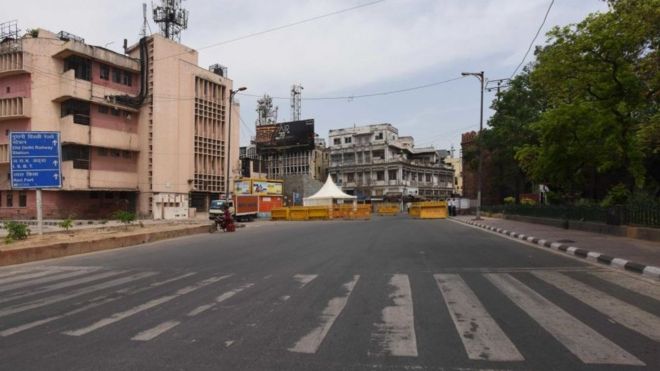
An empty stretch of the road and Delhi Police barricades to screen commuters during lockdown, at Delhi Gate on April 16, 2020 in New Delhi, India.Image copyright GETTY IMAGES
Image caption An empty stretch of the road and Delhi Police barricades to screen commuters during lockdown, at Delhi Gate on April 16, 2020 in New Delhi, India.

India has eased some restrictions imposed as part of a nationwide lockdown to curb the spread of the coronavirus.

Most of the new measures are targeted at easing pressure on farming, which employs more than half the nation’s workforce.

Allowing farms to operate again has been seen as essential to avoid food shortages.

But some other measures announced last week, will not be implemented.

This includes the delivery of non-essential items such as mobile phones, computers, and refrigerators by e-commerce firms – the government reversed its decision on that on Sunday.

And none of the restrictions will be lifted in areas that are still considered “hotspots” for the virus – this includes all major Indian cities.

Domestic and international flights and inter-state travel will also remain suspended.

So what restrictions are being eased?

Most of the new measures target agricultural businesses – farming, fisheries and plantations. This will allow crops to be harvested and daily-wagers and others working in these sectors to continue earning.

To restore the supply chain in these industries, cargo trucks will also be allowed to operate across state borders to transport produce from villages to the cities.

Essential public works programmes – such as building roads and water lines in rural areas – will also reopen, but under strict instructions to follow social distancing norms. These are a huge source of employment for hundreds of thousands of daily-wage earners, and farmers looking to supplement their income.

Banks, ATMs, hospitals, clinics, pharmacies and government offices will remain open. And the self-employed – such as plumbers, electricians and carpenters – will also be allowed to work.

Some public and even private workplaces have been permitted to open in areas that are not considered hotspots.

But all businesses and services that reopen are expected to follow social distancing norms.

Who decides what to reopen?

State governments will decide where restrictions can be eased. And several state chief ministers, including Delhi’s Arvind Kejriwal, have said that none of the restrictions will be lifted in their regions.

Mr Kejriwal said the situation in the national capital was still serious and the decision would be reviewed after one week.

India’s most populous state, Uttar Pradesh, will also see all restrictions in place, as will the southern states of Andhra Pradesh, Telangana and Karnataka.

The southern state of Kerala, which has been widely acknowledged for its success in dealing with the virus, has announced a significant easing of the lockdown in areas that it has demarcated as “green” zones.

This includes allowing private vehicular movement and dine-in services at restaurants, with social distancing norms in place. However, it’s implementing what is known as an “odd-even” scheme – private cars with even and odd number plates will be allowed only on alternate days, to limit the number of people on the road.

Source: The BBC

01/11/2019

Help pours in for Chinese student who lived on 30 cents a day

Wu Huayan on her hospital bedImage copyright FENG VIDEO
Image caption Wu Huayan ate only rice and chillies in order to save money to help her ill brother

Well-wishers have donated almost a million yuan to a Chinese student who was hospitalised after living on 2 yuan ($0.30, £0.20) a day for five years.

The case of Wu Huayan shocked Chinese people after it hit the headlines earlier this week.

The 24-year old woman became seriously malnourished while struggling to study and support her sick brother.

Ms Wu’s story also sparked anger at authorities for failing to recognise her plight and help her much earlier.

After the story was reported, donations began pouring in for the college student in the city of Guiyang – reportedly totalling some 800,000 yuan ($114,000, £88,000).

What is Wu Huayan’s story?

Earlier, this month, the young woman went into hospital after having difficulty breathing, according to Chinese media.

She was only 135cm (4ft 5ins) tall, weighing barely more than 20kg (43 pounds; three stones).

The doctors found she was suffering from heart and kidney problems due to five years spent eating minimal amounts of food. She said she needed to save money to support her sick brother.

Wu Huayan lost her mother when she was four and her father died when she was in school.

She and her brother were then supported by their grandmother, and later by an uncle and aunt who could only support them with 300 yuan ($42, £32) each month.

Most of that money went on the medical bills of her younger brother, who had mental health problems.

This meant Ms Wu spent only 2 yuan a day on herself, surviving largely off chillies and rice.

The siblings are from Guizhou, one of the poorest provinces in China.

Media caption China’s uphill struggle fighting extreme poverty

What has the reaction been?

The case sparked an outpouring of concern – and anger at authorities.

Many people on social media said they wanted to help with donations, and many voiced concern about her college not helping her.

One user called her situation “worse than that of refugees in Afghanistan”, while another pointed to the extravagant cost of China’s 70th anniversary celebrations, saying the money could have been better spent.

Others expressed their admiration at her efforts to help her brother, while also persevering with her studies in college.

Aside from the donations on crowd funding platforms, her teachers and classmates donated 40,000 yuan ($5,700; £4,400), while local villagers collected 30,000 yuan to help her.

Officials released a statement saying Ms Wu had been receiving the minimum government subsidy – thought to be between 300 and 700 yuan a month – and was now getting an emergency relief fund of 20,000 yuan.

“We will keep following the case of this strong-minded and kind girl,” the Tongren City Civil Affairs Bureau said.

“We will actively co-operate with other relevant departments to solve the problem according to the minimum living standard and temporary assistance responsibility that the civil affairs department bears.”

How bad is poverty in China?

The case of Wu Huayan has echoes of a story from 2018 when a Chinese boy arrived at school with his hair full of frozen ice.

Dubbed “Little Wang”, his story also went viral, leading to international donations from people impressed by his resilience, and shocked at his poverty.

Wang, a left-behind migrant childImage copyright PEOPLE’S DAILY

While China’s economy has skyrocketed over the past decades, poverty has not disappeared, and inequality has grown.

One major reason cited is the huge divide between rural and urban areas.

According to the bureau, the per capita disposable income of a household in the capital Beijing was 57,229 yuan ($8,090; £6,300) in 2017.

As a point of comparison, in rural region of Guizhou where Ms Wu lives, that figure is around 16,703 yuan.

China has moved from being “moderately unequal in 1990 to being one of the world’s most unequal countries,” according to a 2018 report by the International Monetary Fund.

According to the National Bureau of Statistics in 2017, 30.46 million rural people were still living below the national poverty line of $1.90 a day.

China has previously pledged to “eliminate” poverty by 2020.

Source: The BBC

23/09/2019

Xi extends greetings on farmers’ harvest festival

BEIJING, Sept. 23 (Xinhua) — Chinese President Xi Jinping extended greetings to farmers and people working in agriculture and rural areas as Monday marked the second Chinese farmers’ harvest festival.

Xi, also general secretary of the Communist Party of China (CPC) Central Committee and chairman of the Central Military Commission, sent his greetings via the China Central Television’s newly-launched channel dedicated to agriculture and rural affairs.

“With a solid foundation laid by agriculture, we have full confidence in development,” Xi said.

The achievements that China has made in the fields related to agriculture, rural areas and farmers are not only the outcomes of concerted efforts of the whole CPC and the country but also the results of hard work of all farmers and people working in agriculture and rural areas, he said.

Xi also congratulated on the launch of the new channel, expecting the channel to publicize agricultural policies, plans as well as new looks of farmers and rural areas in-depth.

Xi also expected the channel to lead the audience to pay attention to agriculture, care for the countryside and farmers, and contribute to poverty alleviation, reform and development in agriculture and the countryside, and the realization of rural revitalization.

The Chinese farmers’ harvest festival is the first national festival created specifically for the country’s farmers. Starting in 2018, the festival coincides with the Autumnal Equinox each year, which is one of the 24 solar terms of the Chinese lunisolar calendar and usually falls between Sept. 22 and 24 during the country’s agricultural harvest season.

The new channel is the first national all-media channel dedicated to agriculture and rural affairs. With daily 18-hour programs, the channel officially began broadcasting on Monday.

Source: Xnhua

09/08/2019

China sees rapid income, consumption growth in rural areas over past 70 years

CHINA-RURAL RESIDENTS-INCOME GROWTH (CN)

A villager shops at a mart in Wangzhuanggou Village of Wuxiang County, north China’s Shanxi Province, Feb. 17, 2019.

China has seen rapid income and consumption growth in rural areas over the past 70 years, according to a report from the National Bureau of Statistics (NBS). In 2018, rural per capita disposable income had increased 40 times from 1949 to stand at 14,617 yuan (about 2,088 U.S. dollars) in real terms after deducting price factors, up 5.5 percent on average annually, the NBS said. The country’s urban-rural income gap narrowed remarkably, with the ratio of per capita disposable income for urban residents to that of rural residents hitting 2.69 in 2018, 0.64 lower than 1956. The rural consumption level continued to rise in the last 70 years, as indicated by its expanding size and improving quality. Per capita rural consumption grew by an average annual rate of 5.2 percent to reach 12,124 yuan in real terms in 2018 after deducting price factors, up 32.7 times from 1949, while the Engel coefficient for rural residents dropped 38.5 percentage points from 1954 to reach 30.1 percent. Per capita living space in rural areas reached 47.3 square meters, posing a sharp contrast to 8.1 square meters in 1978, according to the report.

Household consumption in rural areas also increased, with the average ownership of cars, computers and cell phones per 100 households reaching 22.3, 26.9 and 257, respectively in 2018. (Xinhua/Zhan Yan)

Source: Xinhua

22/03/2019

India election 2019: When will broadband reach all villages?

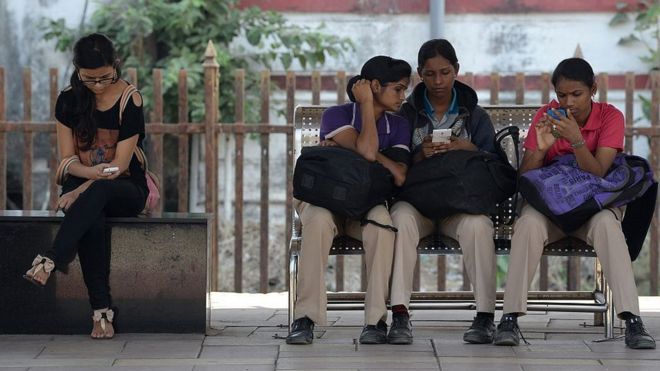
Indian women check their mobile phones at a free Wi-Fi zone in Mumbai in February 2016Image copyrightGETTY IMAGES

India’s Prime Minister Narendra Modi wants more than a billion Indians connected to the internet – and his BJP government is counting on a project taking cheap high-speed broadband to rural areas to achieve this.

The project, to build a nationwide optical fibre network, was launched in 2014 and is the flagship scheme of the government’s Digital India programme.

In the run-up to the Indian election, which gets under way on 11 April, BBC Reality Check is examining claims and pledges made by the main political parties.

So has the project been a success?

Presentational grey line

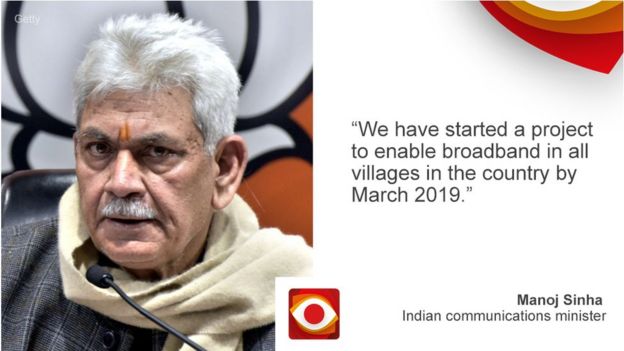
Pledge: Indian Communications Minister Manoj Sinha promised to provide every village in the country with high speed broadband and that this would be achieved by March 2019.

Verdict: The project to set up digital infrastructure in rural India has made substantial headway but has so far achieved less than 50% of its intended target.

Quote card for Indian minister of state (communications) Manoj Sinha
Presentational grey line

An ambitious plan

India has the second highest number of internet users in the world but the penetration is quite low for its size and population.

The BharatNet scheme aims to connect more than 600,000 villages in India with a minimum broadband speed of 100Mbps.

It would enable local service providers to offer internet access to the local population, primarily through mobile phones and other portable devices.

India’s telecom regulator says there were 560 million internet connections in India in September last year.

What’s been achieved so far?

The government’s overall target is to connect 250,000 village councils covering more than 600,000 individual villages across the country.

The work of laying cables and installing equipment to connect 100,000 of them was finally completed in December 2017 after significant delays.

This milestone was hailed a success but there were also critical voices, especially from government opponents about whether the cables were actually operational.

Indian villagers from a self-help group with laptops in Bibinagar village outskirts of Hyderabad on 7 March 2013Image copyrightGETTY IMAGES

The next phase, to connect the remaining councils by March 2019, has been under way for a year now.

In total, as of the end of January this year, official data shows optical fibre cables have been laid in 123,489 village councils – and equipment installed in 116,876 of them.

There is also a plan to install wi-fi hotspots in more than 100,000 council areas – but as of January these were operational in only 12,500 of them.

Old plan, new name

It has been an ambition of successive governments to connect all India to the internet but plans have hit many roadblocks.

BharatNet was first conceived in 2011 by the then Congress government as the National Optical Fibre Network but did not make much headway in its pilot phase.

A parliamentary committee said the project had been affected by “inadequate planning and design” from 2011 to 2014.

When the BJP came to power in 2014, it took over the project and has pushed ahead with national broadband coverage.

And in January last year, the government said it would complete the work ahead of the stipulated deadline of March 2019.

Has the deadline been met?

There was impressive progress made in 2016 and 2017 but since then the pace has slowed.

In January this year, the agency executing BharatNet said 116,411 village councils were “service ready”.

This means that provisions for ready-to-use connectivity have been made.

But not all “service ready” village councils have proper connections, says Osama Manzar, from the non-governmental Digital Empowerment Foundation (DEF).

DEF found that only 50 of 269 “service ready” councils inspected across 13 states in 2018 had the required device and internet connection set-up.

And only 31 of them had “functional”, but slow, internet connections.

Mr Manzar notes that this is problematic considering “the public welfare distribution and the financial sectors rely heavily on digital infrastructure today”.

Another report, citing an internal official memo, said most of the councils had non-functioning networks or faulty equipment.

Next steps

BharatNet has faced also difficulties with electricity supply, theft, low-quality cables and poorly maintained equipment.

And these delays come as India aims to provide broadband in all households and move to 5G networks by 2022.

An official source defended BharatNet as a large-scale infrastructure project tackling difficult sites and not a service scheme, saying it was natural to see delays between set-up and use.

Source: The BBC

13/03/2019

China’s coastal province Shandong unveils bln-dollar infrastructure plan

JINAN, March 13 (Xinhua) — Transport authorities in east China’s Shandong Province announced that it plans to invest 162.2 billion yuan (about 24.2 billion U.S. dollars) on roads, railways, ports and airports this year.

The investment is aimed at building an integrated infrastructure network in the province, said Jiang Cheng, head of the provincial transport department.

Last year, fixed asset investment in Shandong’s transportation sector reached 160 billion yuan, among which 115.8 billion yuan was spent on roads, highways and waterways, up 28 percent year on year.

This year, 61 percent of the investment will be on roads, Jiang said.

Shandong has set a target for its expressway mileage to reach 7,400 km by 2020. By the end of this year, the total will hit 6,400 km, he said.

More roads, bridges, and stations will be built in rural areas, he added.

About 10 railway projects are under construction in the province this year, with a total planned investment of 32 billion yuan (4.7 billion dollars). Upon completion, the province will be better connected with big cities such as Beijing, Shanghai and Tianjin.

Shandong had a permanent population of 100.4 million at the end of 2018. It is one of the most populous provinces in China. An improved infrastructure network will better meet economic and social needs.

Source: Xinhua

26/02/2019

China has 2.9 million teachers in rural areas

BEIJING, Feb. 26 (Xinhua) — China had over 2.9 million teachers in rural areas by the end of 2018, the Ministry of Education said Tuesday.

Close to 2.5 million rural teachers work at primary and secondary schools, while 420,000 teachers work at kindergartens, according to the ministry.

The ministry is striving to build a high-quality team of rural teachers and dispatched a great number of college graduates to the rural areas, especially the poverty-stricken regions, said Liu Jiantong, an official with the ministry’s department of teachers.

The central budget financed 4.5 billion yuan (670 million U.S. dollars) last year as an allowance for 1.27 million teachers from over 80,000 rural schools in China’s central and western regions, said Liu.

In 2018, 1,800 retired teachers in good health registered to teach at rural schools. In addition, 19 provincial-level regions dispatched 4,000 teachers to support education in Tibet and Xinjiang, said the ministry.

Source: Xinhua

Law of Unintended Consequences

continuously updated blog about China & India

ChiaHou's Book Reviews

continuously updated blog about China & India

What's wrong with the world; and its economy

continuously updated blog about China & India