Chindia Alert: You’ll be Living in their World Very Soon
aims to alert you to the threats and opportunities that China and India present. China and India require serious attention; case of ‘hidden dragon and crouching tiger’.
Without this attention, governments, businesses and, indeed, individuals may find themselves at a great disadvantage sooner rather than later.
The POSTs (front webpages) are mainly 'cuttings' from reliable sources, updated continuously.
The PAGEs (see Tabs, above) attempt to make the information more meaningful by putting some structure to the information we have researched and assembled since 2006.
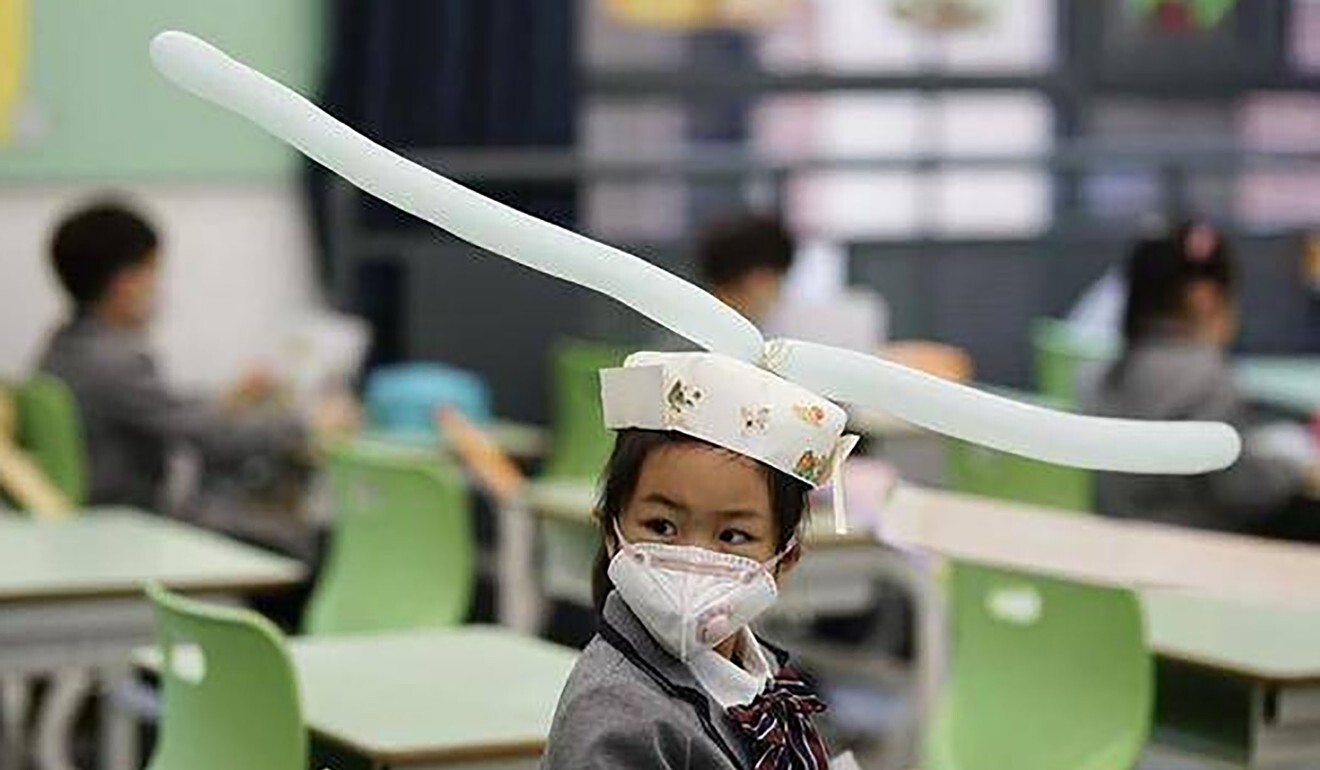
Pupils given headwear modelled on a style worn by officials a thousand years ago to reinforce the message that they must stay a metre away from each other
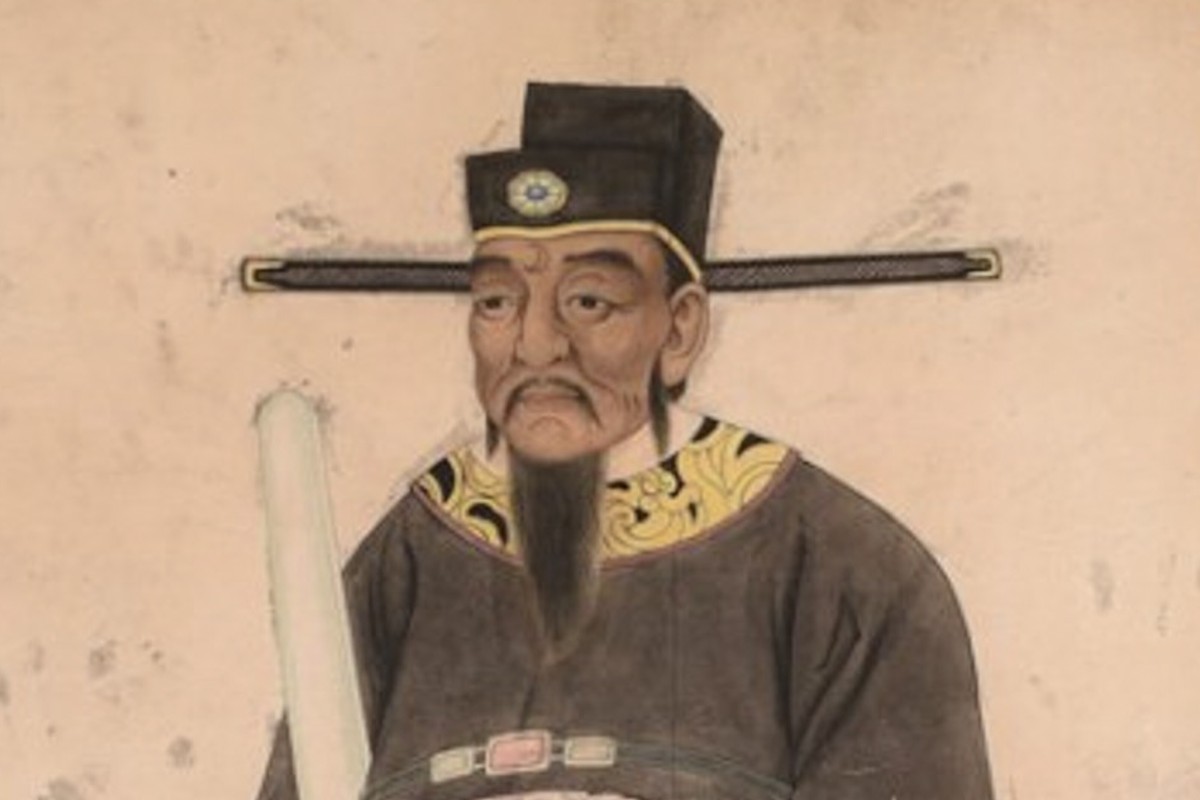
One legend says the hats were given long extensions to stop courtiers whispering among themselves when meeting the emperor
Hats with long extensions were worn by officials during the Song dynasty. Photo: Handout
An ancient Chinese hat has joined face masks and hand sanitisers as one of the weapons in the fight against Covid-19.
A primary school in Hangzhou in the east of the country took inspiration from the headgear worn by officials in the Song dynasty, which ruled China between 960 and 1279, to reinforce lessons on social distancing.
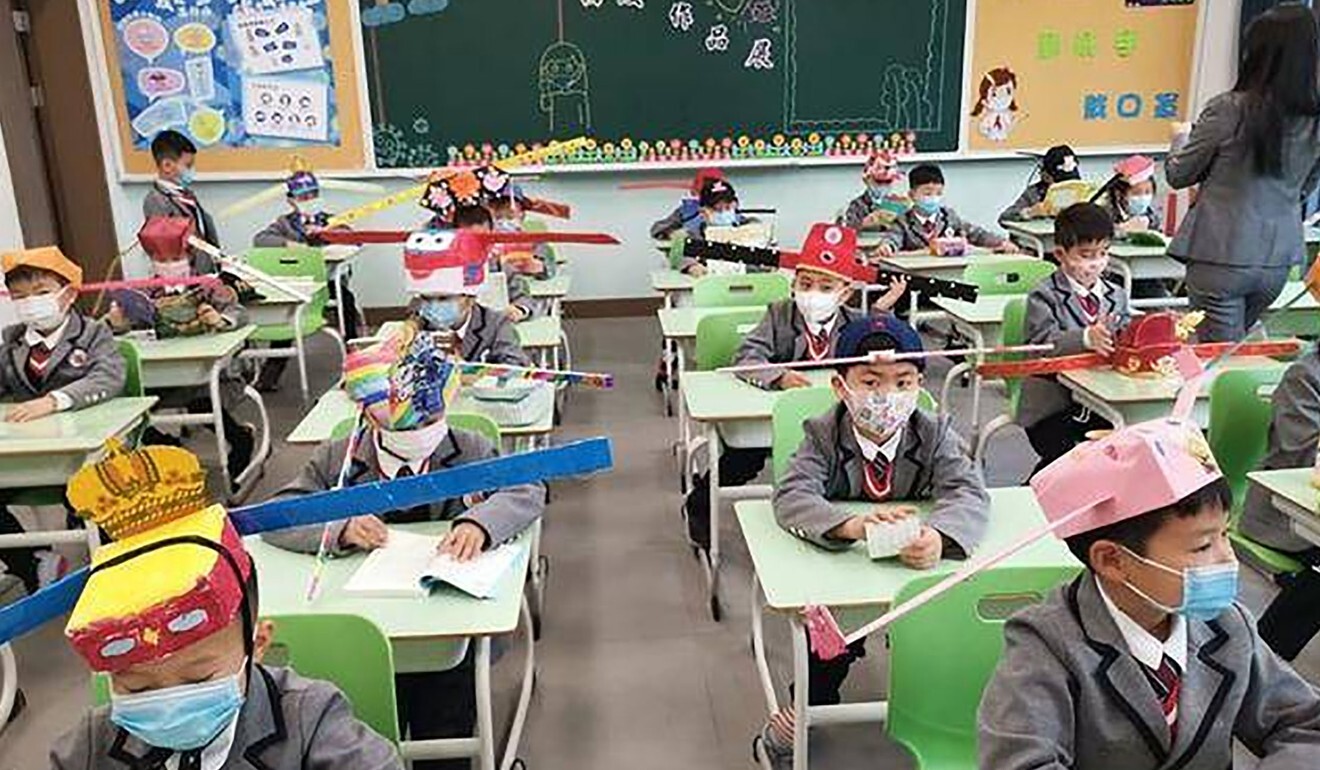
Pupils at the school wore their own handmade versions of the hats, which have long extensions, or wings, to keep them at least a metre (3ft) apart when they returned to school on Monday, state news agency Xinhua reported.
One legend says that the first Song emperor ordered his ministers to wear hats with two long wings on the sides so that they could not chitchat in court assemblies without being overheard, according to Tsui Lik-hang, a historian at City University of Hong Kong.
Pupils at a school in Hangzhou made their own versions of the hats. Photo: Weibo
However, he warned that this story came from a much later source, adding: “The Song emperors, in fact, were also depicted to have worn this kind of headwear with wing-like flaps.”
The World Health Organisation recommends that people stay at least a metre apart to curb the spread of the coronavirus that causes Covid-19.
Coronavirus droplets may travel further than personal distancing guidelines, study finds
16 Apr 2020
“If you are too close, you can breathe in the droplets, including the Covid-19 virus if the person coughing has the disease,” the global health body advises.
An early childhood education specialist said the hats were a good way to explain the concept of social distancing to young children, who find it difficult to understand abstract concepts.
The pupil’s head gear is designed to drive home the social distancing message. Photo: Weibo
“As children can see and feel these hats, and when the ‘wings’ hit one another, they may be more able to understand the expectations and remember to keep their physical distance,” said Ian Lam Chun-bun, associate head of the department of early childhood
Using pictures of footprints to indicate the right distance to keep when queuing, standing, and even talking to schoolmates was also helpful, said Lam, who recommended visual aids and aids that stimulate other senses, such as hearing and touch.
“We can use sharp colours or special textures, like tactile paving,” he added.
Wuhan, where the first cases of the novel coronavirus were detected, is ending a 76-day lockdown
A day before the lockdown was fully lifted, Tencent announces a slew of initiatives focused on helping to revive the digital industry in the city
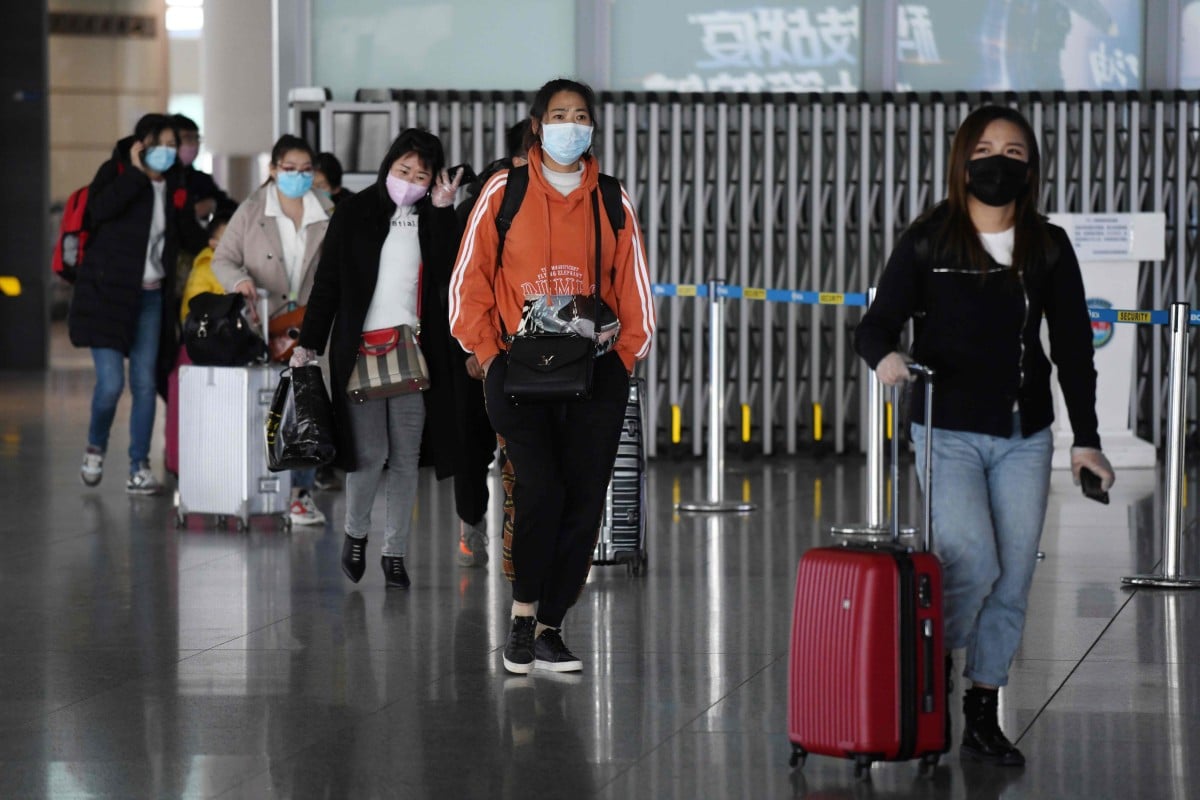
Passengers leaving Wuhan city are pictured at the Hankou Railway Station in Wuhan city, central China’s Hubei province, on Wednesday morning, April 08, 2020. Photo: SCMP/Simon Song
A day before China lifted a months-long lockdown of Wuhan city, the initial epicentre of the coronavirus pandemic, Chinese internet giant Tencent Holdings pledged to invest in digital government, online education and artificial intelligence (AI) in the city, among other fields.
“During the epidemic, Tencent has been supporting Hubei and Wuhan’s fight against the virus through funds and technology,” the company best known for its gaming business said in a statement posted on Tuesday on WeChat. “In the future, we will also fully support Wuhan’s post-pandemic reconstruction and continue to support the development of Wuhan’s digital industry.”
China’s major tech companies have played a big role in the fight against the coronavirus, and are now playing their part in the economic recovery of Wuhan and other areas that have suffered under extended travel restrictions and business closures.
and Pinduoduo each announced their own initiatives to help revive sales of farm goods from Hubei as the province emerges from its months-long lockdown.
Popular mobile payments app Alipay also created a dedicated section for Wuhan merchants to allow users to buy from merchants in the city, and offered loans to small local merchants in need of financial support, according to an Alipay statement. Alipay is operated by Ant Financial, an affiliate of Alibaba, which owns the South China Morning Post.
How tech has helped China in its public health battle with coronavirus
23 Mar 2020
Wuhan, an industrial powerhouse for the steel, semiconductors and automotive sectors, is emerging from an unprecedented lockdown which began on January 23 and prevented people from moving in and out of the city.
Since restrictions began easing gradually in late March, business activity has shown signs of recovery: Tencent’s mobile payment platform WeChat Pay recorded a 162 per cent increase in offline transactions in a 10-day period from March 25, compared to the same period the previous month, according to a separate statement by Tencent on Wednesday.
Searches for “work resumption certificates” – which businesses need to submit to local authorities to prove their staff can safely restart work – also increased 320 per cent on Baidu, China’s biggest search engine, in the past month, Baidu said in a report on Wednesday.
Tencent declined to provide specific details regarding the size of its latest investment in Wuhan or a timeline for its implementation, but said in the statement that it will involve closer cooperation with city authorities in the areas of digital government, education, smart mobility, AI and cybersecurity to help the city with its digital industries.
Among these initiatives, it will push ahead with a plan to build a headquarters focusing on digital industries in Wuhan, specifically digitalisation for the government and smart city initiatives.
It will also establish a base in Wuhan for its online education initiatives, set up an AI lab and cybersecurity academy and build a school focusing on smart mobility in collaboration with Chinese carmaker Dongfeng Motor Corporation, the company said in the statement.
Embassy says those flown back must pay for themselves, and praises the US health system, in a departure from the war of words with Washington
More than a million Chinese students remain overseas, but China is on alert against the threat of imported infections
China has drastically cut flights to try to prevent people who arrive from abroad importing the coronavirus. Photo: AFP
Chinese students could be flown home from coronavirus hotspots such as the United States but will have to pay their own expenses, amid efforts by Beijing to persuade some to remain overseas rather than risk bringing the infection with them.
A statement posted on the website of China’s Washington embassy on Monday said that the Chinese government was aware that many school and university students had encountered difficulties in travelling back to China and was taking steps to arrange charter flights for those who needed to return urgently.
With the initial coronavirus outbreak appearing to have been largely contained in mainland China, some Chinese students have travelled home despite soaring air ticket prices and the requirement that those who have been overseas enter quarantine.
Students brought back on charter flights would still need to pay for the ticket and the costs of the mandatory 14-day quarantine upon arrival in China.
Trump says US approaching a ‘horrendous’ time as coronavirus death toll rises
More than 1.6 million Chinese are studying overseas, including about 410,000 in the US. At least 1.42 million Chinese students remained overseas, vice foreign minister Ma Zhaoxu said on Thursday.
Having initially boasted of its success in stopping the virus, Beijing has become notably cautious in recent weeks about welcoming overseas students back home, especially with imported cases continuing to rise.
China’s foreign ministry and its overseas missions have urged students considering travelling home to exercise caution. The embassy in the US issued a notice on Friday speaking highly of the American medical system and its response to the pandemic, in a marked departure from Beijing’s narrative, which has included pinning the blame for the pandemic on the United States.
Friday’s embassy notice also dismissed rumours that Chinese students had been targeted because of the coronavirus during the closures of universities, and pledged help if students had trouble communicating with universities about campus accommodation.
China advises foreign diplomats to stay away from Beijing until May 15
3 Apr 2020
Ma said that most overseas students had heeded his government’s advice and chosen not to go back to China, but an online survey late last month that was cited by Caixin magazine on Saturday showed nearly 60 per cent of Chinese students in the US wanted to return home.
Most of the 4,000 students polled said they were unable to make the trip because of concerns about contracting the coronavirus during the journey and air fares that had more than doubled recently. Both China and the US have drastically cut back long-haul international flights.
After weeks stranded in Peru, 65 Hongkongers return home
6 Apr 2020
Students under 18 years of age who want to return to China are required by the embassy to register online.
The initial evacuation plan announced on Monday proposed to prioritise school-age children whose parents were not in the US with them. The proposed arrangement appeared to include students from Hong Kong, Macau and Taiwan.
NEW DELHI (Reuters) – U.S. President Donald Trump said on Tuesday that India will buy $3 billion worth of military equipment, including attack helicopters, as the two countries deepen defence and commercial ties in an attempt to balance the weight of China in the region.
India and the United States were also making progress on a big trade deal, Trump said. Negotiators from the two sides have wrangled for months to narrow differences on farm goods, medical devices, digital trade and new tariffs.
Trump was accorded a massive reception in Indian Prime Minister Narendra Modi’s home state on Monday, with more than 100,000 people filling into a cricket stadium for a “Namaste Trump” rally.
On Tuesday, Trump sat down for one-on-one talks with Modi followed by delegation-level meetings to try and move forward on issues that have divided them, mainly the festering trade dispute.
RELATED COVERAGE
U.S. first lady Melania Trump visits ‘happiness’ class at Delhi school
After those meetings, Trump said his visit had been productive with the conclusion of deals to buy helicopters for the Indian military. India is buying 24 SeaHawk helicopters from Lockheed Martin equipped with Hellfire missiles worth $2.6 billion and also plans a follow-on order for six Apache helicopters.
India is modernising its military to narrow the gap with China and has increasingly turned to the United States over traditional supplier, Russia.
Trump said the two countries were also making progress on a trade deal, which had been an area of growing friction between them.
“Our teams have made tremendous progress on a comprehensive trade agreement and I’m optimistic we can reach a deal that will be of great importance to both countries,” said Trump in remarks made alongside Modi.
The two countries had initially planned to produce a “mini deal”, but that proved elusive.
Instead both sides are now aiming for a bigger package, including possibly a free trade agreement.
Trump said he also discussed with Modi, whom he called his “dear friend”, the importance of a secure 5G telecoms network in India, ahead of a planned airwaves auction by the country.
The United States has banned Huawei, arguing the use of its kit creates the potential for espionage by China – a claim denied by Huawei and Beijing – but India, where telecoms companies have long used network gear from the Chinese firm, is yet to make a call.
Trump described Monday’s rally in Ahmedabad and again praised Modi and spoke of the size of the crowd, claiming there were “thousands of people outside trying to get in..
“I would even imagine they were there more for you than for me, I would hope so,” he told Modi. “The people love you…every time I mentioned your name, they would cheer.”
In New Delhi, Trump was given a formal state welcome on Tuesday at the red sandstone presidential palace with a 21-cannon gun salute and a red coated honour guard on horseback on a smoggy day.
HUG GETS TIGHTER
India is one of the few big countries in the world where Trump’s personal approval rating is above 50% and Trump’s trip has got wall-to-wall coverage with commentators saying he had hit all the right notes on his first official visit to the world’s biggest democracy.
They were also effusive in their praise for Modi for pulling off a spectacular reception for Trump.
“Modi-Trump hug gets tighter,” ran a headline in the Times of India.
But in a sign of the underlying political tensions in India, violent protests broke out in Delhi on Monday over a new citizenship law that critics say discriminates against Muslims and is a further attempt to undermine the secular foundations of India’s democracy. They say the law is part of a pattern of divisiveness being followed by Modi’s Hindu nationalist Bharatiya Janata Party.
At least 7 people were killed and about 150 injured in the clashes that took place in another part of the capital, away from the centre of the city where Modi is hosting Trump.
In his speech on Monday, Trump extolled India’s rise as a stable and prosperous democracy as one of the achievements of the century. “You have done it as a tolerant country. And you have done it as a great, free country,” he said.
Delhi has also been struggling with high air pollution and on Tuesday the air quality was moderately poor at 193 on a government index that measures pollution up to a scale of 500. The WHO considers anything above 60 as unhealthy.
Image copyright JOSHY MALIYEKKALImage caption Drinking water reeking of alcohol started flowing out of the apartment taps
Residents of an apartment building in southern India were left in shock after a mix of beer, brandy and rum started gushing out of their taps.
The smelly, brown liquid began flowing from kitchen taps in the block of flats, in Kerala, on Monday morning.
Bemused residents then contacted the authorities for help, and discovered their water well had been contaminated by officials – albeit accidentally.
It emerged 6,000 litres of confiscated alcohol had been buried nearby.
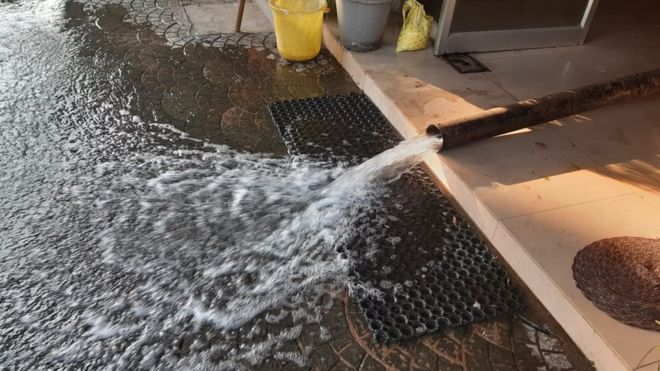
The alcohol, which officials had placed in a pit after it was seized on court orders, had seeped through the soil and into a well – the same well which supplied the residents of the 18 flats in Thrissur district with drinking water.
“We were so shocked,” Joshy Malyiekkal, owner of the apartment complex, told BBC Hindi’s Imran Qureshi.
Luckily, the strong smell put people off consuming the water. However, the discovery meant there was not only no drinking water for the families, but they were also unable to wash.
“The children couldn’t go to school and even their parents couldn’t go to work,” Mr Malyiekkal said.
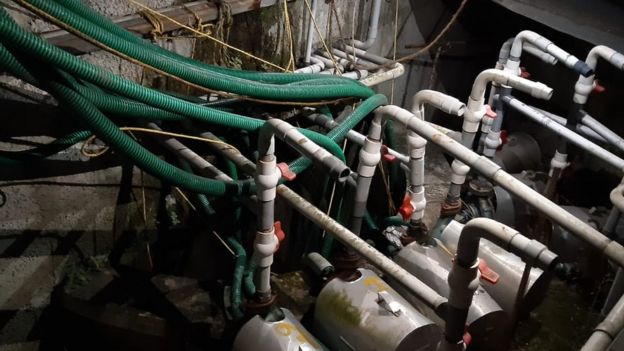
Image copyright JOSHY MALIYEKKALImage caption The contaminated water from the well being pumped out
After residents complained, officials acted to rectify the mistake.
But the process of pumping the well clean is likely to take a month, according to residents, leaving them reliant on deliveries from authorities.
“They’ve been supplying about 5,000 litres of water daily but it is not enough to cover all the families in our building,” Mr Malyiekkal said, pointing out the well was their main source of water.
Officials from the department did not respond to questions from the BBC.
The state of Kerala has the highest consumption of alcohol in the country.
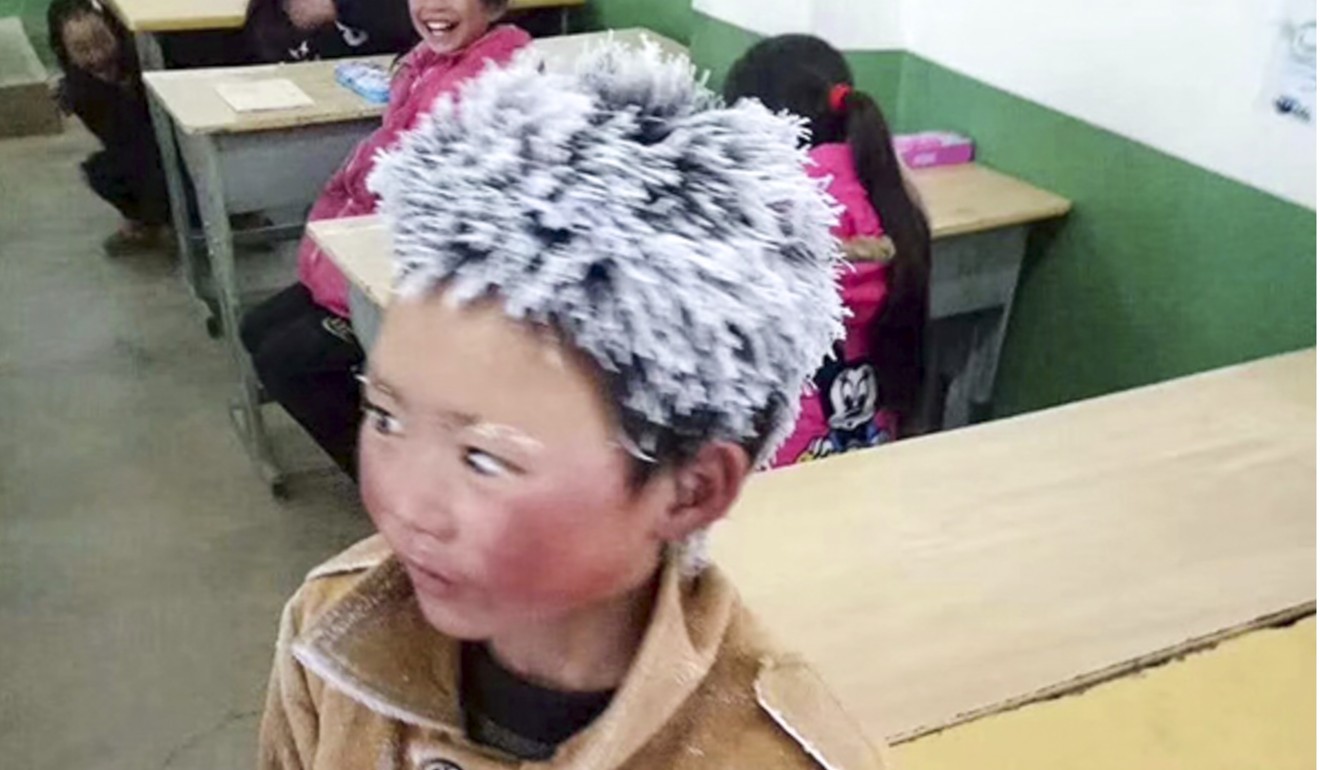
Wang Fuman became an internet sensation after he was pictured with his head encrusted in ice after freezing trek to school
Life has improved since then, but his dad says they are still struggling to make ends meet
Nine-year-old Wang Fuman’s family has now moved from their mud hut to a two-storey home. Photo: AFP
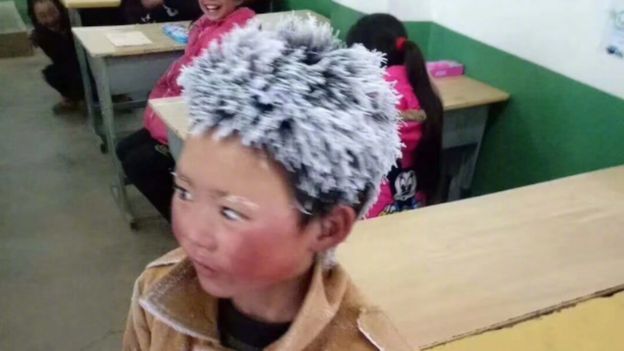
The father of the “Ice Boy” – who became an internet sensation after he was pictured with his head covered in icicles following a freezing trek to school in southwest China – has spoken out about being rejected for a poverty alleviation scheme.
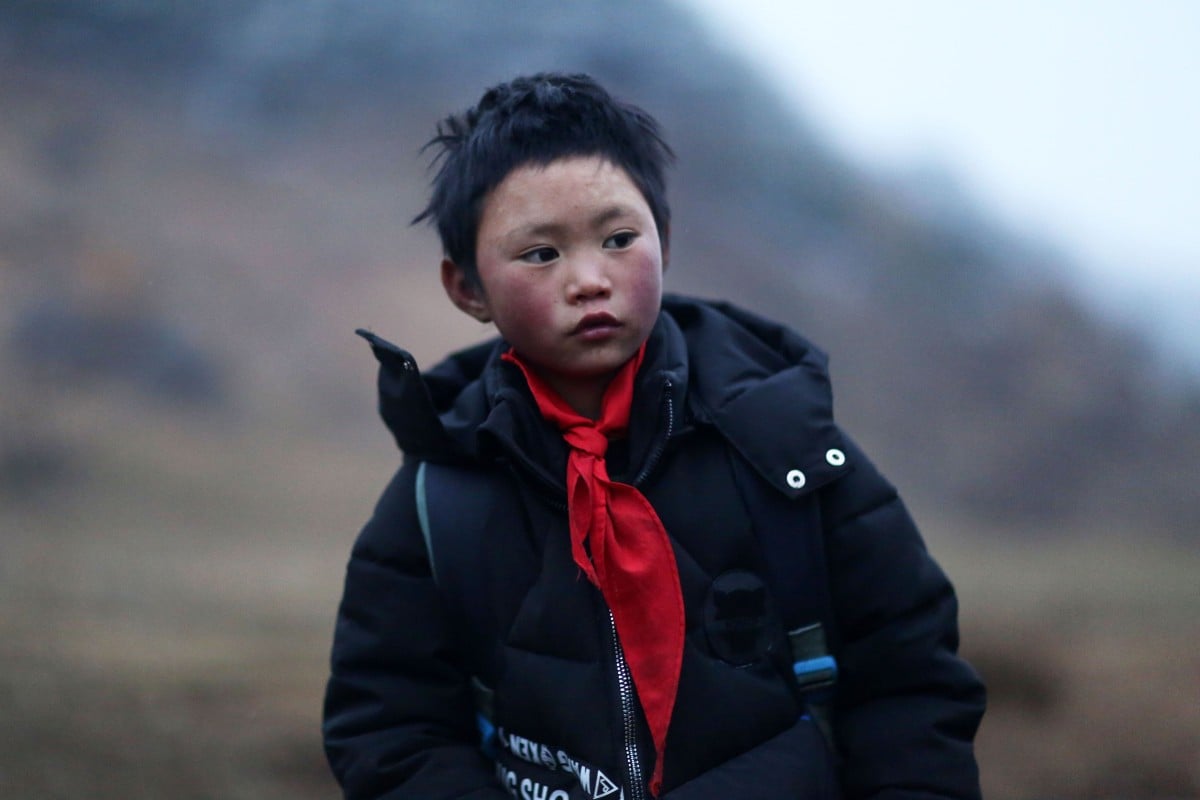
Wang Gangkui’s son, Wang Fuman, was eight when a photo of him taken by a teacher went viral on social media in January last year. It showed the little boy with his hair and eyebrows covered in ice and his cheeks ruddy from the cold after he had walked for over an hour from his home in thin clothing and no hat along treacherous mountain paths.
The plight of the impoverished primary school pupil from Ludian county, a poor area in Zhaotong, Yunnan province, touched hearts across China, with many people expressing sympathy online for the hardships the boy, and other children like him, endured to get to school. Donations of money, warm clothes and heating flooded in.
The photo of Wang Fuman arriving at school with his hair and eyebrows covered in ice went viral last year. Photo: news.163.com
But according to his 30-year-old father, the family is still struggling to make ends meet. He said his application for the assistance scheme had been turned down for the past five years without a satisfactory explanation.
“It’s unfair and unjust that my application wasn’t approved,” Wang Gangkui said on Thursday. “There are allegations in media reports that I have various assets, and they’re just not true. And neither am I trying to take advantage of my son’s fame,” he said.
Families approved for the means-tested scheme, a nationwide programme that is administered at the local level, are given benefits ranging from subsidies to vocational training and job opportunities.
Geng Tao, the party secretary of Zhuanshanbao village, told China News Service on Monday that the Wang family did not meet the eligibility criteria for the programme, citing their two-storey house with a total area of 160 sq metres.
Wang was responding to criticism from internet users after he posted his complaint on social media app Jinri Toutiao on Sunday, a post he later deleted. Some accused him of taking advantage of his son’s fame to get access to government aid, claiming the family was being “greedy” as they were already doing better than others in the region because of the donations they received last year.
State media also weighed in, with Beijing News saying in an editorial on Tuesday that “the authorities should not be influenced by public sentiment towards the Ice Boy and should look at the family’s real situation when assessing if they are in need or not”.
Wang acknowledged that the media attention and subsequent donations from the public had eased the family’s situation, but said they only received a small share.
“There were a lot of donations, but most of them went to the school and were shared among all the pupils and their families here,” he said. “Our family only received a small amount of money.”
After Fuman’s photo went viral, the Ludian county education authorities said there were many “Ice Boys” in the area, and all donations received had been distributed to local families in need, according to China News Service.
A local charity organisation received more than 300,000 yuan (US$42,500) in donations from the public, and said the money was shared among pupils at the Zhuanshanbao primary school, with Fuman receiving just 500 yuan.
Life has improved for Fuman and his family since the photo was taken. He was a
– a term used to describe youngsters from poor families whose parents work in cities away from home, leaving them in the care of relatives. His parents have now returned to their hometown and his father works nearby at a construction site in Zhaotong, earning 3,000 yuan a month – a relatively high salary for the area. But he is the breadwinner for the family of five – his wife, Lu Dafeng, and their two children, Fuman and their 11-year-old daughter Wang Fumei, as well as his mother.
They moved out of their mud hut into the two-storey home, and with the donated funds, Fuman’s primary school was renovated and now has a dormitory equipped with heating. Fuman stays at the school during the week and returns to his home – a 20-minute walk away – on the weekend.
Wang Gangkui said his wife and mother could not apply for jobs designated as “public welfare” positions – such as a street cleaner post offering 500 yuan a month – because they were not recognised as a family in need under the scheme.
He also dismissed media reports that he had two cars, saying he had a second-hand van worth no more than 3,000 yuan. He said reports that his family also had cattle were not true.
Instead, he said he was paying off a loan of tens of thousands of yuan that he took out to build the family’s new house.
There were an estimated 16.6 million people living in poverty in rural China at the end of 2018, about 14 million fewer than a year earlier, according to official data. The ruling Communist Party set the ambitious target of eliminating extreme poverty in China by the end of 2020, and claims that more than 700 million people have already been lifted out of poverty over the past four decades.
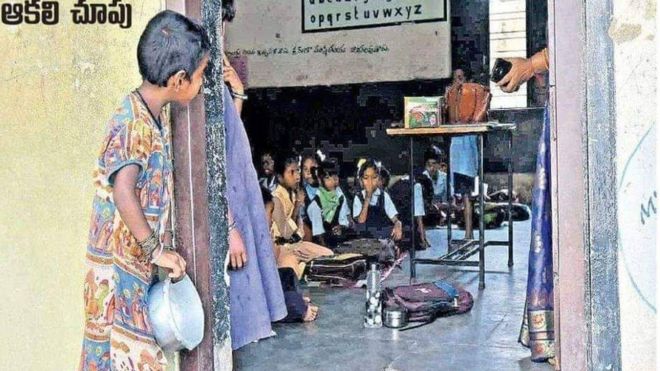
Image copyright EENADU NEWSPAPER/A SRINIVASImage caption The photo that sparked an outcry
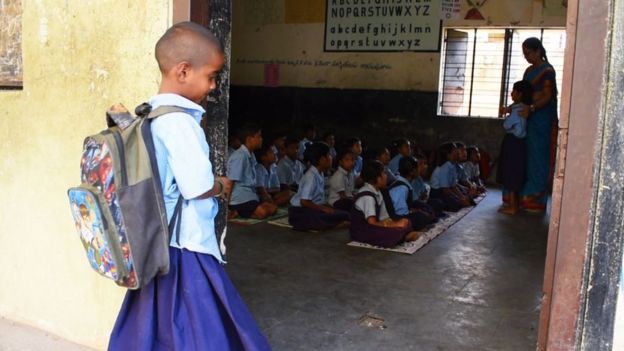
A five-year-old in the southern city of Hyderabad was enrolled in school after a photo of her peeking into a classroom sparked an outcry. BBC Telugu’s Deepthi Bathini reports on why the photo doesn’t tell the full story.
Divya is something of a local celebrity in the slum where she lives. The shy five-year-old was the subject of a recent photo which went viral – it showed her clutching a bowl and peeking into a classroom at the local government school.
The touching image was published in a Telugu newspaper on 7 November with a caption that translates from the Telugu as “hungry gaze”.
It quickly grabbed people’s attention: a children’s rights activist shared it on Facebook, lamenting that yet another child was being denied the right to food and education.
It had such an impact, the school enrolled Divya the following day.
But her father, M Lakshman, says the photo and the outcry it provoked was in fact unfair to him and his wife, Yashoda, who works as a sweeper.
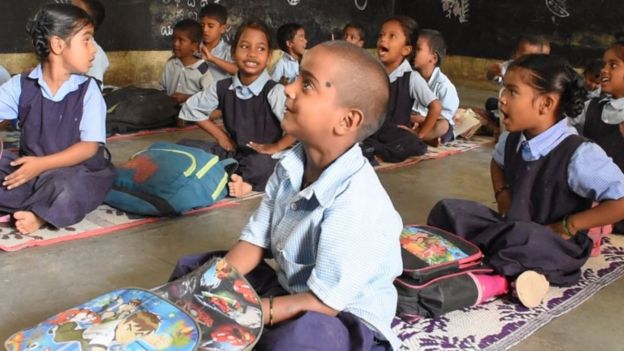
Image caption Five-year-old Divya enrolled in school after a photo of her in a newspaper went viral
“I felt sad when I saw the photo,” he told the BBC. “Divya has parents and we are working so hard to give her a good future – but she was portrayed as a hungry orphan.”
Mr Lakshman says he was waiting for Divya to turn six so he could enrol her in a government hostel where his other two daughters are studying. The couple also have a son, who has finished school and is now applying to college while helping Mr Lakshman, who works as a rag picker.
Breaking the cycle
Divya and her parents live in a one-room hut in a shanty town in the heart of Hyderabad. The slum is about 100 metres from the government school, where Divya was photographed. Most of the 300 families living here are daily wage labourers and their children attend the school nearby.
The home is sparse and plastic and glass are piled outside, ready to be sold for recycling. He says between him and his wife, they earn about 10,000 rupees ($139; £108) a month, which pays for their food and clothes. Education, however, is free for the children, since they are all enrolled in government-run schools.
Mr Lakshman knows what it is to struggle: he himself grew up without parents and always battled to earn a decent living. “I never wanted my children to have the life I had. So I made sure they all go to school.”
The photo, he adds, was especially hurtful because he has also been taking care of his brother’s five children.
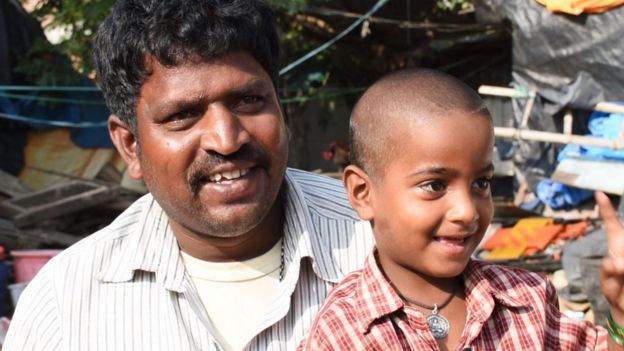
Image caption Divya’s father said the outcry over the photo was “unfair” to his family
“My brother and sister-in-law passed away sometime ago. I didn’t want their five children to grow up as orphans. So, I enrolled all of them in a hostel and I take care of them.”
When asked why Divya had gone to the government school with a bowl in hand, Mr Lakshman explains that a lot of the younger children from the slum go there around lunch time to take advantage of the free midday meal – a government programme which provides cooked meals to children in more than a million schools – which they know about because their older brothers and sisters are already enrolled.
“Divya doesn’t go every day but she happened to go on that day and someone photographed her,” he explained.
This was confirmed by teachers at the school who told the BBC that some children brought lunch from home, so leftovers over from the free meal scheme would be given to the younger children who had not yet joined.
“Children are children. And there is no day-care centre, so a lot of these children hang around the school anyway,” says one teacher, who spoke on the condition of anonymity.
Image caption Divya says she’s excited to go to school
Mr Lakshman and his neighbours acknowledged the lack of an anganwadi, or government-sponsored day-care centre, in the neighbourhood was a major problem as parents had no place to leave their children so they could go to work.
The local school inspector, SU Shivram Prasad, says he hopes the attention generated by the Divya’s photo will hasten the process of setting up one up.
“It will help the parents and the children can eat a nutritious meal,” he adds.
Teachers at the school also hope that the media spotlight will improve facilities. They say there is an acute shortage of staff and teaching materials, and the school did not even have a compound wall, which meant they have to constantly watch the children during their breaks.
Divya, however, is excited to be going to school. She insists on taking her school bag with her everywhere, even to the playground. Other than saying her name, she does not answer any questions.
“She is a very calm child,” says Mr Lakshman, as his daughter holds his hand and kisses it.
And he admits that despite everything, the photo did do some good.
“Now other children who are Divya’s age are also enrolling in school. So that makes me happy.”
Image copyright FENG VIDEOImage caption Wu Huayan ate only rice and chillies in order to save money to help her ill brother
Well-wishers have donated almost a million yuan to a Chinese student who was hospitalised after living on 2 yuan ($0.30, £0.20) a day for five years.
The case of Wu Huayan shocked Chinese people after it hit the headlines earlier this week.
The 24-year old woman became seriously malnourished while struggling to study and support her sick brother.
Ms Wu’s story also sparked anger at authorities for failing to recognise her plight and help her much earlier.
After the story was reported, donations began pouring in for the college student in the city of Guiyang – reportedly totalling some 800,000 yuan ($114,000, £88,000).
What is Wu Huayan’s story?
Earlier, this month, the young woman went into hospital after having difficulty breathing, according to Chinese media.
She was only 135cm (4ft 5ins) tall, weighing barely more than 20kg (43 pounds; three stones).
The doctors found she was suffering from heart and kidney problems due to five years spent eating minimal amounts of food. She said she needed to save money to support her sick brother.
Wu Huayan lost her mother when she was four and her father died when she was in school.
She and her brother were then supported by their grandmother, and later by an uncle and aunt who could only support them with 300 yuan ($42, £32) each month.
Most of that money went on the medical bills of her younger brother, who had mental health problems.
This meant Ms Wu spent only 2 yuan a day on herself, surviving largely off chillies and rice.
The siblings are from Guizhou, one of the poorest provinces in China.
Media caption China’s uphill struggle fighting extreme poverty
What has the reaction been?
The case sparked an outpouring of concern – and anger at authorities.
Many people on social media said they wanted to help with donations, and many voiced concern about her college not helping her.
One user called her situation “worse than that of refugees in Afghanistan”, while another pointed to the extravagant cost of China’s 70th anniversary celebrations, saying the money could have been better spent.
Others expressed their admiration at her efforts to help her brother, while also persevering with her studies in college.
Aside from the donations on crowd funding platforms, her teachers and classmates donated 40,000 yuan ($5,700; £4,400), while local villagers collected 30,000 yuan to help her.
Officials released a statement saying Ms Wu had been receiving the minimum government subsidy – thought to be between 300 and 700 yuan a month – and was now getting an emergency relief fund of 20,000 yuan.
“We will keep following the case of this strong-minded and kind girl,” the Tongren City Civil Affairs Bureau said.
“We will actively co-operate with other relevant departments to solve the problem according to the minimum living standard and temporary assistance responsibility that the civil affairs department bears.”
Dubbed “Little Wang”, his story also went viral, leading to international donations from people impressed by his resilience, and shocked at his poverty.
Image copyright PEOPLE’S DAILY
While China’s economy has skyrocketed over the past decades, poverty has not disappeared, and inequality has grown.
One major reason cited is the huge divide between rural and urban areas.
As a point of comparison, in rural region of Guizhou where Ms Wu lives, that figure is around 16,703 yuan.
China has moved from being “moderately unequal in 1990 to being one of the world’s most unequal countries,” according to a 2018 report by the International Monetary Fund.
According to the National Bureau of Statistics in 2017, 30.46 million rural people were still living below the national poverty line of $1.90 a day.
China has previously pledged to “eliminate” poverty by 2020.
Cheng Qiang was just 12 when a magnitude 8 tremor destroyed his village, but he never forgot the heroism of the soldiers sent to help and swore one day to join their ranks
Now a squad leader, on October 1 he will also be part of the National Day celebrations in Tiananmen Square
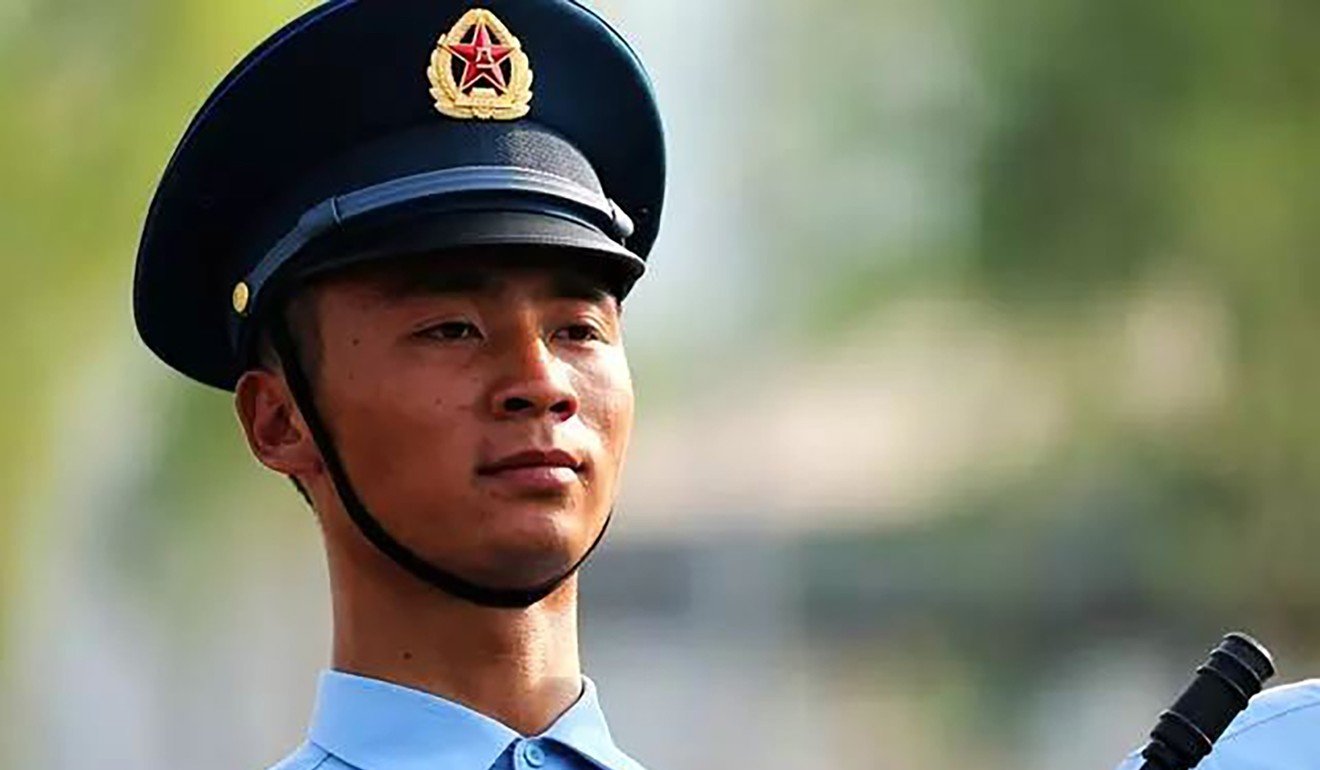
Cheng Qiang was just 12 when his home in Sichuan was hit by a massive earthquake and airborne troops were sent to help. Photo: People.cn
A young man who survived the devastating Sichuan earthquake and vowed to one day join the ranks of the soldiers who spent months rescuing people from the rubble will on Tuesday lead his very own squad of airborne troops in Tiananmen Square as part of the celebrations for the country’s 70th anniversary.
Now 23, Cheng Qiang was just 12 when on May 12, 2008 he and a group of friends played truant from school to go swimming in a local river, Xinhua reported on Thursday.
When the boys had finished their fun they returned to their village in the township of Luoshui to find their school and many other buildings had been razed to the ground. The death toll from the magnitude 8 quake would eventually rise to 87,000, with 370,000 people injured.
Cheng says he is ready to “continue the glory of the airborne troops” at Tuesday’s parade. Photo: Thepaper.cn
In the days and weeks that followed the devastation, tens of thousands of people from around China and the world descended on towns and villages across Sichuan to help with the rescue effort.
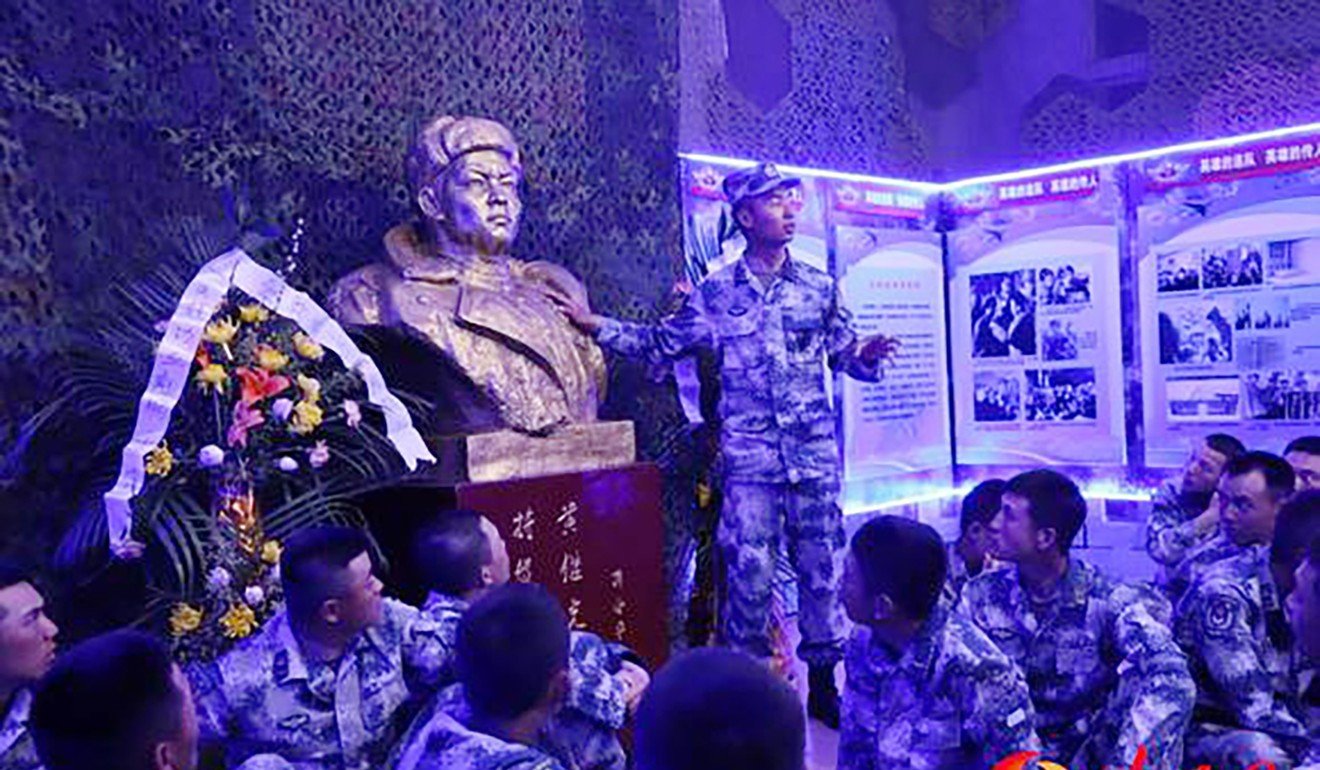
But the ones who impressed Cheng the most were the soldiers from the People’s Liberation Army (PLA) with the word “Airborne” printed on the helmets.
“Sometimes they had to remove the debris with their bare hands which were already covered in blood,” he said.
“But they just carried on and eventually pulled dozens of people out of the rubble. I knew then that I wanted to be one of them.”
Cheng said that after the quake having the troops in his village made him feel safe. Photo: People.cn
Having the troops in his village made Cheng feel safe, he said, and he spent his days following them around and doing what he could to help.
Three months later, when the soldiers had completed their work and were preparing to pull out, Cheng said he was determined to show his new heroes just how grateful he was to them.
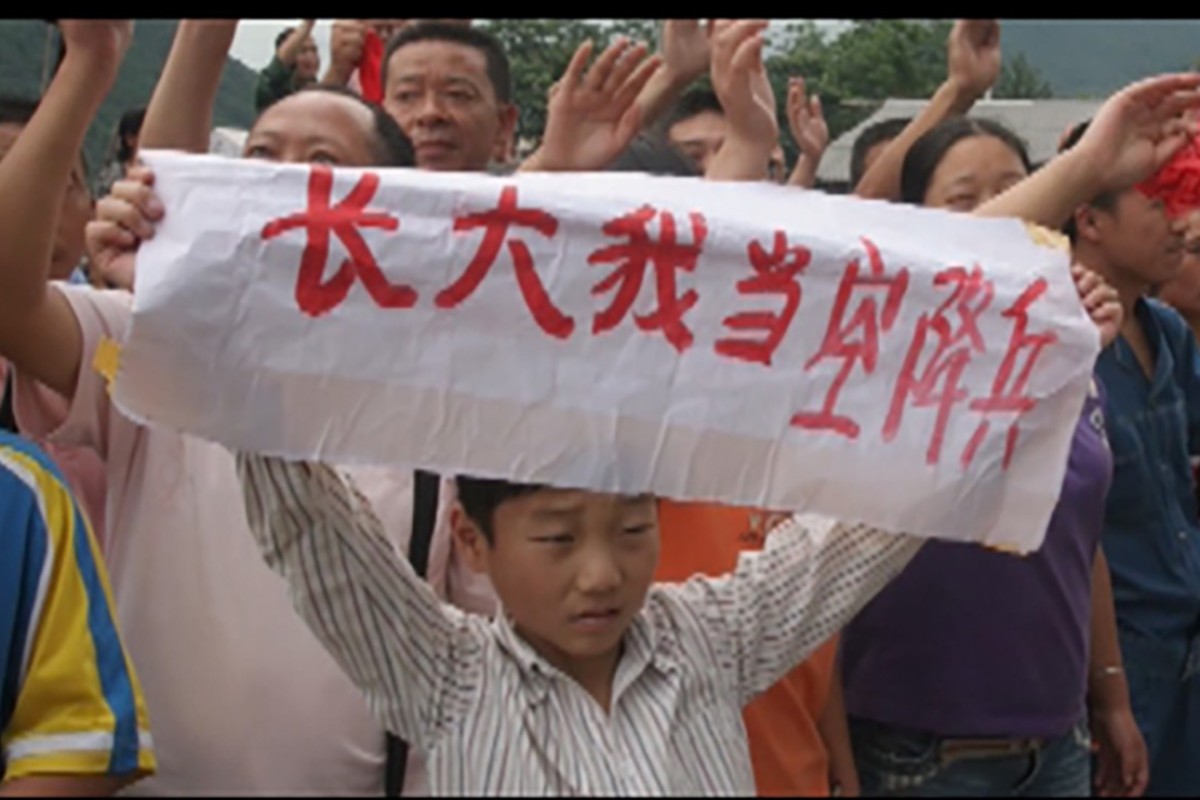
As the villagers gathered at the roadside to bid farewell to the men who had become their saviours, the young boy held up a handwritten sign. It said simply: “I want to be an airborne soldier when I grow up.”
The moment was captured on camera by a press photographer, and the image soon became a symbol of the gratitude felt by the people who had seen their lives and communities shattered but knew they had not been forsaken.
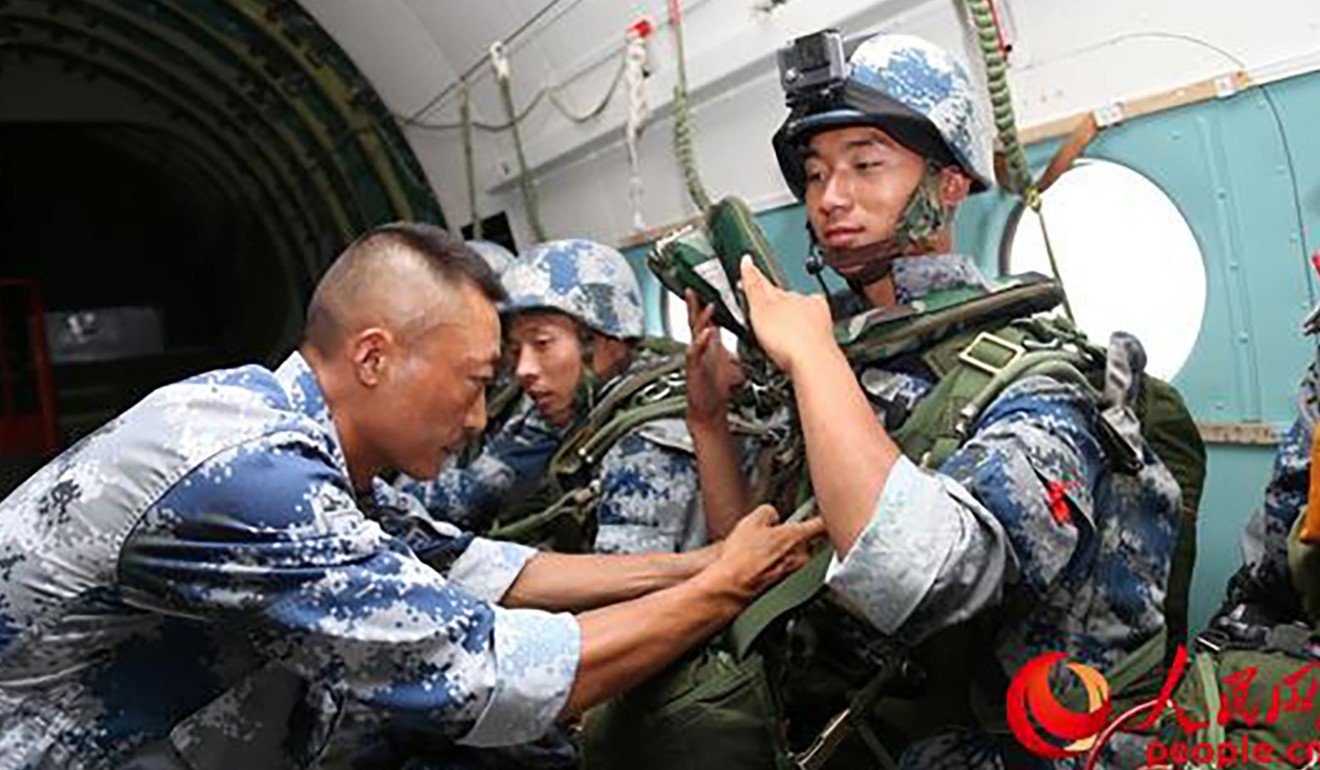
Cheng said he felt dizzy when he first jumped out of a plane. Photo: People.cn
Five years after the troops rolled out, Cheng was preparing to go to college when he heard the PLA was recruiting and that there were places available with the airborne division.
The teenager did not need a second invitation, and after securing a place on a training course and successfully completing it he joined the ranks of his heroes in 2013.
Not that everything was plain sailing, however.
“When I first jumped out of a plane I felt very dizzy and didn’t really know what was going on,” he said.
Thankfully Cheng managed to overcome his vertigo and went on to become a squad leader.
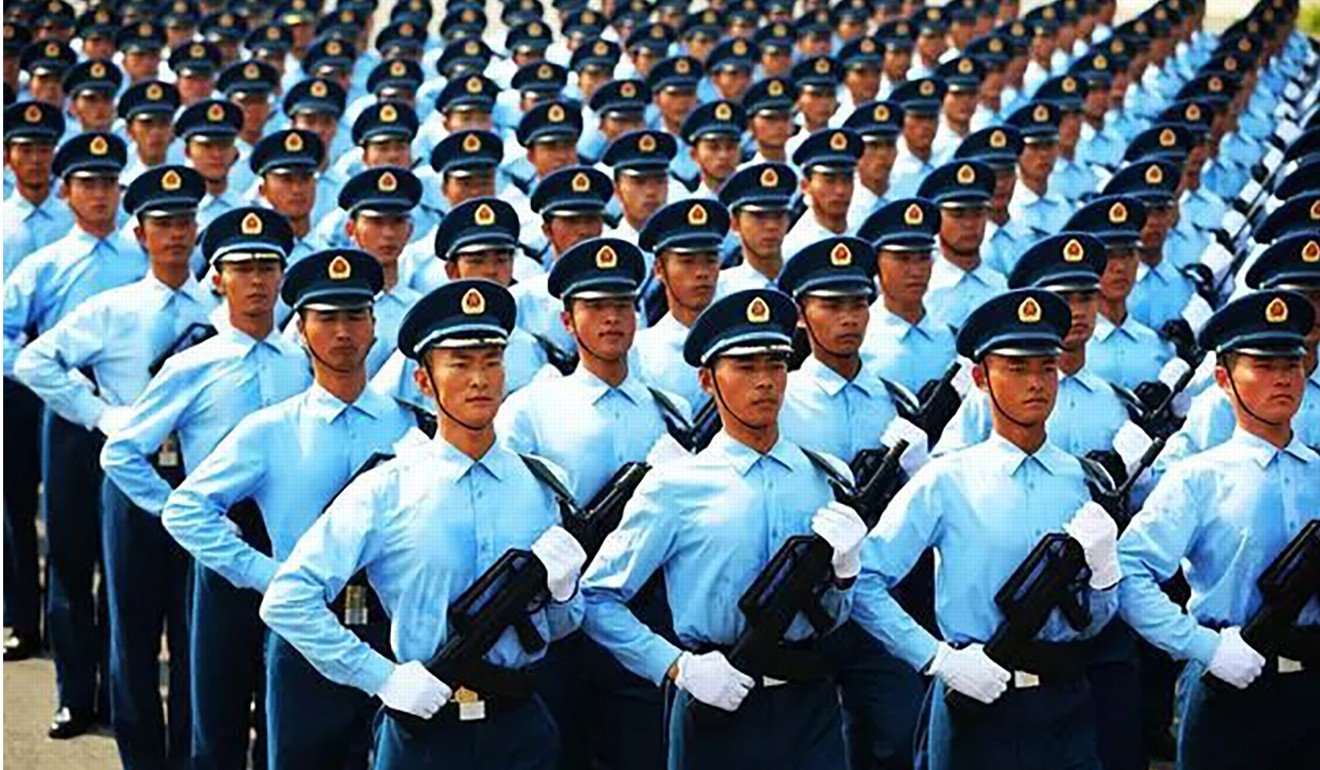
Tens of thousands of troops will take part in China’s National Day parade on October 1. Photo: Thepaper.cn
When the preparations were being made for next week’s anniversary celebrations in Beijing, Cheng said he and his squad were chosen to take part.
He said that during the rehearsals for the grand parade, he was repeatedly reprimanded by his trainer for not keeping his knees close enough together, for lifting his feet too high and for letting his gun slip off shoulder.
But he was determined to get it right, and after weeks of hard work and 11 years on from the tragedy that devastated his world, he said he was now ready to put his best foot forward.
“The nightmare of earthquake has long gone,” he said. “I am here to continue the glory of the airborne troops. I am ready for inspection.”
An increasing proportion of young people no longer willing to wait tables in China as restaurant owners look to new technology for answers
Catering robots developed by Pudu Tech, the three-year-old Shenzhen start-up, have been adopted by thousands of restaurants in China, as well as some foreign countries including Singapore, Korea, and Germany. Photo: Handout
Two years ago, Bao Xiangyi quit school and worked as a waiter in a restaurant for half a year to support himself, and the 19 year-old remembers the time vividly.
“It was crazy working in some Chinese restaurants. My WeChat steps number sometimes hit 20,000 in a day [just by delivering meals in the restaurant],” said Bao.
The WeChat steps fitness tracking function gauges how many steps you literally take and 20,000 steps per day can be compared with a whole day of outdoor activity, ranking you very high in a typical friends circle.
Bao, now a university student in Hangzhou, Zhejiang province, quit the waiter job and went back to school.
“I couldn’t accept that for 365 days a year every day would be the same,” said Bao. “Those days were filled with complete darkness and I felt like my whole life would be spent as an inferior and insignificant waiter.”
Olivia Niu, a 23-year-old Hong Kong resident, quit her waiter job on the first day. “It was too busy during peak meal times. I was so hungry myself but I needed to pack meals for customers,” said Niu.
Being a waiter has never been a top career choice but it remains a big source of employment in China. Yang Chunyan, a waitress at the Lanlifang Hotel in Wenzhou in southeastern China, has two children and says she chose the job because she needs to make a living.
Catering robots developed by Pudu Tech, the three-year-old Shenzhen start-up. Photo: Handout
Today’s young generation have their sights on other areas though. Of those born after 2000, 24.5 per cent want careers related to literature and art. This is followed by education and the IT industry in second and third place, according to a recent report by Tencent QQ and China Youth Daily.
Help may now be at hand though for restaurants struggling to find qualified table staff who are able to withstand the daily stress of juggling hundreds of orders of food. The answer comes in the form of robots.
Japan’s industrial robots industry becomes latest victim of the trade war
Shenzhen Pudu Technology, a three-year-old Shenzhen start-up, is among the tech companies offering catering robots to thousands of restaurant owners who are scrambling to try to plug a labour shortfall with new tech such as machines, artificial intelligence and online ordering systems. It has deployed robots in China, Singapore, Korea and Germany.
With Pudu’s robot, kitchen staff can put meals on the robot, enter the table number, and the robot will deliver it to the consumer. While an average human waiter can deliver 200 meals per day – the robots can manage 300 to 400 orders.
“Nearly every restaurant owner [in China] says it’s hard to recruit people to [work as a waiter],” Zhang Tao, the founder and CEO of Pudu tech said in an interview this week. “China’s food market is huge and delivering meals is a process with high demand and frequency.”
Pudu’s robots can be used for ten years and cost between 40,000 yuan (US$5,650) and 50,000 yuan. That’s less than the average yearly salary of restaurant and hotel workers in China’s southern Guangdong province, which is roughly 60,000 yuan, according to a report co-authored by the South China Market of Human Resources and other organisations.
As such, it is no surprise that more restaurants want to use catering robots.
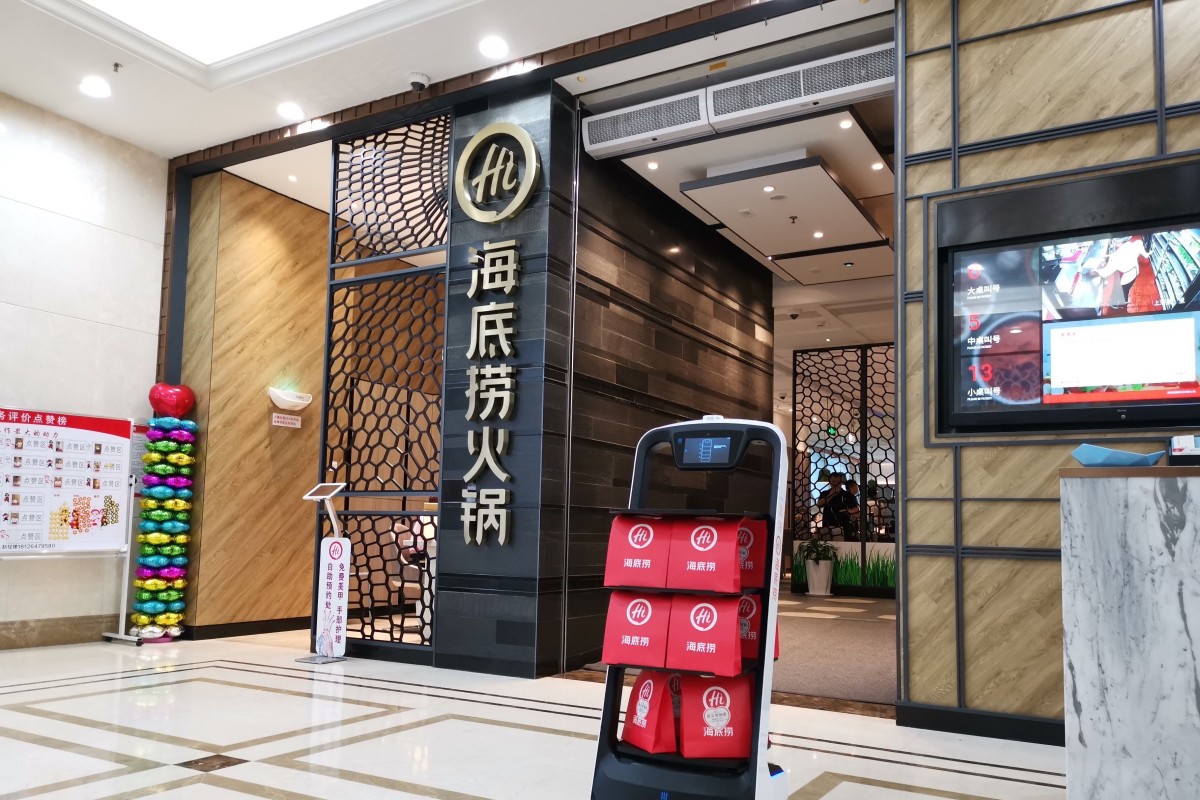
According to research firm Verified Market Research, the global robotics services market was valued at US$11.62 billion in 2018 and is projected to reach US$35.67 billion by 2026. Haidilao, China’s top hotpot restaurant, has not only adopted service robots but also introduced a smart restaurant with a mechanised kitchen in Beijing last year. And in China’s tech hub of Shenzhen, it is hard to pay without an app as most of the restaurants have deployed an online order service.
Can robots and virtual fruit help the elderly get well in China?
China’s labour force advantage has also shrank in recent years. The working-age population, people between 16 and 59 years’ old, has reduced by 40 million since 2012 to 897 million, accounting for 64 per cent of China’s roughly 1.4 billion people in 2018, according to the national bureau of statistics.
By comparison, those of working age accounted for 69 per cent of the total population in 2012.
Other Chinese robotic companies are also entering the market. SIASUN Robot & Automation Co, a hi-tech listed enterprise belonging to the Chinese Academy of Sciences, introduced their catering robots to China’s restaurants in 2017. Delivery robots developed by Shanghai-based Keenon Robotics Co., founded in 2010, are serving people in China and overseas markets such as the US, Italy and Spain.
Pudu projects it will turn a profit this year and it is in talks with venture capital firms to raise a new round of funding, which will be announced as early as October, according to Zhang. Last year it raised 50 million yuan in a round led by Shenzhen-based QC capital.
To be sure, the service industry is still the biggest employer in China, with 359 million workers and accounting for 46.3 per cent of a working population of 776 million people in 2018, according to the national bureau of statistics.
And new technology sometimes offers up new problems – in this case, service with a smile.
“When we go out for dinner, what we want is service. It is not as simple as just delivering meals,” said Wong Kam-Fai, a professor in engineering at the Chinese University of Hong Kong and a national expert appointed by the Chinese Association for Artificial Intelligence. “If they [robot makers] can add an emotional side in future, it might work better.”
Technology companies also face some practical issues like unusual restaurant layouts.
“Having a [catering robot] traffic jam on the way to the kitchen is normal. Some passageways are very narrow with many zigzags,” Zhang said. “But this can be improved in future with more standardised layouts.”
Multi-floor restaurants can also be a problem.
Dai Qi, a sales manager at the Lanlifang Hotel, said it is impossible for her restaurant to adopt the robot. “Our kitchen is on the third floor, and we have boxes on the second, third, and fourth floor. So the robots can’t work [to deliver meals to downstairs/upstairs],” Dai said.
But Bao says he has no plans to return to being a waiter, so the robots may have the edge.
“Why are human beings doing something robots can do? Let’s do something they [robots] can’t,” Bao said.









 CHINDIA ALERT: You'll be living in their world, very soon