05/12/2019
ZHENGZHOU, Dec. 5 (Xinhua) — Archaeologists have unearthed a number of circular foundations at a Neolithic site of Longshan Culture dating back about 4,000 years in Huaiyang, central China’s Henan Province, and believe they are one of China’s earliest granaries.
The Shizhuang Site was discovered when workers built a factory. According to an archaeological survey, the site covers 30,000 square meters with the main living area of 5,000 square meters surrounded with rammed earth walls. The ground bases of the granaries are located inside the ancient settlement.
The Henan Provincial Institute of Cultural Relics and Archaeology began excavation of the site in July.
Cao Yanpeng, an associate researcher at the institute, said the Longshan Culture represents a gradual transition from a primitive society to a civilized era. The cultural sites were discovered in places in the middle and lower reaches of the Yellow River, including the current provinces of Shanxi, Shaanxi, Henan and Shandong.
The main artifacts from the culture are characterized by black pottery.
“Granaries from that period, especially circular ones, were rarely found in previous discoveries,” said Lei Xingshan, secretary of the Party Committee of Peking University’s School of Archaeology and Literature.
The site also contains cultural remains from the Spring and Autumn period (770 B.C.- 476 B.C.), and Han (202 B.C.-220) and Tang (618-907) dynasties.
Source: Xinhua
Posted in 4,000-year-old, Archaeologists, black pottery, Central China, circular foundations, discovered, dynasties, granaries, Han (202 B.C.-220), Henan, Henan province, Henan Provincial Institute of Cultural Relics and Archaeology, Huaiyang, Longshan Culture, Neolithic, Peking University's School of Archaeology and Literature, ruins, shaanxi province, shandong province, Shanxi, Spring and Autumn period (770 B.C.- 476 B.C.), Tang (618-907), Uncategorized, unearthed, Yellow River |
Leave a Comment »
24/10/2019
A farmer picks apples at a fruit and vegetables specialized cooperative in Nanhai New Area of Weihai, east China’s Shandong Province, Oct. 23, 2019. (Xinhua/Guo Xulei)
Source: Xinhua
Posted in apples, farmers, Harvest, Nanhai New Area, shandong province, Uncategorized |
Leave a Comment »
05/10/2019
BEIJING, Oct. 4 (Xinhua) — Despite the slowing momentum of global trade growth, China remains attractive to the world’s multinationals with its huge consumer market, optimized business environment and innovation capability.
EXPANDING PRESENCE
Swiss tech giant ABB began construction of its new 67,000-square meter robotics manufacturing and research facility in Shanghai in September with an investment of 150 million U.S. dollars.
It is designed to be the most advanced, automated and flexible factory in the global robotics industry, utilizing the latest manufacturing processes –– a cutting-edge center where robots make robots.
Since 1992, ABB has invested more than 2.4 billion U.S. dollars in China, with nearly 20,000 employees in total. China has become the company’s second-largest market.
“In the future, we will continue to expand investment in the country, further optimize the business layout and enhance innovation capability,” said Gu Chunyuan, president of ABB Asia, Middle East and Africa Region.
German company Henkel, a leading player in industrial and consumer businesses, also has a long-term commitment to and strong confidence in China. Early this year, Henkel announced it is stepping up investment by around 300 million euros annually to build on its strengths and capture opportunities.
“China will be one of the focal markets. We will strengthen our position by accelerating the launch of new brands and innovations, increasing our marketing investments and driving digitalization even further,” said Jeremy Hunter, president of Henkel Greater China.
Having established its first office in Beijing in 1988, the company now has around 5,000 employees at 25 sites across China. The production output of its manufacturing plant in Yantai of Shandong Province has increased more than 50 times over the years.
EMBRACING OPPORTUNITIES
“China’s huge market, steady growth momentum, complete industrial infrastructure as well as rich talent resources are all very attractive, ” said Gu Chunyuan.
As ABB’s second-biggest market, China’s increasingly optimized business climate, more energetic and effective market system and deepened opening-up policies have lured the company to beef up its confidence in the China market, he said.
As the center of the world’s manufacturing industry, China has witnessed unprecedented upgrading and transformation of industries toward digitalization and intelligence, which will unleash huge market potential, said Gu, adding that China’s development has brought many opportunities to the company, and convinced ABB to expand investment.
Hunter attributed Henkel’s success in China to the country’s continuous efforts of pursuing innovation-driven economic development, which has fostered a favorable environment for the company.
“Moreover, China has become a global force in digital technologies. Accelerated digitalization has also been a key driver for Henkel,” said Hunter, noting that the rapid transformation of China’s manufacturing and consumption upgrading are also driving demand for the company.
EXPECTING GROWTH
Foreign investors agree that the Chinese economy offers them indispensable certainty and confidence with its positive outlook.
Commenting on China’s efforts on pushing for all-around opening-up and building a stable, transparent and predictable investment environment, Gu said these measures will bring huge development opportunities for foreign-funded companies.
“We believe that China’s further opening-up will promote the globalization as well as the liberalization and facilitation of trade,” Gu said.
Hunter noted China will maintain its unparalleled momentum in industrial and consumption upgrading and its integration into global flows of trade, talent and innovation.
“I believe that the Chinese market will go beyond just participating in these areas to actively shaping their future development,” he said.
Source: Xinhua
Posted in ABB, ABB Asia, Middle East and Africa Region, Beijing, business environment, Chinese market, Construction, consumer market, cutting-edge center, foreign investors, global trade growth, Henkel, Henkel Greater China, industrial and consumer businesses, innovation capability, robotics manufacturing and research facility, robots make robots, shandong province, Shanghai, slowing momentum, strong appetite, Swiss tech giant, Uncategorized, Yantai City |
Leave a Comment »
20/09/2019
Chinese President Xi Jinping, also general secretary of the Communist Party of China Central Committee and chairman of the Central Military Commission, chairs and addresses a symposium on the ecological protection and high-quality development of the Yellow River in Zhengzhou, capital of central China’s Henan Province, Sept. 18, 2019. (Xinhua/Ju Peng)
ZHENGZHOU, Sept. 19 (Xinhua) — Chinese President Xi Jinping called for concerted efforts to promote ecological protection and high-quality development of the Yellow River.
Xi, also general secretary of the Communist Party of China Central Committee and chairman of the Central Military Commission, made the remarks while chairing a symposium Wednesday during his inspection tour to Henan Province.
NATIONAL STRATEGY
“The protection of the Yellow River is critical to the great rejuvenation and sustainable development of the Chinese nation,” said Xi, adding that it is a major national strategy.
Noting that the peace of the Yellow River is significant to the stability of China, Xi said Chinese people have struggled against the floods and droughts of the Yellow River since ancient times, and the Party and the state have attached great importance to the harnessing and development of the Yellow River after the founding of New China in 1949.
Originating in Qinghai Province, the Yellow River, known as China’s “Mother River” and the cradle of the Chinese civilization, runs through nine provinces and autonomous regions including Shaanxi and Henan before emptying into the Bohai Sea in east China’s Shandong Province.
The river got its name Huanghe in Chinese because of its yellow, muddy water, which appears as it runs through the Loess Plateau in northwest China.
The 5,464-km-long waterway feeds about 12 percent of China’s population, irrigates about 15 percent of arable land, supports 14 percent of national GDP, and supplies water to more than 60 cities.
Xi also pointed out difficulties and problems in protecting the Yellow River, including fragile ecological environment, severe condition of the water resources preservation and development quality that needs to be improved.
SOUL OF CHINESE NATION
Calling for strengthened protection of the ecological environment of the Yellow River basin, Xi said that differences between the upper, middle and lower reaches of the river should be fully considered, given that the Yellow River ecosystem is an organic whole.
Further efforts should be made to ensure the long-term stability of the Yellow River, Xi said, stressing that although the river has not seen major dangers for many years, we should not relax vigilance.
Over the past 2,500 years, the Yellow River has broken its dikes 1,600 times and has made 26 major changes in its course in the lower reaches.
Xi also stressed better use of water resources, with rational planning of the population, urban and industrial development to resolutely curb unreasonable water demand.
When pursuing high-quality development in the region, authorities should actively explore new ways with regional characteristics and participate in the construction of the Belt and Road to promote higher level of opening-up, Xi noted.
Meanwhile, Xi called for preserving, inheriting and carrying forward the Yellow River culture.
“The Yellow River culture, as an important part of the Chinese civilization, is the root and soul of the Chinese nation,” Xi said, calling for telling well the “Yellow River story” to pool spiritual strength for the realization of the Chinese dream of the great rejuvenation of the Chinese nation.
For over 3,000 years, some major dynasties in Chinese history built their capitals in the river basin, making the region the centers of politics, economy and culture in the country.
The Yellow River witnessed the birth of the four era-defining inventions in ancient China — printing techniques, papermaking, gunpowder and the compass, which all emerged in the drainage basin.
At Wednesday’s meeting, Vice Premier Han Zheng, also a member of the Standing Committee of the Political Bureau of the Communist Party of China Central Committee called for efforts to earnestly study and implement the spirit of Xi’s speech and strive to make new progress in the ecological protection and high-quality development of the Yellow River basin.
Source: Xinhua
Posted in 1949, Bohai Sea, Chairman of the Central Military Commission, Chinese civilization, Chinese nation, Chinese President Xi Jinping, compass, cradle, dikes, drainage basin, ecological protection, founding of New China, general secretary of the Communist Party of China Central Committee, gunpowder, Henan province, high-quality development, Huanghe, Loess Plateau, member, Mother River, papermaking, printing techniques, Qinghai Province, rejuvenation, root and soul, shaanxi province, shandong province, Standing Committee of the Political Bureau of the Communist Party of China Central Committee, Uncategorized, Vice Premier Han Zheng, Water resources, Yellow River, Yellow River story, yellow, muddy water |
Leave a Comment »
05/09/2019
- Researchers will conduct tests at site in Gansu to see whether it will make a viable facility to store highly radioactive waste safely
- Scientists say China has the chance to become a world leader in this field but has to find a way to ensure it does not leak
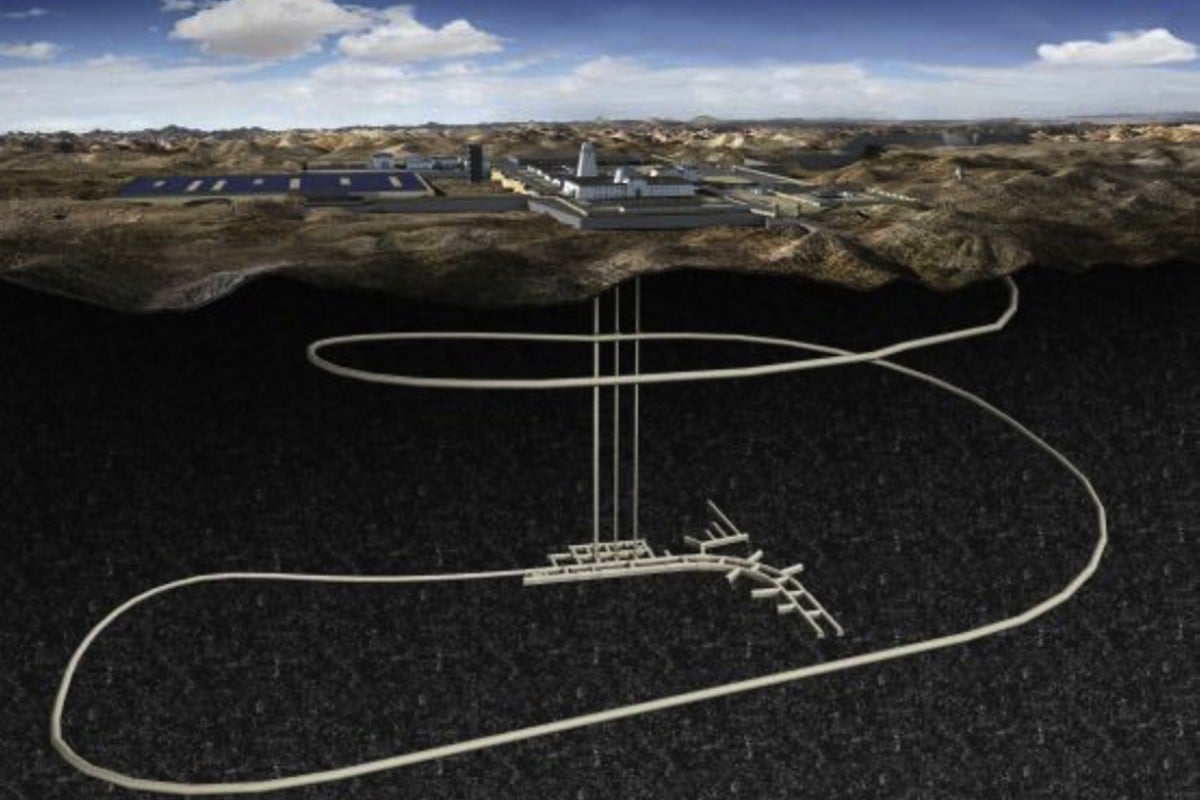
A preliminary design for the Beishan Underground Research Laboratory. Photo: Handout
China has chosen a site for an underground laboratory to research the disposal of highly radioactive waste, the country’s nuclear safety watchdog said on Wednesday.
Officials said work will soon begin on building the Beishan Underground Research Laboratory 400 metres underground in the northwestern province of Gansu.
Liu Hua, the head of the Chinese National Nuclear Safety Administration, said work would be carried out to determine whether it would be possible to build a repository for high-level nuclear waste deep underground.
“China sees radioactive waste disposal as a very important part [of the development nuclear energy],” said Liu. “To develop nuclear energy, we must have safe storage and disposal of nuclear waste.”
China condemns US blacklisting of nuclear firms and says American companies could be hurt as a result
The Chinese authorities see nuclear power an important source of energy that will help to curb carbon emissions and pollution as well as reducing its dependence on fuel imports.
But while the country has made great strides in the development of nuclear power, it needs to find a safe and reliable way of dealing with its growing stockpiles of nuclear waste.
Liu said the Gansu site had been identified as a possible location for a deep nuclear waste store after years of searching.
Once the laboratory is built, scientists and engineers will start experiments to confirm whether it will make a viable underground storage facility.
“Based on the data of the experiments, we can then decide if we are going to pick this as the final site,” he added.
China ‘actively promoting’ nuclear fuel processing plant with French Areva
Chinese officials usually stay tight-lipped about how nuclear waste is disposed of mainly because of fears that any discussion of the topic would trigger safety fears, although in recent years more efforts have been made to inform the public to win support.
Scientists say that nuclear waste can be divided into three categories depending on the level of radioactivity.
Low-level waste consists of minimally radioactive materials such as mop heads, rags, or protective clothing used in nuclear plants, while intermediate-level waste covers things such as filters and used reactor components.
High-level waste, however, is generated by the reprocessing of spent nuclear fuel and scientists generally agree that the safest way to dispose of it is to bury it deep underground in areas where the geology means it will have a minimal impact on the environment while it decays over thousands of years.
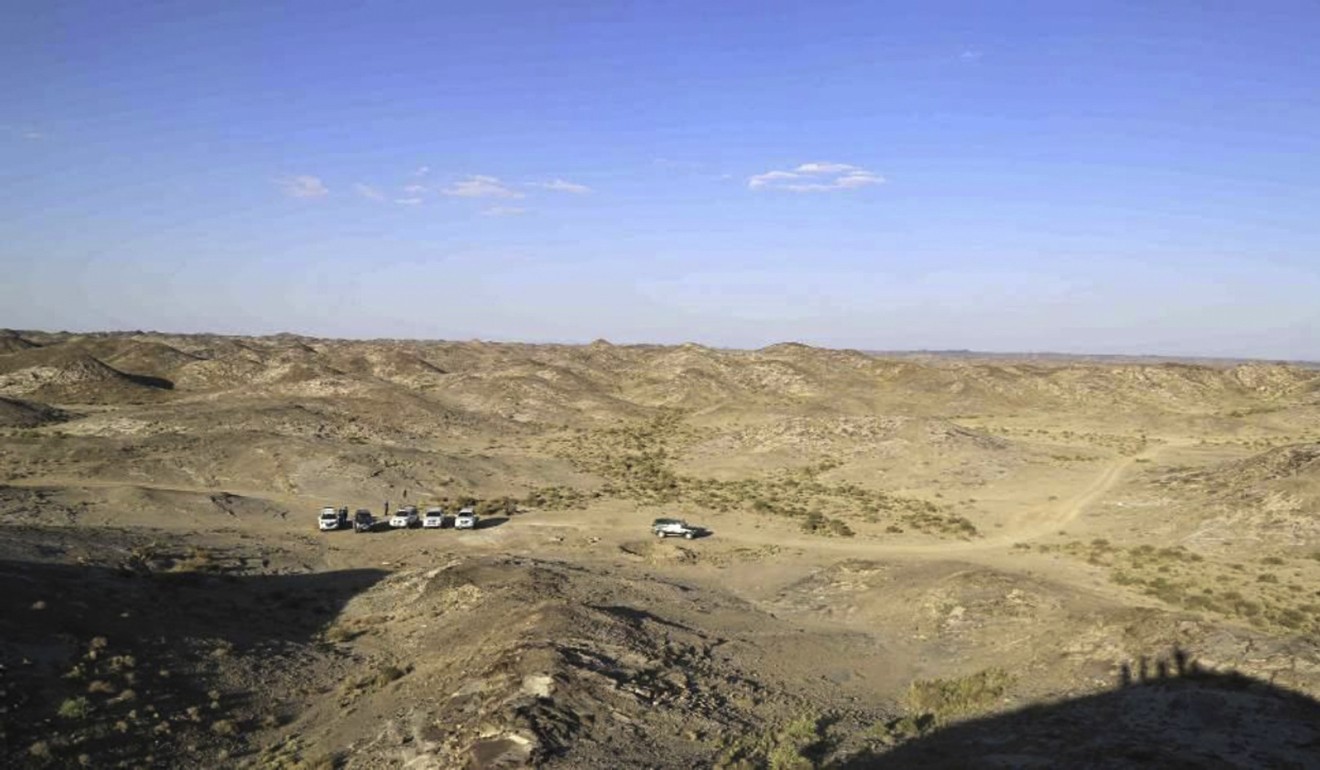
The facility will be built in a remote part of Gansu province. Photo: Handout
Some Chinese scientists said the country had the chance to lead the world in this area of research but others have expressed concerns about safety.
Jiang Kejun, a senior researcher at the Energy Research Institute of China’s National Development and Reform Commission, said that very few countries in the world are studying this form of nuclear waste disposal.
“It gives China an opportunity to be a leader in research in this area, plus China has the technology and financial means,” he said.
About a dozen countries including France, Switzerland, Japan, and the United States have carried out research in this area, but in recent years most have abandoned or scaled back their programmes.
At present there are storage sites operating in Finland and the US, but other countries such as Germany have abandoned plans to build similar facilities.
Washington blacklists Chinese nuclear firms for ‘helping military acquire US technology’
But despite broad scientific support for underground disposal, some analysts and many members of the public remain sceptical about whether it is really safe.
Lei Yian, an associate professor at the School of Physics at Peking University, said there was no absolute guarantee that the repositories would be safe when they are come into operation.
“Leakage has happened in [repositories] in the US and the former Soviet Union … it’s a difficult problem worldwide,” he said. “If China can solve it, then it will have solved a global problem.”
China is also building more facilities to dispose of low and intermediate level waste. Officials said new plants were being built in Zhenjiang, Fujian and Shandong, three coastal provinces that currently lack disposal facilities.
At present, two disposal sites for low and intermediate-level waste are in operation in Gansu and Guangdong provinces.
Source: SCMP
Posted in American companies, Beishan Underground Research Laboratory, blacklists, bury it deep, carbon emissions, China alert, chinese authorities, Chinese National Nuclear Safety Administration, Chinese nuclear firms, Chinese officials, coastal provinces, condemns, conduct, Country, deep underground, difficult problem, disposal facilities, earmarks, Energy Research Institute, Environment, filters, Finland, France, French Areva, fuel imports, Fujian, Gansu Province, geology, Germany, global problem, great strides, helping military acquire, High-level waste, highly radioactive waste, hurt, intermediate-level waste, Japan, lack, Leakage, Low-level waste, mop heads, National Development and Reform Commission, National Development and Reform Commission (NDRC), nuclear energy, nuclear firms, nuclear fuel processing plant, Nuclear power, nuclear safety watchdog, nuclear waste, Peking University, Pollution, protective clothing, rags, repositories, repository, reprocessing of spent nuclear fuel, researchers, result, safely, School of Physics, scientists, shandong province, site, source of energy, Soviet Union, stockpiles, store, Switzerland, tests, Uncategorized, underground, underground disposal, United States, US, US blacklisting, US technology, used reactor components, viable facility, Washington, world leader, worldwide, Zhenjiang |
Leave a Comment »
12/08/2019
SHANGHAI, Aug. 11 (Xinhua) — Over 15 of Shanghai’s popular destinations, including the Shanghai Wildlife Park, Shanghai Center and the Shanghai Museum reopened Sunday after typhoon Lekima left the city.
The sky cleared up in the business hub on Sunday as Lekima headed north through Jiangsu and Shandong provinces.
Typhoon Lekima, the ninth typhoon of the year, made landfall in the city of Wenling, the coastal areas of eastern Zhejiang Province, at 1:45 a.m. Saturday morning, according to the National Meteorological Center.
Anticipating typhoon damage, Shanghai closed many of its popular tourist sites including parks and museums for safety reasons starting from Aug. 9. A total of 92 scenic sites, parks and resorts as well as museums were closed on Saturday.
On Sunday, 70 tourist sites remained closed for safety checks and are scheduled to reopen on Monday or Tuesday, said the municipal’s cultural and tourism bureau.
Source: Xinhua
Posted in after, cultural and tourism bureau, jiangsu province, museums, National Meteorological Center (NMC), reopen, shandong province, Shanghai, Shanghai Center, Shanghai Museum, Shanghai Wildlife Park, tourists sites, Typhoon Lekima, Uncategorized, Wenling, zhejiang province |
Leave a Comment »
11/08/2019
SHANGHAI (Reuters) – The death toll from a major typhoon in eastern China rose to 30 on Sunday, with 18 people missing, state broadcaster CCTV reported, as the country braced for more travel disruptions as the storm moved further north up the coast.
Typhoon Lekima made landfall early on Saturday in the eastern province of Zhejiang with winds gusting to 187 km (116 miles) per hour, causing travel chaos with thousands of flights canceled and rail operations suspended.
The typhoon damaged more than 173,000 hectares of crops and 34,000 homes in Zhejiang, provincial authorities said in estimating the economic losses at 14.57 billion yuan ($2 billion), the state news agency Xinhua said.
Lekima, China’s ninth typhoon of this year, is expected to make a second landing along the coastline in Shandong province, prompting more flight cancellations and the closure of some expressways, Xinhua and state broadcaster CCTV said.
In Zhejiang, many of the deaths occurred about 130 km north of the coastal city of Wenzhou, where a natural dam collapsed in an area deluged with 160 mm (6.3 inches) of rain within three hours, causing a landslide, Xinhua reported.
State media reports showed rescuers wading in waist-high waters to evacuate people from their homes, while the Ministry of Emergency Management said that more than one million people in the financial hub of Shanghai, as well as Zhejiang and Jiangsu provinces, have been evacuated due to the typhoon.
An estimated 3,200 flights were canceled, state broadcaster CCTV reported, although some suspensions on high-speed railway lines were lifted on Sunday.
Source: Reuters
Posted in canceled, closure, collapsed, crops, death toll, deaths, deluged, Eastern China, expressways, financial hub, flight cancellations, flights, high-speed railway lines, homes, jiangsu province, lifted, Ministry of Emergency Management (MEM), natural dam, North, rail operations, rescuers, shandong province, Shanghai, state broadcaster CCTV, storm, suspended, suspensions, travel chaos, travel disruptions, Typhoon, Typhoon Lekima, Uncategorized, wading, waist-high waters, Wenzhou, Xinhua News Agency, zhejiang province |
Leave a Comment »
10/08/2019
BEIJING (Reuters) – Eighteen people were killed and 14 were missing in eastern China on Saturday in a landslide triggered by a major typhoon, which caused widespread transport disruptions and the evacuation of more than one million people, state broadcaster CCTV reported.
Typhoon Lekima made landfall early on Saturday in the eastern province of Zhejiang with maximum winds of 187 km (116 miles) per hour, although it had weakened from its earlier designation as a “super” typhoon, the official Xinhua news agency reported.
Thousands of flights were cancelled in eastern China, according to the country’s aviation regulator, with most flights into and out of Shanghai’s two major airports cancelled on Saturday afternoon, their websites showed.
China’s weather bureau on Saturday issued an orange alert, its second highest, after posting a red alert on Friday, when the storm forced flight cancellations in Taiwan and shut markets and businesses on the island.
The deadly landslide occurred about 130 km north of the coastal city of Wenzhou, when a natural dam collapsed in an area deluged with 160 millimetres (6.3 inches) of rain within three hours, CCTV reported.
The storm was moving northward at 15 kph and was gradually weakening, Xinhua reported, citing the weather bureau.
High winds and heavy rains battered the financial hub of Shanghai on Saturday afternoon, and Shanghai Disneyland was shut for the day.
Nearly 200 hundred trains through the city of Jinan in Shandong province had been suspended until Monday, Xinhua reported.
More than 250,000 residents in Shanghai and 800,000 in Zhejiang province had been evacuated due to the typhoon, and 2.72 million households in Zhejiang had power blackouts as strong wind and rain downed electricity transmission lines, state media reported.
Some 200 houses in six cities in Zhejiang had collapsed, and 66,300 hectares (163,830 acres) of farmland had been destroyed, CCTV said.
The storm was predicted to reach Jiangsu province by the early hours of Sunday and veer over the Yellow Sea before continuing north and making landfall again in Shandong province, CCTV said.
Coastal businesses in Zhejiang were shut and the Ministry of Emergency Management warned of potential risk of fire, explosions and toxic gas leaks at chemical parks and oil refineries.
Source: Reuters
Posted in airports, aviation regulator, businesses, cancelled, CCTV, chemical parks, collapsed, Eastern China, explosions, Fire, flight cancellations, flights, island, jiangsu province, Jinan, killing, landfall, Landslide, Lekima, markets, Ministry of Emergency Management (MEM), natural dam, oil refineries, orange alert, red alert, Risk, shandong province, Shanghai, suspended, Taiwan, toxic gas leaks, trains, Typhoon, Uncategorized, weather bureau, Wenzhou, Xinhua News Agency, Yellow Sea, zhejiang province |
Leave a Comment »
22/07/2019
- Growth in Shandong, China’s third largest provincial economy, slowed in the first quarter due to cuts in inefficient industrial capacity
- Shandong government aims to cut capacity in traditional sectors to boost ‘new’ industries, as well as reduce pollution
Shandong’s gross domestic product growth accelerated to 6.4 per cent last year from 5.7 per cent in 2017, but slipped back to 5.5 per cent in the first quarter of 2019. Photo: AP
Shandong province, a manufacturing heavyweight in eastern China, will press ahead with plans to cut capacity in inefficient “old” industries, even though it will hurt short-term growth, the provincial party chief said on Tuesday.
Like many provinces that still rely heavily on traditional industries, Shandong’s growth has slowed recently, in part due to the effect of the trade war with the United States.
While its gross domestic product (GDP) growth accelerated to 6.4 per cent last year from 5.7 per cent in 2017, it slipped back to 5.5 per cent in the first quarter of 2019, according to to Liu Jiayi, the secretary of Shandong Provincial Committee of the Communist Party of China.
The primary reason for the slowdown in growth was a plunge in production in “backward” industries at the start of the year, due in part to cuts already made to reduce production capacity, said Liu. He added that the capacity cutting measures will help the province reduce air pollution, one of the central government’s priorities for 2019.
“The quality of development is changing [in Shandong],” said Liu, who referred to the fact that Shandong’s industrial sectors dominate the economy and that 70 per cent of this heavy industry is in the chemicals sector. “As a result, our economic volume is large, but the quality of development is not very high.”
According to statistics from the Hong Kong Trade Development Council (HKTDC), Shandong’s industrial output has been dominated by heavy industry, which accounted for about 67.1 per cent of the gross industrial output in 2017. Within that, raw chemical materials and chemical products had the biggest share of all value-added industrial output, at 9.7 per cent, according to the HKTDC.
“This decline [in first quarter growth] was in exchange for our development of high-quality [production], because our traditional and backward production capacity has declined,” Liu added.
Shandong, the third largest provincial economy in China, will continue to reduce its reliance on chemicals production, while also cutting the use of coal for power, heating and fuelling heavy trucks for transport, all of which are major contributors to regional pollution, according to Gong Zheng, the governor of Shandong.
Shandong’s gross domestic product growth accelerated to 6.4 per cent last year from 5.7 per cent in 2017, but slipped back to 5.5 per cent in the first quarter of 2019. Photo: AFP
“We have stepped up our efforts [to cut pollution] and have refused to allow it to rebound, and we will do this well,” said Gong.
The central government launched a campaign to tackle pollution in 2014 as it sought to reverse the severe damage done to the environment after decades of breakneck industrial growth.
However, the rising costs of doing business in China – including higher wages and the costs of pollution control – have forced some manufacturing out of China. That process has been accelerated by firms searching for an alternative production base to avoid
implemented as part of the trade war, which has made a severe dent in China’s investor and consumer confidence.China’s GDP growth slid to 6.2 per cent in the second quarter, the lowest reading since records began in the first quarter of 1992, and below the levels reported during the global financial crisis, the National Bureau of Statistics said on Monday.
However, Shandong party chief Liu, the former head of the National Audit Office who led the nationwide investigation into local government debt in 2014, said he was not concerned with GDP growth in Shandong.
“Now our GDP growth rate has dropped a little, and the growth rate for fixed asset investment has dropped a little,” said Liu. “Some people worry that the growth of Shandong is slipping. I can tell you responsibly, not only [growth] will not slip, we have to take a step back these years in exchange for the healthy development of the next few years.”
Source: SCMP
Posted in axe, ‘new’ industries, boost, China alert, despite, Hong Kong Trade Development Council (HKTDC), inefficient industry, manufacturing heartland, prepares, reduce pollution, shandong province, Shandong Provincial Committee of the Communist Party of China, slowing economy, Uncategorized |
Leave a Comment »
12/06/2019
- Radar expert Liu Yongtan says surface wave system could track ships and planes from hundreds of kilometres away and is protected from anti-radiation missiles
Stealth aircraft like the US F-35 are less well protected against high-frequency surface wave radars. Photo: AP
China has developed a radar system that could detect stealth fighters from a long distance, its creator has told state media.
Liu Yongtan, a member of the Chinese Academy of Sciences, told Naval and Merchant Ships that the new high-frequency surface wave radar (HFSWR) was also masked from anti-radiation missiles which can detect and destroy radio waves from other early warning systems.
The interview with the monthly magazine, which is published by the China Shipbuilding Engineering Academy, was reprinted by state-owned tabloid Global Times on Monday.
Liu, an 83-year-old who has dedicated his life to studying radar systems, said the new radar features “high-frequency electromagnetic waves that have long wavelengths and wide beams”.
Unlike microwave or skywave signals, surface waves travel along the spherical surface of the earth.
“A land-based version of the system can detect naval and aerial hostile objects from hundreds of kilometres away, which helps expand the range of China’s maritime early warning and defence systems,” Liu said.
He also said the long wavelength could help detect stealth aircraft, which use special protective materials and designs to make them “invisible” to microwave radars, but have no such protection against high-frequency surface waves.
Chinese navy’s new ‘compact’ radar will allow it to keep watch over an area the size of India
Another advantage of the maritime radar system is what Global Times described as “immunity” to attack from anti-radiation missiles, which track and destroy the origin of the electromagnetic waves.
Liu said that anti-radiation missiles would need huge antennas to track high-frequency surface waves because their beams are too wide for the antennas currently in use to track.
Plenty of practical challenges – such as signal loss and noise interference – need to be overcome to use high-frequency surface waves in radar.
Liu Yongtan was given China’s top scientific honour for his work on the radar. Photo: Weibo
However, Shi Lao, a Shanghai-based military commentator, said Liu’s team must have overcome those challenges.
Shi said he believed that as Liu’s technology developed it could be used as a low-cost coastal monitoring system that could protect the coastline within a range of 400km (250 miles).
Japan boosts island radar surveillance to catch Chinese, North Korean ships
The technology can also be used in conjunction with skywave radar systems, which usually have a longer monitoring range of 1,000km (621 miles).
“HFSWR could work 24 hours in all weathers, which would be much cheaper than operating early warning aircraft,” Shi said.
“They can be deployed relatively quickly with high mobility if they are mounted on vehicles, and may be loaded onto warships in the future.”
State broadcaster CCTV has previously reported that China has built a high-frequency surface wave radar test centre in Weihai, on China’s east coast in Shandong province.
In January
, China’s highest award for scientists which includes prize money of 8 million yuan (US$1.2 million), for his work on the radar system.
Source: SCMP
Posted in antennas, anti-radiation missiles, CCTV, China Shipbuilding Engineering Academy, China’s maritime early warning and defence systems, Chinese Academy of Sciences, Chinese navy, creator, electromagnetic waves, Global Times, high-frequency radar system, high-frequency surface wave radar (HFSWR), India alert, invisible, Japan, long distance, microwave radars, Naval and Merchant Ships, North Korean ships, shandong province, spot, State Pre-eminent Science and Technology Award, stealth aircraft, surface wave system, Uncategorized, Weihai |
Leave a Comment »





 CHINDIA ALERT: You'll be living in their world, very soon