20/04/2019
- Vijay Keshav Gokhale is expected to meet Chinese deputy foreign minister Kong Xuanyou and Foreign Minister Wang Yi during two-day visit
- Beijing’s refusal to sanction a Pakistani militant leader and its belt and road push in the disputed Kashmir region have strained ties
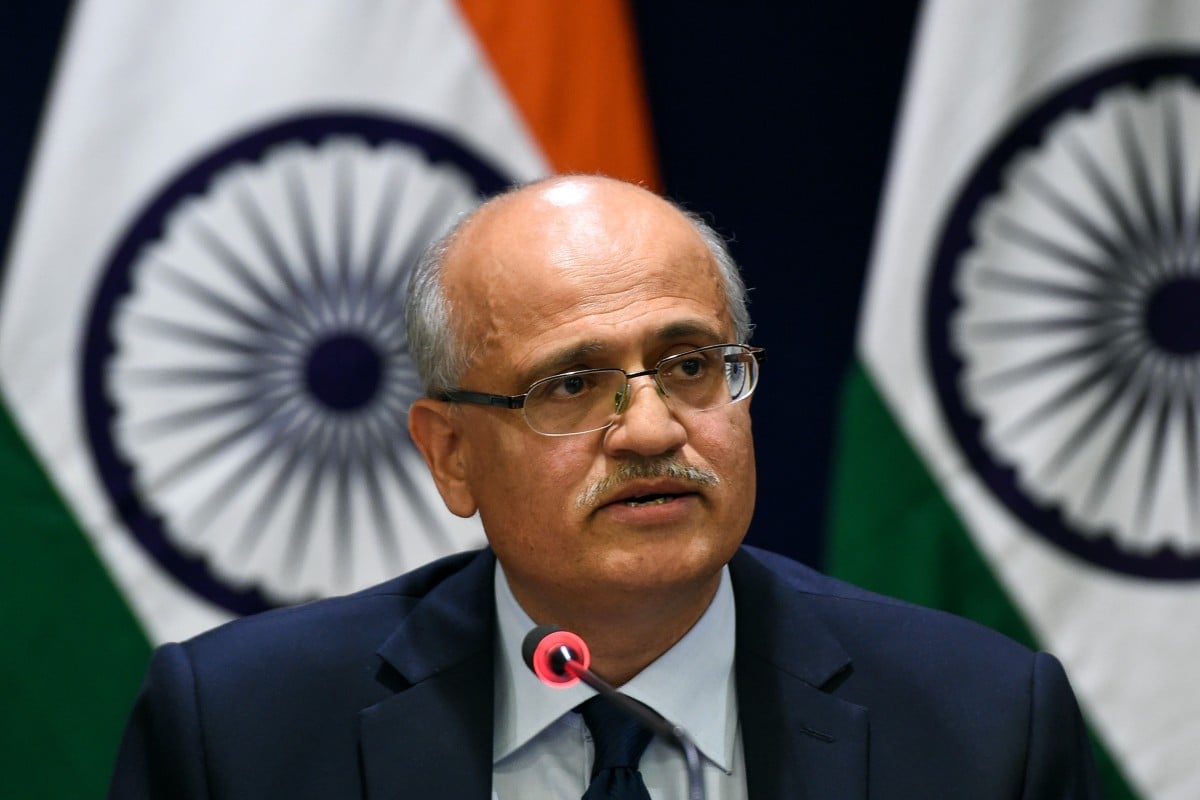
Indian Foreign Secretary Vijay Keshav Gokhale will visit China as part of “regular exchanges” between the two countries. Photo: AFP
Indian Foreign Secretary Vijay Keshav Gokhale will travel to Beijing on Sunday amid tensions between India and China over Beijing’s refusal to sanction a Pakistani militant leader and its infrastructure push in the disputed Kashmir region.
Gokhale’s two-day visit is part of “regular exchanges” between the two nations, the Indian embassy in Beijing said on Saturday.
During his stay, Gokhale is expected to meet Chinese deputy foreign minister Kong Xuanyou and Foreign Minister Wang Yi.
He will return to India on Monday, three days before the second Belt and Road Forum begins in the Chinese capital. Forty foreign leaders will attend the summit on Beijing’s global trade and infrastructure scheme, the “Belt and Road Initiative”, but India is not taking part.
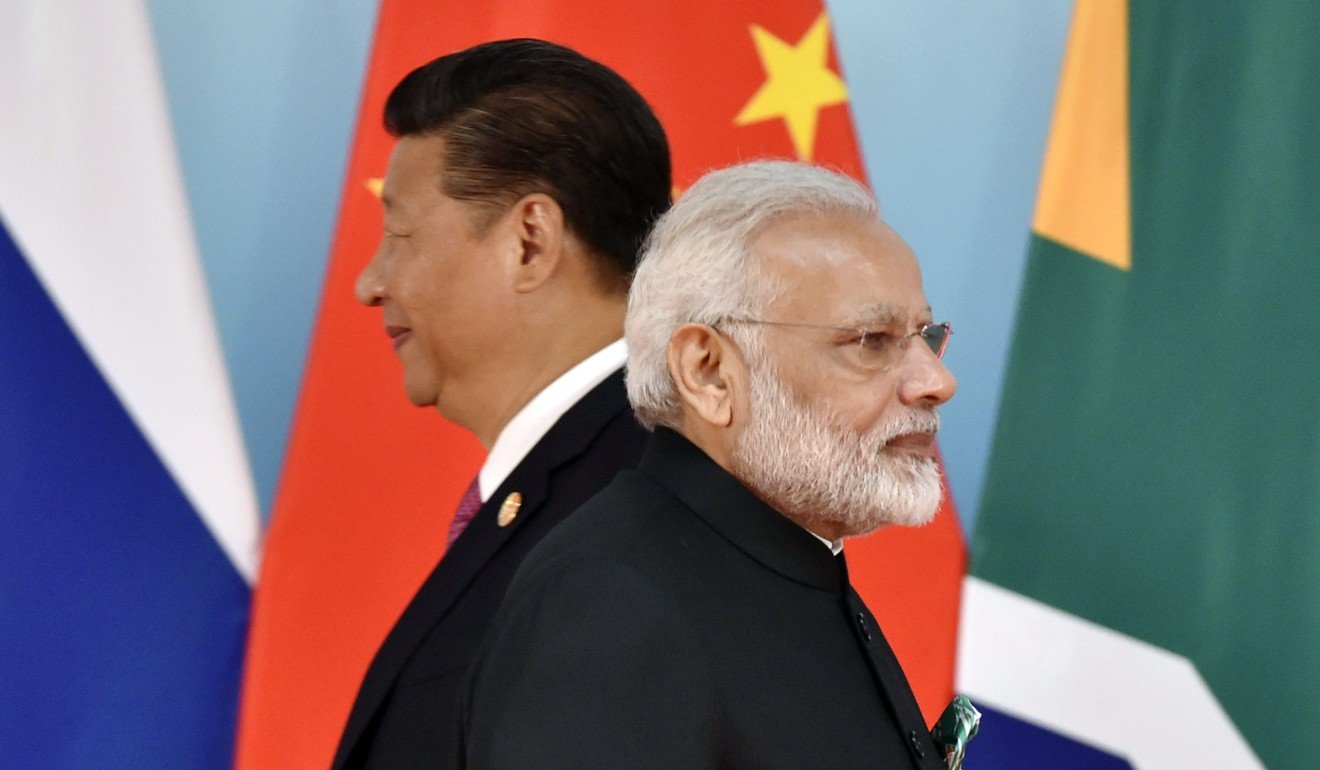
Wang on Friday called on India, and other countries sceptical of the initiative, to join up, dismissing claims that it is a geopolitical tool. He also said China was ready to hold a leaders’ summit with India like the informal meeting held between Chinese President Xi Jinping and Indian Prime Minister Narendra Modi in Wuhan, Hubei province last year.
A summit between Xi Jinping (left) and Narendra Modi in Wuhan last year was seen as a breakthrough in China-India relations after the Doklam border dispute. Photo: AFP
Gokhale visited Beijing in February last year, and the Wuhan summit happened two months later. That meeting was seen as a breakthrough in the
after a 73-day military stand-off over the Doklam plateau.
But the progress was overshadowed in February after a terror strike on Indian security forces in the Jammu and Kashmir province, which killed 40 Indian soldiers. The Pakistan-based Jaish-e-Mohammed group claimed responsibility for the attack. India has long wanted to designate its leader, Masood Azhar, as a terrorist under international law, but China has opposed the move.
During a visit to Pakistan in March, Kong said Beijing and Islamabad were all-weather strategic partners and would support each other on issues to do with their core interests.
What ‘Wuhan spirit’? Kashmir suicide attack reopens Modi’s China wound
Wang Dehua, head of the Institute for South and Central Asia Studies at the Shanghai Municipal Centre for International Studies, said China and India were looking to prevent their bilateral relations from deteriorating further.
“Both nations will elaborate on their stance on this matter, and China will probably deliver a message that the China-India relationship should not be affected by the dispute over Masood Azhar,” he said. “The positive sentiment out of Wuhan has been affected, and the two sides are seeking ways to continue the spirit of that informal summit.”
Du Youkang, director of Fudan University’s Pakistan Study Centre in Shanghai, said preparations for another informal summit of the nations’ leaders would only begin after India’s general election was over. Polling is being held in seven phases ending on May 19.
Gokhale’s trip would mainly be a chance to see how the two nations can push forward bilateral ties amid their disputes, Du said.
In addition to Azhar, India is also dismayed that some of China’s belt and road projects pass through the Pakistan-administered section of the disputed Kashmir region.
But Wang told reporters on Friday that the initiative did not target any third country, and that relations between China and India had improved after the Wuhan summit.
Source: SCMP
Posted in Belt and Road Initiative (BRI), belt and road push, China alert, Chinese deputy foreign minister, Chinese President Xi Jinping, Doklam plateau, Du Youkang, foreign minister, Fudan University’s Pakistan Study Centre, head of the Institute for South and Central Asia Studies, hubei province, India alert, Indian Foreign Secretary, Indian Prime Minister Narendra Modi, Islamabad, Kashmir, Kong Xuanyou, Masood Azhar, Pakistani militant leader, Shanghai, Shanghai Municipal Centre for International Studies, Uncategorized, Vijay Keshav Gokhale, Wang Dehua, Wang Yi, Wuhan |
Leave a Comment »
13/04/2019
- Shanghai Zhenhua Heavy Industries now exports quay cranes, gantry cranes to more than 300 ports in 100 countries, with 70 per cent of the global market
- China International Marine Containers Group (CIMC), took a little more than a decade to become the world’s largest maker of shipping containers
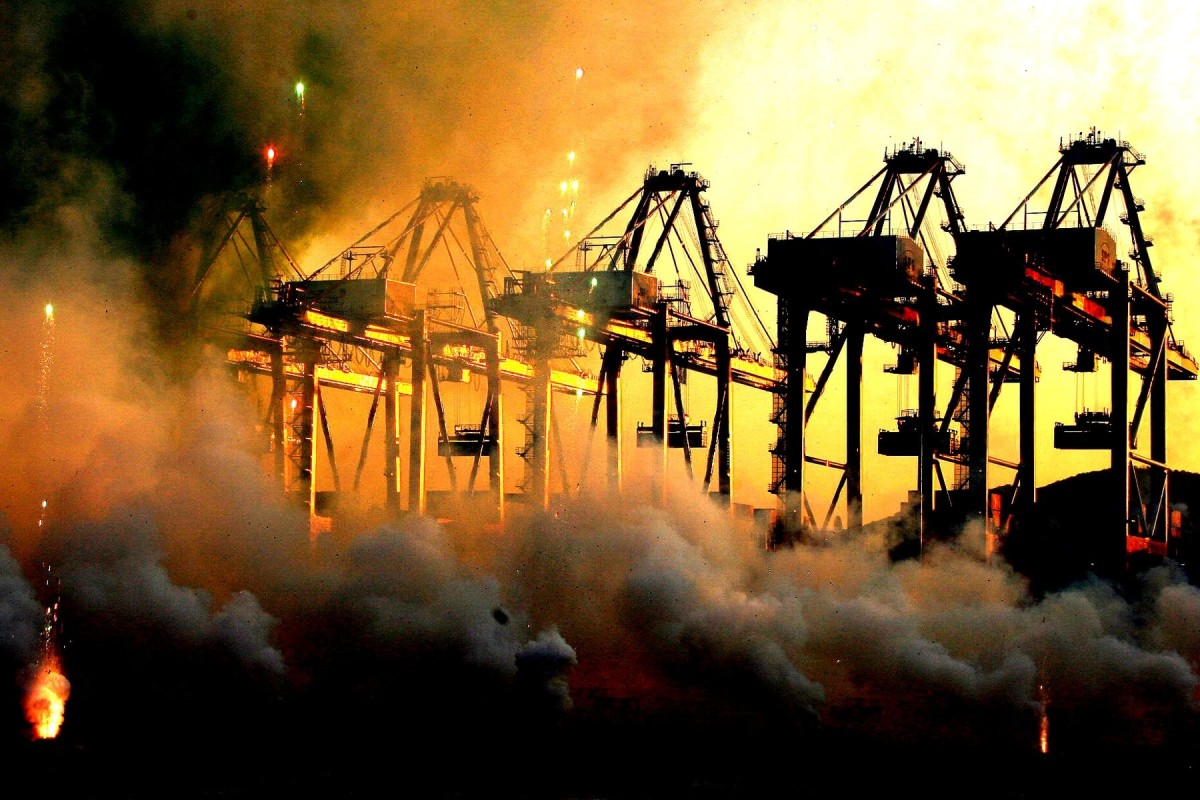
Quay cranes along a berth at the Yangshan deep-water port in Shanghai on September 14, 2011. Shanghai Zhenhua Heavy Machineries, established in 1992, has grown along with the explosive development of China’s ports to control 70 per cent of the global market for cranes, loaders and lifting equipment used in ports. Photo: Xinhua
The explosive growth of China’s container ports has turned one of the most important vendors in shipping into a best-in-class industry leader, whose cranes can now be found in 300 wharves in 100 countries, with 70 per cent of the global market share.
Shanghai Zhenhua Heavy Industries, a unit of China’s state-run construction behemoth China Communications Construction Company, makes quay cranes, gantry cranes, loaders and stackers used for loading and unloading shipping containers. It also developed the infrastructure for the automated berths in Phase IV of Shanghai’s Yangshan port, and in Qingdao.
Its net profit jumped 47.6 per cent last year to 443 million yuan, while sales was little changed at 21.8 billion yuan (US$3.25 billion).
“It is a major showcase of China’s manufacturing capability,” said Sun Can, a Chuancai Securities analyst. “The company has its own technologies and is a powerful player in the global port machinery industry.”
Why China now has six of the world’s 10 busiest container ports
Established in 1992, the company was formerly known as Zhenhua Port Machinery for its speciality in making lifting equipment on the harbourfront. Taking advantage of China’s low wages, Zhenhua quickly carved out a big chunk of the global market share by selling machines at lower prices than its competitors.
The company’s former chief executive Guan Tongxian, a confessed workaholic known for his hard-driving working ethic, retired at the age of 76 in 2009, the same year that the company renamed itself to reflect its forays into marine transport and installations, as well as the construction of special steel structures including the Las Vegas Ferris wheel, the San Francisco-Oakland Bay Bridge and Norway’s Hardangerfjord bridge.
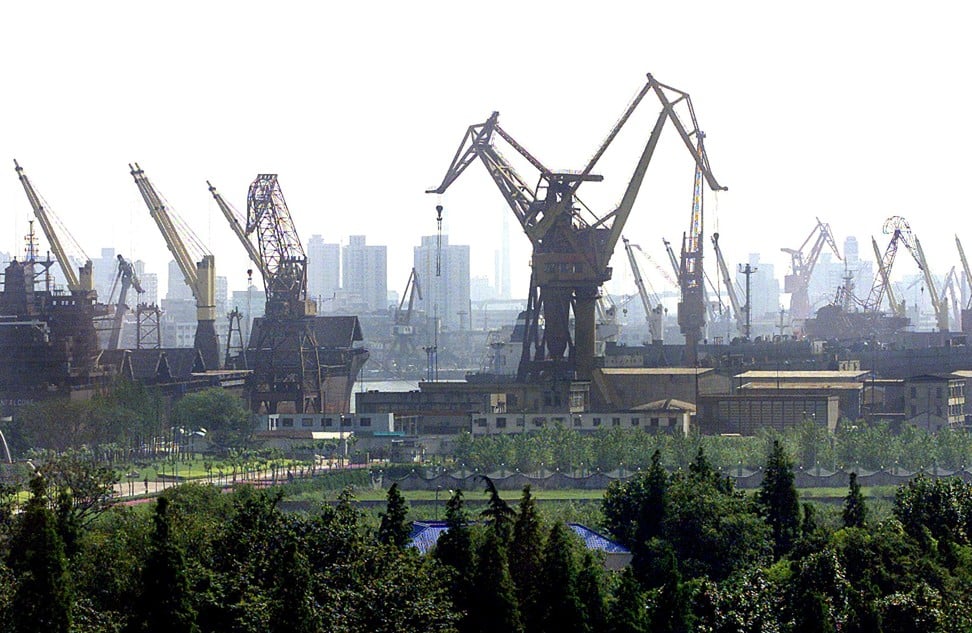
Rows of gantry cranes standing along the Huangpu River in Shanghai on 26 June 2002. A consortium of Chinese domestic banks provided a 17 billion yuan (US$2 billion) credit line toward the construction of Shanghai’s Yangshan deep-sea container port. Photo: AFP
Share:
Listed on the Shanghai exchange in 1997, Zhenhua’s shares have risen 41 per cent in the past 12 months, ending 2.1 per cent lower at 4.46 yuan on Friday. All three analysts who cover the stock recommend their clients either “buy” or “accumulate” the stock, expecting Zhenhua to be a major winner in China’s megaplan to build infrastructure along the old Silk Road in its Belt and Road Initiative (BRI).
Another major company that has emerged with China’s rising tide was China International Marine Containers (Group), or CIMC, a unit of the state-run conglomerate China Merchants Group. Established in 1980, the company took a little more than a decade to dominate the global industry, becoming the world’s largest maker of shipping containers since 1996.
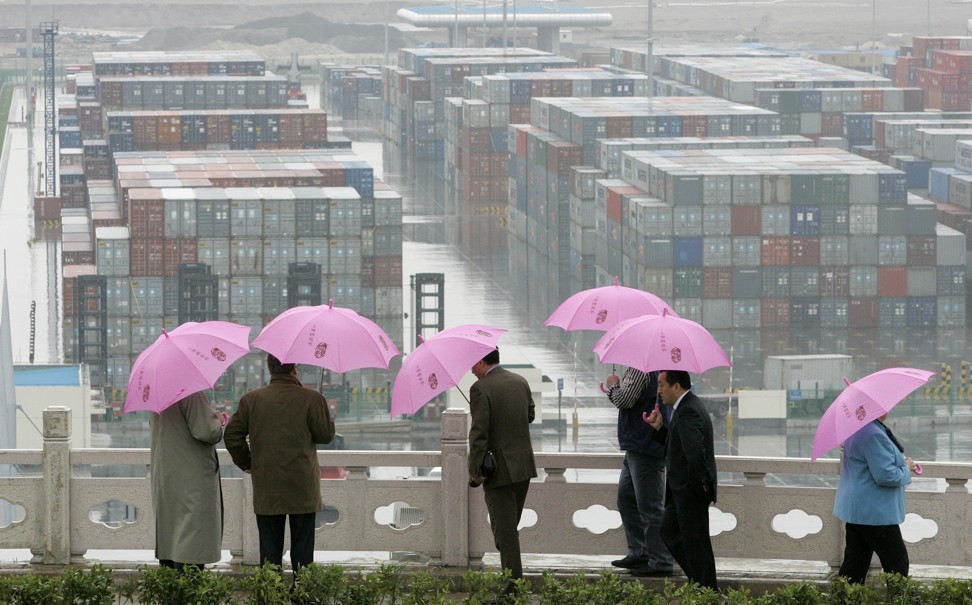
Visitors look at rows of containers at the Yangshan deep water port in Shanghai on April 6, 2006. Photo: AP
Share:
Net profit jumped 34.7 per cent to 3.38 billion yuan last year, while sales rose 22.5 per cent to 93.5 billion yuan.
The company has also diversified into land transport and vehicles, boarding bridges used in 200 airports around the world and even the development of industrial parks.
Guosen Securities said in a research report that CIMC would face lower profit margin this year amid rising raw material costs and fiercer competition from global rivals.
Its shares have risen 43.7 per cent in the past 12 months on the Shenzhen exchange to 15.20 yuan as of Friday.
Source: SCMP
Posted in Belt and Road Initiative (BRI), building frenzy, Chief Executive, China alert, China International Marine Containers Group (CIMC), containers, cranes, gantry cranes, Guan Tongxian, Hardangerfjord bridge, Huangpu River, International Marine Containers (Group), Las Vegas Ferris wheel, Norway, ports, Qingdao, quay cranes, San Francisco-Oakland Bay Bridge, Shanghai, Shanghai Zhenhua Heavy Industries, Shenzhen exchange, shipping containers, Silk Road, trade boom, Uncategorized, wharves, workaholic, world market, Yangshan deep-water port, Yangshan port, Zhenhua Port Machinery |
Leave a Comment »
05/04/2019
BEIJING, April 5 (Xinhua) — “The air and environment in the cemetery have been notably improved, with less people burning joss paper,” said Wang Fang, a tomb sweeper from Yinchuan, Ningxia Hui Autonomous Region.
This year’s Tomb Sweeping Day, which falls on Friday, witnesses more changes, as China has made various efforts to reform funeral traditions in recent years, and ecological burial and environmentally friendly tomb sweeping practices are increasingly popular.
GREENER BURIAL
In a tea garden in Hangzhou in east China’s Zhejiang Province, there stands a hidden cemetery where burial plots are built under tea trees in a bid to enlarge its green area as well as conserve land.
“It would be good to return to nature here after I pass away,” said a local resident surnamed Wu.
China has seen progress in ecological burials in recent years, especially in developed cities. The first model ecological cemetery of Beijing has been built in Babaoshan Revolutionary Cemetery, with a green coverage rate of nearly 90 percent.
Currently, ecological burials in first-tier cities, including Beijing, Shanghai and Guangzhou, takes up more than 20 percent of the total. It is expected that by 2020, the share of ecological burial across the country reach over 50 percent.
In addition, tomb sweeping practices have become greener. Most tomb sweepers would rather present flowers at tombstones than burn joss paper to pay tribute to their deceased families and friends.
On Tomb Sweeping Day, some cemeteries hold cultural activities, such as calligraphy and painting exhibitions as well as poetry recitals as an alternative to tomb sweeping.
LAND CONSERVATIVE
Besides the “tea garden burial,” other ecological burial methods in China include tree, flower, wall and sea burials.
Replacing traditional tombstones with trees and flower beds, putting urns on shelves in walls or just dropping ashes into the sea requires less or even no land.
“At first people said it was for those in financial difficulties to save money, but as time changes, the popularity of ecological burials have increased,” said Zhao Quansheng, manager of a Yinchuan-based cemetery.
“A customer told us that his father voluntarily asked for an ecological burial to conserve land,” Zhao said.
Non-profit cemeteries are also thriving in places of separate burial traditions. In Yishui County, east China’s Shandong Province, 110 non-profit cemeteries have been built, leading to conservation of large areas of land that otherwise would be utilized for burial sites.
Xue Feng, Party secretary of Yishui, said it used to take about 20 to 27 hectares of land to accommodate all the private tombs in the county, but now it only needs 10 percent of that.
LESS MONEY
China has beefed up funeral infrastructure and public services, with the number of funeral parlours and cemeteries reaching 1,760 and 1,420, respectively.
Since 2009, the Ministry of Civil Affairs has pushed forward fee reduction in basic public funeral services as well as other preferential policies, benefiting low-income groups. For example, commercial cemeteries in Chongqing, Gansu and Ningxia were required to set aside part of their burial sites as non-profits for those with financial difficulties.
“Now the whole funeral is free, including the urn and burial site, which is a great help for households with low incomes like us,” said Yuan Li, a rural resident from Yishui, where funeral services have been free of charge since 2017.
Xue said the fee-reduction policy could save the public nearly 200 million yuan (about 30 million U.S. dollars) annually.
The Ministry of Civil Affairs issued a pilot plan for funeral reform in 2017, and released guidelines with another 14 authorities on further reform in 2018.
“The funeral reforms help encourage fine and up-to-date practices and trends, and make contributions to land and ecological conservation,” said Ma Guanghai, sociology professor of Shandong University. “It is an important aspect of social progress.”
Source: Xinhua
Posted in Babaoshan Revolutionary Cemetery, Beijing, China alert, Chongqing, Funeral reform, Gansu, Guangzhou, Hangzhou, Ma Guanghai, Ministry of Civil Affairs, Ningshia, Ningxia Hui Autonomous Region, Party secretary of Yishui, Shanghai, sociology professor of Shandong University, tea garden burial, tomb sweeper, Uncategorized, Xue Feng, Yinchuan, Yinchuan-based cemetery, zhejiang province |
Leave a Comment »
21/03/2019
SHANGHAI, March 20 (Xinhua) — The number of licensed social workers in Shanghai has increased by over 10,000 from the end of 2017 to reach 27,344, according to data released by the Shanghai Civil Affairs Bureau.
As one of the first Chinese cities to pilot social work, Shanghai has witnessed healthy growth of professional social work organizations over the years, said Gu Donghui, president of the Shanghai Association of Social Workers.
There are currently 603 such organizations in the eastern metropolis, and many are offering more innovative services, according to Gu.
On Tuesday, Shanghai Children’s Hospital released six cartoon figures each representing a social worker in the hospital to help child patients be more familiar with them.
“Social workers in children’s hospital used to wear the same white gown as doctors, making it difficult for them to connect with the children,” said Niu Jun, head of the social work department of the hospital.
The number of licensed social workers has exceeded 440,000 in China, while registered volunteers have surpassed 100 million, according to the Ministry of Civil Affairs.
Source: Xinhua
Posted in China alert, Gu Donghui, Licensed, Shanghai, Shanghai Civil Affairs Bureau, social worker, Uncategorized |
Leave a Comment »
19/03/2019
HONG KONG (Reuters) – German wholesaler Metro AG has kicked off the sale of its China operations by calling for bids, in a deal that would value the business at between $1.5 billion (1.1 billion pounds) and $2 billion, two people with direct knowledge of the deal said.
Metro, which owns 95 stores in China and real estate assets in major cities such as Beijing and Shanghai, is planning to offload a majority stake in its China business, said the people.
The sale move is part of a global reorganisation of the wholesaler and comes as China’s wholesale and retail sectors are experiencing disruption from e-commerce players.
Metro’s China business could yet be valued at up to $3 billion, said two separate sources with direct knowledge of the matter.
Potential bidders include electronics retailer Suning Holdings Group, supermarket chain operators Wumart Stores Inc and Yonghui Superstores, according to three of the people.
Private equity firms such as Hillhouse Capital Group and Bain Capital are also studying a potential deal, they added.
Property makes up the bulk of the value in Metro’s China business, the people said, cautioning, however, that there is a large gap between price expectations among buyers and the seller.
A Metro spokeswoman in Germany said the company is in talks with potential partners concerning the further development of its China business but declined to comment on details of its exchanges with potential partners or the sale process.
Bain and Suning declined to comment. Yonghui and Hillhouse did not immediately respond to requests for comment. Calls to Wumart went unanswered.
First-round, non-binding bids are due in the second week of April, said two of the people. Citigroup and JPMorgan are advising Metro, the people said. The banks declined to comment.
Source: Reuters
Posted in Beijing, China alert, kicks off, Metro, Shanghai, Uncategorized, valuation |
Leave a Comment »
13/03/2019
JINAN, March 13 (Xinhua) — Transport authorities in east China’s Shandong Province announced that it plans to invest 162.2 billion yuan (about 24.2 billion U.S. dollars) on roads, railways, ports and airports this year.
The investment is aimed at building an integrated infrastructure network in the province, said Jiang Cheng, head of the provincial transport department.
Last year, fixed asset investment in Shandong’s transportation sector reached 160 billion yuan, among which 115.8 billion yuan was spent on roads, highways and waterways, up 28 percent year on year.
This year, 61 percent of the investment will be on roads, Jiang said.
Shandong has set a target for its expressway mileage to reach 7,400 km by 2020. By the end of this year, the total will hit 6,400 km, he said.
More roads, bridges, and stations will be built in rural areas, he added.
About 10 railway projects are under construction in the province this year, with a total planned investment of 32 billion yuan (4.7 billion dollars). Upon completion, the province will be better connected with big cities such as Beijing, Shanghai and Tianjin.
Shandong had a permanent population of 100.4 million at the end of 2018. It is one of the most populous provinces in China. An improved infrastructure network will better meet economic and social needs.
Source: Xinhua
Posted in airports, Beijing, bridges, China alert, head of the provincial transport department, Highways, infrastructure plan, Jiang Cheng, ports, railways, roads, rural areas, shandong province, Shanghai, stations, Tianjin, Transport authorities, Uncategorized, waterways, yuan |
Leave a Comment »
10/03/2019
- Foreign lifestyle experiences are becoming more popular as citizens seek to escape pollution, food and medicine safety worries and authoritarian government controls
- Citizens encountering more barriers to their dreams of travelling abroad, with severe limits on moving money overseas and restrictions on visiting foreign countries
Thailand, including the likes of Chiang Mai, the United States, Australia, Canada, New Zealand are popular destinations for Chinese families. Photo: Shutteratock
Xu Zhangle and her husband and their two children are a typical middle-class couple from Shenzhen, and along with 60 other Chinese families, they are going on an extended holiday to Thailand in July, where they hope to enjoy an immigrant-like life experience.
The family have paid a travel agent around 50,000 yuan (US$7,473) for the stay in Chiang Mai in the mountainous north of the country, including transport, a three-week summer camp for their daughters at a local international school, rent for a serviced apartment and daily expenses.
Zhangle loves Chiang Mai’s relaxed lifestyle and easy atmosphere and wants to live as a local for a month or even longer, instead of having to rush through a short-term holiday.
“It would not be just [tourist] travelling but rather a life away from the mainland.” she said.
Recently, upper middle-class citizens have increased their efforts to safeguard their wealth and achieve more freedom by spending more time abroad.
They have invested considerable amounts of money in overseas properties and applied for long-stay visas, although many of their attempts have ended in failure.
Chinese citizens are encountering more barriers to their dreams of travelling abroad, with severe limits on moving money overseas and restrictions on visiting foreign countries.
Still, growing anxieties about air pollution, food and medicine safety and an increasingly authoritarian political climate are pushing middle class families to look for new ways to circumvent the obstacles so they can live outside China.
Among the options, there is growing demand for sojourns abroad of a month or more, to enjoy a foreign lifestyle for a brief period to make up for the fact that their emigration dreams may have stalled.
“I think this is becoming a trend. Chinese middle-class families are facing increasing difficulties to emigrate and own homes overseas. On the other hand, they still yearn for more freedom, for a better quality of life than what is found in first-tier cities in China.
They are eager to seek alternatives to give themselves and their children a global lifestyle,” said Cai Mingdong, founder of Zhejiang Newway, an online tour and education operator in Ningbo, south of Shanghai.
“First, the availability of multiple-entry tourist visas and the sharp drop in air ticket prices have made it convenient and practical to stay abroad for from a few weeks to up to three months each year.”
Blacklist labels millions of Chinese citizens and businesses untrustworthy
Now, many well-to-do Chinese middle class families can get a tourist visa for five or even 10 years that allows them to stay in a number of countries — including the United States, Australia, Canada, New Zealand and other Asian countries — for up to six months at a time.
“In 2011, a round-trip air ticket from Shanghai to New Zealand cost 14,000 yuan (US$2,000), but now is about 4,000 (US$598),” added Cai.
This opens up the possibility for many middle-class families who are not eligible to emigrate, to live abroad for short periods of time.
Many wealthy Chinese middle class families can get a tourist visa for five or even 10 years that allows them to stay in several countries including the United States, Australia, Canada, New Zealand and other Asian countries, for up to six months at a time. Photo: AP
Chinese tourists made more than 140 million trips outside the country in 2018, a 13.5 per cent increase from the previous year, spending an estimated US$120 billion, according to the China Tourism Academy, an official research institute under the Ministry of Culture and Tourism.
“In [the Thai cities of] Bangkok and Chiang Mai, there are more and more Chinese who stay there to experience the local lifestyle, which is different from theirs in China. The life there is very different from that in China,” said Owen Zhu, who now lives in the Bangkok condo he bought last year.
“The freedom, culture and community are diversified. The quality of air, food and services are much higher than in first-tier cities in China, but the prices are more affordable.
“In Bangkok, in many international apartment complexes where foreigners live, the monthly rent for a one-bedroom [apartment] is about 2,000 (US$298) to 3,000 yuan.”
China’s richest regions are also home to the most blacklisted firms
A one-bedroom apartment in Shenzhen in southern China is twice as expensive, with rents continuing to rise rapidly.
There are global goods, and it is easy to socialise with different people from around the world,” Zhu added
“Many Chinese people around me, really, come to Thailand to live for a while and go back to China, but then come back again after a few months.”
Both Cai and Zhu said they discovered the new phenomenon among China’s middle class and decided it was a business opportunity.
Growing anxieties about air pollution, food and medicine safety and an increasingly authoritarian political climate are pushing middle class families to look for new ways to circumvent the obstacles so they can live outside China. Photo: AP
Zhu is in the process of registering a company in Bangkok and plans to build an online platform to service the needs of Chinese citizens living abroad who do not own property or have immigration status, especially members of the LGBT community.
Cai said dozens of Chinese families in the Yangtze River Delta had paid him to send their children to schools in New Zealand or Europe for around three or four weeks in the middle of the school year, while the parents rent villas in the area, with New Zealand and Toronto in Canada among the most popular destinations.
Last year, Zheng Feng, a single mother and freelance writer from Beijing, rented a small villa in Australia for a month for them, a friend and their children to escape Beijing’s pollution and experience life overseas.
“To be honest, I don’t have enough money to invest in a property or a green card in Australia. But it’s very affordable for me and my son to pay about 30,000 yuan (US$4,484) to live abroad for one or two months.” Zheng said.
China says 2018 growth was worth more than Australia’s whole GDP
Zheng will join the Xu family in Chiang Mai later this year and she is also planning a similar trip to England next year.
Zheng’s friend, Alice Yu, invested in an American EB-5 investor visa a few years ago, and plans to make one or two month-long trips abroad each year until her family is finally able to move to the United States.
Demand for the EB-5 investor visa in China seems to be waning given heightened uncertainty about the future of the programme and US immigration law in general under US President Donald Trump.
Approval for the visa can now take up to 10 years, resulting in a huge backlog that has further dampened interest and led to a significant dip in investment inflows into the US from foreign individuals.
A one-bedroom apartment in Bangkok can cost around bout 2,000 (US$298) to 3,000 yuan a month. Photo: AFP
“Maybe it will soon become standard for a real Chinese middle-class family to have the time and money to enjoy a long stay at a countryside villa overseas,” said Yu.
“Regardless of whether we can get a long-term visa for the United States, I want my children grow up in a global lifestyle and with more freedom than just growing up on the mainland. So do all wealthy and middle class Chinese families, I think.”
Karen Gao’s son started studying at an international school in Chiang Mai in June, at the cost of about 70,000 yuan (US$10,462) a year, after she quit her job as a public relations manager in Shenzhen and moved to Thailand on a tourist visa.
For better or worse? China’s complicated employment explained
“A few months each year for good air, good food and no censorship and internet control, but cheaper living costs compared to Beijing, it sounds like a really good deal to go,” said Gao, who has now been offered a guardian visa to accompany her son, who has already been given a student visa.
“In Shenzhen, I wasn’t able to get him into school because I had no [local] residence permit.
“It would be the best choice for us because we feel so uncertain and worried about investing and living in the mainland.”
Last year, Gao, like thousands of other private investors mostly middle class people living in first-tier cities, suffered significant losses when their investments in hotels and inns in Dali, Yunnan province, were demolished amid the local government’s campaign to curb pollution and improve the environment around Lake Erhai.
“We were robbed by the officials without proper compensation,” Gao said.
Source: SCMP
Posted in air pollution, air ticket prices, Alice Yu, Asian countries, Australia, authoritarian government, authoritarian political climate, Bangkok, barriers, Beijing, Blacklist labels, Cai Mingdong, canada, cheaper living costs, Chiang Mai, China alert, China Tourism Academy, chinese families, circumvent the obstacles, Citizens, compensation, condo, countryside villa overseas, daily expenses, Dali, daughters, destinations, easy atmosphere, emigrate overseas, experience life overseas, food and medicine safety, Foreign lifestyle experiences, founder, GDP, good air, good food, hotels and inns, husbands, immigrant-like life experience., international school, Karen Gao, LGBT community, local international school, long holidays abroad, long-stay visas, mainland, middle class familie, middle-class couple, Ministry of Culture and Tourism, mountainous north, moving money overseas, multiple-entry tourist visas, New Zealand, Ningbo, no censorship and internet control, official research institute, online tour and education operator, overseas properties, Owen Zhu, Pollution, relaxed lifestyle, residence permit, restrictions, serviced apartment, Shanghai, Shenzhen, short-term holiday, single mother and freelance writer, student visa, Thailand, Transport, travelling abroad, Uncategorized, United States, US immigration law, US President Donald Trump, wealthy families, Xu family, Xu Zhangle, yuan, Yunnan Province, Zhejiang Newway, Zheng Feng |
Leave a Comment »
07/03/2019
- Mainland has overestimated its nominal and real growth rates by about 2 full percentage points on average between 2008 to 2016
- Calculations suggest that the current nominal size of the economy is about 18 per cent lower than the official level of US$13.4 trillion at the end of 2018
The paper, “A Forensic Examination of China’s National Account”, was submitted to the “Brookings Papers on Economic Activity”, a journal published by the US-based Brookings Institute. Photo: EPA
China has overestimated its nominal and real growth rates by about 2 full percentage points on average between 2008 to 2016, with the miscalculation increasing each year, according to a new study published on Thursday.
The results indicate that the actual size of China’s economy at the end of 2018 was well below the government’s official estimate.
It also raises questions not only about the quality of economic data from the world’s second largest economy, but also the willingness of the government to take the steps necessary to accurately report information.
Using the study’s findings and applying them to government figures starting with the level of nominal gross domestic product (GDP) at the end of 2007 and the growth rate for 2008, calculations by the South China Morning Post show that the current nominal size of the Chinese economy is about 18 per cent lower than the official level of 90 trillion yuan (US$13.4 trillion) at the end of 2018.
The calculation assumes that the government’s official 2017 and 2018 nominal growth rates are overestimated by 2 percentage points, as suggested by the study.
Overestimates of growth in 2007 and previous years would further reduce the current size of the Chinese economy.
SCMP calculations show the adjusted nominal GDP level in China is about US$11.5 trillion using current exchange rates, still more than twice the size of Japan’s economy at US$5.16 trillion, but well below the economy of the United States at US$20 trillion.
The
paper, “A Forensic Examination of China’s National Account”,
was submitted to the “Brookings Papers on Economic Activity”, a journal published by the US-based think tank Brookings Institute twice a year on macroeconomic issues that are influencing the public policy debate. It will be formally presented in Washington on Thursday.
“Our estimates suggest that the extent by which local governments exaggerate local GDP accelerated after 2008, but the magnitude of the adjustment by the NBS did not change in tandem,” the authors said.
The study focuses primarily on nominal, non-inflation adjusted growth.
The paper comes at a sensitive time for Chinese policymakers, who are battling a slowing economy due to their campaign to reduce debt and risky lending as well as the effect of the trade war with the United States. The inflation-adjusted growth rate of 6.6 per cent last year was the slowest since 1990.
On Tuesday,
the government announced that it had lowered its growth target for 2019 to a range of 6 to 6.5 per cent, down from “about 6.5 per cent” last year due to the multiple headwinds the economy is facing. The government also announced new tax cuts and additional government spending to help stabilise growth.
The paper’s four authors – Chen Wei, Chen Xilu and Michael Song from the Chinese University of Hong Kong and Chang-Tai Hsieh from the University of Chicago – used a mix of economic indicators that are less likely to have been manipulated by authorities to prove that the National Bureau of Statistics (NBS) have not done enough to correct the errors in the data collected from provincial governments over the past decade.
Our estimates suggest that the extent by which local governments exaggerate local GDP accelerated after 2008, but the magnitude of the adjustment by the NBS did not change in tandem.Report authors
It has long been believed that local Chinese officials inflate figures reflecting their economic performance, which is closely tied to their opportunity for promotion. Since 2003, the NBS has produced a national gross domestic product (GDP) figure that is lower than aggregate provincial data after examining other data such as the census and land sales.
Local statistics bureaus generally overstate industrial output as a portion of overall production as well as the size of investment within overall expenditures, the two different approaches to calculating GDP, according to the paper. The methods of data collection are often the cause, for example, calculations of investment spending have been based purely on government reports on specific projects rather than on the financial statements of the investing firms involved.
One method that the authors used to probe the accuracy of the NBS’s adjustments was comparing the growth of official GDP with the growth of revenue from value-added tax (VAT), which taxes the value added to a product at each stage of production.
Local governments have fewer incentives to manipulate VAT revenue, since a large portion of it is eventually transferred to the central government, therefore overstating VAT would only increase fiscal revenue losses.
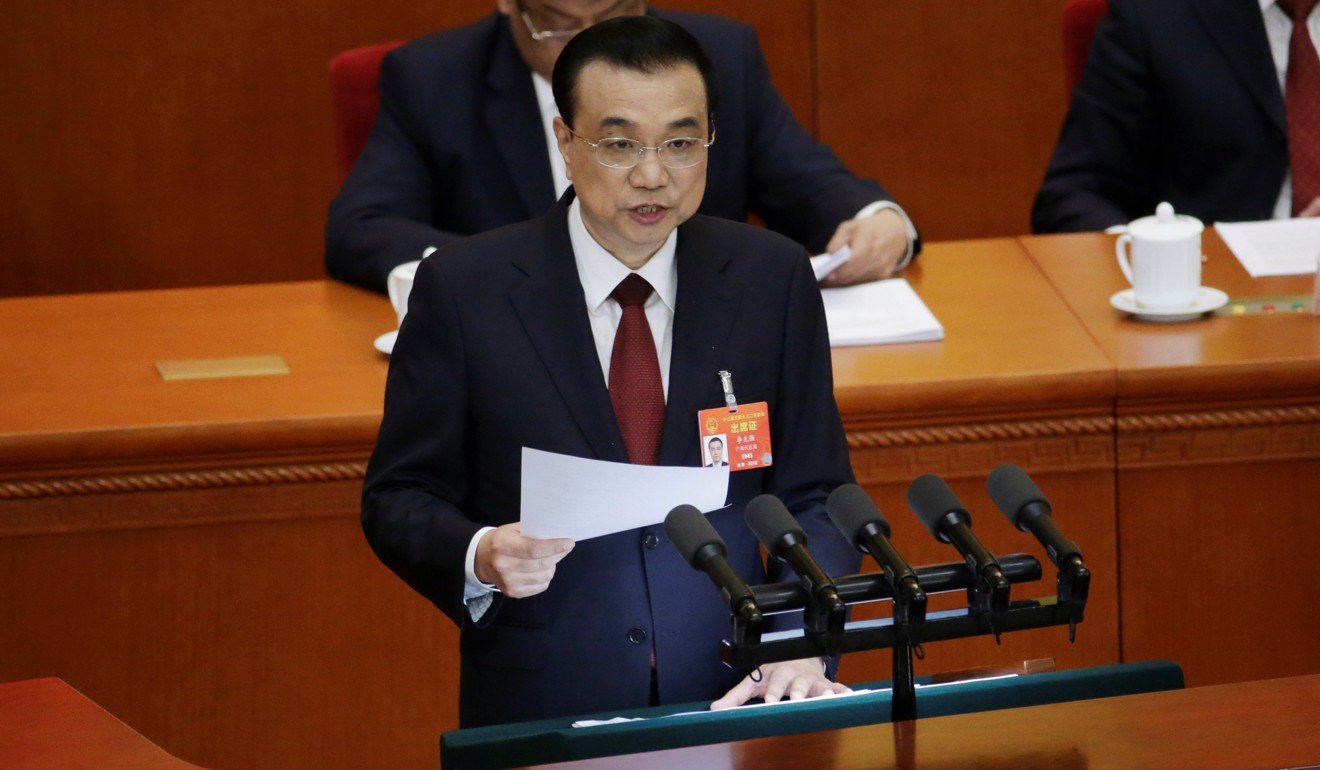
Premier Li Keqiang confirmed China had lowered its growth target for 2019 to a range of 6 to 6.5 per cent at the National People’s Congress on Tuesday. Photo:
Share:
The authors found that since 2008, the official growth rate for industry and other sectors exceeded their corresponding VAT growth rate, with the gap widening over the past decade, indicating that the government was overstating official GDP.
In other words, the overstatement of official growth has worsened since 2008 and NBS’s corrections have been increasingly inadequate to offset bottom-up data exaggerations.
A similar conclusion was drawn when the authors examined and adjusted the official GDP growth data with a set of alternative indicators, including satellite images showing lights at night, national tax revenue, electricity consumption, railway cargo traffic, as well as imports and exports that are less likely to be over-reported, although these proxies did not fully capture the growing importance of the service sector in the economy in recent years.
Among all 31 Chinese provinces, Guangdong, Zhejiang, Beijing, and Shanghai appeared to have the highest data quality, based on the economists’ own calculations that were privately confirmed by NBS officials. The worst performing provinces included Tianjin, Liaoning and Inner Mongolia, all of which have been exposed as having exaggerated economic data in recent years.
The economists suggested that the problem is that much of the underlying data needed to project GDP is outside the NBS’s control, even though the agency has been trying hard to collect local data itself. At the same time, the NBS is also in a weak political position to confront local political leaders to demand better data collection.
Although the NBS adjusts downwards local statistics, it does not report the adjusted local statistics, perhaps out of a desire to not confront powerful local leaders.Report authors
“Although the NBS adjusts downwards local statistics, it does not report the adjusted local statistics, perhaps out of a desire to not confront powerful local leaders,” the authors said.
Since September, the NBS has named and shamed local governments on its website for manipulating data, but it remains to be seen if local governments fall in line.
In a post in January, the NBS said it had passed 14 cases of data falsification on to local governments before February 2018 but that it had not been updated even though local officials are required by law to punish those responsible for manipulating data within six months after receiving a notice of a violation.
The NBS’s ability to fix China’s GDP data problem is bound by its limited political power, the authors indicated.
“There are three problems with China’s GDP. One is that it doesn’t necessarily measure the right thing. Two is statistical bias in the way data is collected. Three is really a macro policy problem by the government which should write down all the bad debt,” said Michael Pettis, professor of finance at Peking University.
“The NBS is only trying to fix the second problem.”
Source: SCMP
Posted in A Forensic Examination of China’s National Accoun, Beijing, census and land sale, Chang-Tai Hsieh, Chen Wei, Chen Xilu, China alert, Chinese province, Chinese University of Hong Kong, economic indicators, economic performance, electricity consumption, exaggerated, fiscal revenue losses, GDP data, Guangdong, Imports and exports, industrial output, inflate figures, Inner Mongolia, Liaoning, lights at night, Local statistics bureaus, mainland, Michael Pettis, Michael Song, National Bureau of Statistics (NBS), National People’s Congress, national tax revenue, nine years, nominal and real growth rates, overestimated, Peking University, percentage points, Premier Li Keqiang, professor of finance, provincial data, railway cargo traffic, Shanghai, south china morning post, The government, Tianjin, Uncategorized, University of Chicago, US-based Brookings Institute, value-added tax (VAT), Zhejiang |
Leave a Comment »
06/03/2019
- Issue a key demand made by US President Donald Trump as part of the ongoing US-China trade war
- China expected to pass new foreign investment law next week during National People’s Congress
Foreign direct investment in China amounted to US$135 billion in 2018, an increase of 3 per cent from a year earlier, according to Chinese government data. Photo: EPA
Beijing will make it illegal to force foreign investors to transfer their technology to Chinese partners while also lowering market barriers for foreign firms to enter the domestic market, a senior economic planning official said on Wednesday, highlighting an effort to lure overseas investment inflows.
China is expected to pass a new law next week intended to protect the interests of foreign investors, both as a response to demands from the United States that have formed part of the ongoing trade war negotiations, and to help shore up economic growth, which slowed last year to its lowest rate in 28 years.
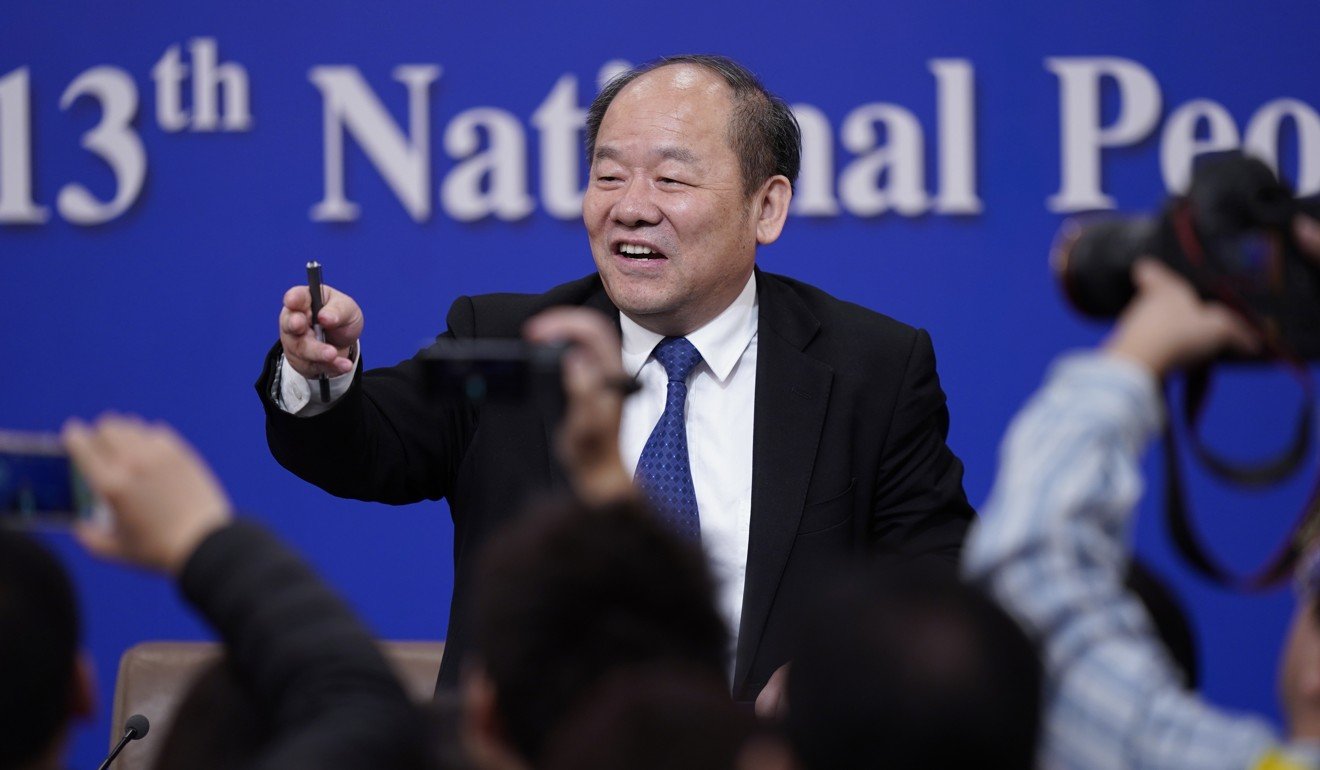
Foreign investors will be allowed to set up ventures in which they have full ownership, instead of being forced into joint ventures with local partners, in more industries, said Ning Jizhe, a vice-chairman of the National Development and Reform Commission, in Beijing on Wednesday during the National People’s Congress.
In addition, China will set up a special task force to facilitate “key” projects like electric-car maker Tesla’s new factory in Shanghai or BASF’s new chemical complex in Guangdong, both of which are solely owned by the foreign company.
China’s leadership has listed foreign investment as one of the six areas that it must “stabilise” in 2019, along with employment, growth, trade, domestic investment and market expectations.
Foreign direct investment in China amounted to US$135 billion in 2018, an increase of 3 per cent from a year earlier, according to Chinese government data.
But foreign investment into the world’s second biggest economy have slowed over last decade, which could deprive China of access to advanced technologies and marginalise the country in the development of future global supply chains.
Beijing is trying to lure more foreign capital and technology to support its plan to upgrade its manufacturing industries and boost the development of new, hi-tech sectors.
“China will roll out more opening-up measures in the agriculture, mining, manufacturing and service sectors, allowing wholly foreign-owned enterprises in more fields,” Ning said.
China law to protect intellectual property, ban forced tech transfer
Since December, China has been rushing to draft legislation for a new foreign investment law, a key clause of which prohibits local government’s from forcing transfer of technology in return for being allowed to conduct business in their jurisdictions.
The National People’s Congress is expected to endorse the new
“After passing the law, the government will take serious measures to obey and implement it,” Ning added.
He said that China will remove market entry restrictions for foreign investors to ensure that domestic and foreign firms “are treated as equals.”
Ning Jizhe, a vice-chairman of the National Development and Reform Commission. Photo: EPA
However, the jury is still out whether Beijing’s promises of fair treatment, market access and protection for intellectual property rights will be enough to generate a steady inflow of hi-tech investment.
The US has long complained that China has been unwilling to implement previous commitments under the World Trade Organisation to open up its market – allegation Beijing denies.
Shen Jianguang, chief economist at JD Digits, an arm of Chinese e-commerce firm JD.com, said restrictions on foreign investment will exist in China despite the government’s promises.
China’s domestic market remains large and attractive for some foreign investors, he said.
“Foreign investors are still very interested in the Chinese market, if the openness of the economy is sufficient,” Shen added.
Source: SCMP
Posted in agriculture, BASF, chemical complex, Chief economist, domestic market, E-commerce, forced technology transfer, foreign investors, Guangdong, illegal, JD Digits, JD.com, Manufacturing, market barriers, mining, National People’s Congress, Ning Jizhe, President Donald Trump, service sectors, Shanghai, Shen Jianguang, Tesla, Uncategorized, US-China trade war, vice-chairman of the National Development and Reform Commission, world trade organisation |
Leave a Comment »
05/03/2019
SHANGHAI, March 4 (Xinhua) — Authorities in Shanghai will begin recruiting volunteers for the second China International Import Expo (CIIE) next month.
Currently, around 1.28 million people have registered as volunteers via an online application, according to the Shanghai municipal committee of the Communist Youth League.
During the first expo, more than 34,000 volunteers took part in voluntary services in Shanghai, latest figures showed. Those born in the 1990s made up a majority of the volunteers. A total of 338 volunteers from Shanghai International Studies University provided interpretation, translation and concierge services during last year’s expo.
Last year, the first CIIE was held in Shanghai from Nov. 5 to 10 and concluded with deals worth about 57.83 billion U.S. dollars. The expo attracted 3,600 overseas companies.
The second CIIE will be held in November 2019.
Source: Xinhua
Posted in China alert, China International Import Expo (CIIE), Communist Youth League, Shanghai, Uncategorized |
Leave a Comment »




 CHINDIA ALERT: You'll be living in their world, very soon