05/07/2019
- Sichuan attraction was due to reopen for the summer but managers decided there was no point after it was stripped bare of its most celebrated feature
Visitors have been filmed breaking into the park in Sichuan to pick its lotus flowers. Photo: Red Star News
An ecological park in southwest China has been forced to close for the rest of the year because hundreds of tourists have stripped it of its celebrated lotus flowers.
Longqiao Cultural and Ecological Park in Sichuan province’s Lu county has been closed since late March for watercourse construction and was due to reopen soon.
Chinese university creates cherry blossom filter to save trees from tourists
The park is well known for its sprawling fields of lotus flowers that cover around 250,000 square metres (62 acres) – an area larger than New York’s Grand Central Terminal.
But since the start of the summer blossom season last month, hundreds of people have been breaking into the park to pick the flowers, forcing managers to keep it closed for the rest of the year.
The flower-pickers have prompted widespread condemnation. Photo: Red Star News
“We cannot control the tourists. We can just guarantee we’ve done our job well. We’ve put notes on the park gate and near the flower field and we have security personnel on patrol as well,” a member of staff surnamed Zhou said.
Zhou added that the construction work in the park was almost finished but that there was no point in reopening because there were virtually no flowers left.
Badly behaved Chinese tourists are back in Boracay
Around 200 to 300 people a day are still believed to be breaking into the park, and have forced management to increase the number of security patrols.
Videos and photos of people picking lotus flowers have been circulated widely online and drawn criticism.
Visitors pictured climbing the fence to break into the park. Photo: Thepaper.cn
“Even the highest fence cannot stop those without manners. It’s like you can never wake up a person that pretends to sleep,” one Weibo user commented.
“Only penalties can stop these greedy people,” said another.
Source: SCMP
Posted in Boracay, Chinese eco park, forced to stay shut, greedy people, Longqiao Cultural and Ecological Park, lotus flowers, New York’s Grand Central Terminal, penalties, sichuan province, strip away, tourists, Uncategorized, widespread condemnation |
Leave a Comment »
02/07/2019
BEIJING, July 1 (Xinhua) — Several provincial-level regions on Monday started implementing the “China VI” vehicle emission standards ahead of schedule to ramp up efforts against a major source of air pollution.
Sales and registrations of new vehicles in regions including Beijing, Shanghai, Tianjin, Hebei Province and Guangdong Province now have to comply with what is believed to be one of the world’s strictest rules on automobile pollutants.
In Beijing, all new buses and other heavy-duty diesel vehicles shall follow the new emission rules, while all new vehicles are expected to follow suit starting Jan. 1, 2020.
All existing vehicles on the roads are obliged to meet the previous “China V” emission standards.
According to official data, emissions from some 6.2 million vehicles were responsible for 45 percent of Beijing’s concentration of small, breathable particles known as PM2.5, a key indicator of air pollution.
Compared with the “National V” standards, the new rules demand substantially fewer pollutants such as nitrogen oxides and particulate matters and introduce limits on particulate number and ammonia.
The new emission standards were initially set to take effect nationwide from July 1, 2020. A three-year action plan on air pollution control released last July urged early implementation in major heavily-polluted areas, the Pearl River Delta region, Sichuan Province and Chongqing Municipality.
Automakers and the market have been preparing for the tougher rules.
Manufacturers have completed the development of most “China VI” models and have entered the stage of mass production and sales, said Liu Youbin, a spokesperson with the Ministry of Ecology and Environment.
By June 20, 99 light vehicle makers had unveiled environmental protection information of 2,144 new models and 60 heavy-duty vehicle manufacturers unveiled information on 896 green models, Liu said.
“The market has basically accomplished a smooth transition,” Liu said.
Li Hong, an official with the China Association of Automobile Manufacturers (CAAM), said roll-outs of “China VI” vehicles as well as preferential tax and fee policies would boost China’s auto market.
“The production and sales of new energy vehicles (NEVs) will continue its relatively fast growth,” Li said.
Car sales in China continued to drop in May, with about 1.913 million vehicles sold, down by 16.4 percent year on year, CAAM showed. Bucking the trend, sales of NEVs kept growing that month, edging up 1.8 percent year on year.
China saw robust sales growth of NEVs in the first four months this year with 360,000 NEVs sold, surging by 59.8 percent from the same period a year earlier.
Chinese authorities have announced that the tax exemptions on NEV purchases will continue through 2020 to boost the country’s green development and retain a strong domestic market.
Source: Xinhua
Posted in Beijing, Chongqing Municipality, guangdong province, Hebei province, implementing tougher vehicle emission standards, Ministry of Ecology and Environment (MEE), new energy vehicles (NEVs), Pearl River Delta, Shanghai, sichuan province, strictest rules on automobile pollutants, Tianjin, Uncategorized |
Leave a Comment »
01/07/2019
- Quake hit about 18km east of the town of Xunchang and 43km southeast of Yibin city
A train running on the Chengdu-Ya’an railway in Ya’an City, southwest China’s Sichuan Province. Photo: Xinhua
A shallow 5.3 earthquake shook China’s southwest Sichuan Province on Saturday, less than a week after
killed 13 and left dozens injured.
There were no immediate reports of casualties or damage from the earthquake that occurred at about 10.30pm at a depth of 10km (6 miles), according to the US Geological Survey.
It hit about 18km east of the town of Xunchang and 43km southeast of Yibin city, which has a population of some 250,000 people, USGS said.
An earthquake near Yibin struck on Monday, forcing more than 8,000 people to relocate as a large number of structures were damaged or collapsed.
State TV showed rescuers dragging survivors to safety from rubble, while cracks appeared in several roads and a major highway was closed.
Earthquakes regularly strike Sichuan, where a powerful 7.9-magnitude quake left 87,000 people dead or missing in 2008.
Source: SCMP
Posted in Chengdu-Ya'an railway, days after, deadly quake, same region, shakes, Shallow 5.3 earthquake, sichuan province, Southwest China, Uncategorized, US Geological Survey, Xunchang, Ya'an City, Yibin |
Leave a Comment »
01/07/2019
- Annual tests still an academic pressure cooker for students wanting to get into the nation’s top universities, despite efforts to change the system
- The gruelling exam is the sole criteria for admission to university in China
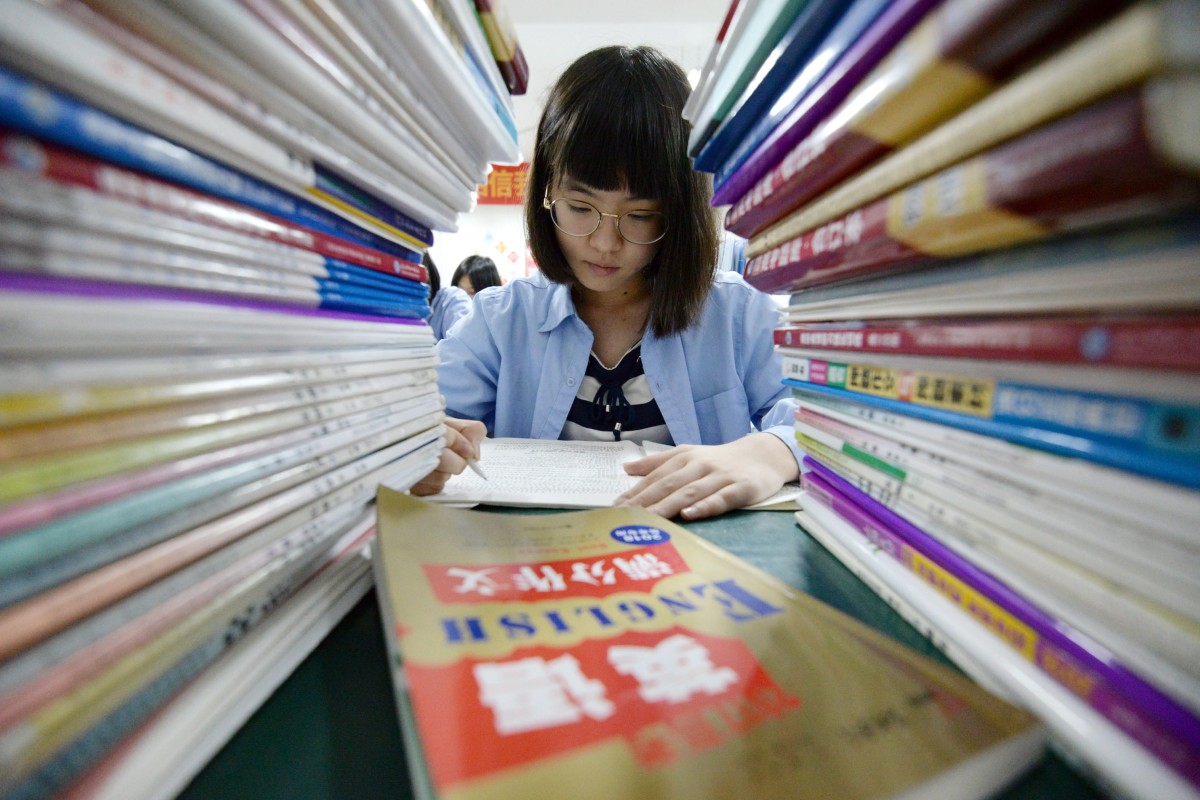
After months of study, China’s high school students are about to be put to the test in the annual “university entrance examinations which begin on Friday. Photo: EPA-EFE
For the past six months, the life of 18-year-old Shanghai student Xiao Qing has revolved around preparation for one of China’s annual rites of passage.
Every day at school, from 7.20am to 5.30pm, the final-year secondary school student in Changning district has studied previous test papers for the gaokao, officially known as the National Higher Education Entrance Examination.
“Sometimes I feel my bottom hurts from sitting for so many hours,” she said. “We feel like we are test machines.”
Xiao Qing will put all of that preparation to the real test from Friday, when over two to three days she will be among more than 10 million people trying to qualify for one of the spots at a Chinese university.
Most students get just one shot at the gaokao, the sole criteria for admission to university in China. It’s a gruelling process that has been criticised over the years as too focused on rote learning, putting too much pressure on students and privileging applicants living near the best universities.
Education authorities have gone some way to try to address these problems. In 2014, the Ministry of Education started letting students choose half of their subjects to introduce some flexibility into the system.
Apart from the compulsory subjects of Chinese, mathematics and English, students are now supposed to be able to choose any three of six other subjects: physics, chemistry, biology, politics, history and geography.
Previously, secondary school students had been split strictly into liberal arts or science majors in a system that was introduced in 1952 and revived in 1977 after being suspended during the Cultural Revolution.
Last go at exam success for China’s ‘gaokao grandpa’
Wen Dongmao, a professor from Peking University’s Graduate School of Education, said the changes expanded the opportunity for students to follow their interests.
“The new gaokao gives students plenty of choices of subjects to learn and to be evaluated on. I think people should choose which subject to learn based on what they are interested in,” Wen said.
“Gaokao reform is designed according to some methods by overseas universities, like American and Hong Kong schools. Its direction is right, but there will be inevitable problems brought by it.”
One of the problems is the uneven implementation of the changes throughout the country, with just 14 of China’s 31 provinces, municipalities and autonomous regions having introduced them.
In the eastern province of Anhui, for example, the reforms were supposed to go in effect from September last year but were postponed without reason, news portal Caixin.com reported.
The report quoted a teacher from Hefei No 1 Middle School in the provincial capital as saying the school was not ready for the changes.
Is the university entrance exam in China the worst anywhere?
“Shanghai and Zhejiang are economically advanced and we are not at that level,” he was quoted as saying. “It’s a big challenge for us to manage so many students’ choices of gaokao subjects.”
In neighbouring Jiangxi province, a high school history teacher said many places opposed the reform mainly “because of the shortage of resources”.
“It’s hard to roll out gaokao reform because we don’t have enough teachers or classrooms to handle the students’ various choices of subjects. Students can choose three out of six courses and that means there are 20 potential combinations,” the teacher was quoted as saying.
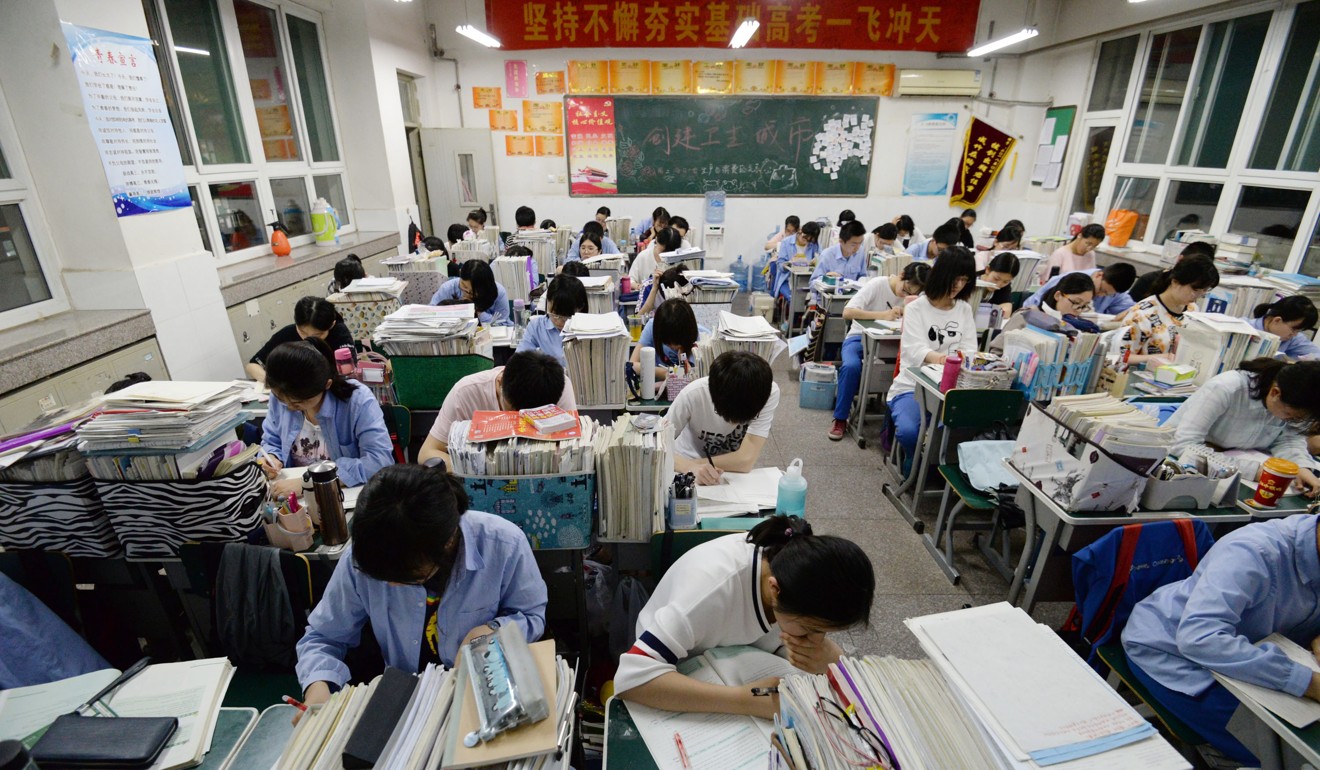
Chinese high school students study late into the night for the National Higher Education Entrance Examination. Photo: EPA-EFE
In addition, the system allows students to take the tests in more than one year and submit the highest scores when applying to universities.
“I heard from teachers in other provinces that students will take the tests of the selected subjects again and again for fear that other students will overtake them. That’s exhausting and will just put more burden on the students,” the Jiangxi teacher said.
He also said the gaokao process put extra pressure on teachers who feared the tests would push students to extremes. One of his students contemplated jumping from a bridge after she thought she had done poorly in the Chinese section of the exam.
“She called me, saying she felt it was the end of the world. I was shocked and hurried to the bridge,” he was quoted as saying. He spoke to her for more than an hour about before the girl came down, going on to get a decent score.
Critics also say the system is weighted in favour of students in bigger cities such as Beijing, Tianjin and Shanghai, home to the country’s top universities.
China private education industry is booming despite economic slowdown
Li Tao, an academic from the China Rural Development Institute at Northeast China Normal University in Changchun, Jilin province, said about 20-25 per cent of gaokao candidates from Beijing, Tianjin and Shanghai were admitted to China’s elite universities, compared with just 5 or 6 per cent in places like Sichuan, Henan and Guangdong.
Li said that was because the top universities were funded by local governments and gave preference to applicants from those areas.
“To make it fairer, the Ministry of Education has insisted over the years that elite universities cannot have more than 30 per cent of incoming students from the area in which it is located,” he said.
Despite these challenges, gaokao was still a “fair” way to get admitted to university in China, Li said.
“Gaokao is the fairest channel to screen applicants on such a large scale, to my knowledge,” he said. “It does not check your family background and every student does the same test paper [if they are from the same region]. Its score is the only factor in evaluating a university applicant.”
Fake nursing degree scandal prompts China-wide fraud check
In Shanghai, as the clock ticks closer to the gaokao test day, Xiao Qing said she was feeling the pressure.
She said she would keep up her test prep to ensure she got the score she needed to study art in Beijing.
“I am trying my utmost and don’t want to regret anything in the future,” she said.
At the same time, she is not pinning her entire life on it.
“Life is a long journey and it is not decided solely by gaokao,” she said.
“I don’t agree with my classmates that life will be easy after gaokao. I think we still need to study hard once we get to university.”
Source: SCMP
Posted in academic pressure cooker, Anhui province, Annual tests, Beijing, Biology, Caixin.com, Changchun, chemistry, China Rural Development Institute, China’s university hopefuls, Chinese, Crunch time, Cultural Revolution, English, gaokao, gaokao exam season, geography, Graduate School of Education, guangdong province, Hefei, Henan province, History, Jiangxi Province, Jilin, liberal arts, mathematics, Ministry of Education, National Higher Education Entrance Examination, nation’s top universities, Northeast China Normal University, Peking University, physics, Politics, Science, Shanghai, sichuan province, Tianjin, Uncategorized, zhejiang province |
Leave a Comment »
25/06/2019
BEIJING, June 25 (Xinhua) — China sent a new satellite of the BeiDou Navigation Satellite System (BDS) into space from the Xichang Satellite Launch Center in Sichuan Province at 2:09 a.m. Tuesday.
Launched on a Long March-3B carrier rocket, the satellite was sent to the inclined geosynchronous earth orbit. It is the 46th satellite of the BDS satellite family and the 21st satellite of the BDS-3 system.
The design of the BDS constellation is unique, including medium earth orbit (MEO), geostationary earth orbit (GEO) and inclined geosynchronous earth orbit (IGEO) satellites.
So far, there are already 18 MEO BDS-3 satellites, one GEO BDS-3 satellite, and two IGEO BDS-3 satellites sent into space.
After in-orbit tests, the new satellite will work with those BDS satellites already in orbits to improve the coverage and positioning accuracy of the system.
The new satellite and the carrier rocket were developed by the China Academy of Space Technology and the China Academy of Launch Vehicle Technology under the China Aerospace Science and Technology Corporation.
The launch was the 307th mission for the Long March series of carrier rockets.
Source: Xinhua
Posted in BeiDou Navigation Satellite System (BDS), BeiDou satellite, carrier rockets, China Academy of Launch Vehicle Technology, China Academy of Space Technology, China Aerospace Science and Technology Corporation, China alert, geostationary earth orbit (GEO), inclined geosynchronous earth orbit (IGEO), launches, Long March series, medium earth orbit (MEO), sichuan province, Uncategorized, Xichang Satellite Launch Center |
Leave a Comment »
05/06/2019
- The ‘success’ of China’s undemocratic model hides the continued exploitation of the poor, the destruction of faith communities and other victims who can’t speak out
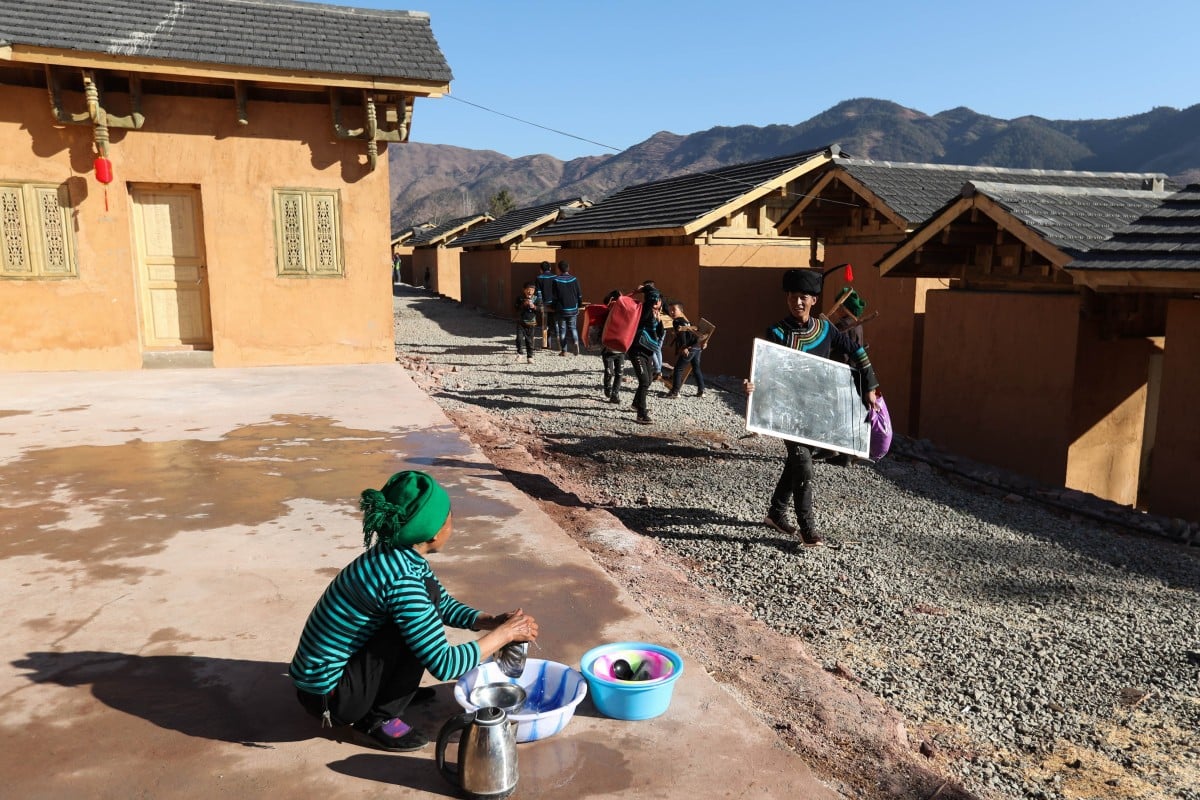
Villagers of the Yi ethnic group move into new houses for relocated residents from poor areas, in Zhaojue county in southwest China’s Sichuan province. Under President Xi Jinping, China has set the goal of eliminating poverty by 2020, but the state of the rural poor in remote counties may make the task difficult. Photo: Xinhua
I write to respond to Randy Lee’s letter, dated May 6, on the dilemma of democracy and prosperity in mainland China and Taiwan (“
”). Linear thinking of this kind has misled a lot of people on the issue.
Mr Lee compared the economies of China and Taiwan, saying the island’s economy is in a downturn and attributed this to its democratic governance. However, every nation faces regular ups and downs in its economy and there is no reason to place the blame on the so-called chaos of democracy.
The strong economy of China at present comes at a price, and the price is most likely paid by the individual citizens deprived of freedom of speech, businesses cultivating a “copying” culture to make a profit, as well as the
Xinjiang Uygurs: the human cost of China’s belt and road plan
Mr Lee acknowledges the widening
in the People’s Republic of China, so let’s not forget whole impoverished counties in the mainland. It is reported that the richest 100 individuals in China have more wealth than the poorest two-fifths of the country’s population combined. What does that mean? That such an economy and authoritarian government do not guarantee a more equally prosperous nation, but keep widening the gap between the poor and the rich, and even exploiting the poorest parts of the country. The image of a prosperous nation, as described by Mr Lee, is only an illusion – hiding its failure in protecting the poor from being exploited and ignored.
Source: SCMP
Posted in China’s rise, Chinese, Glowing tributes, ignore, no money or rights, People’s Republic of China, President Xi Jinping, sichuan province, Taiwan, Uncategorized, Xinjiang Uygurs, Yi ethnic group, Zhaojue county |
Leave a Comment »
04/06/2019
- Unveiled in Shandong, prototype will be a first step towards ground-breaking high-speed travel that will rival passenger jets, project engineer says
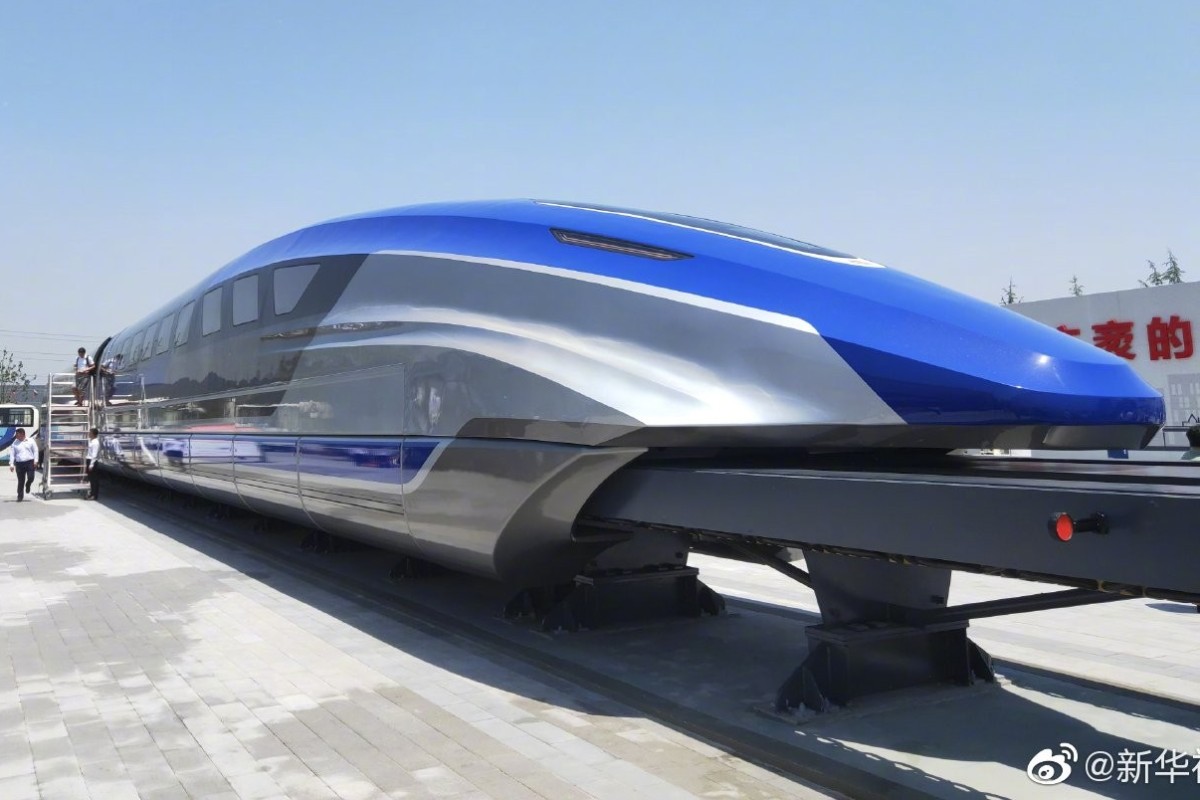
One possible future for rapid transport in China is unveiled in the form of a magnetic levitation train at Qingdao in Shandong province. Photo: Weibo
An experimental magnetic levitation train capable of travelling at 600km/h went on show at Qingdao in eastern Shandong province on Thursday, state media said.
Powerful electromagnets hold the Qingdao prototype at a thumb’s width from the rail, giving a quiet, smooth ride at speeds close to those involved in air travel, developers said.
While China operates the world’s fastest conventional train service, which can reach a speed of 350km/h, the Shanghai Maglev has been in commercial operation since the end of 2002 and can reach a top speed of 430km/h. It operates on one 30-kilometre (19-mile) line between two stations.
Ding Sansan, deputy chief engineer with developer the CRRC Sifang Corporation, said China achieved breakthroughs in maglev technology during the “three-year-battle” to build the new train that involved cooperation between more than 30 enterprises, universities and government research institutes.
The construction of a train body with ultra-lightweight, high-strength materials was a challenge, Ding said. Complex physical problems created by high speeds also needed to be solved in new ways if the Qingdao prototype was to reach peak performance.
China was a leader in technologies that included suspension, guidance, control and high-powered traction, Ding told Qingdao Daily.
“The test vehicle has been powered up and is in good order,” Ding was quoted by the newspaper as saying.
Chinese maglev train capable of travelling at 600km/h on track for 2020 test run as design completed
The prototype promised to eliminate the advantages jet passenger planes had over ground vehicles over a distance of 1,500km, he said.
Taking Beijing-to-Shanghai by plane as an example, Ding suggested: “It takes about four-and-a-half hours by plane including preparation time for the journey; about five-and-a-half hours by high-speed rail, and [would] only [take] about three-and-a-half hours by maglev.”
While earlier reports suggested the prototype was expected to begin full-scale testing by 2020, it was unclear what Thursday’s unveiling meant for this timetable.
China’s latest prototype high-speed maglev train factors the comfort of paying customers into its test operations. Photo: Weibo
More maglevs would join the development project in the coming months, the team leader was quoted as saying, while mass production of the technology was likely by 2021.
In contrast to the optimism of the team at Qingdao, Chen Peihong, professor of economics at Beijing Jiaotong University and a transport analyst, was more circumspect about the future of maglev trains.
“The market has to be bigger. Technology alone cannot make [the concept] a success,” she said.
Plane or train: as high-speed rail link connects Hong Kong to 44 mainland Chinese cities, what are cheapest and fastest ways to get where you are going?
Public transport relied heavily on economies of scale, Chen said. Chinese cities including Jinan, Hangzhou and Chongqing were considering maglev lines, but even the longest – from Jinan to Taian – would not exceed 50 kilometres.
Chen said that electromagnetic fields from maglevs were greater than those from the lines that powered high-speed trains, while environmental worries might keep maglevs out of densely-populated areas.
There was a debate in China in the early 2000s about the benefits of a developing a maglev compared to high-speed rail, researchers on that project said. Rail was preferred by the government because it was an established technology and one that was cheaper to realise.
By the end of last year, China’s high-speed rail network extended to most of the country at a distance in excess of 29,000 kilometres, according to government figures, twice as long as the rest of the world’s high-speed rail lines combined. Spain’s high-speed AVE network was the second-longest at 3,100km.
Elsewhere, researchers in Chengdu, Sichuan province, said a vehicle inside a vacuum tube powered by a superconductor coil from a maglev train – a hyperlink – was in development. They expected the vehicle to reach speeds in excess of 1,000km/h as air was pumped from the tube and resistance to the speeding object gradually eliminated.
Source: SCMP
Posted in air travellers, AVE network, Beijing Jiaotong University, Beijing-to-Shanghai, Chengdu, Chongqing, CRRC Sifang Corporation, down to earth, Hangzhou, High-speed rail, Hong Kong, Jinan, Jinan to Taian, maglev train, professor of economics, Qingdao, Qingdao Daily, shandong province, Shanghai Maglev, sichuan province, Spain, Uncategorized |
Leave a Comment »
28/05/2019
CHENGDU, May 27 (Xinhua) — Wang Yang, China’s top political advisor, underlined efforts to curb separatists, maintain normal religious practices and alleviate poverty during a visit to the Tibetan Autonomous Prefecture of Garze in Sichuan Province from Saturday to Monday.
Efforts should be made to guide religious people to willingly uphold the Party’s leadership, promote patriotism and correctly understand the relations between the law and religious doctrines, said Wang, a member of the Standing Committee of the Political Bureau of the Communist Party of China Central Committee and chairman of the Chinese People’s Political Consultative Conference National Committee.
He instructed local authorities to improve the management of temples and counteract infiltration by hostile foreign forces.
Wang also urged them to improve the quality of poverty relief projects, upgrade local infrastructure and public services and allocate more resources to the areas suffering absolute poverty.
Source: Xinhua
Posted in chairman of the Chinese People's Political Consultative Conference National Committee, counteract, Garze, hostile foreign forces, infiltration, local infrastructure, management of temples, poverty alleviation, poverty relief projects, Public services, religious work, sichuan province, Standing Committee of the Chinese People's Political Consultative Conference National Committee, Standing Committee of the Political Bureau of the Communist Party of China Central Committee, stresses, suffering absolute poverty, Tibetan Autonomous Prefecture, Tibetan-inhabited regions, Top political advisor, Uncategorized, wang yang |
Leave a Comment »
26/05/2019
Infrared camera image taken on April 20, 2019 shows an all-white giant panda in the Wolong National Nature Reserve in southwest China’s Sichuan Province. A rare all-white panda has been captured on cameras in the Wolong National Nature Reserve in southwest China’s Sichuan Province, the reserve management authorities said on Saturday. (Xinhua)
CHENGDU, May 25 (Xinhua) — A rare all-white panda has been captured on camera in the Wolong National Nature Reserve in southwest China’s Sichuan Province, the reserve management authorities said on Saturday.
The panda was captured in mid-April by an infrared camera about 2,000 meters above sea level in the wild, the authorities said.
The panda has no spots on its body and its eyes look red. It was crossing the forest at the time.
“Judging from pictures, the panda is an albino, one to two years old,” said Li Sheng, a researcher with Peking University and a specialist in bears, who studied the pictures.
The panda is a rare all-white individual in wild pandas, which showed that the albinism genes exist in the wild population of giant pandas in Wolong, he said.
“The panda looked strong and its steps were steady, a sign that the genetic mutation may not have quite impeded its life,” Li said, adding that the gender of the panda cannot be decided based on current data.
Albinism exists in different vertebrate species. The albino mutation inhibits melanin synthesis in animal’s body. Albino usually does not affect animal’s physical makeup and functions. It could make them easier to be discovered and more sensitive to direct sunlight, Li said.
The albino mutation is a recessive gene. Only when the parent pandas both carry such gene, can the baby show the albino traits.
If this white panda would mate with a normal panda, their first generation babies will still be black and white. But their babies, carrying the albino gene, will possibly give birth to all-white pandas if their partners also carry such genes, Li said.
In order to better protect the ecosystems, the Wolong nature reserve has been using infrared cameras to monitor the distribution and activities of wild animals in its seven demonstration areas.
Previously, some rare brown giant pandas were found in China’s Qinling Mountains. The cause of the brown fur color was also considered as genetic mutation by some researchers.
Source: Xinhua
Posted in albino, brown fur color, China alert, Peking University, Qinling Mountains, Rare all-white panda, sichuan province, spotted, Uncategorized, Wolong National Nature Reserve |
Leave a Comment »
21/05/2019
- Local officials have devised creative ways to cover up their lack of action on tackling pollution
- Falsified monitoring information risks directing clean-up efforts away from where they are needed most
China’s efforts to cut pollution are being hampered by local officials who use creative methods to hide their lack of action. Photo: Simon Song
China’s notoriously lax local government officials and polluting companies are finding creative ways to fudge their environmental responsibilities and outsmart Beijing’s pollution inspectors, despite stern warnings and tough penalties.
Recent audit reports covering the past two years released by the environment ministry showed its inspectors were frequently presented with fake data and fabricated documents, as local officials – sometimes working in league with companies – have devised multiple ways to cheat and cover up their lack of action.
Local governments have been under pressure to meet environmental protection targets since Chinese President Xi Jinping made it one of his top three policy pledges in late 2017.
The performance of leading local officials is now partly assessed by how good a job they have done in cleaning up China’s much depleted environment.
According to the reports released this month by the Ministry of Ecology and Environment, pollution inspectors have found evidence in a number of city environmental protection bureaus of made-up meeting notes and even instructions to local companies to forge materials.
Cao Liping, director of the ministry’s ecology and environment law enforcement department, said many of the cases uncovered were the result of officials failing to act in a timely manner.
“In some places, local officials didn’t really do the rectification work. When the inspections began, they realised they didn’t have enough time, so they made up material,” he said.
China ‘still facing uphill struggle in fight against pollution’
While some officials are covering up their inaction, others are actively corrupt. According to Guangzhou’s Southern Weekend, since 2012 there have been 63 cases involving 118 people in the environment protection system involved in corruption.
In the southwest province of Sichuan, 32 current and former employees of Suining city’s environmental protection bureau were found to be corrupt, raking in illicit income of 6.32 million yuan (US$900,000).
Fabricated notes
The party committee of Bozhou district in Zunyi, Guizhou province in southern China, was found to have fabricated notes for 10 meetings – part of the work requirement under the new environmental targets – in a bid to cheat the inspectors.
The case was flagged by the environment ministry in a notice issued on May 10, which said party officials in Bozhou lacked “political consciousness … the nature of this case is very severe”.
Watering down results
Environmental officials in Shizuishan, in the northwest region of Ningxia, tried to improve their results in December 2017 by ordering sanitation workers to spray the building of the local environmental protection bureau with an anti-smog water cannon.
The intention was to lower the amount of pollutant particles registered by the building’s monitoring equipment.
The scheme may have gone undetected if the weather had been warmer but the next day a telltale layer of ice covered the building and the chief and deputy chief of the environmental station in the city’s Dawokou district were later penalised for influencing the monitoring results.
1 million dead, US$38 billion lost: the price of China’s air pollution
Similar tactics were deployed in Linfen, in the northern province of Shanxi in March 2017, when former bureau chief Zhang Wenqing and 11 others were found to have altered air quality monitoring data during days of heavy pollution.
The monitoring machine was blocked and sprayed with water to improve the data and Zhang was also found to have paid another person to make sure the sabotage was not captured by surveillance camera.
According to the environment ministry, six national observation stations in Linfen were interfered with more than 100 times between April 2017 and March 2018. In the same period, monitoring data was seriously distorted on 53 occasions.
Zhang was sentenced to two years in prison in May last year for destroying information on a computer.
Bad company
A ministry notice on May 11 flagged collusion by local officials and businesses in Bozhou in southeast China’s Anhui province. Companies were given advance notice of environmental inspections, with instructions to make up contracts and temporarily suspend production in a bid to deceive inspectors.
In Henan province, central China, inspectors found a thermal power company had been using a wireless mouse to interfere with the sealed automatic monitoring system. They were able to remotely delete undesirable data, eliminating evidence of excessive emissions, and only provided selective data to the environment bureau.
Officials in Shandong reprimanded for failing to cut pollution
In another case, from 2017, an environmental inspection group in Hubei province, central China, found a ceramics company had been working with the data monitoring company to alter automatically collected data on sulphur dioxide emissions.
Criminal offence
Cao said that while the cheating by grass-roots officials was serious, the involvement of companies in falsifying data was a major issue that made the work of inspectors even harder.
“Some fraudulent methods are hidden with the help of high technology, so it’s hard for us to obtain evidence. Besides, the environment officials are not totally familiar with these technologies,” he said.
The environment ministry was working on solutions to the problems, he said, adding that falsifying monitoring data was now a criminal offence.
Fake data was particularly serious, he said, because it could directly influence his department’s decisions about where to deploy resources.
Wang Canfa, an environmental law expert at the China University of Political Science and Law, said the problem of fake data could damage the government’s credibility but also prevent it from taking measures in time.
“If the water pollution or air pollution is severe in one place but the local government has said it’s not a big deal, then the investment needed to control the situation might go to other places,” he said.
Zhou Ke, a professor of environment and resources law at Renmin University, said there was an incentive for local officials to cheat because the inspection results were directly related to their career prospects.
Officials ended up cheating or forging materials to protect local interests or their own political achievements, he said.
Source: SCMP
Posted in among, Anhui province, Bozhou, Cao Liping, ceramics company, China University of Political Science and Law, China’s green efforts, Chinese President Xi Jinping, corruption, ecology and environment law enforcement department, environmental law expert, fabricated, fake data, grass roots, Guangzhou, Guizhou Province, Henan province, hit, hubei province, Linfen, local governments, Ministry of Ecology and Environment, Ningxia Hui Autonomous Region, professor of environment and resources law, Renmin University, shandong province, Shizuishan, sichuan province, Southern Weekend, Suining city, Uncategorized, Wang Canfa, Zhang Wenqing, Zhou K, Zhou Ke, Zunyi |
Leave a Comment »








 CHINDIA ALERT: You'll be living in their world, very soon