Chindia Alert: You’ll be Living in their World Very Soon
aims to alert you to the threats and opportunities that China and India present. China and India require serious attention; case of ‘hidden dragon and crouching tiger’.
Without this attention, governments, businesses and, indeed, individuals may find themselves at a great disadvantage sooner rather than later.
The POSTs (front webpages) are mainly 'cuttings' from reliable sources, updated continuously.
The PAGEs (see Tabs, above) attempt to make the information more meaningful by putting some structure to the information we have researched and assembled since 2006.
BEIJING, April 28 (Xinhua) — China has achieved much progress in environmental protection and taken the lead in green development in recent years.
The efforts have exemplified Chinese President Xi Jinping’s proposal of “working together for a green and better future for all” made a year ago in his speech at the opening ceremony of the International Horticultural Exhibition 2019 Beijing.
In the keynote speech, Xi proposed a five-point initiative on promoting green development, namely pursuing harmony between man and nature, pursuing the prosperity based on green development, fostering a passion for nature-caring lifestyle, pursuing a scientific spirit in ecological governance, and joining hands to tackle environmental challenges.
China’s hard work on environment protection has paid off.
The ecological environment has improved significantly. People are enjoying more days of blue sky, cleaner water, and fertile land.
China has achieved the goal of zero growth of desertified land by 2030 set by the United Nations ahead of time. Besides, forest stock volume increased by 4.56 billion cubic meters compared with that of 2005.
Carbon dioxide emissions per unit of GDP in 2018 fell by 45.8 percent compared with that of 2005, exceeding the target set for the year.
After more than 30 years of hard work, the seventh largest desert in China, the Kubuqi Desert in Inner Mongolia Autonomous Region, once known as the “sea of death” difficult for birds to fly across, has turned into a green valley.
In January 2020, in a letter in reply to the student representatives of the Global Alliance of Universities on Climate, the Chinese president mentioned his thoughts about ecological civilization in his youth.
“Over four decades ago, I lived and worked for many years in a small village on the Loess Plateau in western China. Back then, the ecology and environment there was seriously damaged due to over-development and the local people were trapped in poverty as a result,” Xi wrote.
“This experience taught me that man and nature are a community of life and that the damage done to nature will ultimately hurt mankind,” said Xi.
China’s progress and achievements are recognized worldwide.
The ecological civilization and green development advocated by China are actually an endeavor to find a way to balance economic development and environmental protection, said John Cobb, Jr., the founding president of the Institute for Postmodern Development of China and member of the American Academy of Arts and Sciences.
Noting that the endeavor is a remarkable exploration, he expressed his hope that it will succeed.
China is on the right path in dealing with global climate change and achieving sustainable development, said Borge Brende, president of the World Economic Forum.
In addition to making efforts at home, China has also rolled out a series of measures to support the global combat against climate change.
In September 2015, ahead of the Paris climate change conference, Xi pledged a 20-billion-yuan (3-billion-U.S. dollars) China South-South Climate Cooperation Fund, which was dedicated to help other developing countries combat climate change.
China has also been fulfilling the obligations of the United Nations Framework Convention on Climate Change and the Paris Agreement, and achieved the goal of its intended nationally determined contributions submitted to the secretariat of the Climate Change Convention as scheduled.
UN Secretary-General Antonio Guterres expressed his appreciation for China’s important contributions to addressing the climate change and building a green “Belt and Road,” and said he expects China to continue to play a leading role in addressing the climate change and other issues.
“Lucid waters and lush mountains are invaluable assets,” a concept put forward by Xi in 2005 when he visited Yucun Village in southeast China’s Zhejiang Province as the party chief of the province, has become the motto of the Lao Ministry of Natural Resources and Environment.
In March 2020, when Xi returned to Yucun, he said that economic development should not be achieved at the expense of the ecological environment. To protect the ecological environment is to develop the productive forces, he said.
The history of civilizations shows that the rise or fall of a civilization is closely tied to its relationship with nature, Xi said at the International Horticultural Exhibition last year.
Only by joining hands can the humankind advance a global ecological civilization and march towards the bright future of building a community with a shared future for mankind.
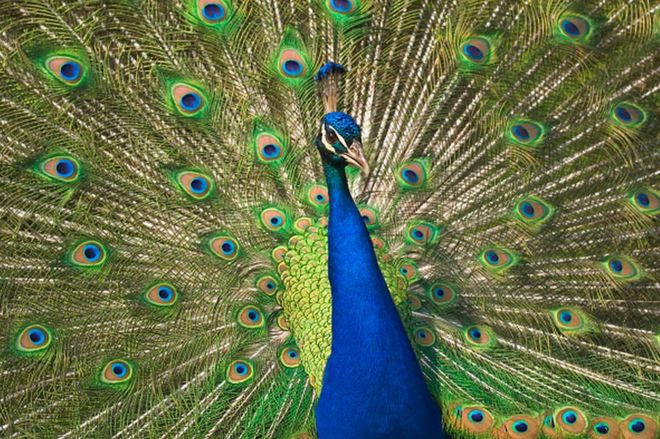
Image copyright GETTY IMAGESImage caption The population of peafowl, the national bird, has increased significantly
Much of India’s bird population has sharply declined in the past few decades, according to a major study.
The State of India’s Birds report relied on the observations of more than 15,000 birdwatchers who helped assess the status of 867 birds.
It found the greatest decline in the numbers of eagles, vultures, warblers and migrating shorebirds.
But the population of peafowl, the national bird, has increased significantly.
Hunting and habitat loss are the two main reasons behind the decline. “Collision” with electricity lines, according to the study, is a “prime current threat” to birds.
The report, the first comprehensive study of its kind, made two assessments: the drop in bird population over the last 25 years, and over the last five years.
“In the long-term trend assessment, there was appropriate data available only for 261 species, of which 52% had declined [in numbers]. For current trends, there was data only for 146 species, of which [numbers of] nearly 80% were declining,” said MD Madhusudan, co-founder of Nature Conservation Foundation.
It’s based on more than 10 million observations, drawn from sightings and meticulous notes made by professional birdwatchers.
The data was then collated on eBird, a global crowdsourced database that has real-time data on the distribution and abundance of birds.
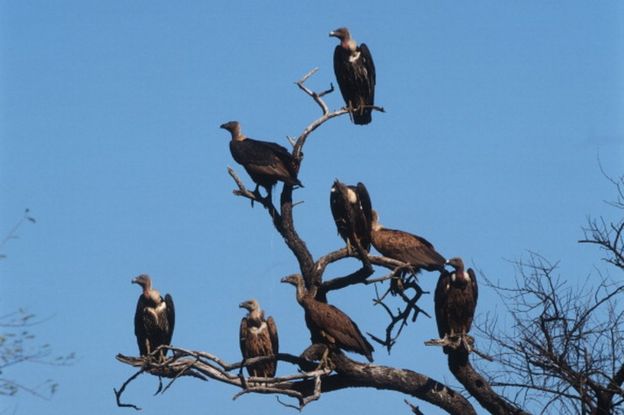
Image copyright GETTY IMAGESImage caption The population of the white-rumped vulture has gone down
Species that have suffered the highest declines
White-rumped Vulture
Richard’s Pipit
Indian Vulture
Large-billed Leaf Warbler
Pacific Golden Plover
Curlew Sandpiper
Species whose numbers have increased
Rosy Starling
Feral Pigeon
Glossy Ibis
Plain Prinia
Ashy Prinia
Indian Peafowl
(Source: State of India’s Birds report)
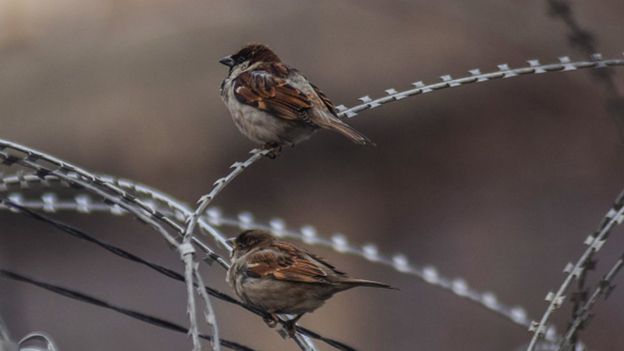
The local sparrow population was found to be roughly stable across the country as a whole, although it has fallen in the major cities.
The population of migratory birds – both long distance and within the subcontinent – also showed a “steep decline”.
The report says that since the 1990s, the numbers of several species of vultures, bustards and other specialist grassland birds have also drastically dropped.
Image copyright AFPImage caption The local sparrow population has declined in the major cities
Some species popular in the bird trade, such as the Green Munia, are at “dangerously low” numbers, the report says.
Meanwhile, the Jerdon’s Courser, an endangered bird with “mysterious” breeding habits which was rediscovered in 1986 after a gap of 138 years, has not been seen since 2008.
But there’s some good news as well: the Forest Owlet, another endangered bird that was rediscovered in 1997, is being reported from many more locations.
Image copyright AFPImage caption The study assessed the status of 867 birds in India
But the study cautions that its research is also a chronicle of “individual species”, and not a report on the “overall health of India’s birds, including those considered common and hence of little conservation concern”.
It says that “abundance trends” are available only for “a handful of bird species” – and mostly for those that tend to be “larger, more obviously threatened and relatively charismatic”.
“For the vast majority of Indian birds, lack of data has hindered a clear understanding of how they are faring. Such an understanding is vital for conservation science, management and policy.”





 CHINDIA ALERT: You'll be living in their world, very soon