30/09/2019
- Train trips, Xinjiang and chartered flights among the growing holiday trends, travel agents say
Destinations such as Dubrovnik, Croatia, are becoming more popular among mainland Chinese tourists, according to one of China’ s biggest travel services. Photo: AFP
Chartered flights and niche destinations such as Croatia and Malta are growing in popularity as Hong Kong falls out of favour for mainland Chinese holidaymakers over the National Day “golden week” break.
Japan has overtaken Thailand as the most searched overseas destination on the website of travel agency Ctrip, followed by Malaysia, the United States, Singapore, Australia, Macau, France, Italy and Russia.
Within the mainland places such as Beijing and Shanghai continued to be among the most popular searches but Urumqi, capital of Xinjiang Uygur autonomous region, is a fast-growing term, especially among people in Shanghai and Guangzhou.
“It could be that tourists want to see autumn leaves,” a Ctrip spokesman told the South China Morning Post.
October 1 marks the start of a week-long break on the mainland when millions of Chinese take the chance to travel. This year, an estimated 800 million people are expected to go on trips in China or overseas, about 10 per cent more than last year.
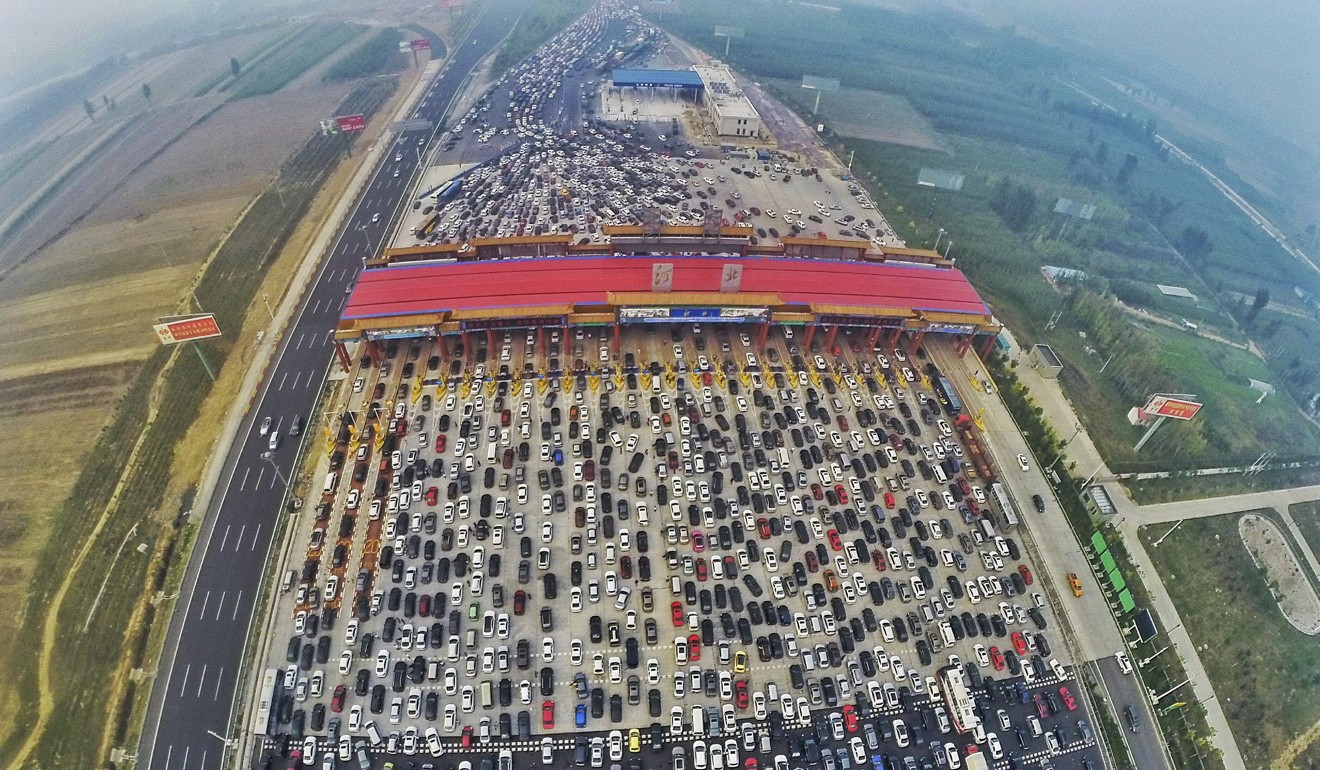
The country’s motorways are expected to be jammed from about 2pm on Monday, reaching a peak at around midnight, and again from 10am Tuesday, according to web mapping service Tencent Map.
China’s highways can expect heavy traffic as travellers head out for the holiday. Photo: Reuters
Ctrip said people heading overseas were increasingly seeking out new destinations, with bookings to places such as the Czech Republic, Austria, Croatia, Malta and Cambodia growing by 45 per cent this year.
“As Chinese people travel outside the country more and their experience of travel grows, many are more willing to go to smaller eastern European countries, such as the Czech Republic,” the spokesman said.
“Popular movies also have a strong influence. Many young people are willing to travel to see where films are shot, such as Croatia, one of the locations for Game of Thrones.”
Other noticeable trends this year include more people travelling with pets, by train and on chartered flights. The site said it sold 60 per cent more European train tickets and 10 times the number of train tickets for Japan for this golden week compared to last year.
The most popular routes in Asia were Tokyo to Kyoto in Japan, and Seoul to Busan in South Korea.
Hong Kong protests leave ‘golden week’ tourist boom in tatters as visitor arrivals during Chinese holiday period are set to be slashed by a third
Thousands of users also chose chartered flights, a service Ctrip introduced in September.
Ji Yu, head of chartered flights for Ctrip said most people thought chartered flights or helicopters were something only millionaires could afford, but in the internet age, they had become cheaper and more accessible.
“In the internet era, consumer needs vary from person to person, especially in terms of travel. There are products on the market to satisfy each customer’s personal needs.”
Among the more popular chartered routes were from Beijing or Shanghai to Tokyo, Bangkok, the Maldives and London.
More people are also going away for longer. Digital travel services giant Qunar said that 80 per cent of the travellers booking flights or hotels through its services were heading off for more than five days. And of those 41 per cent were travelling for more than a week.
Meanwhile, trips to Hong Kong have fallen substantially, with just 15 group tours expected to enter the city each day, down from 110 last year, according to the Travel Industry Council of Hong Kong.
Efforts to promote Hong Kong attractions have also increased in Shenzhen in recent weeks, with advertising videos scenic spots, popular restaurants and malls in Hong Kong playing on cross-border buses. Passengers can also get discounts to some stores and services with their tickets.
Source: SCMP
Posted in Australia, Austria, autumn leaves, Ürümqi, Bangkok, Beijing, booking flights, break, Busan, Cambodia, capital, chartered flights, Chinese travellers, consumer needs, cross-border buses, Ctrip, Czech Republic, destinations, European train tickets, France, Game of Thrones, golden week, growing, Guangzhou, helicopters, holiday trends, Hong Kong, internet age, internet era, Italy, jammed, Japan, Kyoto, London, Macau, Malaysia, Maldives, malls, Malta, millionaires, motorways, National Day, niche, October 1, person to person, Qunar, restaurants, Russia, scenic spots, Seoul, Shanghai, Shenzhen, Singapore, skip, south china morning post, South Korea, Tencent Map, Thailand, Tokyo, tourists, Train, Train trips, travel, Travel agency Ctrip, travel agents, travelling with pets, Uncategorized, United States, vary, Xinjiang, Xinjiang Uygur Autonomous Region |
Leave a Comment »
27/09/2019
- AirAsia X sells a quiet zone where children under 10 are not allowed, and Singapore-based Scoot has an ‘exclusive and silent’ section on its Boeing 787 Dreamliners barring kids under 12
- Japan Airlines’ move, however, appears to be new and the first example of an airline showing where a child will be sitting on a map
A father holds his daughter during a flight. Photo: Handout
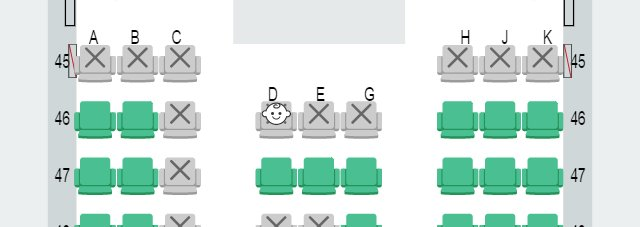
Some travellers would prefer to avoid sitting near a baby when they fly. Now, Japan Airlines has introduced a baby map to help.
The airline notes on its website that when passengers who travel with young children – those between the age of eight days and two years – choose on the site where they want to sit, a “child icon” will be displayed on those spots on the seat selection screen.
“This lets other passengers know a child may be sitting there,” the website says on its “baby travel support service” section.
The feature came to light when traveller Rahat Ahmed took an image of the baby map and thanked the airline on Twitter. “This really ought to be mandatory across the board,” he wrote.
It’s unclear when the carrier introduced the feature. Japan Airlines has not responded to questions about the origin of the child icon or which flights it is used on. It is listed under domestic flights on the website, along with information about child seats, strollers, changing tables and blanket rentals.
The airline also warns that the icon will not be shown if seats are booked as part of a tour, using award tickets or by some method other than the airline’s website.
It remains to be seen whether any other airlines offer the same type of guidance: “It’s a new one for us, that’s for sure,” says Natalie Arney, spokeswoman for the online travel agency Alternative Airlines. “To have that when you’re booking just, like, blows you away, really.”
Her site offers a list of airlines that boast child-free zones, all of which are in Asia. They include the budget carriers AirAsia X, which sells a quiet zone where children under 10 are not allowed to sit, and Scoot, which advertises a “ScootinSilence” zone on its Boeing 787 Dreamliners. The Singapore-based carrier promises an “exclusive and silent cabin (no kids under 12 allowed here)” in the section.
This lets other passengers know a child may be sitting there … This really ought to be mandatory Rahat Ahmed
“It’s just being able to have somewhere quiet where you can sleep or where you can get on with your work and stay away from children,” Arney says.
Tracy Stewart, content editor of TripAdvisor’s family travel site Family Vacation Critic, said in an email that Japan Airlines’ move was new and the first example he’d seen of an airline showing where a child would be sitting on a map. He said quiet zones were not likely to become a global trend.
“You’ll likely never see something similar in the US for fear of backlash,” he said.
Source: SCMP
Posted in AirAsia X, Alternative Airlines, avoid, Babies, backlash, Dreamliners, Family Vacation Critic, follow suit, Japan Airlines, offers, on board, others, passengers, Scoot, seat map, Singapore, TripAdvisor, Uncategorized, US |
Leave a Comment »
26/09/2019
- An increasing proportion of young people no longer willing to wait tables in China as restaurant owners look to new technology for answers
Catering robots developed by Pudu Tech, the three-year-old Shenzhen start-up, have been adopted by thousands of restaurants in China, as well as some foreign countries including Singapore, Korea, and Germany. Photo: Handout
Two years ago, Bao Xiangyi quit school and worked as a waiter in a restaurant for half a year to support himself, and the 19 year-old remembers the time vividly.
“It was crazy working in some Chinese restaurants. My WeChat steps number sometimes hit 20,000 in a day [just by delivering meals in the restaurant],” said Bao.
The WeChat steps fitness tracking function gauges how many steps you literally take and 20,000 steps per day can be compared with a whole day of outdoor activity, ranking you very high in a typical friends circle.
Bao, now a university student in Hangzhou, Zhejiang province, quit the waiter job and went back to school.
“I couldn’t accept that for 365 days a year every day would be the same,” said Bao.
“Those days were filled with complete darkness and I felt like my whole life would be spent as an inferior and insignificant waiter.”
Olivia Niu, a 23-year-old Hong Kong resident, quit her waiter job on the first day. “It was too busy during peak meal times. I was so hungry myself but I needed to pack meals for customers,” said Niu.
Being a waiter has never been a top career choice but it remains a big source of employment in China. Yang Chunyan, a waitress at the Lanlifang Hotel in Wenzhou in southeastern China, has two children and says she chose the job because she needs to make a living.
Catering robots developed by Pudu Tech, the three-year-old Shenzhen start-up. Photo: Handout
Today’s young generation have their sights on other areas though. Of those born after 2000, 24.5 per cent want careers related to literature and art. This is followed by education and the IT industry in second and third place, according to a recent report by Tencent QQ and China Youth Daily.
Help may now be at hand though for restaurants struggling to find qualified table staff who are able to withstand the daily stress of juggling hundreds of orders of food. The answer comes in the form of robots.
Japan’s industrial robots industry becomes latest victim of the trade war
Shenzhen Pudu Technology, a three-year-old Shenzhen start-up, is among the tech companies offering catering robots to thousands of restaurant owners who are scrambling to try to plug a labour shortfall with new tech such as machines, artificial intelligence and online ordering systems. It has deployed robots in China, Singapore, Korea and Germany.
With Pudu’s robot, kitchen staff can put meals on the robot, enter the table number, and the robot will deliver it to the consumer. While an average human waiter can deliver 200 meals per day – the robots can manage 300 to 400 orders.
“Nearly every restaurant owner [in China] says it’s hard to recruit people to [work as a waiter],” Zhang Tao, the founder and CEO of Pudu tech said in an interview this week. “China’s food market is huge and delivering meals is a process with high demand and frequency.”
Pudu’s robots can be used for ten years and cost between 40,000 yuan (US$5,650) and 50,000 yuan. That’s less than the average yearly salary of restaurant and hotel workers in China’s southern Guangdong province, which is roughly 60,000 yuan, according to a report co-authored by the South China Market of Human Resources and other organisations.
As such, it is no surprise that more restaurants want to use catering robots.
According to research firm Verified Market Research, the global robotics services market was valued at US$11.62 billion in 2018 and is projected to reach US$35.67 billion by 2026.
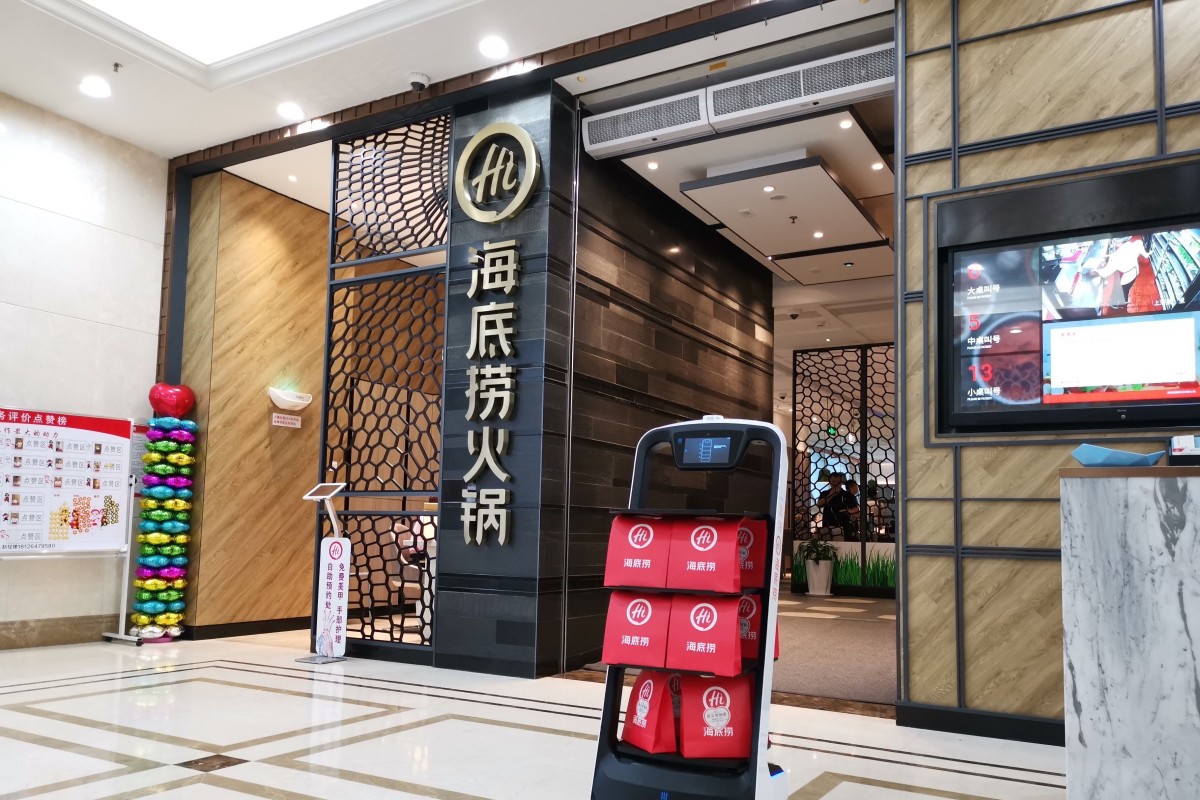
Haidilao, China’s top hotpot restaurant, has not only adopted service robots but also introduced
a smart restaurant with a mechanised kitchen in Beijing last year. And in China’s tech hub of Shenzhen,
it is hard to pay without an app as most of the restaurants have deployed an online order service.
Can robots and virtual fruit help the elderly get well in China?
China’s labour force advantage has also shrank in recent years. The working-age population, people between 16 and 59 years’ old, has reduced by 40 million since 2012 to 897 million, accounting for 64 per cent of China’s roughly 1.4 billion people in 2018, according to the national bureau of statistics.
By comparison, those of working age accounted for 69 per cent of the total population in 2012.
Other Chinese robotic companies are also entering the market. SIASUN Robot & Automation Co, a hi-tech listed enterprise belonging to the Chinese Academy of Sciences, introduced their catering robots to China’s restaurants in 2017. Delivery robots developed by Shanghai-based Keenon Robotics Co., founded in 2010, are serving people in China and overseas markets such as the US, Italy and Spain.
Pudu projects it will turn a profit this year and it is in talks with venture capital firms to raise a new round of funding, which will be announced as early as October, according to Zhang. Last year it raised 50 million yuan in a round led by Shenzhen-based QC capital.
To be sure, the service industry is still the biggest employer in China, with 359 million workers and accounting for 46.3 per cent of a working population of 776 million people in 2018, according to the national bureau of statistics.
And new technology sometimes offers up new problems – in this case, service with a smile.
“When we go out for dinner, what we want is service. It is not as simple as just delivering meals,” said Wong Kam-Fai, a professor in engineering at the Chinese University of Hong Kong and a national expert appointed by the Chinese Association for Artificial Intelligence. “If they [robot makers] can add an emotional side in future, it might work better.”
Technology companies also face some practical issues like unusual restaurant layouts.
“Having a [catering robot] traffic jam on the way to the kitchen is normal. Some passageways are very narrow with many zigzags,” Zhang said. “But this can be improved in future with more standardised layouts.”
Multi-floor restaurants can also be a problem.
Dai Qi, a sales manager at the Lanlifang Hotel, said it is impossible for her restaurant to adopt the robot. “Our kitchen is on the third floor, and we have boxes on the second, third, and fourth floor. So the robots can’t work [to deliver meals tdownstairs/upstairs],” Dai said.
But Bao says he has no plans to return to being a waiter, so the robots may have the edge.
“Why are human beings doing something robots can do? Let’s do something they [robots] can’t,” Bao said.
Source: SCMP
Posted in ability, answers, Artificial intelligence, artificial intelligence (AI), Beijing, careers, catering robot, China alert, China Youth Daily, Chinese Academy of Sciences, Chinese University of Hong Kong, complain, Consumer, education, foreign countries, founder and CEO, Germany, global robotics services market, guangdong province, Hangzhou, hard to recruit, Hong Kong resident, hundreds of orders, increasing proportion, industrial robots industry, IT industry, Japan, juggle, Korea, labour shortfall, Lanlifang Hotel, latest victim, literature and art, machines, Multi-floor restaurants, national bureau of statistics, National Bureau of Statistics (NBS), new technologies, new technology, online ordering systems, plug, problem, Pudu Tech, restaurant owners, Shanghai, Shenzhen, Shenzhen Pudu Technology, Singapore, smart restaurant, start up, table number, Tech Companies, tencent qq, top hotpot restaurant, trade war, traffic jams, Uncategorized, venture capital firms, Verified Market Research, wait tables, WeChat, Wenzhou, willing, young people, Zhang Tao, zhejiang province, zigzags |
Leave a Comment »
24/09/2019
- Shanghai’s authorities have doubled the free-trade zone to 240 square kilometres by including part of Lingang, a previously untapped area linked to the Yangshan deep water port
- The expansion reflected the city’s renewed efforts to build a free marketplace that can rival regional business hubs such as Hong Kong and Singapore
Aerial photo taken on March 9, 2017 shows the Shanghai free trade zone (FTZ). Photo: Xinhua
Shanghai’s ambitious plan to turn Lingang into a Hong Kong-style free-trade port has yet to impress European companies due to a slow pace of enforcement with a series of liberalisations subject to Beijing’s approval.
The European Union Chamber of Commerce in Shanghai said on Tuesday that the business lobby group was expecting concrete measures to be implemented at the 119.5-square kilometre newly expanded free-trade zone (FTZ), which would whet European companies’ investment appetite, but it also vented dismay towards the slow progress.
It was advisable for the government to carry out planned reforms sooner to convince foreign investors of the golden opportunities inside the zone, said Carlo Diego D’Andrea, the chamber’s Shanghai chairman, who is also vice-president of the EU business chamber in China.
“After so many years [of waiting], we would like to see reform happen soon, not just the talks,” he said in an interview with South China Morning Post.
Shanghai doubled the size of the free-trade zone last month to about 240 sq km by including part of Lingang, a previously untapped area that is linked to the
Yangshan deep water port.
The expansion reflected the city’s renewed efforts to build a free marketplace that can rival regional business hubs such as Hong Kong and Singapore.
Where is China’s Silicon Valley? SCMP Graphics
Hong Kong’s ongoing street protests against a controversial extradition bill have wreaked havoc on the city’s economy and brought an
opportunity to mainland metropolises such as Shanghai and Shenzhen to catch up with the special administrative region.
Shanghai plans to impose zero tariffs on imported goods inside the Lingang FTZ, but the reform measures cannot be implemented unless the General Administration of Customs gives a green light.
Shanghai’s city government had proposed a series of incentives aimed at building Lingang into a world-class investment magnet, the free-trade zone’s deputy director Wu Wei said at a Friday press conference, without elaborating on when the policies might be endorsed by the relevant ministry-level authorities.
Professor Zhou Zhenhua, president of Shanghai Academy of Global Cities, said the central government was still cautious of taking drastic steps in quickly liberalising the Lingang FTZ amid worries of rampant capital and cargo flows.
US bestselling electric vehicle maker Tesla has built its Gigafactory 3 at the Lingang FTZ after it secured an approval from Beijing to establish a wholly owned assembly plant late last year.
The approval for the first wholly-owned foreign car factory on mainland China coincided with a sales drop in the country’s automobile market, the first contraction in nearly three decades.
“Why could not you have opened the market before when the market was booming,” said D’Andrea.
He said that the timing of scrapping the foreign ownership cap amid the first negative growth of the domestic car market in three decades was not enough to show Beijing’s determinations in drawing overseas funds.
Beijing has been harping on its resolution in further opening up the markets to foreign businesses as a way of amid the US-China trade war that began in 2018.
Source: SCMP
Posted in Central government, China’s Silicon Valley, electric vehicle maker, embracing, European firms, European Union Chamber of Commerce, expanded, expansion, foreign car factory, free marketplace, free trade zone (FTZ), Gigafactory, Hong Kong, Lingang, lookout, Mainland China, regional business hubs, rival, Shanghai, Shanghai Academy of Global Cities, Shenzhen, Singapore, south china morning post, tangible incentives, Tesla, Uncategorized, US-China trade war, Yangshan deep-water port, zero tariffs |
Leave a Comment »
15/09/2019
- An increasing proportion of young people no longer willing to wait tables in China as restaurant owners look to new technology for answers
Catering robots developed by Pudu Tech, the three-year-old Shenzhen start-up, have been adopted by thousands of restaurants in China, as well as some foreign countries including Singapore, Korea, and Germany. Photo: Handout
Two years ago, Bao Xiangyi quit school and worked as a waiter in a restaurant for half a year to support himself, and the 19 year-old remembers the time vividly.
“It was crazy working in some Chinese restaurants. My WeChat steps number sometimes hit 20,000 in a day [just by delivering meals in the restaurant],” said Bao.
The WeChat steps fitness tracking function gauges how many steps you literally take and 20,000 steps per day can be compared with a whole day of outdoor activity, ranking you very high in a typical friends circle.
Bao, now a university student in Hangzhou, Zhejiang province, quit the waiter job and went back to school.
“I couldn’t accept that for 365 days a year every day would be the same,” said Bao. “Those days were filled with complete darkness and I felt like my whole life would be spent as an inferior and insignificant waiter.”
Olivia Niu, a 23-year-old Hong Kong resident, quit her waiter job on the first day. “It was too busy during peak meal times. I was so hungry myself but I needed to pack meals for customers,” said Niu.
Being a waiter has never been a top career choice but it remains a big source of employment in China. Yang Chunyan, a waitress at the Lanlifang Hotel in Wenzhou in southeastern China, has two children and says she chose the job because she needs to make a living.
Catering robots developed by Pudu Tech, the three-year-old Shenzhen start-up. Photo: Handout
Today’s young generation have their sights on other areas though. Of those born after 2000, 24.5 per cent want careers related to literature and art. This is followed by education and the IT industry in second and third place, according to a recent report by Tencent QQ and China Youth Daily.
Help may now be at hand though for restaurants struggling to find qualified table staff who are able to withstand the daily stress of juggling hundreds of orders of food. The answer comes in the form of robots.
Japan’s industrial robots industry becomes latest victim of the trade war
Shenzhen Pudu Technology, a three-year-old Shenzhen start-up, is among the tech companies offering catering robots to thousands of restaurant owners who are scrambling to try to plug a labour shortfall with new tech such as machines, artificial intelligence and online ordering systems. It has deployed robots in China, Singapore, Korea and Germany.
With Pudu’s robot, kitchen staff can put meals on the robot, enter the table number, and the robot will deliver it to the consumer. While an average human waiter can deliver 200 meals per day – the robots can manage 300 to 400 orders.
“Nearly every restaurant owner [in China] says it’s hard to recruit people to [work as a waiter],” Zhang Tao, the founder and CEO of Pudu tech said in an interview this week. “China’s food market is huge and delivering meals is a process with high demand and frequency.”
Pudu’s robots can be used for ten years and cost between 40,000 yuan (US$5,650) and 50,000 yuan. That’s less than the average yearly salary of restaurant and hotel workers in China’s southern Guangdong province, which is roughly 60,000 yuan, according to a report co-authored by the South China Market of Human Resources and other organisations.
As such, it is no surprise that more restaurants want to use catering robots.
According to research firm Verified Market Research, the global robotics services market was valued at US$11.62 billion in 2018 and is projected to reach US$35.67 billion by 2026. Haidilao, China’s top hotpot restaurant, has not only adopted service robots but also introduced a smart restaurant with a mechanised kitchen in Beijing last year. And in China’s tech hub of Shenzhen, it is hard to pay without an app as most of the restaurants have deployed an online order service.
Can robots and virtual fruit help the elderly get well in China?
China’s labour force advantage has also shrank in recent years. The working-age population, people between 16 and 59 years’ old, has reduced by 40 million since 2012 to 897 million, accounting for 64 per cent of China’s roughly 1.4 billion people in 2018, according to the national bureau of statistics.
By comparison, those of working age accounted for 69 per cent of the total population in 2012.
Other Chinese robotic companies are also entering the market. SIASUN Robot & Automation Co, a hi-tech listed enterprise belonging to the Chinese Academy of Sciences, introduced their catering robots to China’s restaurants in 2017. Delivery robots developed by Shanghai-based Keenon Robotics Co., founded in 2010, are serving people in China and overseas markets such as the US, Italy and Spain.
Pudu projects it will turn a profit this year and it is in talks with venture capital firms to raise a new round of funding, which will be announced as early as October, according to Zhang. Last year it raised 50 million yuan in a round led by Shenzhen-based QC capital.
To be sure, the service industry is still the biggest employer in China, with 359 million workers and accounting for 46.3 per cent of a working population of 776 million people in 2018, according to the national bureau of statistics.
And new technology sometimes offers up new problems – in this case, service with a smile.
“When we go out for dinner, what we want is service. It is not as simple as just delivering meals,” said Wong Kam-Fai, a professor in engineering at the Chinese University of Hong Kong and a national expert appointed by the Chinese Association for Artificial Intelligence. “If they [robot makers] can add an emotional side in future, it might work better.”
Technology companies also face some practical issues like unusual restaurant layouts.
“Having a [catering robot] traffic jam on the way to the kitchen is normal. Some passageways are very narrow with many zigzags,” Zhang said. “But this can be improved in future with more standardised layouts.”
Multi-floor restaurants can also be a problem.
Dai Qi, a sales manager at the Lanlifang Hotel, said it is impossible for her restaurant to adopt the robot. “Our kitchen is on the third floor, and we have boxes on the second, third, and fourth floor. So the robots can’t work [to deliver meals to downstairs/upstairs],” Dai said.
But Bao says he has no plans to return to being a waiter, so the robots may have the edge.
“Why are human beings doing something robots can do? Let’s do something they [robots] can’t,” Bao said.
Source: SCMP
Posted in ability, adopted, Art, artificial intelligence (AI), Bao Xiangyi, Beijing, careers, catering robots, CEO of Pudu tech, China alert, China Youth Daily, Chinese Academy of Sciences, Chinese Association for Artificial Intelligence, Chinese University of Hong Kong, complain, darkness, delivering meals, education, foreign countries, Germany, guangdong province, Haidilao, Hangzhou, hotpot restaurant, hundreds of orders, industrial robots industry, IT industry, Italy, Japan, juggle, Keenon Robotics Co, Korea, labour shortfall, Lanlifang Hotel, literature, machines, mechanised kitchen, online ordering systems, plug, Pudu Tech, QC capital, qualified table staff, quit, Restaurant, restaurants, robots, school, Shenzhen, Shenzhen Pudu Technology, SIASUN Robot & Automation Co, Singapore, smart restaurant, South China Market of Human Resources, Spain, start up, tencent qq, trade war, Uncategorized, university student, US, Verified Market Research, victim, waiter, WeChat, Wenzhou, worked, zhejiang province |
Leave a Comment »
10/09/2019
- Deity has all the necessary travel documents for seven-day journey bringing blessings to coastal communities
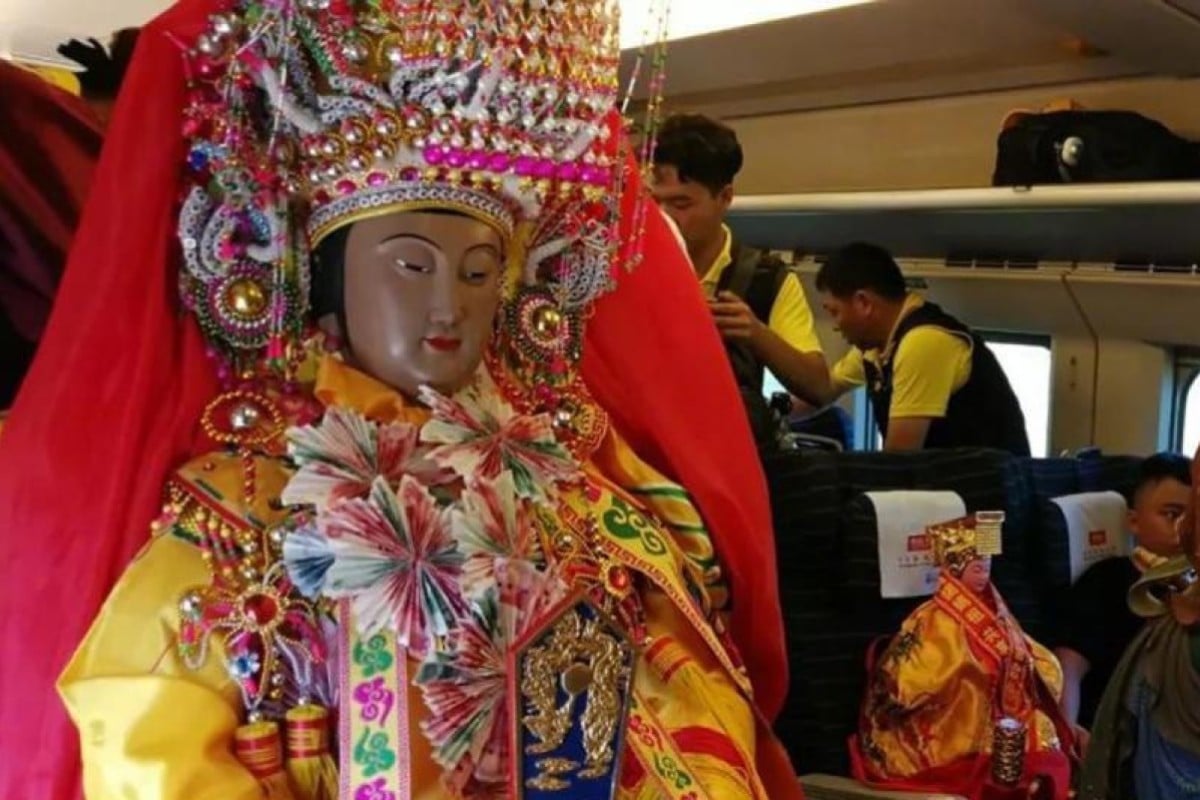
The statue of Chinese sea goddess Mazu on board the train for her seven-day tour of eastern China. Photo: Weibo
High-speed rail travellers in eastern China may find themselves in exalted company this week as one of China’s most beloved deities is on a seven-day tour.
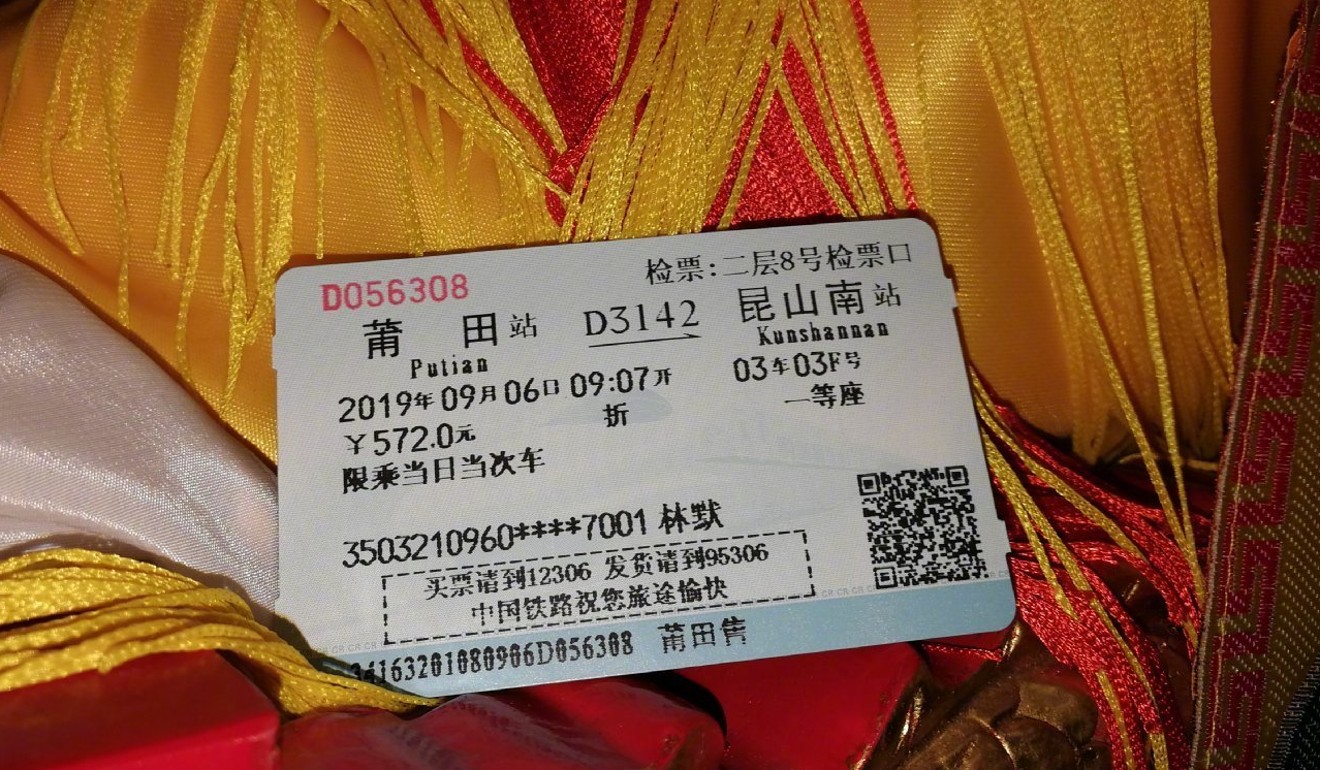
Mazu, protector of seafarers, boarded the train at Putian in Fujian province on Friday with an entourage of 230 worshippers for one of her regular “inspection tours”. And, like any modern traveller, the sea goddess had the necessary identity card and ticket for the journey.
Mazu, known as Tin Hau in Hong Kong, began life more than 1,000 years ago as a mortal named Lin Mo, according to Chinese folk belief. As a girl she is said to have saved some of her family members when they were caught in a typhoon while out fishing. In another version of the myth, Lin Mo died while trying to rescue shipwreck victims.
She fell out of favour in mainland China during the Cultural Revolution, when her ancestral temple on Meizhou Island in the southeastern province of Fujian was destroyed to make way for a People’s Liberation Army garrison. In the late 1970s the temple was rebuilt and in 2009 the beliefs and customs surrounding Mazu were recognised as an Intangible Cultural Heritage of Humanity by Unesco.
Inspectors on China’s high speed rail will find everything in order if they ask to see the goddess Mazu’s ticket during her seven-day tour. Photo: Weibo
Staff at the Meizhou Mazu Temple applied for an ID card for the goddess, in her earthly name of Lin Mo. Tickets were also organised for two other fairy figures who traditionally protect her, according to Chinese folklore.
“Not only Mazu but Thousand-Mile Eye and Wind-Accompanying Ear were all bought tickets,” a temple representative told the Southern Metropolis News.
This is not the first time the trio have been bought travel tickets. Two years ago their airfares were paid for when they visited Malaysia and Singapore and, a year later, they took a cruise ship to the Philippines.
This year’s tour includes a visit to Kunshan in Jiangsu and Shanghai, before Mazu returns to her home temple on the island of Meizhou. At each stop, devotees believe Mazu blesses the location with her presence and protects its residents from harm.
Taiwanese tycoon Gou thanks sea goddess for presidential inspiration
The tour has been organised jointly by the Meizhou Temple as well as the Huiju Mazu Temple in Kunshan and the Lugang Mazu Temple in Taiwan.
News of the celestial train journey quickly went viral on Chinese social media, with posts on Mazu receiving 460 million views on Weibo, the Twitter-like microblogging platform, since Monday. “First, respect. Second, she takes up a seat so it’s not crazy to buy her a ticket,” one comment read.
Source: SCMP
Posted in airfares, ancestral temple, blessings, celestial train journey, Chinese folk belief, Chinese social media, coastal communities, Cruise Ship, Cultural Revolution, Deity, Eastern China, exalted company, fishing, Fujian Province, garrison, High-speed rail travellers, Hong Kong, Huiju Mazu Temple, identity card, inspection tours, Intangible Cultural Heritage of Humanity, jiangsu province, journey, Kunshan, lets train, Lin Mo, Lugang Mazu Temple, Mainland China, Malaysia, Mazu, Meizhou Island, modern traveller, most beloved deities, myth, necessary, on board the train, People’s Liberation Army, Philippines, protector of seafarers, Putian, sea goddess, seven-day journey, Shanghai, shipwreck victims, Singapore, Southern Metropolis News, statue, Taiwan, Taiwanese tycoon, take the strain, Thousand-Mile Eye, ticket, Tin Hau, tour, travel documents, Typhoon, Uncategorized, UNESCO, viral, Weibo, Wind-Accompanying Ear, worshippers |
Leave a Comment »
06/09/2019
- Material that generates heat from sunlight could provide self-maintaining water supply on remote islands
An international research team used solar power to generate a supply of drinking water. Photo: Chinese Academy of Sciences
A Chinese-led international research team has created a “tree” that can generate clean drinking water.
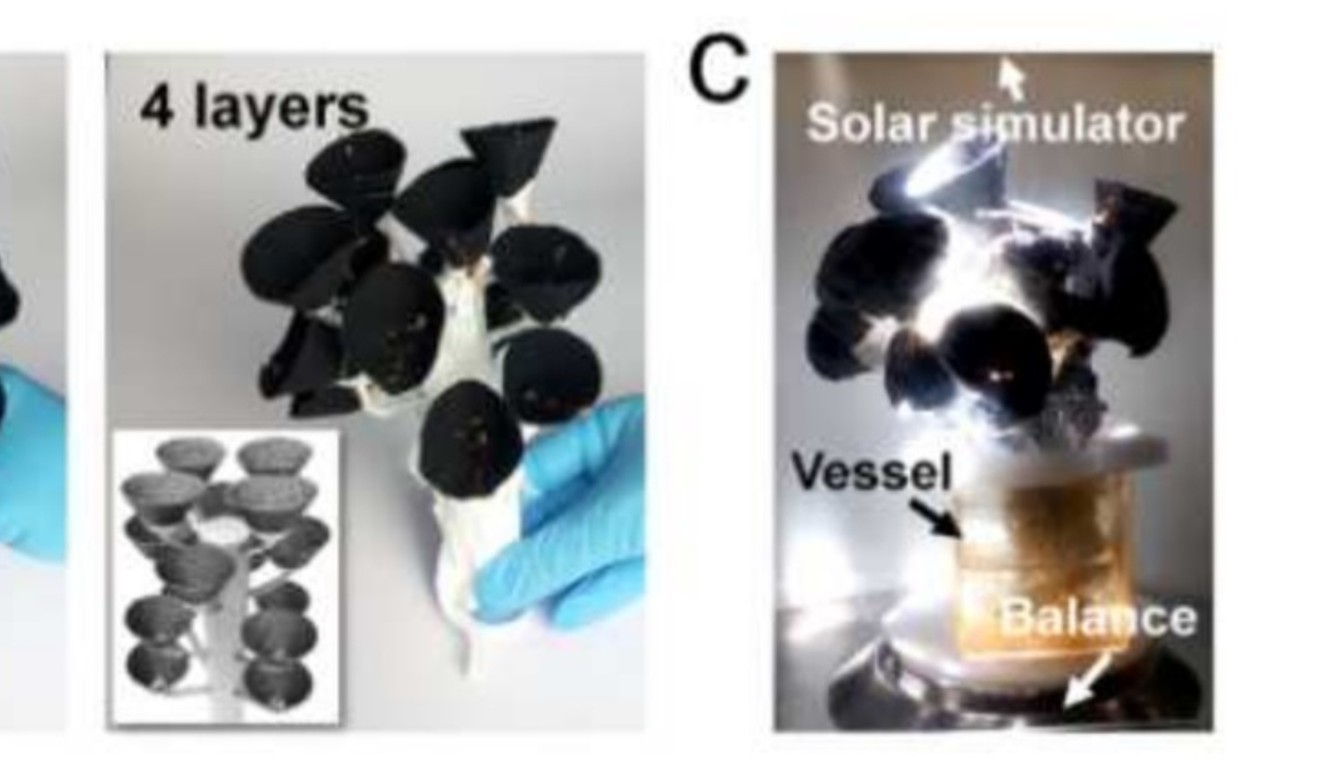
Drawing its energy entirely from the sun just like a real tree, the “water tree” has a root made of cotton fabric that can absorb water from its surroundings, such as from sand on a beach.
After water moves up the stem, it is vaporised by “leaves” made of black-carbon paper cones that convert light energy to heat, reaching nearly 50 degrees Celsius (122 Fahrenheit). The tree sits in a glass chamber with a relatively cool surface that collects the vapour.
Using standard cotton fabric and a new nanomaterial that can be cheaply mass-produced from charcoal, a paper cone with a surface area as large as 1 square metre would cost only US$2, according to the researchers.
The cones, which function like leaves, could be mass-produced cheaply, researchers say. Photo: Chinese Academy of Sciences
A cone that size can generate up to 3.4kg (7.5lbs) of condensed water per hour, faster than any other solar-powered desalination methods previously reported.
Even on a cloudy day, the total output in seven hours of sunlight can reach 5.4kg, or three times the amount the typical adult needs to stay hydrated.
One tree can have multiple layers of branches, each with several cones to increase the vapour-producing surface area.
The study, published this month in the journal Nano Energy, was led by Professor Chen Tao at the Chinese Academy of Sciences’ Ningbo Institute of Material Technology and Engineering in Zhejiang province, and also involved researchers from Singapore and Taiwan.
World’s thirst for fresh water is causing a big toxic problem
One of the paper’s co-authors, Dr Ouyang Jianyong, associate professor at the National University of Singapore’s department of materials science and engineering, told the South China Morning Post that the technology could be applied in remote places such as on islands in the South China Sea.
“It is particularly useful for isles far away without a stable drinking water supply,” Ouyang said. “These ‘trees’ may not be able to quench the thirst of a large city, but they can meet the critical demand of a small community, especially in emergencies.
“We are already in contact with some companies [to commercialise the technology],” he added.
The material used to make the cone has several advantages, according to Ouyang. The cones can absorb a wide spectrum of sunlight, maximising the amount of energy they can collect, and their porous structure allows them to release vapour quickly.
Lawmakers endorse plan for HK$7.7 billion desalination plant
When used to desalinate a supply of seawater, the trees would be self-cleaning at night, by water washing away salt residue without being vaporised as it would during sunlight hours.
The vapour-producing fabric is as thin and lightweight as a few sheets of paper. It can be folded and sewn into almost any shape, or cleaned in a washing machine, and can operate effectively for several years in a harsh environment, the researchers say.
The condensed water meets stringent safety standards for direct drinking set by the World Health Organisation, according to the researchers.
Source: SCMP
Posted in Chinese Academy of Sciences, cleaned, department of materials science and engineering, desalinate, desalination plant, Drinking water, lawmakers, Nano Energy, National University of Singapore, night, Ningbo Institute of Material Technology and Engineering, paper, remote islands, sea, Seawater, self-cleaning, self-maintaining water supply, sewn, shape, sheets, Singapore, solar-powered ‘tree’, solar-powered desalination methods, south china morning post, South China Sea, Taiwan, turns, Uncategorized, vapour-producing fabric, washing machine, World Health Organisation, zhejiang province |
Leave a Comment »
18/08/2019
- Adult consumers are fuelling a boom in China’s toy collectibles market
- Men are spending thousands of dollars on figurines to express their identity, boost their street cred, and indulge their inner kid
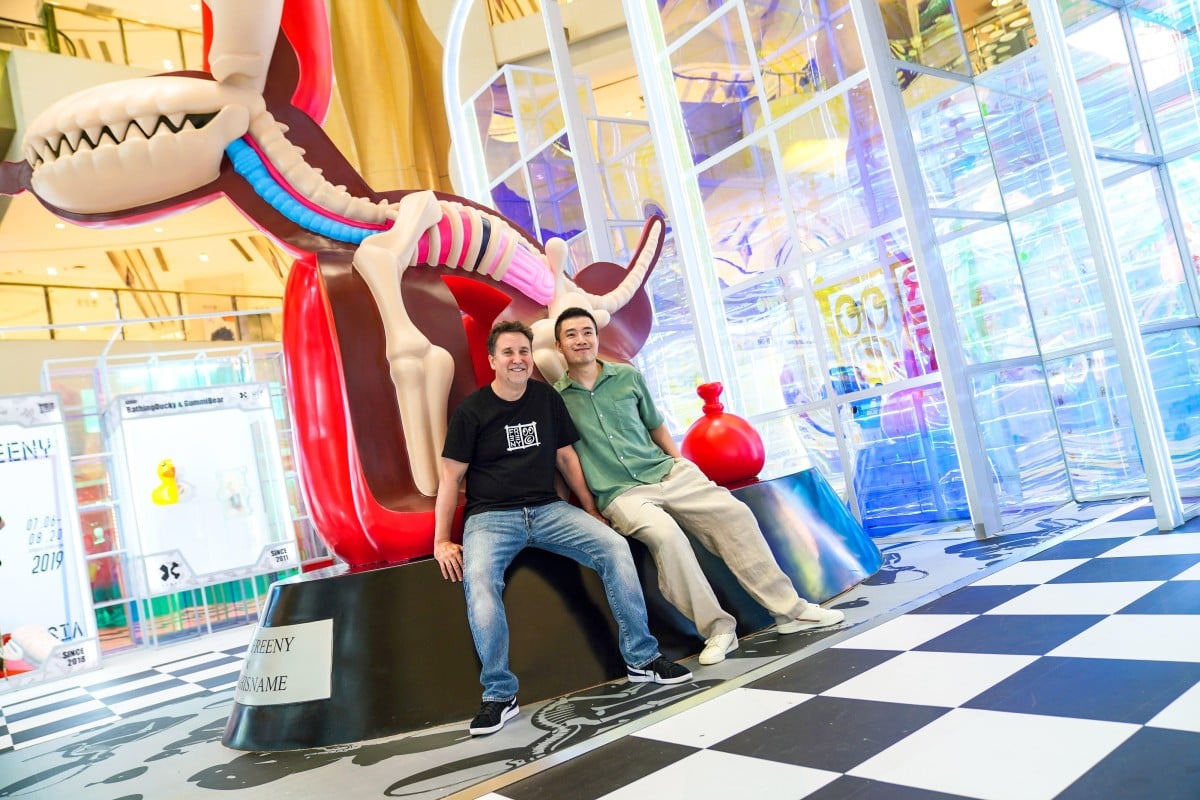
Chinese collector Don Tang with artist Jason Freeny at the Jason Freeny X-Soul Station exhibition in Shanghai. Photo: Don Tang
Don Tang is proud of his toys. So much so that the Shanghai resident, 32, puts them on display both in his home and in the office of the company he runs.
And there are plenty to display. Tang, 32, has some 100 collectibles and the number is growing all the time. Each month he sets aside 2,000 yuan (US$280) to buy the top trending toys, newest releases, or one-of-a-kind items – either from physical stores, online or at toy conventions in China.
But the toys are not connected to his work as the CEO of a firm in the intellectual property sphere. They are simply a hobby, albeit one Tang takes seriously. The crowning jewel of his collection? A 6,000 yuan KAWS action figure bought in Tokyo, Japan.
“When I return home from work each day, I get to see [my toys] and it puts me in a good mood,” says Tang, who realises some people might not get the appeal of his hobby, but says it is an “addictive” pursuit and a way of appreciating designs and craftsmanship. Whether it’s SpongeBob SquarePants, Hello Kitty or Sesame Street, each toy has its own distinct, “lovable, cute, and personalised” identity, he says.
Remind you of someone? Hambuddha is a designer figurine made by Mighty Jaxx of Singapore that is aimed at the adult market. Photo: Mighty Jaxx
“When you look back at the toys that you collected at different times, you realise how your own aesthetic, tastes, and preferences have changed over time,” adds Tang, who would never dream of selling his precious collection.
Tang’s toy story is far from unique. Sales of toys and games in China – which produces 80 per cent of all the world’s toys – soared to 324 billion yuan in 2018, up from 135 billion yuan in 2013, according to market research company Euromonitor. Fuelling these sales is a growing army of toy connoisseurs just like Tang.
Mighty Jaxx, a Singapore-based urban culture company that designs and manufactures collectibles and lifestyle products, is among the many companies benefiting from this surge in demand.
Its Chinese customer base accounts for 25 per cent of its projected revenue of S$10 million (US$7.21 million) for 2019 – and this proportion is expected to hit 40 per cent over the next few years, according to Mighty Jaxx’s founder and CEO, Jackson Aw, 30.
Smearing cannabis on your face: the latest Asian beauty craze
An avid toy collector himself, Aw first mused over the idea of turning his hobby into a viable business back in 2012. He ventured to Shenzhen in China for one month, knocking on factory doors just for a behind-the-scenes glimpse of the toy production process.
Being one of his first times to China, the mammoth scale of the industry came as a major “culture shock” to Aw.
Mighty Jaxx founder and CEO Jackson Aw. Photo: Toh Ee Ming
“I had always thought that it was just one giant machine that spits out parts and that was it. But there were rows and rows of hundreds of people printing, hand painting, assembling and using different skills just to produce one toy,” the Singaporean says.
Describing the visit as his “greatest education”, Aw was inspired to launch Mighty Jaxx from his bedroom with start-up capital of S$20,000 loaned from a bank through his parents.
Fast forward to today and his online business has worked with major brands such as Warner Brothers, DC Comics, Cartoon Network, MTV and New Balance, and shipped millions of products to collectors in over 50 countries. It is best known for its XXRAY figures, developed in partnership with artist Jason Freeny, which feature dissected Justice League characters such as Batman, Superman and Wonder Woman.
Hong Kong toy makers hope Asia’s largest toy fair will help boost flagging sales
But in its early days, the China market had intimidated Aw as a “big anomaly” that was still largely closed off. Aw had found it difficult to navigate the cultural norms and familiarise himself with unfamiliar business models.
Still, sensing China’s potential, his firm embarked on wide-ranging creative collaborations to tailor its offerings to the Chinese market – from creating yin-and-yang themed toys, celestial chicken fairy deities and the “Hambuddha” (a Buddha holding a pearl-shaped hamburger while on a lotus throne).
It also partnered with Chinese artist Chen Wei (who goes by the alias Cacooca) to develop a new Panda Ink collection, which depicts a panda in the midst of an everyday activity or hobby, such as hiking, playing video games or cuddling with cats.
Mighty Jaxx’s ‘Flow by 18 Uppercut’ has a yin and yang theme with white and black halves. Photo: Mighty Jaxx
It has also collaborated with other big-name artists and celebrities trending among Chinese consumers – such as Los Angeles-based dance crew Kinjaz, who found fame in China appearing on dance shows, and ABS, a leading graffiti crew based in Beijing’s 798 Art District – and has an upcoming collaboration with Taiwanese singer Show Luo.
But it is the comic and toy conventions that provide its biggest fans, typically men in their 20s to 40s who flock in from Beijing, Shanghai and Guangzhou.
Aw says these collectors have a huge appetite to splurge on high-end collectibles, which can range in cost from anywhere between US$10 to US$2,000.
Singapore sex toy sales buzzing thanks to ‘healthy’ branding
To these collectors, price is of little concern as they are looking for “tangible products to buy and show off their personality” and build their street cred among their friends, though they still prefer to stay under-the-radar about their collection to the general public, Aw says.
Today, Mighty Jaxx’s products are manufactured in nearly 20 different factories in Shenzhen and Guangzhou. It set up its first overseas office in Shanghai last year and is planning to open its second one in Suzhou by the end of 2019, according to Aw.
Besides growing Chinese affluence, Aw credits his company’s success to a greater exposure to Western influences and China’s own unique brand of pop culture taking off domestically.
He points to one of China’s biggest blockbusters Monster Hunt, a fantasy martial arts film of how monsters live among humans.
Mighty Jaxx’s celestial chicken fairy deity is aimed at the Hong Kong and mainland China market. Photo: Mighty Jaxx
“Outside China, you wouldn’t know what the hell it’s about. But the Chinese are creating their own unique narrative and developing their own intellectual property … That’s when we know the demand for original creation in different forms is truly there,” Aw says.
Likewise, consumers live in an age of a “mishmash of pop cultures and crossovers” and “subcultures becoming mainstream”, he says.
Citing how the business has teamed up with Team Hero, a China e-sports team comprising professional computer gamers, to roll out new figurines, Aw says: “It doesn’t mean that tattoo artists, skateboarders don’t buy toys … What seems to be separate demographics are converging to become a multibillion-dollar market.”
Aw says the company is planning to expand from its current business model based on direct selling to collectors, to e-commerce distribution channels like Taobao and Tmall by the end of 2019.
He hopes eventually to set up the firm’s first retail store in Shanghai, as he believes the future lies in experiential retail.
“China has been cultivating that openness in recent decades, and we’re still very curious and excited for new things to happen [in this market],” Aw says. ■
Source: SCMP
Posted in ABS, adult male consumers, Batman, Beijing, cannabis, Cartoon Network, celestial chicken fairy deity, Chinese toys boom, collectibles, consumers, crossovers, cuddling with cats, DC Comics, demographics, Euromonitor, everyday activity, figurines, fuelled by, Guangzhou, Hambuddha, hand painting, Hello Kitty, hiking, hobby, Hong Kong, humans, inner kid, Intellectual property, Jason Freeny X-Soul Station exhibition, Justice League characters, Kinjaz, Mainland China, mainstream, market, martial arts film, Mighty Jaxx, mishmash, Monster Hunt, monsters, MTV, New Balance, original creation, Panda Ink, playing video games, pop cultures, Printing, retail store, Sesame Street, sex toy sales, Shanghai, Shenzhen, Singapore, Singaporean, skateboarders, SpongeBob SquarePants, street cred, subcultures, Superman, Taobao, tattoo artists, Team Hero, Tmall, toys, Uncategorized, Warner Brothers, white and black halves, Wonder Woman, XXRAY figures, yin and yang theme |
Leave a Comment »
16/08/2019
YINCHUAN, Aug. 15 (Xinhua) — The China-Arab States Tour Operators Conference 2019 will be held from Sept. 4 to 7 in Yinchuan, capital of northwest China’s Ningxia Hui Autonomous Region, local authorities said Thursday.
According to the region’s department of culture and tourism, the four-day event will include a series of activities such as tourism resources promotion, tourism cooperation and exchange between China and Arab countries, and investment project negotiation.
Tourism officials from Indonesia, Morocco and Chad, as well as some 120 traders from China and 15 countries along the Belt and Road including Singapore, the Republic of Korea and Egypt, will participate.
Tourism resources and products such as the starry sky, the Great Wall, intangible cultural heritage and wine in Ningxia will be presented in the form of a stage drama at the fair.
Foreign participants will also introduce their tourism resources to further integrate Ningxia into regional tourism along the Belt and Road.
Traditional handicrafts such as papercutting, embroidery, wood carving and clay sculptures will be displayed to propel the development of the cultural tourism industry in the region, according to Zhao Mingxia, deputy director of the culture and tourism department.
Source: Xinhua
Posted in Arab countries, Belt and Road (B&R), Chad, China-Arab States, China-Arab States Tour Operators Conference 2019, clay sculptures, cultural heritage, Egypt, embroidery, Great Wall, handicrafts, Indonesia, Morocco, Ningxia, Ningxia Hui Autonomous Region, papercutting, Republic of Korea, Singapore, stage drama, starry sky, Tourism, tourism fair, traditional, Uncategorized, Wine, wood carving, Yinchuan |
Leave a Comment »
31/07/2019
- China suggests good progress made in Regional Comprehensive Economic Partnership talks after marathon 10-day negotiations in Zhengzhou
- Indian Commerce Minister Piyush Goyal has opted to skip the upcoming high-level meetings, adding fuel to rumours that the country could be removed
The Association of Southeast Asian Nations (Asean) has overtaken the US to become China’s second-largest trading partner in the first half of 2019. Photo: AP
China has claimed “positive progress” towards finalising the world’s largest free-trade agreement by the end of 2019 after hosting 10 days of talks, but insiders have suggested there was “never a chance” of concluding the deal in Zhengzhou.
The 27th round of the Regional Comprehensive Economic Partnership (RCEP) negotiations closed on Wednesday in the central Chinese city.
working level conference brought over 700 negotiators from all 16 member countries to Henan province, with China keen to push through a deal which has proven extremely difficult to close.
If finalised, the agreement, which involves the 10 Asean nations, as well as China, Japan, South Korea, Australia, New Zealand, and India, would cover around one-third of the global gross domestic product, about 40 per cent of world trade and almost half the world’s population.
“This round of talks has made positive progress in various fields,” said assistant minister of commerce Li Chenggang, adding that all parties had reaffirmed the goal of concluding the deal this year. “China will work together with the RCEP countries to proactively push forward the negotiation, strive to resolve the remaining issues as soon as possible, and to end the negotiations as soon as possible.”
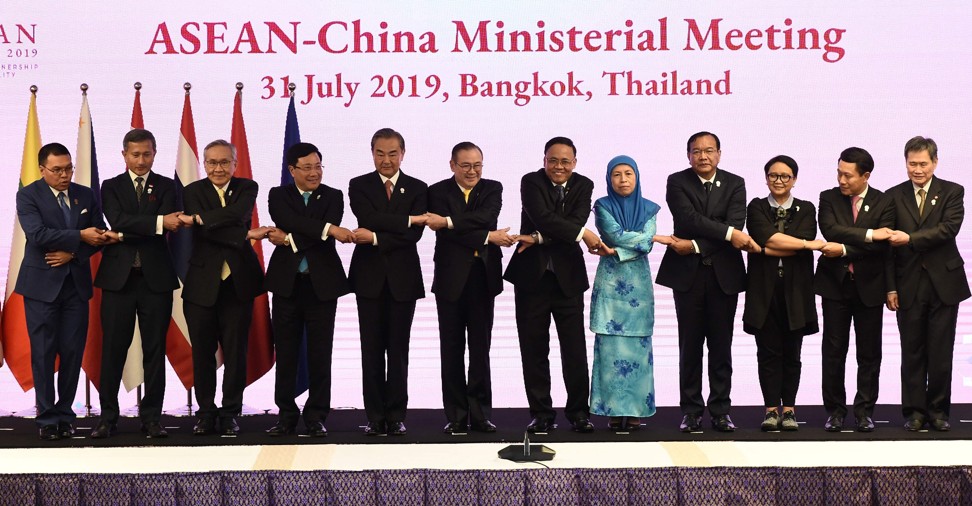
China’s Foreign Minister Wang Yi (fifth left) poses with foreign ministers from the Association of Southeast Asian Nations (Asean) countries during the ASEAN-China Ministerial Meeting in Bangkok. Photo: AFP
China is keen to complete a deal which would offer it a buffer against the United States in Asia, and which would allow it to champion its free trade position, while the US pursues protectionist trade policy.
The RCEP talks took place as Chinese and American trade negotiators resumed face-to-face discussions in Shanghai, which also ended on Wednesday, although there was little sign of similar progress.
As the rivalry between Beijing and Washington has intensified and bilateral trade waned, the Association of Southeast Asian Nations (Asean) overtook the US to become China’s second-largest trading partner in the first half of 2019. From January to June, the trade volume between China and the 10-member bloc reached US$291.85 billion, up by 4.2 per cent from a year ago, according to government data.
The Asean bloc is made up of Indonesia, Thailand, Malaysia, Singapore, Philippines, Vietnam, Myanmar, Cambodia, Brunei and Laos.
China will work together with the RCEP countries to proactively push forward the negotiation, strive to resolve the remaining issues as soon as possible, and to end the negotiations as soon as possible. Li Chenggang
RCEP talks will now move to a higher level ministerial meeting in Beijing on Friday and Saturday, but trade experts have warned that if material progress is not made, it is likely that the RCEP talks will continue into 2020, prolonging a saga which has already dragged on longer than many expected. It is the first time China has hosted the ministerial level talks.
But complicating matters is the fact that India’s Commerce Minister, Piyush Goyal, will not attend the ministerial level talks, with an Indian government official saying that he has to participate in an extended parliamentary session.
India is widely viewed as the biggest roadblock to concluding RCEP, the first negotiations for which were held in May 2013 in Brunei. Delhi has allegedly opposed opening its domestic markets to tariff-free goods and services, particularly from China, and has also had issues with the rules of origin chapter of RCEP.
China is understood to be “egging on” other members to move forward without India, but this could be politically explosive, particularly for smaller Asean nations, a source familiar with talks said.
Deborah Elms, executive director of the Asian Trade Centre, a Singapore-based lobby group, said that after the last round of negotiations in Melbourne between June 22 to July 3 – which she attended – there was “frustration” at India’s reluctance to move forward.
She suggested that in India’s absence, ministers in China could decide to move forward through a “pathfinder” agreement, which would remove India, but also potentially Australia and New Zealand.
India’s Commerce Minister, Piyush Goyal, will not attend the ministerial level talks this week in Beijing. Photo: Bloomberg
This “Asean-plus three” deal would be designed to encourage India to come on board, Elms said, but would surely not go down well in Australia and New Zealand, which have been two of the agreement’s biggest supporters.
New Zealand has had objections to the investor protections sections of RCEP, and both countries have historically been pushing for a more comprehensive deal than many members are comfortable with, since both already have free trade agreements with many of the other member nations.
However, their exclusion would be due to “an unfortunate geographical problem, which is if you’re going to kick out India, there has always been an Asean-plus three concept to start with”. Therefore it is easier to exclude Australia and New Zealand, rather than India alone, which would politically difficult.
A source close to the negotiating teams described the prospect of being cut out of the deal at this late stage as a “frustrating rumour”, adding that “as far as I know [it] has no real basis other than a scare tactic against India”.
There was “never a chance of concluding [the deal during] this round, but good progress is being made is what I understand. The key issues remain India and China”, said the source, who wished to remain anonymous.
Replacing bilateral cooperation with regional collaborations is a means of resolving the disputesTong Jiadong
However, Tong Jiadong, a professor of international trade at the Nankai University of Tianjin, said Washington’s refusal to recognise India as a developing country at the World Trade Organisation could nudge the world’s second most populous nation closer to signing RCEP.
“That might push India to the RCEP, accelerating the pace of RCEP,” Tong said, adding that ongoing trade tensions between Japan and South Korea could also be soothed by RCEP’s passage.
“Replacing bilateral cooperation with regional collaborations is a means of resolving the disputes between the two countries,” Tong said.
Although the plan was first proposed by the Southeast Asian countries, China has been playing an increasingly active role, first as a response to the now defunct US-backed Trans-Pacific Partnership (TPP), and more recently as a means of containing the impact of the trade war.
China’s vice-commerce Minister, Wang Shouwen, told delegates last week that RCEP was “the most important free trade deal in East Asia”. He called on all participants to “take full advantage of the good momentum and accelerating progress at the moment” to conclude a deal by the end of the year.
Source: SCMP
Posted in Asean nations, ASEAN-China Ministerial Meeting, Asia, Asian Trade Centre, Australia, Bangkok, Beijing, biggest roadblock, Brunei, Cambodia, China alert, claims, Delhi, Henan province, India alert, Indian Commerce Minister, Indonesia, Japan, Laos, Malaysia, Melbourne, Myanmar, Nankai University of Tianjin, New Zealand, Philippines, Piyush Goyal, progress, Regional Comprehensive Economic Partnership (RCEP), remains, rivalry, Shanghai, Singapore, South Korea, Thailand, towards, Trans-Pacific Partnership (TPP), Uncategorized, United States, Vietnam, Washington, World Trade Organisation (WTO), world’s biggest trade deal, Zhengzhou |
Leave a Comment »













 CHINDIA ALERT: You'll be living in their world, very soon