Chindia Alert: You’ll be Living in their World Very Soon
aims to alert you to the threats and opportunities that China and India present. China and India require serious attention; case of ‘hidden dragon and crouching tiger’.
Without this attention, governments, businesses and, indeed, individuals may find themselves at a great disadvantage sooner rather than later.
The POSTs (front webpages) are mainly 'cuttings' from reliable sources, updated continuously.
The PAGEs (see Tabs, above) attempt to make the information more meaningful by putting some structure to the information we have researched and assembled since 2006.
Xie Haifeng’s story is one of luck and resilience and he has made it his mission to help others through adversity
Professional dancer owes part of his success to the city of Hong Kong and one of its doctors who helped survivors through recovery
Xie Haifeng was 15 when he lost his leg in one of modern China’s most devastating disasters. Photo: Handout
When the rumbling began, Xie Haifeng thought someone was shaking his bed. Perhaps one of the other 800 children in the school dormitory was being naughty. Or maybe it was a small quake. Then came the unmistakable sound of screams.
Xie, then a 15-year-old pupil at Muyi Town Middle School in the southwestern Chinese province of Sichuan, started running. He fell as the dorm building collapsed around him. When he tried to stand up, he realised something was missing. His left leg was gone.
What Xie thought was a small quake turned out to be one of the most devastating disasters in modern Chinese history.
The Sichuan earthquake of May 2008 left at least 87,000 people dead and shook the country to its core. It was less than three month before Beijing would host its first Olympic Games, an opportunity to show the world its strength and ambition.
Instead, 7,444 schools had crumbled like tofu in an area known to be seismically active. Their rubble was a stark demonstration of the weak foundation of China’s progress and its tragic consequences. At Xie’s school, the shoddily built walls and ceilings crushed 600 children. Only 300 survived.
It still frightens me to recall the earthquake.Xie Haifeng, dancer
Xie considers himself lucky. “If I had run just one second more slowly, I would have been dead. If I had run one second faster, I would have been completely fine. But anyway, I am lucky to be alive,” he said. A dozen years later, his story is also one of resilience. Defying all the odds, Xie is now a professional dancer for a troupe in Sichuan and has made it his mission to help others through adversity.
The journey from his hospital bed to the stage was long and difficult and even though many years have passed, “it still frightens me to recall the earthquake”. But, he said: “I have forgiven fate and accepted the reality that I have only one leg.”
Xie’s trauma was a particularly difficult blow to his family. His older sister was already handicapped, after injuring her arm in an accident. When his mother, a migrant worker in the northwestern province of Gansu, arrived at the hospital a few days after the earthquake, she had no idea of the extent of Xie’s condition.
“When I woke up in the evening, I saw my mother weeping beside my bed. I told myself I should be strong,” Xie said, adding that his mother initially thought he had suffered only bruises. He was sent for treatment to a hospital in the prosperous southern city of Shenzhen, along with other survivors who had been left with disabilities by the earthquake.
Defying all the odds, Xie Haifeng is now a professional dancer. Photo: Handout
It was there that Xie was inspired to make the most of his life. A team of athletes visited the hospital and he was shocked to see one of them, a volleyball player, walking on a prosthetic leg.
Xie began to wear a prosthesis and after rehabilitation training returned to his hometown in 2009 where he was admitted to Qingchuan High School. At first, he was self-conscious and felt inferior to his peers. He did not dare to wear shorts in summer and said he seldom talked to the other students.
The following year he was introduced to members of the Chengdu Disabled People’s Art Troupe, where he found a new and welcoming home. Xie quit school and joined the troupe, despite his parents’ opposition. They were convinced study was the only way for rural students like their son to get out of poverty.
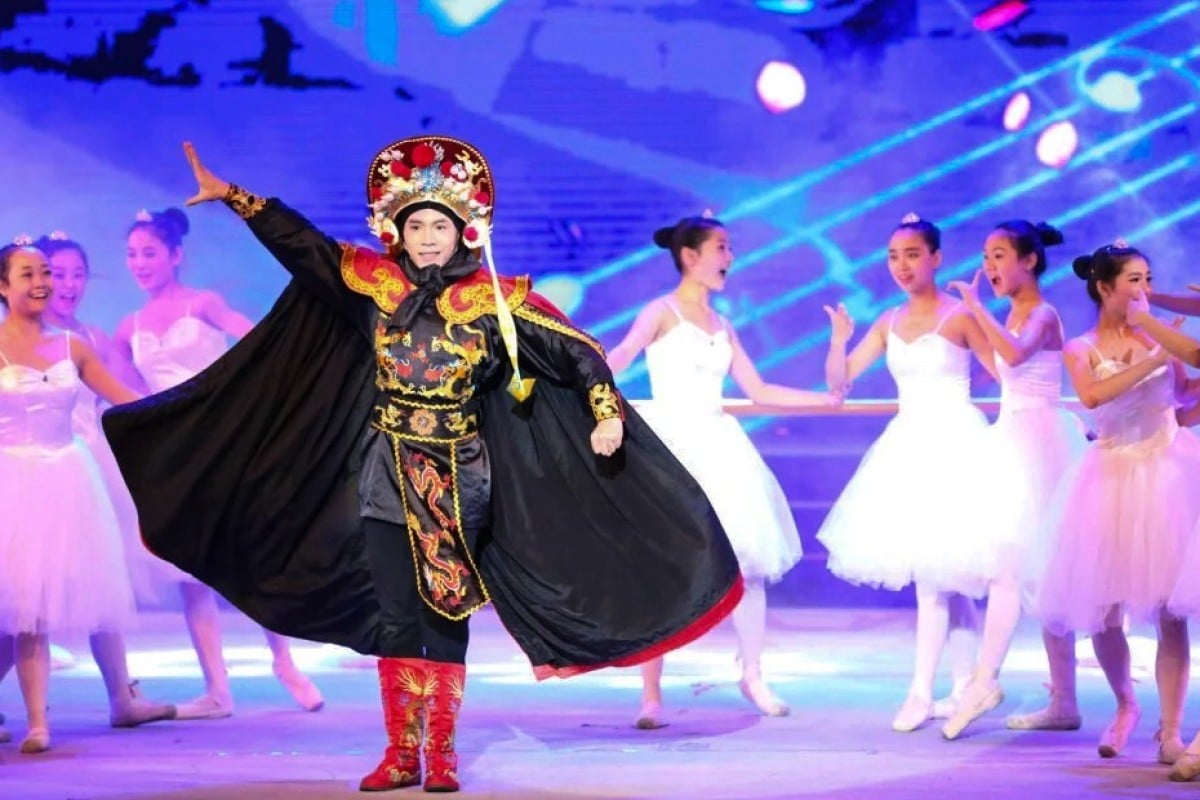
Xie learned Sichuan opera and was soon performing its art of bian lian, or
– a skill that requires rapid mask changes in a dazzling sleight of hand – on stage until the troupe was disbanded in 2011, leaving him unemployed for six months.
China marks 10-year anniversary of Sichuan earthquake
But the misfortune led to an improbable opportunity when he was hired by the Sichuan Provincial Disabled People’s Art Troupe and trained to dance. At 19, and with no experience, Xie found the training far more difficult than those who had started at the more usual age of five or six.
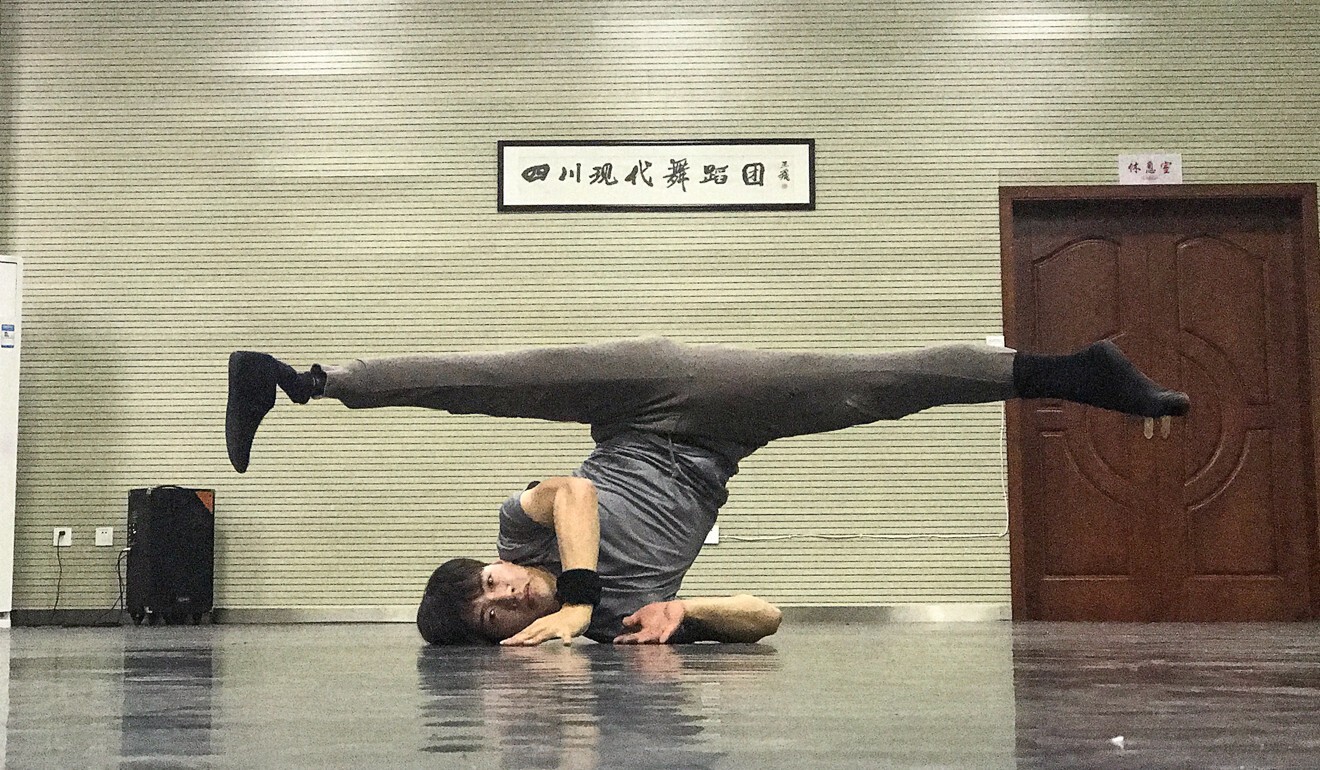
His body was too stiff, he said, and in the first months he spent 10 hours each day just stretching and building flexibility. It was just the beginning of a long and often arduous process.
“That agony is too much to be described,” Xie said about the pain of dancing on a prosthetic leg. “During the first six months’ training, I broke three artificial legs.”
More than once, he wondered whether he had chosen the right path. But, ultimately, his gruelling effort paid off and Xie has performed in Singapore, Hong Kong and Macau. In 2013, he won a gold medal at a national dancing competition for people with disabilities.
“My dances won me applause and recognition from the audience. I feel relieved and I think my heart belongs to the stage,” he said.
Xie broke three artificial legs during his first six months of dance training. Photo: Handout
Xie said he owed part of his success to Hong Kong which in 2008 donated HK$20 billion (US$2.5 billion) in aid to Sichuan and sent doctors to treat the injured. Among the volunteers was Poon Tak-lun, a Hong Kong orthopaedist who flew to Sichuan every two weeks from 2008 to 2013 to treat patients.
At a gala show in 2013 to express gratitude from the people of Sichuan to Hong Kong, Xie met Poon and the two became good friends, thanks to their common interest in the arts.
“Dr Poon promised to pay for all the costs of installing and repairing my artificial leg in the future. He told me to focus on dancing without worrying about the leg’s costs,” Xie said.
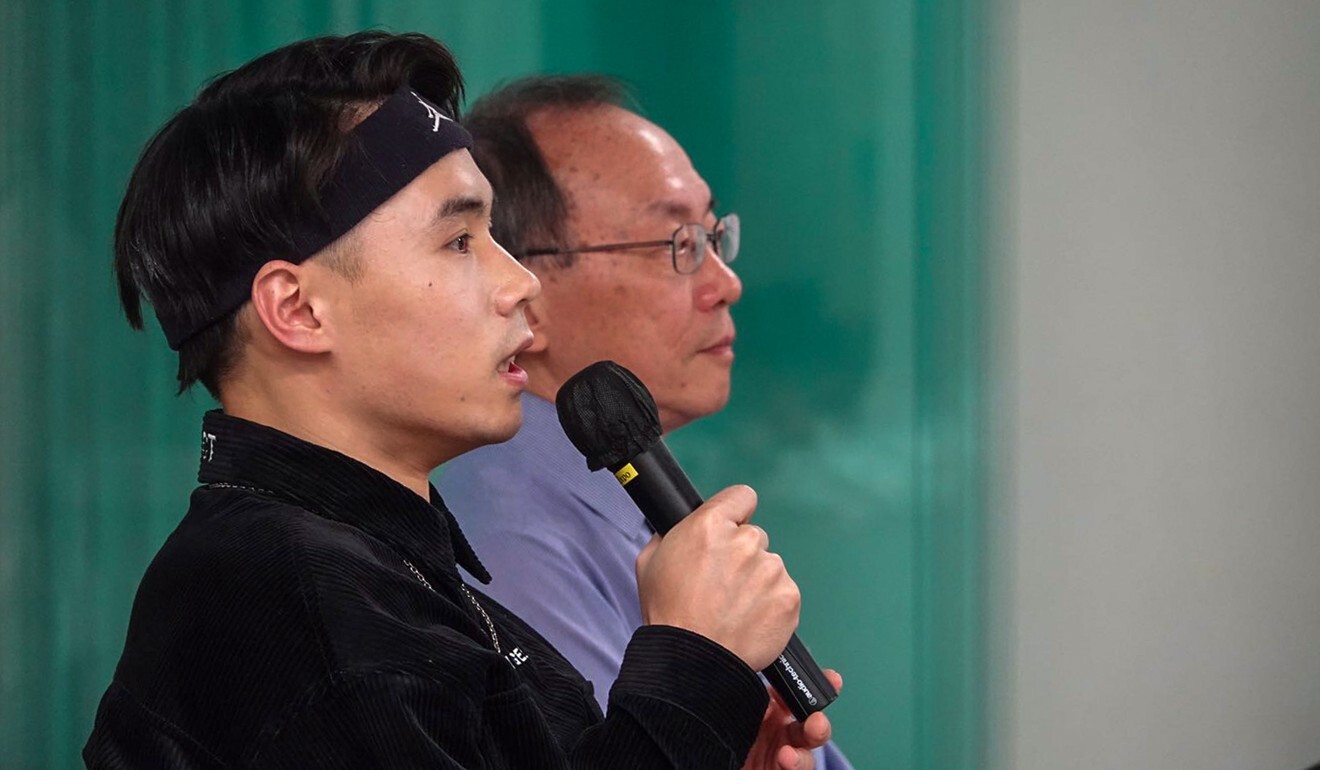
Xie Haifeng (pictured left with friend Poon Tak-lun) gives a speech to students in Hong Kong. Photo: Handout
Grateful for the help he received from Poon and Hong Kong, Xie has sought to return the favour by doing what he does best.
“I have no other skills except dancing and performing. So I thought of sharing my experience to encourage young students in Hong Kong,” he said.
Xie travels to Hong Kong about twice a year to perform and visit schools. In 2019, he visited the city four times, performing dances and Sichuan opera, and giving speeches at more than 10 primary and secondary schools.
“I encourage them to study hard. I said there are many people in this world who have more difficulties than them but still insist on pursuing their dreams, so they should not give up their dreams,” Xie said.
When he is not dancing and giving inspirational speeches, Xie said he lived a life like everyone else – climbing mountains, swimming and proudly walking on the leg he gained after almost losing everything in Sichuan’s deadly earthquake.
SEOUL (Reuters) – South Korean and Chinese officials on Tuesday cast doubt on reports North Korean leader Kim Jong Un was ill after media outlets said he had undergone a cardiovascular procedure and was in “grave danger”.
Daily NK, a Seoul-based speciality website, reported late on Monday, citing one unnamed source in North Korea, that Kim was recovering after undergoing the procedure on April 12. The North Korean leader is believed to be about 36.
CNN cited a U.S. official with direct knowledge of the matter as saying Washington was “monitoring intelligence” that Kim was in grave danger after surgery. Bloomberg quoted an unnamed U.S. official as saying the White House was told that Kim took a turn for the worse after the surgery.
However, two South Korean government officials rejected the CNN report without elaborating on whether Kim had undergone surgery. The presidential Blue House said there were no unusual signs coming from the reclusive, nuclear-capable state.
Kim is the unquestioned leader of North Korea and the sole commander of its nuclear arsenal. He has no clear successor and any instability in the country could be a major international risk.
RELATED COVERAGE
Factbox: Questions hang over North Korea succession amid reports on Kim health
The state KCNA news agency gave no indication of the whereabouts of Kim in routine dispatches on Tuesday, but said he had sent birthday gifts to prominent citizens.
An official at the Chinese Communist Party’s International Liaison Department, which deals with North Korea, told Reuters the source did not believe Kim was critically ill. China is North Korea’s only major ally.
Chinese foreign ministry spokesman Geng Shuang said Beijing was aware of reports about the health of Kim, but said it does not know their source, without commenting on whether it has any information about the situation.
South Korean shares exposed to North Korea tumbled and the Korean won fell on the reports. The won traded down more than 1% against the dollar even as South Korean government sources said Kim was not gravely ill.
U.S. stock futures were trading 0.5% lower, but it was not clear how much of that weakness was owing to the collapse in U.S. oil prices and consequent concerns over global demand.
Daily NK said Kim had been admitted to hospital on April 12, just hours before the cardiovascular procedure, as his health had deteriorated since August due to heavy smoking, obesity and overwork.
It said he was now receiving treatment at a villa in the Mount Myohyang resort north of the capital Pyongyang.
“My understanding is that he had been struggling (with cardiovascular problems) since last August but it worsened after repeated visits to Mount Paektu,” a source was quoted as saying, referring to the country’s sacred mountain.
Accompanied by senior North Korean figures, Kim took two well-publicised rides on a stallion on the snowy slopes of the mountain in October and December.
KIM’S HEALTH KEY TO STABILITY
An authoritative U.S. source familiar with internal U.S. government reporting on North Korea questioned the CNN report that Kim was in “grave danger”.
“Any credible direct reporting having to do with Kim would be highly compartmented intelligence and unlikely to leak to the media,” a Korea specialist working for the U.S. government said on condition of anonymity.
Japan’s top government spokesman, Yoshihide Suga, declined to comment on the reports of Kim’s health.
“We are regularly gathering and analysing information about North Korea with great concern,” he said. “We will keep gathering and analysing information regarding North Korea by collaborating with other countries such as the U.S.”
Kim’s potential health issues could fuel uncertainty over the future of the reclusive state’s dynastic rule and stalled denuclearisation talks with the United States, issues in which Kim wields absolute authority.
With no details known about his young children, analysts say his sister and loyalists could form a regency until a successor is old enough to take over.
Speculation about Kim’s health first arose following his absence from the anniversary of the birthday of its founding father and Kim’s grandfather, Kim Il Sung, on April 15.
On April 12, North Korean state media reported that Kim Jong Un had visited an airbase and observed drills by fighter jets and attack aircraft.
Two days later North Korea launched multiple short-range anti-ship cruise missiles into the sea and Sukhoi jets fired air-to-surface missiles as part of military exercises.
The missile launches were part of the celebrations for Kim’s grandfather, Seoul officials said, but there was no North Korea state media report on his attendance or the tests.
Reporting from inside North Korea is notoriously difficult, especially on matters concerning the country’s leadership, given tight controls on information. There have been false and conflicting reports in the past on matters related to its leaders.
Kim is a third-generation hereditary leader who rules North Korea with an iron-fist, taking over the titles of head of state and commander in chief of the military since late 2011.
In recent years Kim has launched a diplomatic offensive to promote both himself as a world leader and his hermit kingdom, holding three meetings with U.S. President Donald Trump, four with South Korean President Moon Jae-in and five with China’s President Xi Jinping.
He was the first North Korean leader to cross the border into South Korea to meet Moon in 2018. Both Koreas are technically still at war, as the Korean War of 1950-53 ended in an armistice, not a peace treaty.
Kim has sought to have international sanctions against his country eased, but has refused to dismantle his nuclear weapons programme, a steadfast demand by the United States.
Comic crusader Priya, a gang-rape survivor who earlier campaigned against rape and acid attack, is back in a new avatar. This time she is fighting the trafficking of girls and women for sex.
The “modern-day female superhero” was first launched in December 2014, exactly two years after the horrific gang rape of a young woman on a bus in Delhi, to focus attention on the problems of gender and sexual violence in India.
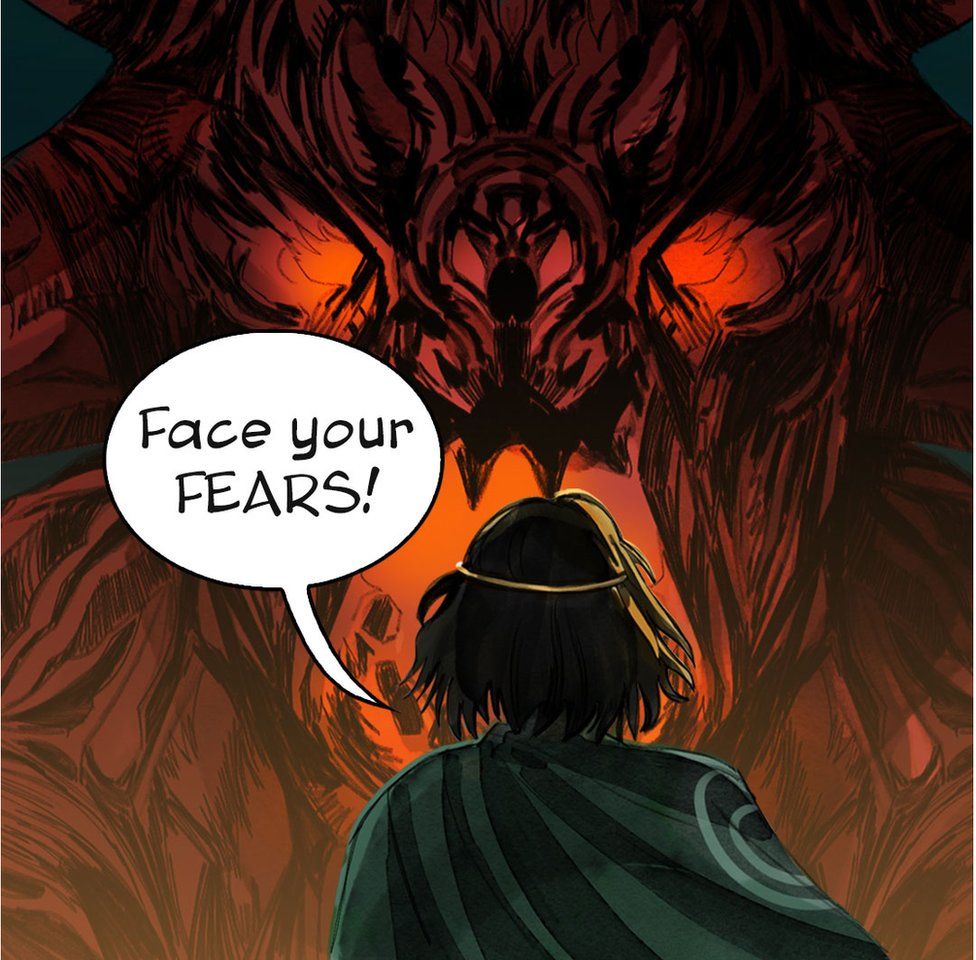
In the latest edition – Priya and the Lost Girls – she takes on the powerful sex-trafficker Rahu, the evil demon who runs an underworld brothel city where he has entrapped many women, including Priya’s sister Lakshmi.
Indian-American actor and writer Dipti Mehta, who wrote the script of the comic, draws on ancient Indian mythology to create larger-than-life fantastical characters and delivers a powerful feminist statement.
The story of Lost Girls begins when the protagonist returns home to find that there are no girls in her village.
She then mounts her flying tiger Sahas (Hindi for courage) and arrives in Rahu’s den. It’s a city ruled by greed, jealousy and lust, where women exist only to serve and please men – and those who resist are turned into stone.
Image copyright PRIYASHAKTI
Priya is threatened and attacked, a woman who works for Rahu tries to lure her into the sex trade saying: “If you work for us, you’d serve only five to six men and not 20”, but in the end, good wins over evil and she manages to vanquish Rahu and liberate her sister and all the other trafficked girls.
But victory still eludes her. The families of rescued girls refuse to take them back. The survivors are treated like “lepers”, facing stigma, scorn and ridicule.
But Priya and the other girls stand up to confront patriarchy, says Ms Mehta, “just as women have broken their silence to talk about MeToo”, the campaign against sexual harassment and abuse that started in Hollywood in October 2107 and later spread to many other parts of the world.
“I was very clear from the start that Lost Girls can’t be just another comic book where good guy wins and evil dies, it had to be much more than that,” Ms Mehta says.
Image copyright PRIYASHAKTI
Ram Devineni, the Indian-American creator of the comic series, told the BBC that he had decided to focus on sex trafficking in this edition after visiting Sonagachi, India’s largest red-light area in the eastern city of Kolkata, where he met several women engaged in sex work.
“Half of them told me they had been tricked into coming there and, once there, they were forced into the sex trade. The other half said they’d agreed to do this for a living because they were dirt poor and they had no alternative.
“Often there were two to three women sharing a small dingy room, many of them had young children who lived with them, and some of them said their children slept in the same bed where they serviced clients.
Mr Devineni says that from his conversations with them, he realised that many of the women there could leave, but chose not to.
“Most believed in the idea of sacrifice, for the sake of their families, their children. The shackles that hold them back are mostly emotional and psychological coercion.”
Some of their stories, he says, have found their way into the Lost Girls, which will be launched digitally on Monday to coincide with the start of United Nation’s 16 Days of Activism Against Gender-based Violence.
Image copyright PRIYASHAKTIAccording to the United Nations Office on Drugs and Crime, human trafficking is the second largest organised criminal business in the world after the arms trade. It is even ahead of the drugs trade.
“It’s a multi-billion-dollar industry,” anti-trafficking activist Ruchira Gupta told the BBC on the phone from New York.
Ms Gupta, who supports trafficked girls and women in India through her charity Apne Aap Women Worldwide, says there are 100 million people trapped in human trafficking globally, of which 27 million are in India alone, and most of the trafficking is in girls and young women.
India, Bangladesh and Nepal, she says, make up “the epicentre” of global sex trafficking.
Ms Gupta, who collaborated on Priya and the Lost Girls, says she plans to take the comic to schools and colleges in India and the US to use it as a talking tool, “as a conversation starter on what is a very difficult topic”.
The only way to fight trafficking, she believes, is to “de-normalise” sex trade – and cinema, art and pop culture are tools that can help do that.
The comic is made to appeal to young people. After its launch, it can be downloaded for free anywhere in the world; it also has “augmented reality features”, which means people can see special animation and movies by scanning the artwork with their smartphones.
Image copyright PRIYASHAKTI
“People often make flippant comments to say that prostitution is the oldest occupation in the world, but they don’t realise that trafficking is not some poor woman getting money in exchange for having sex with a man. It is the extreme exploitation of most vulnerable girls,” Ms Gupta says.
To stop this “commodification” of girls, she adds, we need to create revulsion in men’s minds about sex trade – and it’s best to catch them young.
“We must work with young boys and teenagers, 13 to 14 year olds, through storytelling and pop culture. They learn about sex from porn sites which portray sex workers as happy hookers, and no-one sees the girl behind her.
“I want to demolish that myth of the happy hooker. I want to ensure that people see the girl behind her.”
Artwork by Syd Fini and Neda Kazemifar
You may also be interested in…
Media caption Freida Pinto: Why I made a film about sex slaves
SEOUL/HANOI (Reuters) – North Korean leader Kim Jong Un made his way across China by train on Sunday, media reported, bound for a high-stakes second nuclear summit with U.S. President Donald Trump in Vietnam’s capital of Hanoi.
Few details of Kim’s trip have been announced but he left Pyongyang by train on Saturday afternoon for the Feb. 27-28 summit accompanied by senior North Korean officials as well as his influential sister, North Korea’s state media reported.
RELATED COVERAGE
Vietnam relishes role as peace maker as it seeks to balance ties
Vietnam’s Bamboo Airways to buy 10 Boeing planes during Trump-Kim summit
‘Chilling the atmosphere’ – North Korea media condemns U.S. Democrats ahead of summit
Trump and Kim will meet in Hanoi eight months after their historic summit in Singapore, the first between a sitting U.S. president and a North Korean leader, where they pledged to work towards the complete denuclearisation of the Korean peninsula.
With little progress since then, the two leaders are expected to focus on what elements of North Korea’s nuclear programme it might begin to give up, in exchange for U.S. concessions.
In rare, revealing coverage of Kim’s travel, while it is still going on, the North’s Rodong Sinmun newspaper featured photographs of him getting a red-carpet send-off in Pyongyang and waving from a train carriage door while holding a cigarette.
He was accompanied by top officials also involved in the Singapore summit, including Kim Yong Chol, a former spy chief and Kim’s top envoy in negotiations with the United States, as well as senior party aide Ri Su Yong, Foreign Minister Ri Yong Ho and defence chief No Kwang Chol.
The North Korean leader’s sister, Kim Yo Jong, who acted as a close aide in Singapore, is again part of the delegation, the North’s KCNA news agency reported. It made no mention of his wife, Ri Sol Ju.
The extensive coverage in the secretive North’s official media was a contrast to the limited reporting that has traditionally prevailed during his foreign trips.
Other senior officials, such as his de facto chief of staff Kim Chang Son and Kim Hyok Chol, negotiations counterpart to U.S. envoy Stephen Biegun, were already in Hanoi to prepare for the summit.
With scant progress since the June summit, the two leaders are likely to try to build on their personal connection to push things forward in Hanoi, even if only incrementally, analysts said.
Both sides are under pressure to forge more specific agreements than were reached in Singapore, which critics, especially in the United States, said lacked detail.
“They will not make an agreement which breaks up the current flow of diplomacy. (President Trump) has mentioned that they’ll meet again; even if there is a low-level agreement, they will seek to keep things moving,” said Shin Beom-chul, a senior fellow at the Asan Institute for Policy Studies.
LEARNING FROM VIETNAM
The Trump administration has pressed the North to give up its nuclear weapons programme, which, combined with its missile capabilities, poses a threat to the United States, before it can expect any concessions.
North Korea wants an easing of punishing U.S.-led sanctions, security guarantees and a formal end of the 1950-1953 Korean War, which ended in a truce, not a treaty.
Few details of summit arrangements have been released.
Some lamp posts on Hanoi’s tree-lined streets are decked with North Korean, U.S. and Vietnamese flags fluttering above a handshake design, and security has been stepped up at locations that could be the summit venue, or where the leaders might stay.
It could take Kim at least 2-1/2 days to travel to Vietnam by train.
Some carriages of a green train were spotted at Beijing’s station on Sunday, but it was not confirmed it was Kim’s.
South Korea’s Yonhap news agency said Kim’s train had passed through a station in China’s port city of Tianjin, southeast of Beijing, at around 1 p.m. (0500 GMT).
China has given no details of his trip. Its foreign ministry did not immediately respond to a request for comment.
Two top North Korean officials who were not in Singapore but will be in Hanoi are Kim Phyong Hae and O Su Yong, vice chairmen of the party’s Central Committee, respectively in charge of personnel management and industrial affairs, KCNA reported.
O is a former minister of electronics and vice minister of metals and machine building. He might try to learn about Vietnam’s development of manufacturing, analysts said.
Kim Jong Un may tour some economic facilities while in Vietnam.
Vietnam, like North Korea, fought a war against the United States and keeps tight control over its people and economy. It has been touted as a model for North Korea’s development.
Vietnamese media reported that a North Korean cargo plane arrived on Sunday carrying personnel who appeared to be Kim’s security guards and state media workers. They were driven under police escort to a downtown hotel.











 CHINDIA ALERT: You'll be living in their world, very soon
South Korea, China cast doubt on reports North Korean leader Kim gravely ill
SEOUL (Reuters) – South Korean and Chinese officials on Tuesday cast doubt on reports North Korean leader Kim Jong Un was ill after media outlets said he had undergone a cardiovascular procedure and was in “grave danger”.
Daily NK, a Seoul-based speciality website, reported late on Monday, citing one unnamed source in North Korea, that Kim was recovering after undergoing the procedure on April 12. The North Korean leader is believed to be about 36.
CNN cited a U.S. official with direct knowledge of the matter as saying Washington was “monitoring intelligence” that Kim was in grave danger after surgery. Bloomberg quoted an unnamed U.S. official as saying the White House was told that Kim took a turn for the worse after the surgery.
However, two South Korean government officials rejected the CNN report without elaborating on whether Kim had undergone surgery. The presidential Blue House said there were no unusual signs coming from the reclusive, nuclear-capable state.
Kim is the unquestioned leader of North Korea and the sole commander of its nuclear arsenal. He has no clear successor and any instability in the country could be a major international risk.
RELATED COVERAGE
The state KCNA news agency gave no indication of the whereabouts of Kim in routine dispatches on Tuesday, but said he had sent birthday gifts to prominent citizens.
An official at the Chinese Communist Party’s International Liaison Department, which deals with North Korea, told Reuters the source did not believe Kim was critically ill. China is North Korea’s only major ally.
Chinese foreign ministry spokesman Geng Shuang said Beijing was aware of reports about the health of Kim, but said it does not know their source, without commenting on whether it has any information about the situation.
South Korean shares exposed to North Korea tumbled and the Korean won fell on the reports. The won traded down more than 1% against the dollar even as South Korean government sources said Kim was not gravely ill.
U.S. stock futures were trading 0.5% lower, but it was not clear how much of that weakness was owing to the collapse in U.S. oil prices and consequent concerns over global demand.
Daily NK said Kim had been admitted to hospital on April 12, just hours before the cardiovascular procedure, as his health had deteriorated since August due to heavy smoking, obesity and overwork.
It said he was now receiving treatment at a villa in the Mount Myohyang resort north of the capital Pyongyang.
“My understanding is that he had been struggling (with cardiovascular problems) since last August but it worsened after repeated visits to Mount Paektu,” a source was quoted as saying, referring to the country’s sacred mountain.
Accompanied by senior North Korean figures, Kim took two well-publicised rides on a stallion on the snowy slopes of the mountain in October and December.
KIM’S HEALTH KEY TO STABILITY
An authoritative U.S. source familiar with internal U.S. government reporting on North Korea questioned the CNN report that Kim was in “grave danger”.
“Any credible direct reporting having to do with Kim would be highly compartmented intelligence and unlikely to leak to the media,” a Korea specialist working for the U.S. government said on condition of anonymity.
Japan’s top government spokesman, Yoshihide Suga, declined to comment on the reports of Kim’s health.
“We are regularly gathering and analysing information about North Korea with great concern,” he said. “We will keep gathering and analysing information regarding North Korea by collaborating with other countries such as the U.S.”
Kim’s potential health issues could fuel uncertainty over the future of the reclusive state’s dynastic rule and stalled denuclearisation talks with the United States, issues in which Kim wields absolute authority.
With no details known about his young children, analysts say his sister and loyalists could form a regency until a successor is old enough to take over.
Speculation about Kim’s health first arose following his absence from the anniversary of the birthday of its founding father and Kim’s grandfather, Kim Il Sung, on April 15.
On April 12, North Korean state media reported that Kim Jong Un had visited an airbase and observed drills by fighter jets and attack aircraft.
Two days later North Korea launched multiple short-range anti-ship cruise missiles into the sea and Sukhoi jets fired air-to-surface missiles as part of military exercises.
The missile launches were part of the celebrations for Kim’s grandfather, Seoul officials said, but there was no North Korea state media report on his attendance or the tests.
Reporting from inside North Korea is notoriously difficult, especially on matters concerning the country’s leadership, given tight controls on information. There have been false and conflicting reports in the past on matters related to its leaders.
Kim is a third-generation hereditary leader who rules North Korea with an iron-fist, taking over the titles of head of state and commander in chief of the military since late 2011.
In recent years Kim has launched a diplomatic offensive to promote both himself as a world leader and his hermit kingdom, holding three meetings with U.S. President Donald Trump, four with South Korean President Moon Jae-in and five with China’s President Xi Jinping.
He was the first North Korean leader to cross the border into South Korea to meet Moon in 2018. Both Koreas are technically still at war, as the Korean War of 1950-53 ended in an armistice, not a peace treaty.
Kim has sought to have international sanctions against his country eased, but has refused to dismantle his nuclear weapons programme, a steadfast demand by the United States.
Source: Reuters
Posted in 1950-53, 2018, 36, about, absence, absolute, accompanied, admitted, after, air-to-surface missiles, airbase, ally, analysts, anniversary, anonymity, anti-ship, April, armistice, arose, attack aircraft, attendance, August, authoritative, authority, aware, “grave danger”, “monitoring intelligence”, before, Beijing, believed, Birthday, birthday gifts, Bloomberg, Blue House, border, capital, cardiovascular, cardiovascular problems, cast, celebrations, China, China's President Xi Jinping, China’s, Chinese Communist Party’s International Liaison Department, chinese foreign ministry spokesman, Chinese officials, cited, citing, Citizens, clear, CNN, collaborating, collapse, coming from, commander-in-chief, comment, commenting, compartmented, concerning, concerns, condition, conflicting, consequent, controls, Country, country’s, critically ill, cross, Daily NK, deals, December, declined, demand, denuclearisation, details, deteriorated, difficult, diplomatic offensive, Direct, dismantle, dollar, doubt, drills, dynastic rule, eased, elaborating, enough, especially, exposed, false, fighter jets, fired, first, five, following, founding father, four, future, given, global demand, government officials, government spokesman, grandfather, gravely, head of state, health, heavy smoking, hereditary, hermit kingdom, himself, Hospital, hours, ill, indication, information, Instability, intelligence, international, international risk, iron-fist, issues, Japan’s, KCNA news agency, Kim, Kim Il Sung, Kim Jong Un, knowledge, Korean, Korean War, launched, leader, leadership, leak, lower, loyalists, Major, matter, matters, media, media outlets, meetings, Military, military exercises, Monday, Mount Myohyang, Mount Paektu, Mountain, multiple, North, North Korean leader, notoriously, nuclear arsenal, nuclear weapons, nuclear-capable, obesity, observed, October, Official, old, one, only, overwork, owing, part, peace treaty, President Moon Jae-in, presidential, procedure, programme, prominent, promote, Pyongyang, quoted, receiving, reclusive, recovering, refused, regency, rejected, repeated, report, reported, reports, Resort, Reuters, rides, routine dispatche, routine dispatches, rules, sacred mountain, sanctions, saying, sea, senior, sent, Seoul, shares, short-range, sister, situation, snowy slopes, sole commander, source, South Korea, South Korean, speciality, speculation, stalled, stallion, state, steadfast, still at war, struggling, succession, successor, Sukhoi jets, surgery, take over, taking, talks, technically, tests, Third-generation, Three, tight, titles, told, top, trading, treatment, Tuesday, tumbled, turn for the worse, two, U.S. official, U.S. oil prices, U.S. President Donald Trump, Uncategorized, uncertainty, undergoing, undergone, United States, unlikely, unnamed, unquestioned, unusual signs, urn for the worse, villa, visited, visits, Washington, weakness, website, well-publicised, whereabouts, whether, White House, wields, without, won, world leader, worsened, young children | Leave a Comment »