Chindia Alert: You’ll be Living in their World Very Soon
aims to alert you to the threats and opportunities that China and India present. China and India require serious attention; case of ‘hidden dragon and crouching tiger’.
Without this attention, governments, businesses and, indeed, individuals may find themselves at a great disadvantage sooner rather than later.
The POSTs (front webpages) are mainly 'cuttings' from reliable sources, updated continuously.
The PAGEs (see Tabs, above) attempt to make the information more meaningful by putting some structure to the information we have researched and assembled since 2006.
Li Zhanshu, chairman of the Standing Committee of the National People’s Congress, holds talks with president of the National Assembly of Sao Tome and Principe Delfim Neves in Beijing, capital of China, Dec. 9, 2019. (Xinhua/Liu Weibing)
BEIJING, Dec. 9 (Xinhua) — China’s top legislator Li Zhanshu held talks on Monday with visiting president of the National Assembly of Sao Tome and Principe Delfim Neves.
Li, chairman of the Standing Committee of the National People’s Congress (NPC), said China is willing to work together with Sao Tome and Principe to firmly support each other on issues concerning each other’s core interests and major concerns, and jointly safeguard the basis of the bilateral relationship of the one-China principle.
The two countries restored diplomatic relations in 2016 and therefore opened a new chapter for friendly cooperation between the two sides.
Li expressed China’s readiness to cement ties with African countries, including Sao Tome and Principe.
He also expected the two countries’ legislative bodies to advance exchanges and coordination.
Neves said Sao Tome and Principe will firmly adhere to the one-China principle, expressing the willingness to enhance cooperation in such areas as energy, infrastructure construction, fishery, health and culture.
Neves agreed to deepen friendly relations with China’s legislative bodies.
BEIJING, Nov. 15 (Xinhua) — China has signed 197 Belt and Road (B&R) cooperation documents with 137 countries and 30 international organizations by the end of October, the country’s top economic planner said Friday.
Apart from developing and developed economies, a number of companies and financial institutions from developed countries have collaborated with China to expand the third-party market as well, Meng Wei, a spokesperson for the National Development and Reform Commission (NDRC), told a news conference.
The construction of the China-Laos railway, China-Thailand railway, Jakarta-Bandung High-Speed Railway and Hungary-Serbia railway are making solid headway while projects including the Gwadar Port, Hambantota Port, Piraeus Port and Khalifa Port have gone smoothly, the NDRC said.
Meanwhile, the building of the China-Belarus industrial park, China-UAE Industrial Capacity Cooperation Demonstration Zone and China-Egypt Suez Economic and Trade Cooperation Zone is also forging ahead.
From January to September, China’s trade with B&R countries totaled about 950 billion U.S. dollars, and its non-financial direct investment in these countries topped 10 billion dollars, Meng said.
She noted that China has made bilateral currency swap arrangements with 20 B&R countries and established RMB clearing arrangements with seven countries.
In addition, the country has also made achievements with B&R countries in other sectors including technology exchange, education cooperation, culture and tourism, green development and foreign aid.
Chan is accused of supporting Beijing’s so-called nine-dash line, which is its historical justification for its territorial claims in the resource-rich sea
Vietnam, Malaysia, the Philippines, Taiwan and Brunei all have competing claims in the waterway that overlap with China’s
Film star Jackie Chan. Photo: Reuters
Martial arts film star Jackie Chan’s planned visit to Vietnam for a charity has been cancelled following an online backlash related to Beijing’s expansive claims in the disputed South China Sea.
The Hong Kong-born actor was set to visit Hanoi on November 10 to support Operation Smile, a charity that gives free surgery to children with facial disfigurements.
Jackie Chan says he wants to make films in Saudi Arabia
But the plans were scrapped after thousands of angry Facebook users flooded the charity’s official page when his visit was announced last week.
Some of their comments claimed Chan had spoken in support of China’s so-called nine-dash line – its historical justification for its territorial claims in the resource-rich sea.
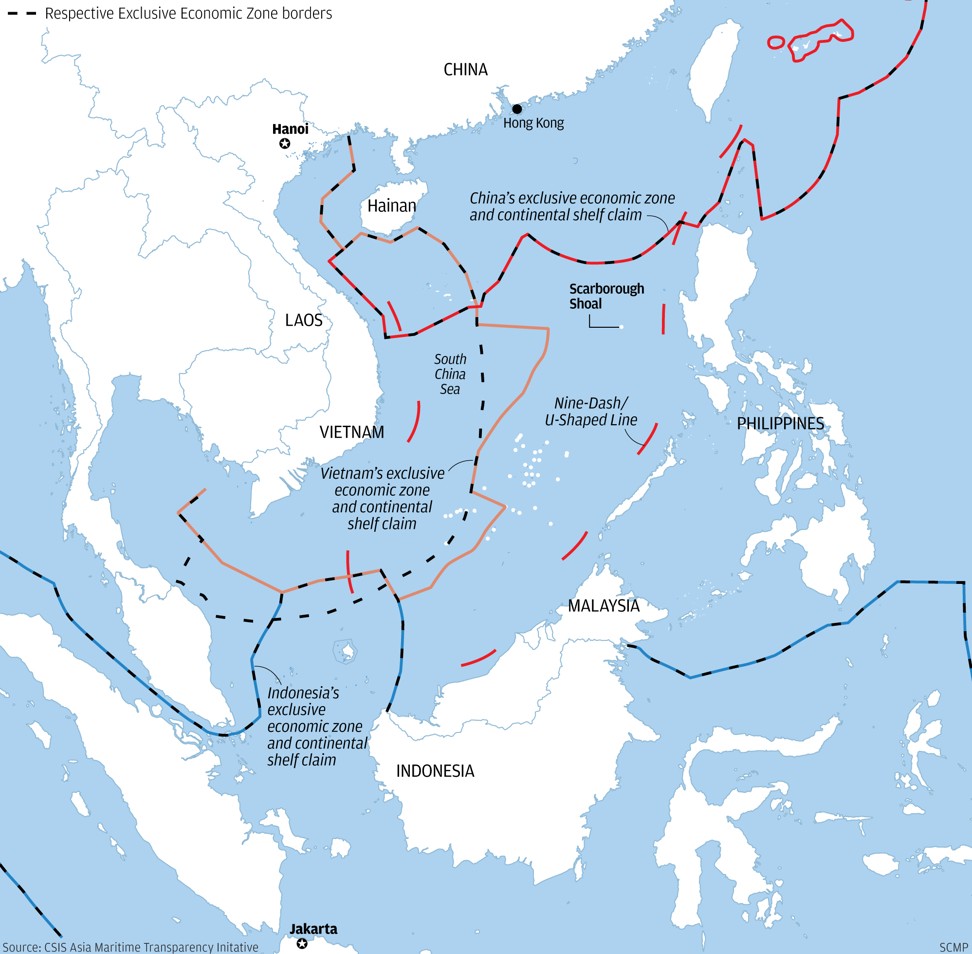
A map showing claimant countries’ exclusive economic zones in the South China Sea.
However, Chan has not explicitly expressed public support for the controversial maritime assertion.
Vietnam, Malaysia, the Philippines, Taiwan and Brunei all have competing claims in the waterway that overlap with China’s – long a source of tension in the region.
Issuing a mea culpa on Friday for failing “to predict the reaction” of the Vietnamese public, the charity asserted that their work is “non-political”.
“We are very sorry … Operation Smile will not organise any activities with [Chan’s] involvement” in Vietnam, they said.
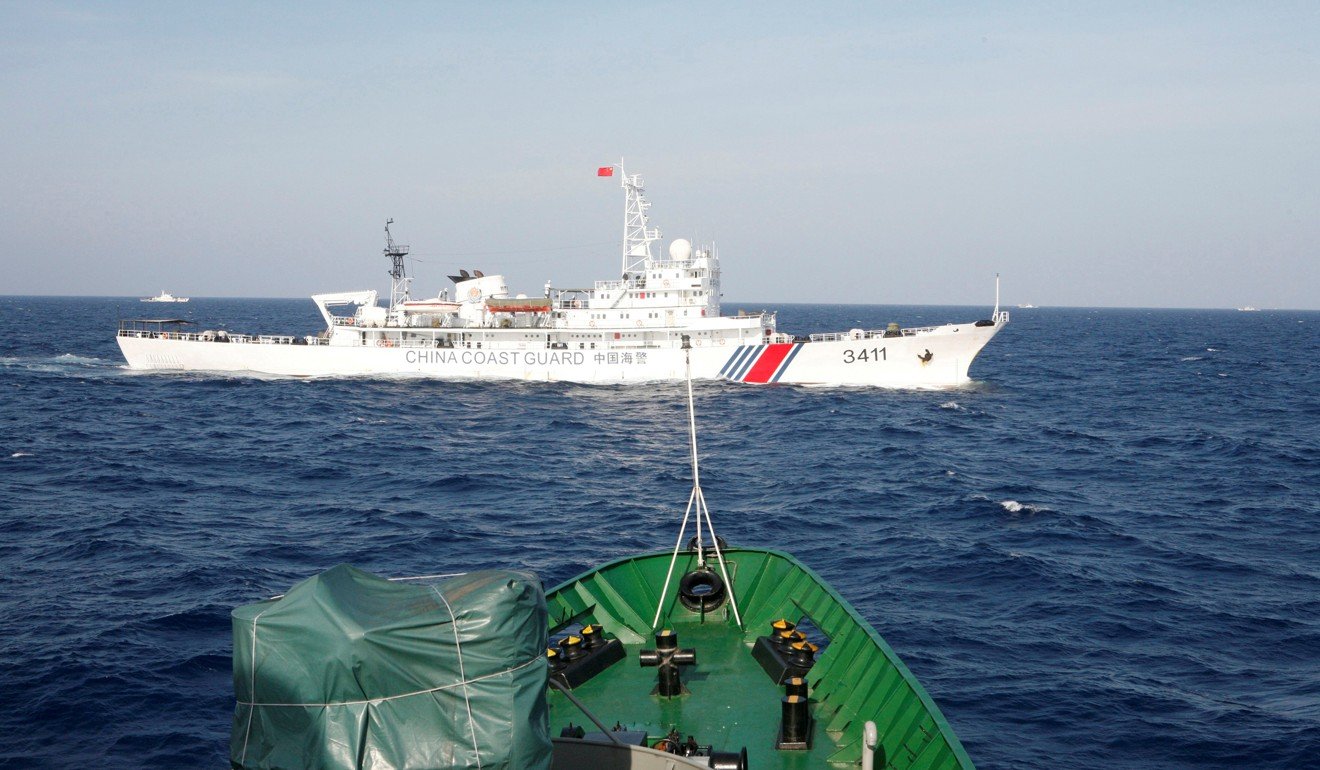
A Chinese coastguard ship sails by a Vietnamese vessel off the coast of Vietnam in 2014. Photo: Reuters
Vietnam is one of Beijing’s most vocal critics over the flashpoint South China Sea issue.
The foreign ministry on Thursday repeated its usual proclamation on the sea, citing the country’s “full legal basis and true evidence to affirm Vietnam’s sovereignty”, deputy spokesperson Ngo Toan Thang said.
Chan has in the past been accused of siding with China over Hong Kong’s democracy protests after calling the unrest in his hometown “sad and depressing”.
The comment sparked ire in Hong Kong but was warmly received by many in China where he has a massive fan base.
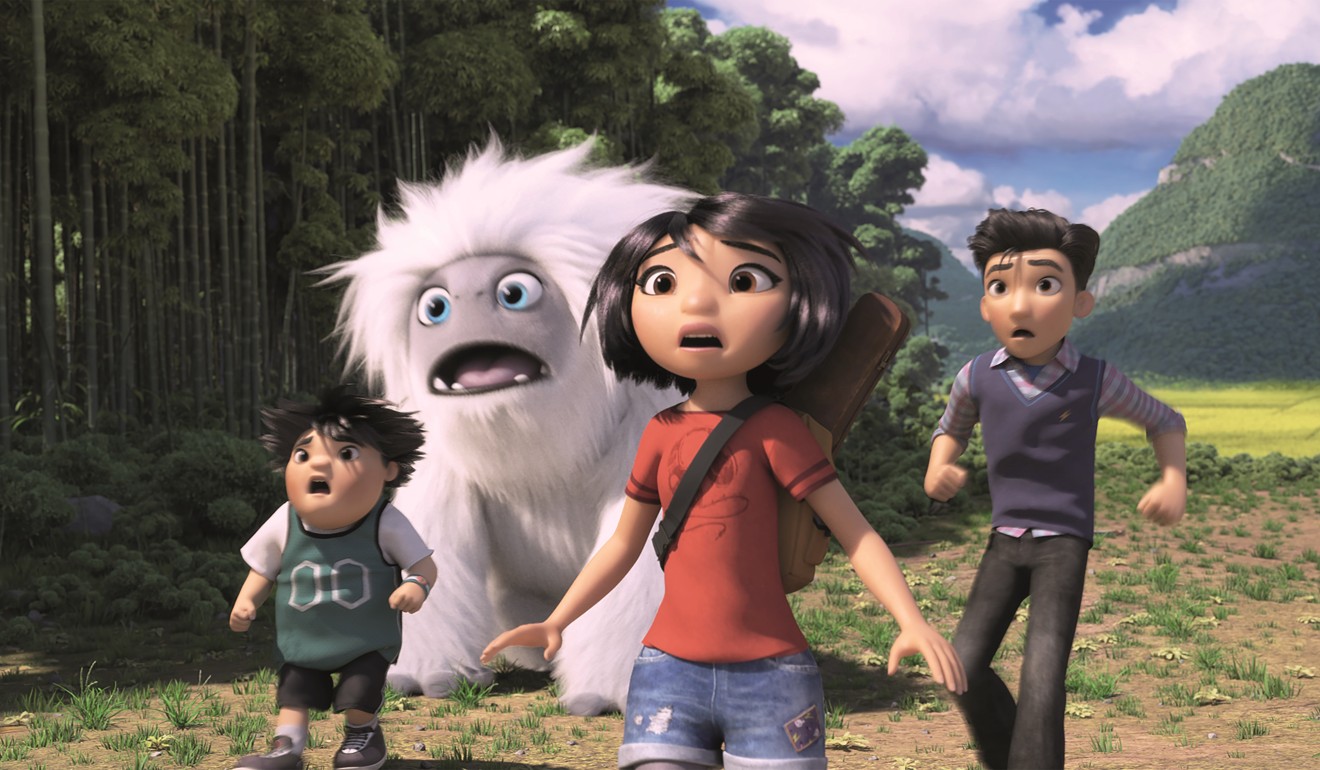
Abominable has been criticised for a scene showing the nine-dash line. Photo: DreamWorks
Beijing claims most the South China Sea through the vague delineation, which is based on maps from the 1940s as the then-Republic of China snapped up islands from Japanese control.
A visitor views an exhibit at the Erlitou Relic Museum in Luoyang, central China’s Henan Province, Oct. 19, 2019. The Erlitou Relic Museum, which exhibits the history of ancient China’s first recorded dynasty of Xia (2070-1600 B.C.), opened Saturday in Luoyang. It exhibits over 2,000 items, including bronze wares, pottery wares and jade wares. Covering an area of 32,000 square meters, the museum exhibits the history of the Xia Dynasty, the first dynasty recorded in ancient China. Construction of the museum cost 630 million yuan (about 89 million U.S. dollars). The Erlitou Relics date back to 3,500 to 3,800 years ago in ancient China’s late Xia or early Shang (1600-1046 B.C.) dynasties. (Xinhua/Li An)
ZHENGZHOU, Oct. 19 (Xinhua) — The Erlitou Relic Museum opened Saturday in Luoyang city in central China’s Henan Province, unveiling the history and culture of ancient China’s first recorded dynasty of Xia (2070-1600 B.C.).
Covering an area of 32,000 square meters, the museum exhibits over 2,000 items, including bronze wares, pottery wares and jade wares.
Construction of the museum cost 630 million yuan (about 89 million U.S. dollars).
The Erlitou Relics date back to 3,500 to 3,800 years ago in ancient China’s late Xia or early Shang (1600-1046 B.C.) dynasties.
Discovered in 1959 in Luoyang by historian Xu Xusheng, Erlitou was identified by Chinese archaeologists as the relics of the capital city of the middle and late Xia Dynasty.
Over the past 60 years, archaeologists have excavated over 10,000 items out of a total area of 40,000 square meters from the site.
Zhao Haitao from the Chinese Academy of Social Sciences (CASS) Erlitou archaeological team, said that China’s earliest palace complex, bronze ware workshop and urban road network were all found at the site.
The museum has three display areas where visitors can experience and better understand the archaeological achievements of the Xia Dynasty, and probe into the history and culture of the Xia Dynasty via various kinds of projects, such as virtual reality, embossment and sand tables.
Li Boqian, a professor with the School of Archaeology and Museology of Peking University, said the Erlitou Relic Museum presents daily utensils, manufacturing tools and decorations for visitors to understand the social development, history and culture of the Xia Dynasty.
The museum will help people around the world learn about ancient Chinese history and culture, said Liu Yuzhu, director of China’s National Cultural Heritage Administration, at the opening ceremony.
In addition, the museum will become a demonstration site for the protection, preservation and exhibition of China’s major cultural heritage sites and a research center for the origin of Chinese civilization.
BEIJING, Oct. 17 (Xinhua) — China and Mauritius signed a free trade agreement (FTA) here Thursday, the first FTA between China and an African country, according to the Ministry of Commerce (MOC).
The China-Mauritius FTA is the 17th FTA signed by China.
The agreement covers trade in goods and services and investment and economic cooperation.
The FTA will not only provide a more powerful institutional guarantee to deepen bilateral economic and trade relations, but also boost China-Africa economic and trade cooperation, according to the MOC.
Negotiations on the China-Mauritius FTA were officially launched in December 2017. The two sides formally concluded the negotiations on Sept. 2, 2018, after four rounds of intensive negotiations.
In the area of trade in goods, China and Mauritius will eventually achieve zero tariffs on 96.3 percent and 94.2 percent of product tariff items, respectively, involving 92.8 percent of import volume for both countries from each other.
For the remaining tariff items of Mauritius, the tariffs will also be greatly cut, and the maximum tariffs for most of the involved products will not exceed 15 percent.
China’s main exports to Mauritius, such as iron and steel products, textiles and other light industrial products, will benefit from it.
Special sugar produced in Mauritius will also enter the Chinese market gradually.
The two sides also agreed on rules of origin, trade remedies, technical barriers to trade and sanitary and phytosanitary issues.
In the area of trade in services, China and Mauritius both promised to open up more than 100 sub-sectors.
Mauritius will open up more than 130 sub-sectors in important service fields such as communications, education, finance, tourism, culture, transportation and traditional Chinese medicine to China.
This is the highest level of opening up in the field of services in Mauritius so far.
In the field of investment, the agreement has been greatly upgraded from the 1996 China-Mauritius bilateral investment protection agreement in terms of protection scope, protection level and dispute settlement mechanism.
This is the first time that China has upgraded the previous investment protection agreement with an African country, which will not only provide stronger protection for Chinese enterprises to go to Mauritius, but also help them further boost investment cooperation in Africa through the platform of Mauritius, according to the MOC.
Meanwhile, the two sides also agreed to further deepen economic and technical cooperation in agriculture, finance, medical care, tourism and other fields.
The two sides will undergo respective domestic procedures for the agreement to take effect.
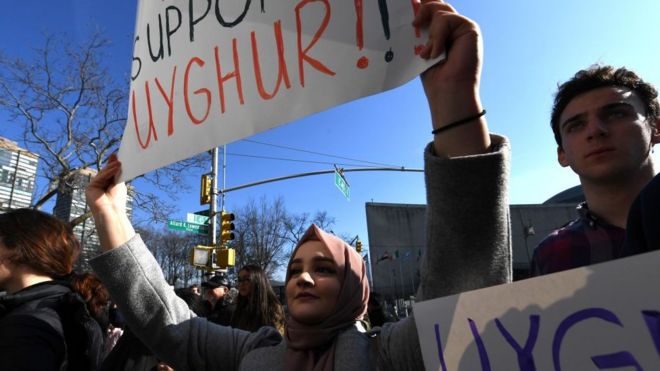
Image copyright GETTY IMAGESImage caption Protests calling for Uighur freedom have been happening all year
The US has said it will impose visa restrictions on Chinese officials accused of involvement in repression of Muslim populations.
It follows the decision on Monday to blacklist 28 Chinese organisations linked by the US to allegations of abuse in the Xinjiang region.
US Secretary of State Mike Pompeo said the Chinese government had instituted “a highly repressive campaign”.
China has dismissed the allegations as groundless.
In a statement, Mr Pompeo accused the Chinese government of a string of abuses against Uighurs, ethnic Kazakhs, Kyrgyz Muslims and other minority Muslim groups.
These included “mass detentions in internment camps; pervasive, high-tech surveillance; draconian controls on expressions of cultural and religious identities; and coercion of individuals to return from abroad to an often perilous fate in China”.
China has rebuffed the US moves.
“There is no such thing as these so-called ‘human rights issues’ as claimed by the United States,” foreign ministry spokesman Geng Shuang said on Monday.
“These accusations are nothing more than an excuse for the United States to deliberately interfere in China’s internal affairs.”
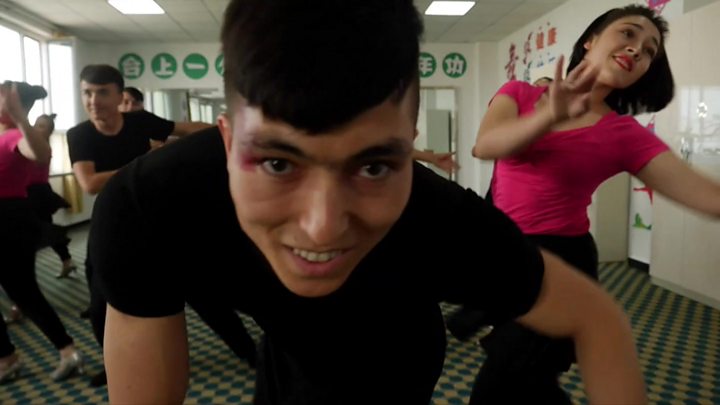
Media caption The BBC visits the camps where China’s Muslims have their “thoughts transformed”
Visa restrictions are to be imposed on Chinese government and Communist Party officials, as well as their family members.
“The United States calls on the People’s Republic of China to immediately end its campaign of repression in Xinjiang, release all those arbitrarily detained, and cease efforts to coerce members of Chinese Muslim minority groups residing abroad to return to China to face an uncertain fate,” the US statement said.
The US and China are currently embroiled in a trade war, and have sent delegations to Washington for a meeting about the tensions later this week.
China has been carrying out a massive security operation in Xinjiang, in its far west, in recent years.
Human rights groups and the UN say China has rounded up and detained more than a million Uighurs and other ethnic minorities in vast detention camps, where they are forced to renounce Islam, speak only in Mandarin Chinese and learn obedience to the communist government.
But China says they are attending “vocational training centres” which are giving them jobs and helping them integrate into Chinese society, in the name of preventing terrorism.
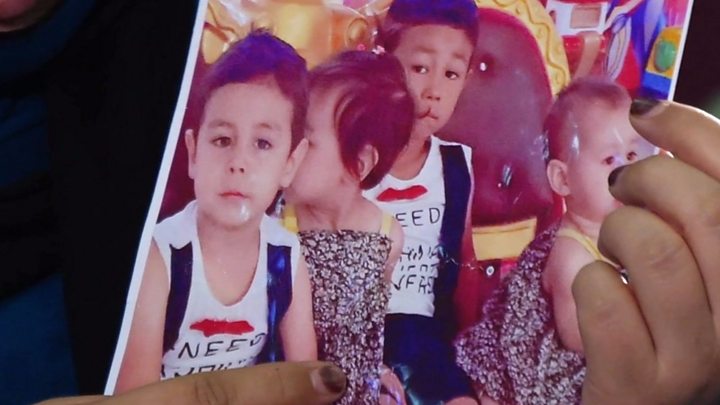
Media caption The BBC’s John Sudworth meets Uighur parents in Turkey who say their children are missing in China
There have been increasingly vocal denunciations from the US and other countries about China’s actions in Xinjiang.
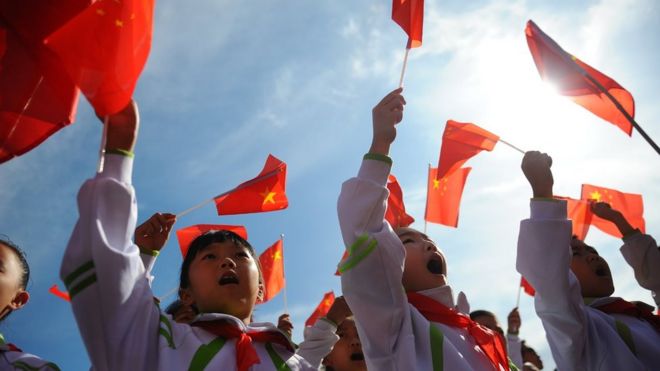
Image copyright GETTY IMAGESImage caption China’s version of its past is a story of prosperity, progress and sacrifice for the common good
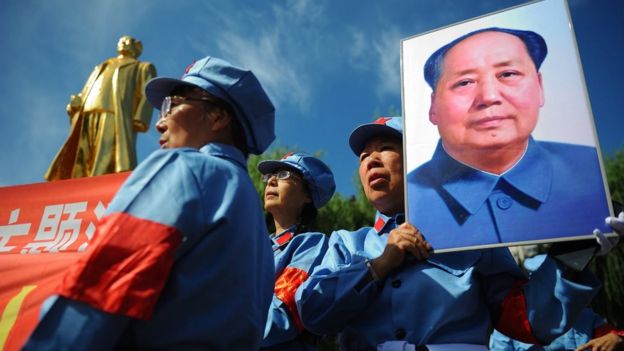
China’s extraordinary rise was a defining story of the 20th Century, but as it prepares to mark its 70th anniversary, the BBC’s John Sudworth in Beijing asks who has really won under the Communist Party’s rule.
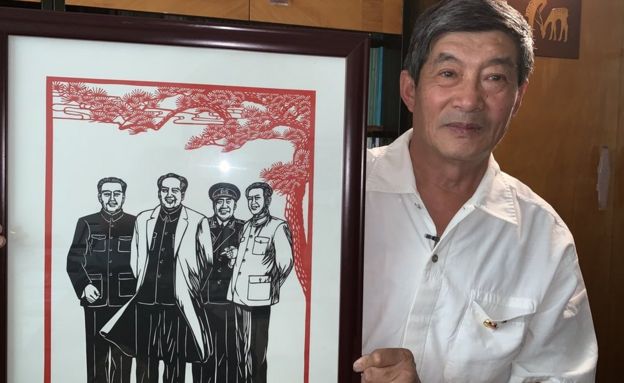
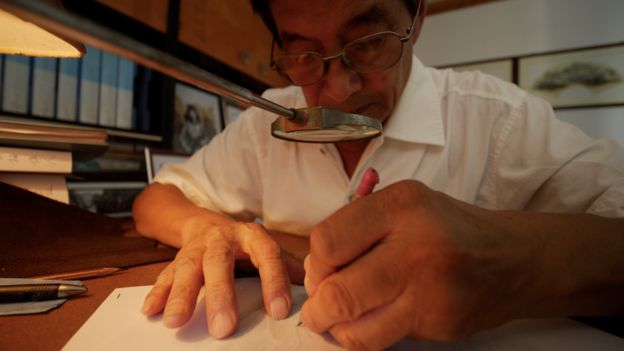
Sitting at his desk in the Chinese city of Tianjin, Zhao Jingjia’s knife is tracing the contours of a face.
Cut by delicate cut, the form emerges – the unmistakable image of Mao Zedong, founder of modern China.
The retired oil engineer discovered his skill with a blade only in later life and now spends his days using the ancient art of paper cutting to glorify leaders and events from China’s communist history.
“I’m the same age as the People’s Republic of China (PRC),” he says. “I have deep feelings for my motherland, my people and my party.”
Image caption For people like Zhao Jingjia, China’s success outweighs the “mistakes” of its leaders
Born a few days before 1 October 1949 – the day the PRC was declared by Mao – Mr Zhao’s life has followed the dramatic contours of China’s development, through poverty, repression and the rise to prosperity.
Now, in his modest but comfortable apartment, his art is helping him make sense of one of the most tumultuous periods of human history.
“Wasn’t Mao a monster,” I ask, “responsible for the deaths of tens of millions of his countrymen?”
“I lived through it,” he replies. “I can tell you that Chairman Mao did make some mistakes but they weren’t his alone.”
“I respect him from my heart. He achieved our nation’s liberation. Ordinary people cannot do such things.”
On Tuesday, China will present a similar, glorious rendering of its record to the world.
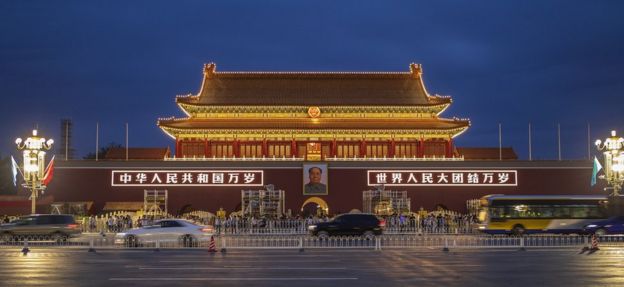
Beijing will tremble to the thunder of tanks, missile launchers and 15,000 marching soldiers, a projection of national power, wealth and status watched over by the current Communist Party leader, President Xi Jinping, in Tiananmen Square.
An incomplete narrative of progress
Like Mr Zhao’s paper-cut portraits, we’re not meant to focus on the many individual scars made in the course of China’s modern history.
It is the end result that matters.
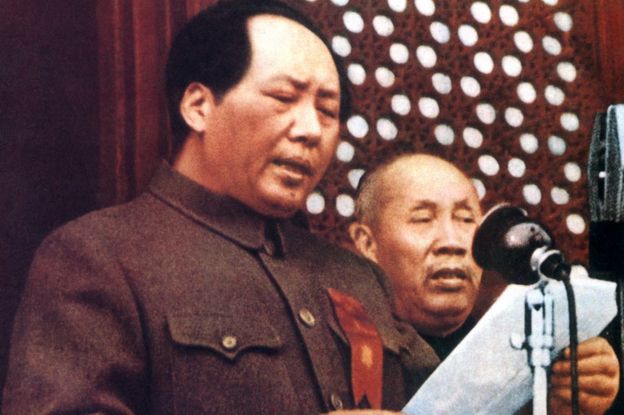
Image copyright XINHUA/AFPImage caption Mao Zedong pronounces the dawn of the People’s Republic of China on 1 October 1949
And, on face value, the transformation has been extraordinary.
On 1 October 1949, Chairman Mao stood in Tiananmen Square urging a war-ravaged, semi-feudal state into a new era with a founding speech and a somewhat plodding parade that could muster only 17 planes for the flyby.
This week’s parade, in contrast, will reportedly feature the world’s longest range intercontinental nuclear missile and a supersonic spy-drone – the trophies of a prosperous, rising authoritarian superpower with a 400 million strong middle class.
It is a narrative of political and economic success that – while in large part true – is incomplete.
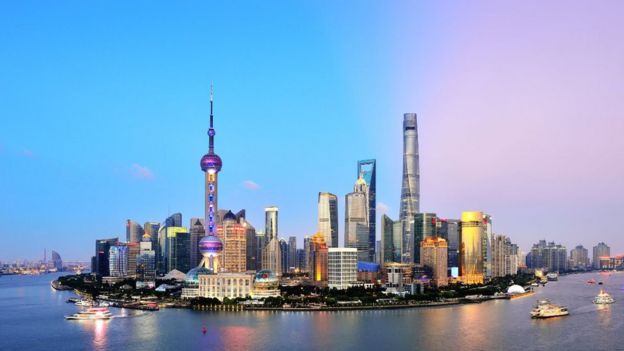
New visitors to China are often, rightly, awe-struck by the skyscraper-festooned, hi-tech megacities connected by brand new highways and the world’s largest high-speed rail network.
Image copyright GETTY IMAGESImage caption Those in China’s glittering cities may accept the trade-off of political freedom for economic growth
They see a rampant consumer society with the inhabitants enjoying the freedom and free time to shop for designer goods, to dine out and to surf the internet.
“How bad can it really be?” the onlookers ask, reflecting on the negative headlines they’ve read about China back home.
The answer, as in all societies, is that it depends very much on who you are.
Many of those in China’s major cities, for example, who have benefited from this explosion of material wealth and opportunity, are genuinely grateful and loyal.
In exchange for stability and growth, they may well accept – or at least tolerate – the lack of political freedom and the censorship that feature so often in the foreign media.
For them the parade could be viewed as a fitting tribute to a national success story that mirrors their own.
But in the carving out of a new China, the knife has cut long and deep.
The dead, the jailed and the marginalised
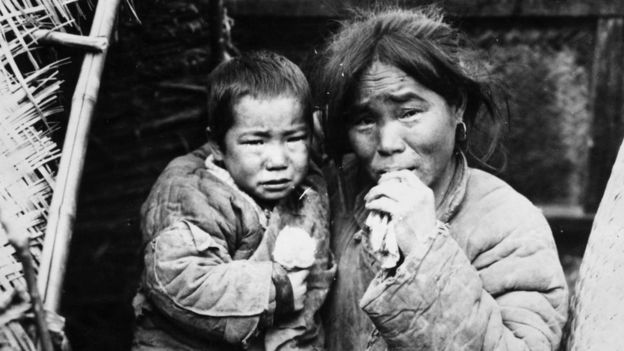
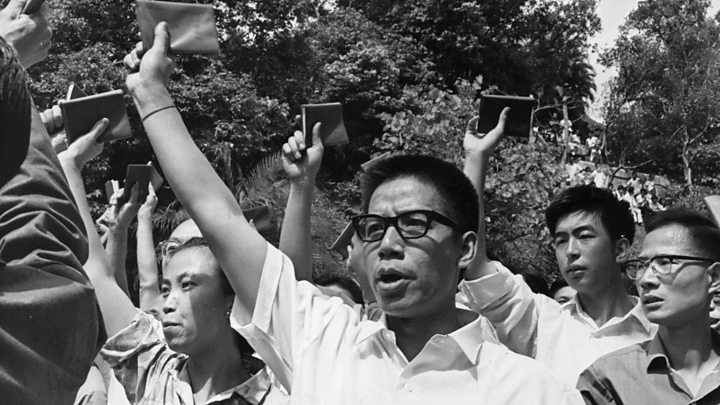
Mao’s man-made famine – a result of radical changes to agricultural systems – claimed tens of millions of lives and his Cultural Revolution killed hundreds of thousands more in a decade-long frenzy of violence and persecution, truths that are notably absent from Chinese textbooks.
Image copyright GETTY/TOPICALImage caption Tens of millions starved to death under Mao, as China radically restructured agriculture and society
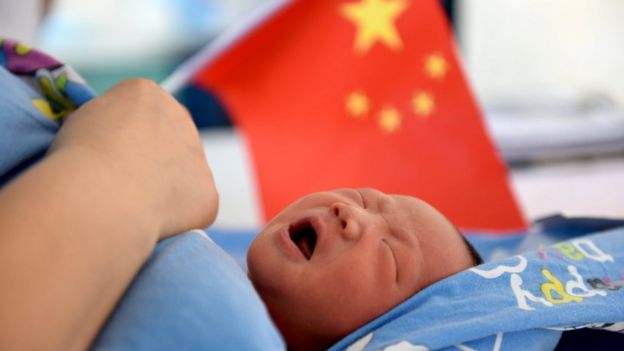
After his death, the demographically calamitous One Child Policy brutalised millions over a 40-year period.
Still today, with its new Two Child Policy, the Party insists on violating that most intimate of rights – an individual’s choice over her fertility.
The list is long, with each category adding many thousands, at least, to the toll of those damaged or destroyed by one-party rule.
Image copyright GETTY IMAGESImage caption Beijing still regulates how many children families can have
There are the victims of religious repression, of local government land-grabs and of corruption.
There are the tens of millions of migrant workers, the backbone of China’s industrial success, who have long been shut out of the benefits of citizenship.
A strict residential permit system continues to deny them and their families the right to education or healthcare where they work.
And in recent years, there are the estimated one and a half million Muslims in China’s western region of Xinjiang – Uighurs, Kazakhs and others – who have been placed in mass incarceration camps on the basis of their faith and ethnicity.
China continues to insist they are vocational schools, and that it is pioneering a new way of preventing domestic terrorism.
The stories of the dead, the jailed and the marginalised are always much more hidden than the stories of the assimilated and the successful.
Viewed from their perspective, the censorship of large parts of China’s recent history is not simply part of a grand bargain to be exchanged for stability and prosperity.
Getty
Timeline of modern China
1949 Mao declares the founding of the People’s Republic of China
1966-76 Cultural Revolution brings social and political upheaval
1977 Deng Xiaoping initiates major reforms of China’s economy
1989 Army crushes Tiananmen Square pro-democracy protests
2010 China becomes the world’s second-largest economy
2018 Xi Jinping is cleared to be president for life
It is something that makes the silence of their suffering all the more difficult to penetrate.
It is the job of foreign journalists, of course, to try.
‘Falsified, faked and glorified’
But while censorship can shut people up, it cannot stop them remembering.
Prof Guo Yuhua, a sociologist at Beijing’s Tsinghua University, is one of the few scholars left trying to record, via oral histories, some of the huge changes that have affected Chinese society over the past seven decades.
Her books are banned, her communications monitored and her social media accounts are regularly deleted.
“For several generations people have received a history that has been falsified, faked, glorified and whitewashed,” she tells me, despite having been warned not to talk to the foreign media ahead of the parade.
“I think it requires the entire nation to re-study and to reflect on history. Only if we do that can we ensure that these tragedies won’t be repeated.”
Image copyright GETTY IMAGESImage caption Can progress really be attributed to the leadership?
A parade, she believes, that puts the Communist Party at the front and centre of the story, misses the real lesson, that China’s progress only began after Mao, when the party loosened its grip a bit.
“People are born to strive for a better, happier and more respectful life, aren’t they?” she asks me.
“If they are provided with a tiny little space, they’ll try to make a fortune and solve their survival problems. This shouldn’t be attributed to the leadership.”
‘Our happiness comes from hard work’
As if to prove the point about how the unsettled, censored pasts of authoritarian states continue to impact the present, the parade is for invited guests only.
Image copyright GETTY IMAGESImage caption Mao’s portrait will, as it always is, be watching over the events in Tiananmen Square
Another anniversary, of which Tiananmen Square is the centrepiece, is also being measured in multiples of 10 – it is 30 years since the bloody suppression of the pro-democracy protests that shook the foundations of Communist Party rule.
The troops will be marching – as they always do on these occasions – down the same avenue on which the students were gunned down.
The risk of even a lone protester using the parade to mark a piece of history that has largely been wiped from the record is just too great.
With central Beijing sealed off, ordinary people in whose honour it is supposedly being held, can only watch it on TV.
Back in his Tianjin apartment, Zhao Jingjia shows me the intricate detail of a series of scenes, each cut from a single piece of paper, depicting the “Long March”, a time of hardship and setback for the Communist Party long before it eventually swept to power.
“Our happiness nowadays comes from hard work,” he tells me.
It is a view that echoes that of the Chinese government which, like him, has at least acknowledged that Mao made mistakes while insisting they shouldn’t be dwelt on.
“As for the 70 years of China, it’s extraordinary,” he says. “It can be seen by all. Yesterday we sent two navigation satellites into space – all citizens can enjoy the convenience that these things bring us.”
Media caption What was China’s Cultural Revolution?
Li Zhanshu, chairman of the Standing Committee of the National People’s Congress of China, meets with First President of Kazakhstan Nursultan Nazarbayev in Kazakhstan, Sept. 23, 2019. Li paid an official goodwill visit to Kazakhstan from Sept. 21 to 25 at the invitation of Dariga Nazarbayeva, speaker of the Kazakh Parliament’s Upper House, Nurlan Nigmatulin, speaker of the Kazakh Parliament’s Lower House. (Xinhua/Zhai Jianlan)
NUR-SULTAN, Sept. 25 (Xinhua) — Li Zhanshu, chairman of the Standing Committee of the National People’s Congress (NPC) of China, and Kazakh leaders have agreed here to boost mutually beneficial cooperation in various areas.
During an official goodwill visit from Saturday to Wednesday, Li met with First President of Kazakhstan Nursultan Nazarbayev and conveyed Chinese President Xi Jinping’s cordial greetings to him.
Li told Nazarbayev that China and Kazakhstan are good neighbors and the most reliable friends and partners.
Li said China and Kazakhstan have decided to develop a permanent comprehensive strategic partnership and build a community with a shared future, and their ties have become a model of interstate relations following 27 years of development since the establishment of their diplomatic relationship.
Both sides need to strengthen political mutual trust and mutually beneficial cooperation in various fields, Li said, adding that China has full confidence in the future of Kazakhstan and will continue to support the Central Asian country in pursuing its development path that suits its national conditions.
Nazarbayev told Li that China is a good friend of his country and China’s development is vital to Kazakhstan.
He said strengthening Kazakhstan-China cooperation is in line with the two countries’ interests, and Kazakhstan always prioritizes in its foreign policy cementing and developing ties with China.
At a meeting with Kazakh President Kassym-Jomart Tokayev, Li conveyed Xi’s good wishes to him.
Li said the construction of a Silk Road Economic Belt was first proposed in Kazakhstan, and both countries as permanent comprehensive strategic partners should respect, trust and support each other no matter how the global and regional situations develop.
China and Kazakhstan should improve the alignment of their development strategies and boost cooperation in production capacities, energy, agriculture, inter-connectivity, finance, cross-border e-commerce, high-technology, education, sports, culture and tourism, Li said.
Tokayev said that Kazakhstan, located in the center of the Eurasian continent, will always be a friendly neighbor of China. He praised China’s key role in maintaining global security and stability.
The Belt and Road Initiative is significant to Kazakhstan, which is ready to strengthen cooperation with China, implement bilateral agreements and achieve more outcomes.
At talks with Dariga Nazarbayeva, speaker of the Kazakh parliament’s upper house, and Nurlan Nigmatulin, speaker of the lower house, Li said the two legislatures should implement the important consensuses reached by the heads of state and facilitate bilateral cooperation with legislation and favorable policy.
Li said the two legislatures should push for the signing of an updated version of the China-Kazakhstan investment protection pact, streamline procedures for customs clearance and work permits, and create a sound investment environment.
Nazarbayeva said that strengthening Kazakhstan-China cooperation has particular significance as the world is fraught with risks and challenges, and that she expects better quality in such cooperation.
Nigmatulin said the Kazakh parliament is willing to compare notes on legislation and supervision with the NPC of China.
During his visit, Li and Kazakh Prime Minister Askar Mamin attended the opening ceremony of the China Construction Bank’s Astana office.
Li listened to a report about the Astana International Financial Center and encouraged financial institutions in the center to participate in the Belt and Road Initiative.
The Chinese top legislator also visited the site of the 2017 Astana Expo and the national museum.
BAKU, Sept. 21 (Xinhua) — China and Azerbaijan enjoy promising prospects in co-building the Belt and Road, Chinese Ambassador to Azerbaijan Guo Min said in a recent exclusive interview with Xinhua.
With a sound and steady development of bilateral relations, Guo praised the advantages of the China-proposed Belt and Road Initiative (BRI) for both sides, emphasizing Azerbaijan’s full support for and involvement in the construction of the Belt and Road.
She said Azerbaijan sees the development of relationship with China as a diplomatic priority. “China and Azerbaijan have exchanged frequent high-level visits since the beginning of this year, with mutual political trust deepening even further.”
Azerbaijani President Ilham Aliyev attended the second Belt and Road Forum for International Cooperation held in Beijing in April, said Guo, adding “the leaders of the two countries reached important consensus to further develop bilateral relations and practical cooperation in various fields.”
“Cooperation in trade, energy, transportation, humanities and other fields has yielded fruits,” she said, noting bilateral trade reached 1.5 billion U.S. dollars from January to August, an increase of 104 percent from the same period last year.
“In recent years, the two nations have been promoting cooperation in a number of areas, including education, culture, health, sports and tourism on a continuous basis,” said the ambassador.
The two countries “have exchanged the visits of culture and art figures and held a wide range of film festivals, art exhibitions and other activities to actively promote unity, mutual understanding and friendly exchanges between the people,” according to Guo.
“At the next stage, the two nations should capitalize on the existing potential and focus on more points of interest,” the ambassador said.
She described the deep traditional friendship, high-level mutual political trust and the highly complementary practical cooperation as key foundations and effective guarantees for the stability and improvement of bilateral relations.
“China is willing to work together with Azerbaijan to push Sino-Azerbaijani friendship and cooperation to a new level and benefit the two countries and their peoples,” the ambassador added.
LANZHOU, Sept. 18 (Xinhua) — A total of 26 participants from 21 countries including Brazil, New Zealand and the United States attended the closing ceremony of the Gansu International Fellowship Program held Tuesday in the capital city of Lanzhou, northwest China’s Gansu Province.
Held by the provincial government, the 30-day program, starting from Aug. 20, focused on China’s overall development in areas such as the economy, society and culture, as well as its anti-poverty campaign.
Economic experts, scientists and sociologists from local universities and research institutes as well as government departments were invited to share their experience and give lectures.
During the program, all participants visited the Mogao Grottoes, a UNESCO World Heritage site. Based on the culture courses, they exchanged ideas with local officials and experts.
“I was very impressed with the comprehensive structure planning being undertaken to turn Lanzhou and Gansu as a whole into a major hub of China,” said Robert Love, a strategy and policy planner with Selwyn District Council, New Zealand, after his visit to the Lanzhou Urban Planning Exhibition Hall.
Philippe Dall’Agnol, a state attorney from Brazil, told Xinhua that China’s poverty alleviation efforts and means of increasing production were particularly worth studying, adding that when he returns to Brazil, he will continue to be a messenger of peace and a bridge of friendship, to actively promote exchanges and cooperation between the two countries.
Since it was initiated in 2006, a total of 309 participants from 62 countries have graduated from the program, making it an important platform for international exchanges and cooperation.






 CHINDIA ALERT: You'll be living in their world, very soon