Chindia Alert: You’ll be Living in their World Very Soon
aims to alert you to the threats and opportunities that China and India present. China and India require serious attention; case of ‘hidden dragon and crouching tiger’.
Without this attention, governments, businesses and, indeed, individuals may find themselves at a great disadvantage sooner rather than later.
The POSTs (front webpages) are mainly 'cuttings' from reliable sources, updated continuously.
The PAGEs (see Tabs, above) attempt to make the information more meaningful by putting some structure to the information we have researched and assembled since 2006.
Tense relations with the US and the question of whether armed confrontation can be avoided will loom large when China’s political elites meet
Structural shifts in balance of power have brought the countries closer to the brink, analyst says, with the South China Sea the most likely flashpoint
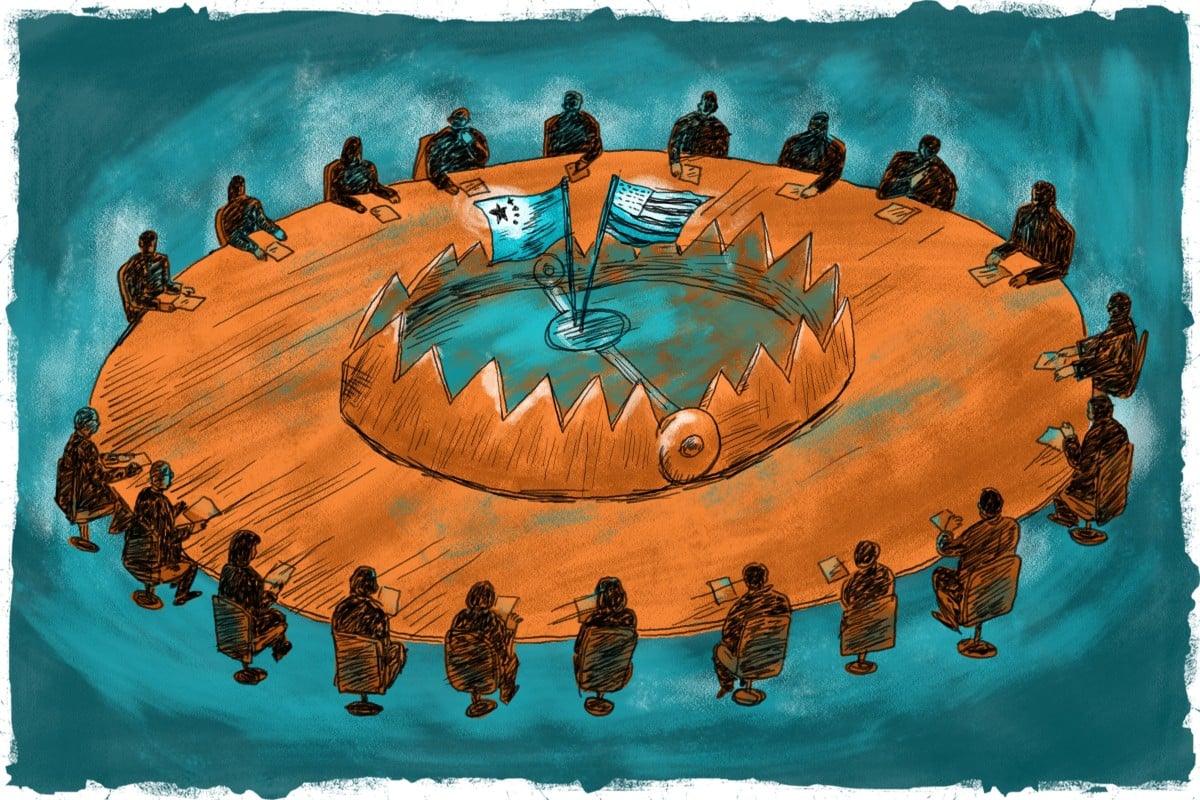
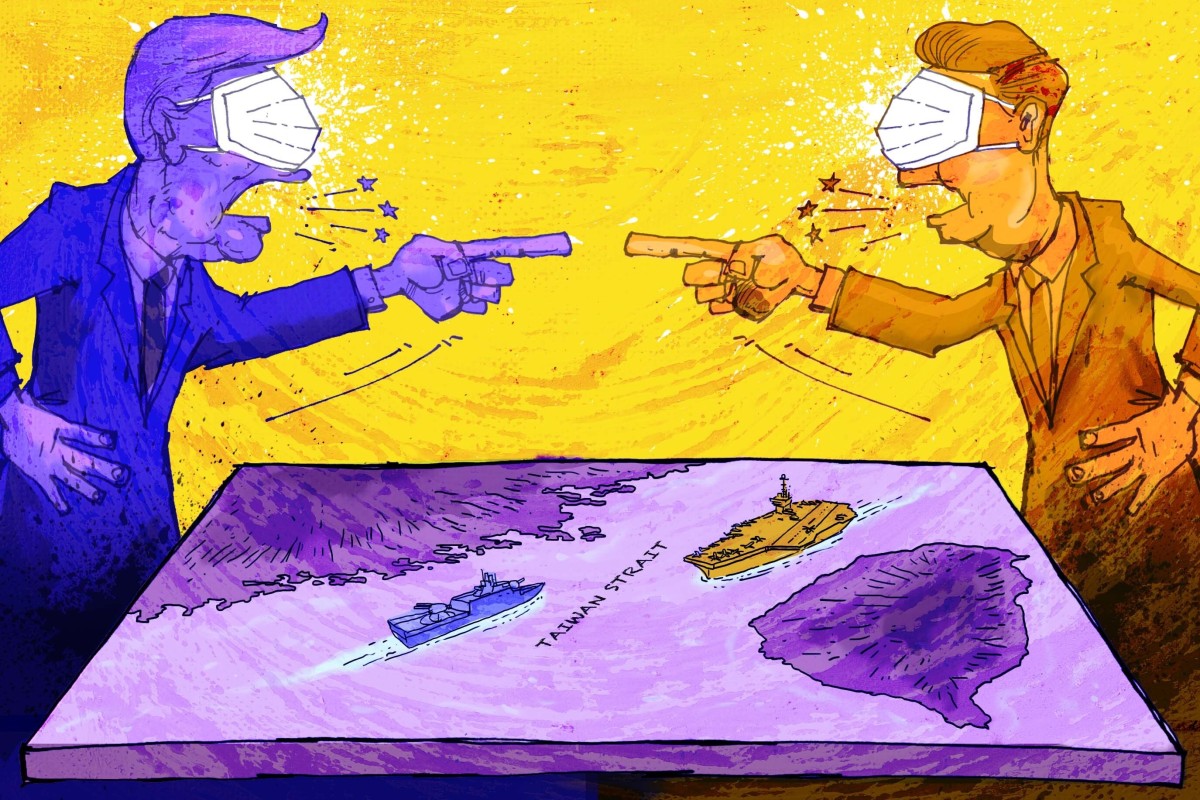
Illustration: Brian Wang
This is the fifth in a nine-part series examining the issues Chinese leaders face as they gather for their annual “two sessions” of the National People’s Congress and Chinese People’s Political Consultative Conference this week. This story looks at the sharp decline of US-China ties, and where it may lead.
When thousands of China’s elites flock to Beijing for the delayed national legislative session starting on Friday they will face a renewed debate about relations with the US. Specifically, can armed conflict between the two economic superpowers be avoided?
The question is not new, but it has taken on a new urgency as the acrimony escalates between Washington and Beijing amid the Covid-19 pandemic, exposing growing cracks in the current global order.
Harvard professor Graham Allison raised the question in a 2017 book, Destined for War: Can America and China Escape Thucydides’ Trap? The reference being to the Greek historian of 2,500 years ago and the conundrum named after him on the likelihood of armed conflict when a rising power challenges a ruling power.
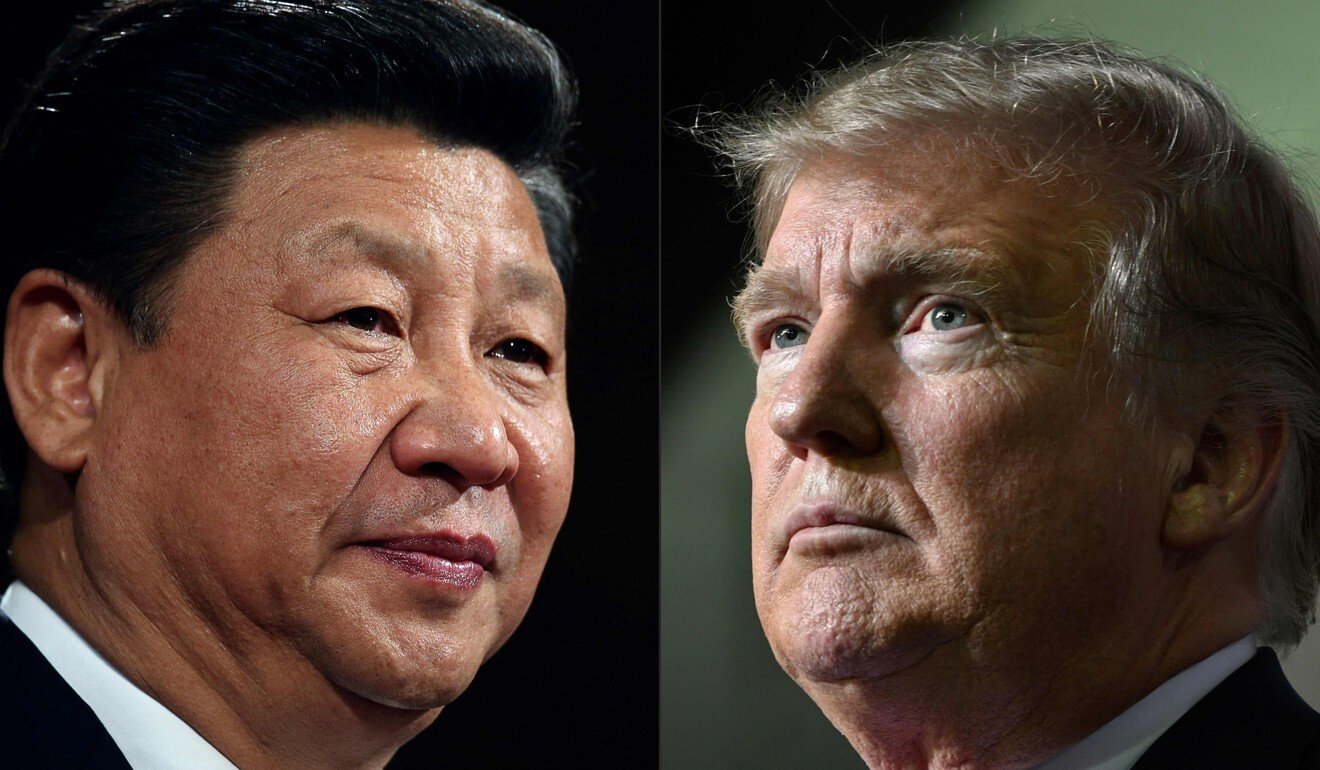
President Xi Jinping has shown personal interest in the Thucydides trap concept, which Allison first posed in a 2012 newspaper article, referencing it on at least three occasions, including the eve of the swearing-in ceremony of US President Donald Trump three years ago.
Speaking at the World Economic Forum in Davos in January 2017, Xi said the Thucydides trap “can be avoided … as long as we maintain communication and treat each other with sincerity”.
Xi Jinping referenced the Thucydides trap concept on the eve of Donald Trump’s swearing-in ceremony. Photos: AFP
But since then, the devastating Covid-19 pandemic has driven the deeply fraught US-China relations to the brink of an all-out confrontation as a result of strategic distrust and misperception, said Wang Jisi, president of Peking University’s Institute of International and Strategic Studies.
“China and the US are shifting from an all-around competition to a full-scale confrontation, with little room for compromise and manoeuvring,” Wang said in a speech in late March. “We cannot rule out the possibility that the two powers may fall into the Thucydides trap.”
That seems to sum up the tone of recent communications from the US side. Trump has vowed to “take whatever actions that are necessary” to seek reparations and hold China accountable for the Covid-19 disease that was first identified in the city of Wuhan at the end of last year. His top aides, especially Secretary of State Mike Pompeo and Defence Secretary Mark Esper, have been particularly blunt.
During the Munich Security Conference in February, Esper described China as a rising threat to the world order and urged countries to side with the US in preparing for “high intensity conflict against China”.
The prospects for bilateral ties are deeply worrying and we are just one step away from a new cold warZhu Feng, Nanjing University
Mainland authorities are usually reluctant to play up sensitive diplomatic topics during the annual gatherings of the National People’s Congress and the Chinese People’s Political Consultative Conference, known as the “two sessions”.
Domestic concerns, especially the socio-economic upheaval wrought by the pandemic, will no doubt dominate the week-long meetings as the country faces the deepest economic contraction in decades, mass unemployment, and a possible manufacturing exodus from China.
However, the sharp decline in relations with the US in recent months and its possible consequences are expected to loom large in the minds of over 5,000 participants at the two sessions, according to Gu Su, a political scientist at Nanjing University.
“Considering the boiling tensions with the US over Covid-19 and the resulting scrutiny of China’s global ambitions – which have dealt a heavy blow to the economy, especially at local levels, and left the country increasingly isolated – it may be hard to suppress such discussions,” Gu said.
Given the widespread public interest in these contentious topics, Xi and other top leaders may need to weigh in personally and set the tone for the national debate, especially on the future of China and US relations, he said.
But it would be unrealistic to expect major policy decisions on diplomacy, as “the two sessions are not usually known for substantial foreign policy deliberations”, said Zhu Feng, an international affairs expert at Nanjing University.
Paramilitary police officers patrol in Tiananmen Square near the Great Hall of the People in Beijing, where China’s political elites are about to meet for the “two sessions”. Photo: Reuters
‘Worst-case scenarios’
The deterioration of US-China ties has clearly alarmed Xi and his top aides. On April 8, the Chinese leader issued an unusually stark warning that “we must get ready for the worst-case scenarios” in light of unprecedented external adversity and challenges, according to Xinhua.
While the state news agency did not elaborate on what Xi meant by worst-case scenarios, a recent study by a Chinese government-backed think tank offered some hints.
The China Institutes of Contemporary International Relations (CICIR), affiliated with the Ministry of State Security, said Beijing may need to prepare for armed confrontation with Washington amid the worst anti-China backlash since the Tiananmen crackdown in 1989, according to Reuters, which cited an internal report.
The report warned that China’s overseas investments, especially the ambitious Belt and Road Initiative, could fall victim to rising anti-Chinese sentiments, while the US may accelerate efforts to counter Beijing’s expanding clout by increasing financial and military support for regional allies.
While the think tank declined to confirm the Reuters story, many international relations analysts shared similar bleak assessments of US-China relations.
“We are already in an all-around confrontation with the US, which sees both sides at odds on almost every front – from trade and tech tensions, military, ideological and geopolitical rivalry, to political and legal battles over the coronavirus,” Zhu said. “The prospects for bilateral ties are deeply worrying and we are just one step away from a new cold war.”
With much of the world still in the grip of the Covid-19 pandemic, Beijing’s critics and opponents, led by the US, have upped the ante in the blame-shifting game as they line up to pursue an international investigation into the origins of the deadly virus.
The coronavirus has also derailed most of China’s diplomatic agenda for the first half of the year, with Xi’s planned state visits to Japan and South Korea postponed.
Meanwhile, China’s relations with the European Union have become more tense, though Beijing managed to dodge a bullet at this week’s World Health Assembly, which adopted a mildly worded resolution drafted by the EU to carry out an independent inquiry into different countries’ response to the outbreak at “an appropriate time”.
But a growing number of European countries have pushed back against China’s diplomatic assertiveness and followed Washington’s lead to press Beijing for greater transparency over the coronavirus.
Shelley Rigger, a political science professor at Davidson College in North Carolina, said the CICIR report, if confirmed, offered a clear-eyed assessment of the situation and did not have the usual triumphalist tone present in many papers on international relations from China.
“That’s a good thing. Everyone needs to be realistic, and not indulge in wishful thinking or overconfidence,” she said.
The ‘two sessions’ explained: China’s most important political meetings of the year
Seth Jaffe, assistant professor of political science and international affairs at John Cabot University in Rome and an expert on Greek history, said the Chinese think tank report was “profoundly concerning”.
“The acrimonious narratives surrounding Covid-19 are currently reshaping the attitudes of leaders and populations alike, which is leading to harder-line strategic postures, as evidenced by the hawkish CICIR report,” he said. “In this way, the virus blame game is stirring up nationalistic pride and grievance, narrowing the space for political leaders to manoeuvre, and creating zero-sum dynamics that invite future conflict – a vicious cycle.”
According to Jaffe, the author of Thucydides on the Outbreak of War: Character and Contest, although the temperaments of Trump and Xi would matter enormously in any actual crisis, it was the structural shifts in the balance of power in recent years that had brought the two sides closer to the brink.
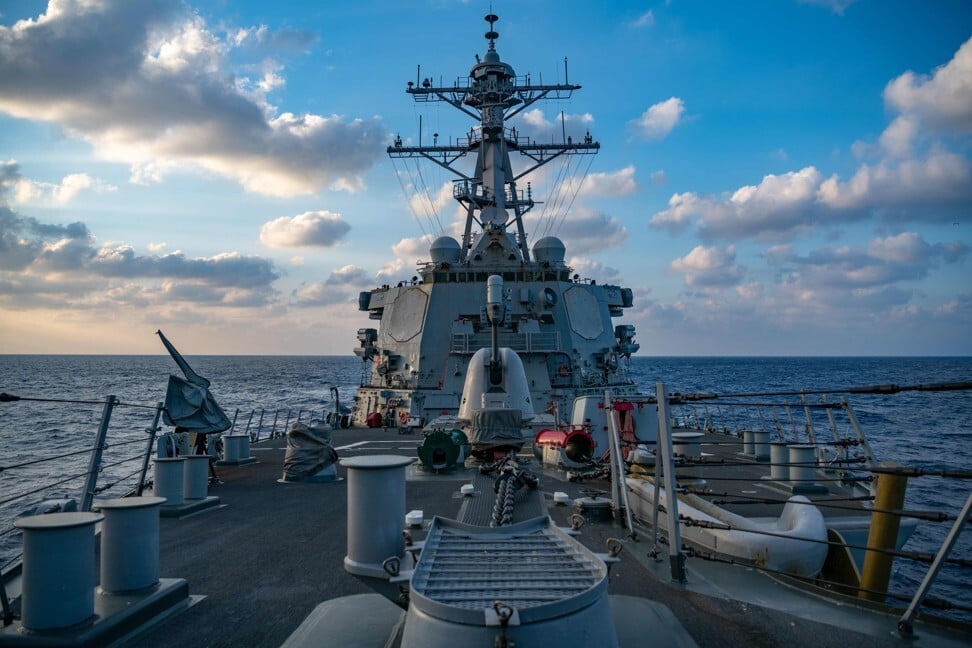
The most likely collision scenario, he said, would be in the South China Sea.
“I still worry most about military close encounters associated with American freedom of navigation operations, which could rapidly escalate in unintended but dangerous directions, for example, in the direction of a serious naval conflict.”
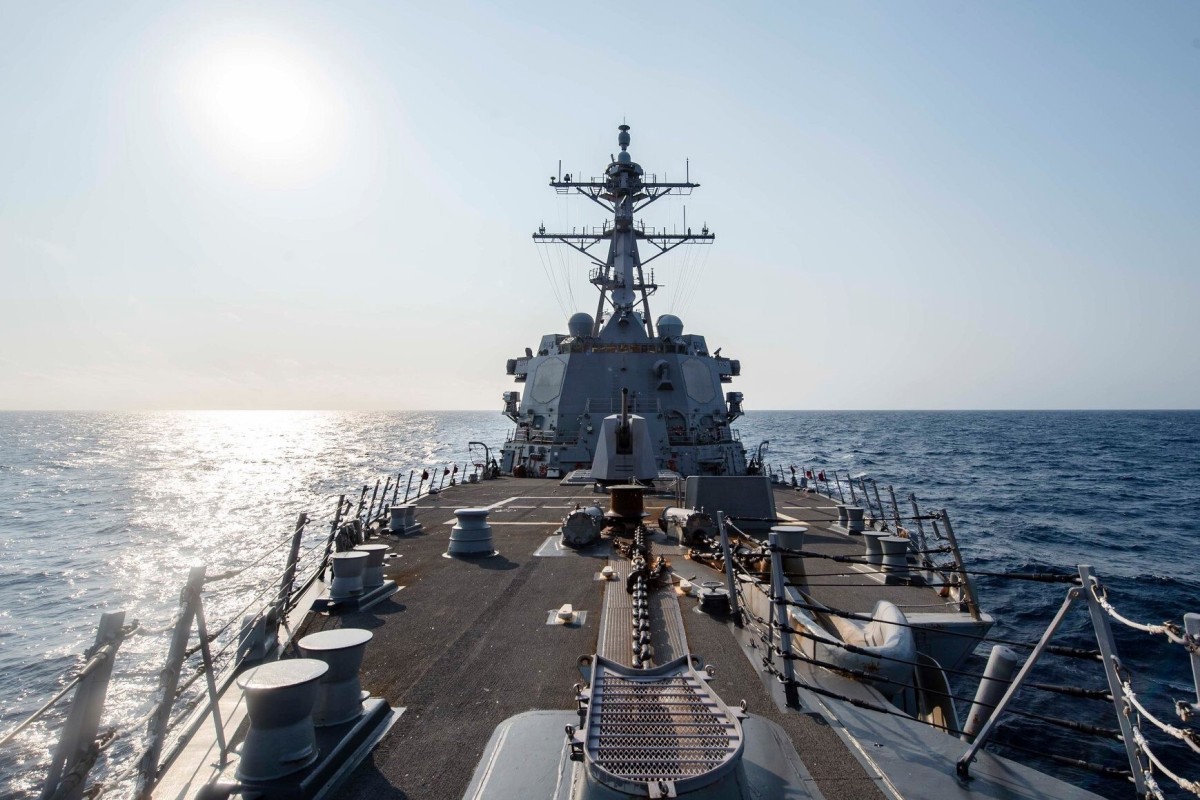
Guided-missile destroyer the USS Barry sails in the South China Sea last month. Photo: AFP
He said an international incident would put Trump and Xi on a reputational collision course, with each leader facing pressure to stand up to the other and not back down, given the mistrust and heated rhetoric.
“The danger, then, is an unforeseen spark, which could set off a frightening movement up the escalation ladder,” he added.
Zhao Tong, a senior fellow at the Carnegie-Tsinghua Centre for Global Policy in Beijing, also expressed concern that military incidents and conflicts with the US had become “less unimaginable given how quickly mutual animosity is building”.
Nationalist sentiment
In recent months, many senior Chinese diplomats have risen to Xi’s hardline, nationalist call and displayed their “fighting spirit”, often at the expense of the country’s global image.
“In future crises, if People’s Liberation Army officers, like some Chinese diplomats, calculate that it is in their personal interests to act extra tough, even if they know their aggression could cause war and cost China dearly, they might still feel incentivised to do so,” Zhao said.
To make things worse, according to Zhang Tuosheng, a security analyst from the China Foundation for International and Strategic Studies, Beijing and Washington had yet to set up an operational crisis management mechanism.
The Chinese leadership surely understands the massive costs of military action against TaiwanShelley Rigger, Davidson College
“One of the major lessons is that we’ve paid scant attention to the establishment of a series of mechanisms that have proven necessary during the Cold War era in preventing tensions spiralling out of control in the event of emergencies or a real crisis,” he said.
Beijing made clear its resentment over the warming ties between Washington and Taipei ahead of and during Taiwanese President Tsai Ing-wen’s inauguration on Wednesday, but a military confrontation over the self-ruled island in the near term was not likely, according to Rigger.
“The Chinese leadership surely understands the massive costs – in blood, treasure and reputation – of military action against Taiwan. They are way too smart to count on the US not intervening,” she said.
Rigger noted several retired PLA officers, including
, had unusually toned down their hawkish stance on seeking reunification with Taiwan by force.
“That is a frustrating message for many Chinese to hear, but war is very costly and very unpredictable – something the US has learned through painful experience,” she said.
While experts called for efforts to lower tensions in the lead-up to the US presidential election in November, most said that would largely hinge on Trump.
“Anything is possible with Trump,” Rigger said. “If he thinks better relations with China will help him win re-election, he will do whatever it takes to turn the relationship around. I’d be really surprised if the Chinese leadership didn’t respond positively to such an opportunity.”
But Zhu said it would be naive to pin hopes on Trump, who was desperate to play the China card in his re-election campaign.
“Beijing should be particularly cautious on Taiwan and the South China Sea disputes and should not engage in rhetorical tit-for-tat with Washington,” he said. “We need to look beyond the Trump presidency and prioritise the steady development of bilateral relations over the need to outcompete Trump.”
Chinese groups calling for more ‘fighting spirit’ are getting the upper hand on those who favour calm and cooperation, government adviser says
From Hong Kong to Covid-19, trade to the South China Sea, Beijing and Washington are clashing on a growing number of fronts and in an increasingly aggressive way
Efforts to promote dialogue and cooperation between the US and China are failing, observers say. Photo: AFP
Moderates who favour dialogue and cooperation as a way to resolve China’s disputes with the United States are losing ground to hardline groups bent on taking the fight to Washington, according to political insiders and observers.
“There are two camps in China,” said a former state official who now serves as a government adviser and asked not to be named.
“One is stressing the combat spirit, the other is trying to relieve tensions. And the former has the upper hand.”
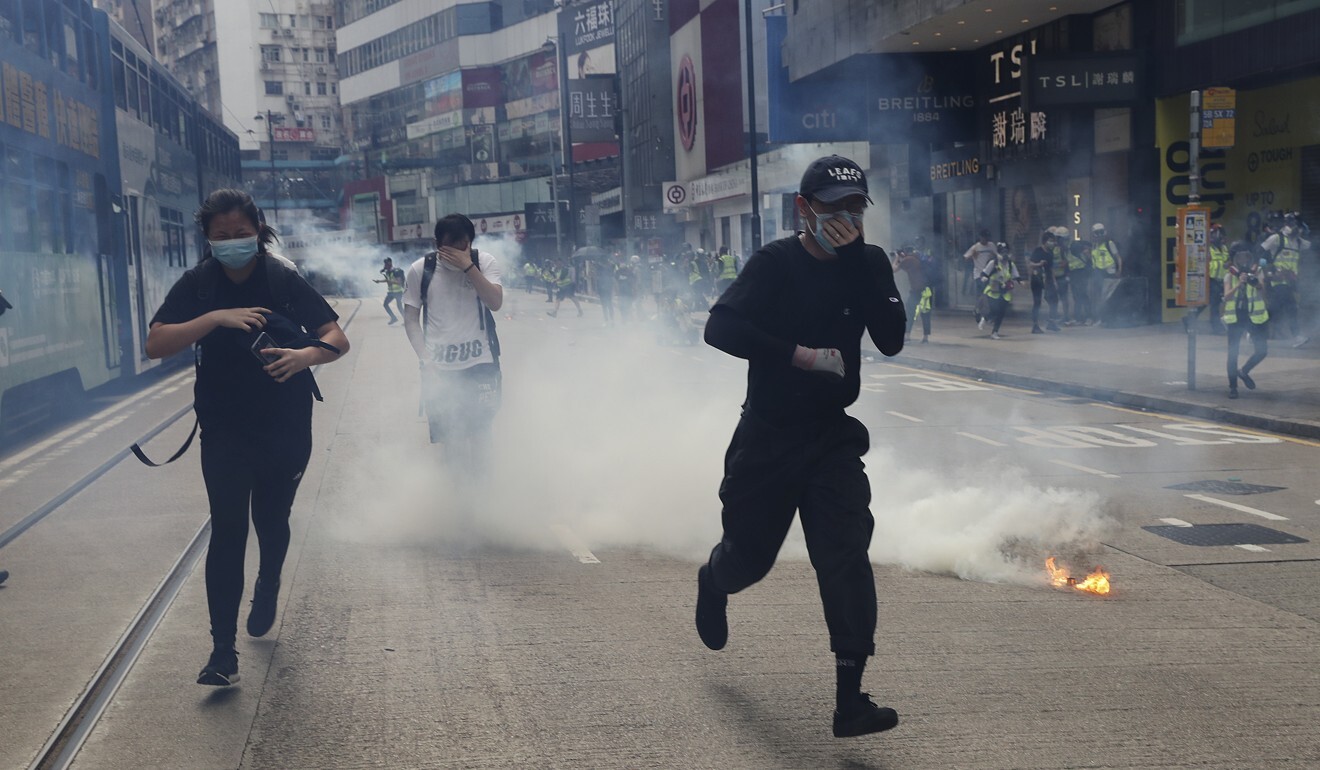
Relations between China and the US are under intense pressure. After Beijing moved to introduce a national security law for Hong Kong, US President Donald Trump said on Friday that Washington would begin eliminating the special policy exemptions it grants the city, as it no longer considers it autonomous from mainland China.
Beijing’s decision to enact a national security law for Hong Kong was met with anger from the US and other Western countries. Photo: Sam Tsang
The two nations have also clashed over trade, Xinjiang, Taiwan and the South China Sea, with the US passing several acts denouncing Beijing and sanctioning Chinese officials.
China has also experienced turbulence in its relations with other countries, including Australia and members of the European Union, mostly related to the Covid-19 pandemic
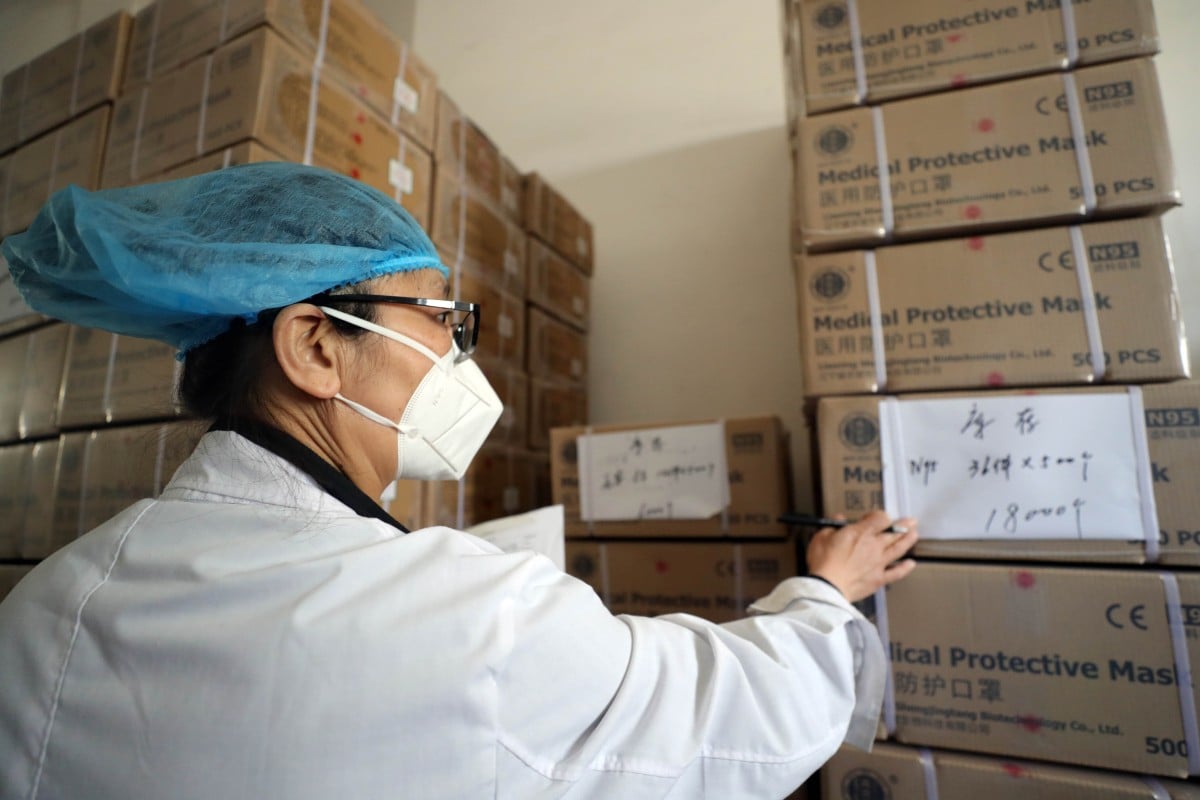
and Beijing’s efforts to position itself as a leader in the fight against the disease with its policy of “mask diplomacy”.
After Canberra appealed for an independent investigation to be carried out to determine the origins of the coronavirus, Beijing responded by imposing tariffs on imports of Australian barley, showing it is prepared to do more than just trade insults and accusations with its adversaries.
Pang Zhongying, a professor of international relations at Ocean University of China in Qingdao, said there was a worrying trend in China’s relations with other nations.
“We need political and diplomatic means to resolve the challenges we are facing, but … diplomatic methods have become undiplomatic,” he said.
“There are some who believe that problems can be solved through tough gestures, but this will never work. Without diplomacy, problems become confrontations.”
said during his annual press conference on the sidelines of the National People’s Congress last weekend that China and the United States must work together to prevent a new Cold War.
His words were echoed by Chinese Premier Li Keqiang, who said during a press conference after the closure of the legislative session on Thursday that the many challenges facing the China-US relations could only be resolved through cooperation.
However, the government adviser said there was often quite a chasm between what China’s leaders said and what happened in reality.
“Even though we say we do not want a Cold War, what is happening at the working level seems to be different.” he said. “The implementation of policies is not properly coordinated and often chaotic.”
Tensions between China and the US have been in a poor state since the start of a trade war almost two years ago. After multiple rounds of negotiations, the sides in January signed a phase one deal, but the positivity that created was short-lived.
In February, Beijing expelled three reporters from The Wall Street Journal over an article it deemed racist, while Washington has ramped up its military activity in the South China Sea and Taiwan Strait, and threatened to revoke the visas of Chinese students studying science and technology in the US over concerns they might be engaged in espionage.
Beijing has also used its state media and army of “Wolf Warrior” diplomats to promote its narrative, though many Chinese scholars and foreign policy advisers have said the latter’s nationalistic fervour has done more harm than good and appealed to Beijing to adopt a more conciliatory tone.
However, Hu Xijin, editor-in-chief of Chinese tabloid Global Times, said China had no option but to stare down the US, which regarded the world’s most populous nation as its main rival.
“Being contained by the US is too high a price for China to pay,” he said. “I think the best thing people can do is forget the old days of China-US ties”.
Jin Canrong, a professor of international relations at Renmin University in Beijing, wrote in a recent newspaper article that Beijing’s actions – notably enacting a national security law for Hong Kong – showed it was uncompromising and ready to stand its ground against the US.
Wu Xinbo, dean of international studies at Fudan University in Shanghai, agreed, saying relations between the two countries were likely to worsen in the run-up to the US presidential election in November and that Beijing should be prepared for a fight.
But Adam Ni, director of China Policy Centre, a think tank in Canberra, said the issue was not that the moderate camp had been sidelined, but rather Beijing’s perception of the US had changed.
“Beijing has woken up to the idea that America’s tough policy on China will continue and it is expecting an escalation of the tensions,” he said.
“The centre of gravity in terms of Beijing’s perception of the US has shifted, in the same way the US perception of China has shifted towards a more negative image”.
Beijing was simply responding in kind to the hardline, assertive manner of the US, he said.
American destroyer’s mission comes a week before Taiwanese president officially starts second term in office
Increased military activity in the region could have unintended consequences but unlikely to lead to direct conflict, observer says
The guided-missile destroyer USS McCampbell made a transit through the Taiwan Strait on Thursday. Photo: US Navy
The United States sent a warship through the Taiwan Strait on Thursday as the Chinese military embarked on more than two months of live-fire naval drills off the mainland’s northern coast.
According to Taiwan’s defence ministry, the Arleigh Burke-class guided-missile destroyer transited the narrow body of water separating Taiwan from mainland China from north to south “in a routine mission”.
“It is continuing its southward voyage and the military is monitoring its movement through the intelligence it has gathered,” the ministry said.
In a statement on its Facebook page, the US Pacific Fleet said the McCampbell transited the Taiwan Strait as part of ongoing operations in the Indo-Pacific.
Analysts said the passage was a response to the People’s Liberation Army’s increasing military activity near Taiwan and in the wider region.
“This will become a new routine as a kind of US security commitment to maintain stability in the Indo-Pacific region,” said Soong Hseik-wen, professor of strategic studies and international relations at National Chung Cheng University in Taiwan.
Beijing urges France to cancel contract to sell arms to Taiwan
13 May 2020
The PLA has staged a series of war games, including fly-bys and warship transits through the strait, in recent months in response to what Beijing sees as growing pro-independence moves by the Tsai government and her party. China has also warned the US against supplying weapons to the island, which Beijing considers to be a wayward province that must return to the mainland fold, by force if necessary.
Mainland China has suspended official exchanges with Taiwan since Tsai was first elected president in 2016 and refused to accept the one-China policy, which Beijing says must be the foundation for any talks.
The PLA has embarked on 11 weeks of naval exercises off the coast of Tangshan in northern China, barring all other vessels from a 25km (15 mile) radius of the drill area, according to the China Maritime Safety Administration.
Taiwanese support closer ties with US over China, few identify as solely Chinese, Pew Research survey finds
13 May 2020
Both Beijing and Washington have ramped up military activities near Taiwan in recent months during the coronavirus pandemic, moves that some observers say run the risk of miscommunication.
Alexander Huang Chieh-cheng, professor of strategic studies and international relations at Tamkang University in Taipei, said no one could exclude the possibility of unintended incidents when both the US and the mainland were stepping up their presence in the region.
“Rational analysts would however argue that the two nuclear powers are not likely to engage in or escalate to direct military conflict,” he said.
Huang said he believed cross-strait relations would worsen during Tsai’s second term in office, which begins on May 20.
“The already damaged relationship between Taiwan and mainland China has worsened since the pandemic mainly due to travel bans and Taiwan’s increased international visibility,” he said.
On Tuesday, Japan’s Kyodo News reported that the PLA was planning a large-scale beach landing exercise near Hainan province in August, simulating a takeover of the Pratas Islands, which are controlled by Taiwan and also known as the Dongsha Islands.
In Taipei, Major General Lin Wen-huang said Taiwan was monitoring the PLA movements and “has contingency plans in place for the South China Sea to strengthen combat readiness and defence preparedness on both the Spratly and Pratas islands”.
Taiwan’s coastguard also announced on Wednesday that its Pratas Islands Garrison was scheduled to conduct an annual live-fire exercise in June to ensure the “effectiveness of various mortar and machine-gun positions”.
Taiwan shows off its military power after presidential election
Shanghai-based military commentator Ni Lexiong said that both the US Navy and PLA were increasing activities during the pandemic because neither side could afford to show weaknesses that the other might take advantage of.
The destroyer’s passage and the PLA’s drills were all part of such efforts, Li said.
But he agreed that both countries were unwilling, unable, and unlikely to have a real conflict.
“They are both bluffing. It’s a fake crisis,” he said. “A pandemic always ends or prevents a war if you look at history.
“I also don’t believe the PLA would want to take over the Dongsha or Taiping islands [in the South China Sea], because these islets alone are not worth a military campaign and all the consequences of that. The only target valuable enough for the PLA is Taiwan.”
Nations may need help from China during virus outbreaks but remain wary of Beijing as adversary in disputed waters
Analysts say code of conduct negotiations are too sensitive and important for virtual meetings and may be delayed until coronavirus crisis is resolved
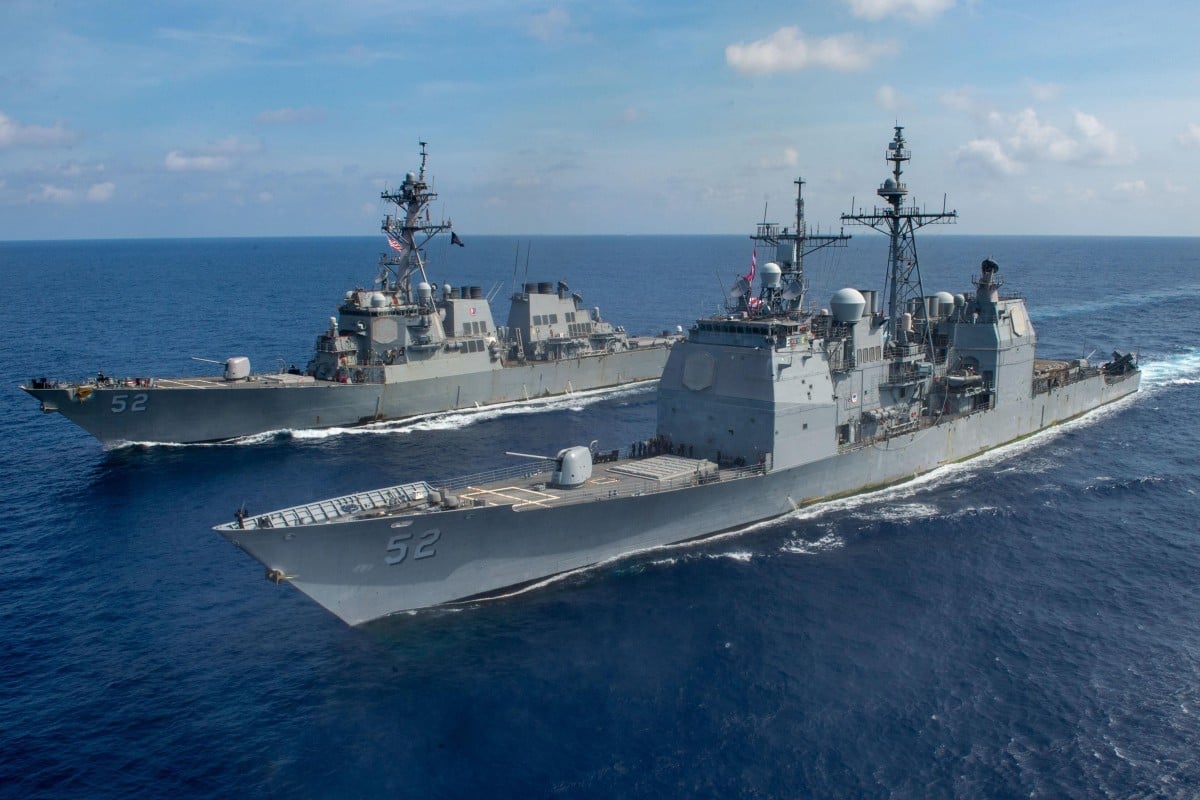
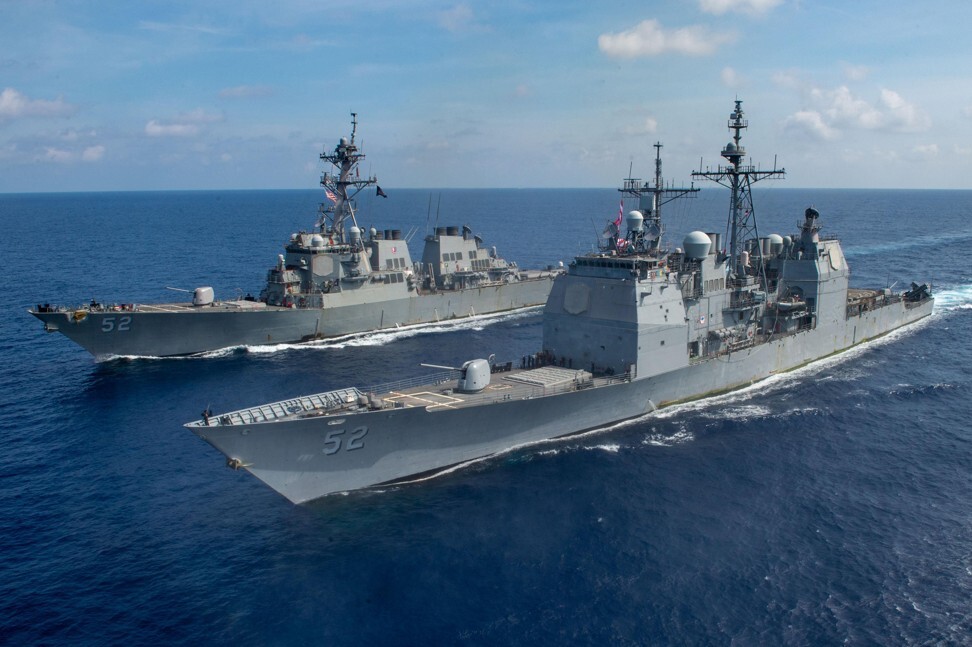
On April 18, the US Navy Ticonderoga-class guided missile cruiser USS Bunker Hill (front) and Arleigh-Burke class guided-missile destroyer USS Barry transit the South China Sea. The presence of both Chinese and American navy ships in the area in recent weeks worries Southeast Asian nations. Photo: US Navy
Negotiations between China and its Southeast Asian neighbours for a South China Sea
code of conduct have been postponed as the nations involved put their efforts into containing the Covid-19 pandemic, creating uncertainty about whether the two sides can work together amid rising tensions in the contested territory.
Southeast Asian nations are increasingly caught in a dilemma whether to maintain relations with Beijing during the pandemic while also fearing that tensions over the disputed waters are spiralling out of control. Both Chinese and United States navies are sending vessels to the area more frequently.
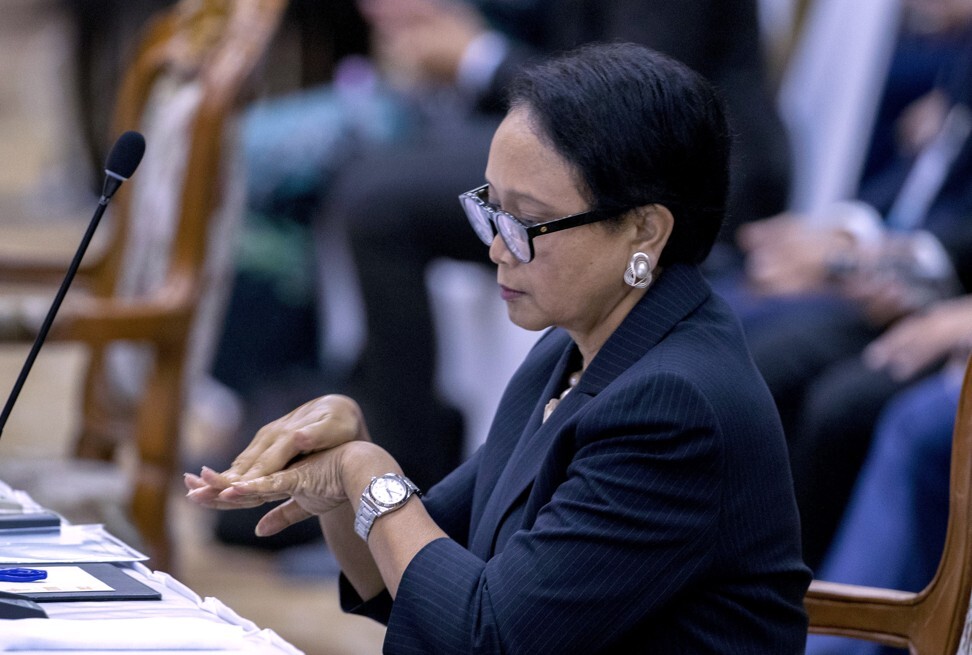
Indonesian Foreign Minister Retno Marsudi expressed concern over recent activities in the South China Sea, noting that they might potentially escalate tensions at a time when global collective effort to fight Covid-19 was essential.
Speaking on Wednesday, she called on all parties to respect international law, particularly the United Nations Convention on the Law of the Sea.
“While negotiation of the code of conduct is being postponed due to Covid-19, Indonesia calls on all relevant parties to exercise self-restraint and to refrain from undertaking action that may erode mutual trust and potentially escalate tension in the region,” she said.
Indonesia’s Foreign Minister Retno Marsudi. Photo: AP
Calls for a binding code of conduct surfaced in 1995 when China occupied Mischief Reef
, a maritime feature claimed by the Philippines. China did not agree to start talks until 1999, and subsequent negotiations led to a non-binding Declaration on Conduct in 2002.
The Association of Southeast Asian Nations (Asean) and China agreed in 2018 on a draft code laying the foundations for conduct in the disputed waters. At that time, Chinese Premier Li Keqiang said China hoped to complete the negotiation by the end of 2021, a move he said could show China and Asean could jointly maintain regional peace.
Named and claimed: is Beijing spoiling for a new fight in the South China Sea?
27 Apr 2020
But tensions over the South China Sea have not calmed and, in fact, have surged in recent months with both Beijing and Washington seen to be using the Covid-19 pandemic to create a stronger presence there.
This year, the US has conducted four freedom of navigation operations in the South China Sea and China has scrambled air and sea patrols to expel US vessels.
The confrontation between Beijing and Southeast Asian nations has also intensified. Last month, a Vietnamese fishing boat sank after a collision with a Chinese coastguard vessel near the Paracel Islands, known in China as the Xisha Islands, and in Vietnam as the Hoang Sa Islands.
On Saturday, the 35th escort fleet of the Chinese navy also conducted drills in the Spratly Islands chain – known as Nansha Islands in China – after completing an operation in the Gulf of Aden, off Somalia. Analysts said the drill aimed to boost far-sea training for combat ships and boost protection against piracy for Chinese merchant ships.
Collin Koh, a research fellow at the S. Rajaratnam School of International Studies, based at Nanyang Technological University in Singapore, said the code of conduct talks had been delayed because of the pandemic, but Beijing was consolidating its position in the South China Sea amid the outbreak.
“So it’s doing what it can now to consolidate and further enhance its position before talks restart, and by then these moves will raise Beijing’s leverage in the negotiations with its Asean counterparts,” he said.
“The current situation gives it a window of opportunity amid this interlude on the talks, to further advance its physical hold in the South China Sea, especially while Asean parties have their hands full on the pandemic”.
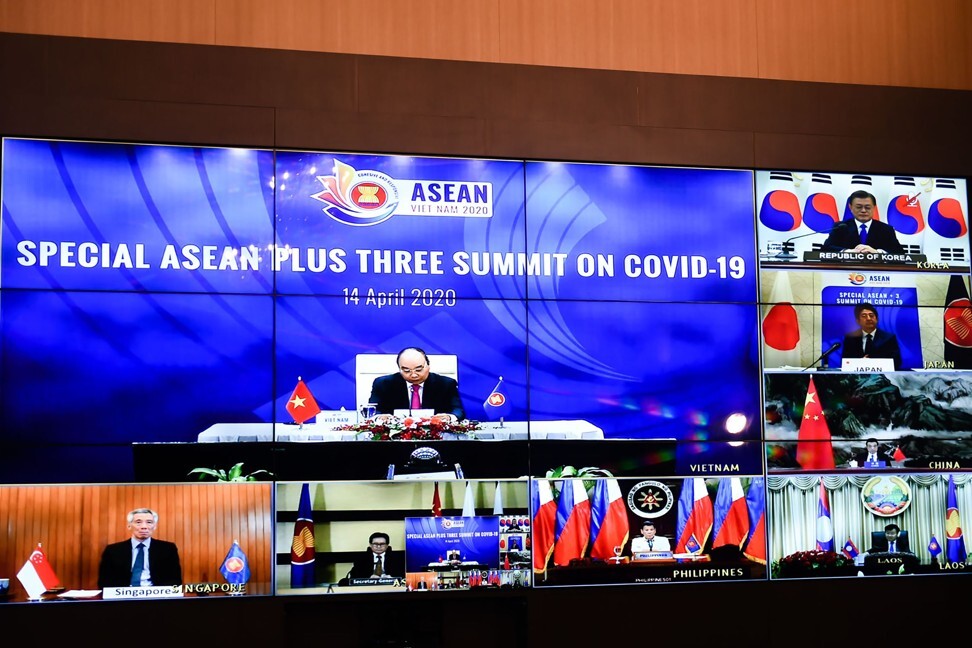
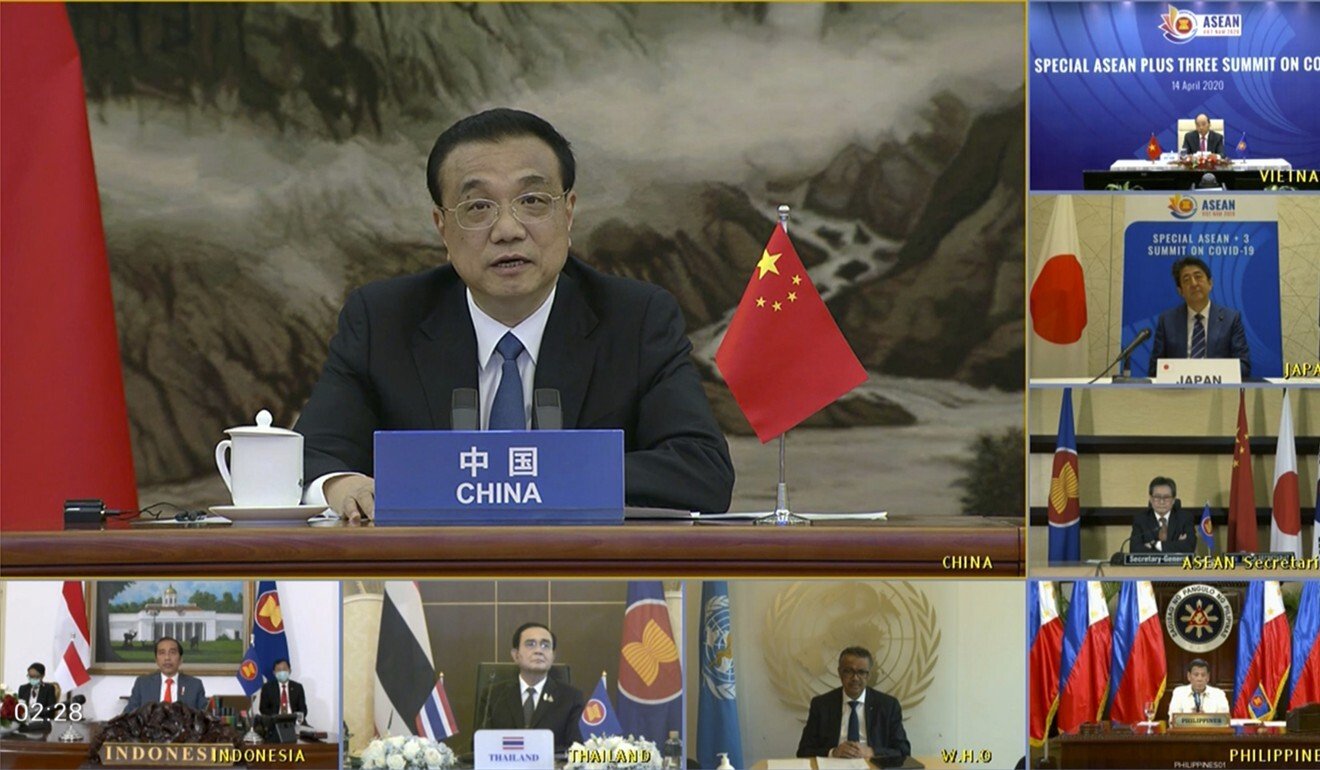
Asean nations have turned their attention to coping with coronavirus outbreaks in their own countries. On April 14, a live video conference for the special Asean Plus Three Summit on the coronavirus pandemic was held in Hanoi. Photo: AFP
Kang Lin, a researcher with Hainan University, said progress for the code of conduct would still go ahead, but it might be affected as face-to-face meetings between officials were disrupted.
“The negotiations involves multiple departments, such as diplomacy, maritime affairs, fisheries and even oil and gas-related departments,” he said, adding that those discussions might go online and might not be as effective.
“It is not easy to predict to what extent it will affect next year's goals. If the pandemic cannot be eliminated in the first half of next year, it may be longer than the three-year period we had previously scheduled,” he said.
Richard Heydarian, an academic and former Philippine government adviser, said video-conference meetings would be inadequate for negotiations about the future of the South China Sea.
“The problem with the negotiation of the code is that these are very sensitive, difficult negotiations. I don't think you can really do it just online, these are things that are done in the corridors of power,” he said. “It’s close to impossible to have that right now with the suspension of all international meetings in the Asean.”
Heydarian said Southeast Asian nations hoped to get help from China to contain the pandemic, but were showing unease about Beijing.
“I think there is a lot of resentment building against China,” he said. “There is also a lot of desperation to get assistance from China and, at the same time, complete helplessness with the fact that it is very hard to conduct any important extended international meeting on the level of Asean and beyond under current circumstances.”
Chinese Foreign Ministry spokesman Hua Chunying said on Thursday that China would push forward negotiations on the code of conduct, and hoped the code would be useful for peace and stability over the South China Sea.
Beijing ‘carefully considering’ unveiling the plane at the Zhuhai Airshow in November at a time of heightened regional tension
H-20 will give China the nuclear triad of submarines, ballistic missiles and bombers
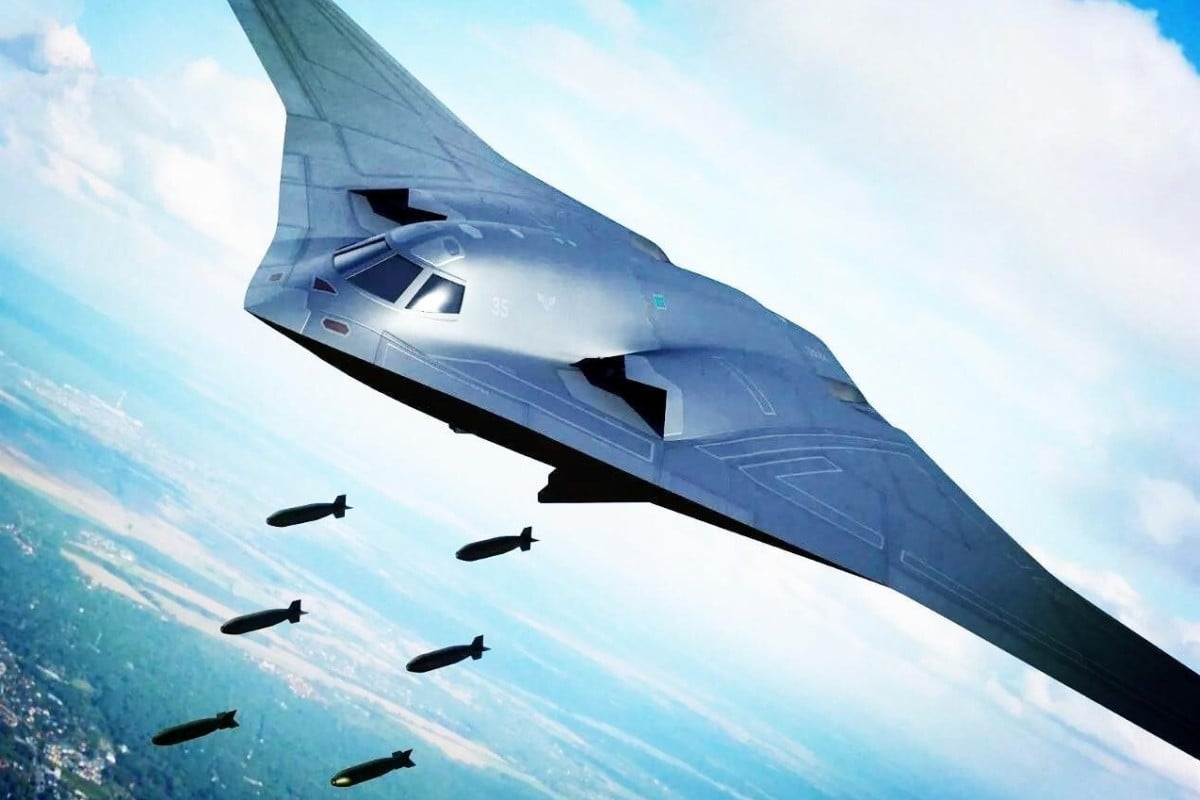
An artist’s impression of what the H-20 may look like. Photo: Weibo
China’s new generation strategic bomber is likely to be ready for delivery this year, but Beijing is said to be weighing the impact of its unveiling at a complex time in regional relations due to the coronavirus pandemic.
Military sources said the Xian H-20 supersonic stealth bomber – expected to double the country’s strike range – could make its first public appearance at this year’s Zhuhai Airshow in November, if the pandemic was sufficiently under control.
“The Zhuhai Airshow is expected to become a platform to promote China’s image and its success in pandemic control – telling the outside world that the contagion did not have any big impacts on Chinese defence industry enterprises,” a source said.
But the appearance of the bomber at this year’s air show could heighten tensions by directly threatening countries within its strike range, especially Australia, Japan and the Korean peninsula.
Thrilling aerobatics fill the skies to open air show in central China
“The Beijing leadership is still carefully considering whether its commission will affect regional balance, especially as regional tensions have been escalating over the Covid-19 pandemic,” another source said.
“Like intercontinental ballistic missiles, all strategic bombers can be used for delivering nuclear weapons … if China claimed it had pursued a national defence policy which is purely defensive in nature, why would it need such an offensive weapon?”
Tensions in the region have worsened in the past month with a war of words between Beijing and Washington over the pandemic, and both sides increasing naval patrols.
The US defence department has estimated a cruising distance of more than 8,500km (5,300 miles) for the H-20, the last in China’s 20 series of new generation warplanes, which includes the J-20 stealth fighter jet, the Y-20 giant transporter and the Z-20 medium-lift utility helicopter.
The arrival of the H-20 would mark the completion of China’s “nuclear triad” of ground-based intercontinental ballistic missiles, submarine-launched missiles and air-launched weapons.
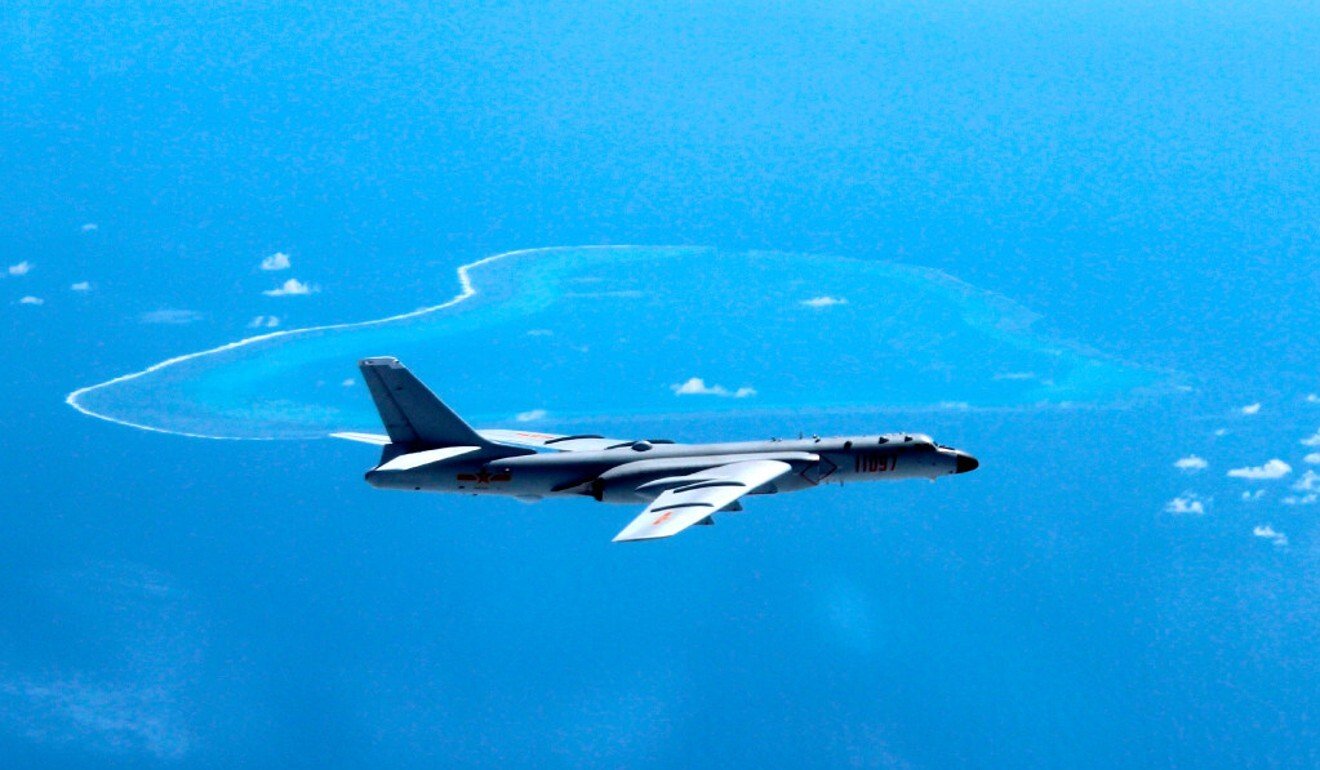
An H-6K bomber, or China’s B-52, flies over the South China Sea. Photo: AP
Chinese state television has said the H-20 could alter the strategic calculus between the US and China by doubling the strike range of its current H-6K, dubbed the country’s B-52.
The H-20 has reportedly been designed to strike targets beyond the second island ring – which includes US bases in Japan, Guam, the Philippines and other countries – from bases in mainland China. The third island chain extends to Hawaii and coastal Australia.
It will be equipped with nuclear and conventional missiles with a maximum take-off weight of at least 200 tonnes and a payload of up to 45 tonnes. The bomber is expected to fly at subsonic speeds and could potentially unleash four powerful hypersonic stealth cruise missiles.
However, like China’s first active stealth fighter jet, the J-20, engine development of the H-20 bomber has fallen behind schedule, according to sources.
For the J-20, engineers were developing high-thrust turbofan WS-15 engines, but the jet is understood to be using either Chinese WS-10B or Russian-built AL-31FM2/3 engines, which compromise its manoeuvrability and stealth capabilities at subsonic speeds.
Military enthusiasts have speculated the H-20 might use the NK-321 Russian engine but two independent military sources said it would be equipped with an upgraded WS-10 engine.
“The WS-10 is still a transitional engine for the H-20 because it is not powerful enough. The eligible replacement may take two to three years for development,” one of the sources said.
China must meet air force demand for J-20 stealth jets, say analysts
17 Feb 2020
The second said the speed of the H-20 would be slower than its original design, with some of its original combat capability being reduced.
“That’s why the American air force doesn’t care about the H-20, because it is not strong and powerful enough to cause any challenge to their B-2 and B-21 bombers.”
If the US decided to deploy more F-35 supersonic fighter jets – it has already sold about 200 to Japan and South Korea – it could push China to bring forward the unveiling of the new bomber, the second source said.
“For example, if some US decision makers decided to deploy up to 500 F-35s to Japan, South Korea, and even Singapore, India and Taiwan – making almost all of China’s neighbours in the Indo-Pacific region use F-35s to contain China – that would pushBeijing to launch the H-20 as soon as possible.”
The H-20 is believed to have been in development since the early 2000s. The project to develop a strategic bomber was first announced by the People’s Liberation Army in 2016.
Chinese military takes aim at operations by American warships near the Spratly and Paracel islands
US says sweeping maritime claims in the area pose a threat to freedom of the seas
The USS Bunker Hill (front) and the USS Barry have been conducting operations in the South China Sea. Photo: US Navy
The Chinese military called the United States a “troublemaker” in the disputed South China Sea on Thursday, stressing that China was on “high alert” to safeguard its interests in the contested waters.
The two powers, already mired in a dispute over the handling of the coronavirus pandemic, have engaged in tense stand-offs over the South China Sea, with two back-to-back operations by the US to challenge China’s expansive claims in the region in the last few days.
The US’ guided-missile cruiser USS Bunker Hill conducted a “freedom of navigation operation” in the Spratly Islands on Wednesday, a day after the guided-missile destroyer USS Barry conducted a similar operation near the Paracel Islands.
The US 7th Fleet said the operations were in response to “unlawful and sweeping maritime claims in the South China Sea [that] pose a serious threat to the freedom of the seas, including the freedoms of navigation and overflight and the right of innocent passage of all ships”.
More footage emerges from 2018 near collision of US and China warships in South China Sea
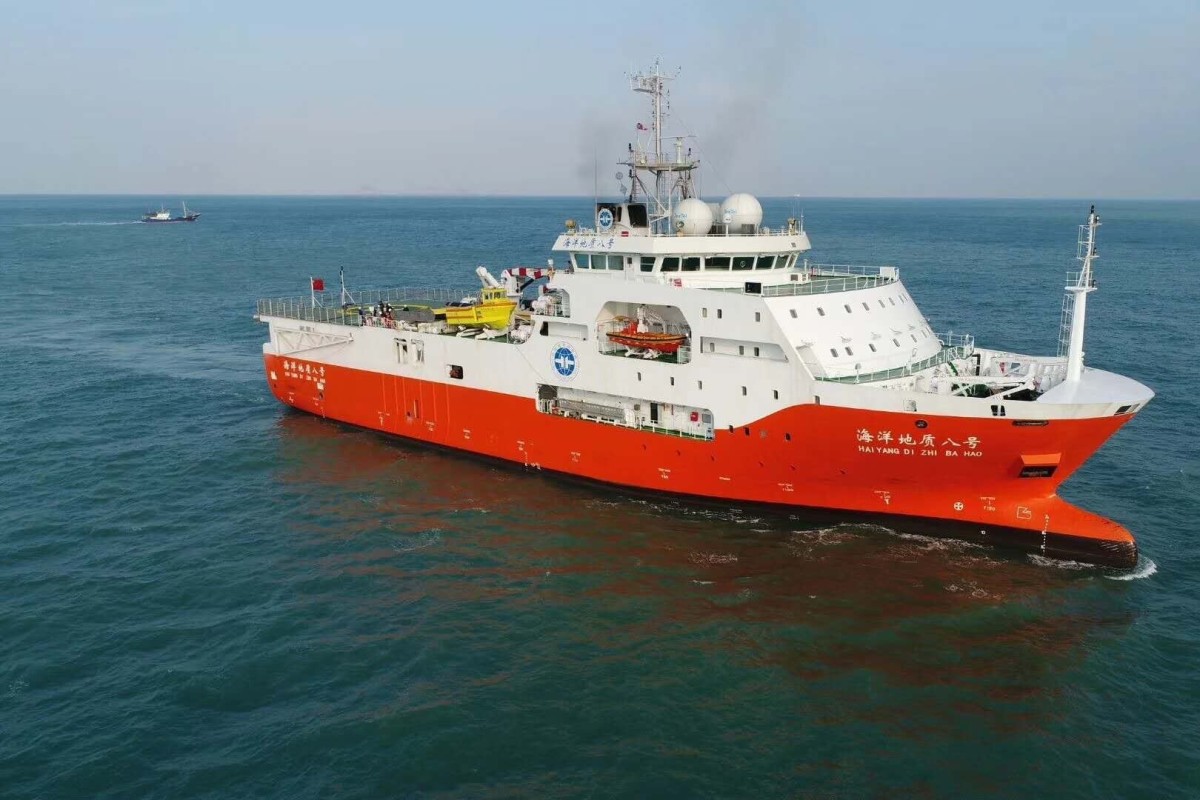
And last week, an Australian frigate joined US warships in a joint exercise in the South China Sea after the Chinese research ship Haiyang Dizhi 8, accompanied by a Chinese coastguard vessel, tailed a Malaysian state oil company ship conducting exploration in the area.
China’s defence ministry spokesman Wu Qian said China had been “closely watching and on high alert” against the activities by the US and Australian militaries.
“The frequent military operations in the South China Sea by extra-regional countries like the US and Australia are not conducive to the peace and stability in the South China Sea and we resolutely oppose them,” Wu said.
“Time and again, the US has proven itself to be the biggest force in pushing militarisation in the South China Sea and a troublemaker in preventing peace and stability in the region.”
China military lashes out at US warship’s ‘intrusion’ in South China Sea
29 Apr 2020
On Tuesday, the People’s Liberation Army’s Southern Theatre Command said the
The command said it scrambled air and sea patrols to “track, monitor, verify, identify and expel” the American vessels.
Also on Thursday, Wu rejected a US report that China had secretly conducted an underground nuclear test.
Citing a report from the US State Department, The Wall Street Journal reported two weeks ago that Washington was concerned by an increase in activity at China’s Lop Nur test site in the far western region of Xinjiang, including extensive excavations that raised the suspicion of an explosion.
“The report by the US is fabricated and nonsense,” Wu said. “China, unlike the US, has always kept its promise on international arms control.”
Taiwan Strait and South China Sea are settings for China and the US to assert influence and defiance
Analysts warn costly missteps and miscalculations are possible amid rift
Illustration: Henry Wong
This is the fourth in a series exploring the global backlash that China may face as a result of its actions and rhetoric during the coronavirus pandemic. This story examines the outlook from a military viewpoint, including relations in the South China Sea, with China’s neighbours and with the United States.
As the USS Barry, one of the US’ most advanced destroyers, sailed through the Taiwan Strait last Thursday, an officer on board posted a message on Facebook: “They don’t call us the Finest Forward Deployed Destroyer for nothing! Your Bulldogs always have the watch – together, we ensure a free and open Indo-Pacific!”
Based in Yokosuka, Japan, the guided-missile destroyer was no stranger to the sensitive channel separating Taiwan and mainland China. In fact, this was its second passage through the 180km [112-mile]-wide waterway – defined as part of the South China Sea under international protocol – this month.
As the Covid-19 global health crisis continues to rage around the world, infecting more than 3 million people and causing more than 210,000 deaths, military manoeuvres are being analysed to see if the pandemic has changed the balance of force in the region.
American warships were just some of the frequent naval visitors to the Taiwan Strait. The Chinese military has also made its presence felt. The Liaoning, China’s first aircraft carrier paraded through the waterway with its strike group just one day before the USS Barry arrived.
And then on Tuesday, China’s Southern Theatre Command, which oversees the South China Sea, issued a stern warning against the “intrusion” of the USS Barry into the surrounding waters of the Paracel Islands. China calls them the Xisha Islands and Vietnam calls them the Hoang Sa Islands.
“These provocative acts by the US side … seriously violated China’s sovereignty and security interests, deliberately increased regional security risks and they could easily trigger unexpected incidents,” a spokesman of the command said.
The frequency of such tours has raised concerns among military observers and analysts that these exercises could lead to miscalculation as different countries use their militaries to jostle for greater influence or rattle the sabre amid the pandemic.
“Adversaries who think now is the time to challenge the #USA: you’re dangerously wrong,” United States Secretary of Defence Mark Esper tweeted in mid-April.
And on Wednesday last week he tweeted: “Do not test our resolve. Our service members continue to demonstrate why the American people call on the US military during the most trying times.”
The Covid-19 pandemic has plunged already strained
into a deepening rift as officials from both sides engage in a blame game about delays that have allowed the contagious disease to spread.
Experts are now looking at how the pandemic will affect other aspects of China’s international relations.
Zhu Feng, a professor of international relations at Nanjing University in eastern China, expressed worry that Beijing and Washington had grown even further apart because of the pandemic.
“China and the US are supposed to work together to battle this world-sweeping deadly contagion, but what worries me most is that the geopolitical strategic competition and differences between the two countries have widened because of the pandemic,” he said.
Zhu said Washington’s growing cosiness with Taipei had also alarmed Beijing.
While Taiwan was a key security issue in the region, analysts warned that manoeuvring by nations had increased the risk of turning the Indo-Pacific area into a tinderbox.
This month, the US Navy’s amphibious assault ship and a Japanese navy Murasame-class destroyer conducted three-day bilateral communications exercises and division tactics in the Philippine Sea and the East China Sea. The East China Sea is the site of territory disputes between Beijing and Tokyo over the
The joint drills came 10 days after a collision between a Japanese destroyer and a Chinese fishing vessel in the East China Sea, causing a hole in the destroyer. No one was hurt, according to the Japanese defence ministry.
On Tuesday last week, another US amphibious assault ship and a guided-missile cruiser joined with an Australian frigate.
They entered the contested waters off Malaysia, where a Chinese government survey vessel, the Haiyang Dizhi 8, has been operating close to a drill ship under contract to the Malaysian state oil company, Petronas, according to a report from Reuters citing regional security sources.
“The show of force of the US and Australian warships in the South China Sea was aimed at warning China: ‘The pandemic will not give you any opportunity to change the current balance of power [in the region]’,” Zhu said.
“And [it also means to] tell Malaysia and other Southeast Asian countries that no matter how the pandemic develops, the US is still Big Brother in the region,” he added.
The South China Sea remains one of the biggest stress points in Asia. Beijing claims almost all of the area but has conflicting claims with Vietnam, the Philippines, Taiwan, Malaysia and Brunei. The conflict has remained unresolved for decades and has now become another flash point with the US.
Alexander Huang Chieh-cheng, a former deputy minister on Taiwan’s Mainland Affairs Council, which handles the island’s ties with the mainland, said China and the US were tangled in a bitter competition.
“In comparative terms, the US presence has been a response to increased People’s Republic of China’s ‘far sea navigation training’ with its newly acquired air and naval assets,” Huang said, referring to Beijing’s expanded military clout.
The US Navy Ticonderoga-class guided missile cruiser USS Bunker Hill, front, and Arleigh-Burke class guided-missile destroyer USS Barry in the South China Sea on April 18. Photo: US Navy
“The US wants to reassure [its allies of] its commitment to the security and stability in the Taiwan Strait, as well as in the larger Indo-Pacific region.
“[Chinese President] Xi Jinping has said that the vast Pacific Ocean is big enough to accommodate both the PRC [People’s Republic of China] and the US. However the PRC’s build-up in the South China Sea and training exercises have, in the eyes of Americans, threatened the freedom of navigation and challenged the US predominance in maritime Asia.”
Drew Thompson, a former US defence official and now a senior research fellow at National University of Singapore’s Lee Kuan Yew School of Public Policy, wrote in a recent paper that China under Xi’s leadership has taken a more aggressive stance in dealing with its neighbours.
“Xi Jinping’s rise to power has heralded a new foreign policy that is more assertive and uncompromising toward China’s neighbours, the US and the rest of the world,” he wrote.
He warned that Xi’s assertiveness would put China’s diplomatic and defence policies at higher risk, especially given Beijing’s determination to resolve the Taiwan problem.
“The pandemic does not fundamentally change the military or strategic balance across the Taiwan Strait but it potentially increases the possibility of miscalculation if Beijing thinks its handling of the pandemic gives it a military advantage,” Thompson told the South China Morning Post.
Last week, the PLA’s Eastern Theatre Command, which covers China’s eastern seaboard, published four belligerent articles emphasising the urgency for the Chinese military to strengthen its combat readiness as the country faced challenges at home and abroad during the pandemic and that the PLA (People’s Liberation Army) must play a “pivotal role in safeguarding China’s national interests”.
Separately, an analysis published in mid-April said that following the Covid-19 pandemic, the voice of “unifying Taiwan by force” had become “louder and louder” on the mainland. It was published on a media website affiliated with the mainland’s Taiwan Affairs Office, which oversees Beijing’s policies on the island.
Citing opinions by retired PLA generals, the analysis said the US would not go to war with China over Taiwan, other than providing the island with intelligence and weapons.
But Collin Koh, a research fellow of the S Rajaratnam School of International Studies at Singapore’s Nanyang Technological University, cautioned that such an assumption was risky.
“It’s unwise to underestimate the resolve of the Trump administration, given that in recent times it’s been putting more focus on enhancing strategic ties with Taiwan, having seen the island as a crucial element to its Indo-Pacific strategy,” Koh said.
“US credibility is at stake if it’s shown to be unwilling to defend its allies.”
Michael Jones, former chief of staff of US Central Command, was quoted by the Military Times, a US-based military news website, saying it had become imperative for US diplomats to reach out abroad and explain Washington’s intention to avoid mistakes and misunderstandings.
“Covid-19 merely is a factor that can lead to miscalculation,” Jones was quoted as saying. “If they [US adversaries] were to assume this is one more distraction that would keep the US from responding to an attack or challenge, it could add to the possibility of miscalculation.”
Move to create administrative units for disputed Paracel and Spratly Islands angers Hanoi
China has been engaged in a series of stand-offs with rival claimants recently
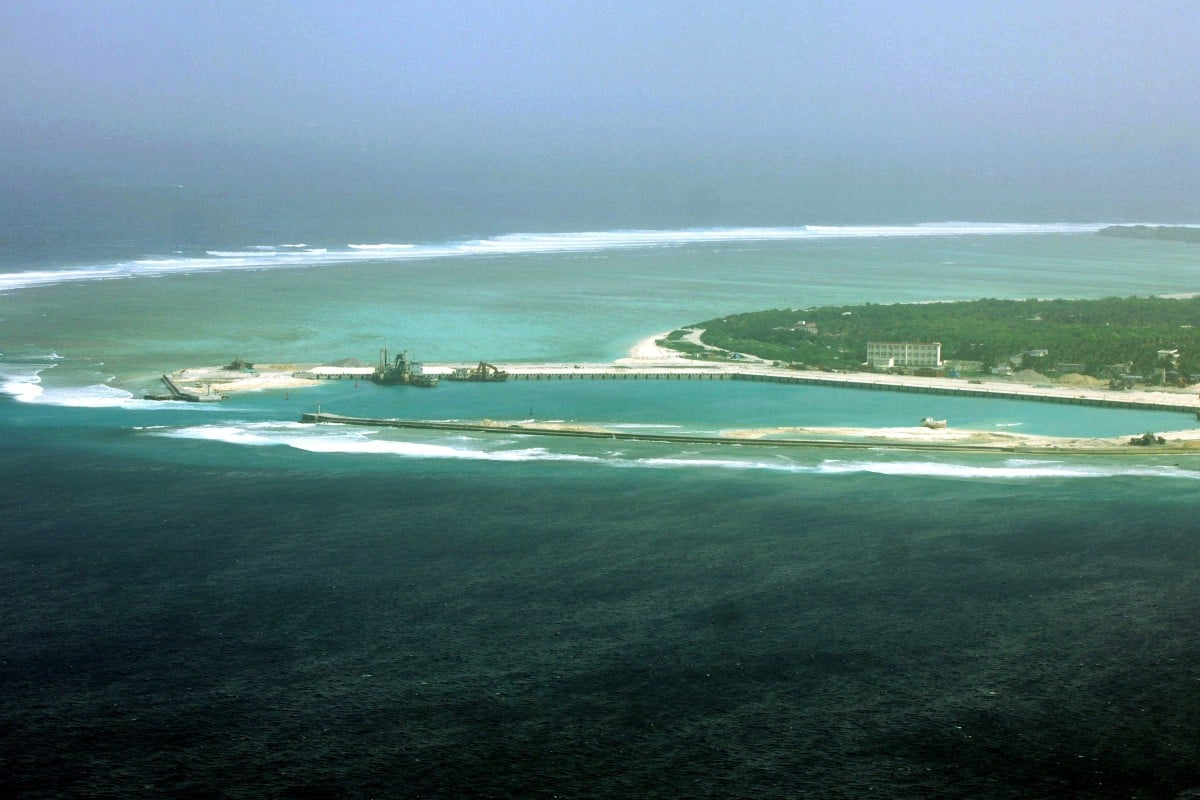
An aerial view of Sanha, a city created to assert China’s claims over the disputed waters. Photo: AFP
China’s latest activities in the South China Sea have triggered a strong protest from rival claimant Vietnam, which said the move “seriously violated” its sovereignty.
The complaint came after China announced on Sunday that it had set up two new administrative districts on the Paracel and Spratly Islands.
The two districts – which China referred to as Xisha and Nansha – will be under the control of Sansha, a city the Chinese government created in 2012 to assert its claims over the South China Sea.
Vietnam’s foreign ministry spokesperson Le Thi Thu Hang issued a statement of protest on Sunday, and said the move would further complicate the situation in the South China Sea.
“These acts are not conducive to the development of the friendly relations between countries and further complicate the situation in the East Sea [Vietnam’s name for the South China Sea], the region and the world,” she said.
“Vietnam demands that China respect Vietnam’s sovereignty and annul its wrongful decisions and not repeat similar activities in the future.”
Under the new plan, the new district of Xisha will be in charge of Paracel Islands, which are also claimed by Vietnam and Taiwan. The Nansha district will manage the Spratly Islands, where there are also multiple competing claims.
Beijing marks out claims in South China Sea by naming geographical features
21 Apr 2020
Chinese Foreign Ministry spokesman Geng Shuang said on Monday that the establishment of the new districts was in line with China’s normal administrative rules.
“China has been resolutely opposing Vietnam’s words and deeds that undermine China’s sovereignty and rights and interests in the South China Sea, and will continue to take necessary measures to firmly safeguard China’s sovereignty and rights and interests.” he said in a press conference
Vietnam is the only claimant which has publicly protested about the move so far. But Zhang Mingliang, an specialist in Southeast Asian politics with Jinan University, said it was likely to have alarmed other members of the Association of Southeast Asian Nations (Asean).
More footage emerges from 2018 near collision of US and China warships in South China Sea
“Setting up such districts will not have much use or actual benefit, and it will cause opposition among the Asean states, many of which have long been suspicious of China’s intentions over the South China Sea,” said Zhang.
“The coronavirus outbreak has already caused some grievances among them towards China, even though they have not been as vocal as the Western countries,” he said.
Richard Heydarian, an academic and former Philippine government adviser, described the move as China taking advantage of a “strategic vacuum” created by the Covid-19 crisis.
South China Sea: Chinese ship Haiyang Dizhi 8 seen near Malaysian waters, security sources say
18 Apr 2020
“On the one hand it’s engaging in face mask diplomacy [providing medical supplies to other countries] … but on the other hand it’s on the offensive,” he said.
“All of them should be seen as part of one package in which China seizes the strategic opportunity of not only its neighbouring countries scrambling to deal with the coronavirus outbreak, but also the US Navy’s suspension of overseas appointments.”
China has recently become involved in a series of stand-off with other claimants in the contested waters.
A Chinese government survey ship reportedly tagged an exploration vessel operated by Malaysia’s state oil company Petronas in the area, and remained off the Malaysian coastline as of late Sunday.
Earlier this month, Vietnam lodged an official protest with China after a Vietnamese fishing boat sunk after a collision in the Paracel Islands.
Faced with a backlash from the West over its handling of the early stages of the pandemic, Beijing has been quietly gaining ground in Asia
Teams of experts and donations of medical supplies have been largely welcomed by China’s neighbours
Despite facing some criticism from the West, China’s Asian neighbours have welcomed its medical expertise and vital supplies. Photo: Xinhua
While China’s campaign to mend its international image in the wake of its handling of the coronavirus health crisis has been met with scepticism and even a backlash from the US and its Western allies, Beijing has been quietly gaining ground in Asia.
Teams of experts have been sent to Cambodia, the Philippines, Myanmar, Pakistan and soon to Malaysia, to share their knowledge from the pandemic’s ground zero in central China.
China has also held a series of online “special meetings” with its Asian neighbours, most recently on Tuesday when Premier Li Keqiang discussed his country’s experiences in combating the disease and rebooting a stalled economy with the leaders of the Association of Southeast Asian Nations (Asean), Japan and South Korea.
Chinese Prime Minister Li Keqiang speaks to Asean Plus Three leaders during a virtual summit on Tuesday. Photo: AP
Many Western politicians have publicly questioned Beijing’s role and its subsequent handling of the crisis but Asian leaders – including Philippine President Rodrigo Duterte and Japanese Prime Minister Shinzo Abe – have been reluctant to blame the Chinese government, while also facing criticism at home for not closing their borders with China soon enough to prevent the spread of the virus.
An official from one Asian country said attention had shifted from the early stages of the outbreak – when disgruntled voices among the public were at their loudest – as people watched the virus continue its deadly spread through their homes and across the world.
“Now everybody just wants to get past the quarantine,” he said. “China has been very helpful to us. It’s also closer to us so it’s easier to get shipments from them. The [medical] supplies keep coming, which is what we need right now.”
The official said also that while the teams of experts sent by Beijing were mainly there to observe and offer advice, the gesture was still appreciated.
Another Asian official said the tardy response by Western governments in handling the outbreak had given China an advantage, despite its initial lack of transparency over the outbreak.
“The West is not doing a better job on this,” he said, adding that his government had taken cues from Beijing on the use of propaganda in shaping public opinion and boosting patriotic sentiment in a time of crisis.
“Because it happened in China first, it has given us time to observe what works in China and adopt [these measures] for our country,” the official said.
Experts in the region said that Beijing’s intensifying campaign of “mask diplomacy” to reverse the damage to its reputation had met with less resistance in Asia.
Why China’s ‘mask diplomacy’ is raising concern in the West
29 Mar 2020
“Over the past two months or so, China, after getting the Covid-19 outbreak under control, has been using a very concerted effort to reshape the narrative, to pre-empt the narrative that China is liable for this global pandemic, that China has to compensate other countries,” said Richard Heydarian, a Manila-based academic and former policy adviser to the Philippine government.
“It doesn’t help that the US is in lockdown with its domestic crisis and that we have someone like President Trump who is more interested in playing the blame game rather than acting like a global leader,” he said.
Shahriman Lockman, a senior analyst with the foreign policy and security studies programme at Malaysia’s Institute of Strategic and International Studies, said that as the US had withdrawn into its own affairs as it struggled to contain the pandemic, China had found Southeast Asia a fertile ground for cultivating an image of itself as a provider.
China’s first-quarter GDP shrinks for the first time since 1976 as coronavirus cripples economy
Beijing’s highly publicised delegations tasking medical equipment and supplies had burnished that reputation, he said, adding that the Chinese government had also “quite successfully shaped general Southeast Asian perceptions of its handling of the pandemic, despite growing evidence that it could have acted more swiftly at the early stages of the outbreak in Wuhan”.
“Its capacity and will to build hospitals from scratch and put hundreds of millions of people on lockdown are being compared to the more indecisive and chaotic responses seen in the West, especially in Britain and the United States,” he said.
Coronavirus droplets may travel further than personal distancing guidelines
16 Apr 2020
Lockman said Southeast Asian countries had also been careful to avoid getting caught in the middle of the deteriorating relationship between Beijing and Washington as the two powers pointed fingers at each other over the origins of the new coronavirus.
“The squabble between China and the United States about the pandemic is precisely what Asean governments would go to great lengths to avoid because it is seen as an expression of Sino-US rivalry,” he said.
“Furthermore, the immense Chinese market is seen as providing an irreplaceable route towards Southeast Asia’s post-pandemic economic recovery.”
Aaron Connelly, a research fellow in Southeast Asian political change and foreign policy with the International Institute for Strategic Studies in Singapore, said Asian countries’ dependence on China had made them slow to blame China for the pandemic.
“Anecdotally, it seems to me that most Southeast Asian political and business elites have given Beijing a pass on the initial cover-up of Covid-19, and high marks for the domestic lockdown that followed,” he said.
“This may be motivated reasoning, because these elites are so dependent on Chinese trade and investment, and see little benefit in criticising China.”
China and Vietnam ‘likely to clash again’ as they build maritime militias
12 Apr 2020
The cooperation with its neighbours as they grapple with the coronavirus had not slowed China’s military and research activities in the disputed areas of the South China Sea – a point of contention that would continue to cloud relations in the region, experts said.
Earlier this month an encounter in the South China Sea with a Chinese coastguard vessel led to the sinking of a fishing boat from Vietnam, which this year assumed chairmanship of Asean.
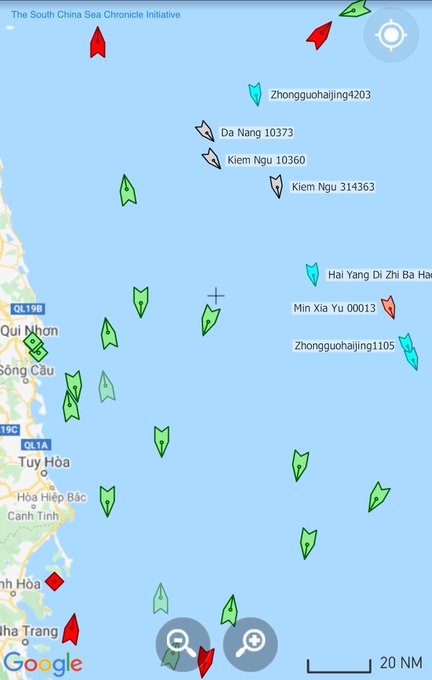
And in a move that could spark fresh regional concerns, shipping data on Thursday showed a controversial Chinese government survey ship, the Haiyang Dizhi 8, had moved closer to Malaysia’s exclusive economic zone.
The survey ship was embroiled in a months-long stand-off last year with Vietnamese vessels within Hanoi’s exclusive economic zone and was spotted again on Tuesday 158km (98 miles) off the Vietnamese coast.
Vietnamese vessels last year spent months shadowing the Chinese Haiyang Dizhi 8 survey vessel in resource-rich waters that are a potential global flashpoint as the
China and Vietnam ‘likely to clash again’ as they build maritime militias
12 Apr 2020
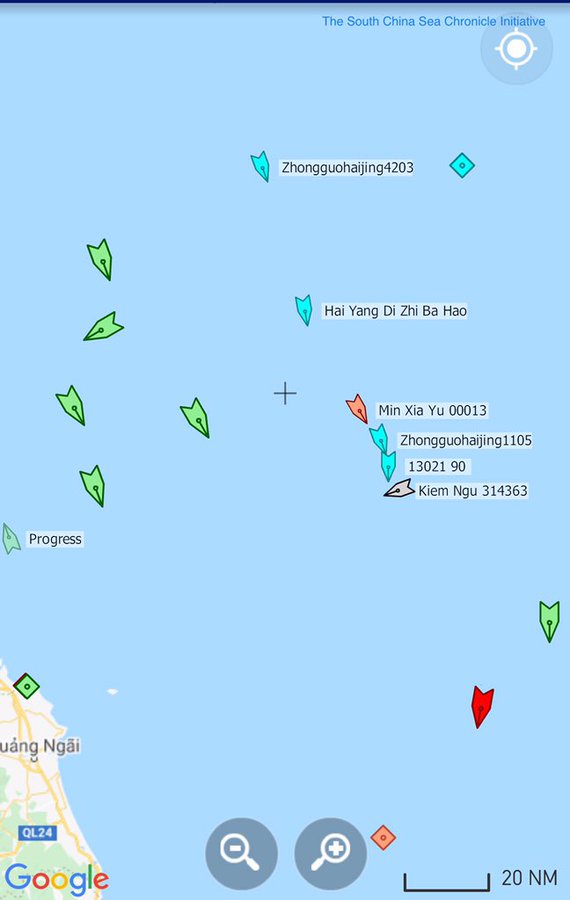
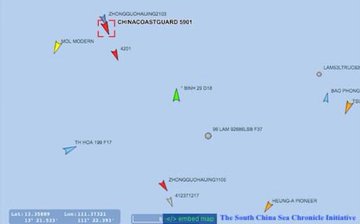
On Tuesday, the ship, which is used for offshore seismic surveys, appeared again 158km off Vietnam’s coast, within its exclusive economic zone (EEZ), flanked by at least one Chinese coastguard vessel, according to data from Marine Traffic, a website that tracks shipping.
At least three Vietnamese vessels were moving with the Chinese ship, according to data issued by the Marine Traffic site.
South China Sea News@SCS_news
·
Haiyang Dizhi 8 is heading toward #SouthChinaSea with several escort ships.
South China Sea News@SCS_news
About 50 nm ahead of Haiyang Dizhi 8 is a group of at least 3 #China Coast Guard ships, including the largest 5901. #SouthChinaSea
The presence of the Haiyang Dizhi 8 in Vietnam’s EEZ comes towards the scheduled end of a 15-day nationwide lockdown in Vietnam aimed at curbing the spread of the coronavirus.
“We call on the PRC to remain focused on supporting international efforts to combat the global pandemic, and to stop exploiting the distraction or vulnerability of other states to expand its unlawful claims in the South China Sea,” the US State Department said in a statement, referring to China.
Vietnam pulls DreamWorks’ ‘Abominable’ over South China Sea map
, which also has disputed claims in the South China Sea, has raised its concerns too.
On Saturday, the Global Times, published by the official People’s Daily newspaper of China’s ruling Communist Party, said Vietnam had used the fishing boat incident to distract from its “ineptitude” in handling the coronavirus.
Vietnam’s Ministry of Foreign Affairs did not immediately respond to a request for comment.
Helped by a mass quarantine and aggressive contact-tracing, Vietnam has recorded 265 cases of the novel coronavirus and no deaths. Nearly 122,000 coronavirus tests have been carried out in Vietnam.
China and Vietnam have for years been at loggerheads over the potentially energy-rich waters, called the East Sea by Vietnam.
China’s U-shaped “nine-dash line” on its maps marks a vast expanse of the waters that it claims, including large parts of Vietnam’s continental shelf where it has awarded oil concessions.
and Brunei claim some of the waters that China claims to the south.
During the stand-off last year, at least one Chinese coastguard vessel spent weeks in waters close to an oil rig in a Vietnamese oil block, operated by Russia’s Rosneft, while the Haihyang Dizhi 8 conducted suspected oil exploration surveys in large expanses of Vietnam’s EEZ.
“The deployment of the vessel is Beijing’s move to once again baselessly assert its sovereignty in the South China Sea,” said Ha Hoang Hop, at the Singapore-based ISEAS-Yusof Ishak Institute.
“China is using the coronavirus distraction to increase its assertiveness in the South China Sea, at a time when the US and Europe are struggling to cope with the new coronavirus.”










 CHINDIA ALERT: You'll be living in their world, very soon