Chindia Alert: You’ll be Living in their World Very Soon
aims to alert you to the threats and opportunities that China and India present. China and India require serious attention; case of ‘hidden dragon and crouching tiger’.
Without this attention, governments, businesses and, indeed, individuals may find themselves at a great disadvantage sooner rather than later.
The POSTs (front webpages) are mainly 'cuttings' from reliable sources, updated continuously.
The PAGEs (see Tabs, above) attempt to make the information more meaningful by putting some structure to the information we have researched and assembled since 2006.
Image copyright ANIImage caption Millions of people across India have been stranded by the lockdown
The first train carrying migrant workers stranded by a nationwide lockdown in India has left the southern state of Telangana.
The 24-coach train, carrying 1,200 passengers, is travelling non-stop to eastern Jharkhand state.
Earlier this week, India said millions of people stranded by the lockdown can return to their home states.
The country has been in lockdown to curb the spread of coronavirus since 24 March.
However, the movement of people will be only possible through state government facilitation, which means people cannot attempt to cross state borders on their own.
This train is a “one-off special train” to transport the workers on the request of the Telangana state government, Rakesh Ch, the chief public relations officer of South-Central Railways, told the BBC.
The train left Lingampally, a suburb of the southern city of Hyderabad, early on Friday and is expected to reach Hatia in Jharkhand on Saturday.
Mr Rakesh said that adequate social distancing precautions had been taken and food was being served to the passengers.
Image copyright ANIImage caption Railways officials said that adequate social distancing precautions had been taken and food was being served to the passengers.
He said each carriage was carrying 54 passengers instead of its 72-seat capacity.
“The middle berth is not being used in the sleeper coaches and only two people are sitting in the general coaches,” Mr Rakesh said.
Before the train pulled out of the station, all the passengers were screened for fever and other symptoms.
They had all been employed at a construction site at the Indian Institute of Technology, a top engineering school, in Hyderabad city.
The workers had earlier protested at the site against the non-payment of wages by their contractor.
Senior official M Hanumantha Rao said the contractor was asked to pay their salaries and arrangement made to send them back home.
The journey was organised at “very short notice”, senior police official S Chandra Shekar Reddy told BBC Telugu.
“We screened them at the labour camp itself and transported them to the railway station in buses,” he said.
India’s migrant workers are the backbone of the big city economy, constructing houses, cooking food, serving in eateries, delivering takeaways, cutting hair in salons, making automobiles, plumbing toilets and delivering newspapers, among other things.
Image copyright ANIImage caption Before the train pulled out of the station, all the passengers were screened for fever and other symptoms.
Most of the country’s estimated 100 million migrant workers live in squalid conditions.
When industries shut down overnight, many of them feared they would starve.
For days, they walked – sometimes hundreds of kilometres – to reach their villages because bus and train services were shut down overnight. Several died trying to make the journey.
Some state governments tried to facilitate buses, but these were quickly overrun. Thousands of others have been placed in quarantine centres and relief camps.
Image copyright GETTY IMAGESImage caption An empty stretch of the road and Delhi Police barricades to screen commuters during lockdown, at Delhi Gate on April 16, 2020 in New Delhi, India.
India has eased some restrictions imposed as part of a nationwide lockdown to curb the spread of the coronavirus.
Most of the new measures are targeted at easing pressure on farming, which employs more than half the nation’s workforce.
Allowing farms to operate again has been seen as essential to avoid food shortages.
But some other measures announced last week, will not be implemented.
This includes the delivery of non-essential items such as mobile phones, computers, and refrigerators by e-commerce firms – the government reversed its decision on that on Sunday.
And none of the restrictions will be lifted in areas that are still considered “hotspots” for the virus – this includes all major Indian cities.
Domestic and international flights and inter-state travel will also remain suspended.
So what restrictions are being eased?
Most of the new measures target agricultural businesses – farming, fisheries and plantations. This will allow crops to be harvested and daily-wagers and others working in these sectors to continue earning.
To restore the supply chain in these industries, cargo trucks will also be allowed to operate across state borders to transport produce from villages to the cities.
Essential public works programmes – such as building roads and water lines in rural areas – will also reopen, but under strict instructions to follow social distancing norms. These are a huge source of employment for hundreds of thousands of daily-wage earners, and farmers looking to supplement their income.
Banks, ATMs, hospitals, clinics, pharmacies and government offices will remain open. And the self-employed – such as plumbers, electricians and carpenters – will also be allowed to work.
Some public and even private workplaces have been permitted to open in areas that are not considered hotspots.
But all businesses and services that reopen are expected to follow social distancing norms.
Who decides what to reopen?
State governments will decide where restrictions can be eased. And several state chief ministers, including Delhi’s Arvind Kejriwal, have said that none of the restrictions will be lifted in their regions.
Mr Kejriwal said the situation in the national capital was still serious and the decision would be reviewed after one week.
India’s most populous state, Uttar Pradesh, will also see all restrictions in place, as will the southern states of Andhra Pradesh, Telangana and Karnataka.
The southern state of Kerala, which has been widely acknowledged for its success in dealing with the virus, has announced a significant easing of the lockdown in areas that it has demarcated as “green” zones.
This includes allowing private vehicular movement and dine-in services at restaurants, with social distancing norms in place. However, it’s implementing what is known as an “odd-even” scheme – private cars with even and odd number plates will be allowed only on alternate days, to limit the number of people on the road.
The NDRF and the Indian Coast Guard have been put on high alert and placed at the disposal of the state governments concerned.
INDIAUpdated: Apr 29, 2019 14:37 IST
HT Correspondent
New Delhi
Representational Image(REUTERS File)
The NDRF and the Indian Coast Guard have been put on high alert and fishermen asked not to venture into the sea, the Home Ministry said Monday.
According to the India Meteorological Department (IMD), its landfall over Tamil Nadu and Andhra Pradesh is ruled out. However, the possibility of landfall in Odisha is under continuous watch.
On Monday morning, it was located at 880 km of South-East of Chennai and it will continue to move North-West and change its path to North-East from Wednesday.
The National Disaster Response Force (NDRF) and the Indian Coast Guard have been put on high alert and placed at the disposal of the state governments concerned. Regular warnings have been issued since April 25 to fishermen not to venture into the sea and asking those at sea to return to coast, it said.
Prime Minister Narendra Modi is closely monitoring the situation and has directed Cabinet Secretary P K Sinha to convene a meeting of the National Crisis Management Committee (NCMC) to take stock of the situation with the state governments and the central ministries and agencies concerned to ensure necessary preparations to deal with the situation.
The IMD has been issuing three hourly bulletins with latest forecast to all the states concerned and the home ministry is also in continuous touch with the state governments and the central agencies concerned, the statement said.
Prime Minister Narendra Modi on Friday condemned in strong words the attack on a group of Kashmiri merchants in Lucknow by a group of right-wing men, assuring that those behind the attack will be dealt with sternly by the Uttar Pradesh government.
SNS Web | New Delhi | March 8, 2019 4:48 p
Prime Minister Narendra Modi on Friday condemned in strong words the attack on a group of Kashmiri merchants in Lucknow by a group of right-wing men, assuring that those behind the attack will be dealt with sternly by the Uttar Pradesh government.
Addressing a rally in Kanpur, located 80 kilometres from Lucknow, the PM said, “Desh mein ekta ka vatavaran banaye rakhna bahut ahem hai. Lucknow mein kuch sirphire logo ne hamare Kashmiri bhaiyon ke sath jo harkatein ki thi uss par UP sarkar ne turanth karwayi ki (There is an environment of unity across the country. (But) Some crazy people in Lucknow attacked our Kashmiri brothers. The UP government has taken prompt action on them),” he said.
“I will also urge other state governments to take strict action whenever wherever they try to do such an act,” PM Modi added.
On 6 March, two Kashmiri street vendors were attacked by a group of men from a fringe right-wing group on a busy road in the Uttar Pradesh capital.
In a video shot by one of the accused, the men clad in saffron shirts were seen with sticks in their hands and thrashing the vendors. The men were heard saying that they were assaulting the vendors because they were from Kashmir. The vendors were rescued after several locals intervened.
As the video of the incident went viral on social media, the BJP and the state government came in for severe criticism from across the political spectrum.
The police arrested a man identified as Bajrang Sonkar. An FIR has been registered against unidentified men.
Union Home Minister Rajnath Singh, too, condemned the incident and requested chief ministers of all the states to protect and love Kashmiri students.
“I want to convey a message to the entire country. I heard of a few incidents against Kashmiri children. Kashmiris are, were and will remain our people,” Rajnath Singh said.
Earlier on February 20, two Kashmiri shawl vendors claimed they were beaten up and called “stone pelters” by unidentified men on a train, forcing them to cut short their business trip to Rohtak.
The incidents come amid reports of some Kashmiri people claiming they were being targeted in many parts of the country in the aftermath of the February 14 terror attack on a CRPF convoy in Pulwama that left over 44 personnel dead.


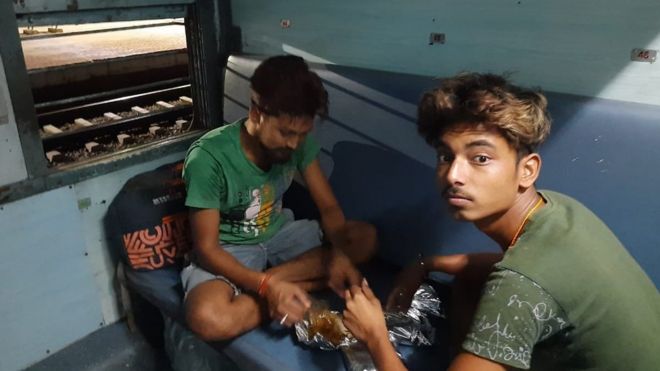 Image copyright ANI
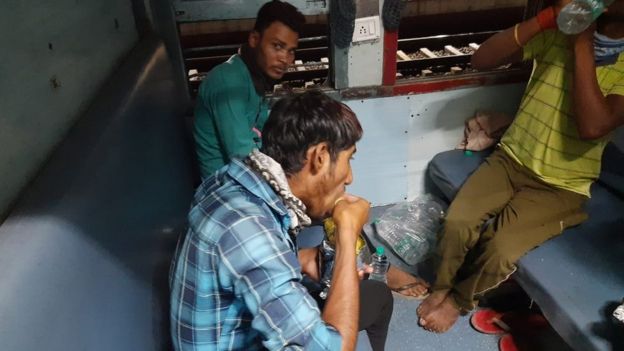 Image copyright ANI
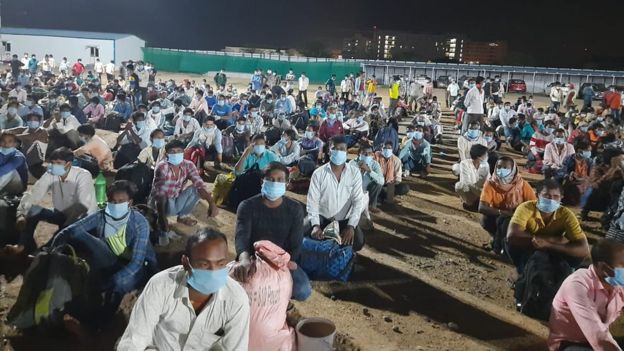 Image copyright ANI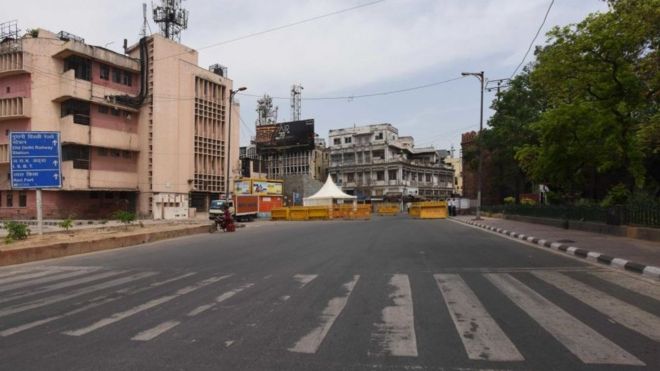


 CHINDIA ALERT: You'll be living in their world, very soon