Chindia Alert: You’ll be Living in their World Very Soon
aims to alert you to the threats and opportunities that China and India present. China and India require serious attention; case of ‘hidden dragon and crouching tiger’.
Without this attention, governments, businesses and, indeed, individuals may find themselves at a great disadvantage sooner rather than later.
The POSTs (front webpages) are mainly 'cuttings' from reliable sources, updated continuously.
The PAGEs (see Tabs, above) attempt to make the information more meaningful by putting some structure to the information we have researched and assembled since 2006.
American destroyer’s mission comes a week before Taiwanese president officially starts second term in office
Increased military activity in the region could have unintended consequences but unlikely to lead to direct conflict, observer says
The guided-missile destroyer USS McCampbell made a transit through the Taiwan Strait on Thursday. Photo: US Navy
The United States sent a warship through the Taiwan Strait on Thursday as the Chinese military embarked on more than two months of live-fire naval drills off the mainland’s northern coast.
According to Taiwan’s defence ministry, the Arleigh Burke-class guided-missile destroyer transited the narrow body of water separating Taiwan from mainland China from north to south “in a routine mission”.
“It is continuing its southward voyage and the military is monitoring its movement through the intelligence it has gathered,” the ministry said.
In a statement on its Facebook page, the US Pacific Fleet said the McCampbell transited the Taiwan Strait as part of ongoing operations in the Indo-Pacific.
Analysts said the passage was a response to the People’s Liberation Army’s increasing military activity near Taiwan and in the wider region.
“This will become a new routine as a kind of US security commitment to maintain stability in the Indo-Pacific region,” said Soong Hseik-wen, professor of strategic studies and international relations at National Chung Cheng University in Taiwan.
Beijing urges France to cancel contract to sell arms to Taiwan
13 May 2020
The PLA has staged a series of war games, including fly-bys and warship transits through the strait, in recent months in response to what Beijing sees as growing pro-independence moves by the Tsai government and her party. China has also warned the US against supplying weapons to the island, which Beijing considers to be a wayward province that must return to the mainland fold, by force if necessary.
Mainland China has suspended official exchanges with Taiwan since Tsai was first elected president in 2016 and refused to accept the one-China policy, which Beijing says must be the foundation for any talks.
The PLA has embarked on 11 weeks of naval exercises off the coast of Tangshan in northern China, barring all other vessels from a 25km (15 mile) radius of the drill area, according to the China Maritime Safety Administration.
Taiwanese support closer ties with US over China, few identify as solely Chinese, Pew Research survey finds
13 May 2020
Both Beijing and Washington have ramped up military activities near Taiwan in recent months during the coronavirus pandemic, moves that some observers say run the risk of miscommunication.
Alexander Huang Chieh-cheng, professor of strategic studies and international relations at Tamkang University in Taipei, said no one could exclude the possibility of unintended incidents when both the US and the mainland were stepping up their presence in the region.
“Rational analysts would however argue that the two nuclear powers are not likely to engage in or escalate to direct military conflict,” he said.
Huang said he believed cross-strait relations would worsen during Tsai’s second term in office, which begins on May 20.
“The already damaged relationship between Taiwan and mainland China has worsened since the pandemic mainly due to travel bans and Taiwan’s increased international visibility,” he said.
On Tuesday, Japan’s Kyodo News reported that the PLA was planning a large-scale beach landing exercise near Hainan province in August, simulating a takeover of the Pratas Islands, which are controlled by Taiwan and also known as the Dongsha Islands.
In Taipei, Major General Lin Wen-huang said Taiwan was monitoring the PLA movements and “has contingency plans in place for the South China Sea to strengthen combat readiness and defence preparedness on both the Spratly and Pratas islands”.
Taiwan’s coastguard also announced on Wednesday that its Pratas Islands Garrison was scheduled to conduct an annual live-fire exercise in June to ensure the “effectiveness of various mortar and machine-gun positions”.
Taiwan shows off its military power after presidential election
Shanghai-based military commentator Ni Lexiong said that both the US Navy and PLA were increasing activities during the pandemic because neither side could afford to show weaknesses that the other might take advantage of.
The destroyer’s passage and the PLA’s drills were all part of such efforts, Li said.
But he agreed that both countries were unwilling, unable, and unlikely to have a real conflict.
“They are both bluffing. It’s a fake crisis,” he said. “A pandemic always ends or prevents a war if you look at history.
“I also don’t believe the PLA would want to take over the Dongsha or Taiping islands [in the South China Sea], because these islets alone are not worth a military campaign and all the consequences of that. The only target valuable enough for the PLA is Taiwan.”
BEIJING/SHANGHAI (Reuters) – A northeastern Chinese city of 10 million people struggling with currently the country’s biggest coronavirus cluster shut dine-in services on Saturday, as the rest of China eases restrictions designed to hamper the spread of the disease.
Harbin, the provincial capital of Heilongjiang and its biggest city, said it temporarily suspended dine-in services for all eateries, reported the official CCTV citing an emergency epidemic prevention notice.
Catering services operating in the city, such as barbecue eateries and those selling skewers, shabu shabu, and stew, shall suspend dine-in meals until further notice and in accordance with changes in the epidemic situation, the notice said.
While mainland China reported only one case on Saturday and crowds returned to some of its most famous tourist attractions for the 5-day May holiday, the northern province of Heilongjiang is hunkering down to prevent further clusters from forming.
Of the 140 local transmissions in mainland China, over half have been reported as from Heilongjiang, according to a Reuters tally.
Heilongjiang province borders Russia and has become the frontline in the fight against a resurgence of the coronavirus epidemic, with many new infections from citizens entering from Russia.
The province has already banned entry to residential zones by non-locals and vehicles registered elsewhere. It had also ordered isolation for those arriving from outside China or key epidemic areas.
On the back of the outbreak, deputy secretary of the Provincial Party Committee Wang Wentao said at a Friday meeting “we deeply blame ourselves”, according to local media.
“We had an inadequate understanding of epidemic prevention and control,” said Wang, adding that the failure to carry out testing in a timely manner contributed to the clusters.
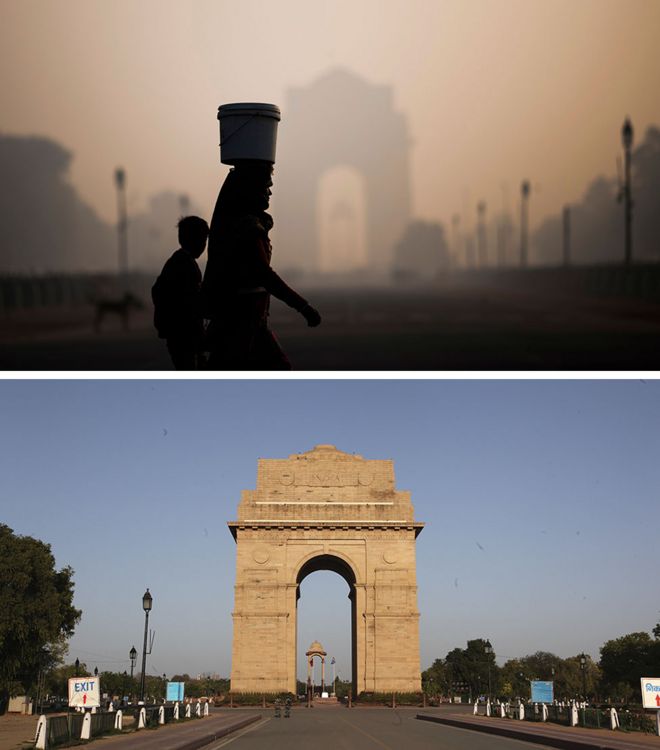
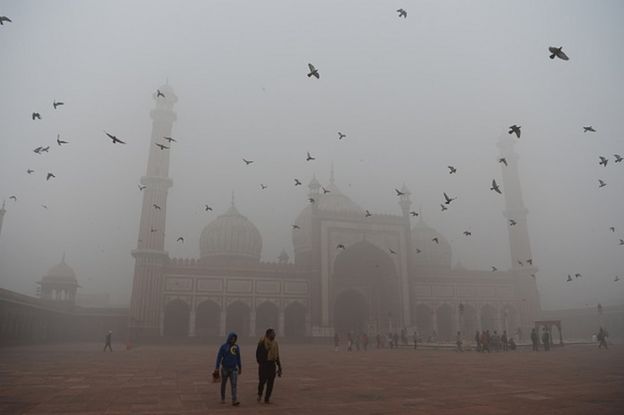
Image copyright GETTY IMAGESImage caption Delhi’sair quality has improved remarkably during the shutdown
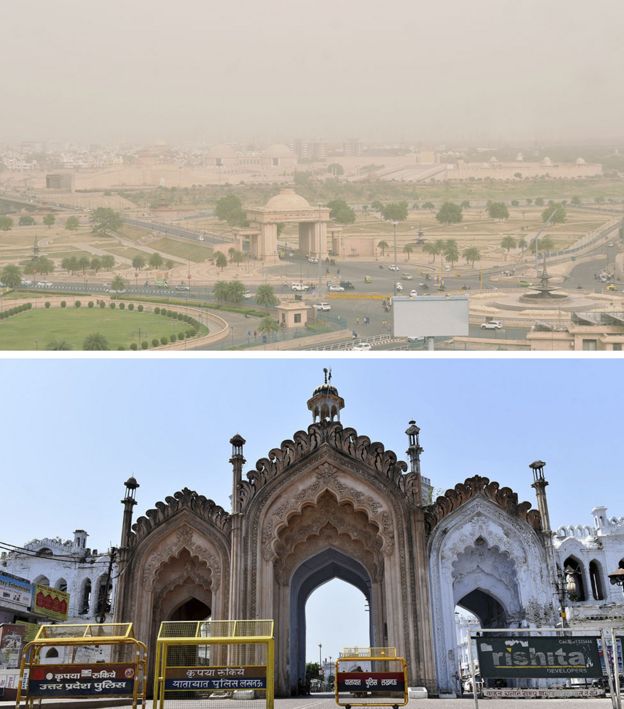
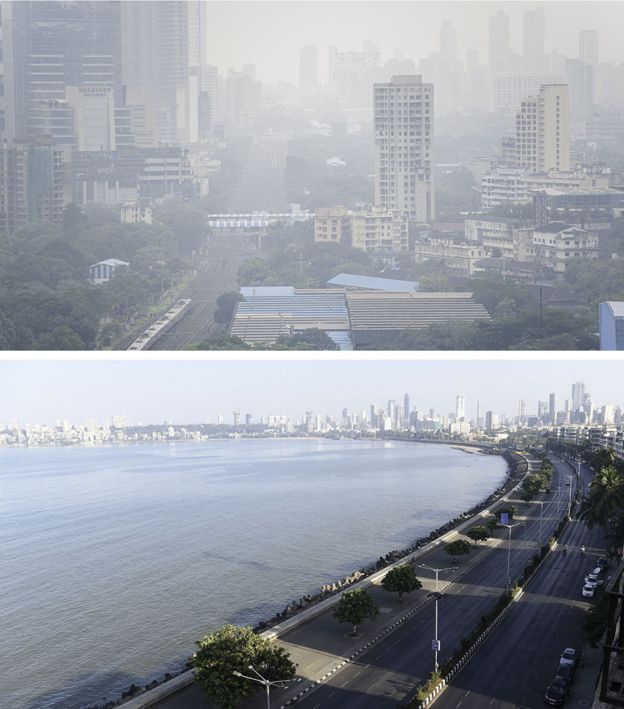
When India shut down last month and suspended all transport to contain the spread of coronavirus, the skies over its polluted cities quickly turned an azure blue, and the air, unusually fresh.
As air pollution plummeted to levels unseen in living memory, people shared pictures of spotless skies and even Himalayan peaks from cities where the view had been obscured by fog for decades.
On one social messaging group, a resident of the capital, Delhi, which regularly records some of the foulest air in the world, celebrated the city’s “alpine weather“. Politician and author Shashi Tharoor wrote that the “blissful sight of blue skies and the joy of breathing clean air provides just the contrast to illustrate what we are doing to ourselves the rest of the time”.
Media caption India coronavirus lockdown cleans up Ganges river
Less than six months ago, Delhi was gasping for breath. Authorities said air quality had reached “unbearable levels”. Schools were shut, flights were diverted, and people were asked to wear masks, avoid polluted areas and keep doors and windows closed.
Delhi and 13 other Indian cities feature on a list of the world’s 20 most polluted. It is estimated that more than a million Indians die every year because of air pollution-related diseases. Industrial smoke, vehicular emissions, burning of trash and crop residue, and construction and road dust are the major contributors.
As urban Indians gazed at the skies and breathed clean air inside their homes, researchers hunkered down to track data on how the grinding lockdown – now extended to 3 May – was impacting air pollution across the country.
Image copyright GETTY IMAGESImage caption Lucknow is another city on the top 20 world’s most polluted list
“This was an unprecedented opportunity for us to take a close look at how air pollution levels have responded to an extraordinary development,” Sarath Guttikunda, who heads Urban Emissions, an independent research group that provides air quality forecasts, told me.
Dr Guttikunda and his team of researchers looked at the data spewed out by the 100-odd air quality monitoring stations all over India. They decided to concentrate on the capital Delhi and its suburbs – a massive sprawl called the National Capital region, where more than 20 million people live. Last winter, air pollution here had reached more than 20 times the World Health Organization’s safe limit.
Image copyright HINDUSTAN TIMESImage caption The financial capital Mumbai also seems very different
The deadliest particle in Delhi’s foul air is the tiny but deadly PM 2.5, which increases the likelihood of respiratory and cardiovascular diseases. They primarily come from combustion – fires, automobiles and power plants.
Urban Emissions found the levels of PM 2.5 in Delhi during the lockdown plummeted to 20 micrograms per cubic metre with a 20-day average of 35.
To put this into context, between 2017 and 2019, the monthly average of PM 2.5 in the capital was up to four times higher. (The national standard is set at 40, and the WHO has an annual average guideline of just 10 micrograms per cubic metre.)
“If 35 is the average lowest available PM2.5 with limited local emissions, it means that at least 70% of the pollution is locally generated,” Mr Guttikunda told me.
Media caption India coronavirus lockdown cleans up Ganges river
His study also found a marked dip in PM 10, caused mainly by road and construction dust, and nitrogen dioxide, which comes mainly from vehicular emissions, and nearly 90% of vehicles are off the road.
“The current crisis has shown us that clear skies and breathable air can be achieved very fast if concrete action is taken to reduce burning of fossil fuels,” says Sunil Dahiya, of the Centre for Research on Energy and Clean Air, which has also been tracking air pollution levels during the lockdown.
But will this prompt change? After all, urban Indians’ and the media’s panic and outrage during the deadly winter pollution every year soon gets lost in the fog of summer heat and concerns over monsoon rains and droughts.
“We don’t yet have a democratic demand for clean air,” Arunabha Ghosh, Chief Executive Officer of the Council on Energy, Environment and Water, a leading climate think tank, told me. Orders to clean up the air have almost always come from the courts, responding to pleas by NGOs.
Image copyright GETTY IMAGESImage caption Pollution in Delhi peaks during winter
However, Dr Ghosh still hopes that “the experience of blue skies and fresh air could be a trigger to create a democratic demand for clean air in India”.
Crises often trigger life changing reforms. A fatal four-day “pea-souper” that engulfed London in 1952 and killed thousands provoked the passing of the Clean Air Act to reduce the use of smoky fuels.
China tried to clean up its air several times before hosting marquee international events – like the Beijing Olympics in 2008, the World Expo in Shanghai and the Guangzhou Asian Games in 2010 – before sliding back to grey, smoky skies.
But many believe the 2014 Apec meeting in Beijing, when China hosted 21 heads of Asia-Pacific economies, was a turning point. The rare blue skies over Beijing spawned the phrase ‘Apec blue‘. In a rush to clean its air, China introduced a set of far-reaching measures. Over the next four years, this resulted in a 32% drop in average pollution across major Chinese cities.
So could a lockdown to prevent the spread of a pandemic, which has imperilled the health and livelihoods of millions, trigger similar policy changes to clean up India’s air?
Image copyright GETTY IMAGESImage caption The movement for clean air has been sporadic and mainly pushed by NGOs
Could it move to a shift in reducing traffic on the road by asking people to work from home in shifts now that millions have experienced clean air for the first time in years? (Facing energy shortages after the loss of the Fukushima nuclear power plant, Japan unleashed a Cool Biz campaign to cut down air conditioning in workplaces and reduce carbon emissions by asking office workers to shed their suits.)
Or can India use some of the money from an inevitable stimulus to help kick-start the economy go towards helping green industries? Renewables, experts say, creates more jobs than coal: India has already created nearly 100,000 jobs in solar and wind energy firms.
Can the country use the windfall revenues accruing from the steep decline in oil prices – most of India’s oil is imported – to provide rebates to polluting factories to set up much-needed emission control equipment?
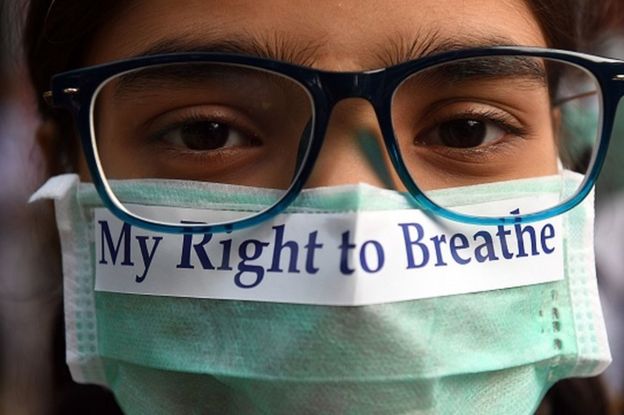
“We have to learn lessons to deploy the economic recovery from the pandemic. We need growth, jobs and sustainable development,” says Dr Ghosh. Cleaning up the air could be the key. For too long, India – and Indians – have ignored their right to breathe easy.
What’s more, if China can reduce air pollution by 32% in four-and-a-half years, why can’t India pledge to reduce pollution by 80% in 80 cities by 2027, which is our 80th anniversary of Independence? asks Dr Ghosh.
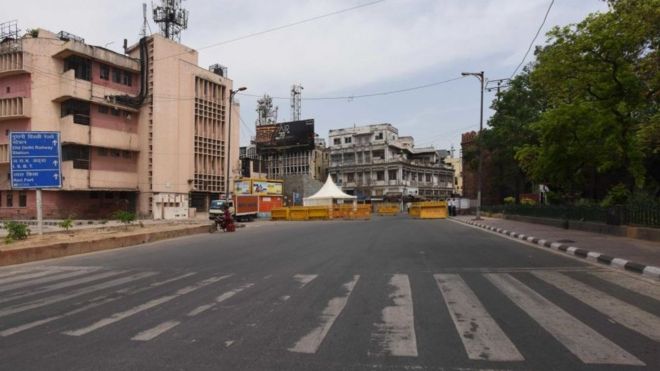
Image copyright GETTY IMAGESImage caption An empty stretch of the road and Delhi Police barricades to screen commuters during lockdown, at Delhi Gate on April 16, 2020 in New Delhi, India.
India has eased some restrictions imposed as part of a nationwide lockdown to curb the spread of the coronavirus.
Most of the new measures are targeted at easing pressure on farming, which employs more than half the nation’s workforce.
Allowing farms to operate again has been seen as essential to avoid food shortages.
But some other measures announced last week, will not be implemented.
This includes the delivery of non-essential items such as mobile phones, computers, and refrigerators by e-commerce firms – the government reversed its decision on that on Sunday.
And none of the restrictions will be lifted in areas that are still considered “hotspots” for the virus – this includes all major Indian cities.
Domestic and international flights and inter-state travel will also remain suspended.
So what restrictions are being eased?
Most of the new measures target agricultural businesses – farming, fisheries and plantations. This will allow crops to be harvested and daily-wagers and others working in these sectors to continue earning.
To restore the supply chain in these industries, cargo trucks will also be allowed to operate across state borders to transport produce from villages to the cities.
Essential public works programmes – such as building roads and water lines in rural areas – will also reopen, but under strict instructions to follow social distancing norms. These are a huge source of employment for hundreds of thousands of daily-wage earners, and farmers looking to supplement their income.
Banks, ATMs, hospitals, clinics, pharmacies and government offices will remain open. And the self-employed – such as plumbers, electricians and carpenters – will also be allowed to work.
Some public and even private workplaces have been permitted to open in areas that are not considered hotspots.
But all businesses and services that reopen are expected to follow social distancing norms.
Who decides what to reopen?
State governments will decide where restrictions can be eased. And several state chief ministers, including Delhi’s Arvind Kejriwal, have said that none of the restrictions will be lifted in their regions.
Mr Kejriwal said the situation in the national capital was still serious and the decision would be reviewed after one week.
India’s most populous state, Uttar Pradesh, will also see all restrictions in place, as will the southern states of Andhra Pradesh, Telangana and Karnataka.
The southern state of Kerala, which has been widely acknowledged for its success in dealing with the virus, has announced a significant easing of the lockdown in areas that it has demarcated as “green” zones.
This includes allowing private vehicular movement and dine-in services at restaurants, with social distancing norms in place. However, it’s implementing what is known as an “odd-even” scheme – private cars with even and odd number plates will be allowed only on alternate days, to limit the number of people on the road.
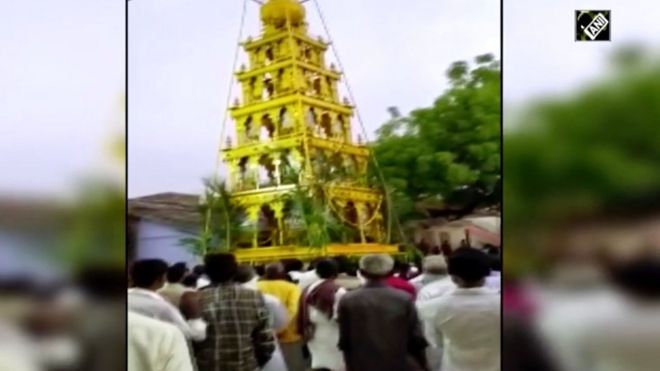
Image copyright ANIImage caption People participating in the chariot-pulling festival
Indian officials have suspended a local magistrate and a police official for allowing large crowds to attend a chariot-pulling festival at a Hindu temple on Thursday morning.
A case has also been filed against the trustees of the temple and another 20 people, police told the BBC.
Pictures of the crowds caused outrage after they surfaced on social media.
It comes weeks after Covid-19 clusters were linked to a Muslim religious gathering in the capital, Delhi.
Revoor village, which is in the state’s Kalburagi district, has been sealed off and officials are rushing teams of medical personnel to set up fever clinics there, the deputy commissioner of the district, told the BBC.
Kalburagi recorded India’s first coronavirus-related death – it is also the first district to implement “containment areas”, which involves sealing off villages where infections are reported.
Revoor is also close to another village that has been sealed off after a two-year-old tested positive for coronavirus.
The festival was held despite temple trustees giving officials an undertaking that it would not go ahead, a state lawmaker, Priyank Kharge, told the BBC.
Officials say that the daily rituals were performed at the temple on Wednesday evening in the presence of a few priests and temple trustees.
But early the next morning, the chariot was brought out of the temple premises and was pulled by “hundreds of people,” according to one official. They estimate that under 1,000 devotees attended the event.
Image copyright GETTY IMAGESImage caption More than a billion people have been staying at home during the lockdown
Will India extend its rigorous 21-day lockdown to slow the spread of coronavirus beyond its end date next week? By all accounts, yes.
On 24 March, India shut its $2.9 trillion economy, closing its businesses and issuing strict stay-at-home orders to more than a billion people. Air, road and rail transport systems were suspended.
Now, more than two months after the first case of Covid-19 was detected in the country, more than 5,000 people have tested positive and some 150 people have died. As testing has ramped up, the true picture is emerging. The virus is beginning to spread through dense communities and new clusters of infection are being reported every day. Lifting the lockdown could easily risk triggering a fresh wave of infections.
A harsh lockdown is certain to slow down the disease. Virologists I spoke to believe India is still at an early stage of the infection. The country still doesn’t have enough data on the transmissibility of the virus or even how many people could have been infected and recovered to develop adequate herd immunity. (It is slowly beginning finger prick blood tests to look at the presence of protective antibodies.)
More than 250 of India’s 700-odd districts have reported the infection. Reports say at least seven states have a third of all infections, and want the lockdown extended. Six states have reported clusters of rapidly growing infections – from the capital Delhi in the north to Maharashtra in the west and Tamil Nadu in the south.
Economic fallout
Not surprisingly, the lockdown is already hurting the economy. Many of the early hotspots are economic growth engines and contribute heavily in revenues to the exchequer. Mumbai, India’s financial capital and Maharashtra’s main city, accounts for more than a third of overall tax collection. The densely populated city has reported more than 500 cases and 45 deaths, and numbers are steadily rising. Authorities say the infection is now spreading through the community. Mumbai has made wearing face masks mandatory.
Image copyright GETTY IMAGESImage caption India has ramped up testing during the lockdown
Many of these hotspot clusters are also thriving manufacturing bases. The spread of infection means that they will be under lockdown for a longer period of time.
The services industry, which generates almost half of India’s GDP, is also likely to remain shut for some more time. Construction, which employs a bulk of migrant workers, will remain similarly suspended. The unemployment rate may have already climbed to more than 20% after the lockdown, according to a report by the Center for Monitoring Indian Economy.
For the moment, economists say, the government will have to prioritise farming over everything else to ensure the livelihoods of millions and secure the country’s future food supplies.
Half of India’s labour force work on farms. The lockdown happened at a time when a bumper winter crop had to be harvested and sold, and the rain-fed summer crop had to be sowed. The immediate challenge is to harvest and market the first crop, and secure the second.
Moving trucks to pick up produce and take them to markets, with adequate social distancing and hand washing will be something the government will have to move on quickly.
“The immediate challenge is to ensure that rural India is not hit,” says Rathin Ray, an economist. “Realistically, a complete lockdown cannot be continuously maintained beyond early May. We don’t have a choice but to reopen gradually after that.”
Image copyright GETTY IMAGESImage caption India has been under a lockdown from 24 March
There is little doubt about that. For his part, SK Sarin, who heads a government advisory panel on combating the disease, says the lockdown can be only eased in a “graded manner in areas that are not hotspots” and that the hotspots remained cordoned off.
Like other affected countries, India will have to prepare itself for what Gabriel Leung, an infectious disease epidemiologist and dean of medicine at the University of Hong Kong, describes as several rounds of “suppress and lift” cycles.
During these periods “restrictions are applied and relaxed, applied again and relaxed again, in ways that can keep the pandemic under control but at an acceptable economic and social cost.”
Also, Dr Leung observes, “how best to do that will vary by country, depending on its means, tolerance for disruption and its people’s collective will. In all cases, however, the challenge essentially is a three-way tug of war between combating the disease, protecting the economy and keeping society at an even keel”.
It is now clear that shutdowns need to continue until transmission has slowed down markedly, and testing and health infrastructure has been scaled up to manage the outbreak.
Experts from the southern state of Kerala, a striking outlier that is containing the infection thanks to a transparent government and a robust public health system, say it isn’t time to lift the lockdown yet and have recommended a three-phase relaxation.
For most countries, easing the lockdown is a tricky policy choice. It sparks fears of triggering a fresh wave of infection and presents the inevitable trade-off between lives and livelihoods. French Prime Minister Edouard Phillipe, says relaxing the lockdown in his country is going to be “fearsomely complex”. In a crisis like this, according to his Dutch counterpart Mark Rutte, leaders have to “make 100% of the decisions with 50% of the knowledge, and bear the consequences.”
Image copyright GETTY IMAGESImage caption India’s financial capital, Mumbai, is emerging as a hotspot
It is going to be tougher for India with its vast size, densely packed population and enfeebled public health system. Also, no country in the world possibly has so much inter-state migration of casual workers, who are the backbone of the services and construction industries.
How will India manage to return these workers to their work places – factories, farms, building sites, shops – without a substantial easing of public transport at a time when crowded trains and buses can be a vector of transmission and easily neutralise the gains of the lockdown? Even allowing restricted mobility – allowing social distancing, temperature checks and passenger hygiene – would put considerable pressure on the public transport system.
The policy choices are fiendishly tough, and the answers are far from easy. India bungled the lockdown by not anticipating the exodus of millions of migrant workers from cities. The weeks ahead will tell whether the fleeing men, women and children carried the infection to their villages. The country simply cannot afford to make similar mistakes again while trying to relax the lockdown. Nitin Pai of The Takshashila Institution, a think tank, believes states should be left to decide on easing restrictions, and decisions “should be based on threat [of infection], which should be determined by extensive testing”.
This week Prime Minister Narendra Modi said that the “situation in the country is akin to a social emergency”. His government now needs make sure that the looming threat to the nation’s health and economic progress is tackled skilfully.
Image copyright GETTY IMAGESImage caption India’s railways are hoping to ease the burden on hospitals
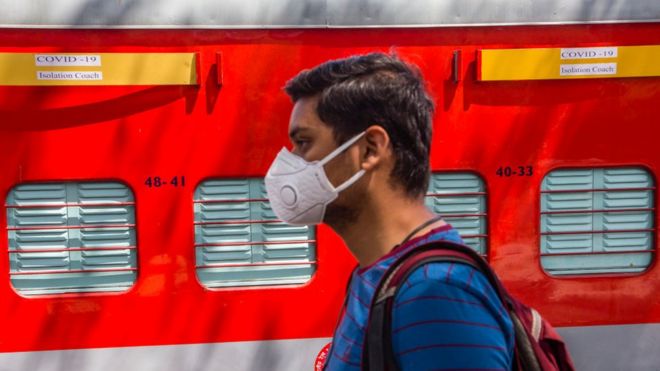
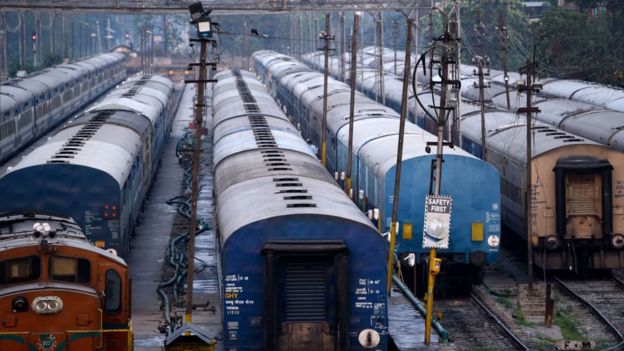
India is preparing for a potential surge in Covid-19 patients by tapping into an unusual resource: its trains, which power the world’s fourth biggest rail network.
The country suspended its passenger trains for the first time after it announced a three-week lockdown on 25 March to contain the coronavirus. As of Wednesday, it had reported 4,643 active cases and 149 deaths, and the numbers are rapidly increasing.
“We, at the railways, thought: how can we contribute?” its spokesman, Rajesh Bajpai, told the BBC. “So we came up with this idea and everyone liked it.”
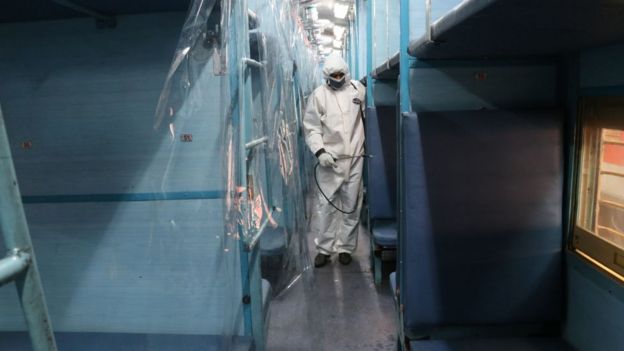
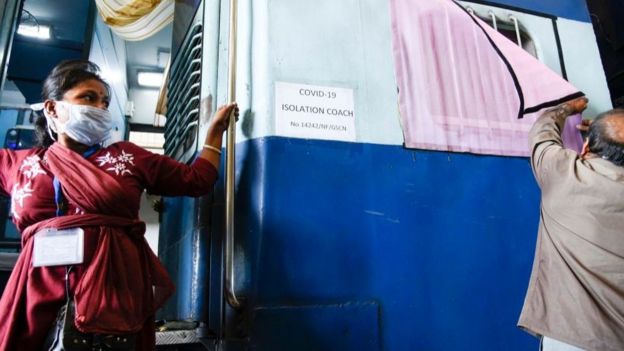
Work has already begun to convert 5,000 train coaches into quarantine or isolation wards, which amounts to 40,000 beds. And the railway ministry says it’s prepared to convert 15,000 more coaches.
The Indian railways – as the ministry is known – is a behemoth. Largely constructed during British rule, it’s still the mainstay of India’s public transport, and includes some of the world’s busiest urban rail systems. It transports 23 million passengers a day and its 12,000 trains crisscross 65,000km (40,389 miles) of tracks, connecting the remotest parts of India.
Mr Bajpai says the coaches can be spared as they are mostly trying to convert older ones, and passengers will be fewer than ever in the coming months even if restrictions are eased.
He adds that this is not unusual for the railways, which already runs several “special” trains, from luxury trains to exhibition trains to a hospital train, complete with operation theatres.
“The coach is a shell and inside, you can provide anything – a drawing room, a dining room, a kitchen, a hospital.”
A looming crisis?
And India may well need the extra beds.
States have already turned all sorts of spaces – sports centres, stadiums, wedding venues, hotels, resorts – into quarantine or isolation centres. But officials fear they will run out of space as the country ramps up testing.
Image copyright GETTY IMAGESImage caption India suspended all passenger trains last month
For every person who tests positive, there are scores more who need to be traced, quarantined and, if necessary, isolated. But isolation at home is not always an option in India’s joint family households – and especially not in its densely-populated slums.
“There are so many options available and this [the coaches] is one of the options,” Mr Bajpai says.
He doesn’t foresee them being used until beds in existing quarantine or isolation centres are filled. But, he adds, they will keep them ready with the necessary facilities.
That includes converting one of the two toilets in each coach into a “bathing room”, providing oxygen cylinders in every coach, and modifying all the cabins so they can hold medical equipment. And then there are measures that are specific to Covid-19 – such as replacing taps that turn with those that have long handles, and fitting dustbins with foot pedals.
Image copyright GETTY IMAGESImage caption It takes up to three days to turn a coach into an isolation ward
The ministry has also ordered extra coat hooks and mosquito nets for every cabin, and has instructed officials to make sure that charging points are working, the upholstery “is in good condition” and “broken panels are replaced”.
The coaches are being readied in 130 different locations across the country, but it’s yet to be decided where they will be stationed.
Mr Bajpai says it’s up to states to decide which stations they want the coaches in. But that in itself is a process because the coaches need regular water and electric supply.
And there are other concerns too. Summer has begun and large parts of India record scorching temperatures, often more than 40C. And the coaches that are being converted are not air-conditioned.
“The patient will be very uncomfortable. Doctors and nurses will be wearing protective gear, and they will find it very difficult,” says Vivek Sahai, a former chairman of the railway board.
Image copyright GETTY IMAGESImage caption Staff member of Northeast Frontier Railway (NFR) prepare train coaches to convert them into isolation wards for COVID-19 patients.
He also says not everyone might be comfortable squatting to use Indian-style toilets; and he wonders if all the designated coaches have a proper system of waste management. (Indian coaches are designed to dispose of human waste onto the tracks although new technologies have begun to be adopted in recent years.)
“I am not saying it cannot be done but they have to take care of these things,” he says. “But if anybody can do it, it’s the railways.”
However, some experts say that this by itself is not going to help solve India’s problems.
“You don’t just need space,” says Dr Sumit Sengupta, a pulmonologist. “We need thousands of doctors and nurses if you really have to make a dent.”
India is severely short of both, and at least three hospitals have been sealed this week alone after members of the staff tested positive.
Media caption As cases of coronavirus rise and the virus hits India’s congested slums, will the country cope?
“Why isolate someone who has symptoms when there is no treatment? Because you don’t want them to spread the infection,” Dr Sengupta says.
But, he adds, the virus is spreading anyway because so many patients are asymptomatic. He says isolating symptomatic patients will not help unless India starts testing aggressively.
“This will work only as part of a larger strategy,” he adds. “Test, trace and isolate. Test should come first.”
But in Delhi and the financial capital, Mumbai, people fearing shortages quickly thronged shops and pharmacies.
“I have never witnessed such a chaos in my life,” the owner of one store in the Shakarpur district of Delhi said, quoted by the Press Trust of India.
“All our stocks, including rice, flour, bread, biscuits, edible oils, have been sold out.”
Police in the busy city of Ghaziabad, in Uttar Pradesh state, patrolled the streets with megaphones to tell residents to stay indoors.
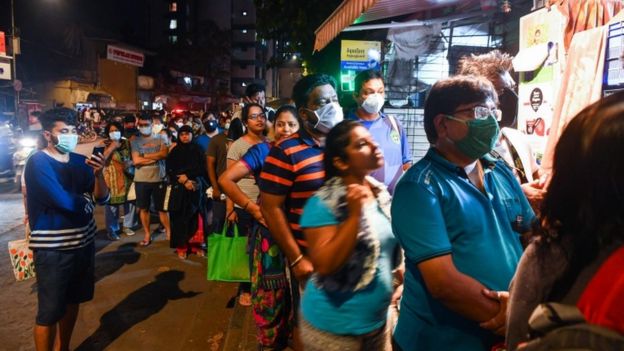
Image copyright AFPImage caption People in Mumbai rushed to stock up on essentials following Mr Modi’s address
Under the new measures, all non-essential businesses will be closed but hospitals and other medical facilities will continue to function as normal. Schools and universities will remain shut and almost all public gatherings will be banned.
Anyone flouting the new rules faces up to two years in prison and heavy fines.
In his address, Prime Minister Modi also:
Stressed that the 21-day lockdown was “very necessary to break the chain of coronavirus”
Emphasised the seriousness of the situation and said that even developed countries had faced problems in combating it
Said that “social distancing was the only way to stop” the virus spreading
Announced that nearly $2bn (£1.8bn) would be made available to boost the country’s health infrastructure
Called on people not to “spread rumours” and to follow instructions
His announcement came after several Indian states introduced measures of their own, such as travel restrictions and the closure of non-essential services.
India has already issued a ban on international arrivals and grounded domestic flights. The country’s rail network has also suspended most passenger services.
Many parts of India, including cities such as Delhi and Mumbai, are already under tight restrictions. But this move extends those provisions to every corner of the country.
An earlier one-day curfew, which was seen as a trial, was flouted by many.
Mr Modi called on Indians to clap and cheer the emergency services from their balconies on Sunday. But many misunderstood the call and congregated in the streets as they danced and chanted.
“It’s impossible to fathom the cost that India may have to pay if such irresponsible behaviour continues,” Mr Modi warned at the time. “Social distancing is the only option to combat coronavirus.”
The implications of a total lockdown in India are huge, not just economically, but socially.
This is a nation where community is everything. Going to worship at a temple, mosque or church is an essential part of daily life for so many.
This is a seismic cultural shift but – like the rest of the world facing similar restrictions – a necessary one.
What’s the latest from around Asia?
Neighbouring Pakistan has almost twice as many confirmed cases – 878 as of Monday evening. Sweeping restrictions are in place although the government has stopped short of imposing a nationwide lockdown. However, several provinces have announced them independently. The army is being brought in to help enforce the restrictions
Bangladesh, which has reported 33 cases and three deaths, is also deploying its armed forces to help maintain social distancing and boost Covid-19 preventive measures. The soldiers will also monitor thousands of quarantined expatriate returnees. Across South Asia, there are concerns that the actual number of cases could be much higher than is being reported.
Indonesia, which has 49 confirmed Covid-19 deaths – the highest in South East Asia – has converted an athlete’s village built for the 2018 Asian Games into a makeshift hospital for coronavirus patients. A state of emergency was declared in Jakarta on Monday
In Thailand, a month-long state of emergency which will include curfews and checkpoints will begin on Thursday. The government has been criticised for failing to take strong action so far. Four people have died and nearly 900 tested positive
The most populous country that was without a case until now – Myanmar – has announced two cases
And what about the rest of the world?
Elsewhere, governments are continuing to work to stem the spread of the virus which has now affected more than 190 countries worldwide
More than 2.6 billion people are in lockdown now India has introduced its new measures, according to a tally by the AFP news agency
Media caption Reality Check tackles misleading health advice being shared online
Europe remains at the epicentre of the pandemic. On Tuesday, the death toll jumped by 514 in a single day in Spain and other European countries also reported sharp increases
Italy is the worst affected country in the world in terms of deaths. The virus has killed almost 7,000 people there over the past month
The World Health Organization (WHO) has warned that the US has the potential to become the new epicentre of the pandemic
In other developments, Japanese Prime Minister Shinzo Abe said the International Olympic Committee has agreed that the 2020 Tokyo Olympics should be postponed by a year
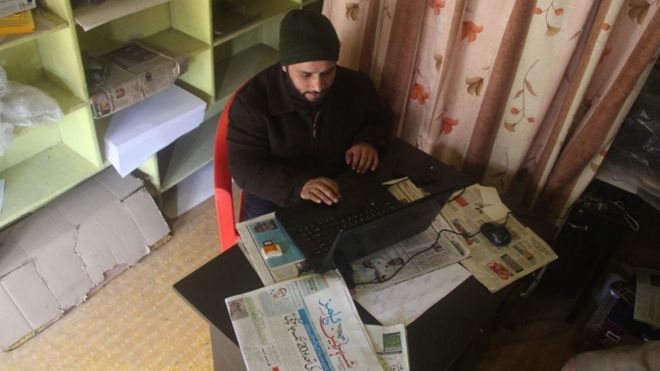
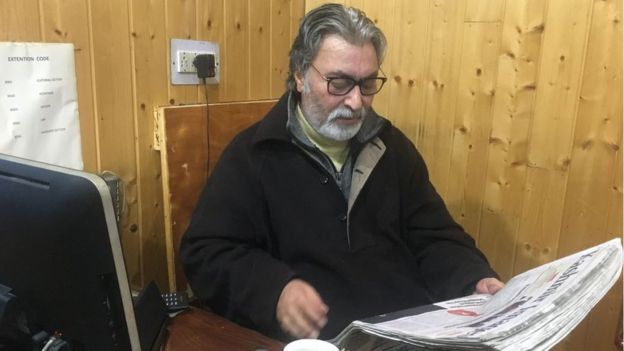
Image copyright MUKHTAR ZAHOORImage caption Muneeb Ul Islam can no longer afford to work as a journalist in Kashmir
Journalists in Indian-administered Kashmir are struggling to make ends meet amid a months-long communications blockade that has only partially been lifted. The BBC’s Priyanka Dubey visited the region to find out more.
Muneeb Ul Islam, 29, had worked as a photo-journalist in Kashmir for five years, his pictures appearing in several publications in India and abroad.
But the young photographer’s dream job vanished almost overnight in August last year, when India’s federal government suspended landline, mobile and internet services in Kashmir.
The government’s move came a day before its announcement that it was revoking the region’s special status – a constitutionally-guaranteed provision, which gave Kashmir partial autonomy in matters related to property ownership, permanent residency and fundamental rights.
The controversial decision catapulted the Muslim-majority valley into global news – but local journalists like Mr Islam had no way to report on what was going on. And worse, they had to find other things to do because journalism could no longer pay the bills.
By January, the region had not had access to the internet for more than 150 days, India’s longest such shutdown.
Media caption The silenced YouTube stars of Indian-administered Kashmir
“I chose journalism because I wanted to do something for my people,” Mr Islam explains. “I covered this conflict-ridden region with dedication until the loss of Kashmir’s special status put a full stop on my journey.”
In January, the government eased restrictions and allowed limited broadband service in the Muslim-majority valley, while 2G mobile coverage resumed in parts of the neighbouring Jammu region. But mobile internet and social media are still largely blocked.
India says this is necessary to maintain law and order since the region saw protests in August, and there has also been a long-running insurgency against Indian rule. But opposition leaders and critics of the move say the government cannot leave these restrictions in place indefinitely.
Meanwhile, journalists like Mr Islam are struggling.
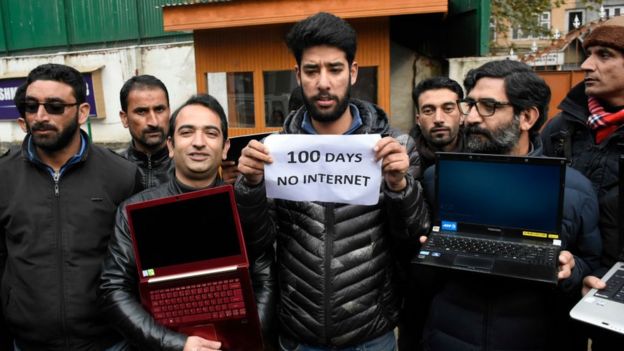
Image copyright GETTY IMAGESImage caption Kashmiri journalists protested after 100 days of no internet in the region
For months, Mr Islam says, he kept trying to report and file stories and photos.
In September, he even spent 6,000 rupees ($84; £65) of his own money to make two trips to the capital, Srinagar, for a story. But he soon ran out of funds and had to stop.
He then tried to file his stories on a landline phone: he would call and read them aloud to someone on the other side who could type it out. But, as he found out, his stories didn’t earn him enough money to cover the cost of travelling for hours in search of a working landline.
And Mr Islam was desperate for money because his wife was ill. So he eventually asked his brother for help, finding work carrying bricks on a construction site in his neighbourhood in Anantnag city. It pays him 500 rupees a day.
Mr Islam is not the only journalist in Kashmir who has been forced to abandon their career for another job.
Another journalist, who did not want to reveal his name, says he had been working as a reporter for several years, but quit the profession in August. He now plans to work in a dairy farm.
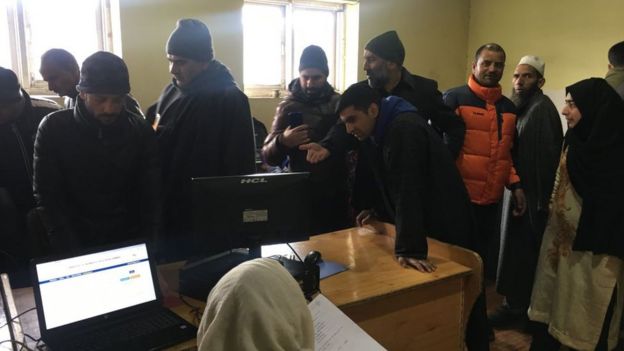
Image copyright MUKHTAR ZAHOORImage caption Internet is available in some government offices
Yet another reporter, who also also wished to remain anonymous, says he used to earn enough to comfortably provide for his family. Now, he barely has money to buy petrol for his motorcycle.
“I have no money because I have not been able to file any story in the last six months,” a third reporter, who spoke to the BBC on the condition of anonymity, says. “My family keeps telling me to find another job. But what else can I do?”
In December, people were given limited access to the internet at a government office in Anantnag, but this hasn’t helped local journalists. The office, Mr Islam says, is always crowded and there are only four desktops for a scrum of officials, students and youngsters who want to log on to respond to emails, fill exam forms, submit job applications or even check their social media.
“We have access for only for a few minutes and the internet speed is slow,” he explains. “We are barely able to access email, forget reading the news.”
What’s more, Mr Islam says those who work at the office often ask customers to show them the contents of emails. “This makes us uncomfortable, but we don’t have a choice.”
Image copyright MUKHTAR ZAHOORImage caption Basheer Manzar runs Kashmir Images, a local newspaper
Many journalists say that they have been completely cut off from their contacts for months now, making it hard to to maintain their networks or sources.
They also speak of how humiliating it is to beg for wi-fi passwords and hotspots at the cramped media centre in Srinagar, which has less than two dozen computers for hundreds of journalists.
This has left publishers in the lurch too. “My reporters and writers are not able to file,” says Basheer Manzar, the editor of Kashmir Images.
He still publishes a print edition, he says, because if he doesn’t do so for a certain number of days in the month, he will lose the license.
But the website continues to struggle, he adds, because most of the readers in Indian-administered Kashmir have no access to the internet.
“I know what is happening in New York through news on the TV, but I don’t know what’s happening in my hometown.”
TOKYO (Reuters) – Toyota Motor Corp (7203.T) on Friday said production at all of its China plants would remain suspended through Feb. 16, joining a growing number of automakers facing stoppages due to supply chain issues as the coronavirus spreads.
The Japanese automaker, which operates 12 vehicle and components factories in China, said it would extend its production stoppage “after considering various factors, including guidelines from local and region governments, parts supply, and logistics.
“For the week of Feb. 10, we will be preparing for the return to normal operation from Feb. 17 and beyond,” it said in a statement.
The decision extends Toyota’s initial plans to suspend operations through Sunday, and comes as the threat from the coronavirus crisis closes in on the global auto industry.
South Korea’s Hyundai Motor (005380.KS) and affiliate Kia Motors (000270.KS) said on Friday that they plan to restart production at their Chinese factories on Feb. 17, from a previously planned Feb.9.
“We will take preventive measures against infection at factories,” a spokeswoman said.
A growing number of car makers, including those who do not make cars in China, are flagging the possibility that their global operations could take a hit if they cannot access parts supplies from the country, where there are transportation bans to stop the virus spreading.
Suzuki Motor Corp said it was looking at the possibility of procuring “made in China” car parts from other regions if it cannot access parts due to ongoing stoppages.
The Japanese automaker does not produce or sell any cars in China, but procures some components there for its plants in India, where it controls around half of the passenger vehicle market via its local unit Maruti Suzuki India Ltd (MRTI.NS).
Fiat Chrysler Automobiles NV (FCHA.MI) on Thursday said one of its European plants could close within two to four weeks if Chinese parts suppliers cannot get back to work soon, while Hyundai Motor Co (005380.KS) earlier this week suspended production at its South Korean plants due to a shortage of China-made parts.
Parts made in China are used in millions of vehicles assembled elsewhere, and China’s Hubei province – the epicentre of the coronavirus outbreak – is a major hub for vehicle parts production and shipments.
To limit the spread of the virus, Chinese authorities have announced an extended holiday period in Hubei and 10 other provinces, which account for more than two-thirds of the country’s vehicle production.
IHS Automotive projects plant closures through Feb. 10 would result in a 7% cut in vehicle production in China for the first quarter.
In a note, its analysts said extended closures into March may result in lost production of over 1.7 million vehicles for the period, a decline of roughly one-third of pre-virus output expectations.
“If the situation lingers into mid-March, and plants in adjacent provinces are also idled, the China-wide supply chain disruption caused by parts shortages from Hubei, a major component hub, could have a wide-reaching impact,” they said.
Other industry experts said suppliers had built up a cushion of parts in inventory and in-transit ahead of the long Lunar New Year holiday in late January. Those will start to run out if factories cannot get back to work next week, or if flights to and from China remain limited.
Toyota said its plants outside China were operating as normal for the moment but it has said it was also considering the possibility of manufacturing parts commonly made in China in other regions.













 CHINDIA ALERT: You'll be living in their world, very soon