Chindia Alert: You’ll be Living in their World Very Soon
aims to alert you to the threats and opportunities that China and India present. China and India require serious attention; case of ‘hidden dragon and crouching tiger’.
Without this attention, governments, businesses and, indeed, individuals may find themselves at a great disadvantage sooner rather than later.
The POSTs (front webpages) are mainly 'cuttings' from reliable sources, updated continuously.
The PAGEs (see Tabs, above) attempt to make the information more meaningful by putting some structure to the information we have researched and assembled since 2006.
Chinese groups calling for more ‘fighting spirit’ are getting the upper hand on those who favour calm and cooperation, government adviser says
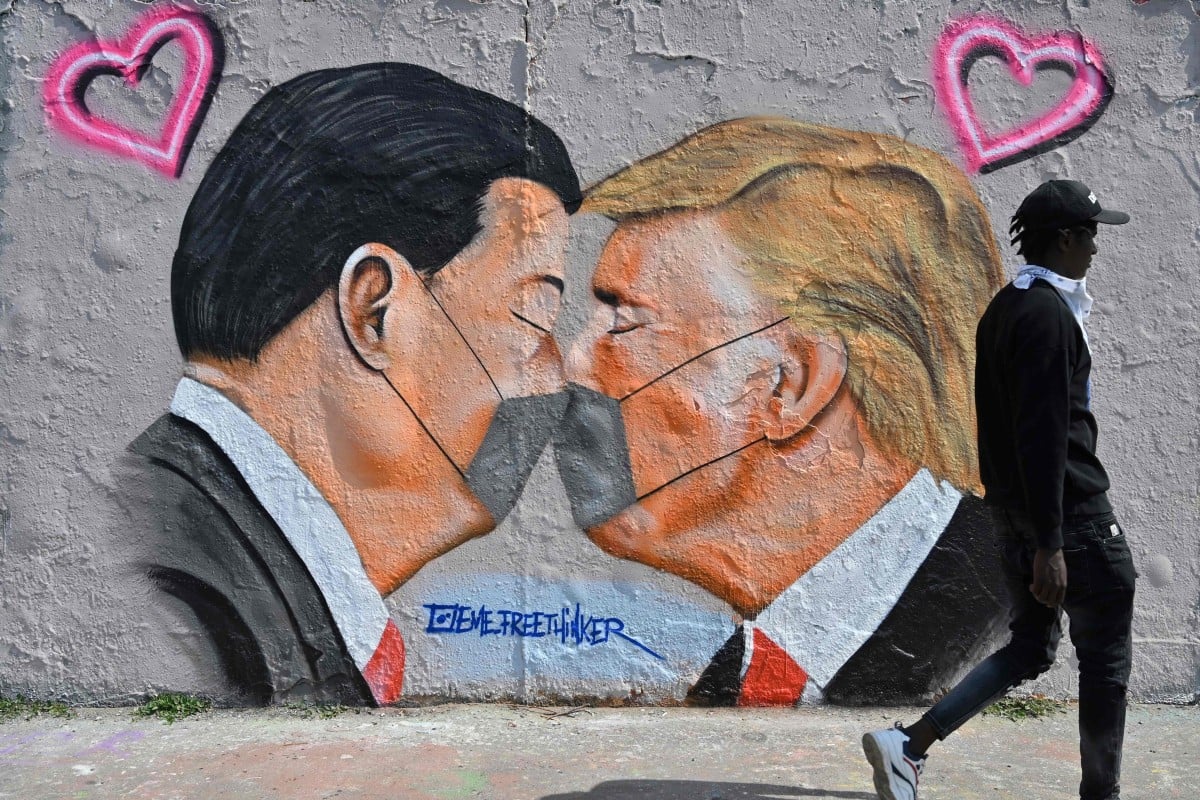
From Hong Kong to Covid-19, trade to the South China Sea, Beijing and Washington are clashing on a growing number of fronts and in an increasingly aggressive way
Efforts to promote dialogue and cooperation between the US and China are failing, observers say. Photo: AFP
Moderates who favour dialogue and cooperation as a way to resolve China’s disputes with the United States are losing ground to hardline groups bent on taking the fight to Washington, according to political insiders and observers.
“There are two camps in China,” said a former state official who now serves as a government adviser and asked not to be named.
“One is stressing the combat spirit, the other is trying to relieve tensions. And the former has the upper hand.”
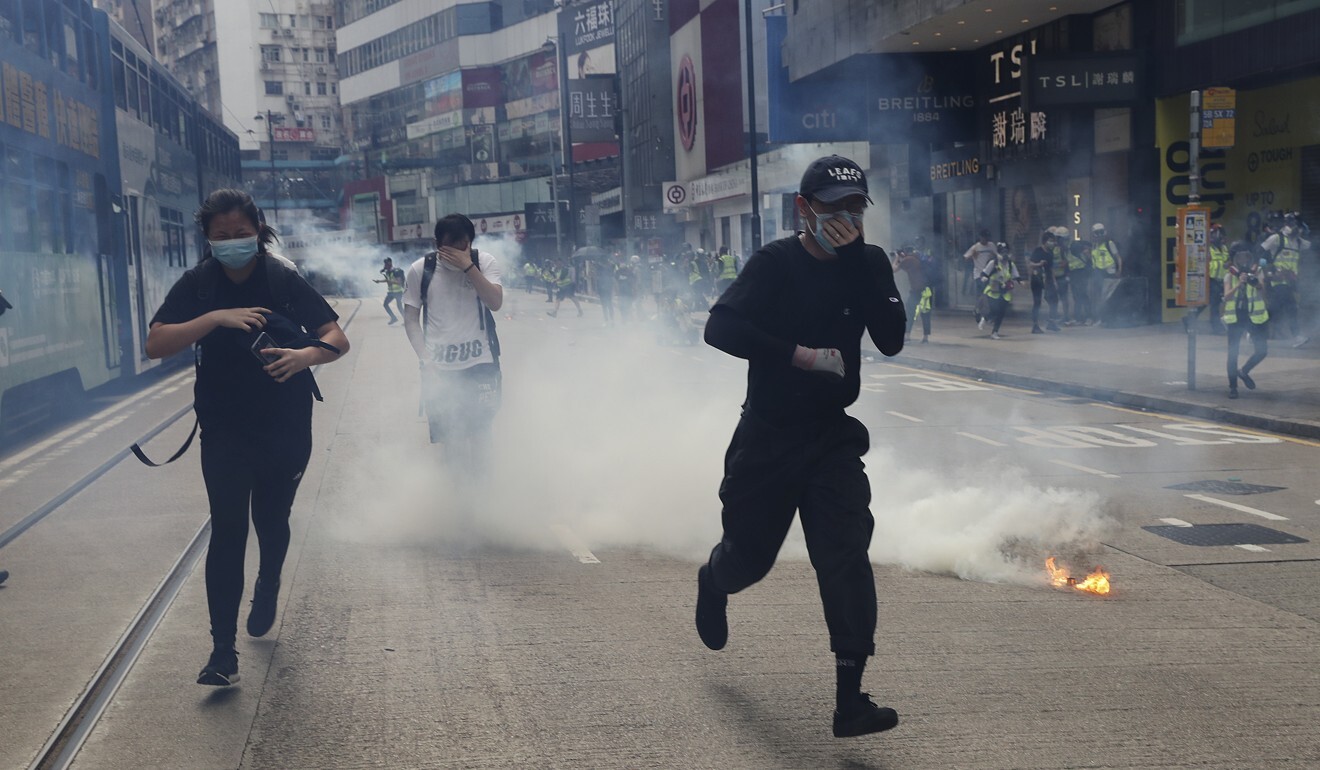
Relations between China and the US are under intense pressure. After Beijing moved to introduce a national security law for Hong Kong, US President Donald Trump said on Friday that Washington would begin eliminating the special policy exemptions it grants the city, as it no longer considers it autonomous from mainland China.
Beijing’s decision to enact a national security law for Hong Kong was met with anger from the US and other Western countries. Photo: Sam Tsang
The two nations have also clashed over trade, Xinjiang, Taiwan and the South China Sea, with the US passing several acts denouncing Beijing and sanctioning Chinese officials.
China has also experienced turbulence in its relations with other countries, including Australia and members of the European Union, mostly related to the Covid-19 pandemic
and Beijing’s efforts to position itself as a leader in the fight against the disease with its policy of “mask diplomacy”.
After Canberra appealed for an independent investigation to be carried out to determine the origins of the coronavirus, Beijing responded by imposing tariffs on imports of Australian barley, showing it is prepared to do more than just trade insults and accusations with its adversaries.
Pang Zhongying, a professor of international relations at Ocean University of China in Qingdao, said there was a worrying trend in China’s relations with other nations.
“We need political and diplomatic means to resolve the challenges we are facing, but … diplomatic methods have become undiplomatic,” he said.
“There are some who believe that problems can be solved through tough gestures, but this will never work. Without diplomacy, problems become confrontations.”
said during his annual press conference on the sidelines of the National People’s Congress last weekend that China and the United States must work together to prevent a new Cold War.
His words were echoed by Chinese Premier Li Keqiang, who said during a press conference after the closure of the legislative session on Thursday that the many challenges facing the China-US relations could only be resolved through cooperation.
However, the government adviser said there was often quite a chasm between what China’s leaders said and what happened in reality.
“Even though we say we do not want a Cold War, what is happening at the working level seems to be different.” he said. “The implementation of policies is not properly coordinated and often chaotic.”
Tensions between China and the US have been in a poor state since the start of a trade war almost two years ago. After multiple rounds of negotiations, the sides in January signed a phase one deal, but the positivity that created was short-lived.
In February, Beijing expelled three reporters from The Wall Street Journal over an article it deemed racist, while Washington has ramped up its military activity in the South China Sea and Taiwan Strait, and threatened to revoke the visas of Chinese students studying science and technology in the US over concerns they might be engaged in espionage.
Beijing has also used its state media and army of “Wolf Warrior” diplomats to promote its narrative, though many Chinese scholars and foreign policy advisers have said the latter’s nationalistic fervour has done more harm than good and appealed to Beijing to adopt a more conciliatory tone.
However, Hu Xijin, editor-in-chief of Chinese tabloid Global Times, said China had no option but to stare down the US, which regarded the world’s most populous nation as its main rival.
“Being contained by the US is too high a price for China to pay,” he said. “I think the best thing people can do is forget the old days of China-US ties”.
Jin Canrong, a professor of international relations at Renmin University in Beijing, wrote in a recent newspaper article that Beijing’s actions – notably enacting a national security law for Hong Kong – showed it was uncompromising and ready to stand its ground against the US.
Wu Xinbo, dean of international studies at Fudan University in Shanghai, agreed, saying relations between the two countries were likely to worsen in the run-up to the US presidential election in November and that Beijing should be prepared for a fight.
But Adam Ni, director of China Policy Centre, a think tank in Canberra, said the issue was not that the moderate camp had been sidelined, but rather Beijing’s perception of the US had changed.
“Beijing has woken up to the idea that America’s tough policy on China will continue and it is expecting an escalation of the tensions,” he said.
“The centre of gravity in terms of Beijing’s perception of the US has shifted, in the same way the US perception of China has shifted towards a more negative image”.
Beijing was simply responding in kind to the hardline, assertive manner of the US, he said.
The rhetoric towards the self-ruled island has hardened in Premier Li Keqiang’s annual work report
Beijing regards Taiwan as one of its core national interests and says it ‘resolutely opposes’ any separatist activity
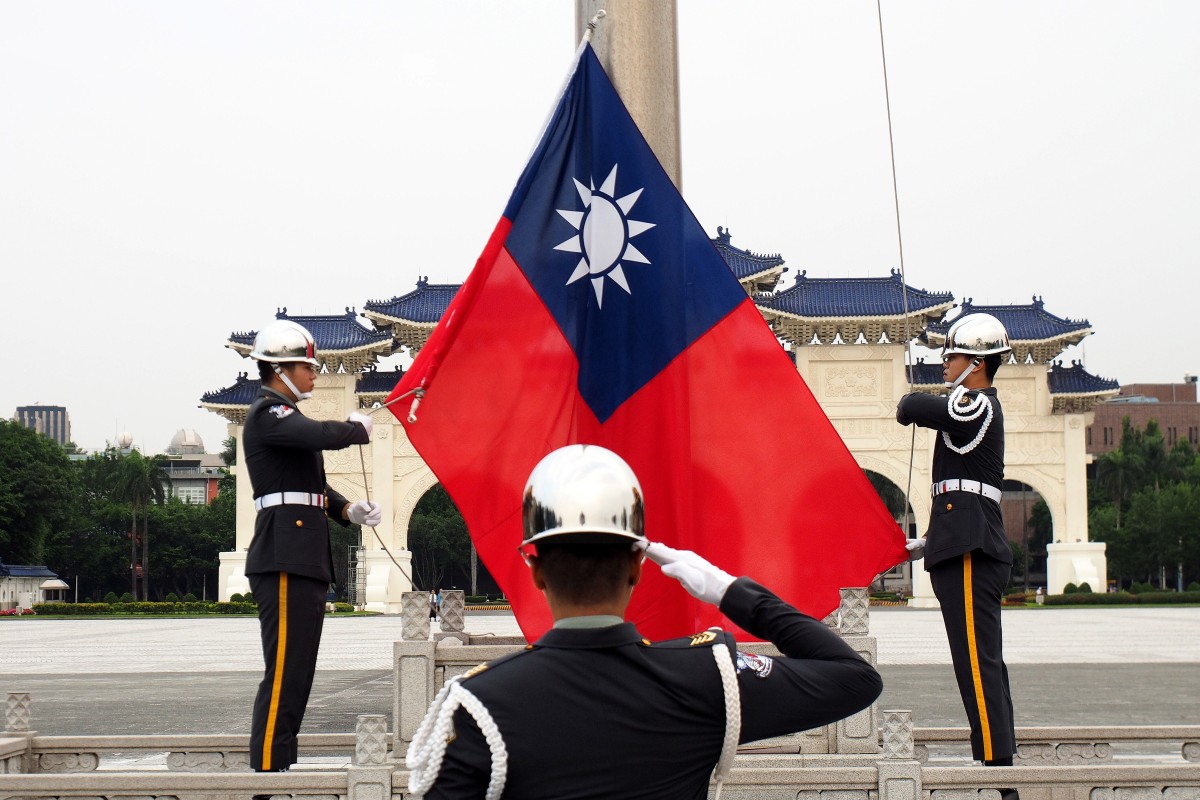
Beijing regards reunification with Taiwan as one of its core interests. Photo: EPA-EFE
Beijing has hardened its rhetoric towards Taiwan, removing references to “peaceful reunification”, in the government’s annual work report.
Observers said the change reflected the stronger stance Beijing would adopt in tackling the Taiwan issue, which it regards as one of its key national interests.
The past six work reports since President Xi Jinping took power in 2013 stressed peaceful reunification and the 1992 consensus – under which both sides tacitly agree there is only one China, but have different interpretations on what this means.
But the latest report from Premier Li Keqiang took a different tone, saying: “We will adhere to the major principles and policies on work related to Taiwan and resolutely oppose and deter any separatist activities seeking ‘Taiwan independence’.”
US to sell US$180 million worth of submarine-launched torpedoes to Taiwan
21 May 2020
“We will improve institutional arrangements, policies, and measures to encourage exchanges and cooperation between the two sides of the Taiwan Strait, further cross-strait integrated development, and protect the well-being of our compatriots in Taiwan,” the report said.
“We will encourage them to join us in opposing ‘Taiwan independence’ and promoting China’s reunification.
“With these efforts, we can surely create a beautiful future for the rejuvenation of the Chinese nation,” it said, dropping a clause that described the process as “peaceful”.
The 1992 consensus allows leeway for both parties to negotiate an agreement, but President Tsai Ing-wen has said the island would never accept it as the basis for cross-strait relations.
Taiwan’s Mainland Affairs Council said on Friday that the “one country, two systems” framework, touted by Beijing as a political basis for unification, had harmed cross-strait relations. It called for the two sides to work together to resolve their differences.
Tang Shao-cheng, an international relations specialist at Taiwan’s National Chengchi University, said the change in wording and tone of the Taiwan section of the work report could be seen as a warning to Tsai’s independence-leaning Democratic Progressive Party (DPP).
“Not mentioning ‘peace’ suggests Beijing is considering unification both by peaceful means and by force,” Tang said.
President Xi Jinping and Premier Li Keqiang at the National People’s Congress opening session on Friday. Photo: Kyodo
Derek Grossman, an analyst from US-based think tank Rand Corporation, said Beijing would continue to put pressure on the island using diplomatic, military, economic and psychological means.
“Beijing will continue to send military aircraft near the island … [it] could decide to end the Economic Cooperation Framework Agreement which has remained active in spite of Tsai’s election in 2016; Beijing could steal one or more diplomatic partners from Taipei. I would expect these types of actions to be on the table,” Grossman said.
How would mainland China attack Taiwan? A video outlines one scenario
22 May 2020
Sun Yun, director of the China programme at the Stimson Centre think tank in the US, said Beijing faced a dilemma on whether to continue economic integration with Taiwan because that had not had the political effect it wanted.
“The obstacles to unification are not economic, but political. Taiwan is unwilling to pursue unification with an authoritarian mainland. To solve that issue, presumably the mainland could pursue political reform. But in reality, the Chinese Communist Party is unwilling,” she said.
“If the economic and political approach doesn’t work, what’s left is the military approach. But with US intervention, the mainland will not prevail.”
Beijing recently warned Washington it would respond after US Secretary of State
, and demanded that the US stop selling arms to the island.
Joshua Eisenman, a professor from the University of Notre Dame in Indiana, said Beijing was running out of countermeasures, since its actions had only hardened attitudes on the island and enhanced the sense of Taiwanese identity.
“As I see it, all that remains is for the [Chinese Communist Party[ to sit down and talk to the DPP without preconditions and establish a modus vivendi for cross-strait relations,” he said.
TAIPEI (Reuters) – Taiwan cannot accept becoming part of China under its “one country, two systems” offer of autonomy , President Tsai Ing-wen said on Wednesday, strongly rejecting China’s sovereignty claims and likely setting the stage for an ever worsening of ties.
China responded that “reunification” was inevitable and that it would never tolerate Taiwan’s independence.
In a speech after being sworn in for her second and final term in office, Tsai said relations between Taiwan and China had reached an historical turning point.
“Both sides have a duty to find a way to coexist over the long term and prevent the intensification of antagonism and differences,” she said.
Tsai and her Democratic Progressive Party won January’s presidential and parliamentary elections by a landslide, vowing to stand up to China, which claims Taiwan as its own and says it would be brought under Beijing’s control by force if needed.
“Here, I want to reiterate the words ‘peace, parity, democracy, and dialogue’. We will not accept the Beijing authorities’ use of ‘one country, two systems’ to downgrade Taiwan and undermine the cross-strait status quo. We stand fast by this principle,” Tsai said.
China uses the “one country, two systems” policy, which is supposed to guarantee a high degree of autonomy, to run the former British colony of Hong Kong, which returned to Chinese rule in 1997. It has offered it to Taiwan, though all major Taiwanese parties have rejected it.
China’s Taiwan Affairs Office, responding to Tsai, said Beijing would stick to “one country, two systems” – a central tenet of Chinese President Xi Jinping’s Taiwan policy – and “not leave any space for Taiwan independence separatist activities”.
“Reunification is a historical inevitability of the great rejuvenation of the Chinese nation,” it said. “We have the firm will, full confidence, and sufficient ability to defend national sovereignty and territorial integrity.”
China views Tsai as a separatist bent on formal independence for Taiwan. Tsai says Taiwan is an independent state called the Republic of China, its official name, and does not want to be part of the People’s Republic of China governed by Beijing.
TAIWAN OPEN TO DIALOGUE
China has stepped up its military drills near Taiwan since Tsai’s re-election, flying fighter jets into the island’s air space and sailing warships around Taiwan.
Tsai said Taiwan has made the greatest effort to maintain peace and stability in the narrow Taiwan Strait that separates the democratic island from its autocratic neighbour China.
“We will continue these efforts, and we are willing to engage in dialogue with China and make more concrete contributions to regional security,” she added, speaking in the garden of the old Japanese governor’s house in Taipei, in front of a socially-distanced audience of officials and diplomats.
Taiwan has become a rising source of friction between China and the United States, with the Trump administration strongly backing Taiwan even in the absence of formal diplomatic ties.
U.S. Secretary of State Mike Pompeo sent his congratulations to Tsai on Tuesday, praising her “courage and vision in leading Taiwan’s vibrant democracy”, in a rare high-level message from Washington direct to Taiwan’s government.
China’s Foreign Ministry condemned Pompeo’s remarks, and said the government would take “necessary countermeasures”, though did not elaborate.
China cut off a formal talks mechanism with Taiwan in 2016 after Tsai first won election.
Yao Chia-wen, a senior adviser to Tsai, told Reuters the chance of talks with China were small given ongoing tensions.
“We are ready to engage with them any time, but China is unlikely to make concessions to Taiwan,” he said. “In the next four years there’s little chance for the cross-strait relationship to improve.”
American destroyer’s mission comes a week before Taiwanese president officially starts second term in office
Increased military activity in the region could have unintended consequences but unlikely to lead to direct conflict, observer says
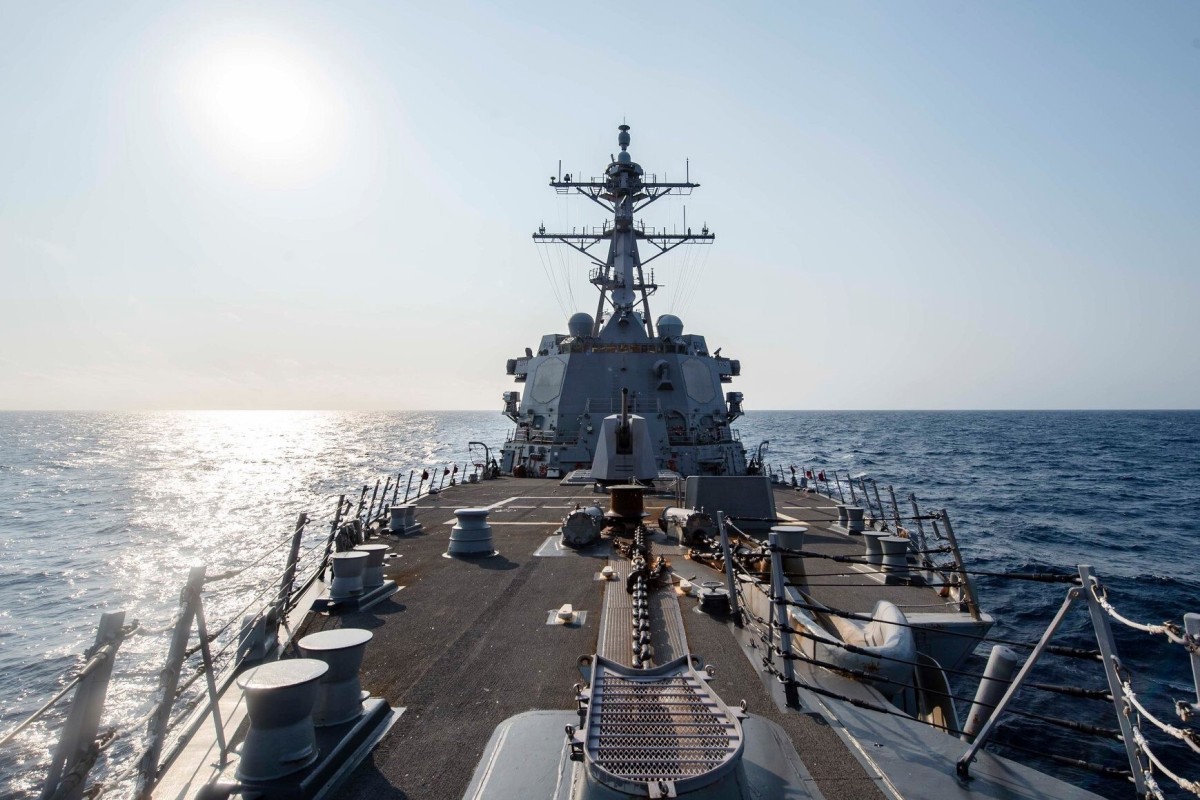
The guided-missile destroyer USS McCampbell made a transit through the Taiwan Strait on Thursday. Photo: US Navy
The United States sent a warship through the Taiwan Strait on Thursday as the Chinese military embarked on more than two months of live-fire naval drills off the mainland’s northern coast.
According to Taiwan’s defence ministry, the Arleigh Burke-class guided-missile destroyer transited the narrow body of water separating Taiwan from mainland China from north to south “in a routine mission”.
“It is continuing its southward voyage and the military is monitoring its movement through the intelligence it has gathered,” the ministry said.
In a statement on its Facebook page, the US Pacific Fleet said the McCampbell transited the Taiwan Strait as part of ongoing operations in the Indo-Pacific.
Analysts said the passage was a response to the People’s Liberation Army’s increasing military activity near Taiwan and in the wider region.
“This will become a new routine as a kind of US security commitment to maintain stability in the Indo-Pacific region,” said Soong Hseik-wen, professor of strategic studies and international relations at National Chung Cheng University in Taiwan.
Beijing urges France to cancel contract to sell arms to Taiwan
13 May 2020
The PLA has staged a series of war games, including fly-bys and warship transits through the strait, in recent months in response to what Beijing sees as growing pro-independence moves by the Tsai government and her party. China has also warned the US against supplying weapons to the island, which Beijing considers to be a wayward province that must return to the mainland fold, by force if necessary.
Mainland China has suspended official exchanges with Taiwan since Tsai was first elected president in 2016 and refused to accept the one-China policy, which Beijing says must be the foundation for any talks.
The PLA has embarked on 11 weeks of naval exercises off the coast of Tangshan in northern China, barring all other vessels from a 25km (15 mile) radius of the drill area, according to the China Maritime Safety Administration.
Taiwanese support closer ties with US over China, few identify as solely Chinese, Pew Research survey finds
13 May 2020
Both Beijing and Washington have ramped up military activities near Taiwan in recent months during the coronavirus pandemic, moves that some observers say run the risk of miscommunication.
Alexander Huang Chieh-cheng, professor of strategic studies and international relations at Tamkang University in Taipei, said no one could exclude the possibility of unintended incidents when both the US and the mainland were stepping up their presence in the region.
“Rational analysts would however argue that the two nuclear powers are not likely to engage in or escalate to direct military conflict,” he said.
Huang said he believed cross-strait relations would worsen during Tsai’s second term in office, which begins on May 20.
“The already damaged relationship between Taiwan and mainland China has worsened since the pandemic mainly due to travel bans and Taiwan’s increased international visibility,” he said.
On Tuesday, Japan’s Kyodo News reported that the PLA was planning a large-scale beach landing exercise near Hainan province in August, simulating a takeover of the Pratas Islands, which are controlled by Taiwan and also known as the Dongsha Islands.
In Taipei, Major General Lin Wen-huang said Taiwan was monitoring the PLA movements and “has contingency plans in place for the South China Sea to strengthen combat readiness and defence preparedness on both the Spratly and Pratas islands”.
Taiwan’s coastguard also announced on Wednesday that its Pratas Islands Garrison was scheduled to conduct an annual live-fire exercise in June to ensure the “effectiveness of various mortar and machine-gun positions”.
Taiwan shows off its military power after presidential election
Shanghai-based military commentator Ni Lexiong said that both the US Navy and PLA were increasing activities during the pandemic because neither side could afford to show weaknesses that the other might take advantage of.
The destroyer’s passage and the PLA’s drills were all part of such efforts, Li said.
But he agreed that both countries were unwilling, unable, and unlikely to have a real conflict.
“They are both bluffing. It’s a fake crisis,” he said. “A pandemic always ends or prevents a war if you look at history.
“I also don’t believe the PLA would want to take over the Dongsha or Taiping islands [in the South China Sea], because these islets alone are not worth a military campaign and all the consequences of that. The only target valuable enough for the PLA is Taiwan.”
Warship joined by at least five escort vessels and analysts say the drills were ‘very significant’ to show the strike group wasn’t hit by coronavirus
Latest exercises also seen as putting pressure on Taiwan’s pro-independence forces, with strike group sailing through the strait
The Liaoning is seen as having a big role in the Chinese military’s plan to unify Taiwan by force. Photo: AFP
China’s first aircraft carrier, the Liaoning, returned to its home port of Qingdao on Thursday after nearly a month of training on the high seas, the People’s Liberation Army said.
According to military analysts, the warship was joined by at least five escort vessels, and the drills showed its crew had not been affected by the coronavirus pandemic and that it remained combat-ready.
The annual cross-region drills included intensive and complicated air and sea operations, the official PLA Daily said in a post on social media on Friday.
“The drills have further improved the real combat training level of the Liaoning carrier strike group, putting its systematic combat capability to the test,” the statement on WeChat said, without giving other details.
It was the longest training session by China’s navy since the PLA resumed all large-scale drills in March, after they were suspended because of disruptions to transport and military resources across the country as the deadly new virus rapidly spread.
Beijing-based naval expert Li Jie said it was important for the carrier to get back to training activities.
“The recent training by the Liaoning carrier strike group is very significant because it’s evidence that none of the 2,000 sailors and commanders on the ship have been hit by Covid-19, and neither have any of the other soldiers and personnel on the other warships and support units,” Li said.
The coronavirus situation has eased in China, where the first cases were reported late last year, but it continues to spread across the globe and has infected more than 3.2 million people worldwide and killed over 233,000.
Sailors on warships like USS Theodore Roosevelt vulnerable as coronavirus spreads
29 Mar 2020
The virus has also hit crew members on at least 40 US Navy warships, and Li said that left China with the only operational aircraft carrier in the region.
“Since the four American aircraft carriers in the Indo-Pacific region have all been struck by the pandemic, China is the only country that can operate an aircraft carrier in the area,” he said.
US warship captain seeks to isolate crew members as coronavirus spreads
Taiwan’s defence ministry reported earlier that the Liaoning flotilla had sailed through the Taiwan Strait twice last month as it headed towards the western Pacific, prompting the self-ruled island to scramble aircraft and send warships to monitor its movements.
Japan’s Ministry of Defence said the Liaoning was escorted by two destroyers, two frigates and a supply ship, and they had passed through the Bashi Channel, a waterway to the south of Taiwan, and headed towards waters east of Taiwan.
As tensions continue to simmer between Taipei and Beijing, the PLA has stepped up activities around the island, which the mainland sees as part of its territory awaiting reunification.
Hong Kong-based military commentator Song Zhongping said the latest naval drills were also aimed at heaping more pressure on Taiwan’s pro-independence forces as well as foreign countries seeking to intervene in cross-strait issues.
Coronavirus: US ‘supports Taiwan joining WHO events’ in ministerial phone call
28 Apr 2020
“Taiwan’s pro-independence forces have become more active and are attempting to take advantage amid the pandemic,” said Song, a military commentator with Phoenix Television.
“The Liaoning would play a major role in the PLA’s plan to unify Taiwan by force, so it’s necessary for the aircraft carrier strike group to get back to operations, step up training and send a warning to Taipei,” he added.
Lu Li-Shih, a former instructor at the naval academy in Taiwan, noted that the PLA Navy had regularly held drills in the waters east of Taiwan in recent years to avoid surveillance by US satellites.
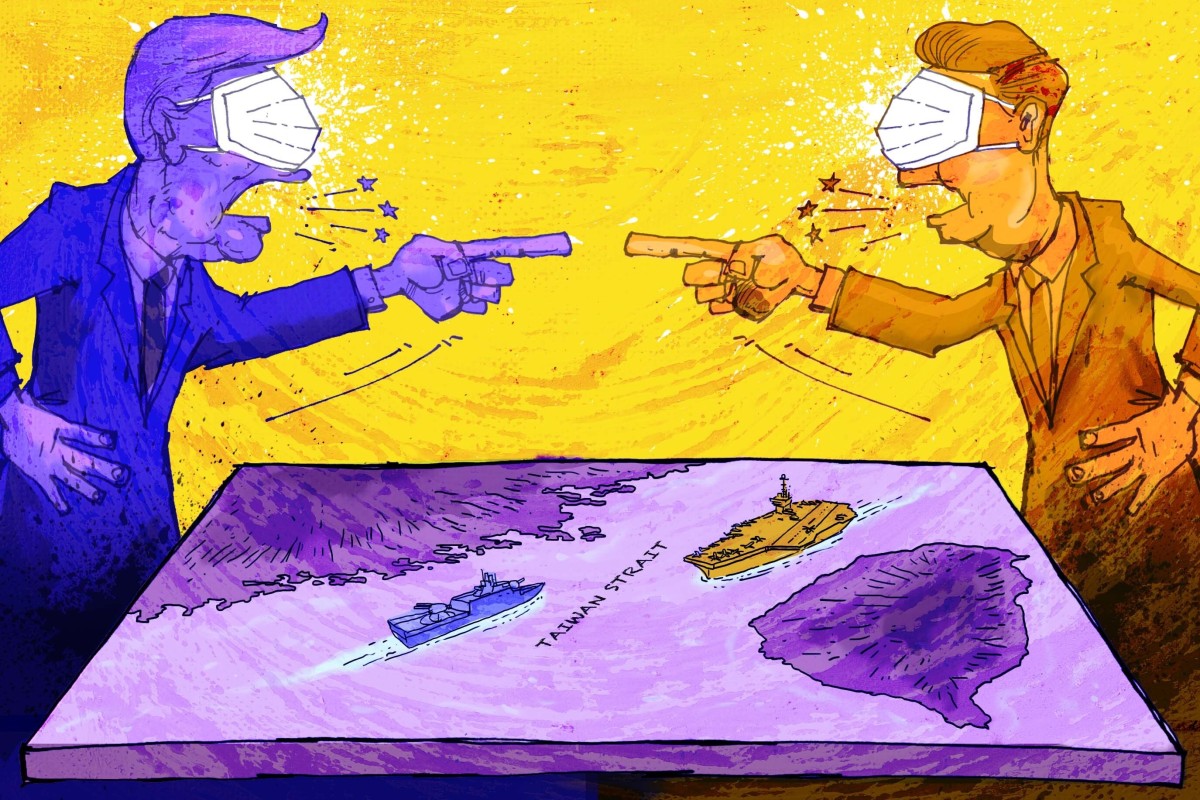
Taiwan Strait and South China Sea are settings for China and the US to assert influence and defiance
Analysts warn costly missteps and miscalculations are possible amid rift
Illustration: Henry Wong
This is the fourth in a series exploring the global backlash that China may face as a result of its actions and rhetoric during the coronavirus pandemic. This story examines the outlook from a military viewpoint, including relations in the South China Sea, with China’s neighbours and with the United States.
As the USS Barry, one of the US’ most advanced destroyers, sailed through the Taiwan Strait last Thursday, an officer on board posted a message on Facebook: “They don’t call us the Finest Forward Deployed Destroyer for nothing! Your Bulldogs always have the watch – together, we ensure a free and open Indo-Pacific!”
Based in Yokosuka, Japan, the guided-missile destroyer was no stranger to the sensitive channel separating Taiwan and mainland China. In fact, this was its second passage through the 180km [112-mile]-wide waterway – defined as part of the South China Sea under international protocol – this month.
As the Covid-19 global health crisis continues to rage around the world, infecting more than 3 million people and causing more than 210,000 deaths, military manoeuvres are being analysed to see if the pandemic has changed the balance of force in the region.
American warships were just some of the frequent naval visitors to the Taiwan Strait. The Chinese military has also made its presence felt. The Liaoning, China’s first aircraft carrier paraded through the waterway with its strike group just one day before the USS Barry arrived.
And then on Tuesday, China’s Southern Theatre Command, which oversees the South China Sea, issued a stern warning against the “intrusion” of the USS Barry into the surrounding waters of the Paracel Islands. China calls them the Xisha Islands and Vietnam calls them the Hoang Sa Islands.
“These provocative acts by the US side … seriously violated China’s sovereignty and security interests, deliberately increased regional security risks and they could easily trigger unexpected incidents,” a spokesman of the command said.
The frequency of such tours has raised concerns among military observers and analysts that these exercises could lead to miscalculation as different countries use their militaries to jostle for greater influence or rattle the sabre amid the pandemic.
“Adversaries who think now is the time to challenge the #USA: you’re dangerously wrong,” United States Secretary of Defence Mark Esper tweeted in mid-April.
And on Wednesday last week he tweeted: “Do not test our resolve. Our service members continue to demonstrate why the American people call on the US military during the most trying times.”
The Covid-19 pandemic has plunged already strained
into a deepening rift as officials from both sides engage in a blame game about delays that have allowed the contagious disease to spread.
Experts are now looking at how the pandemic will affect other aspects of China’s international relations.
Zhu Feng, a professor of international relations at Nanjing University in eastern China, expressed worry that Beijing and Washington had grown even further apart because of the pandemic.
“China and the US are supposed to work together to battle this world-sweeping deadly contagion, but what worries me most is that the geopolitical strategic competition and differences between the two countries have widened because of the pandemic,” he said.
Zhu said Washington’s growing cosiness with Taipei had also alarmed Beijing.
While Taiwan was a key security issue in the region, analysts warned that manoeuvring by nations had increased the risk of turning the Indo-Pacific area into a tinderbox.
This month, the US Navy’s amphibious assault ship and a Japanese navy Murasame-class destroyer conducted three-day bilateral communications exercises and division tactics in the Philippine Sea and the East China Sea. The East China Sea is the site of territory disputes between Beijing and Tokyo over the
The joint drills came 10 days after a collision between a Japanese destroyer and a Chinese fishing vessel in the East China Sea, causing a hole in the destroyer. No one was hurt, according to the Japanese defence ministry.
On Tuesday last week, another US amphibious assault ship and a guided-missile cruiser joined with an Australian frigate.
They entered the contested waters off Malaysia, where a Chinese government survey vessel, the Haiyang Dizhi 8, has been operating close to a drill ship under contract to the Malaysian state oil company, Petronas, according to a report from Reuters citing regional security sources.
“The show of force of the US and Australian warships in the South China Sea was aimed at warning China: ‘The pandemic will not give you any opportunity to change the current balance of power [in the region]’,” Zhu said.
“And [it also means to] tell Malaysia and other Southeast Asian countries that no matter how the pandemic develops, the US is still Big Brother in the region,” he added.
The South China Sea remains one of the biggest stress points in Asia. Beijing claims almost all of the area but has conflicting claims with Vietnam, the Philippines, Taiwan, Malaysia and Brunei. The conflict has remained unresolved for decades and has now become another flash point with the US.
Alexander Huang Chieh-cheng, a former deputy minister on Taiwan’s Mainland Affairs Council, which handles the island’s ties with the mainland, said China and the US were tangled in a bitter competition.
“In comparative terms, the US presence has been a response to increased People’s Republic of China’s ‘far sea navigation training’ with its newly acquired air and naval assets,” Huang said, referring to Beijing’s expanded military clout.
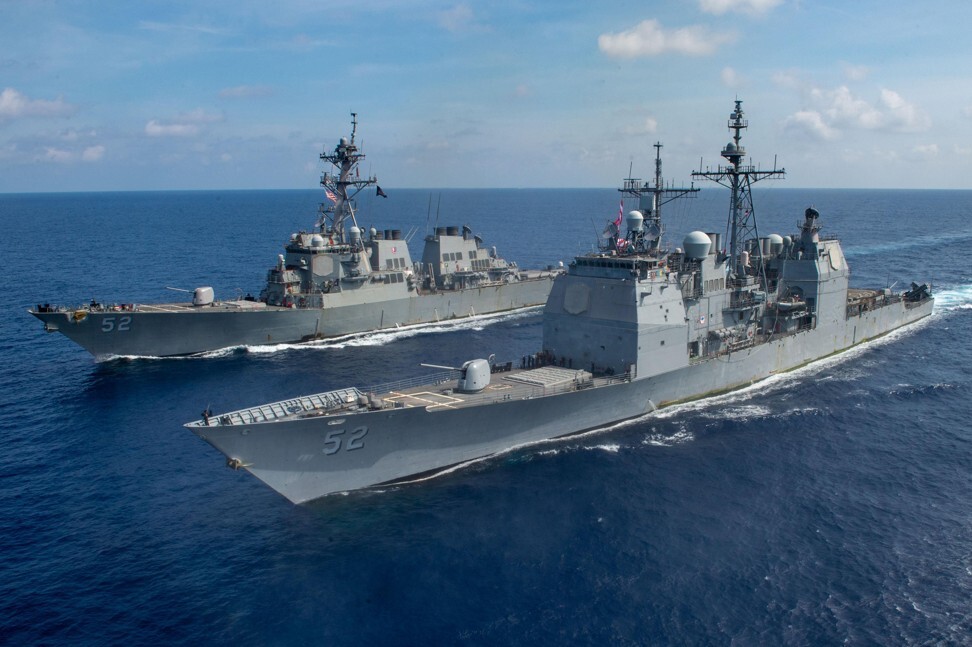
The US Navy Ticonderoga-class guided missile cruiser USS Bunker Hill, front, and Arleigh-Burke class guided-missile destroyer USS Barry in the South China Sea on April 18. Photo: US Navy
“The US wants to reassure [its allies of] its commitment to the security and stability in the Taiwan Strait, as well as in the larger Indo-Pacific region.
“[Chinese President] Xi Jinping has said that the vast Pacific Ocean is big enough to accommodate both the PRC [People’s Republic of China] and the US. However the PRC’s build-up in the South China Sea and training exercises have, in the eyes of Americans, threatened the freedom of navigation and challenged the US predominance in maritime Asia.”
Drew Thompson, a former US defence official and now a senior research fellow at National University of Singapore’s Lee Kuan Yew School of Public Policy, wrote in a recent paper that China under Xi’s leadership has taken a more aggressive stance in dealing with its neighbours.
“Xi Jinping’s rise to power has heralded a new foreign policy that is more assertive and uncompromising toward China’s neighbours, the US and the rest of the world,” he wrote.
He warned that Xi’s assertiveness would put China’s diplomatic and defence policies at higher risk, especially given Beijing’s determination to resolve the Taiwan problem.
“The pandemic does not fundamentally change the military or strategic balance across the Taiwan Strait but it potentially increases the possibility of miscalculation if Beijing thinks its handling of the pandemic gives it a military advantage,” Thompson told the South China Morning Post.
Last week, the PLA’s Eastern Theatre Command, which covers China’s eastern seaboard, published four belligerent articles emphasising the urgency for the Chinese military to strengthen its combat readiness as the country faced challenges at home and abroad during the pandemic and that the PLA (People’s Liberation Army) must play a “pivotal role in safeguarding China’s national interests”.
Separately, an analysis published in mid-April said that following the Covid-19 pandemic, the voice of “unifying Taiwan by force” had become “louder and louder” on the mainland. It was published on a media website affiliated with the mainland’s Taiwan Affairs Office, which oversees Beijing’s policies on the island.
Citing opinions by retired PLA generals, the analysis said the US would not go to war with China over Taiwan, other than providing the island with intelligence and weapons.
But Collin Koh, a research fellow of the S Rajaratnam School of International Studies at Singapore’s Nanyang Technological University, cautioned that such an assumption was risky.
“It’s unwise to underestimate the resolve of the Trump administration, given that in recent times it’s been putting more focus on enhancing strategic ties with Taiwan, having seen the island as a crucial element to its Indo-Pacific strategy,” Koh said.
“US credibility is at stake if it’s shown to be unwilling to defend its allies.”
Michael Jones, former chief of staff of US Central Command, was quoted by the Military Times, a US-based military news website, saying it had become imperative for US diplomats to reach out abroad and explain Washington’s intention to avoid mistakes and misunderstandings.
“Covid-19 merely is a factor that can lead to miscalculation,” Jones was quoted as saying. “If they [US adversaries] were to assume this is one more distraction that would keep the US from responding to an attack or challenge, it could add to the possibility of miscalculation.”
Legislation ‘blatantly obstructs other sovereignties from developing legitimate diplomatic relations with China’, foreign ministry says
US president’s decision could damage efforts by Beijing and Washington to work together in the fight against Covid-19, observers say
The United States’ new Taipei Act aims to discourage Taiwan’s allies from cutting diplomatic ties with the island due to pressure from Beijing. Photo: EPA-EFE
Beijing has condemned US President Donald Trump’s decision to sign into law an act designed to bolster Taiwan’s diplomatic standing in the world, describing it as an act of hegemony.
“China expresses its strong indignation and firmly opposes the bill,” foreign ministry spokesman Geng Shuang told a press conference on Friday.
The legislation, he said, “blatantly obstructs other sovereignties from developing legitimate diplomatic relations with China, which is an act of hegemony” adding that it also “seriously violated the one-China principle … [and] brutally interferes in Chinese domestic affairs”.
Trump signed the Taiwan Allies International Protection and Enhancement Initiative (Taipei) Act of 2019 on Thursday, just hours before speaking to Chinese President Xi Jinping over the telephone to discuss how the two countries can work together to tackle the coronavirus pandemic.
China calls for ‘concrete steps’ from US to cooperate on fighting Covid-19
27 Mar 2020
The legislation aims to discourage Taiwan’s diplomatic allies from cutting ties with the island due to pressure from Beijing. It also requires the US to supplement its own diplomatic presence in countries that support Taiwan and reduce its diplomatic footprint if they side with Beijing.
The bill was written by Republican senator for Colorado Cory Gardner and Democrat senator for Delaware Chris Coons, who said the US should support Taiwan in strengthening its alliances around the world amid increased pressure and “bullying tactics” from Beijing.
It was passed unanimously by the House of Representatives on March 4 after being reconciled with the Senate’s version that was approved in October.
Relations between Beijing and Taipei have been at a low ebb since Tsai Ing-wen, from the independence-leaning Democratic Progressive Party, was elected president in 2016, and re-elected for a further four-year term in January.
Taiwan’s foreign ministry welcomed the legislation, thanking the United States for its support for the island’s “diplomatic space” and right to participate in world affairs.
In the coronavirus fog, tussling over Taiwan goes under the radar
27 Mar 2020
Observers said that while the new act would benefit Taipei on the world stage, it would also be detrimental to its relationship with Beijing, and could be damaging to the commitments made between Xi and Trump to work together to fight Covid-19.
“Given it has been suppressed by Beijing in recent years, the new act will help Taiwan to gain more support from the international community,” said Zheng Zhengqing, an expert on Taiwan affairs at Tsinghua University in Beijing.
He said that Xi believed Taipei’s international role should be decided by Beijing, not Washington.
“What Trump has done comes from the opposite direction … and could hinder engagement and cooperation between [mainland] China and the US amid the coronavirus outbreak and make matters worse,” he said.
Zhu Songling, a professor at the Institute of Taiwan Studies at Beijing Union University, said the Taipei Act had crossed a red line for Beijing and would bring further uncertainty to China-US relations, as well as relations across the Taiwan Strait.
Beijing considers Taiwan part of its sovereign territory awaiting reunification with the mainland, by force if necessary.
Taipei-based political and military commentator Chi Le-yi said that while the new legislation was significant, it remained to be seen how it would affect Taiwan’s global standing or the stability of the Taiwan Strait amid the ongoing strategic gamesmanship between mainland China and the US.
“The bill itself is very meaningful, it has turned the US’s concerns about Taiwan issue into a legal issue,” he said.
“But its impact will depend on how it is implemented by America’s executive units.”
TAIPEI (Reuters) – China accused the United States on Thursday of playing a dangerous game with its support for Taiwan, after a U.S. warship passed through the sensitive Taiwan Strait following heightened military tension between China and Taiwan.
China has been angered by the Trump administration’s stepped-up support for the island it considers its own, such as more arms sales, U.S. patrols near Taiwan and last month’s visit to Washington by Taiwan Vice President-elect William Lai.
Anthony Junco, a spokesman for the U.S. Seventh Fleet, said the guided-missile destroyer USS McCampbell conducted “a routine Taiwan Strait transit” on March 25, in line with international law.
“The ship’s transit through the Taiwan Strait demonstrates the U.S. commitment to a free and open Indo-Pacific,” he added. “The U.S. Navy will continue to fly, sail and operate anywhere international law allows.”
Taiwan’s defence ministry said the ship sailed north through the waterway and was monitored by Taiwan’s armed forces, on what it called an “ordinary mission”, adding there was no cause for alarm.
In Beijing, Chinese defence ministry spokesman Ren Guoqiang denounced “continued negative actions” by the United States on Taiwan, including sailings through and flights over the Taiwan Strait.
“U.S. moves have seriously interfered in China’s internal affairs, severely harmed peace and stability in the Taiwan Strait and poisoned Sino-U.S. military ties,” Ren told a monthly news conference.
The actions were “extremely dangerous”, he added.
Taiwan is China’s most sensitive territorial and diplomatic issue and Beijing has never ruled out the use of force to bring the island under its control. The narrow Taiwan Strait that separates the island from China is a frequent source of tension.
In recent weeks China’s air force has conducted several exercises close to Taiwan, prompting its mostly U.S.-equipped military to scramble fighters to intercept and warn away the Chinese aircraft.
Taiwan has called the drills provocative, and urged China to pay more attention to fighting a coronavirus pandemic, rather than menace it.
The United States, like most countries, has no official relations with Taiwan, but is the island’s most important international supporter and main source of arms.
In January another U.S. warship sailed through the Taiwan Strait less than a week after President Tsai Ing-wen won re-election by a landslide on a platform of standing up to China.
Large-scale drills conducted across island in what defence ministry describes as test of combat-readiness
Exercise follows US Navy live-fire exercise last month and a series of incursions by Chinese warplanes in recent weeks
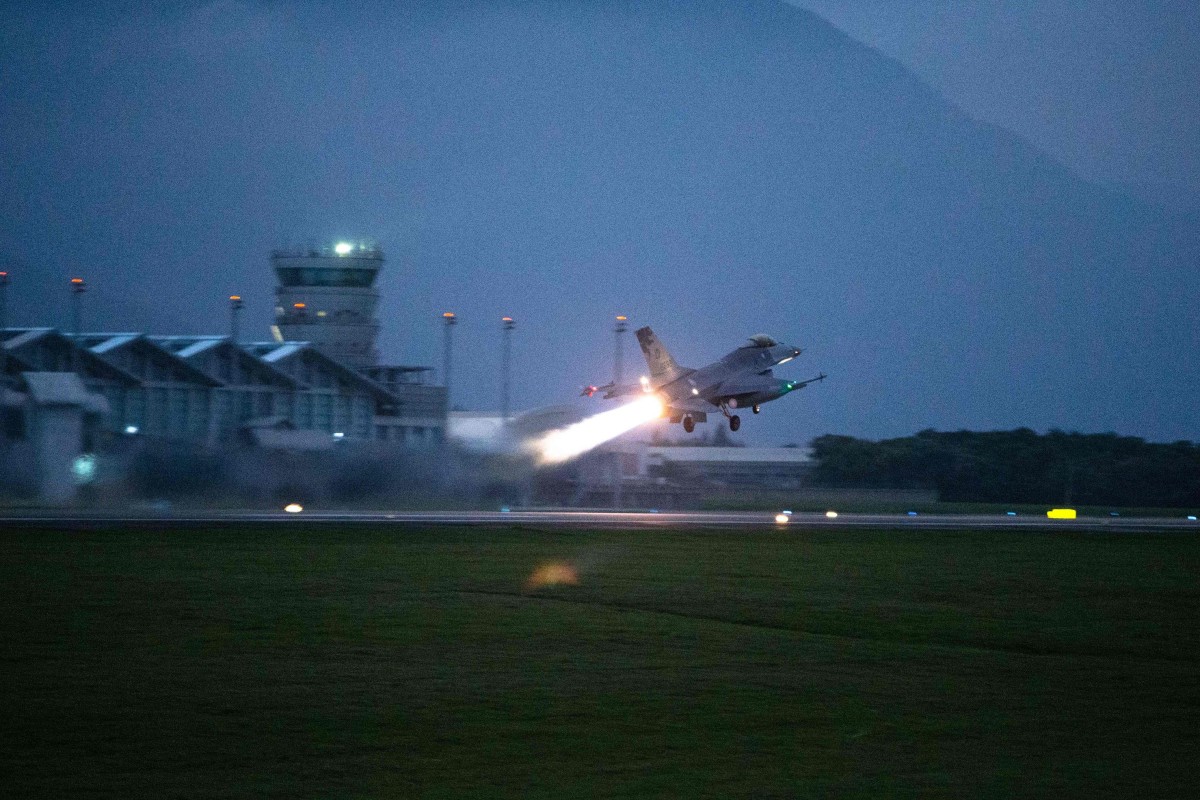
An F-16 fighter takes off from Hualien air base in eastern Taiwan. Photo: Military News Agency/ AFP
Taiwan has staged large-scale military drills throughout the island, including an exercise to repel an invading force, against a backdrop of rising tensions with Beijing.
The exercises, dubbed “Lien Hsiang,” involved the air force, army and the navy and were conducted on Tuesday from various military bases and strongholds in Taiwan, the island’s defence ministry said in a statement.
“The drills were designed to test the combat readiness of our forces and their responses to an all-out invasion by the enemy,” the ministry said, referring to the People’s Liberation Army, which has threatened to attack the self-ruled island.
The exercise follows a live-fire US drill in the region last week.
Taipei says Chinese military aircraft flew night exercise across Taiwan Strait
17 Mar 2020
Eight F-16 fighter jets took off from the air force base in the eastern county of Hualien at dawn on Tuesday, simulating an emergency mission to scramble and intercept enemy warplanes entering the island’s airspace, the defence ministry said.
Elsewhere on the island, F-16 and other fighter jets were spotted taking off from other air force bases in the southwestern county of Chiayi, the northern county of Hsinchu, Ching Chuan Kang in central Taiwan and the southern city of Tainan, according to Taiwanese media.
The exercises also involved operations testing cyberwarfare capabilities, while the air force ground crew simulated an emergency repair of the aircraft runway, the ministry said.
Anti-air units of both the army and the navy also joined the air force in the drills, while various types of naval warships, including Kidd-class destroyers, plus Perry and Kang Ding-class frigates, were deployed near Taiwan’s coast for separated training drills, it added.
The ministry said the training mission, carried out without live ammunition, was also designed to test the military response and make improvements based on the results.
Hundreds of Taiwanese to return from coronavirus centre after Beijing and Taipei reach deal
10 Mar 2020
Beijing considers Taiwan a wayward province that must be returned to the mainland fold, by force if necessary.
Beijing has staged a series of war games close to the island and poached seven of Taiwan’s diplomatic allies to heap pressure on President Tsai Ing-wen, from the independence-leaning Democratic Progressive Party, who was re-elected in January.
The exercises came after recent missions by PLA warplanes which briefly crossed the midpoint of the Taiwan Strait into the Taiwanese side in what analysts saw as testing the response from Taiwan and the US.
Three separate groups of warplanes approached Taiwan on their way to the western Pacific over the Bashi Channel for long-distance training exercises before returning home over the Miyako Strait to the northeast of Taiwan on February 9, 10 and 28.
Coronavirus threat shows ‘unacceptability’ of Beijing isolating Taiwan, US official says
28 Feb 2020
On March 17, another flight of PLA warplanes approached Taiwan in a rare exercise which analysts said was aimed at showing off their night navigation and all-weather capabilities.
Taiwan’s air force scrambled fighter jets to shadow, intercept and disperse the PLA warplanes through radio warnings during each approach by the mainland’s planes, according to the ministry.
Those actions also prompted the US to send two B-52 bombers on southbound flights off Taiwan’s east coast, while a transport plane flew over the Taiwan Strait, the defence ministry said.
DPP legislator Wang Ting-yu asked the Tsai government to take note of developments in the South China Sea, saying the US actions indicated that Washington must have learned “certain information suggesting that the Chinese government is planning certain military activities” or the 7th Fleet would not have made such a bold move.
Lawrence Chung covers major news in Taiwan, ranging from presidential and parliament elections to killer earthquakes and typhoons. Most of his reports focus on Taiwan’s relations with China, specifically on the impact and possible developments of cross-strait relations under the pro-independence Democratic Progressive Party and mainland-friendly Kuomintang governments. Before starting work at the South China Morning Post in 2006, he wrote for Reuters and AFP for more than 12 years.
Move will help air force with patrols and combat-readiness near Taiwan and in the East and South China seas, according to observers
Markings including national flag and service insignia will also be standardised under new guidelines
Chinese military aircraft will get “low observable” coatings and standardised markings. Photo: Xinhua
Chinese military aircraft are to be painted with “low observable” coatings and standardised markings under new guidelines, a move observers say will assist with operations near Taiwan and in the East and South China seas.
The guidelines require markings including the national flag and service insignia to be gradually standardised on both active and future warplanes, the official PLA Daily newspaper said earlier this month.
The move comes two years after the Chinese navy started experimenting with its J-16 strike fighter, using a dark grey low-visibility coating instead of blue-grey, and replacing its service insignia with a new design, according to military magazine Ordnance Industry Science Technology.
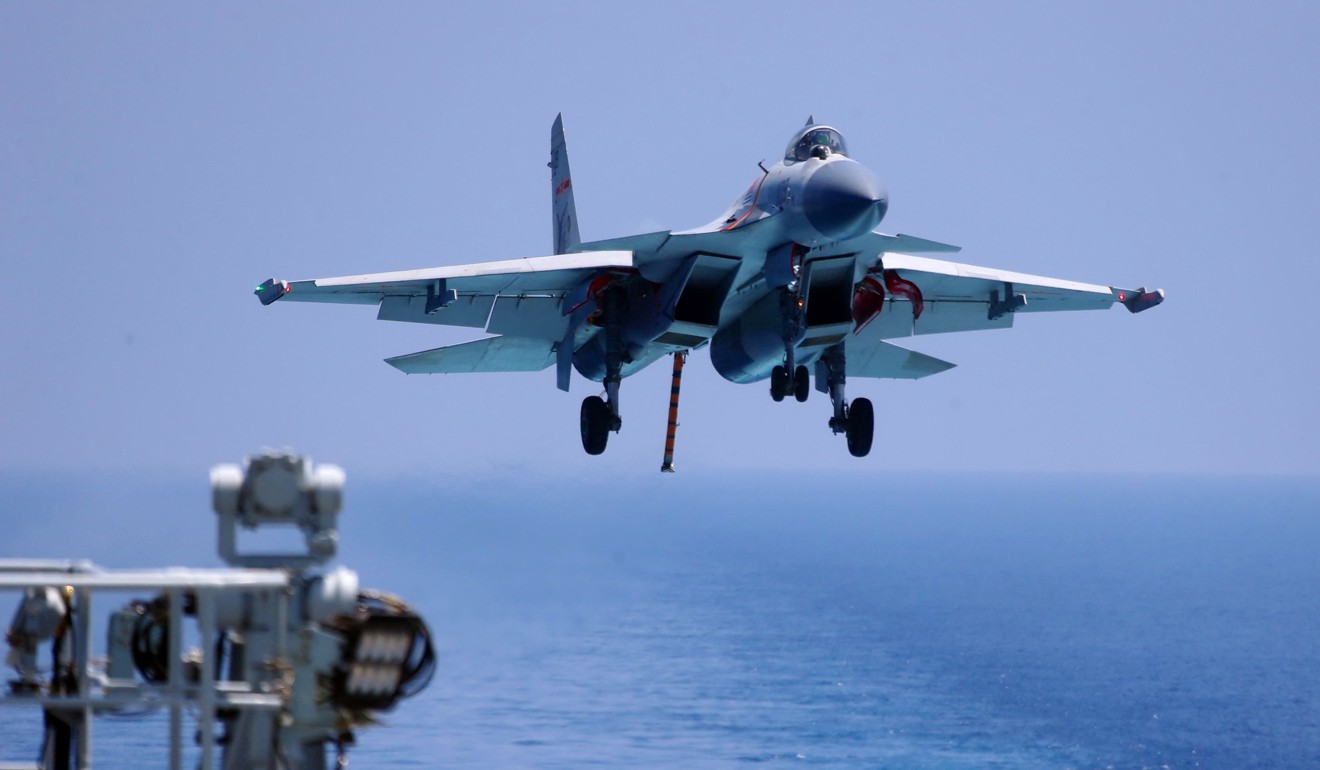
Some of the navy’s only active aircraft carrier-based fighter jets, the J-15s, have also been given new coatings and markings, according to the People’s Liberation Army’s official website.
PLA Daily said the move aimed to give Chinese warplanes a combat advantage as they “will be less likely to be detected by both the naked eye and military radar”. It said the new guidelines would be gradually implemented this year.
Some of the aircraft carrier-based J-15 fighter jets already have the new coatings. Photo: AFP
Macau-based military observer Antony Wong Dong said the move would help the air force improve patrols and combat-readiness as it carried out more drills near the Taiwan Strait and in the East and South China seas.
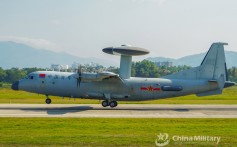
China’s air force and navy have sent warplanes including Su-35 fighter jets, H-6K strategic bombers and advanced KJ-2000 airborne early warning aircraft to conduct “encirclement” drills around Taiwan since 2018, as Beijing applies pressure on the self-ruled island that it sees as part of its territory. But none of the aircraft seen in photographs of the exercises had low-visibility coatings or standardised markings, as used on the navy’s J-16s and J-15s.
US spy plane pilots use China’s satellite navigation system as backup
9 Mar 2020
“Aircraft used by the PLA Air Force have different coatings and markings because they are still in a transitional period,” Wong said. “Its counterparts like Taiwan have learned from Western countries like the United States to standardise coatings and markings and designs [since the 1990s].”
Beijing insists that Taiwan, which split from the mainland in 1949, remains part of China and they will eventually be reunited – by force if necessary.
The PLA also regularly sends aircraft to monitor freedom of navigation operations by the US Navy in the South China Sea. Beijing has territorial disputes in the resource-rich waterway with countries including Vietnam, the Philippines, Malaysia and Brunei.
A military insider in Beijing said the US move to send hundreds of its new-generation F-35 stealth fighter jets to South Korea and Japan had also pushed the PLA to upgrade the coatings on its aircraft.
“These coatings are a highly technical area, and China puts a tremendous amount of resources into research on this every year,” said the insider, who requested anonymity due to the sensitivity of the issue. “The coating that’s used on China’s first stealth fighter jet, the J-20, is more advanced than they used on the Lockheed Martin F-22s, but it’s not yet at the level of the F-35s.”
Hong Kong-based military expert Song Zhongping said military aircraft used to have a bright red national flag and service insignia that made them more detectable on radar systems, or even with the naked eye.
“The red they used is striking, but it’s not in line with the ‘low observable’ requirement for all fighter jets,” said Song, who is a military commentator for Phoenix Television.
“All fighter jets must have stealth and low-visibility capabilities, and the coatings and markings on them are part of how they can do this and meet requirements for combat.”











 CHINDIA ALERT: You'll be living in their world, very soon
China’s Liaoning aircraft carrier returns home from a month of training
China’s first aircraft carrier, the Liaoning, returned to its home port of Qingdao on Thursday after nearly a month of training on the high seas, the People’s Liberation Army said.
According to military analysts, the warship was joined by at least five escort vessels, and the drills showed its crew had not been affected by the coronavirus pandemic and that it remained combat-ready.
The annual cross-region drills included intensive and complicated air and sea operations, the official PLA Daily said in a post on social media on Friday.
“The drills have further improved the real combat training level of the Liaoning carrier strike group, putting its systematic combat capability to the test,” the statement on WeChat said, without giving other details.
Beijing-based naval expert Li Jie said it was important for the carrier to get back to training activities.
“The recent training by the Liaoning carrier strike group is very significant because it’s evidence that none of the 2,000 sailors and commanders on the ship have been hit by Covid-19, and neither have any of the other soldiers and personnel on the other warships and support units,” Li said.
The coronavirus situation has eased in China, where the first cases were reported late last year, but it continues to spread across the globe and has infected more than 3.2 million people worldwide and killed over 233,000.
Sailors on warships like USS Theodore Roosevelt vulnerable as coronavirus spreads
The virus has also hit crew members on at least 40 US Navy warships, and Li said that left China with the only operational aircraft carrier in the region.
“Since the four American aircraft carriers in the Indo-Pacific region have all been struck by the pandemic, China is the only country that can operate an aircraft carrier in the area,” he said.
Japan’s Ministry of Defence said the Liaoning was escorted by two destroyers, two frigates and a supply ship, and they had passed through the Bashi Channel, a waterway to the south of Taiwan, and headed towards waters east of Taiwan.
As tensions continue to simmer between Taipei and Beijing, the PLA has stepped up activities around the island, which the mainland sees as part of its territory awaiting reunification.
Hong Kong-based military commentator Song Zhongping said the latest naval drills were also aimed at heaping more pressure on Taiwan’s pro-independence forces as well as foreign countries seeking to intervene in cross-strait issues.
Coronavirus: US ‘supports Taiwan joining WHO events’ in ministerial phone call
“Taiwan’s pro-independence forces have become more active and are attempting to take advantage amid the pandemic,” said Song, a military commentator with Phoenix Television.
“The Liaoning would play a major role in the PLA’s plan to unify Taiwan by force, so it’s necessary for the aircraft carrier strike group to get back to operations, step up training and send a warning to Taipei,” he added.
Lu Li-Shih, a former instructor at the naval academy in Taiwan, noted that the PLA Navy had regularly held drills in the waters east of Taiwan in recent years to avoid surveillance by US satellites.
Source: SCMP
Posted in air and sea operations, Aircraft, Aircraft carrier, annual, Beijing, by force, China’s, combat-ready, complicated, coronavirus, Coronavirus pandemic, cross-region drills, destroyers, escort vessels, Friday, frigates, from, high seas, home port, intensive, Japan’s Ministry of Defence, Liaoning, military commentator, military’s plan, month, naval academy, People’s Liberation Army, pla navy, pro-independence forces, Qingdao, returns home, sailing through, sailors, scramble, self-ruled island, social media, strait, strike group, supply ship, Surveillance, Taipei, Taiwan, Taiwan Strait, Taiwan’s, Taiwan’s defence ministry, to unify, training, Uncategorized, US Navy, US satellites, USS Theodore Roosevelt, vulnerable, warship, warships, WeChat, western Pacific, WHO | Leave a Comment »