19/04/2020
URUMQI, April 18 (Xinhua) — A medical team of eight experts who aided Pakistan’s fight against COVID-19 returned Friday night to Urumqi, capital of northwest China’s Xinjiang Uygur Autonomous Region.
The team, consisting of experts in various fields including respiratory, critical care and traditional Chinese medicine (TCM), arrived in Pakistan on March 28 and visited cities of Islamabad, Lahore and Karachi.
The Chinese experts communicated with the Pakistani federal government, national and local health authorities, hospitals and medical schools, as well as the Red Crescent.
The team members shared their experience through several video conferences and offered practical, specific suggestions to their Pakistani peers concerning the diagnosis, clinical treatment and epidemiologic study of COVID-19, and the application of TCM, hospital infection control and the construction of temporary hospitals.
The team also assisted with improving Pakistan’s guidelines on diagnosis and treatment of COVID-19 to help build an efficient epidemic prevention and control system in Pakistan and enhance its screening and testing capabilities.
Meanwhile, the experts carried out epidemic prevention guidance and popular science education for the Chinese embassy in Pakistan, Chinese enterprises, overseas Chinese and Chinese students in the country.
Source: Xinhua
Posted in 28, after, against, aid mission, aided, application, arrived, assisted, Ürümqi, capabilities, capital, carried out, China's, Chinese, Chinese embassy, Chinese enterprises, Chinese experts, Chinese students, cities, clinical treatment, communicated, concerning, Construction, Country, COVID-19, critical care, diagnosis, education, efficient, eight, enhance, epidemic, epidemiologic study, experts, federal government, fields, fight, Friday, guidelines, health authorities, hospital infection control, hospitals, improving, including, Islamabad, Karachi, Lahore, local, March, Meanwhile, medical schools, Medical team, National, night, northwest, Overseas Chinese, Pakistan, Pakistan’s, Pakistani, peers, popular, practical, prevention and control system, prevention guidance, Red Crescent, respiratory, returned, returns, Science, SCREENING, specific, suggestions, TCM, temporary, testing, traditional Chinese medicine (TCM), treatment, Uncategorized, video conferences, visited, Xinjiang Uygur Autonomous Region |
Leave a Comment »
24/02/2020
- An insect-killing fungus has been turned into a mass-produced biopesticide that will face its biggest challenge in East Africa
- Current swarm has put 13m people at risk of famine and this will be the first large-scale test of its effectiveness
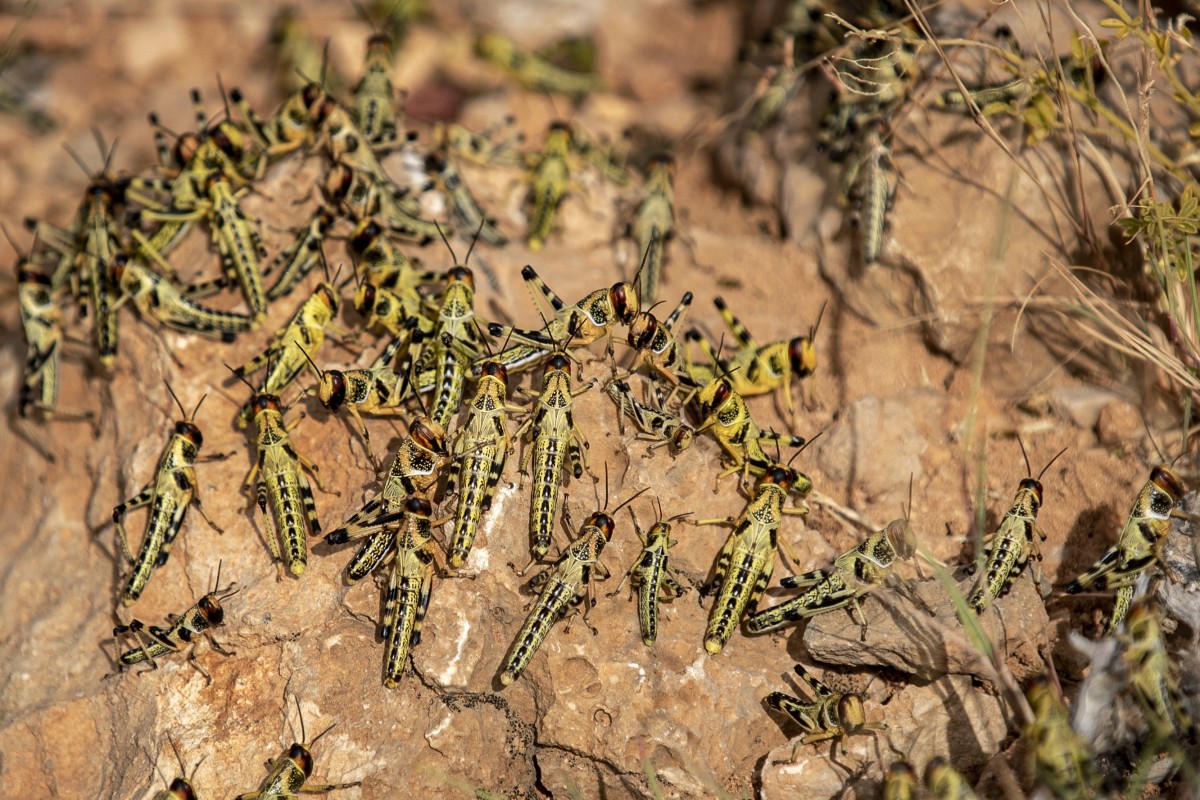
Young locusts in Somalia, where the fungus will be used to try to kill them. Photo: AP
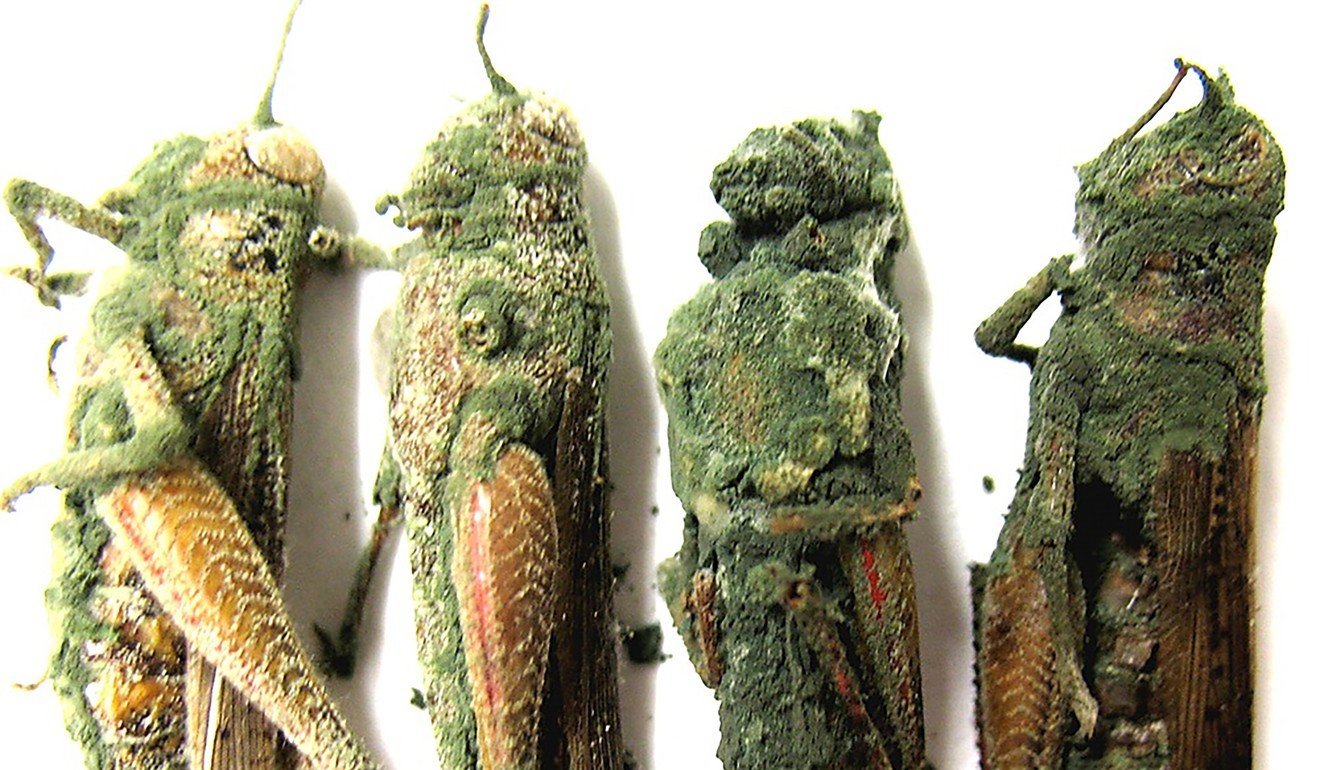
Chinese factories are producing thousands of tonnes of a “green zombie fungus” to help fight the swarms of locusts in East Africa.
Metarhizium is a genus of fungi with nearly 50 species – some genetically modified – that is used as a biological insecticide because its roots drill through the insects’ hard exoskeleton and gradually poisons them.
In China it was named lu jiang jun, which means green zombie fungus, because it gradually turns its victims in a green mossy lump.
There are now dozens of factories across the country dedicated to producing its spores and despite the curbs introduced to stop the spread of Covid-19, many of them have resumed operations and are shipping thousands of tonnes to Africa.
Plague fears as massive East Africa locust outbreak spreads
These factories are set up in a similar way to breweries, growing the spores on rice which is kept in carefully controlled conditions to ensure the correct temperature and humidity.
Each plant can produce thousands of tonnes of fungi powder per year, each gram of which contains tens of billions of spores.
“I am sending off a truckload right now. Our stock is running out,” said the marketing manager of a production plant in Jiangxi province. “Some customers need it urgently. They need it to kill the locusts.”
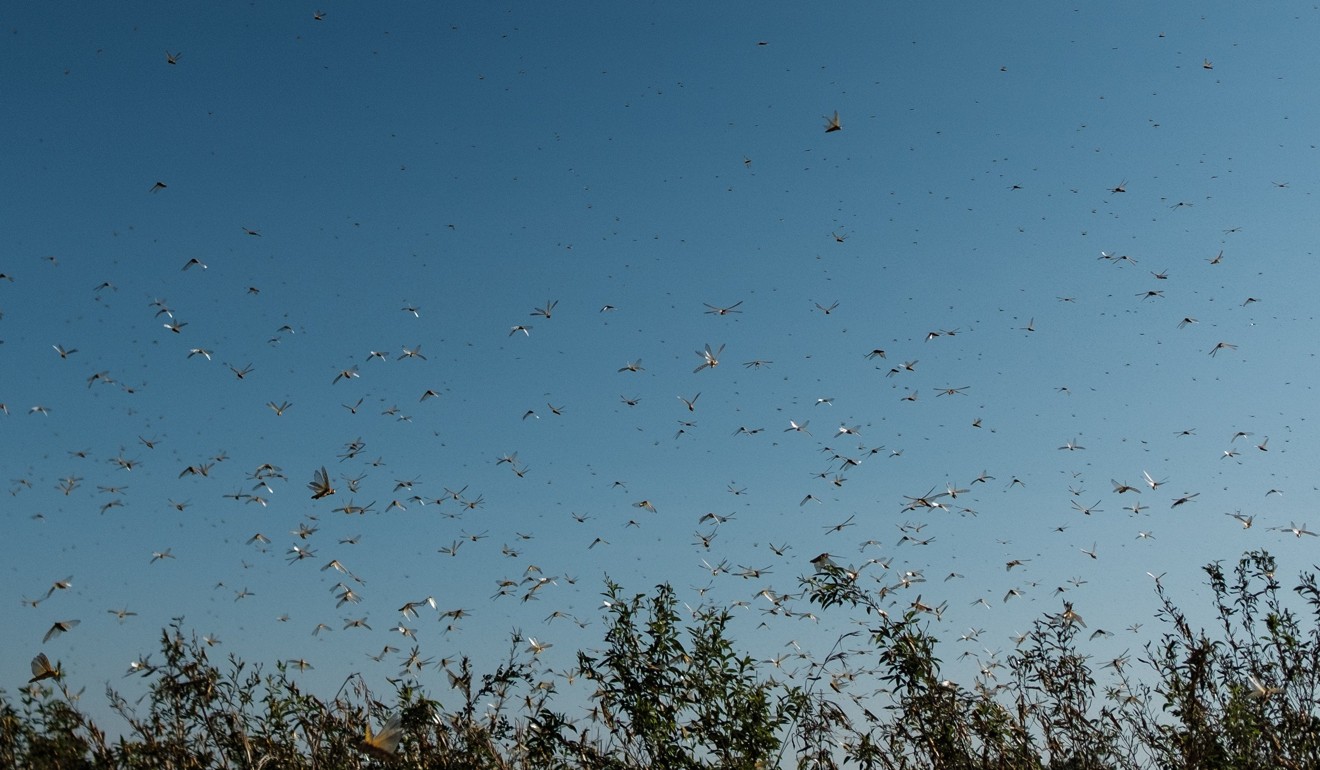
The need is particularly pressing in East Africa at the moment, where abnormally high levels of rainfall during the dry season allowed hundreds of billions of locusts to hatch in recent months.
So far the swarms have devastated crops in countries such as Ethiopia, Kenya, Somalia and Uganda and are moving on to neighbouring countries.
Up to 13 million people face the risk of famine in East Africa. Photo: AFP
The UN’s Food and Agriculture Organisation (FAO) has warned the situation could be the “worst in decades” and the resulting famine may affect 13 million people and cause international food prices to soar.
Last week, Science magazine reported that the Somalian government, working with the FAO, was preparing to a metarhizium species that only kills locusts and grasshoppers in what it described as the largest ever use of biopesticides against the insects.
Scientists do not believe that the fungus will be enough to solve the problem – monitoring the outbreak and targeting their breeding grounds will be more important in the long-run – but if it proves effective it could be an important weapon to target future outbreaks.
It will take time to gauge the effectiveness, partly because each fungus will take several days to take effect and partly because of the sheer scale of the challenge; a single swarm in Kenya was estimated to contain between 100 billion and 200 billion locusts.
By fair means or fowl: how Chinese herdsmen are planning to stop a locust invasion
The locusts have also swept eastward into the Middle East, travelling up to 150km (90 miles) a day, and are moving closer to China now that they have now reached some of its neighbours, including India and Pakistan.
At present China’s agriculture ministry believes some locusts may follow the monsoon into the country but “the chances of them causing damage is very small”.
Most scientists agree the swarms will not have lasting effect on food production but say developing countries can tap into China’s cutting-edge anti-locust technology.
Radar stations have been set up all the way along China’s western and southern borders to detect possible clouds of locusts, while unmanned devices lure the insects into traps to collect data about their species population and size.
A locust being eaten inside out by the metarhizium fungi. Photo: Chinese Academy of Sciences and the University of Maryland
The data is streamed to the ministry’s programme command, which is responsible for the planning and coordination of the national efforts to prevent an outbreak.
The scientists also said that planes loaded with biological and chemical sprays were standing by.
Today, most locust outbreaks happen in developing countries that do not have advanced monitoring networks and some of them are unable to produce pesticides on a mass scale, according to Li Hu, an associate professor with the China Agricultural University in Beijing.
The Chinese locust treatment technologies were highly advanced, and usually cheaper than competing solutions from the West, he said.
Chinese researchers are now working with colleagues in other countries to help them solve the problem.
One disadvantage of the Chinese research is that it is mostly focused on local species, or the East Asia migratory locust. The desert locusts currently swarming East Africa have different genes and behaviour, and Li warned that some methods that work in China might not work elsewhere.
A giant indoor farm in China is breeding 6 billion cockroaches a year. Here’s why
There were some sightings of the species reported in Yunnan and Tibet in the past, but they did not build up to large colonies, Professor Kang Le, lead scientist of the locust research programme with the Institute of Zoology at the Chinese Academy of Sciences in Beijing, told China Science Daily last week.
The vast west China region of Xinjiang, which shares a border with eight countries, is currently too cold for a locust migration, but once temperatures start to rise in the spring it could see locusts swarming across the border with Afghanistan.
Shi Wangpeng, a senior government locust expert, told China Business Network on Sunday that China should be on high alert because many Afghan farms had already been affected.
“These areas share a long border with us, there are almost no barriers,” he was quoted as saying by the Shanghai-based magazine.
China has a long and bitter history of locust swarms, with more than 840 being recorded in the official records over the past 2,700 years.
One famine, in the year 628 was so devastating that even the Tang dynasty emperor Taizong was reported to have run short of food and resorted to eating the insects to survive.
China has a long and bitter history of locust swarms. Photo: AFP
This, in turn, means that China’s rulers have long been looking for innovative ways to solve the problem
In the past farmers tried remedies such as building huge fires, burying the insects in ditches or trying to kill them with sticks.
In one campaign organised by prime minister Yao Chong in 715, the farms collected 9 million sacks of dead locusts and managed to save a significant proportion of their crops, according to historic text.
In more recent times more sophisticated technologies have been deployed to tackle the menace.
Some researchers have spent decades chasing locust colonies and studying their individual and collective behaviour everywhere from coastal areas to inland deserts, and in 2014 Chinese scientists released the world’s most comprehensive genetic map of locusts.
Researchers have also developed chemical agents that can disorient swarms of locusts and disperse them.
Chinese scientists first became interested in the green zombie’s potential in the 1980s after discovering that South Pacific islanders had been using them to kill insects on coconut trees.
Research by US scientists confirmed its effectiveness in the 1990s and the Chinese started importing the fungus from the United States and Britain.
Their experiments led to the development of newer and deadlier strains and mass production started in the past decade.
Other fungi or bacteria can be used to fight locusts, and some laboratories are working with agricultural technology companies to modify their genes to turn them into more deadly or precise killers.
One genetically engineered species of microsporidia, another type of insect-killing fungus, for instance, can generate three times as many as the spores to those produced by nature species, according to a document from the China Association of Agricultural Science Societies last year.
While it remains to be seen whether the current swarms will reach China, these treatments have been effective in the past and there has not been a locust outbreak in China for a decade.
Source: SCMP
Posted in Afghan farms, Afghanistan, Agriculture ministry, Beijing, Britain, China Agricultural University, China Association of Agricultural Science Societies, China Business Network, China Science Daily, China’s, Chinese Academy of Sciences, cockroaches, coconut trees, desert locusts, different genes and behaviour, East Africa’s, East Asia migratory locust, Ethiopia, famine, fighting, Food and Agriculture Organisation (FAO), green zombie fungus, hold ke, hold key, India, insect-killing fungus, Institute of Zoology, Jiangxi Province, Kenya, locust treatment technologies, locusts, mass-produced biopesticide, microsporidia, Middle East, monsoon, Pakistan, Plague fears, Radar stations, Science, Somalia, South Pacific islanders, swarms, Taizong, Tang dynasty emperor, Tibet, Uganda, Uncategorized, United States, Xinjiang, Yunnan |
Leave a Comment »
26/01/2020
(Reuters) – India and Brazil have signed 15 accords aimed at forging closer ties between the two emerging market giants across a range of sectors, especially defence, both countries’ leaders tweeted on Saturday.
Indian Prime Minister Narendra Modi and Brazilian President Jair Bolsonaro took to social media to hail the closer cooperation and agreements struck during Bolsonaro’s official visit to India.
“Several agreements signed in infrastructure, justice, science and technology, agriculture, oil exploration, mining, health, culture and tourism,” Bolsonaro tweeted, adding: “The world’s confidence in Brazil is back!”
For his part, Modi tweeted: “India and Brazil are focussing on expanding cooperation in the defence sector,” adding that the two countries share “immense synergies” on several key issues such as the environment and fighting terrorism.
Separately, Brazil’s foreign minister Ernesto Araujo tweeted that the 15 accords signed by the two countries represent a move “against the structures of globalist thought”.
“Brazil is rising to be a great among the greats,” he tweeted.
Source: Reuters
Posted in accords, agriculture, “immense synergies”, Brazil, Brazil’s foreign minister, Brazilian President, Culture, deepen ties, Defence, Environment, health, India, Indian Prime Minister Narendra Modi, Infrastructure, Jair Bolsonaro, Justice, mining, oil exploration, range of sector, Science, sign, Technology, terrorism, Tourism, Uncategorized |
Leave a Comment »
06/09/2019
- Researchers bend super-thin sheet using a single electrically charged atom in breakthrough that could eventually pave the way for powerful new computer processors
- Success follows decades of fruitless attempts by scientists around the world
The team from the Chinese Academy of Sciences conducted the “world’s smallest work of origami” with a sheet of graphene. Photo: Handout
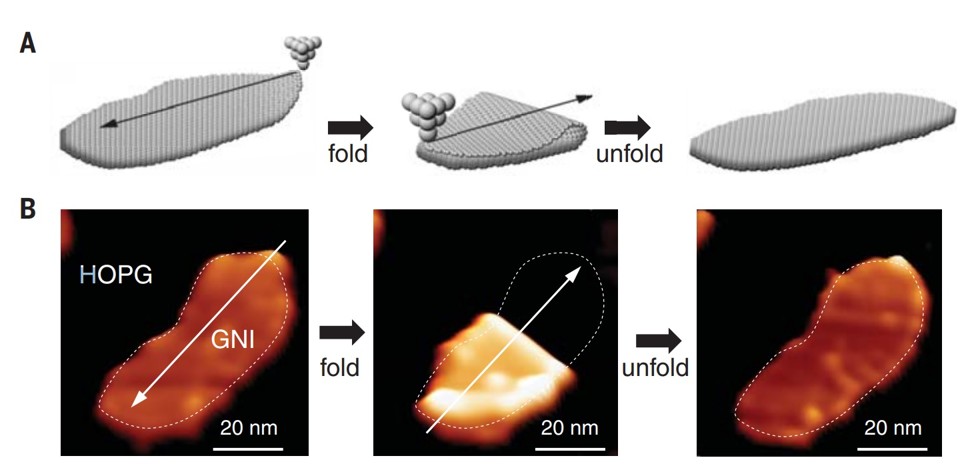
Chinese scientists have taken the ancient art of origami to the atomic level by finding a way to fold microscopically small graphene, according to a new study.
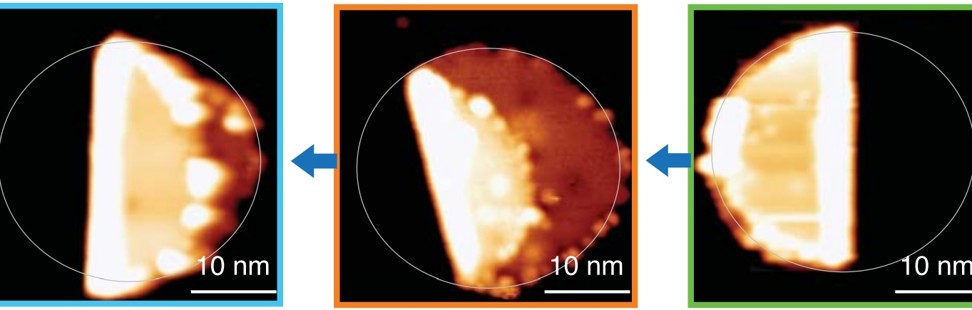
The team managed to fold a 20 nanometre wide sheet of graphene into various shapes and forms using an extremely sharp needle with a single electrically charged atom at the tip, according to a paper published in the latest edition of Science magazine.
The breakthrough could eventually enable a host of technological advances, including the development of faster and more powerful computer processors, the researchers said.
“This is the world’s smallest origami work,” said Dr Du Shixuan, the study’s lead scientist, adding that the team hoped to build on their success by making the graphene equivalent of a paper aeroplane.
Unlike previous experiments, in which the folding occurred randomly or by accident, the new technology allows scientists to control the transformation with atomic-scale accuracy, according to Du, from the Institute of Physics at the Chinese Academy of Sciences in Beijing.
Microscopic images of the graphene folding process. Photo: Handout
Zhang Gengmin, a professor of physics at Peking University, said the team had managed something that other scientists had spent years trying to achieve.
Zhang, who was not involved in the study, said part of the difficulty was that atomic particles were influenced by quantum mechanics, a branch of physics whose laws are counter-intuitive to our daily experience.
In practice this means that folding a graphene sheet in one direction might cause it go in another direction or simply break apart.
Could these crystals be the next leap forward in China’s laser technology?
The new technology developed by Du’s team could have some critical applications, according to Zhang, who works at the university’s nano devices laboratory.
For instance, folding a sheet of graphene – formed from a single layer of latticed carbon atoms – into a “magic angle” will make it superconductive, a unique physical state that allows electrons to pass through without any resistance.
“It is a significant piece of work,” he said.
The 20 nanometre wide sheet was folded into various shapes. Photo: Handout
The paper by Du’s team withheld some of the technical details of their experiment, which means that other scientists may not be able to replicate the process simply by reading the paper.
Du defended the secrecy as a standard practice and necessary measure to maintain China’s lead in this field.
She said that the team’s success was down to many factors – including the hardware used, the strength of the electric current and the experience of the operator – and there were also lessons to be taken from their previous failed attempts.
The researchers said they hoped the technology would be used to improve the design and manufacturing of computer processors.
Chinese, US scientists develop AI technology to help detect submarines in uncharted waters
At present, commercial processors are made using a large piece of silicon board known as a wafer.
But as the size of components such as transistors shrink, it has become increasingly difficult to improve the speed and performance of the computer due to the challenges of controlling the structure and properties of each component on a near-atomic scale
The new technology could give designers more freedom to develop a “dream chip” by building a central processing unit on an atom-by-atom basis from the bottom up.
But Du said the commercial application of the new technology could be years away.
Her team folded the graphene sheets manually, one at a time, but mass production would need the development of new manufacturing methods to do it automatically. At present “we are working on it”, Du added.
Source: SCMP
Posted in AI technology, Art, Atomic origami, Beijing, Chinese Academy of Sciences, Chinese scientists, folding graphene, graphene, Institute of Physics, master, new computer processors, Peking University, Science, submarines, superconductive, Uncategorized, uncharted waters, US scientists |
Leave a Comment »
03/09/2019
ULAN BATOR, Sept. 2 (Xinhua) — A series of cultural events to celebrate the 70th anniversary of the establishment of diplomatic ties between China and Mongolia kicked off at the Mongolian National Modern Art Gallery here on Monday.
Hundreds of people from various fields of both countries, including Mongolian Minister of Education, Culture, Science and Sports Yondonperenlei Baatarbileg and Chinese Ambassador to Mongolia Xing Haiming attended the opening ceremony.
“We will relive the China-Mongolia friendship through more than 20 activities including cultural performances, exhibitions, exchanges of books, watching movies and TV series and free medical exams under a broader theme called ‘Feel China’ for the 70th anniversary of the establishment of diplomatic relations between China and Mongolia,” Xing said at the ceremony.
The ambassador noted that China attaches great importance to China-Mongolia relations and is willing to deepen the alignment of the China-proposed Belt and Road Initiative and Mongolia’s Development Road Program on the basis of equality and mutual benefit.
He expressed hope that the two countries will work together to boost the friendly and mutually beneficial cooperation that brings tangible benefits to the two countries and peoples.
For his part, Baatarbileg said that the culture of any country is a guarantee of independence and the value of its people.
“I have no doubt that the cultural events can give Mongolians a deeper understanding of China’s culture,” he said, noting that the Mongolian government will support any activities aimed at promoting the history and culture of the two countries.
Visitors can partake in martial arts training, craft traditional Chinese embroidery, attend film screenings and taste a variety of Chinese foods.
The events are co-organized by China’s State Council Information Office, China’s Inner Mongolia Autonomous Region, the Mongolian Ministry of Education, Culture, Science and Sports and governor’s office of the Mongolian capital Ulan Bator.
The events run until Friday.
Source: Xinhua
Posted in 70th anniversary, Belt and Road Initiative, Belt and Road Initiative (BRI), China's Inner Mongolia Autonomous Region, China-Mongolia friendship, China-Mongolia ties, Chinese Ambassador to Mongolia, craft traditional Chinese embroidery, cultural events, Culture, film screenings, kick off, martial arts training, Mongolia's Development Road Program, Mongolian Minister of Education, Mongolian Ministry of Education, Culture, Science and Sports, Mongolian National Modern Art Gallery, Science, sports, State Council Information Office, Ulan Bator, Uncategorized, variety of Chinese foods, Xing Haiming, Yondonperenlei Baatarbileg |
Leave a Comment »
03/09/2019
Chinese Vice President Wang Qishan meets with Peruvian Vice President Mercedes Araoz in Beijing, capital of China, Sept. 2, 2019. (Xinhua/Zhang Ling)
BEIJING, Sept. 2 (Xinhua) — Chinese Vice President Wang Qishan met here Monday with Peruvian Vice President Mercedes Araoz, who is in Beijing to attend relevant activities of the Beijing Horticultural Expo.
Wang spoke highly of the current bilateral relationship, saying that China is willing to further advance mutual understanding and trust and deepen cooperation to push the relationship to a higher level.
Araoz congratulated China on the 70th anniversary of the founding of the People’s Republic of China, and said her country is ready to deepen cooperation with China in such areas as trade and economy, investment, agriculture, poverty relief, science, technology and culture.
Source: Xinhua
Posted in agriculture, Beijing, Beijing Horticultural Expo, Chinese Vice President Wang Qishan, Culture, economy, founding of the People's Republic of China (PRC), Investment, Mercedes Araoz, nation’s 70th anniversary, Peruvian Vice President, poverty relief, Science, Technology, Trade, Uncategorized |
Leave a Comment »
08/07/2019
- Settlements along the route linking Europe and Asia thrived by providing accommodation and services for countless traders
- Formally established during the Han dynasty, it was a 19th-century German geographer who coined the term Silk Road
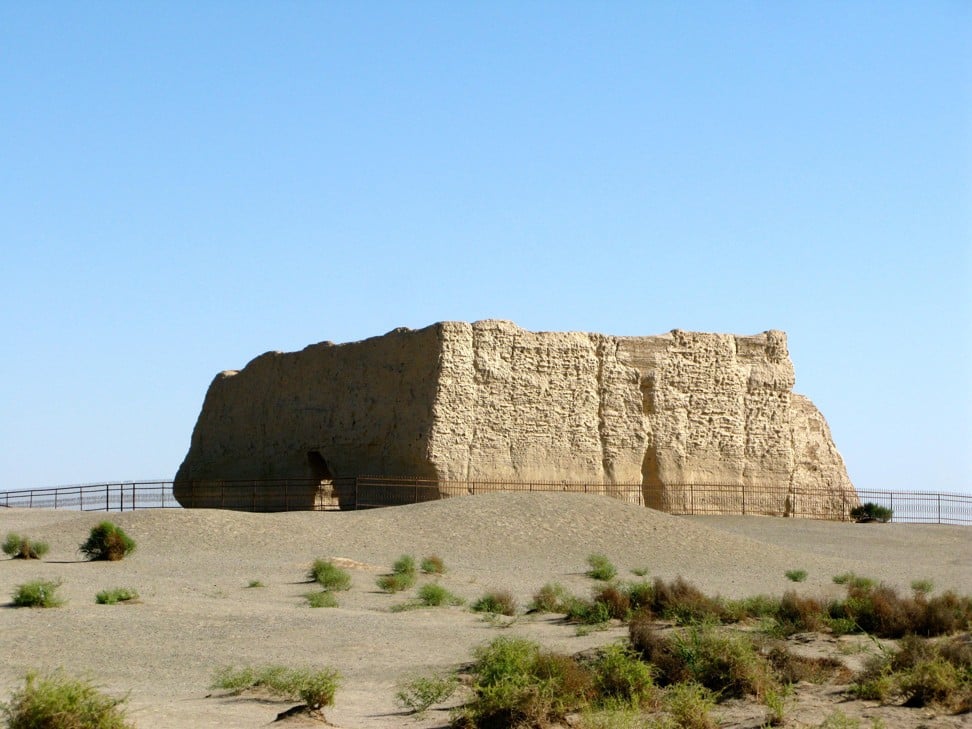
The ruins of a fortified gatehouse and customs post at Yunmenguan Pass, in China’s Gansu province. Photo: Alamy
We have a German geographer, cartographer and explorer to thank for the name of the world’s most famous network of transcontinental trade routes.
Formally established during the Han dynasty, in the first and second centuries BC, it wasn’t until 1877 that Ferdinand von Richthofen coined the term Silk Road (historians increasingly favour the collective term Silk Routes).
The movement of merchandise between China and Europe had been taking place long before the Han arrived on the scene but it was they who employed troops to keep the roads safe from marauding nomads.
Commerce flourished and goods as varied as carpets and camels, glassware and gold, spices and slaves were traded; as were horses, weapons and armour.
Merchants also moved medicines but they were no match for the bubonic plague, which worked its way west along the Silk Road before devastating huge swathes of 14th century Europe.
What follows are some of the countless kingdoms, territories, (modern-day) nations and cities that grew rich on the proceeds of trade, taxes and tolls.
China
A watchtower made of rammed earth at Dunhuang, a desert outpost at the crossroads of two major Silk Road routes in China’s northwestern Gansu province. Photo: Alamy
Marco Polo worked in the Mongol capital, Khanbaliq (today’s Beijing), and was struck by the level of mercantile activity.
The Venetian gap-year pioneer wrote, “Every day more than a thousand carts loaded with silk enter the city, for a great deal of cloth of gold and silk is woven here.”
Light, easy to transport items such as paper and tea provided Silk Road traders with rich pickings, but it was China’s monopoly on the luxurious shimmering fabric that guaranteed huge profits.
So much so that sneaking silk worms out of the empire was punishable by death.
The desert outpost of Dunhuang found itself at the crossroads of two major Silk Road trade arteries, one leading west through the Pamir Mountains to Central Asia and another south to India.
Built into the Great Wall at nearby Yunmenguan are the ruins of a fortified gatehouse and customs post, which controlled the movement of Silk Road caravans.
Also near Dunhuang, the Mogao Caves contain one of the richest collections of Buddhist art treasures anywhere in the world, a legacy of the route to and from the subcontinent.
Afghanistan
Afghanistan’s mountainous terrain was an inescapable part of the Silk Road, until maritime technologies would become the area’s undoing. Photo: Shutterstock
For merchants and middlemen hauling goods through Central Asia, there was no way of bypassing the mountainous lands we know today as Afghanistan.
Evidence of trade can be traced back to long before the Silk Road – locally mined lapis lazuli stones somehow found their way to ancient Egypt, and into Tutankhamun’s funeral mask, created in 1323BC.
Jagged peaks, rough roads in Tajikistan, roof of the world
Besides mercantile exchange, the caravan routes were responsible for the sharing of ideas and Afghanistan was a major beneficiary. Art, philosophy, language, science, food, architecture and technology were all exchanged, along with commercial goods.
In fact, maritime technology would eventually be the area’s undoing. By the 15th century, it had become cheaper and more convenient to transport cargo by sea – a far from ideal development for a landlocked region.
Iran
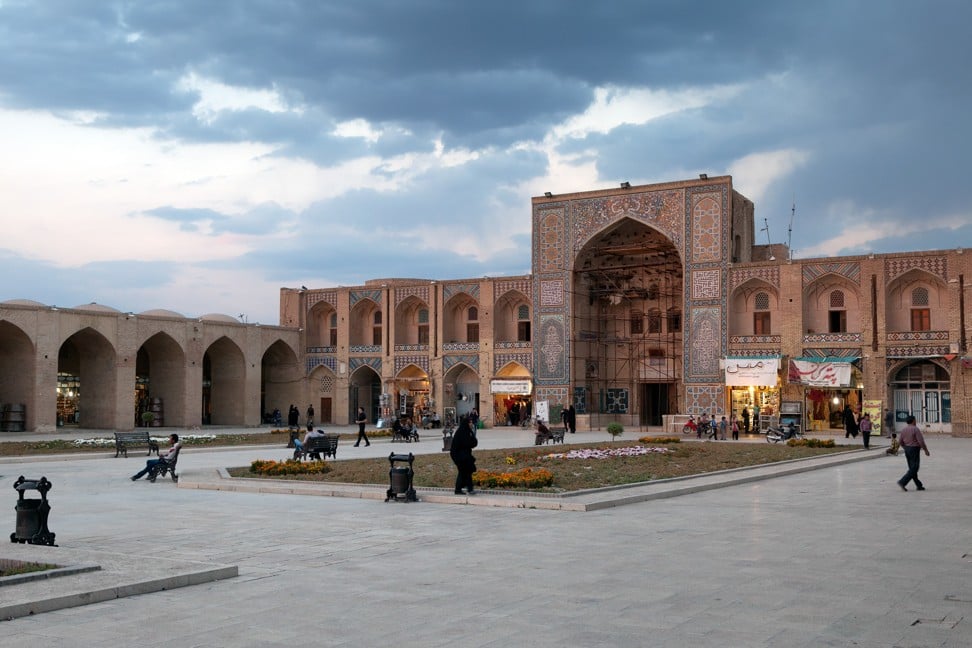
The Ganjali Khan Complex, in Iran. Photo: Shutterstock
Thanks to the Silk Road and the routes that preceded it, the northern Mesopotamian region (present-day Iran) became China’s closest trading partner. Traders rarely journeyed the entire length of the trail, however.
Merchandise was passed along by middlemen who each travelled part of the way and overnighted in caravanserai, fortified inns that provided accommodation, storerooms for goods and space for pack animals.
The good, bad and ugly sides to visiting Chernobyl and Kiev
With so many wheeler-dealers gathering in one place, the hostelries developed into ad hoc marketplaces.
Marco Polo writes of the Persian kingdom of Kerman, where craftsmen made saddles, bridles, spurs and “arms of every kind”.
Today, in the centre of Kerman, the former caravanserai building forms part of the Ganjali Khan Complex, which incorporates a bazaar, bathhouse and mosque.
Uzbekistan
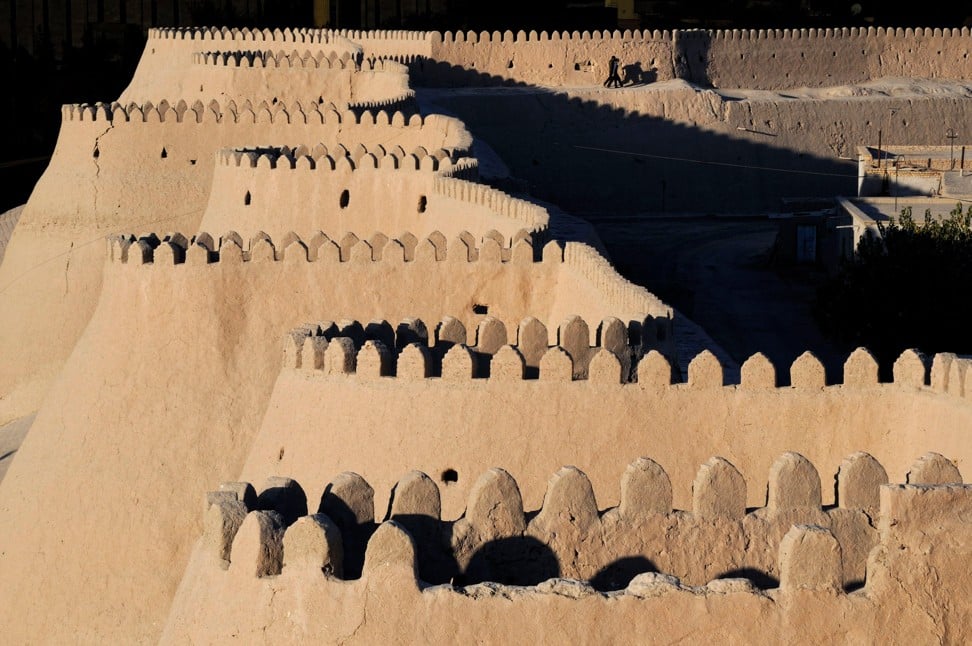
A fort in Khiva, Uzbekistan. Photo: Alamy
The double-landlocked country boasts some of the Silk Road’s most fabled destinations. Forts, such as the one still standing at Khiva, were built to protect traders from bandits; in fact, the city is so well-preserved, it is known as the Museum under the Sky.
The name Samarkand is also deeply entangled with the history of the Silk Road.
The earliest evidence of silk being used outside China can be traced to Bactria, now part of modern Uzbekistan, where four graves from around 1500BC-1200BC contained skeletons wrapped in garments made from the fabric.
Three thousand years later, silk weaving and the production and trade of textiles remain one of Samarkand’s major industries.
Georgia
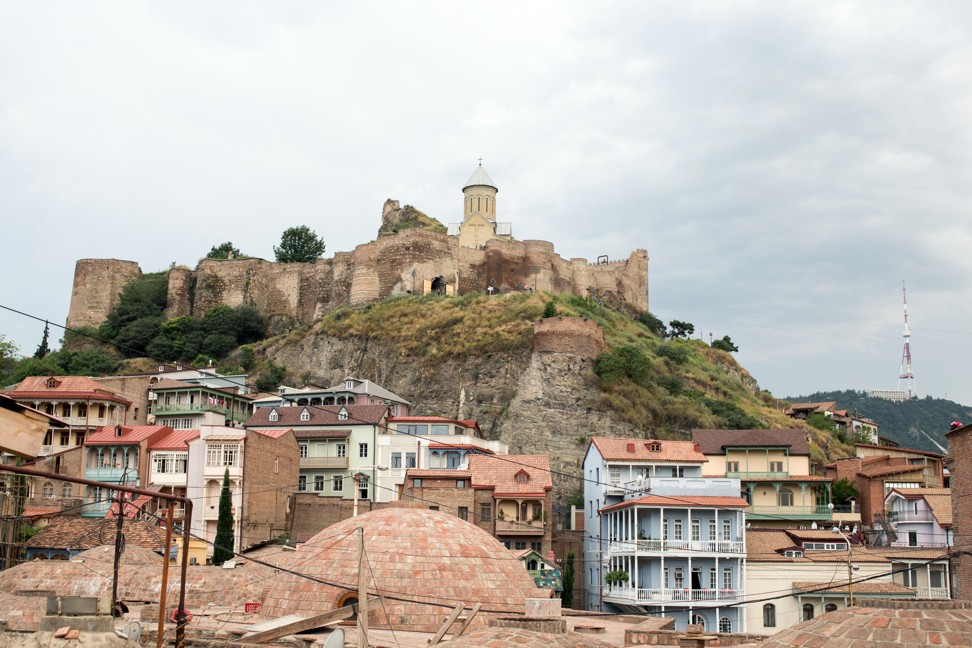
A street in old town of Tbilisi, Georgia. Photo: Alamy
Security issues in Persia led to the opening up of another branch of the legendary trade route and the first caravan loaded with silk made its way across Georgia in AD568.
Marco Polo referred to the weaving of raw silk in “a very large and fine city called Tbilisi”.
Today, the capital has shaken off the Soviet shackles and is on the cusp of going viral.
Travellers lap up the city’s monasteries, walled fortresses and 1,000-year-old churches before heading up the Georgian Military Highway to stay in villages nestling in the soaring Caucasus Mountains.
Public minibuses known as marshrutka labour into the foothills and although the vehicles can get cramped and uncomfortable, they beat travelling by camel.
Jordan
Petra, in Jordan. Photo: Alamy
The location of the Nabataean capital, Petra, wasn’t chosen by chance.
Savvy nomadic herders realised the site would make the perfect pit-stop at the confluence of several caravan trails, including a route to the north through Palmyra (in modern-day Syria), the Arabian peninsula to the south and Mediterranean ports to the west.
Huge payments in the form of taxes and protection money were collected – no wonder the most magnificent of the sandstone city’s hand-carved buildings is called the Treasury.
The Red Rose City is still a gold mine – today’s tourists pay a hefty
. The Nabataeans would no doubt approve.
Venice
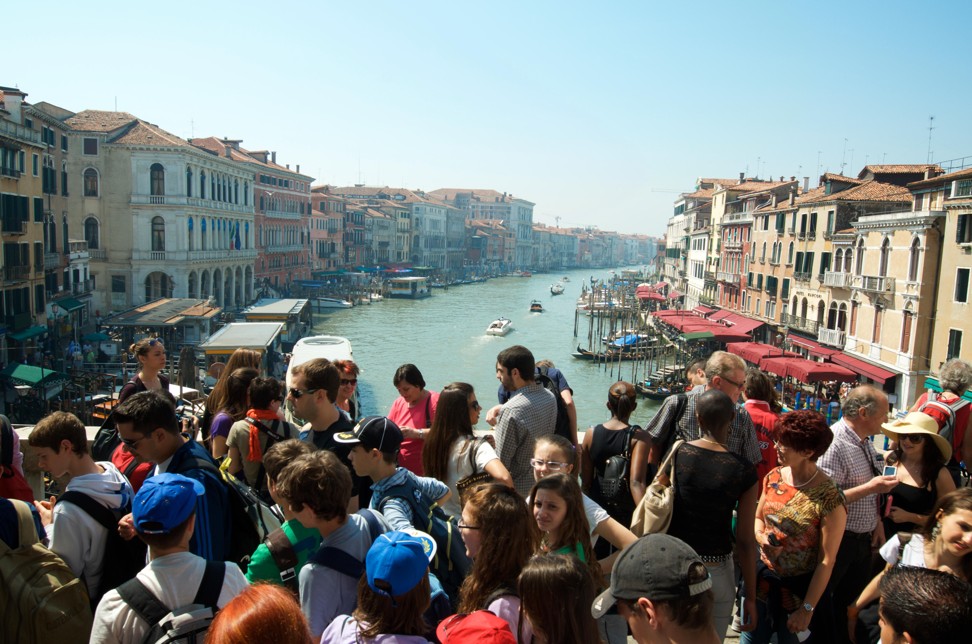
Tourists crowd onto Venice’s Rialto Bridge. Photo: Alamy
Trade enriched Venice beyond measure, helping shape the Adriatic entrepot into the floating marvel we see today.
Besides the well-documented flow of goods heading west, consignments of cotton, ivory, animal furs, grapevines and other goods passed through the strategically sited port on their way east.
Ironically, for a city built on trade and taxes, the biggest problem Venice faces today is visitors who don’t contribute enough to the local economy.
A lack of spending by millions of day-tripping tourists and cruise passengers who aren’t liable for nightly hotel taxes has prompted authorities to introduce a citywide access fee from January 2020.
Two thousand years ago, tariffs and tolls helped Venice develop and prosper. Now they’re needed to prevent its demise.
Source: SCMP
Posted in accommodation, Adriatic, Afghanistan, architecture, armour, arms, Art, Asia, Bactria, bandits, bathhouse, bazaar, Beijing, bridles, bubonic plague, Buddhist art treasures, camels, caravanserai, caravans, carpets, Caucasus Mountains, Chernobyl, cloth of gold, commercial goods, craftsmen, Death, Dunhuang, Egypt, Europe, exchanged, Ferdinand von Richthofen, floating marvel, Food, fort, from China to Italy, funeral mask, Ganjali Khan Complex, Gansu Province, garments, Georgia, Georgian Military Highway, German geographer, glassware, Gold, goods, Great Wall, grew rich, Han Dynasty, horses, hostelries, iran, Jordan, Kerman, Khanbaliq, Khiva, Kiev, languages, lapis lazuli, Marco Polo, maritime technology, marketplaces, marshrutka, medicines, Merchandise, Mesopotamian region, Mogao Caves, Mongol capital, Mosque, Museum under the Sky, Nabataean capital, pack animals, Palmyra, Pamir Mountains, paper, Persian kingdom, Petra, philosophy, punishable, Red Rose City, Rialto Bridge, saddles, Samarkand, Science, Silk Road, Silk Road destinations, silk worms, skeletons, slaves, sneaking, Space, spices, spurs, storerooms, Syria, Tajikistan, Tbilisi, Tea, Technology, towns, Trade, traders, Tutankhamun, Uncategorized, Uzbekistan, Venetian gap-year pioneer, Venice, weapons, Yunmenguan Pass |
Leave a Comment »
01/07/2019
- Annual tests still an academic pressure cooker for students wanting to get into the nation’s top universities, despite efforts to change the system
- The gruelling exam is the sole criteria for admission to university in China
After months of study, China’s high school students are about to be put to the test in the annual “university entrance examinations which begin on Friday. Photo: EPA-EFE
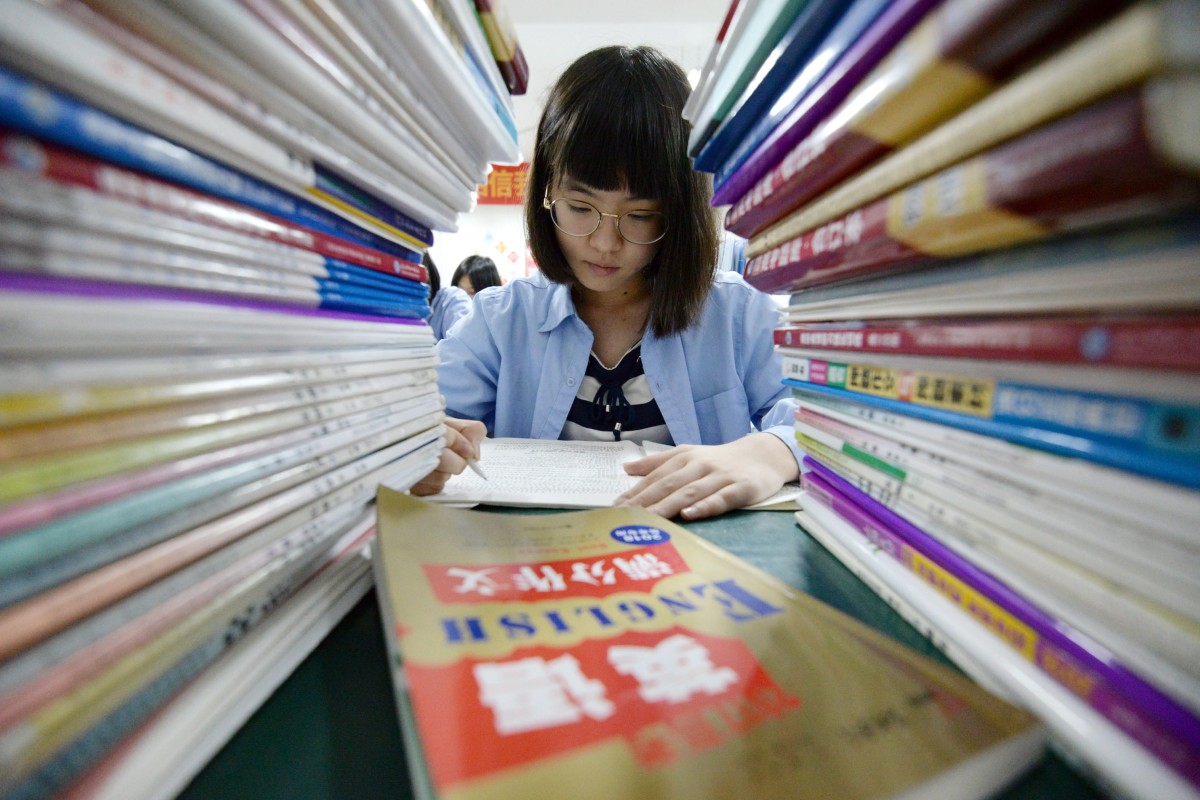
For the past six months, the life of 18-year-old Shanghai student Xiao Qing has revolved around preparation for one of China’s annual rites of passage.
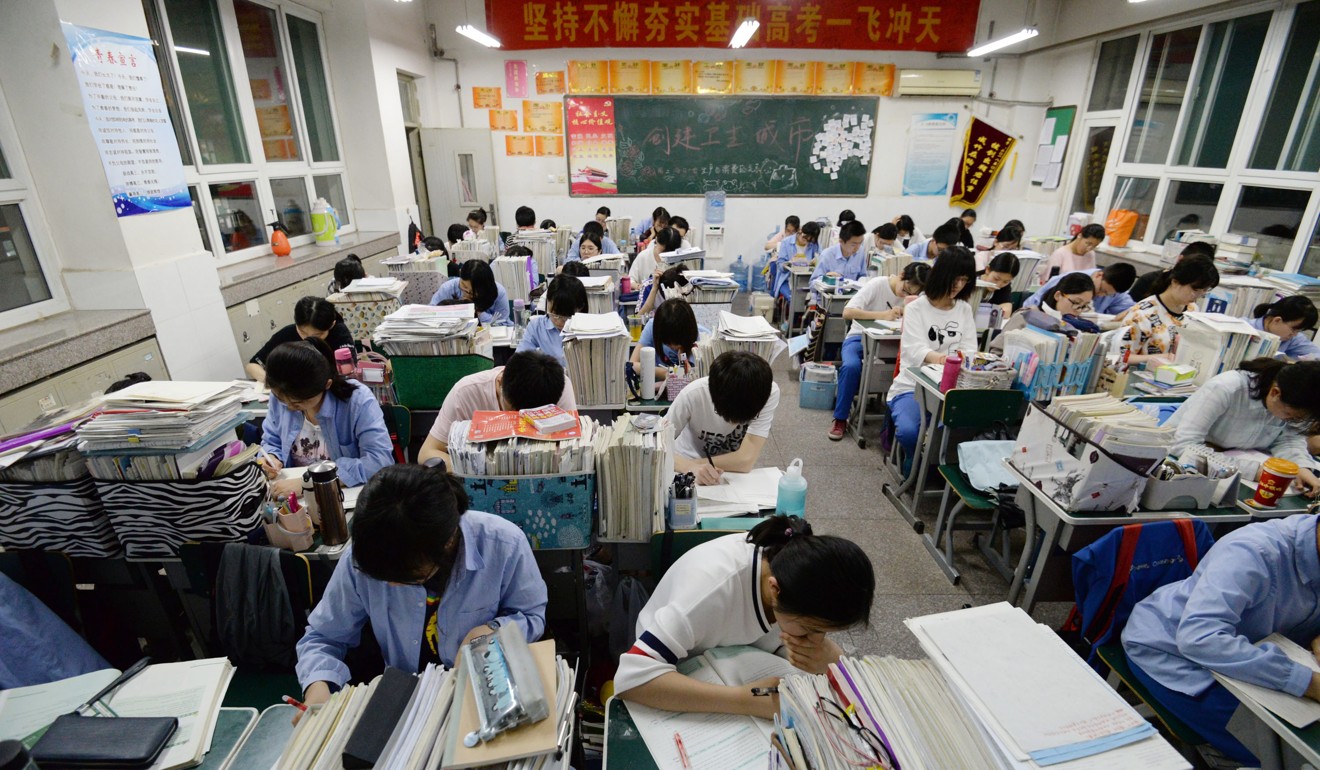
Every day at school, from 7.20am to 5.30pm, the final-year secondary school student in Changning district has studied previous test papers for the gaokao, officially known as the National Higher Education Entrance Examination.
“Sometimes I feel my bottom hurts from sitting for so many hours,” she said. “We feel like we are test machines.”
Xiao Qing will put all of that preparation to the real test from Friday, when over two to three days she will be among more than 10 million people trying to qualify for one of the spots at a Chinese university.
Most students get just one shot at the gaokao, the sole criteria for admission to university in China. It’s a gruelling process that has been criticised over the years as too focused on rote learning, putting too much pressure on students and privileging applicants living near the best universities.
Education authorities have gone some way to try to address these problems. In 2014, the Ministry of Education started letting students choose half of their subjects to introduce some flexibility into the system.
Apart from the compulsory subjects of Chinese, mathematics and English, students are now supposed to be able to choose any three of six other subjects: physics, chemistry, biology, politics, history and geography.
Previously, secondary school students had been split strictly into liberal arts or science majors in a system that was introduced in 1952 and revived in 1977 after being suspended during the Cultural Revolution.
Last go at exam success for China’s ‘gaokao grandpa’
Wen Dongmao, a professor from Peking University’s Graduate School of Education, said the changes expanded the opportunity for students to follow their interests.
“The new gaokao gives students plenty of choices of subjects to learn and to be evaluated on. I think people should choose which subject to learn based on what they are interested in,” Wen said.
“Gaokao reform is designed according to some methods by overseas universities, like American and Hong Kong schools. Its direction is right, but there will be inevitable problems brought by it.”
One of the problems is the uneven implementation of the changes throughout the country, with just 14 of China’s 31 provinces, municipalities and autonomous regions having introduced them.
In the eastern province of Anhui, for example, the reforms were supposed to go in effect from September last year but were postponed without reason, news portal Caixin.com reported.
The report quoted a teacher from Hefei No 1 Middle School in the provincial capital as saying the school was not ready for the changes.
Is the university entrance exam in China the worst anywhere?
“Shanghai and Zhejiang are economically advanced and we are not at that level,” he was quoted as saying. “It’s a big challenge for us to manage so many students’ choices of gaokao subjects.”
In neighbouring Jiangxi province, a high school history teacher said many places opposed the reform mainly “because of the shortage of resources”.
“It’s hard to roll out gaokao reform because we don’t have enough teachers or classrooms to handle the students’ various choices of subjects. Students can choose three out of six courses and that means there are 20 potential combinations,” the teacher was quoted as saying.
Chinese high school students study late into the night for the National Higher Education Entrance Examination. Photo: EPA-EFE
In addition, the system allows students to take the tests in more than one year and submit the highest scores when applying to universities.
“I heard from teachers in other provinces that students will take the tests of the selected subjects again and again for fear that other students will overtake them. That’s exhausting and will just put more burden on the students,” the Jiangxi teacher said.
He also said the gaokao process put extra pressure on teachers who feared the tests would push students to extremes. One of his students contemplated jumping from a bridge after she thought she had done poorly in the Chinese section of the exam.
“She called me, saying she felt it was the end of the world. I was shocked and hurried to the bridge,” he was quoted as saying. He spoke to her for more than an hour about before the girl came down, going on to get a decent score.
Critics also say the system is weighted in favour of students in bigger cities such as Beijing, Tianjin and Shanghai, home to the country’s top universities.
China private education industry is booming despite economic slowdown
Li Tao, an academic from the China Rural Development Institute at Northeast China Normal University in Changchun, Jilin province, said about 20-25 per cent of gaokao candidates from Beijing, Tianjin and Shanghai were admitted to China’s elite universities, compared with just 5 or 6 per cent in places like Sichuan, Henan and Guangdong.
Li said that was because the top universities were funded by local governments and gave preference to applicants from those areas.
“To make it fairer, the Ministry of Education has insisted over the years that elite universities cannot have more than 30 per cent of incoming students from the area in which it is located,” he said.
Despite these challenges, gaokao was still a “fair” way to get admitted to university in China, Li said.
“Gaokao is the fairest channel to screen applicants on such a large scale, to my knowledge,” he said. “It does not check your family background and every student does the same test paper [if they are from the same region]. Its score is the only factor in evaluating a university applicant.”
Fake nursing degree scandal prompts China-wide fraud check
In Shanghai, as the clock ticks closer to the gaokao test day, Xiao Qing said she was feeling the pressure.
She said she would keep up her test prep to ensure she got the score she needed to study art in Beijing.
“I am trying my utmost and don’t want to regret anything in the future,” she said.
At the same time, she is not pinning her entire life on it.
“Life is a long journey and it is not decided solely by gaokao,” she said.
“I don’t agree with my classmates that life will be easy after gaokao. I think we still need to study hard once we get to university.”
Source: SCMP
Posted in academic pressure cooker, Anhui province, Annual tests, Beijing, Biology, Caixin.com, Changchun, chemistry, China Rural Development Institute, China’s university hopefuls, Chinese, Crunch time, Cultural Revolution, English, gaokao, gaokao exam season, geography, Graduate School of Education, guangdong province, Hefei, Henan province, History, Jiangxi Province, Jilin, liberal arts, mathematics, Ministry of Education, National Higher Education Entrance Examination, nation’s top universities, Northeast China Normal University, Peking University, physics, Politics, Science, Shanghai, sichuan province, Tianjin, Uncategorized, zhejiang province |
Leave a Comment »
06/05/2019
BEIJING, May 5 (Xinhua) — The Chinese mainland’s Taiwan affairs chief on Sunday called on youths on both sides of the Taiwan Strait to jointly shoulder the historic mission of national rejuvenation and contribute to cross-Strait integrated development.
Liu Jieyi, head of the Taiwan Work Office of the Communist Party of China Central Committee and the Taiwan Affairs Office of the State Council, made the remarks at the opening ceremony of a summit on cross-Strait exchange and cooperation among the youths.
Young people on the two sides of the Strait should value this great time, be responsible and do their share in safeguarding and building the common home of compatriots on the two sides of the Strait, Liu said.
“Attempts by the ‘Taiwan independence’ forces to undermine cross-Strait peace and obstruct national development will never be allowed,” he said.
He also pledged to provide better conditions for youths from Taiwan to carry out exchanges, study, work and start businesses on the mainland.
As Saturday marks the centenary of the May Fourth Movement, Liu called on the youths on both sides of the Strait to pass on the May Fourth spirit, which refers to patriotism, progress, democracy and science, with patriotism at the core.
Source: Xinhua
Posted in cross-Strait integrated development, Democracy, Mainland China, May Fourth Movement, national rejuvenation, patriotism, progress, Science, Taiwan, Taiwan Affairs Office of the State Council, Taiwan Work Office of the Communist Party of China Central Committee, Uncategorized, youths |
Leave a Comment »
23/09/2016
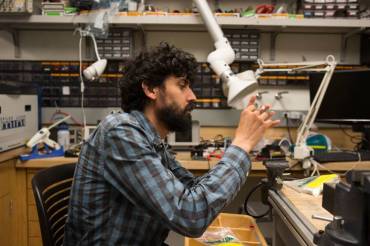
Manu Prakash grew up folding origami paper frogs and cranes in his hometown in northern India.
Indian-Born Biologist Is Among MacArthur ‘Genius Grant’ Winners
So it seemed natural for the 36-year-old Stanford University biologist to build an inexpensive microscope for the developing world that can be put together from a single piece of paper.“
I was inspired by tools like pencils, and what it takes to make those tools available to everyone,” he said. “The goal is to enable and inspire others to do science.”
His Foldscope, which costs less than $1 to produce and includes built-in lenses, is now used in 130 countries to help identify infectious diseases, among other things.
The gadget helped propel Mr. Prakash, along with 22 others, into the ranks of the MacArthur “genius” grant recipients, who are awarded a no-strings-attached $625,000 grant by the John D. and Catherine T. MacArthur Foundation for showing exemplary creativity in their fields.
Source: Indian-Born Biologist Is Among MacArthur ‘Genius Grant’ Winners – India Real Time – WSJ
Posted in Economics, India alert, innovation, Science, Technology |
1 Comment »










 CHINDIA ALERT: You'll be living in their world, very soon