Chindia Alert: You’ll be Living in their World Very Soon
aims to alert you to the threats and opportunities that China and India present. China and India require serious attention; case of ‘hidden dragon and crouching tiger’.
Without this attention, governments, businesses and, indeed, individuals may find themselves at a great disadvantage sooner rather than later.
The POSTs (front webpages) are mainly 'cuttings' from reliable sources, updated continuously.
The PAGEs (see Tabs, above) attempt to make the information more meaningful by putting some structure to the information we have researched and assembled since 2006.
ENJERLA/NEW DELHI, India (Reuters) – It was supposed to be Johnson & Johnson’s biggest manufacturing plant in India. It was to eventually employ at least 1,500 people and help bring development to a rural area near Hyderabad in southern India.
Yet, three years after the U.S. healthcare company completed construction of production facilities for cosmetics and baby products on the 47-acre site, they stand idle.
Two sources familiar with J&J’s operations in India and one state government official told Reuters production at the plant, at Penjerla in Telangana state, never began because of a slowing in the growth in demand for the products.
One of them said that demand didn’t rise as expected because of two shock policy moves by Prime Minister Narendra Modi: a late 2016 ban on then circulating high-value currency notes, and the nationwide introduction of a goods and services tax (GST) in 2017.
J&J spokespeople in its Mumbai operations in India and at its global headquarters in New Brunswick, New Jersey, declined to respond to a list of questions from Reuters.
Modi’s office did not respond to a call and an email with questions.
Aimed at rooting out corruption and streamlining the tax system, the double whammy of ‘demonetization’ and GST – were two of Modi’s signature policy moves. But instead of encouraging economic activity as intended, they did the opposite, at least in 2016-2018, by sapping consumer demand, according to some economists.
Many businesses, especially small and medium-sized enterprises, complained publicly – some in their financial statements – that they suffered a drop off in orders. The suspended J&J project stands as one of the most vivid examples of the impact on the broader investment picture.
In the first month after demonetization, some business surveys showed that sales of products such as shampoos and soap fell more than 20 percent.
Lack of jobs growth and a farm-income crisis because of low crop prices have hurt Modi in the current general election, according to several political strategists.
Still, Modi and his ruling Hindu nationalist Bharatiya Janata Party are expected by many of the strategists to be in a position to get a second term – probably with support of some other parties – when votes are counted on Thursday, partly because of his strong stance on national security issues.
BIG INVESTMENTS, GREAT EXPECTATIONS
A range of Modi’s business policies, such as capping prices of medical devices, forcing tech companies to store more data locally and stricter e-commerce regulations have in the past two years hurt plans of American multinationals such as J&J, Mastercard, Amazon and Walmart-owned Flipkart.
The groundbreaking of the J&J facility in Penjerla, its third in the country, was carried out with much fanfare in 2014, attended by Telangana state’s Chief Minister Chandrashekar Rao, who hailed the foreign investment as a big win for local communities. A document dated April 2017 that lists products the company planned to make at the facility, submitted to the Telangana government and reviewed by Reuters, names baby oil, baby shampoo, baby lotion, baby hair oil, face wash and creams.
Shaukat Ali, running a tea shop under a bamboo stall on barren land outside the plant, said local workers check in routinely for possible vacancies at the J&J site, but nothing has come up in years.
At the local pollution control board office, the member secretary Satyanarayana Reddy said the J&J plant had all the required approvals and he was not sure why it hadn’t started production.
“It is unusual for such a big plant to stay idle for so long,” he said. “But there is no problem from our side.”
Chandrasekhar Babu, an additional director at the Telangana industries department, said a J&J company official told him the plant hadn’t started due to lack of demand.
GST and demonetization were two key reasons the plan didn’t kick off, one of the sources said, adding that lack of consumer demand since then dented company’s plans.
The second source familiar with J&J’s plans said the company miscalculated Indian market demand.
On a recent visit by a Reuters reporter to the J&J plant, plush, furnished conference rooms and cubicles sat inactive; M. Sairam, who said he was the site manager, told Reuters production areas with machines were idle too.
PLANNED FURTHER EXPANSION
Local officials had hoped the initial J&J plant would be only the beginning. After the groundbreaking in 2014, Pradeep Chandra, who was Telangana’s special chief secretary of industries, told Business Today magazine that “based on the extent of land (J&J) have acquired we believe that they are looking at much larger expansion here.”
Local media reports at the time said the J&J facility would employ some 1,500 people.
A J&J official, who was not identified by name, was reported subsequently in December 2016 in India’s Business Standard assaying that the $85 million plant would be operational by 2018 after it had overcome procedural delays. The official was quoted as saying the company had earmarked an additional $100 million for expansion.
Vikas Srivastava, the managing director of J&J Consumer(India), who was at the 2014 groundbreaking, did not respond to calls for comment.
Reuters also talked to two workers outside a sprawling Procter & Gamble facility making detergents and diapers, which is next to the J&J plant. They said they were part of the P&G plant’s production team and the plant had been running below capacity.
A P&G spokesperson denied that, saying the plant was “operating at full capacity in line with our business plans”. “India is a priority market for P&G globally and in recent quarters, P&G’s business in India has registered strong double-digit growth consistently,” the company said.
The weak rural economy, where most Indians work, has also hurt growth in sales of basic items such as detergents and shampoo in the past year.
Hindustan Unilever Ltd, an industry bellwether that would compete with the likes of J&J and P&G in some categories, said its volume growth shrank to 7 percent in the quarter ended March 31, down from double-digit growth in the previous five quarters.
The company warned that the daily consumer goods segment in India was “recession resistant … not recession proof.”
The seventh and the last phase of Lok Sabha election in West Bengal was hit by vandalism and rigging on Sunday amid polling in nine parliamentary constituencies with the ruling Trinamool Congress and the BJP locked in a bitter battle for power.
LOK SABHA ELECTIONSUpdated: May 19, 2019 11:19 IST
HT Correspondent
Hindustan Times, Kolkata
Kolkata Police personnel leaving for polling booth on the eve of final phase of Lok Shabha election from a Polling distribution center in Kolkata on Saturday . (ANI photo for representation)
Crude bombs were hurled at two places on Sunday in West Bengal, where polling is underway in nine constituencies in the last phase of polling of the Lok Sabha election amid reports of vandalism and malfunctioning EVMs.
Reports of bombs thrown in Gilaberia area in Deganga of North 24 Parganas district under Barasat constituency and in Raidighi of South 24 Parganas district under Mathurapur constituency came in as voters queued up in polling booths.
There were allegations that BJP supporters were beaten up and its camp office vandalised allegedly by TMC workers in Kultoli in Jaynagar Lok Sabha constituency as 14.17% polling was recorded till 9am from across the state.
Sayantan Basu, the BJP’s candidate for Basirhat constituency, alleged rigging in several areas and said police was doing nothing to stop it.
“People have queued up from as early as 4:30am to vote. But there are a lot of allegations of muscle flexing and rigging in areas such as Sandeshkhali, Hingalganj and Baduria. The inspector-in-charge of Shashan police station is virtually helping to rig in favour of the TMC,” Basu said.
“About 150 complaints were lodged with the EC (Election Commission) in the first three hours. I have not seen effective steps of the poll panel so far,” Basu, also the general secretary of the Bengal unit of the BJP, alleged.
Mala Roy, the TMC’s candidate in Kolkata South constituency, alleged that central force personnel did not allow her to enter booth number 72 in a polling station in Mudiali under her constituency. Roy said she went after learning that polling was stopped for 45 minutes. She said she will lodge a complaint with the poll watchdog.
Trinamool Congress’ Rajya Sabha member Sukhendu Sekhar Ray alleged Electronic Voting Machines in all the parliamentary constituencies were not working as he questioned the EC over the EVMs.
“Hundreds of EVMs found to be dysfunctional from the very start of poll in various booths of the 9 Parliamentary Constituencies Of West Bengal where elections are being held today,” Ray wrote on Facebook.
“Rs 3,173 crores sanctioned by the Government in April 2017 for purchase of 16 Lakh new EVMs. It seems that old and junk machines have been put on service in these 9 constituencies with the evil design to delay the process of voting,” he said.
“Because if the voters after waiting for hours together fail to cast their votes will leave the polling stations in disgust, which will affect percentage of polling severely. Shame Election Commission,” Ray said.
Widespread violence
Before this, the state witnessed numerous incidents of violence in the last six rounds of polling, which included vandalism, attacks on candidates, party workers, security officials and the media, and those of stopping voters from voting.
Sporadic incidents of booth capture, smashing and malfunctioning of electronic voting machines (EVM), intimidation of voters have also been reported from West Bengal in all these phases. Several workers of both the parties have also been killed in violence reported from across the state.
The past week also saw a high-pitched battle between the Bharatiya Janata Party and the TMC, during and in the immediate aftermath of BJP president Amit Shah’s roadshow in Kolkata, which included the vandalising of a bust of 19th century Bengali icon Ishwar Chandra Vidyasagar in an educational institute.
This led to the Election Commission bringing forward the campaign period by 19 hours, a move that received all-round criticism from opposition leaders.
The eastern state is important for both the TMC and the BJP as 42 seats are on offer — the third highest after Uttar Pradesh and Maharashtra — which the ruling party at the Centre is eyeing to offset possible losses in northern India, and which are crucial for chief minister Mamata Banerjee’s national political ambitions.
Candidates, as well as party workers, of both the TMC and BJP have accused each other of violence throughout the six phases of polling in the state.
During the sixth phase on May 12, the BJP’s candidate from Ghatal constituency Bharati Ghosh alleged she was heckled at a polling booth and pushed by some women supporters of the Trinamool Congress. The former Indian Police Service (IPS) officer, once considered close to chief minister Mamata Banerjee, also said stones were thrown at her convoy and that crude bombs were hurled at her car.
In Barrackpore parliamentary constituency, the BJP’s candidate Arjun Singh alleged he was “attacked by goondas” of the Trinamool Congress in the fifth phase on May 6. On the same day, at Bongaon Lok Sabha seat, one TMC worker and one cop were injured in the violence.
In Hooghly district, which borders Kolkata, the rented accommodation of BJP’s women’s wing chief Locket Chatterjee, an actor-turned-politician who is also the party’s candidate from the Hooghly Lok Sabha constituency, was allegedly vandalised on May 6 by TMC workers.
A complaint was also filed against Chatterjee for allegedly threatening a presiding officer at a poll booth in Hooghly constituency during the same phase.
Sporadic clashes were reported in West Bengal, especially from Asansol, in the fourth phase of the general election. The BJP’s sitting member of Parliament and candidate Babul Supriyo’s car was vandalised in Asansol allegedly by stone-throwing Trinamool Congress supporters. The minister escaped unharmed with only the rear glass of the vehicle being damaged.
On April 18, the second phase of polling, the Communist Party of India (Marxist) candidate and Raiganj sitting MP Mohammed Salim’s car was attacked when he went to a polling booth on Islampur. Reports of sporadic violence came from Darjeeling constituency as well.
Places such as Nalhati (Birbhum), Nanoor (Bolpur), Barabani (Asansol) and Suri (Birbhum) saw pitched battles between political workers involving knives and long sticks.
Crude bombs were hurled by unidentified men outside polling stations at Tiktikipara in Domkal, Murshidabad, and Kaliachawk in Malda South.
The Election Commission has deployed hundreds of security personnel forces to cover the booths in the battleground eastern state to ensure free and fair polling.
SHANGHAI, May 17 (Xinhua) — The enrollment of supporting activities for the second China International Import Expo (CIIE) was launched Friday, the CIIE bureau said.
Activities related to policy interpretations, matchmaking sessions and new products displays as well as research report releases will make up at least 80 percent of the supporting activities.
The second CIIE, to be held in November in Shanghai, will also set up a special area for the debut of new products, technologies and services, according to the bureau.
More than 250 Fortune 500 companies and industry leaders have signed up for the event so far.
A total of 172 countries, regions and international organizations and more than 3,600 enterprises participated in the first CIIE, held Nov. 5 to 10 in Shanghai, with more than 370 supporting activities organized.
Chinese State Councilor and Foreign Minister Wang Yi (R) meets with visiting Iranian Foreign Minister Mohammad Javad Zarif in Beijing, capital of China, May 17, 2019. (Xinhua/Yin Bogu)
BEIJING, May 17 (Xinhua) — China hopes to work with the Iranian side to eliminate complicated disturbing factors and make efforts for the full implementation of the Iran nuclear deal, Chinese State Councilor and Foreign Minister Wang Yi said on Friday.
Wang made the remarks when meeting with visiting Iranian Foreign Minister Mohammad Javad Zarif.
“China firmly opposes unilateral sanctions and the so-called ‘long-arm jurisdiction’ imposed by the United States on Iran,” Wang said, pledging to maintain the Joint Comprehensive Plan of Action, also known as the Iran nuclear deal, and safeguard the authority of the United Nations and basic norms governing international relations.
China welcomes Iran to actively take part in the joint building of the Belt and Road and hopes to strengthen mutually beneficial cooperation, Wang said.
Zarif praised China for its important role in defending the Iran nuclear deal and vowed to strengthen bilateral and multilateral coordination so as to safeguard multilateralism and common interests of the two countries.
Japanese Prime Minister Shinzo Abe (R) meets with Yang Jiechi, a member of the Political Bureau of the Communist Party of China (CPC) Central Committee and director of the Office of the Foreign Affairs Commission of the CPC Central Committee, in Tokyo, Japan, May 17, 2019. (Xinhua/Ma Caoran)
TOKYO, May 17 (Xinhua) — Japanese Prime Minister Shinzo Abe met with Yang Jiechi, a member of the Political Bureau of the Communist Party of China (CPC) Central Committee and director of the Office of the Foreign Affairs Commission of the CPC Central Committee, here on Friday.
Yang said that since the beginning of this year, Abe has repeatedly expressed in public the willingness to further develop China-Japan relations. Not long ago, Abe appointed Toshihiro Nikai, secretary-general of Japan’s Liberal Democratic Party, to attend the second Belt and Road Forum for International Cooperation, which has generated positive reactions in both countries, Yang said.
The China-Japan relations are at a new historic starting point, facing important opportunities, he said.
Under the guidance of the four political documents between China and Japan and the important consensus reached by leaders of the two countries, and in the spirit of taking history as a mirror and looking into the future, China is ready to work with Japan to strengthen high-level guidance, to enhance political mutual trust, to firmly grasp the general direction of peace, friendship and cooperation, and to push for steady development of bilateral relations on the right track, he said.
China supports Japan in hosting a successful Group of 20 summit in Osaka, which will effectively boost confidence and positive expectations from the international community and inject more positive energy into world economic development, Yang said.
Abe asked Yang to convey his cordial greetings to Chinese leaders. He said this year is an important year, as Japan entered the Era of “Reiwa” and China will celebrate the 70th anniversary of the founding of the People’s Republic of China.
Abe said he looks forward to promoting bilateral relations and opening a new era of China-Japan relations.
Yang visited Japan and co-chaired the sixth high-level political dialogue between China and Japan at the invitation of Japanese National Security Advisor Shotaro Yachi.
During the visit, Yang also met with Japanese Foreign Minister Taro Kono and Japan’s Chief Cabinet Secretary Yoshihide Suga respectively.
BEIJING, May 17 (Xinhua) — Chinese Premier Li Keqiang has urged intensified efforts and more effective measures to advance the country’s medical reforms.
Li, a member of the Standing Committee of the Political Bureau of the Communist Party of China Central Committee, made the remarks in a written instruction to a video and telephone conference on medical reforms held in Beijing Friday.
Hailing the achievements made in major tasks of medical reforms last year, including centralized medicine procurement and lower prices of anticancer drugs, Li extended sincere greetings to participants in medical reforms and medical workers.
Li called for the in-depth implementation of the Healthy China initiative, and more health promotion activities with extensive coverage.
Li urged strengthened screening tests of major diseases and improved prevention of commonly-seen chronic diseases.
He also stressed the role of basic medical insurance and called for increased reimbursement rate of serious disease insurance.
Man hits glass with emergency hammer because ‘he had been drinking and felt ill’
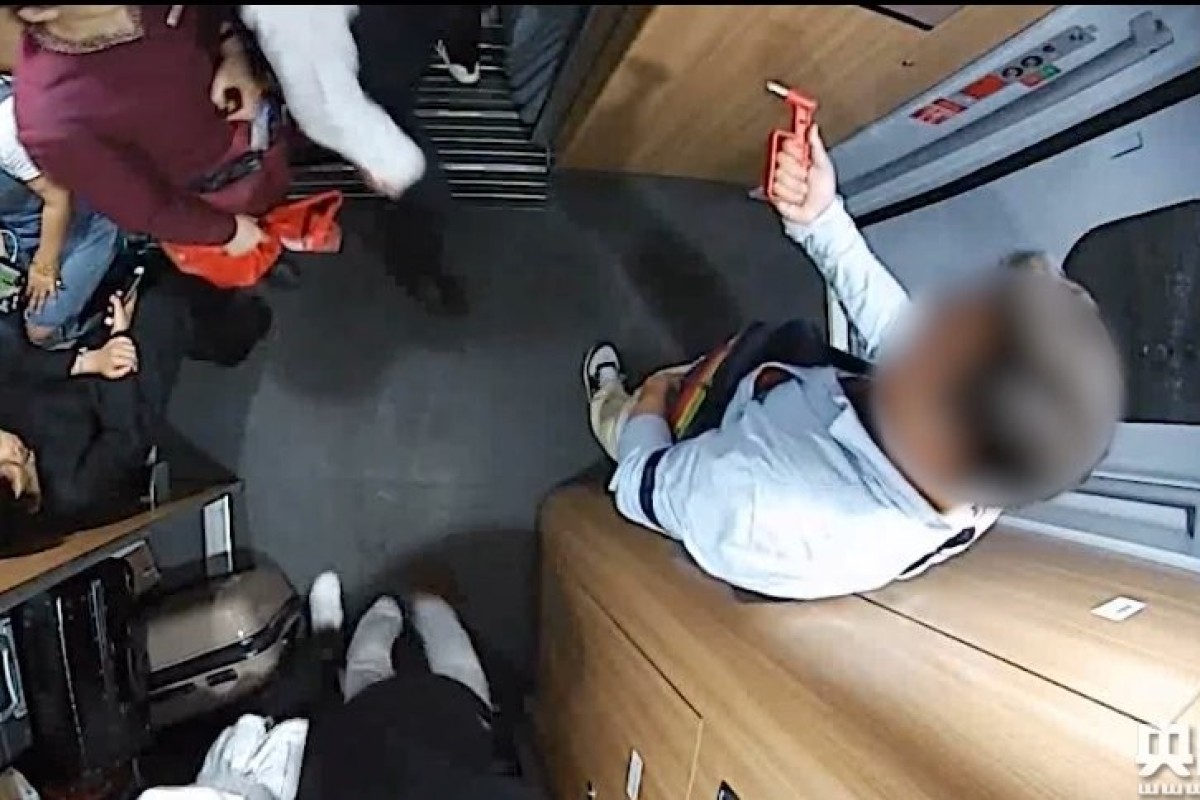
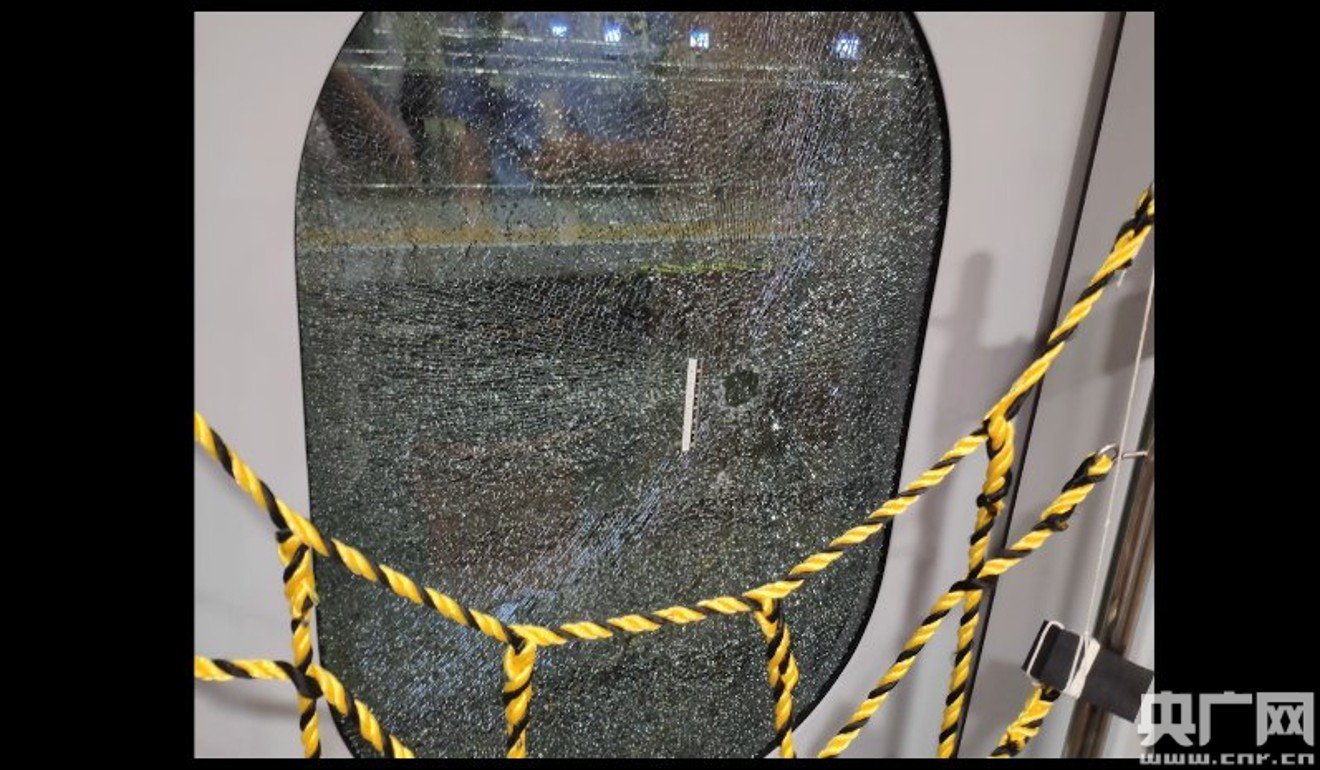
The train passenger tried to smash a hole in the door glass to let in some fresh air, according to Chinese media. Photo: CNR
Chinese railway police detained a passenger after he tried to smash the door window of a high-speed train to “get some fresh air” according to mainland media reports.
The 30-year-old man, identified only by his surname Xu, said he tried and failed to unlock the door and then decided to break the glass with an emergency hammer because he had been drinking and felt sick, China National Radio reported on Saturday.
Xu tried to smash the door after mechanical failure had forced the Beijing-bound train from Shanghai to stop at the main railway station in Jinan in Shandong province on Tuesday.
He said the train had been stranded for half an hour when he became impatient and wanted to have some fresh air, according to the report.
A Chinese train passenger attacked the door glass of a high-speed train as it was stranded in Jinan. Photo: CNR
Surveillance footage showed the man pulling on the door handle before hitting the glass with an emergency hammer mounted on a train wall.
Train staff quickly intervened and stopped Xu, who was taken into police custody after the train arrived in Beijing.
“I just smashed it once. I assumed this would allow air to come in, so I stopped,” Xu was quoted as saying.
“I felt unwell at that moment because I had been drinking at lunchtime. I did it on impulse.”
He was detained for allegedly intentionally damaging property, an offence that could lead to up to three years in jail.
The incident comes just a few months after a woman
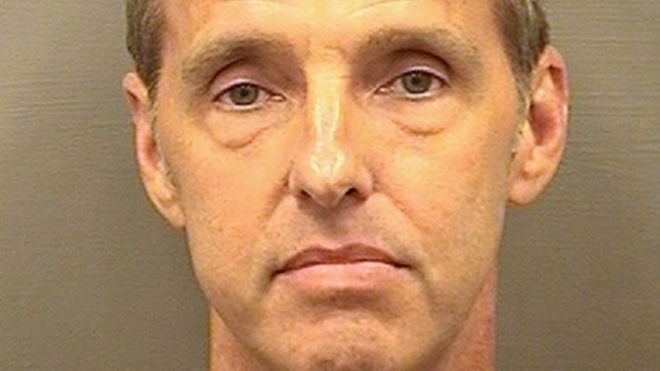
“Mallory not only put our country at great risk, but he endangered the lives of [people] who put their own safety at risk for our national defence,” US attorney Zachary Terwilliger said in a statement.
“This case should send a message to anyone considering violating the public’s trust and compromising our national security,” he added. “We will remain steadfast and dogged in pursuit of these challenging but critical national security cases.”
The Justice Department said Mallory held a number of sensitive jobs with government agencies.
He had worked as a covert case officer for the CIA and as an intelligence officer for the Defense intelligence Agency (DIA).
“This case is one in an alarming trend of former US intelligence officers being targeted by China and betraying their country and colleagues,” Assistant Attorney General John Demers said following the sentencing.
He attempted to pass on information and received at least $800,000 (£600,000) for acting as a Chinese agent, the justice department said at the time.
CIA spy operation in China: Key dates
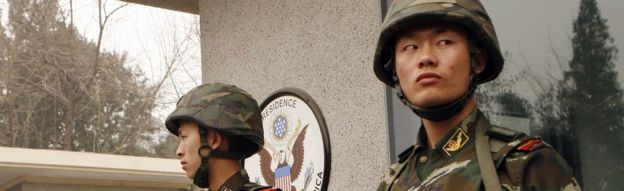
Image copyright AFPImage caption Chinese police guard the US embassy in the capital, Beijing
2010: Information gathered by the US from sources deep inside the Chinese government bureaucracy start to dry up
2011: Informants begin to disappear. It is not clear whether the CIA has been hacked or whether a mole has helped the Chinese to identify agents
2012: FBI begins investigation
May 2014: Five Chinese army officers are charged with stealing trade secrets and internal documents from US companies. Later that same month, China says it has been a main target for US spies
2015: CIA withdraws staff from the US embassy in Beijing, fearing data stolen from government computers could expose its agents
April 2017: Beijing offers hefty cash rewards for information on foreign spies
May 2017: Four former CIA officials tell the New York Times that up to 20 CIA informants were killed or imprisoned by the Chinese between 2010 and 2012
June 2017: Ex-CIA officer Kevin Mallory is arrested and charged with giving top-secret documents to a Chinese agent
January 2018: Former CIA officer Jerry Chun Shing Lee is arrested
June 2018: Former US intelligence officer Ron Rockwell Hansen is charged with attempting to spy for China
TASHKENT (Reuters) – The trade war between the United States and China could be a risk to the world economic outlook if it is not resolved, International Monetary Fund Managing Director Christine Lagarde told Reuters on Friday during a visit to Uzbekistan.
“Obviously, the downside risk that we have is continued trade tensions between the United States and China,” Lagarde said, referring to the IMF’s world economic outlook.
“And if these tensions are not resolved, that clearly is a risk going forward.”
The IMF last month cut its growth forecast for 2019 to 3.3%, down from the 3.5% it had previously predicted.
It warned at the time that growth could slow further due to trade tensions and a potentially disorderly British exit from the European Union.
“But we expect that at the end of 2019 and in 2020 it will bounce back,” Lagarde said of the world economic outlook on Friday.
The United States infuriated China this week when it announced it was putting Huawei Technologies Co Ltd, the world’s biggest telecoms equipment maker, on a blacklist that could make it hard to do business with U.S. companies.
On Friday Beijing suggested a resumption of talks between the world’s two largest economies would be meaningless unless Washington changes course.
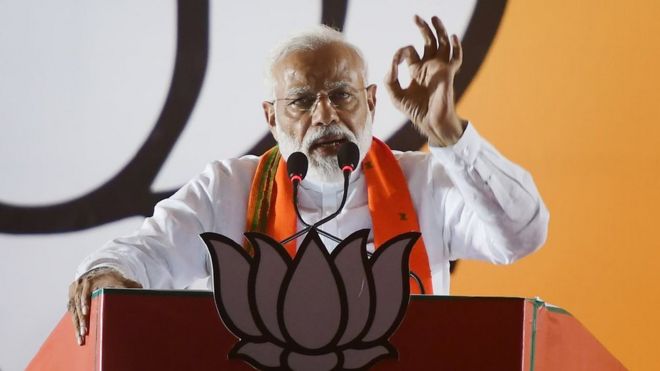
Image copyright GETTY IMAGESImage caption Mr Modi said he will not forgive Pragya Thakur
India is in full election mode: voting began on 11 April, and the final ballot will be cast on 19 May with results out on 23 May. Every day, the BBC will be bringing you all the latest updates on the twists and turns of the world’s largest democracy.
What happened?
Indian Prime Minister Narendra Modi has attended first ever press conference at the Bharatiya Janata Party (BJP) head office in Delhi – days before Indians take part in the final stage of voting.
But journalists were left disappointed as he did not take any questions, and instead largely talked about his government’s achievements.
“I have come to thank the country for blessing me. I have seen a lot of ups and downs but the country stayed with me,” he said.
Mr Modi also spoke of his pride in India’s democratic process and said he needs to show the world “how diverse our democracy is”.
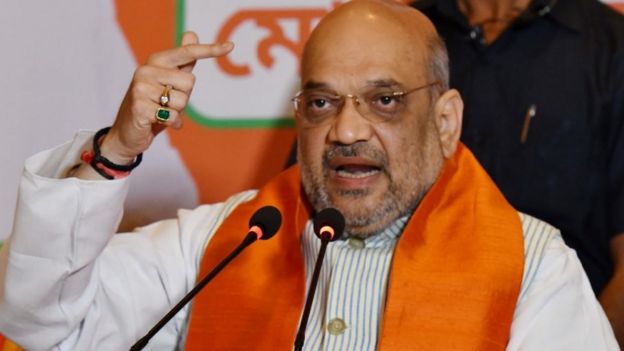
Mr Modi was seated next to party president Amit Shah. He said he would not take questions because the press conference was Mr Shah’s.
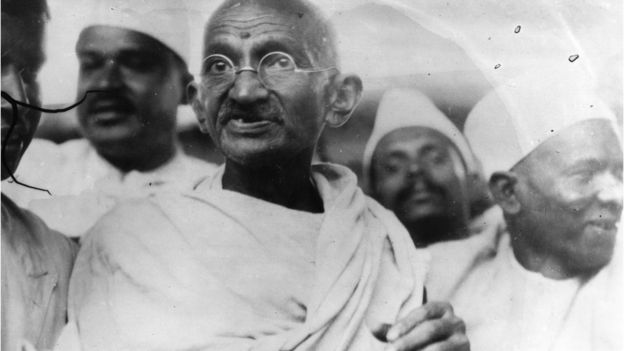
Earlier, the prime minister said he would “never be able to forgive” those who have “insulted” Mahatma Gandhi.
Mr Modi’s statement comes after controversial Bharatiya Janata Party (BJP) politician Pragya Thakur called Nathuram Godse – the man who assassinated Mahatma Gandhi – a “patriot”.
Ms Thakur apologised after several leaders, including those from the BJP, criticised her.
“Such statements should be condemned. There is no place in society for such comments. She [Ms Thakur] may have apologised, but I will never be able to forgive her,” he said in an interview to News24 TV channel.
Why does this matter?
This is the first time Mr Modi has attended a press conference as prime minister while in India. Most of his press conferences have been on state visits to other countries and often involved little more than reading out an official statement.
He has given some one-on-one interviews to Indian media, though critics say that these have largely been tightly controlled and given to journalists seen as sympathetic to him. However in recent weeks he has given a flurry of interviews to several leading publications and television channels, including those that have been critical of him.
But if people were expecting a complete about-turn in his media policy this time, they would have been disappointed.
This caused some frustration among journalists on Twitter.
Also on Friday, a BJP candidate apologised for calling Gandhi’s killer a patriot
Image copyright GETTY IMAGES
What is happening?
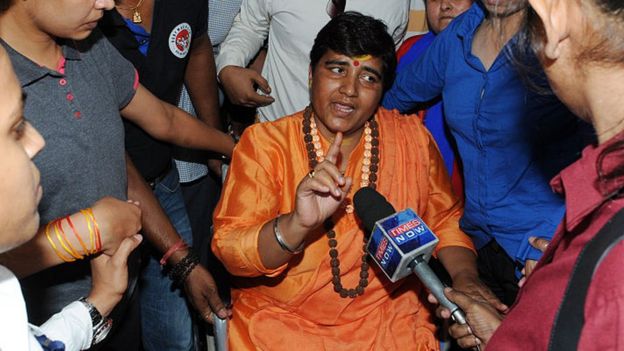
Bharatiya Janata Party (BJP) politician Pragya Thakur has apologised after calling Nathuram Godse – the man who assassinated Mahatma Gandhi – a “patriot”.
Several political parties had criticised her comment and her own party demanded that she should publicly apologise.
“It was my personal opinion. My intention was not to hurt anyone’s sentiments. If I’ve hurt anyone, I do apologise. What Gandhi Ji has done for the country cannot be forgotten. My statement has been twisted by the media,” Ms Thakur said on Thursday evening.
She made the comment after actor-turned politician Kamal Haasan said Godse was India’s first Hindu “extremist” earlier this week.
Why does this matter?
The BJP as well as opposition parties immediately reacted to her comment, which also caused a storm on social media.
BJP spokesperson GVL Narasimha Rao said that the party does not agree with her statement, and asked her to publicly apologise.
The main opposition Congress party demanded an apology from Prime Minister Narendra Modi and said that the BJP should take “punitive action” against Ms Thakur.
Congress spokesperson Randeep Surjewala said that “insulting martyrs is in the BJP DNA” and that the “soul of the nation” has been hurt by her remarks.
Congress party leader Priyanka Gandhi also lashed out at the BJP.
Political analysts also say that her comments have put the BJP in a tough spot, since Mr Modi and BJP president Amit Shah defended their decision to field her as a candidate despite terror charges against her.
Her candidature caused outrage as she is an accused of involvement in a blast that killed seven people and injured 100 others. Ms Thakur denies all charges against her.
However, Ms Thakur’s comments do reflect the views of some right-wing Hindus who support the BJP and have long seen Gandhi as too moderate.
Godse, who shot Gandhi in the chest three times at point-blank range on 30 January 1948, was also an activist with nationalist right-wing groups, including those closely associated with the BJP.
Hindu hardliners in India accuse Gandhi of having betrayed Hindus by being too pro-Muslim, and even for the division of India and the bloodshed that marked Partition, which saw India and Pakistan created after independence from Britain in 1947.
On Thursday, a ruling party candidate called Gandhi’s killer a patriot
What happened?
Controversial Bharatiya Janata Party (BJP) politician Pragya Thakur made headlines again. This time it was for calling Nathuram Godse – the man who assassinated Mahatma Gandhi – a “patriot”.
Her comment was made in response to a statement by southern actor-turned politician Kamal Haasan who had said India’s first “extremist” was a Hindu”, referring to Godse.
His statement, made on Monday, was heavily criticised by the BJP, which accused him of indulging in “divisive politics” and filed a complaint against him with the Election Commission of India.
Why does this matter?
The BJP responded by criticising Ms Thakur and asking her to publicly apologise.
“BJP does not agree with this statement, we condemn it. Party will ask her for clarification, she should apologise publicly for this statement,” party spokesperson GVL Narasimha Rao told reporters.
Image copyright GETTY IMAGES
Ms Thakur has seen her fair share of controversy. Her candidature caused outrage as she is an accused of involvement in a blast that killed seven people and injured 100 others. On 18 April, she said that police officer Hemant Karkare had died in the November 2008 Mumbai terror attacks because she had “cursed” him. She was then banned from campaigning for 72 hours as a result.
A team led by Mr Karkare had arrested her for questioning in connection with the Malegaon blast.
During her campaign, she also said she was “proud” of her part in the demolition of the 16th Century Babri mosque. In 1992, right-wing Hindu mobs razed the mosque to the ground, claiming it was built on the site of a temple destroyed by Muslim rulers. The site, which is in the city of Ayodhya, has been a religious flashpoint for Hindus and Muslims for decades.
Campaigning ended in West Bengal a day before deadline
What happened?
The Election Commission (EC) told political parties to end their campaigning in West Bengal state, a day before the deadline in the wake of poll-related violence.
The campaign will end on Thursday at 10pm local time, and voting will be held on Sunday.
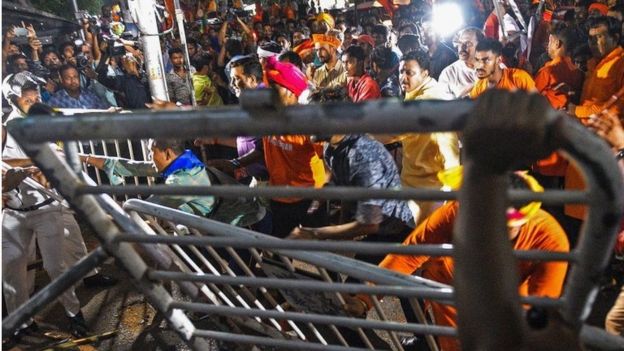
The decision comes after clashes broke out between the Bharatiya Janata Party (BJP) workers and protesters believed to be from the ruling Trinamool Congress (TMC) in Kolkata (formerly Calcutta) on Tuesday.
It happened during a roadshow of BJP chief Amit Shah. Several people were injured and vehicles were set on fire. A statue of renowned Bengali reformer Iswarchandra Vidyasagar was also vandalised in the clashes.
Both parties have accused each other of starting the violence.
Why does this matter?
Image copyright GETTY IMAGESImage caption Violence took place during BJP chief Amit Shah’s rally in Kolkata on Tuesday
The BJP welcomed the decision, saying it validated their argument that the state had “descended into anarchy” under the leadership of chief minister Mamata Banerjee.
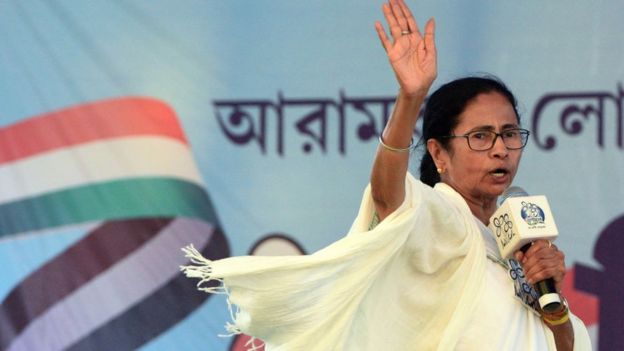
Ms Banerjee said that the move was “undemocratic” and “it had insulted the people of Bengal”.
“Tomorrow, [Prime Minister Narendra] Modi has two meetings in Bengal. When he finishes, the campaigning also ends… Instead of punishing Amit Shah, the Election Commission has given a gift to the BJP,” she said.
Image copyright AFPImage caption Several people were injured and vehicles were set on fire during the violence
Both parties are locked into a fierce election battle to win most out West Bengal’s 42 seats. Ms Banerjee has ambitions of becoming the prime minister in case a nationwide coalition of regional parties wins enough seats.
The state has also become crucial for the BJP as it’s trying to expand its reach in the eastern state. It won only two seats in the 2014 election.
The BJP performed well in northern states like Uttar Pradesh and Rajasthan in 2014, but this time it’s expected to suffer loses against a coalition of regional parties and the main opposition Congress.
So the party is trying to make up for the losses in West Bengal.
On Wednesday, the TMC and the BJP accused each other of poll violence
Image copyright GETTY IMAGES
What happened?
The war of words between West Bengal state chief minister Mamata Banerjee and the governing Bharatiya Janata Party (BJP) intensified ahead of voting on Sunday.
The latest verbal duel comes after violence was reported during BJP chief Amit Shah’s roadshow in Kolkata (formerly Calcutta) on Tuesday.
Clashes broke out between BJP supporters and protesters who were holding “Amit Shah go back” posters.
Some people suffered minor injuries and a few vehicles were set on fire.
The BJP said the protest was “orchestrated” and called it an “attempt to strangulate democracy”.
Why does this matter?
The eastern state has become politically crucial for the BJP as it has intensified campaigning in the past few days.
And that has sparked a feverish electoral battle between the BJP and Ms Banerjee’s Trinamool Congress (TMC).
“What does Amit Shah think of himself? Is he above everything? Is he god that no one can protest against him?” Ms Banerjee said.
In reply, Mr Shah accused the TMC of not following democratic norms during elections.
“Have faith in the people of Bengal that they’d face the TMC goons,” he said.
Prime Minister Narendra Modi is scheduled to hold more rallies in the coming days, so one can expect more verbal fireworks from the two leaders.
On Tuesday, the saga of the morphed Mamata meme continued
What happened?
India’s top court stepped in to release an activist belonging to India’s governing Bharatiya Janata Party (BJP) who was sent to prison for sharing a doctored image of West Bengal Chief Minister Mamata Banerjee.
Priyanka Sharma was sentenced to two weeks in prison on 10 May after she shared a picture of Bollywood star Priyanka Chopra and her husband Nick Jonas at the Met Gala – but with Ms Banerjee’s head superimposed on to Chopra’s body.
Earlier the court had said Ms Sharma could be released only if she apologised to Ms Banerjee, but later waived this condition.
Why does this matter?
The battle for West Bengal in this general election has been absolutely bruising.
The BJP, led by Prime Minister Narendra Modi himself, has been campaigning hard for votes in the state. This has brought them toe-to-toe with the state’s feisty chief minister. The fact that voting for West Bengal’s 42 seats has been split across all nine phases of voting has meant that the battle has been long and drawn-out.
And with just one phase to go before voting finally ends, the gloves are well and truly off. The two parties have traded insults on the campaign stage, their workers have attacked each other, and the violence on the ground has intensified. And now the battle has spread to cyberspace as well.
The country’s finance minister Arun Jaitley jumped at news of Ms Sharma’s release to call Ms Banerjee a dictator.
Analysts say that this political row is so bitter because the BJP has clearly identified West Bengal as one of the states where they may be able to make gains this election. This becomes more important for the party in the context of their fight in the politically crucial state of Uttar Pradesh, which sends the most number of MPs (80) to parliament.
They are up against a powerful coalition of regional parties there, and many expect them to lose seats as a result.
And PM Modi said Rahul Gandhi should be ashamed of 1984 riots
What happened?
Prime Minister Narendra Modi said that main opposition Congress party chief Rahul Gandhi should be “ashamed of himself” over his colleague’s remark on the 1984 anti-Sikh riots.
Mr Modi was replying to a controversial statement made by Sam Pitroda, who is a strategist of the Congress party.
In his reply to a question about the Congress’ role in the riots, Mr Pitroda had said “so what?”.
“I don’t think so, this is also another lie, and what about 1984? You speak about what you [Mr Modi] have done in five years. It [the riots] happened in 1984, so what?” he said.
Mr Gandhi said he was “ashamed” of Mr Pitroda’s statement, and asked him to apologise.
Mr Pitroda later said his statement was “twisted” and he did not mean to hurt sentiments.
But Mr Modi said the Congress chief “must apologise”.
“I was watching that naamdar [the dynast] told his guru that he should be ashamed of what he said. I want to ask naamdar, you pretended to scold your mentor for what? Because he exposed what was always in the Congress’s heart, and in the discussions of the naamdar family? Because he made public a family secret? Naamdar, it is you who should be ashamed,” Mr Modi said.
Why does this matter?
The controversy matters because it comes days ahead of voting for the 13 seats in the northern state of Punjab.
The BJP, which has formed a coalition with regional Shiromani Akali Dal, is locked in a bitter electoral battle with the ruling Congress in the state.
Sikhs are a majority in the state and the 1984 riots is still an emotional issue for many of them.
More than 3,000 Sikhs were killed in 1984 after the assassination of former prime minister Indira Gandhi by her Sikh bodyguards.
They were angry at her decision to send the army into the Golden Temple – Sikhism’s holiest shrine – to flush out militants earlier in the year.
The killing of Mrs Gandhi, who belonged to the Congress, saw mobs attack and murder members of the Sikh community across the country.
And both parties appear to be trying to come across as pro-Sikh ahead of the vote on 19 May.
On Sunday, Delhi voted but not enthusiastically
Image copyright GETTY IMAGESImage caption Delhi’s voter turnout was lower than in 2014
What happened?
Sunday saw India’s capital Delhi vote along with several other states in the polls – the penultimate phase of the country’s mammoth general election.
Voters turned out to vote, but in fewer numbers than they did in 2014. The election commission said that around 60% of the capital’s registered voters had actually cast ballots, which was about a five percent drop from 2014.
Delhi Chief Electoral Officer Ranbir Singh expressed disappointment, saying that the turnout did not match expectations.
Why does this matter?
The election commission is right to be disappointed – it had run a series of campaigns in the city, encouraging more people to vote.
But it was not as though polling in Delhi was an entirely smooth process. Some voters complained that their names were missing from electoral lists even though they had all the necessary documents. There were also reports that around 1,200 Electronic Voting Machines (EVMs) had malfunctioned across the city, delaying the polling process.
The fact that Delhi became a three-cornered contest after the main opposition Congress and the Aam Aadmi Party (AAP), which controls the Delhi state assembly, failed to stitch up an alliance may also have put voters off. Many analysts believe that this failure will only split voters who were against prime minister Narendra Modi’s Bharatiya Janata Party (BJP) and effectively hand them victory.
So they may have decided to just stay home, and not bother queuing up in the blistering heat – it touched 40C on Sunday.





 CHINDIA ALERT: You'll be living in their world, very soon