06/10/2019
- Leaders exchange congratulatory messages on 70th anniversary of diplomatic relations amid speculation that Kim Jong-un will visit China soon
- It comes after Pyongyang’s denuclearisation negotiations with Washington broke off in Stockholm without any breakthroughs
North Korean leader Kim Jong-un (left) may soon visit China again. He last met Xi Jinping during the Chinese leader’s trip to Pyongyang in June. Photo: AFP
China and
North Korea on Sunday vowed to continue strengthening their ties that have “stood the test of time”, hours after another squabble broke out between Pyongyang and Washington over the breakdown of their first nuclear talks in eight months.
Chinese President Xi Jinping exchanged congratulatory messages with North Korean leader Kim Jong-un on the 70th anniversary of diplomatic ties, according to state media in both countries, amid speculation that Kim will soon pay another visit to China.
Observers said the communist neighbours’ warm exchanges and Kim’s possible visit showed Beijing and Pyongyang shared mutual interests and needed each other in their respective geopolitical plans to counter Washington – especially as they both come under pressure from US President Donald Trump.
The two countries are said to be
preparing for Kim to visit China as early as Sunday, which would be his fifth China trip since March last year and the first since Xi’s state visit to Pyongyang in June.
But given Pyongyang’s denuclearisation negotiations with Washington on Saturday – which broke off in Stockholm without any breakthroughs – China and North Korea may need to reconsider or delay Kim’s visit to avoid criticism of Beijing’s role in the nuclear talks, one expert suggested.
“The triangular ties between China, the United States and North Korea are of immense importance in finding a solution to the nuclear issue on the Korean peninsula and Beijing’s role in the talks has always been sensitive, especially in the eyes of the US and its allies,” said Wang Sheng, a North Korea specialist at Jilin University.
“While China will almost certainly reiterate its stance to support continued dialogue and talks between Pyongyang and Washington, it may not be a good time for Kim’s high-profile visit just a day after their talks broke down, which would inevitably make it more difficult for China to play a mediating role,” he said.
On Sunday, Xi said the traditional friendship between the two countries had “stood the test of time and changes in the international landscape, growing stronger with the passage of time” and “made important and positive contributions to regional peace and stability”, according to Chinese state news agency Xinhua.
Citing his five recent meetings with Kim, Xi said bilateral ties had entered a new era and China would promote “long-term, healthy and stable” relations with North Korea.
Kim also hailed the special relationship between the two countries, which he said had been forged “at the cost of blood” and “weathered all tempests while sharing weal and woe with each other”, the Korean Central News Agency reported.
North Korean mouthpiece Rodong Sinmun meanwhile said in a commentary that bilateral ties with Beijing were “fully in accordance” with the interests of the two sides and would develop “regardless of the international situation”, according to South Korea’s Yonhap news agency.
The lavish praise for Sino-North Korean relations comes as a group of working-level officials from North Korea are working with the Chinese side for a possible visit by Kim in the next few days, according to South Korea’s Dong-A Ilbo.
China and North Korea have set aside their differences as both countries come under pressure from US President Donald Trump. Photo: AFP
North Korea was among the first countries to recognise the
People’s Republic of China
70 years ago and Xi has exchanged three messages with Kim in the past month, repeatedly pledging to move closer despite lingering grievances over Pyongyang’s nuclear brinkmanship.
In the face of Trump’s increasingly antagonistic approach, the former communist allies – whose relationship deteriorated over Beijing’s support for the UN sanctions against the North, led by Washington – have set aside their differences to patch up ties in recent months.
Meanwhile, Pyongyang’s first nuclear talks with Washington in eight months ended on Saturday with the two sides offering conflicting assessments of their first formal discussion since the failed Trump-Kim summit in Vietnam in February.
North Korea’s top negotiator Kim Myong-gil expressed his “great displeasure” with the discussions, blaming Washington and urging the Trump administration to correct its course and keep the talks alive or “forever close the door to dialogue”, according to Yonhap.
North Korean negotiator Kim Myong-gil expressed his “great displeasure” with the discussions on Saturday. Photo: AP
But the US State Department issued a rebuke hours later, claiming the negotiators had a “good discussion”. State Department spokeswoman Morgan Ortagus said in a statement that the US had put forward “creative ideas” and “a number of new initiatives that would allow us to make progress in each of the four pillars of the Singapore joint statement”.
The two countries were not expected to “overcome a legacy of 70 years of war and hostility on the Korean peninsula through the course of a single Saturday”, she said, adding that Washington would return for more discussions with Pyongyang in two weeks at Sweden’s invitation.
As Trump administration enters survival mode, foreign policy moves are anyone’s guess
Wang from Jilin University said the breakdown of another round of talks had again laid bare the huge gap between the two sides over a long list of issues, from the definition of denuclearisation to their vastly different, often conflicting, demands and interests.
“It’s very likely that Washington has again rejected some of Pyongyang’s key demands in the recent talks, such as providing a security guarantee for Kim’s regime and a range of economic sanctions relief,” he said.
And with North Korea a polarising issue in the looming US presidential poll for Trump as he seeks to score diplomatic points for his re-election bid, it might become even more challenging for the two sides to narrow their differences.
“The breakdown of the talks should not be seen as a failure,” Wang said. “It simply underscores the difficulty of reaching any consensus in the nuclear talks, which still have a long way to go.”
Source: SCMP
Posted in 70th anniversary, Beijing, breakthroughs, broke off, China alert, collapse, denuclearisation negotiations, diplomatic relations, Dong-A Ilbo, geopolitical plans, invitation, Jilin University, Kim Jong-un, Korean Central News Agency, Korean peninsula, North Korea, nuclear brinkmanship, nuclear talks, People’s Republic of China, President Donald Trump, Pyongyang, Sino-North Korean relations, South Korea, speculation, Stockholm, strengthen ties, Sweden, Trump-Kim summit, U.S. State Department, UN sanctions, Uncategorized, United States, US nuclear talks, Vietnam, visit, vow, Washington, without, Xi JinPing, Xinhua News Agency, Yonhap news agency |
Leave a Comment »
02/10/2019
- US billionaire says it will take time to solve problems like air pollution but China is taking action
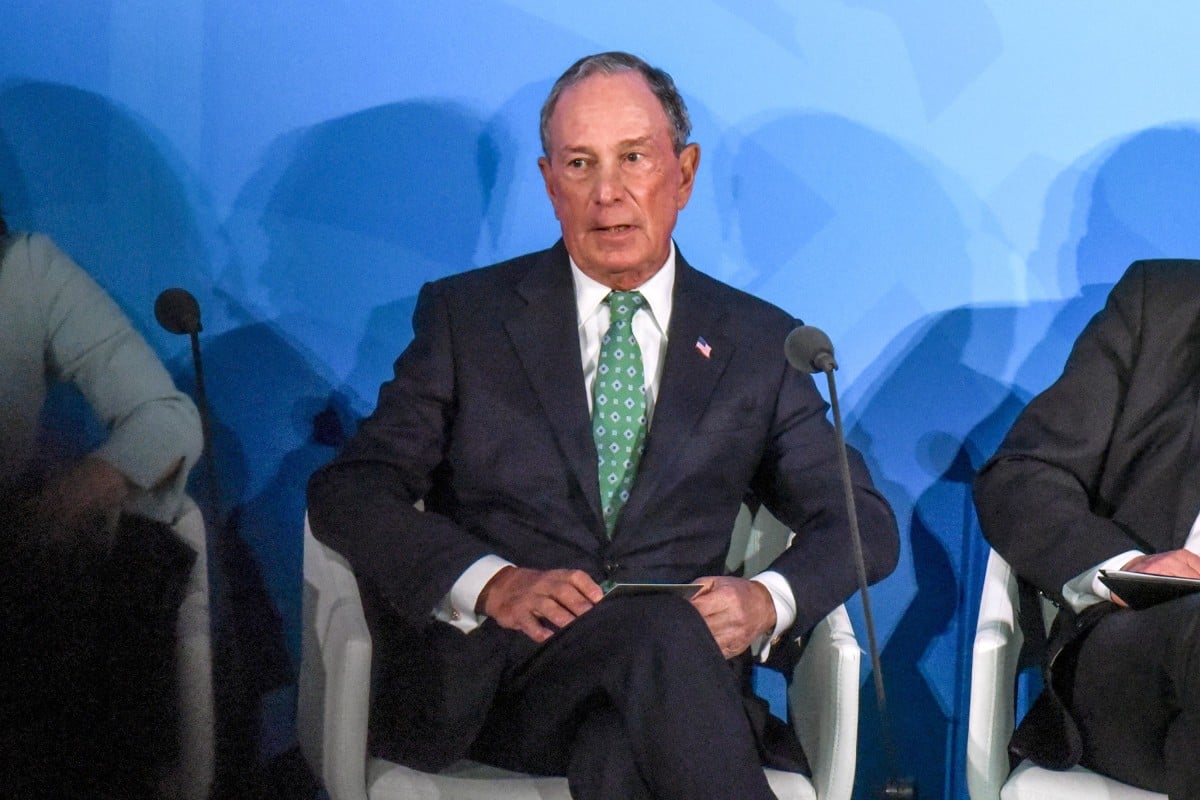
Billionaire Michael Bloomberg says it will take time for China to resolve problems like air pollution. Photo: AFP
US billionaire Michael Bloomberg has spoken out in support of Chinese President Xi Jinping, saying Xi is “not a dictator” and the Communist Party “listens to the public” on issues like air pollution.
Bloomberg made the comments in an interview on the weekend with Margaret Hoover, host of PBS’ Firing Line public affairs show, ahead of November’s Bloomberg New Economy Forum in Beijing, an event designed to rival the World Economic Forum in Davos.
When asked whether China could be a good partner in the fight against climate change, Bloomberg said “China is doing a lot”.
“Yes, they are still building a bunch of coal-fired power plants. Yes, they are [burning coal]. But they are now moving plants away from the cities. The Communist Party wants to stay in power in China and they listen to the public,” he said.
“When the public says ‘I can’t breathe the air’, Xi Jinping is not a dictator. He has to satisfy his constituents, or he’s not going to survive … The trouble is you can’t overnight move cement plants and power plants just outside the city that are polluting the air and you have to have their product. So some of it takes time.”
China prepares for next round of nationwide inspections in ‘war on pollution’
Hoover countered, saying China was not a democracy and Xi was not answerable to voters.
“He doesn’t have a vote, he doesn’t have a democracy. He [isn’t held] accountable by voters. Is the check on him just a revolution?” she said.
“You’re not going to have a revolution. No government survives without the will of the majority of its people,” Bloomberg said. “He has to deliver services.”
Hoover then said: “I’m looking at people in Hong Kong who are protesting and wondering whether the Chinese government cares what they have to say.”
Bloomberg said that in government – “even governments that aren’t what we could call a democracy” – there were many stakeholders with vested interests and “they have an impact”.
Smog in northern China rises in first four months of 2019 as anti-pollution drive loses ‘momentum’
Bloomberg’s comments come seven years after his news service published an investigative story about the finances of the extended family of Xi, then vice-president.
The story was published at a sensitive time, with China holding a once-a-decade leadership transition that saw Xi become president.
China banned the use of Bloomberg financial data tracking terminals but the company’s relations warmed gradually after three years.
In August 2015, Bloomberg was given a high-profile reception by then vice-premier Zhang Gaoli. He also published an opinion piece in party mouthpiece People’s Daily.
Beijing lifted the ban on Bloomberg in 2016.
Source: SCMP
Posted in air pollution, American businessman, Bloomberg financial data tracking terminals, Bloomberg New Economy Forum, burning coal, cement plants, cities, City, coal fired power plants, Communist Party, constituents, Davos, Democracy, dictator, Firing Line, Hong Kong, Hoover, Michael Bloomber, Michael Bloomberg, moving plants, northern China, party mouthpiece, People’s Daily, power plants, revolution, Smog, Uncategorized, vice-premier Zhang Gaoli, World Economic Forum, Xi JinPing |
Leave a Comment »
02/10/2019
- The trip comes amid growing resistance from European leaders over what they see as China’s failure to change long-term practices unfair to foreign investors
- French President’s trip to Beijing follows Chinese leader’s visit to France in March
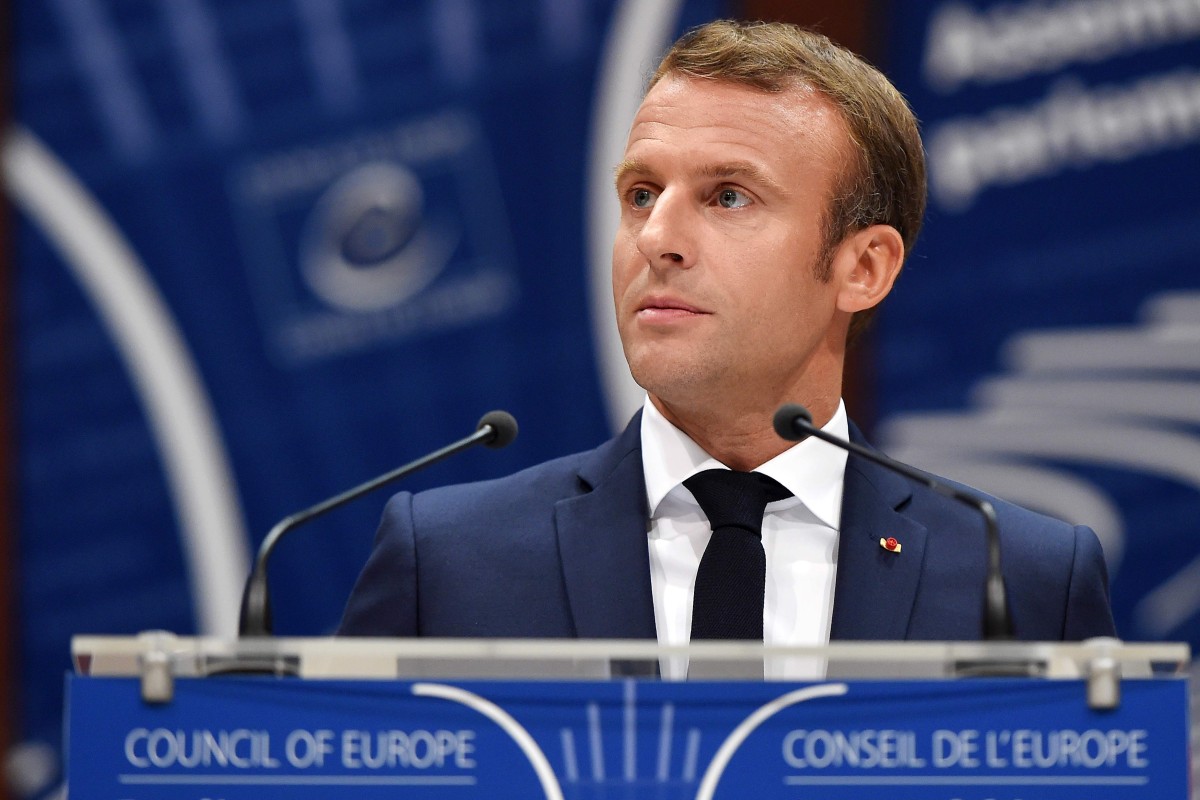
President Emmanuel Macron of France speaks to the Council of Europe parliamentary assembly on Tuesday. Photo: AFP
French President Emmanuel Macron will visit China next month as Europe’s most diplomatically active leader focuses on climate change cooperation and trade promotion with Asia’s leading power, a source briefed on the Elysee Palace’s discussions said.
This will be the second Chinese tour for Macron since he took office in 2017, and it will come amid escalating resistance from European politicians and business communities over what they see as China’s failure to change long-standing practices unfair to foreign investors.
His visit also comes at a time when France – as well as the European Union as a whole – is bracing for Washington’s potential levies of tariffs on European products, and the lack of progress on climate change policies with US President Donald Trump’s administration.
“President Macron will meet President Xi [Jinping], while France strives for better cooperation with China on climate and trade,” the source said. “His itinerary is still in the pipeline, but he is expected to visit Beijing and Shanghai.”
Macron, 41, who is widely seen as emerging as Europe’s most aggressive leader filling the political vacuum left by German Chancellor Angela Merkel’s political twilight, has cast himself as an honest broker between Russia and Ukraine, and between the US and Iran.
He has also been critical of China’s influence in Europe, joining forces with Merkel to push for a tougher EU stance on the world’s second biggest economy.
In March, when Xi claimed a major diplomatic victory by clinching a memorandum of understanding with Italy on the Belt and Road Initiative, Macron declared: “The time of European naivety is ended. For many years we had an uncoordinated approach and China took advantage of our divisions.”
Macron also backed investment screening mechanisms for Chinese business moves in Europe, while endorsing plans to change the EU’s notoriously strict antitrust rules in order to facilitate mergers between large European groups and companies to counter Chinese companies’ global ambitions.
Macron urges Iran and US to show ‘courage of building peace’
The EU is also wary of China’s effort to “divide and rule” the European Union. Greece and Hungary – both recipients of large amounts of Chinese investments – have repeatedly wanted to water down EU’s stance on issues deemed sensitive to Beijing, including the South China Sea and China’s human rights violations.
“It would be good [for Macron] to stress that 17+1 is irritating,” said Joerg Wuttke, president of EU Chamber of Commerce in China, in reference to China’s engagement with a group of EU and non-EU member states in eastern and southeastern Europe.
“After all, the EU has a ‘one China’ policy, [so] EU could expect this position from China too.”
Macron’s domestic call for EU unity has translated into diplomatic appeals, with China being one of the targets.
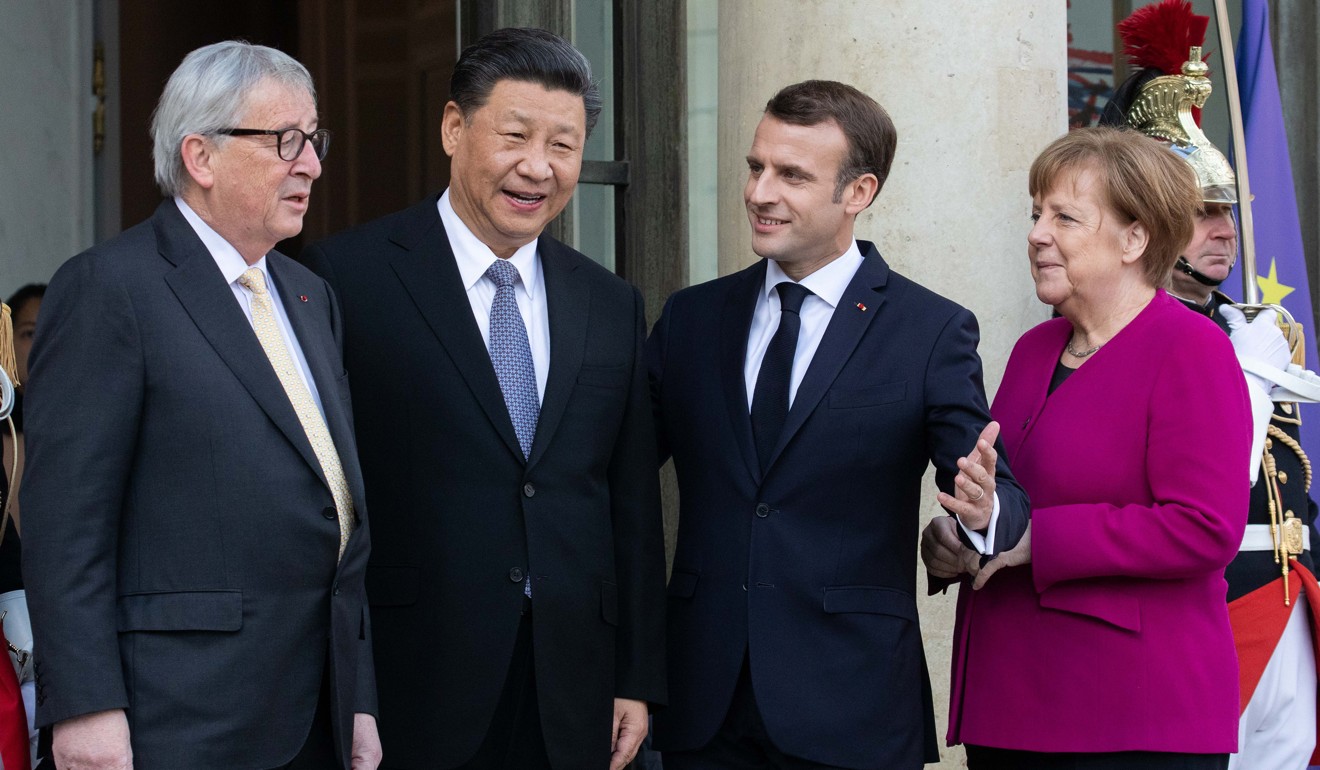
(From left) Jean-Claude Juncker, president of the European Commission; Xi Jinping, China’s leader; Emmanuel Macron, France’s president; and Angela Merkel, Germany’s chancellor, ahead of a meeting in Paris on March 26. Photo: Christophe Morin/Bloomberg
When Xi visited France in March, Macron hosted him at the Elysee Palace in the presence of Merkel and European Commission President Jean-Claude Juncker, showcasing European solidarity when it comes to EU-China policies.
In terms of French-Chinese bilateral ties, trade imbalances have persisted after Macron called for a “rebalancing” during his last visit.
France has a 1.4 per cent market share in China, compared with China’s 9 per cent market share in France. China represents France’s largest bilateral trade deficit, totalling €US$29.2 billion (US$31.9 billion) last year, ahead of Germany.
The EU has been calling for reciprocal investment treatment with China, a call that European business leaders in China expect Macron to make.
France bids farewell to late president Jacques Chirac
“We [Europe] need … a solid investment agreement to allow EU business to conduct their affairs in a similar manner as Chinese companies can operate in Europe. The agreement should be finalised in 2020, but not at all cost,” said Wuttke.
“The last thing EU business needs in China is a weak agreement that institutionalises imbalances,” he added.
Part of that involves building “more efficient defensive tools to prevent abusive technology transfers and to address the deep asymmetry in EU-China relations when it comes to access to public procurement markets,” said Mathieu Duchâtel, director of Asia programme at the Paris-based think tank Institut Montaigne.
Duchâtel added that it was also important to convey the message to Beijing that there are areas for cooperation even amid a more defensive China policy from France.
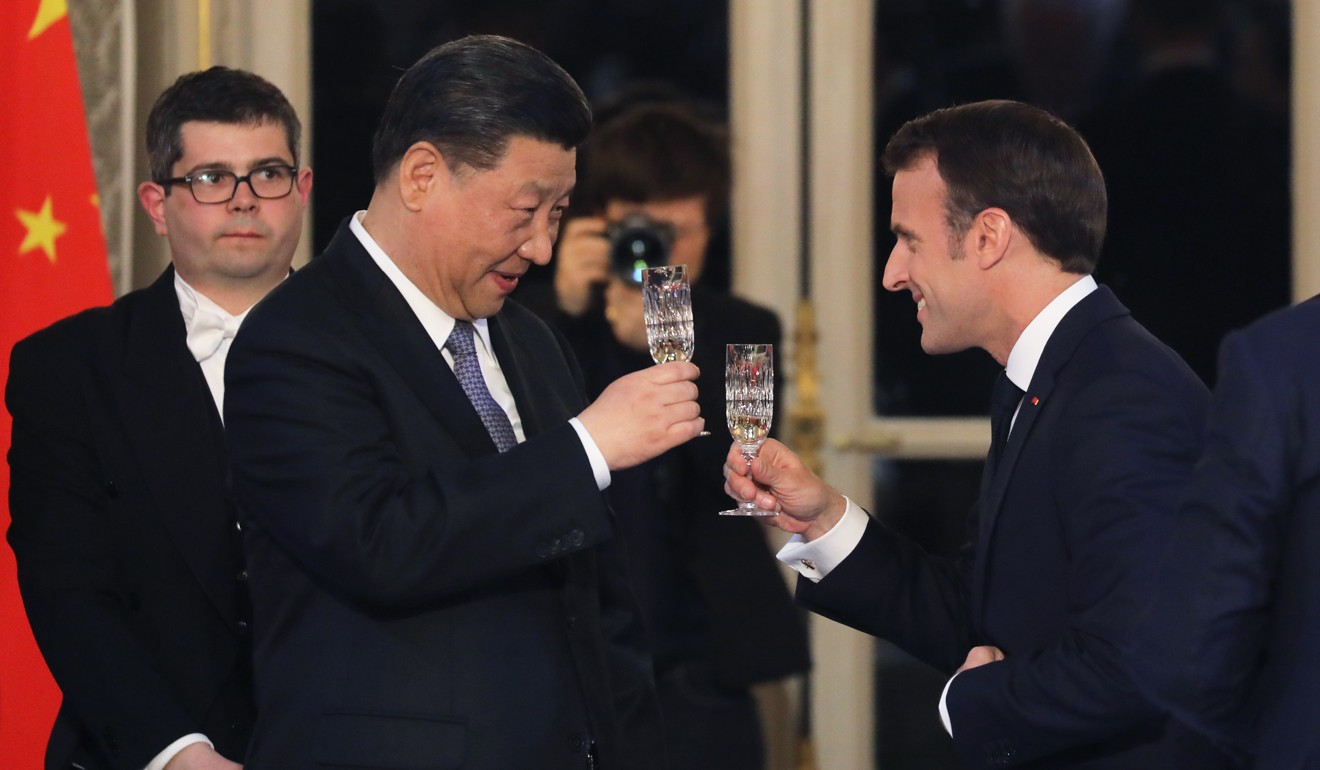
Chinese President Xi Jinping and French leader Emmanuel Macron toast raise a toast during a state dinner in Paris on March 25. Photo: EPA-EFE
One such area is the climate and environment, where China is “an important partner” for France to reach its goal of global carbon neutrality by 2050, he said.
“The energy/environment agenda is a political priority in Paris and one of very few issues on which cooperation with China remains promising and will continue to create business opportunities,” he said.
China is the world’s biggest carbon polluter, producing around 30 per cent of the planet’s man-made carbon dioxide. It remains committed to the 2015 Paris accord on climate change, even after Trump pulled the US out of the deal.
Under the agreement, the long-term temperature goal is to keep the increase in global average temperature to well below 2°C above pre-industrial levels, and to pursue efforts to limit the increase to 1.5°C.
Source: SCMP
Posted in Angela Merkel, Beijing, Belt and Road Initiative, Belt and Road Initiative (BRI), building peace, Carbon dioxide, carbon polluter, China alert, climate change, Council of Europe, courage, deep asymmetry, divide and rule, energy/environment agenda, EU, EU Chamber of Commerce in China, European Commission, European Commission President, European Union, focus, France, German Chancellor, Greece, human rights violations, Hungary, imbalances, institutionalises, INVESTMENTS, iran, Italy, Jacques Chirac, Jean-Claude Juncker, meet, Memorandum of understanding, Memorandum of Understanding (MOU), month, one-China policy, Paris, Planet, political twilight, recipients, South China Sea, technology transfers, Trade, Uncategorized, US, US President Donald Trump, Xi JinPing |
Leave a Comment »
01/10/2019
- 70th anniversary of the founding of the People’s Republic of China marked by its biggest ever military parade and huge civilian parade
- Xi says no force can stop China ‘marching forward’ and vows to protect the long-term stability of Hong Kong
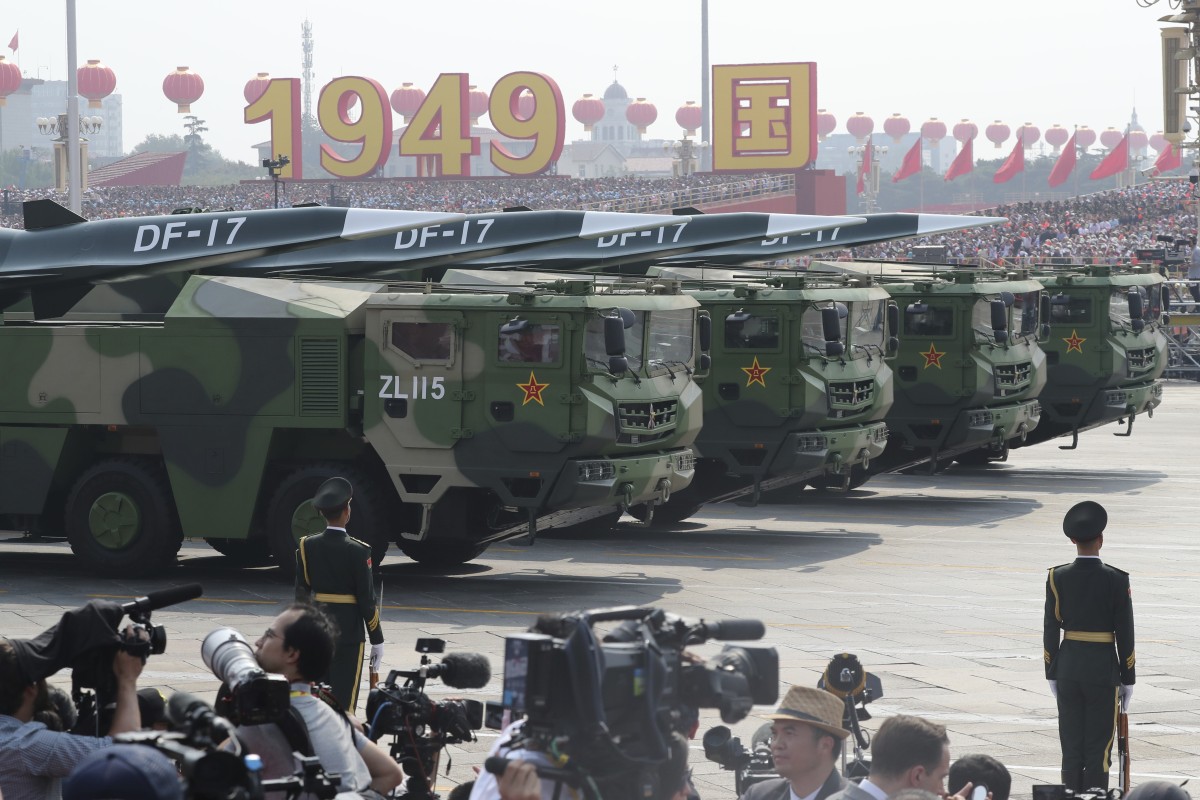
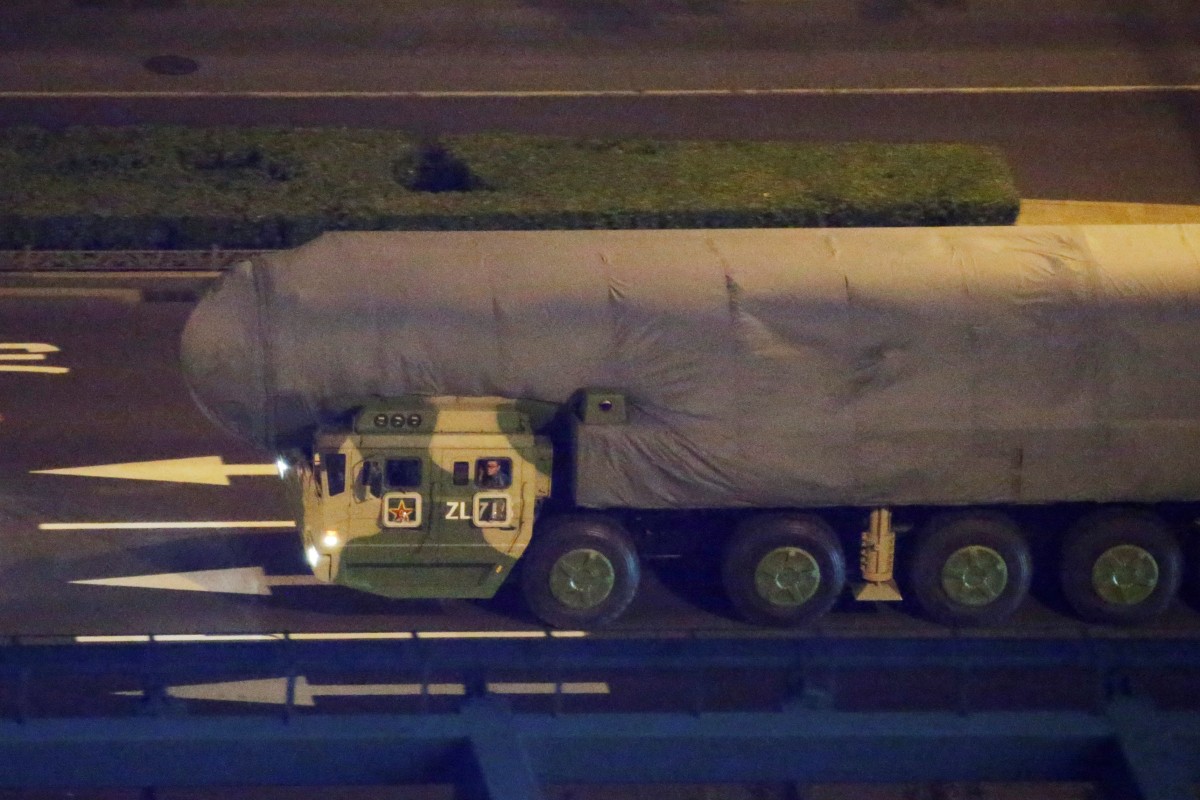
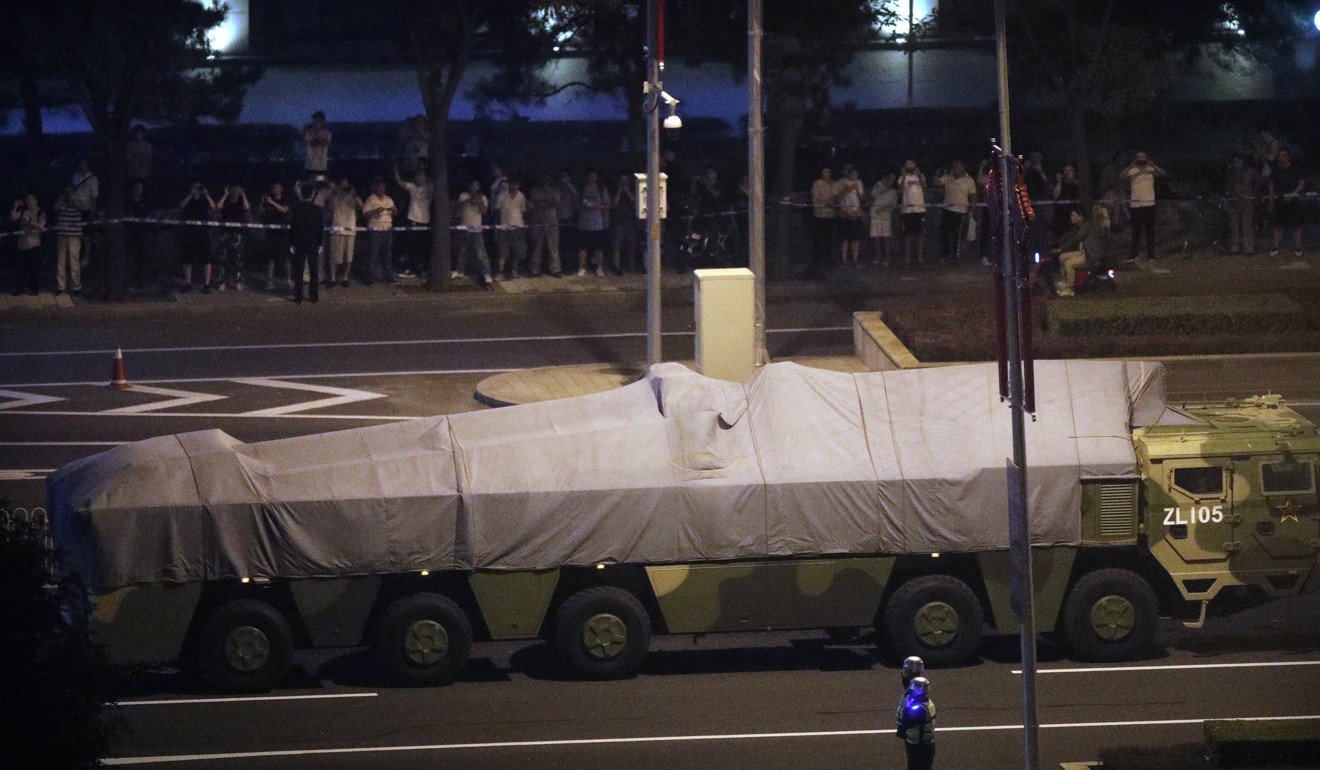
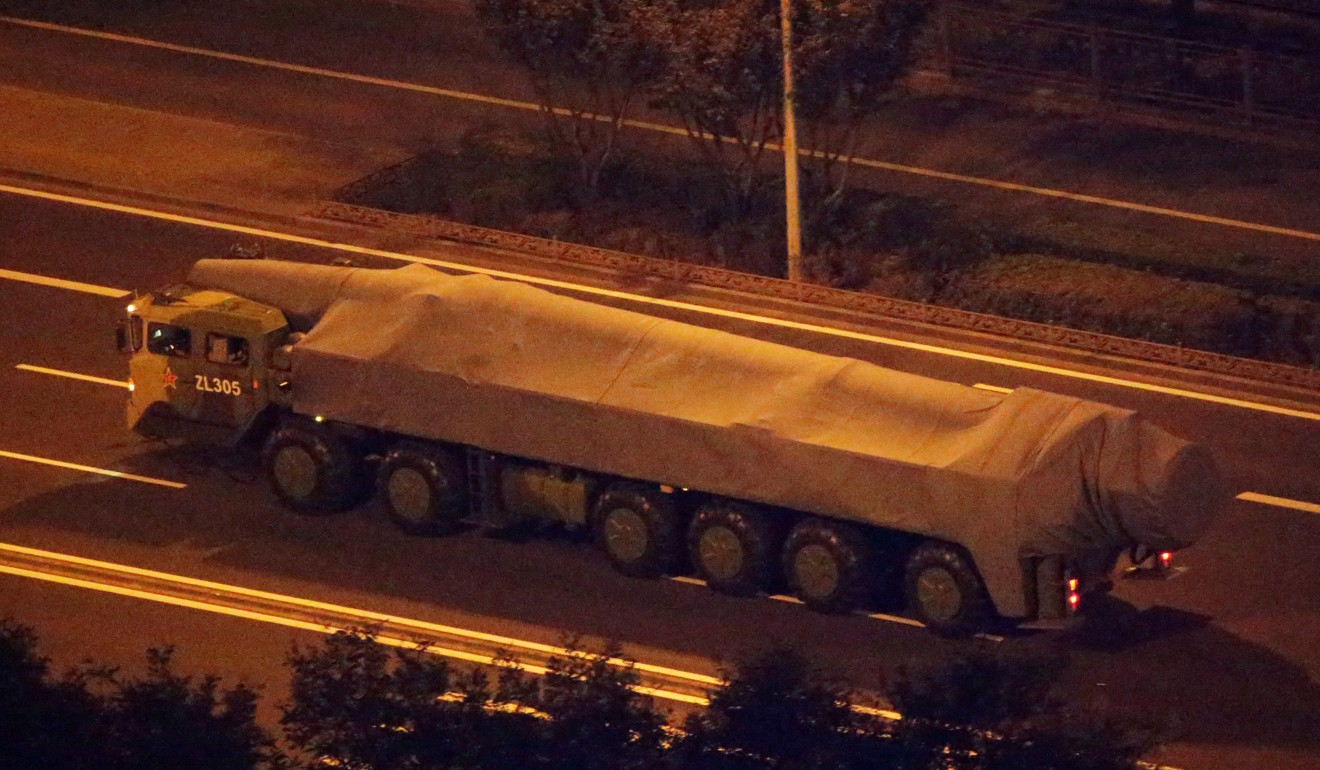
Military vehicles carry DF-17 missiles capable of reaching the US mainland during the parade to mark 70 years of the People’s Republic. Photo: AP
China staged a massive military parade in Beijing on Tuesday to mark the
70th anniversary of the founding of the People’s Republic, with much of the smog-shrouded capital city under a security lockdown.
President Xi Jinping inspected over 15,000 troops, more than 160 aircraft and 580 weapon systems in a show of the country’s growing military might and his drive to modernise the People’s Liberation Army.
He also delivered a bullish eight-minute speech hailing the accomplishments of seven decades of Communist rule and pledging to achieve his vision of a “Chinese dream” of national rejuvenation and global prominence.
Here are some of the key takeaways from a day of celebration in Beijing:
Xi presided over the ceremony in Tiananmen Square flanked by his predecessors Jiang Zemin and Hu Jintao, along with other retired and present party elders.
The rare appearance of Jiang and Hu – on the rostrum of the Gate of Heavenly Peace, where the country’s founding father Mao Zedong declared Communist rule on October 1, 1949 – was clearly aimed at projecting unity and solidarity in the face of daunting domestic and international challenges.
China’s National Day parade, as it happened
Hu had been absent from the funeral of former premier Li Peng in late July, although the ailing Jiang attended.
Former vice-president Zeng Qinghong and Song Ping, the oldest party elder in attendance, also appeared on the rostrum.
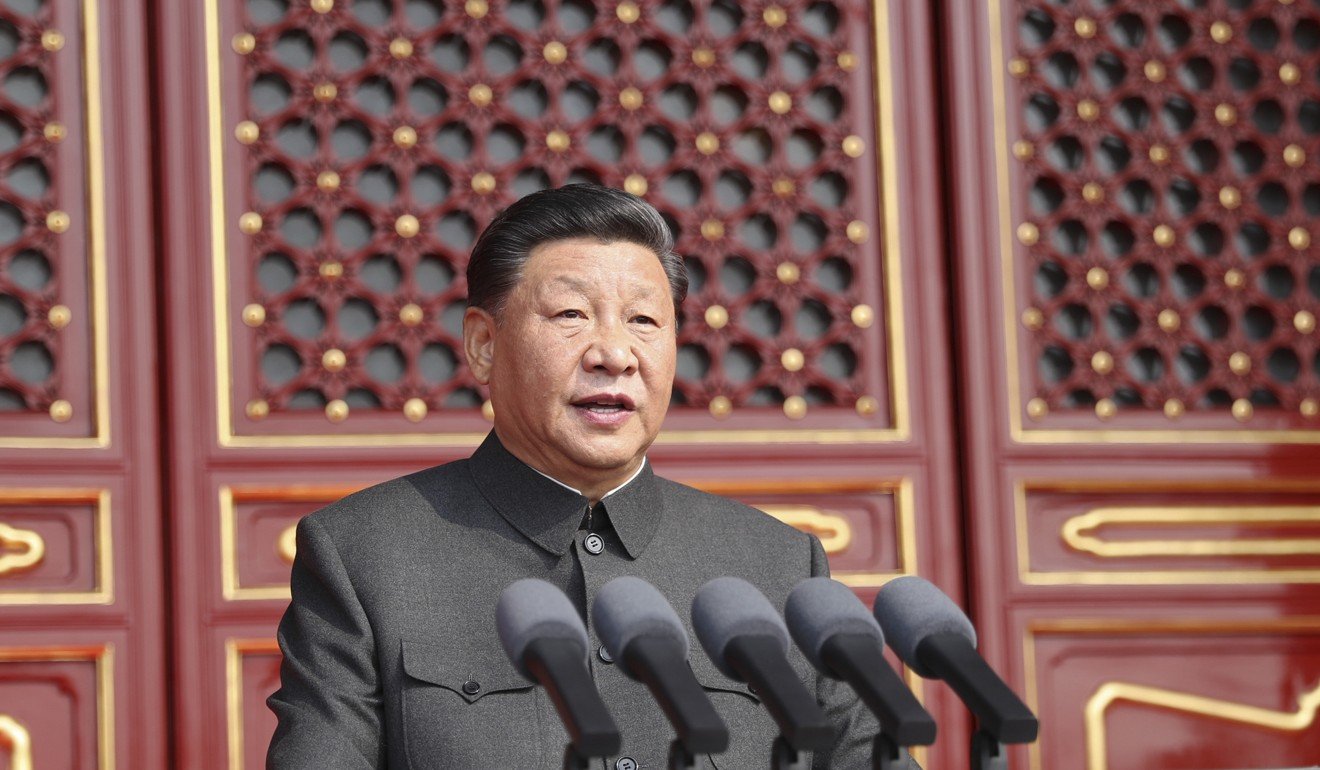
President Xi Jinping speaks in Tiananmen Square during Tuesday’s celebrations. Photo: Xinhua
But notably, while former premier Wen Jiabao was present, his predecessor Zhu Rongji was not.
‘No force can shake China’
Dressed in a Mao suit, Xi’s nationally televised speech invoked China’s “century of humiliation” and praised the achievements of its people, saying there was no force that could stop it forging ahead.
“No force can shake the status of our great motherland, and no force can stop the Chinese people and the Chinese nation from marching forward,” he said.
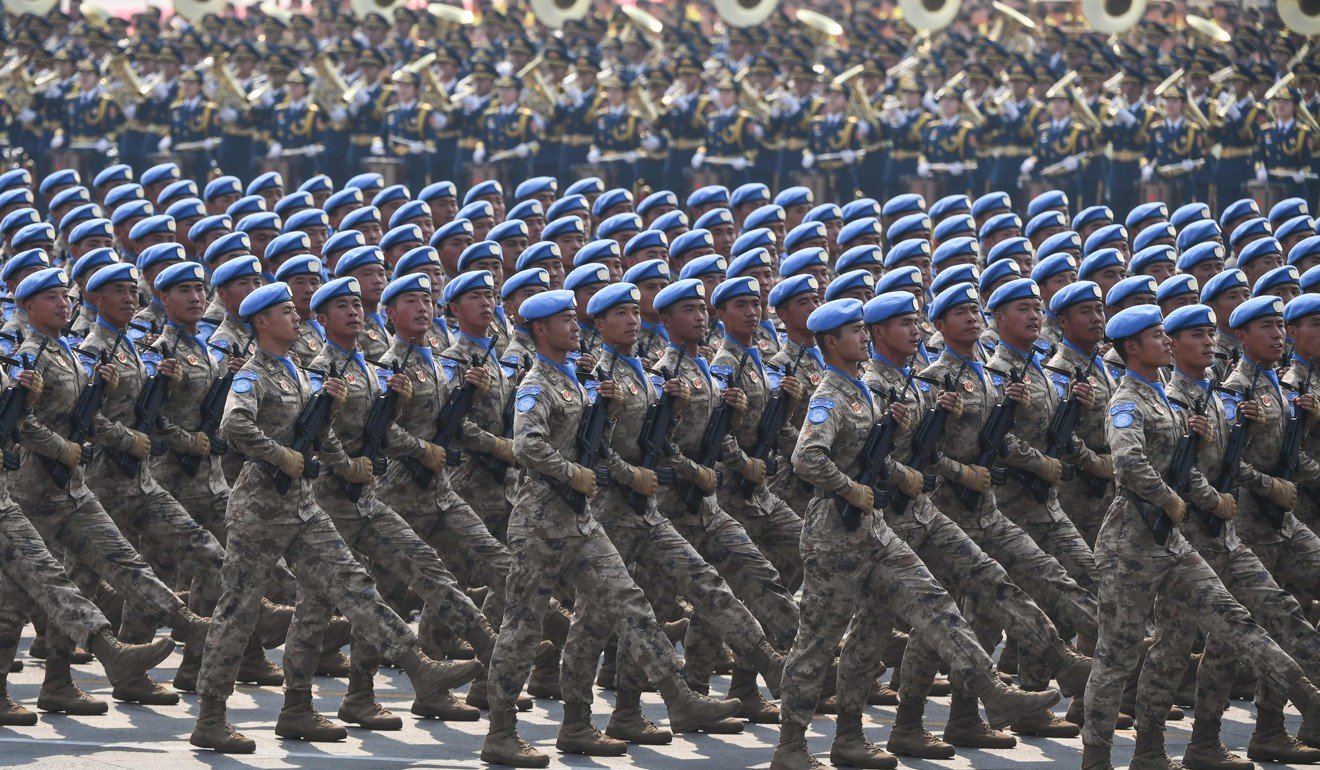
Chinese troops take part in the Republic’s largest ever military parade. Photo: AFP
“The People’s Liberation Army [PLA] will serve its purpose in safeguarding the sovereignty, security and development interests of the country, and world peace,” he said, at a time when Beijing has expanded its military footprint globally, including with its
first overseas military base in Djibouti.
Xi called on the Communist Party and the country to unite and continue to fight for the realisation of what he called the “Chinese dream” – the nation’s rejuvenation.
One country, two systems
Amid escalating unrest in Hong Kong, which has plunged the city into a deepening crisis and threatened to overshadow the National Day celebrations, Xi vowed that the central government would uphold “one country, two systems”.
He said the central government would protect the long-term stability of Hong Kong and Macau, and stressed the goal of “peaceful reunification” with the self-ruling Taiwan, repeating a message frequently used by his predecessors, including Deng Xiaoping, Jiang and Hu.
The theme of one country, two systems later appeared in a National Day parade for the first time, with placards forming the words: “Hong Kong’s tomorrow will be better.”
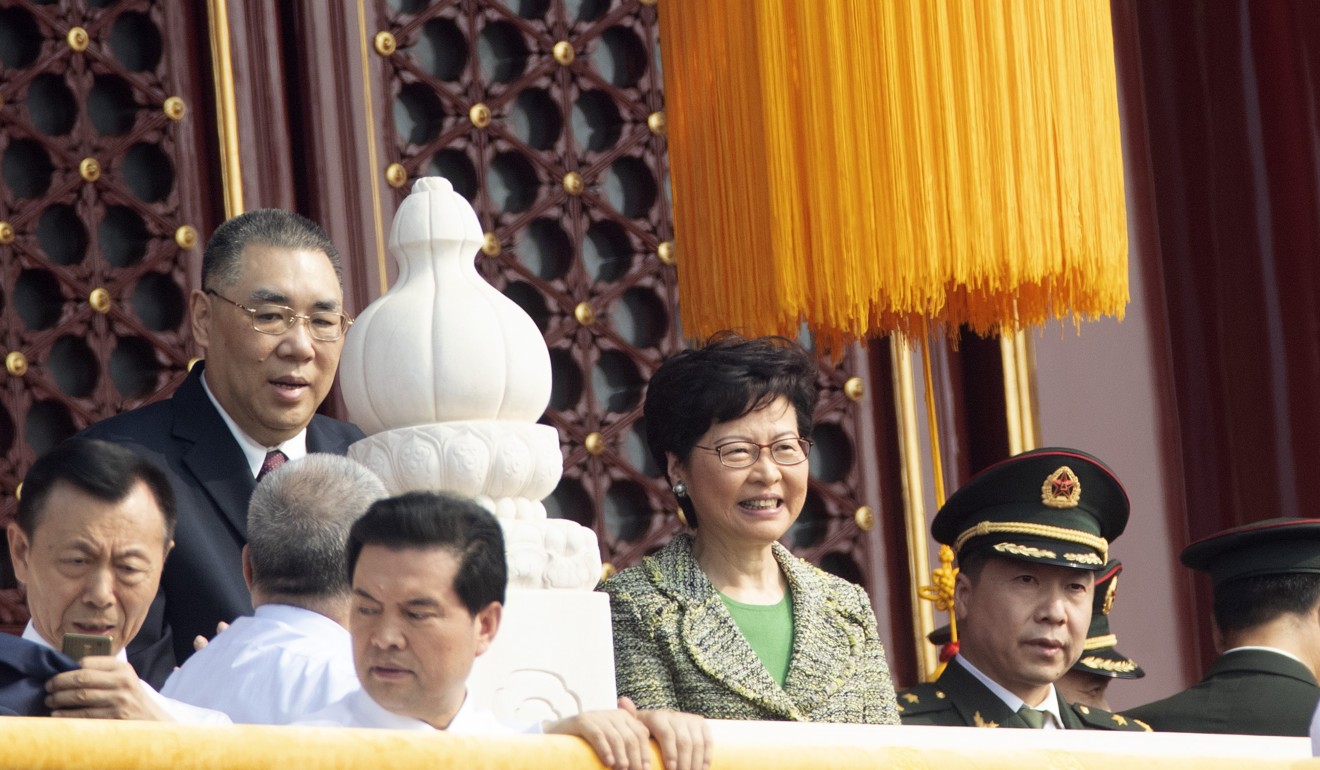
Hong Kong Chief Executive Cheng Yuet-ngor attended the ceremony, as did 10 Hong Kong police officers involved in suppressing
anti-government protests in the city.
Showing off new weapons
China’s advancement in military weaponry was on full display, with almost half of the items featured being shown to the public for the first time.
Hong Kong leader Carrie Lam was among the guests in Beijing on Tuesday. Photo: AP
The morning’s celebrations included an 80-minute military parade – the biggest since the founding of the People’s Republic – in an apparent effort to showcase the prowess of the PLA, the world’s biggest military with 2 million personnel.
Among the weapons shown were DF series missiles, including the DF-17, a nuclear-capable glider that has the capacity to strike the US mainland, and the DF-41, which has a range of up to 15,000km, making it the world’s longest-range military missile.
Signalling Xi’s status
A 100,000-strong civilian parade featuring huge portraits of Xi and predecessors including Mao, Deng, Jiang and Hu wrapped up the morning celebration.
The procession was divided into three parts, representing three eras of the People’s Republic: the Mao era, Deng’s reform and opening up, and Xi’s era, which seeks global prominence on a par with that of the United States.
Xi appeared keen to project his supreme status in the party, reinforced since he abolished the constitutional term limit a year ago, allowing him potentially to remain leader for life.
He waved at his own portrait, unveiled alongside a sign reading “Carry out Xi Jinping Thought on Socialism with Chinese Characteristics for a New Era”.
Source: SCMP
Posted in "one country, two systems", 70th anniversary, Aircraft, Beijing, Carrie Lam Cheng Yuet-ngor, Carry out Xi Jinping Thought on Socialism with Chinese Characteristics for a New Era, celebrates, Central government, century of humiliation, civilian parade, Communist rule, Country, development interests, DF-17 missiles, Djibouti, escalating unrest, founding father, founding of the People’s Republic of China, Gate of Heavenly Peace, global prominence, Hong Kong, Hong Kong Chief Executive, Hu Jintao, inspected, leader for life, Li Peng, long-term stability, Macau, Mao suit, Mao Zedong, marching forward, Military advances, military footprint globally, military parade, Military vehicles, National Day, National Day celebrations, national rejuvenation, October 1 1949, overseas military base, peaceful reunification, People's Liberation Army (PLA), People’s Liberation Army, People’s Liberation Army (PLA), president jiang zemin, President Xi Jinping, security, Song Ping, sovereignty, supreme status, Taiwan, The Chinese Dream, themes, Tiananmen Square, troops, Uncategorized, US mainland, weapon systems, Wen Jiabao, world peace, Xi JinPing, Zeng Qinghong, Zhu Rongji |
Leave a Comment »
28/09/2019
- Military experts say PLA modernisation brought about during Xi Jinping’s presidency will be the main focus of October 1 celebration in Beijing
- It’s necessary for China to ‘show some of its muscle’ amid the trade dispute with the US, observer says
China’s land-based DF-41 intercontinental ballistic missile will be among the military hardware on show on October 1. Photo: Reuters
China plans to show off its most advanced active weapon systems at the upcoming National Day parade, which will be the biggest of the 14 such events it has held over the past seven decades.
The parade, to be held on October 1 to mark the 70th anniversary of the founding of the People’s Republic, will highlight the military modernisation – particularly in nuclear deterrence – that has taken place since President Xi Jinping came to power in late 2012, according to military experts.
The People’s Liberation Army (PLA) offered a glimpse of those weapons during rehearsals for the parade in downtown Beijing from September 14.
As part of the celebrations, Xi, who also chairs the Central Military Commission, will inspect 48 squads on the ground and more than a dozen airborne squadrons, according to a military insider involved in support services for the parade.
More than a dozen airborne squadrons will take part in the National Day parade. Photo: Kyodo
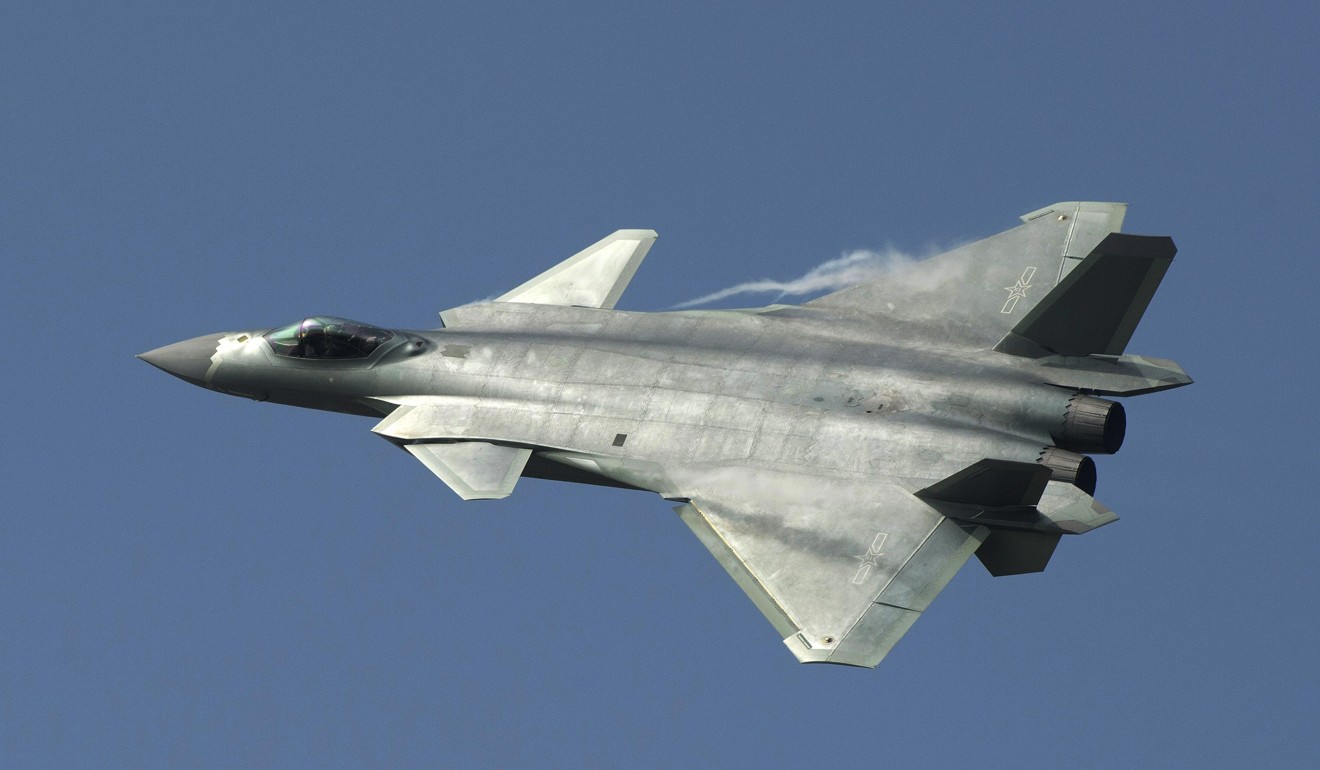
The squadrons will include the air force’s first stealth fighter, the J-20; the main active warplanes such as the J-10 and J-11B; and armed helicopters like the Z-20. However, the J-8 fighter jet would not appear this year, the source said, confirming that the first interceptor built in China has been formally retired.
“The ground march will be led by several hero forces from the five theatre commands, which is different from previous squads selected from the ground forces, air force and navy,” said the insider, who requested anonymity because of the sensitivity of the matter.
“The main goal of this year’s parade is to promote the military modernisation of the PLA under President Xi’s leadership over the past seven years, with the military overhaul being one of the key achievements.”
Thirty-three of the 48 squads would be “weapon squads”, while the 13 others would be made up of infantry troops from the five theatre commands, the source said.
National Day fireworks in Hong Kong cancelled over safety fears
As part of the PLA’s sweeping military reforms, the army’s previous seven military commands were reshaped into five theatre commands, while the four former general headquarters were dissolved and replaced by 15 small functional departments.
In September 2015, Xi announced the PLA would shed 300,000 troops, cutting its size to 2 million, a move aimed at turning the PLA into a more nimble and combat-ready fighting force on a par with international standards.
Xi also split the former Second Artillery Corps into the Rocket Force and the Strategic Support Force, with the latter backing up the military’s electronic warfare units in cyberspace and outer space.
Among the 33 weapon squads, the highlights are expected to be the PLA’s strategic nuclear missiles such as the Rocket Force’s land-based DF-41 intercontinental ballistic missile (ICBM), the DF-21D anti-ship ballistic missile, the DF-17 hypersonic missile and the sea-launched JL-2, or Big Wave-2.
Adam Ni, a researcher at Macquarie University in Australia, said that showing off different types of missiles on land and sea indicated that the PLA was improving its nuclear deterrence capabilities by perfecting a three-pronged military force structure, or the so-called nuclear triad.
The DF-17 hypersonic ballistic missile will be one of the highlights of the parade. Photo: AP
The DF-41 is capable of carrying multiple warheads and many decoys, making it harder to detect than silo-based systems and better able to survive a first strike.
Ni said the DF-41 was China’s next-generation cutting-edge weapon.
“It’s actually an advanced ICBM and has a range to hit practically anywhere in the world, including the continental United States,” Ni said.
“The DF-41 is the ultimate symbol of the destructive potential of Chinese armed forces, just as nuclear weapons are similar symbols of the US and Russia.”
The JL-2 – which has a shorter range of 7,000km (4,350 miles) and can be launched by the PLA Navy’s Type 094 submarines – is unable to hit anywhere on the American continent when launched from submarines in the South China Sea and coastal areas of China.
China tests new warships in live-fire drills near Vietnam
However, China is developing the JL-3, which has a range of about 9,000km; the upgraded version of the JL-2, with a flight test conducted in June, though it is still less than the 12,000km range of the American Trident II.
“China is stepping up its military modernisation, which includes a number of aspects; the land-based aspect is introducing more mobile and survivable missile systems,” Ni said.
“The game change will happen when China is able to hit the whole US continent with its missile submarines in Chinese coastal waters.”
In military terms, survivable refers to the ability to remain mission capable after a single engagement.
The DF-17 is a land-to-land short-range strategic missile capable of delivering both nuclear and conventional payloads. The US intelligence community has estimated that it will reach initial operational capability by 2020. But if the missile is displayed in the parade, that means it is active already.
China conducted two tests of the DF-17 in November 2017, with the first launched from the Jiuquan Space Launch Centre in Inner Mongolia.
An insider said the main goal of this year’s parade is to promote the military modernisation of the PLA. Photo: Reuters
Hong Kong-based military commentator Song Zhongping said the nuclear weapons that would go on show in the parade would all be strategic missiles designed to improve China’s deterrent capabilities.
The show comes after the PLA delivered a national defence white paper in July stressing its goal to “maintain national strategic security by deterring other countries from using or threatening to use nuclear weapons against China”.
Unlike in the past, this year’s report stated that the US and China were now competing superpowers, and that the PLA’s growing forces were developing to the point that they could challenge the US.
Zhou Chenming, a Beijing-based military observer, said it was also necessary for the PLA to “show some of its muscle” amid the ongoing trade dispute between Beijing and Washington.
“To prevent misunderstanding, most of the weapons are just strategic equipment, not tactical arms, because Beijing still doesn’t want to irritate Washington,” he said.
About 280,000 people were involved in the rehearsals for the parade and related support services, according to Xinhua.
Source: SCMP
Posted in 70th anniversary, accuse teacher, advances, air force, airborne squadrons, American Trident II, armed helicopters, Australia, Beijing, celebration, Central Military Commission, Central Military Commission (CMC), China’s National Day, continental United States, cyberspace, decoys, DF-41 intercontinental ballistic missile, DF-41 intercontinental ballistic missile (ICBM), first strike, founding of the People’s Republic, ground forces, Inner Mongolia, J-20 stealth fighter, J-8 fighter jet, Jiuquan Space Launch Centre, Macquarie University, Military experts, military hardware, multiple warheads, navy, nuclear deterrence, nuclear triad, October 1, outer space, parade, People’s Liberation Army (PLA), pla navy, Rocket Force, Russia, Second Artillery Corps, showcase, silo-based systems, South China Sea, stealth fighter, strategic nuclear missiles, Strategic Support Force, survive, Type 094 submarines, Uncategorized, US, Vietnam, weapon squads, Xi JinPing |
Leave a Comment »
22/09/2019
- October 1 event is intended to be a showcase for military’s progress under Xi Jinping, with J-20 stealth fighters set to take pride of place
- Domestically developed weapons are main focus of event despite long-standing problems in building aircraft engines
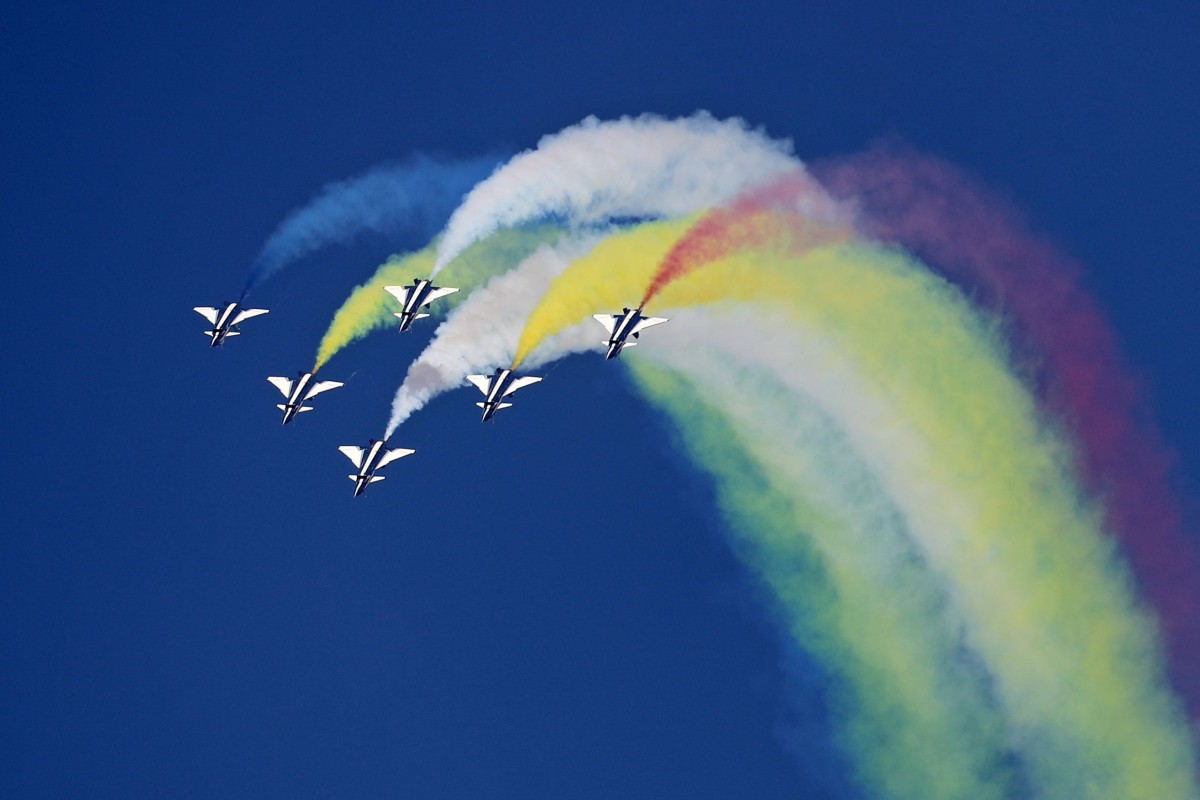
Chinese J-10 jets perform at the Dubai air show in 2017. Photo: AFP
China has stepped up intensive rehearsals for the upcoming National Day parade, which military insiders say is designed to showcase the achievements of Chinese President Xi Jinping’s modernisation drive.
The parade on October 1 will mark the 70th anniversary of the founding of the People’s Republic and will focus on weapons developed since Xi came to power in late 2012, despite long-standing problems in aircraft engine development.
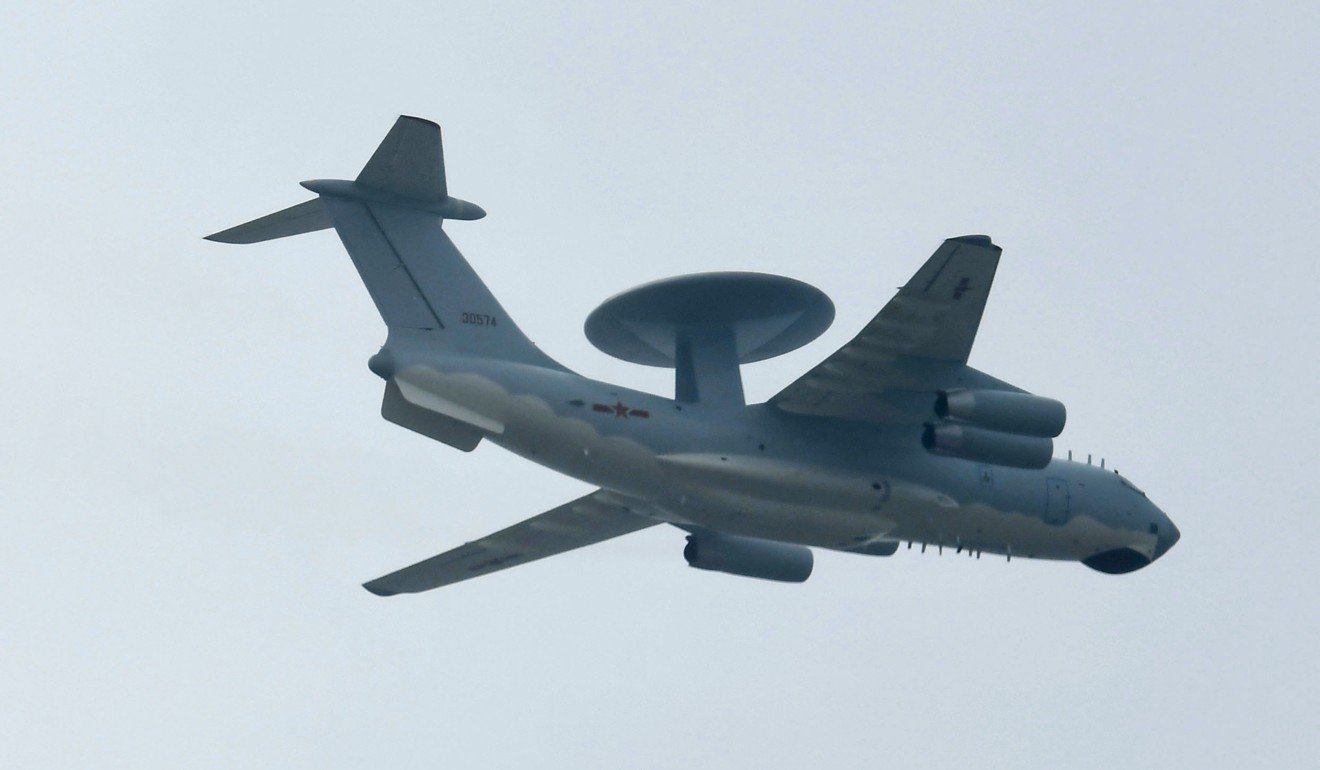
Video clips circulating on mainland social media in recent days have shown at least seven types of aircraft – including the KJ-2000 airborne early warning and control aircraft and J-10 and J-11B fighter jets – taking part in rehearsals over the countryside around Beijing.
A military insider said the country’s first stealth fighter jet, the J-20, had been rehearsing over the western suburbs of the capital since April.
“There will be up to seven J-20 displayed in the military parade, which is the largest formation since its formal deployment to the Chinese air force in 2017,” the military insider said.
“The J-20 has entered mass production. So far at least 70 J-20s have been made, even though all of them are still equipped with Russian AL-31 engines.”
Earlier this month, the People’s Liberation Army Air Force released a video of a flight of seven J-20s, the largest formation seen so far, suggesting that the fifth-generation warplane has gone into mass production as an arms race with the United States mounts in the region.
The second-largest J-20 formation was shown in an air force video for PLA Day on August 1, when five of the jets were shown.
China has been forced to deploy the J-20 ahead of its schedule since the US has increased the deployment of its fifth-generation stealth fighter jets like the F-22 and F-35s in the Asia-Pacific region.
The US and its allies, including Japan and South Korea, will have more than 200 F-35s by 2025, which means China also needs a similar number of stealth fighters.
To meet demand, China has been working on the development of a purpose-built thrust engine for its stealth fighter since the early 2000s, but has yet to achieve international quality control standards due to problems that include single-crystal turbine blade technology.
China’s air force spreads its wings in 70th anniversary video
Hong Kong-based military commentator Song Zhongping said aircraft engine development had been a long-standing shortcoming but it would not affect the practical fighting capacity of the J-20, which currently uses Russian engines.
“The J-20 hasn’t used the domestic engines so far because it wants a better one, and it still has time,” Song said.
“Other [Chinese-developed] warplanes like the J-10, J-11 and multipurpose attack helicopters are all modified and advanced types, indicating comprehensive achievements amid China’s military modernisation over the past years.”
A Chinese J-20 stealth fighter has entered mass production. Photo: EPA-EFE
Besides the domestically developed aircraft, Beijing is going to display its strategic nuclear missiles, such as the DF-41 intercontinental ballistic missile and the JL-2 submarine-launched ballistic missile, as centrepieces of its National Day military parade, according to a Beijing-based military source.
Xi, who also chairs the powerful Central Military Commission, inspected the country’s biggest military parade at the Zhurihe Combined Tactics Training Base in Inner Mongolia in 2017 to celebrate the 90th anniversary of the PLA, but the source said the weapons displayed in Zhurihe had been developed under the leadership of Xi’s predecessor, Hu Jintao.
“Xi needs to highlight his personal achievements in his era, that’s why this year’s parade has political aims more than military significance,” the source said.
The source also highlighted the significance of the People’s Republic marking its 70th anniversary because the Soviet Union did not survive for that length of time.
“Xi is attempting to tell the outside world that Chinese communist regime has been consolidated under his leadership.”
Source: SCMP
Posted in 70th anniversary, 90th anniversary, Air show, aircraft engines, AL-31 engines, allies, Asia-Pacific region, Beijing, Central Military Commission, Central Military Commission (CMC), China’s air force, Chinese communist regime, Chinese fighter jet, countryside, domestically developed aircraft, Dubai, event, F-22, F-35, founding of the People’s Republic, Hong Kong, Hu Jintao, Inner Mongolia, J-11B fighter jets, J-20 stealth fighter, J-20 stealth fighters, Japan, KJ-2000 airborne early warning and control aircraft, Korea, military parade, multipurpose attack helicopters, National Day, National Day parade, October 1, People’s Liberation Army Air Force, PLA, preparations, pride of place, Russian, seen, single-crystal turbine blade technology, skies, Soviet Union, step up, strategic nuclear missiles, submarine-launched ballistic missile, Uncategorized, US, Xi JinPing, Zhurihe, Zhurihe Combined Tactics Training Base |
Leave a Comment »
18/09/2019
ZHENGZHOU, Sept. 18 (Xinhua) — Xi Jinping, general secretary of the Communist Party of China Central Committee, urged the development of real economy bolstered by manufacturing, with self-reliance as the basis of all endeavors during his tour to central China’s Henan Province.
Xi also pointed out that although China has the largest manufacturing industry in the world, efforts are still needed in realizing industrial transformation and upgrade through innovation. He called for technical and industrial innovation to move China’s manufacturing up in the industry chain.
Source: Xinhua
Posted in general secretary of the Communist Party of China Central Committee, Henan province, industrial transformation, industry chain, innovation, largest manufacturing industry, real economy, technical and industrial innovation, tour, Uncategorized, Xi JinPing |
Leave a Comment »
18/09/2019
Chinese President Xi Jinping, also general secretary of the Communist Party of China Central Committee and chairman of the Central Military Commission, communicates with workers while inspecting Zhengzhou Coal Mining Machinery Group Co., Ltd. during his tour in Zhengzhou, central China’s Henan Province, Sept. 17, 2019. (Xinhua/Ju Peng)
ZHENGZHOU, Sept. 17 (Xinhua) — Xi Jinping, general secretary of the Communist Party of China Central Committee, inspected a manufacturing enterprise and ecological protection of the Yellow River during his tour in Zhengzhou, central China’s Henan Province on Tuesday afternoon.
Source: Xinhua
Posted in ecological protection, general secretary of the Communist Party of China Central Committee, Henan province, inspected, manufacturing enterprise, tour, Uncategorized, Xi JinPing, Yellow River, Zhengzhou |
Leave a Comment »
07/09/2019
- He is expected to join a trilateral dialogue with his counterparts from Pakistan and Afghanistan, and observers say he may try to mediate in Kashmir dispute
- Trip also includes a stop in Nepal that could pave way for a visit by Xi Jinping
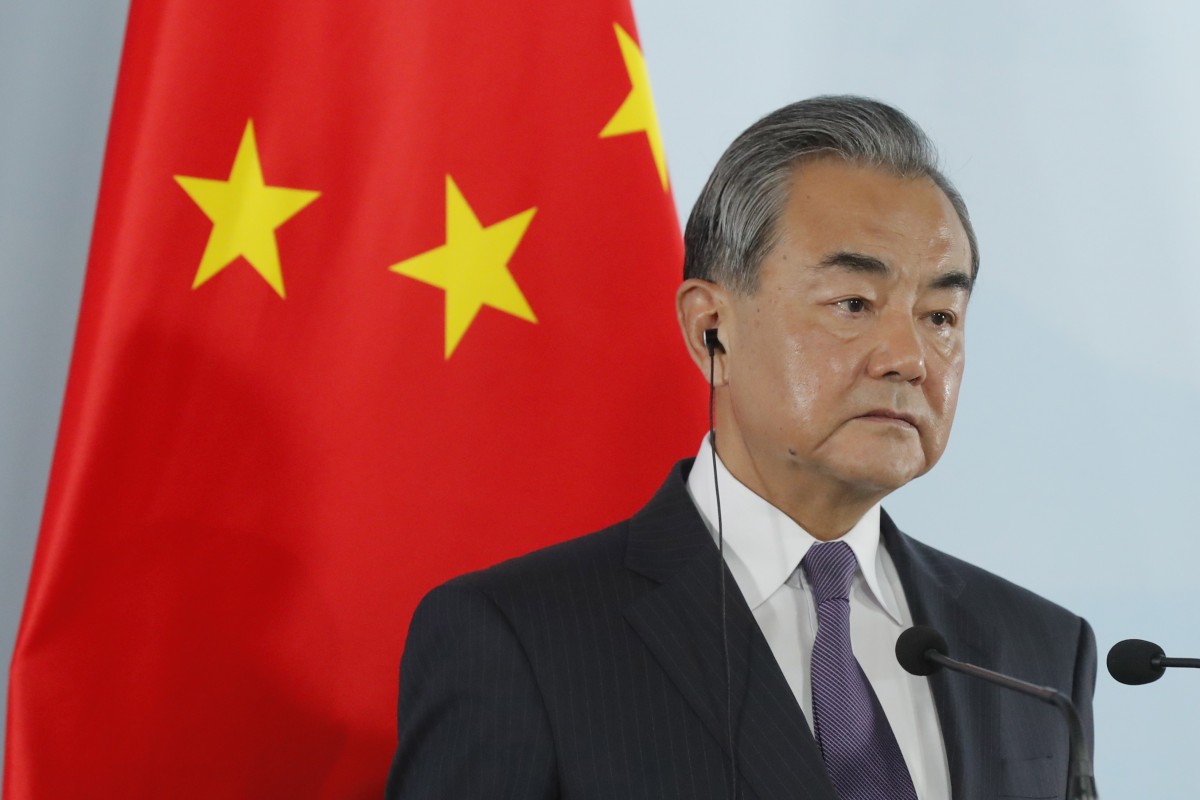
Chinese Foreign Minister Wang Yi may try to act as a negotiator in the Kashmir dispute. Photo: EPA-EFE
Chinese Foreign Minister Wang Yi began a four-day trip to Pakistan and Nepal on Saturday, amid escalating tensions between Islamabad and New Delhi over
.
Wang was expected to join a trilateral dialogue with the foreign ministers of Pakistan and Afghanistan in Islamabad, foreign ministry spokesman Geng Shuang said on Friday. He will also travel to Nepal.
Beijing has criticised India’s decision last month to strip the Jammu and Kashmir autonomous state of its special status and break it into two federally controlled territories, calling it “unacceptable”.
China also formally backed Pakistan’s request for the United Nations Security Council to hold “closed consultations” on the revocation of the state’s autonomy.
Meanwhile, observers say the Chinese foreign minister could attempt to act as a negotiator in the complex border dispute.
“Wang might try to play a role to mediate between the two sides to resolve the crisis,” said Wang Dehua, head of the Institute for South and Central Asia Studies at the Shanghai Municipal Centre for International Studies. “This has been China’s long-held position on the issue.”
Pang Zhongying, an international relations researcher at Ocean University of China in Qingdao, agreed.
“[Indian Prime Minister] Narendra Modi has visited China a couple of times and it is likely [Chinese President] Xi Jinping will visit India soon,” he said. “If Xi is to visit India later this year, China may try to contain its differing views with India on Kashmir.”
Modi has proposed an informal summit with Xi later this year that may be held in the religious hub of Varanasi, Modi’s parliamentary constituency. New Delhi said in May that Indian officials were working with the Chinese side to finalise the details, but Beijing has yet to confirm Xi’s visit.
India dismisses Beijing’s concerns over Kashmir because ‘it won’t have any impact on China’
Wang Yi was also due to visit India later this month for border talks, but the trip had to be postponed at the request of New Delhi because of scheduling problems, Hindustan Times reported, citing China’s foreign ministry.
The row over Kashmir has escalated in the past month. Pakistani Prime Minister Imran Khan said on Friday that Islamabad would make the fullest possible response to New Delhi’s actions in disputed Kashmir and that the global community would be responsible for any “catastrophic” aftermath.
Since Modi withdrew special rights for Indian-administered Kashmir on August 5, India has flooded the Kashmir valley with troops, restricted the movements of residents and cut off communication.
Both India and Pakistan claim the whole of Kashmir, which was partitioned between the two following the end of British rule in 1948, and they have subsequently fought wars over the territory.
China has its own territorial dispute with India over the part of Kashmir it controls. In early August, Chinese foreign ministry spokeswoman Hua Chunying
and said it was not binding. Beijing later appeared to soften its rhetoric, with Hua calling for a solution through dialogue and negotiation, without criticising either side.
The Chinese foreign minister will also visit Nepal, where he is expected to meet his counterpart, the president and prime minister. The trip could pave the way for an expected visit by Xi to Nepal.
Source: SCMP
Posted in 1948, Afghanistan, autonomy, British rule, China alert, Chinese foreign minister Wang Yi, complex border dispute, Hindustan Times, Imran Khan, India alert, Indian Prime Minister Narendra Modi, Institute for South and Central Asia Studies, Islamabad, Jammu and Kashmir, Kashmir, negotiator, Nepal, New Delhi, observers, Ocean University of China, Pakistan, Pakistani Prime Minister, Qingdao, Shanghai Municipal Centre for International Studies, tensions, troops, Uncategorized, United Nations Security Council, United Nations Security Council (UNSC), visits, Xi JinPing |
Leave a Comment »
07/09/2019
- China Reconnects: Joining a Deep-rooted Past to a New World Order looks at how the Middle Kingdom is trying to build a modern civilisation without forgetting its heritage
The Scales of Justice and Lady Justice in front of China’s national flag. Photo: Alamy
China Reconnects: Joining a Deep-rooted Past to a New World Order is a new book by Australian historian Wang Gungwu. The book seeks to explain the new-found confidence among the Chinese in their capacity to learn all they need from the developed world while retaining enough from their past to build a modern civilisation. It does not employ theoretical frameworks to explain China’s rise, as Wang believes they are not appropriate to describe the changes sweeping the country. He calls for greater understanding of why history is particularly important to the Chinese state and its people, as the nation seeks the means to respond to a United States trying to preserve its dominant position in the international status quo.
Historian Wang Gungwu. Photo: Handout
Wang is university professor at the National University of Singapore and professor emeritus of the Australian National University. The book is published by World Scientific Publishing. Here are some excerpts.
Xi Jinping’s China inherited the policies that opened the country to the global economy. The policies created the conditions that made China prosperous and, to many, they put China on the world map again. At the same time, what Xi Jinping inherited also includes practices and lapses of discipline that led to corruption on an unprecedented scale. Deng Xiaoping might have expected some leakages in a more open system, but would not have thought that his party cadres could succumb to that extent.
China’s rise is peaceful, Xi Jinping tells foreign experts
Xi Jinping also inherited programmes from his predecessors “theories” like sange daibiao (Three Represents) and hexie shehuizhuyi shehui (Harmonious socialist society).
Given the pervasive corruption that he found in high places, he must have wondered how useful these theories were. The former was implicitly socialist, stressing productive forces, advanced culture and concern for the interests of the majority. The latter, however, was redolent of Confucian values, made even more explicit when Hu Jintao spoke of barong bachi, or “eight honours and eight disgraces”. Despite these exhortations, the corruption that accompanied them reminds us of conditions familiar to Chinese dynasties in decline.
Chinese President Xi Jinping inherited the policies that opened the country to the global economy. Photo: Xinhua
If the regime’s Chinese characteristics enabled officials to be corrupt and the rich to become excessively rich and selfish, where was the socialism? While no one would claim that everything in China’s past was desirable, surely there were better features that could have been chosen to inspire the present. Perhaps not all the corruption should be blamed on old feudal China; the open market economy with its capitalist characteristics is also known for creating the huge gap today between the super rich and the rest. If the capitalist mode is undermining socialist good intentions, are there Chinese characteristics that can protect China from that infection?
How China’s rise is revealing the cracks in US claims to legitimacy as global leader
Critics have been quick to attack as well as defend Confucian China and the market and no simple answer has been found. What Xi Jinping inherited was a collective leadership system that failed to police the Party. He thus reacted by asserting that the Party was in grave danger of collapse. The foremost patriotic act was to save the party. He has to find the socialism that could induce his comrades to rededicate themselves.
He turned to Karl Marx to emphasise its original inspiration and avoided the Russian duo, Lenin and Stalin. By stressing the importance of Marx’s world view and analytical methods, he could ignore the Soviet institutional baggage. Above all, Marx stood for the idea of progress, the modern import from the Enlightenment that has impressed generations of Chinese.
China’s modern story began by rebuilding a unified state. Those leaning towards socialism further agreed that the country had to have a strong centralised government, perhaps the most enduring feature of dynastic China. Sun Yat-sen had recognised that and wanted to be the leader with power to get things done. When Chiang Kai-shek seized power, he fought with every weapon available to maintain his supreme position. It was therefore not surprising that Mao Zedong thought that the Party leader should have full control. His victory over the Nationalists had put him in an unassailable position.
Thereafter, he could redefine the goals that fit his agenda. He was so successful that socialism in his hands became almost unrecognisable. Deng Xiaoping had a difficult time teaching another generation why socialism was progressive and why infusing it with Chinese characteristics would ensure its legitimacy.
China’s reform and opening must continue, 40 years after its ‘second revolution’
This was the background to the corrupted China that came so unexpectedly into Xi Jinping’s hands. From his appointment as party secretary in Shanghai to the Politburo Standing Committee and as vice-president, he had five years to prepare to become the leader of the country. Some of what went through his mind during that period may be gleaned from his writings when he served in Zhejiang, in the Zhijiang xinyu that he published in 2007, but more important was what he thought of a collective leadership that was headless.
Xi Jinping obviously believes that his anti-corruption campaign was vital to enable him to save the Party. His campaign also made him popular and he has tied the campaign to a new faith in socialism.
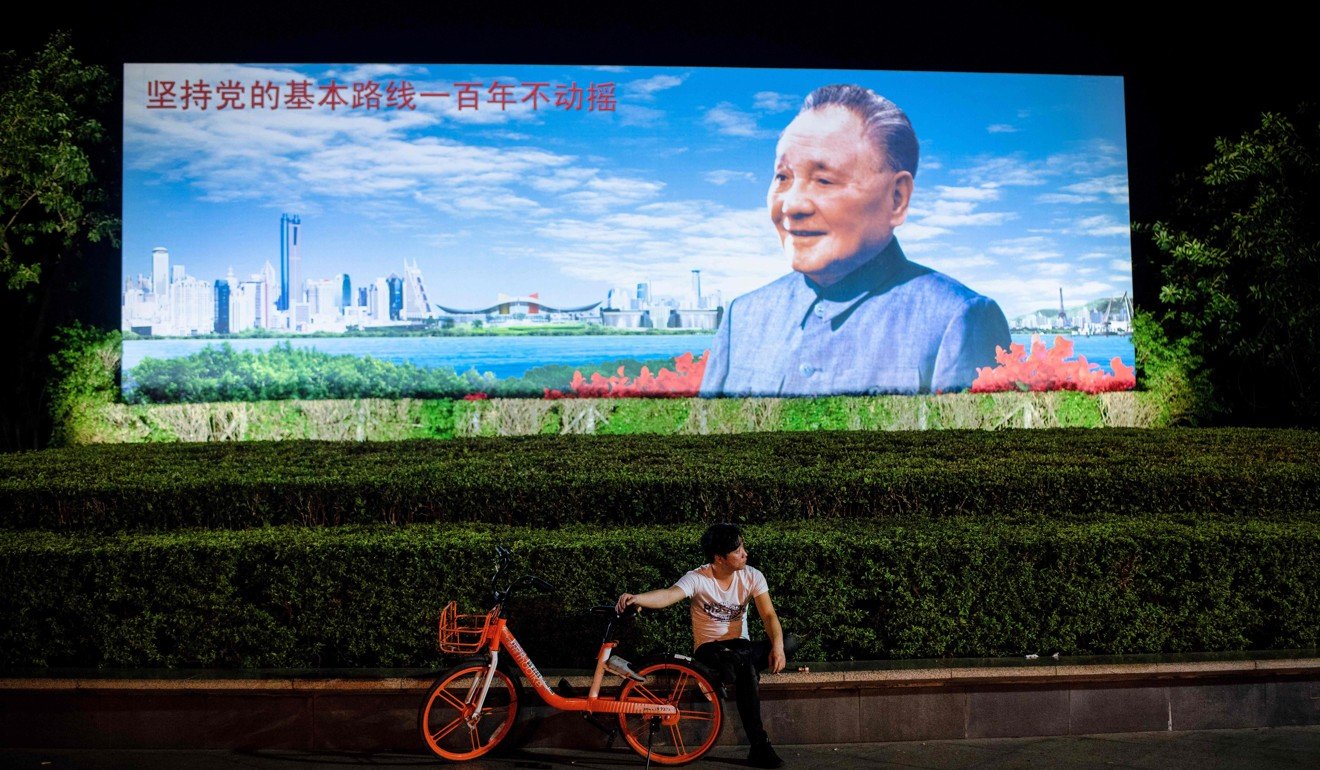
A poster of former Chinese leader Deng Xiaoping in Shenzhen. Photo: AFP
He has emphasised that Deng Xiaoping’s reforms saved the state and the Party and are integral to the power that he has inherited. He had worked dutifully in support of reform and this helped him rise to the highest office. His youthful experiences growing up with the peasants of the northwest taught him about failures as well as successes. That has led him to ask the Party to connect with the first 30 Maoist years as much as study the later years of reform. That way he confirmed the continuity of what he, his father and their comrades had committed their lives to serve. This attitude towards continuities in Chinese history has always looked to a strong state with powerful leaders. Xi Jinping discovered during his years of service what kind of power would be required to establish the caring and fair society that socialism stood for. When he became president, he not only knew that Mao Zedong as cult leader could not succeed but also that a leaderless collective endangered the Party. He has concluded that the Chinese way of doing socialism would have to be connected to the lessons learned throughout the Chinese past.
Where to now? 40 years after the big economic experiment that changed China
Only by recognising how relevant those lessons are can China confidently go forward to devise the modern state that it wants.
There is some truth in the French saying that the more things change the more things remain the same. The Chinese were even more directly paradoxical. They believed that change was inevitable and hence prepared for changes that could occur several times in a lifetime. When thus prepared, they hoped that each change would not destroy the things that were still valued. If the foundations survived, change could make the new become stronger.
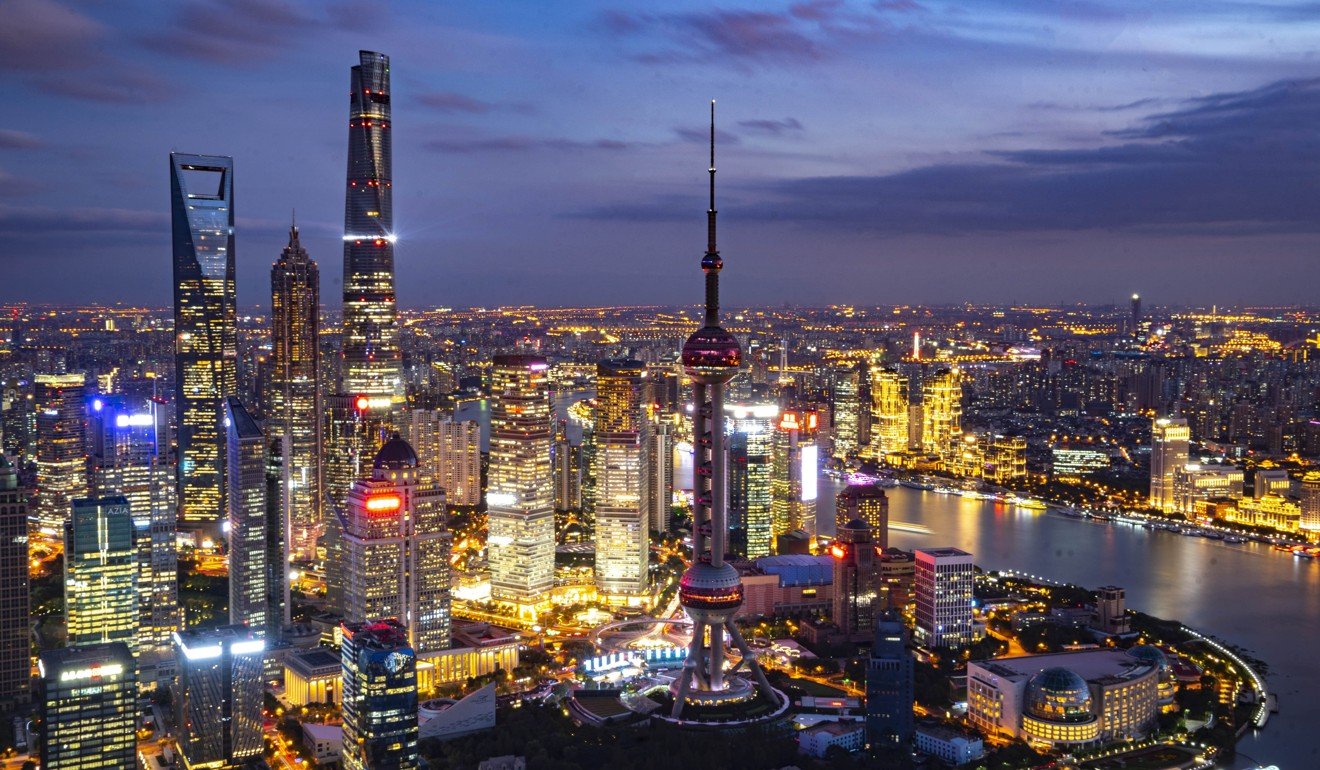
Shanghai is a showcase for China’s modernisation efforts. Photo: Xinhua
There are other ideas in the tradition that Xi Jinping understands. One is that of zhi and xing (knowing and acting) and zhixing heyi (combining knowledge with action). This had been highlighted since the days of Ming philosopher Wang Yangming.
In modern times, Sun Yat-sen advocated xing erhou zhi (act then you will know) as preferable to the safer and more conservative zhi erhou xing (know before acting) and Xi Jinping seems to share that view. When you act and make your choices, these add up so that you will really know. From that perspective, Mao Zedong’s choices taught hard lessons and the Chinese people now know what not to do. Another idea goes back to Confucius, who said shu er buzuo, or transmitting (tradition) and not doing (something new). In other words, without claiming newness or discovery, he transmitted wisdom and knowledge to those who followed. Xi Jinping seems to focus on drawing on past experiences that enable future generations to learn: with learning, something new would result.
Xi Jinping can dramatically reform China’s economy or maintain high growth – but he can’t do both
Xi Jinping may not need the word “new” for his socialism. His shehui zhuyi could be the accumulation of layers of modern experience that harmonise with selected bits of China’s history. Explaining the actions and reactions of generations of his predecessors could take his party-state to another level of development. Here a sage Marx symbolically as important as Confucius would add the goal of progress to inherited wisdom. Socialism could be “hard” in rational and disciplined action and “soft” in moral goals deeply rooted in people’s aspirations. A strong leader who knew how to link the past to a dream of the future could shape the socialism that his people could identify as the datong shehui in China’s heritage.
DIFFERENT HERITAGE
The distance between the legal systems in China and the West has long been a matter of regret. It began when Britain was no longer prepared to let Chinese law be used to punish British subjects; that issue became the cause célèbre in the Anglo-Chinese wars.
Despite the fact that China had, with the help of Anglo-American and other European legal scholars, reformed and modernised its legal system during the past 100 years, the gulf has remained and has continued to fuel an underlying lack of trust. This has once again surfaced in contemporary interstate relations wherever the People’s Republic is involved.
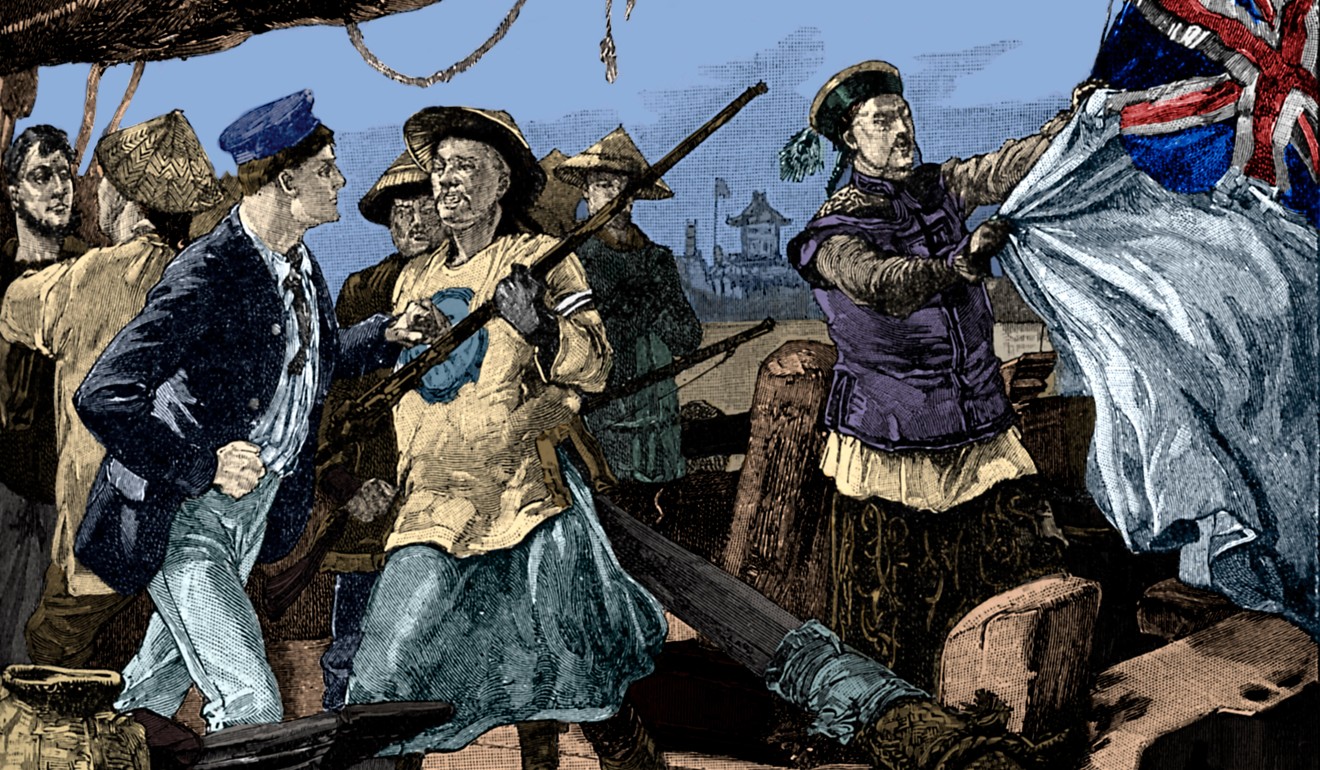
Chinese officials pull down a British flag on a ship in 1856. Photo: Alamy Stock Photo
The issue had become sensitive when the Western powers made it clear that their legal ideals were meant to cover the relations between civilised states, and China had been found wanting. The divide stemmed from the European assumption that international law was built on a common Christian heritage. The treaties that followed China’s several defeats led to extraterritorial jurisdictions by Western powers and Japan. These humiliated China for being so uncivilised that provisions were necessary for the protection of civilised people. The set of practices that diminished China’s sovereign rights remained a source of anger for 100 years and coloured Chinese attitudes towards all Western reference to the rule of law down to the present.
The different value given by China and the West to the role of law has deep roots. It originated from the different premises made about the relationship between man and nature, between those who moved from believing in many gods to faiths in one God, and those whose world views allowed them to live without reference to any God or gods.
Is reform dead in China? Trump’s trade war may be breathing life back into the cause
The single-god world emerged in the Mediterranean region (among Jewish, Christian or Islamic believers) while the mixed often-godless realm was developed in the Sinic cultural zone in eastern Asia.
When traced far back, what is significant is that, while there were great differences in conceptions, both godly and godless traditions paid respect to the role of law, albeit each in its own way. There was no question of not depending on law for securing order, especially the controls needed for political order. Whether the laws reached into private and family affairs, or were in the main varieties of civil and criminal law, all those in authority gave much thought to formulating them to bring out what was fair and most efficacious. And both European and Chinese rulers paid close attention to laws pertaining to governance, and specifically to their relations with their subjects.
The distance between legal systems in China and the West has long been a matter of contention. Photo: Xinhua
Where their respective heritage parted significantly was the way their rulers institutionalised their codes. Those in Europe believed that the rule of law was a higher principle that stood above other considerations; it was sanctified by the supernatural and therefore sacrosanct. The idea had grown out of customary law observed by tribal organisations as well as in the royal and canon laws promulgated in princely states or kingdoms. In time, they were extended to cover larger political units like nation states or empires. Law was therefore at the centre of all governance and remained steadfast whether the rulers were strong men or a group of oligarchs, or leaders who were democratically chosen. Whoever they were and wherever they came from, they could only rule through regulations and statutes that were seen as parts of God’s law. Thereafter, that conception of the rule of law led to questions being asked as to what would best serve those who are equal in the eyes of God. That led people to demand that law should protect people from abusive rulers. The key point was that, behind the respect for the law was religious doctrine and the Church. In certain contexts, God’s law had the power to send even the strongest leaders to the fires of hell. When this authority shifted following the Reformation, Christian Europe still maintained that each church embodied the spirit of God’s law.
To end the trade war, ‘China must deliver on its promises to reform and open up’
When the classics of the Greco-Roman period were given a new lease of life during the Renaissance, this ancient learning stimulated revolts within the Church. The Protestants reinterpreted their heritage and provided conditions whereby new ideas were allowed to grow. As a result, the advent of scepticism, rationalism and the scientific mind enabled an intense questioning of past assumptions that eventually led to a secular view of the world.
Western Europe largely moved away from church-determined ideas and went on to develop laws that have been described as rational and modern. That saw the beginning of a powerful legal system under which the ruler gave up most of his powers so that his subjects would have more say. Of course, who actually had a say was another matter.
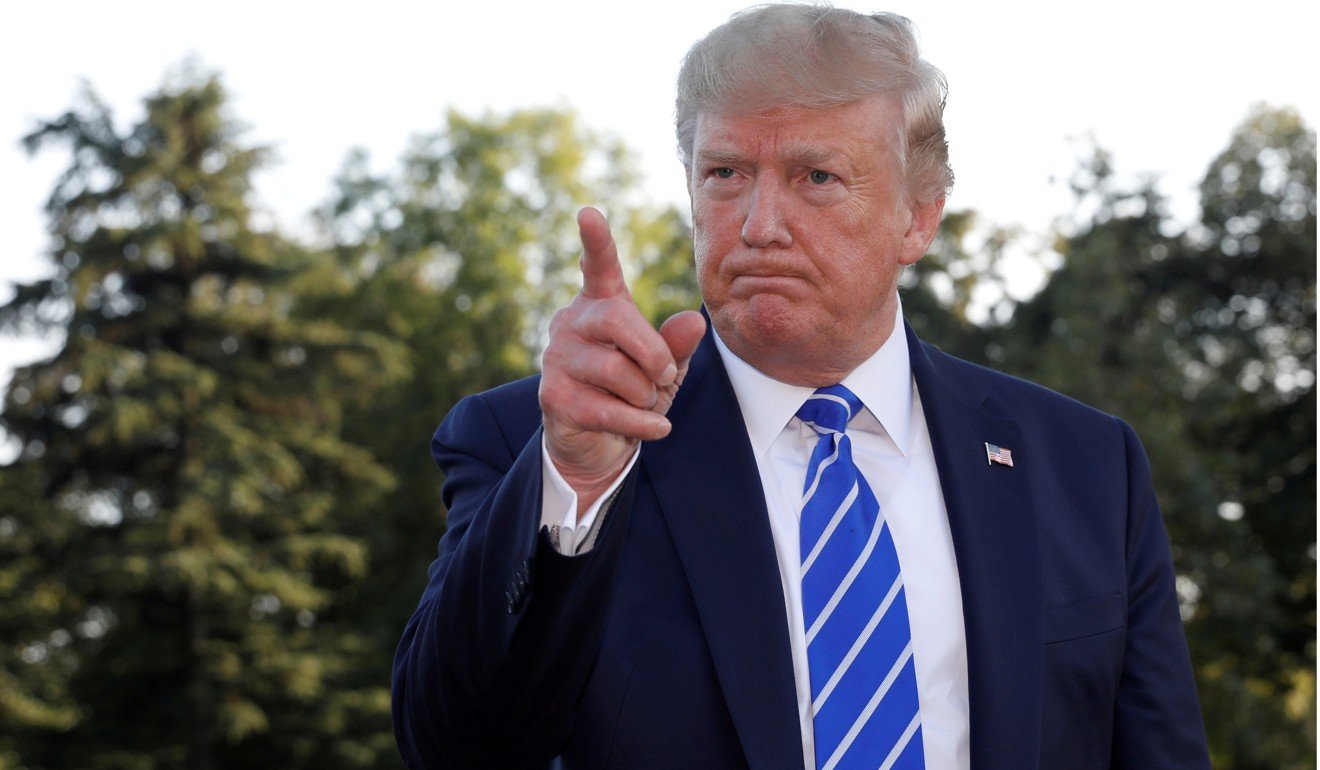
US President Donald Trump, who many Chinese believe is trying to contain China’s rise. Photo: Reuters
It took the British more than 100 years to let ordinary men have the vote, and the women did not get theirs until the 20th century. The British were unapologetic about that pace of development. They thought that the only people who should be allowed to vote were people who owned property and were well-educated. Nevertheless, the principle that people could control their own destiny was confirmed.
In one form or another, laws were obeyed in good conscience by God-fearing people and rational scientific-minded people alike. Even when the laws were obviously man-made and could be cruelly implemented, whether by kings, judges or elected legislators, it continued to be understood that a higher spirit rested behind their making. That belief gave the laws a special moral standing and placed the rule of law at the heart of Western political culture. In short, the ruler was always subject to God’s law.
In comparison, the Chinese have also long acknowledged that laws should be respected but the idea of the rule of law was only implicitly understood. Everyone was conscious that the laws demanded absolute obeisance; that was akin to fear of the ruler’s wrath. Those draconian laws had been given centrality by the state of Qin during the Warring States period. The legalists who drew them up enabled the Qin to defeat the rival states and use the laws to control, dominate and dictate in every respect. What was understood, and sometimes made explicit, was that the ruler would always employ the law to stay in power.
Beijing unveils detailed reform plan to make Shenzhen model city for China and the world
The idea that rules accompanied by harsh punishments made states strong attracted many of the warring lords from the fifth to the third century BC. It led them to challenge the Zhou dynasty’s claim that good governance came from the model rulers of a legendary Golden Age who embodied the principle that the right to rule had to be defined in moral terms. In that context, legitimacy was confirmed through rituals that demonstrate that the ruler had received the Mandate of Heaven.
The rulers of the state of Qin thought otherwise. They employed legalists who believed that power depended on total control through harsh laws and finally destroyed all rivals to establish a new dynasty. The new emperor made sure everyone knew that he was above the law and his laws must be obeyed.
This law was a revolutionary instrument used to destroy a decrepit ancient regime. However, the legalists were so extreme in their rejection of traditional moral and social norms that people rose in revolt and that enabled the Han dynasty to take over the empire. The Han rulers reformed the emperor-state system and experimented with other ideas.
But they retained the body of Qin laws that guided the centralised bureaucracy and brought in non-legalists to administer the empire.
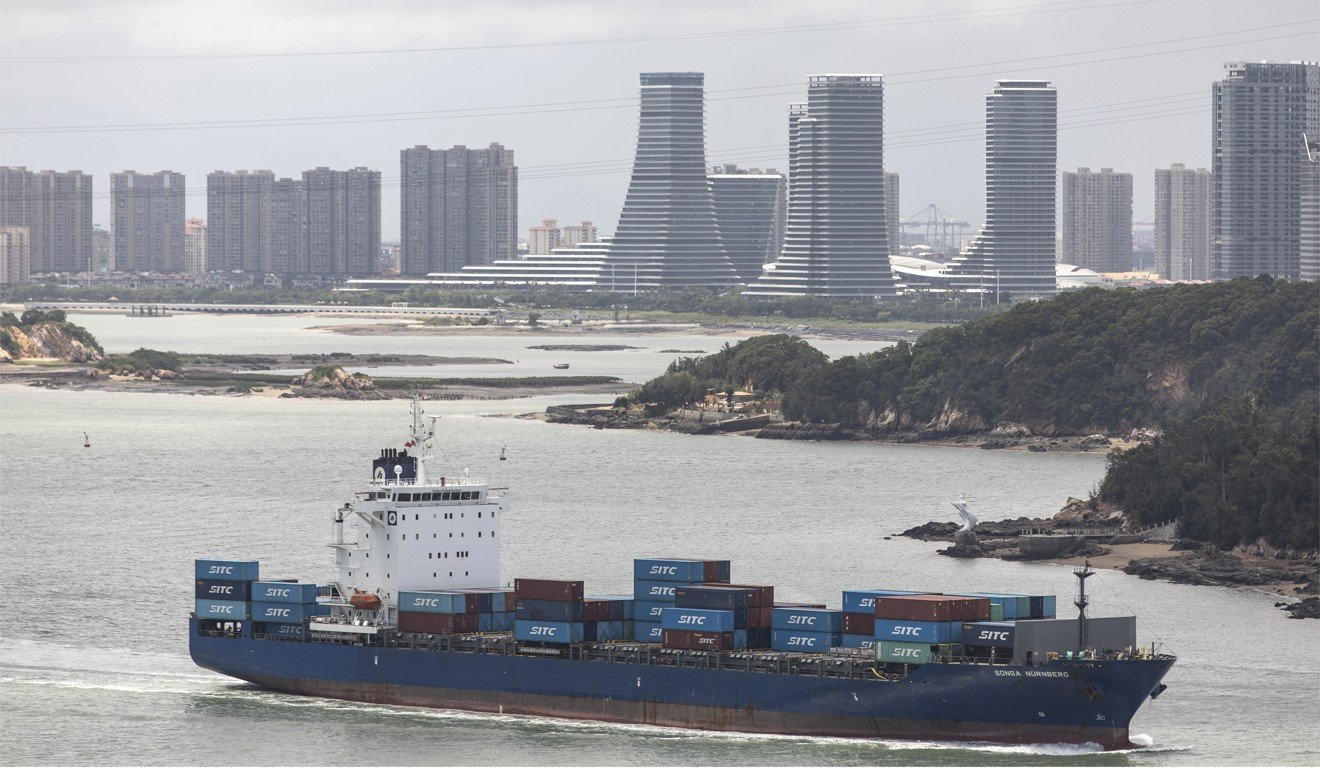
Xiamen in China’s Fujian province. Photo: Bloomberg
The fourth emperor, Han Wudi, then entrusted men of Confucian learning to balance the harsh laws with their moral ideals. The writings of Confucius had been torched and banned by the Qin. Now his disciples could practise what they preached.
The Han ideal thereafter was to educate rulers in the Confucian Classics that extolled them to be guided by responsible officials chosen for their learning and moral principles. The legal system was no longer upfront but remained there to be used by Confucian scholars whenever necessary. That set the tone of imperial governance even for the Central Asian tribal successors of the Han during the fifth and sixth centuries.
By the Tang dynasty, Confucian moral wisdom modified the law codes again, and these were further revised during the Ming-Qing dynasties.
In short, laws with deep roots in Confucian renzhi provided the foundations of the empire state for at least 1,500 years. As outlined earlier, God’s law in its secular form came to stand at the heart of the universalism promoted by the West and led by the United States and its European allies since the end of World War Two. In contrast, the idea of what was civilised in China had been particularistic and the laws guiding its modernisation process operate within its own framework.
Qin dynasty crossbow found at China’s Terracotta Army site may reveal secret of emperor’s success
The country has been prepared to learn from and even adopt Western law codes, but also wants to reconnect with the moral principles that had protected its heritage. This reminds us that law today has not only been a question of adapting modern law for China’s use but is also the source of tension in Sino-Western relations. The normative use of law extended by the West to apply to all interstate relations continues to provide a challenge. Chinese leaders closely observed how those legal institutions have worked in international relations. In particular, they noted how those institutions could not prevent the two wars that destroyed European supremacy. This has led them to believe that the system is not fair or stable and could be improved.
THE NANYANG CONNECTION
Today a new Southeast Asia can work through Asean. This regional organisation is a remarkable achievement, but it is still work in progress. Beginning with maritime interests, it now includes continental states with very different histories. Vietnam, for example, learnt the same lessons as the Chinese and now looks much more to the sea while Laos is totally landlocked. As for Cambodia and Myanmar, how they respond to maritime challenges is still unclear. As members of Asean, this may matter less as long as they can count on a united organisation to monitor the region’s naval concerns.
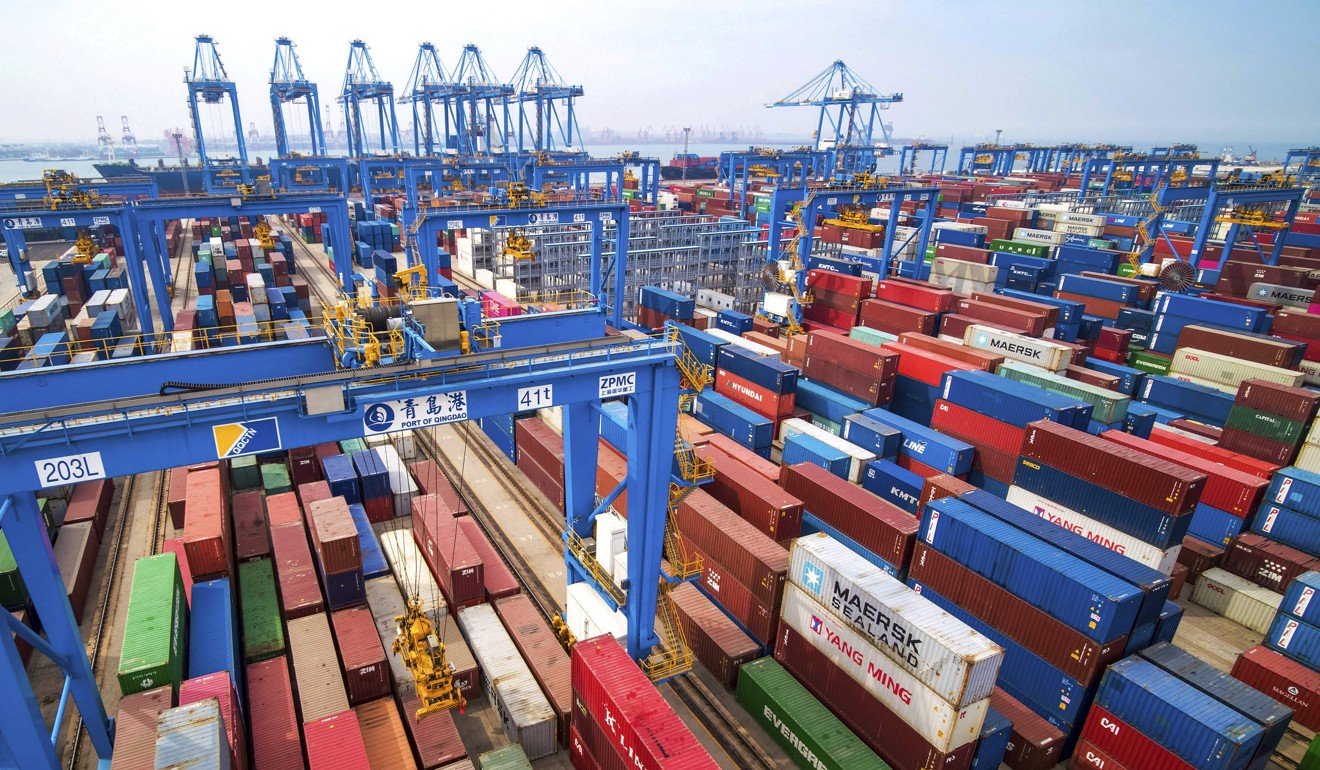
A container port in Qingdao, in China’s Shandong province. Photo: AP
Here Asean’s efforts could make it greater than its parts. The region’s location between the Indian and Pacific Oceans ensures that the great maritime powers of the world will always have a strategic interest in its well-being. But there are analogies with the Mediterranean world that may be relevant. Although on a smaller scale, naval power in that sea determined the fates of all the states involved, deep divisions between the states on its northern and southern coasts have lasted to this day. It is never a question of naval power alone. The states facing the sea have strong hinterlands and neither those of the north nor of the south could dominate the Mediterranean for long. That should remind us that Southeast Asia with its continental and maritime members could also be vulnerable to divisions when confronted by external forces coming from different directions and calling on each of its member states to choose sides.
Should China be worried about the US-Asean sea drill?
Another interesting question is why the South China Sea was never a zone of naval conflict the way the Mediterranean was. It is narrower in parts and wider in others and not well sealed like having Gibraltar at one end and Suez at the other. There are more openings to the ocean, as in the Taiwan Strait, the Sunda and Malacca Straits, as well as the passages leading into the South Pacific. In addition, unlike the Mediterranean where there were always powerful states on both sides of the sea, there was no power that could challenge the Chinese empire in the South China Sea. Had there been one, perhaps that sea would also have been a zone of tense and extended competition from ancient times.
That may be about to change. Today, the newly announced Indo-Pacific front has created a counter-power to face a rising China. At the same time, dynamic economic growth is moving from the Atlantic to this extended maritime space. Together, they have given new life to the Old World. Thus countries like China and India are building more credible navies to match those of Japan and the United States. In that way, the Indo-Pacific could serve as a larger Mediterranean in which the South China Sea acts as its strategic centre. That would make the double-ocean zone one of continuous tension in which powerful protagonists will keep the divisions permanent.
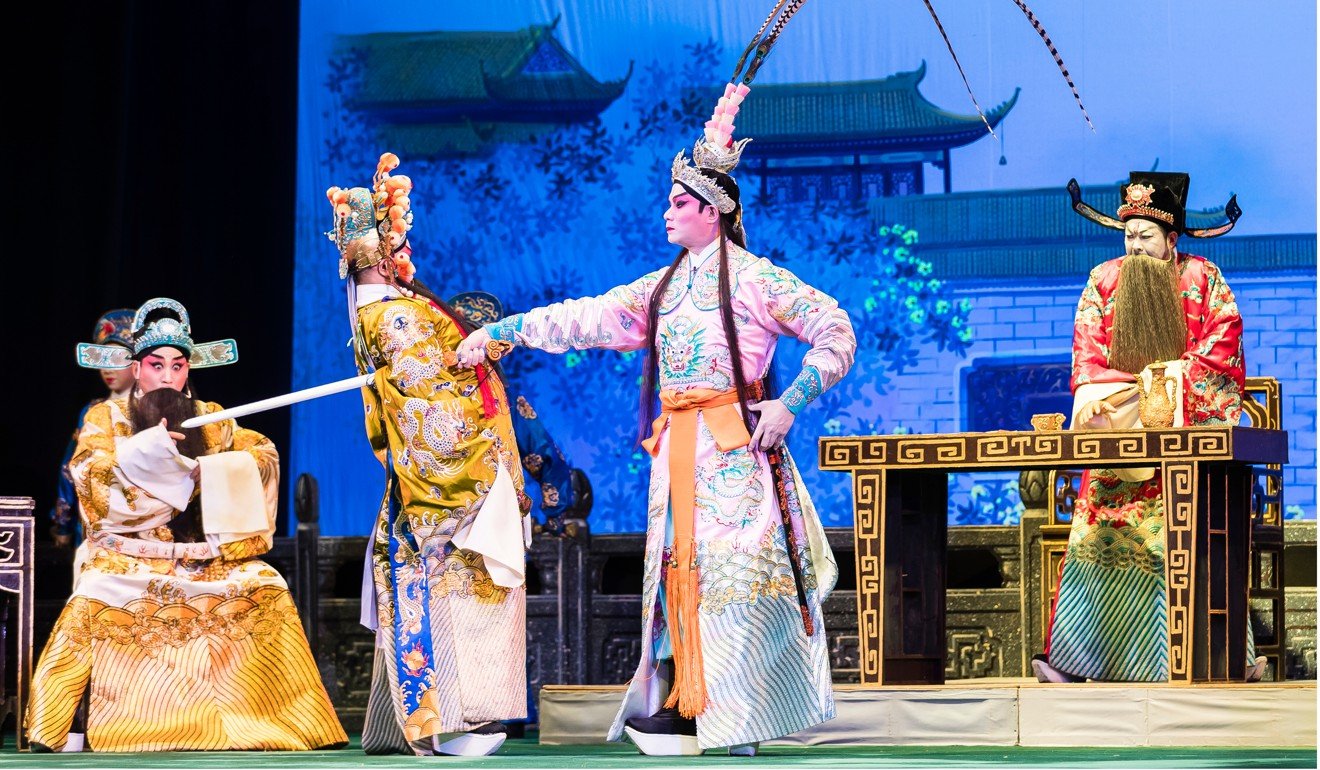
A Cantonese opera show. Can China hold on to its past as it builds a prosperous future? Photo: Handout
If Asean is divided underneath that overarching framework, it would be of little use to anybody. The region’s history renders it open to divisions, especially between the mainland and the archipelagic states that tend to look in different directions for their well-being. However, if these states can overcome their historical baggage, Asean could have a major role to play in the midst of the rapid changes in the relations between the New Global and Old World. If it is united on critical issues, it could provide a bridge that helps to make those relationships peaceful and constructive. That would not only help its members withstand the pressures put on them, but also demonstrate to all major powers that their interests are also best served by a truly united Asean.
Source: SCMP
Posted in Ancient past, Australian historian, Australian National University, barong bachi, build, China Reconnects: Joining a Deep-rooted Past to a New World Order, China’s national flag, Chinese Characteristics, Chinese dynasties, Confucian China, Confucian values, corruption, decline, Deng Xiaoping, eight honours and eight disgraces, forgetting, French saying, global leader, heritage, hexie shehuizhuyi shehui (Harmonious socialist society), historian, Karl Marx, Lady Justice, Middle Kingdom, modern ambitions, modern civilisation, National University of Singapore, sange daibiao (Three Represents), Scales of Justice, Shenzhen, the more things change the more things remain the same, Uncategorized, United States, Wang Gungwu, World Scientific Publishing, Xi JinPing, Zhejiang, zhi and xing (knowing and acting), Zhijiang xinyu, zhixing heyi |
Leave a Comment »







 CHINDIA ALERT: You'll be living in their world, very soon