Chindia Alert: You’ll be Living in their World Very Soon
aims to alert you to the threats and opportunities that China and India present. China and India require serious attention; case of ‘hidden dragon and crouching tiger’.
Without this attention, governments, businesses and, indeed, individuals may find themselves at a great disadvantage sooner rather than later.
The POSTs (front webpages) are mainly 'cuttings' from reliable sources, updated continuously.
The PAGEs (see Tabs, above) attempt to make the information more meaningful by putting some structure to the information we have researched and assembled since 2006.
Documentary puts China’s literary hero into context: there is Dante, there’s Shakespeare, and there’s Du Fu
Theatrical legend Sir Ian McKellen brings glamour to beloved verses in British documentary
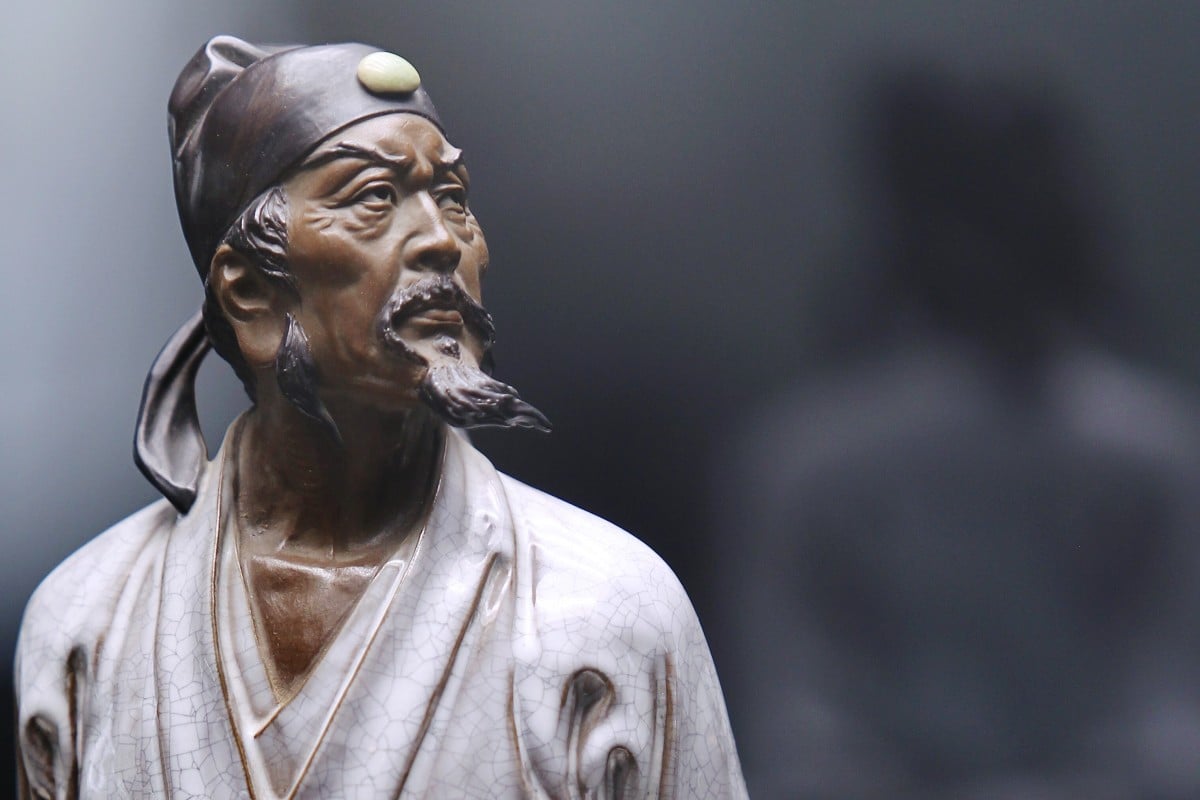
A ceramic figurine of Du Fu, a prominent Chinese poet of the Tang dynasty. Du is the subject of a new BBC documentary, thrilling devotees of his poetry. Photo: Simon Song
The resonant words of an ancient Chinese poet spoken by esteemed British actor Sir Ian McKellen have reignited in China discussion about its literary history and inspired hope that Beijing can tap into cultural riches to help mend its image in the wake of the coronavirus pandemic.
The BBC documentary Du Fu: China’s Greatest Poet has provoked passion among Chinese literature lovers about the poetic master who lived 1,300 years ago.
Sir Ian Mckellen read works of ancient Chinese poet Du Fu in Du Fu: China’s Greatest Poet. Photo: BBC Four / MayaVision International
The one-hour documentary by television historian Michael Wood was broadcast on television and aired online for British viewers this month but enthusiasm among Chinese audiences mean the trailer and programme have been widely circulated on video sharing websites inside mainland China, with some enthusiasts dubbing Chinese subtitles.
The documentary has drawn such attention in Du’s homeland that even the Communist Party’s top anti-graft agency has discussed it in its current affairs commentary column. Notably, Wood’s depiction of Du’s life from AD712 to 770 barely mentioned corruption in the Tang dynasty (618-907) government.
“I couldn’t believe it!!” Wood said in an email. “I’m very pleased of course … most of all as a foreigner making a film about such a loved figure in another culture, you hope that the Chinese viewers will think it was worth doing.”
Often referred to as ancient China’s “Sage of Poetry” and the “Poet Historian”, Du Fu witnessed the Tang dynasty’s unparalleled height of prosperity and its fall into rebellion, famine and poverty.
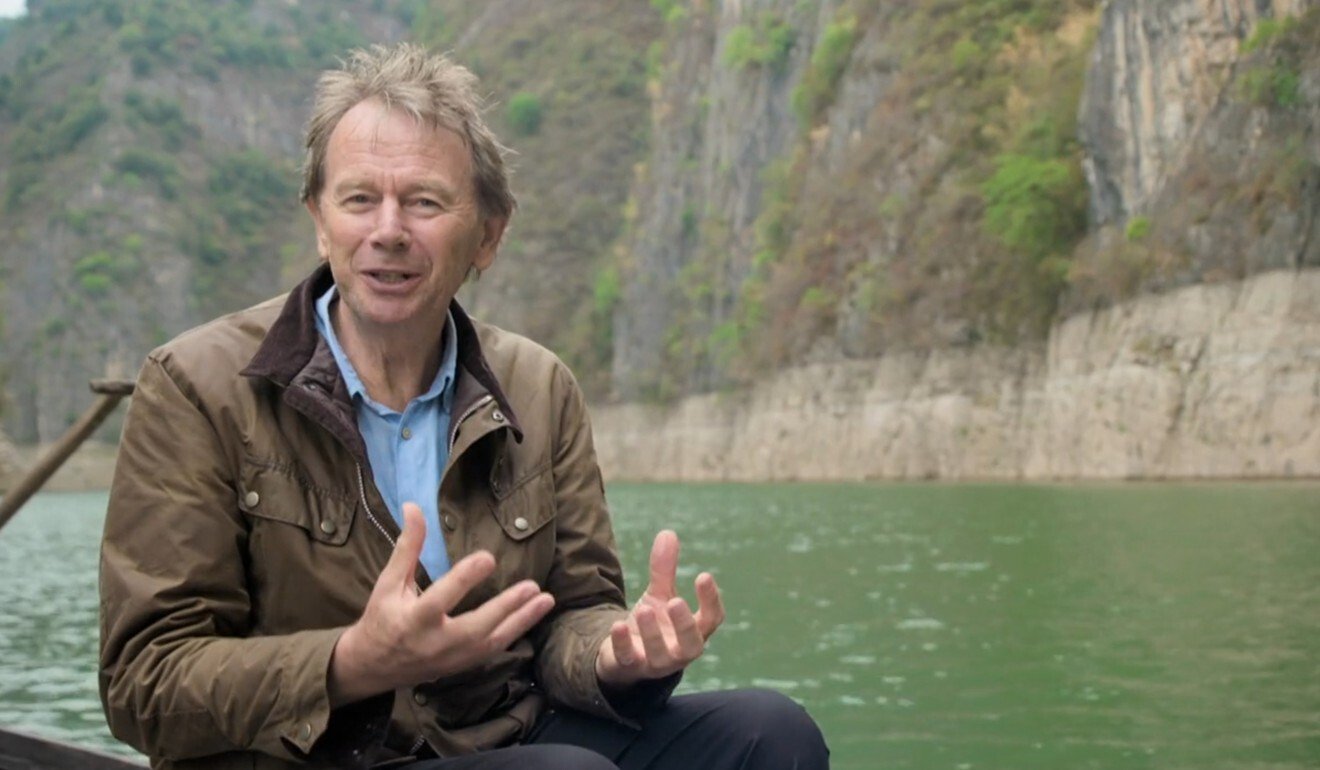
Writer, historian and presenter Michael Wood followed the footsteps of the ancient Chinese poet Du Fu in Yangtze River gorges. Photo: BBC Four / MayaVision International
Wood traced Du’s footsteps to various parts of the country. He interviewed Chinese experts and Western sinologists, offering historical and personal contexts to introduce some of Du’s more than 1,400 poems and verses chronicling the ups and downs of his life and China.
The programme used many Western reference points to put Du and his works into context. The time Du lived in was described as around the as the Old English poem Beowulf was composed and the former Chinese capital, Changan, where Xian is now, was described as being in the league of world cities of the time, along with Constantinople and Baghdad.
Harvard University sinologist Stephen Owen described the poet’s standing as such: “There is Dante, there’s Shakespeare, and there’s Du Fu.”
The performance of Du’s works by Sir Ian, who enjoyed prominence in China with his role as Gandalf in the Lord of the Rings movie series, attracted popular discussion from both media critics and general audiences in China, and sparked fresh discussion about the poet.
“To a Chinese audience, the biggest surprise could be ‘Gandalf’ reading out the poems! … He recited [Du’s poems] with his deep, stage performance tones in a British accent. No wonder internet users praised it as ‘reciting Du Fu in the form of performing a Shakespeare play,” wrote Su Zhicheng, an editor with National Business Daily.
A stone sculpture at Du Fu Thatched Cottage in Chengdu city, China. Photo: Handout
On China’s popular Weibo microblog, a viewer called Indifferent Onlooker commented on Sir Ian’s recital of Du’s poem My Brave Adventures: “Despite the language barrier, he conveyed the feeling [of the poet]. It’s charming.”
Some viewers, however, disagreed. At popular video-sharing website Bilibili.com, where uploads of the documentary could be found, a viewer commented: “I could not appreciate the English translation, just as I could not grasp Shakespeare through his Chinese translated works in school textbooks.”
Watching the documentary amid the coronavirus pandemic, some internet users drew comparisons of Du to Fang Fang, a modern-day award-winning poet and novelist who chronicled her life in Wuhan during the Covid-19 lockdown.
Shanghai pictured in April. Devastation wrought by the coronavirus pandemic has brought about a new suspicion of China. Photo: Bloomberg
The pandemic has infected more than 2.5 million people and killed more than 170,000. It has put the global economy in jeopardy, fuelling calls for accountability. British Foreign Secretary Dominic Raab last week called for a “deep dive” review and the asking of “hard questions” about how the coronavirus emerged and how it was not stopped earlier.
Steve Tsang, director of the SOAS China Institute at University of London, said the British establishment and wider public had changed its perception of Beijing as questions arose about outbreak misinformation and the political leverage of personal protective gear supply.
“The aggressive propaganda of the Chinese government is getting people in the UK to look more closely at China and see that it is a Leninist party-state, rather than the modernising and rapidly changing society that they want to see in China,” Tsang said.
On Sunday, a writer on the website of the National Supervisory Commission, China’s top anti-corruption agency, claimed – without citing sources – that the Du Fu documentary had moved “anxious” British audience who were still staying home under social distancing measures.
“If anyone wants to put the fear of the coronavirus behind them by understanding the rich Chinese civilisation, please watch this documentary on Du Fu,” it wrote, adding that promoting Du’s poems overseas could help “healing and uniting our shattered world”.
English-language state media such as CGTN and the Global Times reported on the documentary last week and some Beijing-based foreign relations publications have posted comments about the film on Twitter.
Wood said he had received feedback from both Chinese and British viewers that talked about “the need, especially now, of mutual understanding between cultures”.
“It is a global pandemic … we need to understand each other better, to talk to each other, show empathy: and that will help foster cooperation. So even in a small way, any effort to explain ourselves to each other must be a help,” Wood said.
He said the idea for producing a documentary about Du Fu started in 2017, after his team had finished the Story of China series for BBC and PBS.
Du Fu: China’s Greatest Poet first aired in Britain on April 7 on BBC Four, the cultural and documentary channel of the public broadcaster. It is a co-production between the BBC and China Central Television.
Wood said a slightly shorter 50-minute version would be aired later this month on CCTV9, Chinese state television’s documentary channel.
The film was shot in China in September, he said.
“I came back from China [at the] end of September, so we weren’t affected by the Covid-19 outbreak, though of course it has affected us in the editing period. We have had to recut the CCTV version in lockdown here in London and recorded two small word changes on my iPhone!” Wood said.
BEIJING/WUHAN, China (Reuters) – China on Saturday mourned the thousands of “martyrs” who have died in the new coronavirus outbreak, flying the national flag at half mast throughout the country and suspending all forms of entertainment.
The Chinese national flag flies at half-mast at Tiananmen Square in Beijing, as China holds a national mourning for those who died of the coronavirus disease (COVID-19), on the Qingming tomb sweeping festival, April 4, 2020. REUTERS/Carlos Garcia Rawlins
The day of mourning coincided with the start of the annual Qingming tomb-sweeping festival, when millions of Chinese families pay respects to their ancestors.
At 10 a.m. (0200 GMT) Beijing time, the country observed three minutes of silence to mourn those who died, including frontline medical workers and doctors. Cars, trains and ships sounded their horns and air raid sirens wailed.
In Zhongnanhai, the seat of political power in Beijing, President Xi Jinping and other Chinese leaders paid silent tribute in front of the national flag, with white flowers pinned to their chest as a mark of mourning, state media reported.
More than 3,300 people in mainland China have died in the epidemic, which first surfaced in the central province of Hubei late last year, according to statistics published by the National Health Commission.
In Wuhan, the capital of Hubei province and the epicentre of the outbreak, all traffic lights in urban areas turned red at 10 a.m. and all road traffic ceased for three minutes.
Some 2,567 people have died in Wuhan, a megacity of 11 million people located in the middle reaches of the Yangtze river. The Wuhan deaths account for more than 75% of the country’s fatalities.
Among those who died was Li Wenliang, a young doctor who tried to raise the alarm about the disease. Li was honoured by the Hubei government earlier this week, after initially being reprimanded by police in Wuhan for “spreading rumours”.
Gui Yihong, 27, who was among thousands of Wuhan locals who volunteered to deliver food supplies to hospitals during the city’s months-long lockdown, recalled the fear, frustration and pain at Wuhan Central Hospital, where Li worked.
“If you weren’t at the frontlines you wouldn’t be able to experience this,” said Gui, as he laid some flowers next to Wuhan’s 1954 flood memorial by the Yangtze.
“I had to (come) and bear witness. For the last 80 days we had fought between life and death, and finally gained victory. It was not easy at all to come by.”
While the worst was behind Wuhan, the virus has spread to all corners of the globe since January, sickening more than a million people, killing more than 55,000 and paralysing the world economy.
Wuhan banned all tomb-sweeping activities in its cemeteries until at least April 30, curtailing one of the most important dates in the traditional Chinese lunar new year calendar which usually sees millions of families travel to tend to their ancestral graves, offer flowers and burn incense.
They have also told residents, most stuck at home due to lockdown restrictions, to use online streaming services to watch cemetery staff carry out those tasks live.
ASYMPTOMATIC CASES
Online, celebrities including “X-Men: Days of Future Past” star Fan Bingbing swapped their glamorous social media profile pictures for sombre photos in grey or black, garnering millions of “likes” from fans.
Chinese gaming and social media giant Tencent (0700.HK) suspended all online games on Saturday.
As of Friday, the total number of confirmed cases across the country stood at 81,639, including 19 new infections, the National Health Commission said.
Eighteen of the new cases involved travellers arriving from abroad. The remaining one new infection was a local case in Wuhan, a patient who was previously asymptomatic.
Asymptomatic people exhibit few signs of infection such as fevers or coughs, and are not included in the tally of confirmed cases by Chinese authorities until they do.
However, they are still infectious, and the government has warned of possible local transmissions if such asymptomatic cases are not properly monitored.
China reported 64 new asymptomatic cases as of Friday, including 26 travellers arriving in the country from overseas. That takes the total number of asymptomatic people currently under medical observation to 1,030, including 729 in Hubei.
Big shoals of acetes, which are just a few centimetres long, crippled the water pumping stations and caused a unit to go into automatic safe shutdown
The same thing happened the next day with all units powered down, but the safety regulator says they are now in a ‘safe and controllable condition’
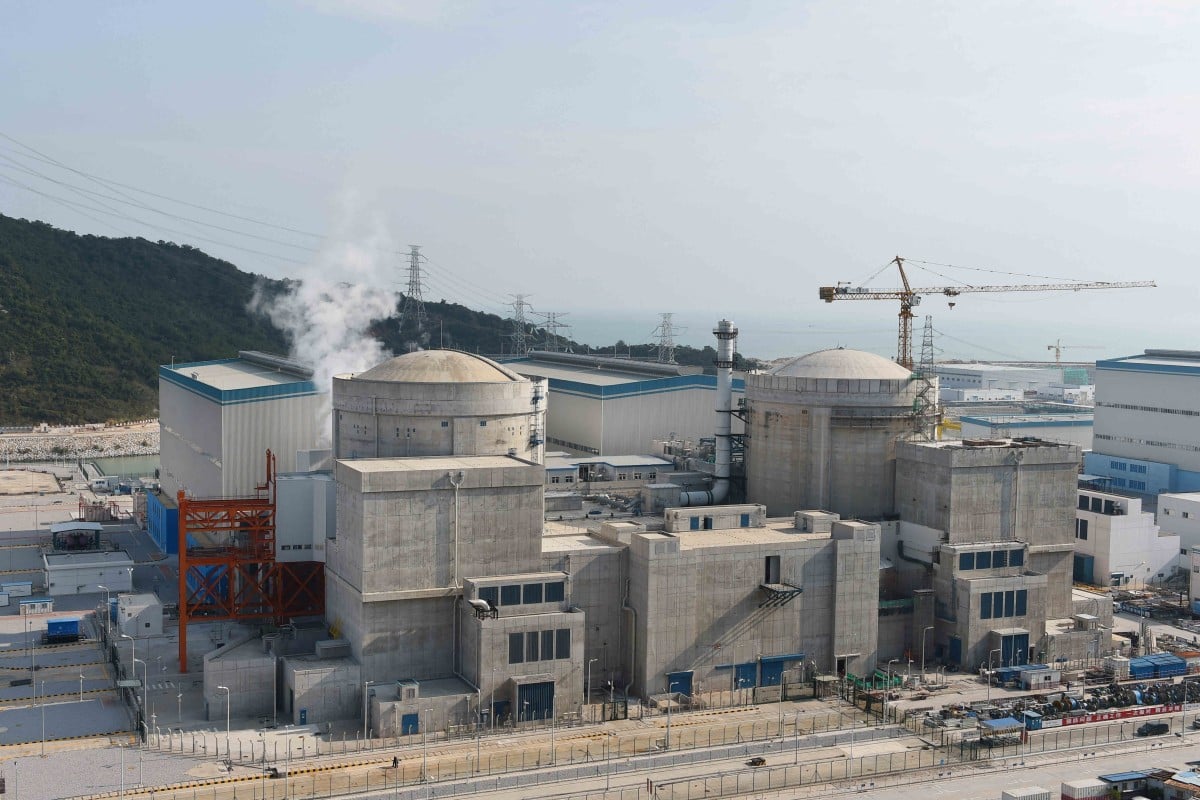
The Yangjiang Nuclear Power Station in Guangdong province is about 235km from Hong Kong. Photo: Handout
The power-generating units of a nuclear plant in southern China were shut down twice last week after its water filters were blocked by masses of small shrimp, the safety regulator said.
Big shoals of the tiny acetes – krill-like shrimp that are just a few centimetres long – flooded the seawater diversion channel and circulating water pumping stations of the Yangjiang Nuclear Power Station in Guangdong on March 24, the National Nuclear Safety Administration said in a statement.
They crippled the water pumping stations and caused one of the nuclear plant’s six power-generating units to go into automatic safe shutdown, while the other five units ran at 80 per cent of capacity.
The unit that shut down was powered up again the next day after station staff cleared the acetes and cleaned the filters.
But soon after on March 25, the same thing happened, with large shoals of acetes again finding their way into the pumping stations and causing four power-generating units to shut down automatically. The station shut off the other two units for safety reasons.
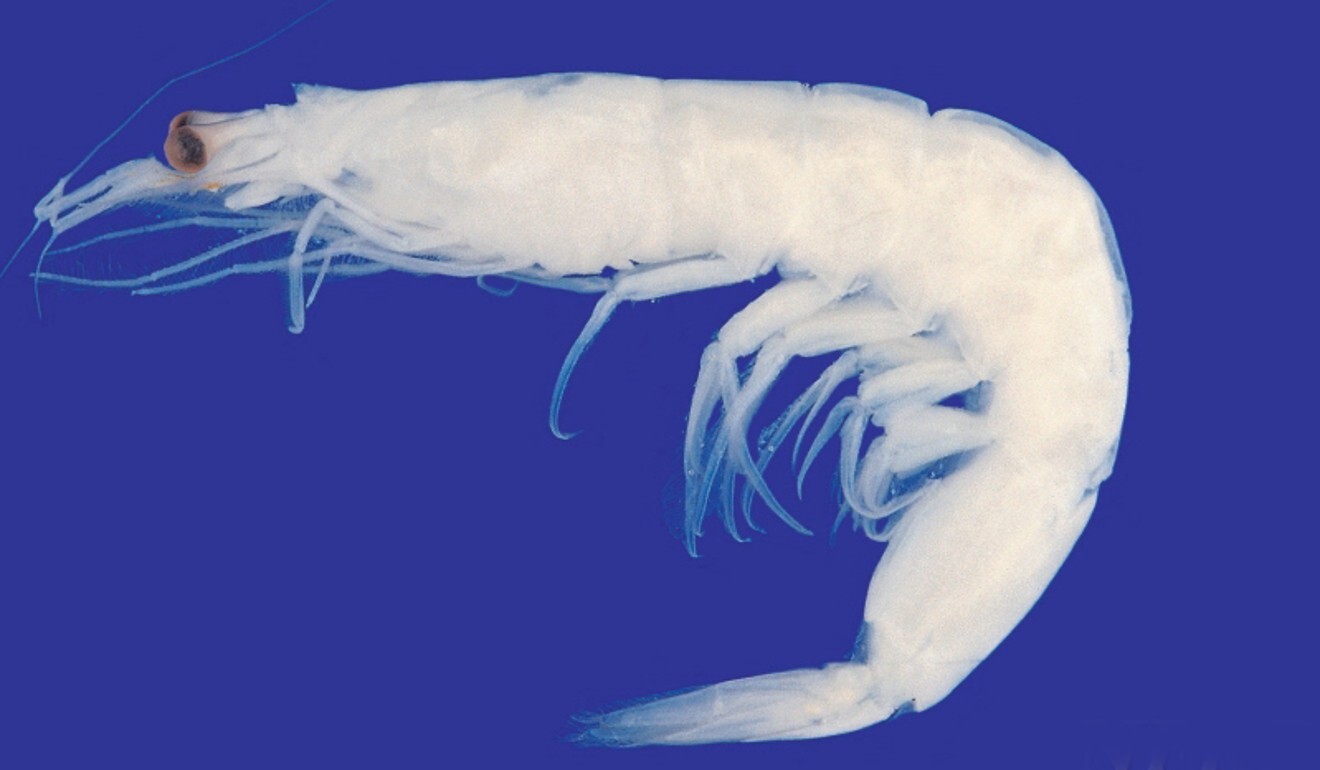
Big shoals of acetes found their way into the nuclear plant’s pumping stations. Photo: Handout
The incident on March 25 was rated a Level 1 on the International Nuclear and Radiological Event Scale, meaning it was an “anomaly” that had no safety or health consequences. Only two nuclear events have been rated at the top of the scale as Level 7 “major accidents” – the Chernobyl disaster in 1986 and Fukushima in 2011.
China’s nuclear safety regulator said the situation at the Yangjiang plant was under control.
“At present, all six units … are in a safe and controllable condition,” the statement said. “Staff at the scene are taking measures such as fishing out the acetes and cleaning the filters, before reactivating the units and bringing them back to normal operation in accordance with the relevant procedures.”
Nearly a decade after tsunami, clean-up continues at Japan’s Fukushima nuclear plant
Pan Chin, head and chair professor of nuclear engineering at City University of Hong Kong, said the two incidents were “operational events with no radiation leak”.
“The shutdown … is also an indication that the protection system of the power plant is functioning as designed,” he said.
“This incident is not unexpected,” Pan said. “The power plant uses seawater as a coolant for the condenser and occasionally aquatic animals may get close to the intake and cause such incidents.”
The Hong Kong Nuclear Society also noted that similar incidents had happened before.
“Similar events have occurred at nuclear power plants using seawater as a coolant for their power-generating units [including non-nuclear ones] throughout the world, including China,” said Luk Bing-lam, chairman of the society.
New Wufengshan power line across China’s Yangtze River completed
In 2016, a generating unit at the Lingao Nuclear Power Plant in Shenzhen was guided to a safe shutdown by an automatic reactor protection signal after its seawater intake was inundated with tiny marine crustaceans, according to Hong Kong’s Security Bureau. They blocked the filtering screen drum at the intake and tripped two seawater intake pumps.
China tech giants wake up to renewable energy, but fossil fuels still dominate as electricity source
17 Feb 2020
China’s nuclear safety regulator said it had asked all nuclear power station operators to use marine life detection systems in light of incidents such as those at Yangjiang last week.
But Pan from CityU said the acetes could be too small to be detected by a marine life warning system.
“If a system can detect the approach of marine life, large or small, early enough, leaving enough time to take some action to prevent them from approaching further … there will be no such incident,” he said, adding that the systems needed to be improved.
The Yangjiang nuclear plant in Guangdong is about 235km from Hong Kong. It is owned by the China General Nuclear Power Corporation, which operates over 20 nuclear power stations in China. CLP, one of Hong Kong’s two power companies, acquired a 17 per cent stake in the plant in 2017.
The Eyes of Darkness features a Chinese military lab in Wuhan that creates a virus as a bioweapon; civilians soon become sick after accidentally contracting it
In fact, the one lab in China able to handle the deadliest viruses is in Wuhan and helped sequence the novel coronavirus the world is currently battling
The Eyes of Darkness, a 1981 thriller by bestselling suspense author Dean Koontz, tells of a Chinese military lab that creates a virus as part of its biological weapons programme. The lab is located in Wuhan, which lends the virus its name, Wuhan-400. A chilling literary coincidence or a case of writer as unwitting prophet?
In The Eyes of Darkness, a grieving mother, Christina Evans, sets out to discover whether her son Danny died on a camping trip or if – as suspicious messages suggest – he is still alive. She eventually tracks him down to a military facility where he is being held after being accidentally contaminated with man-made microorganisms created at the research centre in Wuhan.
If that made the hair on the back of your neck stand up, read this passage from the book: “It was around that time that a Chinese scientist named Li Chen moved to the United States while carrying a floppy disk of data from China’s most important and dangerous new biological weapon of the past decade. They call it Wuhan-400 because it was developed in their RDNA laboratory just outside the city of Wuhan.”
In another strange coincidence, the Wuhan Institute of Virology, which houses China’s only level four biosafety laboratory, the highest-level classification of labs that study the deadliest viruses, is just 32km from the epicentre of the current coronavirus outbreak.
The opening of the maximum-security lab was covered in a 2017 story in the journal Nature, which warned of safety risks in a culture where hierarchy trumps an open culture.
Koontz has written more than 80 novels and 74 works of short fiction. Photo: Douglas Sonders
Fringe conspiracy theories that the coronavirus involved in the current outbreak appears to be man-made and likely escaped from the Wuhan virology lab have been circulated, but have been widely debunked. In fact the lab was one of the first to sequence the coronavirus.
In Koontz’s thriller, the virus is considered the “perfect weapon” because it only affects humans and, since it cannot survive outside the human body for longer than a minute, it does not demand expensive decontamination once a population is wiped out, allowing the victors to roll in and claim a conquered territory.
It’s no exaggeration to call Koontz a prolific writer. His first book, Star Quest, was published in 1968 and he has been churning out suspense fiction at a phenomenal rate since with more than 80 novels and 74 works of short fiction under his belt. The 74-year-old, a devout Catholic, lives in California with his wife. But what are the odds of him so closely predicting the future?
Albert Wan, who runs the Bleak House Books store in San Po Kong, says Wuhan has historically been the site of numerous scientific research facilities, including ones dealing with microbiology and virology. “Smart, savvy writers like Koontz would have known all this and used this bit of factual information to craft a story that is both convincing and unsettling. Hence the Wuhan-400,” says Wan.
British writer Paul French, who specialises in books about China, says many of the elements around viruses in China relate back to the second world war, which may have been a factor in Koontz’s thinking.
The Eyes of Darkness, by Koontz.
“The Japanese definitely did do chemical weapons research in China, which we mostly associate with Unit 731 in Harbin and northern China. But they also stored chemical weapons in Wuhan – which Japan admitted,” says French.
Publisher Pete Spurrier, who runs Hong Kong publishing house Blacksmith Books, muses that for a fiction writer mapping out a thriller about a virus outbreak set in China, Wuhan is a good choice.
“It’s on the Yangtze River that goes east-west; it’s on the high-speed rail [line] that goes north-south; it’s right at the crossroads of transport networks in the centre of the country. Where better to start a fictional epidemic, or indeed a real one?” says Spurrier. (Spurrier works part-time as a subeditor for the Post.)
Albert Wan runs the Bleak House Books store in San Po Kong, Hong Kong.
Hong Kong crime author Chan Ho-kei believes that this kind of “fiction-prophecy” is not uncommon.
“If you look really hard, I bet you can spot prophecies for almost all events. It makes me think about the ‘infinite monkey’ theorem,” he says, referring to the theory that a monkey hitting keys at random on a typewriter keyboard for an infinite amount of time will almost surely type any given text.
“The probability is low, but not impossible.”
British writer Paul French.
Chan points to the 1898 novella Futility, which told the story of a huge ocean liner that sank in the North Atlantic after striking an iceberg. Many uncanny similarities were noted between the fictional ship – called Titan – and the real-life passenger ship RMS Titanic, which sank 14 years later. Following the sinking of the Titanic, the book was reissued with some changes, particularly in the ship’s gross tonnage.
“Fiction writers always try to imagine what the reality would be, so it’s very likely to write something like a prediction. Of course, it’s bizarre when the details collide, but I think it’s just a matter of mathematics,” says Chan.
Many of Koontz’s books have been adapted for television or the big screen, but The Eyes of Darkness never achieved such glory. This bizarre coincidence will thrust it into the spotlight and may see sales of this otherwise forgotten thriller jump.
Hong Kong crime author Chan Ho-kei.
Amazon is currently offering it on Kindle for just US$1. Perhaps, like Futility, it will also be reissued with some updates to make it really echo the current outbreak.
BEIJING, Dec. 27 (Xinhua) — Chinese lawmakers Friday held panel discussions to deliberate the draft law on Yangtze River conservation during an ongoing legislative session of the country’s top legislature.
The draft was submitted Monday to the National People’s Congress (NPC) Standing Committee for the first reading.
At Friday’s discussions, lawmakers acknowledged the necessity of national legislation to protect the Yangtze River and proposed more measures of protection to improve the draft.
Lawmaker Liu Xiuwen stressed the importance of flood-prevention work to the protection and development of the Yangtze River basin and suggested related stipulations be included in the draft.
While acknowledging the draft’s focus on government responsibilities, lawmaker Liu Yuting stressed the need to include “social participation” stipulations in the draft.
The draft should add more stipulations to help transform people’s lifestyles and behaviors to better protect the river, Liu Yuting said.
A national award should be set up for local governments, institutions and individuals who make outstanding contributions to Yangtze protection, said lawmaker Wu Heng.
Wan Exiang, vice chairman of the NPC Standing Committee, proposed including education authorities’ responsibilities in the draft so that the education on Yangtze River protection could start from Chinese people’s childhood.
Lawmaker Pang Lijuan also suggested including Yangtze protection in school curriculums.
“Children should learn the beauty of the Yangtze and its significance to China in Chinese and geography classes. They should also learn the dire consequences of pollution in science classes and other extracurricular activities,” she said.
Li Keqiang tells senior officials to step up efforts to channel water from Yangtze River to arid regions
Impact of pollution and rising population has prompted increased efforts to improve efficiency and supply
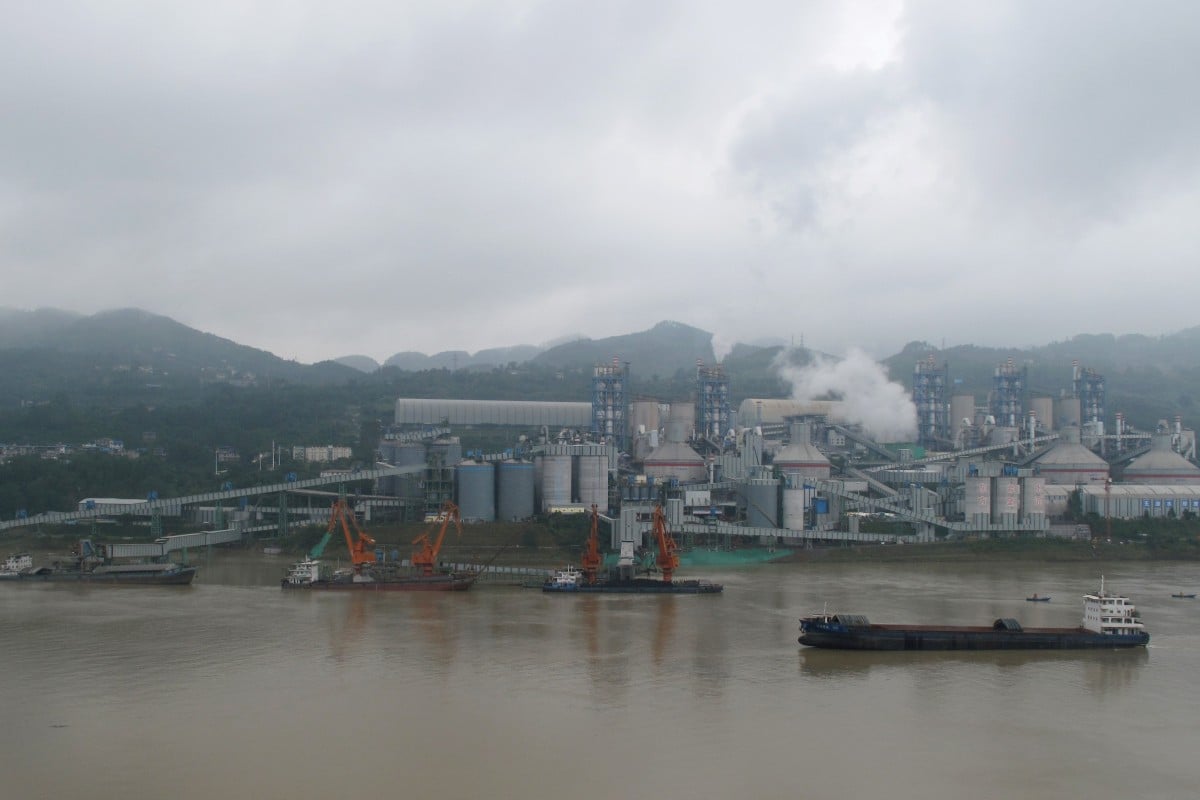
A cement plant on the banks of the Yangtze in Chongqing. The authorities are now trying to stop further development along the river. Photo: Reuters
China needs to divert more water to its arid northern regions and invest more in water infrastructure as shortages get worse because of pollution, overexploitation and rising population levels, Premier Li Keqiang has said.
China’s per capita water supplies are around a quarter of the global average. With demand still rising, the government has sought to make more of scarce supplies by rehabilitating contaminated sources and improving efficiency.
Water remained one of China’s major growth bottlenecks, and persistent droughts this year underlined the need to build new infrastructure, Li told a meeting of senior Communist Party officials on Monday. An account of the meeting was published by China’s official government website.
Local government bonds should be “tilted” in the direction of water infrastructure, he said, and innovative financing tools were also needed.
He also called for research into new pricing policies to encourage conservation.
Li said China’s water supply problems had been improved considerably as a result of the South-North Water Diversion Project, a plan to divert billions of cubic metres of water to the north by building channels connecting the Yangtze and Yellow rivers.
World ‘woefully unprepared’ for climate change’s effects on drinking water supplies drawn from mountains
He said opening up more channels to deliver water to regions north of the Yangtze River Delta would support economic and social development and optimise China’s national development strategy, according to a summary of the meeting on the government website.
China is in the middle of a wide-reaching programme to clean up the Yangtze River, its biggest waterway, and put an end to major development along its banks.
Chinese Premier Li Keqiang inspects an empty reservoir during a visit to Jiangxi province last week. Photo: Xinhua
Local governments have been under pressure to dismantle dams, relocate factories and even ban fishing and farming in ecologically fragile regions.
But experts say the ongoing campaign to divert the course of the Yangtze to other regions is still causing long-term damage to the river’s environmental health.
Many cities that had polluted their own water sources had drawn replacement supplies from the Yangtze, exceeding the river’s environmental capacity, said Ma Jun, founder of the Institute of Public and Environmental Affairs, which monitors water pollution.
Beijing already relied on diversion channels from the Yangtze to supply 70 per cent of its water, but had done little to improve conservation or reduce per capita consumption, which was higher than many Western countries, he said.
“[Diversion] has caused so much suffering and needs so many dams to keep up supply, and that has impacted biodiversity,” he said.
Remains of two of river’s estimated 1,012 porpoises found in less than a week
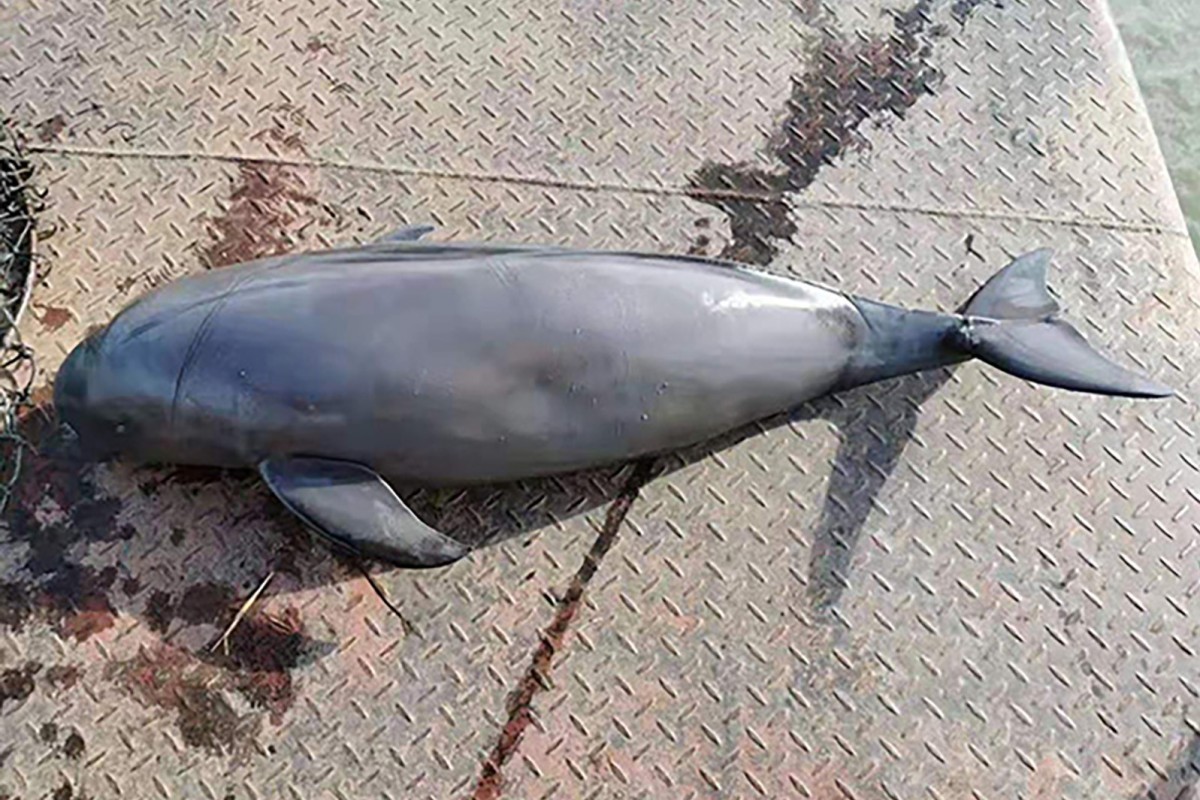
The finless porpoise found dead in the Yangtze River in Hubei on Monday was the second fatality in a week. Photo: 163.com
Two endangered finless porpoises have been found dead in the Yangtze River in the space of a week, according to mainland Chinese media reports.
One was found on Monday in Jiayu county, central Hubei province, four days after the remains of another were recovered from Dongting Lake, a tributary of the Yangtze in central Hunan province, news website Thepaper.cn reported.
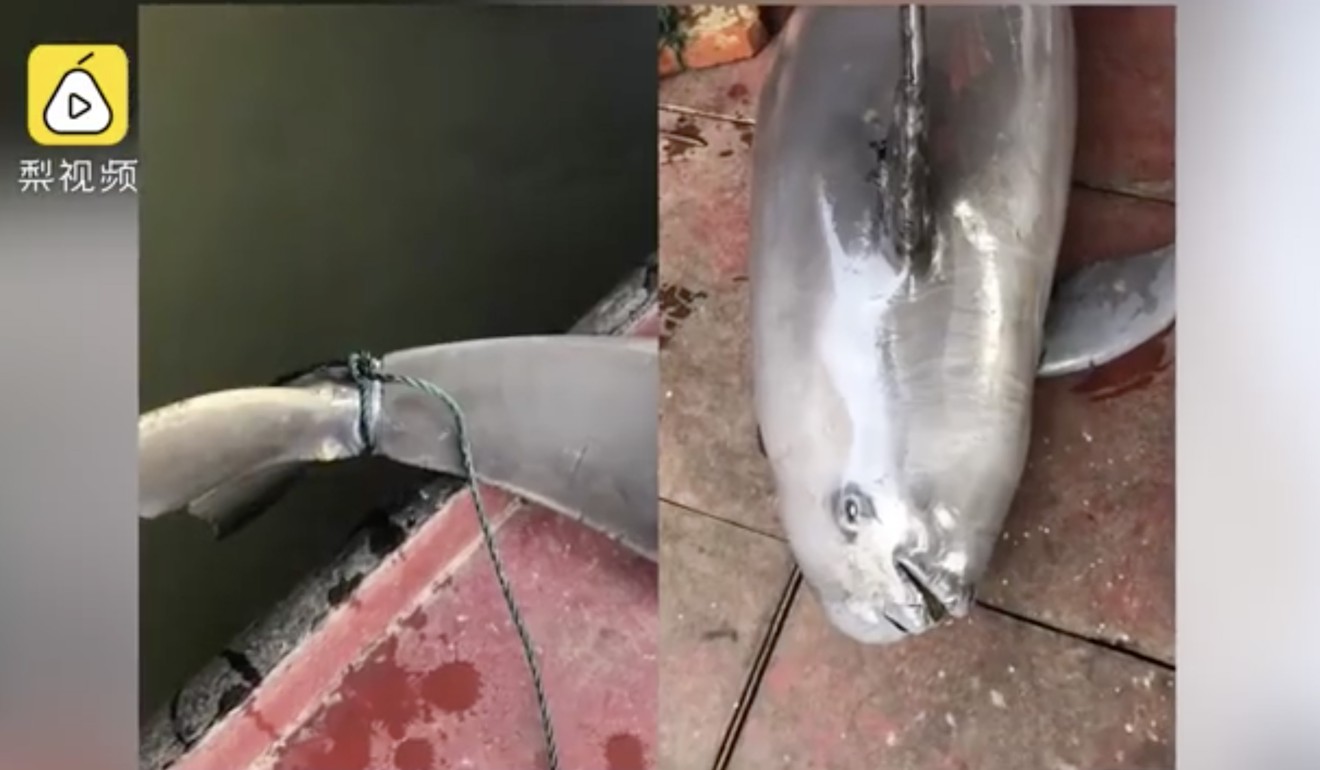
The Dongting Lake carcass was tied with a rope and weighted with bricks, and authorities in Hunan said the creature became tangled in a fishing net. The Hubei death is under investigation.
The Yangtze’s finless porpoises are “extremely endangered”, the Ministry of Agriculture and Rural Affairs said in a 2016 action plan to protect the species. Last year, vice-minister Yu Kangzhen said surveys showed there were about 1,012 of the animals in the river.
The tail of a dead finless porpoise pulled from Dongting Lake in Hunan appears to have been tied to weights. Photo: Pear Video
In 2017, China raised its protection for the mammals to its highest level because of the critical dangers they faced. Experts said that as the river’s “flagship” species, the porpoise was an indicator for the Yangtze’s ecology.
The porpoise discovered in Hubei was small and it had suffered superficial wounds, investigators were quoted as saying. They estimated that it was found soon after its death.
Xiaoxiang Morning Post quoted fisheries authorities in Yueyang, near Dongting Lake, as saying the porpoise in Hunan was found with weights around its tail.
Two porpoise carcasses found on separate Hong Kong shores
Officials said the fishermen who set the net feared they would be blamed for the creature’s death and tied bricks to its tail to sink it.
Other fishermen who witnessed the incident told the authority, leading to the discovery of the body, the report said. The investigation is ongoing and the suspects are still at large.
A fishing authority spokesman told the newspaper that the porpoise’s death showed the difficulty of balancing conservation with the livelihoods of fishermen.
“It’s difficult to figure out a good model to protect the porpoises without affecting fishermen’s business,” he said.
In mainland China, finless porpoises are referred to as “giant pandas in water” because of their endangered status. Their numbers fell from 2,700 in 1991 to 1,800 in 2006, and there were 1,045 finless porpoises in 2012, according to agriculture ministry data.
Aerial photo taken on Sept. 25, 2019 shows the Yangsigang Yangtze River bridge in Wuhan, capital of central China’s Hubei Province. The double-deck suspension bridge with the longest span in the world opened to traffic in Wuhan on Oct. 8. The double-deck road bridge over the Yangtze River, with a 1,700-meter-long main span, stretches 4.13 km in total length. The top deck of the 10th Yangtze River bridge has six lanes with a designed speed of 80 kph while the bottom deck also has six lanes but with a designed speed of 60 kph. (Xinhua/Xiong Qi)
WUHAN, Oct. 8 (Xinhua) — A double-deck suspension bridge with the longest span in the world opened to traffic in Wuhan, capital of central China’s Hubei Province, on Tuesday.
The first double-deck road bridge over the Yangtze River, with a 1,700-meter-long main span, stretches 4.13 km in total length.
The top deck of the 10th Yangtze River bridge has six lanes with a designed speed of 80 kph while the bottom deck also has six lanes but with a designed speed of 60 kph.
On the top deck there are also two sightseeing sidewalks and on the bottom deck there are two cycleways together with two sidewalks.
“The Yangsigang Yangtze River bridge is the world’s longest-spanning double-deck suspension bridge,” said Xu Gongyi, chief designer of the structure.
The new bridge will help ease traffic congestion and promote more balanced city development, said Lin Chi, vice president of Wuhan Urban Construction Investment and Development Group Co., Ltd.
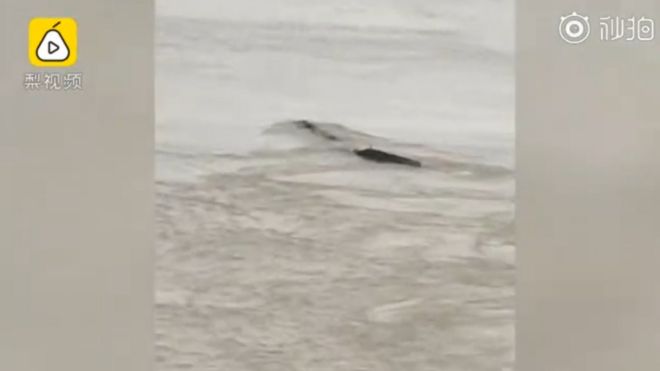
Image copyright PEAR VIDEOImage caption Grainy footage showed something that appeared to have a tail slithering back and forth in the water
Something is lurking in the deep in China’s famous Yangtze River – and social media discussion is rife over what it might be.
On Friday, footage appeared on China’s popular Sina Weibo microblog of what appeared to be a long, black creature, manoeuvring through the waters, and it has dominated online discussion ever since.
Footage has quickly racked up millions of views, and theories are rife.
Specialists have weighed in – but some think there may be a simple, and less murky, explanation.
Excitement over footage
A video filmed off the coast of the city of Yichang in western Hubei province, close to the Three Gorges Dam, captured the unusual scene.
Locals are filmed watching the creature from the shore – and social media users have similarly been captivated over theories about what the creature might be.
Many have posted using the hashtag #ThreeGorgesMonsterPhotos, and specialists have begun to weigh in with their thoughts.
In an interview with Pear Video, Professor Wang Chunfang from the Huazhong Agricultural University dismissed the idea of it being a new species, saying it was likely a simple “water snake”.
Some users said that “external factors such as pollution” could have a role to play in a sea snake growing to an extraordinary size. But not everyone was convinced.
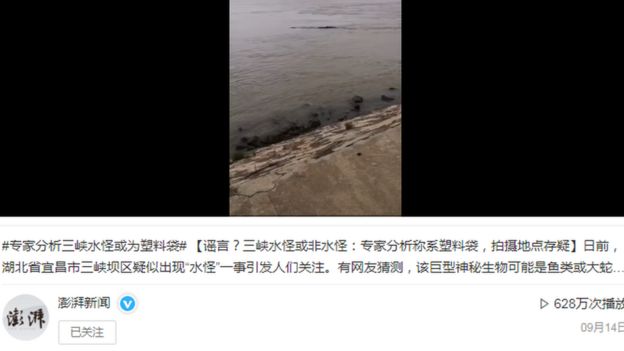
Separate footage has led some users to question whether the unidentified object is actually a living creature at all.
Image copyright THE PAPERImage caption Millions have watched footage of the item, but some think it might be a piece of simple rubbish
Popular news website The Paper shared separate footage of something long and black moving in the water that appeared to be less animated.
It asked if the whole thing was simply “a rumour” – and interviewed a biologist, Ding Li, who said that the object was neither a fish nor a snake, but simply “a floating object”.
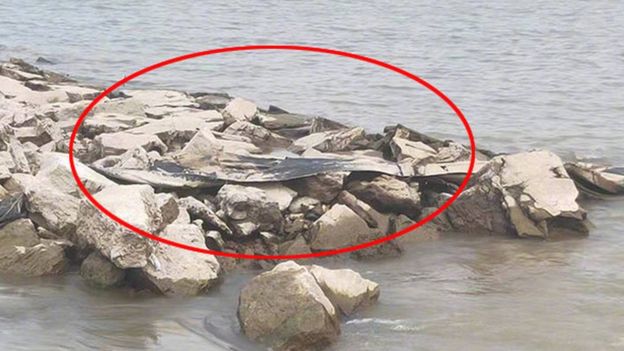
A picture has since gone viral showing a long piece of black cloth washed up on some rocks, fuelling discussion this might have been the mysterious object.
Image copyright THE PAPERImage caption The appearance of some cloth washed up on some rocks has got users asking if they were mistaken
Both have led to jokes about whether the local government was trying to attract tourism to the area, given the millions of dollars involved in building and maintaining the Three Gorges Dam.
Others have made jokes about the quality of the footage, despite the rapid development in China of high quality smartphones.
Some joked that the user obviously didn’t have a Huawei phone. Another said: “Monsters always appear only when there are few pixels.”
So what does live in the Yangtze?
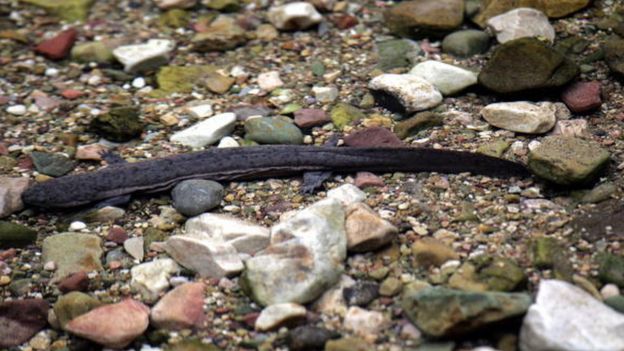
Image copyright AFPImage caption Giant Chinese salamanders live in the Yangtze river. They can grow to 1.8 metres in length
The Yangtze River is the longest river in Asia, and at 3,900 miles in length (6,300km), is the third longest in the world.
But pollution has severely affected the river in recent years, meaning that its ecosystem has become narrower, rather than wider.
The largest creature thought to exist in the waters at present is the Chinese giant salamander, which can reach some 1.8m in length.
This species is critically endangered, largely as a result of pollution.
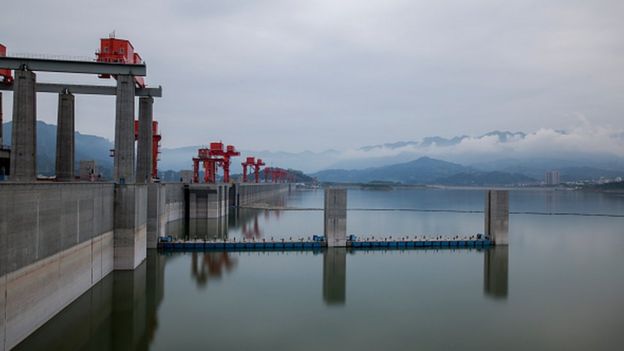
Image copyright ZHANG PENG/GETTY IMAGESImage caption The Three Gorges Dam is the world’s latest hydroelectric dam
China’s other ‘Nessies’
China is no stranger to conspiracy theories about mythical creatures lurking in the deep.
Since 1987, questions have been asked about whether a “Lake Monster” exists in the Kanas Lake in north-western Xinjiang, following numerous reports of sightings.
However, specialists believe that this is a giant taimen, a species of salmon that can grow to 180cm long, the official China Daily said.
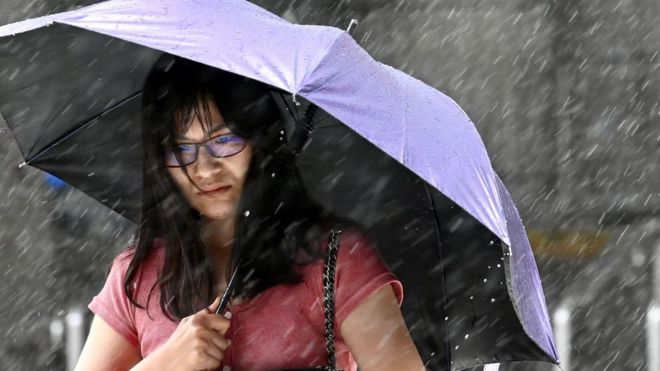
Image copyright AFPImage caption Lekima has brought heavy rain to Taiwan
Chinese authorities have declared a red alert as a powerful typhoon heads towards the eastern coast.
Typhoon Lekima is currently battering Taiwan with winds of more than 190km/h (120mph) and is due to make landfall in China’s Zhejiang province on Saturday.
Emergency teams have been deployed to the region to guide relief work, China’s emergency ministry said.
Thousands of people further up the coast in Shanghai have been warned to prepare to evacuate.
Lekima, which is the ninth typhoon so far this year, strengthened into a super typhoon late on Wednesday, but Taiwanese authorities have since downgraded it to a regular typhoon.
Flood warnings have been issued for eastern sections of China’s Yangtze River and the Yellow River until Wednesday. The provinces of Jiangsu and Shandong are also on alert.
Cruise liners have been told to delay their arrival in Shanghai and some train services have been suspended over the weekend.
Beijing has also cancelled some trains heading to and from the Yangtze delta region.
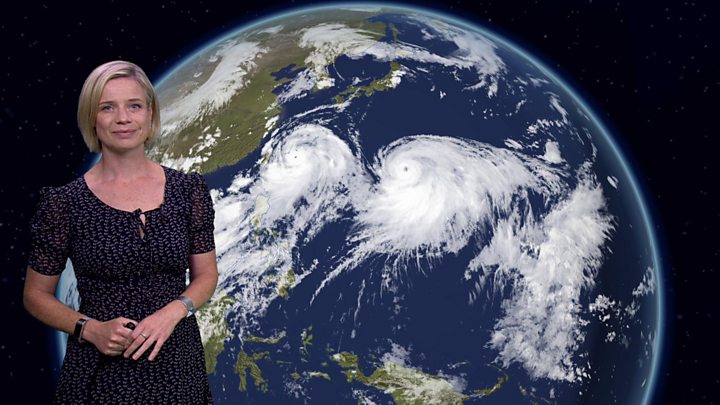
Lekima is one of two typhoons in the western Pacific at the moment. Further east, Typhoon Krosa is spreading heavy rain across the Northern Mariana Islands and Guam. It is moving north-west and could strike Japan some time next week, forecasters said.
Media caption BBC Weather’s Sarah Keith-Lucas on typhoons Lekima and Krosa
Lekima was passing the north of Taiwan on Friday, causing flight cancellations and the closures of schools and offices.
Power was cut to more than 40,000 homes and the island’s high speed rail service was suspended north of the city of Taichung, local media reported.
The huge storm came a day after eastern Taiwan was rattled by a 6.0 magnitude earthquake. Experts said the risks of landslides triggered by the tremor were made more likely by the typhoon dumping up to 900mm (35 inches) of rain on Taiwan’s northern mountains.
Media caption The 6.0 earthquake in Taiwan was caught on cat cam
Lekima also brought heavy rain and high winds to south-west Japan on Friday, cutting power to about 14,000 homes, broadcaster NHK reported.
China’s weather bureau said Lekima was expected to have weakened further by the time it made landfall. The country has a four-stage colour-coded warning system, with red representing the most severe weather.














 CHINDIA ALERT: You'll be living in their world, very soon