Archive for ‘Zhengzhou’

23/02/2020

Coronavirus: Taiwanese workers call time on mainland China over Covid-19 fears

  • An extended Lunar New Year holiday provides people from the self-ruled island with the opportunity to rethink their careers as the death toll from the deadly infection continues to rise
  • Online poll finds 63 per cent of Taiwanese unwilling to return to mainland China over health concerns
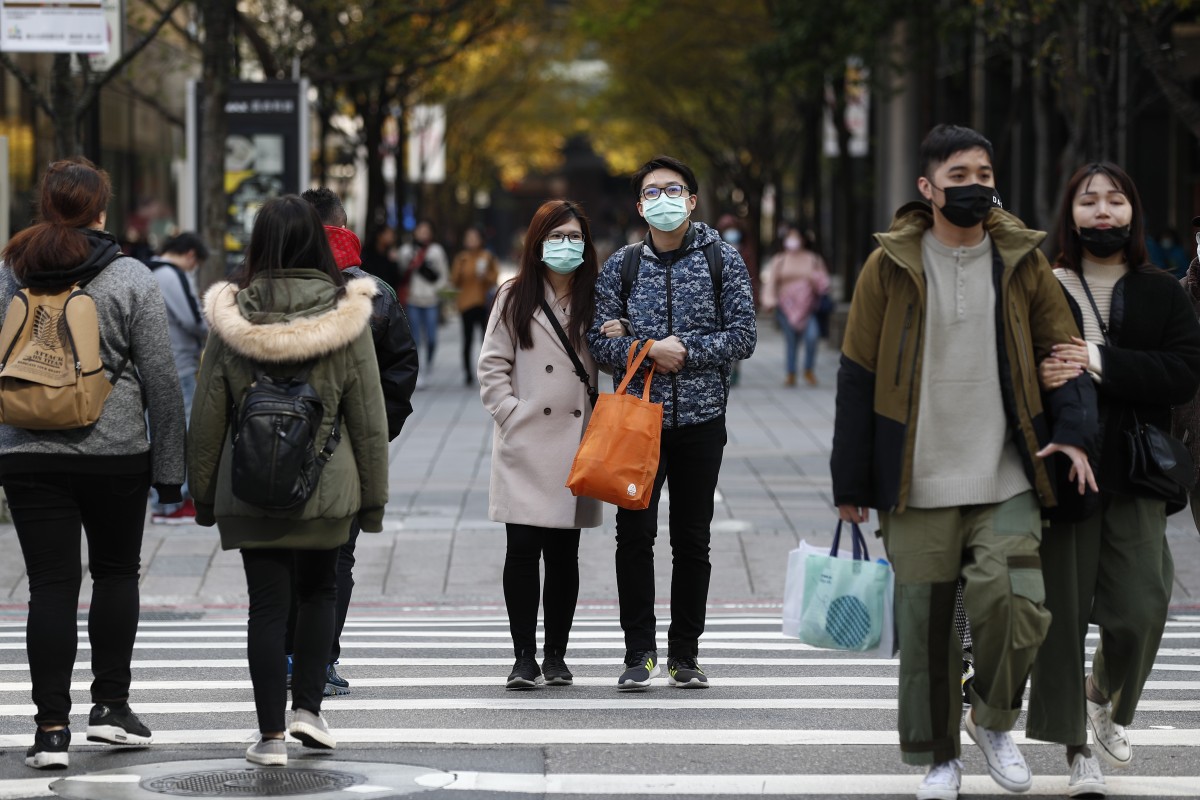
Many Taiwanese are opting not to return to their jobs in mainland China because of the coronavirus epidemic. Photo: EPA-EFE

Taiwanese account manager Douglas Liu values his life more than his job, which is why he will be staying at home on Monday rather than going back to work in the mainland China city of Suzhou.

Liu returned to his home in Taipei on January 10 for an extended Lunar New Year

 holiday – and to vote in the island’s presidential election – and planned to go back to work on February 1. But as the coronavirus epidemic worsened, the 45-year-old changed his plans.
“Last week, my company told me I should resume work on February 24, but after I argued in vain over the risk of returning to Suzhou, I tendered my resignation,” he said. “After all, my life is more important.”
Liu works for a firm that manufactures chest freezers for the mainland Chinese market.
“With more than 80 coronavirus infections in Suzhou and little sign of it subsiding, who knows what could happen to me if I return,” he said.
More than 78,700 people have contracted the virus since it was first detected in Wuhan, the capital of central China’s Hubei province, at the end of last year, and close to 2,500 have lost their lives to it.

As of Saturday, about 98 per cent of the infections and 99 per cent of the fatalities were in mainland China, two figures that have prompted many Taiwanese to rethink their employment plans.

According to a survey conducted last week by online recruitment agency 104 Job Bank, 63 per cent of Taiwanese with jobs on the mainland said they would not be returning to work after the extended Lunar New holiday. Before Wuhan was placed under lockdown on January 23 in a bid to contain the coronavirus outbreak, the figure was just 50 per cent.

“The intensification of the outbreak has created panic and insecurity for Taiwanese who work in mainland China and the lockdown of many cities has further discouraged them from returning to their jobs,” said Jason Chin, a senior vice-president at the recruitment agency.
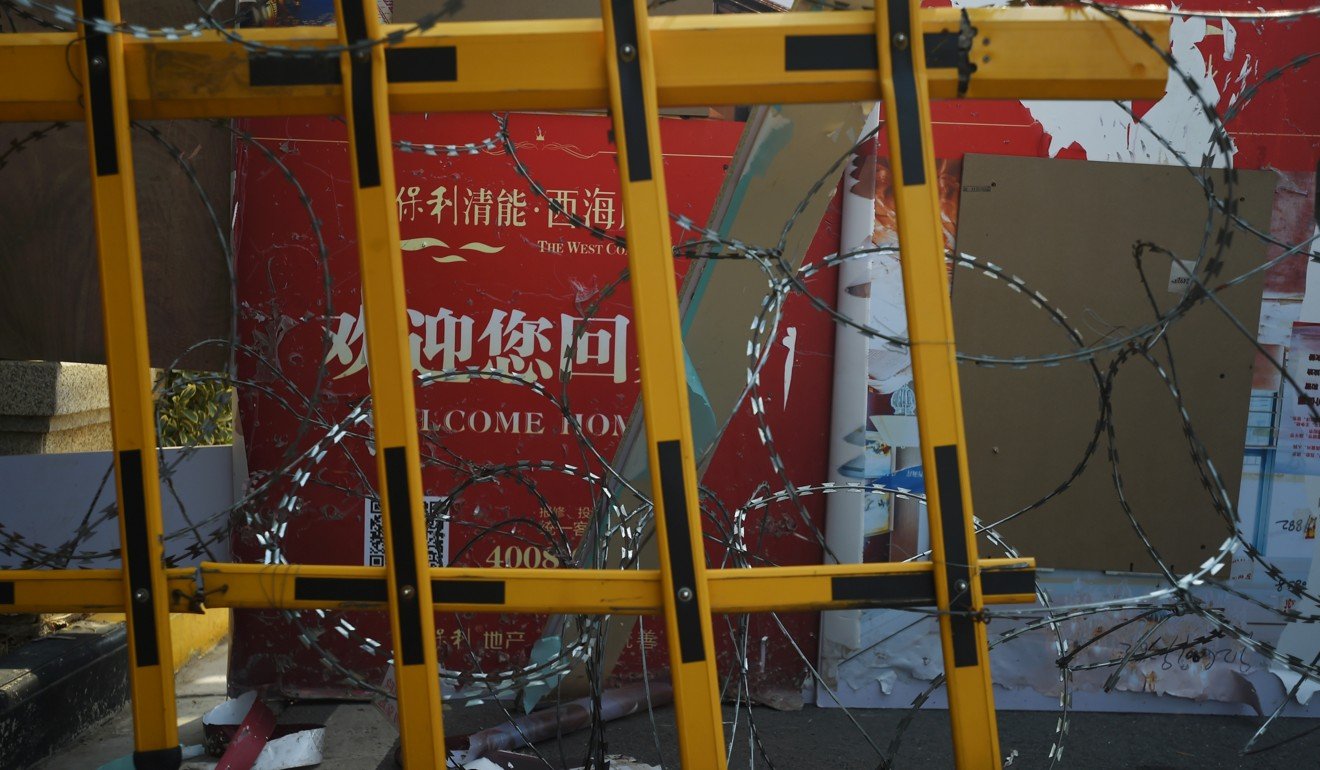
Wuhan has been on lockdown since January 23. Photo: Reuters
Dozens of cities across China have introduced some form of restriction on the movement of residents, and several remain under total lockdown.

Chin said that the containment efforts had made it impossible for many companies to resume normal operations and provided a catalyst for Taiwanese workers to seek employment elsewhere.

“Taiwanese often to change jobs after the Lunar New Year, so the mainland government’s policy of delaying the resumption of regular business activities has given them more time to look for work outside mainland China,” he said.

Shannon Chiu is another Taiwanese who decided to call time on the mainland because of the coronavirus outbreak.

After two years working for an agricultural technology company in Zhengzhou, the capital of central China’s Henan province, she said she already had concerns about the standards of health care there.

“Being sick in Zhengzhou is a nightmare for Taiwanese because of the poor organisation and registration procedures,” she said.

“You either have to wait hours to see a doctor or go hospital-hopping in the hope of getting an appointment somewhere else.”

Chiu said she was still working in Zhengzhou after the outbreak had been reported in Wuhan – about 500km (310 miles) to the south – but no one in the city was wearing a face mask.

“I was lucky because I came back to Taiwan a week before the lockdown and my company allowed me to continue working from Taipei,” she said.

“Although I no longer enjoy the expatriate benefits, I feel a lot safer here because I don’t think I would survive if I was put in a mainland hospital because of Covid-19.”

Source: SCMP

06/12/2019

Chinese residents worry about rise of facial recognition

Facial recogition system in busImage copyright GETTY IMAGES
Image caption Some buses in Shanghai have had facial recognition systems fitted to them

A survey by a Beijing research institute indicates growing pushback against facial recognition in China.

Some 74% of respondents said they wanted the option to be able to use traditional ID methods over the tech to verify their identity.

Worries about the biometric data being hacked or otherwise leaked was the main concern cited by the 6,152 respondents.

Facial recognitions systems are being rolled out in stations, schools, and shopping centres across the country.

The survey, first reported in the West by The Financial Times, was released on Thursday by the Nandu Personal Information Protection Research Centre.

It has been described as being one of the first major studies of its kind into public opinion on the subject in mainland China.

Some 80% of respondents said they were concerned that facial recognition system operators had lax security measures.

Separate research suggests that they have good reason to be concerned.

China was ranked the worst of 50 surveyed countries in a study looking at how extensively and invasively biometric ID and surveillance systems are being deployed. The work was carried out by the cybersecurity firm Comparitech.

It said China had no “specific law to protect citizens’ biometrics” and highlighted a “lack of safeguards for employees in the workplace”.

Face recognition system by roadImage copyright GETTY IMAGES
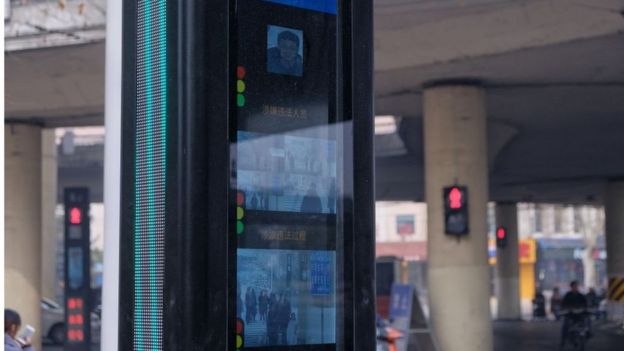
Image caption Some cities are deploying facial recognition systems at road crossings to identify and deter jaywalkers

Surveillance concerns

Nandu’s survey was carried out via the internet between October and November.

In its sample, 57% of respondents voiced concern about their movements being tracked.

In addition, 84% of people said they wanted to be able to review the data that facial recognition systems had collected on them and to be able to request that it should be deleted.

The majority said they wanted an option to be able to use ID cards, driving licenses and/or passports as an alternative. But the survey also suggested that between 60 to 70% of Chinese residents believed facial recognition made public places safer.

Hard to avoid

China has more facial recognition cameras than any other country and they are often hard to avoid.

Earlier this week, local reports said that Zhengzhou, the capital of the northeastern Henan province, had become the first Chinese city to roll the tech out across all its subway train stations.

Commuters can use the technology to automatically authorise payments instead of scanning a QR code on their phones. For now, it is a voluntary option, said the China Daily.

Earlier this month, university professor Guo Bing announced he was suing Hangzhou Safari Park for enforcing facial recognition.

Prof Guo, a season ticket holder at the park, had used his fingerprint to enter for years, but was no longer able to do so.

The case was covered in the government-owned media, indicating that the Chinese Communist Party is willing for the private use of the technology to be discussed and debated by the public.

Media captionWATCH: BBC’s John Sudworth put a Chinese facial recognition system to the test in December 2007

But the state continues to make some uses of the tech mandatory.

At the start of the month, a new regulation came into force that requires mobile phone subscribers to have their faces scanned when they sign a new contract with a provider.

The authorities say the move is designed to prevent the resale of Sim cards to help combat fraud.

But country-watchers have suggested it may also be used to help the police and other officials keep track of the population.

Source: The BBC

18/09/2019

Xi inspects manufacturing enterprise, Yellow River ecological protection in central China

CHINA-HENAN-ZHENGZHOU-XI JINPING-INSPECTION (CN)

Chinese President Xi Jinping, also general secretary of the Communist Party of China Central Committee and chairman of the Central Military Commission, communicates with workers while inspecting Zhengzhou Coal Mining Machinery Group Co., Ltd. during his tour in Zhengzhou, central China’s Henan Province, Sept. 17, 2019. (Xinhua/Ju Peng)

ZHENGZHOU, Sept. 17 (Xinhua) — Xi Jinping, general secretary of the Communist Party of China Central Committee, inspected a manufacturing enterprise and ecological protection of the Yellow River during his tour in Zhengzhou, central China’s Henan Province on Tuesday afternoon.

Source: Xinhua

31/07/2019

China claims progress towards world’s biggest trade deal, but India remains biggest roadblock to RCEP

  • China suggests good progress made in Regional Comprehensive Economic Partnership talks after marathon 10-day negotiations in Zhengzhou
  • Indian Commerce Minister Piyush Goyal has opted to skip the upcoming high-level meetings, adding fuel to rumours that the country could be removed
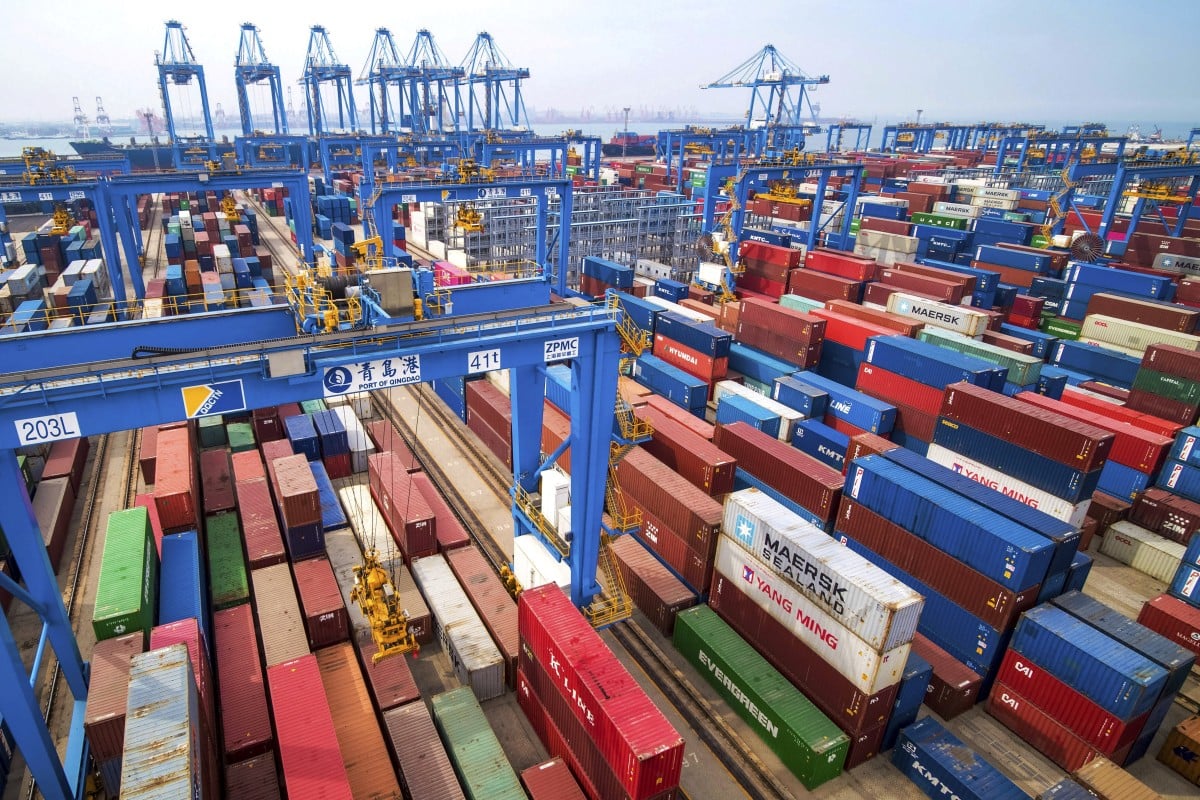
The Association of Southeast Asian Nations (Asean) has overtaken the US to become China’s second-largest trading partner in the first half of 2019. Photo: AP
China has claimed “positive progress” towards finalising the world’s largest free-trade agreement by the end of 2019 after hosting 10 days of talks, but insiders have suggested there was “never a chance” of concluding the deal in Zhengzhou.
The 27th round of the Regional Comprehensive Economic Partnership (RCEP) negotiations closed on Wednesday in the central Chinese city. 
The 10-day

working level conference brought over 700 negotiators from all 16 member countries to Henan province, with China keen to push through a deal which has proven extremely difficult to close.

If finalised, the agreement, which involves the 10 Asean nations, as well as China, Japan, South Korea, Australia, New Zealand, and India, would cover around one-third of the global gross domestic product, about 40 per cent of world trade and almost half the world’s population.
“This round of talks has made positive progress in various fields,” said assistant minister of commerce Li Chenggang, adding that all parties had reaffirmed the goal of concluding the deal this year. “China will work together with the RCEP countries to proactively push forward the negotiation, strive to resolve the remaining issues as soon as possible, and to end the negotiations as soon as possible.”
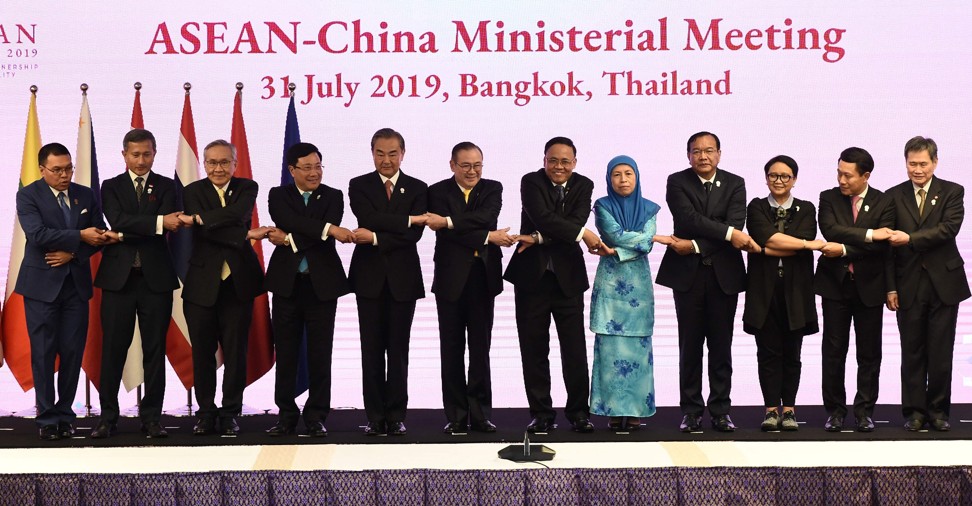
China's Foreign Minister Wang Yi (fifth left) poses with foreign ministers from the Association of Southeast Asian Nations (Asean) countries during the ASEAN-China Ministerial Meeting in Bangkok. Photo: AFP
China’s Foreign Minister Wang Yi (fifth left) poses with foreign ministers from the Association of Southeast Asian Nations (Asean) countries during the ASEAN-China Ministerial Meeting in Bangkok. Photo: AFP

China is keen to complete a deal which would offer it a buffer against the United States in Asia, and which would allow it to champion its free trade position, while the US pursues protectionist trade policy.

The RCEP talks took place as Chinese and American trade negotiators resumed face-to-face discussions in Shanghai, which also ended on Wednesday, although there was little sign of similar progress.

As the rivalry between Beijing and Washington has intensified and bilateral trade waned, the Association of Southeast Asian Nations (Asean) overtook the US to become China’s second-largest trading partner in the first half of 2019. From January to June, the trade volume between China and the 10-member bloc reached US$291.85 billion, up by 4.2 per cent from a year ago, according to government data.

The Asean bloc is made up of Indonesia, Thailand, Malaysia, Singapore, Philippines, Vietnam, Myanmar, Cambodia, Brunei and Laos.

China will work together with the RCEP countries to proactively push forward the negotiation, strive to resolve the remaining issues as soon as possible, and to end the negotiations as soon as possible. Li Chenggang

RCEP talks will now move to a higher level ministerial meeting in Beijing on Friday and Saturday, but trade experts have warned that if material progress is not made, it is likely that the RCEP talks will continue into 2020, prolonging a saga which has already dragged on longer than many expected. It is the first time China has hosted the ministerial level talks.
But complicating matters is the fact that India’s Commerce Minister, Piyush Goyal, will not attend the ministerial level talks, with an Indian government official saying that he has to participate in an extended parliamentary session.
India is widely viewed as the biggest roadblock to concluding RCEP, the first negotiations for which were held in May 2013 in Brunei. Delhi has allegedly opposed opening its domestic markets to tariff-free goods and services, particularly from China, and has also had issues with the rules of origin chapter of RCEP.
China is understood to be “egging on” other members to move forward without India, but this could be politically explosive, particularly for smaller Asean nations, a source familiar with talks said.
Deborah Elms, executive director of the Asian Trade Centre, a Singapore-based lobby group, said that after the last round of negotiations in Melbourne between June 22 to July 3 – which she attended – there was “frustration” at India’s reluctance to move forward.
She suggested that in India’s absence, ministers in China could decide to move forward through a “pathfinder” agreement, which would remove India, but also potentially Australia and New Zealand.
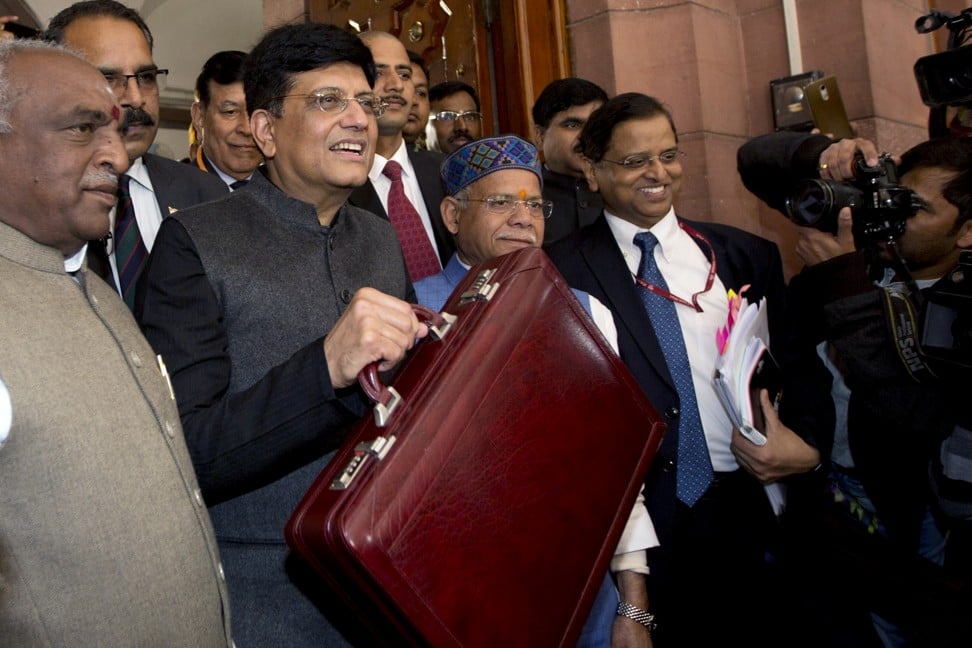
India’s Commerce Minister, Piyush Goyal, will not attend the ministerial level talks this week in Beijing. Photo: Bloomberg

This “Asean-plus three” deal would be designed to encourage India to come on board, Elms said, but would surely not go down well in Australia and New Zealand, which have been two of the agreement’s biggest supporters.

New Zealand has had objections to the investor protections sections of RCEP, and both countries have historically been pushing for a more comprehensive deal than many members are comfortable with, since both already have free trade agreements with many of the other member nations.

However, their exclusion would be due to “an unfortunate geographical problem, which is if you’re going to kick out India, there has always been an Asean-plus three concept to start with”. Therefore it is easier to exclude Australia and New Zealand, rather than India alone, which would politically difficult.

A source close to the negotiating teams described the prospect of being cut out of the deal at this late stage as a “frustrating rumour”, adding that “as far as I know [it] has no real basis other than a scare tactic against India”.

There was “never a chance of concluding [the deal during] this round, but good progress is being made is what I understand. The key issues remain India and China”, said the source, who wished to remain anonymous.

Replacing bilateral cooperation with regional collaborations is a means of resolving the disputesTong Jiadong

However, Tong Jiadong, a professor of international trade at the Nankai University of Tianjin, said Washington’s refusal to recognise India as a developing country at the World Trade Organisation could nudge the world’s second most populous nation closer to signing RCEP.

“That might push India to the RCEP, accelerating the pace of RCEP,” Tong said, adding that ongoing trade tensions between Japan and South Korea could also be soothed by RCEP’s passage.

“Replacing bilateral cooperation with regional collaborations is a means of resolving the disputes between the two countries,” Tong said.

Although the plan was first proposed by the Southeast Asian countries, China has been playing an increasingly active role, first as a response to the now defunct US-backed Trans-Pacific Partnership (TPP), and more recently as a means of containing the impact of the trade war.

China’s vice-commerce Minister, Wang Shouwen, told delegates last week that RCEP was “the most important free trade deal in East Asia”. He called on all participants to “take full advantage of the good momentum and accelerating progress at the moment” to conclude a deal by the end of the year.

Source: SCMP

02/07/2019

China Focus: China marks 98th anniversary of CPC’s founding

BEIJING, July 1 (Xinhua) — Monday marks the 98th anniversary of the founding of the Communist Party of China (CPC). Across the country, various types of events — book readings, concerts, visits to memorials, and renewing vows — have been held to mark the occasion.

Founded in 1921, the CPC has grown from a small party of about 50 members into the world’s largest ruling party, with more than 90 million members.

A brick-and-wood building on Xingye Road in Shanghai, where the CPC held its first national congress, has been packed with visitors in days leading to the anniversary.

In 1921, delegates representing about 50 CPC members nationwide convened the first national congress in the building, though they later had to move to a boat on Nanhu Lake in Jiaxing of east China’s Zhejiang Province due to harassment by local police.

The historic building has been open to the public as a museum since 1952.

Near Nanhu Lake, hundreds of members of the public gathered on a city square to present a chorus to wish the CPC a happy birthday. A relay run was held on Monday to commemorate the occasion.

Zhang Xianyi, the curator of the Nanhu Lake Revolution Museum, said the museum has become increasingly popular. On average, 11,000 people visit the museum and the boat every day. Last year, over 1.25 million people paid visits to the sites, he said.

Also on Monday, Li Jian, deputy manager-in-general of a private electronics maker in Zhengzhou, capital city of central Henan Province, had a new title. He was elected as head of a seven-member CPC branch in the company.

Li works in the Henan branch of the China Communication Technology Co., Ltd., a private company headquartered in Shenzhen.

Over the past decades, a growing number of private companies have set up CPC branches.

“By establishing a CPC branch, I hope the organizational life of CPC members can facilitate progress in achieving company goals,” Li said.

“As a CPC member myself, I hope I can play a leading role in guiding our staff forward,” he added.

Zhao Lei, an employee of the company and also a CPC member, said the spirit of Party building is in line with the entrepreneurial spirit in that it strengthens the sense of responsibility, innovation, attention to details and persistent learning.

“A strong CPC organization attracts people to the company and lends a competitive edge to it,” he said.

“Establish a CPC branch — only a good company actively seeks to do such a thing, if you ask me. This company has been an honest one. We have complaints, and it responds to them,” said company driver Su Nanju, who is not a CPC member.

Across the country, an education campaign on the theme of “staying true to our founding mission” has been launched throughout the Party in which members are called on to keep firmly in mind the fundamental purpose of whole-heartedly serving the people and its historic mission of realizing national rejuvenation.

In southwest China’s Guizhou Province, a conference was held on Monday to commend outstanding CPC members in the battle against poverty. China vows to eradicate absolute poverty by 2020. In areas still perplexed by impoverishment, dedicated CPC members are leading the people to exert transformational changes.

“People say if you have a daughter, never marry her to someone from Qinggangba, because she would have nothing to eat but pickled vegetables,” said Leng Chaogang, Party chief of the Qinggangba village at the conference.

“But now, people here have become rich thanks to good policies of the Party, dedicated work of the cadres, and the relentless strength of the people. We will continue to work harder to make our lives better,” he said.

Source: Xinhua

21/05/2019

Chinese street cleaner says unlicensed taxi drivers who throw cigarette ends cost him nearly half a day’s wages

  • Man says his pay packet takes a hit every time cabbies flick butts onto the street
  • Zhengzhou city management says supervisors are too zealous with staff fines
Local authorities say a street cleaner in Henan province fined for the cigarette butts left by smokers on his beat may be the victim of a zealous supervisor. Photo: Weibo
A street cleaner in eastern China who was filmed complaining about the hefty fines he had to pay for the cigarette ends found littering his section of road has won a hearing for his case and the support of internet users, social media site Pear Video said on Tuesday.
In the video taken on Saturday, the elderly man from Zhengzhou in Henan province claimed that he was once fined 260 yuan (US$38) – 7 yuan (about US$8) per cigarette end – from an 86 yuan per day pay packet.
“Today, I had to clean up five or six thousand cigarette butts,” the man said in the video while working outside a subway station.
“All the fines come out of my salary. This month they docked me a few hundred yuan.”
The Zhengzhou street cleaner says he can pick up thousands of cigarette ends off the street each day but the littering in his section does not stop. Photo: Weibo

The man blamed littering on unauthorised taxi drivers who throw cigarette ends into the street.

“These black cab drivers come here every day, again and again. They never stop coming here,” the cleaner was quoted as saying.

Pear Video spoke to other street cleaners in Zhengzhou, who confirmed that they were fined 7 yuan per cigarette butt found after cleaning.

It’s a dirty job, but don’t treat them like trash: Hong Kong’s cleaners are an aged, overlooked group
However, city authorities denied that the penalty system was strictly enforced and blamed overzealous monitoring officers.

“[Management patrol] will say things like this because they want to supervise the street cleaners. But there are no detailed written guidelines, and this was never formally implemented,” a representative from the Zhengzhou City Management Command Centre was quoted as saying in the report.

“It is just for the purpose of verbal supervision and encouragement.”

The Zhengzhou official said the centre would investigate further and speak to the street cleaners about fines.

In response to the cleaner’s complaints, city authorities in Zhengzhou say they will investigate and speak to staff about fines. Photo: Weibo

The video stirred up angry reactions on Weibo, China’s Twitter-like platform.

“When [Pear Video] investigated they say it hasn’t been implemented. If they didn’t investigate, they would have just carried on giving fines,” read one comment that attracted more than 17,000 likes.

Street cleaners in China often earn meagre salaries for gruelling manual labour for long periods of time.

Last month, it emerged that more than 500 street cleaners in the city of Nanjing were ordered to wear GPS tracking bracelets that would alert authorities if they stayed in the same place for more than 20 minutes. The manufacturer removed the feature after a backlash inside and outside China.

Source: SCMP

09/04/2019

Int’l trade fair opens in central China

ZHENGZHOU, April 8 (Xinhua) — An international investment and trade fair opened Monday in central China’s Henan Province.

More than 15,700 business delegates, including 2,566 from overseas, are taking part in the 13th China (Henan) International Investment and Trade Fair in Zhengzhou, the provincial capital, according to the organizer.

The fair covers an exhibition area of 54,000 square meters. A batch of cooperation projects is expected to be inked at the fair, with projects each worth more than 1 billion yuan (149 million U.S. dollars) to account for about one-third of all deals to be signed.

A variety of activities, including a forum on “Air Silk Road” will be held during the fair. More than 170 company executives and 43 scholars will participate in these activities.

Source: Xinhua

Law of Unintended Consequences

continuously updated blog about China & India

ChiaHou's Book Reviews

continuously updated blog about China & India

What's wrong with the world; and its economy

continuously updated blog about China & India