Chindia Alert: You’ll be Living in their World Very Soon
aims to alert you to the threats and opportunities that China and India present. China and India require serious attention; case of ‘hidden dragon and crouching tiger’.
Without this attention, governments, businesses and, indeed, individuals may find themselves at a great disadvantage sooner rather than later.
The POSTs (front webpages) are mainly 'cuttings' from reliable sources, updated continuously.
The PAGEs (see Tabs, above) attempt to make the information more meaningful by putting some structure to the information we have researched and assembled since 2006.
Chinese geologists think they have formula that could help to increase control of market in the elements hi-tech industries depend upon
Simple combination of clay mined for porcelain production, granite bedrock and acid rain could point to lucrative sources of rare earths
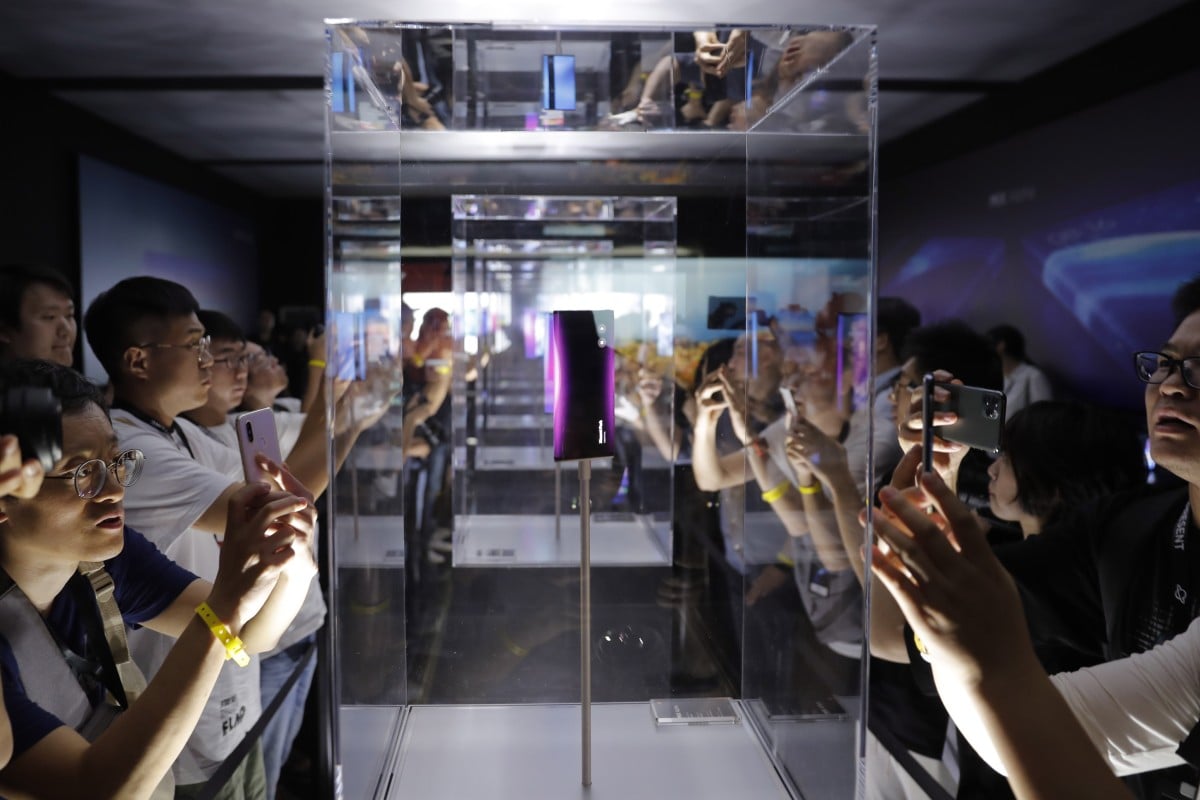
China has 80 per cent of the reserves of rare earth elements the world needs to keep talking on its smartphones, and geologists in Guangzhou think they know why. Photo: EPA
Geologists in southern China say they have isolated a series of critical factors that could make it easier to find rare earth elements used in hi-tech consumer goods such as smartphones.
China has more than 80 per cent of the world’s reserves of heavy rare earths such as terbium, dysprosium and holmium concentrated in a few provinces to the south of the country.
The reason for the concentration is one of the biggest puzzles in geology, but researchers at the Guangzhou Institute of Geochemistry in Guangdong province say the answer may be found in a combination of clay deposits, acid rain and granite that is distinctive to southern China.
Professor He Hongping and his colleagues came to the conclusion by testing the interaction between rare earths and different types of clay. Through their research they found that kaolinite – or china clay – was the best at absorbing rare earths from water.
The clay, named after Gaoling village near Jingdezhen, a centuries-old ceramic production centre in east China’s Jiangxi province, is a raw material for porcelain production.
While kaolinite is found in many countries, those places do not have rare earth deposits – probably because of the lack of acid rain, He said.
“You need the right environment.”
He said that rocks that contained tiny amounts of rare earth elements weathered faster in an acid environment, but the acidity could not be too high or the rare earth might run off before it could be captured by the clay.
Why Beijing cut tax rate on rare earths amid trade war
Rainwater with the right natural acidity often occurred in areas around 20 degrees latitude, such as southern China, he said.
The last step was to locate the source rock. Granite formed in volcanic eruptions between 100 million and 200 million years ago is considered to be the main source of rare earths.
He said that part of the Pacific tectonic plate containing rare elements might have been forced under the Eurasian Plate and was pushed to the surface as magma that formed rocks.
Other countries could learn from the Chinese experience, said He, whose team submitted their findings to the research journalChemical Geology.
Recent discoveries in Vietnam, Australia and North Carolina in the United States conformed to the Guangzhou team’s theory, but there was still more research to do, he said.
“Rare earth deposits are quite unlike minerals such as copper. Sometimes they occur in this mountain but not in another nearby with almost the same geological features.
Sometimes they occur in one half of the mountain but not in the other.”
With China and the US engaged in a trade war, and Beijing cutting taxes on mining companies looking for these elements, the pressure was on to unlock the secrets of China’s abundant rare earth deposits, he said.
Does China’s dominance in rare earths hold leverage in trade war?
Dr Huang Fan, associate researcher with the China Geological Survey, said the Guangzhou discovery would help geologists to find more rare earths.
Most rare earth mines were located along the borders between provinces such as Guangdong and Jiangxi, but recently there were discoveries on a plateau in Yunnan province, where few geologists believed rare earths could be found, he said.
“There are many more rare earth deposits out there waiting for us.”
said on Friday it has ended the production of smartphones in its last factory in China.
Operations at the plant in the south China city of Huizhou, Guangdong province, ended last month, it said in an email.
The company made “the difficult decision to cease operations of Samsung Electronics Huizhou” in order “to enhance efficiency” in its manufacturing, it said.
Samsung’s market share in China has dwindled to near insignificance as competitors like Huawei and Xiaomi have taken the upper hand. It once had 15 per cent of China’s smartphone market.
Samsung once had a 15 per cent share of China’s smartphone market. Photo: AFP
The South Korean giant has moved a large share of its smartphone production to Vietnam and closed a factory in northeastern China’s Tianjin last year.
“The production equipment will be reallocated to other global manufacturing sites depending on our global production strategy based on market needs,” the statement said.
Samsung is the world’s biggest manufacturer of semiconductors and smartphones and a major producer of display screens. But the flagship of South Korea’s largest conglomerate is currently weathering a spell of slack demand for computer chips.
Like other South Korean electronics makers, it also is facing the impact of tightened Japanese controls on exports of hi-tech materials used in semiconductors and displays.
On Wednesday, Sony said it was closing its Beijing smartphone plant and would only make smartphones in Thailand.
“In China, people buy low-priced smartphones from domestic brands and high-end phones from Apple or Huawei,” Park Sung-soon, an analyst at Cape Investment & Securities, said.
“Samsung has little hope there to revive its share.”
Samsung’s factory in Huizhou was built in 1992, according to the company. South Korean media said it employed 6,000 workers and produced 63 million units in 2017.
Samsung manufactured 394 million handsets around the world in 2107, according to its annual report.
Police in Rewa, in Madhya Pradesh state, confirmed to BBC Hindi’s Shuriah Niazi that they were investigating the theft on the grounds of actions “prejudicial to national integration” and potential breach of the peace.
Mangaldeep Tiwari, caretaker of the Bapu Bhawan memorial, where the ashes were being held, said the theft was “shameful”.
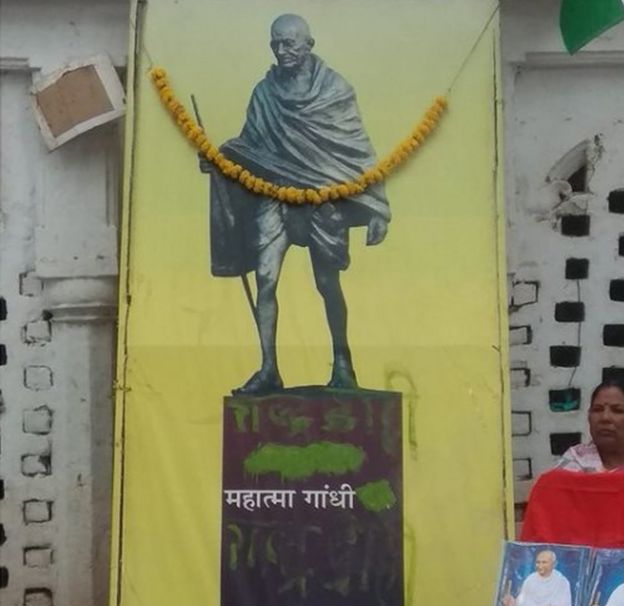
“I opened the gate of the Bhawan early in the morning because it was Gandhi’s birthday,” he told Indian website The Wire. “When I returned at around 23:00 [17:30 GMT], I found the mortal remains of Gandhi missing and his poster was defaced.”
Police took action after Gurmeet Singh – leader of the local Congress political party – filed a complaint.
“This madness must stop,” Mr Singh told The Wire. “I urge Rewa police to check CCTV cameras installed inside Bapu Bhawan.”
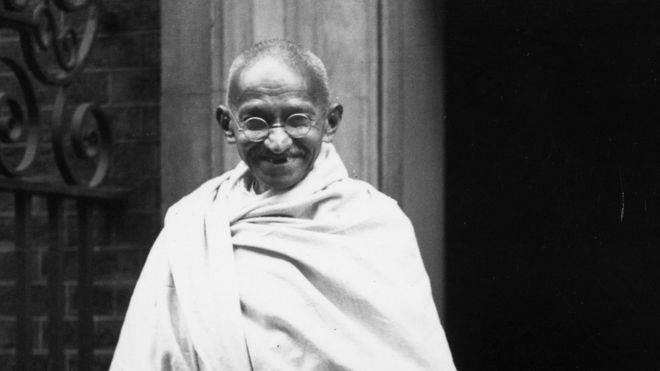
Image caption The thieves are believed to have also scrawled “traitor” across Gandhi’s photographGandhi led a non-violent resistance movement against British colonial rule in India, inspiring people across the world.
Most Indians still revere him as the “father of the nation”.
But Hindu hardliners in India accuse Gandhi of having betrayed Hindus by being too pro-Muslim, and even for the division of India and the bloodshed that marked Partition, which saw India and Pakistan created after independence from Britain in 1947.
He was assassinated by a Hindu extremist in January 1948.
After his death, he was cremated, but his ashes were not scattered in a river, in accordance with Hindu belief.
Because of his fame, some were held back and sent around the country to various memorials – including the one in the Bapu Bhawan.
Media caption How Gandhi’s last day was photographed
GUANGZHOU, Oct. 2 (Xinhua) — With the help of audio description given by volunteers, visually impaired people in south China’s Guangzhou “watched” live broadcasting of China’s National Day celebrations on Tuesday.
“The aircrafts are flying through the sky in a shape of triangle, with seven lines of colored clouds behind,” the volunteers described the formation in detail.
On Tuesday, a grand military parade and a 100,000-people mass pageantry were held in Beijing to celebrate the 70th founding anniversary of the People’s Republic of China.
A total of 100 visually-impaired people “watched” the broadcast in Guangzhou Library. Wearing earphones, they got a full account of the celebrations from two volunteers.
For Lu Haixia, one of the volunteers, narrating a live broadcasting put her under great pressure.
“It takes me 100 hours to prepare the oral scripts for a movie, and much more hours for preparing for such a long live broadcasting in order to provide informative accounts of the event to the audience,” she said.
“With the detailed narration, I feel like seeing formations parading on the Chang’an Avenue, and that I can get more involved in the cheering,” said Wang Zeyu, one of the “viewers.”
This was the first time for Guangzhou to introduce a live broadcast of major celebrations with audio description to the visually impaired. Organizers of the event hope to carry the effort forward to give the visually impaired more confidence to get integrated into the society.
FUZHOU, Oct. 3 (Xinhua) — Zheng Yangmei, 35, has mixed feelings about working as a receptionist in her childhood home, a 400-year-old country lodge that has been adapted into a luxury hotel in southeast China’s Fujian Province.
The new profession gives her a different angle to perceive the beauty of the ancestral house built sustaining Tang Dynasty (618-907) architecture style, as experts marveled.
The restoration is beyond her family clan’s imagination, which keeps the historic details of the dilapidated residence as much as possible, while replacing the interior with modern decor suitable for comfortable living.
The place of a stinky hog pen in the yard, which Zheng remembers, is turned into a tea pavilion decorated with a neutral color palette. But the lodge is still roughly what she remembers, wood carvings, stone mills and the grey-tile roofs.
Tucked away in the idyllic village of Banding, an hour’s drive north of Fuzhou, the provincial capital, the old house offers a breathtaking view in the backdrop of lush mountains and a vast expanse of paddy fields.
Named “Sanluocuo,” or three juxtaposed houses, the wood and stone complex covers an area of 3,000 square meters and consists of over 200 dark shabby rooms, where Zheng spent part of her childhood life bunking with her parents and two siblings in a 25-square-meter room.
Since the mid 16th century, it has been held by the extended Zheng family clan. Zheng remembers that there were over 200 members living in the houses when she was there.
“There was no toilet, no tap water in each house,” said Zheng, whose family moved out of the aged buildings when she was 8, as they could no longer fix the house. Instead, they built new two-story brick houses 1,000 meters away.
The old buildings were completely abandoned by all the villagers in the early 2000s, Zheng recalled.
She left the village for college study at the age of 19 and then worked as a vet in several pig farms in more prosperous towns, until 2013 when she got married and returned to the village to raise her kids.
“Villagers seldom went back to the buildings, considering the place pretty spooky, with filthy water, messy electric wires hung in the air like spider webs and cracks on walls,” said Zheng, a mother of two daughters.
Elders of the family clan called on the clan members to raise funds to fix leaky roof tiles, control termites, and straighten leaning walls to prevent the ancestral houses from completely collapsing, but nobody would imagine it can be fixed in a way that the hotel developer later did.
With the local government-initiated plan for preserving ancient folk houses, a property company came in investing 150 million yuan (20.98 million U.S. dollars) to rehab the obsolete buildings.
After two years of reconstruction, “Sanluocuo” was turned into a trendy boutique hotel with centuries-old wooden beams, garden-like atriums, earthen walls and contemporary luxury.
The transformative creation of “Sanluocuo” is among the artworks selected for the China Pavilion overseas show at the ongoing Biennale de Curitiba 2019 in Brazil, as a model for “building a future countryside.”
“We actually leased the complex from the villagers for the renovation. The old rooms were very small. So we converted the original 200 cramped rooms into 40 guest rooms to make them comfortable for living, but we pay the rents based on 200 rooms to the villagers,” said Zhang Yiwen, operations manager of the project.
Targeted at high-flown customers, the hotel rooms in “Sanluocuo” are priced on average at over 600 yuan per night even in the off season.
Visitors can touch the original wood pillars with deep cracks, and decayed rammed-earth walls with weeds, while enjoying hot bath and clean toilets with heated seats inside each room.
The hall that used to house the Zheng family shrine and warehouses have been converted to galleries, restaurants, bars and stores attached to the hotel, which help the village unleash its cultural potential, and once again become a place that villagers like hanging around in leisure time.
The project has triggered an online sensation, after visitors post their travel photos inside the hotel, showing off their cultural and stylish taste on social media.
Zhang said weeks ahead of the National Day holiday, all of the 40 rooms were booked out.
Zheng and 30 other villagers are employed in the hotel, which has also sparked an entrepreneurial enthusiasm in the village. Zhang said the hotel is willing to help villagers open small inns, eateries and stores selling souvenirs and local delicacies, to further improve the village’s tourist potential.
Zhang said the real estate developer of “Sanluocuo,” Land Shine, has leased two more clusters of such old residence from a neighboring village, as folks bear wishes that their obsolete ancestry complex could shine as well as “Sanluocuo.”
Tourists visit the imperial tombs dating back to the Western Xia Dynasty (1032-1227) in Yinchuan, capital of northwest China’s Ningxia Hui Autonomous Region, Oct. 2, 2019, the second day of the 7-day-long National Day holiday. (Xinhua/Feng Kaihua)
BEIJING, Oct. 2 (Xinhua) — China on Wednesday said it welcomes the statements of the Democratic People’s Republic of Korea (DPRK) and the United States to resume dialogue and hopes the two sides will grasp the opportunity to strive for positive outcomes.
Foreign Ministry spokesperson Hua Chunying made the comments in a press statement issued Wednesday night.
“We have noticed the statements made by both the DPRK and the United States on resuming contact and dialogue. We welcome that,” said Hua.
China has always supported the DPRK-U.S. dialogue and a political settlement of the Korean Peninsula issue, said Hua.
“Under current circumstances, we hope both the DPRK and the United States will grasp the opportunity and meet each other halfway to achieve positive results from the dialogue,” she said.
DPRK First Vice Foreign Minister Choe Son Hui said in a statement on Tuesday that Pyongyang and Washington have agreed to have preliminary contact on Oct. 4 and hold working-level talks on Oct. 5. It is said the U.S. has confirmed this.
The denuclearization talks between Pyongyang and Washington have hit a stalemate since the second summit between top DPRK leader Kim Jong Un and U.S. President Donald Trump in Hanoi in February ended without any agreement.
Managers of the Leshan Giant Buddha and Jiuzhaigou National Park restrict ticket sales as millions head off for the holiday break
Park authorities in charge of the Leshan Giant Buddha in Sichuan have restricted visitor numbers in golden week. Photo: Xinhua
Several major tourist attractions in China have capped visitor numbers during this year’s National Day “golden week” holiday as millions take the chance to travel.
October 1 marked the start of a week-long break on the mainland, with an estimated 800 million people expected to go on trips in China or overseas, about 10 per cent more than last year, according to the China Tourism Academy.
The academy estimated that 726 million people would take domestic trips in this peak holiday period – a 9.4 per cent increase from last year, but that is the lowest level of growth since 2007 as pressure from China’s slowing economy and the trade war with the United States take their toll.
Managers at the scenic area surrounding the Leshan Giant Buddha – a 71-metre (233 feet) tall ancient statue carved into a cliff in southwestern Sichuan province – said last week that daily tickets would be capped at 22,400 during the holiday, which runs until Monday.
West Lake in Hangzhou, Zhejiang province, drew 300,400 visitors as golden week started. Photo: Xinhua
The park said it would update visitors on daily ticket sales through social media.
“Today’s tickets for the Giant Buddha have reached the limit and sales have stopped,” the park management committee said on its Weibo account on Tuesday. “To all tourists, please rearrange your itinerary. You can visit the areas surrounding the Giant Buddha scenic spot,” it said, adding that tickets could be booked online for any day for the rest of golden week.
“I expected it to be chock-full of people, but actually today it’s still relatively calm. I had lots of fun,” a visitor to the Giant Buddha told Pear Video on Tuesday.
Hong Kong protests leave ‘golden week’ tourist boom in tatters
Jiuzhaigou National Park in Sichuan said last week that it would be limiting visitors to 5,000 per day during golden week and said on Monday that tickets had sold out.
The network of valleys known for its natural scenery was devastated by an earthquake in August 2017, and reopened with limited access in March 2018.
However, there were no restrictions at other attractions. In eastern Zhejiang province, 340,400 visitors went through the gates at Hangzhou’s West Lake on Tuesday, the Global Times’ Chinese edition reported.
“There’s too many people. I have never seen so many of them in my life,” one tourist was quoted as saying.
A guide also said that instances of “uncivilised behaviour”, such as trampling on the gardens, were down compared to last year.
“During the major holidays, many tourist attractions are so crowded that tourists can barely move an inch,” Hangzhou Daily said in an editorial on Monday.
“Not only is the tourist experience bad, but there are also safety hazards such as being trampled on, and this puts a lot of pressure on nearby public transport and food establishments.”
Travel booking platform Ctrip said that tourists heading overseas were increasingly seeking out new destinations, with bookings to places such as the Czech Republic, Austria, Croatia, Malta and Cambodia up by 45 per cent this year.
However, bookings for Hong Kong had fallen substantially after nearly four months of anti-government protests, Ctrip said.
HONG KONG (Reuters) – Staff at Cathay Pacific Airways, Hong Kong’s flagship airline, are on edge.
A Cathay Pacific Boeing 777-300ER plane lands at Hong Kong airport after it reopened following clashes between police and protesters, in Hong Kong, China August 14, 2019. REUTERS/Thomas Peter
Their city has been gripped by months of anti-government protests, and their company is feeling the wrath of China’s aviation regulator after some staff members took part or expressed support.
Since an Aug.9 directive by the Civil Aviation Authority of China (CAAC) that called for the suspension of staff who supported or participated in the demonstrations, the regulator has rejected some entire crew lists without explanation, two sources with knowledge of the matter told Reuters.
The rejections have forced Cathay to scramble, pulling pilots and flight attendants off standby while it investigates social media accounts in an effort to determine which crew member has been deemed a security threat, one of the sources said.
Other disruptions have come in the form of a huge jump in the number of plane inspections upon landing, four pilots said.
The flexing of regulatory muscle has contributed to a climate of fear within the airline, with employees telling Reuters they felt Cathay’s longer-term future as an independent company was highly uncertain and subject to Beijing’s whims.
The CAAC’s labelling of employees who support the protest as a security risk and its demand that they be suspended from flying over mainland airspace has been a de facto career killer.
Around three quarters of Cathay flights use mainland airspace and due to the directive, 30 rank-and-file staff, including eight pilots and 18 flight attendants, have been fired or resigned under pressure, according to the Hong Kong Cabin Crew Federation.
Cathay CEO Rupert Hogg and his top deputy also resigned in August amid the mounting regulatory scrutiny on the 73-year-old airline, one of the region’s most high-profile brands that draws on Hong Kong’s British heritage.
“Things changed very quickly,” said Jeremy Tam, a pro-democracy lawmaker and pilot who resigned from the airline after the CAAC directive, likening the atmosphere to a political trial. “The threat is huge and it’s almost like zero to 100 in two seconds.”
Reuters talked to 14 current and former employees for this article. Nearly all declined to be identified for fear of being fired or due to the sensitivity of the matter.
The CAAC did not respond Reuters requests for comment on the rejections of crew lists or the increase in plane checks.Cathay said in a statement it must comply with all regulatory requirements. “Quite simply, this is our licence to operate; there is no ground for compromise,” it said.
The airline declined to comment on the number of employee departures, but said any terminations took into account factors such as a person’s ability to perform their role.
DEMERIT SYSTEM
Aviation regulators around the world conduct occasional plane inspections at airports to ensure an airline is in compliance with safety regulations.
But after the CAAC’s Aug. 9 directive, the once-infrequent inspections occurred almost daily and included the new and unusual step of checking phones owned by crew for anti-China photos and messages, the pilots said, adding that this had led to flight delays.
The step-up in checks has increased the likelihood of regulators finding minor issues to write up, which pilots said had included dirt on the plane’s exterior and scratches on a fire extinguisher.
Infractions can have outsized consequences under the CAAC’s strict demerit points system, they said, noting the regulator could force Cathay to reduce its number of flights, cut destinations or in a worst-case scenario, revoke the airline’s right to fly to mainland China.
Management has urged staff to do their utmost to avoid infractions.
“It is nothing less than the survival of the airline at stake,” said a senior employee. “Management have made that abundantly clear at meetings.”
Executives are particularly sensitive after seven incidents outside mainland China in the past two months in which pre-flight checks found emergency oxygen bottles for crew were depleted.
The CAAC is more public than many regulatory peers about disclosing safety violations, warnings and punishments.
In 2017, Emirates was banned from expanding its operations for six months following two safety incidents, while flag carrier Air China Ltd was ordered last year to cut Boeing Co 737 flights by 10% after an emergency descent linked to a pilot smoking an e-cigarette in the cockpit.
Cathay declined to provide information on its points under the CAAC system but said it wanted to emphasise that there had been no impact on its flight services into mainland China.
The pilots said the high frequency of airplane checks, which one described as “very intimidatory”, was starting to recede.
A THOUSAND CUTS
Employees are also feeling pressure from other regulatory bodies.
Last week, ahead of China’s National Day on Oct.1, immigration officers at some mainland airports requested photos of crew with the Chinese flag, said a pilot at regional arm Cathay Dragon who flies to the mainland regularly.
He said to his knowledge, most pilots – many of whom are expats from Western countries – had refused but Hong Kong cabin crew were “too nervous to say no” given the scrutiny on their actions by the company and the Chinese government.
“Everyone is walking on eggshells in China,” the pilot said.
Cathay did not respond to a request for comment, while China’s Ministry of Public Security, which oversees immigration, did not respond to a request for comment during a week of public holidays.
There has been no let-up in the widespread, sometimes violent, unrest that has beset Hong Kong. Triggered by a now-withdrawn extradition bill, it has morphed into an outpouring of opposition to the former British colony’s Beijing-backed government.
The crisis has also meant a sharp drop in travel demand to Hong Kong, putting more pressure on Cathay.
Cathay’s overall passenger numbers were down 11.3% in August. Flights at Cathay Dragon, which does most of Cathay’s mainland flying, were on average 60-65% full in September, down from the usual 80%, according to estimates from two pilots.
The pilots said while the sharp drop in demand was in some ways similar in scale to that weathered by Cathay during the SARS epidemic and the global financial crisis, there were key differences that felt more threatening to the company’s future.
Some state-controlled firms such as China CITIC Bank International and Huarong International have told employees to avoid flying with Cathay, and it has been attacked by Chinese state news organisations as well as by many mainland consumers on social media.
CAAC’s Aug.9 statement which called staff who supported the protests a security risk has also put Cathay’s reputation as one of the world’s safest airlines under a cloud it does not deserve, employees said.
Many acknowledged the new management team, which oversees around 33,000 employees, has few palatable options in dealing with the situation given the sway Beijing holds over the airline’s operations.
But they lamented the loss of freedom of speech and sense of job security, saying employees are afraid to speak about anything even vaguely political or voice support for protests on social media for fear of being reported by colleagues under a whistleblower policy.
“It has become a Hong Kong company with mainland employment terms,” a pilot at Cathay Dragon said. “The risk is death by a thousand cuts.”
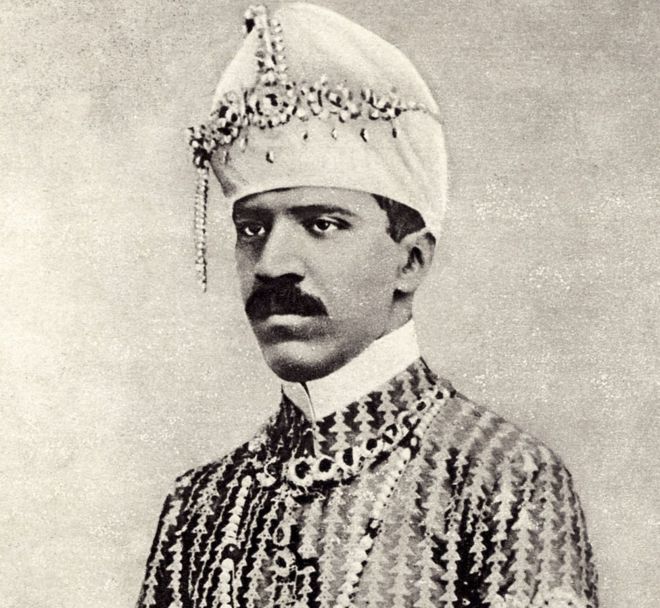
Image copyright GETTY IMAGESImage caption Mir Osman Ali Khan was once the world’s richest man
A London court has ruled that £35m ($42m) held in a UK bank account must go to the descendants of an Indian royal, and not to Pakistan.
The dispute began in 1948 when the last Nizam (king) of Hyderabad deposited £1m in the UK account, held by the then Pakistan high commissioner. With interest, the sum has grown to £35m.
The judge ruled there was no evidence to back Pakistan’s claims to the money.
The origins of the dispute go back to the 1947 partitioning of British India.
Hyderabad, which was a princely state, was annexed by India in 1948 in a military operation – the cash transfer had been made shortly before that.
The Nizam, Mir Osman Ali Khan, had not been able to decide whether his state should be in Pakistan or India.
His descendants alleged that he had asked for the money to be returned weeks after the annexation by India took place, but then Pakistan refused to give it back.
The court case had been fought by his family together with the Indian state.
National Westminster Bank, in which the money had been deposited, refused to release the funds to either party until the case was resolved by the courts.
The interest on the original deposit saw the money grow to £35m by 2019.
Pakistan argued it had been given the money in order to procure arms but the court determined it had the right to rule in the case, given that the money had been deposited in a British bank account.
“The court today made it clear that it did not think the money was handed to Pakistan outright. There is overwhelming evidence that Pakistan only held the money as a trustee and it actually belonged to the Nizam,” Paul Hewitt, the lawyer for one of the grandsons, told the BBC’s Gaggan Sabherwal.
Mr Hewitt said the case, which had begun when his client was a child, was finally being resolved when he was in his 80s.
“We welcome the judgment of Justice Marcus Smith,” Najaf Ali Khan, one of the Nizam’s grandsons, told BBC Telugu.
“The High Court has rightly rejected Pakistan’s claim. The family has long awaited this judgement.”
India’s foreign ministry also welcomed the verdict in a press statement.
Pakistan could seek to appeal, but otherwise the money will be given to the Nizam’s grandsons and the state of India.










 CHINDIA ALERT: You'll be living in their world, very soon