Chindia Alert: You’ll be Living in their World Very Soon
aims to alert you to the threats and opportunities that China and India present. China and India require serious attention; case of ‘hidden dragon and crouching tiger’.
Without this attention, governments, businesses and, indeed, individuals may find themselves at a great disadvantage sooner rather than later.
The POSTs (front webpages) are mainly 'cuttings' from reliable sources, updated continuously.
The PAGEs (see Tabs, above) attempt to make the information more meaningful by putting some structure to the information we have researched and assembled since 2006.
Chinese President Xi Jinping (R) holds talks with visiting Colombian President Ivan Duque Marquez at the Great Hall of the People in Beijing, capital of China, July 31, 2019. (Xinhua/Li Xueren)
BEIJING, July 31 (Xinhua) — Chinese President Xi Jinping and visiting Colombian President Ivan Duque Marquez on Wednesday pledged to promote bilateral relations to new heights.
The year 2020 marks the 40th anniversary of the establishment of diplomatic ties between China and the Latin American country.
During their talks at the Great Hall of the People in Beijing, Xi said Duque’s father, as a member of the then Colombian government, firmly supported the decision to forge diplomatic ties 40 years ago and witnessed the birth of the bilateral relationship.
“The relay baton of China-Colombia bilateral ties is passed to us now,” Xi told the Colombian president.
“I highly appreciate your visit to China, which shows that you are committed to enhancing the traditional friendship and mutually beneficial cooperation between China and Colombia,” said Xi.
Xi called on both countries to intensify high-level exchanges and exchanges of governance experience, deepen mutual political trust, mutual understanding and mutual support.
China will continue to support Colombia in promoting the peace process and post-conflict reconstruction, said Xi.
He also encouraged both countries to further explore potential for pragmatic cooperation, consolidate cooperation in traditional areas and expand to new areas.
China welcomes Colombia to take part in the Belt and Road construction so as to realize the alignment of development strategies of both sides, Xi said, calling on the two to enhance people-to-people exchanges, jointly safeguard the existing international system with the United Nations at its core, promote the reform of global governance mechanisms and make more efforts to help the economic globalization process become more open, inclusive and balanced, and develop towards win-win results.
Xi called Latin American and Carribean countries “a force to be reckoned with in the international arena” as they boast huge potential and broad prospects.
He said China has always respected the rights of Latin American people to choose a development path of their own, supported Latin America in speeding up its integration process and backed the proper handling of the Venezuela issue via dialogue and consultation.
China stands ready to continue to play a role in encouraging dialogue and talks and would like to maintain contacts with Colombia, Xi said.
He added that China is willing to strengthen the building of the Forum of China and Community of Latin American and Carribean States.
Duque offered his congratulations for the 70th anniversary of the founding of the People’s Republic of China.
He said he admired Xi’s outstanding leadership and prominent international influence and would like to learn from China’s governance experience.
Duque said as the two countries will embrace the 40th anniversary of forging diplomatic ties in February 2020, he hoped to further step up bilateral ties and expand cooperation in areas including economy and trade, energy, infrastructure construction, connectivity, the digital economy and creative industries.
Colombia welcomes investment from Chinese enterprises, said Duque, adding that he believed every bilateral project would help support the peace process of Colombia and the country’s economic and social development.
Hailing the significance of the Belt and Road construction to world connectivity and international cooperation, Duque said Colombia will take an active part in the initiative.
Colombia attaches great importance to China’s role in international and regional affairs and is willing to contribute to the development of Latin America-China ties, Duque said.
After the talks, the two presidents witnessed the signing of 12 bilateral agreements in areas including judicial cooperation, trade, agriculture, education and customs.
Duque is paying the state visit at the invitation of Xi from July 28 to 31. This is his first state visit to China. Before his arrival in Beijing, he visited the city of Shanghai, an economic hub in eastern China.
as the two mark 45 years of diplomatic relations this year.
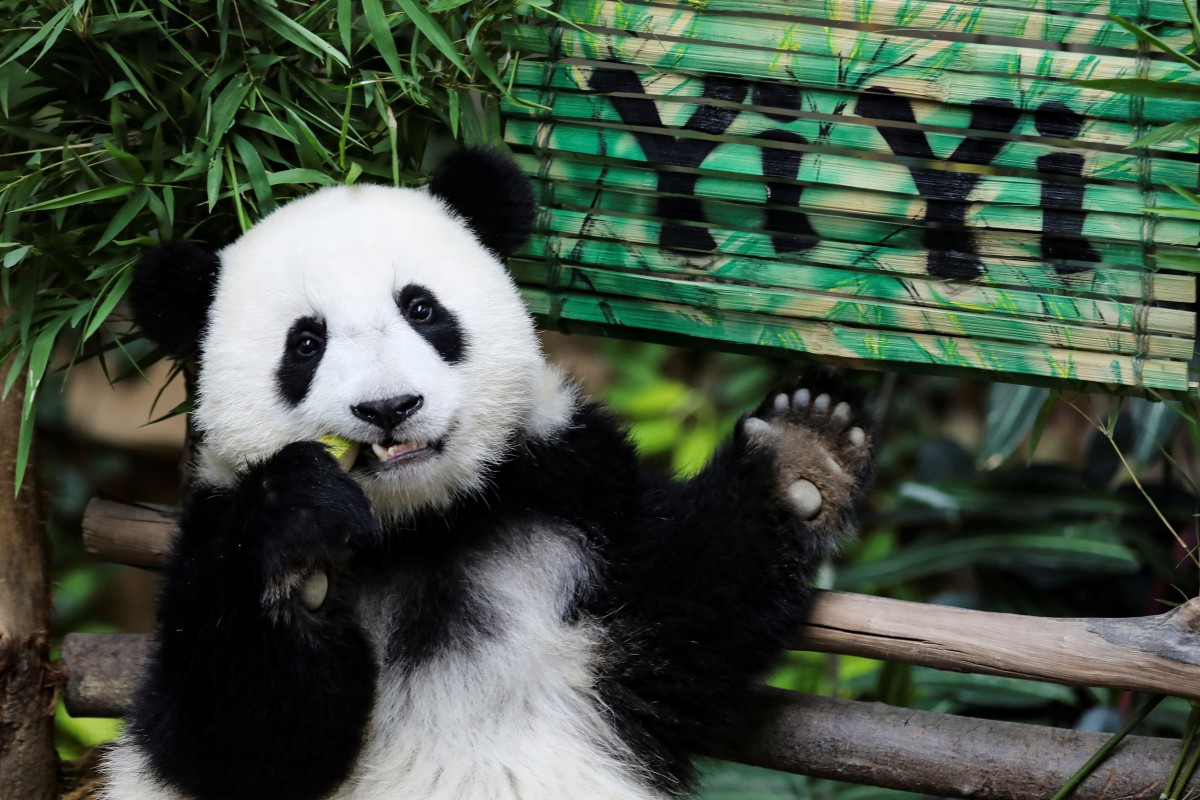
Water, Land and Natural Resources Minister Xavier Jayakumar said Yi Yi’s birth was “momentous” as mother panda Liang Liang had conceived her outside the usual mating season.
Protective panda won’t let Malaysian zookeepers near her newborn cub
“[Yi Yi] is active, bonds well with her mother and is in good health. Though the cub still feeds on milk, it has also been exposed to other diets such as bamboo leaves and carrots,” he said.
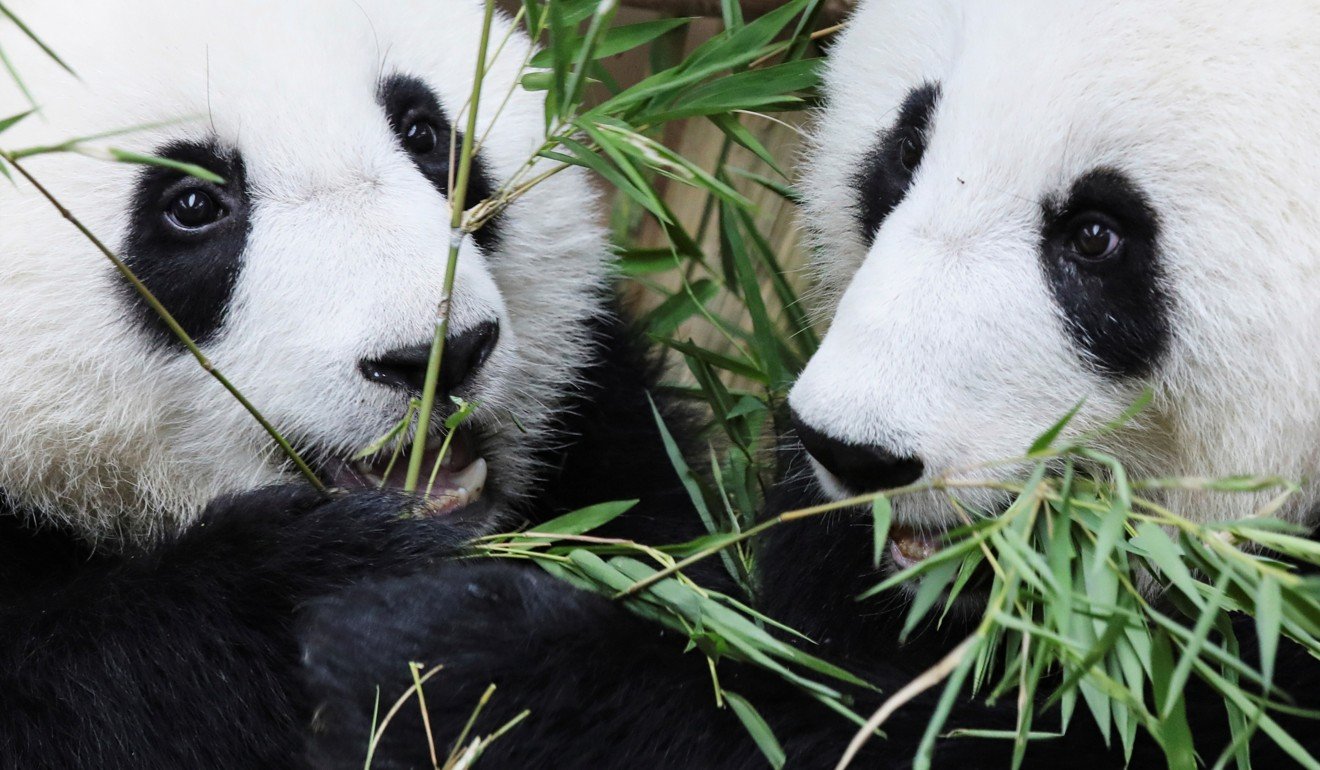
Born last January after being conceived in mid-October 2017, Yi Yi is the second offspring of giant pandas Xing Xing and Liang Liang, who were sent to Malaysia by China in May 2014 to mark 40 years of diplomatic ties
.
Yi Yi (left) plays with her mother Liang Liang during her naming ceremony at Malaysia’s National Zoo. Photo: Reuters
Their first cub, Yi Yi’s sister Nuan Nuan, was born in August 2015 and sent back to China in late 2017 as part of an agreement that cubs born in captivity must be returned at 24 months old.
Chinese Ambassador to Malaysia Bai Tian, who was also present at the naming ceremony, described the pandas as “friendship emissaries”, adding that Xing Xing and Liang Liang were now the “most productive giant pandas overseas”.
Chinese panda loans to Malaysia still on track despite outcry
“That fully shows that friendship really multiplies. It also shows the fact that Malaysia is really a very beautiful and very comfortable home for the Chinese giant pandas,” he said.
Malaysia is among the few countries where Chinese giant pandas have successfully procreated, and holds the record for the quickest conception at just 15 months after the original pair were settled in the National Zoo.
China’s use of panda diplomacy – sending giant pandas to other countries as diplomatic gifts – has been criticised by some Malaysians who were perturbed by the high costs of “renting” the animals.
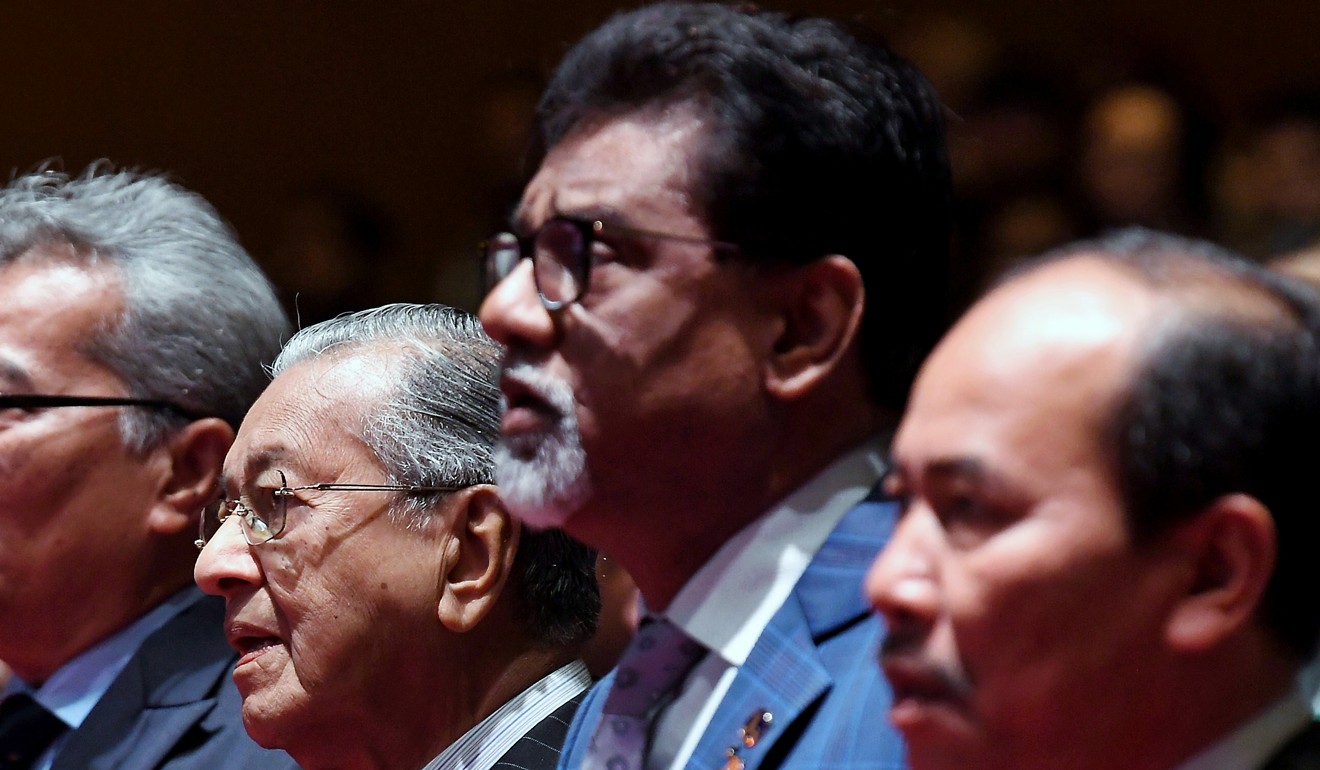
Water, Land and Natural Resources Minister Xavier Jayakumar (centre) with Malaysian Prime Minister Mahathir Mohamad (second from left). Photo: DPA
Disgraced former prime minister Najib Razak, who is currently on trial for corruption and abuse of power linked to the looting of the 1MDB sovereign wealth fund, signed the initial agreement that stipulates an annual payment of 4.18 million ringgit (US$1 million) be paid to China for the pandas, as well as a yearly insurance premium of 50,000 ringgit per animal.
In 2018, Xavier announced that the Malaysian government had spent 4.65 million ringgit that year on managing the National Zoo’s Giant Panda Conservation Centre, with costs expected to balloon to 7.38 million ringgit this year because of a “one-off” conservation fee of about 2.38 million ringgit.
Despite this, Prime Minister Mahathir Mohamad in January described the pandas as an offering from China and “an important diplomatic symbol”.
Fears are growing in the city that the military could be called in to quell unrest
But the costs and complexities of doing so mean Beijing is highly unlikely to give the orders, observers say
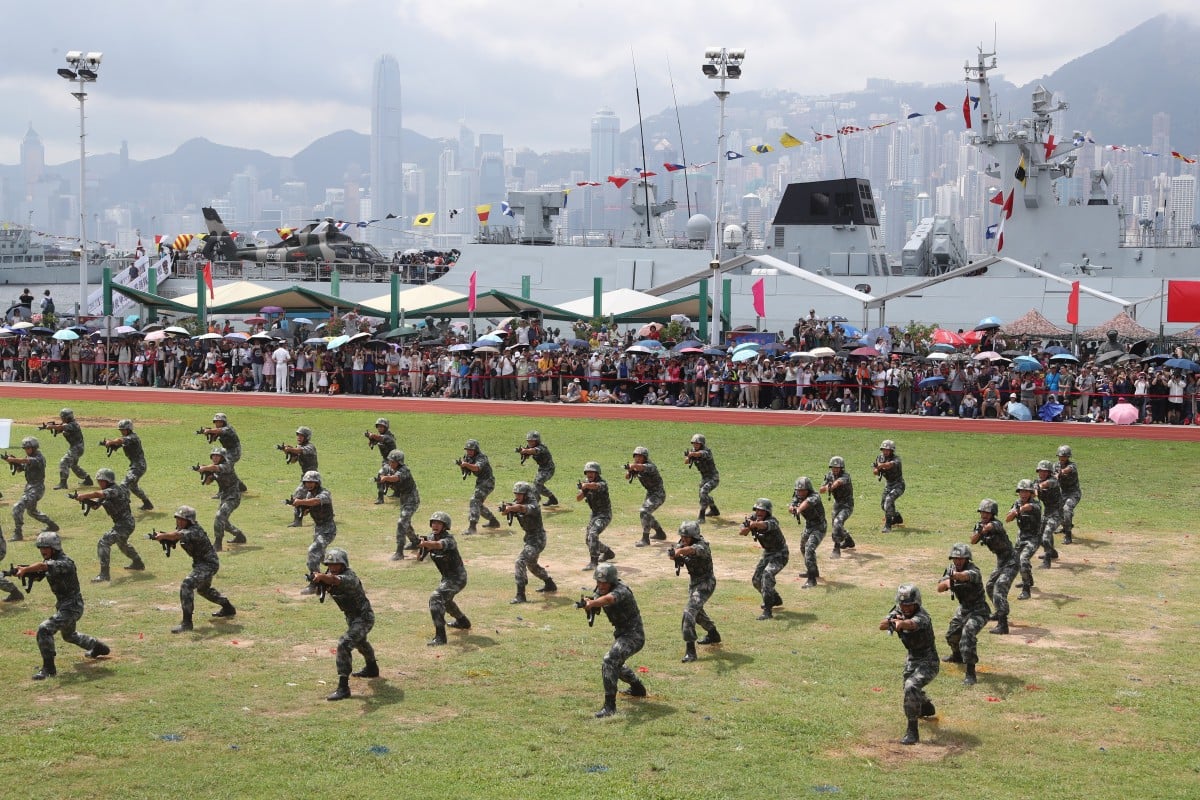
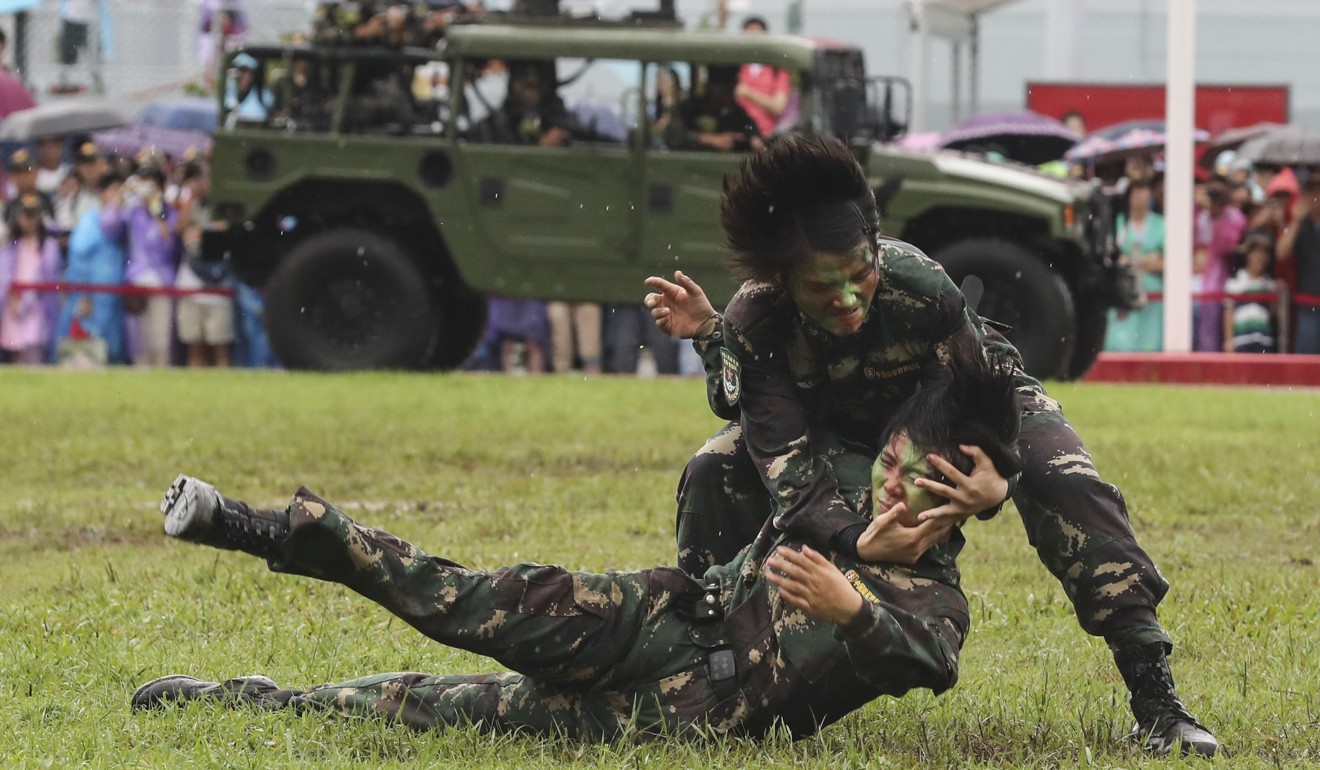
PLA soldiers show their skills during a naval base open day in Hong Kong. The PLA has had a presence in Hong Kong since the city’s return to Chinese sovereignty. Photo: K.Y. Cheng
It is a prospect dreaded by many in Hong Kong, but debate is growing in mainland China about whether the central government should end weeks of upheaval in the city by sending in the People’s Liberation Army (PLA).
The PLA has had a presence in Hong Kong since the city’s return to Chinese sovereignty but – unlike in mainland China – memories of the military’s bloody suppression of pro-democracy students and activists in Beijing in 1989 are still strong in the city three decades on.
Still, images of protesters vandalising Beijing’s liaison office in downtown Hong Kong on Sunday have fanned nationalist anger across the mainland, prompting calls for PLA intervention.
Concerns only deepened on Wednesday when defence ministry spokesman Wu Qian commented on the recent clashes and protests in Hong Kong. Without suggesting any action or plans by the PLA, Wu made clear that the Garrison Law, which governs the operations of PLA troops in Hong Kong, already stipulates that the PLA is legally allowed to help the city maintain law and order at the request of Hong Kong’s government.
“We are closely following the developments in Hong Kong, especially the violent attack against the central government’s liaison office by radicals on July 21,” Wu said.
“Some behaviour of the radical protesters is challenging the authority of the central government and the bottom line of ‘one country, two systems’,” he warned, referring to the formula that grants Hong Kong a high degree of autonomy for 50 years. “This is intolerable.”
Both Article 14 and Article 18 of the Basic Law – the city’s mini-constitution – spell out how and under what circumstances the PLA troops in Hong Kong can be used.
While the legality is clear, analysts still believe that given the exorbitant political cost and complexities involved, using the military would remain an unlikely last resort.
Even Hu Xijin, editor-in-chief of China’s nationalist tabloid Global Times, has spoken out against the idea, citing its “huge political cost” and the “severe uncertainty” it might bring to the situation.
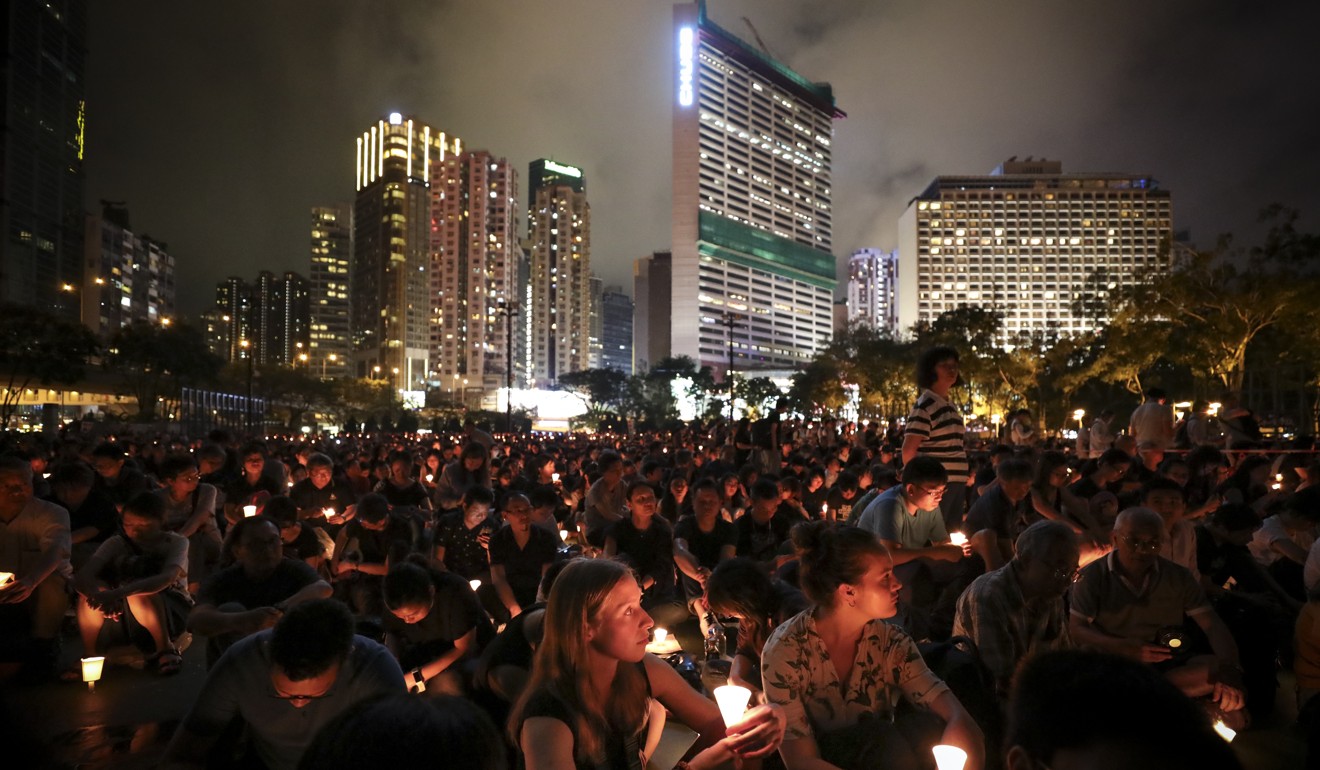
Crowds hold candles at a vigil in Victoria Park in Hong Kong in June to mark the 30th anniversary of the Tiananmen Square crackdown. Photo: James Wendlinger
“Once the PLA has taken charge of the situation in Hong Kong and quelled the riots, what’s next?” Hu said in a social media post on Monday.
Hu said there were no governance procedures in place that would allow the PLA to operate in Hong Kong and return things to normal. He also warned that any such action would be followed by international condemnation and a severe backlash among the Hong Kong public.
“The [PLA’s] Hong Kong garrison is the symbol of national sovereignty. It is not a fire brigade for law and order in Hong Kong,” he said.
Any move to use the Chinese troops will create a furore in the US Congress … They will re-examine the Hong Kong Policy Act very carefully Larry Wortzel, senior fellow at American Foreign Policy Council
The South China Morning Post reported last week that military force was not an option for mainland leaders working on a strategy to resolve the city’s biggest political crisis in decades.
And in June Major General Chen Daoxiang, commander of the Hong Kong garrison, assured David Helvey, US principal deputy assistant secretary of defence for Indo-Pacific security affairs, that Chinese troops would not interfere in the city’s affairs, according to Reuters.
The comments support analysts’ assessments that deploying the PLA is not a viable solution to Hong Kong’s crisis.
“Will the mobilisation of PLA troops further inflame the situation? There might be people who will resist or even revolt against the PLA, and that may lead to bloodshed,” said Lau Siu-kai, vice-chairman of the Chinese Association of Hong Kong and Macau Studies, a semi-official think tank.
The last time Beijing sent in troops to quell pro-democracy protests was during the Tiananmen Square crackdown on June 4, 1989 – bloodshed that has stained the PLA and the Communist Party to this day, despite decades of efforts to wipe it from public memory.
The last time Beijing sent in troops to quell pro-democracy protests was during the Tiananmen Square crackdown in 1989. Photo: Reuters
“Although they don’t like to admit it, they know they made a mistake in the way they used the PLA [in 1989],” said Larry Wortzel, a long-time PLA watcher, who witnessed the crackdown as an assistant military attache at the US embassy in Beijing 30 years ago.
“In subsequent years, when there were major demonstrations, they managed to handle them with either the People’s Armed Police [PAP] or the Public Security Bureau [PSB], or in some cases a combination of both,” said Wortzel, now a senior fellow in Asian security at the American Foreign Policy Council in Washington.
If the military was deployed [in Hong Kong], it would mean China was ready to shut its doors completely Chen Daoyin, a Shanghai-based political analyst
The PAP is a 1.5 million-strong paramilitary police force tasked with maintaining domestic security and order, while the PSB is the country’s police force.
The June 4 crackdown is still widely remembered in Hong Kong, where tens of thousands gather every year on its anniversary for a candlelight vigil in the heart of the city.
“The activities in Hong Kong and the Chinese Communist Party’s conduct there have really had a profound impact on thinking in Taiwan. It has killed any chance with any political party of [supporting] the one country, two systems,” Wortzel said.
Chinese military can be deployed at Hong Kong’s request to contain protests, Beijing says
“The last thing President Xi Jinping and the Politburo Standing Committee would want to do, if they can avoid it, is to use the PLA [in Hong Kong].”
The situation in Hong Kong is also being closely watched in the West, with many international firms basing regional headquarters in the Asian financial hub, thanks to its capitalist system and rule of law.
Deploying the PLA to Hong Kong would certainly spark an international outcry and draw huge pressure from Western countries, said Liang Yunxiang, an international affairs expert at Peking University.
“Britain, of course, would have the harshest criticism since it governed Hong Kong for a long time and signed treaties with China to ensure Beijing would keep its commitment to one country, two systems,” Liang said.
In the United States, the repercussions could go beyond verbal condemnation to a shift in policy that might fundamentally change Hong Kong’s status as an international financial centre and prompt an exodus of businesses, according to Wortzel.
“Any move to use the Chinese troops will create a furore in the US Congress … They will re-examine the Hong Kong Policy Act very carefully,” he said, referring to the bill passed in 1992 that allows Hong Kong to be treated as a non-sovereign entity distinct from mainland China on trade and economic matters.
Hong Kong head blasts violence, amid further extradition bill unrest
“They will simply treat Hong Kong like another Chinese city, which affects export controls and how the financial industry operates.”
Just last month, members of Congress reintroduced the bipartisan Hong Kong Human Rights and Democracy Act. If the legislation is passed, the US could revoke Hong Kong’s special status under American law if Beijing fails to ensure the city has “sufficient autonomy”.
The crisis comes as Beijing’s ties with Washington are already strained by a year-long trade war that has spilled into other areas of bilateral relations.
PLA troops go through their paces for the public at their Hong Kong barracks during an open day. Photo: Edward Wong
There is also mounting international pressure on China over issues such as its mass internment and political indoctrination of an estimated million or more members of Muslim minorities in Xinjiang, despite the Chinese government’s repeated denials of ill-treatment of the inmates and attempts to defend its policies.
Chen Daoyin, a Shanghai-based political analyst, said the increasing scrutiny China faced from Western countries – whether in the form of punitive tariffs or restrictions on technology – made it all the more important for China to keep Hong Kong as an open channel to connect with the world.
“If the military was deployed [in Hong Kong], it would mean China was ready to shut its doors completely,” Chen said.
Lau, from the Chinese Association of Hong Kong and Macau Studies, said the PLA should only be deployed as a last resort.
Two calls per second ‘jammed emergency lines’ during Hong Kong violence
“It would be a huge blow to the principle of ‘letting Hong Kong people govern Hong Kong with a high degree of autonomy’, since it will prove that Hong Kong people are not up to the task of governing themselves,” he said.
Hu, from Global Times, said the PLA troops could be used only if the authorities lost control of the city or an armed rebellion broke out.
Short of that, he said, the central government should let the chaos in Hong Kong run its course and wait for the public mood to flip.
This strategy of sitting it out hinges on the city’s police force holding the line and stopping Hong Kong’s slide into total anarchy.
Wortzel also warned that there were lines protesters should not cross – or risk provoking the use of military force.
“For instance, to this point, demonstrators have not gone up against the PLA garrison or any of its outposts. If they did that, I think it’s possible – actually it is very likely – that there will be a limited mobilised response [to defend the facilities],” he said.
While most analysts said the chance of Beijing resorting to military force was slim, the very idea – ludicrous to even discuss three months ago – has become a popular topic on social media on the mainland, where the discussion is not censored and many commenters support it.
The official media have been careful not to touch the subject but they too have stepped up rhetoric against the protests in Hong Kong.
In a rare move, state-run China Central Television has run commentaries and reports about protests in Hong Kong during its main evening news for five days in a row.
Only the most politically important issues receive such unusual treatment.
Maritime authorities close off area of Yellow Sea near vessel’s home port of Dalian for naval training exercise
Analysts say trials have been faster and more efficient than those carried out by its sister ship the Liaoning
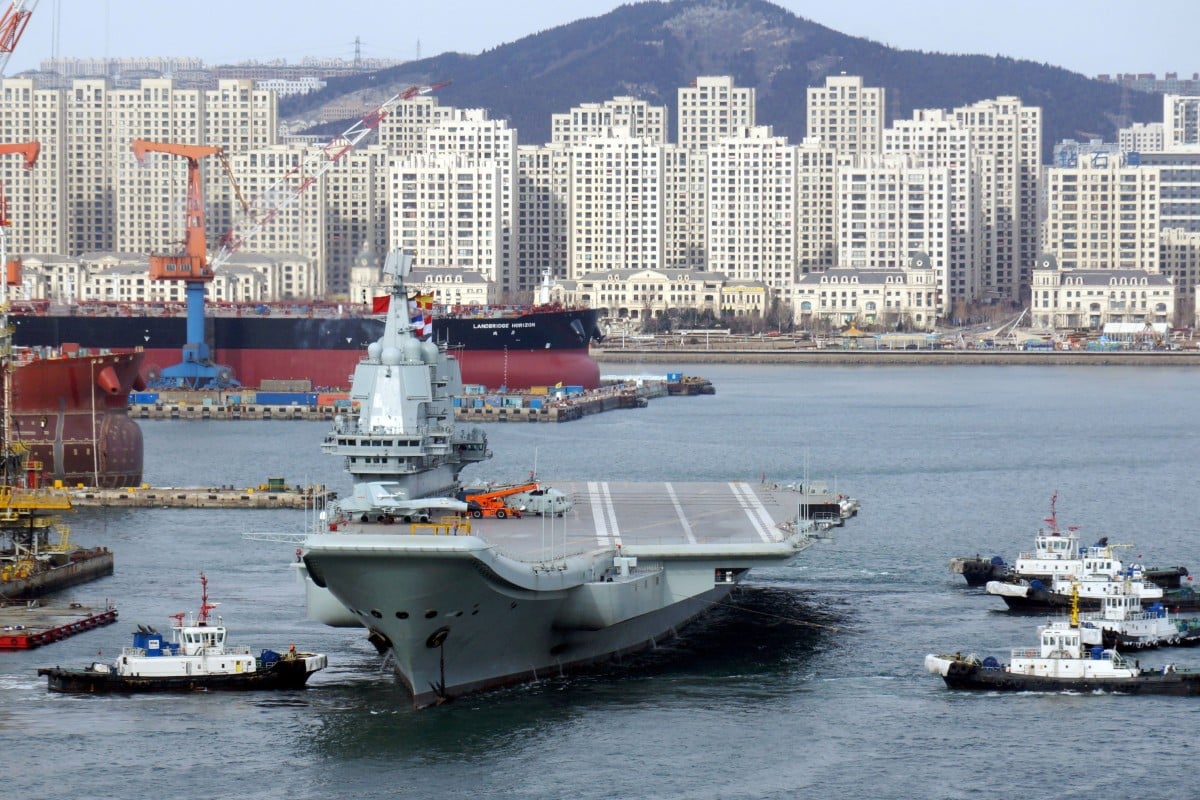
The carrier leaves the port of Dalian for a sea trial in December. Photo: Reuters
China’s first home-grown aircraft carrier the Type 001A is expected to start a four-day sea trial on Thursday, which military experts said signalled that it would soon be ready for official commissioning.
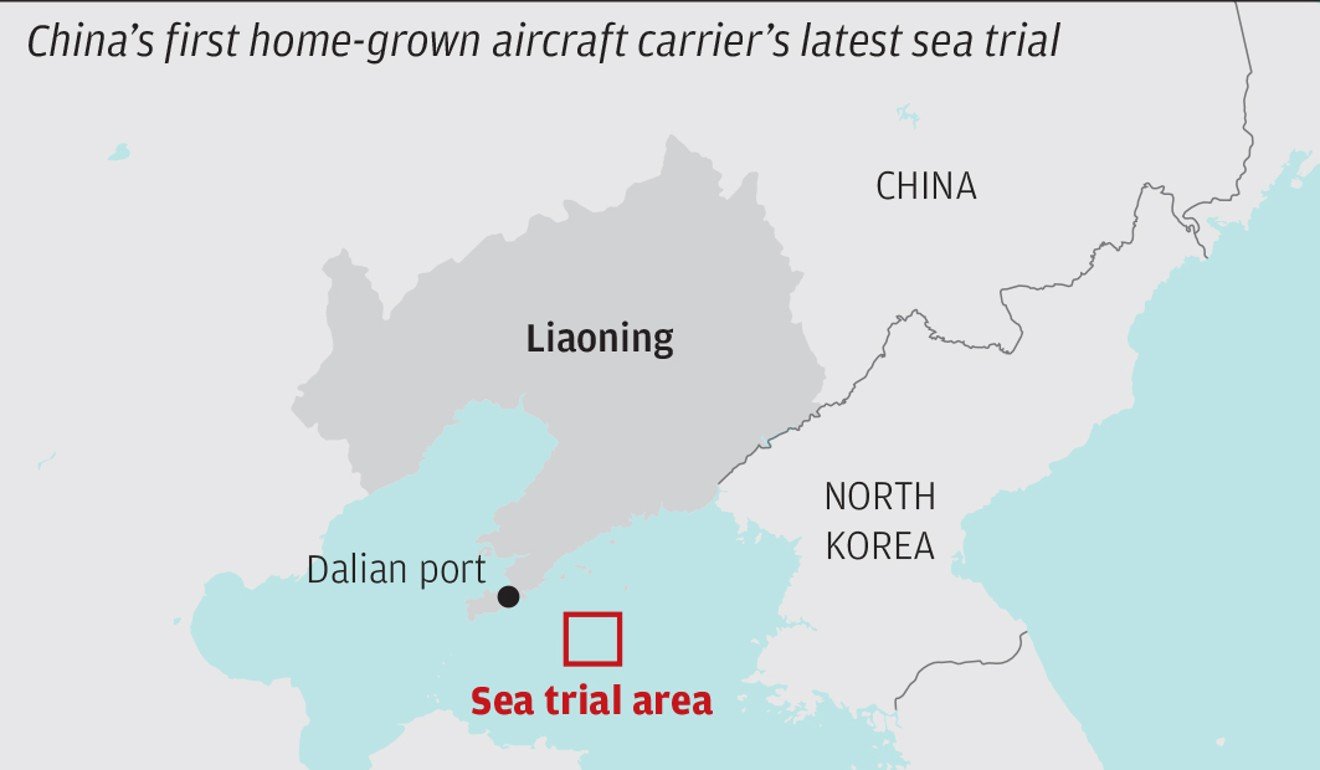
Liaoning Maritime Safety Administration issued a statement on its website on Wednesday saying a naval exercise would take place in a designated zone in the north of the Yellow Sea between Thursday and Monday, and warned other vessels not to enter the area.
The statement gave little detail about the exercise, but military experts said the location of the drill – near the carrier’s home port of Dalian – pointed to new sea trials for the ship.
Song Zhongping, a military commentator for Hong Kong-based Phoenix Television, said it would be the seventh such trial for the carrier, adding: “It is likely that the carrier will join the navy for trial runs in the coming months.”
Song said that sea trials for the Type 001A had been faster and more efficient compared with those for its sister ship, the Liaoning, China’s first aircraft carrier.
The Liaoning started life as a Soviet Kuznetsov-class vessel, and was still incomplete when China bought it from Ukraine in 1998. It underwent 10 sea trials before being commissioned in 2012.
“China has accumulated more experience with the Liaoning and that has helped in the construction and operation of Type 001A,” Song said.
North Korea fires two ballistic missiles in latest ‘warning’ to South
Beijing-based naval expert Li Jie said the upcoming sea trial for the Type 001A would be led by naval officers instead of the engineers and technicians from the Dalian Shipyard, which built the warship.
“Besides testing the carrier’s propulsion system and electronic communication systems, the sea trial will focus on inspection and acceptance. Both are critical parts of the testing before the ship can be handed over to the navy,” he said.
The trials will be held near the ship’s home port of Dalian. Graphic: SCMP
The 65,000-tonne Type 001A was built using the Liaoning as a prototype. It was launched in 2017 and conducted its latest sea trial in May. When it returned to Dalian on May 31 after the test it was seen to have J-15 fighter jets and Z-18 helicopters on its deck.
Li said aircraft take-off and landing exercises would be conducted on the high seas after the Type 001A formally entered service.
Both he and Song said the carrier was likely to be named after Shandong province, in line with the practice of giving warships geographical names.
Some naval enthusiasts and China watchers were disappointed when the Type 001 failed to appear at a grand naval parade held off the coast of Shandong in April to celebrate the 70th anniversary of the PLA Navy.
Chinese navy tests new Z-20 helicopter for use on its warships
Xi Jinping (C), chairman of the Central Military Commission (CMC), poses for a group photo with a soldier and representatives of three military units during a CMC ceremony in Beijing, capital of China, July 31, 2019. Xi has signed orders to honor a soldier and three military units. At the ceremony on Wednesday, Xi hung a medal around the neck of Du Fuguo, who was awarded the title “Heroic Demining Soldier”, and presented him with a certificate, and went on to confer honorary banners to representatives of the three units. (Xinhua/Li Gang)
BEIJING, July 31 (Xinhua) — Xi Jinping, chairman of the Central Military Commission (CMC), has signed orders to honor a soldier and three military units.
The title “Heroic Demining Soldier” was awarded to Du Fuguo, who in an operation last year lost his eyesight and both hands trying to protect his fellow soldiers from a landmine explosion.
The three military units honored are an air force group, an astronautical ground station and a scientific research office.
At a CMC ceremony on Wednesday, Xi hung a medal around Du’s neck and presented him with a certificate, and went on to confer honorary banners to representatives of the three units.
Chinese President Xi Jinping (R) holds talks with visiting Colombian President Ivan Duque Marquez at the Great Hall of the People in Beijing, capital of China, July 31, 2019. (Xinhua/Li Xueren)
BEIJING, July 31 (Xinhua) — Chinese President Xi Jinping and visiting Colombian President Ivan Duque Marquez on Wednesday pledged to promote bilateral relations to a new high.
Some of those weeded out had been recruited under programme to use immigrants’ vital skills
New vetting process has delayed enlistments by years, turning more than 1,000 recruits into unlawful immigrants with expired credentials
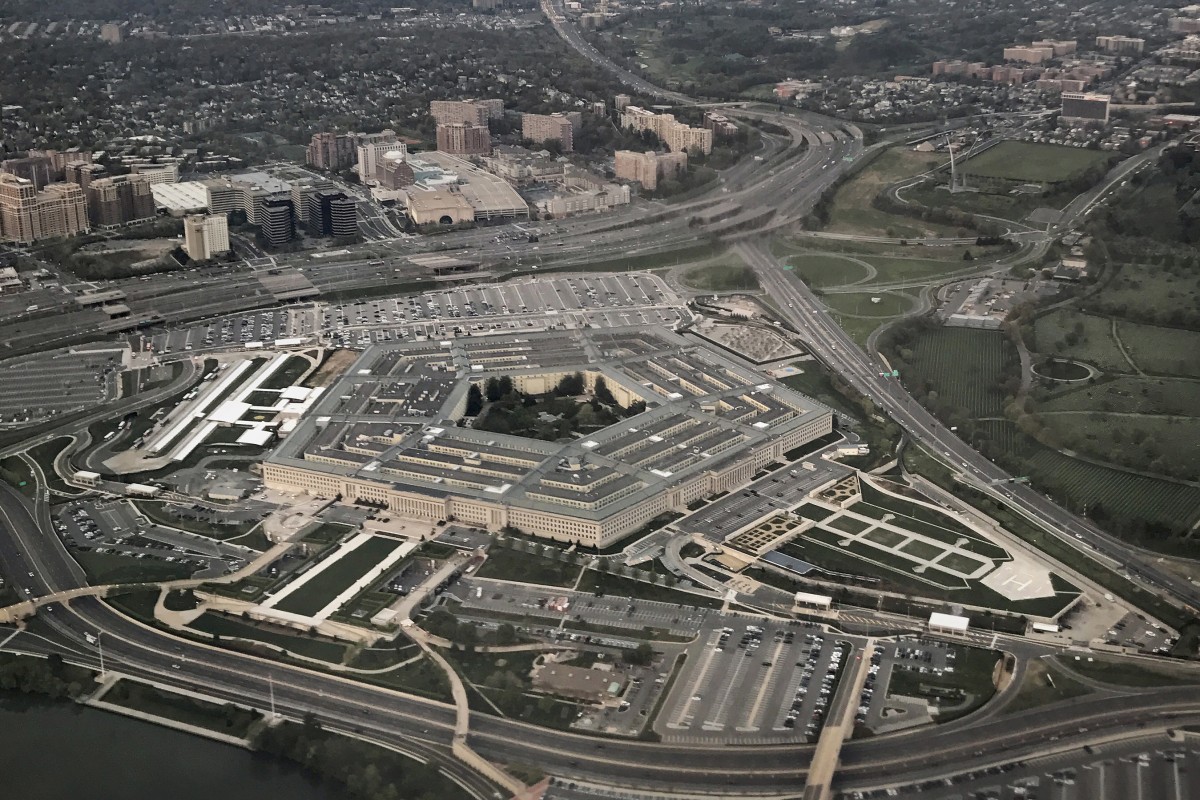
The Pentagon needs recruits with foreign language skills. Photo: Washington Post
In the past month, the Pentagon booted two Chinese recruits from the enlistment process because of their dead grandfathers, who had lived very different lives.
One recruit’s grandfather, whom he never met, served in China’s Communist Party military. Another recruit was removed from the programme after drilling for three years because of the polar opposite – Zicheng Li’s grandfather fought against, and was tortured by, Communist Party agents, defence officials wrote.
Screening documents obtained by The Washington Post detailing reasons that these and other foreign recruits were removed from the military reveal a pattern of cancelled enlistments and failed screenings for rather innocuous fact-of-life events and, often, simply for existing as foreigners.
Immigrant enlistees have been cut loose for being the children of foreign parents or for having family ties to their native country’s government or military.
I’m shocked and numb. They use anything they can to kick us outZicheng Li, US Army recruit
In some cases, they have relatives who served in militaries closely allied with the United States. Those removals raise questions about the Pentagon’s screening process and why it has weeded out precisely the recruits defence officials said they needed.
The Pentagon programme they were recruited under embraced a simple idea: the military would enlist immigrants to make use of strategic language and medical abilities in short supply among US-born troops, designating the skills of immigrants a national security imperative.
The programme was even named in that fashion – Military Accessions Vital to the National Interest, or Mavni, which enlisted more than 10,400 foreign-born troops in the past decade, with the promise of fast-tracked naturalisation that would take weeks. Speakers of Mandarin, Russian, Arabic and other languages have been in demand by defence officials.
But then denials began to quicken since stricter screening was instituted in late 2016, a lawyer for immigrant recruits said, pointing to family ties as a common reason.
He’s an illegal Chinese immigrant – and a US soldier on Mexico border
Li, who arrived in Minnesota from China in 2012 to study aerospace engineering, said that his US Army enlistment processing had crawled since February 2016. In that time, he attended drills as a selected reservist and received his uniform and an ID card that grants him access to army installations.
Then this month, after three years of waiting, an enlistment denial justification letter arrived in his postbox, containing two sentences about family history.
Li told investigators that his since-deceased grandfather’s torture decades ago by Chinese Communists prompted worry of reprisals if the Chinese government learned of Li’s enlistment.
“You revealed that you fear for your family’s safety,” officials wrote in a letter, saying his suitability for enlistment was adverse, documents show.
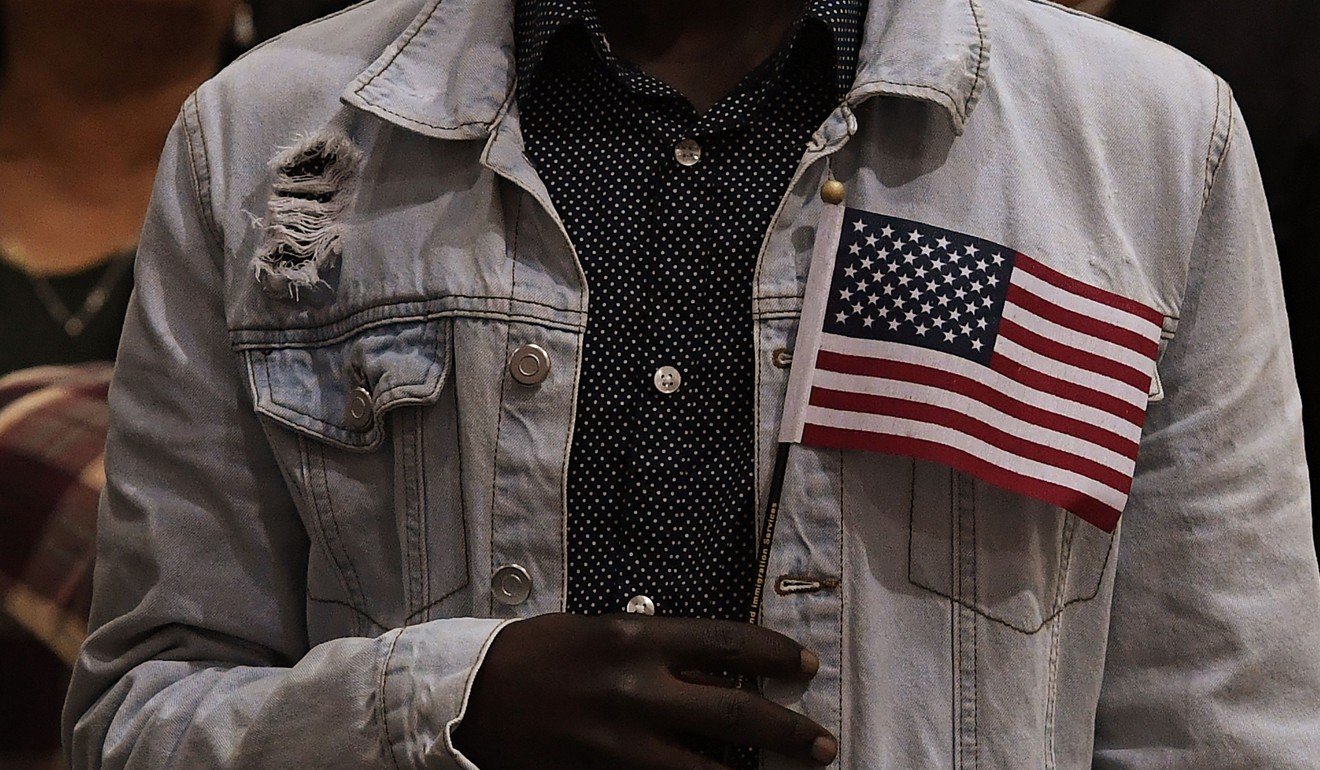
A new citizen pledging allegiance to the United States at a naturalisation ceremony in Los Angeles. Photo: AFP
“I’m shocked and numb,” Li said. “They use anything they can to kick us out.”
The new vetting process has delayed enlistments by years, and the wait has turned more than 1,000 recruits – who enlisted as legal immigrants with visas – into unlawful immigrants whose credentials expired as their screenings tumbled into bureaucratic limbo.
The Pentagon has acknowledged in court filings that none of the thousands of recruits who later naturalised from the programme have been charged with espionage-related crimes, though one Chinese recruit has been accused of failing to register as a foreign agent. The new vetting procedures did not play a role in his detection, court filings said.
It is unclear how many immigrant recruits have been turned away as recruits or discharged as soldiers in recent months. In a spate of lawsuits alleging misconduct and violation of equal protection laws, the Pentagon has reversed decisions and halted discharges.
Chinese women join US Army to obtain green cards
Defence officials have not offered public insight into how the vetting works or what kind of oversight exists. The results are typically explained in one or two sentences.
Another Chinese-born recruit, who declined to provide his name out of fear of reprisal to his family by the Chinese government, said he was denied enlistment last month because his father and grandfather served in the Communist military, though the report about his relatives’ positions was inaccurate, he said.
His grandfather died before the recruit was born.
“I don’t know what’s the harm for me to finish my contract and gain my citizenship,” he said.
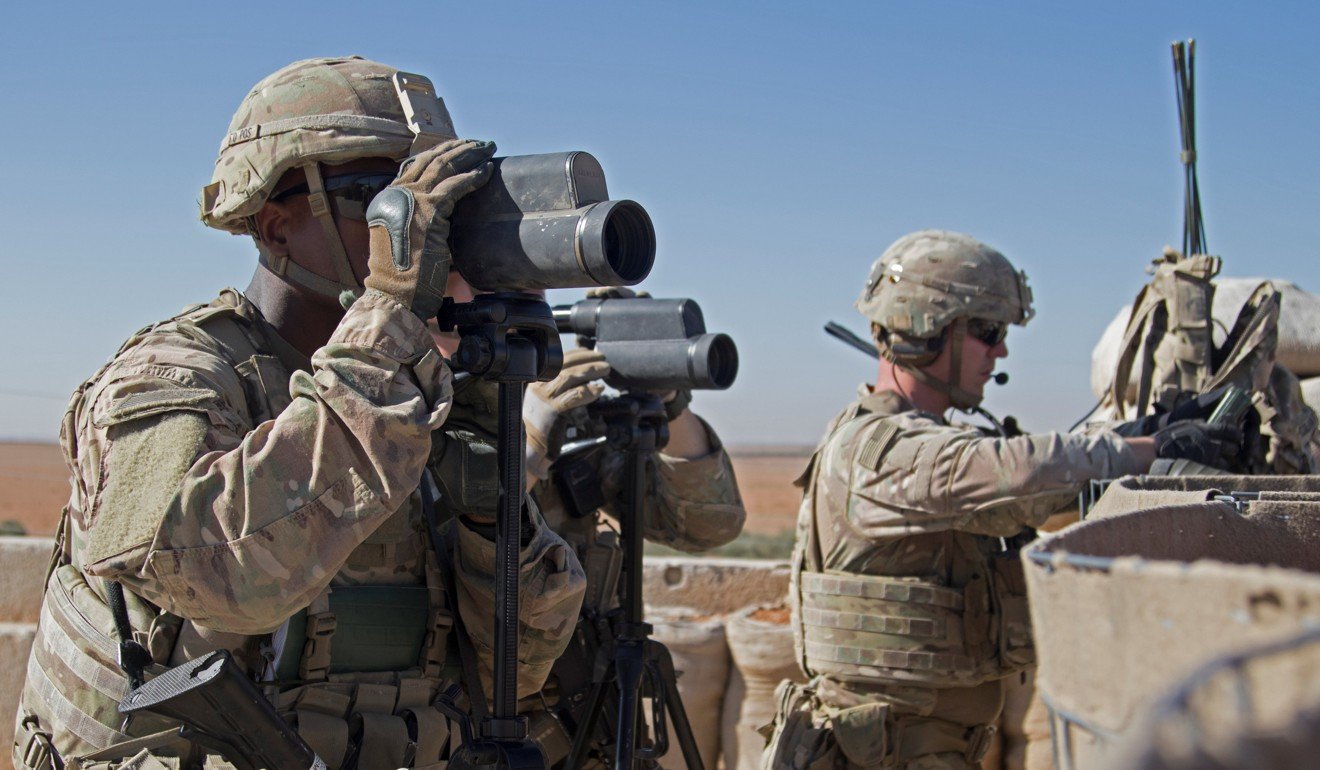
The US has recruited more than 10,000 foreign-born troops in the last decade. Photo: US Army via Reuters
Mavni screening can be “time-consuming due to our limited ability” to verify information from home countries, said Jessica Maxwell, a Pentagon spokeswoman. She declined to address questions about the process itself and whether screeners adjust expectations of foreign ties if they are screening foreign-born recruits.
She also declined to say how many Mavni recruits are still waiting for their screening to finish, citing litigation and privacy limitations.
Margaret Stock, an immigration lawyer who has represented Mavni recruits, including Li, said the Pentagon has scuttled millions of dollars and years of time to produce unclear reasons why it separates immigrants the Defence Department itself determined it needed.
“This is what they come up with? Your grandfather served in a foreign army before you were born?” Stock asked. “What is the threat to national security? They can’t articulate it here.”
New Pentagon chief’s mission: confront foreign threats, manage Trump
Other rejections point to speculative or seemingly benign information for immigrants living typical lives.
“You revealed that you maintain routine contact with your father and mother who are citizens of and reside in China,” said one document.
An Indian-born recruit was cut loose after an investigation determined that family members “work for or have worked for the Indian army”, according to one document, even thought India and the United States share a defence relationship.
Recruits from South Korea, a key US defence ally, have been penalised because their fathers are required by conscription to serve, Stock said.
Maxwell declined to say why a family member’s involvement in a friendly military would raise suspicions.
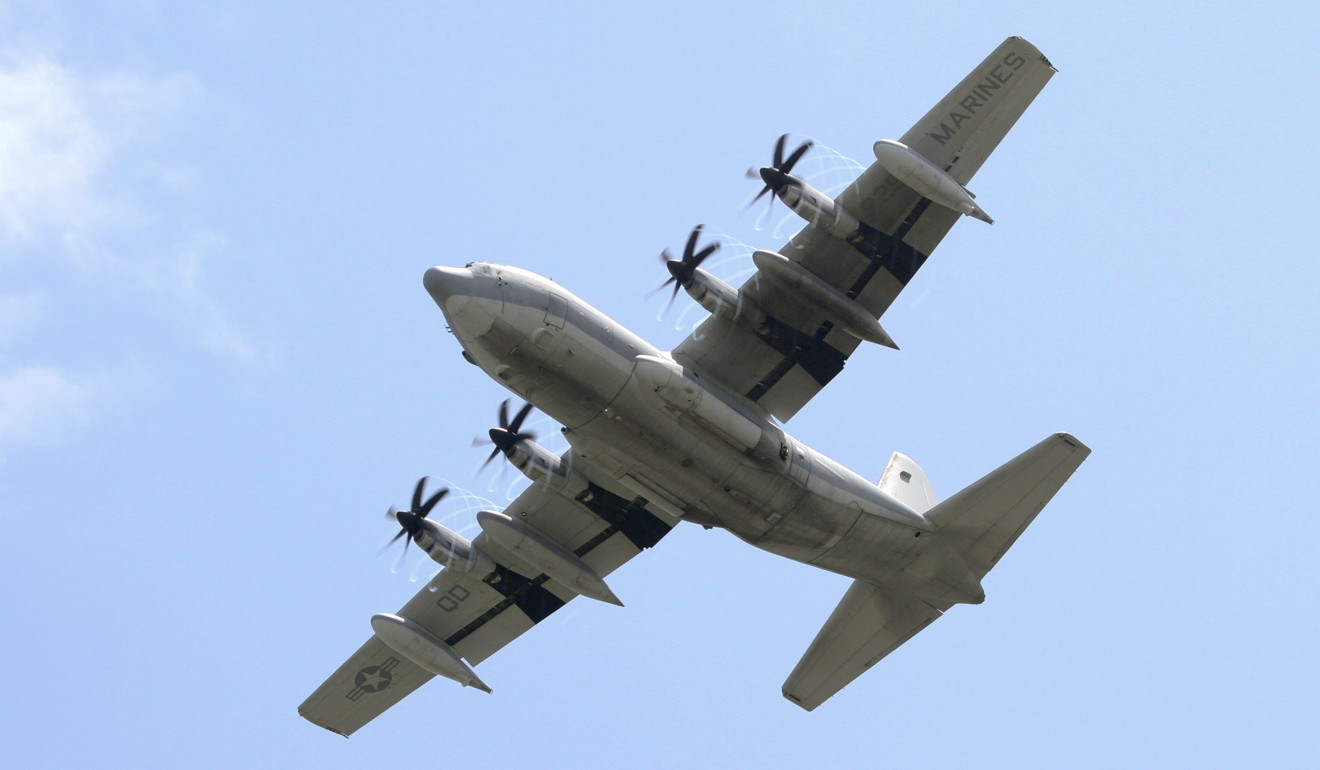
Zicheng Li is hoping to become a Hercules pilot. Photo: EPA
Another enlistee was rejected for “multiple wire transfers” through US banks, though the screening review did not describe the nature of the transfers or whether they were unlawful.
One recruit, a Chinese doctoral student, was turned away because a screener with no medical experience said that the recruit had Asperger syndrome – on the basis that the screener once observed a family member with autism, The Post previously reported.
Potential persecution of Li’s family could be aided by the US military itself. US Army recruiters inadvertently exposed the private information of hundreds of Chinese-born recruits, heightening the risk that Chinese government officials would target their families, a lawmaker said.
Pentagon poised to report on US military’s dependence on China
Those disclosures and enlistment delays have forced several recruits to apply for US asylum protection, including Li while he fights the army’s determination that he is unsuitable for service.
Li said he wants to bring his family to the United States. Until then, he has taken a rather American path: he helps design grain enclosures and spreaders for a farm equipment company in Minnesota, with an eye to eventually transitioning from the US Army to the Air Force.
Li said he hopes to become a pilot, perhaps for the C-130 Hercules transport aircraft.
Fighters can be flashy, he said. But the Hercules can get him more time in the cockpit on missions across the world.
China suggests good progress made in Regional Comprehensive Economic Partnership talks after marathon 10-day negotiations in Zhengzhou
Indian Commerce Minister Piyush Goyal has opted to skip the upcoming high-level meetings, adding fuel to rumours that the country could be removed
The Association of Southeast Asian Nations (Asean) has overtaken the US to become China’s second-largest trading partner in the first half of 2019. Photo: AP
China has claimed “positive progress” towards finalising the world’s largest free-trade agreement by the end of 2019 after hosting 10 days of talks, but insiders have suggested there was “never a chance” of concluding the deal in Zhengzhou.
The 27th round of the Regional Comprehensive Economic Partnership (RCEP) negotiations closed on Wednesday in the central Chinese city.
working level conference brought over 700 negotiators from all 16 member countries to Henan province, with China keen to push through a deal which has proven extremely difficult to close.
If finalised, the agreement, which involves the 10 Asean nations, as well as China, Japan, South Korea, Australia, New Zealand, and India, would cover around one-third of the global gross domestic product, about 40 per cent of world trade and almost half the world’s population.
“This round of talks has made positive progress in various fields,” said assistant minister of commerce Li Chenggang, adding that all parties had reaffirmed the goal of concluding the deal this year. “China will work together with the RCEP countries to proactively push forward the negotiation, strive to resolve the remaining issues as soon as possible, and to end the negotiations as soon as possible.”
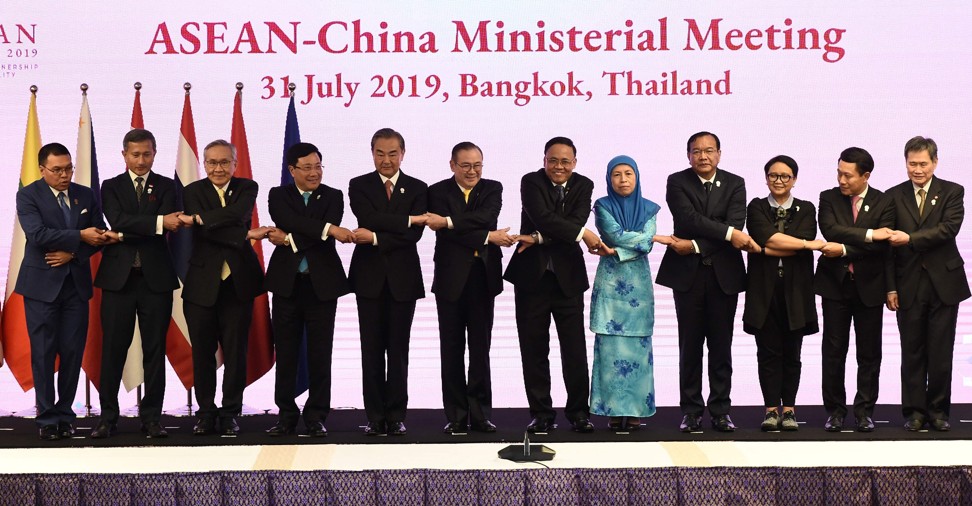
China’s Foreign Minister Wang Yi (fifth left) poses with foreign ministers from the Association of Southeast Asian Nations (Asean) countries during the ASEAN-China Ministerial Meeting in Bangkok. Photo: AFP
China is keen to complete a deal which would offer it a buffer against the United States in Asia, and which would allow it to champion its free trade position, while the US pursues protectionist trade policy.
The RCEP talks took place as Chinese and American trade negotiators resumed face-to-face discussions in Shanghai, which also ended on Wednesday, although there was little sign of similar progress.
As the rivalry between Beijing and Washington has intensified and bilateral trade waned, the Association of Southeast Asian Nations (Asean) overtook the US to become China’s second-largest trading partner in the first half of 2019. From January to June, the trade volume between China and the 10-member bloc reached US$291.85 billion, up by 4.2 per cent from a year ago, according to government data.
The Asean bloc is made up of Indonesia, Thailand, Malaysia, Singapore, Philippines, Vietnam, Myanmar, Cambodia, Brunei and Laos.
China will work together with the RCEP countries to proactively push forward the negotiation, strive to resolve the remaining issues as soon as possible, and to end the negotiations as soon as possible. Li Chenggang
RCEP talks will now move to a higher level ministerial meeting in Beijing on Friday and Saturday, but trade experts have warned that if material progress is not made, it is likely that the RCEP talks will continue into 2020, prolonging a saga which has already dragged on longer than many expected. It is the first time China has hosted the ministerial level talks.
But complicating matters is the fact that India’s Commerce Minister, Piyush Goyal, will not attend the ministerial level talks, with an Indian government official saying that he has to participate in an extended parliamentary session.
India is widely viewed as the biggest roadblock to concluding RCEP, the first negotiations for which were held in May 2013 in Brunei. Delhi has allegedly opposed opening its domestic markets to tariff-free goods and services, particularly from China, and has also had issues with the rules of origin chapter of RCEP.
China is understood to be “egging on” other members to move forward without India, but this could be politically explosive, particularly for smaller Asean nations, a source familiar with talks said.
Deborah Elms, executive director of the Asian Trade Centre, a Singapore-based lobby group, said that after the last round of negotiations in Melbourne between June 22 to July 3 – which she attended – there was “frustration” at India’s reluctance to move forward.
She suggested that in India’s absence, ministers in China could decide to move forward through a “pathfinder” agreement, which would remove India, but also potentially Australia and New Zealand.
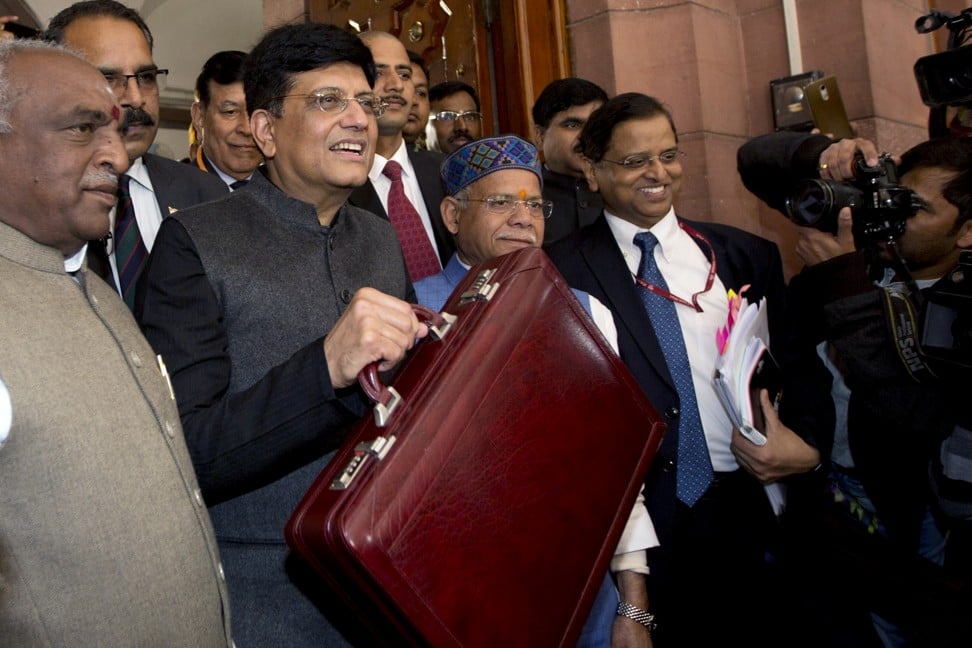
India’s Commerce Minister, Piyush Goyal, will not attend the ministerial level talks this week in Beijing. Photo: Bloomberg
This “Asean-plus three” deal would be designed to encourage India to come on board, Elms said, but would surely not go down well in Australia and New Zealand, which have been two of the agreement’s biggest supporters.
New Zealand has had objections to the investor protections sections of RCEP, and both countries have historically been pushing for a more comprehensive deal than many members are comfortable with, since both already have free trade agreements with many of the other member nations.
However, their exclusion would be due to “an unfortunate geographical problem, which is if you’re going to kick out India, there has always been an Asean-plus three concept to start with”. Therefore it is easier to exclude Australia and New Zealand, rather than India alone, which would politically difficult.
A source close to the negotiating teams described the prospect of being cut out of the deal at this late stage as a “frustrating rumour”, adding that “as far as I know [it] has no real basis other than a scare tactic against India”.
There was “never a chance of concluding [the deal during] this round, but good progress is being made is what I understand. The key issues remain India and China”, said the source, who wished to remain anonymous.
Replacing bilateral cooperation with regional collaborations is a means of resolving the disputesTong Jiadong
However, Tong Jiadong, a professor of international trade at the Nankai University of Tianjin, said Washington’s refusal to recognise India as a developing country at the World Trade Organisation could nudge the world’s second most populous nation closer to signing RCEP.
“That might push India to the RCEP, accelerating the pace of RCEP,” Tong said, adding that ongoing trade tensions between Japan and South Korea could also be soothed by RCEP’s passage.
“Replacing bilateral cooperation with regional collaborations is a means of resolving the disputes between the two countries,” Tong said.
Although the plan was first proposed by the Southeast Asian countries, China has been playing an increasingly active role, first as a response to the now defunct US-backed Trans-Pacific Partnership (TPP), and more recently as a means of containing the impact of the trade war.
China’s vice-commerce Minister, Wang Shouwen, told delegates last week that RCEP was “the most important free trade deal in East Asia”. He called on all participants to “take full advantage of the good momentum and accelerating progress at the moment” to conclude a deal by the end of the year.
China’s Wang Yi and US’ Mike Pompeo at summit in Thailand to sell their visions of future for Southeast Asia
Analysts expect pragmatism from Asean as world’s two biggest economic powers play diplomatic game
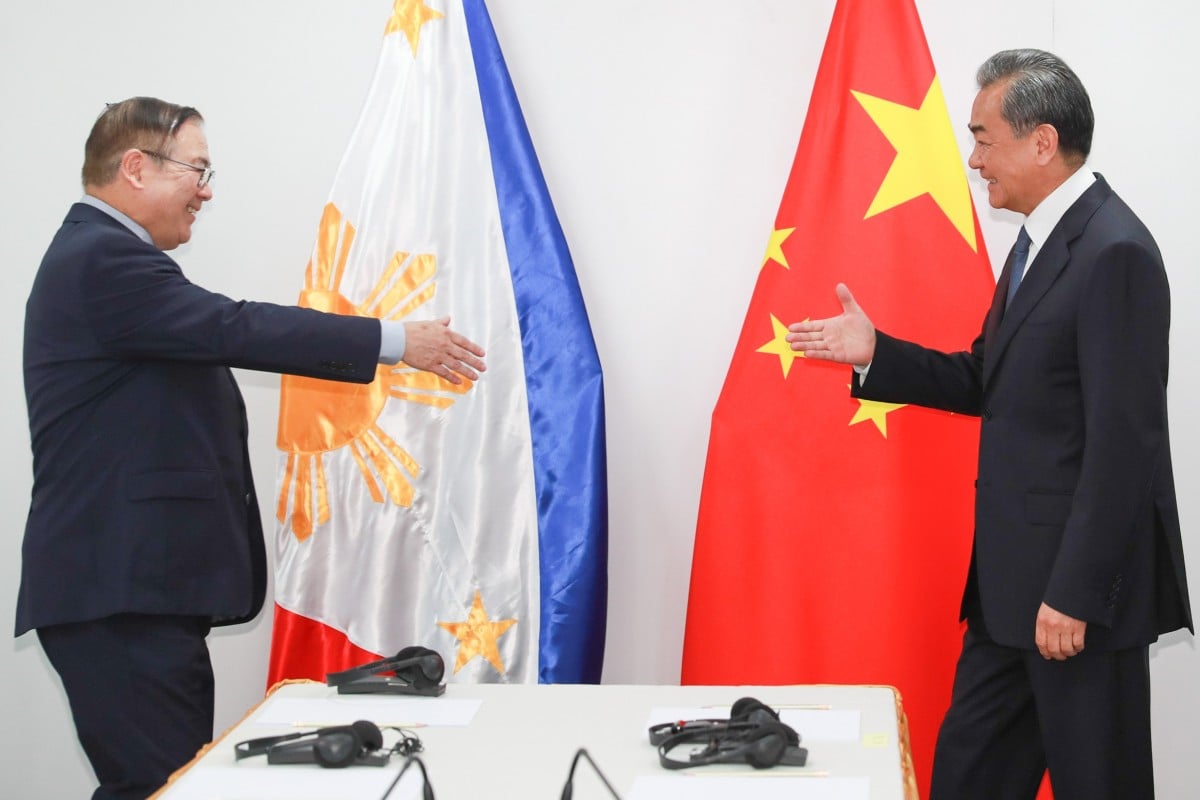
Chinese Foreign Minister Wang Yi (right) greets his Philippine counterpart Teodoro Locsin at the Asean meeting in Bangkok, Thailand. Photo: Xinhua
China and the United States are on a mission to strengthen ties with allies and expand their influence in Southeast Asia this week as their trade war enters a second year.
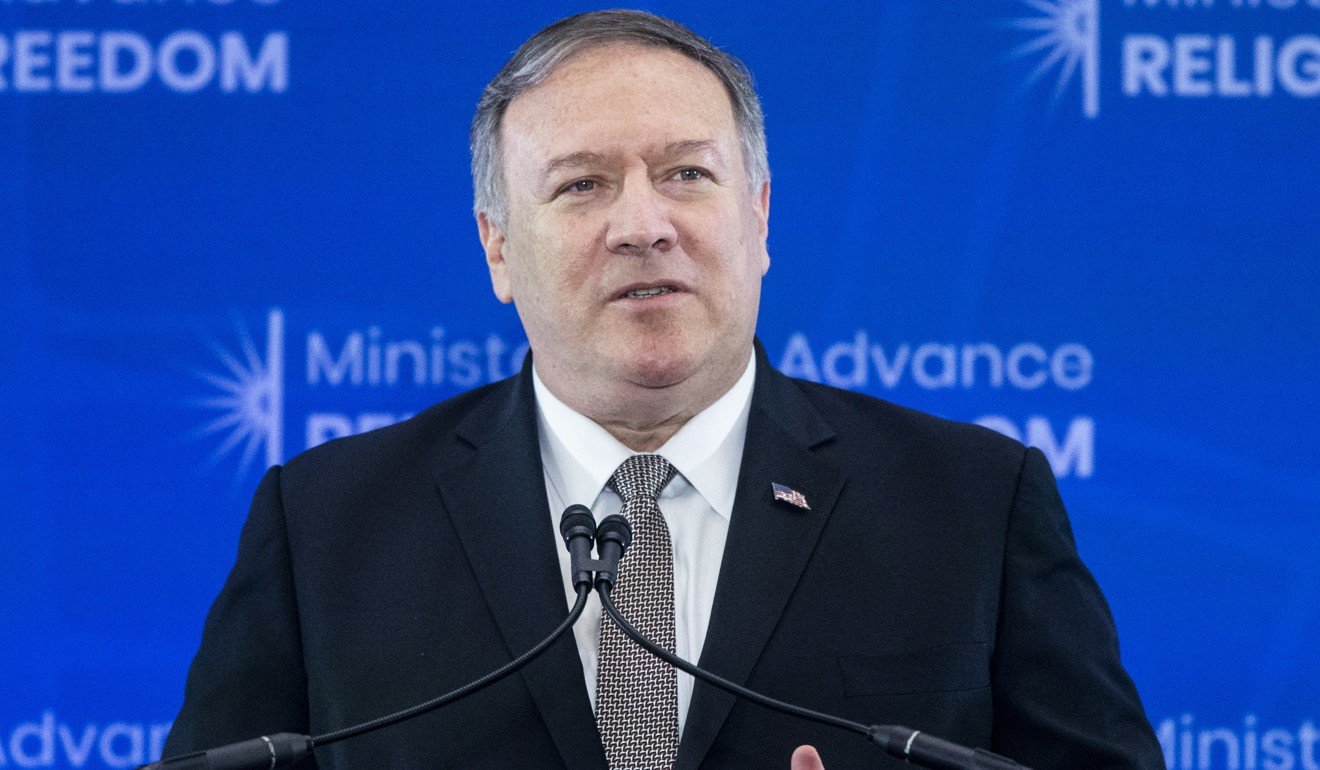
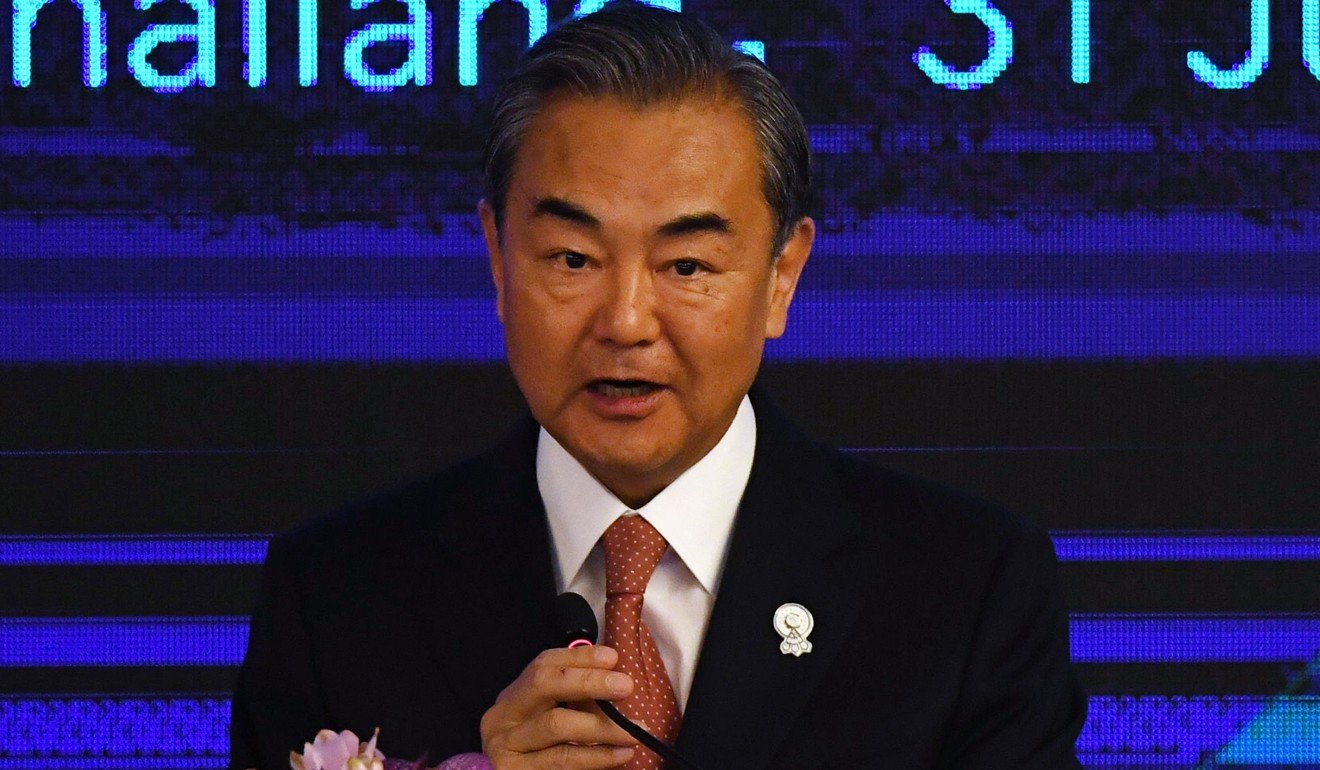
US Secretary of State Mike Pompeo arrived for a meeting of the Association of Southeast Asian Nations (Asean) in Bangkok on Wednesday to promote the US-led Indo-Pacific strategy, while Chinese Foreign Minister Wang Yi touched down a day earlier to advance Beijing’s Belt and Road Initiative.
The US Department of State said Pompeo’s trip was aimed at deepening Washington’s “long-standing alliances and vibrant bilateral relations with these countries, and [to] reaffirm our commitment to Asean, which is central to our vision for the Indo-Pacific region”.
In Beijing on Wednesday, Chinese foreign ministry spokeswoman Hua Chunying said that while their meeting was yet to be set, Wang and Pompeo were expected to meet and talk “frankly” about bilateral relations.
“I think that it is indeed necessary for China and the United States to maintain communication, as the two countries face many situations,” Hua said. “The issues would be communicated frankly”.
The Indo-Pacific strategy is a military and economic framework to contain China’s expansion into the Pacific and Indian oceans, and give an alternative to Beijing’s flagship belt and road development programme.
En route to Thailand, Pompeo said that after a stalled start to US Indo-Pacific policy during the Barack Obama administration, Washington’s strategy was well on its way to bearing fruit for the US and its allies.
South China Sea tensions, US-China trade war loom over Asean summit
“We have watched these coalitions build out,” he said.
Pompeo dismissed claims that China’s sphere of influence among Asean members was growing, saying such speculation was “not factually accurate”.
“[Asean countries] are looking for partners that are going to help them build out their economies and to take good care of their people,” he said, pledging greater engagement from President Donald Trump’s administration.
Pompeo was expected to sit down on Friday with his South Korean and Japanese counterparts to consolidate their trilateral alliance in the region.
He was also expected to hold talks with Thai Foreign Minister Don Pramudwinai that day.
US Secretary of State Mike Pompeo is expected to meet Chinese Foreign Minister Wang Yi at Asean in Thailand. Photo: EPA-EFE
Meanwhile, Wang launched his belt and road pitch to his Cambodian, Philippine and Indonesian counterparts after he arrived in Thailand for the gathering, which ends on Saturday.
The belt and road projects are largely commercial and aimed at strengthening land and sea infrastructure linking Asia, Europe and Africa. But they raised suspicion in the West that they are aimed at eroding the US-led world order.
During his meeting with Philippine Foreign Affairs Secretary Teodoro Locsin, Wang said: “China is willing to have high-level exchanges with the Philippines, to deepen the mutual trust, and promote the Belt and Road Initiative [in the Philippines] … to accelerate the development of regional infrastructure.”
Can China’s trade boost with Asean help get the Regional Comprehensive Economic Partnership over the line?
This year’s Asean forum was taking place as countries were more receptive to Chinese initiatives, in part due to the unpredictability of the US administration, according to Rajeev Ranjan Charturvedy, a visiting fellow at the S. Rajaratnam School of International Studies at Nanyang Technological University in Singapore.
“Policy uncertainties under the Trump administration have already pushed some Asean countries towards China in ways that would have seemed unlikely a few years ago,” Charturvedy said.
Analysts said Trump’s “America first” approach shaped his Asean policy. The president had vowed to apply “punishments” to countries – including Asean member states – for contributing to the US trade deficit.
Chinese Foreign Minister Wang Yi is talking to Asean counterparts at a time when they are receptive to China’s proposals, an analyst says. Photo: AFP
Trump was absent at the Asean summit in Singapore last year, leading to concerns that Washington’s commitment to Asia was declining.
Charturvedy said the Asean forum’s focus was about building constructive regionalism, but China’s attitudes to security could pose a challenge.
“[However] Asean countries clearly hope not to be forced to choose between the US and Chinese offers. Rather, they would like more freedom of choice while accommodating for a larger role for China in the region,” he said.
Clarita Carlos, a professor of political science at the University of the Philippines, suggested that Asean members would be pragmatic during the forum.
Robert Lighthizer warns Vietnam over trade deficit with US
They would try to find their own balance between the two major powers – as countries rather than a bloc – to try to maximise each state’s interests and advantages, Carlos said.
“Vietnam has a love-hate relationship with China, especially as a winner in the ongoing US-China trade war,” she said. “Singapore has close relations with China. There are also ups and downs in the relationship with China for Brunei, Malaysia and Indonesia.”
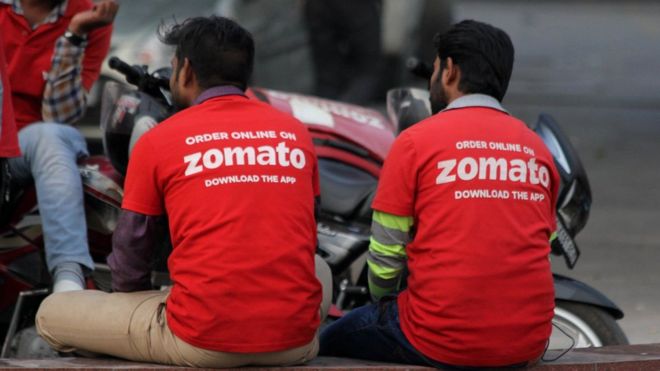
Image copyright NURPHOTO/GETTYImage caption The customer had an issue with the religion of the delivery driver
Indian restaurant search and delivery service Zomato has been praised on social media for its response to a Hindu customer who refused to take a delivery from a driver who appeared to be of Muslim heritage.
Twitter user @NaMo_Sarkaar told his followers: “Just cancelled an order on @ZomatoIN they allocated a non Hindu rider for my food they said they can’t change rider and can’t refund on cancellation I said you can’t force me to take a delivery I don’t want don’t refund just cancel.”
He also posted a second tweet with a screengrab of his conversation with customer service on the app asking to change the rider and explaining: “We have shravan and I don’t need a delivery from a Muslim fellow.”
Shravan is a Hindu holy month devoted to the god Lord Shiva.
@NaMo_Sarkaar was advised in the private message that it would cost 237 rupees (£2.83, $3.44) to cancel his delivery, which was to take place in Jabalpur in central India, at that point in time.
He then took to Twitter to make his complaint but the person running the @ZomatoIn Twitter account posted: “Food doesn’t have a religion. It is a religion”, generating thousands of likes and retweets.
Image copyrightTWITTERImage captionZomato India had no time for a customer who refused to take a delivery from a driver of another religion
The company’s founder Deepinder Goyal also took to Twitter to support the stance, stating: “We are proud of the idea of India – and the diversity of our esteemed customers and partners. We aren’t sorry to lose any business that comes in the way of our values.”
@NaMo_Sarkaar told his followers: “@ZomatoIN is forcing us to take deliveries from people we don’t want else they won’t refund and won’t co-operate I am removing this app and will discuss the issue with my lawyers.”
While a minority did respond to Zomato’s tweet agreeing with Mr Shukla’s reaction, generally he has come under an immense degree of criticism, with others on Twitter advising him to cook his own food, especially during the auspicious month.
Harsh Goenka
✔@hvgoenka
If you ask me who I am, I will say I am an Indian, a son,a father, a businessman, a Hindu…my being Hindu is only one aspect of my identity. Yet world over, identity is being defined by narrow confines of religion at cost of all other identities.
It’s a dangerous trend! #zomato
Twitter user @kskiyer responded to the original tweet, stating: “Absolutely rubbish. If you are so particular about Shravan, cook at home, don’t order outside.”
And @Chandral_ said: “Seriously? What if the chef was a Muslim? What if the one who packed your order was a Sikh? What if they bought ingredients from a Christian? From the farm to your doorstep, the food could’ve been touched by anyone. You shouldn’t be ordering online if you are concerned about it.”








 CHINDIA ALERT: You'll be living in their world, very soon