Chindia Alert: You’ll be Living in their World Very Soon
aims to alert you to the threats and opportunities that China and India present. China and India require serious attention; case of ‘hidden dragon and crouching tiger’.
Without this attention, governments, businesses and, indeed, individuals may find themselves at a great disadvantage sooner rather than later.
The POSTs (front webpages) are mainly 'cuttings' from reliable sources, updated continuously.
The PAGEs (see Tabs, above) attempt to make the information more meaningful by putting some structure to the information we have researched and assembled since 2006.
BEIJING, May 30 (Xinhua) — Taiwan is a part of China and Taiwan question is China’s internal affairs that brooks no foreign interference, said Wu Qian, a spokesperson with the Ministry of National Defense, on Thursday.
Wu made the remarks in response to the United States’ recent frequent provocations on Taiwan-related issues, including the passing of the “Taiwan Assurance Act of 2019” by the U.S. House of Representatives.
The one-China principle is a universal consensus of the international community and the important political foundation for the China-U.S. relationship, Wu said.
The recent moves by the U.S. side have severely damaged the development of the relationships between the two countries and the two militaries, undermining peace and stability across the Taiwan Strait, Wu added.
The Chinese People’s Liberation Army has firm determination, full confidence and sufficient capacity to thwart any separatist activities and safeguard national sovereignty and territorial integrity, Wu said.
BEIJING, May 30 (Xinhua) — Chinese and Russian military forces have maintained in-depth exchanges in 2019 to mark the 70th anniversary of the establishment of diplomatic ties between the two countries, the Ministry of National Defense said Thursday.
They have engaged in cooperation in high-level exchanges, real-combat training and military competitions, and had sound interaction and collaboration on international multilateral occasions, the ministry’s spokesperson Wu Qian said at a press conference.
Armies of the two countries have provided positive energy for safeguarding world peace and regional stability, Wu added.
Speaking of the joint naval exercise earlier this month in Qingdao, east China’s Shandong Province, Wu said the drill achieved a new high in making China-Russia joint naval exercises more real combat-oriented, information-based and standardized.
The two navies have also strengthened their capabilities of joint command and addressing maritime security threats, Wu said.
Peng Liyuan, wife of Chinese President Xi Jinping, meets with a group of international graduate students from China Women’s University (CWU) at the Great Hall of the People in Beijing, capital of China, May 30, 2019. The students are from CWU’s International Master’s Program of Social Work in “Women’s Leadership and Social Development,” established to implement initiatives announced by President Xi at the 2015 Global Leaders’ Meeting on Gender Equality and Women’s Empowerment. So far, 72 female students from 27 countries have studied under the program. (Xinhua/Pang Xinglei)
BEIJING, May 30 (Xinhua) — Peng Liyuan, wife of Chinese President Xi Jinping, on Thursday met with a group of international graduate students from China Women’s University (CWU).
Peng and the students watched a short film on their study and life in China. She also watched poetry recital, chorus and dancing performed by the students.
As the students are about to finish the study and return to their home countries, Peng said she believes that studying in China had helped them deepen their understanding of the country.
She expressed her hope that the students will play a role as a bridge between China and their home countries, and contribute to the promotion of global women’s development and the building of a community with a shared future for humanity.
Peng briefed the students on her work as a special envoy for the Spring Bud Project to promote girls’ education in China, and as a UNESCO Special Envoy for the Advancement of Girls’ and Women’s Education.
She said China attaches great importance to the cause of women, and stands ready to work with the international community to create favorable conditions for women’s development, provide equal and high-quality education opportunities for women, and help women acquire knowledge and skills for greater achievements.
The students said they will make full use of the knowledge and skills learned in China to promote the development of women’s cause in their own countries and the cooperation between their countries and China.
The students are from CWU’s International Master’s Program of Social Work in “Women’s Leadership and Social Development,” established to implement initiatives announced by President Xi at the 2015 Global Leaders’ Meeting on Gender Equality and Women’s Empowerment. So far, 72 female students from 27 countries have studied under the program.
Wang Yang, a member of the Standing Committee of the Political Bureau of the Communist Party of China (CPC) Central Committee and chairman of the Chinese People’s Political Consultative Conference (CPPCC) National Committee, meets with a delegation of the Hong Kong Association for the Promotion of Peaceful Reunification of China in Beijing, capital of China, May 29, 2019. (Xinhua/Yao Dawei)
BEIJING, May 29 (Xinhua) — China’s top political advisor Wang Yang on Wednesday met with a delegation of the Hong Kong Association for the Promotion of Peaceful Reunification of China.
Wang, a member of the Standing Committee of the Political Bureau of the Communist Party of China Central Committee and chairman of the Chinese People’s Political Consultative Conference National Committee, stressed the historical trend that China must and will be reunified and urged Hong Kong to fully leverage its unique advantages to continue promoting Hong Kong-Taiwan exchanges and cooperation.
Wang, who also heads the China Council for the Promotion of Peaceful National Reunification, called for telling a good story of the “one country, two systems” practice in Hong Kong to allow more people in Taiwan to understand its advantages and increase their support for the principles and practice of “peaceful reunification” and “one country, two systems.”
Wang Yang, a member of the Standing Committee of the Political Bureau of the Communist Party of China (CPC) Central Committee and chairman of the Chinese People’s Political Consultative Conference (CPPCC) National Committee, meets with a delegation from Taiwan led by New Party Chairman Yok Mu-ming in Beijing, capital of China, May 29, 2019. (Xinhua/Yao Dawei)
BEIJING, May 29 (Xinhua) — China’s top political advisor Wang Yang on Wednesday met with a delegation from Taiwan led by New Party Chairman Yok Mu-ming.
Wang, a member of the Standing Committee of the Political Bureau of the Communist Party of China Central Committee and chairman of the Chinese People’s Political Consultative Conference National Committee, stressed the greater national interests of pursuing reunification, which he said is an undeniable duty for every Chinese on both sides of the Taiwan Strait.
Wang expressed the mainland’s willingness to engage in talks and consultation with political parties, organizations and individuals from Taiwan on the basis of upholding the 1992 Consensus and opposing “Taiwan independence.”
He also pledged efforts to implement the consensus reached during consultations, deepen cross-Strait exchanges and integrated development, promote more favorable policies benefiting Taiwan, and encourage young people from Taiwan to study, work and start businesses on the mainland.
Noting that both sides of the Taiwan Strait belong to one China, Yok expressed hope for the two sides to cooperate more, and better understand each other, forging a strong common identity and the sense of mission to pursue peaceful reunification, so as to realize the rejuvenation of the Chinese nation at an early date.
Li Zhanshu (R), chairman of the Standing Committee of the National People’s Congress (NPC), meets with Niger’s President Mahamadou Issoufou at the Great Hall of the People in Beijing, capital of China, May 29, 2019. (Xinhua/Pang Xinglei)
BEIJING, May 29 (Xinhua) — China’s top legislator Li Zhanshu met with visiting Nigerien President Mahamadou Issoufou on Wednesday, exchanging views on pushing forward the relationship between the two countries.
Li, chairman of the Standing Committee of the National People’s Congress (NPC), said China stands ready to work with Niger to implement the important consensus made by the two heads of state to lift the bilateral ties to a higher level.
Both the Chinese and African people experienced anti-imperialist and anti-colonial struggles in the past, and both face the task of getting rid of poverty and backwardness and achieving development and prosperity, Li said.
China and Africa have created a new model of South-South cooperation, Li said.
The NPC is willing to strengthen exchanges with the National Assembly of Niger and promote state-to-state friendly cooperation, he said.
Issoufou said Niger thanks China for its long-term support and assistance, and is willing to learn from China’s development experience, actively participate in jointly building the Belt and Road and strengthen pragmatic cooperation.
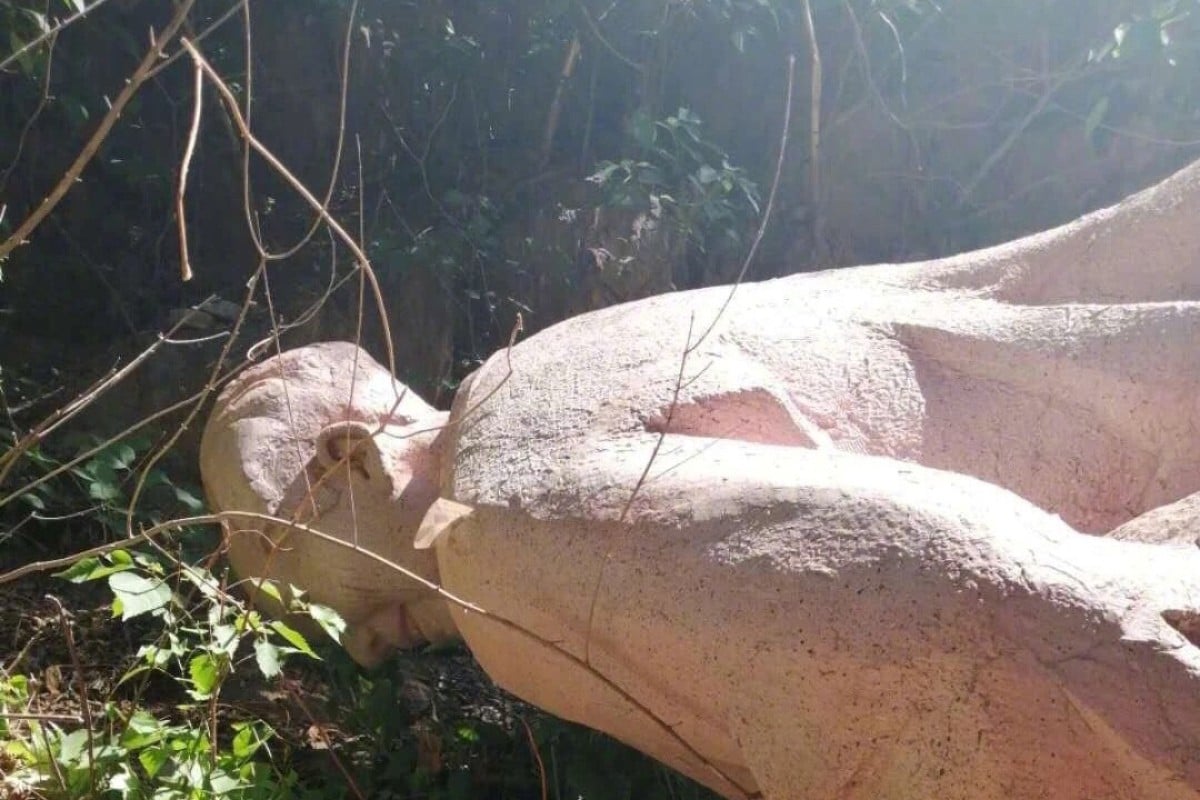
Cadres in Hebei village ordered to undergo self-criticism after photo of statue lying face down in the shrubbery was widely circulated online
Reinforced plastic structure had been leaning against the wall awaiting repair when it was blown into the bushes
The photograph was widely circulated online, prompting a response from the local authorities. Photo: Weibo
A couple of grass-roots Communist Party members from northern China have been disciplined after a statue of Mao Zedong was photographed lying face down surrounded by overgrown bushes.
The government of Fuping county in Hebei province issued a statement late on Tuesday that the party chief of Huashan village, where the statue used to stand, had been given a “serious warning” for failing to protect the statue.
His immediate superior, the party head of Chengnanzhuang township, also received a warning.
The disciplinary action came after a picture of the statue lying amid the shrubbery was widely circulated online, triggering an angry response from Mao’s admirers.
The village has become a revolutionary tourist destination because the founding father of the People’s Republic spent some time there in 1948.
100 years on from China’s May Fourth Movement, its message is being co-opted by the Communist Party
The local government said on Sunday that the statue, showing Chairman Mao with a clenched right fist, had been erected in 2017.
It was removed from its plinth earlier this month after cracks appeared in the reinforced plastic model and its colour started to fade.
The government said it had been leaning against a wall after its removal on May 3, but was blown over by strong gusts of wind several days later.
It has now been sent to the manufacturer for repair.
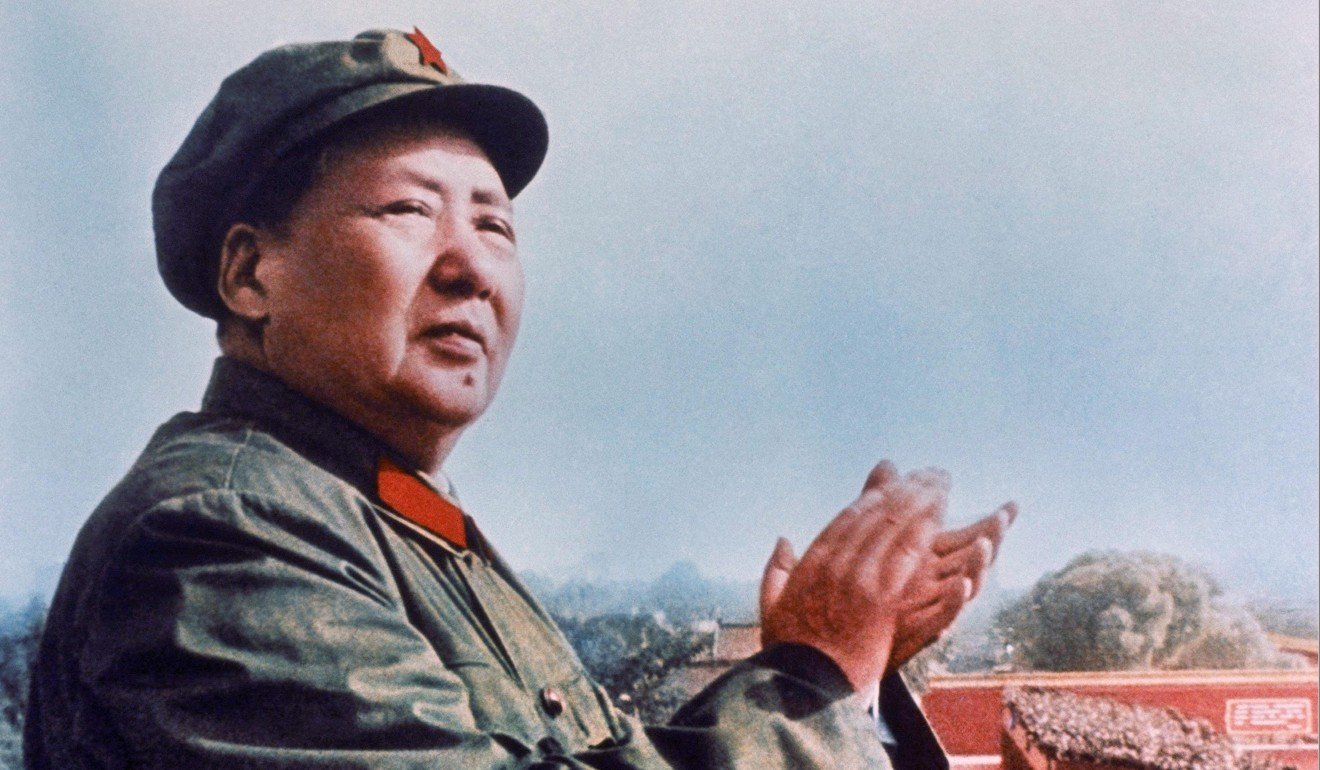
Mao’s image still adorns the banknotes and many public spaces in China. Photo: Alamy
The local officials were punished for “lacking ideological understanding” of the removal, failing to give enough protection to the statue and being careless in their daily work, the local government said.
Besides penalties for the individuals, the township party committee was also ordered to undertake self-criticism – a practice that began under Mao.
Statues of Chairman Mao used to be a common scene all across China, many of them built in the late 1960s at the height of the Cultural Revolution.
Shenzhen official kicked out of Chinese Communist Party for ‘trading power for personal gain and sex’.
Although many of them were removed after his death when the government began the process of reform and opening up, they can still be seen in spaces such as town squares and university campuses. Mao’s face also remains on the country’s banknotes and a large portrait of him hangs in Beijing overlooking Tiananmen Square.
Police and e-commerce giant JD.com launch joint investigation
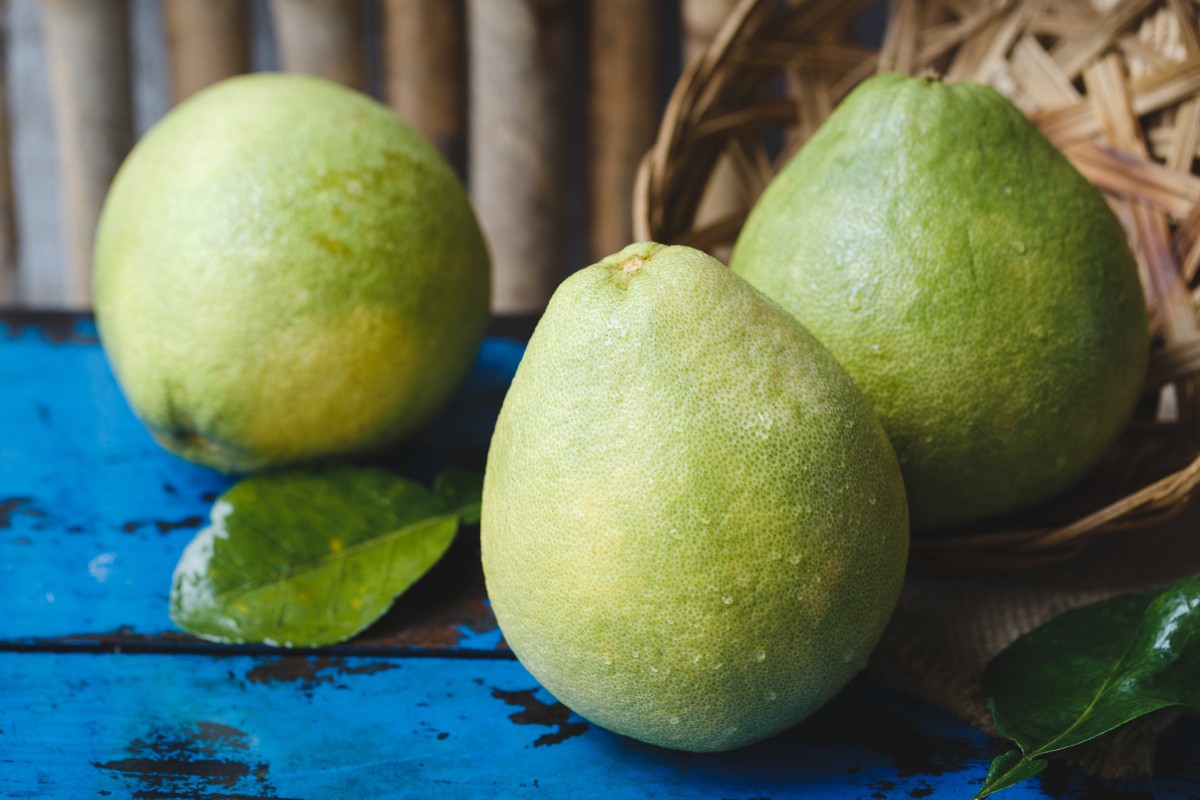
A woman in China was subjected to nuisance and calls texts after leaving a negative review about some fruit which she bought online. Photo: Shutterstock
A woman in southwest China was inundated with nuisance calls and texts after leaving a bad review with an online fruit seller.
Chinese e-commerce platform JD.com has launched a joint investigation with the police to determine whether the woman’s personal details were leaked online, according to online news portal The Paper on Thursday.
The woman, surnamed Pang, from Kunming in Yunnan province, said she started receiving the harassing phone calls and texts soon after writing a negative review for two boxes of pomelos – an Asian citrus – she ordered from a JD.com vendor last week.
Pang wrote the negative review when the number of pomelos delivered to her on Monday was fewer than the description in the online listing. After checking with her that the fruit was not damaged, the seller wrote: “Then you can’t leave a negative comment.
Why are you not responding? What the?”
Twelve minutes after she reported this interaction to JD.com customer services, the nuisance calls began. Pang told The Paper she suspected her personal information had been leaked.
JD.com said on Tuesday that the customer had been fully refunded for the price of the item, and that the mismatch between the description and the delivery was due to an omission by the seller. The e-commerce platform said it would deal with the merchant in accordance with its guidelines.
Pang said the vendor had contacted her on Wednesday to apologise for the poor customer service but had denied any involvement with the nuisance calls and texts. The seller also denied sharing her personal information with third parties.
Pang said she would seek legal advice to protect her consumer rights.
Parents in Jiangsu province were shocked by a form that said a kindergarten class had been investigated and ‘no pupils were found to be involved in organised crime’
Officials fired or disciplined for ‘causing serious negative publicity’
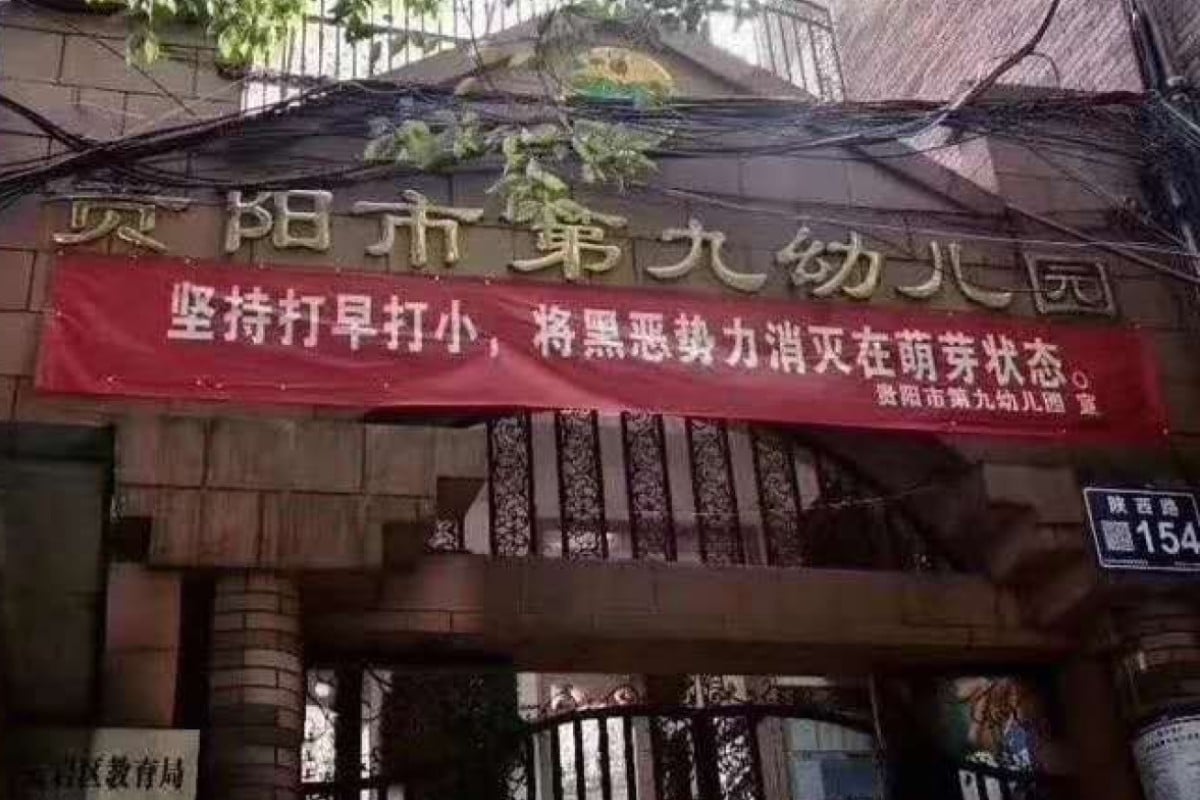
A kindergarten in Guiyang put up a banner on its entrance that read: “Crack down early and crack down young. Eliminate the dark and evil forces when they are still budding”. It was later removed. Photo: Weibo
Education officials in eastern China have been sacked or disciplined after targeting kindergarten pupils in a crackdown on organised crime.
Residents in Wuxi, a city in Jiangsu province, were shocked when a note saying that 35 pupils aged four and five at Xinguang Kindergarten had been investigated as part of the wider crackdown on mafia-style gangs was leaked online.
The form, signed by two teachers, concluded: “No pupils were found to be involved in organised crime”.
Copies of the document started circulating on social media, triggering a widespread backlash and ridicule.
Some social media users accused the kindergarten of box-ticking and questioned whether staff would have been capable of discovering whether any parents were involved in organised crime.
China’s war on organised crime, corrupt officials sees 79,000 people detained
One said that if officials really wanted to nip criminal tendencies in the bud, they were starting too late, adding: “Why not start when they are in the womb and crack down in the maternity hospital?”
But on Thursday the Wuxi government backed down and criticised education officials in Xishan district for misinterpreting the crackdown on organised crime and “putting on an unrealistic show”.
Three senior officials from the Xishan district authority were disciplined for their roles in “causing serious negative publicity”.
China’s fentanyl firms back crackdown on opioid
Feng Dongyan, the chief and party secretary of Xishan district education bureau, was given a party warning.
Wang Zhaoyu, director of the bureau’s general office, and Lu Zhongxian, the director in charge of education inspection of the bureau, lost their jobs and were given a serious party disciplinary warning.
Beijing started the campaign targeting grass-roots criminal organisations and their “protective umbrellas” last year.
More than 3,000 people have been punished so far, but the campaign has also been ridiculed for taking aim at the wrong targets.
Last month a kindergarten in Guiyang in Guizhou province put up a banner at its entrance reading: “Crack down early and crack down young. Eliminate the dark and evil forces when they are still budding”.
The kindergarten said the banner was “meant for the public” but took it down after an online backlash.
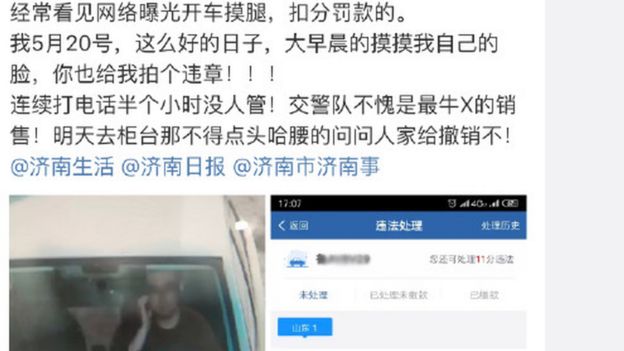
The next thing he knew, he’d received a notification instructing him that he had violated the laws of the road for “driving while holding a phone”. A surveillance picture of his “offence” was attached.
He was told that he would receive two points on his licence and was also ordered to pay a 50 yuan (£5.70; $7.25) fine.
“I often see people online exposed for driving and touching [others’] legs,” he said on the popular Sina Weibo microblog,” “but this morning, for touching my face, I was also snapped ‘breaking the rules’!”
He shared the surveillance picture of himself that he had been sent, and said that he was going to go the authorities to try to sort the situation, after “no one would help him” over the phone.
Image copyright SINA WEIBOImage caption Mr Liu shared his surveillance photograph on social media
The Global Times newspaper says that the city’s traffic authority have now cancelled his ticket, and told him that “the traffic surveillance system automatically identifies a driver’s motion and then takes a photo”, which is why his face-scratching had been mistaken for him taking a phone call.
While many online are amused by his case joking that the positioning of his hand signalled he certainly appeared to be on an “invisible” phone, some are also voicing their concerns about the level of surveillance placed on them.
“This is quite embarrassing,” says one, “that monitored people have no privacy.”
“Chinese people’s privacy – is that not an important issue?” another asks.
Many are fitted with artificial intelligence including facial recognition technology, and whereas some can read simple faces, others can estimate age, ethnicity and gender.