Chindia Alert: You’ll be Living in their World Very Soon
aims to alert you to the threats and opportunities that China and India present. China and India require serious attention; case of ‘hidden dragon and crouching tiger’.
Without this attention, governments, businesses and, indeed, individuals may find themselves at a great disadvantage sooner rather than later.
The POSTs (front webpages) are mainly 'cuttings' from reliable sources, updated continuously.
The PAGEs (see Tabs, above) attempt to make the information more meaningful by putting some structure to the information we have researched and assembled since 2006.
A COVID-19 patient is wheeled out from an EHPAD (Housing Establishment for Dependant Elderly People) in Epinay sur Seine near Paris, France, on April 22, 2020. (Photo by Aurelien Morissard/Xinhua)
The first suspected cases of COVID-19 infection in France could date back to Nov. 16 last year, a hospital in eastern France said. Before this announcement, the first COVID-19 infection cases officially recorded in France were on Jan. 24, 2020.
PARIS, May 8 (Xinhua) — The first suspected cases of COVID-19 infection in France could date back to Nov. 16 last year, some nine weeks earlier than the official record of the country’s first confirmed cases, a hospital in eastern France said Thursday.
“Doctor Michel Schmitt, head of the medical imaging department at the Albert Schweitzer hospital in Colmar, has reviewed 2,456 chest scans performed between Nov. 1 and April 30, for all reasons (cardiac, pulmonary, traumatic, tumor pathologies),” said the hospital in a press release.
A suspected patient of COVID-19 is transferred to an EHPAD in Epinay sur Seine near Paris, France, April 22, 2020. (Photo by Aurelien Morissard/Xinhua)
The typical scans compatible with COVID-19 infection have been also reviewed in a second then a third reading by two other experienced radiologists. According to this retrospective study, the first cases of contamination with COVID-19 were thus identified from Nov. 16 in this hospital, it said.
Albert Schweitzer hospital added that it has launched a collaboration with France’s National Center for Scientific Research to start an epidemiological exploitation of these results.
Before this announcement, the first case of COVID-19 infection in east France was officially identified in late February. It involved a 36-year-old man who returned from a trip to Lombardy, then hotspot of the epidemic in Italy.
A giant mask is seen on a residential building in Saint-Mande, near Paris, France, on May 2, 2020. (Photo by Aurelien Morissard/Xinhua)
The first COVID-19 infection cases officially recorded in France were on Jan. 24, 2020 relating to individuals who had recently arrived or returned from China.
France on Thursday registered 178 new deaths caused by the novel coronavirus, taking the tally to 25,987. As hospitalization data continued to slow, the government said on Thursday that the country would start to unwind the nearly-two-month anti-coronavirus lockdown from Monday.
Pou Chen makes footwear for the likes of Nike and Adidas, but says it has suffered from a lack of orders as global value chains strain under the impact from the virus
Chinese workers moved to Vietnam to help set-up new factories as the company expand its production, but have now become expendable
With the likes of Nike and Adidas closing retail stores around the world to comply with social distancing requirements, analysts also said orders plummeted 50 per cent in the second quarter, although the company declined to comment on the media reports. Photo: Bloomberg
A group of 150 Chinese workers believe the world’s largest maker of trainers used the coronavirus as an excuse to fire them, having helped Taiwanese firm Pou Chen successfully expand its production into Vietnam for more than a decade.
Pou Chen, which makes footwear for the likes of Nike and Adidas, informed the group in late April that they would no longer be needed as they were unable to return to
from their hometowns in China due to the coronavirus lockdowns.
“We believe we contributed greatly to the firm’s relocation process, copying the production line management experience and successful model of China’s factories to Vietnamese factories,” said Dave Zhang, who started working for Pou Chen in Vietnam in 2003.
“Now, when the factories over there have matured, and there is a higher automation level in production, our value has faded in the management’s eyes and we got laid off, in the name of the automation level.”
Rush hour chaos returns to Vietnam’s streets as coronavirus lockdown lifted
The group claims the firm began to fire Chinese employees several years ago, with the total number dropping from over 1,000 at its peak to around 400 last year.
“We 150 employees were the first batch of Chinese employees to be laid off this year. We are all pessimistic and expect more will be cut,” added Zhang.
In its email on April 27, Pou Chen said it was forced to terminate the contracts of the Chinese employees across five of its factories due to an unprecedented decline in orders and financial losses.
The Chinese employees, many of whom have been working for the shoemaker for decades, said the compensation offered was unfair and below the levels required by labour law in both Vietnam and China.
In a further statement to the South China Morning Post, Pou Chen stood by the move as the coronavirus pandemic had reduced demand for footwear products and so required an “adjustment of manpower.”
“[The dismissals were] in accordance with the relevant labour laws of the country of employment … and employee labour contracts,” added the statement from Pou Chen, which employs around 350,000 people worldwide.
Company data showed Pou Chen’s first quarter revenues tumbled 22.4 per cent year-on-year to NT$59.46 billion (US$1.99 billion), the weakest in six years.
With the likes of Nike and Adidas closing retail stores around the world to comply with social distancing requirements, analysts also said orders plummeted 50 per cent in the second quarter, although the company declined to comment on the media reports.
Last month, the company was also mulling pay cuts and furloughs that would affect 3,000 employees in Taiwan and officials based in its overseas factories, according to the Taipei Times.
Andy Zeng, who had worked for the firm since 1995, said the group were “very upset” when they received the news last month as the impact of the coronavirus pandemic began to reverberate around the world, disrupting global value chains.
“Most of us joined Pou Chen in the 1990s when we were in our late teens or early 20s, when the Taiwan-invested company started investing and setting up factories in mainland China. Now more than two decades have passed,” he said.
Zeng was among the first generation of skilled workers in China as Pou Chen developed rapidly, enjoying the benefits of cheap labour, although the workers themselves were rewarded with regular pay rises.
The company needed a group of skilled Chinese workers to go to its new factories in Vietnam. I said yes because I thought it was a good opportunity to see the outside world – Andy Zeng
“I worked at the Dongguan branch of Pou Chen for 11 years from 1995.” Zeng added “In the 1990s and early 2000s, the company expanded rapidly in Dongguan with a growing number of large orders, and every worker had to work hard around the clock. I remember I earned 300 yuan (US$42) a month in 1995, and my monthly salary rose to 1,000 yuan (US$141) in 1998.”
Zeng’s salary eventually rose to over 3,000 yuan in 2005 as China’s economy boomed, leading Pou Chen to seek alternative production sites in Vietnam and Indonesia where labour and land were even cheaper. However, in the early 2000s, the new locations lacked skilled shoe manufacturing workers like Zeng.
“The company needed a group of skilled Chinese workers to go to its new factories in Vietnam. I said yes because I thought it was a good opportunity to see the outside world and the offer of US$700 per month was not bad.” Zeng said.
“We actively cooperated with their plans. Over the past decade, we have been away from our families and hometowns, and followed the company’s strategy to work hard in Vietnam.
With no deaths and cases limited to the hundreds, Vietnam’s Covid-19 response appears to be working
“In 2005, the company sent me to its newly-built factory in Vietnam. This year was my 14th year in Dong Nai in Vietnam. I have witnessed the company’s production capacity in Vietnam become larger and larger. When I arrived, there were only a few production lines, and now there are at least dozens of them, employing more than 10,000 workers in each factory.”
According to a report in the Taipei Times on April 14, citing both Reuters and Bloomberg, Pou Chen was ordered to temporarily shut down one of its units in Vietnam over coronavirus concerns, according to Vietnamese state media.
The company was forced to suspend production for two days after failing to meet local rules on social distancing, Tuoi Tre newspaper reported.
“We Chinese employees actually were pathfinders for the company’s relocation from China to Vietnam,” said Zhang, who was in charge of a 1,700-worker factory producing 1.7 million shoe soles per month.
What our Chinese employees have done in Vietnam for more than a decade can be said to be very simple but very difficult – Dave Zhang
“We were sent to resolve any ‘bottlenecks’ in the production lines that were slowing down the rest of the plant, because during the launch of every new production line, Vietnamese workers would strike and get into disputes. As far as I know, there were over a thousand Chinese employees managing various aspects of the production lines in the company’s Vietnamese factories.
“In fact, what our Chinese employees have done in Vietnam for more than a decade can be said to be very simple but very difficult. That is to teach Vietnamese workers our experience of working on a production line, improve the productivity of the Vietnamese workers, and help the factories become localised.”
Overall, Pou Chen says it produces more than 300 million pairs of shoes per year, accounting for around 20 per cent of the combined wholesale value of the global branded athletic and casual footwear market.
“Because of cultural shock and great pressure to expedite orders, Vietnamese workers were not used to the management style of Taiwan factories,” Zhang added.
“Many of our Chinese employees were beaten by Vietnamese workers [due to cultural differences about work]. During anti-China protests in Vietnam, we were still under great pressure to keep the local production lines operating.”
The statement, issued on 27 April but only reported this week, singles out stadiums, exhibition centres, museums and theatres as public facilities where it’s especially important to ban plagiarism.
“City constructions are the combination of a city’s external image and internal spirit, revealing a city’s culture,” the government statement says.
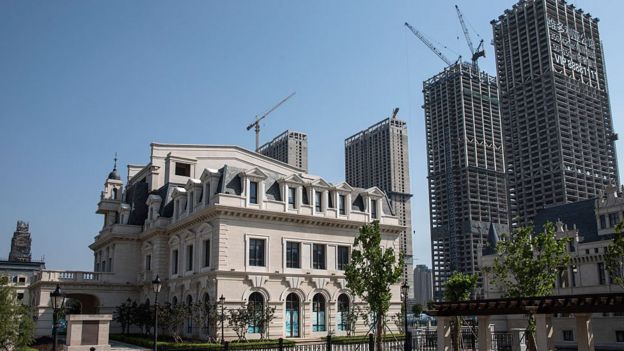
It calls for a “new era” of architecture to “strengthen cultural confidence, show the city’s features, exhibit the contemporary spirit, and display the Chinese characteristics”.
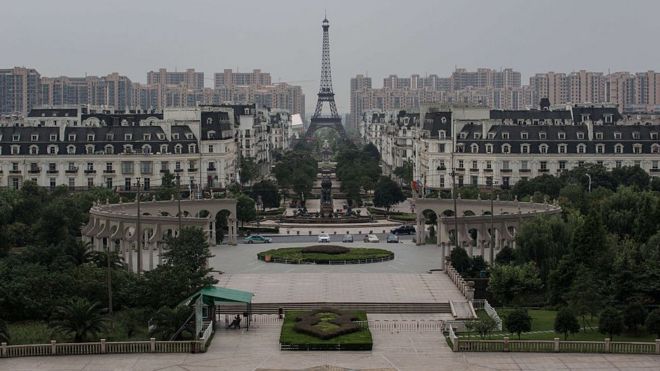
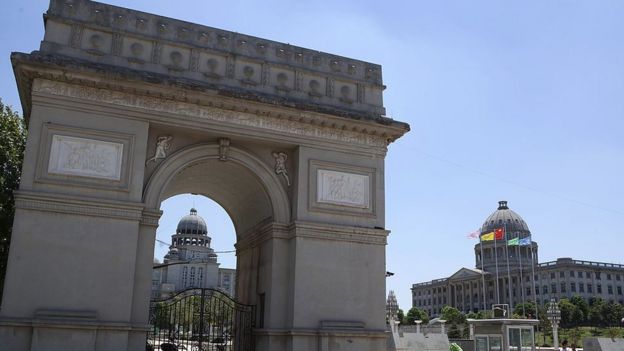
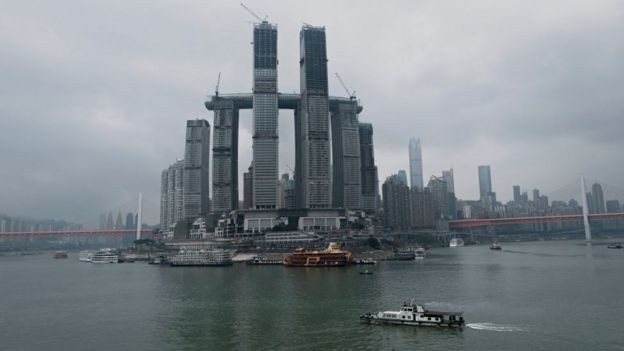
Image copyright STR / AFP / GETTYImage caption – Not the Arc de Triomphe, but a college gate in Wuhan
The guidelines on “foreign” architecture were mostly welcomed on Chinese social media.
“The ban is great,” wrote a Weibo user, according to state media the Global Times. “It’s much better to protect our historical architectures than build fake copycat ones.”
Another recalled seeing an imitation White House in Jiangsu province. “It burned my eyes,” she said.
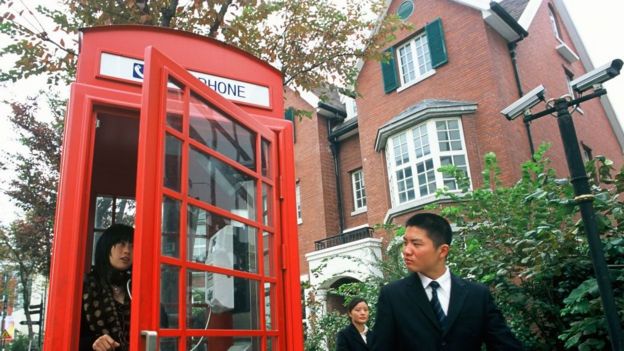
Image copyright OLIVIER CHOUCHANA / GETTYImage caption Thames Town, an English-themed town near Shanghai, pictured in 2008
In 2013, the BBC visited “Thames Town”, an imitation English town in Songjiang in Shanghai.
The town features cobbled streets, a medieval meeting hall – even a statue of Winston Churchill – and was a popular spot for wedding photos.
“Usually if you want to see foreign buildings, you have to go abroad,” said one person. “But if we import them to China, people can save money while experiencing foreign-style architecture.”
Image copyright WANG ZHAO / GETTYImage caption – Raffles City, Chongqing, in 2019 – mimicking the Marina Bay Sands hotel in Singapore
China, of course, is not the only country to borrow – or copy – other countries’ designs.
Las Vegas in the US revels in its imitations of iconic foreign architecture including the Eiffel Tower and Venetian canals.
Thailand also has developments that mimic the Italian countryside and charming English villages, mainly aimed at domestic tourists.
US President Donald Trump has described the coronavirus pandemic as the “worst attack” ever on the United States, pointing the finger at China.
Mr Trump said the outbreak had hit the US harder than the Japanese bombing of Pearl Harbor in World War Two, or the 9/11 attacks two decades ago.
His administration is weighing punitive actions against China over its early handling of the global emergency.
Beijing says the US wants to distract from its own response to the pandemic.
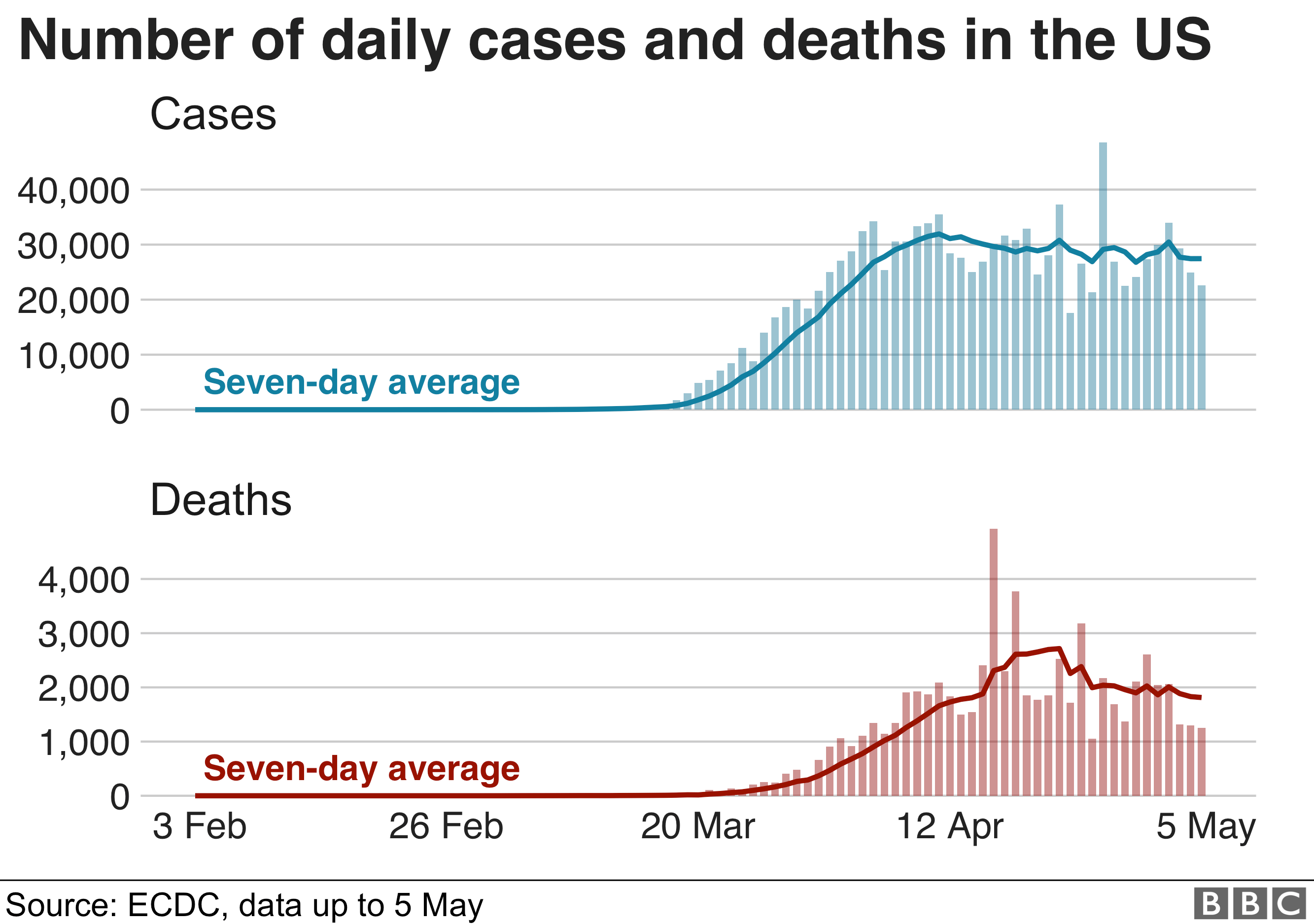
Since emerging in the Chinese city of Wuhan in December, the coronavirus is confirmed to have infected 1.2 million Americans, killing more than 73,000.
Speaking to reporters in the Oval Office of the White House on Wednesday, Mr Trump said: “We went through the worst attack we’ve ever had on our country, this is worst attack we’ve ever had.
“This is worse than Pearl Harbor, this is worse than the World Trade Center. There’s never been an attack like this.
“And it should have never happened. Could’ve been stopped at the source. Could’ve been stopped in China. It should’ve been stopped right at the source. And it wasn’t.”
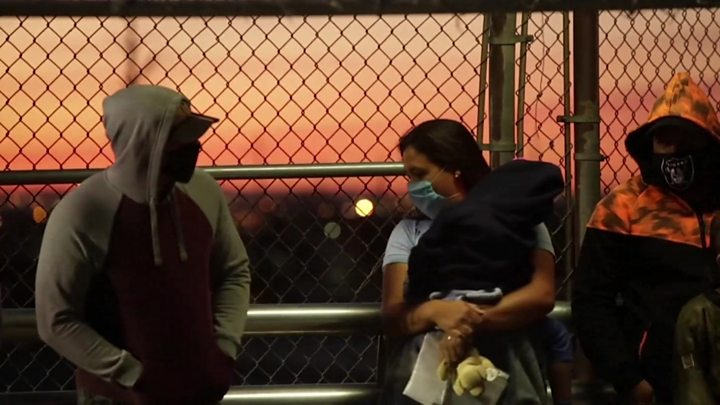
Media caption Life for asylum seekers in lockdown on the US-Mexico border
Asked later by a reporter if he saw the pandemic as an actual act of war, Mr Trump indicated the outbreak was America’s foe, rather than China.
“I view the invisible enemy [coronavirus] as a war,” he said. “I don’t like how it got here, because it could have been stopped, but no, I view the invisible enemy like a war.”
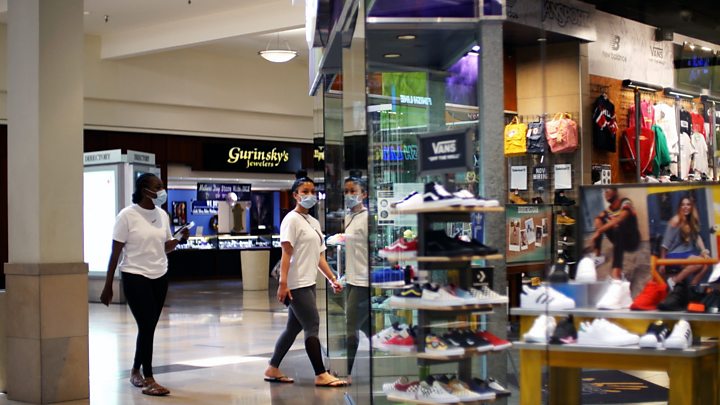
Media caption US shopping centres re-open: ‘This is the best day ever’
Who else in Trump’s team is criticising China?
The deepening rift between Washington and Beijing was further underscored on Wednesday as Secretary of State Mike Pompeo renewed his rhetoric against China, accusing it of covering up the outbreak.
He stuck by his so far unsubstantiated charge that there is “enormous evidence” the coronavirus hatched in a Chinese laboratory, even while acknowledging there is still uncertainty about its origins.
“Those statements are both true,” America’s top diplomat told the BBC. “We don’t have certainty and there is significant evidence that it came from a lab.”
One of the most trusted US public health experts has said the best evidence indicates the virus was not made in a lab.
Dr Anthony Fauci, a member of Mr Trump’s coronavirus task force, said on Monday the illness appeared to have “evolved in nature and then jumped species”.
Why is the US blaming China?
President Trump faces a tough re-election campaign in November, but the once humming US economy – which had been his main selling point – is currently in a coronavirus-induced coma.
As Mr Trump found his management of the crisis under scrutiny, he began labelling the outbreak “the China virus”, but dropped that term last month days before speaking by phone with Chinese President Xi Jinping.
Both Mr Trump and his likely Democratic challenger, Joe Biden, appear to be fastening on to China’s unpopularity as an election issue, with each accusing the other of being a patsy for America’s primary economic competitor.
As the coronavirus began spreading in the US back in January, Mr Trump signed phase one of a trade deal with China that called a truce in their tariff war. The US president’s hopes of sealing a more comprehensive phase two deal are now in limbo because of the pandemic.
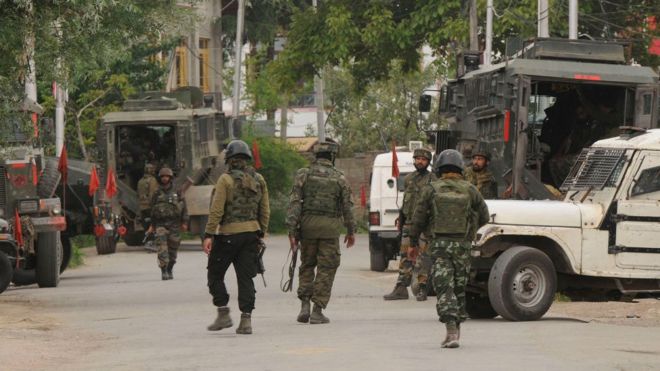
Indian security forces have killed a prominent militant leader in disputed Kashmir, officials say.
Riyaz Naikoo had taken over command of the banned Hizbul Mujahideen group, succeeding Burhan Wani who was killed by security forces in 2016.
Wani’s death triggered massive protests in the region, which is claimed in its entirety by both India and Pakistan.
The region has seen an armed insurgency against Indian rule since 1989, which has flared following Wani’s killing.
Naikoo was shot dead in his home village of Beigh Pora in Pulwama district after militants killed eight security personnel in two separate attacks, part of a recent surge of violence in Indian-administered Kashmir.
Locals said the militant leader had been trapped in a joint siege laid by army, paramilitary and police forces. He had been on the run for eight years.
“At least 76 militants including Naikoo have been killed since January this year. But we also lost 20 soldiers including senior army and police officers,” a security official told BBC Urdu on condition of anonymity.
Under a new policy, militants who are killed are not identified and their bodies are not handed over to their families.
Officials had accused Riyaz Naikoo of plotting attacks against the security establishment in the valley.
Disputed Kashmir has been a flashpoint for more than 60 years, sparking two wars between India and Pakistan.
In August 2019, the Indian government stripped the region of its semi-autonomous status and split it into two federally-run territories.
Thousands of people were detained and the region remains under severe security restrictions.
CHENNAI (Reuters) – At least 11 people were killed in India in a gas leak at a South Korean-owned factory making polystyrene products that made hundreds of people sick and led to the evacuation of villagers living nearby, officials said.
The accident occurred some 14 km (9 miles) inland from the east coast city of Visakhapatnam, in Andhra Pradesh state, at a plant operated by LG Polymers, a unit of South Korea’s biggest petrochemical maker, LG Chem Ltd.
Srijana Gummalla, commissioner of the Greater Visakhapatnam Municipal Corporation, said gas from styrene, a principal raw materials at the plant, leaked during the early hours of the morning, when families in the surrounding villages were asleep.
RELATED COVERAGE
LG Chem share price falls nearly 2% after deadly gas leak in India
Yashwanth Saikumar Ambati, 23, who lives about 300 metres away from the plant, said he woke up around 4.30 a.m. because of a strong smell.
“I went back to sleep and I woke up around 6 because the smell got stronger. My eyes were itchy, and I was feeling drowsy, light-headed and slightly breathless,” he told Reuters, adding that neighbours also complained of eye irritation and stomach aches.
In a statement issued from Seoul, LG Chem said that the gas emitted in the leak can cause nausea and dizziness when inhaled, adding that it was seeking to ensure casualties received treatment quickly.
Video from Reuters partner ANI shot later on Thursday showed emergency workers in the area rushing to help victims, some of whom appeared to be listless and disoriented.
A number of victims lay unconscious on the streetside, as volunteers fanned them and others carried them to ambulances.
A spokesman for LG Chem in Seoul said the leak was discovered by a night shift maintenance worker and has been brought under control.
According to both the company spokesman and Gummalla, the plant was being reopened after India relaxed a nationwide lockdown that had been imposed on March 25 to contain the spread of the new coronavirus.
Thursday’s incident brought back bad memories of a gas leak at an factory of U.S. chemical firm Union Carbide that killed thousands in the central Indian city of Bhopal in 1984, but thankfully it was on a far smaller scale.
“I pray for everyone’s safety and well-being in Visakhapatnam,” Prime Minister Narendra Modi said in a tweet.
S.N. Pradhan, director general of the National Disaster Response Force, said that at least 11 had died after around 1,000 people living near the plant were exposed to the gas.
FALLING, RUNNING AWAY
B.V. Rani, a revenue official in the district, said she received a call at around 4 a.m. from a police officer near the facility, who sounded panicky. “He asked me to come to the spot immediately,” Rani told Reuters.
When Rani went there, she saw that people had collapsed unconscious in the village adjoining the 60-acre site of the plant.
“I personally helped more than 15 people get to an ambulance who had tried to run away from the village but dropped down within a few metres,” she said.
At least one child was among the dead, a policeman at the site told ANI, whose video showed at least two other children being lifted into an ambulance.
Between 300-400 people were hospitalised, Swarupa Rani, an Assistant Commissioner of Police in Visakhapatnam told Reuters. Another 1,500 people had been evacuated, mostly from a neighbouring village.
Areas within approximately 3-kilometre (nearly 2-mile) radius of the plant were evacuated, he said, with emergency services going from door-to-door to find anyone left behind.
TOP PETROCHEMICAL MAKER
Andhra Pradesh Chief Minister Jagan Mohan Reddy said in a televised address that the gas leak occurred because raw material was stored for a long period of time.
The state government will give 10 million rupees ($131,900) compensation to the families to those who died, and it will also form a panel to investigate the cause of the accident, said P.V. Ramesh, a senior aide to the chief minister.
“Obviously something has gone wrong,” Ramesh told Reuters. “Nobody will be spared.”
LG Chem’s share priced closed nearly 2% weaker on Thursday, in a Seoul market that was broadly flat.
South Korea’s top petrochemical maker by capacity, LG Chem acquired the plant in 1997 and established LG Polymers India Private Limited (LGPI), according to a company website.
The LG Polymers plant makes polystyrene products which are used in manufacturing electric fan blades, cups and cutlery and containers for cosmetic products such as make up.
“LG Polymers is a multi national, reputed company, and it is sad that the incident has happened in their plant,” Chief Minister Reddy said in a televised media address.
Chinese surveyors hike toward a higher spot after setting out from a base camp at an altitude of 5,200 meters in southwest China’s Tibet Autonomous Region on May 7, 2020. The Chinese measurement team of over 30 surveyors Thursday arrived at a base camp at an altitude of 6,500 meters, as they endeavor to accomplish a mission to remeasure the height of the world’s highest mountain. (Photo by Lhagba/Xinhua)
MOUNT QOMOLANGMA BASE CAMP, May 7 (Xinhua) — A team of over 30 Chinese surveyors Thursday arrived at a base camp at an altitude of 6,500 meters, as they endeavor to accomplish a mission to remeasure the height of the world’s highest mountain.
The team arrived at the advance camp at around 5 p.m. safe and sound, after they set out from their base camp at an altitude of 5,200 meters, located in Tingri County of Tibet Autonomous Region in southwest China, on Wednesday.
The team will take a rest and continue to debug height measuring equipment at the base camp for at least one day before moving on.
They arrived at a transition camp at a height of 5,800 meters at around 6 p.m. Wednesday and spent the night there. They began climbing at around 11 a.m., passed nearby the East Rongbuk glacier and arrived at the advance camp after six hours’ walk.
The advance camp sits on a slope next to the end of the glacier, and is the last camp before the snow line and the ice and snow road. After about an hour’s walk up from the camp, the surveyor will arrive at the shoe-changing point, where climbers need to wear crampons to continue climbing on the icy road.
Known as the “devil camp,” many professional mountain guides who have reached the peak of Mount Qomolangma many times also suffer from altitude sickness here due to its geographical location surrounded by mountains and poor air circulation.
— Chinese archaeologists announced significant achievements at the Shuanghuaishu site in central China’s Henan Province, providing key proof of the origin of the over 5,000-year-long Chinese civilization.
— With an area of 1.17 million square meters, the Shuanghuaishu site, dating back to around 5,300 years, is located on the south bank of the Yellow River in the township of Heluo, Gongyi City, and was proposed to be named “Heluo kingdom.”
— A large number of relics of the Yangshao Culture dating back 5,000 to 7,000 years have been discovered at the site.
by Xinhua writers Xu Ruiqing, Wang Ding, Gui Juan, Shuang Rui
ZHENGZHOU, May 7 (Xinhua) — Chinese archaeologists announced Thursday significant achievements at the Shuanghuaishu site in central China’s Henan Province, providing key proof of the origin of the over 5,000-year-long Chinese civilization.
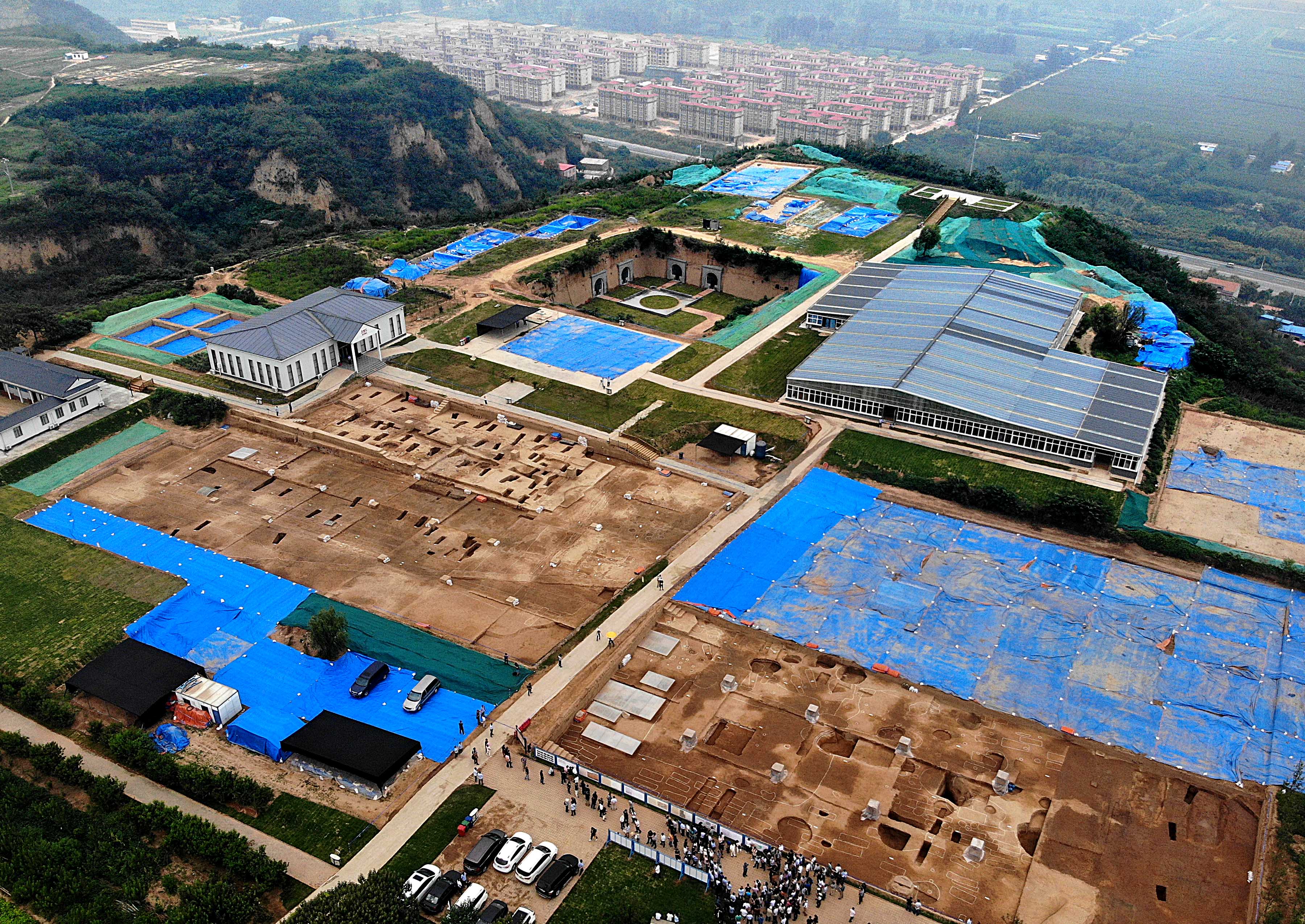
With an area of 1.17 million square meters, the Shuanghuaishu site is located on the south bank of the Yellow River in the township of Heluo, Gongyi City.
The ancient city relic dating back to around 5,300 years ago was proposed by Chinese archaeologists to be named “Heluo kingdom” after its location in the center of the Heluo area, where the Yellow River (known as He in ancient China) and the Luohe River meet.
“The Shuanghuaishu site is the highest-standard cluster with the nature of a capital city discovered so far in the Yellow River basin in the middle and late stage of Yangshao Culture, the early stage of the formation of Chinese civilization,” said Li Boqian, a professor at Peking University, at a press conference on major archaeological discoveries at Shuanghuaishu site held Thursday in Zhengzhou, the provincial capital.
Aerial photo taken on Aug. 27, 2019 shows the Shuanghuaishu site in central China’s Henan Province. (Xinhua/Li An)
A large number of relics of the Yangshao Culture dating back 5,000 to 7,000 years have been discovered at the site, said Gu Wanfa, director of the Zhengzhou Municipal Research Institute of Cultural Relics and Archaeology, at the press conference.
“The important archaeological findings provide key proof of the origin of Chinese civilization, and also prove the representativeness and influence of the Heluo area in the golden stage of the origin of Chinese civilization around 5,300 years ago,” said Wang Wei, a member of the Chinese Academy of Social Sciences.
Since 2013, the Zhengzhou Municipal Research Institute of Cultural Relics and Archaeology and the Institute of Archaeology of the Chinese Academy of Social Sciences have conducted continuous archaeological excavations on the site.
According to archaeologists, the Shuanghuaishu site was about 1,500 meters long from east to west and 780 meters wide from north to south. It was surrounded by three ring trenches with each found to have external access, forming a strict defense system.
Aerial photo taken on Aug. 27, 2019 shows the Shuanghuaishu site in central China’s Henan Province. (Xinhua/Li An)
The central residential area with four rows of houses was found in the northern part of the inner ring moat. Meanwhile, three public cemeteries with more than 1,700 tombs, three sacrificial remains, an astronomical relic, a pottery workshop area, a water storage area, a road system, and other facilities were also discovered at the city ruins.
“The Shuanghuaishu site was a well-selected and scientifically planned settlement site,” said Wang.
“Based on the geographical location and scale, it’s also the only large-scale city settlement discovered so far in the Yellow River basin from the middle and late stage of Yangshao Culture,” Wang added.
Archaeologists believe that the Heluo kingdom was the source of many typical characteristics of Chinese civilization.
Silk originated in China and later became one of the country’s major trade items. “The mulberry-growing and silkworm-raising culture was an important component of Chinese civilization,” said Li.
Among the unearthed relics at Shuanghuaishu, a boar tusk carving of a silkworm, 6.4 cm long, nearly 1 cm wide and 0.1 cm thick, was believed to be China’s earliest carving depicting silkworms.
Undated photo shows a boar tusk carving of a silkworm unearthed at the Shuanghuaishu site in central China’s Henan Province. (Xinhua)
Experts say that the carving depicts a spinning silkworm which is quite similar to modern silkworms in appearance. “The spinning shape of the carving suggests that ancient Chinese people were familiar with the habits of silkworms,” said Gu.
Along with silk fabrics unearthed at the surrounding Wanggou site and Qingtai site, archaeologists said they are solid evidence to prove that the ancient Chinese in the Yellow River basin began raising silkworms and silk production around 5,300 years ago.
“Except Shuanghuaishu and its surrounding settlement sites, there were no definite discoveries from around 5,300 years ago related to the silk textile industry in other parts of the country,” said Li. “In that sense, they are the earliest representatives in the development history of Chinese mulberry cultivation and silkworm-rearing culture.”
Meanwhile, at the astronomical relic at Shuanghuaishu, nine pottery pots were arranged in the pattern of the nine stars of the Big Dipper, which shows that the ancestors of Heluo had relatively mature astronomical knowledge.
Photo taken on April 28, 2020 shows one of nine pottery pots arranged in the pattern of the nine stars of the Big Dipper, at an astronomical relic at the Shuanghuaishu site in central China’s Henan Province. (Xinhua/Li An)
“The relic also indicates the worship of the celestial body may have formed a grand sacrificial ceremony for observing the solar terms and praying for a good harvest,” said Gu.
Experts also believe the astronomical relic and the surrounding sacrificial remains constitute a whole, which is consistent with the records of winter solstice sacrifices in ancient Chinese documents. “It is of great significance to the study of early Chinese astronomy and the origin of Chinese civilization,” added Gu.
A worker makes clothes at a poverty-alleviation workshop in a resettlement area for the poor in Huishui County, southwest China’s Guizhou Province, May 6, 2020. With strict epidemic prevention measures in place, the county’s all 11 poverty-alleviation workshops have resumed work and production recently, providing over 1,100 jobs to locals. (Xinhua/Ou Dongqu)
Most rides and attractions will be back in action from Monday, but social distancing means there’ll be no night-time parades or selfies with the cartoon stars
Disney CEO says visitor numbers will initially be kept below the 30 per cent cap set by China’s central government
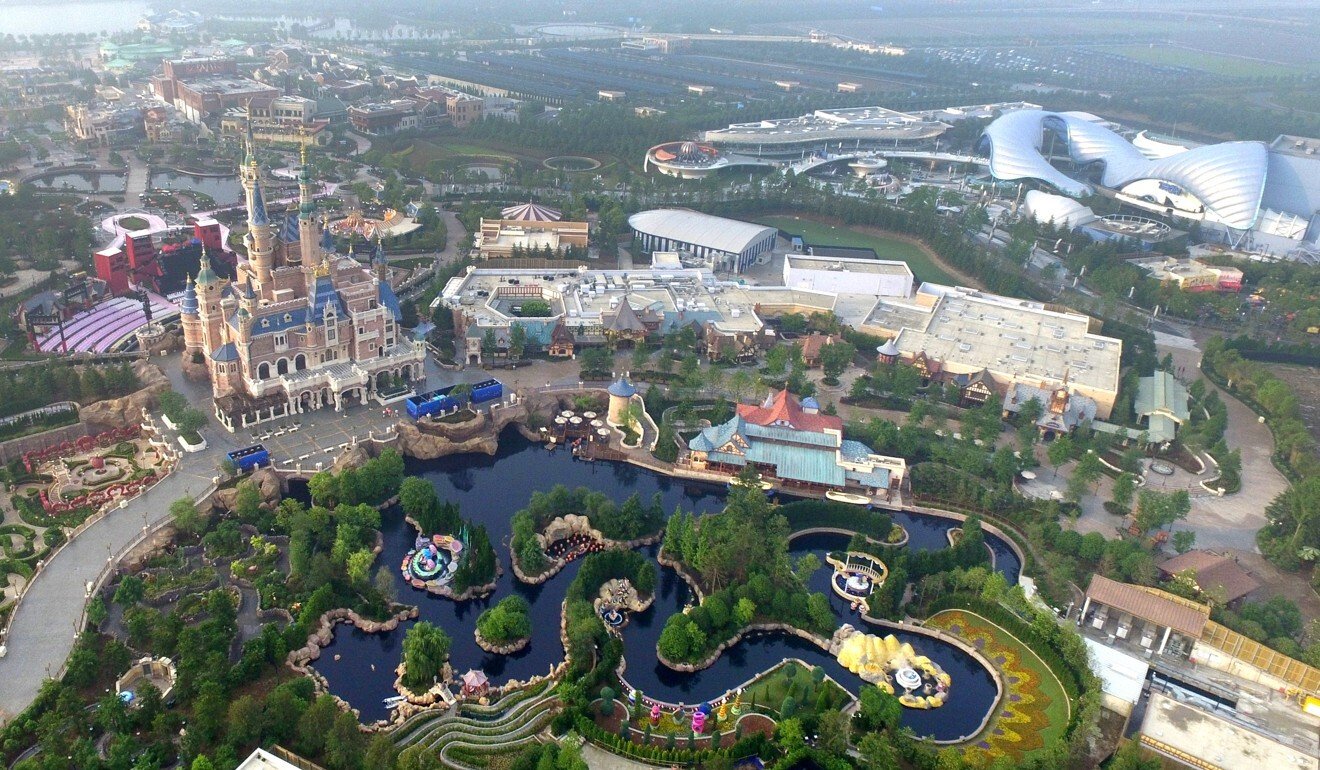
Disneyland Shanghai is reopening but not all of the magic will be back immediately. Photo: DPA
Shanghai Disneyland has announced it will reopen on Monday, but with some adjustments to its usual operations as China continues its re-emergence from the
While most of the park’s rides and attractions, including all of its shops, cafes and restaurants, will be open, several theatre shows and children’s play areas will remain closed, the company said.
To prevent large groups gathering, parades and night-time “spectaculars” will also remain on hold for the time being, and visitors will be prohibited from engaging in close interaction, including, taking selfies with the cartoon characters, it said.
China’s central government ruled earlier that tourist attractions can reopen but only if they cap visitor numbers at 30 per cent of their capacity.
Walt Disney’s new chief executive Bob Chapek told investors in the United States on Tuesday that the park had capacity for 80,000 visitors a day, which meant it would be restricted to 24,000 under Beijing’s rules.
However, the park would initially allow even fewer people through its gates, and only slowly build up to the cap, he said.
All guests will be required to wear face masks for the duration of their stay, except when dining, the company said.
Public areas will be cleaned more regularly than normal and hand sanitiser will be provided throughout the park, it said.
Tickets will be available online only from Friday, and all customers are required to submit their personal information when making a purchase.
Disneyland Shanghai has been closed since January 25. Photo: Xinhua
Disneyland Shanghai closed its doors on January 25 as the Covid-19 epidemic was reaching its peak in China. The decision to reopen came after the successful relaunch in March of the company’s Disneytown commercial zone, Wishing Star Park and Shanghai Disneyland Hotel, all of which neighbour the park.
Shanghai will be the first of six Disneylands to reopen since the onset of the Covid-19 pandemic, which has so far sickened close to 3.7 million people around the world and killed more than 256,000. Mainland China reported two new infections on Wednesday, both of which were imported.
The park opened in June 2016 and received more than 13 million visitors in its first 14 months of operation.
Hong Kong Disneyland has been closed since January 26, while the operators of Tokyo Disneyland said a decision on when it might reopen would be taken in the middle of May.
On Tuesday, Disney reported a US$1.4 billion cut in profits for the latest quarter, mainly due to disruptions to its theme parks caused by the coronavirus pandemic.
During the Labour Day holiday in mainland China, which fell on the first five days of May, more than 115 million trips were made in the country, down from 195 million a year earlier, according to the Ministry of Culture and Tourism.





 A worker makes clothes at a poverty-alleviation workshop in a resettlement area for the poor in Huishui County, southwest China’s Guizhou Province, May 6, 2020. With strict epidemic prevention measures in place, the county’s all 11 poverty-alleviation workshops have resumed work and production recently, providing over 1,100 jobs to locals. (Xinhua/Ou Dongqu)

 CHINDIA ALERT: You'll be living in their world, very soon
Coronavirus: Chinese workers in Vietnam cry foul after being fired by Taiwanese firm making shoes for Nike, Adidas
A group of 150 Chinese workers believe the world’s largest maker of trainers used the coronavirus as an excuse to fire them, having helped Taiwanese firm Pou Chen successfully expand its production into Vietnam for more than a decade.
Pou Chen, which makes footwear for the likes of Nike and Adidas, informed the group in late April that they would no longer be needed as they were unable to return to
from their hometowns in China due to the coronavirus lockdowns.
“We 150 employees were the first batch of Chinese employees to be laid off this year. We are all pessimistic and expect more will be cut,” added Zhang.
In its email on April 27, Pou Chen said it was forced to terminate the contracts of the Chinese employees across five of its factories due to an unprecedented decline in orders and financial losses.
The Chinese employees, many of whom have been working for the shoemaker for decades, said the compensation offered was unfair and below the levels required by labour law in both Vietnam and China.
“[The dismissals were] in accordance with the relevant labour laws of the country of employment … and employee labour contracts,” added the statement from Pou Chen, which employs around 350,000 people worldwide.
Company data showed Pou Chen’s first quarter revenues tumbled 22.4 per cent year-on-year to NT$59.46 billion (US$1.99 billion), the weakest in six years.
With the likes of Nike and Adidas closing retail stores around the world to comply with social distancing requirements, analysts also said orders plummeted 50 per cent in the second quarter, although the company declined to comment on the media reports.
Andy Zeng, who had worked for the firm since 1995, said the group were “very upset” when they received the news last month as the impact of the coronavirus pandemic began to reverberate around the world, disrupting global value chains.
“Most of us joined Pou Chen in the 1990s when we were in our late teens or early 20s, when the Taiwan-invested company started investing and setting up factories in mainland China. Now more than two decades have passed,” he said.
Zeng was among the first generation of skilled workers in China as Pou Chen developed rapidly, enjoying the benefits of cheap labour, although the workers themselves were rewarded with regular pay rises.
The company needed a group of skilled Chinese workers to go to its new factories in Vietnam. I said yes because I thought it was a good opportunity to see the outside world – Andy Zeng
What our Chinese employees have done in Vietnam for more than a decade can be said to be very simple but very difficult – Dave Zhang
Posted in 50 per cent, accordance, Adidas, adjustment of manpower, around the world, automation level, below the levels, Bloomberg, boomed, bottlenecks, Chaos, cheaper, China, China’s economy, Chinese employees, Chinese workers, closing, comment, Company, compensation, comply, contributed, cooperated, coronavirus, coronavirus lockdowns, Covid-19 response, cry foul, cultural shock, deaths, decade, decline, declined, dismissals, disputes, Dong Nai, Dongguan, employee labour contracts,, expand, expendable, factories, families, financial losses, fired, footwear, furloughs, higher, hometowns, impact, Indonesia, Labour law, lack of orders, land, Mainland China, making, management experience, management style, media reports, Nike, opportunity, orders, pay cuts, pessimistic, plans, plummeted, Pou Chen, production, production line, relocation process, requirements, retail stores, returns, Reuters, Rush hour, second quarter, set up, shoe manufacturing, shoes, skilled, Social distancing, south china morning post, strain under, streets, strike, Taipei Times, Taiwan, Taiwan-invested, Taiwanese firm, Uncategorized, unfair, unprecedented, Vietnam, Vietnamese, Virus, workers, world’s largest maker of trainers | Leave a Comment »