Chindia Alert: You’ll be Living in their World Very Soon
aims to alert you to the threats and opportunities that China and India present. China and India require serious attention; case of ‘hidden dragon and crouching tiger’.
Without this attention, governments, businesses and, indeed, individuals may find themselves at a great disadvantage sooner rather than later.
The POSTs (front webpages) are mainly 'cuttings' from reliable sources, updated continuously.
The PAGEs (see Tabs, above) attempt to make the information more meaningful by putting some structure to the information we have researched and assembled since 2006.
Chinese Premier Li Keqiang meets with World Bank President David Malpass at the Great Hall of the People in Beijing, capital of China, Nov. 20, 2019. (Xinhua/Rao Aimin)
BEIJING, Nov. 20 (Xinhua) — Chinese Premier Li Keqiang met with World Bank President David Malpass on Wednesday, expressing the willingness to deepen cooperation with the World Bank in key areas.
Li said the World Bank is a globally important multilateral development institution and China attaches importance to developing its relations with the World Bank and stands ready to deepen cooperation with the World Bank in key areas such as environmental protection, biodiversity and poverty alleviation through financial and intellectual cooperation.
At the same time, China will fulfill its international responsibilities and obligations as a large developing country to jointly promote global development, Li said.
The current international situation is complicated and grim, with the downward pressure on the world economy increasing and the economic growth of major economies slowing down, Li noted.
He said the Chinese economy has been deeply integrated into the world economy, and the country is deepening reform and expanding opening up, accelerating the building of a market-oriented, law-based and international business environment and further invigorating the market.
“China is willing to deepen mutually beneficial cooperation with all parties, uphold the rules-based free trade system, tide over difficulties and inject impetus into global economic growth and respective development,” Li added.
Malpass said the current world economy is facing severe challenges that need to be addressed by all parties.
China’s economic development has great potential and remarkable achievements have been made in opening up to the outside world, Malpass said, noting that the Chinese government is making unremitting efforts in the areas of economic growth, aging, scientific and technological innovation and environmental protection, and the World Bank is willing to strengthen cooperation with China in these areas, he added.
BEIJING, Nov. 18 (Xinhua) — A senior political advisor Monday urged more efforts to be made for the peaceful reunification of the motherland and the great rejuvenation of the Chinese nation.
Su Hui, vice-chairperson of the National Committee of the Chinese People’s Political Consultative Conference, made the remarks at a symposium held by study and research committee of the China Council for the Promotion of Peaceful National Reunification (CCPPNR).
Su, also chairperson of the Taiwan Democratic Self-Government League Central Committee and deputy head of the CCPPNR, called for efforts to promote the peaceful development of relations across the Taiwan Strait.
Su also urged the research committee to guide more people, especially those in Taiwan, to further understand the historical trend of cross-Strait relations and the central authorities’ policies toward Taiwan.
The committee was also urged to strengthen communication with Taiwan experts and scholars to seek and expand consensus and explore ways and mechanism for advancing the peaceful development of cross-Strait relations and realizing the peaceful reunification of the motherland.
VIENTIANE, Nov. 18 (Xinhua) — Chinese top political advisor Wang Yang on Monday inspected the construction of the China-Laos Railway at ancient Lao capital Luang Prabang, some 220 km north of Vientiane.
Wang, chairman of the National Committee of the Chinese People’s Political Consultative Conference, inspected the construction of a major bridge crossing the Mekong River, which is an important node of the 414.3-km railway.
He was also briefed on the construction of the China-Laos Railway, met with representatives from the company that constructs the railway and delivered a speech.
On behalf of the Central Committee of the Communist Party of China (CPC) and the Chinese people, Wang expressed warm greetings to the staff participating in the construction of the China-Laos Railway and sent his heartfelt thanks to those who cared and supported the construction of the railway.
Wang said the railway is a major project of the China-Laos Economic Corridor and an important platform and carrier of the implementation on building a community with a shared future for China and Laos.
Hailing the railway’s important significance in improving Laos’ infrastructure and boosting local economic and social development, Wang said top leaders of the two countries have attached great importance to the railway and have made explicit requirements of the construction on different occasions.
Wang called on builders of the railway to note the importance of the railway from the overall and strategic height, uphold the principle of quality and safety first, enhance project management, fulfill social responsibilities and work on to build a model, competitive and clean project, so as to contribute to the China-Laos friendship.
The China-Laos Railway is a strategic docking project between the China-proposed Belt and Road Initiative and Laos’ strategy to convert from a landlocked country to a land-linked hub.
The railway, with 198-km tunnels and 62-km bridges, will run from Boten border gate in northern Laos, bordering China, to Vientiane with an operating speed of 160 km per hour.
The project started in December 2016 and is scheduled to be completed and opened to traffic in December 2021.
Every morning and night for the past four years, businessman Zhong Congrong has been on the streets of Chongqing to stop people dropping their litter
Admired as a welfare champion, the 54-year-old says he has been beaten and insulted for his cause
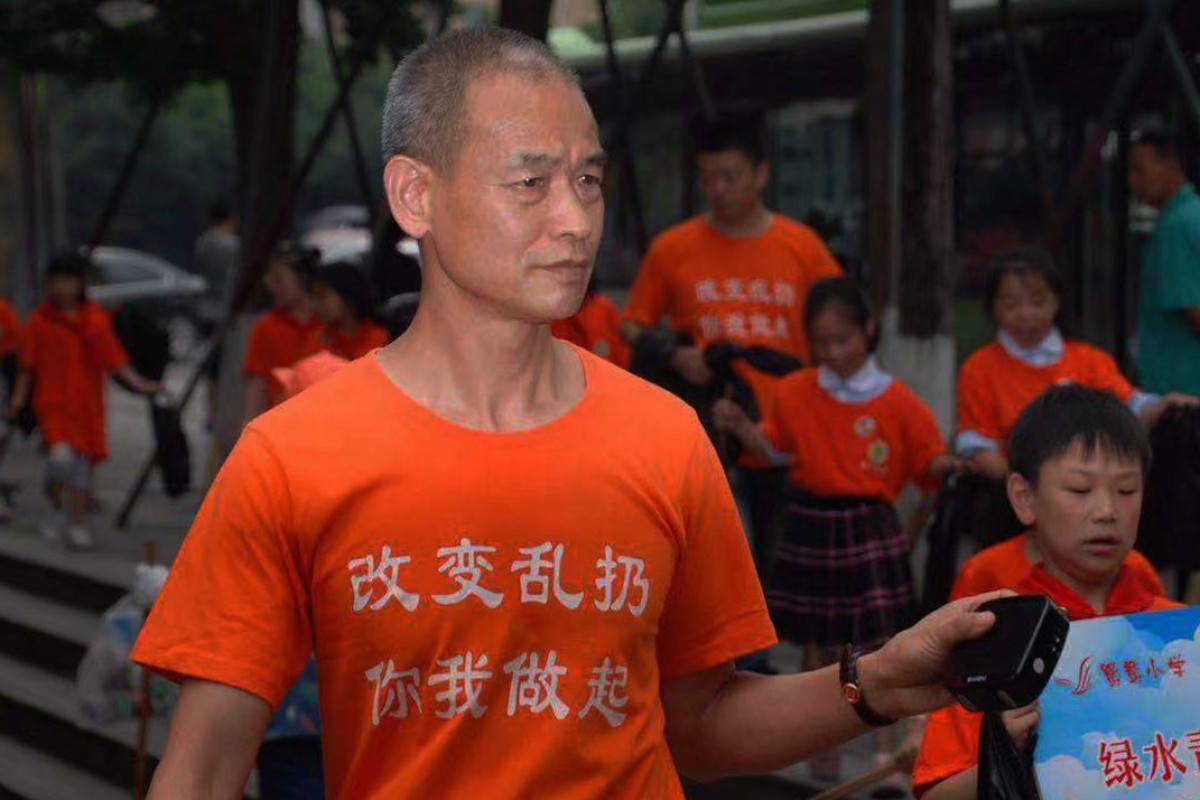
Zhong Congrong is a familiar figure on the streets of his hometown. Photo: Handout
Zhong Congrong owns three businesses in southwestern China which together are worth more than 100 million yuan (US$14.3 million), but he prefers to risk being labelled as an environment “nut” who wants to clean up Chongqing.
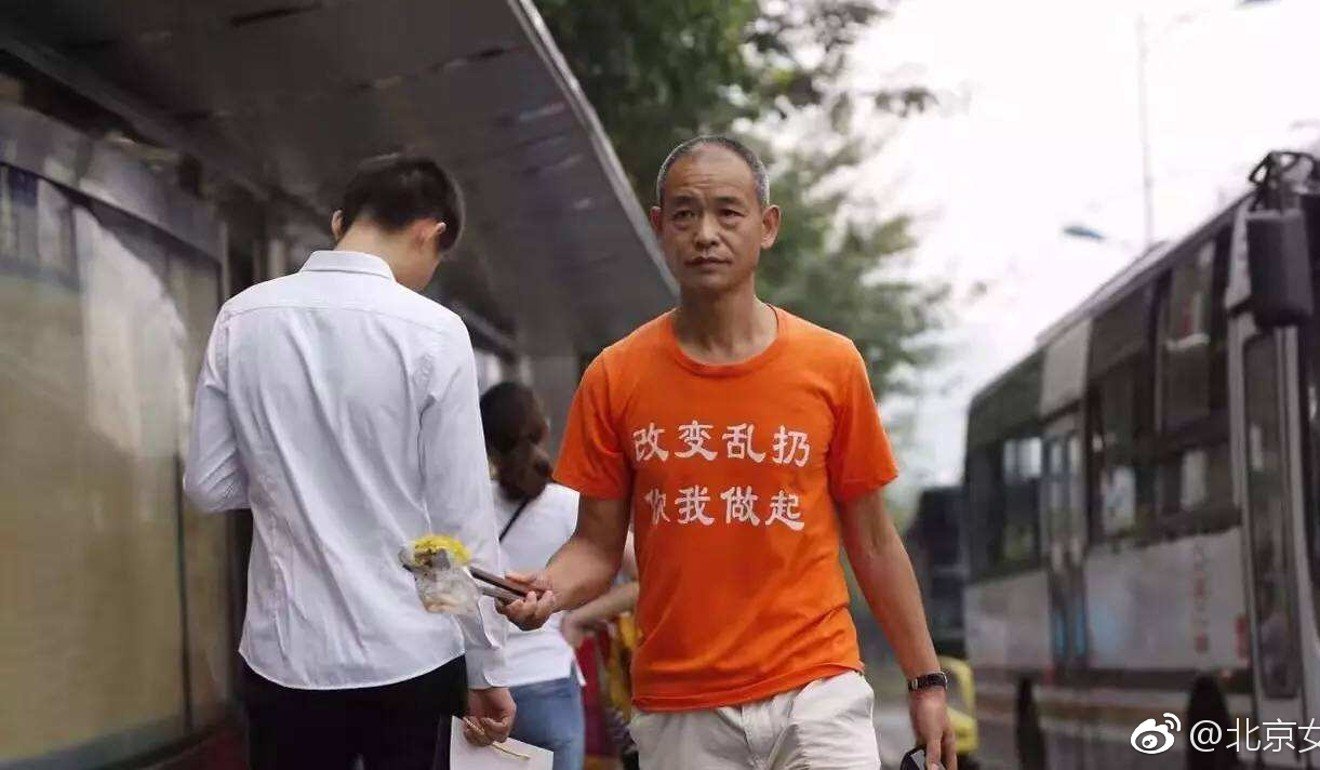
Every morning after breakfast and each evening after supper, the entrepreneur pulls on an orange T-shirt, gets into his Mercedes-Benz SUV and heads downtown. For one or two hours, he walks the streets, picking scraps of rubbish off the road and talking to passers-by about littering.
“It is my mission to change people’s bad habits and to raise their awareness of protecting the environment,” said Zhong, who has been on this mission for four years. It has brought the 54-year-old civic rewards, earned him a bruising or two from people who do not want to listen to his message and it nearly cost him his marriage.
Throughout it all, he has remained a persistent voice for the environment in the city of more than 30 million people and, as some of them have learned, he refuses to give up.
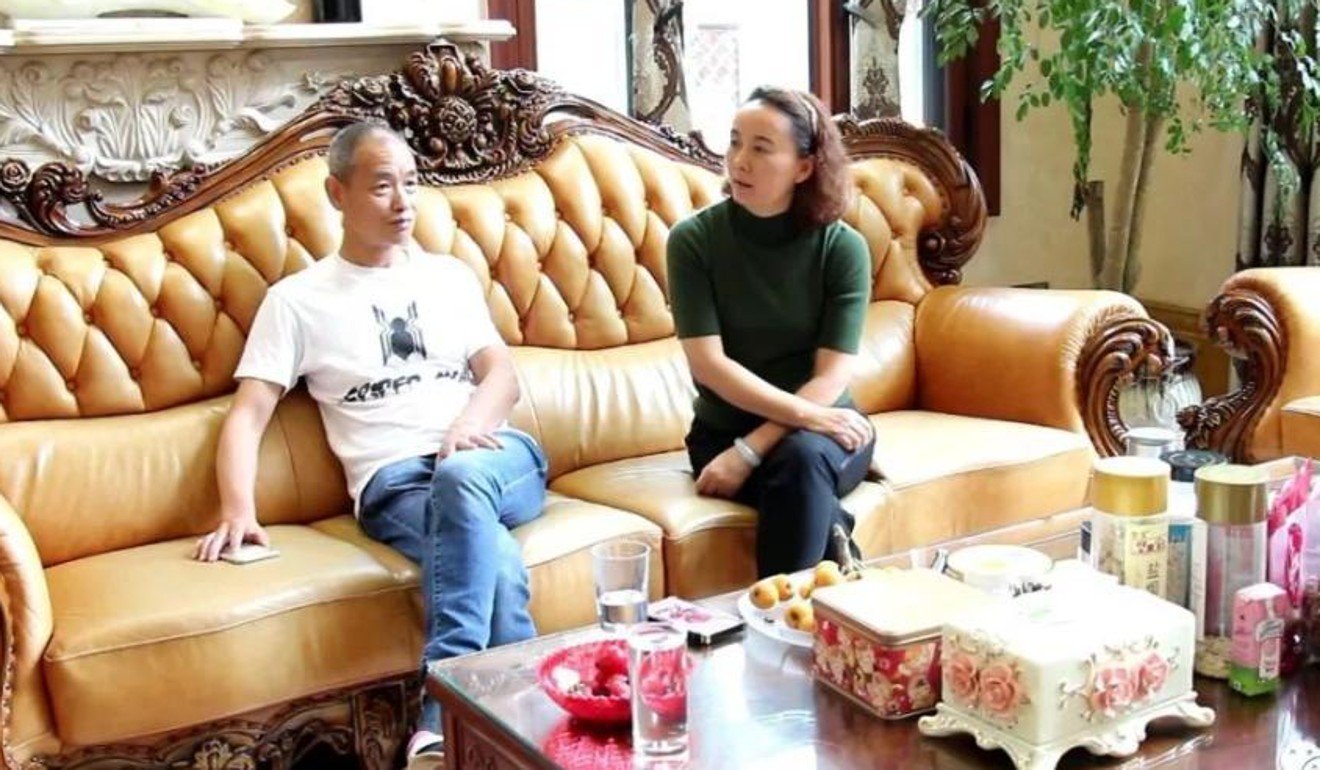
Yang Zuhui (right) has come to admire Zhong Congrong’s dedication to his litter picking mission, but she fears for her husband’s safety. Photo: Weibo
On mainland China, cities have banned littering and some hit offenders with fines as high as 200 yuan. However, the rules are rarely obeyed and feebly enforced, and while there are plenty of dustbins in public places, litter is still a nuisance.
Zhong said his mission started in 2015 after he met a woman in her 70s in Sanya, the southern coastal city on the South China Sea island of Hainan. He was struck by how dedicated she and her husband were when they went litter picking each day.
“They are retired professors from a prestigious university in Beijing,” Zhong said. “I chatted a lot with her and I asked her, ‘What’s the point of collecting rubbish every day? You clean up the beach today, but tomorrow new rubbish appears’.”
The way to solve the problem was to teach people to not litter, she told him, but she said she “dared not” try to do that. Zhong said that encounter gave him his purpose and he would dare to change attitudes.
Shanghai recycling scheme slips up on 9,000 tonnes of waste
Back home, Zhong watched and learned – concluding that customers of restaurants and fast food businesses tended to be the people who dropped rubbish most.
“Perhaps it’s because when people dine in restaurants, they throw their rubbish wherever they like. Going outside, they keep on doing it,” he said.
“People in shopping malls are generally more civilised.”
Zhong says his mission began in 2015 during a holiday on the island of Hainan. Photo: Dickson Lee
While on patrol, Zhong makes himself easy to see in an orange T-shirt that bears his clean-up message. His tools include a metal pincer for picking up tissue paper, plastic bags, drinks bottles, nappies and other everyday detritus and putting it into bins.
He also carries a voice recorder that sends out an appeal to restaurant customers: “To protect our environment and not to affect our kids’ healthy growing up, dear friends, please don’t throw rubbish.”
Can China sort its household waste recycling problem by 2020?
Zhong said that at first he felt afraid and self-conscious when he stood in front of a crowd of diners with his green gospel. But time and practise taught him he had almost nothing to fear, he said.
One of the bigger challenges is getting through to the many people who do not listen to him and refuse to dispose of their rubbish the right way.
“It’s normal that our society has various kinds of people and I need to face this reality,” Zhong said. “I was prepared in my mind that I would be called ‘nut’ since this is such an arduous but fruitless cause.”
He tackles the problem with his usual persistence, so argument and persuasion is all part of the job. When Zhong insists the rule breakers take their rubbish and bin it, some ignore him and others walk away – but he is ready with an answer.
“I tell them, ‘If you don’t pick it up, I guarantee that you will lose face today. I will let passers-by see and hear what a humiliating thing you have done. Everybody will then condemn you and you will be embarrassed’,” he said.
When people tell him what they do is none of his business, Zhong replies that what he is doing is in the public interest.
Sometimes there is a heavier price. Zhong said he once watched several men in their 20s throw rubbish onto the road from their car. He set off after them in his SUV. He waylaid them and asked them to clean up after themselves – the men refused, swore at him and beat him up. Their day ended in a police station.
Zhong said he hoped his work would bring “positive energy” to the employees of his vehicle components and packaging materials companies, but his mission was not about business prestige.
However, last year, he was named as one of the top 10 public welfare figures of Chongqing by the municipal government, while his family was honoured as a Chinese good family by the semi-governmental All-China Women’s Federation, a women’s rights organisation established in 1949.
Street cleaner who found US$22,000 in rubbish refuses to accept a reward
There were trials for Zhong closer to home – his wife, Yang Zuhui, did not support his mission at first and threatened to divorce him.
“It’s OK that you picked up trash on the street and you were just another cleaner there,” she told him in an interview with Hunan Television in 2017. “But what worried me was that you tried to persuade others – physical violence [against him] was inevitable.”
She also said: “My husband is not very tall and, on many occasions, he was at a disadvantage and got beaten up. I am worried about his personal safety.”
Zhong impressed his daughter’s schoolfriends with an inspiring speech. Photo: Weibo
But two years ago, their 10-year-old daughter helped change Yang’s attitude towards her husband’s mission after a school outing.
After lunch that day, Zhong gave the adults and children who had left rubbish behind one of his lectures.
His daughter, who was embarrassed by Zhong’s speech, came to appreciate him when classmates told her: “Your father is awesome. He is like a hero who protects the Earth.”
Yang was won over because she knew her husband was a determined man and once he decided on a course of action would not change his mind.
Their son – who is in his 20s and has returned to Chongqing after studying in France – always stands by his father, Zhong said.
“My son told me that environmental voluntary work normal abroad and it is respected,” he said.
Going out to collect rubbish has become part of Zhong’s life, he said.
“In the evening, if I stay at home, my wife and daughter will ask me ‘Why don’t you go to pick up rubbish?’”
He said it was important to go litter picking every day because the more he did it the more people he could influence.
“By breaking the littering habit, Chinese people can stand tall when they travel abroad,” Zhong said.
Li Keqiang tells senior officials to step up efforts to channel water from Yangtze River to arid regions
Impact of pollution and rising population has prompted increased efforts to improve efficiency and supply
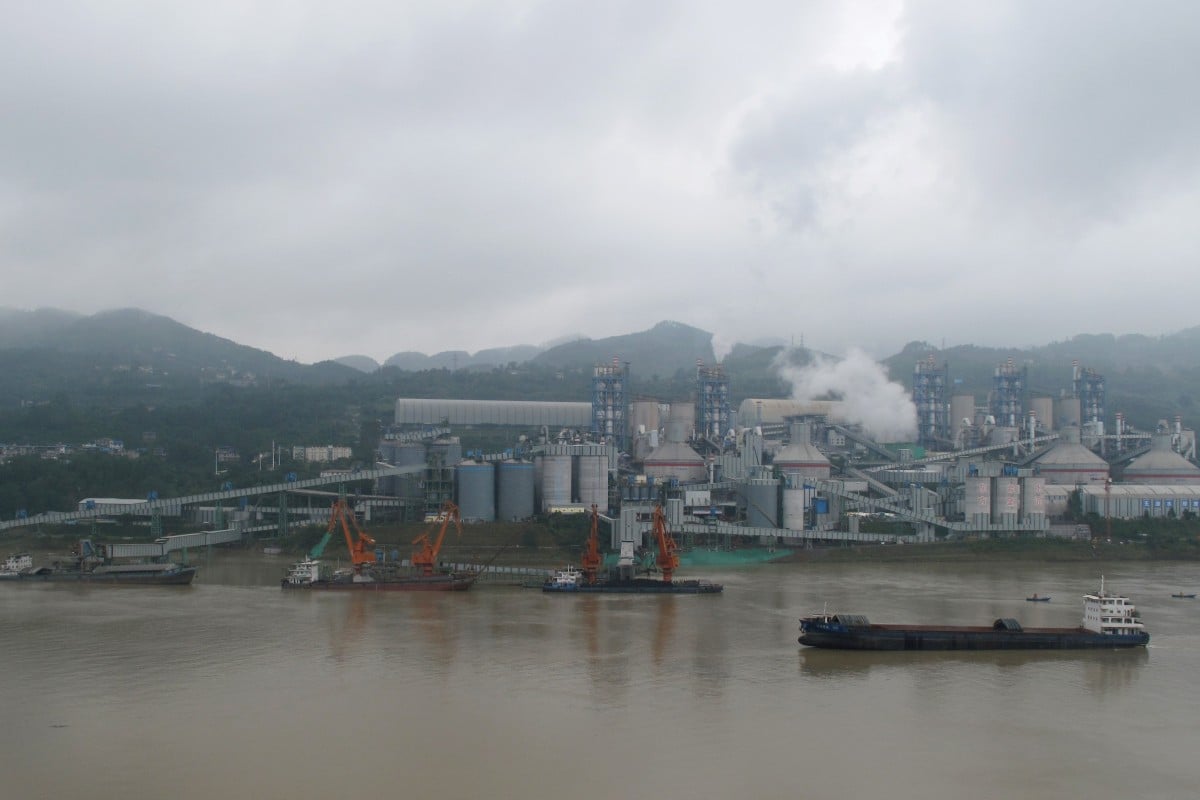
A cement plant on the banks of the Yangtze in Chongqing. The authorities are now trying to stop further development along the river. Photo: Reuters
China needs to divert more water to its arid northern regions and invest more in water infrastructure as shortages get worse because of pollution, overexploitation and rising population levels, Premier Li Keqiang has said.
China’s per capita water supplies are around a quarter of the global average. With demand still rising, the government has sought to make more of scarce supplies by rehabilitating contaminated sources and improving efficiency.
Water remained one of China’s major growth bottlenecks, and persistent droughts this year underlined the need to build new infrastructure, Li told a meeting of senior Communist Party officials on Monday. An account of the meeting was published by China’s official government website.
Local government bonds should be “tilted” in the direction of water infrastructure, he said, and innovative financing tools were also needed.
He also called for research into new pricing policies to encourage conservation.
Li said China’s water supply problems had been improved considerably as a result of the South-North Water Diversion Project, a plan to divert billions of cubic metres of water to the north by building channels connecting the Yangtze and Yellow rivers.
World ‘woefully unprepared’ for climate change’s effects on drinking water supplies drawn from mountains
He said opening up more channels to deliver water to regions north of the Yangtze River Delta would support economic and social development and optimise China’s national development strategy, according to a summary of the meeting on the government website.
China is in the middle of a wide-reaching programme to clean up the Yangtze River, its biggest waterway, and put an end to major development along its banks.
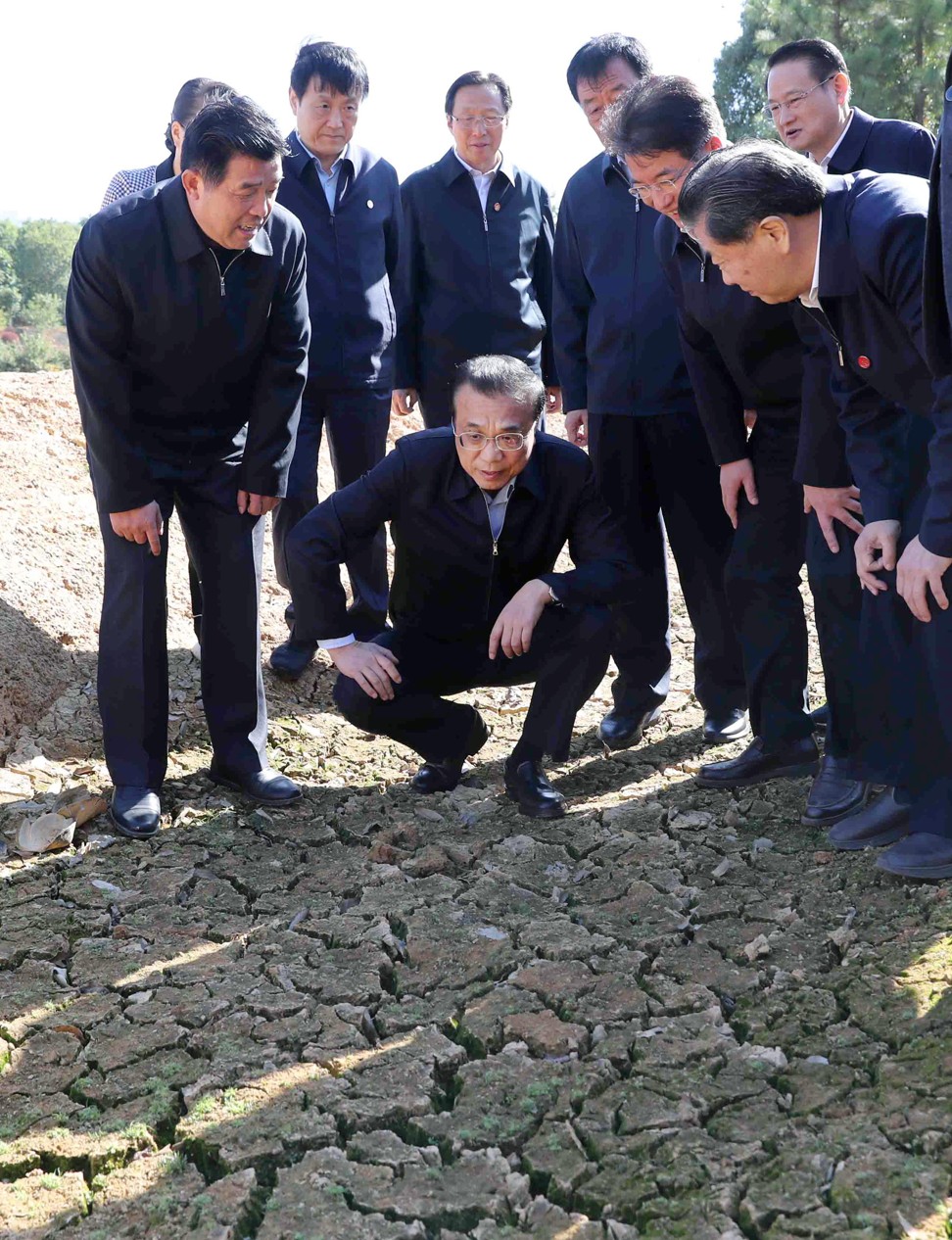
Chinese Premier Li Keqiang inspects an empty reservoir during a visit to Jiangxi province last week. Photo: Xinhua
Local governments have been under pressure to dismantle dams, relocate factories and even ban fishing and farming in ecologically fragile regions.
But experts say the ongoing campaign to divert the course of the Yangtze to other regions is still causing long-term damage to the river’s environmental health.
Many cities that had polluted their own water sources had drawn replacement supplies from the Yangtze, exceeding the river’s environmental capacity, said Ma Jun, founder of the Institute of Public and Environmental Affairs, which monitors water pollution.
Beijing already relied on diversion channels from the Yangtze to supply 70 per cent of its water, but had done little to improve conservation or reduce per capita consumption, which was higher than many Western countries, he said.
“[Diversion] has caused so much suffering and needs so many dams to keep up supply, and that has impacted biodiversity,” he said.
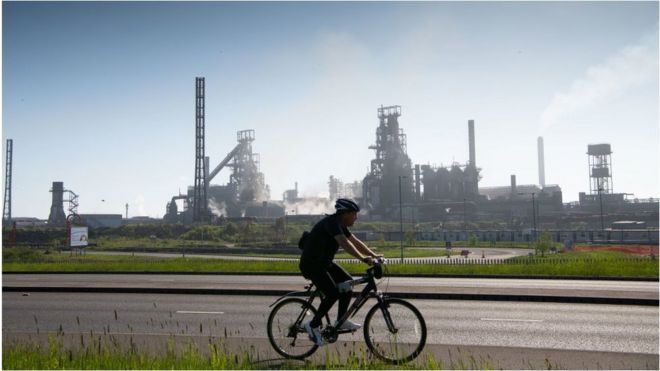
Image copyright GETTY IMAGESImage caption Port Talbot employs just under half of Tata’s 8,385 UK workforce
Tata Steel plans to cut as many as 3,000 jobs across its European business in another bid to come to terms with a “severe” international steel market.
The company wants to focus on higher-value products, it said, adding there would be no plant closures.
About two thirds of the job cuts will be office-based, it added.
The announcement comes after a merger with German rival Thyssenkrupp was blocked during the summer. Bosses had hoped the deal could reduce costs.
“Today we are highlighting important proposals towards building a financially strong and sustainable European business,” said Henrik Adam, chief executive of Tata Steel in Europe.
“We plan to change how we work together to enable better cooperation and faster decision-making. This will help us become self-sustaining and cash positive in the face of unprecedented severe market conditions, enabling us to lead the way towards a carbon-neutral future.”
The business employs about 20,000 people and is owned by India’s Tata.
Port Talbot steelworks employs just under half of Tata’s 8,385-strong workforce in the UK.
Wales’ economy minister Ken Skates said: “I am seeking an urgent conversation with Tata to establish what this means for workers in Wales and how we can support those affected by this announcement.”
It also said it would seek to “preserve thousands of jobs in a key foundation industry for the UK” but did not put a number on how many would be saved.
British Steel employs about 4,000 people in Scunthorpe and Teesside.
BEIJING, Nov. 16 (Xinhua) — A total of 237 cities at the prefectural level or above in China have adopted waste sorting schemes as the country continues to embrace the green lifestyle, authorities said.
Waste sorting has been implemented in 53.9 percent of residential communities in the 46 cities required to carry out mandatory waste sorting by a 2017 nation-wide plan, among which 14 cities have seen more than 70 percent of neighborhoods following through on the practice, according to the Ministry of Housing and Urban-Rural Development (MHURD).
Thirty cities across China have rolled out waste sorting regulations, and 16 more are mulling legislature on the matter.
The MHURD reclassified residential waste from eight categories to 11 in a revised standard for waste sorting on Friday and launched a mini-application accessible by smartphone to promote the new classification.
China pledged to establish a basic system of laws and regulations on waste sorting by the end of 2020. Starting this year, waste sorting has been promoted in all cities at the prefectural level or above after being piloted in 46 cities.
Chinese Vice President Wang Qishan poses for a group photo with representatives of guests before they attend the opening ceremony of the international conference in commemorating the 2,570th anniversary of Confucius’ birth and the sixth Congress of the International Confucian Association (ICA) in Beijing, capital of China, Nov. 16, 2019. Wang addressed the opening ceremony of the conference here on Saturday. (Xinhua/Ju Peng)
BEIJING, Nov. 16 (Xinhua) — Chinese Vice President Wang Qishan addressed the opening ceremony of the international conference in commemorating the 2,570th anniversary of Confucius’ birth and the sixth Congress of the International Confucian Association (ICA) Saturday.
Wang, on behalf of President Xi Jinping and the Chinese government, extended sincere congratulation to the opening of the conference.
The notable achievements in the past 70 years of the People’s Republic of China were made through the hard work of Chinese people, drawing on the wisdom and fine elements of Chinese civilization, Wang said.
President Xi’s keynote speech at the fifth ICA Congress in 2014 pointed out the direction of how to advance Confucianism and other fine elements in traditional culture as well as promote mutual learning among different civilizations, he said.
Wang called for the efforts to borrow the wisdom from traditional Chinese culture, respect other cultures across the world and enhance exchanges and mutual learning.
He also expressed the hope that the ICA will use Confucianism as a bridge to explore and improve understanding of the world and contribute to the progress of human civilization.
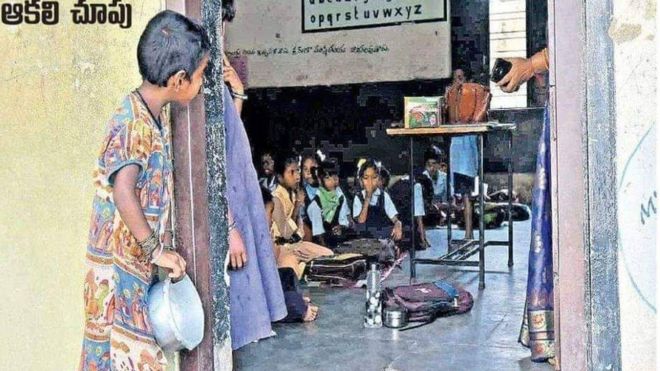
Image copyright EENADU NEWSPAPER/A SRINIVASImage caption The photo that sparked an outcry
A five-year-old in the southern city of Hyderabad was enrolled in school after a photo of her peeking into a classroom sparked an outcry. BBC Telugu’s Deepthi Bathini reports on why the photo doesn’t tell the full story.
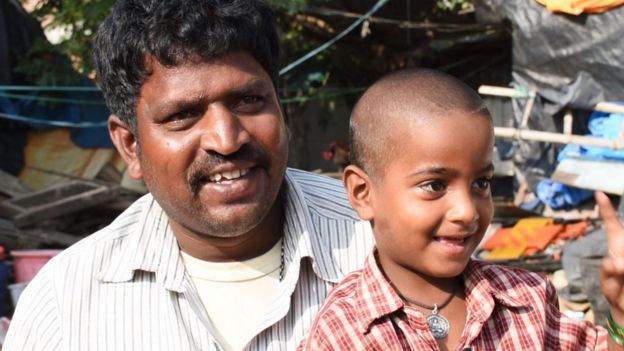
Divya is something of a local celebrity in the slum where she lives. The shy five-year-old was the subject of a recent photo which went viral – it showed her clutching a bowl and peeking into a classroom at the local government school.
The touching image was published in a Telugu newspaper on 7 November with a caption that translates from the Telugu as “hungry gaze”.
It quickly grabbed people’s attention: a children’s rights activist shared it on Facebook, lamenting that yet another child was being denied the right to food and education.
It had such an impact, the school enrolled Divya the following day.
But her father, M Lakshman, says the photo and the outcry it provoked was in fact unfair to him and his wife, Yashoda, who works as a sweeper.
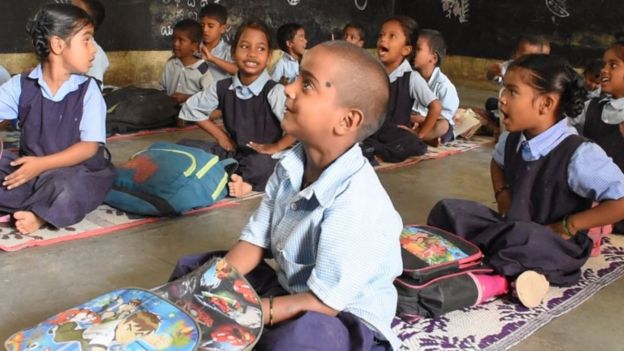
Image caption Five-year-old Divya enrolled in school after a photo of her in a newspaper went viral
“I felt sad when I saw the photo,” he told the BBC. “Divya has parents and we are working so hard to give her a good future – but she was portrayed as a hungry orphan.”
Mr Lakshman says he was waiting for Divya to turn six so he could enrol her in a government hostel where his other two daughters are studying. The couple also have a son, who has finished school and is now applying to college while helping Mr Lakshman, who works as a rag picker.
Breaking the cycle
Divya and her parents live in a one-room hut in a shanty town in the heart of Hyderabad. The slum is about 100 metres from the government school, where Divya was photographed. Most of the 300 families living here are daily wage labourers and their children attend the school nearby.
The home is sparse and plastic and glass are piled outside, ready to be sold for recycling. He says between him and his wife, they earn about 10,000 rupees ($139; £108) a month, which pays for their food and clothes. Education, however, is free for the children, since they are all enrolled in government-run schools.
Mr Lakshman knows what it is to struggle: he himself grew up without parents and always battled to earn a decent living. “I never wanted my children to have the life I had. So I made sure they all go to school.”
The photo, he adds, was especially hurtful because he has also been taking care of his brother’s five children.
Image caption Divya’s father said the outcry over the photo was “unfair” to his family
“My brother and sister-in-law passed away sometime ago. I didn’t want their five children to grow up as orphans. So, I enrolled all of them in a hostel and I take care of them.”
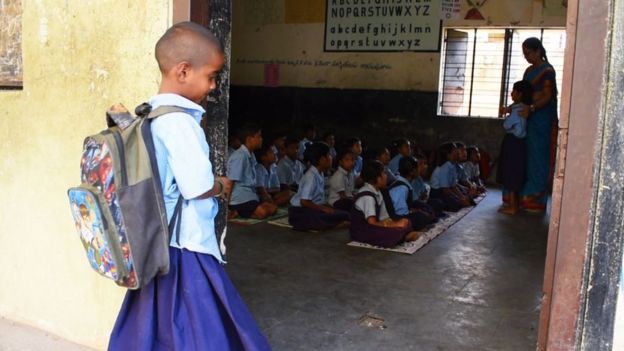
When asked why Divya had gone to the government school with a bowl in hand, Mr Lakshman explains that a lot of the younger children from the slum go there around lunch time to take advantage of the free midday meal – a government programme which provides cooked meals to children in more than a million schools – which they know about because their older brothers and sisters are already enrolled.
“Divya doesn’t go every day but she happened to go on that day and someone photographed her,” he explained.
This was confirmed by teachers at the school who told the BBC that some children brought lunch from home, so leftovers over from the free meal scheme would be given to the younger children who had not yet joined.
“Children are children. And there is no day-care centre, so a lot of these children hang around the school anyway,” says one teacher, who spoke on the condition of anonymity.
Image caption Divya says she’s excited to go to school
Mr Lakshman and his neighbours acknowledged the lack of an anganwadi, or government-sponsored day-care centre, in the neighbourhood was a major problem as parents had no place to leave their children so they could go to work.
The local school inspector, SU Shivram Prasad, says he hopes the attention generated by the Divya’s photo will hasten the process of setting up one up.
“It will help the parents and the children can eat a nutritious meal,” he adds.
Teachers at the school also hope that the media spotlight will improve facilities. They say there is an acute shortage of staff and teaching materials, and the school did not even have a compound wall, which meant they have to constantly watch the children during their breaks.
Divya, however, is excited to be going to school. She insists on taking her school bag with her everywhere, even to the playground. Other than saying her name, she does not answer any questions.
“She is a very calm child,” says Mr Lakshman, as his daughter holds his hand and kisses it.
And he admits that despite everything, the photo did do some good.
“Now other children who are Divya’s age are also enrolling in school. So that makes me happy.”
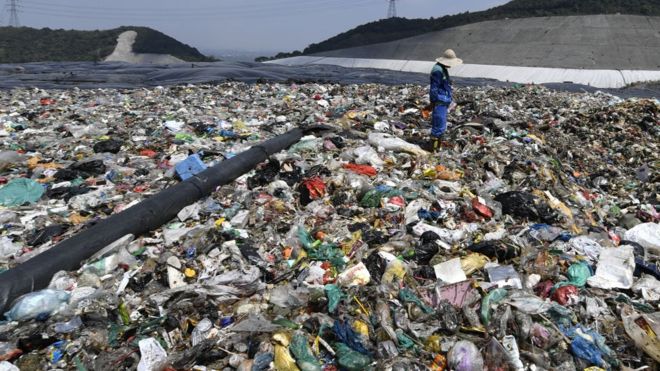
Image copyright GETTY IMAGESImage caption A worker applying a capping layer to a landfill site in Hangzhou
China’s largest dump is already full – 25 years ahead of schedule.
The Jiangcungou landfill in Shaanxi Province, which is the size of around 100 football fields, was designed to take 2,500 tonnes of rubbish per day.
But instead it received 10,000 tonnes of waste per day – the most of any landfill site in China.
China is one of the world’s biggest polluters, and has been struggling for years with the rubbish its 1.4 billion citizens generate.
How big is the landfill site?
The Jiangcungou landfill in Xi’an city was built in 1994 and was designed to last until 2044.
The landfill serves over 8 million citizens. It spans an area of almost 700,000 square metres, with a depth of 150 metres and a storage capacity of more than 34 million cubic metres.
Until recently, Xi’an was one of the few cities in China that solely relied on landfill to dispose of household waste – leading to capacity being reached early.
Earlier this month, a new incineration plant was opened, and at least four more are expected to open by 2020. Together, they are expected to be able to process 12,750 tonnes of rubbish per day.
The move is part of a national plan to reduce the number of landfills, and instead use other waste disposal methods like incineration.
The landfill site in Xi’an will eventually become an “ecological park”.
The country had 654 landfill sites and 286 incineration plants.
It is not clear what China’s recycling rate is, as no figures have been released. China plans to recycle 35% of waste in major cities by the end of 2020, according to one government report.
This July, sorting and recycling rubbish was made mandatory in Shanghai – leading to “a sense of panic” among some residents.





 CHINDIA ALERT: You'll be living in their world, very soon