15/09/2019
A waiter serves a dish named “sweet soup balls”, in the shape of riverstones, at the “Huaiyang Cuisine Week” in The Hague, the Netherlands, Sept. 13, 2019. A series of events including a tourism seminar, a photo exhibition and a Huaiyang Cuisine Week activity were held during the Jiangsu Cultural and Tourism Carnival. The carnival, held from Sept. 7 to 19 in the Netherlands, aims to encourage more foreign tourists to visit China’s eastern coastal province of Jiangsu. (Xinhua/Lin Liping)
Source: Xinhua
Posted in Cultural and Tourism Carnival, dish, foreign tourists, Huaiyang Cuisine Week, Jiangsu, jiangsu province, photo exhibition, riverstones, sweet soup balls, The Hague, the Netherlands, tourism seminar, Uncategorized, visit, waiter |
Leave a Comment »
15/09/2019
BEIJING, Sept. 14 (Xinhua) — The 22nd Mandarin popularization week will be held from Sept. 16 to 22 across China, highlighting a myriad of Mandarin-speaking and writing activities, according to the Ministry of Education.
Focusing on promoting Mandarin and carrying forward China’s fine traditional culture, this year’s event will start in Shanghai and conclude in the city of Kaili in southwest China’s Guizhou Province, the ministry said.
Initiated in 1998, the annual event falls on the third week of September and has become an important platform for Mandarin popularization and the promotion of fine traditional culture in society.
As of 2015, about 73 percent of Chinese people can speak Mandarin, up from 53 percent in 2000, while more than 95 percent of the literate population can use standardized Chinese characters.
Source: Xinhua
Posted in Beijing, China alert, Chinese characters, Guizhou Province, Kaili, Mandarin, Ministry of Education, promotion events, Shanghai, Uncategorized |
Leave a Comment »
15/09/2019
People in Han-style costumes participate in a blessing ceremony celebrating the Mid-Autumn Festival in Fuzhou, southeast China’s Fujian Province, Sept. 14, 2019. (Xinhua/Lin Shanchuan)
Source: Xinhua
Posted in Blessing ceremony, celebrating, Fujian Province, Fuzhou, Han-style costumes, held, Mid-Autumn Festival, Uncategorized |
Leave a Comment »
15/09/2019
- Facial recognition technology helped officers narrow down search to building in Nantong, but they were unable to tell which room suspect was in
- Police went door-to-door hunting for the smell of hotpot after fugitive was spotted buying ingredients at market
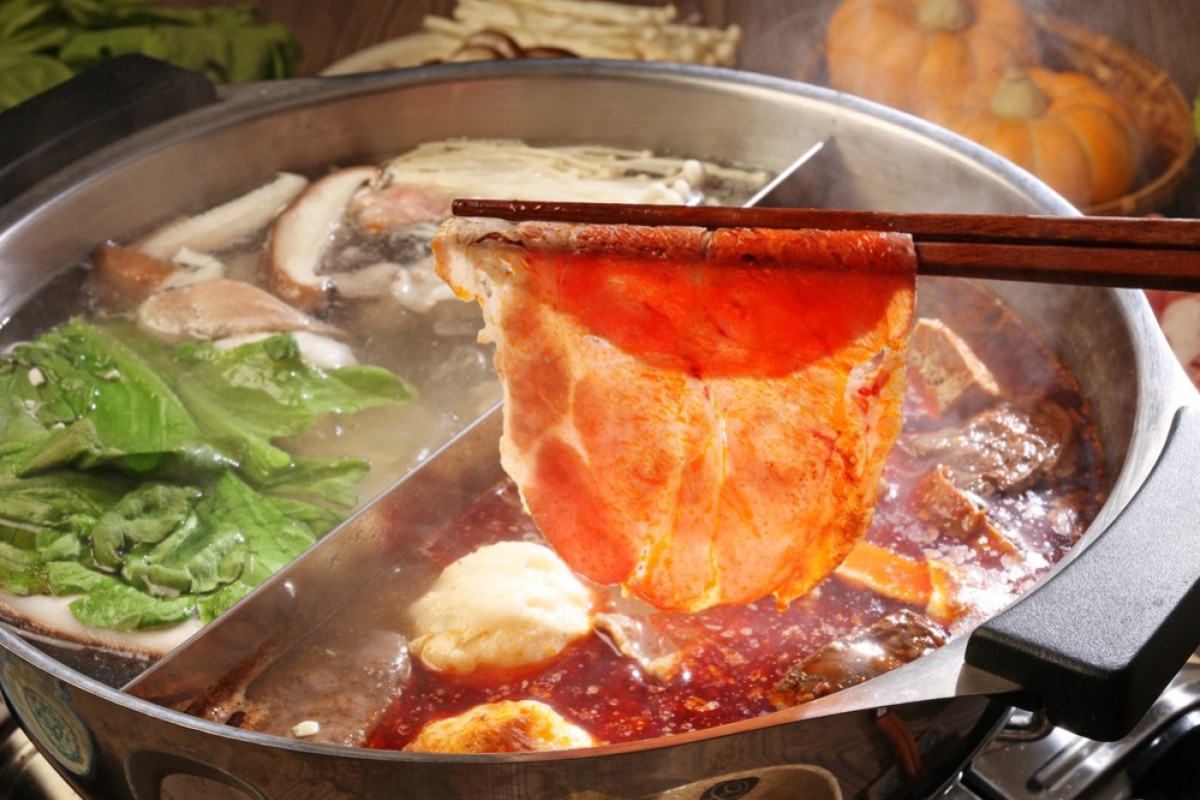
Eating hotpot can be a hot and sweaty business. Photo: Shutterstock
China’s facial recognition technology is now so advanced that it can positively identify 98.1 per cent of human faces and within 0.8 seconds, according to China Daily.
But the latest case of unconventional detective work comes from the eastern province of Jiangsu, where local police used their faces, not their target’s, to locate their man – specifically their noses. Call it olfactory recognition.
Jiangsu police had been looking for a man named Guo Bing, who was suspected of gang crimes, fraud and extortion and had been on the run in the city of Nantong since police there cracked down on gang-related activity in late May, local media reported on Tuesday.
Police used facial recognition to figure out which Nantong building Guo was living in, but they did not know which flat.
So they put in 24-hour camera surveillance and spotted Guo going to a local market on Saturday afternoon and buying ingredients for hotpot.
“We saw him buying vegetables and hotpot soup base at a market one afternoon,” Ge said, “so we guessed he was going to have hotpot that day.”
Police narrowed down the search to the seventh floor of the building, then started sniffing at each door. When they registered the unmistakable aroma of hotpot, they knew they had their man.
Television footage of the bust showed police descending on the surprised and shirtless man – eating hotpot is a messy and sweaty business – and being hauled away.
Source: SCMP
Posted in case, China Daily, chinese police, detective work, extortion, facial recognition technology, fraud, Fugitive, gang crimes, hotpot, ingredients, Jiangsu, Jiangsu police, literally, market, Nantong, olfactory recognition, smell, sniff out, telltale hotpot, Uncategorized, unconventional |
Leave a Comment »
15/09/2019
- An increasing proportion of young people no longer willing to wait tables in China as restaurant owners look to new technology for answers
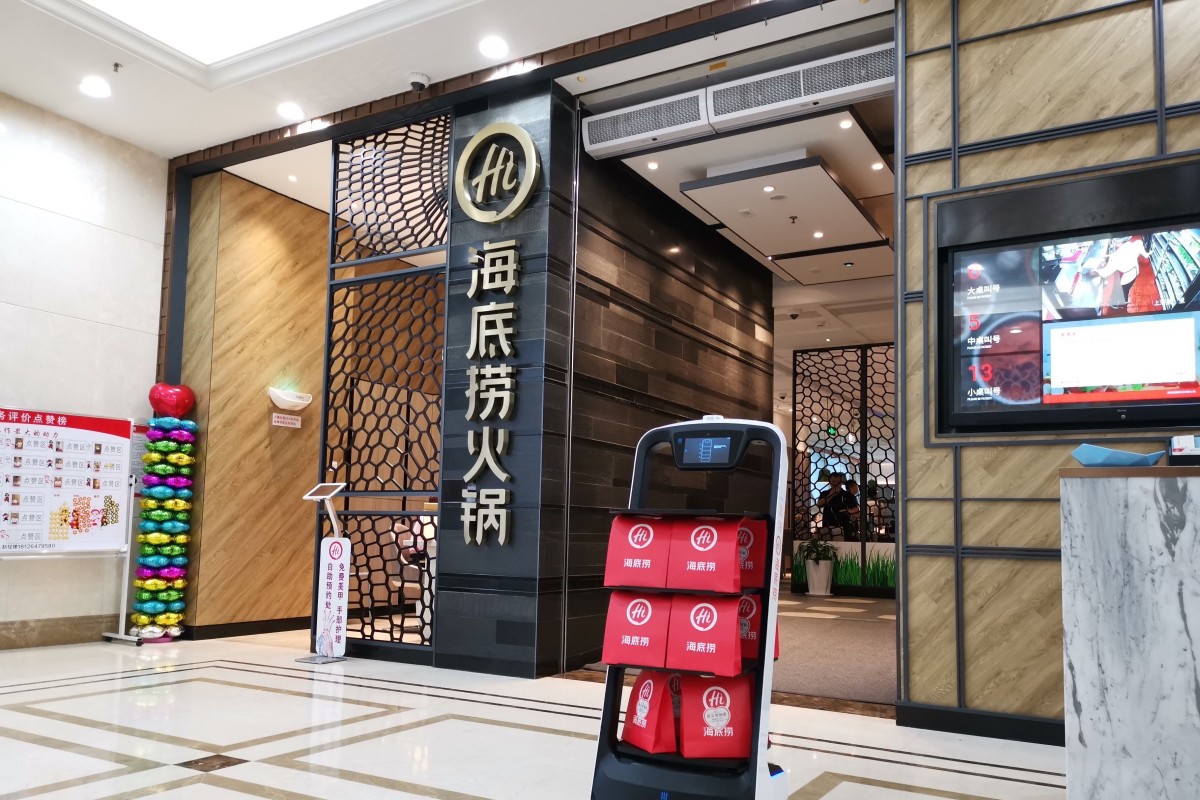
Catering robots developed by Pudu Tech, the three-year-old Shenzhen start-up, have been adopted by thousands of restaurants in China, as well as some foreign countries including Singapore, Korea, and Germany. Photo: Handout
Two years ago, Bao Xiangyi quit school and worked as a waiter in a restaurant for half a year to support himself, and the 19 year-old remembers the time vividly.
“It was crazy working in some Chinese restaurants. My WeChat steps number sometimes hit 20,000 in a day [just by delivering meals in the restaurant],” said Bao.
The WeChat steps fitness tracking function gauges how many steps you literally take and 20,000 steps per day can be compared with a whole day of outdoor activity, ranking you very high in a typical friends circle.
Bao, now a university student in Hangzhou, Zhejiang province, quit the waiter job and went back to school.
“I couldn’t accept that for 365 days a year every day would be the same,” said Bao. “Those days were filled with complete darkness and I felt like my whole life would be spent as an inferior and insignificant waiter.”
Olivia Niu, a 23-year-old Hong Kong resident, quit her waiter job on the first day. “It was too busy during peak meal times. I was so hungry myself but I needed to pack meals for customers,” said Niu.
Being a waiter has never been a top career choice but it remains a big source of employment in China. Yang Chunyan, a waitress at the Lanlifang Hotel in Wenzhou in southeastern China, has two children and says she chose the job because she needs to make a living.
Catering robots developed by Pudu Tech, the three-year-old Shenzhen start-up. Photo: Handout
Today’s young generation have their sights on other areas though. Of those born after 2000, 24.5 per cent want careers related to literature and art. This is followed by education and the IT industry in second and third place, according to a recent report by Tencent QQ and China Youth Daily.
Help may now be at hand though for restaurants struggling to find qualified table staff who are able to withstand the daily stress of juggling hundreds of orders of food. The answer comes in the form of robots.
Japan’s industrial robots industry becomes latest victim of the trade war
Shenzhen Pudu Technology, a three-year-old Shenzhen start-up, is among the tech companies offering catering robots to thousands of restaurant owners who are scrambling to try to plug a labour shortfall with new tech such as machines, artificial intelligence and online ordering systems. It has deployed robots in China, Singapore, Korea and Germany.
With Pudu’s robot, kitchen staff can put meals on the robot, enter the table number, and the robot will deliver it to the consumer. While an average human waiter can deliver 200 meals per day – the robots can manage 300 to 400 orders.
“Nearly every restaurant owner [in China] says it’s hard to recruit people to [work as a waiter],” Zhang Tao, the founder and CEO of Pudu tech said in an interview this week. “China’s food market is huge and delivering meals is a process with high demand and frequency.”
Pudu’s robots can be used for ten years and cost between 40,000 yuan (US$5,650) and 50,000 yuan. That’s less than the average yearly salary of restaurant and hotel workers in China’s southern Guangdong province, which is roughly 60,000 yuan, according to a report co-authored by the South China Market of Human Resources and other organisations.
As such, it is no surprise that more restaurants want to use catering robots.
According to research firm Verified Market Research, the global robotics services market was valued at US$11.62 billion in 2018 and is projected to reach US$35.67 billion by 2026. Haidilao, China’s top hotpot restaurant, has not only adopted service robots but also introduced a smart restaurant with a mechanised kitchen in Beijing last year. And in China’s tech hub of Shenzhen, it is hard to pay without an app as most of the restaurants have deployed an online order service.
Can robots and virtual fruit help the elderly get well in China?
China’s labour force advantage has also shrank in recent years. The working-age population, people between 16 and 59 years’ old, has reduced by 40 million since 2012 to 897 million, accounting for 64 per cent of China’s roughly 1.4 billion people in 2018, according to the national bureau of statistics.
By comparison, those of working age accounted for 69 per cent of the total population in 2012.
Other Chinese robotic companies are also entering the market. SIASUN Robot & Automation Co, a hi-tech listed enterprise belonging to the Chinese Academy of Sciences, introduced their catering robots to China’s restaurants in 2017. Delivery robots developed by Shanghai-based Keenon Robotics Co., founded in 2010, are serving people in China and overseas markets such as the US, Italy and Spain.
Pudu projects it will turn a profit this year and it is in talks with venture capital firms to raise a new round of funding, which will be announced as early as October, according to Zhang. Last year it raised 50 million yuan in a round led by Shenzhen-based QC capital.
To be sure, the service industry is still the biggest employer in China, with 359 million workers and accounting for 46.3 per cent of a working population of 776 million people in 2018, according to the national bureau of statistics.
And new technology sometimes offers up new problems – in this case, service with a smile.
“When we go out for dinner, what we want is service. It is not as simple as just delivering meals,” said Wong Kam-Fai, a professor in engineering at the Chinese University of Hong Kong and a national expert appointed by the Chinese Association for Artificial Intelligence. “If they [robot makers] can add an emotional side in future, it might work better.”
Technology companies also face some practical issues like unusual restaurant layouts.
“Having a [catering robot] traffic jam on the way to the kitchen is normal. Some passageways are very narrow with many zigzags,” Zhang said. “But this can be improved in future with more standardised layouts.”
Multi-floor restaurants can also be a problem.
Dai Qi, a sales manager at the Lanlifang Hotel, said it is impossible for her restaurant to adopt the robot. “Our kitchen is on the third floor, and we have boxes on the second, third, and fourth floor. So the robots can’t work [to deliver meals to downstairs/upstairs],” Dai said.
But Bao says he has no plans to return to being a waiter, so the robots may have the edge.
“Why are human beings doing something robots can do? Let’s do something they [robots] can’t,” Bao said.
Source: SCMP
Posted in ability, adopted, Art, artificial intelligence (AI), Bao Xiangyi, Beijing, careers, catering robots, CEO of Pudu tech, China alert, China Youth Daily, Chinese Academy of Sciences, Chinese Association for Artificial Intelligence, Chinese University of Hong Kong, complain, darkness, delivering meals, education, foreign countries, Germany, guangdong province, Haidilao, Hangzhou, hotpot restaurant, hundreds of orders, industrial robots industry, IT industry, Italy, Japan, juggle, Keenon Robotics Co, Korea, labour shortfall, Lanlifang Hotel, literature, machines, mechanised kitchen, online ordering systems, plug, Pudu Tech, QC capital, qualified table staff, quit, Restaurant, restaurants, robots, school, Shenzhen, Shenzhen Pudu Technology, SIASUN Robot & Automation Co, Singapore, smart restaurant, South China Market of Human Resources, Spain, start up, tencent qq, trade war, Uncategorized, university student, US, Verified Market Research, victim, waiter, WeChat, Wenzhou, worked, zhejiang province |
Leave a Comment »
13/09/2019
Chinese Vice President Wang Qishan (R) meets with Malaysian Foreign Minister Saifuddin Abdullah in Beijing, capital of China, Sept. 12, 2019. (Xinhua/Ding Lin)
BEIJING, Sept. 12 (Xinhua) — Chinese Vice President Wang Qishan met here Thursday with visiting Malaysian Foreign Minister Saifuddin Abdullah.
Noting that China and Malaysia have enjoyed friendly exchanges for around a thousand years, Wang said the in-depth development of bilateral comprehensive strategic partnership in recent years has brought tangible benefits to the two peoples.
Wang said that for any nation to achieve prosperity, it must go through a long and arduous process. He called for vision and thoughts to understand uncertainties in today’s world, make wise choices, seize opportunities and overcome challenges.
Saifuddin said Malaysia attaches great importance to developing relations with China, firmly supports and will actively participate in the Belt and Road cooperation.
Malaysia opposes trade wars and will continue to expand cooperation with China in economy, trade, and people-to-people exchanges, he said, expressing Malaysia’s readiness to play a positive role in promoting ASEAN-China relations.
Yang Jiechi, a member of the Political Bureau of the Communist Party of China (CPC) Central Committee and director of the Office of the Foreign Affairs Commission of the CPC Central Committee, and Chinese State Councilor and Foreign Minister Wang Yi also met with Saifuddin on Thursday.
Source: Xinhua
Posted in ASEAN-China relations., Chinese State Councilor and Foreign Minister Wang Yi, Chinese Vice President Wang Qishan, director of the Office of the Foreign Affairs Commission of the CPC Central Committee, Malaysian Foreign Minister, member of the Political Bureau of the Communist Party of China (CPC) Central Committee, Saifuddin Abdullah, Uncategorized, Yang Jiechi |
Leave a Comment »
13/09/2019
- Top law enforcement body starts campaign to rally mainland support for officers amid anti-government protests
- Maxim’s described as ‘company that loves the country and loves Hong Kong’ after condemnation of unrest by daughter of founder
Officer Lau (third from left) and police colleagues receive a delivery of mooncakes. Photo: Weibo
China’s top law enforcement agency has shown its support for Hong Kong’s embattled police by delivering 650 boxes of mooncakes to the force’s dormitories and stations ahead of Friday’s
Mid-Autumn Festival.
The festive gifts were sent after an online campaign titled “I want to send hometown delicacies to Hong Kong Police”, launched last Friday by Chang An Jian, an official social media account of the Central Political and Legal Affairs Commission, Beijing’s top political body responsible for law and order.
The commission – a Communist Party organ, rather than a government body that police report to – said in a blog post that seven people had donated about 150,000 yuan (US$21,000) between them.
The campaign represents the latest display of mainland support for the force, with no end in sight to mass protests in Hong Kong triggered in June by opposition to an
that would have allowed the transfer of criminal suspects to mainland China. Hong Kong police have faced numerous accusations of excessive use of force during the unrest.
But the mooncake delivery was complicated by customs regulations, with most major Chinese courier services unwilling to take deliveries containing processed meat and egg yolk across the border with Hong Kong.
“[We] were panicking because a lot of enthusiastic netizens had their salted duck and mooncake deliveries to Hong Kong rejected by couriers!” a Chang An Jian blog post said on Wednesday night.
In the end, 650 boxes of mooncakes that were bought from Hong Kong were sent to police dormitories and stations on Wednesday evening.
Mid-Autumn Festival is the second most important traditional Chinese holiday after Lunar New Year.
“[The mooncakes] were from Maxim’s, a company that loves the country and loves Hong Kong!” the blog post also said.
Annie Wu Suk-ching, whose father co-founded the Maxim’s chain, last week
the anti-government protests in Hong Kong.
She was lauded by Communist Party mouthpiece People’s Daily for “clearly adhering to the one country principle” – referring to “one country, two systems”, the principle under which Hong Kong was guaranteed a high degree of autonomy after it was handed over from British to Chinese rule in 1997.
One of Maxim’s biggest rival mooncake manufacturers in Hong Kong, Taipan Bread and Cake, had its products
removed from shops across the Chinese mainland and from its biggest e-commerce sites, Tmall.com and JD.com, after the son of its founder was vilified by
People’s Daily for a Facebook post that the newspaper said showed he backed the protests.
Recipients of the mooncakes included a police officer who in July was hailed as a hero by Chinese state media and nicknamed “bald sergeant Lau Sir” after pointing a shotgun at protesters who had besieged a police station. Lau has since been invited by Beijing to attend a grand celebration on October 1 for the 70th anniversary of the founding of the People’s Republic of China.
Mooncake importer says stock will be destroyed after mainland backlash
Beijing has focused attention on the violent elements of the Hong Kong protests in its social media posts and media coverage, while businesses have been carefully monitored and expected to toe Beijing’s line on condemning violence and supporting one country, two systems.
“Hong Kong Police have been having a very difficult time,” said one mainlander, surnamed Lu, in a video posted by Chang An Jian. “We want to cheer them up.”
Posted in "one country, two systems", 70th anniversary, Beijing, boxes, campaign, Central Political and Legal Affairs Commission, criminal suspects, Facebook, founding, Hong Kong police, lunar new year, mainland, Mainland China, Maxim’s mooncakes, mooncakes, October 1, officers, People’s Daily, People’s Republic of China, Police officer, Police station, protests, rally, sends, show, support, Top law enforcement body, Uncategorized |
Leave a Comment »
13/09/2019
BEIJING, Sept. 12 (Xinhua) — China’s border check agencies are expected to see an average of 1.93 million inbound and outbound trips made by Chinese and foreign tourists per day during the three-day Mid-Autumn Festival holiday, the National Immigration Administration said Thursday.
The figure indicated a year-on-year increase of 1.6 percent, according to the administration.
It said the average daily trips at major airports in the cities of Beijing, Shanghai, Guangzhou and Chengdu are expected to reach 85,000, 109,000, 54,000 and 21,000 respectively.
The administration asked border check agencies nationwide to ensure sufficient personnel and disclose passenger flow information in a timely manner to properly handle the holiday travel surges.
It also advised passengers to avoid traveling during peak hours.
The Mid-Autumn Festival falls on Sept. 13 this year.
Source: Xinhua
Posted in Beijing, Chengdu, daily entry, exit trips, expected, Guangzhou, Holiday, Mid-Autumn Festival, National Immigration Administration, Shanghai, Uncategorized |
Leave a Comment »
13/09/2019
- US National Security Adviser recently said an unnamed Chinese fighter ‘looks a lot like the F-35 … because it is the F-35’
- The PLA’s only active stealth fighter the J-20 looks rather different to its US counterpart, but the FC-31 prototype may be closer to the mark
A Chinese FC031 stealth fighter pictured during a test flight in November 2014. Photo: Xinhua
US National Security Adviser John Bolton recently accused China of stealing US technology to make a stealth fighter, a charge Beijing has denied.
On a visit to Ukraine last week, Bolton said an unnamed fifth-generation aircraft “looks a lot like the F-35, that’s because it is the F-35. They just stole it”.
At present China’s only active stealth fighter, the J-20 or Mighty Dragon, looks very different to the F-35 because it has two nose canards – which are not found on any modern US fighters – and it is larger and around 50 per cent heavier.
However, Bolton might have had another fighter in mind – the Shenyang FC-31 Gyrfalcon, which is still in the prototype phase.
John Bolton said China “just stole” the F-35 for its own fighter. Photo: EPA-EFE
The FC-31 is made by the Shenyang Aircraft Design and Research Institute, a branch of the state-owned Aviation Industry Corporation of China.
The aircraft, which made its maiden flight in 2012, has broadly similar specifications to the F-35 although it does have twin engines rather than the American jet’s single engine.
The Chinese fighter has a maximum take off weight of 25 tonnes, a combat range of 1,200km (746 miles) and a top speed of Mach 1.8, or 2,205km/h (1,370mph), whereas the US fighter’s take-off weight varies between 27 and 32 tonnes, has a top speed of Mach 1.6 and a range of up to 2,200km (1,367 miles).
The FC-31 has a weapons payload of 8 tonnes, compared with 6.8 to 8.1 tonnes for the different varieties of F-35, and a service life of up to 30 years.
Lockheed Martin, which makes the American stealth fighter, has produced three different varieties – the land-based f-35A and two for use on ships: the vertical jump F-35B and catapult-assisted F-35C.
While the Chinese jet was primarily designed for the use of the air force, its light weight also means it could be adapted for use on carriers.
It was reported to have been in the running to be used on China’s next-generation aircraft carriers, but military sources recently said it would lose out to the J-20 because of its slow pace of development and reports of technological problems.
The US currently restricts sales of the F-35 to its closest allies: Photo: EPA-EFE/ USAF
However, the Chinese manufacturer is already actively marketing the fighter to other countries and a model of the plane appeared at the Paris Air Show in June.
One official from the Aviation Industry Corporation of China who attended the Air Show told state media that the firm hoped to “seize some share in the military aircraft market of developed nations”.
One area where the plane does have a definite advantage over its American counterpart is price. The price of a single FC-31 is expected to be about US$70 million, significantly less than the F-35 which has a price tag of around US$100 million per unit.
The US also restricts sales of the fighter to its allies, leaving a potential gap in the market for China to exploit when the fighter is ready for use.
Source: SCMP
Posted in accuses, air force, Aviation Industry Corporation of China, Beijing, China alert, F-35 technology, John Bolton, Lockheed Martin, make, Mighty Dragon, military aircraft market, Paris Air Show, Shenyang Aircraft Design and Research Institute, Shenyang FC-31 Gyrfalcon, stealing, stealth fighter, two nose canards, Ukraine, Uncategorized, US National Security Adviser |
Leave a Comment »
13/09/2019
- Operations aimed to caution Beijing that US forces can carry out amphibious campaigns far from home
- Washington has power to intervene directly in territorial disputes between its allies and China
US Marines practise speed reloads on August 9 aboard the USS Green Bay, part of the Wasp Amphibious Ready Group, in the Indo-Pacific region. Photo: Handout
US Marines have conducted airfield- and island-seizure drills in the East and South China seas in what observers say is meant to remind Beijing of US military supremacy in the Asia-Pacific.
The 11-day naval drills were conducted near the Philippines and around the Japanese island of Okinawa by Okinawa-based US marine expeditionary units, the 31st Marine Expeditionary Unit said.
Observers said the operations were meant as a warning to Beijing that the US military could carry out amphibious campaigns far from home if Washington needed to intervene in territorial disputes between China and America’s allies in the region.
The 31st Marine Expeditionary Unit and Amphibious Squadron 11 conducted joint weapons drills from their Wasp Amphibious Ready Group ships from August 9-19, the Okinawa-based marine unit said in a statement.
The activity took place in the Philippine and East China seas and around an American naval base in Japan, it said.
The unit’s Amphibious Reconnaissance Platoon also performed a reconnaissance and surveillance mission through a high-altitude, low-opening parachute jump onto Okinawa.
A tilt-rotor aircraft, which hovers like a helicopter but flies like an aeroplane, afterward sent a landing team from a Wasp ship more than 400km (250 miles) away to establish the arming and refuelling point. The team achieved its objective in just over one hour, the statement said.
“The speed with which the Marines were able to establish the forward arming and refuelling point demonstrates a capability that is critical to conducting expeditionary operations in a contested environment,” the statement quoted Lieutenant Guirong Cai, a FARP officer-in-charge from the Marine Air Traffic Control Mobile Team, as saying.
“Their proficiency in swiftly setting up a refuelling point with 5,500 pounds (2.5 tonnes) of fuel demonstrates the 31st MEU’s ability to rapidly refuel and redeploy our air assets as the mission requires.”
A US landing craft lowers its ramp to unload a high mobility artillery rocket system as part of a simulated amphibious raid at Kin Blue on Okinawa on August 14. Photo: Handout
China has a territory dispute with Japan over Diaoyu Islands, known as the Senkakus in Japan, in the East China Sea, while both Beijing and Manila have put in claims on the Scarborough Shoal – also known in China as Huangyan Dao – in the South China Sea.
Adam Ni, a China specialist at Sydney’s Macquarie University, said the drills near the Philippines and Okinawa showed that such a campaign would encompass a wide area, including the South and East China seas, where the US has joined other countries in the region to conduct freedom of navigation operations since 2015.
Maritime drills between US, Asean coincide with rising tensions
“It is a clear reminder to China of US military supremacy despite the narrowing of gaps in military capability in recent years,” Ni said. “The message is that the US military can still take China-controlled South China Sea features in high-intensity conflict.”
The USS Ronald Reagan aircraft carrier sails alongside a Japan Maritime Self-Defence Force guided-missile destroyer during drills. Photo: Handout
The statement did not say whether the Philippine navy and Japanese maritime self-defence force took part in the drills. But Hong Kong-based military commentator Song Zhongping said the US government would call on its two allies to observe the exercises.
“Whether Washington will intervene in territorial disputes between China and the Philippines as well as China and Japan, the American [military] has used [these drills] to strengthen its island-capture and airfield seizure capabilities in unfamiliar waters and areas,” Song said.
“To show its close relationship with and commitments to Manila and Tokyo, the Americans would invite the two allies to watch the drills. That could also be a good time to sell their amphibious warships and new model aircraft to Japan.”
During the drills, 10 simulated casualties were treated by three medical technicians from the US Air Force’s special operations group and given blood transfusions before being loaded onto a KC-130 transport aircraft for in-flight medical treatment en route to Marine Corps Air Station Futenma on Okinawa, the US Marines said.
Source: SCMP
Posted in 31st Marine Expeditionary Unit, Aircraft carrier, airfield- and island-seizure drills, America’s military edge, American naval base, amphibious campaigns, amphibious raid, Amphibious Reconnaissance Platoon, ASEAN, Asia-Pacific, Asia-Pacific drills, Beijing, China alert, Diaoyu Islands dispute, East China Sea, East China seas, guided missile destroyer, high mobility artillery rocket system, high-altitude, Huangyan Dao, Indo-Pacific region, Japan, Japan Maritime Self-Defence Force, Japanese island, Kin Blue, low-opening parachute jump, Macquarie University, Manila, Marine Air Traffic Control Mobile Team, Marine Corps Air Station Futenma, Marines, Maritime drills, Okinawa, Philippine Navy, Philippines, reconnaissance, remind, Scarborough Shoal, Senkakus, South China Sea, surveillance mission, Sydney, Uncategorized, US, US landing craft, US Marines, US military supremacy, USS Green Bay, USS Ronald Reagan, Washington, Wasp Amphibious Ready Group |
Leave a Comment »














 CHINDIA ALERT: You'll be living in their world, very soon