Chindia Alert: You’ll be Living in their World Very Soon
aims to alert you to the threats and opportunities that China and India present. China and India require serious attention; case of ‘hidden dragon and crouching tiger’.
Without this attention, governments, businesses and, indeed, individuals may find themselves at a great disadvantage sooner rather than later.
The POSTs (front webpages) are mainly 'cuttings' from reliable sources, updated continuously.
The PAGEs (see Tabs, above) attempt to make the information more meaningful by putting some structure to the information we have researched and assembled since 2006.
Hungarian Foreign Minister Peter Szijjarto tells Chinese counterpart, Wang Yi, that his country ‘always upholds the one China principle’
Wang also speaks to foreign ministers of Estonia and Bosnia and Herzegovina ahead of World Health Assembly, which starts on Monday
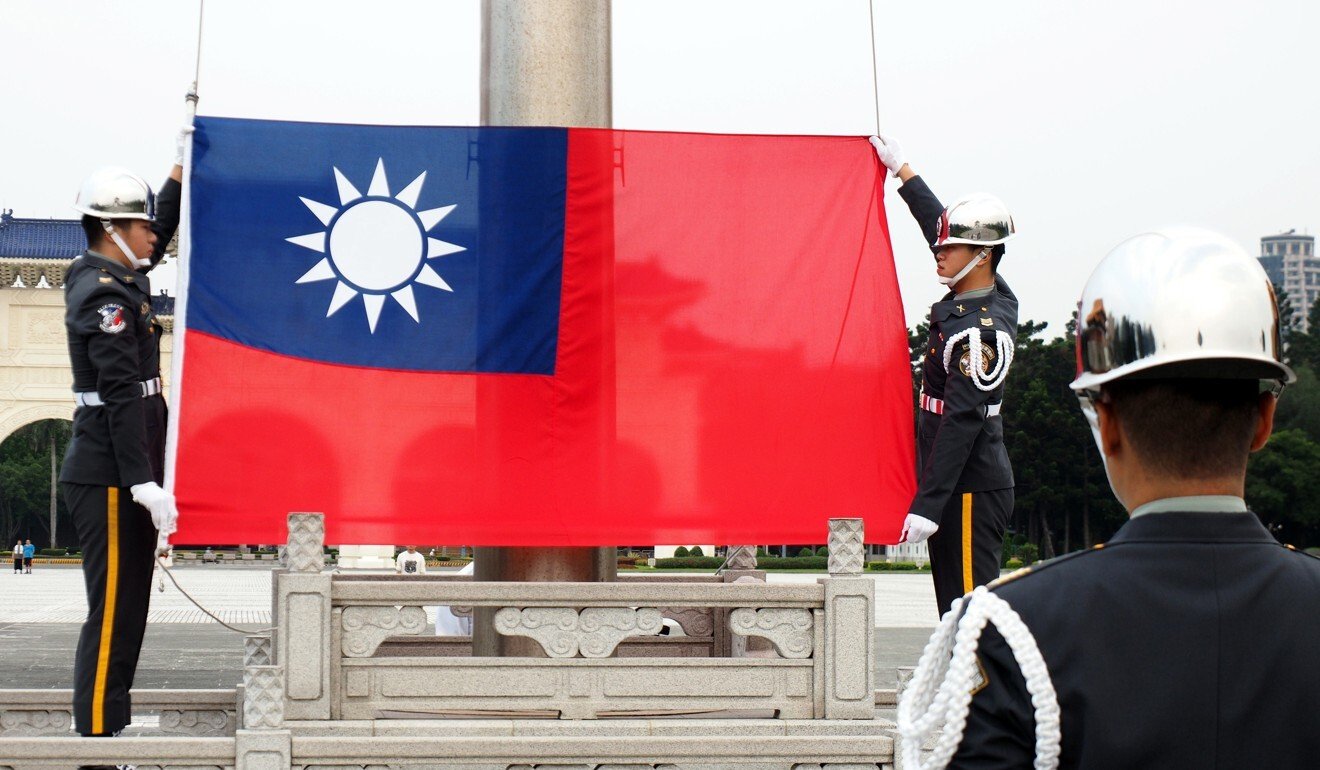
Chinese Foreign Minister Wang Yi spoke to three European foreign ministers on Thursday. Photo: AP
Hungary supports Beijing’s efforts to prevent Taiwan taking part in the upcoming World Health Assembly (WHA), according to a Chinese statement issued after a telephone conversation between the two countries’ foreign ministers.
China’s Foreign Minister Wang Yi called his European counterpart, Peter Szijjarto, on Thursday, the foreign ministry in Beijing said.
During the call, Szijjarto told Wang that Budapest would not support Taiwan’s accession to the World Health Organisation (WHO) ahead of the annual gathering of health ministers from around the world that starts in Geneva on Monday and which Taipei is keen to attend.
Hungary “always upholds the one China principle”, Szijjarto was quoted as saying.
A report about the ministers’ call by the Hungarian foreign ministry, however, made no mention of Taiwan.
It said that Szijjarto thanked Wang for the medical supplies China had sent to Hungary board 121 flights since the start of the Covid-19 pandemic.
The pair also discussed cooperation on 5G and the development of a rail project between Budapest and the Serbian capital, Belgrade, it said.
Beijing opposes Taiwan’s involvement in the WHO. Photo: EPA-EFE
As well as speaking to Szijjarto, Wang called the foreign ministers of Estonia and Bosnia and Herzegovina on Thursday to discuss the Covid-19 pandemic, but Taiwan was not mentioned, the Chinese statement said.
Taipei donated 80,000 face masks to Estonia in April, and last week, Urmas Paet, an Estonian member of the European parliament urged Budapest to support Taiwan’s membership of the WHO and “not allow itself to be manipulated by China”.
Taiwan has long campaigned to regain observer status at the WHO and has ramped up those efforts since the start of the global health crisis. Despite the devastation caused by Covid-19, Taiwan has reported just 440 confirmed cases and seven deaths.
Taiwan attended the WHA meetings as an observer between 2009 and 2016, unopposed by Beijing as at the time the island was led by president Ma Ying-jiu from the mainland-friendly Kuomintang.
However, relations between Taipei and Beijing have soured since 2016 and the election of President Tsai Ing-wen, from the pro-independence Democratic Progressive Party, who won a second term of office in January.
WHO put nations at risk by excluding Taiwan from knowledge sharing, US report says
13 May 2020
Taiwan has not been alone in its campaign to regain its WHO status, with the United States, Australia, New Zealand, Canada and several European countries backing the move.
Last week, US Secretary of State Mike Pompeo called on all nations to support Taipei’s participation as an observer at the WHA, and urged WHO director general Tedros Adhanom Ghebreyesus to allow it.
Despite the support, Taiwan’s Vice-Premier Chen Chien-jen said on Thursday that because of the pressure from Beijing there was now little chance of Taiwan attending the WHA.
China’s foreign ministry spokesman Zhao Lijian said last week it was “resolutely opposed” to New Zealand’s support for Taiwan.
In his calls to Europe, Wang also said that cooperation between Beijing and 17 central and eastern European nations – under the “17+1” banner – would not be affected by the health crisis and that further talks would be held once it had been brought under control.
BEIJING, April 19 (Xinhua) — China will step up efforts to expedite technological research on the construction and application of digital infrastructure, according to the Ministry of Industry and Information Technology (MIIT).
More support should be provided to the research and development of 5G enhancement technology and 6G technology, while the accurate matching of innovation, industrial, capital and policy chains should be promoted, said Chen Zhaoxiong, vice minister of the MIIT.
Chen also stressed the importance of emphasizing the huge demand for digital transformation and improving new digital infrastructure to facilitate economic and social upgrade of the country.
The MIIT will take a string of measures to optimize industrial development, such as expediting construction of 5G and industrial internet connecting people, machine and things, developing new types of intelligent computing facilities, advancing orderly construction and application of large data centers while upgrading micro and small data centers, enriching application scenarios and building a network security system.
The government has defeated the first rebellion from its own MPs over plans to allow Huawei to be used in the UK’s 5G mobile network.
Thirty-eight Conservative rebels backed an amendment to end the Chinese firm’s participation in the project by the start of 2023.
Despite promises from the government of a new bill to address their concerns, rebel MPs pushed their plan to a vote.
But with a large Commons majority, the government defeated it by 24 votes.
Culture Minister Matt Warman said the government had heard the points “loud and clear”.
He added: “We will now engage intensively with colleagues across the House to make sure that we will make our case at every possible level…and we will underline that we will always put national security at the very top of our agenda.”
The use of Huawei technology in the 5G network was signed off by No 10 and security experts earlier this year, with the caveats of keeping the kit out of the most sensitive areas and capping its market share at 35%.
But Tory critics say the firm is an arm of the Chinese state and a risk to UK security – claims the firm rejects.
Other countries, including the US and Australia, have banned Huawei from their own networks and criticised the UK’s decision.
After the Commons vote, Huawei vice president Victor Zhang, said: “An evidence-based approach is needed, so we were disappointed to hear some groundless accusations asserted.
“The industry and experts agree that banning Huawei equipment would leave Britain less secure, less productive and less innovative.”
Today’s revolt on Huawei leaves Boris Johnson with one king-sized political headache.
It will likely prompt a bout of teeth gnashing in Downing Street that so many Tories should be ready to defy the PM so soon after he delivered them a whopping election victory.
But it will also sting that their ranks were made up of some of the most senior Tory MPs, including a solid block of former cabinet ministers.
In other words, these are not the sort of MPs who No 10 might expect to be able to bully back into line.
And this matters because the rebellion could pave the way for an even bigger one in the summer that could yet overturn the Huawei decision, with several Tory MPs making clear they are ready to join the rebels once the key 5G legislation comes back to the Commons.
A defeat for Mr Johnson over such a high profile issue would be a deeply wounding blow – all the more so since he went out on a limb to give his personal go-ahead to Huawei despite the fury of the White House and other allies.
Time perhaps for the PM to root out the paracetamol.
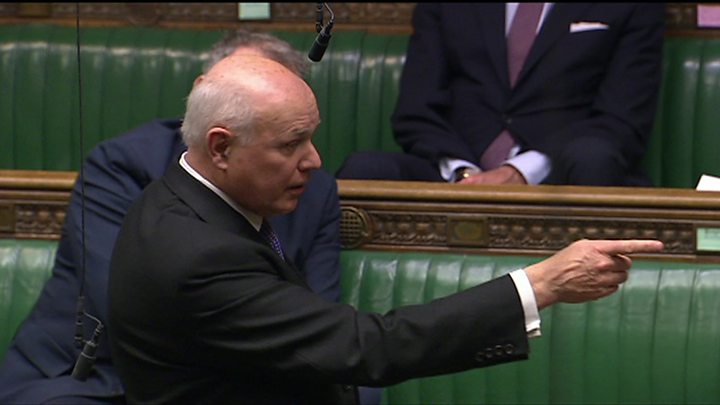
A group of Tory MPs, led by the party’s former leader Sir Iain Duncan Smith, put forward an amendment to the Telecommunications Infrastructure Bill to try and stop Huawei’s involvement.
The amendment would have seen firms classified as “high-risk vendors” by the National Cyber Security Centre be banned entirely from the UK’s 5G project by 31 December 2022.
Sir Iain said he and his colleagues were “genuinely concerned that this country has got itself far too bound in to a process in which we are reliant on untrusted vendors”.
Speaking in the Commons, the backbencher accused the Chinese government of spending 20 years “underbidding” other technology firms until Huawei dominated the market, and the outcome was a risk to the UK’s security.
He said using Huawei’s technology was a “statement of absence of thought by any government”, adding: “If defence of the realm is our number one priority, then this becomes demi-defence of the realm, and I am simply not prepared to put up with that.”
Media caption IDS warns UK “in thrall” to untrusted telecoms providers
Culture Secretary Oliver Dowden tried to reassure the group of backbenchers with the promise of bringing forward a Telecoms Security Bill before the summer recess “so all honourable members will be able to debate these points extensively”.
He also said the government wanted to work with its Five Eyes security partners – including the US – on alternative solutions so the UK could “get to a position where we do not have to use high-risk vendors at all”.
But Mr Dowden could not give a timetable for the exclusion of such companies, except to say it would be “in this Parliament” – meaning within the next five years.
As a result, Sir Iain pushed his amendment to a vote, marking the first Tory rebellion against the government since Boris Johnson won the election in December.
However, while 282 MPs from across the House voted in favour of the amendment, 306 MPs voted against, defeating it.
There were 38 Conservative MPs who rebelled against their government by voting for the amendment – including former international trade secretary Liam Fox, ex-Brexit secretary David Davis and former housing minister Esther McVey.
Conservative MP and Foreign Affairs Committee chairman, Tom Tugendhat, also voted in favour of the amendment, saying he did “not get the commitments” he wanted from the government.
“I am sorry that I could not support the government. I hope the policy will change before we come to the main Telecoms Security Bill before the summer.”
The Telecommunications Infrastructure Bill later passed without needing a vote.
Huang Kunming, a member of the Political Bureau of the Communist Party of China (CPC) Central Committee and head of the Publicity Department of the CPC Central Committee, attends the opening ceremony of the sixth World Internet Conference in Wuzhen, east China’s Zhejiang Province, Oct. 20, 2019. Before delivering his speech, Huang read Chinese President Xi Jinping’s congratulatory letter to the conference. (Xinhua/Liu Bin)
WUZHEN, Zhejiang Province, Oct. 20 (Xinhua) — The sixth World Internet Conference opened Sunday in the river town of Wuzhen in east China’s Zhejiang Province.
With the theme of “Intelligent Interconnection for Openness and Cooperation — Building a Community with a Shared Future in Cyberspace,” the three-day conference will bring together more than 1,500 participants from over 80 countries and regions, including members of the Internet Hall of Fame, Nobel Prize winners and Turing Award winners.
Executives from major tech companies from home and abroad such as Microsoft, Qualcomm, Alibaba Group and Huawei will share their insight on the future development of the internet at 20 sub-forums, covering popular and cutting-edge topics such as artificial intelligence (AI), 5G and industrial digitization.
Huang Kunming, a member of the Political Bureau of the Communist Party of China (CPC) Central Committee and head of the Publicity Department of the CPC Central Committee, delivered a keynote speech at the opening ceremony of the conference.
Fifty years after the birth of the internet, efforts should be made to seize new opportunities and address risks and challenges to build cyberspace into a shared community that benefits all humanity, Huang said.
The senior official also called for enhanced efforts to develop the digital economy, unleash the digital dividend, and protect the security and order of cyberspace.
During the conference, reports on China and world internet development will be released to forecast the future trend of internet development.
The reports will review global internet development over the past five decades and the history of Chinese internet during the last 25 years.
Around 15 top scientific and technological projects in the internet sector will also be unveiled, covering AI, 5G, big data, cloud computing, digital manufacturing, industrial internet and other internet-related fields.
The number of internet users in China hit 854 million in June 2019, with the internet availability rate reaching 61.2 percent, according to the China Internet Network Information Center.








 CHINDIA ALERT: You'll be living in their world, very soon