Chindia Alert: You’ll be Living in their World Very Soon
aims to alert you to the threats and opportunities that China and India present. China and India require serious attention; case of ‘hidden dragon and crouching tiger’.
Without this attention, governments, businesses and, indeed, individuals may find themselves at a great disadvantage sooner rather than later.
The POSTs (front webpages) are mainly 'cuttings' from reliable sources, updated continuously.
The PAGEs (see Tabs, above) attempt to make the information more meaningful by putting some structure to the information we have researched and assembled since 2006.
Image copyright EPAImage caption China is getting dressed up for its big birthday party
One week from now, the People’s Republic of China will mark its 70th anniversary with celebrations on a scale not seen in China in decades.
Beijing is pulling out all stops and 1 October will be flush with fireworks, fanfare and a huge military parade.
To ensure it goes smoothly, authorities have been ramping up security in the capital – and online – for weeks.
But with yet more protests expected in Hong Kong, the territory might just rain on China’s parade.
What is it all about?
The birth of modern China was declared on 1 October 1949, after the communists under Mao Zedong won the civil war that followed World War Two.
Image copyright EPAImage caption Exhibitions are highlighting the achievements of the Communist Party
The date is marked every year, but celebrations for this 70th anniversary are expected to eclipse previous events.
It’s the first big anniversary since China has emerged as a global power. While 10 years ago China was a superpower in the making, it is now the world’s second largest economy, almost eye-to-eye with the United States.
What to expect?
The main celebrations will take place in the capital, Beijing, where there will be a grand military parade with “advanced weapons” on display, followed by a “mass pageant”.
President Xi Jinping – considered the most powerful Chinese leader since Mao – will address the Chinese people. His speech is expected to celebrate China’s rapid growth and which will be closely watched for any indication of the country’s direction in the coming years.
The president will also hand out honours for contributions to the country and in the evening there will be a grand gala and fireworks show.
All official Chinese celebrations are carefully choreographed and the success of this one is particularly important to the government.
The Dos and Don’ts
The parade – open to invited guests only – will take place around Tiananmen Square in central Beijing. The surrounding area will be practically under lockdown, and in fact has been so several times already.
During rehearsals leading up to the big day, hotels near Tiananmen Square told guests that for several hours each day, no-one would be able to leave the hotel or return to it should they be out, leading to much travel chaos and rebookings.
Many shops and restaurants in the centre are also closed or have shortened hours and some subway stations are temporarily shut.
Image copyright EPAImage caption Security is tight ensure the party goes to plan
Trains to Beijing are running numerous safety checks on their passengers and vehicles going into the city are also being tightly watched.
On the big day itself, areas around Tiananmen Square will be blocked and guarded. Local residents will need to identify themselves if they want to pass.
To ensure the sun will shine brightly on the celebration in notoriously polluted Beijing, several coal plants and construction sites in and around the city have been ordered to stop work for the duration.
There’s also a ban on any low-flying aerial vehicles in place. That means anything from light aircraft to drones, balloons and even racing pigeons.
Censorship galore
Across much of the city centre, there are national flags set up at every door. Voluntary inspectors are monitoring the streets and locals have told the BBC they’re being questioned after having even brief conversations with foreigners
One person said she was asked by an inspector: “Who were those foreigners? Why were they here?”
The tight control naturally extends online as well. Popular social media platform Weibo said it was deleting content that “distorts” or “insults” the country’s history ahead of the anniversary.
Image copyright GETTY IMAGESImage caption Every house and every shop is sporting a national flag
Chinese journalists are always expected to toe the party line anyway, but starting in October they will have to pass an extra test to prove they are versed particularly in Xi Jinping’s teachings, officially called Xi Jinping Thought on Socialism with Chinese Characteristics, which has been written into the constitution.
Whether or not they pass the exam will then determine whether they’ll be accredited as journalists.
“The fundamental point with this ‘training’ and indoctrination process isn’t so much about the content,” David Bandurski of China Media Watch told the BBC.
“It is about reinforcing the message and understanding among journalists that they work, first and foremost, for the Chinese Communist Party, and serve its agenda.”
So not only will the events be choreographed – the domestic coverage of them will also be tightly guarded.
What about Hong Kong?
Despite Beijing’s determination to let its achievements shine on 1 October, there’s a good chance Hong Kong will pull focus.
Anti-Beijing protests always take place in Hong Kong on China’s National Day, but this time, the activists know that the world is watching.
Anti-government protests have rocked the city for months and the situation shows no sign of dying down.
Clashes between police and activists have been becoming increasingly violent, with police using tear gas and activists storming parliament.
Image copyright AFPImage caption The protests have often escalated into violent clashes
That means two things for 1 October: official celebrations in the territory are being toned down to avoid clashes – the annual fireworks display has been cancelled – while at the same time, activists are planning to step up their protests.
On Sunday 29 September, a “Global Anti Totalitarianism March” is scheduled to take place at various locations around the world in support of Hong Kong.
On 1 October itself, a march in central Hong Kong is planned with everyone asked to wear black.
If the past weeks’ demonstrations are anything to go by, the smiles and celebrations in Beijing will be competing for media space with pictures of tear gas and angry young protesters in Hong Kong.
As well as earning three times the industry average, successful candidates are promised 165 days’ leave
Social media posts linked to story attract more than 60 million views
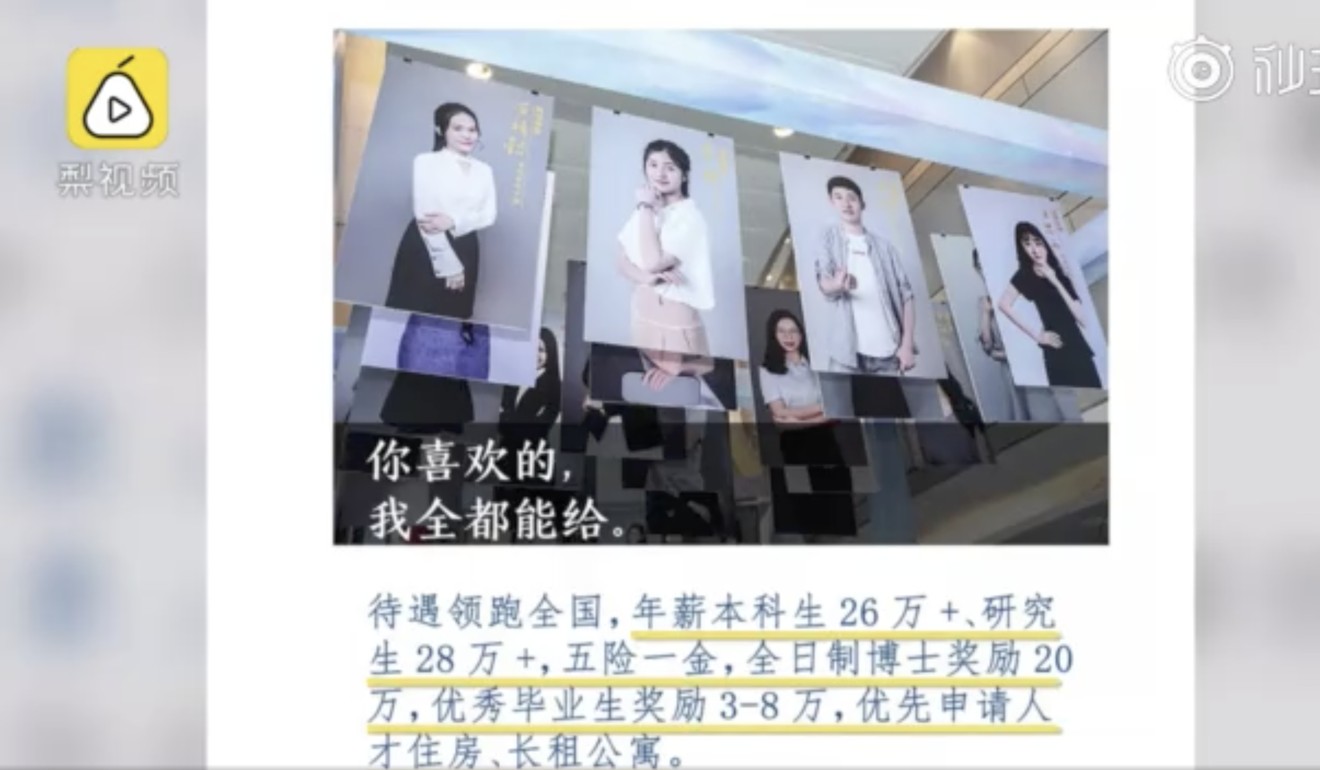
Authorities in Shenzhen are offering three times the national average salary to attract more teachers. Photo: Weibo
A recruitment advertisement offering schoolteachers in southern China the chance to earn up to 280,000 yuan (US$39,500) a year – more than three times the industry average – has sparked a massive response on social media.
Published by the Longhua district education bureau in Shenzhen, Guangdong province, the advert said it was looking for 400 high, middle and primary schoolteachers. As well as an annual salary of between 260,000 yuan and 280,000 yuan, depending on qualifications, the very best candidates would receive a bonus of between 30,000 and 80,000 yuan, it said.
New recruits would also be entitled to 165 days’ leave per year, though the advert – published on Tuesday on WeChat, China’s most popular messaging platform – did not make clear if that included weekends.
The Longhua district education bureau says it is looking for 400 new teachers. Photo: Weibo
The hashtag “Shenzhen middle schoolteachers are being recruited for almost 300,000 yuan a year” racked up almost 60 million views on Weibo, China’s Twitter-like platform.
While some people praised the authority for trying to attract the best possible candidates – it said itself that hundreds of teachers currently working in the district were graduates of China’s top universities, including Peking and Beijing Normal – others said that even with a sky-high salary most young professionals would find it hard to get by in Shenzhen.
“Do you know how expensive houses are in Shenzhen?” one person wrote on Weibo. “You need to wait several years after graduation before buying a house, unless you already have money.”
“Even if your starting salary is 200,000 yuan or 300,000 yuan, you’ll still need to wait 10 years before you’ve saved up enough to buy a house,” said another.
The advert said the new teachers will be get 165 days’ leave per year. Photo: Xinhua
The education bureau has not released any additional information about the recruitment campaign and calls to its offices on Friday went unanswered.
However, it said in a recent Q&A on its website that teachers’ salaries were in line with those of civil servants in the district, and had been steadily rising under a reform of the pay system.
Longhua is not the first district in Shenzhen to offer attractive salary packages, however. In May, 21st Century Business Herald reported that authorities in Yantian district had recruited 20 teachers from Beijing with the offer of between 290,000 yuan and 330,000 yuan a year.
According to central government figures released in May, teachers in China’s public schools earned an average of 92,383 yuan last year.
While Shenzhen has grown from a once sleepy fishing village to a vast metropolis, and is now slated to become a model city for China, its education facilities have failed to keep pace with other areas of development. It also faces competition from more established centres, like Beijing and Shanghai.
Despite having a population of about 15 million, the city has just 344 primary schools. By comparison, the provincial capital Guangzhou, which has a similar population, has 961 primary schools and about 17,000 more primary schoolteachers.
According to official figures, of the nearly 80,000 students who applied for places at public secondary schools in Shenzhen last year, just 35,000 were accepted. That left the parents of the remainder having no option but to pay for places at private schools in the city or, in some cases, send their children overseas to study.
The problem is set to get worse as Shenzhen’s preschool system is already straining under the pressure of the city’s high birth rate.
Authorities investigating why passenger suddenly leapt to her feet and went through open door
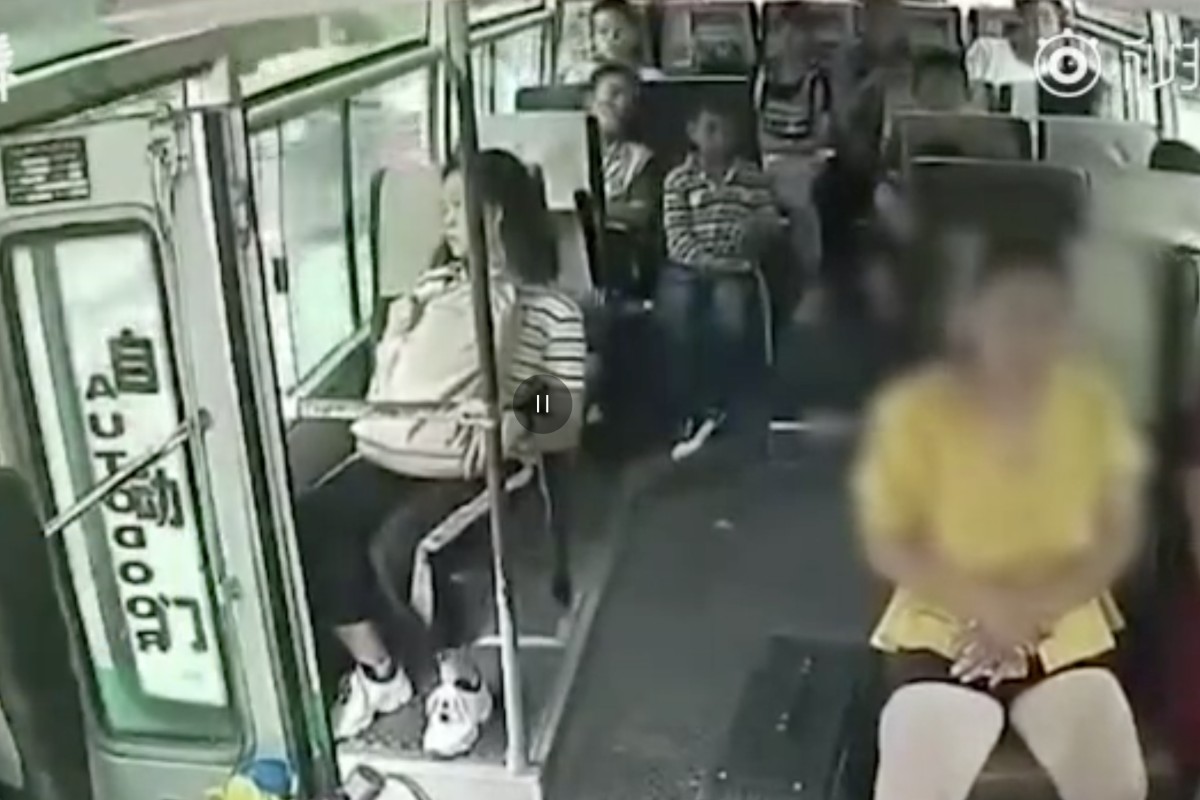
The woman in yellow died after alighting from the moving bus in Fenggang county, Guizhou province, on Sunday. Photo: Weibo
Police in southern China are investigating the death of a woman who suddenly leapt from her seat and through the door of a moving bus on the weekend.
The unidentified woman was confirmed dead at hospital in Fenggang county, Guizhou province, on Sunday after alighting from the bus through the rear door which should have been closed, according to county police.
An officer from the county’s traffic police bureau told the South China Morning Post that an investigation into the woman’s action and the bus driver’s responsibility was under way.
Surveillance footage posted online shows the woman in a yellow top sitting near the open back door before suddenly getting up and rushing through the door.
The door then closes and the bus stops moments later as passengers appear shocked.
Chinese police do U-turn on traffic crash after online crowd doubt official account
The footage was shared widely online on Weibo, China’s Twitter-like platform.
Some internet users said the woman might have been dozing and awoke suddenly thinking she had missed her stop.
Others noted that the door should not have been open.
Just late last month, a woman was injured getting off a moving bus in Chongqing as the driver accidentally opened the rear door, video news app Kankanews.com reported.
The woman, in her 60s, simply stepped off as she saw the door open and thought she had arrived at her destination.
The driver said his safety belt loosened and he accidentally triggered the door button while trying to buckle up. He was held fully responsible for the passenger’s injury.
Priority carriages on underground trains have not solved the problem of sexual harassment for female passengers
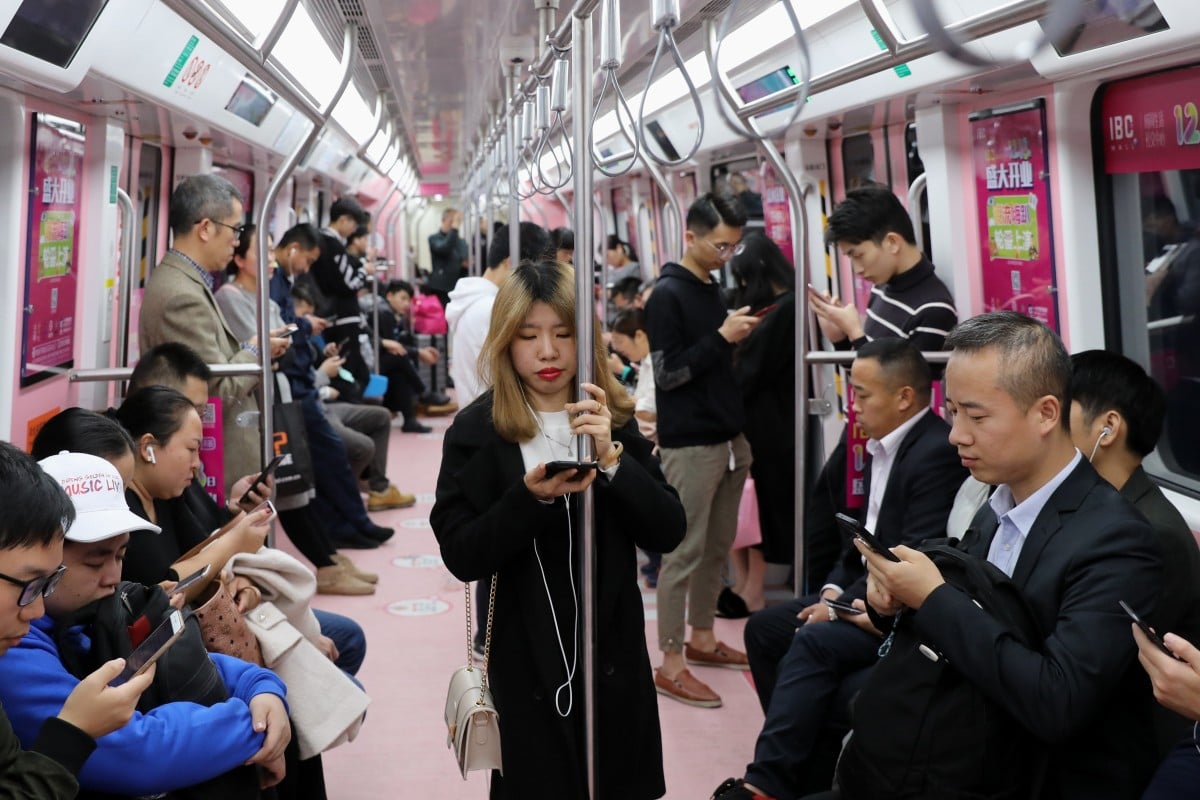
A woman is surrounded by men in a priority carriage on the Shenzhen metro. Photo: Sam Tsang
The first time Wanda was groped by a man on a Beijing bus she was a college student, travelling to school in her gym uniform on a summer’s day. Ten years – and numerous examples of sexual harassment on public transport – later, she is still haunted by the memory.
Now 31, Wanda – who asked to be identified only by her first name – remembers every detail of the incident. The bus was not crowded but the man, who appeared to be in his 40s, went straight over to stand uncomfortably close to her.
Then he pressed himself tightly against her and began making a thrusting motion with his lower body. Wanda said she froze, terrified by the encounter and unsure how to act. Just then, the bus took a sharp turn, the man was thrown aside and she quickly moved away.
“Afterwards, for a period, I looked at every adult man I saw as if he was aggressive,” she said.
Since then, Wanda said she had been flashed at in public and just last year was forced to block a man with her purse when he tried to touch her leg on a train.
118 Chinese men detained for groping women on subway trains
Wanda’s experience is not unusual but attempts to address the problem of sexual harassment on public transport in China have met with mixed results, as well as claims by feminists that they are restrictive to women.
Two major cities in southern China, for example, introduced priority carriages for women on their underground trains in 2017.
and Guangzhou, both in Guangdong province, established two designated carriages – one at each end of the train – during peak times.
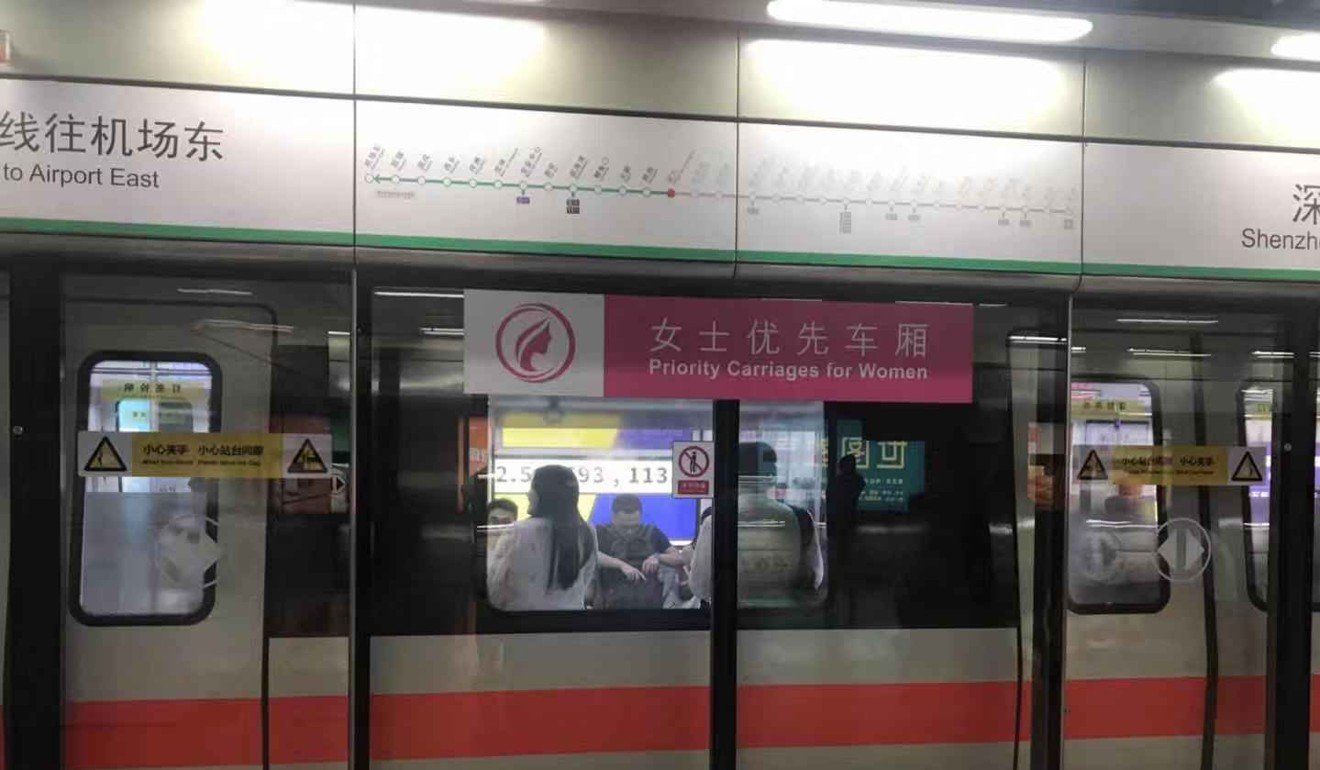
The carriages are decorated with pink stickers which say, in Chinese and English, “priority carriages for women” and while men are not barred from using them
they are encouraged to leave them to women passengers.
While the authorities did not specifically say they were intended to prevent sexual harassment – saying only that the scheme was meant to “give more care and respect to women” – the carriages followed a precedent set by Japan and Europe for that reason.
Shenzhen is currently considering an update to its priority carriages with an amended law designating them for people with disabilities and minors, as well as women, and only during rush hour. Other passengers who do not meet these criteria can be asked to leave by rail staff.
A priority carriage for women on the Shenzhen underground system. Photo: Phoebe Zhang
But in reality the restrictions on the priority carriages are seldom enforced and they have been used by men since their launch. Furthermore, feminists say the scheme is a form of segregation, rather than an attempt to solve the cause of the issue.
One reason the priority carriages have failed in their purpose could be the size of the crowds using public transport each day. According to government data, there are roughly 5 million passenger trips on the Shenzhen underground every day and 8 million in Guangzhou.
It is also hard for staff to enforce the regulation.
“When it first came out, subway staff vehemently advocated for women to use it, so many people did,” said Zhang Ying, a piano teacher in Guangzhou. Staff would hold loud speakers and gesture for women to get on the priority carriages. But now, everybody just treats it like an ordinary carriage, she said.
Zhang said she rarely uses the priority carriages because of the inconvenience of having to walk all the way to the end of the train.
Women call for convenience in all areas, but [the government] only wants to draw you a little corner to play in.Xiao Meili, Guangzhou-based feminist
Feminists have opposed the scheme from the start.
“The logic behind the scheme is wrong to begin with,” said Xiao Meili, a Guangzhou-based feminist. “When noticing the dangers women face in public spaces, women call for convenience in all areas, but [the government] only wants to draw you a little corner to play in, signalling they still will neglect you in most places.”
Although it may appear well-intentioned, Xiao said the scheme was restricting women’s space.
“Most of the sexual harassers and rapists are men, so wouldn’t it be more effective to put these offenders in a limited space?” she asked.
In a survey of 443 people conducted by a group of feminists in Shenzhen in 2017, 42 per cent of women said they had been harassed on public transport, compared with just 6 per cent of men.
Most of the interviewees said they were dissatisfied with the police response and 65 per cent said they thought police should be most responsible for handling sexual harassment in public.
Six ways Japanese women can deter gropers on trains
Xiao and others have repeatedly written to government representatives about sexual harassment on public transport. In 2016, Xiao’s feminist group received 40,000 yuan (US$5,650) in public donations – just enough to buy an advertisement slot.
For two years, the group tried to put up anti-harassment billboards in the Guangzhou and Shenzhen underground systems, but they were repeatedly blocked by the authorities who said the advertisements would cause panic.
But in 2018 Xiao’s group spotted advertisements in the subways in Beijing, Shanghai and Chengdu, some placed by news organisations and others by local governments. One advertisement in Chengdu, put up by rail officials, said: “There’s no groping hand here.”
Another, in Beijing, said: “Prevent sexual harassment, be vocal.”
Xiao said she was happy to see the changes, but described the current policy of updating the carriages in Shenzhen as an example of “lazy politics”.
There needed to be more than a pink bumper sticker on carriage windows, she said.
Instead, policymakers needed to think about the actual mechanisms of stopping harassment and how to handle culprits once they were caught.
“Women do not demand special care as if they are a soft and weak group,” Xiao said.
“They demand the safety they deserve and the right to travel conveniently.”
SRINAGAR/NEW DELHI (Reuters) – Authorities in Indian Kashmir have arrested nearly 4,000 people since the scrapping of its special status last month, government data shows, the most clear evidence yet of the scale of one of the disputed region’s biggest crackdowns.
Muslim-majority Kashmir, claimed by both India and Pakistan, has been in turmoil since India stripped its portion of the region of its autonomy and statehood on Aug. 5, leading to clashes between security forces and residents and inflaming tension with Pakistan.
India said the removal of the status that its part of Kashmir has held since independence from Britain in 1947 would help integrate it into the Indian economy, to the benefit of all.
In an attempt to stifle the protests that the reform sparked in Kashmir, India cut internet and mobile services and imposed curfew-like restrictions in many areas.
It has also arrested more than 3,800 people, according to a government report dated Sept. 6 and seen by Reuters, though about 2,600 have since been released.
A spokeswoman for India’s interior ministry did not respond to a request for comment. Neither did Jammu and Kashmir police.
It was not clear on what basis most of the people were being held but an Indian official said some were held under the Public Safety Act, a law in Jammu and Kashmir state that allows for detention for up to two years without charge.
The data for the first time shows the extent of the detentions, as well as indicating who was picked up and where.
More than 200 politicians, including two former chief ministers of the state were arrested, along with more than 100 leaders and activists from an umbrella organisation of pro-separatist political groups.
The bulk of those arrested – more than 3,000 – were listed as “stone pelters and other miscreants”. On Sunday, 85 detainees were shifted to a prison in Agra in northern India, a police source said.
Rights group Amnesty International said the crackdown was “distinct and unprecedented” in the recent history of the region and the detentions had contributed to “widespread fear and alienation”.
“The communication blackout, security clampdown and detention of the political leaders in the region has made it worse,” said Aakar Patel, head of Amnesty International India.
‘RIGHT TO LIFE’
India says the detentions are necessary to maintain order and prevent violence, and points to the relatively limited number of casualties compared with previous bouts of unrest.
The government says only one person is confirmed to have died compared with dozens in 2016, when the killing of a militant leader sparked widespread violence.
“The right to life is the most important human right,” India’s national security adviser Ajit Doval told reporters recently.
The report contains data from the 13 police districts that make up the Kashmir Valley, the most populous part of the Himalayan region where the main city of Srinagar is located.
The largest number of arrests have been in Srinagar, the data shows, at nearly 1,000. Earlier unrest often centred in rural areas.
Of the detained political leaders, more than 80 were from the People’s Democratic Party, formerly in coalition in Jammu and Kashmir state with the ruling Bharatiya Janata Party.
About 70 are from the National Conference, which has for years dominated politics in Indian Kashmir, and more than a dozen from India’s main opposition Congress party.
Police also arrested more than 150 people accused of association with militant groups fighting Indian rule.
An Indian official said it was likely that more than 1,200 people were still held, including all the high-profile politicians and separatists mentioned in the report, while dozens more are being arrested every day.
In the 24 hours before the report was compiled, more than two dozen people were arrested, mainly on suspicion of throwing stones at troops, the data showed.
The data did not include those under informal house arrest, nor people detained in a round-up of separatists that began in February after a bomb attack by a Pakistan-based militant group on Indian troops.
Days before India’s move to strip Kashmir of special status, one prominent separatist leader told Reuters that more than 250 people with links to the movement were already in detention.
Chengdu school teaches boys to build model rockets while girls learn about knitting
Handicrafts show at school prompts question, ‘Why can’t boys knit and girls build rockets?’
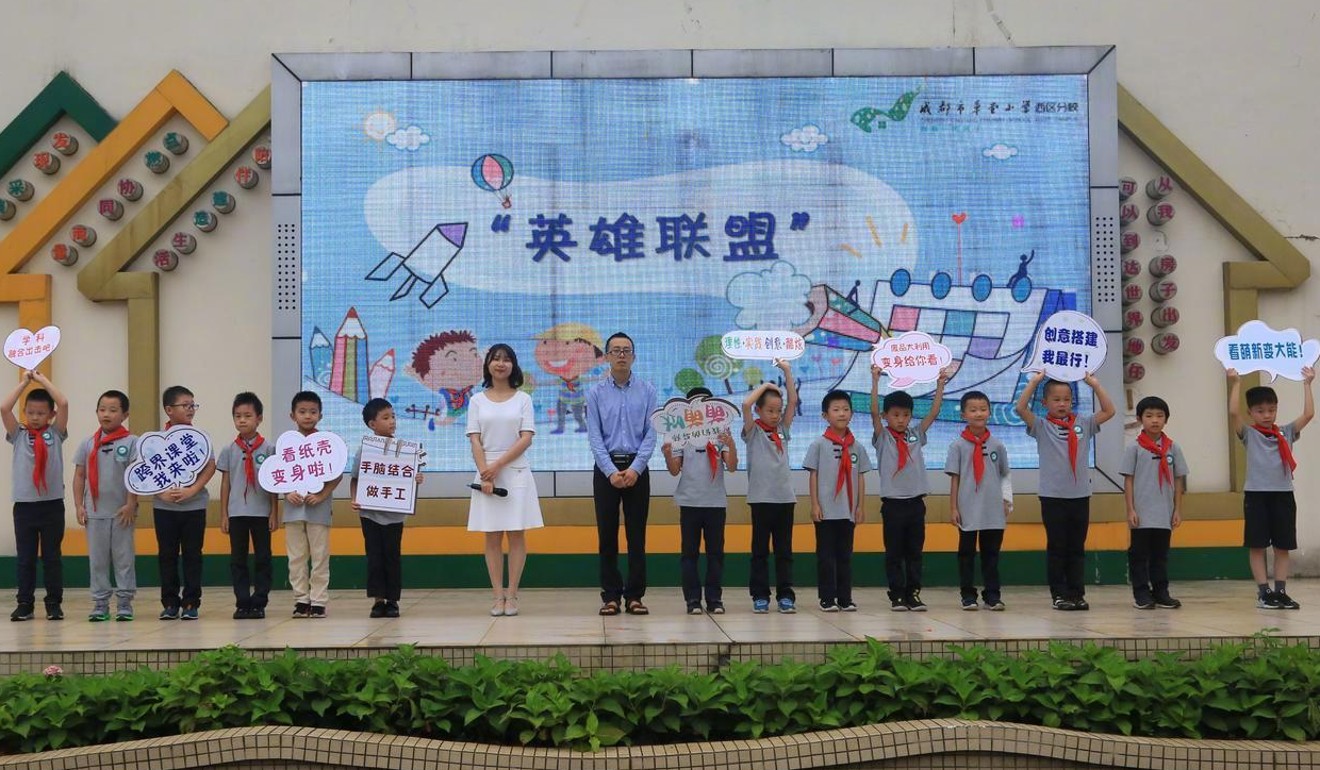
Pupils and staff at Chengdu Caotang Elementary School in Sichuan show off knitting from their Boys and Girls are Vastly Different class. Photo: Weibo
A school in southwest China that teaches boys to grow “heroically” and wants “tranquil feminine examples” for its girls has generated a heated debate about sexism.
Chengdu Caotang Elementary School in Sichuan province developed a course that teaches boys to build model rockets and girls to knit alongside mainstream subjects such as maths, languages and art, in the hope of “increasing their gender knowledge”.
The course, called Boys and Girls are Vastly Different, started last semester because school managers believed that “boys and girls have been shaped in the same way recently”, principal Fu Jin told the Chengdu Economic Daily on Monday.
That “led to boys lacking enough space to grow heroically and girls lacking gentle and tranquil feminine examples to follow, so there’s some gender dislocation”, she said.
Chengdu Caotang Elementary School wants its boys to be “heroic” and its girls to be “tranquil”. Photo: Weibo
Last semester, pupils learned the differences between female and male bodies. This semester, boys are learning how to build model planes, rockets and cars, while the girls are being taught knitting by teachers and mothers who volunteer to help out in classes.
On Monday, a show of handicrafts and jumpers hosted by the school to promote the class led to a backlash on social media, with members of the public criticising the school for sexism and enforcing gender stereotypes.
“They are tying the hands of girls when young, and when these girls grow up, people would say there are only a few female scientists because girls are born unfit for that role,” a Weibo user said.
What Chinese summer camps taught teens about gender values
“It’s typical gender discrimination,” another said. “Why can’t boys knit and girls build rockets?”
Authorities cracked down on controversial classes for Chinese children after some extreme examples of gender education. In December, a Weibo account highlighted a lurid “virtue” class where a sobbing woman was seen on video confessing to teenagers at a summer camp in Wenzhou, eastern Zhejiang province that “promiscuous women got gangrene”.
“I dressed myself up in a fashionable and revealing way, and that’s an invitation for others to insult me and rape me,” she told her audience.
“Three drops of sperm are equal to poison, and they will hurt unclean women,” she said. “I’m afraid my body will rot, will stink and ache, and they’ll have to amputate my legs.”
The camp was condemned and shut down by the local government.
Suspects rounded up after people complain of being duped into making donations to support non-existent temples
One woman says she handed over US$4,600 after being told that charitable gesture would help her live to be 400
One victim of the alleged scams said she was told she could live for 400 years if she handed over her money. Photo: Thepaper.cn
Police in southeast China have detained 100 people on suspicion of being part of a criminal network that cheated members of the public out of 50 million yuan (US$7 million) by preying on their superstitions and generosity.
Authorities in Ningguo, Anhui province launched an investigation in May after receiving a number of complaints about the activities of several groups posing as fortune-tellers on social media platforms like Weibo, financial news outlet Caijing reported on its website on Tuesday.
One of the groups, which operated on the Twitter-like service under the name “Kanxiang Zen Master”, was run by a local man surnamed Zhang and had 12 million followers, the report said.
Adverts for online fortune-telling services are common in China. Photo: Thepaper.cn
In one alleged scam, members of the group were told they would receive good luck if they made a donation to support a “famous temple”. But when a man who gifted 10,000 yuan via WeChat Pay checked on the address of the recipient, he found it was a residential address in the city of Xuancheng and not a place of worship, the report said.
When police investigated, they found Zhang had links to seven criminal groups in Anhui and neighbouring Jiangsu province, which between them operated about 60 fortune-telling accounts on Weibo, several of which had more than 10 million followers. The Kanxiang Zen Master account has since been removed from the platform.
Six Chinese wanted for internet scam arrested in Vanuatu
A number of the gangs were registered as media companies and operated as semi-professional organisations with formal recruiting procedures and regular conferences to plan their fraudulent activities, the report said, adding that they had been operating for at least two years.
Police in July staged a series of raids to round up the suspects and confiscated associated equipment, including computers, vehicles and mobile phones, the report said.
Authorities in Ningguo have appealed for more victims to come forward.
A separate report by Shanghai-based news outlet Thepaper.cn said that some of the suspects also used e-commerce sites such as Taobao and the messaging service WeChat to promote their fortune-telling services.
Taobao is owned by Alibaba Group, which also owns the South China Morning Post.
In one case, a woman from the city of Changshu in Jiangsu said she made multiple payments – totalling about 33,000 yuan – to a fortune-teller she met on WeChat who said the money would be used to buy incense for use in offerings to the gods.
She said she reported the alleged fraud after starting to doubt the fortune-teller’s claims, including one that said if she made the donations she could live for up to 400 years.
Alibaba, Weibo and Tencent, which owns WeChat, have been contacted for comment.
Residents evacuated from building in Shenzhen as it leans to one side
An investigation is launched and utilities in the area are cut off
The building leans to one side after apparently sinking into the ground. Photo: Weibo
Emergency workers sealed off a building in the southern Chinese city of Shenzhen after it collapsed on Wednesday morning, local authorities said.
At around 11.20am, a block of flats in Luohu district suddenly sank into the ground and leaned to one side, the Shenzhen government said on Weibo, China’s equivalent of Twitter.
“Before it happened, the local community office heard noises coming from underground, and evacuated residents. Right now there are no casualties,” the Weibo post said. “The case is being investigated.”
In a short video published by state broadcaster CCTV, a residential building appears to have sunk into the ground and leans on the neighbouring building, with bricks and concrete strewn on the ground.
The area was closed off as police, ambulance crews and firefighters attended the scene.
The authorities also evacuated residents from surrounding buildings, moving them into temporary housing. A panel of experts began to investigate the cause of the collapse, while water, gas and electricity supplies were cut off in the area and construction work was halted as a precaution.
Earlier this month, a stadium in Shenzhen collapsed while demolition work was being carried out, killing three workers and injuring three. The part of the venue that collapsed had previously been used as a basketball court but was being renovated, with most of the interior having been torn down apart from a few pillars supporting the roof.
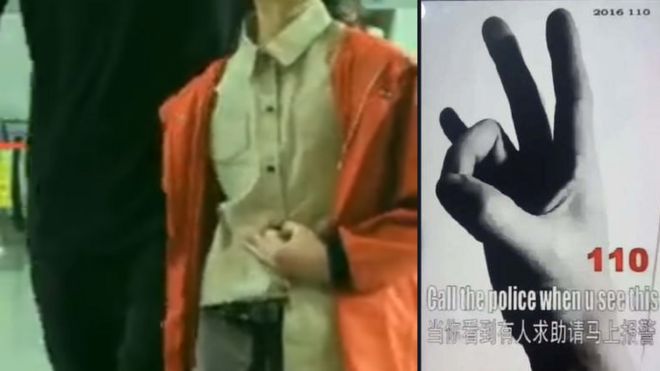
Image copyright TIKTOK/SINA WEIBOImage caption A video and associated posters went viral showing a girl making an OK signal as a subtle way of asking for help
A video showing a Chinese girl using a clever technique to signal she needs help has been widely shared on popular social network TikTok – and is making the authorities nervous.
She is shown being escorted away by a stranger in an airport. Unable to make a cry for help, she makes a subtle hand gesture that looks like the signal for “OK”.
This alerts a passerby, who immediately begins to argue with the man, and helps others recognise that the girl is being held against her will. She is then reunited with her parents.
So why has the video created such a big reaction on Chinese social media, and made the authorities so upset?
The hand gesture
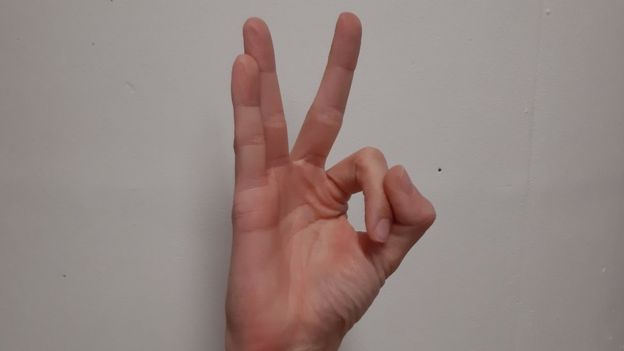
Image caption The “OK” hand gesture reversed looks like the number sequence “110”
While the “OK” gesture is pretty widely understood around the world as a positive gesture, simply turning your hand so that you are facing your palm conveys a subtle message in China.
If two fingers are pressed together, your hand can look like the numbers “110” – which in China is the emergency contact number for the police.
Consequently, the video, which features actors, shows a subtle way that a child can get a message out if they are in trouble.
To push this message home, at the end of the video, a man tells viewers to “spread this gesture” so that people can signal if they are in need of help “in the event of coercion, kidnapping, or fear of your life”.
The authorities don’t like it
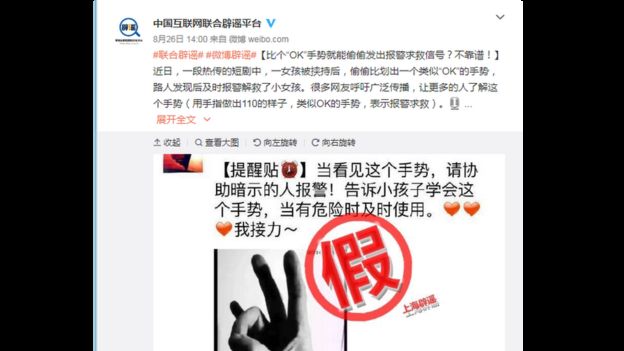
Image copyright PIYAOImage caption China’s top disinformation bureau said the ‘OK’ signal as a sign of distress was absolutely not OK
The video has the appearance of a public service announcement, so many social media users assumed it had the backing of the police.
The Chengdu Economic Daily says that videos being shared on TikTok predominantly attributed the footage to the police. However, the actual origins of the video are unknown.
Today, official media are spreading the message of China’s official disinformation platform Piyao, which criticises the video for being misleading, and says the police had no involvement with it.
“Such a gesture is meaningless as an alarm,” it says, and argues that it might actually be counter-productive in allowing an individual to find help if they need it.
It says that it has “never publicised or promoted such an alarm method in public”, and urges readers to follow the traditional method of calling the police if they need assistance or suspect someone else needs help.
Social media users think it’s a good idea
Despite the authorities distancing themselves from the footage and associated advertising campaigns that have suddenly sprung up on TikTok, a huge debate has broken out online about whether the simple signal might actually be effective in helping Chinese people understand if somebody is under duress.
Some on the popular Sina Weibo microblog say that “shouting for help is more practical than gestures”, and others note that the simple signal might “mislead people” and could lead to accidental interventions where none are necessary.
But in a country where tight authoritarian controls are in place and people are unable to freely speak openly, some are praising this seemingly small action to attract attention if someone’s under duress.
“In fact, this kind of gesture could really be promoted for help in the country”, one user says.
“As long as everyone is in agreement, we can still use it, it is still possible,” another says. “As long as we’re united in our understanding.”
Numbers as a symbol of rebellion
Image copyright TAOBAOImage caption Taylor Swift’s 1989 album caused problems for Chinese censors as the singer is popular, but the number “1989” is sensitive
Number sequences have long proven an effective way for social media users to criticise the authorities, without immediately alerting government censors, who regularly screen platforms for sensitive words.
People have found ways to talk about the Tiananmen Square massacre of 1989 – which the government has heavily censored for three decades – by using number sequences such as “46” (4 June), “64” (June 4) or “1989”.
The authorities have wised up to number sequences being used and are known for censoring many of these. But such strict censorship does mean that sometimes innocuous posts are removed by mistake.
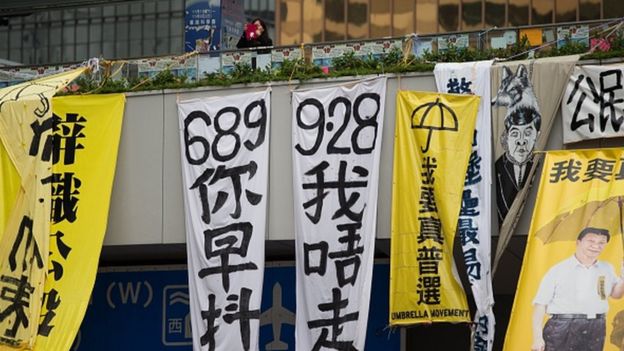
Image copyright AFPImage caption During the 2014 Hong Kong protests, demonstrators showed their anger for then-leader CY Leung by calling him “689”
Cryptic number sequences and hand gestures have proven particularly effective in helping protesters in Hong Kong unite on a shared message.
Online users have been able to voice criticism of their leadership in recent years by referring to them based on the number of votes that elected them into office.
Consequently, “777” has become a nickname for Hong Kong’s chief executive Carrie Lam. Her predecessor, CY Leung, was known as “689”.
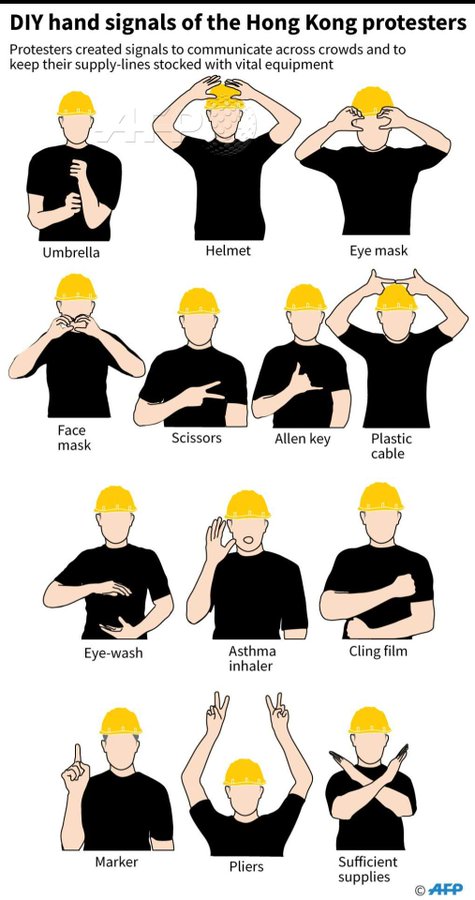
Graphic on hand signals used by protesters in Hong Kong to communicate and to keep their supply-lines stocked with vital equipment http://u.afp.com/Jsjm
As protests have dominated Hong Kong in recent months, it has also become apparent that demonstrators have been able to organise themselves by communicating subtle hand signals across crowds.
Graphics showing DIY hand signals that they can use if they need supplies such as eye masks, helmets or face masks, have circulated widely on platforms like Twitter.
Which is why a small, seemingly innocuous hand gesture, going viral in mainland China and getting huge public support, would undoubtedly unsettle the authorities.
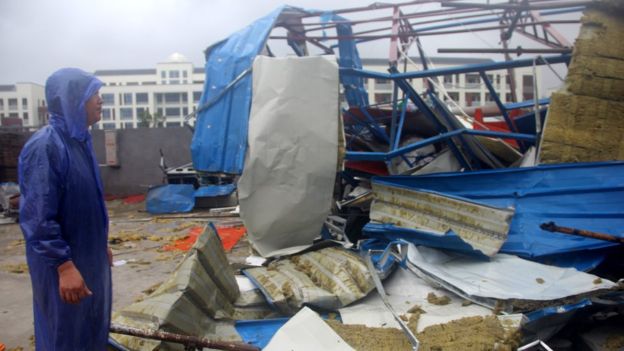
At least 13 people have been killed and more than a million forced from their homes as Typhoon Lekima hit China.
Sixteen people were also missing after a landslide was triggered by the storm, state media reported.
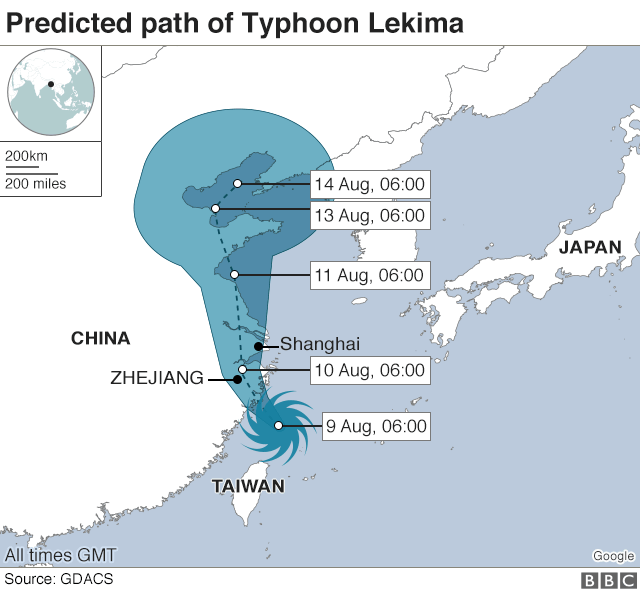
Lekima made landfall in the early hours of Saturday in Wenling, between Taiwan and China’s financial capital Shanghai.
The storm was initially designated a “super typhoon”, but weakened slightly before landfall – when it still had winds of 187km/h (116mph).
The fatal landslide happened when a dam broke in Wenzhou, near where the storm made landfall, state media said.
Lekima is now slowly winding its way north through the Zhejiang province, and is expected to hit Shanghai, which has a population of more than 20 million.
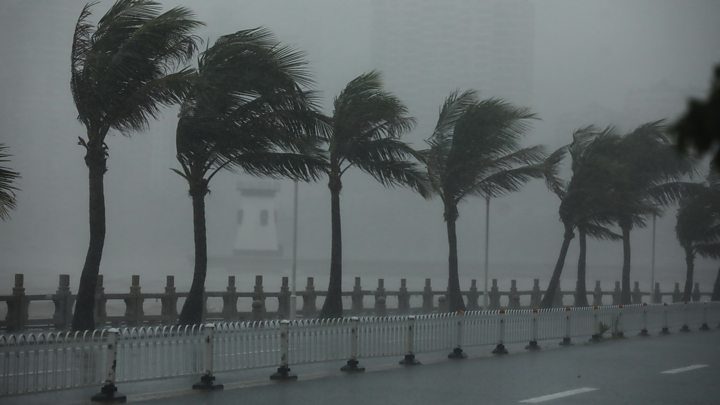
Emergency crews have battled to save stranded motorists from floods. Fallen trees and power cuts are widespread.
Image copyright EPAImage caption A worker looks for his belongings at a construction site shelter collapsed by the storm
Authorities have cancelled more than a thousand flights and cancelled train services as the city prepares for the storm.
It is expected to weaken further by the time it reaches Shanghai, but will still bring a high risk of dangerous flooding.
The city evacuated some 250,000 residents, with another 800,000 in the Zhejiang province also being taken from their homes.
An estimated 2.7 million homes in the region lost power as power lines toppled in the high winds, Chinese state media said.
It is the ninth typhoon of the year, Xinhua news said – but the strongest storm seen in years. It was initially given China’s highest level of weather warning but was later downgraded to an “orange” level.
Media caption Typhoon Lekima inches towards China
Chinese weather forecasters said the storm was moving north at just 15km/h (9mph).
It earlier passed Taiwan, skirting its northern tip and causing a handful of injuries and some property damage.
Coming just a day after a magnitude six earthquake, experts warned that the combination of earth movement and heavy rain increased the risk of landslides.
Lekima is one of two typhoons in the western Pacific at the moment.
Further east, Typhoon Krosa is spreading heavy rain across the Northern Mariana Islands and Guam. It is moving north-west and could strike Japan some time next week, forecasters said.


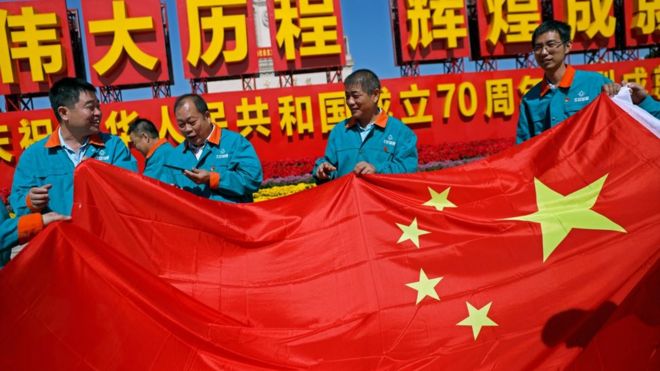 Image copyright EPA
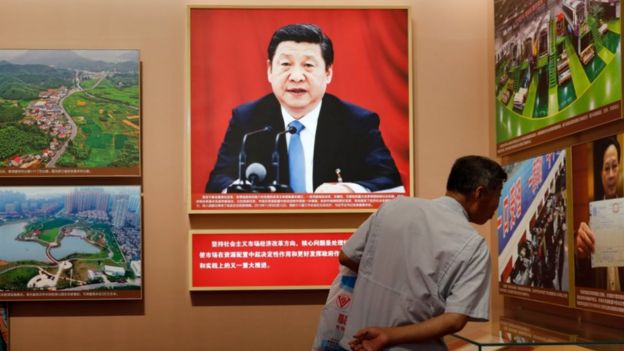 Image copyright EPA
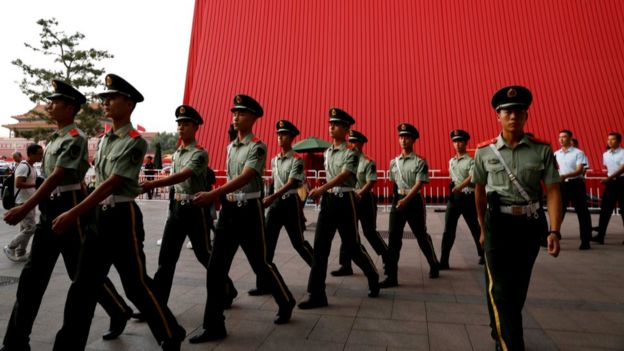 Image copyright EPA
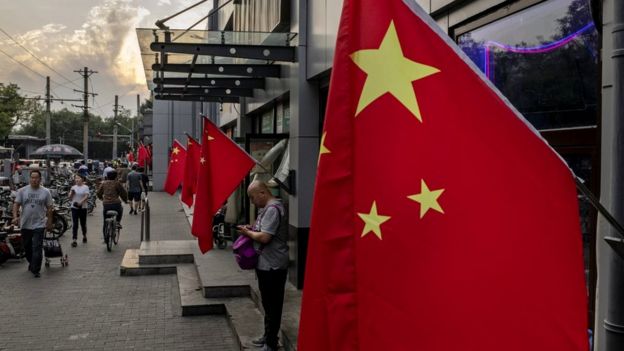 Image copyright GETTY IMAGES
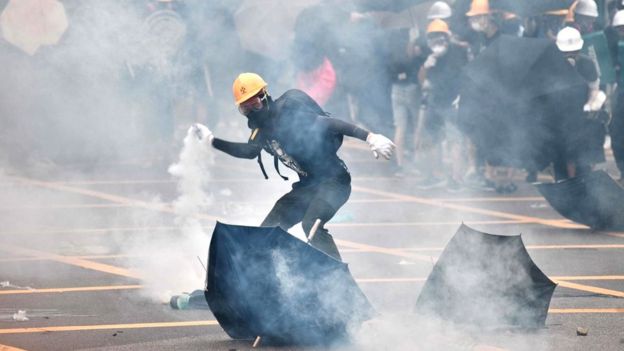 Image copyright AFP







 CHINDIA ALERT: You'll be living in their world, very soon