Chindia Alert: You’ll be Living in their World Very Soon
aims to alert you to the threats and opportunities that China and India present. China and India require serious attention; case of ‘hidden dragon and crouching tiger’.
Without this attention, governments, businesses and, indeed, individuals may find themselves at a great disadvantage sooner rather than later.
The POSTs (front webpages) are mainly 'cuttings' from reliable sources, updated continuously.
The PAGEs (see Tabs, above) attempt to make the information more meaningful by putting some structure to the information we have researched and assembled since 2006.
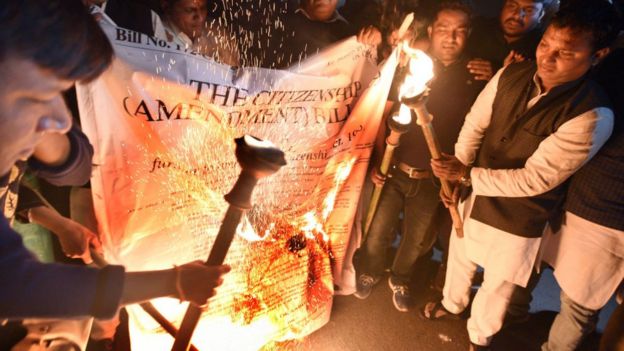
NEW DELHI (Reuters) – Violent clashes erupted in Delhi between police and hundreds of university students on Friday over the enactment of a new citizenship law that critics say undermines India’s secular foundations.
The unrest has already led Japanese Prime Minister Shinzo Abe to cancel a planned visit to India from Sunday.
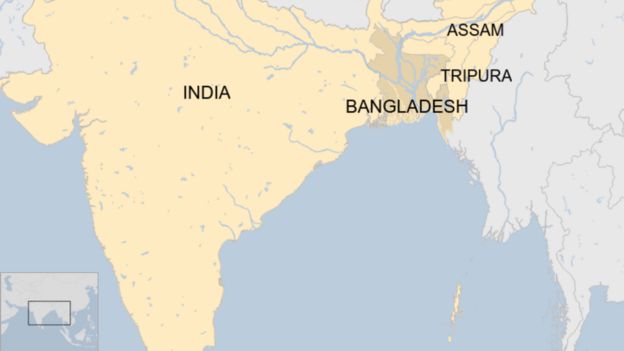
The new law offers a way to Indian citizenship for six minority religious groups from neighbouring Bangladesh, Pakistan and Afghanistan including Hindus and Christians, but not Muslims.
RELATED COVERAGE
Explainer: What does India’s new citizenship law mean?
Clashes erupt in New Delhi between students, police over citizenship law
See more stories
Police fired tear gas and used baton charges to disperse scores of students demonstrating at Jamia Millia Islamia university in the heart of Delhi over the law.
Protesters attacked cars in the capital, and several people were injured and taken to hospital.
Zakir Riyaz, a PhD student in social work, said the new law made a mockery of India’s religious openness.
“It goes against the whole idea of a secular India,” he said, speaking by phone from the Holy Family Hospital in New Delhi where 15 of his fellow students were admitted after being injured in a police baton charge.
Police barricades were knocked down and streets were strewn with shoes and broken bricks. An official at the university dispensary said that more than 100 students had been brought in with injuries but all had been discharged.
Parvez Hashmi, a local politician who went to the protest site to speak to police, said about 50 students had been detained.
Students said it was meant to be a peaceful protest, with them trying to go from Jamia University to Parliament Street to show their opposition to the legislation. But police pushed them back, leading to clashes.
Critics of Prime Minister Narendra Modi’s government say it is promoting a Hindu-first agenda for India and that the citizenship law excluding Muslims showed a deep-seated bias against India’s 170 million Muslims.
Imran Chowdhury, a researcher, said “either give citizenship to refugees of all religions or none at all. The constitution is being tampered with in the name of religion.”
Modi’s ruling Bharatiya Janata Party denies any religious bias but says it is opposed to the appeasement of one community. It says the new law is meant to help minority groups facing persecution in the three nearby Muslim countries.
ABE CANCELS
The United Nations human rights office voiced concern that the new law is “fundamentally discriminatory in nature”, and called for it to be reviewed.
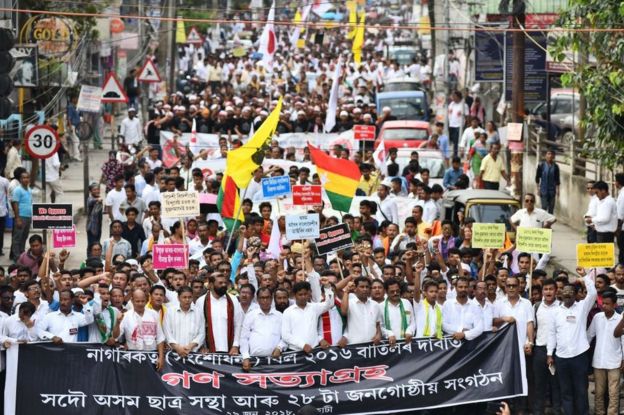
Two people were killed in India’s Assam state on Thursday when police opened fire on mobs torching buildings and attacking railway stations in protest at the new citizenship rules signed into law on Thursday.
Japan’s Prime Minister Shinzo Abe cancelled a trip to Assam for a summit with his Indian counterpart Narendra Modi that had been due to begin on Sunday.
Japan has stepped up infrastructure development work in Assam in recent years, which the two sides were expected to highlight during the summit. Abe had also planned to visit a memorial in the nearby state of Manipur where Japanese soldiers were killed in World War Two.
“With reference to the proposed visit of Japanese PM Abe Shinzo to India, both sides have decided to defer the visit to a mutually convenient date in the near future,” Indian foreign ministry spokesman Raveesh Kumar said in a tweet.
Japan’s Chief Cabinet Secretary Yoshihide Suga said both countries would decide on the appropriate timing for the visit although nothing has been decided yet.
A movement against immigrants from Bangladesh has raged in Assam for decades. Protesters there say granting Indian nationality to more people will further strain the state’s resources and lead to the marginalisation of indigenous communities.
“The central government and I are totally committed to constitutionally safeguard the political, linguistic, cultural and land rights of the Assamese people,” he tweeted.
However, with internet and mobile services shut down, it is unlikely residents would have been able to read the message.
The chief minister of Assam was stranded at the airport for several hours on Wednesday because roads were blocked by protests.
What do protesters want?
They want the bill to be repealed, as they say their ethnic and cultural identity is under threat from illegal migration.
Essentially, they do not want any migrants – regardless of religion – to be allowed into the state.
The National Register of Citizens (NRC) is a list of people who can prove they came to the state by 24 March 1971, a day before neighbouring Bangladesh became an independent country.
In the run-up to its publication, the BJP had supported the NRC, but changed tack days before the final list was published, saying it was error-ridden.
The reason for that was a lot of Bengali Hindus – a strong voter base for the BJP – were left off the list, and would possibly become illegal immigrants.
The CAB is seen as being linked to the register, although it is not the same thing.
It will help protect non-Muslims who are excluded from the register and face the threat of deportation or internment.
Has the bill been challenged?
The Indian Union Muslim League, a political party, has petitioned the country’s top court to declare the bill illegal.
In their petition to the Supreme Court, the Indian Union Muslim League argued that the bill violated articles of equality, fundamental rights and the right to life.
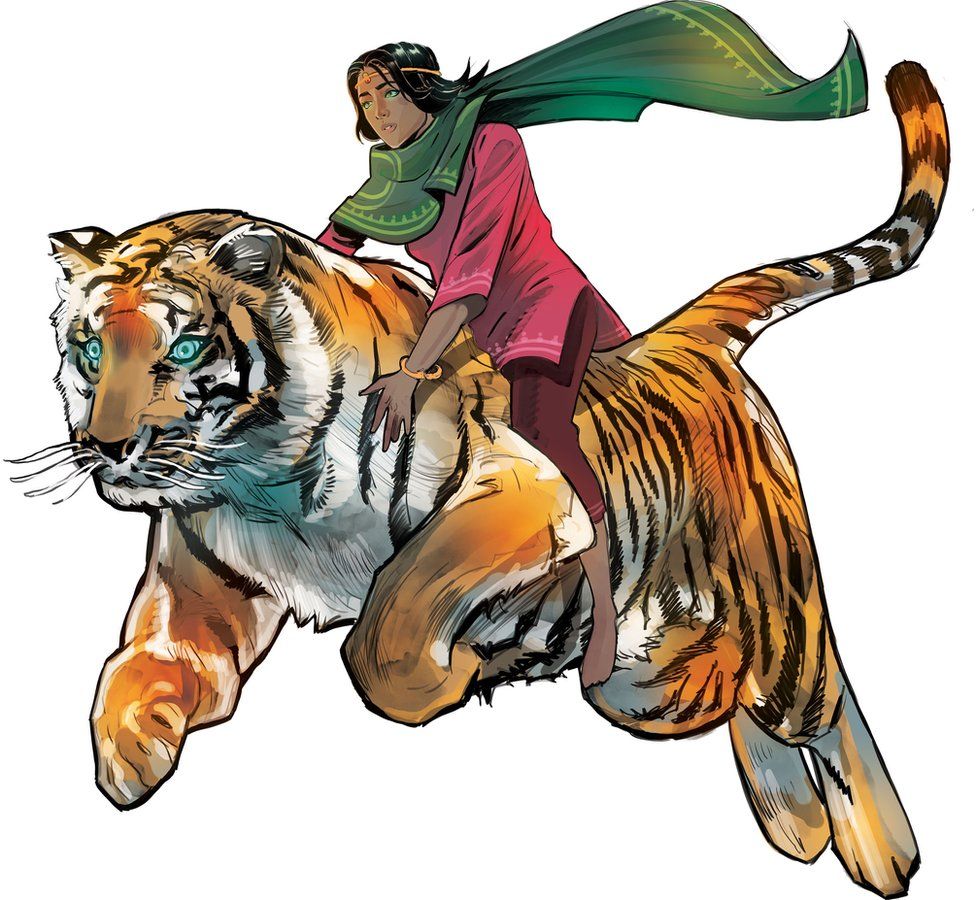
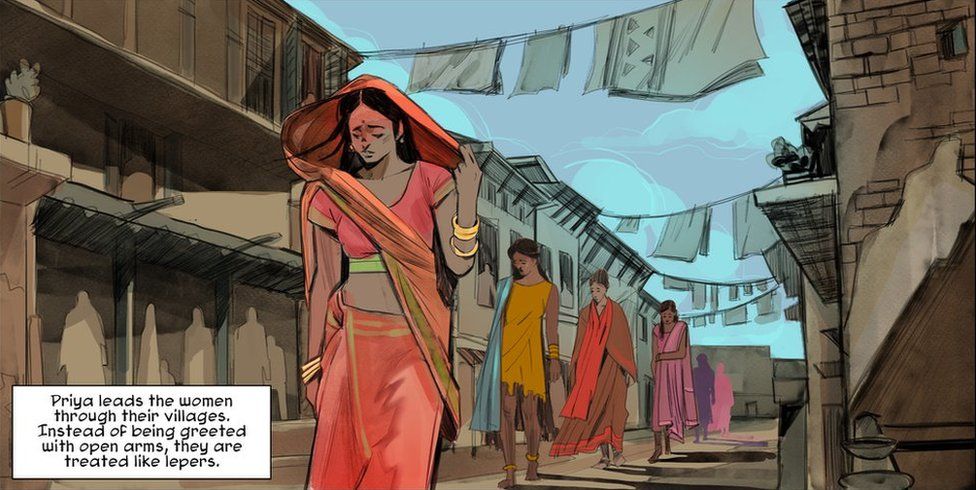
Comic crusader Priya, a gang-rape survivor who earlier campaigned against rape and acid attack, is back in a new avatar. This time she is fighting the trafficking of girls and women for sex.
The “modern-day female superhero” was first launched in December 2014, exactly two years after the horrific gang rape of a young woman on a bus in Delhi, to focus attention on the problems of gender and sexual violence in India.
In the latest edition – Priya and the Lost Girls – she takes on the powerful sex-trafficker Rahu, the evil demon who runs an underworld brothel city where he has entrapped many women, including Priya’s sister Lakshmi.
Indian-American actor and writer Dipti Mehta, who wrote the script of the comic, draws on ancient Indian mythology to create larger-than-life fantastical characters and delivers a powerful feminist statement.
The story of Lost Girls begins when the protagonist returns home to find that there are no girls in her village.
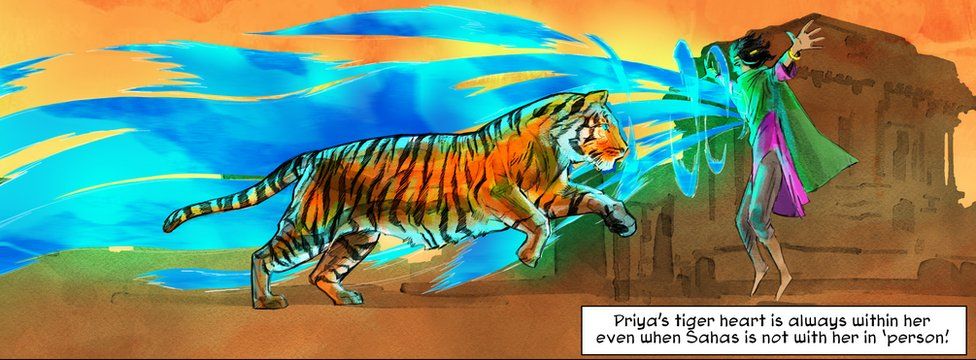
She then mounts her flying tiger Sahas (Hindi for courage) and arrives in Rahu’s den. It’s a city ruled by greed, jealousy and lust, where women exist only to serve and please men – and those who resist are turned into stone.
Image copyright PRIYASHAKTI
Priya is threatened and attacked, a woman who works for Rahu tries to lure her into the sex trade saying: “If you work for us, you’d serve only five to six men and not 20”, but in the end, good wins over evil and she manages to vanquish Rahu and liberate her sister and all the other trafficked girls.
But victory still eludes her. The families of rescued girls refuse to take them back. The survivors are treated like “lepers”, facing stigma, scorn and ridicule.
But Priya and the other girls stand up to confront patriarchy, says Ms Mehta, “just as women have broken their silence to talk about MeToo”, the campaign against sexual harassment and abuse that started in Hollywood in October 2107 and later spread to many other parts of the world.
“I was very clear from the start that Lost Girls can’t be just another comic book where good guy wins and evil dies, it had to be much more than that,” Ms Mehta says.
Image copyright PRIYASHAKTI
Ram Devineni, the Indian-American creator of the comic series, told the BBC that he had decided to focus on sex trafficking in this edition after visiting Sonagachi, India’s largest red-light area in the eastern city of Kolkata, where he met several women engaged in sex work.
“Half of them told me they had been tricked into coming there and, once there, they were forced into the sex trade. The other half said they’d agreed to do this for a living because they were dirt poor and they had no alternative.
“Often there were two to three women sharing a small dingy room, many of them had young children who lived with them, and some of them said their children slept in the same bed where they serviced clients.
Mr Devineni says that from his conversations with them, he realised that many of the women there could leave, but chose not to.
“Most believed in the idea of sacrifice, for the sake of their families, their children. The shackles that hold them back are mostly emotional and psychological coercion.”
Some of their stories, he says, have found their way into the Lost Girls, which will be launched digitally on Monday to coincide with the start of United Nation’s 16 Days of Activism Against Gender-based Violence.
Image copyright PRIYASHAKTIAccording to the United Nations Office on Drugs and Crime, human trafficking is the second largest organised criminal business in the world after the arms trade. It is even ahead of the drugs trade.
“It’s a multi-billion-dollar industry,” anti-trafficking activist Ruchira Gupta told the BBC on the phone from New York.
Ms Gupta, who supports trafficked girls and women in India through her charity Apne Aap Women Worldwide, says there are 100 million people trapped in human trafficking globally, of which 27 million are in India alone, and most of the trafficking is in girls and young women.
India, Bangladesh and Nepal, she says, make up “the epicentre” of global sex trafficking.
Ms Gupta, who collaborated on Priya and the Lost Girls, says she plans to take the comic to schools and colleges in India and the US to use it as a talking tool, “as a conversation starter on what is a very difficult topic”.
The only way to fight trafficking, she believes, is to “de-normalise” sex trade – and cinema, art and pop culture are tools that can help do that.
The comic is made to appeal to young people. After its launch, it can be downloaded for free anywhere in the world; it also has “augmented reality features”, which means people can see special animation and movies by scanning the artwork with their smartphones.
Image copyright PRIYASHAKTI
“People often make flippant comments to say that prostitution is the oldest occupation in the world, but they don’t realise that trafficking is not some poor woman getting money in exchange for having sex with a man. It is the extreme exploitation of most vulnerable girls,” Ms Gupta says.
To stop this “commodification” of girls, she adds, we need to create revulsion in men’s minds about sex trade – and it’s best to catch them young.
“We must work with young boys and teenagers, 13 to 14 year olds, through storytelling and pop culture. They learn about sex from porn sites which portray sex workers as happy hookers, and no-one sees the girl behind her.
“I want to demolish that myth of the happy hooker. I want to ensure that people see the girl behind her.”
Artwork by Syd Fini and Neda Kazemifar
You may also be interested in…
Media caption Freida Pinto: Why I made a film about sex slaves
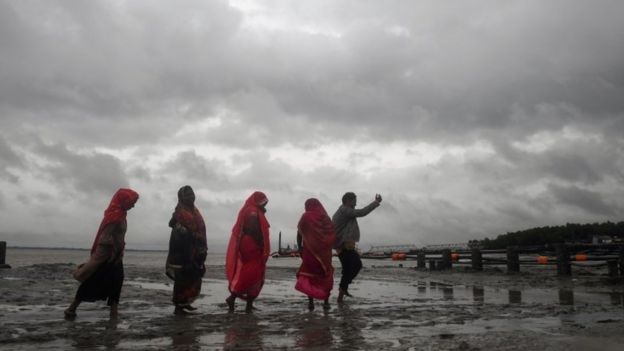
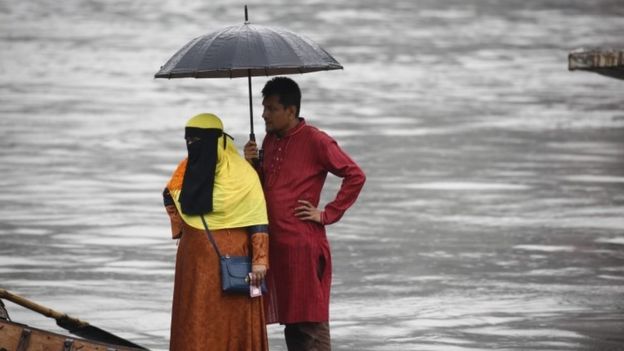
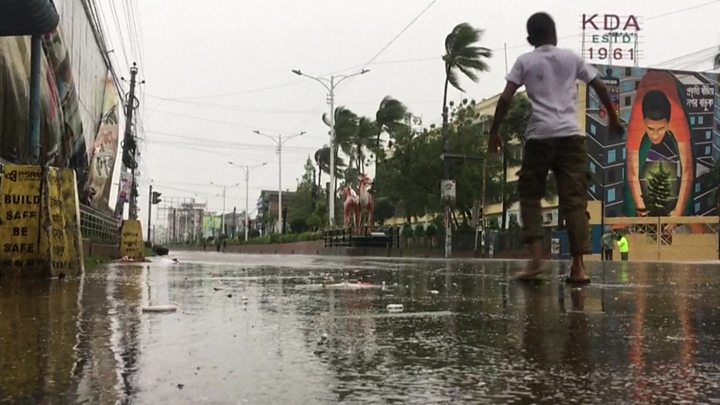
Cyclone Bulbul has ripped through coastal areas of Bangladesh and India, killing at least 13 people while more than two million others were forced to spend a night in storm shelters.
The storm packed winds of up to 120km/h (75 mph), injuring dozens and destroying thousands of homes.
Five of the six who lost their lives in Bangladesh were hit by falling trees.
Officials say that further casualties were avoided because people were evacuated in time.
Authorities say the storm is now weakening.
What damage did Cyclone Bulbul cause?
Seven people were killed in the Indian state of West Bengal, the state’s minister for disaster management told reporters.
Image copyright AFPImage caption West Bengal is one of the worst hit areas in India
The five victims hit by trees in Bangladesh included a 52-year old woman who died when a tree dropped onto her house.
A 60-year-old fisherman also lost his life after ignoring evacuation warnings.
There are increasing concerns after two fishing boats carrying more than 30 men failed to return, an official in Bangladesh’s Bhola district said.
Around 1,200 tourists, most of them Bangladeshi, were stuck on St Martin’s Island, part of Cox’s Bazar district, an official told the Reuters news agency.
“All of them will be rescued,” he said.
Services at many sea ports and airports in the region were also suspended – including the busy Kolkata airport.
Bangladesh’s two biggest ports, Mongla and Chittagong, were closed and flights into Chittagong airport were stopped.
Image copyright EPAImage caption Storms have battered areas of Bangladesh
Bangladesh’s low-lying coast is often hit by deadly cyclones, but the country has successfully reduced the number of casualties in recent years.
Media caption People in Khulna, Bangladesh, seek shelter from the storm
NEW DELHI (Reuters) – India’s Prime Minister Narendra Modi will welcome Chinese President Xi Jinping at an informal summit this week, the Indian foreign ministry said on Wednesday, their talks coming at a time of strained ties over the disputed region of Kashmir.
The meeting in the southern Indian city of Chennai on Oct. 11-12 is aimed at enhancing the rapport the leaders built when they met in the Chinese city of Wuhan last year to help stabilise ties after a standoff in another contested section of their long border, far removed from Kashmir.
But India’s decision in August to withdraw special status for Kashmir drew sharp condemnation from Pakistan and its old ally, China, which took the matter to the U.N. Security Council.
During a meeting with Pakistan Prime Minister Imran Khan in Beijing on Wednesday, Xi said that he was watching the situation in Kashmir closely, the official Xinhua News Agency reported.
Xi said that the right and wrong of the situation was clear and India and Pakistan should resolve the dispute via peaceful dialogue, according to Xinhua.
India says its revocation of the special status of Muslim-majority Kashmir, which was accompanied by a crackdown on dissent by the security forces, is an internal matter aimed at developing the Himalayan territory, which is also claimed by Pakistan, more quickly.
India will make clear that any change to its Jammu and Kashmir state is an internal affair if the Chinese side were to raise the matter in the forthcoming talks, a government source said.
China’s close security ties with Pakistan have long been a matter of concern in New Delhi and in recent years India has drawn closer to the United States to help balance China’s rising weight across the region.
“The forthcoming Chennai Informal Summit will provide an opportunity for the two leaders to continue their discussions on overarching issues of bilateral, regional and global importance and to exchange views on deepening India-China Closer Development Partnership,” the Indian ministry said in a statement.
“OMINOUS SIGNALS
China, which has been criticised by the United States for its treatment of members of Muslim ethnic minorities, said it believed India and Pakistan must refrain from taking unilateral action in Kashmir and has expressed concern over human rights violations there. India has dismissed those concerns.
Srikanth Kondapalli, professor of Chinese studies at New Delhi’s Jawaharlal Nehru University, said it was important for the nuclear-armed neighbours to stabilise relations as both dealt with domestic and regional issues.
“The second informal meeting as such is significant given these ominous signals at bilateral, regional and global levels,” he said.
Xi will also make a state visit to Nepal at the end of his India visit, the first by a Chinese president in 22 years, the Nepali foreign ministry said.
China has deepened ties with India’s neighbours, building ports and power stations in an arc stretching from Bangladesh to Sri Lanka and Pakistan as part of its grand Belt and Road energy and infrastructure plan.
Ahead of Xi’s trip to India, China invited Pakistan’s Prime Khan for talks and said it supports Pakistan in safeguarding its independent sovereignty and territorial integrity.
The Himalayan region of Kashmir is divided between India, Pakistan and China. India rules the populous Kashmir Valley and the Hindu-dominated region around Jammu city, while Pakistan controls a wedge of territory in the west, and China holds a thinly populated high-altitude area in the north.
During Xi’s visit, Modi is expected to raise economic issues, including India’s $53 billion trade deficit with China in 2018/19, and the smaller presence of Indian companies in China compared with that of other major economies.
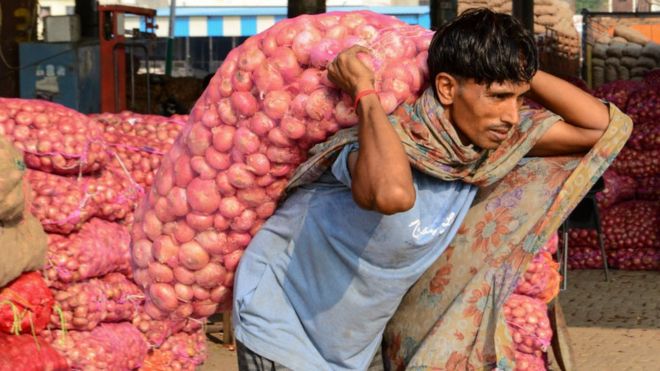
Image copyright GETTY IMAGESImage caption The onion is India’s most “political” vegetable
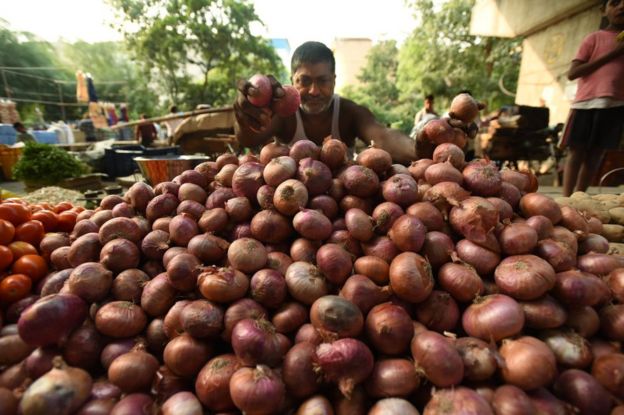
Onion prices have yet again dominated the headlines in India over the past week. BBC Marathi’s Janhavee Moole explains what makes this sweet and pungent vegetable so political.
The onion – ubiquitous in Indian cooking – is widely seen as the poor man’s vegetable.
But it also has the power to tempt thieves, destroy livelihoods and – with its fluctuating price a measure of inflation – end the careers of some of India’s most powerful politicians.
With that in mind, it’s perhaps unsurprising those politicians might be feeling a little concerned this week.
So, what exactly is happening with India’s onions?
In short: its price has skyrocketed.
Onion prices had been on the rise in India since August, when 25 rupees ($0.35; £0.29) would have got you a kilo. At the start of October, that price was 80 rupees ($1.13; £0.91).
Fearing a backlash, the Bharatiya Janata Party (BJP)-led government banned onion exports, hoping it would bring down the domestic price. And it did.
Image copyright GETTY IMAGESImage caption Onion prices peaked by the end of September
A kilo was selling for less than 30 rupees on Thursday at Lasalgaon, Asia’s largest onion wholesale market, located in the western state of Maharashtra.
However, not everyone is happy.
While high prices had angered consumers in a sluggish Indian economy, the fall in prices sparked protests by exporters and farmers in Maharashtra, where state elections are due in weeks.
And it is not just at home where hackles have been raised: the export ban has also strained trade relations between India and its neighbour, Bangladesh, which is among the top importers of the vegetable.
But why does the onion matter so much?
The onion is a staple vegetable for the poor, indispensable to many Indian cuisines and recipes, from spicy curries to tangy relishes.
“In Maharashtra, if there are no vegetables or you can’t afford to buy vegetables, people eat ‘kanda bhakari’ [onion with bread],” explains food historian Dr Mohseena Mukadam.
True, onions are not widely used in certain parts of the country, such as the south and the east – and some religious communities don’t eat them at all.
But they are especially popular in the more populous northern states which – notably – send a higher number of MPs to India’s parliament.
“Consumers in northern India wield more power over the federal government. So although consumers in other parts of India don’t complain as much about higher prices, if those in northern India do, the government feels the pressure,” says Milind Murugkar, a policy researcher.
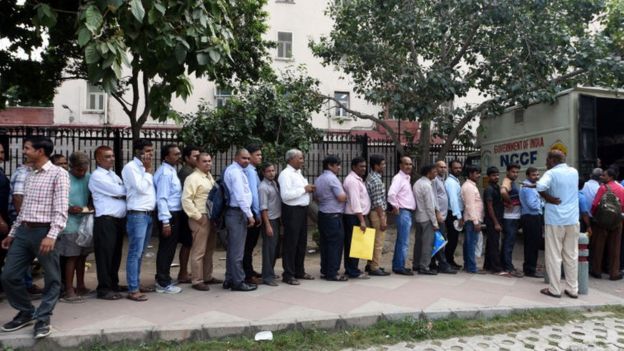
Image copyright GETTY IMAGESImage caption Onions are so ubiquitous that the government has been selling them at subsided rates
A drop in prices also affects the income of onion farmers, mainly in Maharashtra, Karnataka in the south and Gujarat in the west.
“Farmers see the onion as a cash crop that grows in the short term, and grows well in dry areas with less water,” says Dipti Raut, a journalist, who has been on the “onion beat” for years.
“It’s like an ATM machine that guarantees income to farmers and sometimes, their household budget depends on the onion produce,” she said.
Onions have even attracted robbers: when prices skyrocketed in 2013, thieves tried to steal a truck loaded with onions, but were caught by the police.
Why do politicians care about the onion?
Put simply, because the price moving too far one way or another is likely to anger a large block of voters, be they everyday households, or the country’s farmers.
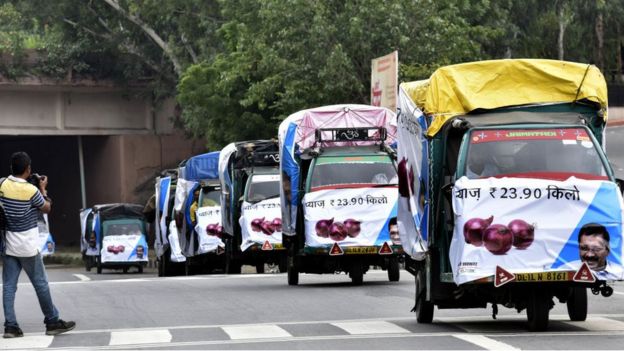
Image copyright GETTY IMAGESImage caption The Delhi government transported 70 vans full of subsidised onions
Onions are so crucial they have even featured in election campaigns. The Delhi state government bought and sold them at subsidised rates in September when prices were at their peak: chief minister Arvind Kejriwal, it should be noted, is up for re-election next year.
Meanwhile, Indira Gandhi swept to power in 1980 on slogans that used soaring onion prices as a metaphor for the economic failures of the previous government.
But why did onion prices rise this year?
A drop in supply, due to heavy rains and flooding destroying the crop in large parts of India, and damaging some 35% of the onions stocks in storage, according to Nanasaheb Patil, director of the National Agricultural Co-operative Marketing Federation.
He said the flooding had also delayed the next round of produce, which was due in September.
Image copyright GETTY IMAGES
“This has become a fairly regular phenomenon in recent decades,” Mr Murugkar said. “Onion prices swing heavily with a small drop or increase in production.”
In fact, the shortage – and subsequent rise in prices – happens almost every year around this time, according to Ms Raut.
“It’s a vicious cycle and the trader lobby and middlemen benefit from even the slightest price fluctuations,” she added.
What’s the solution?
Ms Raut says more grass-root planning and better storage facilities and food processing services will ease the problem – and making a variety of cash crops and vegetables available across the country would also ease the pressure on onions.
“The government is quick to act when onion prices rise. Why don’t they act as swiftly when prices fall?” asked Vikas Darekar, an onion farmer in Maharashtra. He said the government should buy onions from farmers at a “fair price”.
Mr Murugkar, however, feels that the government should never interfere in “onion matters”.
“If you are interested in raising purchasing power of the people, they should not curtail exports. Do we have such a ban on software exports? It’s really absurd. A government which has won such a huge majority should be able to withstand the pressures from a few consumers.”
Image copyright GETTY IMAGESImage caption Four million people were stripped of their citizenship in the draft list last July
India has published the final version of a list which effectively strips about 1.9 million people in the north-eastern state of Assam of their citizenship.
The National Register of Citizens (NRC) is a list of people who can prove they came to the state by 24 March 1971, the day before neighbouring Bangladesh declared independence from Pakistan.
People left off the list will have 120 days to appeal against their exclusion.
It is unclear what happens next.
India says the process is needed to identify illegal Bangladeshi migrants.
It has already detained thousands of people suspected of being foreigners in temporary camps which are housed in the state’s prisons, but deportation is currently not an option for the country.
The process has also sparked criticism of “witch hunts” against Assam’s ethnic minorities.
A draft version of the list published last year had four million people excluded.
What is the registry of citizens?
The NRC was created in 1951 to determine who was born in Assam and is therefore Indian, and who might be a migrant from neighbouring Bangladesh.
The register has been updated for the first time.
Image copyright EPAImage caption The NRC was created in 1951 to determine who was born in the state and is Indian
Families in the state have been required to provide documentation to show their lineage, with those who cannot prove their citizenship deemed illegal foreigners.
Prime Minister Narendra Modi’s Hindu nationalist Bharatiya Janata Party (BJP) has long railed against illegal immigration in India but has made the NRC a priority in recent years.
An anxious wait
By Rajini Vaidyanathan, BBC News, Assam
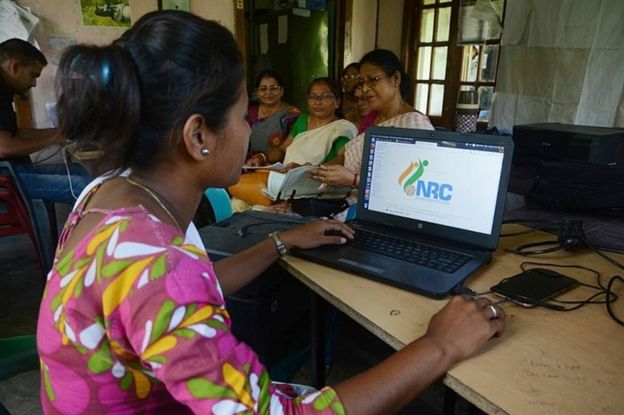
A small community centre in the village of Katajhar is being guarded by two members of the Indian army. Outside, a line of people wait. Some are clutching plastic bags containing documents.
As they enter one of two rooms, an official runs his eyes down a print-out to see if their names or photos are on it. This list – the National Register of Citizens – is one with huge consequences. And so there’s fear and trepidation as people here find out whether they’ve been included.
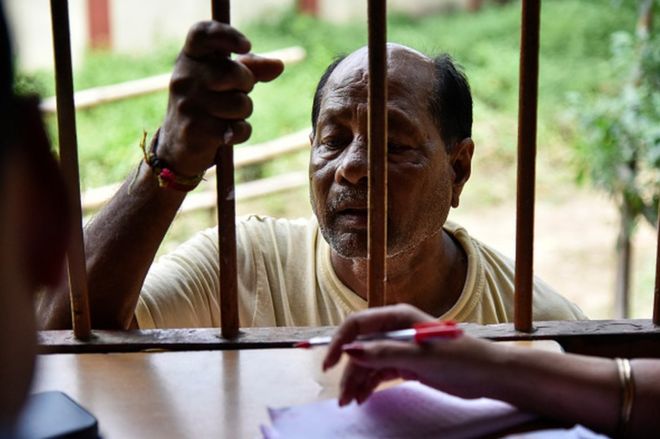
Many here who haven’t made it tell me it’s a mistake as they show me paperwork they say proves they belong in this country.
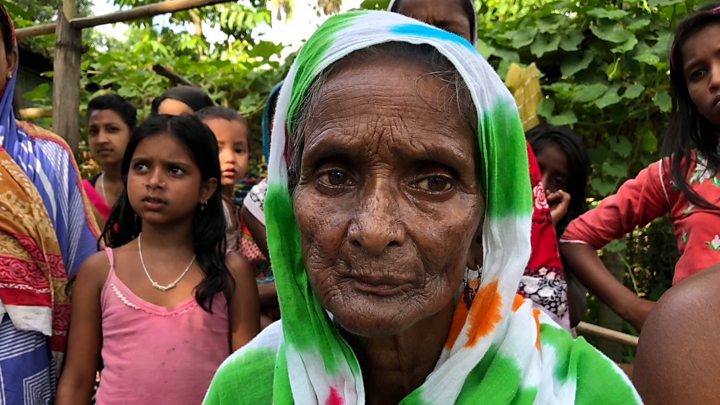
None of Asia Khatun’s family of nine made the list. They now have the chance to appeal but there’s real fear about what might come next. “I’d rather die than go to a detention centre,” she tells me. People here are angry but they’re also scared.
Why is the registry happening in Assam?
Assam is one India’s most multi-ethnic states. Questions of identity and citizenship have long vexed a vast number of people living there.
Among its residents are Bengali and Assamese-speaking Hindus, as well as a medley of tribespeople.
A third of the state’s 32 million residents are Muslims, the second-highest number after Indian-administered Kashmir. Many of them are descendants of immigrants who settled there under British rule.
But illegal migration from neighbouring Bangladesh, which shares a 4,000-km long border with India, has been a concern there for decades now. The government said in 2016 that an estimated 20 million illegal immigrants were living in India.
So have 1.9 million people effectively become stateless?
Not quite. Residents excluded from the list can appeal to the specially formed courts called Foreigners Tribunals, as well as the high court and Supreme Court.
However, a potentially long and exhaustive appeals process will mean that India’s already overburdened courts will be further clogged, and poor people left off the list will struggle to raise money to fight their cases.
Image copyright AFPImage caption Saheb Ali, 55, from Goalpara district, has not been included in the list
If people lose their appeals in higher courts, they could be detained indefinitely.
Some 1,000 people declared as foreigners earlier are already lodged in six detention centres located in prisons. Mr Modi’s government is also building an exclusive detention centre, which can hold 3,000 detainees.
“People whose names are not on the final list are really anxious about what lies ahead. One of the reasons is that the Foreigners Tribunal does not have a good reputation, and many people are worried that they will have to go through this process,” Sangeeta Barooah Pisharoty, author of Assam: The Accord, The Discord, told the BBC.
Why have been the courts so controversial?
The special courts were first set up in 1964, and since then they have declared more than 100,000 people foreigners. They regularly identify “doubtful voters” or “illegal infiltrators” as foreigners to be deported.
But the workings of the specially formed Foreigners Tribunals, which have been hearing the contested cases, have been mired in controversy.
There are more than 200 such courts in Assam today, and their numbers are expected to go up to 1,000 by October. The majority of these tribunals were set up after the BJP came to power in 2014.
The courts have been accused of bias and their workings have often been opaque and riddled with inconsistencies.
Media caption Living in limbo: Assam’s four million unwanted
For one thing, the burden of proof is on the accused or the alleged foreigner.
For another, many families are unable to produce documents due to poor record-keeping, illiteracy or because they lack the money to file a legal claim.
People have been declared foreigners by the courts because of differences in spellings of names or ages in voter rolls, and problems in getting identity documents certified by authorities. Amnesty International has described the work by the special courts as “shoddy and lackadaisical”.
Journalist Rohini Mohan analysed more than 500 judgements by these courtsin one district and found 82% of the people on trial had been declared foreigners. She also found more Muslims had been declared foreigners, and 78% of the orders were delivered without the accused being ever heard – the police said they were “absconding”, but Mohan found many of them living in their villages and unaware they had been declared foreigners.
“The Foreigners Tribunal,” she says, “must be made more transparent and accountable.”
Both the citizen’s register and the tribunals have also sparked fears of a witch hunt against Assam’s ethnic minorities.
Have the minorities been targeted?
Many say the list has nothing to do with religion, but activists see it as targeting the state’s Bengali community, a large portion of whom are Muslims.
They also point to the plight of Rohingya Muslims in neighbouring Bangladesh.
Image copyright GETTY IMAGESImage caption The move to make millions of people stateless will probably spark protests
However significant numbers of Bengali-speaking Hindus have also been left off the citizenship list, underscoring the communal and ethnic tensions in the state
“One of the communities worst affected by the list are the Bengali Hindus. There are as many of them in detention camps as Muslims. This is also the reason just days before NRC is to be published the BJP has changed tack, from taking credit for it to calling it error-ridden. That is because the Bengali Hindus are a strong voter base of the BJP,” says Barooah Pisharoty.
And in an echo of US President Donald Trump’s policy to separate undocumented parents and children, families have been similarly broken up in Assam.
Detainees have complained of poor living conditions and overcrowding in the detention centres.
Image copyright CITIZENS FOR JUSTICE AND PEACEImage caption A father and son killed themselves 30 years apart because of citizenship doubts (photo shows funeral)
One detainee told a rights group after his release he had been taken to a room which had a capacity for 40 people, but was filled with around 120 people. People who have been declared foreigners as well as many inmates have been suffering from depression. Children have also been detained with their parents.
Human rights activist Harsh Mander, who visited two detention centres, has spoken about a situation of “grave and extensive human distress and suffering”.
What happens to people who are declared foreigners?
The BJP which rules the state, has insisted in the past that illegal Muslim immigrants will be deported. But neighbouring Bangladesh will definitely not accede to such a request.
Many believe that India will end up creating the newest cohort of stateless people, raising the spectre of a homegrown crisis that will echo that of the Rohingya people who fled Myanmar for Bangladesh.
It is not clear whether the people stripped of their Indian citizenship will be able to access welfare or own property.
One possibility is that once they are released, they will be given work permits with some basic rights, but will not be allowed to vote.
The Chief Economic Adviser, K Subramanian, disagreed with the idea of industry-specific incentives and argued for structural reforms in land and labour markets. Members of Prime Minister Narendra Modi’s economic advisory council sound inchoate, resorting to social media and opinion editorials to counter one another.
In essence, the quibble among the members of the economic team of Mr Modi and his government is not about whether India is facing an economic slowdown or not, but about how grave the current economic crisis is.
To put all this in context, it was less than just two years ago, in November 2017, that the global ratings agency Moody’s upgraded India’s sovereign ratings – an independent assessment of the creditworthiness of a country – for the first time in 14 years.
Image copyrightGETTY IMAGESImage captionSales of cars and SUVs have slumped to a seven-year low
Justifying the upgrade, Moody’s had then argued that the economy was undergoing dramatic “structural” reforms under Mr Modi.
In the two years since, Moody’s has downgraded its 2019 GDP growth forecast for India thrice – from 7.5% to 7.4% to 6.8% to 6.2%.
The immediate questions that arise now are: is India’s economic condition really that grim and, if yes, how did it deteriorate so rapidly?
To make matters worse, Finance Minister Nirmala Sitharaman presented her first budget recently with some ominous tax proposals that threatened foreign capital flows and dented investor confidence. It sparked criticism and Ms Sitharaman was forced to roll back many of her proposals.
Image copyright GETTY IMAGESImage caption In 2016, India withdrew 85% of all currency notes from the economy
So, it is indeed true that India is facing a sharp economic downturn and severe loss of business confidence.
The alarm over the economic condition is not merely a reflection of a slowdown in GDP growth but also the poor quality of growth.
Private sector investment, the mainstay of sustainable growth in any economy, is at a 15-year low.
In other words, there is almost no investment in new projects by the private sector. The situation is so bad that many Indian industrialists have complained loudly about the state of the economy, the distrust of the government towards businesses and harassment by tax authorities.
But India’s economic slowdown is neither sudden nor a surprise.
Behind the fawning headlines in the press over the past five years about the robustness of India’s growth was a vulnerable economy, straddled with massive bad loans in the financial sector, disguised further by a macroeconomic bonanza from low global oil prices.
India’s largest import is oil and the fortuitous decline in oil prices between 2014 and 2016 added a full percentage point to headline GDP growth, masking the real problems. Confusing luck with skill, the government was callous about fixing the choked financial system.
Media caption What is really happening with India’s economy?
This move destroyed supply chains and impacted agriculture, construction and manufacturing that together account for three-quarters of all employment in the country.
Before the economy could recover from the currency ban shock, the government enacted a transition to a new indirect taxation system of the Goods and Services Tax (GST) in 2017. The GST rollout wasn’t smooth and many small businesses initially struggled to understand it.
Such massive external shocks to the economy, coupled with a reversal in low oil prices, dealt the final blow to the economy. Millions of Indians started to lose their jobs and rural wages remained stagnant. This, in turn, impacted consumption, slowing down the economy sharply.
Not easy
The wobbly state of the economy has also thrown government finances in disarray: tax revenues are much below expectations.
On Monday, the government got a much-needed breather when India’s central bank announced a $24bn (£19bn) one-time payout for the cash-starved government. (This amount is more than the dividend paid by the central bank to the government in all five years of the Congress rule between 2009 and 2014.)
The solutions to the economic crisis are not easy.
Indian industry, fed and fattened with government protection through decades, is once again clamouring for tax cuts and financial incentives.
But it is not clear that such benefits will revive private sector investment and domestic consumption immediately.
For all the hype about the Make in India programme, hailed as the harbinger of the country’s emergence as a manufacturing power, India’s dependence on China for goods has only doubled in the past five years.
India today imports from China the equivalent of 6,000 rupees ($83; £68) worth of goods for every Indian, which has doubled from 3,000 rupees in 2014.
So, India is neither making goods for itself nor for the world.
Image copyright AFPImage caption India’s agrarian crisis is a major stumbling block
Ornamental tax and other fiscal incentives to specific industries are not suddenly going to make Indian manufacturers competitive and stop India’s addiction for affordable Chinese goods. If any, the trade spat between China and the United States only saw countries such as Vietnam and Bangladesh benefit and not India.
More currency or trade tariffs are not the solutions either. The central bank has lowered interest rates and there is some push to lowering the cost of capital for industry. But again, Indian industry will invest more only when demand for goods and services increases. And demand will increase only when wages increase, or there is money in the hands of people.
So, the only immediate solution for India seems to be to boost consumption through a stimulus given directly to people, in the classical Keynesian mould.
Of course, such a stimulus should be combined with reforms to boost business morale and confidence.
In sum, India’s economic picture is not pretty.
It is important for India’s political leadership to see this not-so-pretty picture and not hide behind rose tinted glasses. Prime Minister Modi has a unique electoral mandate to embark on bold moves to truly transform the economy and pull India out of the woods.
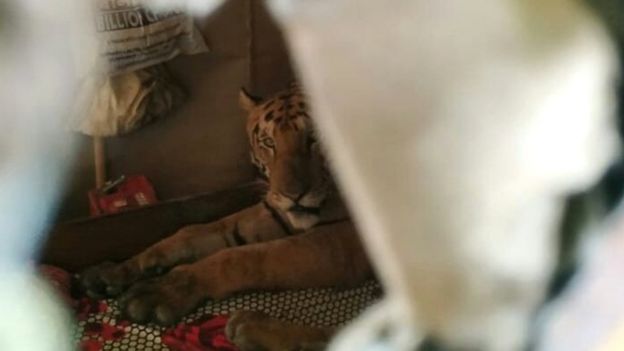
Image copyright WTIImage caption The tiger was seen relaxing in a bed in Assam state
A female tiger which fled a wildlife park in India’s flood-ravaged state of Assam was found relaxing on a bed inside a local resident’s house.
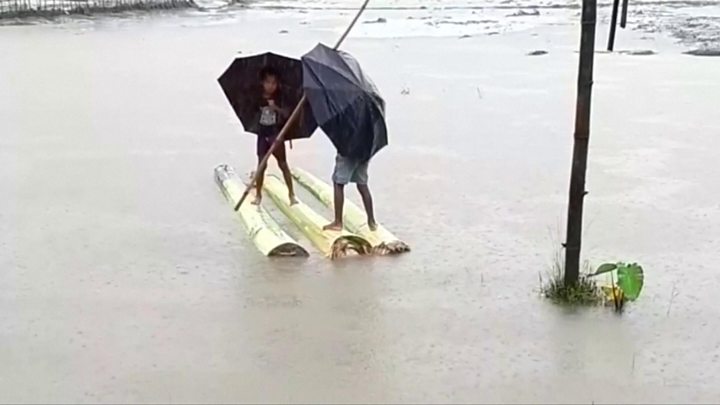
She is believed to have fled the Kaziranga National Park, where 92 animals have died in recent days amid heavy flooding.
Officials from a wildlife conservation group arrived at the house and created a safe escape route for her.
She was guided in the direction of the jungle.
According to the Wildlife Trust of India (WTI), the tigress was first spotted next to a highway on Thursday morning, some 200 metres away from the national park.
She was likely to have been disturbed by the busy road and ended up seeking refuge in the house, which is located near the highway, it said.
Image copyright WTIImage caption The house owner fled as soon as he saw the tiger
Rathin Barman, who led the rescue operation, said the tigress entered the house – which is next to a shop – at 07:30 local time (02:00 GMT) and slept throughout the day.
“She was very exhausted and had a nice day-long nap,” he told the BBC.
The house owner, Motilal, who also owns the adjoining shop, fled the house along with his family members as soon as they saw the tiger walking in.
“The great thing was that nobody disturbed her so she could rest. There’s a lot of respect for wildlife in this region,” Mr Barman said.
“[Motilal] says he will preserve the bed sheet and pillow on which the tiger rested.”
WTI officials were later called to the scene and began preparing a safe escape route for her.
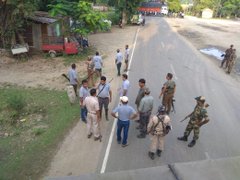
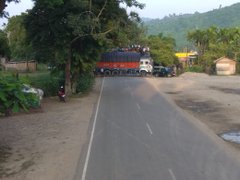
They blocked traffic on the highway for an hour and set off firecrackers to wake the animal up. She eventually left the house at 17:30 local time, crossed the highway and went in the direction of the forest.
Media caption Floods cause death and destruction in north India
Mr Barman said it was not clear if she had actually entered the forest or if she had just “walked off into an adjoining area”.
The Unesco-recognised Kaziranga National Park is home to 110 tigers, but none of them have died in the flooding.
Animals killed in the park include 54 hog deer, seven rhinos, six wild boars and one elephant.
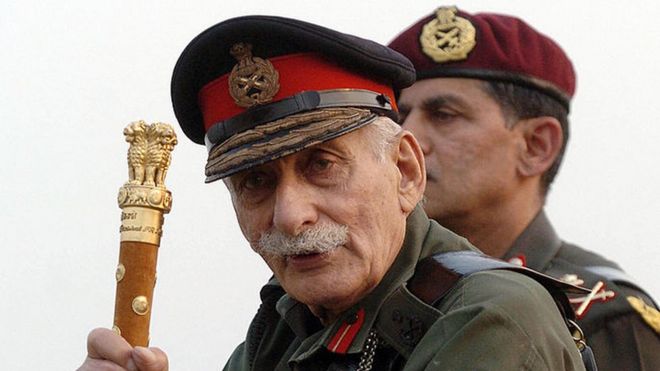
Filmmaker Meghna Gulzar told PTI news agency that while the film will be based on his life, it won’t necessarily be a biopic. “I’m looking at the man, his life and his times,” she said.
Kaushal also took to Twitter, saying he was “honoured and proud” to play the role of Manekshaw.
He was born in 1914 to Parsi parents in British India and began his military career in what was then known as the British Indian Army during World War Two.
He died in 2008, after a career that stretched over four decades and five wars, earning him the nickname of Sam Bahadur (which means Sam the Brave in Hindi).
He is a recipient of the Padma Vibhushan and Padma Bhushan – two of India’s highest civilian awards.
“Sam Manekshaw’s name will be etched in history as one of the greatest soldiers and minds India has ever seen,” Ronnie Screwvala, whose company RSVP is producing the film, told Indian media.














 CHINDIA ALERT: You'll be living in their world, very soon