Archive for ‘Beijing’

08/04/2020

Xi and his unremitting call for global health cooperation

BEIJING, April 7 (Xinhua) — Over the past seven years, Chinese President Xi Jinping has on various occasions stressed the importance of global health cooperation, expressed China’s support for international health organizations, and voiced the country’s determination to help improve global health governance.

His remarks on global public health in recent years, especially in the last few months, have become particularly meaningful as countries worldwide mark the 2020 World Health Day on Tuesday amid a raging COVID-19 pandemic.

Back in 2013, during a meeting with then World Health Organization (WHO) Director-General Margaret Chan in Beijing, Xi said China will continue to improve public health and enhance cooperation with the WHO.

He also expressed his hope that China and the WHO could work closer to help promote Chinese medicine and medical products into overseas markets, and jointly assist African countries to improve their disease control and public health systems to meet the United Nations Millennium Development Goals.

In March 2015, Xi pointed out in a meeting in China’s Hainan province with Bill Gates, co-chair of the Bill & Melinda Gates Foundation, that preventing and controlling public epidemics is a common challenge to the international community and requires strengthening international cooperation on joint control.

Two years later, during his trip to Switzerland, Xi paid a special visit to the WHO headquarters, in which he co-witnessed with Chan the signing of a memorandum of understanding between China and the WHO pledging to step up health cooperation under the framework of the China-proposed Belt and Road Initiative.

During the meeting with Chan, Xi noted that China stands ready to enhance cooperation with the WHO in implementing the 2030 Agenda for Sustainable Development and assisting other developing countries.

Also in 2017, in his congratulatory letter to a meeting of BRICS countries’ health ministers, Xi called on relevant parties to study work in the field of traditional medicine and make joint efforts to tackle public health challenges.

“It is our common good vision that everyone enjoys good health,” he said in the letter.

In the past several months of 2020 which witnessed a hike in global caseload of COVID-19 infections, Xi has taken each opportunity to reiterate his call for global public health cooperation against the virus.

When meeting with visiting WHO Director-General Tedros Adhanom Ghebreyesus in Beijing in January, Xi said China attaches great importance to the cooperation with the WHO, and is ready to work with the organization as well as the international community to safeguard regional and global public health security.

In February, in a reply letter to Gates, Xi said “we are resolute in protecting the life and health of the people of China, and of all countries around the world. We are determined to do our part to uphold global public health security.”

In March, when the global anti-virus fight entered a critical stage, Xi highlighted the need for international health cooperation not only in several domestic meetings on epidemic prevention and control, but also in phone conversations with foreign leaders and heads of international organizations, as well as in such global events as the Extraordinary G20 Leaders’ Summit.

On March 12, Xi spoke with United Nations (UN) Secretary-General Antonio Guterres over phone, and urged the international community to take urgent action and carry out effective international cooperation in joint prevention and control, so as to form a strong concerted force to beat the disease.

China stands ready to share its experience with other countries, carry out joint research and development on drugs and vaccines, and offer as much assistance as it can to countries where the disease is spreading, Xi said.

Several days later, speaking at a meeting of the Standing Committee of the Political Bureau of the Communist Party of China Central Committee, he required closer cooperation with the WHO to strengthen the analysis and prediction of the changes in the global epidemic situation, and improvement in strategies and policies to cope with imported risks.

On March 21, in a phone conversation with his French counterpart, Emmanuel Macron, Xi pointed out that public health security is a common challenge faced by humanity.

China, he said, is willing to make concerted efforts with France to enhance international cooperation in epidemic prevention and control, support the UN and WHO playing a core role in improving global public health governance, and build a community of common health for mankind.

Three days later, talking with Kazakh President Kassym-Jomart Tokayev over phone, Xi said in the battle against the current global public health crisis, the urgency and significance of building a community with a shared future for mankind have become even greater.

On March 26, in his keynote speech at the Extraordinary G20 Leaders’ Summit via video, Xi said at such a moment, it is imperative for the international community to strengthen confidence, act with unity and work together in a collective response.

He called on G20 members to jointly help developing countries with weak public health systems enhance preparedness and response, and enhance anti-epidemic information sharing with the support of WHO and to promote control and treatment protocols that are comprehensive, systematic and effective.

Source: Xinhua

07/04/2020

China Focus: Qingming festival boosts recovery of domestic tourism

BEIJING, April 6 (Xinhua) — Bike riding, bird watching, or simply enjoying the natural scenery against the blue sky. A wild duck lake wetland in suburban Beijing has attracted urbanites during the traditional Qingming festival.

The park imposes a daily limit of 1,680 visitors and workers take body temperatures for visitors and ask them to show their health codes, which are common preventive measures in many scenic spots.

“Our tickets sold out one day in advance on the Internet, “said Liu Xuemei, a park management official. “Through the online booking of tickets, we strictly control the flow of tourists to protect wild birds as it is a season of bird migration.”

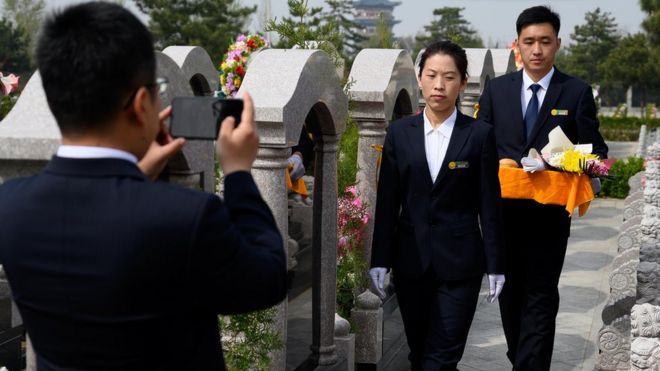
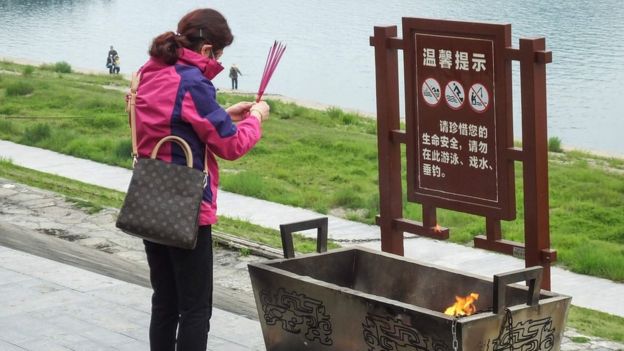
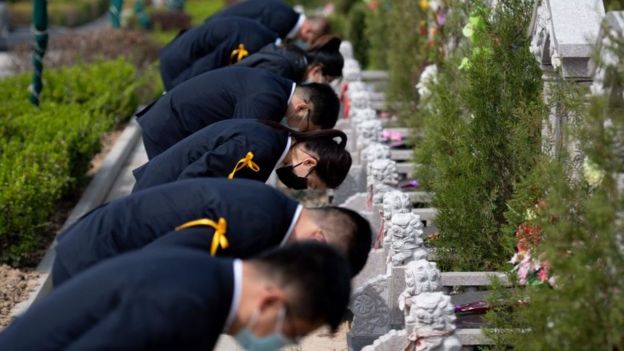
Besides paying tribute to the dead, outing is another tradition among Chinese during Tomb-sweeping Day, also known as Qingming Festival which fell on Saturday. Citizens enjoy a three-day holiday for the festival.

As China’s domestic COVID-19 situation continues its improving trend, more parks and scenic sites have reopened across the country, providing places for citizens to have spring outings amid tight prevention measures.

On Saturday, the Juyongguan section of the Great Wall and the Ming Tombs in Beijing reopened to the public after two months of closure in the prevention and control of COVID-19.

The famous Badaling section of the Great Wall in Beijing, which partly opened on March 24, hosted 12,000 tourists on Sunday alone.

Beijing’s major parks, which partly opened to the public, also adopted strict measures to control the number of tourists while cancelling some traditional spring activities such as enjoying flowers to avoid gathering.

Data from several domestic travel companies such as Qunar and Trip.com show that the domestic tourism industry is recovering and the booking volume of tickets for travel, hotels and scenic spots is on the rise.

Since March, some of the business activities of travel agencies have resumed in more than 10 provinces and municipalities. Tours around cities and 1-hour high-speed trips are popular, according to the travel platforms.

“I haven’t been out during the epidemic. It’s fine today. I brought my daughter to the mountain area to breathe fresh air and relax,” said a female tourist surnamed Liu, in the city of Wuhu, east China’s Anhui Province. Liu went to the suburban area of Wuhu with her daughter for an outing on Saturday and said she felt the epidemic prevention measures were reassuring.

At the Balihe scenic area in Yingshang County, Anhui, the number of tourists rose from 1,000 after it reopened on March 15 to about 8,000 per day during the Qingming holiday.

The scenic area implements online real-name booking. Its tourist service center has a body temperature detection area and provides wash-free disinfectant. Staff members wear masks and gloves, according to Wang Longtao, deputy general manager of a company in charge of the Balihe tourism development.

“I am optimistic about the recovery of domestic tourism. People have accumulated a strong desire to consume,” said Liang Jianzhang, co-founder and chairman of Trip.com Group.

Huangshan Mountain, a UNESCO world heritage site in Anhui Province, saw 20,000 tourists on Saturday and Sunday, as pictures of crowded tourists triggered concerns over epidemic prevention.

The scenic area authorities said Monday they increased 20 transfer buses and mobilized a total of 160 buses to prevent overcrowding.

Industry experts warn that as the COVID-19 epidemic has not ended domestically and the pressure of imported cases is growing, scenic spots should make people’s safety and health the top priority and take targeted measures as they reopen.

Source: Xinhua

07/04/2020

China reports no new coronavirus deaths as cases decline

BEIJING (Reuters) – Mainland China reported no coronavirus deaths for the first time since the pandemic began, and a drop in new cases, a day before the central city of Wuhan, where the virus emerged late in December, is set to lift its lockdown.

China had 32 new infections by Monday, down from 39 a day earlier, the National Health Commission said.

For the first time since the commission began publishing nationwide data in late January, Hubei’s provincial capital of Wuhan saw no new deaths, joining the rest of mainland China, which has recorded none since March 31.

Wuhan, a city of 11 million that reported only two new infections in the past fortnight is due to allow residents to leave the city on Wednesday, for the first time since it was locked down on Jan. 23 to curb the spread of the virus.

With mainland China well past February’s peak of infections, authorities have turned their attention to imported cases and asymptomatic patients, who show no symptoms but can still pass on the virus.

Total infections in mainland China stood at 81,740 on Monday with 3,331 deaths, the commission said. It reported 30 new asymptomatic cases, nine involving incoming travellers. Of the new asymptomatic cases, 18 were in Hubei.

By the end of Monday, 1,033 asymptomatic patients were under medical observation.

TIGHTER LAND BORDERS

Overseas arrivals made up all 32 of the new cases with symptoms, down from 38 a day earlier. Total imported infections stand at 983, the commission said.

China faces the “dual risks” of imported infections and domestic cluster outbreaks, a commission spokesman told a briefing on Tuesday.

The northeast province of Heilongjiang reported 20 new cases, all in Chinese citizens returning from neighbouring Russia. It had reported 20 new infections on Sunday, all also cases imported from Russia.

On Tuesday, the Chinese consulate in the Russian city of Vladivostok near the border with China said it strongly reminded Chinese nationals not to return home through the border port of Suifenhe, which is to be closed to all arrivals from Tuesday.

China has shut its borders to foreigners as the virus spread globally, though most imported cases have involved Chinese nationals returning from overseas.

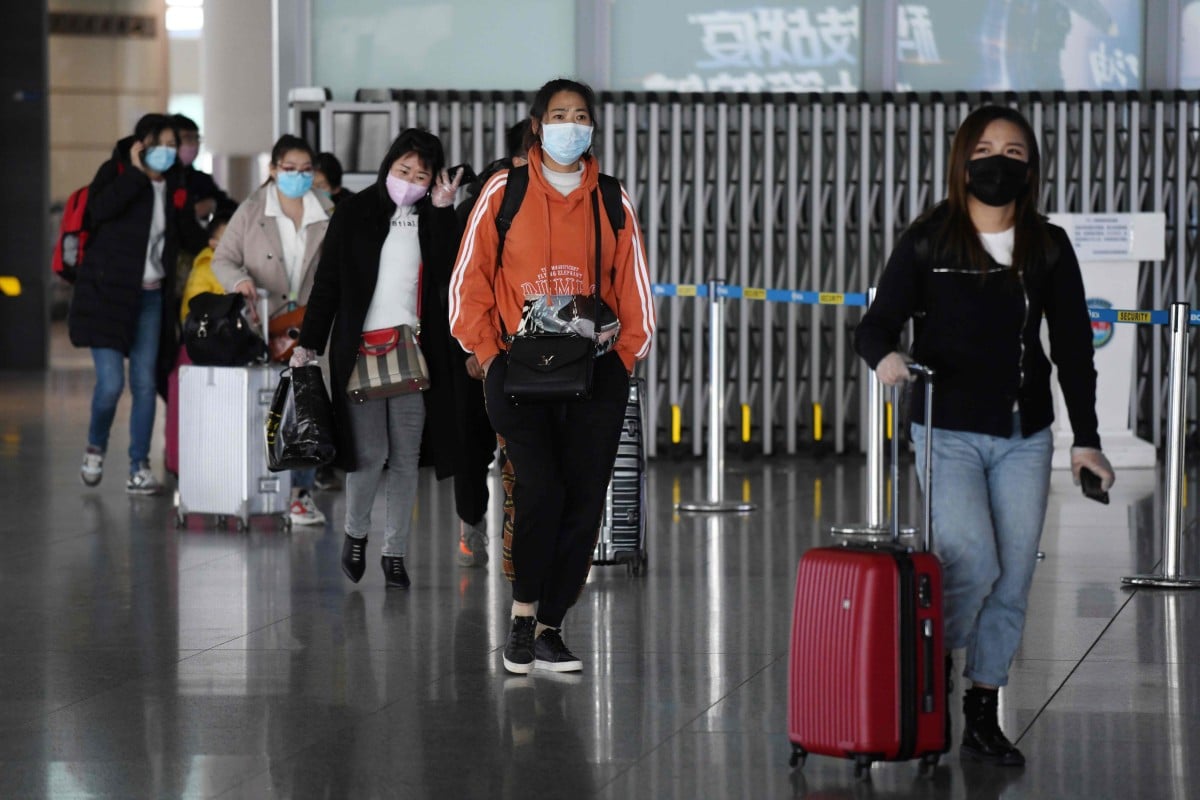
The number of inbound travellers through airports is fewer than 3,000 a day, down from about 25,000 in late March, before China slashed the number of international flights.

It also started testing all international arrivals for the virus this month.

Source: Reuters

07/04/2020

China reports no new coronavirus deaths as cases decline

BEIJING (Reuters) – Mainland China reported no coronavirus deaths for the first time since the pandemic began, and a drop in new cases, a day before the central city of Wuhan, where the virus emerged late in December, is set to lift its lockdown.

China had 32 new infections by Monday, down from 39 a day earlier, the National Health Commission said.

For the first time since the commission began publishing nationwide data in late January, Hubei’s provincial capital of Wuhan saw no new deaths, joining the rest of mainland China, which has recorded none since March 31.

Wuhan, a city of 11 million that reported only two new infections in the past fortnight is due to allow residents to leave the city on Wednesday, for the first time since it was locked down on Jan. 23 to curb the spread of the virus.

With mainland China well past February’s peak of infections, authorities have turned their attention to imported cases and asymptomatic patients, who show no symptoms but can still pass on the virus.

Total infections in mainland China stood at 81,740 on Monday with 3,331 deaths, the commission said. It reported 30 new asymptomatic cases, nine involving incoming travellers. Of the new asymptomatic cases, 18 were in Hubei.

By the end of Monday, 1,033 asymptomatic patients were under medical observation.

TIGHTER LAND BORDERS

Overseas arrivals made up all 32 of the new cases with symptoms, down from 38 a day earlier. Total imported infections stand at 983, the commission said.

China faces the “dual risks” of imported infections and domestic cluster outbreaks, a commission spokesman told a briefing on Tuesday.

The northeast province of Heilongjiang reported 20 new cases, all in Chinese citizens returning from neighbouring Russia. It had reported 20 new infections on Sunday, all also cases imported from Russia.

On Tuesday, the Chinese consulate in the Russian city of Vladivostok near the border with China said it strongly reminded Chinese nationals not to return home through the border port of Suifenhe, which is to be closed to all arrivals from Tuesday.

China has shut its borders to foreigners as the virus spread globally, though most imported cases have involved Chinese nationals returning from overseas.

The number of inbound travellers through airports is fewer than 3,000 a day, down from about 25,000 in late March, before China slashed the number of international flights.

It also started testing all international arrivals for the virus this month.

Source: Reuters

06/04/2020

Mormon church to open first temple in mainland China

(Reuters) – The Utah-based Church of Jesus Christ of Latter-day Saints, also known as the Mormon church, plans to open its first temple in mainland China at a time when Beijing has been clamping down steadily on religious freedoms.

The temple in the eastern Chinese city of Shanghai will help fill a gap left by renovation work since last July at the church’s temple in Hong Kong, Russell M. Nelson, president of the church, announced on Sunday.

He also said seven other temples would open, including one in Dubai, its first in the Middle East.

“In Shanghai, a modest, multipurpose meeting place will provide a way for Chinese members to continue to participate in ordinances of the temple,” Nelson said.

“Because we respect the laws and regulations of the People’s Republic of China, the Church does not send proselytizing missionaries there; nor will we do so now,” he said.

A former cardiac surgeon, Nelson has spent time in China, studied Mandarin and was granted an honorary professorship by China’s Shandong University School of Medicine.

In January, the church sent two planeloads of protective medical equipment to the Children’s Medical Center in Shanghai to help manage the coronavirus outbreak.

No official figure is available for the number of Mormons in China.

China’s constitution guarantees religious freedom but under President Xi Jinping Beijing has tightened restrictions on religions seen as a challenge to the authority of the ruling Communist Party.

The government has cracked down on underground churches, both Protestant and Catholic, and has rolled out legislation to increase oversight of religious education and practices.

Chinese law requires that places of worship register and submit to government oversight, but some have declined to register and are known as “house” or “underground” churches.

The Chinese government formally recognizes five religions: Buddhism, Taoism, Islam, Catholicism and Protestantism.

“Expatriate and Chinese congregations will continue to meet separately. The Church’s legal status there remains unchanged,” Nelson said.

“In an initial phase of facility use, entry will be by appointment only. The Shanghai Temple will not be a temple for tourists from other countries,” he said.

In 2018, the Vatican and China signed an agreement on the appointment of Roman Catholic bishops, a breakthrough on an issue that for decades fuelled tensions between the Holy See and Beijing and thwarted efforts toward diplomatic relations.

Source: Reuters

06/04/2020

Coronavirus: Beijing offers to fly Chinese students home from the US – but would it rather they declined?

  • Embassy says those flown back must pay for themselves, and praises the US health system, in a departure from the war of words with Washington
  • More than a million Chinese students remain overseas, but China is on alert against the threat of imported infections
China has drastically cut flights to try to prevent people who arrive from abroad importing the coronavirus. Photo: AFP
Chinese students could be flown home from coronavirus hotspots such as the United States but will have to pay their own expenses, amid efforts by Beijing to persuade some to remain overseas rather than risk bringing the infection with them.
A statement posted on the website of China’s Washington embassy on Monday said that the Chinese government was aware that many school and university students had encountered difficulties in travelling back to China and was taking steps to arrange charter flights for those who needed to return urgently.
With the initial coronavirus outbreak appearing to have been largely contained in mainland China, some Chinese students have travelled home despite soaring air ticket prices and the requirement that those who have been overseas enter quarantine.
Students brought back on charter flights would still need to pay for the ticket and the costs of the mandatory 14-day quarantine upon arrival in China.
Trump says US approaching a ‘horrendous’ time as coronavirus death toll rises
More than 1.6 million Chinese are studying overseas, including about 410,000 in the US. At least 1.42 million Chinese students remained overseas, vice foreign minister Ma Zhaoxu said on Thursday.
Having initially boasted of its success in stopping the virus, Beijing has become notably cautious in recent weeks about welcoming overseas students back home, especially with imported cases continuing to rise.
China’s foreign ministry and its overseas missions have urged students considering travelling home to exercise caution. The embassy in the US issued a notice on Friday speaking highly of the American medical system and its response to the pandemic, in a marked departure from Beijing’s narrative, which has included pinning the blame for the pandemic on the United States.

Friday’s embassy notice also dismissed rumours that Chinese students had been targeted because of the coronavirus during the closures of universities, and pledged help if students had trouble communicating with universities about campus accommodation.

China advises foreign diplomats to stay away from Beijing until May 15
3 Apr 2020

Ma said that most overseas students had heeded his government’s advice and chosen not to go back to China, but an online survey late last month that was cited by Caixin magazine on Saturday showed nearly 60 per cent of Chinese students in the US wanted to return home.

Most of the 4,000 students polled said they were unable to make the trip because of concerns about contracting the coronavirus during the journey and air fares that had more than doubled recently. Both China and the US have drastically cut back long-haul international flights.

After weeks stranded in Peru, 65 Hongkongers return home

6 Apr 2020

Students under 18 years of age who want to return to China are required by the embassy to register online.

The initial evacuation plan announced on Monday proposed to prioritise school-age children whose parents were not in the US with them. The proposed arrangement appeared to include students from Hong Kong, Macau and Taiwan.

Source: SCMP

05/04/2020

As Trump administration debated travel restrictions, thousands streamed in from China

(Reuters) – In defending his strategy against the deadly coronavirus, President Donald Trump repeatedly has said he slowed its spread into the United States by acting decisively to bar travelers from China on Jan. 31.

“I was criticized by the Democrats when I closed the Country down to China many weeks ahead of what almost everyone recommended. Saved many lives,” he tweeted, for instance, on March 2.

But Reuters has found that the administration took a month from the time it learned of the outbreak in late December to impose the initial travel restrictions amid furious infighting.

During that time, the National Security Council staff, the state department and other federal agencies argued about everything from how best to screen for sick travelers to the economic impact of any restrictions, according to two government officials familiar with the deliberations.

The NSC staff ultimately proposed aggressive travel restrictions to high-level administration officials – but it took at least a week more for the president to adopt them, one of the government officials said.

In meetings, Matthew Pottinger, deputy national security adviser and a China expert, met opposition from Treasury Secretary Steven Mnuchin and National Economic Council director Larry Kudlow, said two former NSC officials and one of the government officials involved in the deliberations. The two top aides were concerned about economic fallout from barring travelers from China, the sources said.

Each day that the administration debated the travel measures, roughly 14,000 travelers arrived in the United States from China, according to figures cited by the Trump administration. Among them was a traveler who came from Wuhan to Seattle in mid-January, who turned out to be the first confirmed case in the United States.

On Jan. 22, Trump downplayed the threat posed by the virus, telling CNBC from the World Economic Forum in Davos, Switzerland, “We have it totally under control.”

The battle within the White House over whether and how to stop infected travelers from China lasted nine more days.

On Jan. 31, Trump issued a proclamation barring entry of non-U.S. citizens, other than the immediate family of citizens and permanent residents, who had traveled to China within the last two weeks. The restrictions have since been expanded to many other countries.

It is unclear when the president was made aware of the NSC’s proposal and what prompted his decision to act, but the decision followed the World Health Organization’s declaration the day before that the epidemic was a “public health emergency of international concern.”

U.S. Centers for Disease Control and Prevention officials told Reuters that they contributed to the decision as part of the administration’s newly convened coronavirus task force.

A Treasury Department spokesperson said that Mnuchin “never objected to the decision to restrict flights from China.”

A White House spokesman, Judd P Deere, said: “Any suggestion that Larry Kudlow objected to restricting flights from China to contain COVID-19 and protect the health of the American people is completely false. Larry fully supported the President’s bold decision.”

In a statement, NSC spokesman John Ullyot said that the council’s early meetings about the coronavirus involved great expertise and robust discussion and were professional.

As of April 4, the coronavirus has infected more than 300,000 people in the United States, and killed over 8,000, according to the Reuters coronavirus tracker. The country has more cases than anywhere else in the world.

The sources for this story, former NSC members, public health officials and others involved in, or briefed on, the administration’s response, spoke on condition of anonymity because they were not authorized to comment on the record.

POPPING A FLARE

The NSC, which operates within the White House to coordinate policies and recommendations involving national security across agencies, was at the center of the effort to formulate the early response to the outbreak.

The council was first notified of the outbreak on the morning of Dec. 31, according to one of the government officials involved, when an NSC official was forwarded an email from a Department of Health and Human Services (HHS) attache in Beijing that had been sent to senior HHS officials the night before.

The “pop-a-flare” notice, as it is known, described strange cases of pneumonia that could not be definitively traced to seasonal flu, said the government official, who saw the message. The email said the Chinese would soon be notifying the World Health Organization, the official said.

On Jan. 3, Dr. Gao Fu, head of China’s disease control agency, informed his U.S. counterpart, Dr. Robert Redfield, director of the CDC, in an emotional telephone call that the outbreak was growing out of control, according to the same federal official and a former NSC official. Both said they had been informed of the details.

Gao’s agency did not respond to a request for comment.

Ullyot, the NSC spokesman, disputed the timeline, saying the council did not learn of the coronavirus outbreak until Jan. 3. The CDC, a part of HHS, confirmed to Reuters that it learned of an outbreak in late December and that the call with Gao occurred Jan. 3.

Health agencies were scrambling to gather information, the two government officials involved in the deliberations said. Questions went back to the U.S. Embassy in Beijing, and experts across the government: How many travelers arrive daily from Wuhan, China, the initial site of the outbreak? What U.S. airports do they fly into? What would be the pros and cons, including costs, of any travel restriction?

In discussions with the NSC, public health officials, including from HHS and CDC, initially argued for the targeted approach of medically screening travelers from Wuhan, as they sifted through information about where and how quickly the virus was spreading, one of the government officials involved said. Public health officials tend not to favor border closures because they can restrict medical response and divert limited resources.

The NSC’s Pottinger was pushing hard for strict travel restrictions – expressing doubt about the truth of the data China was releasing, according to the official.

There was “a lot of yelling, a sign of frustration,” said a former NSC staffer who was not in the meetings but got messages from colleagues in attendance expressing dismay. The person described the messages but did not share them with Reuters. The two current federal officials confirmed the acrimony.

The NSC struggled to reconcile conflicting viewpoints, the two government officials involved said.

The debate delayed the screening of travelers from China by at least a week, one of the officials said. CDC officials ultimately announced enhanced medical screenings for travelers from Wuhan at three international airports, in Los Angeles, San Francisco and New York’s John F. Kennedy, on Jan. 17, expanding them to 20 U.S. airports by Jan. 28.

At one point, during a meeting, Pottinger snapped at health officials that their approach “really has to take a step back,” so that national security interests could shape the response, the official said.

The CDC declined to comment on the debate.

Some former NSC officials who spoke to Reuters traced what they saw as an ineffective response by the council in part to structural changes in 2018 in which former National Security adviser John Bolton had folded the council’s Global Health Security and Biodefense directorate into a larger operation, with the result that pandemic planning was not as great a priority. Others said that, under Bolton, the NSC worked effectively on biopreparedness, but after he departed it lost a number of important experts.

NSC spokesman Ullyot rejected as false the suggestion that the council lacked expertise. The council is staffed by officials with “extensive experience in virology, infectious disease epidemiology, global health security, public health, and emergency response,” he said.

The NSC’s own public health experts were involved in the discussions from the beginning, advocating “early and often” for traveler screening and raising the issue of banning flights from Wuhan, he said.

While the conflict soured the interactions, one of the government officials involved said, data soon emerged that led the health agency officials to agree with Pottinger: A travel restriction for all of China was needed. They saw that there were thousands of travelers arriving daily from Wuhan’s Hubei province to the United States, as well as a rising number of Covid-19 cases reported by the Chinese government beginning in mid-January, the source said.

In its statement to Reuters, the CDC did not directly address what led to its ultimate decision to support the travel restrictions.

By Jan. 24, the staff of the NSC had proposed restricting flights from China, said the government official involved in the deliberations. But as Pottinger met with deputies from other cabinet-level agencies, the recommendation met with resistance because of concerns about spooking the markets and scaring the public, three sources with knowledge of the deliberations told Reuters.

STILL DIVIDED

With opinions still divided, the matter went to top White House aides, at which point Treasury Secretary Mnuchin and National Economic Council director Kudlow argued strongly against the travel restrictions, said two former NSC officials and the government official involved in the deliberations.

In addition to the impact on the stock market, the two top aides expressed concern about the supply chain for everything from semiconductors to ingredients for pharmaceuticals, said one of the government officials involved in the deliberations.

Pottinger was “pleading with Mnuchin and others” to stop travelers from coming, the former NSC official said.

By then, the first known patient in the United States – a man in his 30s who had traveled from Wuhan to Seattle on Jan. 15 – tested positive for the coronavirus disease, COVID-19.

He had slipped through travel screenings because his trip had been broken up, so the Wuhan origin of his trip had not been obvious to customs agents, said the government official with knowledge of the deliberations.

At the World Economic Forum in Davos, Switzerland, President Trump told CNBC on Jan. 22: “It’s one person coming in from China, and we have it under control. It’s going to be just fine.”

On Jan. 29, the Council of Economic Advisers, which advises the president on economic policy, presented an analysis describing a worst-case scenario of what a pandemic and travel restrictions could do to the economy, according to one of the government officials involved in the deliberations, who read it. The report supported Kudlow and Mnuchin’s arguments against such restrictions and “scared everyone,” the source said.

The next day, at an afternoon meeting of the White House’s newly formed coronavirus task force, as well as other attendees, travel restrictions were still being debated, according to the government official involved in the deliberations and a former NSC official who learned of the meeting from former colleagues.

During the meeting, Mick Mulvaney, then President Trump’s chief of staff, entered the room, telling a smaller group, including Pottinger: “The president wants to see you now,” according to the official involved in the deliberations and the former NSC officials.

Mulvaney referred questions to the White House, which did not respond.

Trump issued the order the next day. By then, the novel coronavirus was already carving a lethal path through a Seattle nursing home.

Source: Reuters

04/04/2020

Coronavirus: China’s deserted shops and restaurants show that even as lockdown ends, scars remain

  • Lockdown may have been lifted, but shops, bars and restaurants remain empty in Beijing, showing struggle facing economic recovery
  • Controls have been returning in other parts of China, where cinemas and tourist attractions shut amid fears of new wave of infections
The nearly two month-long lockdown has changed the consumption behaviour of Chinese residents, many of whom have turned to home cooking to cut their spending. Photo: AFP

China’s urban lockdown may have eased, but deserted streets and stores in the capital Beijing this week suggest that for the services sector, the impact of the coronavirus outbreak could be deeper and longer than expected.

Many restaurants, cafes and pubs remained closed in the city, where vigilance remains high about a second wave of infections. Among those that were open, there were few customers to be seen.

The usually crowded Wangfujing shopping street was quiet on Wednesday, with just a few shoppers patronising what is usually the heartbeat of the city’s commerce and tourism. There were more staff than consumers at the Apple store, while everyone wore a mask. Shops along the pedestrianised zone closed their doors before sunset, but many did not open at all.

In a downtown food court, a handful of people dined during what would usually be the lunch rush hour, each restricted to their own small table to maintain social distancing, in great contrast with the usual frantic dash for seats.

Coronavirus: What impact will the economic fallout from the Covid-19 pandemic have on you?
While China has largely stemmed the domestic spread of Covid-19, threats of imported cases, with the virus having infected over one million people worldwide, and asymptomatic carriers continue to hamper the recovery in China’s 
A survey published on Friday showed that in March, sentiment among small service sector firms remained depressed. The Caixin / Markit services purchasing managers’ index (PMI) was 43.0 for last month, with a number below 50 meaning the sector is shrinking. “There are too few people now. We only sold about a hundred bowls of noodles, that was just half of our normal level,” said one Beijing street vendor, who had also cut many items from the menu due to insufficient demand.

A bookstore in the city centre held an official opening ceremony after a soft opening followed by a two and a half month-long forced shutdown, but received only four visitors on a morning, one of which was the South China Morning Post reporter. All four were required to go through a body temperature check and write down their personal contact details before entering.

Service sector workers said the situation was surreal and that they were worried that there was no end in sight.

“I have never seen KFC look like this,” said an employee of the fast food chain restaurant at Wangfujing, pointing to the virtually empty dining hall.

A grocer at a nearby food market continually shook her head when talking about the decline in customers, but said she felt lucky that she could come back to Beijing from her hometown before the 14-day mandatory quarantine requirement was imposed on February 14.

This situation is not restricted to Beijing. When the Chinese government reopened around 500 cinemas nationwide in March, each one attracted on average

only two customers

per day.

Now, many places across China are reimposing controls amid fears of a new spike in infections, the same fear leading people to stay home instead of going to those venues which have reopened.

Shanghai has closed tourist attractions while Sichuan has again closed karaoke lounges. Cinemas have also been reclosed across the country.

President Xi Jinping said during a visit to Hangzhou last Sunday that China must remain alert. “If you want to watch a movie, rather than going to a cinema, you can watch it online,” Xi said.

Services account for 60 per cent of China’s economy and the majority of employment. The slowness of the sector’s recovery is placing huge pressure on the world’s second 

largest economy

at a time when manufacturers are seeing export orders nosedive.

Liang Zhonghua, chief macro analyst at Zhongtai Securities, a brokerage, said that China’s damaged consumption alone could drag economic growth down by 4.5 per cent in the second quarter.
“(Chinese) residents’ fear of the epidemic is not over,” he wrote in a note this week.
Beijing’s malls still empty after coronavirus lockdown lifted
In Beijing all travellers entering the city are required to undergo a 14-day quarantine, while mass gatherings are still forbidden.
The containment measures have stopped many migrant workers from getting back to 
their jobs

, if they still exist. Many local residents still choose to work from home, even though authorities had been trying to encourage people to go out and spend money.

On April 1, the traffic flow on Beijing’s subway system was 3.05 million passengers a day, less than a third of the level a year ago, according to the operator, while car traffic was still about 15 per cent less than it was last year, government data showed.

I will keep cooking for myself, even when everything goes back to normal, it is much healthier and cheaper – Beijing resident

The nearly two month-long lockdown has changed the consumption behaviour of Chinese residents, many of whom have turned to home cooking to cut their spending.

“I will keep cooking for myself, even when everything goes back to normal, it is much healthier and cheaper,” said a Beijing lawyer whose family name is Li.

The effect of this behavioural shift is borne out in the 17.9 per cent drop in retail sales in the capital over the first two months of the year, only slightly better than the nationwide drop of 20.5 per cent.

Beijing businesses have clubbed together to issue some 150 million yuan in 

vouchers

to lure customers in since March 18. But with more economic hardship ahead, businesses and consumers alike are hunkering down for the storm.

Source: SCMP
Law of Unintended Consequences

continuously updated blog about China & India

ChiaHou's Book Reviews

continuously updated blog about China & India

What's wrong with the world; and its economy

continuously updated blog about China & India