Chindia Alert: You’ll be Living in their World Very Soon
aims to alert you to the threats and opportunities that China and India present. China and India require serious attention; case of ‘hidden dragon and crouching tiger’.
Without this attention, governments, businesses and, indeed, individuals may find themselves at a great disadvantage sooner rather than later.
The POSTs (front webpages) are mainly 'cuttings' from reliable sources, updated continuously.
The PAGEs (see Tabs, above) attempt to make the information more meaningful by putting some structure to the information we have researched and assembled since 2006.
The third session of the 13th National Committee of the Chinese People’s Political Consultative Conference (CPPCC) opens at the Great Hall of the People in Beijing, capital of China, May 21, 2020. (Xinhua/Li Tao)
BEIJING, May 21 (Xinhua) — China’s top political advisory body started its annual session Thursday afternoon in Beijing.
Xi Jinping and other Chinese leaders attended the opening meeting of the third session of the 13th National Committee of the Chinese People’s Political Consultative Conference (CPPCC), held at the Great Hall of the People.
Attendees at the meeting paid a silent tribute to martyrs who died fighting COVID-19 and compatriots who lost their lives in the epidemic.
The agenda for the session was reviewed and approved at the meeting.
Wang Yang, chairman of the CPPCC National Committee, delivered a work report of the Standing Committee of the CPPCC National Committee to the session.
The report noted the role of political advisors in the fight against the COVID-19 epidemic, saying that they have submitted more than 1,300 reports and suggestions on preventing and controlling the epidemic, resuming work and production, stabilizing public expectations and strengthening law-based governance.
Giving full play to role of the CPPCC as a specialist consultative body, 71 consultation meetings, 97 research trips as well as online consultations were organized in the past year, it said.
The report made arrangements for the CPPCC’s work in 2020 in six aspects, urging political advisors to fulfil their duties around achieving a moderately prosperous society in all respects.
Attendees were also briefed on the handling of proposals submitted since the previous annual session of the top political advisory body.
A graduating foreign student takes selfies at Zhejiang University in Hangzhou, east China’s Zhejiang Province, June 28, 2018. (Xinhua/Long Wei)
BEIJING, May 18 (Xinhua) — Chinese President Xi Jinping extended welcome to excellent youth from all countries in the world to study in China in his Sunday reply to a letter from all Pakistani students studying in the University of Science and Technology Beijing (USTB).
In his letter, Xi encouraged the students to communicate more with their Chinese peers and join hands with youth from all countries to contribute to promoting people-to-people connectivity and building a community with a shared future for humanity.
Learning that the students have enriched their knowledge and made quite a few Chinese friends while studying in China, Xi said he felt happy for the achievements they have made.
“As you have felt, since the COVID-19 epidemic broke out, the Chinese government and schools have always cared for the lives and health of foreign students studying in China, providing all-round help for them,” Xi noted.
The Chinese government and people put people’s lives first and treat foreigners in the country the same as Chinese nationals, making no exception in offering them care, Xi wrote.
Photo taken on Nov. 7, 2019 shows the autumn scenery of the University of Science and Technology Beijing in Beijing, capital of China. (Xinhua/Chen Yehua)
Xi said he learned that many foreign students have expressed their support to the Chinese people in various ways during China’s fight against COVID-19.
“A friend in need is a friend indeed,” he said, adding that China will continue providing various help to all foreign students studying in the country.
While welcoming excellent youth from other countries to study in China, Xi encouraged them to learn more about the country, communicate more with their Chinese peers and tell the world more about the China they see.
The USTB currently has 52 Pakistani students. They recently wrote about their experiences and feelings of studying in China in a letter to Xi and expressed their gratitude to the university for providing care and help for them after the COVID-19 outbreak.
They also expressed their aspirations to join in building the Belt and Road after graduation and contribute to enhancing China-Pakistan friendship.
In his “verbal message of thanks”, Mr Xi said he highly appreciated Mr Kim’s support during China’s outbreak and “showed his personal attention to the situation of the pandemic and people’s health” in North Korea, according to state media.
Mr Xi called for more efforts to strengthen co-operation in preventing the spread of the coronavirus, and said China was “willing to continue to provide assistance within its own capacity for [North Korea] in the fight against Covid-19”.
On Friday, North Korean state media reported that Mr Kim had sent a verbal message to the president that “congratulated him, highly appreciating that he is seizing a chance of victory in the war against the unprecedented epidemic”.
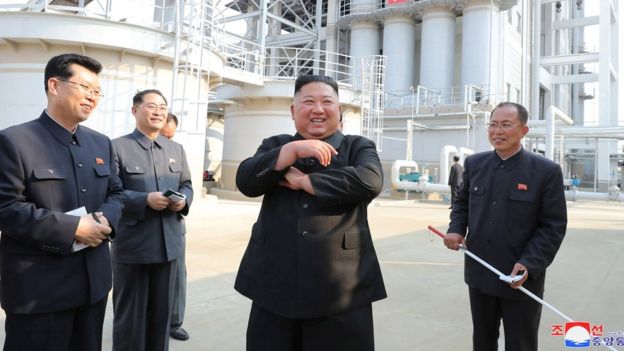
Image copyright REUTERSImage caption Kim Jong-un disappeared from public view for 20 days, before visiting a factory on 2 May
Mr Kim recently went 20 days without appearing in public, and missed the celebration of his grandfather’s birthday – one of the biggest events of the year.
Some media reports claimed he was “gravely ill”, or even dead.
But he then appeared at a fertiliser factory on 2 May – apparently in good health.
On Wednesday, South Korea’s National Intelligence Service told a parliamentary committee that there had been no signs the health rumours were true.
“He was performing his duties normally when he was out of the public eye,” a member of the committee, Kim Byung-kee, told reporters afterwards.
The lawmaker said the North Korean leader’s absence could have been down to a Covid-19 outbreak that the authorities in Pyongyang had not reported.
Analysis
By Celia Hatton, Asia Pacific Editor, BBC World Service
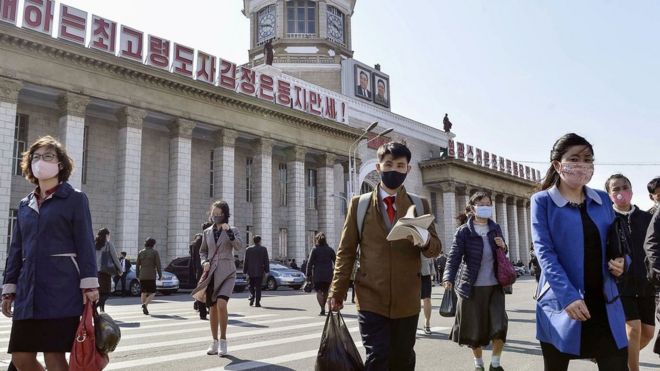
For months, North Korea-watchers have questioned Pyongyang’s claims that it has managed to isolate itself from Covid-19.
Admittedly, North Korea was the first country to suspend travel in response to the virus. There are unconfirmed reports that North Korean guards have been ordered to shoot at those who try to cross the lengthy border the North shares with China. However, it will be difficult to completely seal that dividing line for long. North Korea’s underground economy relies on illicit trade with Chinese entrepreneurs.
Beijing has a few good reasons for wanting to help North Korea. On a practical level, China needs to suppress a possible Covid-19 outbreak there if it wants to keep its own population healthy. Beijing also worries about what might happen inside North Korea if the virus takes hold. The North’s decrepit health system would quickly be overwhelmed by an outbreak of Covid-19, and that could threaten the fragile Kim Jong-un regime. Beijing has been Pyongyang’s biggest aid donor for decades, and it will continue to do what it can to keep Mr Kim in power. The alternatives to Kim Jong-un are much riskier for China, which does not want change on its doorstep.
China’s global political interests are also at play. Diplomatically, Mr Xi’s public exchange with Kim Jong-un underlines the seemingly close ties between China and North Korea. Pyongyang has been slow to accept public offers of help from the United States, and peace talks with Washington have stalled. If North Korea appeared to accept Beijing’s help, China would reassert itself as North Korea’s “true” ally in a time of need.
South Korea itself reported 18 new confirmed cases of Covid-19 on Saturday.
Seventeen of them are linked to a 29-year-old man who tested positive after spending time at five nightclubs and bars in Seoul’s Itaewon leisure district last weekend, the Yonhap news agency said.
Mayor Park Won-soon ordered nightclubs, bars and hostess venues across the capital to suspend business in response.
“Carelessness can lead to an explosion in infections – we clearly realised this through the group infections seen in the Itaewon club case,” Mr Park said.
Health officials have urged people who have visited the five venues in Itaewon to self-isolate and get tested to prevent additional transmissions. At least 1,500 people signed their entry logs, according to Yonhap.
The new infections brought the nationwide total to 10,840, while the death toll remained unchanged at 256.
BEIJING, May 2 (Xinhua) — A total of 35 parks and scenic spots in Beijing with large passenger flows require online reservations during the May Day holiday, Beijing Gardening and Greening Bureau said Friday.
Besides making reservations on the online platforms of these attractions, visitors can also book the tickets on the official website of Beijing Gardening and Greening Bureau and its official account on WeChat and microblog Sina Weibo.
Parks and scenic spots will embrace a peak of passenger flows during the holiday from May 1 to 5, according to Ye Xiangyang, director of the park management office of the bureau.
Online reservations can help control passenger flow effectively, ensuring the stable order of these popular sites and the health of visitors, Ye said.
Parks in the capital will limit real-time tourist numbers to no more than 30 percent of their maximum tourist capacity during the holiday for the safety of visitors amid the COVID-19 epidemic.
Beijing has lowered its emergency response to the COVID-19 epidemic from the top level to the second level starting Thursday.
People work at a construction site of a utility tunnel in Wuhan, central China’s Hubei Province, April 30, 2020. (Xinhua/Xiao Yijiu)
BEIJING, May 1 (Xinhua) — China is getting the world’s largest workforce back to work as the nationwide battle against COVID-19 has secured major strategic achievements.
The unprecedented fight has nurtured new trends in the workplace. For example, more attention is being paid to public health and e-commerce to boost consumption and emerging sectors brought by new applications based on the country’s rapid new infrastructure development of 5G networks and data centers.
In this aerial photo taken on April 29, 2020, representatives of frontline health workers fighting COVID-19 attend a bell-ringing ceremony at the Yellow Crane Tower, or Huanghelou, a landmark in Wuhan, central China’s Hubei Province. (Xinhua/Xiao Yijiu)
ANGELS OF PUBLIC HEALTH
Ye Man, head nurse of gastrointestinal department of Hubei General Hospital East District, one of the five remaining COVID-19 designated hospitals in Wuhan, is taking her first weeklong vacation since January.
The 34-year-old mother of two started to take a week off on Monday, one day after her hospital cleared all remaining confirmed COVID-19 patients. The nine ICU wards in her hospital had been kept occupied over the past several months.
Friday marked International Workers’ Day, and the start of China’s five-day public holiday. Ye said she planned to visit urban parks with her family during the holiday.
At her busiest point, she and her colleagues took care of a ward filled with 40 COVID-19 patients.
“It was a really tough time,” she recalled. She had to wear a protective gown and a mask for nine hours a day and be separated from her family to avoid possible cross-infections.
Wuhan, capital of central China’s Hubei Province and once hard hit by COVID-19, cleared all confirmed cases in hospitals on April 26. Over 42,000 medical workers mobilized nationwide to aid Hubei have contributed to achieving a decisive outcome in the fight to defend Hubei and Wuhan.
In an inspection tour to Wuhan on March 10, President Xi Jinping, also general secretary of the Communist Party of China Central Committee and chairman of the Central Military Commission, lauded medical workers as “the most beautiful angels” and “messengers of light and hope.”
To reward brave and dedicated medics, major tourist sites in Hubei are offering free entry to medical staff over the following two years.
Chinese President Xi Jinping, also general secretary of the Communist Party of China Central Committee and chairman of the Central Military Commission, learns about development of the black fungus industry in Jinmi Village of Xiaoling Township in Zhashui County, Shangluo City, northwest China’s Shaanxi Province, April 20, 2020. (Xinhua/Xie Huanchi)
LIVESTREAMING ANCHORS
“We have a new batch of supplies today. Those who did not get the goods should hurry to buy now,” said Li Xuying, a livestreaming anchorwoman selling agaric mushrooms in Zhashui, a small county deep in the Qinling Mountains in northwest China’s Shaanxi Province.
Li has been prepared for a boom of online shopping in the holiday, because online buyers rushed to her livestreaming website to place orders, after Xi inspected the county and chatted with her in the village of Jinmi during a recent tour to Shaanxi.
“I used to sell goods worth about 50,000 yuan (7,070 U.S. dollars) on average after a six-hour livestreaming session. Now the sales are 10 times that,” she said.
Li was one of the 10 sales staff sent by the local agricultural e-commerce firm to Chinese e-commerce platform Taobao’s headquarters for livestreaming training. She said livestreaming is effective in bridging buyers and farmers, through which viewers can watch planting and harvesting online.
With the number of netizens in China reaching 904 million in March, e-commerce has been one of the popular means of promoting the sale of farm produce and helping farmers shake off poverty. Despite the impact of COVID-19, the country is determined to eradicate absolute poverty by the end of this year.
Workers work at the construction site of a 5G base station at Chongqing Hi-tech Zone in Chongqing, southwest China, April 15, 2020. (Xinhua/Wang Quanchao)
HI-TECH WORKERS IN “NEW INFRASTRUCTURE” BUILDING
As an elasticity calculation engineer of Alibaba Cloud, Zhao Kun and his colleagues always stay on alert for high data flow, for example, brought by the anticipated online shopping spike during the holiday.
“The profession, which may sound obscure, is actually closely connected to everyone’s life, as cloud computing is the infrastructure supporting high-tech applications of artificial intelligence and blockchain,” said Zhao.
The Chinese leadership has underscored expediting “new infrastructure” development to boost industrial and consumption upgrading and catalyze new growth drivers.
Seizing the opportunities of industrial digitization and digital industrialization, China needs to expedite the construction of “new infrastructure” projects such as 5G networks and data centers, and deploy strategic emerging sectors and industries of the future including the digital economy, life health services and new materials, President Xi has said.
During the epidemic, Zhao and his colleagues expanded more than 100,000 cloud servers to ensure the stable operation of “cloud classrooms” and “cloud offices” for millions of people working and studying from home.
In the “new infrastructure” building, people like Zhao contribute to constructing the virtual infrastructure of an ecosystem, which enables e-commerce, e-payment, online teaching and the digital transformation of manufacturing and supply chain management.
In early April, China released a plan on promoting the transformation of enterprises toward digitalization and intelligence by further expanding the application of cloud and data technologies, to nurture new business models of the digital economy.
-China will embrace an opportunity for tourism and consumption in the upcoming International Labor Day holiday under regular epidemic prevention and control.
-Among comprehensive prevention and control measures during the holiday, tours to all of Shanghai’s top tourist attractions should be reserved to avoid gatherings of people.
-Internet technologies have also empowered tourism with online booking, live-streaming sessions and “cloud tourism.”
By Xinhua writers Chen Aiping, Sun Wenji
SHANGHAI, April 30 (Xinhua) — The upcoming five-day International Labor Day holiday will be an opportunity for tourism and consumption since China entered the phase of regular epidemic prevention and control.
The number of domestic trips to be made in the holiday is estimated to be over twice the number of that made in the three-day Tomb-sweeping Day holiday in April, said major online travel agencies in China.
How will the country guarantee healthy and safe travels while boosting tourism and consumption in the holiday?
Tourists visit the Yellow Crane Tower in Wuhan, central China’s Hubei Province, April 29, 2020. Wuhan’s landmark Yellow Crane Tower partly reopened to the public on Wednesday. For the time being, there is still a visitor number limit and online booking is needed. (Xinhua/Xiao Yijiu)
BOOMING RESERVATIONS
Among comprehensive prevention and control measures during the holiday, tours to all of Shanghai’s top tourist attractions should be reserved to avoid gatherings of people.
“Safety comes first,” said Yu Xiufen, head of the Shanghai Municipal Administration of Culture and Tourism.
The city, with 84 major tourist attractions and over 5,200 hotels reopened, will be the largest tourist destination as well as the largest tourist source for the holiday, according to booking data from Trip.com Group.
However, reopened tourist sites should receive no more than 30 percent of their daily or real-time visitor capacity, according to a circular jointly released by China’s Ministry of Culture and Tourism and the National Health Commission on April 13.
People enjoy themselves at the Shanghai Happy Valley in east China’s Shanghai Municipality April 5, 2020. (Shanghai Happy Valley/Handout via Xinhua)
“Better travel planning is needed if you don’t want to gather inside the attractions or outside waiting for entry,” said Zheng Bing, a 33-year-old visitor who has booked trips to Zhujiajiao Old Town and Shanghai Happy Valley for her family.
“I can book through the attractions’ official online channels or call them with the required information for a limited number of family members, and check the real-time passenger flow on the WeChat accounts of the Shanghai Municipal Administration of Culture and Tourism,” she said, adding that nearly 200 attractions, museums, art galleries and public cultural centers have launched booking access through Visit Shanghai, an online platform with Shanghai’s cultural and tourism resources.
“In April, the number of tourists who made online bookings increased by 300 percent from March,” said Yu Xiaojiang with Trip.com Group, noting that over 4,000 tourist attractions in China have launched online booking access.
“Nearly 2,000 visitors have booked for May 1, marking the largest daily volume during the holiday. We will take more precise epidemic prevention measures,” said Zhao Shuai, marketing director of Shanghai Happy Valley.
PREPARED DESTINATIONS
China has urged the safe and orderly opening of tourist sites across the country, noting that efforts should be made to control passenger flows, prevent the gatherings of crowds, implement reservation systems and raise public awareness of epidemic prevention and control.
China’s resort island Hainan Province recently announced 20 specific epidemic-control measures in tourism, transportation, dining and shopping sectors while launching holiday promotions to boost consumption.
A customer tries out a pair of sunglasses at a duty-free experience shop in a resort in Sanya, south China’s Hainan Province, April 15, 2020. (Xinhua/Pu Xiaoxu)
“Tourists are required to wear masks, show their health codes and have their temperature checked. All the sales staff are required to wear masks and gloves,” said Zhang Ke, an employee with a duty-free shop in downtown Haikou, capital of Hainan.
One-meter bars were set at the shop’s sales counters and sanitizers were provided, while staff will keep customer flows at a safe distance and disinfect public areas regularly every day, Zhang said.
Over 85 percent of hotels across China have resumed operations, according to Tongcheng-eLong, another online travel agency giant. Over 110,000 hotel suppliers have joined the Safety Hotel Initiative of Tongcheng-eLong in adopting more safety measures, including disinfecting public areas and popularizing coronavirus control knowledge.
In popular destinations such as Shanghai, Yunnan and Hainan, restaurants are encouraged to serve separate dishes. In Shanghai, some 30 percent of restaurants now offer separate dishes for diners.
Tourists will also shoulder more responsibilities with better travel plans and behavior, said He Jianmin, an expert with Shanghai University of Finance and Economics.
INTERNET EMPOWERMENT
“Epidemic-control measures including online booking are also important for ensuring the tourism sector’s high-quality long-term development,” said Zhao Shuai, adding that China will eye booming smart tourist attractions empowered by Internet technologies.
5G infrared thermal imaging temperature measurement has been implemented in public areas including metro stations, commercial centers, airports and train stations in Shanghai and many other cities to monitor people’s body temperature.
A visitor receives body temperature check at the entrance of Shanghai Museum in east China’s Shanghai Municipality, March 13, 2020. (Xinhua/Ren Long)
The Old Town of Lijiang in southwest China’s Yunnan Province implemented a big data system to monitor passenger flows and prevent the gathering of crowds.
Although group tours across provinces were still suspended, online consumption for tourism boosted.
Shanghai has taken measures to promote the recovery of epidemic-hit culture and tourism, and exhibitions, cooking competitions and tours have been held online. Trip.com Group said its sales of travel products had reached 200 million yuan (28.33 million U.S. dollars) in seven recent livestreaming sessions as of Wednesday.
Tour guide Zeng Hongjuan (R) introduces an exhibit via livestreaming on a cellphone platform at the Beijing Auto Museum in Beijing, capital of China, April 30, 2020. Livestreaming shows for this auto museum will be staged from April 30 to May 3 for the upcoming International Labor Day holidays. (Xinhua/Ren Chao)
Scenic spots in Yunnan have cooperated with video platforms to livestream their natural beauty to attract more tourists.
“Go-Yunnan,” an online travel platform, has launched more than 1,400 live feeds allowing people to enjoy the beautiful scenery of Yunnan from home.
“Online tourism, or ‘cloud tourism,’ as a new mode of tourism, helps scenic spots attract more tourists and aids the recovery of Yunnan’s tourism industry,” said Yang Wenwen, head of the platform’s content operation. “I expect ‘cloud tourism’ to drive the future upgrading of China’s tourism industry.”
The number of netizens in China had reached 904 million as of March 2020 and 897 million of them access the Internet through mobile phones, according to the China Internet Network Information Center.
Photo taken on April 30, 2020 shows flower beds to celebrate the upcoming International Labor Day at Tian’anmen Square in Beijing, capital of China. (Xinhua/Ju Huanzong)
BEIJING (Reuters) – China announced on Wednesday that its parliament will open a key annual session on May 22, signalling that Beijing sees the country returning to normal after being reduced to a near-standstill for months by the COVID-19 epidemic.
During the gathering of the National People’s Congress in the capital, delegates will ratify major legislation, and the government will unveil economic targets, set defence spending projections and make personnel changes. The ruling Communist Party also typically announces signature policy initiatives.
The session was initially scheduled to start on March 5 but was postponed due to COVID-19, which has infected nearly 83,000 people and killed more than 4,600 on the mainland after emerging late last year in the central city of Wuhan.
As the epidemic has subsided, economic and social life gradually returned to normal, making it possible for the congress to convene, the official Xinhua news agency quoted the standing committee of the NPC, the legislature’s top decision-making body, as saying.
The committee also appointed Huang Runqiu as the new minister for ecology and environment, a post vacated when predecessor Li Ganjie became deputy Communist Party chief for Shandong province earlier this month, Xinhua reported.
Tang Yijun was also named as the new justice minister to replace Fu Zhenghua, who has reached the retirement age of 65 for ministers.
The Chinese People’s Political Consultative Conference (CPPCC), an advisory body to parliament, has proposed starting its annual session a day before the parliamentary session opens.
Analysts expect China to roll out additional fiscal stimulus in order to cushion the blow from COVID-19, which has developed in to a worldwide pandemic that some fear will trigger a severe global recession.
China’s economy contracted for the first time on record during the January-March period, when the government imposed severe travel and transport restriction to curb the spread of the epidemic.
Parliament is also expected to discuss the anti-government protests in Hong Kong, amid growing speculation that Beijing take steps to strengthen its grip on the city.
It is unclear how long parliament and its advisory body will meet for this time, and people familiar with the matter have told Reuters that this year’s annual sessions could be the shortest in decades due to COVID-19 concerns. Usually more than 5,000 delegates descend on Beijing from all over China for at least 10 days.
Beijing city plans to ease quarantine rules as early as Thursday, two sources familiar with the situation told Reuters, ahead of the key political meetings.
People arriving in the capital from other parts of China will no long have to be quarantined for two weeks unless they come from high-risk areas such as Heilongjiang in the north and some parts of Guangdong in the southeast, the sources said.
City at centre of outbreak finally able to declare itself clear of disease after months in lockdown and thousands of deaths
Risk of infection remains, however, with some patients testing positive for coronavirus that causes disease without showing symptoms
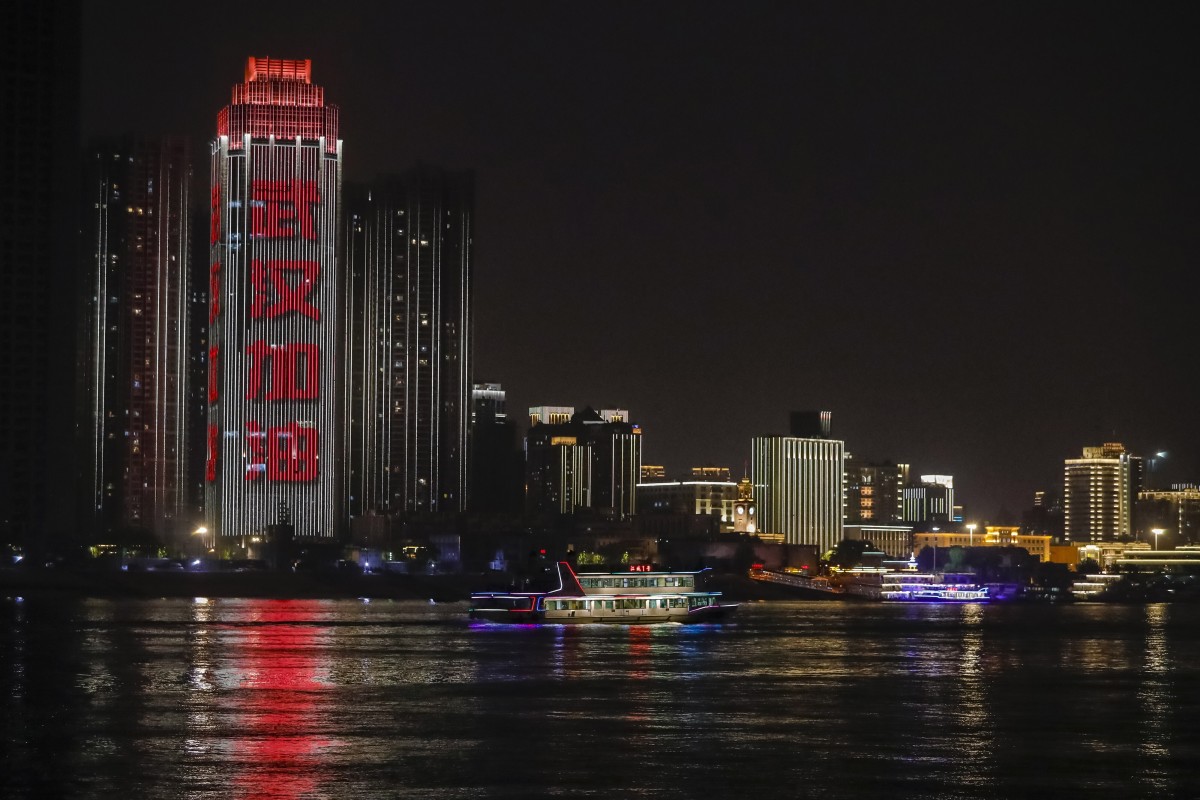
Ferries and other public transport services resumed in Wuhan last week. Photo: Xinhua
The city of Wuhan, the initial epicentre of the coronavirus pandemic, no longer has any Covid-19 patients in hospital after the last 12 were discharged on Sunday.
Their release ended a four-month nightmare for the city, where the disease was first detected in December. The number of patients being treated for Covid-19, the disease caused by a new coronavirus, peaked on February 18 at 38,020 – nearly 10,000 of whom were in severe or critical condition.
“With the joint efforts of Wuhan and the national medical aid given to Hubei province, all cases of Covid-19 in Wuhan were cleared as of April 26,” Mi Feng, a spokesman for the National Health Commission said on Sunday afternoon.
The announcement came only one day after the city discharged the last patient who had been in a severe condition. That patient also was the last severe case in Hubei province.
The last patient discharged from Wuhan Chest Hospital, a 77-year-old man surnamed Ding, twice tested negative for Sars-CoV-2, the virus that causes Covid-19, and was released at noon on Sunday.
“I missed my family so much!” Ding told Changjing Daily.
Another unidentified patient exclaimed as he left the hospital: “The air outside is so fresh! The weather is so good today!”
Wuhan faced a long journey to bring its patient count down to zero.
The city of 11 million, the capital of Hubei province and a transport hub for central China, was put under a strict lockdown on January 23 that barred anyone from entering or exiting the city without official approval for 76 days until it was officially lifted on April 8.
Coronavirus: Wuhan, Los Angeles officials discuss getting back to work after lockdown
22 Apr 2020
Residents were ordered to stay in their apartments as the city stopped public transport and banned private cars from city streets. As the epidemic worsened, more than 42,000 medical staff from across the country were sent to the city and to Hubei province to help ease the burden on the local health care system.
Wuhan was the hardest hit city in China, accounting for 50,333 of the 82,827 locally transmitted Covid-19 cases recorded in China. More than 4,600 died in the country from the disease.
On March 13, the city reported for the first time that there were no new suspected cases of the infection, and five days later there were no confirmed cases.
The number of discharged patients bottomed out at 39.1 per cent at the end of February, gradually climbing to 92.2 per cent by last Thursday.
“Having the patients in the hospital cleared on April 26 marks a major achievement for the city’s Covid-19 treatment,” the Wuhan Health Commission said in a statement.
However, having no severe cases in hospital does not mean all the discharged patients will require no further treatment as they may still need further care.
“Clearing all the severe cases marks a decisive victory for the battle to safeguard Wuhan,” health minister Ma Xiaowei told state broadcaster China Central Television on Saturday.
“Some patients who have other conditions are being treated in specialised hospitals. It has been properly arranged.”
Coronavirus: Chinese writer hit by nationalist backlash over diary about Wuhan lockdown
18 Apr 2020
Ten patients aged between 42 and 85 who have been declared coronavirus-free are still in intensive care at the city’s Tongji Hospital where they are being treated for kidney problems and other complications arising from Covid-19. Some still need ventilators to help them breathe.
These 10 patients are under 24-hour care, with 190 nurses on four-hour rotations. There are other patients in a similar condition in two other hospitals in Wuhan, according to the Hubei Broadcasting and Television Network.
However, the discharge of the last batch of Covid-19 patients does not mean that the risk of infection is gone.
The city reported 20 new cases of people testing positive for Sars-CoV-2, the official name for the coronavirus that causes the disease, but who do not yet show symptoms.
There are 535 such carriers under medical observation. Past data shows some of these asymptomatic carriers will develop symptoms, and so will be counted as Covid-19 patients under China’s diagnosis and treatment plan.
China’s coronavirus infection curve has flattened out with about 694 imported cases of Covid-19 on top of about 800 locally transmitted ones now under treatment.
The national health commission spokesman warned that people still need to be on high alert as the virus is continuing to spread around the globe, with no sign yet of a slowdown.
“[We] must not drop our guard and loosen up. [We] must discover cases in time and deal with them quickly,” Mi said, citing the continued pressure from cases imported by people returning from overseas.
“The next step will be to implement the requirements of the central government and continue to guard against imported cases and a rebound of domestic transmitted cases.”
But trade with partner countries might not be as badly affected as with countries elsewhere in the world, observers say
China’s trade with belt and road countries rose by 3.2 per cent in the January-March period, but second-quarter results will depend on how well they manage to contain the pathogen, academic says
China’s investment in foreign infrastructure as part of its Belt and Road Initiative has been curtailed because of the coronavirus pandemic. Photo: Xinhua
The coronavirus pandemic is set to cause a slump in Chinese investment in its signature
and a dip in trade with partner countries that could take a year to overcome, analysts say.
But the impact of the health crisis on China’s economic relations with nations involved in the ambitious infrastructure development programme might not be as great as on those that are not.
China’s total foreign trade in the first quarter of 2020 fell by 6.4 per cent year on year, according to official figures from Beijing.
Trade with the United States, Europe and Japan all dropped in the period, by 18.3, 10.4 and 8.1 per cent, respectively, the commerce ministry said.
By comparison, China’s trade with belt and road countries increased by 3.2 per cent in the first quarter, although the growth figure was lower than the 10.8 per cent reported for the whole of 2019.
China’s trade with 56 belt and road countries – located across Africa, Asia, Europe and South America – accounts for about 30 per cent of its total annual volume, according to the commerce ministry.
Despite the first-quarter growth, Tong Jiadong, a professor of international trade at Nankai University in Tianjin, said he expected China’s trade with belt and road countries to fall by between 2 and 5 per cent this year.
His predictions are less gloomy than the 13 to 32 per cent contraction in global trade forecast for this year by the World Trade Organisation.
“A drop in [China’s total] first-quarter trade was inevitable but it slowly started to recover as it resumed production, especially with Southeast Asian, Eastern European and Arab countries,” Tong said.
“The second quarter will really depend on how the epidemic is contained in belt and road countries.”
Nick Marro, Hong Kong-based head of global trade at the Economist Intelligence Unit, said he expected China’s total overseas direct investment to fall by about 30 per cent this year, which would be bad news for the belt and road plan.
“This will derive from a combination of growing domestic stress in China, enhanced regulatory scrutiny over Chinese investment in major international markets, and weakened global economic prospects that will naturally depress investment demand,” he said.
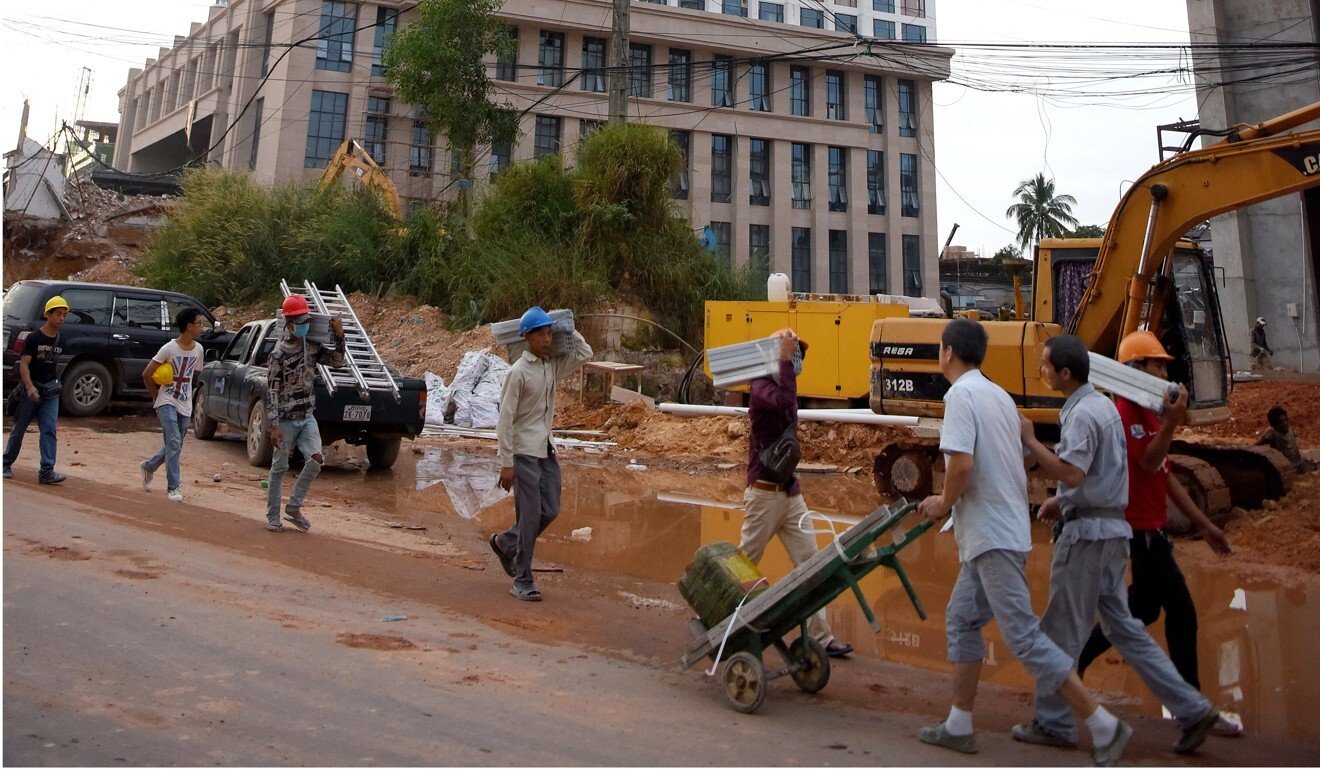
The development of the Chinese built and operated special economic zone in the Cambodian town of Sihanoukville is reported to have slowed, while infrastructure projects in Bangladesh, including the Payra coal-fired power plant, have been put on hold.
The development of the Chinese built and operated special economic zone in the Cambodian town of Sihanoukville is reported to have slowed. Photo: AFP
Marro said the reduction of capital and labour from China might complicate other projects for key belt and road partner, like Pakistan, which is home to infrastructure projects worth tens of billions of US dollars, and funded and built in large part by China.
“Pakistan looks concerning, particularly in terms of how we’ve assessed its sovereign and currency risk,” Marro said.
“Public debt is high compared to other emerging markets, while the coronavirus will push the budget deficit to expand to 10 per cent of GDP [gross domestic product] this year.”
Last week, Pakistan asked China for a 10-year extension to the repayment period on US$30 billion worth of loans used to fund the development of infrastructure projects, according to a report by local newspaper Dawn.
China’s overseas investment has been falling steadily from its peak in 2016, mostly as a result of Beijing’s curbs on capital outflows.
Last year, the direct investment by Chinese companies and organisations other than banks in belt and road countries fell 3.8 per cent from 2018 to US$15 billion, with most of the money going to South and Southeast Asian countries, including Singapore, Vietnam, Indonesia and Pakistan.
Tong said the pandemic had made Chinese investors nervous about putting their money in countries where disease control measures were becoming increasingly stringent, but added that the pause in activity would give all parties time to regroup.
“Investment in the second quarter will decline and allow time for the questions to be answered,” he said.
“Past experience along the belt and road has taught many lessons to both China and its partners, and forced them to think calmly about their own interests. The epidemic provides both parties with a good time for this.”
Dr Frans-Paul van der Putten, a senior research fellow at Clingendael Institute in the Netherlands, said China’s post-pandemic strategy for the belt and road in Europe
might include a shift away from investing in high-profile infrastructure projects like ports and airports.
Investors might instead cooperate with transport and logistics providers rather than invest directly, he said.
“Even though in the coming years the amount of money China loans and invests abroad may be lower than in the peak years around 2015-16, I expect it to maintain the belt and road plan as its overall strategic framework for its foreign economic relations,” he said.








 CHINDIA ALERT: You'll be living in their world, very soon