Chindia Alert: You’ll be Living in their World Very Soon
aims to alert you to the threats and opportunities that China and India present. China and India require serious attention; case of ‘hidden dragon and crouching tiger’.
Without this attention, governments, businesses and, indeed, individuals may find themselves at a great disadvantage sooner rather than later.
The POSTs (front webpages) are mainly 'cuttings' from reliable sources, updated continuously.
The PAGEs (see Tabs, above) attempt to make the information more meaningful by putting some structure to the information we have researched and assembled since 2006.
Children from Hejiazhuang primary school paint in Hejiazhuang Village of Wangba Township in Kangxian County, northwest China’s Gansu Province, May 30, 2020. (Xinhua/Chen Bin)
BEIJING, May 31 (Xinhua) — Chinese President Xi Jinping has greeted children of all ethnic groups across the country on International Children’s Day, which falls on June 1.
Xi, also general secretary of the Communist Party of China Central Committee and chairman of the Central Military Commission, called on children to study hard, firm up their ideals and convictions and develop strong bodies and minds to prepare for realizing the Chinese Dream of national rejuvenation.
Xi noted that children nationwide have experienced a special period during the country’s fight against COVID-19 as all Chinese people stand united.
Children paint elephants at the Chimelong Safari Park in Guangzhou, south China’s Guangdong Province, May 27, 2020. Two female Asian elephants gave birth to two babies respectively on April 30 and May 12 in the Chimelong Safari Park in Guangzhou, adding the total number of the Asian elephants here to 27. (Xinhua/Liu Dawei)
Witnessing the great feats of Chinese people working together and rising to challenges, the children have followed the call of the Party and the government to support the anti-epidemic battle with their concrete actions, demonstrating the fine spirit of the country’s children, Xi said.
He stressed that China’s children today are not only undergoing and witnessing the realization of the country’s first centenary goal, they are also a new force for achieving the second centenary goal and building China into a great modern socialist country.
Xi urged Party committees and governments at all levels as well as the society to care for children and create favorable conditions for their growth.
Students attend a class at a primary school in Dahua Yao Autonomous County, south China’s Guangxi Zhuang Autonomous Region, May 29, 2020. Guangxi, one of the major battlefields in China’s poverty alleviation campaign, has been making painstaking efforts to improve education for poverty-stricken children, as schooling is believed to be the best way to empower the youngsters to lift their families out of poverty. The region has taken various measures in this regard, including granting students stipends, improving school facilities and nutritional conditions of rural students, and helping more students from rural and impoverished areas have access to higher education. As many households from inhospitable areas have moved into relocation sites built for poverty alleviation in the county seats, relocated children can study in schools in and near resettlements, instead of trekking hours back and forth in mountains for schooling. The faculty is a key to education. The regional government has called in capable teachers to help schools in rural areas, and has been committed to guaranteeing payment to teachers and filling vacancies of teachers in rural areas through special programs. Reducing poverty must begin with reducing ignorance. Therefore, giving rural children a good education is an important task in poverty relief, and also a crucial means to stop poverty being passed on through generations.
Image copyright GETTY IMAGESImage caption Around 300,000 in Hong Kong hold a British National (Overseas) passport
The UK has said it is considering more rights for holders of a special passport issued to some people in Hong Kong.
The territory, which used to be a British colony, was handed back to China in 1997. Anyone born before then is eligible to apply for a British National (Overseas) passport, known as a BNO.
If China implements a controversial proposed security law, people holding the BNO, could get a “path to citizenship”, the UK said.
What is the BNO and who has one?
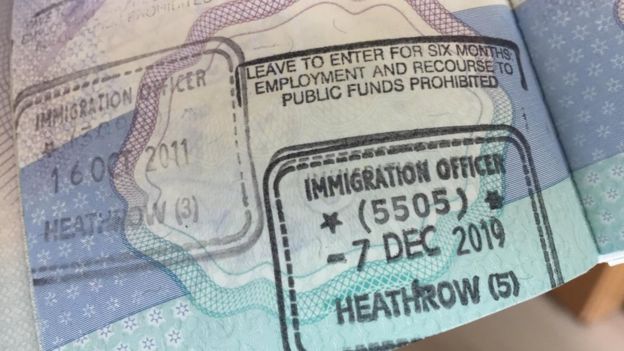
The BNO passport is essentially a travel document that does not carry citizenship rights with it – although you are entitled to some consular assistance outside of Hong Kong and China with it.
It was issued to people in Hong Kong by the UK before Hong Kong was handed over to China.
Around 300,000 people currently hold a BNO passport, allowing them to visit the UK visa-free for six months. An estimated 2.9 million people are eligible for a BNO passport, said the British Consulate General in Hong Kong.
Though it gives the passport holder the right to remain in the UK for up to six months, it doesn’t automatically allow them to reside or work there. They also aren’t allowed to access public funds, including things like government benefits.
BNO holders cannot pass this status on to their children.
What is the UK proposing – and why?
China on Thursday formally approved a plan to impose controversial national security legislation in Hong Kong. It could go into effect as early as the end of June.
Hong Kong was handed back to China, on a number of conditions. These include the region’s high level of autonomy and maintaining certain rights like freedom of speech that do not exist in mainland China.
But this new plan, if put into law, would make it a crime to undermine Beijing’s authority in Hong Kong, and many are concerned it could end Hong Kong’s unique status.
The move triggered a wave of criticism around the world, with many – including Chris Patten, the last governor of Hong Kong – urging the UK to stand up for the territory.
Image caption Under current rules, BNO holders are allowed to stay for six months
Later on Thursday, UK Foreign Secretary Dominic Raab said the country would move to scrap the six-month stay limit for BNO holders if China goes on to officially implement the law.
Mr Raab said that BNO passport holders would be allowed to “apply to work and study for extendable periods of 12 months and that will itself provide a pathway to future citizenship”.
What difference could it make?
As a way to help people in Hong Kong who would rather not stay there if the new security laws are implemented, it might prove more symbolic.
For starters only a small percentage of people in Hong Kong currently have a BNO.
But also, the people who the security laws are aimed at – the young anti-mainland protesters who have been getting into violent confrontations with police for months – are not likely to be eligible for the BNO because of their age.
Additionally, though the BNO gives the passport holder the right to visit the UK for up to a year potentially, it’s not clear what other benefits the extension might bring, or if the UK would make it any easier administratively for those already in the country to apply for work or study.
On social media, some Hong Kongers dismissed it as a gesture that amounted to little more than a 12-month tourist visa.
Effectively, it means that those who come to stay in the UK for a year, and who have the funds to be able to extend this enough, could eventually be eligible to apply for citizenship.
It cuts out some of the administrative hoops BNO holders would have had to jump through before this move if they wanted this path.
How has China reacted?
China has firmly opposed the move by the UK, saying it is a violation of the handover agreement that stipulates BNO passport holders do not enjoy UK residency.
China has repeatedly warned Britain to stay out of its affairs in Hong Kong.
The Chinese ambassador to the UK Liu Xiaoming had previously accused some British politicians of viewing Hong Kong “as part of the British empire”.
Xie Haifeng’s story is one of luck and resilience and he has made it his mission to help others through adversity
Professional dancer owes part of his success to the city of Hong Kong and one of its doctors who helped survivors through recovery
Xie Haifeng was 15 when he lost his leg in one of modern China’s most devastating disasters. Photo: Handout
When the rumbling began, Xie Haifeng thought someone was shaking his bed. Perhaps one of the other 800 children in the school dormitory was being naughty. Or maybe it was a small quake. Then came the unmistakable sound of screams.
Xie, then a 15-year-old pupil at Muyi Town Middle School in the southwestern Chinese province of Sichuan, started running. He fell as the dorm building collapsed around him. When he tried to stand up, he realised something was missing. His left leg was gone.
What Xie thought was a small quake turned out to be one of the most devastating disasters in modern Chinese history.
The Sichuan earthquake of May 2008 left at least 87,000 people dead and shook the country to its core. It was less than three month before Beijing would host its first Olympic Games, an opportunity to show the world its strength and ambition.
Instead, 7,444 schools had crumbled like tofu in an area known to be seismically active. Their rubble was a stark demonstration of the weak foundation of China’s progress and its tragic consequences. At Xie’s school, the shoddily built walls and ceilings crushed 600 children. Only 300 survived.
It still frightens me to recall the earthquake.Xie Haifeng, dancer
Xie considers himself lucky. “If I had run just one second more slowly, I would have been dead. If I had run one second faster, I would have been completely fine. But anyway, I am lucky to be alive,” he said. A dozen years later, his story is also one of resilience. Defying all the odds, Xie is now a professional dancer for a troupe in Sichuan and has made it his mission to help others through adversity.
The journey from his hospital bed to the stage was long and difficult and even though many years have passed, “it still frightens me to recall the earthquake”. But, he said: “I have forgiven fate and accepted the reality that I have only one leg.”
Xie’s trauma was a particularly difficult blow to his family. His older sister was already handicapped, after injuring her arm in an accident. When his mother, a migrant worker in the northwestern province of Gansu, arrived at the hospital a few days after the earthquake, she had no idea of the extent of Xie’s condition.
“When I woke up in the evening, I saw my mother weeping beside my bed. I told myself I should be strong,” Xie said, adding that his mother initially thought he had suffered only bruises. He was sent for treatment to a hospital in the prosperous southern city of Shenzhen, along with other survivors who had been left with disabilities by the earthquake.
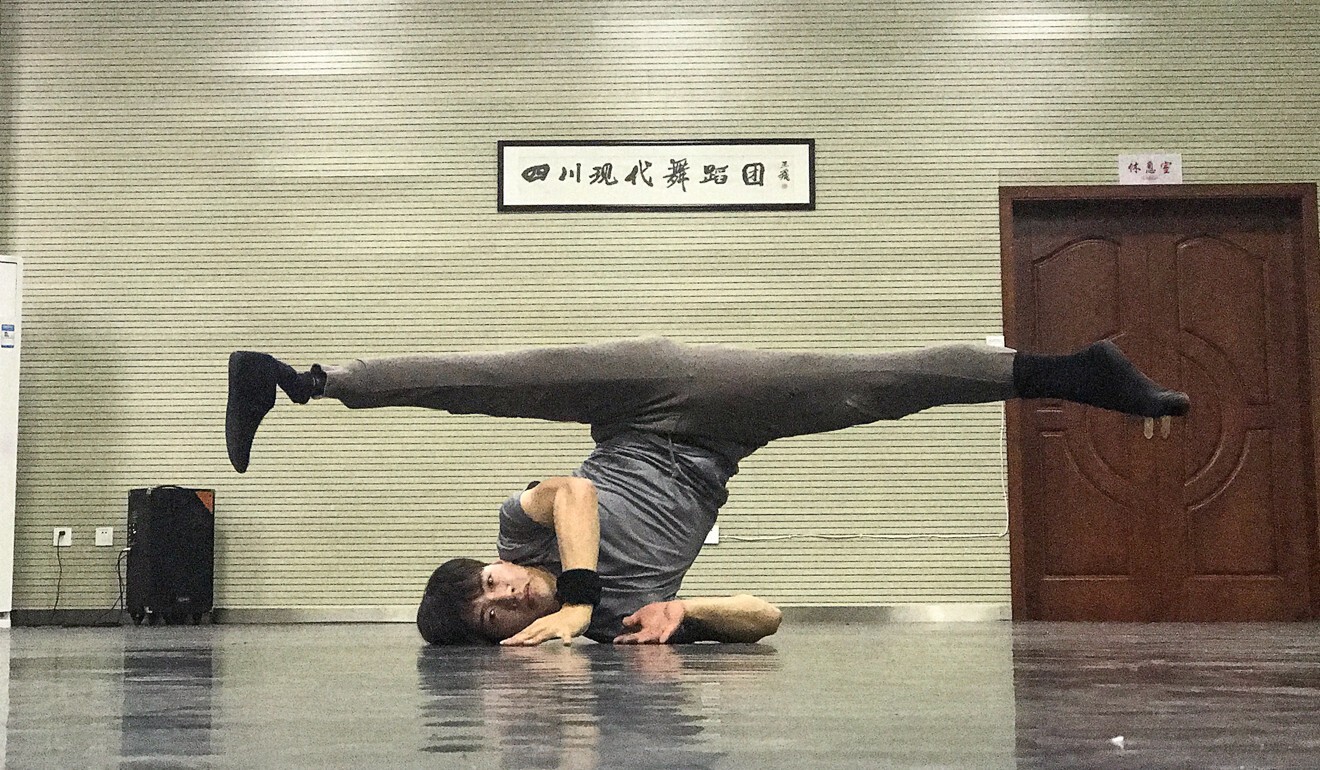
Defying all the odds, Xie Haifeng is now a professional dancer. Photo: Handout
It was there that Xie was inspired to make the most of his life. A team of athletes visited the hospital and he was shocked to see one of them, a volleyball player, walking on a prosthetic leg.
Xie began to wear a prosthesis and after rehabilitation training returned to his hometown in 2009 where he was admitted to Qingchuan High School. At first, he was self-conscious and felt inferior to his peers. He did not dare to wear shorts in summer and said he seldom talked to the other students.
The following year he was introduced to members of the Chengdu Disabled People’s Art Troupe, where he found a new and welcoming home. Xie quit school and joined the troupe, despite his parents’ opposition. They were convinced study was the only way for rural students like their son to get out of poverty.
Xie learned Sichuan opera and was soon performing its art of bian lian, or
– a skill that requires rapid mask changes in a dazzling sleight of hand – on stage until the troupe was disbanded in 2011, leaving him unemployed for six months.
China marks 10-year anniversary of Sichuan earthquake
But the misfortune led to an improbable opportunity when he was hired by the Sichuan Provincial Disabled People’s Art Troupe and trained to dance. At 19, and with no experience, Xie found the training far more difficult than those who had started at the more usual age of five or six.
His body was too stiff, he said, and in the first months he spent 10 hours each day just stretching and building flexibility. It was just the beginning of a long and often arduous process.
“That agony is too much to be described,” Xie said about the pain of dancing on a prosthetic leg. “During the first six months’ training, I broke three artificial legs.”
More than once, he wondered whether he had chosen the right path. But, ultimately, his gruelling effort paid off and Xie has performed in Singapore, Hong Kong and Macau. In 2013, he won a gold medal at a national dancing competition for people with disabilities.
“My dances won me applause and recognition from the audience. I feel relieved and I think my heart belongs to the stage,” he said.
Xie broke three artificial legs during his first six months of dance training. Photo: Handout
Xie said he owed part of his success to Hong Kong which in 2008 donated HK$20 billion (US$2.5 billion) in aid to Sichuan and sent doctors to treat the injured. Among the volunteers was Poon Tak-lun, a Hong Kong orthopaedist who flew to Sichuan every two weeks from 2008 to 2013 to treat patients.
At a gala show in 2013 to express gratitude from the people of Sichuan to Hong Kong, Xie met Poon and the two became good friends, thanks to their common interest in the arts.
“Dr Poon promised to pay for all the costs of installing and repairing my artificial leg in the future. He told me to focus on dancing without worrying about the leg’s costs,” Xie said.
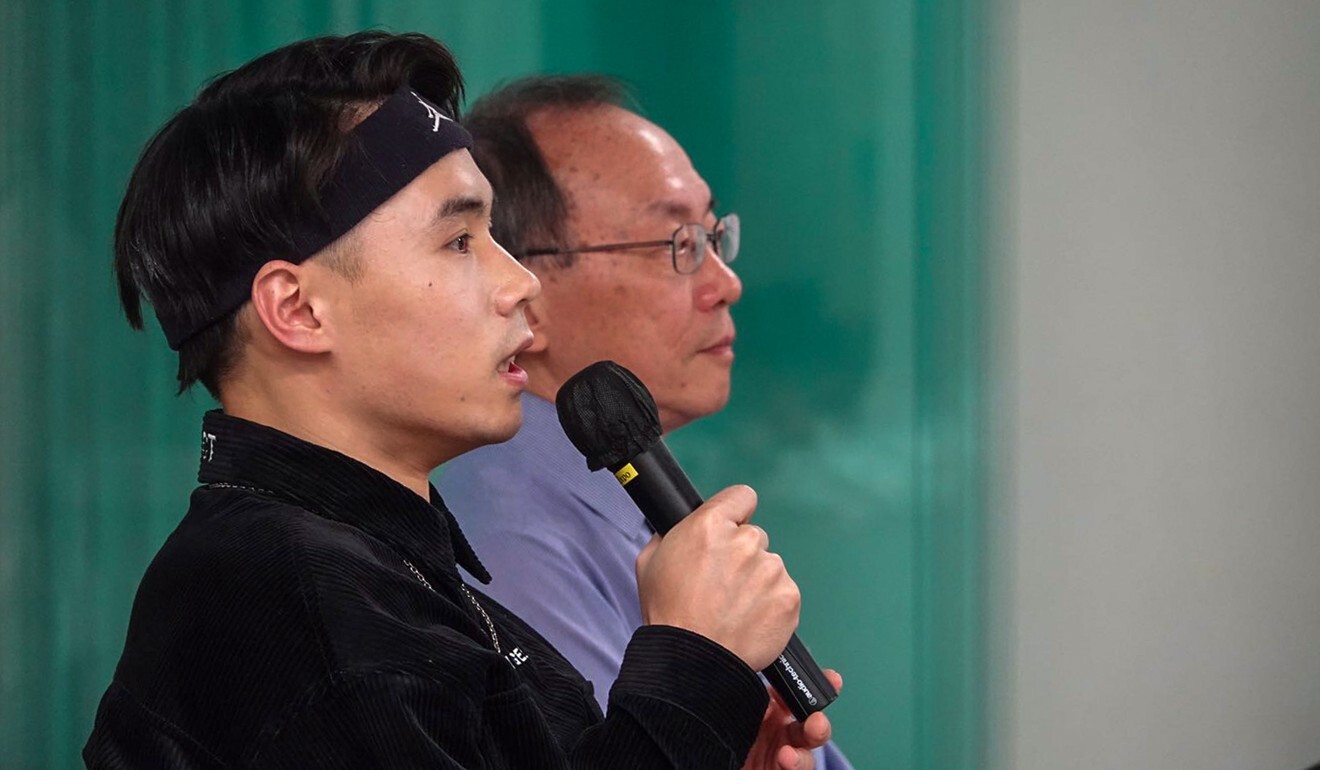
Xie Haifeng (pictured left with friend Poon Tak-lun) gives a speech to students in Hong Kong. Photo: Handout
Grateful for the help he received from Poon and Hong Kong, Xie has sought to return the favour by doing what he does best.
“I have no other skills except dancing and performing. So I thought of sharing my experience to encourage young students in Hong Kong,” he said.
Xie travels to Hong Kong about twice a year to perform and visit schools. In 2019, he visited the city four times, performing dances and Sichuan opera, and giving speeches at more than 10 primary and secondary schools.
“I encourage them to study hard. I said there are many people in this world who have more difficulties than them but still insist on pursuing their dreams, so they should not give up their dreams,” Xie said.
When he is not dancing and giving inspirational speeches, Xie said he lived a life like everyone else – climbing mountains, swimming and proudly walking on the leg he gained after almost losing everything in Sichuan’s deadly earthquake.
CHENNAI (Reuters) – At least 11 people were killed in India in a gas leak at a South Korean-owned factory making polystyrene products that made hundreds of people sick and led to the evacuation of villagers living nearby, officials said.
The accident occurred some 14 km (9 miles) inland from the east coast city of Visakhapatnam, in Andhra Pradesh state, at a plant operated by LG Polymers, a unit of South Korea’s biggest petrochemical maker, LG Chem Ltd.
Srijana Gummalla, commissioner of the Greater Visakhapatnam Municipal Corporation, said gas from styrene, a principal raw materials at the plant, leaked during the early hours of the morning, when families in the surrounding villages were asleep.
RELATED COVERAGE
LG Chem share price falls nearly 2% after deadly gas leak in India
Yashwanth Saikumar Ambati, 23, who lives about 300 metres away from the plant, said he woke up around 4.30 a.m. because of a strong smell.
“I went back to sleep and I woke up around 6 because the smell got stronger. My eyes were itchy, and I was feeling drowsy, light-headed and slightly breathless,” he told Reuters, adding that neighbours also complained of eye irritation and stomach aches.
In a statement issued from Seoul, LG Chem said that the gas emitted in the leak can cause nausea and dizziness when inhaled, adding that it was seeking to ensure casualties received treatment quickly.
Video from Reuters partner ANI shot later on Thursday showed emergency workers in the area rushing to help victims, some of whom appeared to be listless and disoriented.
A number of victims lay unconscious on the streetside, as volunteers fanned them and others carried them to ambulances.
A spokesman for LG Chem in Seoul said the leak was discovered by a night shift maintenance worker and has been brought under control.
According to both the company spokesman and Gummalla, the plant was being reopened after India relaxed a nationwide lockdown that had been imposed on March 25 to contain the spread of the new coronavirus.
Thursday’s incident brought back bad memories of a gas leak at an factory of U.S. chemical firm Union Carbide that killed thousands in the central Indian city of Bhopal in 1984, but thankfully it was on a far smaller scale.
“I pray for everyone’s safety and well-being in Visakhapatnam,” Prime Minister Narendra Modi said in a tweet.
S.N. Pradhan, director general of the National Disaster Response Force, said that at least 11 had died after around 1,000 people living near the plant were exposed to the gas.
FALLING, RUNNING AWAY
B.V. Rani, a revenue official in the district, said she received a call at around 4 a.m. from a police officer near the facility, who sounded panicky. “He asked me to come to the spot immediately,” Rani told Reuters.
When Rani went there, she saw that people had collapsed unconscious in the village adjoining the 60-acre site of the plant.
“I personally helped more than 15 people get to an ambulance who had tried to run away from the village but dropped down within a few metres,” she said.
At least one child was among the dead, a policeman at the site told ANI, whose video showed at least two other children being lifted into an ambulance.
Between 300-400 people were hospitalised, Swarupa Rani, an Assistant Commissioner of Police in Visakhapatnam told Reuters. Another 1,500 people had been evacuated, mostly from a neighbouring village.
Areas within approximately 3-kilometre (nearly 2-mile) radius of the plant were evacuated, he said, with emergency services going from door-to-door to find anyone left behind.
TOP PETROCHEMICAL MAKER
Andhra Pradesh Chief Minister Jagan Mohan Reddy said in a televised address that the gas leak occurred because raw material was stored for a long period of time.
The state government will give 10 million rupees ($131,900) compensation to the families to those who died, and it will also form a panel to investigate the cause of the accident, said P.V. Ramesh, a senior aide to the chief minister.
“Obviously something has gone wrong,” Ramesh told Reuters. “Nobody will be spared.”
LG Chem’s share priced closed nearly 2% weaker on Thursday, in a Seoul market that was broadly flat.
South Korea’s top petrochemical maker by capacity, LG Chem acquired the plant in 1997 and established LG Polymers India Private Limited (LGPI), according to a company website.
The LG Polymers plant makes polystyrene products which are used in manufacturing electric fan blades, cups and cutlery and containers for cosmetic products such as make up.
“LG Polymers is a multi national, reputed company, and it is sad that the incident has happened in their plant,” Chief Minister Reddy said in a televised media address.
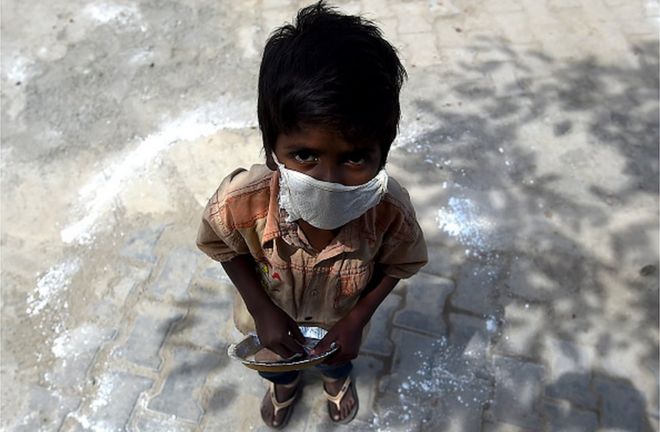
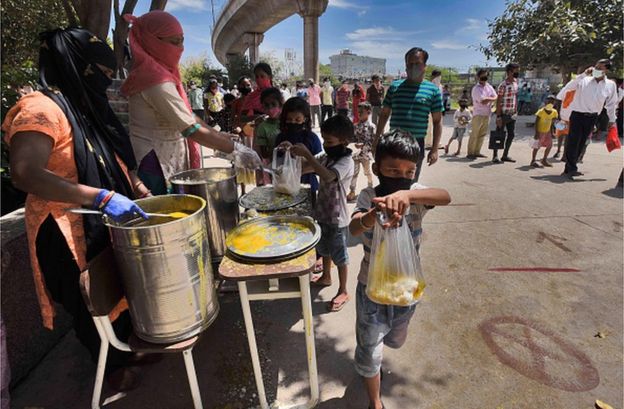
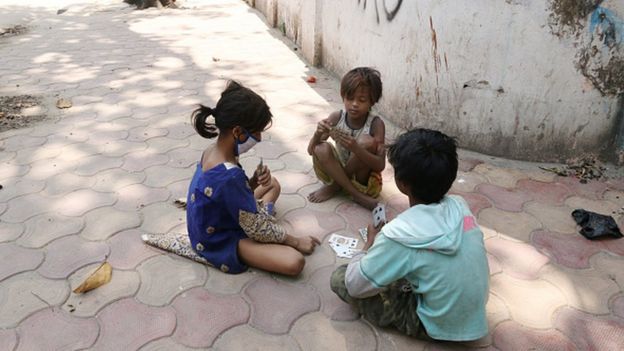
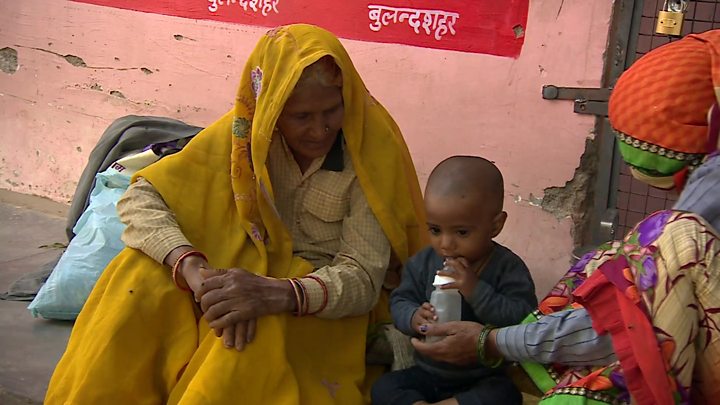
Image copyright GETTY IMAGESImage caption Thousands of street children are being impacted by India’s lockdown
The sudden imposition of a 21-day lockdown in India to stop the spread of the coronavirus has thrown the lives of millions of children into chaos.
Tens of thousands are calling helplines daily while thousands are going to bed hungry as the country shuts down to battle the pandemic.
With 472 million children, India has the largest child population in the world and campaigners say the lockdown has impacted around 40 million children from poor families.
These include those working in farms and fields in rural areas, as well as children who work as ragpickers in cities or sell balloons, pens and other knick-knacks at traffic lights.
Sanjay Gupta, director of Chetna, a Delhi-based charity that works with child labourers and street children, says the worst affected are the millions of homeless children who live in cities – on streets, under flyovers, or in narrow lanes and bylanes.
“During the lockdown everyone has been told to stay home. But what about the street children? Where do they go?” he asks.
According to one estimate, Delhi has more than 70,000 street children. But Mr Gupta says that number is really much higher.
And these children, he says, are usually very independent.
“They look for their own means of survival. This is the first time they need assistance.
“But they are not in the system and they are not easy to reach out to, especially in the present circumstances. Our charity workers cannot move around unless they have curfew passes,” he says.
And passes are hard to obtain, because charities like Chetna are not considered essential services.
So, Mr Gupta says, they have been using innovative ways to keep in touch with the children.
“Many of these children have mobile phones, and because they generally stay in groups, we send them messages or TikTok videos about how to keep safe and what precautions they must take.”
In return, he’s also been receiving video messages from the children, some of which he’s forwarded to me. They give a sense of the dread and uncertainty that has taken hold of their lives.
There are testimonies from worried children talking about their parents losing their jobs, wondering how they will pay the rent now or where would they find the money to buy rations?
Then, there are videos from children who have to fend for themselves.
Image copyright GETTY IMAGESImage caption Indian governments and charities are distributing food, but thousands are not being covered by the drive
In one of them, a boy who lives on the street says, “Sometimes people come and distribute food. I have no idea who they are, but it’s very little. We only get to eat once in two-three days.”
Because of the lockdown, he says, they are not even allowed to go fetch water or firewood. “I don’t know how we can survive like this? The government must help us,” he pleads.
The authorities say they are providing help – the Delhi Commission for Protection of Child Rights has been distributing food to street children and vulnerable families in the Indian capital. In many other cities too, local governments and charities have been distributing food to children and homeless people.
But the scale of the problem is daunting.
Mr Gupta says since it’s a complete lockdown, the government must ensure that the children are fed three meals a day.
Then, there are those he describes as “invisible children, the ones who live away from the main roads, in areas that are not easily accessible”.
“There are thousands of them and we are still not reaching them,” he says.
And it is not just the very poor who are affected. Others too are experiencing anxiety amid the stress of the shutdown.
In fact, a 24-hour emergency phone helpline for children, provided by the Indian government, has seen a massive spike in the number of daily calls ever since the lockdown began on 24 March.
In the first seven days of the shutdown, Childline India Foundation’s number – 1098 (ten-nine-eight) – received about 300,000 calls as against a weekly average of 200,000.
The helpline, that works in 569 of India’s 718 districts and at 128 railway stations, fields thousands of daily calls about child abuse, violence against children, and cases of runaway or missing children.
Now, officials say, hundreds of these daily calls are queries about the pandemic.
The callers, who can either be children themselves or an adult calling on their behalf, sometimes ask for food, but most want to know the symptoms of the infection or where they can get medical assistance in case they are infected. Many children also call to talk about their anxieties or fears about Covid-19.
Image copyright GETTY IMAGESImage caption Street children in cities are unable to find any work during the shutdown
Child rights activist Bharti Ali says older children are worried because many are stuck in the middle of important school exams and there is no clarity on what will happen next.
Those under 14 are worried, she says, because “parents have gone into this whole mode of don’t touch this, don’t touch that, wash your hands, use sanitiser,” and they are curious and trying to make sense of this.
Dr Preeti Verma, member of Uttar Pradesh State Commission for Protection of Child Rights, says children read and hear about the coronavirus all the time so even if they have just a minor cough or cold, they worry they have got the infection.
“They enjoyed the first few days as it was a break from school and homework, but now as the lockdown continues and the numbers of infections rise in India, many are beginning to fret.
“Now they are stuck at home, isolated from friends and the wider society, so they are beginning to show signs of boredom and even panic.”
In this situation, Dr Verma says, the parents’ responsibility is enhanced, they have to speak to the children and reassure them.
You may also be interested in…
Media caption As cases of coronavirus rise and the virus hits India’s congested slums, will the country cope?
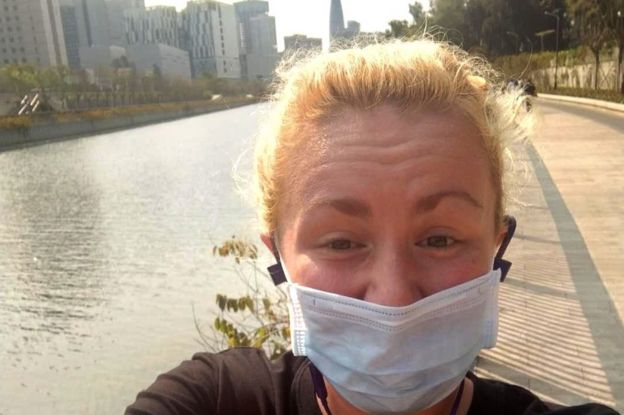
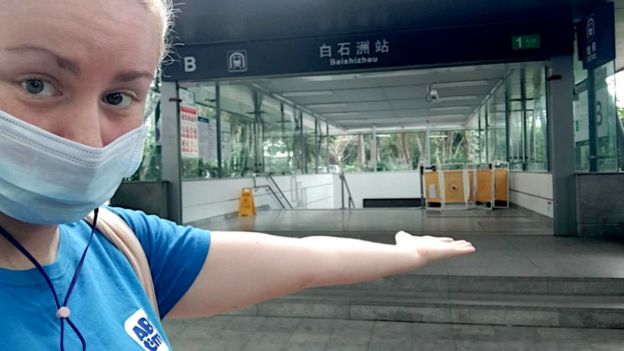
Image copyright JEN SMITHImage caption Jen Smith lives in Shenzhen, where it’s compulsory to wear a mask outside at all times
My Money is a series looking at how people spend their money – and the sometimes tough decisions they have to make. Here, Jen Smith, a children’s TV presenter from Shenzhen in southern China, takes us through a week in her life, as the country slowly emerges from the coronavirus pandemic.
Over to Jen…
Since being in lockdown I’ve been bingeing on Keeping Up With the Kardashians. It starts with one episode after dinner, blink, and suddenly it’s 3am. YouTube, Facebook, Google and Instagram are all banned here, so you’d think I’d be a binge-free socialite after a year and a half living in China. Well, those sites are banned unless you have a VPN – I pay $120 (£97) a year for mine, so Sunday was a late night, with a lie-in until 10.30 this morning.
I go for a run – mask and all, as it’s currently illegal to be outside without one. I make my coffee (bought in the UK), fruit smoothie (about 20 yuan, $2.82, £2.27) and cereal (80 yuan a packet) before cycling to work.
Today is a bit of a crazy day in the studio. I work as a children’s TV presenter. My company has profited from the lockdown as more children are watching the shows non-stop – meaning a rapid turnaround for us.
We shoot two shows from 2-6pm then “break” for a meeting. We discuss tomorrow’s shoot while I eat dinner – homemade aubergine curry. It is normal for the Chinese to eat breakfast, lunch and dinner at work. Normally the company gives all staff 25 yuan through a food-ordering app, and the whole company would eat together. However, because of the current social distancing, that social time is in the far distant past!
I make it home for 8pm, order some deep-fried cauliflower as a snack (45 yuan) and start the inevitable Kardashian binge.
Total spend: 65 yuan ($9.10, £7.37)
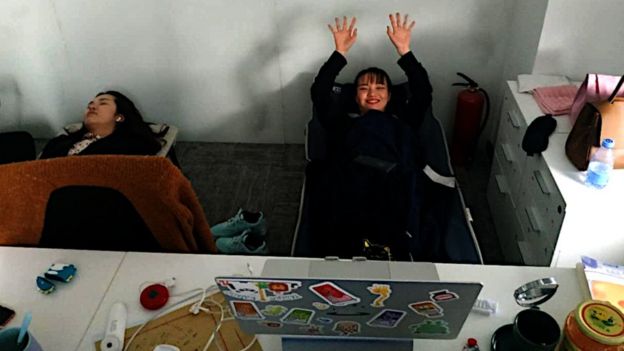
Image copyright JEN SMITHImage caption Workers often have a midday nap in the office
It’s a much earlier start (7.30am), but the same morning routine. On my cycle to work I notice that the traffic is almost back to normal – Shenzhen is inhabited by well over 12 million people, so as you can imagine rush hour is intense. This doesn’t change the fact that everywhere you go you have to scan a QR code – leaving my apartment, using the walkway by the river, and getting into the building I work in.
After a morning of shooting I eat homemade potato curry and settle down for a nap. Naptime is such a commonality in China that people store camp beds at the office. I order a coffee and banana chips (20 yuan) for a pick-me-up before the afternoon’s shooting.
It’s St Paddy’s Day so I head to the local pubs area, catch dinner at a French restaurant (222 yuan), then a few drinks (25 yuan – mainly bought by men at the bar for us) before a very tipsy cycle home.
Total spend: 242 yuan ($34, £25)
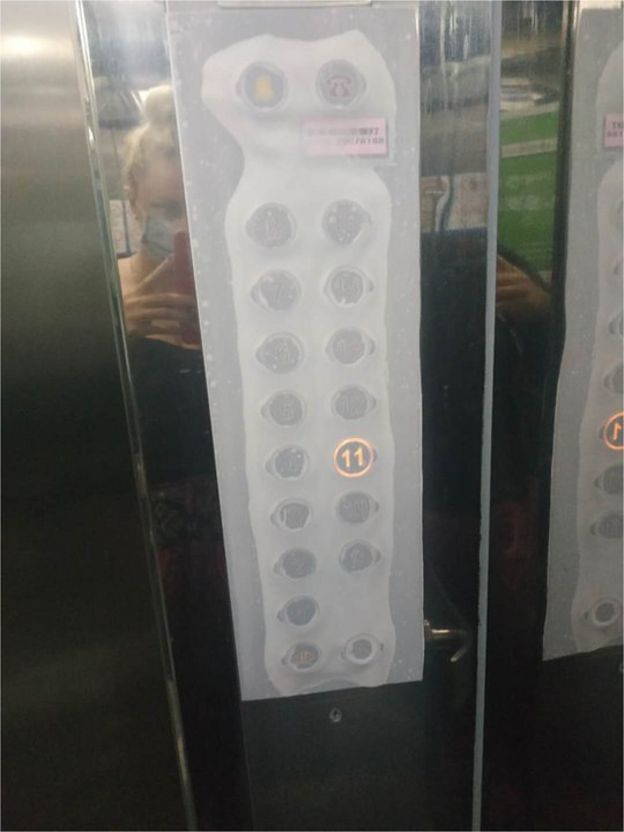
Image copyright JEN SMITHImage caption A disposable cover reduces the risk of transmitting the virus by touching lift buttons
The morning’s shoot (thankfully) was cancelled, so I nursed a hangover in bed until around 11am, at which point I had a phone meeting for a company that I do “plus-size” modelling for (for context I’m a UK size 12). I eat a bowl of cereal and order more cauliflower (45 yuan) while I watch a film.
At 2.30pm an intern picks me up, and we head to the government building to apply for a new work visa. Ironically, the image taken for my visa is Photoshopped to remove wrinkles, freckles and my frizzy hair. When I ask why this is being done for an identification document, the intern replies that the government wants it to be neat, and “the Chinese way” is to have altered photos.
I don’t argue, and have an interview before I hand in my passport. The whole process takes around two hours, so I order food to my house while on the way home (150 yuan for burger, salad and cake!) I take a taxi across town which ends up being 39.05 yuan.
The day starts at 8.30am with coffee and reading, before I get a manicure (280 yuan). My nail lady has been very worried about the state of my hands during the virus, so she spends a whopping two and a half hours treating them while I watch a film (0.99 yuan – bought by her). Because the manicure was so long I don’t have time to eat lunch before our fitness shoot, which runs from 2-5.30pm. I then have an appointment to sign into a building which I’ll shoot in tomorrow.
The building is near a supermarket called Ole (one of the only western supermarkets), and I pick up groceries for 183 yuan before heading home to cook, listen to podcasts and prep for the big day of shooting on Friday.
Total spend: 463 yuan ($64, £52.5)
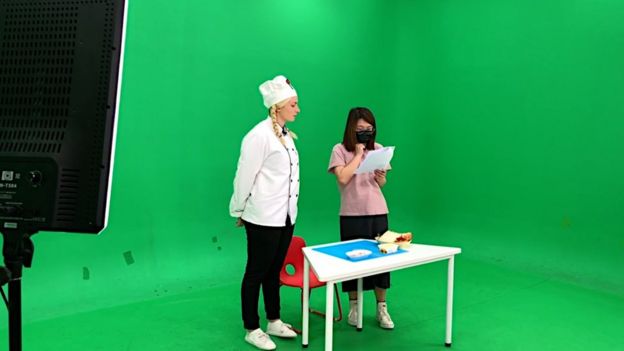
Image copyright JEN SMITHImage caption Jen filming in front of a green screen – a more colourful digital background will be added later in post-production
Fridays are generally my busiest day. The way the Chinese seem to function, is a boss will say “I want this done now” and then employees rush to finish it. Generally, they will write scripts on Monday and Tuesday, discuss Wednesday, then we shoot later in the week. The poor editors, despite mandatory office hours during the week, then have to work tirelessly through the weekend to achieve a Sunday evening deadline.
I start with mashed avocado and a hard-boiled egg before work. The morning shoot runs from 9.30-11.40am, and I have an early lunch – homemade curry again, before my regular nap time. The afternoon shoot is three hours, so I have time to pop home and shower before a live stream at 6pm. I take a taxi to and from the live stream which ends up being 28 yuan.
Total spend: 28 yuan ($3.92, £3.18)
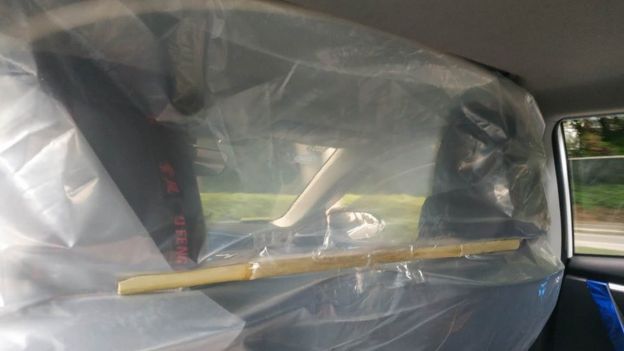
Image copyright JEN SMITHImage caption A taxi driver has improvised a screen to reduce the risk of picking up Covid-19 from a passenger
Finally the weekend! Although things are slowly getting better in China after the coronavirus outbreak, there’s still not too much to do. So I use this time to write, play my piano and generally chill inside. Around 3pm, I venture outside to the shops to pick up some snacks (159.60 yuan) before settling in to ring my family back in the UK with a homemade cocktail – a friend of mine in Canada is doing a daily live stream, “quarantinis” where he teaches you how to make cocktails!
What’s interesting is that a lot of people have started leaving their houses again, but it is still illegal to go outside without a mask on, and temperature checks are taken everywhere. I was even refused entry to a building due to being foreign. I imagine this is because recently the only new cases are being brought in by non-Chinese travelling back to China.
Total spend: 159.60 yuan ($22, £18)
Image copyright JEN SMITHImage caption Shenzhen’s Metro system is still very quiet
It’s another slow day for me as many foreigners have not yet returned to China, so most of my friends are out of the country. I start the day by reviewing potential scripts.
This takes me to 1.30pm without realising I haven’t eaten. I decide to go for a quick run and I return to eat mashed avocado and a hard-boiled egg.
I home-bleach my hair with products bought in the UK, then head back to editing again. About half way through the afternoon I take a little break to practice Chinese. I use an app which is fantastic and free! Definitely worth everyone downloading this during social distancing so you can learn new skills!
For dinner I order online again, a three-dish meal for 160 yuan.
US death toll passes 3,000 as New York’s hospitals are pushed to breaking point
Italy extends lockdown as cases exceed 100,000; UN Security Council votes by email for first time
The USNS Comfort passes the Statue of Liberty as it enters New York Harbour on Monday. Photo: Reuters
Harsh lockdowns aimed at halting the march of the coronavirus pandemic extended worldwide Monday as the death toll soared toward 37,000 amid new waves of US outbreaks.
The tough measures that have confined some two-fifths of the globe’s population to their homes were broadened. Moscow and Lagos joined the roll call of cities around the globe with eerily empty streets, while Virginia and Maryland became the latest US states to announce emergency stay-at-home orders, followed quickly by the capital city Washington.
In a symbol of the scale of the challenge facing humanity, a US military medical ship sailed into New York to relieve the pressure on overwhelmed hospitals bracing for the peak of the pandemic.
France reported its highest daily number of deaths since the outbreak began, saying 418 more people had succumbed in hospital.
Spain, which announced another 812 virus deaths in 24 hours, joined the United States and Italy in surpassing the number of cases in China, where the disease was first detected in December.
On Tuesday, mainland China reported a rise in new confirmed coronavirus cases, reversing four days of declines, due to an uptick in infections involving travellers arriving from overseas.
Mainland China had 48 new cases on Monday, the National Health Commission said, up from 31 new infections a day earlier.
All of the 48 cases were imported, bringing the total number of imported cases in China to 771 as of Monday.
There was no reported new case of local infection on Monday, according to the National Health Commission. The total number of infections reported in mainland China stood at 81,518 and the death toll at 3,305. Globally, more than 760,000 have been infected, according to official figures.
Here are the developments:
Hospital ship arrives in New York
New York’s governor issued an urgent appeal for medical volunteers Monday amid a “staggering” number of deaths from the coronavirus, saying: “Please come help us in New York, now.”
The plea from Governor Andrew Cuomo came as the death toll in New York State climbed past 1,200 – with most of the victims in the big city – and authorities warned that the crisis pushing New York’s hospitals to the breaking point is just a preview of what other cities across the US could soon face.
Cuomo said the city needs 1 million additional health care workers.
“We’ve lost over 1,000 New Yorkers,” he said. “To me, we’re beyond staggering already. We’ve reached staggering.”
The governor’s plea came as a 1,000-bed US Navy hospital ship docked in Manhattan on Monday and a field hospital was going up in Central Park for coronavirus patients.
New York City reported 914 deaths from the virus as of 4:30pm local time Monday, a 16 per cent increase from an update six hours earlier. The city, the epicentre of the US outbreak, has 38,087 confirmed cases, up by more than 1,800 from earlier in the day.
Coronavirus field hospital set up in New York’s Central Park as city’s health crisis deepens
Gloom for 24 million people in Asia
The economic fallout from the coronavirus pandemic will prevent almost 24 million people from escaping poverty in East Asia and the Pacific this year, according to the World Bank.
In a report released on Monday, the Washington-based lender also warned of “substantially higher risk” among households that depend on industries particularly vulnerable to the impact of Covid-19. These include tourism in Thailand and the Pacific islands; manufacturing in Vietnam and Cambodia; and among people dependent on “informal labour” in all countries.
The World Bank urged the region to invest in expanding conventional health care and medical equipment factories, as well as taking innovative measures like converting ordinary hospital beds for ICU use and rapidly trining people to work in basic care.
Billionaire blasted for his Instagram-perfect isolation on luxury yacht
31 Mar 2020
Indonesia bans entry of foreigners
Indonesia barred foreign nationals from entering the country as the world’s fourth-most populous country stepped up efforts to contain the spread of the coronavirus pandemic.
The travel ban, to be effective soon, will also cover foreigners transiting through the country, Foreign Minister Retno Marsudi said after a cabinet meeting in Jakarta Tuesday. The curbs will not apply to holders of work permits, diplomats and other official visitors, she said.
The curbs on foreign citizens is the latest in a raft of measures taken by Indonesia to combat the deadly virus that’s sickened more than 1,400 people and killed 122. President Joko Widodo’s administration previously banned flights to and from mainland China and some of the virus-hit regions in Italy, South Korea and Iran. The president on Monday ordered stricter implementation of social distancing and health quarantine amid calls for a lockdown to contain the pandemic.
Indonesia has highest coronavirus mortality rate in Southeast Asia
First US service member dies
The first US military service member has died from the coronavirus, the Pentagon said on Monday, as it reported another sharp hike in the number of infected troops.
The Pentagon said it was a New Jersey Army National Guardsman who had tested positive for Covid-19 and had been hospitalised since March 21. He died on Saturday, it said.
Earlier on Monday, the Pentagon said that 568 troops had tested positive for the coronavirus, up from 280 on Thursday. More than 450 Defence Department civilians, contractors and dependents have also tested positive, it said.
US military has decided to stop providing more granular data about coronavirus infections within its ranks, citing concern that the information might be used by adversaries as the virus spreads.
The new policy, which the Pentagon detailed in a statement on Monday, appears to underscore US military concerns about the potential trajectory of the virus over the coming months – both at home and abroad.
School to resume in South Korea … online
South Korean children will start the new school year on April 9 with only online classes, after repeated delays due to the outbreak of the new coronavirus, the government said Tuesday.
Prime Minister Chung Sye Kyun said that despite the nation’s utmost efforts to contain the virus and lower the risk of infection, there is consensus among teachers and others that it is too early to let children go back to school.
The nation’s elementary schools, and junior and senior high schools were supposed to start the new academic year in early March, but the government has repeatedly postponed it to keep the virus from spreading among children.
The start was last postponed until April 6, but has now been delayed three more days to allow preparations to be made for online classes.
The nation now has 9,786 confirmed cases in total, with 162 deaths.
Italy extends lockdown as cases exceed 100,000
Italy’s government on Monday said it would extend its nationwide lockdown measures
against a coronavirus outbreak, due to end on Friday, at least until the Easter season in April.
The Health Ministry did not give a date for the new end of the lockdown, but said it would be in a law the government would propose. Easter Sunday is April 12 this year. Italy is predominantly Roman Catholic and contains the Vatican, the heart of the church.
Italians have been under lockdown for three weeks, with most shops, bars and restaurants shut and people forbidden from leaving their homes for all but non-essential needs.
Italy, which is the world’s hardest hit country in terms of number of deaths and accounts for more than a third of all global fatalities, saw its total death tally rise to 11,591 since the outbreak emerged in northern regions on February 21.
The death toll has risen by 812 in the last 24 hours, the Civil Protection Agency said, reversing two days of declines, although the number of new cases rose by just 4,050, the lowest increase since March 17, reaching a total of 101,739.
Deadliest day in Italy and Spain shows worst not over yet
28 Mar 2020
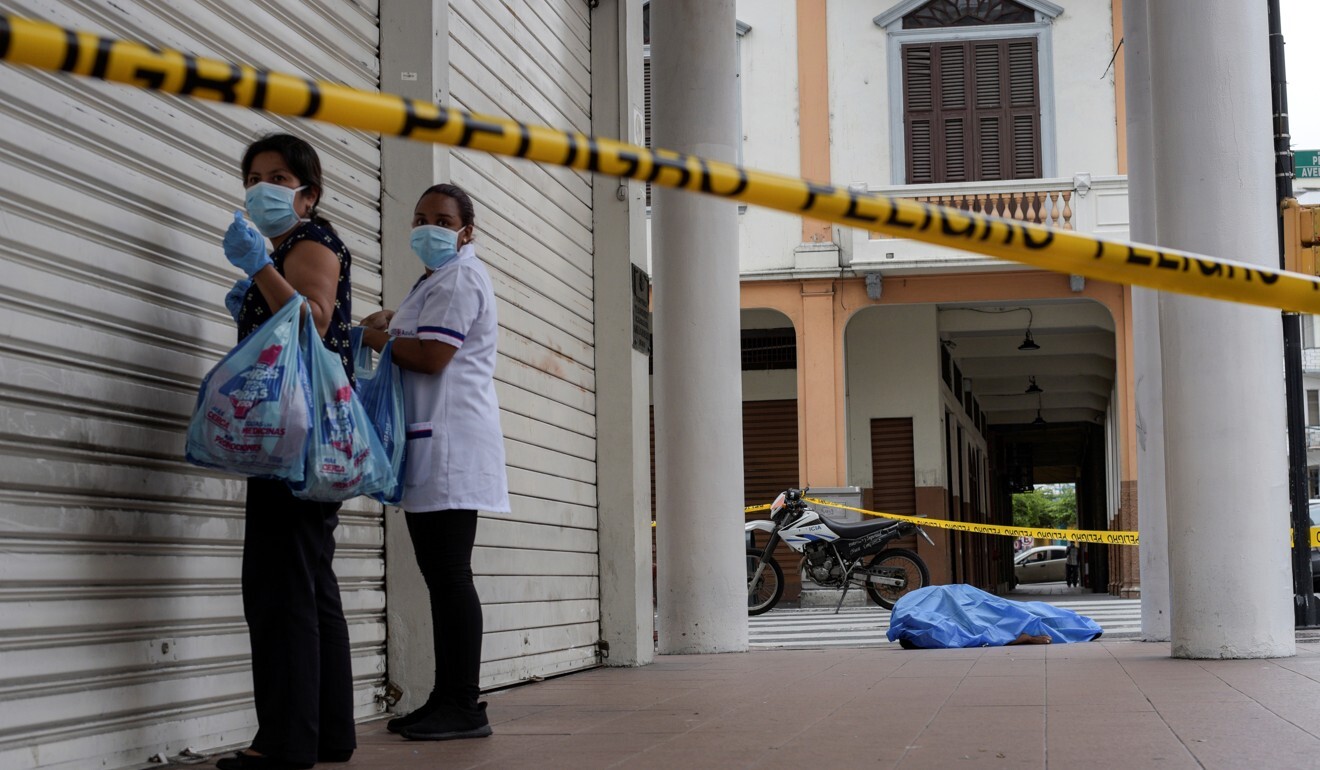
Women stand near the body of a man who died on the sidewalk in Guayaquil, Ecuador. Photo: Reuters
Ecuador struggles to collect the dead
Ecuadorean authorities said they would improve the collection of corpses, as delays related to the rapid spread of the new coronavirus has left families keeping their loved ones’ bodies in their homes for days in some cases.
Residents of Guayaquil, Ecuador’s largest city, have complained they have no way to dispose of relatives’ remains due to strict quarantine and curfew measures designed to prevent spread of the disease. Last week, authorities said they had removed 100 corpses from homes in Guayaquil.
But delays in collecting bodies in the Andean country, which has reported 1,966 cases of the virus and 62 deaths, were evident midday on Monday in downtown Guayaquil, where a man’s dead body lay on a sidewalk under a blue plastic sheet. Police said the man had collapsed while waiting in line to enter a store. Hours later, the body had been removed.
More than 70 per cent of the country’s coronavirus cases, which is among the highest tallies in Latin America, are in the southern province of Guayas, where Guayaquil is located.
Panama to restrict movement by gender
The government of Panama announced strict quarantine measures that separate citizens by gender in an effort to slow the spread of the novel coronavirus.
From Wednesday, men and women will only be able to leave their homes for two hours at a time, and on different days. Until now, quarantine regulations were not based on gender.
Men will be able to go to the supermarket or the pharmacy on Tuesdays, Thursdays and Saturdays, and women will be allowed out on Mondays, Wednesdays and Fridays.
No one will be allowed to go out on Sundays. The new measures will last for 15 days.
Police in Kenya use tear gas to enforce coronavirus curfew
Remote vote first for UN Security Council
The UN Security Council on Monday for the first time approved resolutions remotely after painstaking negotiations among diplomats who are teleworking due to the coronavirus pandemic.
The Security Council unanimously voted by email for four resolutions, including one that extended through April 2021 the expiring mandate of UN experts who are monitoring sanctions on North Korea, diplomats said.
The UN mission in Somalia was also prolonged, until the end of June, and the mission in Darfur until the end of May – two short periods decided due to uncertainty over the spread of the pandemic.
The Council also endorsed a fourth resolution aimed at improving the protection for peacekeepers.
The resolutions are the first approved by the Security Council since it began teleworking on March 12 and comes as Covid-19 rapidly spreads in New York, which has become the epicenter of the disease in the United States.
Congo ex-president dies in France
Former Republic of Congo president Jacques Joaquim Yhombi Opango died in France on Monday of the new coronavirus, his family said. He was 81.
Yhombi Opango, who led Congo-Brazzaville from 1977 until he was toppled in 1979, died at a Paris hospital of Covid-19, his son Jean-Jacques said. He had been ill before he contracted the virus.
Yhombi Opango was an army officer who rose to power after the assassination of president Marien Ngouabi.
Yhombi Opango was ousted by long-time ruler Denis Sassou Nguesso. Accused of taking part in a coup plot against Sassou Nguesso, Yhombi Opango was jailed from 1987 to 1990. He was released a few months before a 1991 national conference that introduced multiparty politics in the central African country.
When civil war broke out in Congo in 1997, Yhombi Opango fled into exile in France. He was finally able to return home in 2007, but then divided his time between France and Congo because of his health problems.
‘When I wake I cry’: France’s nurses face hell on coronavirus front line
31 Mar 2020
EU asks Britain to extend Brexit talks
The European Union expects Britain to seek an extension of its post-Brexit transition period beyond the end of the year, diplomats and officials said on Monday, as negotiations on trade have ground to a halt due to the coronavirus pandemic.
Europe has gone into a deep lockdown in a bid to curb the spread of the disease, with more than 330,000 infections reported on the continent and nearly 21,000 deaths.
In Britain, Prime Minister Boris Johnson and his health minister have both tested positive for the virus and the prime minister’s senior adviser Dominic Cummings – one of the masterminds behind Britain’s departure from the EU earlier this year – was self-isolating with symptoms.
London and the EU have been seeking to agree a new trade pact by the end of the year to kick in from 2021, even though the bloc has long said that such a time frame was extremely short to agree rules on everything from trade to security to fisheries.
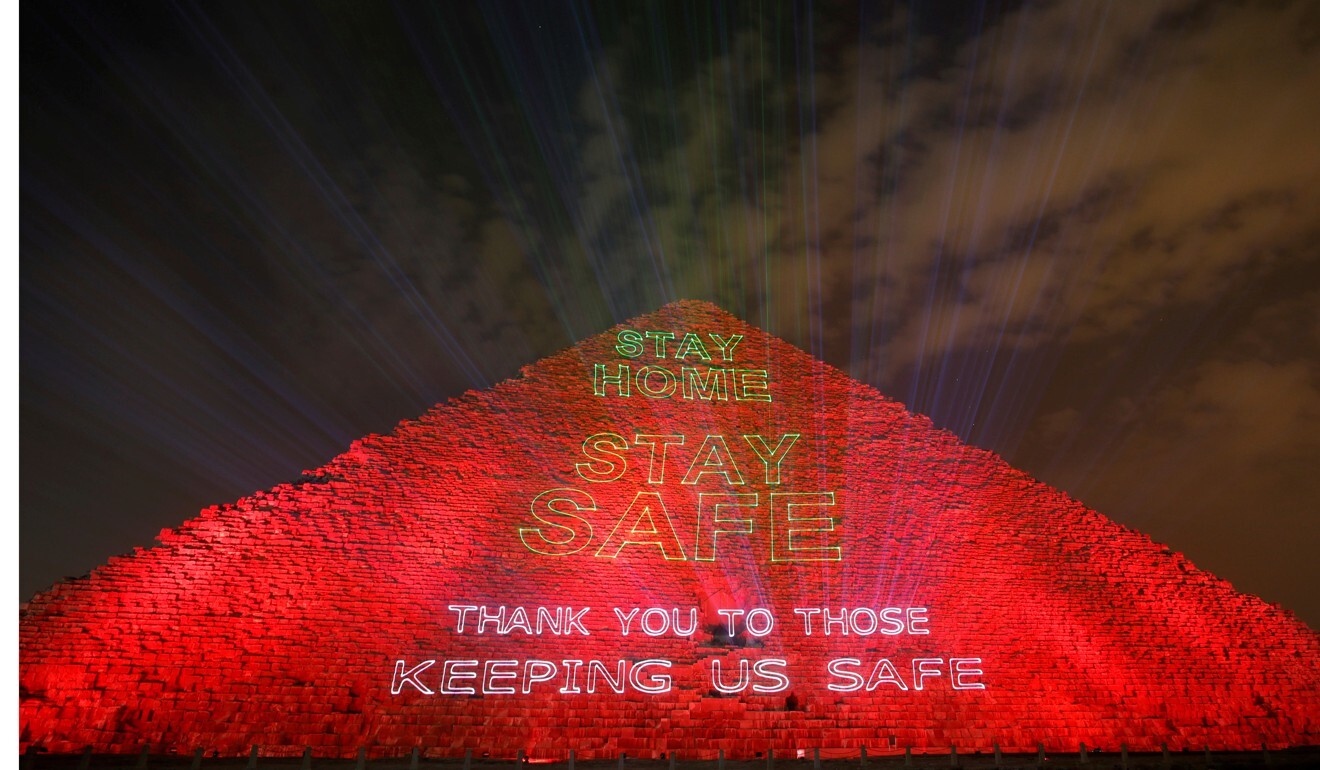
The pyramid of Khufu, the largest of the Giza pyramid complex. Photo: Reuters
Great Pyramid in Egypt lights up in solidarity
Egypt’s famed Great Pyramid was emblazoned Monday evening with messages of unity and solidarity with those battling the novel coronavirus the world over.
“Stay safe”, “Stay at home” and “Thank you to those keeping us safe,” flashed in blue and green lights across the towering structure at the Giza plateau, southwest of the capital Cairo.
Egypt has so far registered 656 Covid-19 cases, including 41 deaths. Of the total infected, 150 reportedly recovered.
Egypt has carried out sweeping disinfection operations at archaeological sites, museums and other sites across the country.
In tandem, strict social distancing measures were imposed to reduce the risk of contagion among the country’s 100 million inhabitants.
Tourist and religious sites are shuttered, schools are closed and air traffic halted.
Myanmar braces for ‘big outbreak’ after migrant worker exodus from Thailand
30 Mar 2020
Saudi king to pay for all patients’ treatment
Saudi Arabia will finance treatment for anyone infected with the coronavirus in the country, the health minister said on Monday.
The kingdom has registered eight deaths among 1,453 infections, the highest among the six Gulf Arab states.
Health Minister Tawfiq Al Rabiah said King Salman would cover treatment for citizens and residents diagnosed with the virus, urging people with symptoms to get tested.
“We are all in the same boat,” he told a news conference, adding that Crown Prince Mohammed bin Salman was overseeing containment efforts “night and day”.
Denmark eyes gradual reopening after Easter
Denmark may gradually lift a lockdown after Easter if the numbers of coronavirus cases and deaths remain stable, Prime Minister Mette Frederiksen said on Monday.
The Nordic country, which has reported 77 coronavirus-related deaths, last week extended until after Easter a two-week lockdown to limit physical contact between its citizens that began on March 11.
The number of daily deaths slowed to five on Sunday from eight and 11 on Saturday and Friday respectively. Denmark has reported a total of 2,577 coronavirus infections.
“If we over the next two weeks across Easter keep standing together by staying apart, and if the numbers remain stable for the next two weeks, then the government will begin a gradual, quiet and controlled opening of our society again, at the other side of Easter,” Frederiksen said.
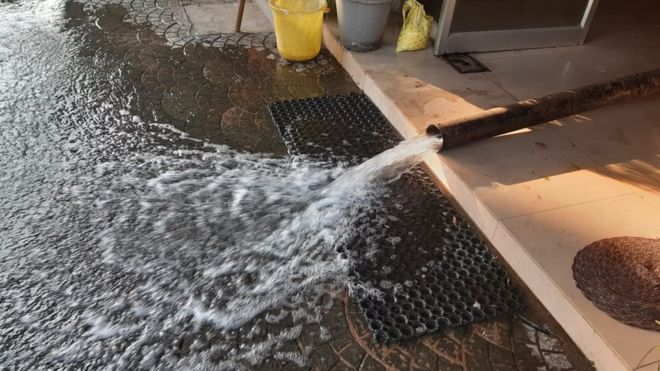
Image copyright JOSHY MALIYEKKALImage caption Drinking water reeking of alcohol started flowing out of the apartment taps
Residents of an apartment building in southern India were left in shock after a mix of beer, brandy and rum started gushing out of their taps.
The smelly, brown liquid began flowing from kitchen taps in the block of flats, in Kerala, on Monday morning.
Bemused residents then contacted the authorities for help, and discovered their water well had been contaminated by officials – albeit accidentally.
It emerged 6,000 litres of confiscated alcohol had been buried nearby.
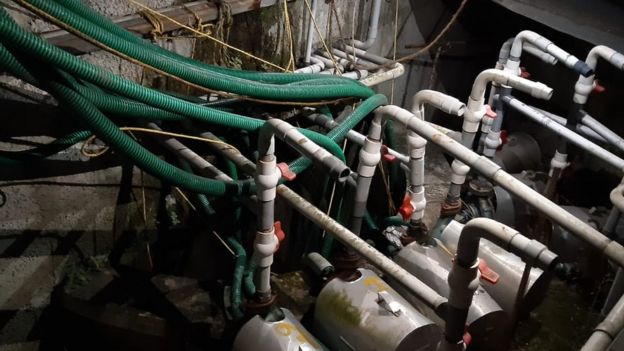
The alcohol, which officials had placed in a pit after it was seized on court orders, had seeped through the soil and into a well – the same well which supplied the residents of the 18 flats in Thrissur district with drinking water.
“We were so shocked,” Joshy Malyiekkal, owner of the apartment complex, told BBC Hindi’s Imran Qureshi.
Luckily, the strong smell put people off consuming the water. However, the discovery meant there was not only no drinking water for the families, but they were also unable to wash.
“The children couldn’t go to school and even their parents couldn’t go to work,” Mr Malyiekkal said.
Image copyright JOSHY MALIYEKKALImage caption The contaminated water from the well being pumped out
After residents complained, officials acted to rectify the mistake.
But the process of pumping the well clean is likely to take a month, according to residents, leaving them reliant on deliveries from authorities.
“They’ve been supplying about 5,000 litres of water daily but it is not enough to cover all the families in our building,” Mr Malyiekkal said, pointing out the well was their main source of water.
Officials from the department did not respond to questions from the BBC.
The state of Kerala has the highest consumption of alcohol in the country.
LUCKNOW, India (Reuters) – Police shot dead a man holding around 20 women and children hostage at his house in northern India after a 10-hour standoff, state officials said on Friday.
The hostages who were held at gunpoint were safe, principal secretary home Awanish Kumar Awasthi said after the raid at the house in a village in Farrukhabad in Uttar Pradesh state.
The hostage taker was serving a life sentence for murder and was out on parole, he added.
Two policemen and a villager were injured in the rescue operation.
After the siege, a group of incensed villagers stormed the house where the children had been kept and attacked the hostage-taker’s wife, Awasthi said. The woman died from her injuries early on Friday, he said.
The abduction took place after the man had invited some children and women from the village to his house, saying he was throwing a birthday party for his daughter.
Police said his motive for holding the children was not clear.


















 CHINDIA ALERT: You'll be living in their world, very soon